




Abstract
The Interracial Couples’ Life Transitions (ICLT) model proposes that: i) interethnic parents experience more coparenting difficulties upon the birth of a child compared to same-ethnicity parents; and ii) there exists heterogeneity in interethnic parents’ coparenting quality, thus the coparenting experience cannot be generalized across all interethnic unions. In the present work, we examined these two propositions using a large-scale database of elevated risk, fragile families. In Study 1, we compared the longitudinal trajectories of coparenting in interethnic parents (n = 574 mother-father unions) and their matched same-ethnicity counterparts (n = 574 each mothers and fathers) and found that interethnic parents of Asian, Black, Hispanic, and White backgrounds consistently experienced lower and decreasing trajectories of coparenting compared to their counterparts across the first 9 years of a child’s life. In Study 2, we examined heterogeneity in coparenting trajectories for only interethnic mothers and fathers (n = 1148) and found a three-trajectory profile in which the majority (75.5%) of parents fall into a contented (stable and high) coparenting profile. Our findings confirm and extend on the ICLT model, showing that most interethnic parents experience more coparenting difficulties across time compared to their counterparts, and although there is some heterogeneity in interethnic parents’ coparenting trajectories, most interethnic parents appear to experience stable and content coparenting across time.
Introduction
A globally growing demographic, mixed-ethnicity families have been the subject of much research in recent decades. These families are simultaneously celebrated for representing diversity yet often discriminated and racialized in broader society (Edwards et al., 2010; Törngren et al., 2021). Mixed-ethnicity families consist of interethnic couples—in which each partner holds a different ethnic, racial, and associated cultural identity from the other—as well as their children of multiple ethnic backgrounds. The majority of research on mixed-ethnicity families has focused on interethnic parents’ socialization of multiethnic children’s racial and ethnic identity and the important role of parenting in multiethnic children’s emotional and social competencies (e.g., see Atkin & Yoo, 2019). Complementing this research, a small and emerging body of work has taken a family systems approach (Broderick, 1993), addressing how characteristics of interethnic parents’ relationships, such as supportive and harmonious coparenting (McHale et al., 2004), could serve as a window to understanding successful family dynamics in mixed-ethnicity families.
One such theoretical work that elucidates interethnic parenting and family dynamics is the Interracial Couples’ Life Transition Model (ICLT; Roy et al., 2020). The ICLT proposes an ecological systems perspective (Bronfenbrenner, 1986) on interethnic couples’ transition to parenthood. That is, the environmental and social contexts in which parenthood takes place are thought to influence the coparental relationship, and vice versa. Corresponding with work demonstrating that better coparenting support and quality is linked with interparental and parent-child relationship quality in diverse families (McClain & Brown, 2017; Peltz et al., 2018), the ICLT proposes that a high-quality coparenting relationship in an interethnic union translates to a successful transition to parenthood, resulting in a harmonious couple relationship and constructive family dynamics.
In the present study, we focused on two premises of the ICLT. First, as a model focused on the interethnic parenting experience, the ICLT proposes that interethnic parents may experience heightened coparenting disagreement or dissatisfaction after the birth of a child. Although same-ethnicity couples may experience similar coparenting difficulties at the transition to parenthood (Mitnick et al., 2009), interethnic couples are proposed to potentially experience more difficulties relating to cultural and ethnic parenting practices and societal norms as their children develop. Specifically, each partner’s different ethnic background and cultural knowledge may complicate their capacity to acknowledge and validate one another’s social and parental role expectations based on their unique lived experiences, resulting in reduced coparenting quality. In turn, poor coparenting quality is a known precursor for a myriad of negative outcomes for the family, including poorer interparental and parent-child relationships, use of harsher parenting practices, and child behavioral problems over time (Choi & Becher, 2019; Feinberg et al., 2007; Le et al., 2016). These findings suggest that interethnic parents who experience coparenting difficulties may face higher risks of interparental relationship dysfunction and poorer child outcomes. Thus, identifying whether interethnic parents experience difficulties with coparenting differently from same-ethnicity parents may point to potential targets for preventive programs that can alleviate these pressures and facilitate positive couple and family functioning.
Two well-known studies have explored this first proposition in the ICLT on interethnic coparenting experiences. Using a large-scale database of low-income families in the USA (part of the data used in the present study), Hohmann-Marriott and Amato (2008) found that interethnic parents of one-year-old children tend to report lower relationship quality than same-ethnicity parents, regardless of gender or cohabitation and marital status. However, Goldberg and Carlson (2015) conducted trajectory analyses using mothers’ coparenting ratings from child ages 3 through 9 with the same larger dataset, and found that mothers in interethnic unions were more likely to belong to a stable, high coparenting quality profile than to profiles showing changes in coparenting quality across time. Further, for this large sample of mostly same-ethnicity mothers (80.3%), over 65% showed stable and linear coparenting levels across time. Taken together, these studies portray mixed findings on whether parents in interethnic unions encounter more coparenting challenges than those in single-ethnicity unions on average. Further, these studies do not address the longitudinal trajectory of change in coparenting quality for interethnic parents alone or in comparison to same-ethnicity parents. Further work is needed to understand whether interethnic parents are comparably more likely than same-ethnicity parents to experience more coparenting difficulties consistently over the course of their children’s development.
A second premise of the ICLT acknowledges that interethnic parents’ expectations of and satisfaction with one another’s parenting are likely not generalizable across all mixed-ethnicity families. Taking an intersectionality approach, gender roles and ethnicity-related experiences are posited to inform couples’ expectations in the coparenting relationship. Regarding gender, echoing previous research, mothers and fathers may experience coparenting differently. For example, a number of studies have shown that mothers tend to report lower coparenting quality compared to fathers, including in interethnic unions (Gallegos et al., 2019; Hohmann-Marriott & Amato, 2008; Murphy et al., 2017). Researchers have suggested that because mothers tend to be more involved in parenting tasks compared to fathers, they may come to undermine fathers’ parenting decisions in a competitive manner; meanwhile, fathers may show a pattern of cooperative coparenting to maintain support of primary caregiver mothers (Allen & Hawkins, 1999; Schoppe-Sullivan et al., 2008). Thus, it would be worthwhile to examine mothers’ and fathers’ experiences in interethnic coparenting separately, rather than combining the two parent roles and making global deductions about their coparenting.
Regarding ethnicity-related experiences in interethnic parenting, it may be expected that there exists heterogeneity in coparenting experiences across diverse interethnic unions. Indeed, considering that cultural values, expectations, and cognitions about parenting can differ across ethnocultural groups (Bornstein et al., 1996; 2011; Kil, Singh, et al., 2021), coparenting experiences may vary across diverse interethnic parent unions in which parents may each hold different ideas about parenting. For example, an interethnic parent couple composed of a White father and an Asian mother may differ from both their White same-ethnicity and Asian same-ethnicity counterparts in their experience of coparenting quality. At the same time, some similarities may exist amongst interethnic parents: for example, Asian and Hispanic parents may share similar expectations about the involvement of extended family such as grandparents in their children’s development (Hoang & Kirby, 2020; Poblete & Gee, 2018). Reflecting these assertions albeit in the domain of relationship satisfaction, Hohmann-Marriott and Amato (2008) showed that Hispanic-White interethnic parents of one-year-old children tended to report the highest relationship satisfaction, while Black parents were generally more likely to report lower satisfaction and higher conflict with their coparents. However, much work on interethnic parents’ coparenting has grouped together this heterogeneous group of parents (e.g., Goldberg & Carlson, 2015), which dilutes their unique backgrounds and experiences. Deriving more inclusive knowledge of heterogeneity in interethnic coparenting would provide valuable information on how to best address coparenting needs of these inherently diverse families.
Thus, in the present work, we examined these two premises of the ICLT in interethnic parents using a large-scale public-use dataset of elevated risk, fragile families in the USA. In the first study, we tested the premise that coparenting trajectories would differ for interethnic (IE) parents and matched same-ethnicity (SE) parents. In the second study, we tested the proposition that coparenting experiences may vary within the broader group of IE parents, using a data-driven analytic approach to distill heterogenous coparenting trajectory profiles amongst IE parents.
Study 1
Our first study examined how coparenting trajectories across children’s early years may differ across diverse ethnic pairings of IE and SE parents. Building on the ICLT, we expected that IE parents, compared to SE parents, may hold divergent perspectives on how they could best support one another. This assertion was based on cross-cultural research on ethnocultural differences in parenting and coparenting priorities in ethnic minorities in North America. For example, SE Black parents compared to other ethnic groups tend to prioritize ethnic and racial socialization in parenting to ensure that their children are well-equipped to navigate societal and institutional challenges related to their racial identity (Hughes et al., 2008). Hispanic-origin parents appear to emphasize familismo and machismo values in the family (Lindsey, 2018; Sotomayor-Peterson et al., 2012), potentially highlighting the importance of intergenerational involvement and gender roles in parenting. Asian background parents tend to prioritize academic achievement such that their children perceive less positive and warm parenting when they do not academically succeed (Naumann et al., 2012). Thus, in IE parent unions, each parent may hold their own ethnoculturally-informed set of expectations and beliefs surrounding parenting which may not fully converge with those of the other parent. This divergence may result in less coparenting satisfaction and harmony, at least until the divergence can be resolved. IE parents were thus expected to experience less coparenting satisfaction compared to SE parents, particularly at the beginning of the parenting experience due to ethnoculturally different norms regarding what constitutes satisfactory parenting and coparenting support.
To examine these potential coparenting differences, we compared coparenting in mothers and fathers separately across child ages one through nine, globally between IE and matched SE parents, as well as between IE parents and matched SE Asian, Black, Hispanic, and White parents. Based on literature examining unmarried families from the same larger dataset used in the present study (Goldberg & Carlson, 2015), SE parents were expected to follow approximately linear and stable trajectories of coparenting. Meanwhile, based on the premises of the ICLT and consistent with previous findings demonstrating that relationship satisfaction is generally lower for most IE unions overall (e.g., Hohmann-Marriott & Amato, 2008), IE parents were expected to show relatively lower levels of coparenting compared to SE parents across time.
Method
Participants
Participants were parents from the Fragile Families and Child Wellbeing Study dataset (FFCWS; Reichman et al., 2001). The FFCWS is a longitudinal dataset including families of a child born between 1998 and 2000 in 20 US cities, and oversampled unmarried couples. A total of 4989 biological parents were interviewed upon birth of the child at 75 hospitals in 20 cities. Follow up interviews were conducted by telephone when the child was 1 (Time 1 in the present study), 3 (Time 2), 5 (Time 3), 9 (Time 4), and 15 years of age, as well as in-home assessments at the latter four waves. Data from when children were 15 years of age were not used as only the primary caregiver responded to questions and thus full mother and father reports were not available. We considered this age range appropriate as the primary socializing role of parents is considered to become more distant as children enter adolescence and begin to prioritize peer relationships (Smetana et al., 2015).
Sample demographics pre- and post-propensity score matching.
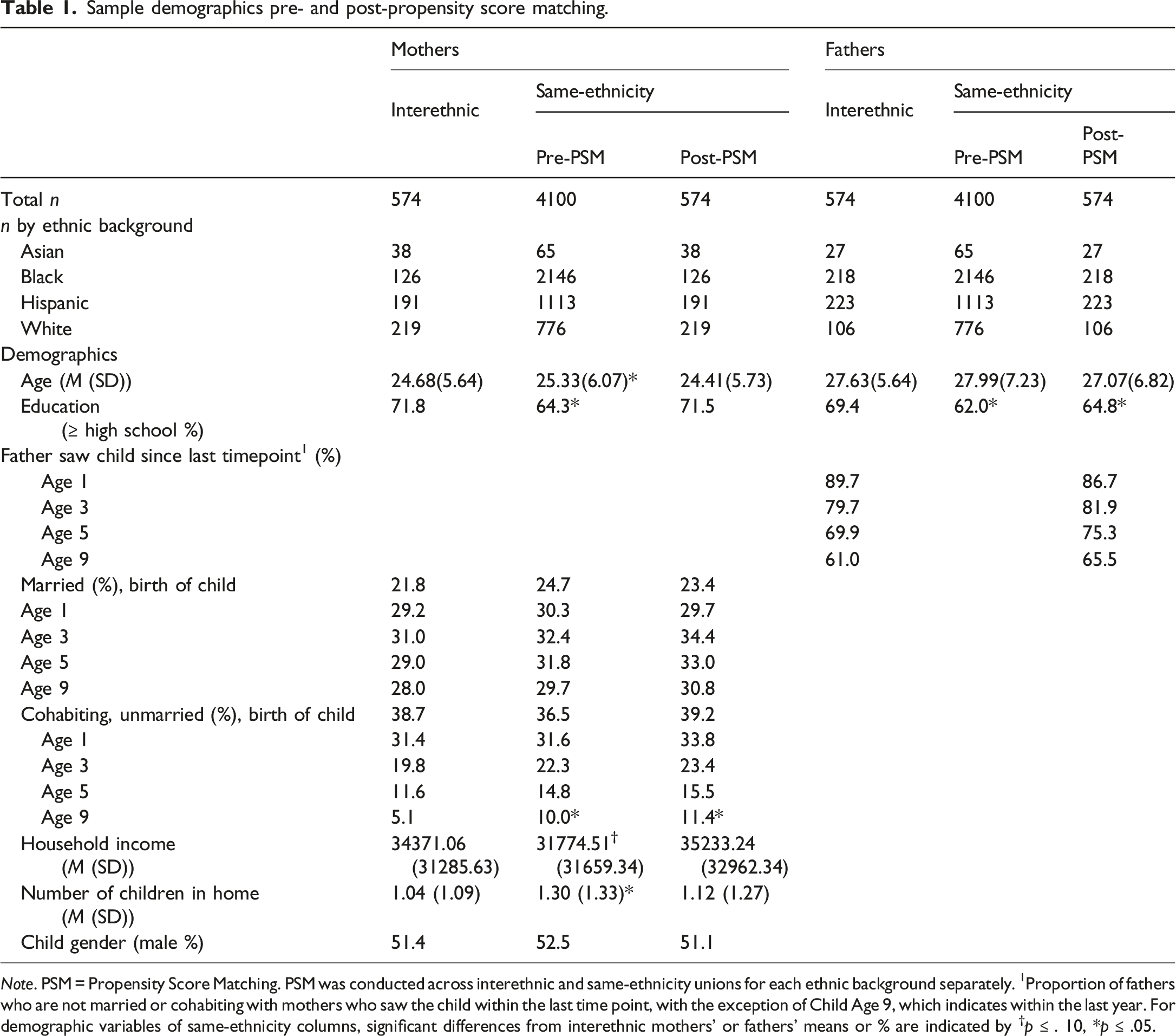
Note. PSM = Propensity Score Matching. PSM was conducted across interethnic and same-ethnicity unions for each ethnic background separately. 1Proportion of fathers who are not married or cohabiting with mothers who saw the child within the last time point, with the exception of Child Age 9, which indicates within the last year. For demographic variables of same-ethnicity columns, significant differences from interethnic mothers’ or fathers’ means or % are indicated by †p ≤ . 10, *p ≤ .05.
We retained the full sample of available families (excluding American Indian and Other backgrounds) for matching IE and SE parents. We conducted propensity score matching (PSM; Austin, 2011) using the Matching package in R (Sekhon, 2011; 2021) to separately match mothers and fathers in IE and SE unions. PSM is a regression-based matching technique that uses participant responses on selected variables (e.g., demographics) to create a regression coefficient representing a propensity score. This propensity score is then used to match a participant from one group to a participant from another group that has a similar data profile on these selected variables. In the present work, we used PSM without replacement, such that an IE mother or father would be matched with an SE equivalent without the possibility of duplicate draws from the SE sample, so as to avoid having more than one IE parent matched to the same SE parent.
We matched mothers and fathers in IE parent unions (original n = 575 unions) to their White (original total n = 776 unions), Black (n = 2146), Hispanic (n = 1113), and Asian (n = 65) SE counterparts. Additionally, for the matching of Black and Hispanic mothers and for all fathers, number of children in the household was missing for over 10 participants and was not a significant statistically significant predictor of propensity (Bs = −.028 to −.142, ps > .08). Thus, this variable was removed from the PSM procedure for these matches only. For one IE Hispanic mother and Black father union, mothers’ education level was missing, and thus this family was dropped from further analyses.
After PSM, the number of SE union mothers (n = 574) and SE union fathers (n = 574) was thus equivalent to the total number of mothers and fathers in IE parent unions (n = 574 mothers and 574 fathers), with the same proportion of ethnic backgrounds represented (e.g., n = 219 or 38.2% White mothers each in IE unions and in SE unions). Sample sizes, descriptive statistics, and difference tests on key demographic variables between IE mothers and fathers and their SE counterparts before and after PSM are depicted in Table 1.
Measures
Coparenting as reported by mothers and fathers about one another was measured with six items (e.g., when parent is with child, he/she acts like the parent you want for your child; you can trust parent to take good care of your child; parent supports you in the way you want to raise child). The items have been used in previous research and found to have good psychometric properties (e.g., Choi et al., 2019; Parkes et al., 2019). If a mother was not married or cohabiting with the father, and reported that the father had not seen the child since the previous timepoint, the father was not asked about coparenting. For parents who responded to at least two-thirds of items (e.g., four of six), responses were reverse coded and averaged to construct an index of coparenting supportiveness. Only five of these items were asked for fathers at T1, and only three items were asked for fathers at T4. Items were rated on a 3-point scale (1 = always; 3 = rarely) at T1, then on a 4-point scale (1 = always; 4 = never) for T2, T3, and T4. To ensure consistency in scales, standardized coparenting scores were used in analyses. There was data missing due to attrition or nonparticipation at each time point, with sample sizes for mothers and fathers of n = 1101 and 841 at T1, n = 1245 and 964 at T2, n = 1117 and 973 at T3, and n = 880 and 707 at T4, respectively. The largest combined sample size was at T2 when the child was 3 years old. Interitem reliability was satisfactory for mothers and fathers, α = .86 and .72 at T1, α = .92 and .75 at T2, α = .90 and .87 at T3, and α = .91 and .78 at T4, respectively.
Analytic strategy
As common in longitudinal studies, data were missing throughout time points, with Little’s Missing Completely at Random test significant at p < .001 for all time points. Further, coparenting responses were negatively skewed, more so for father reports. To address both issues in further analyses, we used robust maximum likelihood estimation (Muthen & Muthen, 2012), which uses Full Information Maximum Likelihood (FIML) estimation to account for missingness. In particular, the design of the FFCWS was structured such that mothers were interviewed first at a given timepoint, and if the father was still involved in the child’s life, the father was interviewed on their involvement in childrearing. The FIML method allowed for estimation based on all available father datapoints in further analyses. All retained matched participants were thus included in the analyses to enhance the validity of our results. To examine mother and father coparenting ratings, we considered coparenting ratings over time as nested within each individual, which was in turn nested within each couple.
We first conducted an initial multilevel analysis in Mplus to estimate mothers’ and fathers’ intercepts and trends over time as well as examine whether significant between-person level variations occurred in father and mother coparenting ratings. Coparenting ratings were regressed on time at the within-person level while allowing intercepts and slopes to vary randomly at the between-person level. Due to varying intervals between timepoints, we modeled Time 1 (Age 1) at −1, Time 2 (Age 3) at 0, Time 3 (Age 5) at 1 and Time 4 (Age 9) at 3. To avoid convergence issues, we fixed curvilinear slope variances to zero.
We then regressed intercepts and slopes of mother and father coparenting ratings on a binary IE versus SE variable (0 = IE; 1 = SE) at the between-person level to assess a) mean differences in coparenting ratings between IE and matched SE parents at T2 and b) linear and curvilinear trend differences in coparenting ratings between IE and matched SE parents across time (from T1 to T4).
Finally, we further unpacked the results by examining coparenting differences for IE parent unions of each of the four ethnicity backgrounds and their SE counterparts. For these analyses, mothers and fathers were analysed separately as each IE parent necessarily identifies with a different ethnicity. We thus ran a total of eight analyses, each one comparing IE parents of a specific gender and ethnicity (e.g., Black mothers in IE unions) with their matched SE counterpart (e.g., Black mothers in SE unions).
Results
Modelling mother and father coparenting ratings first revealed significant variation at the between-person level. Regarding the intercept, both mothers and fathers significantly varied in their coparenting average ratings at T2, both σ2s ≥ .42, both ps < .001. Regarding the slopes, both mothers and fathers significantly varied in their coparenting linear trends across time, both σ2s ≥ .003, both ps ≤ .001. We then added couples’ ethnicity (i.e., IE vs. SE) to the model and regressed it on participants’ average coparenting ratings at T2 (intercepts) as well as their linear and curvilinear trends of coparenting ratings across T1 to T4 (slopes).
Estimates of coparenting trends for mothers and fathers in IE and matched SE unions.
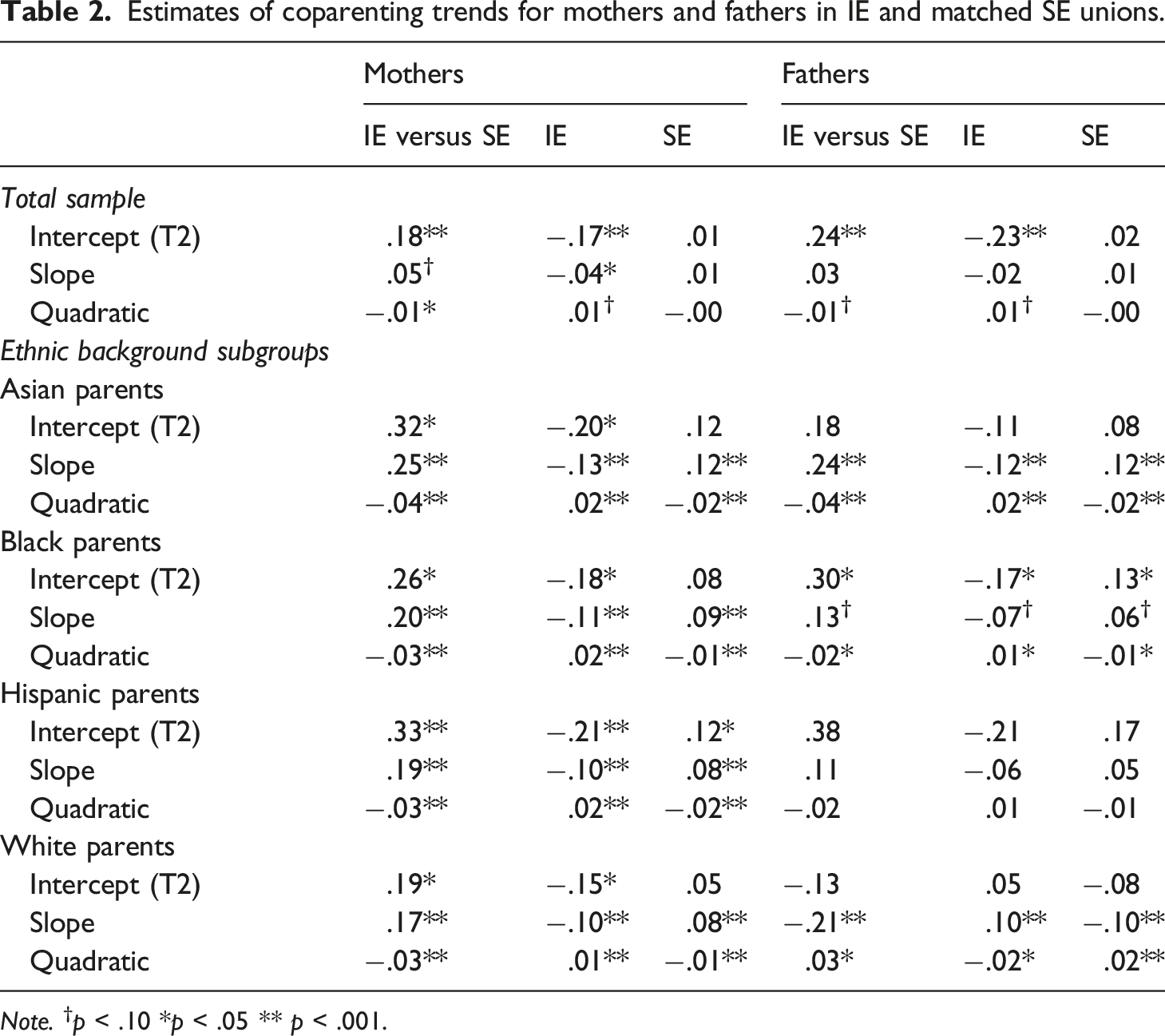
Note. †p < .10 *p < .05 ** p < .001.
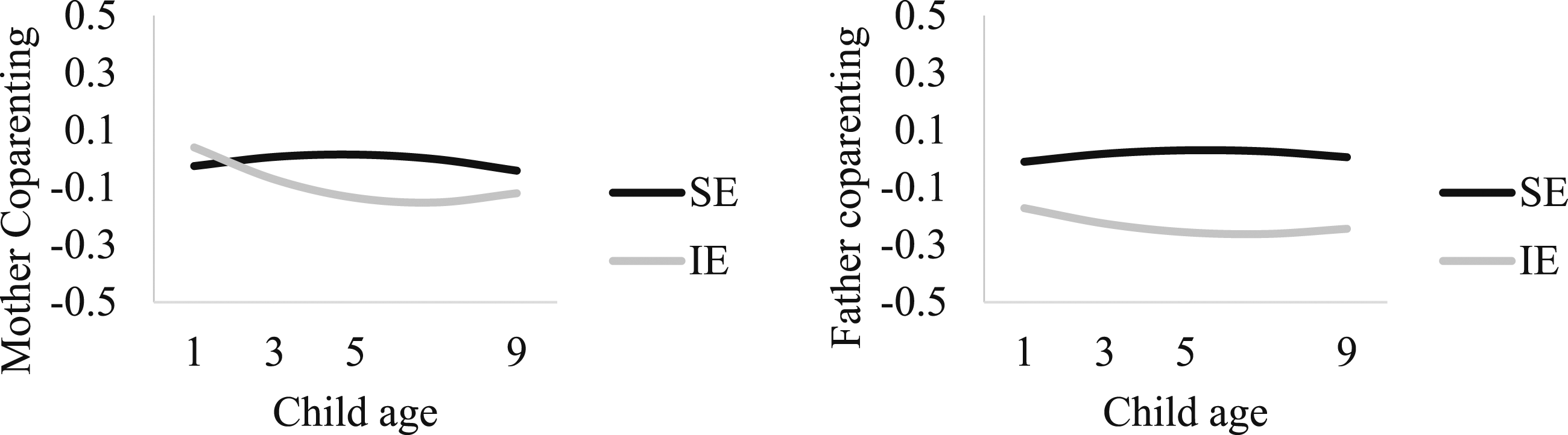
Coparenting trends for same-ethnicity (SE) and interethnic (IE) parents overall.
Subgroups analyses by ethnic background
IE Asian and SE Asian mothers and/or fathers
Results of all subgroup analyses are also shown in Table 2 and depicted in Figure 2. Comparing coparenting ratings at T2, Asian mothers and fathers in IE unions scored lower than their matched counterparts in SE unions, though this difference was only statistically significant for mothers (pfathers = .299). Examining coparenting rating trends also revealed differences between parents in IE and SE unions. Indeed, ratings of mothers and fathers of IE unions decreased and flattened out over time, while ratings of mothers and fathers in SE unions increased and flattened out over time. Coparenting ratings by parent role and ethnic background subgroups for same-ethnicity (SE) versus interethnic (IE) union.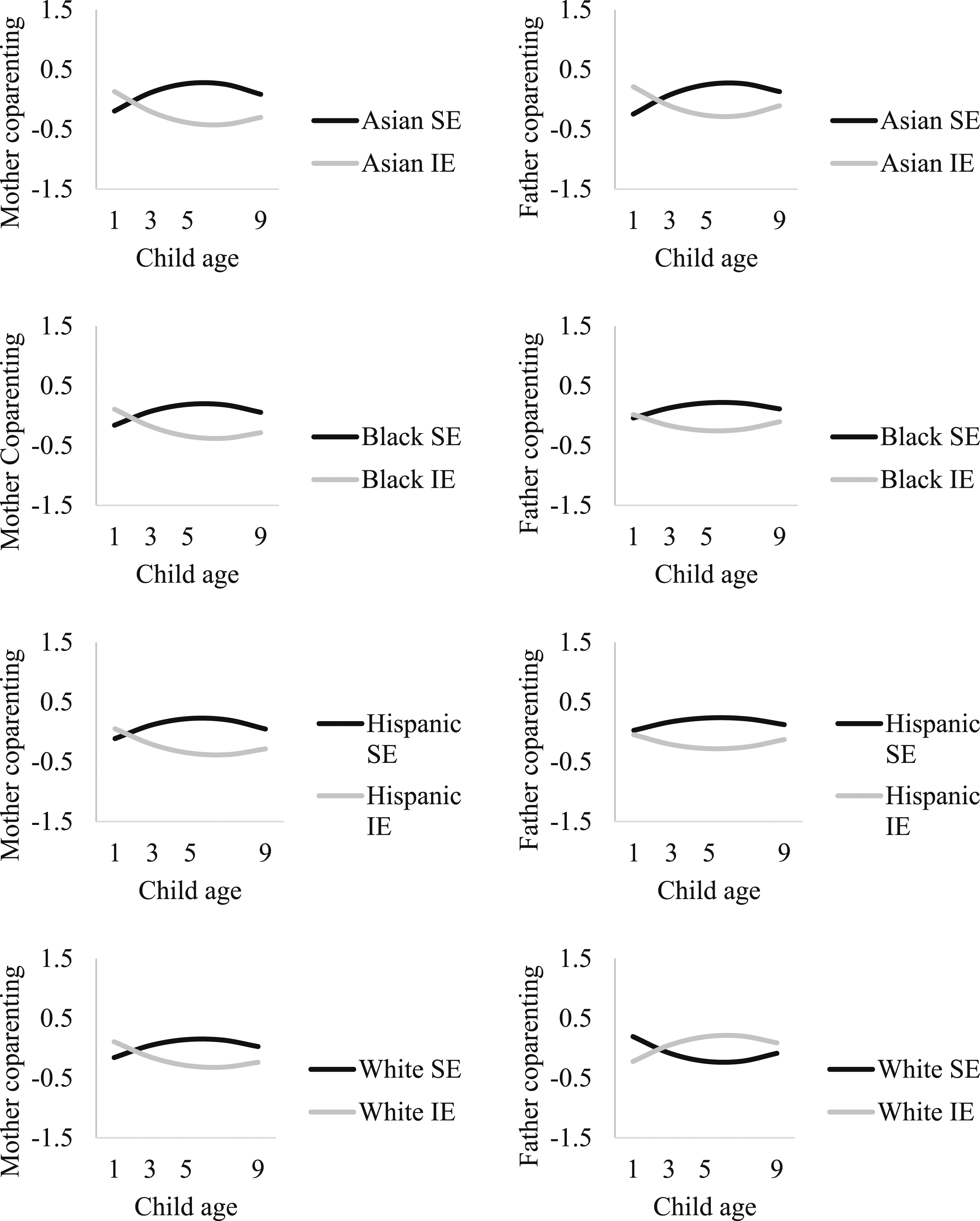
IE Black and SE Black mothers and/or fathers
Examining coparenting ratings of Black parents revealed similar results as those observed with Asian parents. First, Black mothers and fathers in IE unions scored lower on coparenting at T2 than their matched counterparts in SE unions. Second, similar coparenting trend differences were observed between parents in IE and SE unions. Specifically, ratings of mothers and fathers in IE union decreased and flattened out over time, while those of parents in SE unions increased and flattened out over time. However, linear trends for fathers in IE and SE unions as well as their difference were not statistically significant, all ps ≥ .056.
IE Hispanic and SE Hispanic mothers and/or fathers
In line with observed results thus far, Hispanic mothers and fathers in IE unions scored lower on coparenting at T2 than their matched counterparts in SE unions, though this difference was only statistically significant for mothers (pfathers = .350). As for trends, there was a significant difference between Hispanic mothers in IE and SE unions. Specifically, ratings of mothers in IE couples decreased and flattened out over time, while those of mothers in SE unions increased and flattened out over time. Fathers presented the same trend pattern, though all trends and differences were not statistically significant, all ps ≥ .056.
IE White and SE White mothers and/or fathers
Finally, White parents in IE unions also scored lower on coparenting at T2 than their matched counterparts in SE unions, though the difference was once again only statistically significant for mothers (pfathers = .431). There were also significant trend differences between parents in IE and SE unions. Ratings of White mothers in IE unions decreased and flattened out over time, while those of mothers in SE unions increased and flattened out. In contrast, ratings of White fathers in IE unions rather increased and flattened out over time, while those in SE unions decreased and flattened out.
Summary
In sum, our results suggest that parents in IE unions overall tend to rate themselves as lower than their SE counterparts in coparenting quality, in line with existing perspectives on interethnic parenting (e.g., Roy et al., 2020). Overall trends also seemed to differ, although this pattern of results was less systematic. Typically, IE unions reported a decreasing trend of coparenting ratings over time, which then flattened out. In contrast, SE unions rather experienced a stable or increasing trend of coparenting ratings that flattened out over time.
However, some exceptions were observed. For instance, coparenting ratings of White fathers in IE unions increased significantly across time, while their SE union counterparts' decreased. Trends for White fathers thus differed from those of mothers and fathers of other ethnic backgrounds. Some discrepancies also arose across parent roles and union status. For instance, though coparenting ratings at T2 were lower for both parents in each assessed IE (vs. SE) union, such differences were only statistically significant for Black fathers, but not for Asian, Hispanic, or White fathers. Furthermore, while coparenting trends and differences between IE and SE unions were statistically significant for mothers of each ethnic group, this was often not the case for fathers. Thus, while the overall coparenting trends of IE parents appear to decrease over time, some differences in coparenting may exist across IE parents of different ethnic backgrounds and parent roles.
Study 2
The findings of Study 1 focused on differences in coparenting trajectories when comparing matched IE and SE parent unions. However, Study 1 findings suggested that coparenting trajectories were not always consistent across the specific ethnic backgrounds of mothers and fathers. Contrary to the premise of the ICLT (Roy et al., 2020), not all IE fathers appeared to experience heightened difficulties in coparenting compared to SE parents. Further, coparenting trajectories were similar across certain IE unions, suggesting that there may also exist commonalities amongst some clusters of IE parents despite different ethnic backgrounds represented. Thus, in Study 2, we aimed to distill heterogeneous profiles of coparenting trajectories amongst our sample of IE parents and examine proportions of parents that would be categorized into each of these profiles. In doing so, we aimed to discern whether there existed individual similarities or differences in coparenting trajectories within this diverse group of IE parents.
Our second study was guided by the premise in the ICLT model that interethnic parents may experience different trajectories in coparenting quality across parenthood, depending on how well the couple navigates challenges from within and outside of their relationship. Examining data-driven trajectories of coparenting in IE unions may provide insight about the proportion of IE parents that can indeed successfully navigate parenthood and its challenges, which should ultimately result in positive relationship outcomes. Given intersectional perspectives in the ICLT that parent gender and ethnic background, such as ethnic minority status, may also affect coparenting quality, we further compared profiles on proportions of mothers and fathers of each ethnic background (Asian, Black, Hispanic, and White). Additionally, based on findings by Hohmann-Marriott and Amato (2008) that dual-minority unions tend to show especially poor relationship satisfaction amongst IE couples, we compared profiles on the proportion of dual-minority unions in which both parents were non-White. Although hypotheses are not typical in data-driven analyses used to derive heterogeneous profiles, we expected that we would find at least one linearly decreasing coparenting trajectory profile, reflecting a similar trend to that found for IE union parents in the overall model results in Study 1.
Method
Participants & measures
We used the same dataset and measures as Study 1, but focused only on the 574 IE couples identified based on mothers’ and fathers’ self-reported ethnoracial identity, without the matched single-ethnicity samples.
Analytic strategy
As in Study 1, analyses were conducted in Mplus with Full Information Maximum Likelihood (FIML) estimation to account for missing data. To test the trajectory of change in coparenting across T1 to T4, we intended to use multilevel GMM of 2–8 coparenting trajectories to account for the nested structure of mother and father ratings. However, this analytical approach yielded a single trajectory profile (i.e., one profile with the full sample). To better understand the descriptive pattern of coparenting trajectories, we performed a Multiple-group Growth Mixture Model (MGMM; Muthen & Muthen, 1998–2017). As a data-driven technique, Growth Mixture Modeling (GMM) derives groups based on similar trajectories as they would naturally appear from the data, rather than imposing groups on the data. The multiple-group extension of GMM, i.e., MGMM, allows for GMM to be conducted with observed groups, such as indicator variables (e.g., different measures of related constructs) or treatment conditions (e.g., intervention vs. waitlist groups). In the present work, observed groups were defined as parent role of mother or father. Thus, using MGMM, we were able to test whether the trajectory suggested in the model of interethnic parenting (Roy et al., 2020) would hold in the present data and for what percentage of the mother and father sample such a trajectory would best fit.
We performed MGMM with between one to six trajectory profiles. We tested both linear and quadratic trajectories. We also modeled the Time variable as in Study 1 (i.e., by setting its intercept at T2 and taking into account the different intervals between timepoints). Due to varying intervals between timepoints, we modeled Time 1 (Age 1) at −1, Time 2 (Age 3) at 0, Time 3 (Age 5) at one and Time 4 (Age 9) at 3. We based model selection on the Bayesian information criterion (BIC), and sample-size adjusted BIC, for which smaller values are considered to demonstrate better fit (Nagin et al., 2018). We further examined entropy (closer to 1.00) and profile sizes (smallest minimum 5% of sample) to guide model selection.
Finally, we used chi-squared tests (χ2) with Bonferroni correction for multiple comparisons to compare the trajectory profiles on the proportion of a) mothers and fathers, b) of Asian, Black, Hispanic, and White ethnic backgrounds across mothers and fathers, and c) dual minority status across mothers and fathers represented in each profile. Similar to subgroup analyses, these tests allowed us to examine whether the proportions of participants represented in each trajectory profile remained constant when taking into account parent roles or ethnic backgrounds of parent unions. We present our results in sample-size descending order.
Results
Model selection
Multiple-group Growth Mixture Model fit statistics for one to six trajectory profiles.
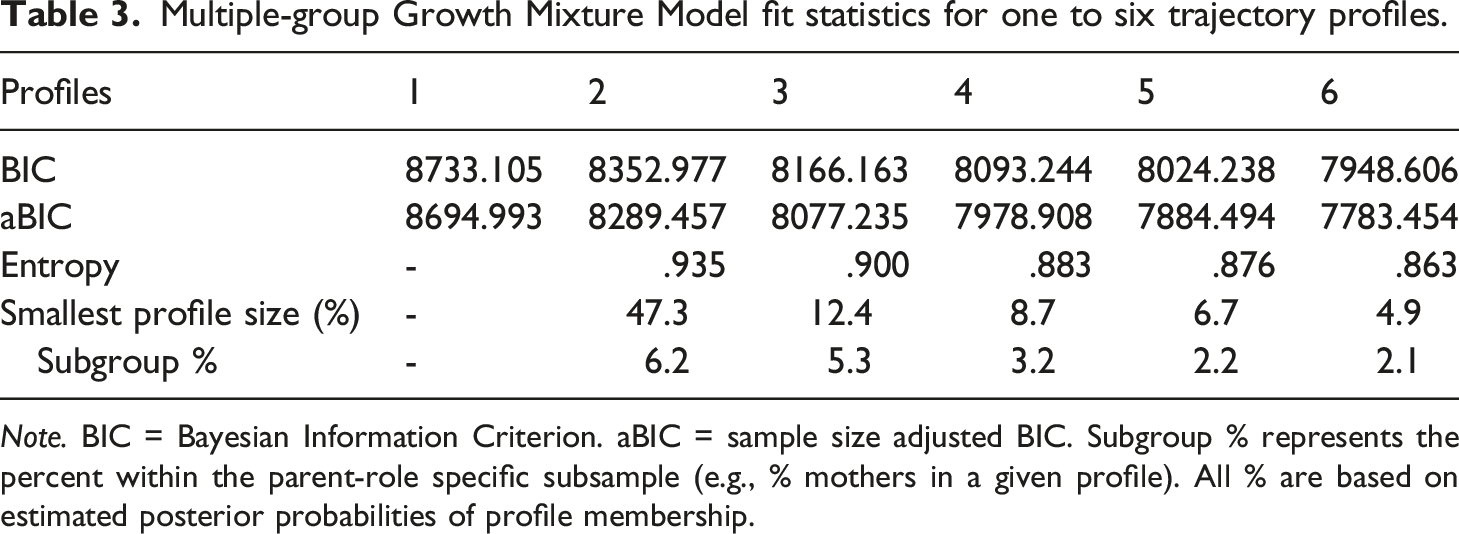
Note. BIC = Bayesian Information Criterion. aBIC = sample size adjusted BIC. Subgroup % represents the percent within the parent-role specific subsample (e.g., % mothers in a given profile). All % are based on estimated posterior probabilities of profile membership.
Trajectory profiles
Model estimates for the 3-profile trajectory solution.
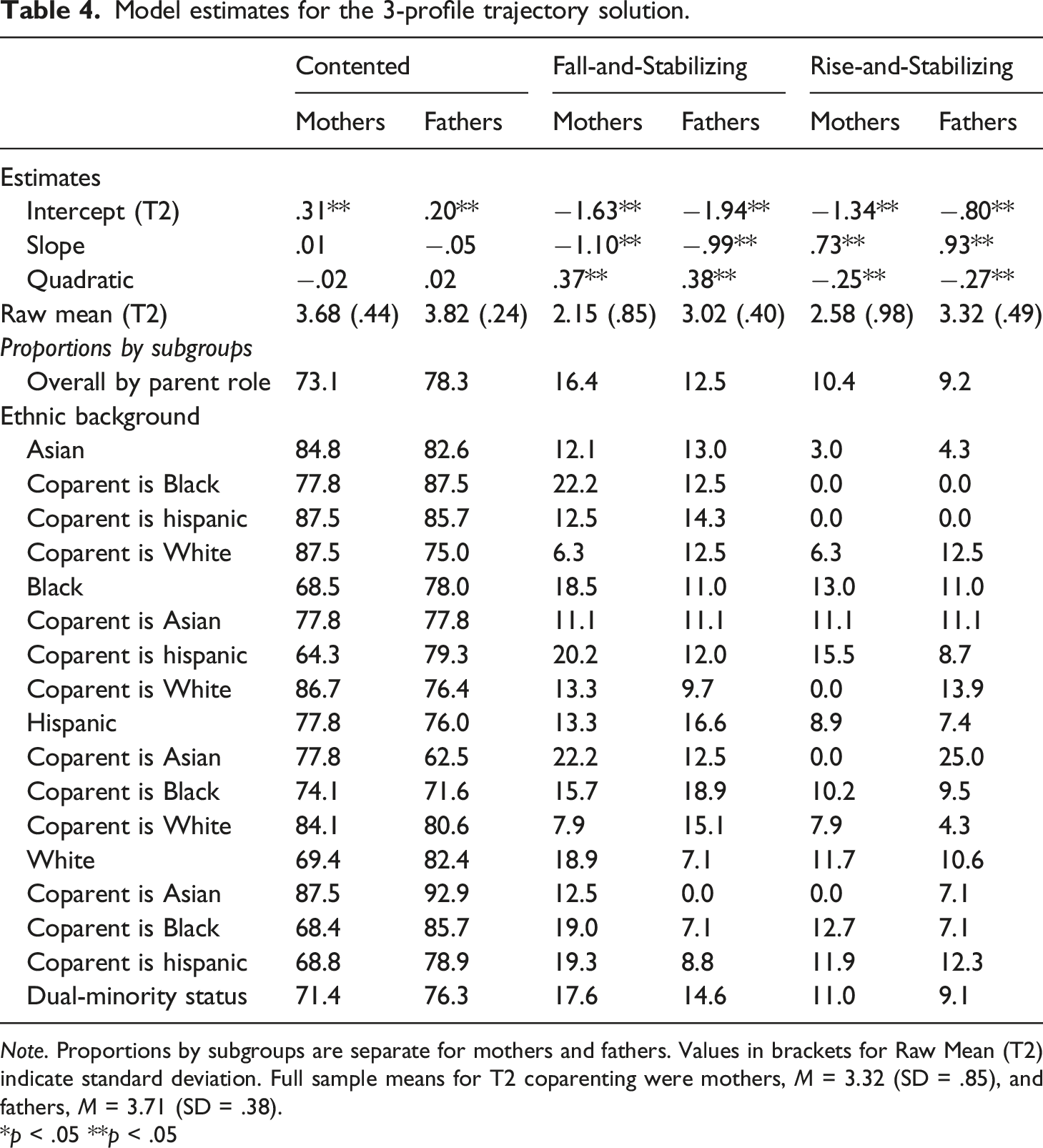
Note. Proportions by subgroups are separate for mothers and fathers. Values in brackets for Raw Mean (T2) indicate standard deviation. Full sample means for T2 coparenting were mothers, M = 3.32 (SD = .85), and fathers, M = 3.71 (SD = .38).
*p < .05 **p < .05
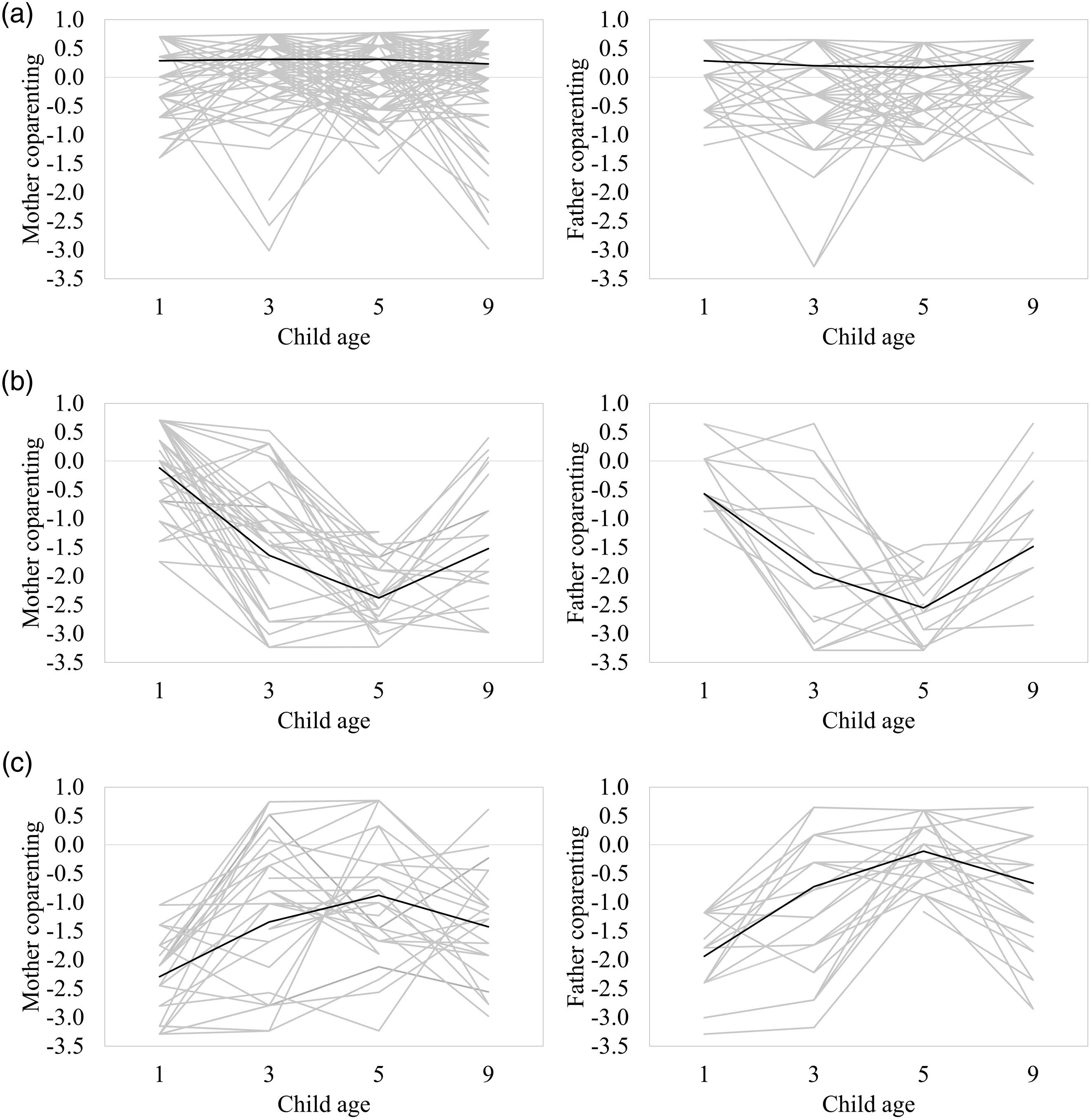
Coparenting trajectory profiles by parent role. a) depicts the Contented profile. b) depicts the Fall-and-Stabilizing profile. c) depicts the Rise-and-Stabilizing profile. Mother ratings appear on the left column, and father ratings on the right column.
Proportions of parents represented across trajectory profiles by a) mothers and fathers, b) ethnic backgrounds of mothers and fathers separately, c) ethnic pairings of mothers and fathers together, and d) dual-minority status are depicted in Table 4. Comparing proportions of mothers and fathers represented in each trajectory profile showed no significant difference, χ2 (2) = 3.81, p = .15. Comparing the proportions of the four ethnic backgrounds represented in each trajectory profile (i.e., four ethnic groups x 3 profiles) separately by parent role also showed no difference across mothers, χ2 (6) = 7.39, p = .29, or across fathers, χ2 (6) = 3.38, p = .77. Comparing the proportions of ethnic pairings of mothers and fathers together (i.e., 12 ethnic pairings x 3 profiles), showed no difference across mothers, χ2 (22) = 18.40, p = .68, or across fathers, χ2 (22) = 16.11, p = .81. For dual-minority status, a total of 43.4% of the overall sample of IE parents were in dual-minority unions. Similar to the above two analyses, comparing the proportions of dual-minority IE unions represented in each trajectory profile separately by parent role showed no difference for mothers, χ2 (2) = .64, p = .74, or for fathers, χ2 (2) = 1.48, p = .48. Thus, coparenting trajectory profiles did not significantly differ across parent roles and ethnic backgrounds of parents.
Summary
Overall, our findings pointed toward relatively stable and high levels of coparenting quality in the majority of interethnic couples, representing the contented profile. Relative to the other identified profiles, this profile appears to be consistently higher in coparenting quality across time. Only approximately a quarter of IE parents showed changing trends in coparenting quality across children’s early childhood, with about half reporting increasing trends and half reporting decreasing trends. However, both trends stabilized across time. There were no significant differences in the proportion of parents represented in each trajectory profile when taking into consideration parent roles and ethnic backgrounds of IE unions represented, suggesting that the identified profiles were consistent across IE parents, regardless of these demographic factors.
General discussion
The present work aimed to test two premises relating to coparenting trajectories based on the ICLT, one of few published models explicating the unique experience of parenthood in IE parents. As expected, in our first study, we found that at a global level, IE parents tended to have lower coparenting quality compared to their SE counterparts at child age 3, with trajectories between child ages one to nine often leading to stable or more pronounced lower ratings in coparenting for IE parents over time. In our second study, we found that IE parents were somewhat heterogeneous in their coparenting trajectories, although the majority of IE parents showed stable and high coparenting levels across time. For other IE parents, however, patterns of coparenting either increased or decreased overtime. Overall, our results align with one perspective from the ICLT that guided this work: coparenting experiences are likely not generalizable across all IE families (Roy et al., 2020).
Detailing these findings further, we discuss the results with reference to the intersectionality of ethnicity and parenting role for IE unions. In Study 1, globally, mothers in IE unions were found to be more likely to experience lower and decreasing coparenting quality compared to their SE counterparts, echoing some existing evidence that intercultural and interethnic parenting may have additional culture-related stressors (Negy & Snyder, 2000; Xiang, 2015). This pattern was consistent across ethnic backgrounds for mothers, suggesting that being in an IE union is holistically associated with mothers’ greater risk for experiencing coparenting difficulties, with little dissimilarity based on ethnicity. Although there is limited work examining coparenting across ethnocultural groups, the present finding echoes the proposition in the ICLT that coparenting in IE unions may be more nuanced and effortful compared to SE unions (Roy et al., 2020). A similar yet less pronounced pattern also arose for fathers, extending on and echoing existing work on coparenting quality that has been mainly focused on mothers (e.g., Goldberg & Carlson, 2015).
However, one exception emerged in the father sample in Study 1: White fathers in IE unions increased in coparenting quality compared to their SE union counterparts. Borrowing from Study 2 results, a more complex pattern emerged depending on the mothers’ backgrounds. Specifically, White fathers with Asian coparent mothers were the most likely of all ethnic pairings to belong to the Contented profile (92.9%), while White fathers with Hispanic coparent mothers were slightly (but not significantly) less likely to belong to the Contented profile compared to other IE unions with White fathers (78.9%). More generally, across ethnic pairings of IE unions, Study 2 findings suggested that White mothers in IE unions tended to show more changing patterns of coparenting across time compared to White fathers, with 82.4% of White fathers reporting stable and high coparenting quality, and only 69.4% of White mothers reporting the same coparenting trajectory in IE unions. Although an explanation for these differences is not immediately apparent, one possibility that would echo Study 1 findings is that White fathers in IE unions may more willingly acknowledge and accept the primary childrearing role of mothers who are non-White. Indeed, a recent review posited that White fathers in IE unions who perceive that they lack a cultural identity may cede to and support ethnic minority coparent mothers in their childrearing and cultural socialization of their multiethnic children (Kil, Taing, & Mageau, 2021). However, that Asian, Black, and Hispanic mothers of IE unions, some of whose coparent fathers were White, reported reversed and decreasing patterns in coparenting quality suggests that mothers may not experience the level of support and harmony in their coparenting as do White fathers. Further work is needed to extrapolate the nuanced experiences of coparenting in IE unions with ethnic minority mothers and White fathers.
Despite Study 1 findings that IE parents of most ethnic backgrounds experience more difficulties in coparenting, we found in Study 2 that most IE parents perceived stable and high coparenting quality across their child’s development. Contrary to initial expectations, we did not find differences in proportions of IE parents of dual minority or different ethnic backgrounds across the identified coparenting trajectories in Study 2. That the majority of IE parents reported relatively stable, high levels of coparenting quality points to the need to step away from pathologizing of IE status couples and parents. Despite stereotyped assumptions that IE parents may experience greater and more variable interparental hardship compared to SE parents, as found in Study 1 and in other literature (e.g., Caballero et al., 2008), the present studies demonstrate that diverse IE parents experience relatively high coparenting quality across time, echoing emerging perspectives that IE parents experience both strengths and challenges throughout parenthood (Kil, Taing, & Mageau, 2021). Indeed, the stable, high levels of coparenting quality reported by many IE parents in this work may indicate that most IE parents successfully navigate the interparental and societal challenges that have been theorized to place IE unions at elevated risk of dissolution (Roy et al., 2020).
Linking the two studies, it appears that the two alternative profiles of changing coparenting quality in Study 2 may drive the significantly different coparenting experiences across IE versus SE parents in Study 1. More specifically, Study 2 identified that a small proportion of mothers and fathers in IE unions fell into two coparenting profiles that increased then stabilized across time or decreased then stabilized across time. Echoing the ICLT model and as identified in a review by Kil, Taing, and Mageau (2021), IE parents whose coparenting quality increases then stabilizes across time may represent couples who experience difficulties negotiating the transition to parenthood then successfully resolve these challenges such that coparenting harmony can be established. Indeed, the transition to parenthood is a difficult adjustment period for most parents (Belsky & Pensky, 1988; Lawrence et al., 2008), with IE unions facing potentially reignited cultural differences, this time regarding parenting expectations, beliefs, and values (Roy et al., 2020). Parents who handle this transition successfully may establish increasingly improved coparenting as their children grow up.
On the other hand, parents who experience decreasing coparenting quality as children move through early childhood may note increasingly more challenges in resolving their differences in parenting or coparenting support, some of which may stem from cultural differences. This pattern is not unlike those found in a minority of family samples across diverse couple status and ethnic backgrounds: other works have reported that a small number of parent unions undergo steadily decreasing trends in coparenting quality across time due to factors related to interparental discord and mismatched attachment styles (e.g., Don & Mickelson, 2014; Leonhardt et al., 2022; ter Kuile et al., 2021). Further still to be considered are child-driven effects: for example, it is possible that in these families, children may have elevated emotional or behavioral difficulties that may pose additional challenges for or interfere with the interparental relationship as children get older (McDaniel et al., 2018; Riina & McHale, 2014). It is also possible that mixed-ethnicity children in these families begin to experience elevated identity-related difficulties as they get older, creating more parenting challenges with regards to ethnocultural and racial socialization (Atkin & Yoo, 2019). A clear understanding of why a small minority of IE parents may experience these decreasing trends in coparenting quality in the early childhood years would provide valuable input on personalized interventions for parent functioning in IE unions.
Overall, parents in IE unions may experience greater difficulties with coparenting compared to parents in SE unions, but these differences seem more pronounced for a minority of IE parents who appear to experience either initial or later coparenting challenges during their child’s development. Collectively, the present work highlights the need to acknowledge both the diversity inherent in IE unions and the presence of difficulties or changes in coparenting quality for some IE unions. Such findings have implications for applied work in improving multiethnic family dynamics. In works not focused solely on IE parents, mothers’ and fathers’ perceptions of coparenting have been shown to impact the interparental relationship. For example, mothers’ positive perceptions of fathers’ parenting are strongly associated with less couple hostility and fathers’ greater parenting involvement, while fathers’ comparable perceptions are strongly associated with more positive affect during interparental interactions (Gallegos et al., 2020; Murphy et al., 2017). For IE mothers and fathers that are experiencing coparenting difficulties, personalized interventions that motivate them to better support one another during parenting may help them to transition to more stable and high levels of coparenting (i.e., contented coparenting) over time. These changes would also likely spill over to their relationships with their multiethnic children, thus benefitting the family overall.
Although these findings are valuable and may have broader implications, questions remain to be explored in future work. Our dataset did not include a measure of parenting values and beliefs across time, and as such we cannot ascertain that IE parents’ coparenting difficulties were due to ethnocultural differences in values surrounding parenting (e.g., familismo, respect of elders). As introduced by the ICLT, IE parents may hold divergent beliefs about parenting or about the experience of being from a certain ethnic background in a multicultural society, and as such the precursors of coparenting experiences in IE parent unions requires elucidation. Further, considering that coparenting has meaningful implications for children’s internalizing and externalizing outcomes (Teubert & Pinquart, 2010), it may be useful to assess how mixed-ethnicity children are impacted by IE parents’ coparenting changes across time. Thus, work is needed to distill the causes and consequences of different coparenting trends across diverse IE mothers and fathers.
Several considerations also limit the generalizability of this study. First, this work included only low-income families from the USA, and the trajectories reported may not accurately represent the coparenting experiences of those from other socio-economic statuses or societies. However, family-of-origin norms have been shown to impact coparenting in couples outside of the USA (e.g., Brazil; Schmidt et al., 2021), suggesting similar processes may occur elsewhere. Further, the design of the Fragile Families Study oversampled Black families, which led to an overrepresentation of IE parent unions in which at least one parent was Black. Particularly underrepresented were IE parent unions consisting of one Asian parent, a growing demographic in North America. We did not exclude parents who divorced or separated across timepoints, and as such the present results combined potentially different coparenting experiences of parents who stayed together and those in non-traditional family formations. However, the sample of IE parents was matched to SE parents on important demographic characteristics, and as such, the present comparisons of coparenting account for similar rates of divorced or separated status across IE and SE parents. Additionally, other demographic factors such as physical disability were not requested nor were same-sex couples sought out in the FFCWS, and studies examining coparenting in these contexts may derive different findings. Another limitation was the measure of coparenting used in this study, which was developed specifically for use in the FFCWS and has not been validated in other samples or contexts. Further, the effects of immigration status and acculturative processes (i.e., cultural integration into society) on coparenting trajectories were not examined, and thus may be a worthwhile topic for future exploration in interethnic parenting.
Despite these limitations, the present work extends our understanding of interethnic parenting based on theoretical models such as the ICLT in two ways. First, we provide compelling evidence that parents in IE unions experience lower coparenting quality compared to their SE counterparts over their children’s early years. This overall pattern was largely consistent across ethnic backgrounds and parent roles, suggesting the presence of potentially similar coparenting experiences across subgroups of IE unions. Second, we found that the majority of IE parents report stable and high levels of coparenting quality throughout parenthood, emphasizing that many IE parents can indeed successfully navigate the challenges of IE parenthood and thus need not be collectively pathologized. However, a smaller group of IE parents appear to show fluctuations in coparenting, for which underlying mechanisms require further unpacking for a clearer understanding of IE parenting experiences. Although more research is needed to better understand the nuances in interethnic parenting, our findings present initial insight into the similarities and contrasts in coparenting experiences that may be captured in interethnic parent unions.
Footnotes
Funding
The author(s) disclosed receipt of the following financial support for the research, authorship, and/or publication of this article: This work was supported by a Social Sciences and Humanities Research Council Fellowship to the first author. Research reported in this publication was supported by the Eunice Kennedy Shriver National Institute of Child Health and Human Development (NICHD) of the National Institutes of Health under award numbers R01HD036916, R01HD039135, and R01HD040421, as well as a consortium of private foundations. The content is solely the responsibility of the authors and does not necessarily represent the official views of the National Institutes of Health.
Data availability
The data appearing in this paper are publicly available from Princeton University’s Office of Population Research https://pop.princeton.edu/. A list of previous publications or papers resulting from this dataset are available from 
Open research statement
As part of IARR’s encouragement of open research practices, the author(s) have provided the following information: This research was not pre-registered.
The data used in the research are publicly posted. The data are publicly available from Princeton University’s Office of Population Research at https://pop.princeton.edu/. The materials used in the research are publicly posted on the Fragile Families and Child Wellbeing Study website at . Analytic code pertaining to this research are available in the Supplementary Files.