




Abstract
Given that friends serve as one of the most important sources of emotional support during stress, the current study examines whether connecting electronically with friends can help alleviate loneliness and emotional distress during the social isolation mandates of the COVID-19 pandemic. Relying on a cross-sectional electronic survey conducted with a sample of 18–70-year-old adults (n = 295), information about the frequency of and satisfaction with electronic friend contact methods were obtained. Participants of all ages reported greater than typical reliance on, and satisfaction with, video calls during the imposed isolation, although they (especially the younger generations) used texting and connecting via social media the most. More frequent overall use of communication technologies was associated with greater anxiety but unrelated to loneliness and depression. In contrast, greater overall satisfaction with electronic contact with friends was associated with lower levels of loneliness, anxiety and depressive symptoms, as hypothesized. Satisfaction was most protective among those living alone. The findings highlight the potential psychological benefits of connecting electronically with close others and suggest that connecting with friends offers a way to cope with imposed isolation as long as individuals are satisfied with their exchanges.
With limited face-to face contact during the stay-at-home and physical distancing mandates of the COVID-19 pandemic, people are at higher risk for feeling isolated and emotionally distressed (Brooks et al., 2020; Qiu et al., 2020). Close relationships play a key role in helping individuals cope with such challenges. In addition to fulfilling fundamental needs for social belonging, connecting with close others can offer much needed validation and emotional support (Baumeister & Leary, 1995). One particularly supportive set of relationships during times of heightened stress is friendships (Sarason & Sarason, 2006). When social isolation mandates prevent friends from getting together in person, they can keep in touch through electronic communication methods (i.e., calling, texting). The main questions guiding the current study are: (1) what communication tools are adults of various generations using to connect with their friends, and (2) is electronic contact with friends related to lower distress at the height of the social isolation mandates. We shed some light on these questions based on a cross-sectional survey study of US adults across a wide age range during the COVID-19 pandemic, as we are particularly interested in learning about developmental differences across young and older adulthood.
Although friendships vary in closeness, they frequently represent strong social ties that meet multiple social needs, such as companionship, validation, and support throughout the lifespan (Sherman et al., 2000). Starting in adolescence, youth spend more time with their friends than with family members and become increasingly intimate with one another (Hartup & Stevens, 1997). Despite friendships varying in quality and stability, close friends also remain important companions and sources of support among older adults, who are particularly selective of their friends (Carstensen, 2006). A number of studies that compare friend and familial ties further demonstrate the power of these self-selected relationships. For example, confiding in friends is more common than turning to family members across adolescence and later adulthood (Adams & Blieszner, 1995; Frijns & Finkenauer, 2009). Accordingly, friends have a more robust effect on positive feelings and life satisfaction than do relatives (Cable et al., 2013; Huxhold et al., 2014). Such findings likely reflect the unique features of friendships due to similarities (e.g., age, gender, ethnicity) that deepen mutual understanding (Laursen, 2017). Moreover, compared to familial ties, friendships are not as constrained by responsibilities or obligations.
During stay-at-home and physical distancing mandates, connecting with friends is largely restricted to electronic methods (i.e., texting, voice and video calls, posting and commenting on social media; Beaunoyer et al., 2020). While convenience or efficiency is an important consideration in everyday communication and as a way to maintain relational closeness under normal circumstances (Ledbetter, 2008), multi-modal forms of communication (e.g., video calls) may become increasingly valuable ways to maintain intimacy. That is, synchronous multi-modal communication is likely to provide more meaningful or satisfying contact (Dennis et al., 2008) than asynchronous methods that rely on only one modality, such as e-mail or texting (Clark et al., 2018). Similarly, reliance on social media involving low levels of interaction (e.g., posting, browsing, commenting; Hall, 2018) might be the least satisfying during imposed social isolation. The situational demands of social distancing may also reduce typically documented generational differences (Pew Research Center, 2019) in how individuals connect with their friends.
Although some communication methods may be preferred over others during imposed isolation, the function of electronic communication in alleviating loneliness and emotional distress likely varies based on the overall frequency of, and satisfaction with, such contact. That is, if the sheer number of messages and conversations—regardless of the type of technology used—are related to relational closeness and close friendship maintenance (Ledbetter, 2008), the overall frequency or satisfaction with connecting with friends should also help reduce loneliness and emotional distress. For example, it has been demonstrated that greater frequency of overall social contact (phone calls, visits, group contact) is associated with reduced psychosocial distress among middle aged and older adults (Phongsavan et al., 2013). Moreover, according to the social stimulation hypothesis of electronic communication (Nowland et al., 2018; Valkenburg & Peter, 2007), social technologies are specifically presumed to reduce feelings of loneliness when such contact helps strengthen relationships. Thus, in addition to the frequency of electronically connecting with friends, it is important to consider how satisfying such connections are. If individuals are not satisfied with their electronic communication with friends, it is unlikely that more frequent electronic contact helps alleviate emotional distress.
Finally, it might be particularly important to learn whether loneliness and emotional distress can be alleviated for higher risk groups. During the COVID-19 pandemic, feelings of distress and loneliness are likely to be amplified among individuals without immediate access to others (i.e., those living alone) as well as individuals who were experiencing high levels of psychological distress before the COVID-19 outbreak (i.e., those with pre-existing mental health difficulties; Yao et al., 2020). Thus, to meet their potentially greater need for sense of connection, more frequent and more satisfying electronic communication with friends might be especially important in reducing distress and loneliness among those with pre-existing contextual (living alone) and psychological (mental health) vulnerabilities.
Current study
Consistent with calls for descriptive information that places communicative processes in the foreground (Parks, 2009), the first aim of the current study is to investigate which technologies are used most frequently and which are considered the most satisfying ways to communicate with friends during imposed isolation. The exceptional circumstances of the COVID-19 outbreak also offer a unique moment to test the potential benefits and limitations of connecting with friends via technology-mediated communication. Thus, our second aim is to test whether electronic connection with friends protects against loneliness and emotional distress during COVID-19. An online survey was used to examine these questions across a wide age span of young and older adults (18–70 years old) living in the United States (U.S.) during the stay-at-home and physical distancing mandates of the pandemic.
To test our first aim, we examined the frequency and satisfaction of various communication methods across different generations of adults, as reliance on different technologies likely varies based on access to, and familiarity with, different technologies. Comparisons across age groups representing generation Z, millennials, generation X, and baby boomers (Pew Research Center, 2019) also provide some insights into the differential effects of a pandemic-imposed isolation across different life stages (cf. Carstensen et al., 2020). For example, individuals in their early twenties as well as those in their sixties and above are more likely to live alone than others, whereas those in their thirties and forties are most likely to live with children. Such variations in individuals’ living circumstances may affect their emotional wellbeing and moreover how frequently they connect with their friends. We examined frequency of technology use in two ways. First, we documented how often various electronic communication methods (e.g., phone and video calls, texting, e-mailing, social media) are used to connect with friends during COVID-19. Second, we computed difference scores between the reported frequency of use before and during the pandemic to gain some insights about preferred methods during times of mandated social isolation. The analyses on satisfaction with communication by type of method use focused only on current (i.e., during the pandemic) assessments.
To address our second aim, we relied on measures of overall frequency and satisfaction of electronic friend contact (i.e., aggregated across technology types). First, we predicted the overall frequency and satisfaction with electronic contact based on relevant individual (age, prior mental health) and contextual (living alone, size of friend network) differences. We then tested whether the frequency of, and satisfaction with, overall electronic contact with friends were related to lower levels of loneliness, as well as anxiety and depressive symptoms. We hypothesized that perceived satisfaction with electronic contact is a stronger predictor of well-being, insofar as satisfaction (but not frequency) reflects more meaningful, qualitative aspects of electronic communication (e.g., supportiveness). We also considered whether the expected protective effects of electronic contact are stronger in predicting lower loneliness and emotional distress among those at greatest risk for experiencing pandemic-related isolation and distress (i.e., individuals living alone and with those with pre-existing mental health difficulties).
Method
Participants
Participants in the current study were between the ages of 18 and 70, living in the U.S. The final sample included 295 participants, the majority of whom were women (83%). The ethnic breakdown of the sample was as follows: 81% White, 6% Asian or Pacific Islander, 3% Black/African American, 3% Multiethnic, 3% Other, 2% Latinx, and 1% not reporting. Participants, on average, were in their mid 30’s (Mage = 36.73, SDage = 14.11) and living in suburban (55%) areas of the U.S. In terms of socioeconomic status, approximately 20% of the sample reported an annual household income under $50,000, 30% between $50,000 and $99,999, and 45% over $100,000. Thus, the sample is predominately female, White, and fairly well-off financially. None of the participants reported testing positive for COVID-19, and almost all participants (96%) reported that they were living in a state/region under a COVID-19 stay-at-home mandate at the time of data collection. Those who reported not living in a state/region under COVID-19 stay-at-home mandates nevertheless reported engaging in social distancing behaviors. Almost 20% of participants reported a COVID-19-related change in living arrangements (i.e., moving or having someone else move in with them).
Procedure
Participants were recruited online from social media (e.g., Twitter, Facebook), word of mouth, and community message boards (e.g., Craigslist) for a survey study examining how people communicate online with their friends during COVID-19. To be eligible for the study, participants had to be between the ages of 18 and 70 and living in the United States. Eligible participants completed an online survey hosted via Qualtrics. Data collection began on May 2nd, 2020 and ended on May 12th. The survey was described to participants as a study of online connections during the COVID-19 pandemic that included questions about their electronic contact with friends and mental health. All procedures were approved by the University of California, Los Angeles Institutional Review Board.
Measures
Frequency of electronic contact with friends
Participants reported on their frequency of electronic contact with friends using two scales: one to measure the frequency of electronic contact before COVID-19 and the other to assess the frequency during COVID-19. The items for each scale asked about 6 different methods: video calls (e.g., FaceTime, Zoom), non-video phone calls, texting or social media messaging, emailing, liking/commenting or receiving likes/comments on social media, and browsing on social media. We chose these to represent some of the most likely ways to connect with friends, including smart-phone accessible methods. Importantly, the communication technologies varied in modality (e.g., from sole reliance on text to multi-modal) and synchronicity. Each method was rated on a 6-point scale ranging from 1 (“Never”) to 6 (“Multiple times a day”). Based on the frequency of use before the pandemic, we also created a difference score reflecting change in frequency of electronic contact with friends during vs. pre-COVID-19 communication. Although difference scores are not recommended as predictors of outcomes due to their unreliability (Overall & Woodward, 1975), we use them here descriptively as they complement the currently used statistics. Overall, mean electronic communication frequency scores prior to (M = 3.55, SD = 0.84) and during (M = 3.60, SD = 0.78) COVID were similar.
Satisfaction with electronic contact with friends
Participants rated how satisfied they were with each of the different methods of electronic communication with friends during the COVID-19 pandemic. Satisfaction for each method was rated on a 5-point scale ranging from 1 (“Not at all satisfying”) to 5 (“Very satisfying”). Items were averaged to create a composite score, where higher scores indicate greater satisfaction with electronic friend contact (M = 3.15, SD = 0.70). The internal reliability was high (α = .82), suggesting that satisfaction ratings across different forms were highly interrelated.
Loneliness
Subjective sense of isolation or loneliness was assessed using 6 items (e.g., “I lack companionship” and “I feel isolated from others”) derived and adapted from the UCLA Loneliness Scale (Russell et al., 1978). The items measured participants’ subjective feelings of loneliness over the past 2 weeks (i.e., during stay-at-home mandates). Responses were rated on a 4-point scale ranging from 1 (“Not at all”) to 4 (“Daily”). Items were averaged to derive a mean score (M = 1.90, SD = 0.67), where higher values indicate greater loneliness (α = .82).
Anxiety
Anxiety symptoms were assessed using the General Anxiety Disorder-7 measure (GAD-7; Spitzer et al., 2006), a 7-item measure assessing the frequency of anxiety symptoms (e.g., “Not being able to stop or control worrying” and “Feeling nervous, anxious, or on edge”) over the past 2 weeks. Responses were rated on a 4-point scale ranging from 0 (“Not at all”) to 3 (“Nearly every day”). Items were summed to yield a total score between 0 and 21 (M = 6.97, SD = 5.37, α = .92). Approximately 25% of the sample exhibited moderate to severe anxiety (score ≥ 10).
Depressive symptoms
Depressive symptoms were assessed using the Patient Health Questionnaire-9 (PHQ-9; Kroenke & Spitzer, 2002), a 9-item measure assessing the severity of depressive symptoms (e.g., “Feeling hopeless or helpless” and “Feeling tired or having little energy”) over the past 2 weeks. Responses were rated on a 4-point scale ranging from 0 (“Not at all”) to 3 (“Nearly everyday”). Items were summed to yield a total score between 0 and 27 (M = 7.87, SD = 5.84, α = .89). Approximately 31% of the sample exhibited moderate to severe levels of depression (score ≥ 10).
Covariates
For our descriptive analyses, age was used initially as a categorical variable depicting four generational categories: 18–25-year-olds (n = 85), 26–39-year-olds (n = 112), 40–54-year-olds (n = 52), and 55–70-year-olds (n = 46). These categories roughly parallel established generations with different technology use: (the older end of) generation Z, millennials, generation X, and baby boomers (Pew Research Center, 2019). In the regression analyses, age was used as a continuous variable. Gender was analyzed as a binary variable because only five individuals reported “other.” For living arrangements, participants responded to the question of “Who are you living with right now?”. They indicated all applicable responses from a list including the following options: Just me, Spouse/significant other, Parent(s), Sibling(s), Grandparent(s), Friend(s), Other Roommate(s), Children). 1 Approximately 14% of the current sample reported living alone during COVID-19. To assess mental health history, participants indicated whether a doctor or mental health professional had ever, prior to the COVID-19 pandemic, diagnosed them with anxiety, depression, or any other mental disorders. This variable was dichotomized (i.e., no diagnosis versus a prior diagnosis), with slightly over one third of the sample (38%) reporting a prior mental health diagnosis. Finally, we included a measure of relative network size, assessing the relative number of friends with whom individuals communicate during vs. before the COVID-19 pandemic. Participants answered a question with three options: “Fewer than typical”, “About the same number”, “More than typical.”
Data analyses
Data were analyzed in SPSS. Descriptive information regarding differences in frequency of the six electronic communication methods used before and during COVID-19 and satisfaction with each (during COVID-19) are provided first across the four generations. Specifically, a series of mixed model 4 (generation) × 6 (communication method) ANOVAs were conducted to test (1) frequency of electronic friend contact during COVID-19, (2) differences in frequency of electronic friend contact from pre- to during COVID-19, and (3) satisfaction of electronic friend contact during COVID-19. In light of the number of statistical tests, we used a more conservative p-value cutoff for the omnibus ANOVA tests (p < .01) and implemented Bonferroni corrections for all post-hoc comparisons.
To examine the relations among the key constructs, we relied on regression models. The first set of regression analyses explored the predictors of overall frequency and satisfaction with electronic contact during COVID-19. The composite frequency and satisfaction scores were separately regressed onto participant gender and age (continuous), 2 as well as mental health history (1 = prior mental health diagnosis; 0 = No prior mental health diagnosis), living arrangement (1 = living alone; 0 = not living alone), and relative network size. The main regression models predicting loneliness, anxiety, and depression were built in a two-stage process. Specifically, main effects models were first estimated to examine the effects of the primary predictors—frequency and satisfaction of electronic friend contact—over and above the covariates. We then tested whether the effects of communication frequency and satisfaction varied as a function of age, mental health history and living alone, using a series of two-way interactions (e.g., Satisfaction × Living Alone). Non-significant interactions were removed from the final analyses to retain the most parsimonious final model. For statistically significant interactions, tests of simple slopes were conducted. All continuous predictors (i.e., frequency and satisfaction) and covariates (i.e., age, relative network size) were grand-mean centered in the regression analyses.
Results
Reflecting the descriptive and the correlational aims of the study, the results section is divided into two respective sections: (1) investigating the frequency of and satisfaction with different communication methods by four generations of adults; (2) examining the correlates of the overall frequency of and satisfaction with all electronic communication methods.
Frequency and satisfaction of different communication methods
Focusing first on frequency of electronic contact with friends during COVID-19, results from a 4 × 6 ANOVA with a Greenhouse-Geisser correction indicated that there was a within-person main effect of technology type, F(3.13, 814.623) = 343.86, p < .001 (see top part of Figure 1). Post-hoc tests showed that texting was the most common form of electronic contact with friends and was used significantly more frequently than all other technology types. Communicating through social media (liking/commenting as well as browsing) were the next most frequent methods of electronic contact with friends during COVID-19 and were used at significantly higher rates than calls (phone or video) and emailing. Although the main effect for age was nonsignificant [F(3, 260) = 1.46, p = .226], there was a significant age × technology type interaction [F(9.40, 814.62) = 12.91, p < .001]. The results of post-hoc group comparisons revealed that the majority of significant differences emerged between the oldest age group (55–70) and the other age groups, particularly the youngest (18–25). Although there were no generational differences in the frequency of video calls or phone calls, younger adults (18–25) engaged in significantly more frequent texting, as well as the two types of social media use during COVID-19, compared to the oldest adults (55–70). However, younger adults engaged in significantly less frequent emailing with friends compared to all other age groups.
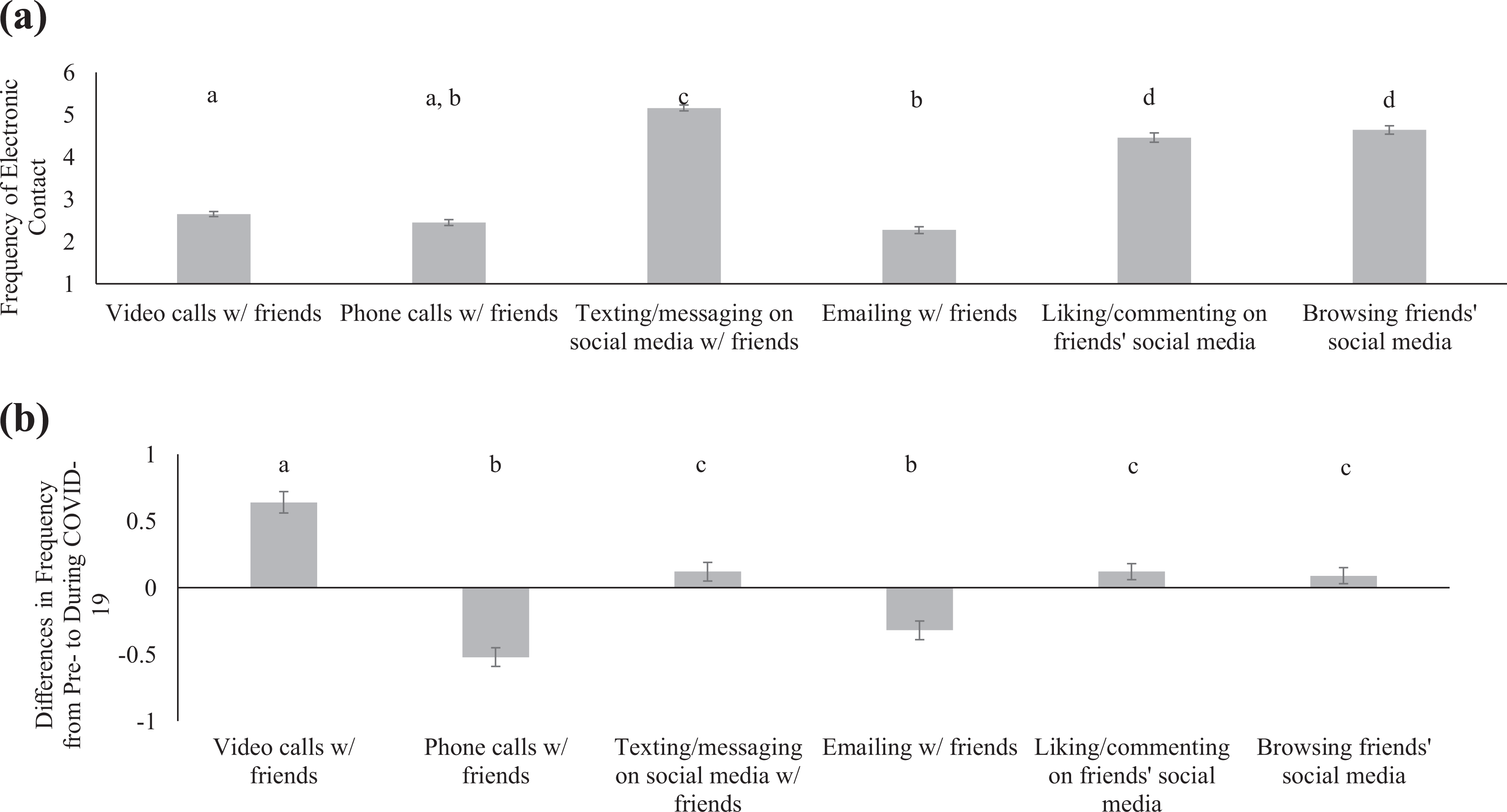
Frequency of electronic contact with friends, by technology type. Figure 1a. Mean frequencies of electronic contact with friends during COVID-19. Figure 1b. Differences in frequencies of electronic contact with friends from pre- to during COVID-19. Note. Shared letter labels indicate non-significant mean differences.
The lower part of Figure 1 shows relative differences in reported frequency of contact with friends before vs. during the COVID-19 outbreak (with zero indicating no change and positive values indicating greater frequency during the pandemic). Results from a 4 × 6 ANOVA with a Greenhouse-Geisser correction indicated that there was a within-person main effect of technology type, F(4.54, 1180.184) = 45.56, p < .001. As seen in Figure 1b, tests of simple effects showed that there were significantly larger positive differences in the frequency of video calls from pre- to during COVID-19 compared to all other forms of technology, suggesting that video calls became a more frequent method of connecting with friends during COVID-19. In contrast, there were significantly larger negative differences in the frequency of phone calls and emails compared to other forms of technology, suggesting that calls and email became less frequent ways to connect with friends during COVID-19. Although there was a non-significant main effect of age, F(3, 260) = 2.73, p = .045, there was a significant age × technology type interaction, F(13.62, 1180.18) = 2.86, p < .001, such that there were more pronounced positive differences (increases) in reliance on phone calls among 26–39-year-olds compared to all other age groups.
Turning to satisfaction ratings of each electronic communication method, the data are depicted in Figure 2. Results from a 4 × 6 ANOVA indicated a main effect of technology type, F(3.63, 344.65) = 19.67, p < .001, such that video and phone calls as well as texting were rated as significantly more satisfactory than emailing or social media activity (liking/commenting on friends’ content or passively browsing). There was a nonsignificant main effect of age, F(3, 95) = 1.43, p = .238, and a non-significant age × technology type interaction, F(10.88, 344.65) = 1.89, p = .041. Thus, the differences in satisfaction with the various methods were robust across age.
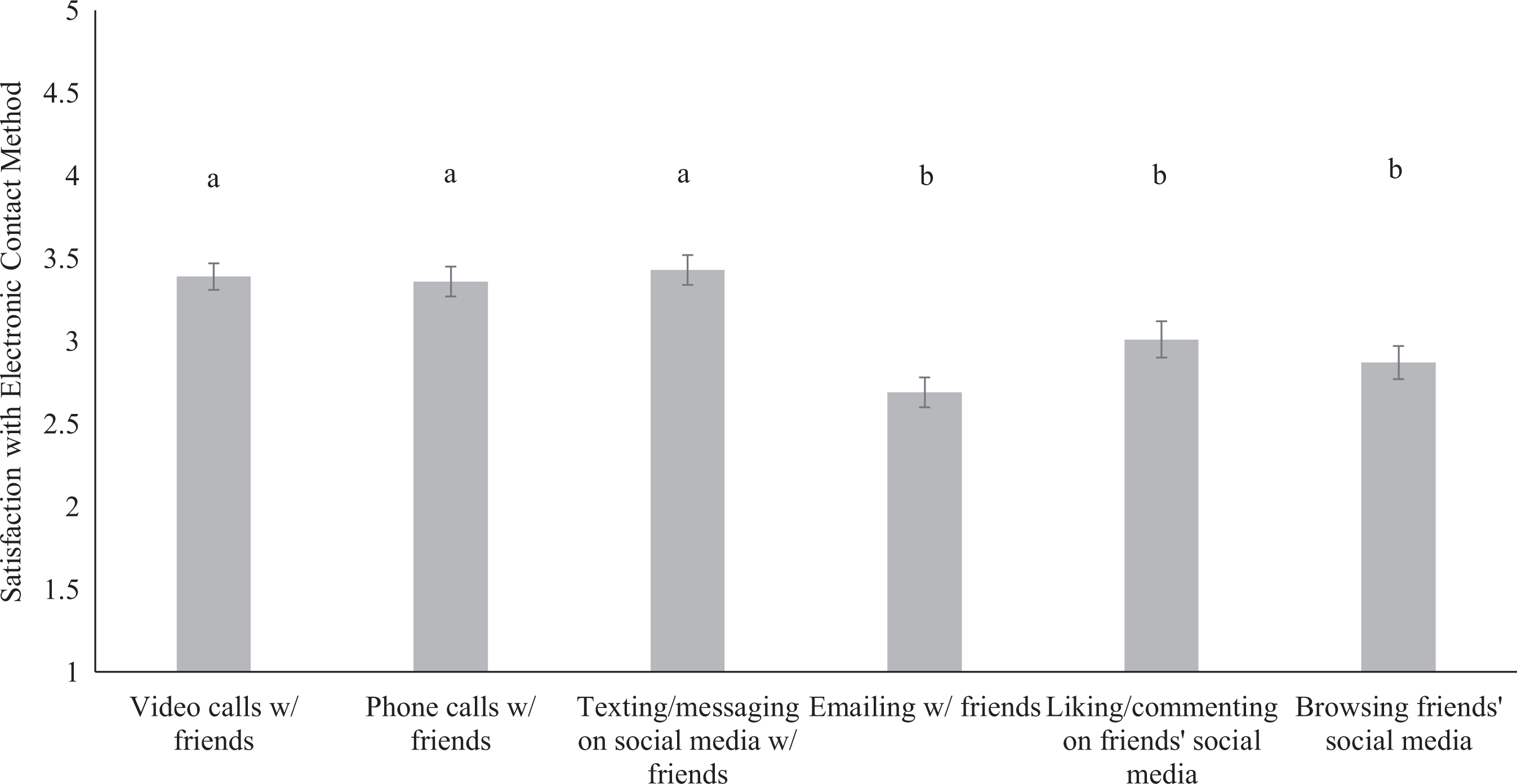
Satisfaction with each method of electronic friend contact during COVID-19. Note. Shared letter labels indicate non-significant mean differences.
In sum, although texting and connecting via social media with friends did not appear to change during COVID-19, these technologies were used, on average, almost on daily basis among all but the oldest generation of 55–70-year-olds. However, they were not regarded as very satisfying (especially among the youngest generations). In contrast, video and phone calls were, generally speaking, the least frequently used methods, but they were used more often than before COVID-19, and they were also considered among the most satisfying methods to connect with friends during the pandemic.
Overall frequency and satisfaction of electronic contact
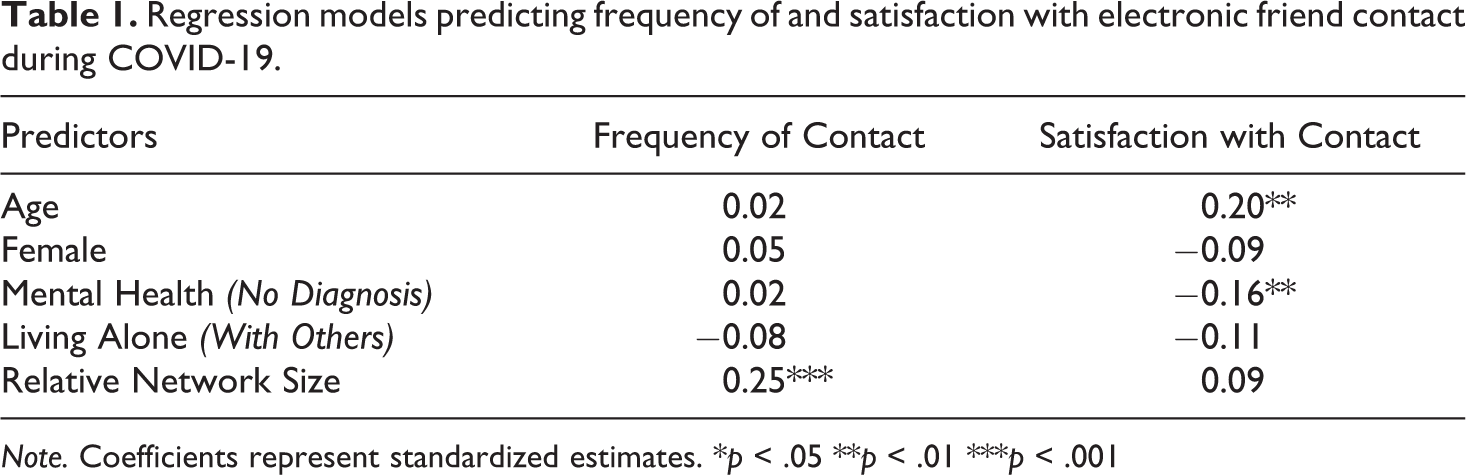
We first explored the predictors of the overall frequency and satisfaction with electronic contact with friends during COVID-19. As shown in Table 1, those who connected more frequently reported communicating with a greater number of friends than usual (β = 0.25, p < .001). For satisfaction with overall electronic communication, different predictors emerged. Older individuals (β = 0.20, p = .001) and those with no prior mental health diagnosis (β = −0.16, p = .009) reported feeling more satisfied with their overall electronic contact with friends. Thus, whereas frequency appears to reflect the relative size of one’s friend network, satisfaction is associated with older age and more robust mental health.
Regression models predicting frequency of and satisfaction with electronic friend contact during COVID-19.
Note. Coefficients represent standardized estimates. *p < .05 **p < .01 ***p < .001
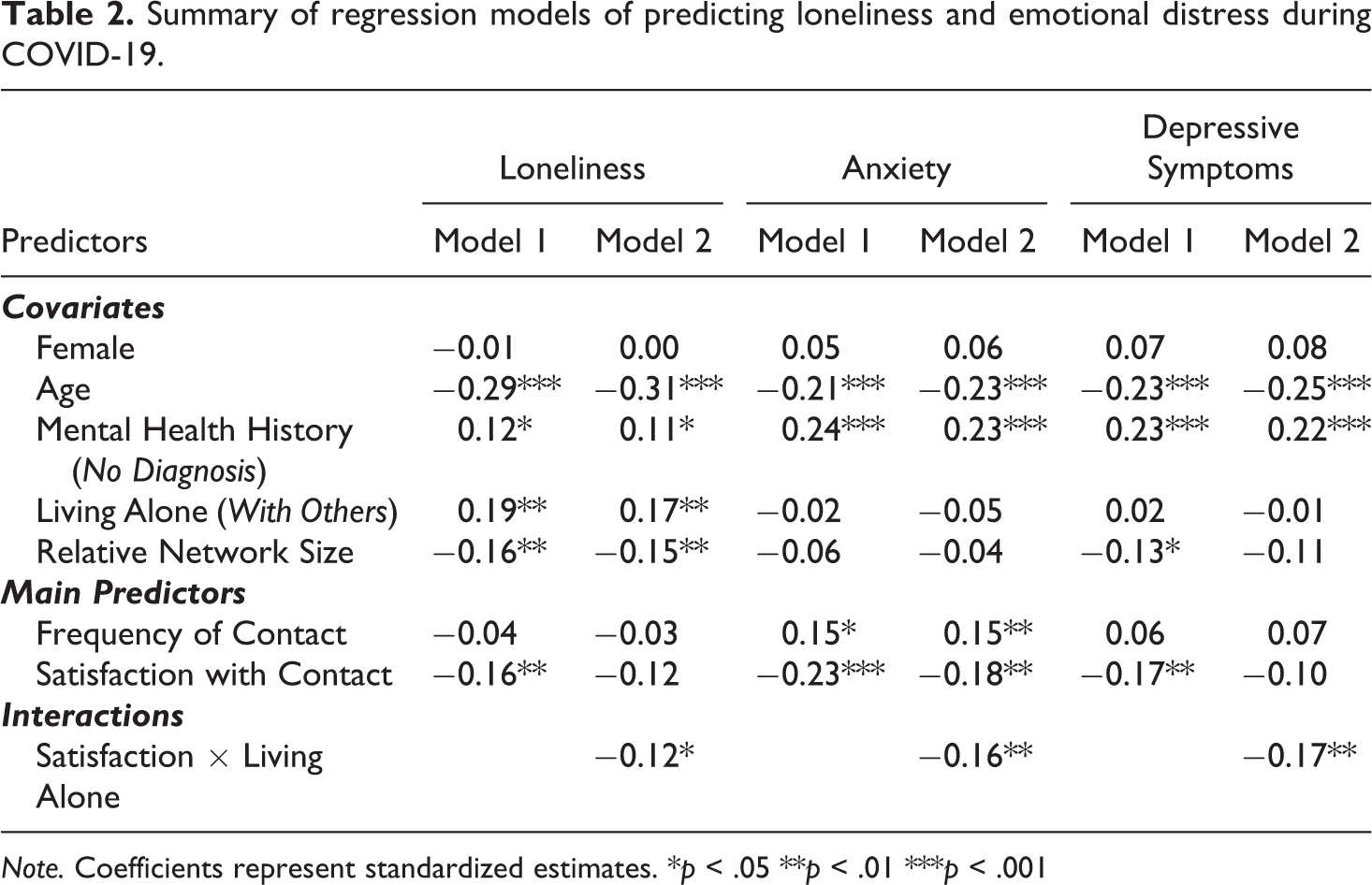
Turning now to test our main hypotheses, we relied on the overall frequency and satisfaction with connecting with friends as the focal predictors of loneliness, anxiety, and depression during COVID-19. For each outcome, two separate regression models were tested; Model 1 (main effects) and Model 2 (interactive effects) regression analyses findings are displayed in Table 2.
Summary of regression models of predicting loneliness and emotional distress during COVID-19.
Note. Coefficients represent standardized estimates. *p < .05 **p < .01 ***p < .001
Starting first with the covariates, the findings show that younger individuals as well as those with a mental health diagnosis reported higher levels of loneliness, anxiety, and depression. Those living alone were also lonelier. In addition, adults who reported communicating with fewer friends than typical during COVID-19 were lonelier and more depressed. When controlling for the covariates, only satisfaction with electronic contact was consistently related with all outcome indicators. As expected, greater satisfaction was related to lower levels of loneliness, anxiety, and depressive symptoms. Contrary to our hypothesis, more frequent electronic contact with friends was associated with higher levels of anxiety.
To examine whether the effects of electronic contact frequency or satisfaction on the distress indicators varied as a function of individual differences (i.e., age, mental health diagnosis) and contextual conditions (i.e., living alone), a series of two-way interactions were added to the main effects in Model 2. None of the two-way interaction terms with frequency of contact were significant and they were therefore excluded from the model. As shown in Table 2, significant two-way interactions between satisfaction and living situation emerged when predicting loneliness, anxiety, and depressive symptoms. Analyses of simple slopes (see Figure 3) showed that while higher levels of satisfaction with friend electronic contact were associated with lower levels of loneliness (β = −0.43, p = .008) and depressive symptoms (β = −0.37, p = .006) among those living alone during COVID-19, satisfaction was unrelated to loneliness (β = −0.10, p = .108) and depressive symptoms (β = −0.10, p = .111) among those living with others. A similar pattern was also documented for anxiety, such that the negative association between satisfaction with friend electronic contact and anxiety was stronger among individuals living alone (β = −0.46, p = .003) compared to those living with others (β = −0.18, p = .006).
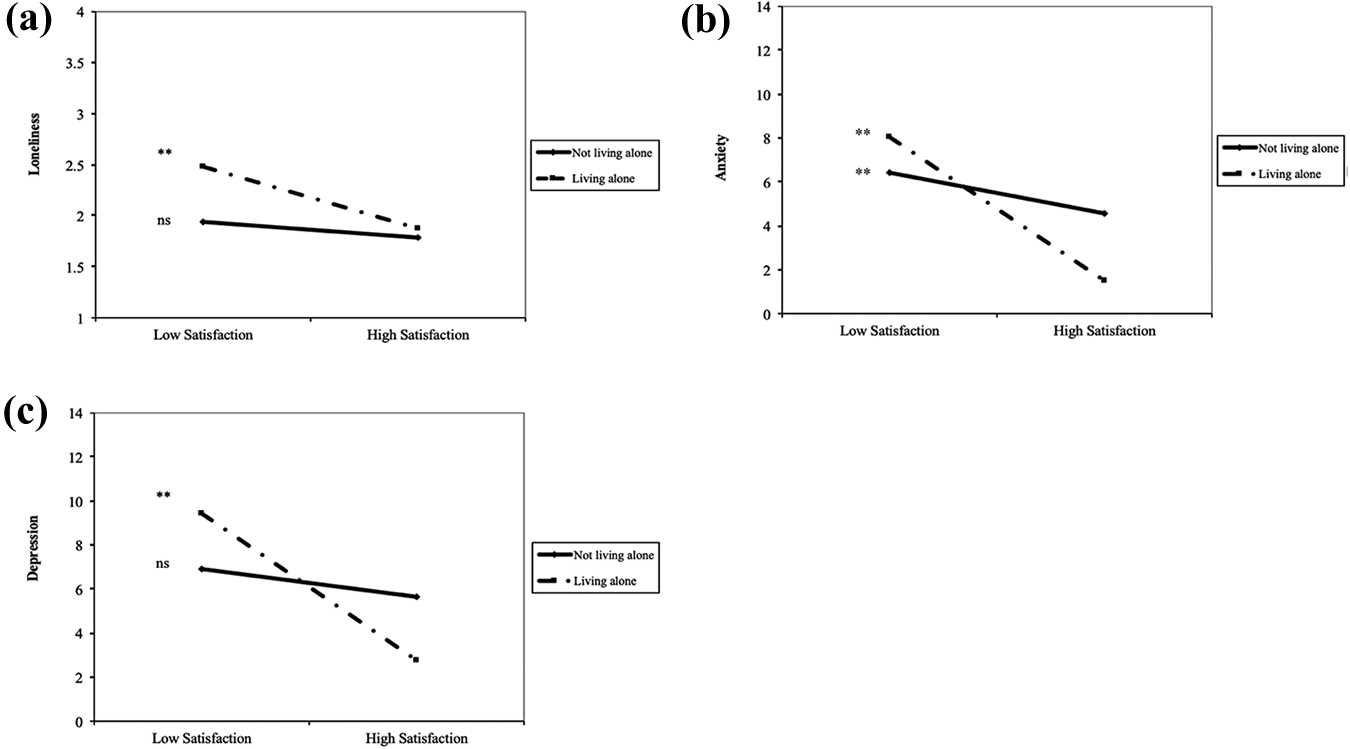
The moderating role of living alone on the associations between satisfaction with electronic friend contact and distress during COVID-19. Figure 3a. Moderating effect of living alone on the association between satisfaction with electronic friend contact and
In sum, greater satisfaction with overall electronic contact with friends was concurrently associated with lower levels of loneliness, anxiety and depressive symptoms, as expected. In contrast, more frequent electronic contact with friends was related to higher (not lower) levels of anxiety during COVID-19. Satisfying electronic contact with friends was most protective against loneliness and emotional distress among truly isolated individuals (i.e., those living alone during physical distancing mandates).
Discussion
Humans are inherently social, wanting to connect with others (Baumeister & Leary, 1995). When they are required to withhold contact from familiar others, it is not surprising that many feel lonely and experience emotional distress (Cacioppo et al., 2011). One of the key questions, then, is how a sense of connection and mental health can be protected during a pandemic necessitating such species-atypical conditions. Based on past evidence of the unique psychological functions (e.g., validation and support) of friendships (Sherman et al., 2000), we presumed that keeping in touch with friends is potentially an effective coping strategy during pandemic-related isolation. Focusing on electronic communication methods that become a necessity during a pandemic (Beaunoyer et al., 2020), the current findings suggest that it is satisfaction with overall electronic contact with friends, not the frequency of such contact, that is associated with lower loneliness, depression, and anxiety. These findings underscore the role of contact with friends as a potential buffer during mandated isolation measures and extend research on electronic communication that mostly focuses on the frequency or time spent, rather than satisfaction, with such contact.
At this time of imposed isolation, high levels of distress were reported across our predominately female and relatively affluent sample: Close to one third of the 18–70-year-old adults reported moderate to high levels of depression, while a fourth of the current sample reported moderate to severe symptoms of anxiety. Although high, these rates of distress are comparable to those reported in a national study of over 50,000 respondents in the beginning of the COVID-19 epidemic in China: During the end of January of 2020, 35% of the large sample reported psychological distress, with higher rates among females (Qiu et al., 2020). The rates in the current study are somewhat lower (possibly reflecting the demographics of our sample) than those obtained by a nationally representative sample of adults in the beginning of COVID-19 in the United States (Pew Research Center, 2020).
Although it is difficult to parse out the effects of physical distancing from other stressors (e.g., fear of contagion, economic implications of losing a job) during a pandemic like COVID-19, we presumed that connecting with friends is one potential coping mechanism that can alleviate subjective feelings of isolation as well as emotional distress. Consistent with our expectations, satisfaction with electronic contact with friends was related to lower levels of loneliness as well as anxiety and depression during stay-at-home and physical distancing mandates. These associations were robust even after accounting for relevant covariates. In contrast, greater overall frequency of connecting with friends was unrelated to both loneliness and depression, and instead associated with higher levels of anxiety. It is possible that greater feelings of anxiety reflect compulsive tendencies of needing to “check in” with friends when people can no longer see them in person. Participants also reported more frequent electronic contact when they were keeping in touch with a greater than typical (i.e., pre-COVID-19) number of friends. Thus, it appears that when greater frequency of contact is related to efforts to keep up with more friends, it can increase, rather than decrease, distress.
Beyond our main goal to test protective mechanisms against loneliness and emotional distress, we also gained some insights into who is at elevated risk during the COVID-19 pandemic. Three risk groups were identified: younger adults, individuals with a prior mental health diagnosis, and people living alone. Within our sample of 18–70-year-olds, younger adults reported higher levels of loneliness, anxiety, and depression. Challenging the popular belief that older adults are more vulnerable to mood disorders, this finding is consistent with reviews on age-related differences in mental health (e.g., Haigh et al., 2018). Our finding regarding prior mental health difficulties is also consistent with scholarly views of risk factors for depression and anxiety during the COVID-19 pandemic (Yao et al., 2020). Finally, we found that objectively isolated individuals (i.e., those living alone) also felt lonelier. Of all the high-risk groups, it was the people living alone for whom electronic contact helped the most. Specifically, when adults living alone were satisfied with their overall electronic connections with their friends, they reported lower levels of loneliness, anxiety, and depression.
The current findings also shed light on differences (and lack thereof) across electronic communication methods. Based on use before and during the COVID-19 outbreak, there was little to no change in the most frequently used methods (i.e., texting, reliance on social media). However, the largest positive difference (implying increase) was documented for video calls. Video calls were also rated as highly satisfying. Enabling synchronous and multi-modal communication (Dennis et al., 2008), video calls are most analogous to face-to-face interactions and therefore well-suited to replenish lack of physical closeness (Kahlow et al., 2020). The surprisingly similar patterns of differences in methods used across generations imply that physical distancing poses strong demands for methods that facilitate meaningful relationships maintenance. However, it is important to keep in mind that our sample was predominately White and fairly affluent; hence, access to videocalls was unlikely to be an obstacle.
Although the current findings provide some insights about the nature and potential function of electronic communication during a pandemic, the study has a number of limitations. First, we did not define “friends” in this study, nor did we assess the closeness of friendships. Thus, it is possible that our findings reflect variations in closeness (Liu & Yang, 2016) or generational differences is friend selectiveness (Carstensen, 2006). As mentioned above, we also cannot presume our findings to generalize across economically and ethnically diverse populations --or even across gender. Lack of access to smartphones during imposed isolation, for example, may reinforce socioeconomic disparities in mental health (Beaunoyer et al., 2020). Additionally, the cross-sectional data limit our ability to infer directionality of the effects. Hence, given that satisfaction with electronic contact with friends is related to lower distress, it is also possible that less distressed individuals perceive their social exchanges more positively (although there was notable variation in satisfaction across methods). Furthermore, our data on differences between pre-COVID-19 and current use of various electronic communication methods do not enable us to talk about changes across time, as we relied on retrospective accounts of past use. Finally, rather than relying on self-reports on communication methods, subsequent research should rely on multiple sources of data (e.g., using software that tracks use of methods, friend reports of satisfaction).
Multiple questions about the relational and friendship functions of electronic communication remain. While we focused on descriptive findings regarding technology use during imposed isolation and its potential to protect from emotional distress, this question would further benefit from theoretically rich communication research frameworks on relational closeness. For example, media multiplexity theory (Miczo et al., 2011) allows us to understand how different types of technologies enhance relational closeness. Taking a step further, channel complementary theory highlights the ways in which different combinations of technology (e.g., voice calls and texting vs. and voice and video calls) are related to closeness (Ruppel et al., 2018). It is particularly important to integrate such approaches with those that focus on mental health outcomes. For example, it would be interesting to test mediational models where particular technology use patterns predict friendships closeness (Miczo et al., 2011), which in turn predicts mental health over time. Nevertheless, findings from the current study provide important initial insight into how connecting with friends through electronic communication methods (overall frequency and satisfaction) can help buffer isolation-related distress (cf. Hülür & Macdonald, 2020).
Final conclusions
In debates of digital lives and subjective well-being, generic estimates are often used without distinguishing between social and non-social (e.g., Internet browsing, watching videos) activities. Such broad indicators, that merely focus on time spent (Coyne et al., 2020) or that do not separate communication from online activities (Orben & Przybylski, 2019), are not necessarily good predictors of mental health. Whereas some online activities, such as excessive news consumption, can amplify rather than alleviate emotional distress during a pandemic (Gao et al., 2020), our findings highlight the psychological benefits of connecting electronically with trusted and close others. It is critical that the opposing sets of findings regarding social and non-social activities are recognized when making public health recommendations. For example, the recent guidelines by the Word Health Organization (WHO) pertaining to mental health during the COVID-19 pandemic advise people to restrict their online exposure, while also emphasizing the greater need for connectedness and social support (Word Health Organization, 2020). The current findings suggest that overall online contact can facilitate sense of connectedness and support as long as the contact is satisfying. Although connecting electronically with close others is not a panacea against subjective sense of isolation and emotional distress, it may offer a way to cope with isolation when people are satisfied with their exchanges.
Footnotes
Funding
The author(s) received no financial support for the research, authorship, and/or publication of this article.

Open research statement
As part of IARR’s encouragement of open research practices, the author(s) have provided the following information: This research was not pre-registered. The data used in the research are not available. The materials used in the research are available. The materials can be obtained from the first author.