




Abstract
Technology has given rise to online behaviors such as sexting. It is important that we examine predictors of such behavior in order to understand who is more likely to sext and thus inform intervention aimed at sexting awareness. We used the Theory of Planned Behavior (TPB) to examine sexting beliefs and behavior. Participants (n = 418; 70.3% women) completed questionnaires assessing attitudes (instrumental and affective), subjective norms (injunctive and descriptive), control perceptions (self-efficacy and controllability) and intentions toward sexting. Specific sexting beliefs (fun/carefree beliefs, perceived risks and relational expectations) were also measured and sexting behavior reported. Relationship status, instrumental attitude, injunctive norm, descriptive norm and self-efficacy were associated with sexting intentions. Relationship status, intentions and self-efficacy related to sexting behavior. Results provide insight into the social-cognitive factors related to individuals’ sexting behavior and bring us closer to understanding what beliefs predict the behavior.
Advances in technology over the last two decades have changed the dynamics of social relationships (Rodríguez-Castro et al., 2017). Technology has become an important means of communication between individuals and has increased the possibility of initiating and maintaining relationships even when individuals are not geographically close (Morey et al., 2013). This has given rise to sexting behavior which is now receiving increasing attention from both researchers and the media. It is generally accepted that sexting refers to the exchange of sexually explicit messages or images using mobile phones (Chalfen, 2009; Klettke et al., 2014; Ringrose et al., 2012). This involves the creation and sharing of sexually suggestive text messages and/or nude or partially nude images and videos (Drouin et al., 2013; Lenhart, 2009; Weisskirch & Delevi, 2011).
Researchers have examined the prevalence of sexting behavior among adults. In a systematic review, Klettke et al. (2014) found that the mean prevalence of sexting among adults was 53.31%. More recently, research has reported prevalence to be as high as 77% among UK general population adults (Brodie et al., 2019) or 80% among US adult undergraduate students (Hudson & Fetro, 2015) suggesting that engagement in the behavior is increasing. The research to date has provided an unclear picture of the role of gender in likelihood to engage in sexting. For example, Brodie et al. (2019) found that men were more likely to sext than women. Others have found the opposite effect (Wysocki & Childers, 2011) while some show no effect of gender on sexting frequency (Currin et al., 2020).
Evidence suggests that sexting is commonly used for maintenance and improvement of romantic relationships (Currin et al., 2016; Van Ouytsel et al., 2017). Individuals also use sexting to flirt and facilitate hook ups or dates (Benotsch et al., 2013; Henderson & Morgan, 2011). This indicates that sexting may be more common among individuals who are not in a romantic relationship. Despite this, some research has suggested that sexting occurs equally in both relationships and among those who are single (e.g. Drouin et al., 2013) and others have found sexting is more common among those in relationships (Weisskirch & Delevi, 2011). Thus, the association between relationship status and sexting frequency is unclear.
Some evidence suggests that engaging in sexting increases relationship (Morey et al., 2013) and sexual satisfaction (Brodie et al., 2019). Thus sexting may represent a positive relationship behavior for adults. It should be noted though that there are risks associated with sexting such as non-consensual sharing of texts, images or videos. Once an individual sends a sext, control over content is relinquished to the receiver potentially leaving the sender vulnerable to further distribution of their private text or image (Strassberg et al., 2013). Additionally, sexting has been associated with substance abuse (Dir et al., 2013), anxious attachment and avoidant attachment styles (Drouin & Landgraff, 2012) and risky sexual behavior such as unprotected sex and sex with multiple partners (Benotsch et al., 2013; Brodie et al., 2019; Kosenko et al., 2017).
Given that adults are engaging in sexting, it is important to examine what makes individuals more likely to sext. A problem with this though, is that most research focuses on predictors of sexting behavior in adolescents (e.g. Brinkley et al., 2017; Van Ouytsel et al., 2014). There is currently a dearth of research examining predictors of sexting behavior among adults. One previous study which has done this is that of Brodie et al. (2019) who examined social–cognitive factors that influenced the likelihood of engaging in sexting among adults. The findings indicated that those who believed sexting was a positive, rewarding behavior were more likely to have reported engaging in sexting. Thus, when there are perceived benefits of sexting, adults are more like to engage in the behavior. These findings are useful as they provide insight into the relationship between sexting beliefs and behavior. To take this work further though, research needs to utilize a “gold standard”’ framework used in the prediction of behavior from cognitions.
To date, the Theory of Planned Behavior (TPB; Ajzen, 1991) appears to be the most popular theoretical framework for understanding the relationship between beliefs and behavior (Ajzen, 2011, 2014; Armitage & Christian, 2004). TPB posits that together, attitudes toward the behavior (positive or negative beliefs about the behavior), subjective norm (beliefs relating to social pressures involved in the behavior) and perceived behavioral control (PBC; external variables which enable or hinder the behavior) predict intentions to sext (willingness to engage in sexting behavior). Intention, in turn, predicts the behavior and mediates the relationship between attitudes, subjective norms, PBC and then behavior. TPB also states that PBC may have a direct effect on behavior.
Some researchers have attempted to apply TPB to a sexting context. For example, Walrave et al. (2014) applied the TPB to examine predictors of adolescents’ sexting intentions. All TPB components (attitudes, subjective norms & PBC) significantly predicted sexting intentions. However, there are differences in relationship processes in adolescence, compared to adulthood, that may make factors such as subjective norms more prominent in decision making. As adolescents make the transition into dating relationships, they must face a key period of identity and role restructuring in this new relational context, which can increase stress levels and lead to fluctuation in self-esteem and their ability to cope with challenging situations (Furman & Shaffer, 2003). This may make adolescents more vulnerable to peer and partner influence during this period. Indeed, Suleiman and Deardorff (2015) found that adolescents reported that they had experienced pressure from peers to engage in romantic relationships, and associated behaviors, and would often initiate such relationships to gain approval or improve their social standing within their peer group. The majority of adolescent romantic relationships tend to be fairly brief in comparison to adult relationships (Zimmer-Gembeck, 2002), providing less time for aspects like trust and relationship security to develop. This may lead to further reliance on perceived peer norms, rather than factors related to relationship quality, in sexting-related decision making. Further, given the potentially legal implications of engaging in adolescent sexting (e.g. Chalfen, 2009), the motivations underlying the behavior may be very different in an adult population and thus merit investigation. Others have examined the predictive power of TPB to explain sexting behavior among undergraduate students. For example, Hudson and Fetro (2015) found that in line with TPB, attitudes toward sexting, subjective norms, and behavioral intentions predicted students’ sexting behavior. Further, Liong and Cheng (2017) found that attitudes, self-efficacy and subjective norm were significant predictors of the intention to sext. Although such work demonstrates the usefulness of using TPB in a sexting context, neither study measured the theory in its entirety and thus did not account for all beliefs which may be important in sexting behavior. In addition to this, more recently, researchers have argued for a two-component TPB (e.g. Elliott & Ainsworth, 2012; Rhodes & Courneya, 2003, 2004) which has not been applied to sexting behavior.
The two-component TPB distinguishes between instrumental and affective attitudes. Instrumental attitudes are the perceived outcomes involved in performing a behavior. Affective attitudes represent beliefs regarding how enjoyable the behavior is and the emotions this elicits (Fishbein & Ajzen, 2010). The two-component TPB also argues for two components of social pressure: injunctive and descriptive norms. Injunctive norms reflect beliefs that persons important to the individual would approve of the behavior. In contrast, descriptive norms reflect perceptions about whether significant others are engaging in the behavior themselves (Fishbein & Ajzen, 2010). Finally, two components of PBC have been distinguished; self-efficacy and controllability (Ajzen, 2002a, 2002b). Controllability relates to the individual’s beliefs, that she or he has control over the behavior (Fishbein & Ajzen, 2010). This involves the consideration of external variables which may enable or inhibit the behavior such as resources, time or opportunity. Self-efficacy concerns beliefs regarding how capable the individual feels he or she is to carry out the behavior (Bandura, 1986, 1994, 1997). It is now common for research to use the two-component TPB in place of the original model as this shows higher predictive validity than the original model (e.g. Davies et al., 2010; Fen & Sabaruddin, 2009; Norman, & Conner, 2006). However, no researcher has utilized the two-component TPB to understand sexting behavior. Not only would such an investigation provide a novel test of the two-component TPB but would also bring us closer to understanding the full picture of beliefs associated with adult sexting behavior.
In addition to examining TPB beliefs, it should be acknowledged that beliefs specific to sexting behavior that are not included in the TPB also require investigation. For example, research has suggested that how “fun” sexting is perceived to be related to engagement (e.g. Rodríguez-Castro et al, 2017; Wiederhold, 2015). This work tends to show that individuals sext for the fun of it. In addition to this, beliefs about the benefits to relationships have been found to influence the decision to sext (Benotsch et al., 2013; Henderson & Morgan, 2011 Van Ouytsel et al., 2017). Finally, evidence suggests that given the potential risks of engaging in sexting, individuals’ beliefs around perceived risks also affect the likelihood that a person will sext. Weisskirch and Delevi (2011) developed a scale measuring fun and carefree beliefs (how fun and harmless sexting is viewed to be), perceived risks associated with sexting and relational expectations (the extent to which the individual believes sexting will benefit his/her relationship) may influence individuals’ decisions to sext. Others have supported the importance of such beliefs to sexting behavior (Dir & Cyders, 2015; Scholes-Balog et al., 2016; Strassberg et al, 2013; Van Ouytsel et al., 2017). In addition to TPB components then, it is important to examine how specific sexting beliefs may relate to adults’ sexting intentions.
The current study
The current study applied the two-component TPB to investigate the relationship between adults’ beliefs and reported sexting behavior. The study also aimed to examine the association between sexting specific beliefs and intentions. Such findings would bring us closer to understanding adult sexting behavior and why individuals choose to sext or not. To accomplish this, we assessed participants’ scores on TPB variables and sexting specific beliefs. TPB components were attitudes (affective and instrumental), subjective norms (injunctive and descriptive), PBC (self-efficacy and controllability), behavioral intentions and self-reported sexting behavior. Sexting specific beliefs were fun and carefree beliefs, perceived risks, and relational expectations. Specifically, the aims of the study were to test the applicability of TPB to understand the relationship between adults’ beliefs about sexting and their reported sexting behavior, and to examine the relationship between sexting specific beliefs, sexting intentions and reported behavior. Based on the literature outlined above, we propose the following hypotheses;
Methods
Participants and procedure
After ethical approval was obtained from the university’s ethics committee, data was collected using the online survey software Questionpro. Participants were recruited opportunistically using social media platforms (e.g. Facebook and Twitter). Participants were asked to share the link with friends and family upon completion to facilitate a snowballing recruitment technique (Allen, 2017). It has been argued that this is an effective recruitment strategy which is time and resource efficient (Baltar & Brunet, 2012; Kosinski et al., 2015; McRobert et al., 2018). The questionnaire took approximately 10 minutes to complete.
Data was collected from 418 participants (70.34% women). This sample size is based on Tabachnick and Fidell’s (2013) participant calculation and a power analysis using G* Power (Faul et al., 2007, 2009). Age ranged from 18 to 55 years. 73.5% of participants were 18–30 years, 18.7% were 31–40 years old and 7.7% were 41–55 years old. 79.9% of respondents identified as British with other nationalities such as Nigerian, American, Asian and German also reported. 43.1% of participants reported being in a relationship, 42.4% were single, 11.8% were married, 1.6% were divorced and 0.7% were widowed. As previously stated, for the purpose of analysis, participants were categorized as either being in a relationship or not in a relationship. The majority of participants (85.6%) reported having engaged in sexing behavior in the past. This figure is higher than previous work reporting adult prevalence as 77.6% (Brodie et al., 2019) and 80.9% (Hudson & Fetro, 2015) however, Currin et al. (2020) argued that sexting prevalence is rising over time suggesting an increase may be expected.
Measures
TPB measure
Participants were provided with the following definition of sexting before commencing the questionnaire: “We define sexting as the exchange of sexually explicit messages or images. This can involve sending sexually laden text messages, sexually suggestive photos or videos, or partially nude or nude photos or videos via cell phone.” This definition is in line with current literature which defines sexting behavior (e.g. Chalfen, 2009; Ringrose et al., 2012). TPB items were taken from publications on designing TPB questionnaires (Ajzen, 2002a, 2002b; Fishbein & Ajzen, 2010; Francis et al., 2004; Wilson, Woolfson, Durkin, & Elliott, 2016). In doing so, we were able to adhere to the principle of compatibility and create a questionnaire similar to those used across social and health behaviors.
Attitudes
Instrumental attitudes were measured on bipolar scales using six distinct anchors. Participants’ responded to statements such as “For me, sexting over the next month would be…” using the anchors. These were; 1 = negative, 9 = positive; 1 = unimportant, 9 = important; 1 = unnecessary, 9 = necessary; 1 = not at all rewarding, 9 = rewarding; 1 = a terrible idea, 9 = a great idea; 1 = detrimental, 9 = beneficial. A mean instrumental score was calculated for each participant (α = .93). Affective attitudes were also assessed using six anchors (1 = aggravating, 9 = satisfying; 1 = unpleasant, 9 = pleasant; 1 = unenjoyable, 9 = enjoyable; 1 = boring, 9 = interesting; 1 = stressful, 9 = relaxing; 1 = undesirable, 9 = desirable). A mean affective attitude score was also calculated for each participant (α = .96).
Subjective norms
Three items assessed injunctive norm. The injunctive norm items were “The people whose opinions I value would want me to sext over the next one month”; “Most people who are important to me would want me sext over the next one month”; “I feel the social pressure to sext over the next one month.” Participants responded using a 9-point Likert scale (1 = strongly disagree, 9 = strongly agree). Three items measured descriptive norm. These were; “How many of your friends do you think would engage in sexting over the next month?”(1 = none of them, 9 = all of them); “Generally, many people sext (i.e. Do you think many people engage in sexting?)” (1 = strongly disagree, 9 = strongly agree); “How often do you think that other persons will sext the next one month?” (1 = never, 9 = all the time). Mean scores were then calculated for injunctive norm (α = .65) and descriptive norm (α = .73).
Perceived behavioral control
Self-efficacy was measured using 3 items. These were; “To what extent do you see yourself as being capable of sexting over the next month” (1 = to no extent at all, 9 = a great extent); “How confident are you that you’ll sext over the next one month?” (1 = not confident, 9 = extremely confident); “I have the ability to sext over the next one month” (1 = strongly disagree, 9 = strongly agree) (α = .78). Participants’ controllability toward sexting was assessed using 2 items “It is completely up to me if I sext over the next month” (1 = strongly disagree, 9 = strongly agree); “How much personal control do you have over engaging in sexting in the next one month?” (1 = no control at all, 9 = complete control) (α = .66).
Intention
Three 9-point Likert-style items were used to measure behavioral intention. These were; “I intend to sext over the next month” (1 = strongly disagree, 9 = strongly agree); “I will try to sext over the next one month” (1 = strongly disagree, 9 = strongly agree); “How likely is it that you will sext within the next one month?” (1 = extremely unlikely, 9 = extremely likely) producing a mean intention score for each participant (α = .93).
Reported sexting behavior
Four 9-point Likert-style items were used to measure sexting behavior within the last month. These were “How often did you sext over the last month”; (1 = never, 9 = very frequently) “How many days did you sext within the last month?” (1 = no days, 9 = everyday); “To what extent have you sexted in the past month?” (1 = to no extent at all, 9 = a great extent); “I have sexted in the past month” (1 = strongly disagree, 9 = strongly agree). A mean sexting behavior score for each participant was then calculated (α = .92).
Specific sexting beliefs
Weisskirch and Delevi’s (2011) sexting attitude scale was used to assess specific sexting beliefs. This measure utilizes 19 items to measure beliefs toward sexting. The scale comprises three subscales. The first subscale fun and carefree comprises 7 items and relates to how fun and harmless the participant views sexting (e.g., “Sexting is no big deal”; “There is no harm in sexting”: α = .84). The second subscale “Perceived risk” contains 5 items which measure perceptions of risks associated with sexting (e.g., “I think that sexting may cause me problems in the future”; “Sending sexually suggestive photos or videos is risky”: α = .80). The third subscale “Relational expectations” consists of contains 4 items which assesses the extent to which the individual believes sexting will benefit his/her relationship (e.g., “My romantic partners expect me to send sexually racy texts”; “Sexting improves my relationship or potential relationship”: α = .74). Mean scores were produced for each subscale.
Data analysis
The data was analyzed by conducting a path analysis using the Lavaan-package in R (Rosseel, 2012). In this path model, we specified the TPB model, where affective and instrumental attitudes, injunctive and descriptive norms, and self-efficacy and controllability are said to predict behavioral intention, and reported behavior is predicted by intentions, self-efficacy and controllability. Additionally, we included the sexting specific beliefs (fun and carefree, perceived risk, and relational expectations) as predictors of intention. Three demographical factors were dummy coded: age (Age 31–40 = 1, other = 0; age 41–55 = 1, other = 0, Age 18–30 as reference category), gender (woman = 1, man = 0) and relationship status (single = 1, in a relationship = 0), and were included in the model as predictors of both intentions and behavior. Goodness of fit tests were conducted, and unstandardized (B) and standardized (β) coefficients estimated. Strength of the associations were categorized based on the standardized coefficients, where β = .1/.3/.5 constitutes a weak/moderate/strong association respectively.
Results
Descriptive statistics
Means, standard deviations and correlation coefficients are shown in Table 1. Affective attitudes, instrumental attitudes, descriptive norm, injunctive norm, self-efficacy, controllability, fun and carefree sexting beliefs, and relational expectations were positively correlated with sexting intentions and behavior. Further, perceived risks of sexting were negatively correlated with both intentions and behavior.
Means and standard deviations, bivariate correlations of measured variables.
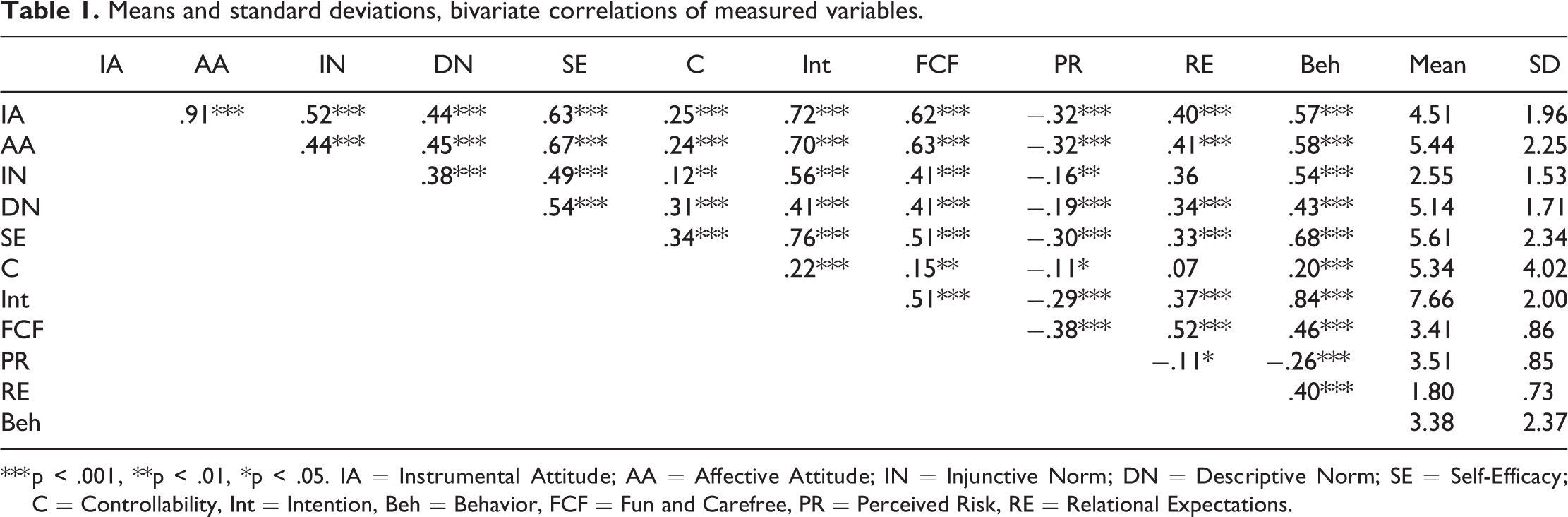
*** p < .001, **p < .01, *p < .05. IA = Instrumental Attitude; AA = Affective Attitude; IN = Injunctive Norm; DN = Descriptive Norm; SE = Self-Efficacy; C = Controllability, Int = Intention, Beh = Behavior, FCF = Fun and Carefree, PR = Perceived Risk, RE = Relational Expectations.
Model fit and explained variance
The chi-square test for model fit regularly produces a significant result, even when the model fits the data well. Therefore, we used a range of fit indexes to assess the model fit: the chi-square test, the RMSEA, the Comparative Fit Index and the Tucker-Lewis Index. The chi-square test indeed suggested a non-acceptable fit (χ2 (7) = 17.45, p = 0.015). However, the RMSEA (0.060), the Comparative Fit Index (CFI, 0.99), and Tucker-Lewis Index (TLI, 0.96) all suggested an acceptable fit of the model, allowing us to estimate standardized coefficients for the various factors as outlined in the data analysis section. The fitted model predicted sexting intentions and self-reported sexting behavior well, with an explained variance of R2 = 72% for both sexting intentions and self-reported sexting behavior.
Predicting intentions to sext
The path analysis showed that traditional TPB factors significantly predict intention to sext. Instrumental attitudes had a moderate positive association with intention (B = 0.42, p < .001), while affective attitudes were not associated with intentions (B = 0.04, p = .60). Both injunctive and descriptive norms significantly predicted intention, with injunctive norms showing a moderate positive association (B = 0.37, p < .001) and descriptive norms showing a weak negative association with intentions (B = −0.11, p = .023). Self-efficacy had a strong positive association with intention to sext (B = 0.53, p < .001), whereas controllability did not link to intentions (B = −0.04, p = .24). Surprisingly, none of the three sexting specific beliefs (fun and carefree, perceived risk and relational expectation) showed significant associations with sexting intentions (all B’s between −0.06 and 0.04, all p’s >.50). Furthermore, relationship status (B = 0.39, p = .007) and Age Group 31–40 (B = 0.38, p = .03) showed weak positive associations with intentions, suggesting that people who are single had a higher intention to sext, while no association with intention to sext was found for Age Group 41–55 (B = 0.41, p = .12). Lastly, no gender differences were found (B = −0.04, p = .79). See Table 2 for an overview of the results including both the unstandardized and standardized coefficients, and Figure 1 for a graphic of the path analysis with standardized coefficients.
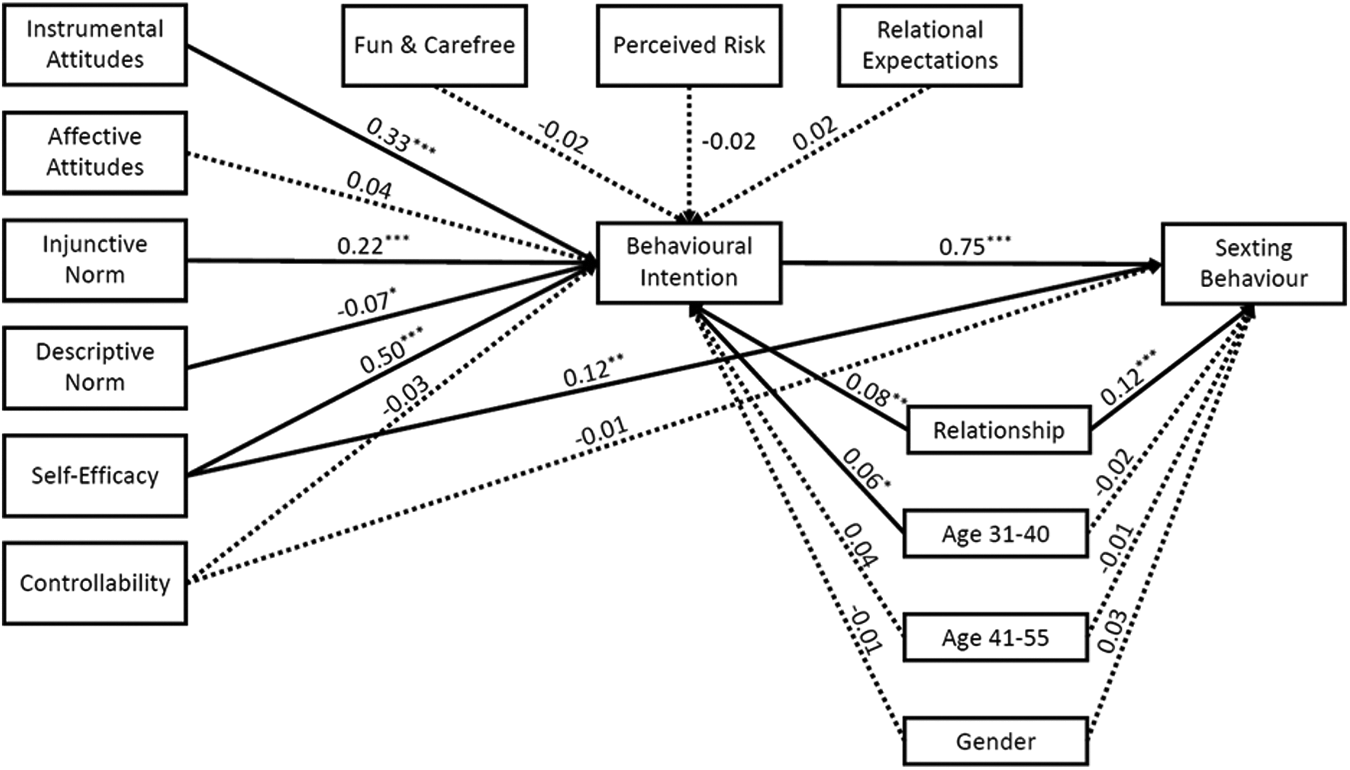
Path analysis with standardized coefficients. Note: Dotted arrows indicate non-significant predictors. *p < .05, **p < .01, ***p < .001.
Results of the path analysis including unstandardized and standardized coefficients.
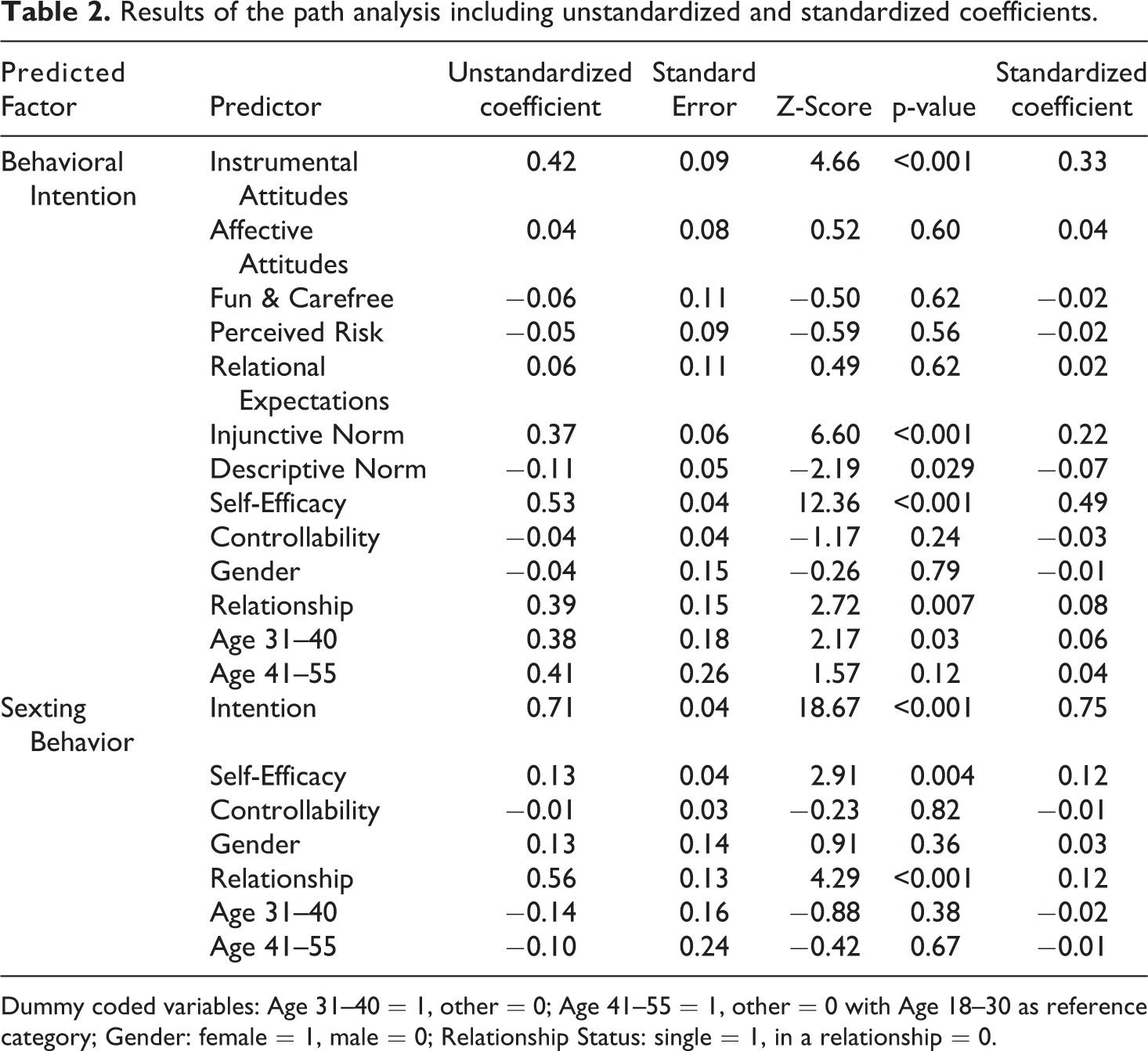
Dummy coded variables: Age 31–40 = 1, other = 0; Age 41–55 = 1, other = 0 with Age 18–30 as reference category; Gender: female = 1, male = 0; Relationship Status: single = 1, in a relationship = 0.
Predicting reported sexting behavior
The path analysis also included predictors of self-reported sexting behavior. Not surprisingly, intention to sext was a strong predictor of self-reported sexting behavior (B = 0.71, p < .001). In the tradition of the TPB, control factors (in this case self-efficacy and controllability) were not only used to predict intentions, but also included as direct predictors of behavior. Self-efficacy indeed showed a weak association with self-reported sexting behavior (B = 0.13, p = .004), but controllability did not (B = −0.01, p = .82). As with the intention to sext, we included the demographics (age groups, relationship status and gender) as direct predictors of behavior, where only relationship status (B = 0.56, p < .001) was a significant predictor of self-reported sexting behavior, meaning that single people reported higher levels of sexting behavior (other B’s between −0.14 and 0.13, all p’s >.35).
Discussion
The study was the first to apply the two-component TPB to examine the relationship between adults’ beliefs and reported sexting behavior. The results indicated that relationship status, age, instrumental attitude, injunctive norm and self-efficacy were significantly and positively associated with intentions to sext. Descriptive norm was negatively associated with intentions to sext. Fun and carefree beliefs, perceived risks of sexting and relational expectations did not relate to sexting intentions. Intentions, self-efficacy and relationship status were positively associated with reported sexting behavior.
Similar to previous work (e.g. Hudson & Fetro, 2015; Liong & Cheng, 2017; Walrave et al., 2014), we found that within TPB, attitudes toward sexting were associated with intentions to sext. This finding is also consistent with research which has shown that those with more positive attitudes toward sexting were more likely to report having previously engaged in the behavior (e.g. Ferguson, 2011; Strassberg et al., 2013). Our findings extend previous work by identifying instrumental attitudes as the important attitudinal component. The importance of instrumental attitudes might be that these involve the consideration of the perceived benefits of the behavior and a common motivation for engaging in sexting is to improve relationships (Currin et al., 2016; Van Ouytsel et al., 2017). Those who believed sexting would benefit them were more likely to intend to perform the behavior. Such a finding contributes to the existing sexting literature by differentiating between different types of attitudes and showing which is more likely to relate to behavioral intentions.
Perceptions about important others (i.e. injunctive and descriptive norm) were also associated with sexting intentions. Those who believed important others would approve of them engaging in sexting behavior were more likely to intend to perform the behavior. Such a finding is consistent with Walrave et al. (2014) who found that approval from friends in adolescence significantly predicted intentions to sext. Our results indicate that this finding can be generalized to an adult population and thus significant others’ approval of the behavior matters.
Our findings also showed that as descriptive norm increases (i.e. participants believe important others engage in sexting behavior), their intention to sext decreases. It may be the case that participants see others sext and become aware of potential negative consequences of this behavior. Sexting is related to future risk-taking behaviors (e.g. Benotsch et al., 2013; Dir et al., 2013; Kosenko et al., 2017) and has also been associated with increased risk of cyber-victimization (Reyns et al., 2013). Witnessing negative consequences may discourage individuals from sexting. It is important to note though, that this was a small effect and others have found contradictory findings. For example, Brodie et al. (2019) found that friend imitation was a positive predictor of sexting behavior in adults. One explanation for this difference relates to the measurement of the concept. For example, our items were not specific only to friends but significant others in general. Thus, participants may have been considering others in their social networks such as family or work colleagues both of whom participants may feel less comfortable discussing sexting with. The imitation of others’ behavior may therefore be limited to friends. More research is needed to understand the role of others’ sexting behavior on the individual’s decision to sext.
Our findings also indicated that self-efficacy was associated with sexting intentions, suggesting that individuals are more likely to intend to sext if their confidence in doing so is higher. This supports research which shows that individuals are more likely to engage in behaviors that they are confident they can perform (e.g. Armitage & Conner, 1999; Rhodes & Courneya, 2003). This finding also supports sexting specific research which has highlighted self-efficacy as an important predictor of sexting (Liong & Cheng, 2017; Sevcíkova, 2016) and importantly, extends this finding to an adult population. Sexting affords the individual time in that they can re-take a photo or re-type a message. This may mean participants feel confident in sending sexts as they are in control of what the receiver sees. An important future research area then, relates to examining what makes individuals feel confident to sext given that this is important in intentions to engage in the behavior.
Both intentions and self-efficacy were significantly associated with reported sexting behavior. In line with the theoretical assumptions of TPB, intentions showed the strongest relationship with sexting behavior. Participants who were more willing to exert effort to perform the behavior were more likely to have reported engaging in the behavior. Our finding not only supports research which has applied TPB to sexting behavior (e.g. Liong & Cheng, 2017; Walrave et al., 2014) but also research which applied TPB to a range of social behaviors such as exercise, diet and driving behavior (Armitage & Conner, 1999; Davies et al., 2010; Elliott & Thomson, 2010). From a theoretical perspective, this shows that the TPB can be generalized to a sexting context. We also identified self-efficacy as important to reported sexting behavior. Similar to intentions, those who are more confident in their ability to sext (i.e. have high self-efficacy) are more likely to engage in the behavior. Our finding that those higher in self-efficacy are more likely to intend to and engage in sexting behavior has important implications. For example, interventions aimed at increasing knowledge of safe sexting should be targeted at those who are high in efficacy and “high-intenders.” Such an intervention could educate about the advantages and disadvantages of sexting and thus assist individuals in making an informed decision before they engage in the behavior.
An important point to consider is the measurement of self-efficacy. Our items were selected to measure self-efficacy in the context of the Theory of Planned Behavior (Ajzen, 2002a, 2002b; Fishbein & Ajzen, 2010; Francis et al., 2004). Using such items meant that we were able to adhere to the principle of compatibility and create a questionnaire similar to those used across social and health behaviors. This allowed us to test the TPB in a novel setting. Although our items related to perceived ability and confidence, there may be other aspects of sexting that represent a challenge. For example, beliefs about working up the confidence to sext or being able to send something to entice or entertain the recipient. The nature of self-efficacy beliefs relevant to sexting now calls for closer attention.
Sexting specific beliefs (e.g. fun and carefree beliefs, perceptions of risk, and relational expectations) were not associated with sexting intentions or behavior. An interesting point to note is that both the instrumental attitude and relational expectation scales encourage participants to consider the benefits of sexting and thus it could be argued that these measure similar concepts. However, multicollinearity was not an issue and there was not a high correlation between these variables. It may be that instrumental attitudes measure intrapersonal benefits of sexting while the relational expectation scale measures interpersonal benefits with intrapersonal benefits being more relevant in the decision to sext. Moreover, “fun and carefree” beliefs and affective attitudes may be similar in that both relate to how enjoyable the behavior would be (e.g. Weisskirch & Delevi, 2011). In contrast to previous work (e.g. Rodríguez-Castro et al., 2017; Wiederhold, 2015), our findings suggest that such beliefs are not associated with intending to or engaging in sexting behavior. The perceived benefits of the behavior appear to be more important than viewing the behavior as fun. Finally, we did not find a significant effect of perceived risk. It may be the case that those high in self-efficacy are not only confident of their ability to sext but also in their ability to avoid negative consequences associated with performing the behavior. Some evidence suggests a link between self-efficacy and risk-taking in other behavioral contexts (e.g. Krueger & Dickson, 1994; Merritt & Tharp, 2013). Again, this suggests the need for future research to examine self-efficacy and its effects more closely.
In addition to TPB components and sexting specific beliefs, our study was among the first to examine whether participant demographic factors were associated with sexting intentions and behavior in an adult population. Results showed that relationship status was positively related to intentions and reported sexting behavior. This meant that participants who were single were more likely to intend to and engage in sexting than those in relationships. This supports research which has suggested that sexting is used to facilitate hook ups or dates (Benotsch et al., 2013; Drouin et al., 2013; Henderson & Morgan, 2011). Our findings suggest that sexting is used more to initiate new relationships or sexual interactions rather than to maintain existing ones.
The findings also showed that gender was not related to sexting intentions or behavior. Although our finding is limited as most participants were women, others have also reported no effect of gender (e.g. Currin et al., 2020). While some research has found adult men are more likely to sext (e.g. Brodie et al., 2019), others have reported adult women sext more often (Wysocki & Childers, 2011) suggesting the relationship is currently unclear. It should be noted though that Wysocki and Childers (2011) examined sexting in the context of infidelity. Gender differences may therefore only be present in certain contexts in which the behavior is performed. Some evidence suggests that although gender has no impact on sexting frequency, it predicts beliefs about sexting. For example, Springston (2017) found that there are gender differences in pressure to sext with men feeling that they had more freedom. Further, Dir et al. (2013) argued that women have more negative experiences of sexting. This was supported by Perkins et al., (2013) who found that men reacted more positively to receiving unrequested sexts than women. It is clear that more research is needed to further understand the role of gender in adult sexting behavior.
Finally, we found a weak association between age and intention to sext; 31–40 year old’s were more likely to intend to sext that 18–30 and 41–55 year old’s. This is interesting given the abundance of research examining young adults’ sexting behavior (e.g. Klettke et al., 2014). Our findings confirm the need to consider adults sexting beliefs rather than just young adults. It should be noted though that age was not related to sexting behavior. Thus while 31–40 year old’s had higher intentions to sext, this did not relate to actual sexting behavior.
Implications
The findings from the study are novel given that most sexting literature focuses on the behavior among adolescents. Understanding the cognitions which relate to sexting in an adult population is important given that there are both positive and negative consequences associated with the behavior (Benotsch et al., 2013; Brodie et al., 2019; Morey et al., 2013). The results from our study bring us closer to understanding how adults’ beliefs about sexting relate to the likelihood that they will engage in the behavior.
Although TPB is not a theory of behavior change, adopting this theory has allowed us to identify beliefs important in the decision to sext. There is now a need for research to look more closely at instrumental attitudes, norms, self-efficacy and demographics such as age and relationship status in order to design an intervention to encourage safe sexting practices which targets relevant cognitions.
Limitations
Using self-report questionnaires may be considered a limitation of the study. Using a common method to assess all variables can increase measurement bias and socially desirable responding (Campbell & Fiske, 1959). To minimize this issue, remedies proposed by Podsakoff et al. (2003) were used. We found that participants used the full range of the response options (i.e. some participants reported sexting, while others did not), increasing our confidence in the validity of the results.
Another possible limitation relates to the cross-sectional design of the study. Although such designs have previously been used in TPB research (e.g. Jenner et al., 2010; Newham, et al., 2016; Rhodes & Courneya, 2003; Swanson et al., 2011; Verbeke & Vackier, 2005), a criticism of behavior measurement that is contemporaneous with other TPB component measures is that this may be thought of as a measure of past behavior (Elliott et al., 2003). This limits the accuracy of the sexting behavior measure. However, evidence suggests that sexting behavior is stable over time (Alonso & Romero, 2019; Dodaj et al., 2020). This would therefore suggest a high correlation between past and present behavior. Nevertheless, future research TPB should examine sexting behavior using a prospective design.
Finally, it is important to reiterate that the majority of the study participants were women. This should be taken into account when considering our finding that gender had no effect. Although others have found similar results, given the inconsistency of the role of gender in sexting behavior within the literature (e.g. Brodie et al., 2019; Currin et al., 2020; Kholos & Childers, 2011), there is a need for research to recruit a more even sample of men and women.
Conclusion
Technology has changed the way we communicate, giving rise to online behaviors such as sexting. It is important that we examine predictors of this behavior in order to understand what beliefs make it more likely that an individual will engage in sexting and thus inform intervention aimed at safe gender practices and the implications of sexting for relationships. This was the first study to investigate this issue using the two-component TPB framework and to examine the role of sexting specific beliefs. Instrumental attitude, injunctive norm, descriptive norm and self-efficacy were significantly associated with intentions to sext. Intentions and self-efficacy related to engagement in sexting behavior. The findings bring us closer to understanding what cognitions are involved in sexting and thus what makes an individual more likely to engage in the behavior. This has important implications for future intervention studies aimed at increasing awareness of the risks and benefits associated with sexting behavior.
Footnotes
Funding
The author(s) received no financial support for the research, authorship, and/or publication of this article.

Open research statement
As part of IARR’s encouragement of open research practices, the authors have provided the following information: This research was not pre-registered. The data used in the research are available. The data can be obtained by emailing: