




Abstract
While studies have identified associations between cyber and in-person dating abuse, most research has relied on cross-sectional data, limiting the ability to determine temporality. This study tested the longitudinal associations between cyber and physical and psychological forms of in-person dating abuse. Data were from an ongoing longitudinal study following a group of high school students originally recruited in Southeast Texas, US, into their young adulthood. Three waves of data (Waves 4–6) were used, with each wave collected one year apart. At Wave 4, participants’ age ranged from 16 years to 20 years (mean = 18.1, median = 18.0, SD = .78). The analytical sample consisted of 879 adolescents/young adults (59% female, 41% male; 32% Hispanics, 28% Black, 29% White, and 11% other) who completed the dating abuse questions. Cross-lagged panel analysis showed that dating abuse victimization and perpetration were predictive of subsequent dating abuse of the same type. Cyber dating abuse perpetration was found to predict subsequent physical dating abuse perpetration as well as physical dating abuse victimization, but not vice versa. Further, cyber dating abuse perpetration predicted psychological dating abuse victimization, but not vice versa. Cyber dating abuse victimization was not significantly associated with either physical or psychological dating abuse temporally. Overall, findings suggest that cyber dating abuse perpetration may be a risk marker for both physical and psychological forms of in-person dating abuse. Interventions may benefit from targeting cyber dating abuse perpetration as means to prevent in-person dating abuse.
Keywords
Experimenting with romantic relationships is an important, normative, and arguably necessary part of adolescent development (Carver et al., 2003; Collins et al., 2009). Indeed, engaging in romantic relationships during adolescence is essential for enhancing interpersonal skills, developing social competencies, bolstering social support, and preparing for future long-term relationships (Karney et al., 2007; Kuttler & La Greca, 2004; Meier & Allen, 2009). The prominence of romantic relationships for adolescents is further illustrated by the central role they play in adolescent media consumption, including movies, music, and visual mediums (Shulman & Seiffge-Krenke, 2001).
The past decade has witnessed a sharp increase in smartphone ownership and access to social media among teenagers. A 2013 study (the same year in which the first wave of the longitudinal data used in the current study was collected) found that 78% of US teens reported owning a cell phone and 47% of those youth had a smartphone (which represented 37% of all teenagers at the time, Madden et al., 2013). In 2015, nearly 75% of US youth had access to a smartphone and 24% of teenagers reported that they were “almost constantly” online (Lenhart, 2015). In 2018, 95% of US teenagers owned a smartphone and almost half indicated that they were constantly online (Pew Research Center, 2018). The ubiquitous presence of digital technologies has undoubtedly transformed how adolescents court, date, and interact with intimate partners (Fox et al., 2013; Van Ouytsel, Van Gool et al., 2016). While digital media can benefit romantic relationships (Van Ouytsel, Van Gool et al., 2016), there is an increasing concern over the use of digital media to facilitate interpersonal violence, including adolescent relationship abuse (Reed et al., 2018).
Teen dating violence is a public health risk with potentially serious consequences for victims, including engagement in unhealthy behaviors such as substance misuse (Vagi et al., 2015) and risky sexual behaviors (Shorey et al., 2015), depression and anxiety (Exner-Cortens et al., 2013), and suicidal ideation (Nahapetyan et al., 2014). Dating violence occurs between two people in a current or former intimate relationship, and can be physical, emotional, or sexual (Centers for Disease Control and Prevention, 2014). Digital media provides novel opportunities to control, harass, threaten, and stalk romantic partners (i.e., cyber dating abuse; Caridade et al., 2019; Zweig et al., 2014). These abusive behaviors can, for example, include accessing a romantic partner’s private messages without permission, excessively calling or messaging to monitor romantic partner’s whereabouts, or demanding passwords to a partner’s electronic devices (Caridade & Braga, 2020). Perpetrators of cyber dating abuse can also use texting or social media platforms to insult, threaten, or humiliate a partner. Finally, cyber dating abuse can be sexual in nature, including sending sexual images without consent or pressuring a romantic partner to send sexually explicit images (Van Ouytsel, Walrave et al., 2016).
Cyber Dating Abuse as a Unique Form of Dating Violence
Given the continuous access to digital media, fewer inhibitions in online contexts, and potential for unbounded exposure, cyber dating abuse is arguably qualitatively different from in-person forms of abuse (Suler, 2004). Indeed, characteristics of computer mediated communication, including invisibility, dissociative anonymity, and the asynchronous nature of digital communication may lead individuals to behave differently online than they would typically do in face-to-face settings (Morelli et al., 2018; Suler, 2004). The anonymity of digital communication makes it easier for perpetrators to distance themselves from their abuse (Hellevik, 2019). Perpetrators may experience fewer barriers to harass (or continue harassing) their victims as they generally cannot see their nonverbal responses, and are therefore less aware of the severity of their actions (Heirman & Walrave, 2008). In qualitative interviews, victims of cyber dating abuse reported that abusive text messages from dating partners were often crueler than face-to-face abuse because of the lack of eye contact and other nonverbal cues (Hellevik, 2019).
Digital media further allows perpetrators to harass, threaten, monitor, and control their victims continuously without having to be physically present, making it virtually impossible for victims to escape the abuse (Lucero et al., 2014; Øverlien et al., 2020). For example, in one qualitative study, a victim reported that she woke up multiple times during the night out of fear that she had missed a phone call or text from her abuser. If she would not promptly respond to messages from her boyfriend or would forget to send a goodnight text, he would become enraged and send threatening messages. Another victim reported that she had to share her whereabouts with her boyfriend at all times. Yet another victim reported that his girlfriend had demanded his passwords to monitor his Facebook and Snapchat accounts (Hellevik, 2019).
As opposed to in-person abuse, digital messages and posts are permanent or remain for an extended period of time, allowing for abuse to resurface in the future. This can potentially lead to re-victimization as victims of cyber dating abuse are repeatedly confronted with the hurtful content. Depending on the context, others may also see, join in, or further share the abusive messages (Hellevik, 2019; Stonard et al., 2014). At the same time, digital forms of dating abuse may stay unnoticed and under the radar of teachers, parents, or other caregivers who could otherwise offer help to victims (Van Ouytsel, Walrave et al., 2016).
Cyber Dating Abuse: Prevalence and Impact
The prevalence of adolescent cyber dating abuse has been found to vary widely, likely resulting from methodological differences, including how it is defined and measured, the retrospective time frames used, and the use of different samples that vary in age and gender (Caridade & Braga, 2020; Víllora et al., 2019). Indeed, a recent systematic review revealed the prevalence of cyber dating abuse perpetration to be between 8.1% and 93.7% and cyber dating abuse victimization to range from 5.8% and 92% (Caridade et al., 2019). A recent study among a national sample of US youth, which defined cyber dating abuse as physical, sexual, or psychological violence occurring between romantic partners through texting, social media, or other online mediums, found that 28% of middle and high school students were victims of this form of abuse (Hinduja & Patchin, 2020).
Cyber dating abuse has been shown to have physical and psychological consequences for adolescents, perhaps owing to its clustering with other forms of online victimization, such as cyberbullying (Borrajo et al., 2015; Hinduja & Patchin, 2020; Peskin et al., 2017; Yahner et al., 2014). Cyber dating abuse victimization has also been associated with engagement in sexting (Hinduja & Patchin, 2020; Van Ouytsel et al., 2018), potentially explained by the fact that sexting often occurs within abusive romantic relationships (Drouin et al., 2015), where sexts can be coercive (i.e., sextortion) and used to prevent victims from seeking help from adults that could help to stop the coercive relationship (Hinduja & Patchin, 2020).
Cyber dating abuse victimization is further associated with negative mental health outcomes, including depressive symptomatology (Hinduja & Patchin, 2020; Zweig et al., 2014), anxiety, anger/hostility (Zweig et al., 2014), PTSD (Lu et al., 2018), and low self-esteem (Smith et al., 2018). Several studies have also found associations between adolescents’ cyber dating abuse victimization and health risk behaviors (Dick et al., 2014; Lu et al., 2018; Van Ouytsel et al., 2016), including risky sexual behaviors (Van Ouytsel et al., 2016). In a clinic-based sample of female victims of cyber dating abuse, frequent cyber dating abuse exposure was found to associate with greater likelihood of reproductive coercion and lack of contraceptive use (Dick et al., 2014). The only longitudinal study found a temporal link between cyber dating abuse victimization and substance misuse one year later; however, this study did not identify mental health outcomes one year later (Lu et al., 2018). This latter finding may be that some of the mental health effects of cyber dating abuse are acute and do not necessarily manifest themselves over an extended time period. Regardless, it is clear that cyber dating abuse is a significant public health concern among adolescents that warrants additional examination of its antecedents and consequences.
The Associations Between In-Person Dating Abuse and Cyber Dating Abuse
As Lara (2020) noted, the relationship between in-person and online forms of abuse is very complex, as it could provide perpetrators of in-person forms of abuse additional ways to harass their victims (i.e., in-person dating abuse predicting cyber dating abuse). Conversely, it is possible that individuals who would otherwise not engage in abusive behaviors do so because of the disinhibiting features of technology that lower barriers to engage in abusive behaviors (Lara, 2020). Although empirical evidence is absent, it is possible that some abuse may start in online spaces and transitions to in-person forms of abuse over time (Hellevik, 2019), just as verbal aggression has been found to be predictive of physical aggression among adults (Hellevik, 2019; Schumacher & Leonard, 2005).
In qualitative interviews, victims of cyber dating abuse reported that in-person and online experiences of violence and abuse were often interrelated, with only a minority of respondents reporting that it strictly happened in online environments (Hellevik, 2019). While quantitative studies have found an association between cyber and in-person dating abuse (Borrajo et al., 2015; Cava et al., 2020; Dick et al., 2014; Hinduja & Patchin, 2020; Lara, 2020; Marganski & Melander, 2015; Zweig et al., 2013), little research has utilized longitudinal data and the temporal relationships remain unclear. In one exception, we (Temple et al., 2016) found that physical dating abuse victimization was significantly related to cyber dating abuse victimization one year later. However, the use of two waves of longitudinal data limited us to examining only one possible direction (i.e., in-person dating abuse predicting cyber dating abuse). It is unclear whether cyber dating abuse predicts in-person dating abuse temporarily.
The Current Study
While research has found that online and in-person forms of dating abuse are interrelated (Hellevik, 2019; Hinduja & Patchin, 2020; Lara, 2020; Marganski & Melander, 2015), the cross-sectional nature of these studies limits our ability to determine temporality and directionality between in-person and online forms of abuse. To address this gap in knowledge, we examine whether in-person and online forms of abuse predict each other longitudinally, and whether these behaviors remain stable over time. Because of the reciprocal pattern often witnessed in dating violence (perpetrators are often victims and vice versa; Renner & Whitney, 2010; Whitaker et al., 2007; Zweig et al., 2013), it is important to examine both perpetration and victimization in the potential longitudinal link between in-person and cyber dating abuse. Research has shown that cross-lagged panel models provide protection against bias arising from situations when the relationship direction is unclear and helps bypass the problem of possibly mis-specified temporal associations (Leszczensky & Wolbring, 2019). Using cross-lagged panel analysis is particularly helpful in this study because it will determine whether cyber dating abuse is a marker for in-person forms of dating abuse, and/or vice versa. Thus, we use a cross-lagged panel analysis to examine the longitudinal associations between cyber and in-person dating abuse perpetration and victimization (see Figure 1). Hypothesized cross-lagged panel model. Notes. DA = dating abuse, W = Wave. Bivariate correlations between DA variables at the same wave were all tested and not shown in this model.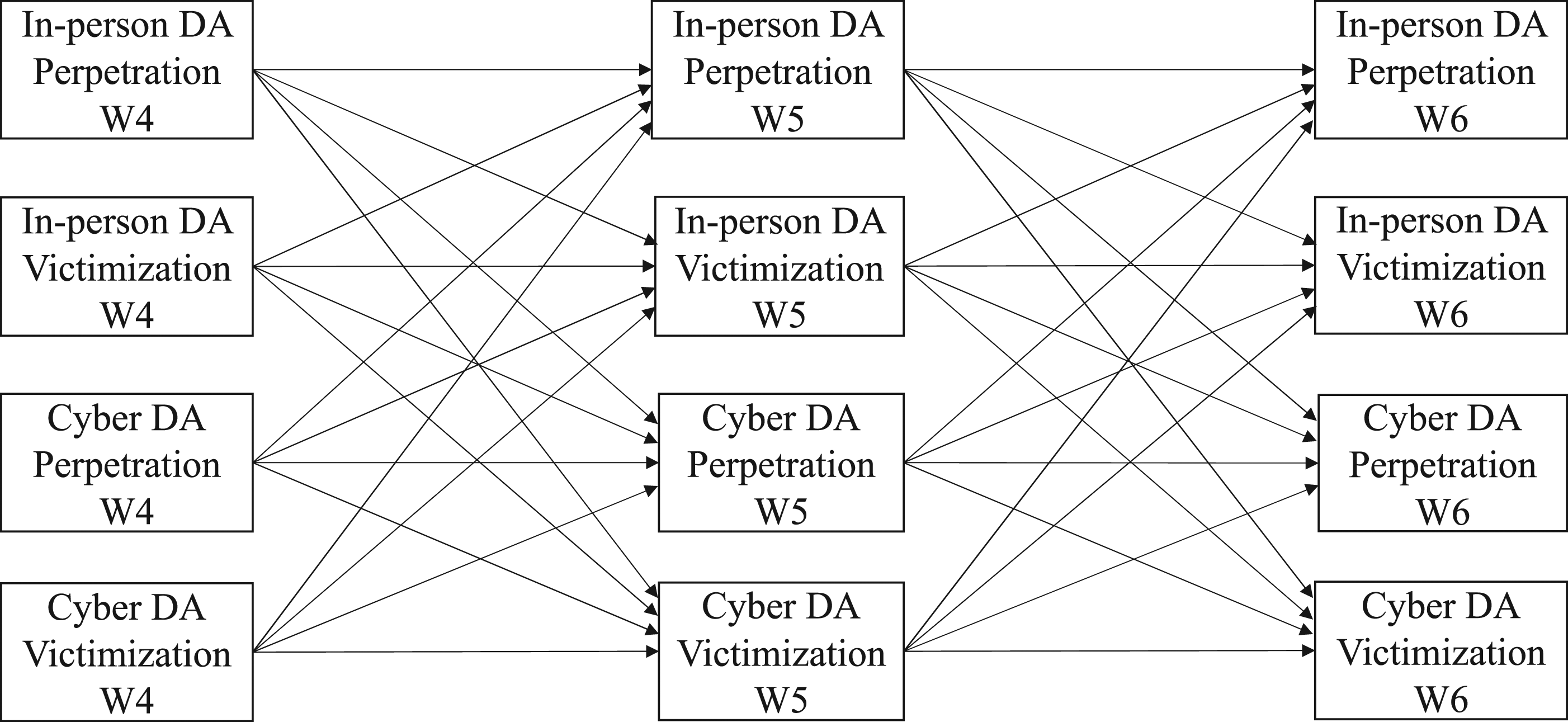
Methods
Participants
We used data from an ongoing longitudinal study of 1,042 ethnically diverse high school students originally recruited in seven high schools in Southeast Texas, US (Temple et al., 2013). Baseline data were collected in spring 2010 with ongoing annual follow-ups. In the current analyses, we used data from Wave 4 (W4, spring, 2013, N = 776, retention rate from baseline: 74.5%), Wave 5 (W5, spring, 2014, N = 698, retention rate from baseline: 67.0%), and Wave 6 (W6, spring, 2015, N = 758, retention rate from baseline: 72.7%) as these were when the variables of interest were included. Attrition analysis revealed that the retained sample were more likely to be female and younger. Participants who had not begun dating did not answer the dating abuse questions. Since the study focused on dating abuse experiences, 38 participants without dating experiences were excluded in the analysis. The final analytical sample in the current study consisted of 879 adolescents and young adults (59% female, 41% male) who reported dating abuse experiences at least at one of the data waves. In the analytical sample, participants self-reported to be 32% Hispanics, 28% Black, 29% White, and 11% other (i.e., “Asian/Pacific Islander,” “American Indian or Alaska Native,” and “other”). Most of the participants (77%) were “heterosexual,” 22% were “bisexual” or “homosexual,” and 1% did not report sexual orientation. At Wave 4, participants ranged in age from 16 to 20 years (mean = 18.1 years, median = 18.0 years, SD = .78), with 73.3% still attending high school, 18.4% attending college, 5.4% working, and 2.9% in “other” situation. At Waves 5 and 6, respectively, 0.8% and 0.6% were still attending high school, 69.4% and 64.3% were attending college/trade school, 20.9% and 28.5% were working, and 9.0% and 6.6% were neither working nor attending school.
Procedure
Researchers visited mandatory classes (e.g., English, World History) at participating high schools in spring 2010 to recruit participants for the first wave of data collection. Participants who returned signed parent consent forms and who provided assent completed paper-and-pencil surveys in class. Participants were asked to provide their contact information (e.g., email address, phone number) in a separate form to be contacted for later surveys. To maintain privacy, each participant was assigned an ID to link different waves of survey responses. At later assessments, participants who graduated or no longer attended the recruitment schools were provided a web link to complete the survey online either via email or text message. To maintain high retention with this difficult-to-reach and mobile population, we employed a mixed-mode retention design including web, mail, and telephone completion options. The approach allowed us to maximize efficiencies and response rates by providing participants with multiple options for completion, which reduces administration costs while maintaining high data integrity. To increase effectiveness, we layered the modes over time as opposed to launching all simultaneously.
There was one year between each of the waves. For this study, we used data from Wave 4 (collected in Spring 2013), Wave 5 (collected in Spring 2014), and Wave 6 (collected in Spring 2015). One hundred and eighty-six participants at Wave 4 and all participants at Waves 5 and 6 completed the survey online. Participants received compensations of $20 (Waves 4 and 5) and $30 (Wave 6) gift cards upon completing the survey. The study procedure was approved by the last author’s institutional review board.
Measures
Cyber Dating Abuse was measured with 24 yes/no items adapted from previous studies (Picard, 2007; Zweig et al., 2013). Participants were asked to indicate their past-year experiences with their current partner (if not currently dating, participants referred to their most recent ex-boyfriend/girlfriend). 1 Participants who indicated they had not begun dating were instructed to skip the questions. The scale included 12 items for perpetration (e.g., “I threatened to harm him/her physically through a cell phone, text message, social networking page, etc.”) and 12 items for victimization (e.g., “He/she threatened to harm me physically through a cell phone, text message, social networking page, etc.”). The scale sums were used for analysis. Information on the scale performance can be found in prior research (Temple et al., 2016). The scales had a Cronbach’s α of .65, .66, and .69 at W4, W5, and W6, respectively, for perpetration and .74, .79, and .76 at W4, W5, and W6, respectively, for victimization.
In-person Dating Abuse was measured with 28 yes/no items from the Conflict in Adolescent Dating Relationship Inventory (Wolfe et al., 2001), including physical dating abuse victimization (4 items; e.g., “He/she pushed, shoved, or shook me”) and perpetration (4 items; e.g., “I pushed, shoved, or shook him/her”), and psychological dating abuse victimization (10 items; e.g., “He/she insulted me with put-downs”) and perpetration (10 items; e.g., “I insulted him/her with put-downs”). Like the cyber dating abuse scale, participants who had begun dating reported their past-year in-person dating abuse experiences with either their current or most recent partner. The sum score for each dating abuse type was used in the analyses. Information on the scale performance can be found in prior research (Shorey et al., 2019). The scales had acceptable reliability for physical dating abuse victimization (Cronbach’s α = .79, .84, .81 at W4, W5, and W6, respectively) and perpetration (Cronbach’s α = .77, .78, .81 at W4, W5, and W6, respectively), as well as for psychological dating abuse victimization (Cronbach’s α = .85, .86, .86 at W4, W5, and W6, respectively) and perpetration (Cronbach’s α = .84, .85, .85 at W4, W5, and W6, respectively).
Control Variables. Demographic information, including age, sex, and race were collected.
Data Analysis
Variable means, standard deviations, and bivariate correlations among cyber dating abuse, physical dating abuse, and psychological dating abuse were first examined in SPSS for Mac, version 25.0 (IBM Corporation, 2017). Cross-lagged panel analysis was performed in Mplus 8.3 (Muthen & Muthen, 2005-2019). Cross-lagged panel analysis, or autoregressive analysis, is a type of structural equation model used to examine structural relations of repeatedly measured constructs (Selig & Little, 2012). Two types of regression coefficients are assessed simultaneously in a cross-lagged panel model: the autoregressive effects and the cross-lagged effects. Autoregressive effects represent the effect of a construct (e.g., cyber dating abuse) on itself measured at a later time and thus describe the stability of the construct over time. Cross-lagged effects represent the effect of a construct (e.g., cyber dating abuse at baseline) on another (e.g., in-person dating abuse one year later) measured at a later time controlling for the prior level of the construct being predicted (e.g., in-person dating abuse at baseline). Thus, cross-lagged effects represent longitudinal associations between two constructs with their cross-sectional correlations being controlled for.
Two separate cross-lagged panel models were tested, one between cyber dating abuse perpetration/victimization and physical dating abuse perpetration/victimization, and the other between cyber dating abuse perpetration/victimization and psychological dating abuse perpetration/victimization. Gender, age, and race were controlled for in the analyses. With three waves of data being used, all possible indirect effects were also tested. The data were skewed as many participants reported no prior dating abuse experiences. We used maximum likelihood estimation method with bias corrected bootstrapping of 10,000 times to handle the non-normal data and to test indirect effects (Lai, 2018). Missing data were handled with full information maximum likelihood, a procedure shown to reduce negative effects of attrition (Graham, 2012; Little et al., 2013). Model fits were evaluated using several fit indices. A Root Mean Square Error of Approximation (RMSEA) of 0.06 or smaller, a comparative Fit Index (CFI) of 0.95 or larger, a Standardized Root Mean Square Residual (SRMR) of 0.08 or smaller indicate adequate model fit (Hu & Bentler, 1999).
Results
Frequencies and percentages of in-person and cyber dating abuse.
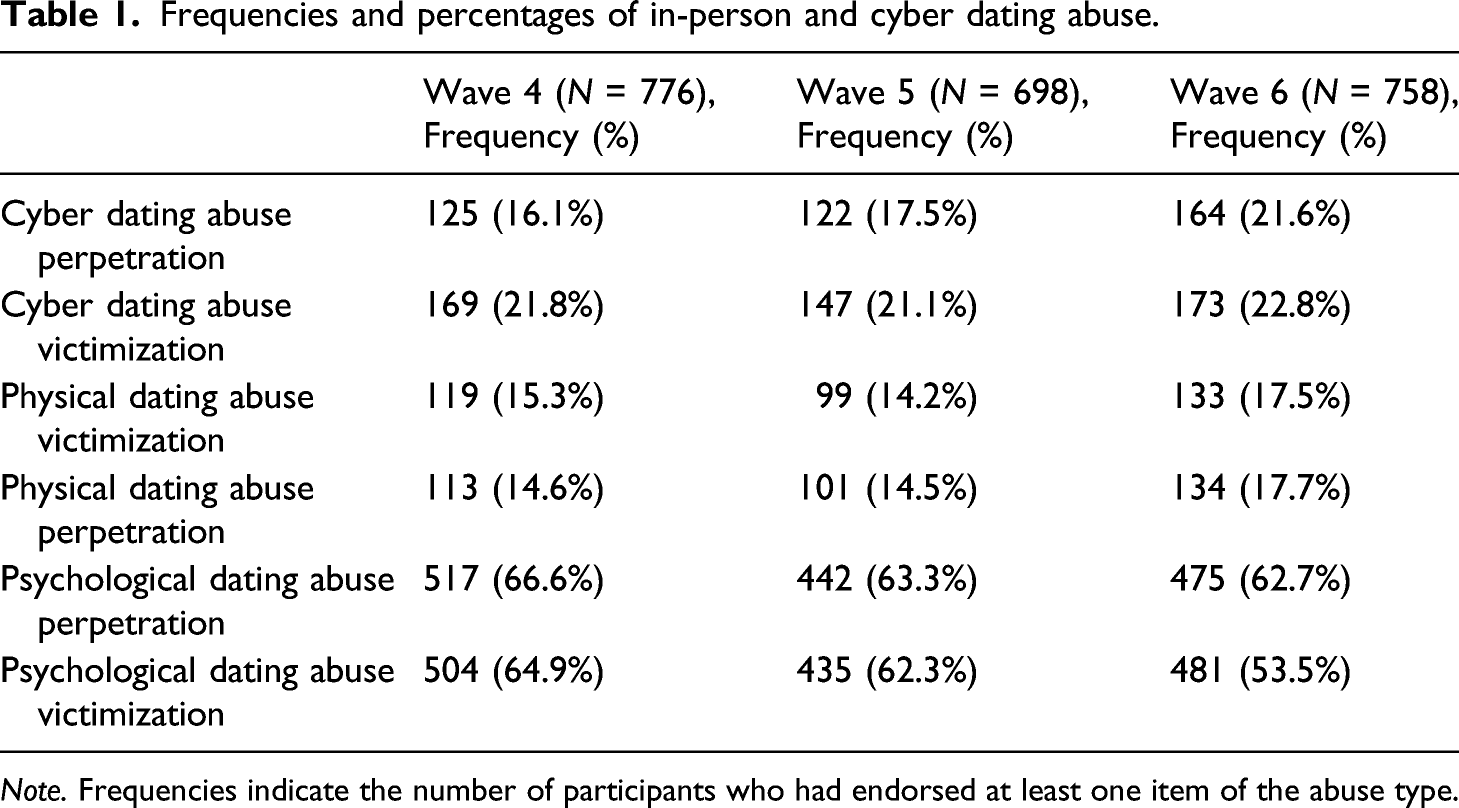
Note. Frequencies indicate the number of participants who had endorsed at least one item of the abuse type.
Means, standard deviations, and correlations among cyber, physical, and psychological dating abuse.
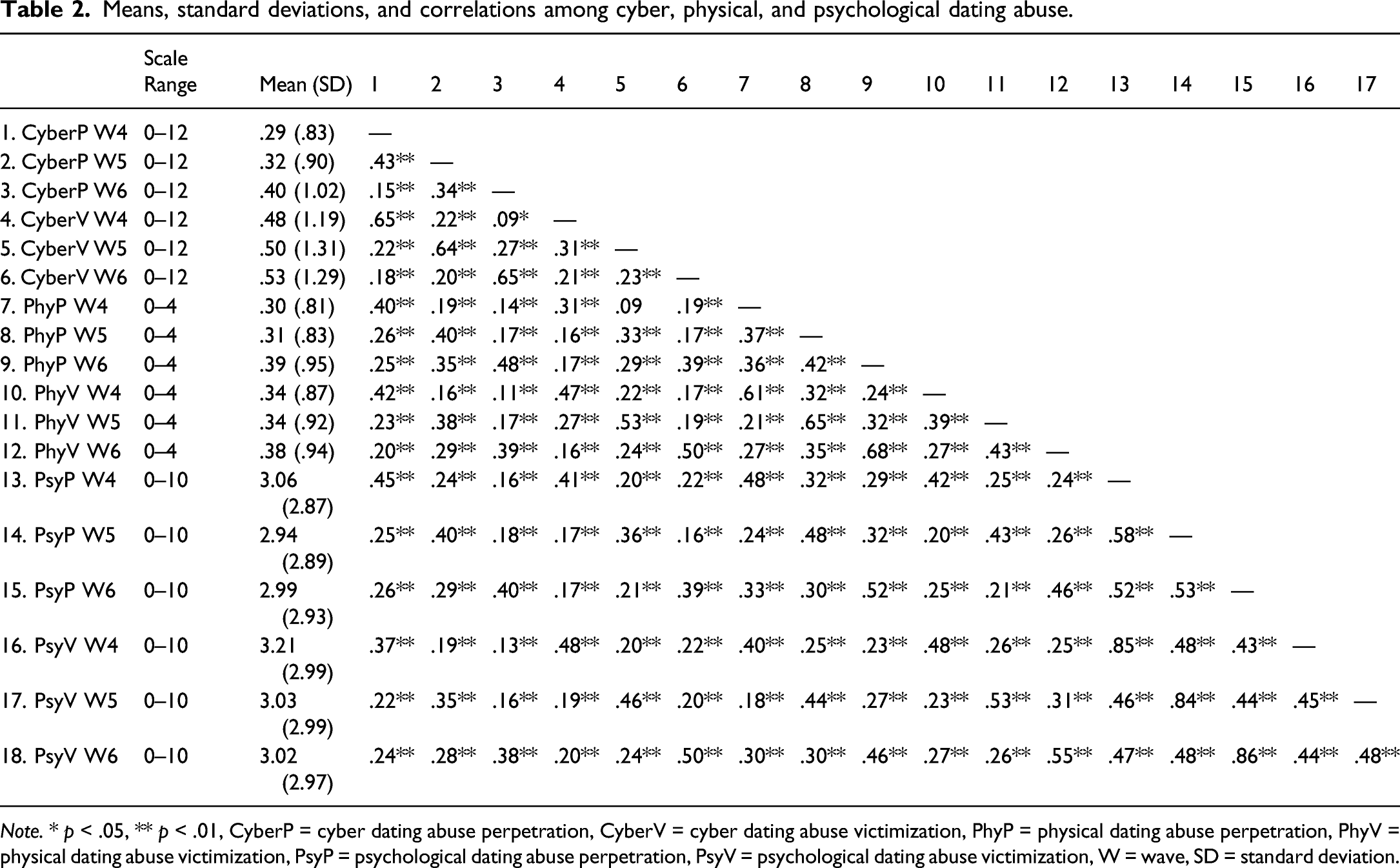
Note. * p < .05, ** p < .01, CyberP = cyber dating abuse perpetration, CyberV = cyber dating abuse victimization, PhyP = physical dating abuse perpetration, PhyV = physical dating abuse victimization, PsyP = psychological dating abuse perpetration, PsyV = psychological dating abuse victimization, W = wave, SD = standard deviation.
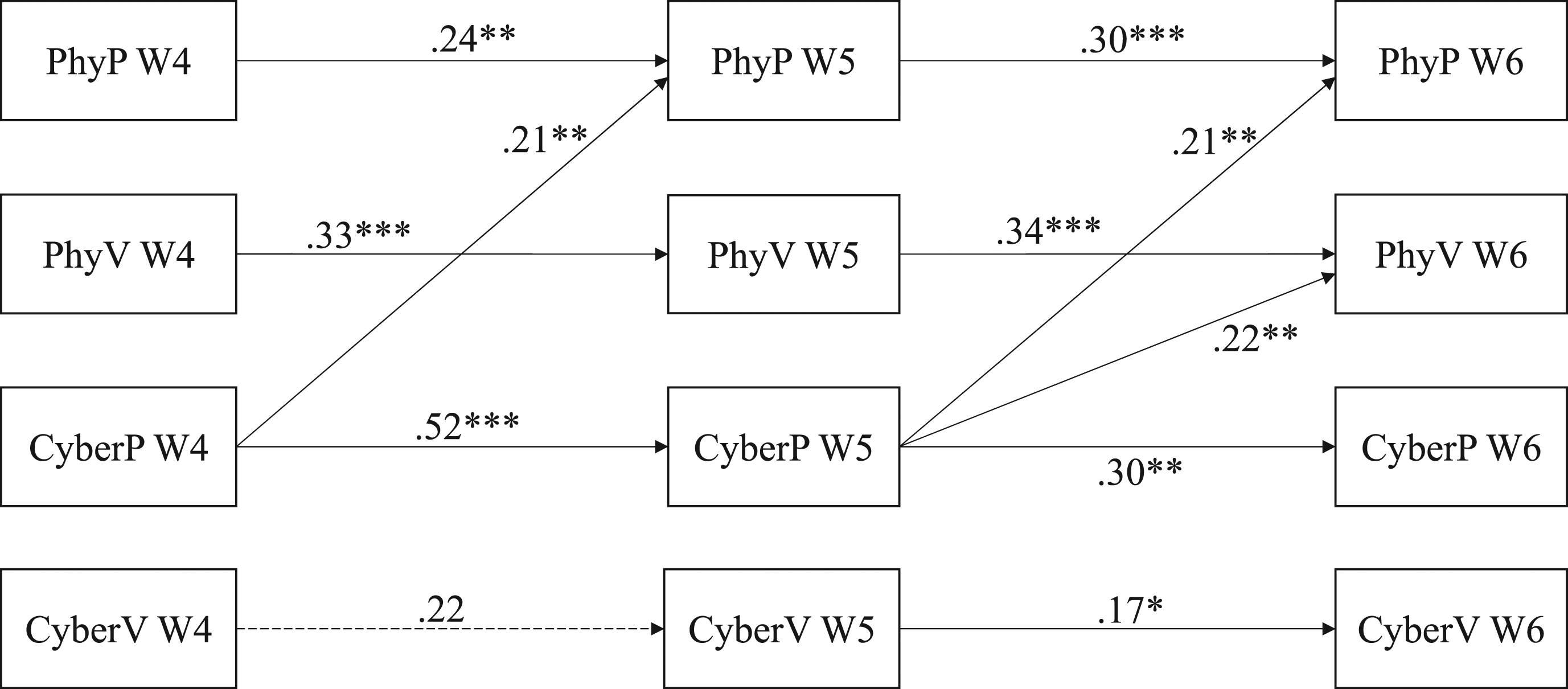
Cross-lagged panel model of cyber and physical dating abuse. Note. Numbers are standardized coefficients. PhyP = physical dating abuse perpetration, PhyV = physical dating abuse victimization, CyberP = cyber dating abuse perpetration, CyberV = cyber dating abuse victimization, W = Wave. Dashed line indicates non-significant association. * p < .05, ** p < .01, *** p < .001. Age, gender, and race were controlled for. Bivariate correlations between DA variables at the same wave were all significant at the .01 level and not shown in this model.
As shown in Figure 3, autoregressive effects were significant for cyber dating abuse perpetration and psychological dating abuse perpetration and victimization in both W4 to W5 and W5 to W6; significance in W5 to W6 was limited to cyber dating abuse victimization. A cross-lagged effect was found between W5 cyber dating abuse perpetration and W6 psychological dating abuse victimization (β = .13, p < .05) but not between W4 and W5 or between cyber dating abuse victimization and psychological dating abuse perpetration/victimization at any waves. Psychological dating abuse perpetration significantly predicted psychological victimization (W4 to W5: β = .21, p < .01, W5 to W6: β = .21, p < .01). W5 cyber dating abuse perpetration significantly mediated the associations between W4 cyber dating abuse perpetration and Wave 6 psychological dating abuse victimization (β = .07, 95% CI: .01, .17, p < .05). Although no significant direct effect was identified between cyber dating abuse perpetration and psychological dating abuse perpetration (W4 to W5: β = .09, p = .08, W5 to W6: β = .11, p = .08), a significant indirect effect was identified in that W5 cyber dating abuse perpetration mediated the effect of W4 cyber dating abuse perpetration on W6 psychological dating abuse perpetration (β = .06, 95% CI: .01, .16, p < .05). This cross-lagged panel model had adequate fit, χ
2
(36) =126.51, p < .001, RMSEA = .05, CFI = .96, SRMR = .04. Cross-lagged panel model of cyber and psychological dating abuse. Notes. Numbers are standardized coefficients. PsyP = psychological dating abuse perpetration, PsyV = psychological dating abuse victimization, CyberP = cyber dating abuse perpetration, CyberV = cyber dating abuse victimization, W = Wave. Dashed line indicates non-significant association. * p < .05, ** p < .01, *** p < .001. Age, gender, and race were controlled for. Bivariate correlations between DA variables at the same wave were all significant at the .001 level and not shown in this model.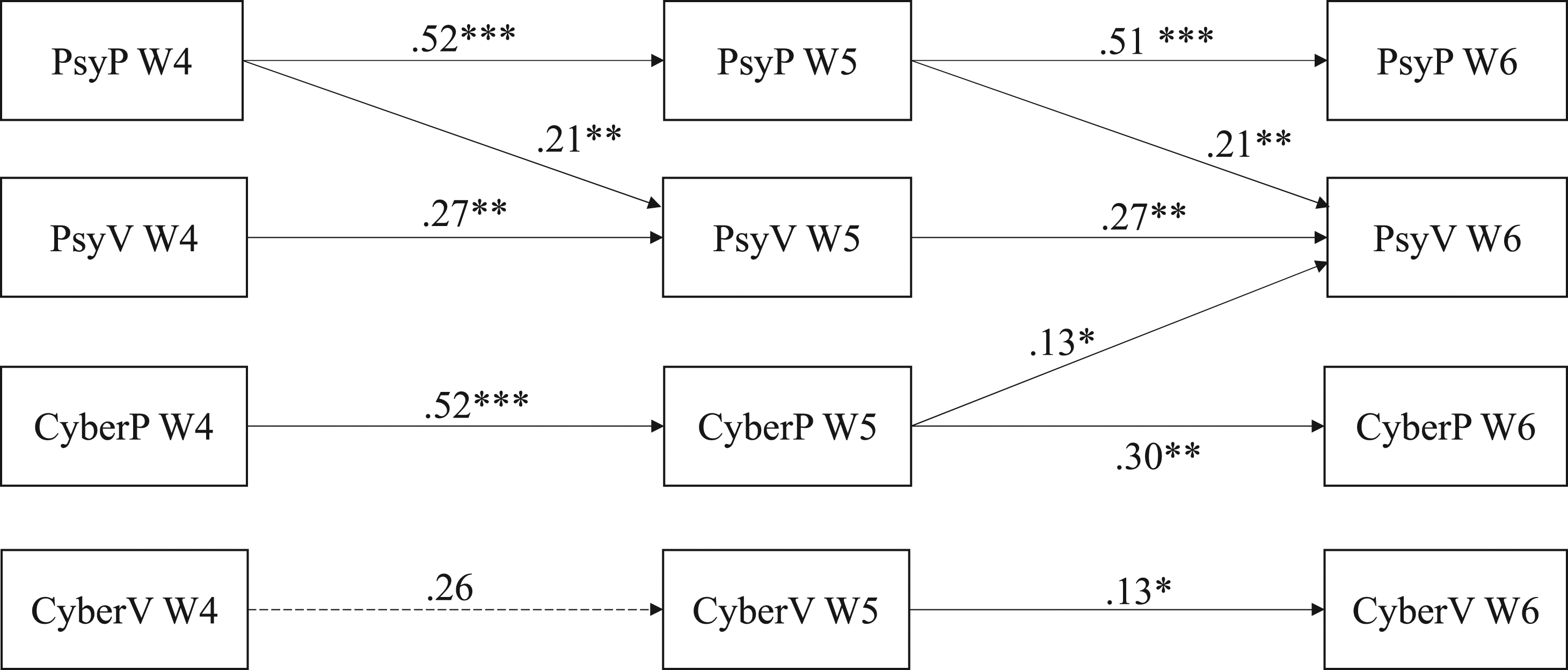
Discussion
While prior research has linked cyber and in-person dating abuse (e.g., Borrajo et al., 2015; Cava et al., 2020; Hinduja & Patchin, 2020; Lara, 2020; Temple et al., 2016), several authors have raised the question about the temporality and directionality of this relationship (Hellevik, 2019; Lara, 2020). Prior evidence relied on cross-sectional or two waves of longitudinal data, which limits our understanding of the temporal link. Our study fills an important gap in the literature by examining the longitudinal associations between cyber dating abuse and physical and psychological forms of in-person dating abuse, using three waves of data collected over three years from a diverse sample of adolescents as they transitioned to young adulthood.
Findings suggested that cyber dating abuse perpetration predicted subsequent in-person physical dating abuse perpetration and victimization, but not vice versa. We also found that cyber dating abuse perpetration predicted subsequent psychological dating abuse victimization, but there were no direct relationships with psychological dating abuse perpetration. However, we did find a significant indirect effect, in which repeated cyber dating abuse perpetration over two years was associated with in-person psychological dating abuse perpetration. Our findings lend quantitative support to prior qualitative accounts from victims of dating violence that abusive behaviors may be initiated online and continue in-person, with exclusively online cyber dating abuse being rare (Hellevik, 2019). One potential explanation is that information found through partner monitoring and controlling behaviors reinforces cyber dating abuse and subsequent in-person conflicts and confrontation (Fox & Moreland, 2015; Hellevik, 2019; Van Ouytsel et al., 2019).
With the exception of cyber and physical dating abuse perpetration, significant associations were only identified between cyber dating abuse perpetration and in-person dating abuse from W5 to W6 and not from W4 to W5. As supported in the indirect effect of cyber dating abuse perpetration and in-person psychological dating abuse perpetration, it is possible that it takes repeated cyber dating abuse perpetration over multiple years to transition to in-person dating abuse. Another potential explanation could be that relationship contexts differ at various phases in adolescent development. At W4, the majority of our participants were still attending high school, whereas they were all out of school at the latter waves. The context of their romantic relationships, especially how they communicate and interact with their romantic partners undoubtedly changed post high school (Karney et al., 2007), including spending more physical time together post-high school where their time is less restricted and monitored.
Our finding that cyber dating abuse perpetration may precede physical and psychological dating violence victimization is consistent with prior research showing a reciprocal relationship between dating abuse perpetration and victimization (Renner & Whitney, 2010; Whitaker et al., 2007; Zweig et al., 2013). While reciprocity was evidenced by prior research, there are currently no established theories that sufficiently explain how and under what circumstances cyber dating abuse perpetration may lead to in-person forms of dating abuse perpetration. It is possible that cyber dating abuse creates a gateway to or is a catalyst for in-person dating abuse (Hellevik, 2019; Lara, 2020).
In contrast to our prior study (Temple et al., 2016), we did not find any significant associations between in-person and cyber dating abuse victimization. The difference is likely explained by the inclusion of an additional wave of data and the use of a more nuanced statistical procedure (i.e., cross-lagged panel analysis) that allowed us to test multiple relationship directions concurrently (i.e., in-person dating abuse predicting cyber dating abuse and cyber dating abuse predicting in-person dating abuse). This procedure also allowed us to account for cross-sectional correlations between in-person and cyber dating abuse and autoregressive effects within each risk behavior, which resulted in negating the results of temporal relationships between physical dating abuse victimization and subsequent cyber dating abuse victimization identified in Temple et al. (2016).
Our study has several implications for practice. Cyber dating abuse perpetration can precede physical and psychological forms of dating abuse perpetration and victimization, and dating abuse can be reciprocal. Clinicians, parents, and educators could inquire about how adolescents use digital media within their romantic relationship as a way to understand relationship dynamics (Temple et al., 2016). Conversations about online behaviors within the relationship can function as a segue into a broader conversation about healthy and unhealthy behaviors within romantic relationships, both in-person and online.
Overall, findings indicate that cyber dating abuse may be a risk marker or serve as an early warning signal for subsequent in-person dating abuse. Adolescents do not always recognize cyber dating abuse as abusive, and often mistake it as a sign of love and concern of their romantic partner (Baker & Carreño, 2016; Stonard et al., 2017). Teaching teenagers to recognize abusive behaviors in online contexts could prevent in-person teen dating violence and, because dating violence is a strong predictor of adult intimate partner violence, prevent long lasting dynamics of unhealthy relationship (Lara, 2020; Lu et al., 2019; Temple et al., 2016). For example, conversations with teenagers could include discussions around boundaries in contacting each other and discussing how to navigate digital privacy within a relationship (Van Ouytsel, Walrave et al., 2016). When cyber dating abuse occurs publicly (e.g., by posting mean messages on social media), youth who are witnesses (bystanders) could be activated to report the abuse and support the victim. To put concisely, healthy relationship education must also include information and discussions around online forms of relationships.
Several limitations should be kept in mind while interpreting our study findings. First, participants self-reported their dating abuse behaviors. As with all survey research on sensitive topics and deviant behaviors, answers could have been subject to self-report bias, as participants may be less likely to endorse abusive behavior. Given that adolescents reported on their experiences during the past year, the data are also susceptible to recall bias. Future research on cyber dating abuse could make use of innovative designs, such as dyadic research designs that involve both romantic partners. Second, we limited our study to physical and psychological cyber dating abuse. Future research should examine other types of dating abuse (e.g., sexual). Third, we were unable to assess whether the dating abuse occurred with the same or a different romantic partner. The data also assumed that the respondents were in a monogamous relationship. Fourth, while we obtained sexual orientation information of the participants, we did not inquire whether the participants were in same-sex or heterosexual relationships. Future work on cyber dating abuse should focus on investigating the role of cyber dating abuse within the romantic relationships of LGBTQ+ adolescents, as this population has received scant research attention. Fifth, the demographic questions were developed in 2010 before recent reporting guidelines on gender identity and sexual orientation were published (e.g., bias-free language guidelines, APA, 2019). We also did not collect (dis)ability status of participants. Future research will benefit from being more inclusive and conforming to recent guidelines. Finally, data used in this study were collected in 2013–2015. With the everchanging communication technology and media usage among youth, the findings of the current study needed to be further tested with more recent data.
Conclusion
This study is among the first to examine the longitudinal link between cyber dating abuse and in-person dating violence and fills a gap in the literature. Using a large sample of ethnically diverse adolescents and young adults, our findings suggest that cyber dating abuse is predictive of subsequent in-person dating abuse perpetration and victimization. Findings highlight the need for educational efforts to address digital manifestations of dating violence and to teach adolescents how to recognize abusive online behaviors early. Interventions may benefit by targeting cyber dating abuse as a means to prevent in-person dating abuse.
Footnotes
Author’s Note
This study was presented as a poster at the American Public Health Association 2021 Annual Meeting.
Funding
The author(s) disclosed receipt of the following financial support for the research, authorship, and/or publication of this article: This research was supported by Award Numbers K23HD059916 (PI: Temple) and R01HD099199 (PI: Temple) from the Eunice Kennedy Shriver National Institute of Child Health and Human Development (NICHD) and 2012-WG-BX-0005 (PI: Temple) from the National Institute of Justice (NIJ). The work of Joris Van Ouytsel was supported by the Research Foundation – Flanders (12J8719N). The content is solely the responsibility of the authors and does not necessarily represent the official views of any of the funding institutions. This work would not have been possible without the permission and assistance of the schools and school districts.
Open research statement
As part of IARR’s encouragement of open research practices, the authors have provided the following information: This research was not pre-registered. The data used in the research are not available. The materials used in the research are available. The materials can be obtained by emailing:
