




Abstract
The potential of choral singing to support well-being is increasingly recognized, yet most studies focus on adults or clinical populations. Research examining healthy neurotypical youth choir singers is emerging, but few explore its impact on well-being outcomes. This qualitative study explored how choir participation impacts youth well-being, examining the experiences of Serbian youth choir singers, aged 15 to 24. Focus group interviews were conducted with 26 participants (7 males and 19 females), including members of school and extracurricular choirs, to address motivation for joining, perceived benefits and challenges associated with choir participation, and the role of conductors. Thematic analysis, guided by Self-Determination Theory (SDT) and PERMA well-being frameworks, revealed significant socio-emotional benefits from choir participation. Passion for singing, social connections, and musical skill development were the major motivators for joining. Participants consistently reported benefits, including increased positive emotions, reduced stress, greater confidence, improved social interaction, increased support, personal growth, and the conductor’s encouragement, which were central to their well-being. Challenges like performance anxiety, intergroup dynamics, and rehearsal intensity were observed. The findings highlight the multidimensional benefits of choral singing and its potential to enhance well-being among healthy youth.
Introduction
Background
The role of group music activities in supporting well-being has gained increasing attention in recent research (Hendry et al., 2022; Perkins et al., 2020; Yi & Kim, 2023). Among the various aspects of musical engagement, choral singing has emerged as a unique and accessible activity that fosters a range of psychological, social, emotional, cognitive, and physical benefits. Prior studies have consistently shown that singing in a choir enhances mood, reduces stress (Lonsdale & Day, 2020), helps in navigating life challenges, social isolation, providing support, bonding, a sense of unity (Fernández-Herranz et al., 2021; Gul, 2018), and improving physical health (Clift & Hancox, 2001; Livesey et al., 2012). Most existing studies examine adults or clinical groups participating in choirs as a therapeutic tool, whereas fewer studies focus on healthy youth in formal or informal choir settings. This creates a gap in understanding how choral singing supports well-being among young people who are not experiencing diagnosed health conditions.
Youth Well-being
The term' youth' is predominantly applied in social rather than psychological contexts, where the term 'adolescence' is used more frequently. However, due to its relevance in our study of youth choirs, we opt to employ this terminology throughout our research. Youth is a dynamic construct, varying in definition across cultural, policy, and research frameworks. It is generally described as a transitional phase, characterized by notable psychological and biological maturation from dependency in childhood to adulthood autonomy (Arnett, 2013).
Youth worldwide are grappling with rising mental health issues, including symptoms of anxiety, depression, social isolation, and loneliness (World Health Organization, 2024). Adolescence and emerging adulthood are critical developmental stages during which identity, autonomy, socio-emotional, cognitive, and moral development are still in progress, alongside physical changes (Arnett, 2013; Steinberg, 2014). Adolescents often face intense emotional fluctuations and social challenges, including difficulty with regulating emotions, belonging, and social isolation, which diminish their well-being (Allen et al., 2024) and lead to poor mental health (Ahmed et al., 2015). During emerging adulthood, individuals develop greater autonomy and emotional regulation, yet still may experience loneliness (Morgan et al., 2024). Their well-being is strongly influenced by the development of self-esteem, the formation of meaningful relationships, and the presence of supportive environments (Arnett, 2013). Consequently, there is a growing need for accessible and meaningful activities that support youth development and well-being, making this a priority across education, communities, organizations, and public health.
Choral Singing in Serbia
In Serbia, opportunities for youth to participate in choral singing are mostly found in formal school settings. In music schools, choir is a mandatory part of the curriculum, while in general education schools, it is typically offered as an extracurricular activity, though its availability depends on teacher initiative and school resources. Outside of the educational system, informal (community) youth choirs are not common, as most community or cultural-institution choirs consist primarily of adults. Consequently, informal youth choir opportunities remain relatively limited. Understanding how existing school-based and community choirs support youth well-being is essential, as the findings may help encourage the development of more initiatives aimed at engaging young people in choral singing.
Previous Studies
Despite a growing body of research regarding choral singing and well-being, most existing studies have focused on adult or clinical populations, particularly those with certain health conditions (L. Lee et al., 2022; Talmage, 2022), or those involved in music therapy settings (Ahessy, 2016; Gosine & Travasso, 2018). Consequently, research examining how choir participation affects well-being among healthy youth remains limited, particularly outside clinical settings. This gap is significant because understanding youth perceptions of choral singing, their motivations, and engagement factors is essential for determining how these choral activities can contribute to their overall well-being.
Previous studies on youth have explored general psychological, social, and emotional dimensions related to choral singing, varying by sample characteristics (age, choir settings, and choir type), methodology, and data collection methods. Less attention has been given to young people’s perceptions and experiences of group singing, which are central to understanding their motivations for joining and sustained engagement. Studies suggest that young people are often drawn to choir by personal love of music (Eiksund, 2022; Pendergast, 2023), prior positive musical experiences (M. Barrett & Vermeulen, 2019; Siebenaler, 2006), a desire for social connectedness (Eiksund, 2022; Hendry et al., 2022), and opportunities for travel and collaborative music-making (Kokotsaki & Hallam, 2011). Orton and Pitts (2019) highlight that adolescents particularly value the emotional and social benefits of group singing, including happiness, stress relief, and a sense of belonging. They also report gender differences, with females exhibiting more positive attitudes and openness to vocal development, while males often feel self-conscious. Peer support and opportunities for choosing songs further enhance participation and engagement (Orton & Pitts, 2019), indicating that youths’ perceptions of group singing are closely linked to well-being outcomes.
These findings may vary across cultural contexts; however, research in Serbia remains limited. One notable exception is the study by Petrović (2023), which examined the benefits of extracurricular choir participation among children in Serbia. The study found that choral singing significantly enhances children’s mental well-being by increasing self-confidence, reducing shyness, and fostering social skills such as teamwork and respect. Additional psychological benefits included better concentration and creativity. Importantly, children perceived choir participation as an enjoyable and fulfilling activity, motivated by a love of music and performance, despite challenges such as time management and performance anxiety.
The majority of youth focused studies have found choir provides emotional regulation – happiness, stress relief, calmness (M. Barrett & Vermeulen, 2019; Linnemann et al., 2017), social connection – friendships, teamwork, sense of belonging (Acquah, 2016; Parker, 2014), and psychological growth – confidence, responsibility, discipline (Koulouriotou & Papakitsos, 2023; Petrović, 2023). Breathing techniques, body posture, and vocal control at choir rehearsals have also been shown to contribute to improved physical well-being among youth (Acquah, 2016; Koulouriotou & Papakitsos, 2023). Alongside these multidimensional benefits, several studies have acknowledged challenges related to youth choir participation. Judgmental environments, cliques, and mockery by other choir members negatively affected the overall atmosphere and diminished youth well-being (Koulouriotou & Papakitsos, 2023; Parker, 2014). Additionally, demanding rehearsals prior to concerts (Linnemann et al., 2017) among university choir singers led to short-term stress.
This study was conducted with the aim of exploring the lived experiences and perspectives of youth engaged in both voluntary and mandatory choir settings. By applying the PERMA model for well-being (Seligman, 2011) and Self-Determination Theory (SDT; Ryan & Deci, 2000), this study aimed to examine:
Methodology
Research Design
This qualitative study employed semi-structured focus group interviews to explore the impact of choral singing on the well-being of youth. The interview approach was chosen because it allows for in-depth exploration of participants’ lived experiences, motivations, and perceptions, which are difficult to capture through surveys. The semi-structured format provided flexibility to probe and clarify responses, ensuring richer and more nuanced data. Focus groups were selected instead of individual interviews to allow multiple participants from the same choir type (e.g. faculty choir, school choir, extracurricular/community choir) to contribute simultaneously. This enabled a broader range of perspectives within each group, encouraging discussion among peers, which is particularly effective for adolescents and emerging adults, as it reduced pressure on individual participants and stimulated reflection on collective experiences.
Participants
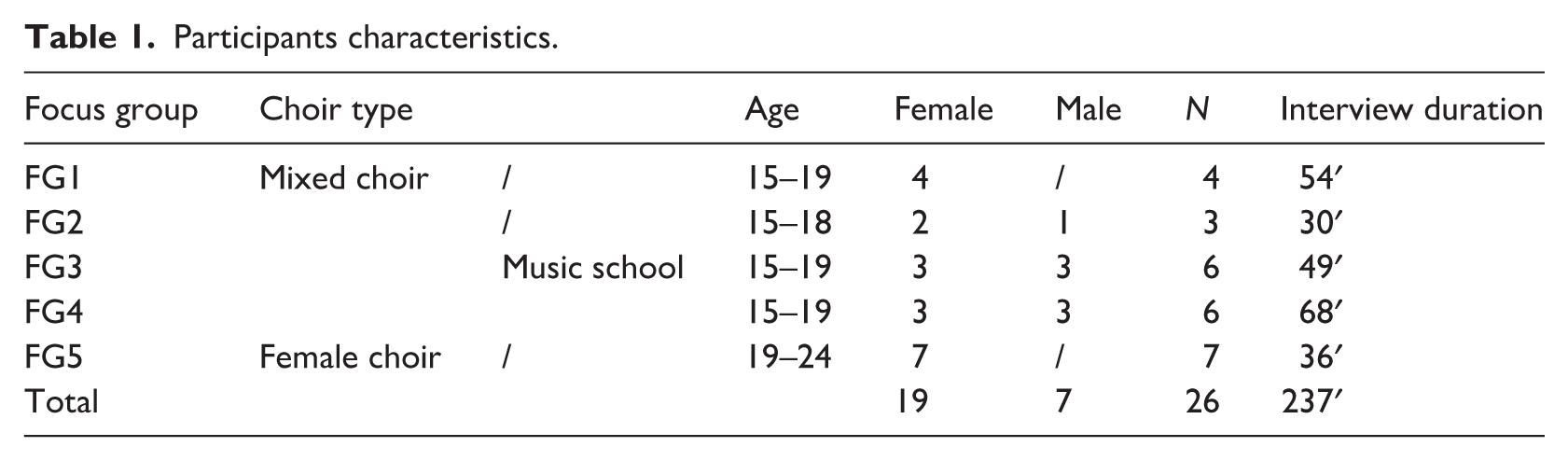
Participants were recruited in collaboration with school principals and choir conductors, who distributed study invitations to their choir members. The final sample consisted of 26 youth actively involved in choral singing, selected through purposive sampling to ensure diverse demographics, choir types, and musical backgrounds (music/non-music schools). Participants were divided into five focus groups, based on choir type and age group (adolescents: 15–19; emerging adults: 20–24; Table 1).
Participants characteristics.
Data Collection
Data were collected through semi-structured focus group interviews (September-October, 2024), designed to explore participants’ experiences with choral singing and its influence on their well-being. To ensure comfort and open discussion, the interviews took place in familiar environments for participants, such as choir rehearsal space, classrooms, or amphitheaters. Each interview duration varied across focus groups (30ʹ–68ʹ) and was audio recorded with participants’ permissions.
The interviews were conducted by the first author, who is a choral conductor and a music educator. For FG5 (the female choir group), the first author also served as the conductor. In other groups, the researcher had no formal or informal relationship with the participants, who also had no formal or informal relationship with the conductor. In all cases, the researcher maintained a neutral facilitator role to ensure that participants could freely share their experiences without being influenced by bias.
The study was approved by the Ethics Committee of the Faculty of Arts, University of Ljubljana. The participation was entirely voluntary, with all participants receiving detailed written information outlining the purpose and procedures of the research, confidentiality, and the right to withdraw at any time. Written informed consent was obtained from all participants, with parental consent for minors.
Interview Structure
Interviews were structured according to research questions and theoretical frameworks – SDT and PERMA well-being model. SDT (Ryan & Deci, 2000) was chosen to examine youth motivation for joining the choir and its connection to satisfaction of basic psychological needs (BPN) for competence, relatedness, and autonomy. PERMA (Seligman, 2011) offers a comprehensive framework for evaluating multiple dimensions of well-being. Collectively, these frameworks allowed the study to explore both why youth participate in choirs and how participation influences their well-being.
The interview schedule was adapted from Williamon et al. (2021, p. 139), who provided guidance on structuring music-focused qualitative interviews, including: introductory questions, ethics and confidentiality, starter questions for demographics, main section, and additional follow-up questions. The interview questions for this study were specifically developed to align with the research questions and theoretical frameworks, consisting of open-ended questions regarding participants’ motivations for joining the choir, the conductor’s role, perceived benefits, and potential challenges in choir participation. The full list of main interview questions illustrates how questions were designed to address each research question and the flow of focus group interviews (Supplemental Table 1). The main section of the interview was tailored separately for extracurricular and school choir groups, ensuring that questions were relevant to participants’ experiences in both voluntary and mandatory settings and could elicit meaningful insights.
Data Analysis
All interviews were audio-recorded, transcribed and imported into the MAXQDA software, where we conducted further coding and theme development process. The thematic analysis process followed these phases (Braun & Clarke, 2006): familiarization with the data, generating initial codes, searching for themes, reviewing themes, defining themes, and reporting.
Data analysis was informed by Self-Determination Theory (SDT; Ryan & Deci, 2000), which conceptualizes well-being through basic psychological needs (BPN) of competence, autonomy, and relatedness, alongside PERMA well-being model (Seligman, 2011), encompassing positive emotions, engagement, relationships, meaning, and accomplishment. A hybrid coding approach was adopted, combining theory-driven coding (deductive) with inductive analysis, to capture themes that emerged from focus group interviews. This process allowed two additional themes to emerge – musical benefits and the conductor’s role. To support the interpretation, code frequencies were incorporated as a descriptive tool to indicate the prevalence and distribution of themes across focus groups, offering insight into which aspects of choir participation that choristers most commonly emphasized in their discussions.
Results and Discussion
Data analysis revealed three main themes: Motivation for joining, Factors enhancing well-being, and Factors diminishing well-being regarding youth choir participation. Following the SDT and PERMA model as guiding frameworks in the coding process, multiple subthemes emerged.
Motivation for Joining
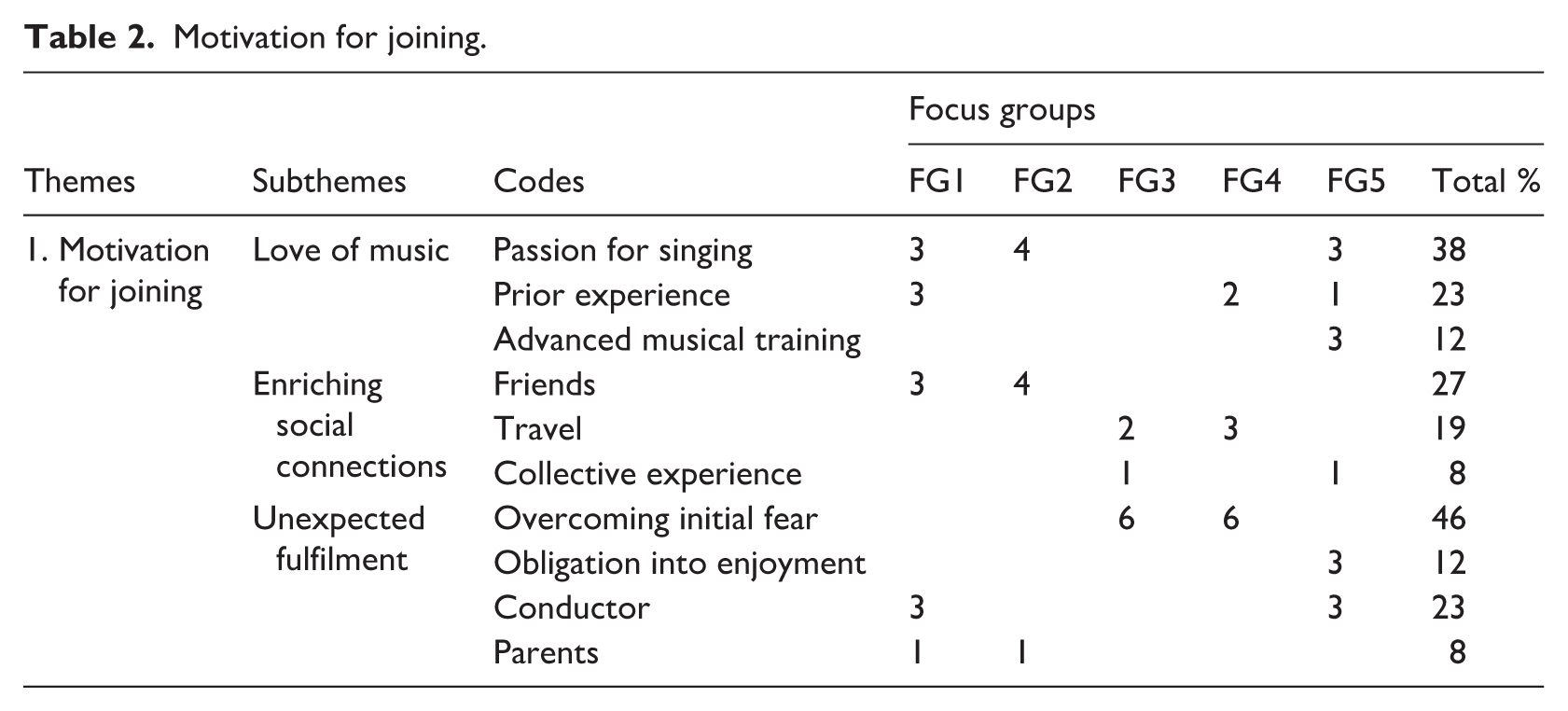
Participants described different reasons for initially joining the choir, reflecting both intrinsic and extrinsic motivations. Three major subthemes emerged: Love of music, Enriching social connections, and Unexpected fulfilment, aligning with SDT elements of competence, relatedness, and autonomy internalization (Table 2).
Motivation for joining.
Love of Music
The primary motivator across groups was a strong passion for singing, with many participants (38%) describing choir as a space to express their love for singing (38%) and group music-making.
I really love to sing, I have loved it since forever. As I get older, art has a much stronger impact on me. (FG5)
Participants with prior musical experience (23%) or early exposure to music through family or school viewed the choir as a natural path of their musical journey.
Since I was in a choir as a kid, it is a logical continuation. (FG1)
Others joined to improve their musical skills (12%), viewing choir as an opportunity to further cultivate their music interests. These intrinsic motivations align with studies showing that motivation increases when deeply enjoying music (Hallam, 2010), the choir repertoire is personally meaningful (Eiksund, 2022; Pendergast, 2023), and has established musical experiences (M. Barrett & Vermeulen, 2019).
Enriching Social Connections
Another common motivation was the desire to connect with their peers who were already in the choir or to create new social connections (27%). Being a part of a collective experience (8%), travelling with peers (19%), and visiting other countries were also strong motivators for youth to join and stay engaged.
Above all, we have the motivation because we travel so much. In one year, our choir traveled as much as someone might in all four years, and that’s another big motivator. (FG4)
Choir offered an inclusive community where friendships, support, and teamwork developed naturally. This aligns with the Relationships component of PERMA and supports previous findings showing that social connection and peer influence are major motivators for joining and remaining in choirs (M. Barrett & Vermeulen, 2019; Hendry et al., 2022; Siebenaler, 2006).
Unexpected Fulfilment
A particularly important subtheme was the Unexpected fulfilment. Several participants described joining the choir with low expectations or minimal personal motivation, but later experienced profound satisfaction, enjoyment, and a sense of belonging. Many described overcoming initial fear (46%), which contributed to increases in happiness, confidence, and personal growth (12%).
At first, I was really scared. I didn’t know anyone; I was the youngest, a first-grader. Everyone else already knew each other, joking around and completely relaxed during classes. And I would come to class, trembling, afraid—what if I have to sing alone and others listen to me? That was the worst for me. But later, I loosened up because I made new friends, and they helped me feel included, telling me, ‘Relax, it’s nothing bad, and it’s not the end of the world if you make a mistake.’ (FG3)
School choir singers, in particular, reported that despite initial anxiety, they gradually developed more positive attitudes toward singing. Over time, they overcame initial fear, formed social connections (Damsgaard & Brinkmann, 2022), and began to enjoy choir. This reflects the internalization of autonomy, a process in which externally encouraged activities become personally meaningful and fulfilling (Ryan & Deci, 2000).
Some participants initially joined due to encouragement from the conductor (23%) or parents (8%), but stayed because they discovered genuine enjoyment in choral singing: I wasn’t drawn to join the choir on my own; my mother encouraged me. (FG1)
In these cases, external factors, such as support from family members (M. S. Barrett & Zhukov, 2022), inspiring conductors (Sichivitsa, 2007), or school obligations, served as initial motivators but were gradually internalized, fostering intrinsic engagement. This finding is consistent with previous research indicating positive outcomes from sustained involvement in youth music activities (Damsgaard & Brinkmann, 2022; Tonneijck et al., 2017).
Factors Enhancing Well-being
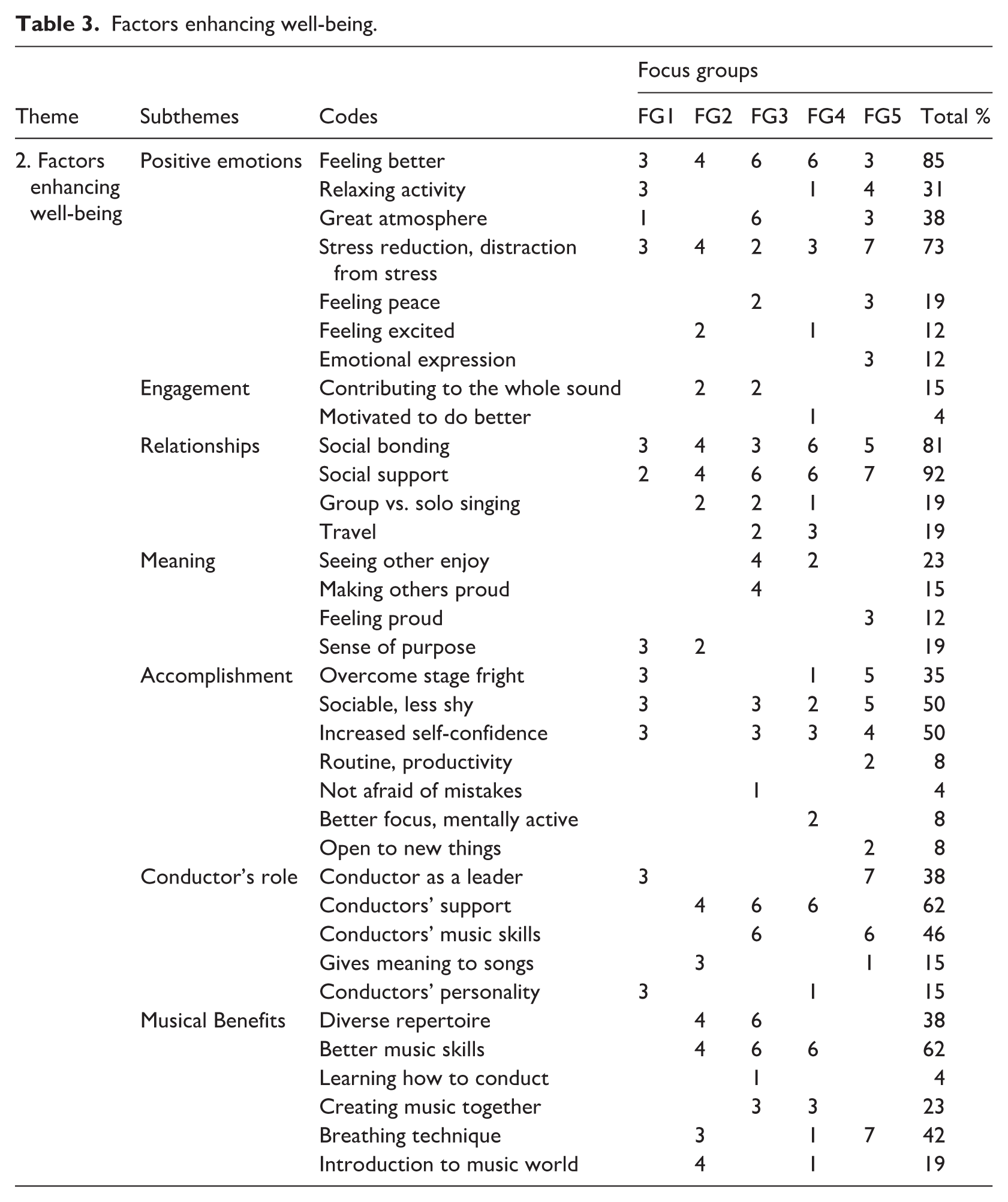
Data analysis revealed that choral singing was strongly perceived to enhance well-being across psychological, emotional, and social domains, organized using the PERMA model. Additionally, two subthemes – Musical benefits and Conductor’s role – emerged from the data (Table 3).
Factors enhancing well-being.
Positive Emotions
Positive emotions were the most commonly mentioned benefits of choir participation. Youth described choral singing as a source of emotional relief, particularly after demanding school hours, or stressful events in their everyday lives (73%), and as a way to enhance their mood (85%), provide relaxation (31%), and peace (19%): For that hour and a half of rehearsal, all the sadness and negativity in life are forgotten. (FG4)
Emotional expression was particularly highlighted by faculty choir members (12%), showing that emerging adults (females) linked choral singing to a deeper emotional experience: It has helped me to bring out the feelings that are deeply within me, and after the choir, after singing, I feel like my soul is still open. I feel like I can put it on paper, make peace with it in my mind, or find a solution to the problem. Overall, it usually makes me feel lighter. (FG5)
Choir functioned as an emotional outlet, providing youth with joy and relaxation. These emotional benefits presented a central component of the choir’s contribution to youth emotional well-being, enhancing their ability to navigate stress, feel present, and connect with others through music. This finding is consistent with previous studies (M. Barrett & Vermeulen, 2019; Linnemann et al., 2017; Matlschweiger & Sattmann, 2016), which identify choir as a tool for emotional regulation. This pattern was evident in all focus groups.
Engagement
While not as prominently emphasized as other aspects of well-being, Engagement was a meaningful component of the choir experience. Several participants (15%) reported deep immersion in group music-making and motivation to improve, echoing the concept of flow (Cziksentmihalyi, 1990): I’m happy when I hear myself as part of the whole music. It feels really nice. (FG3)
One participant expressed his growing desire to improve his role within the choir (4%), after performances, linking this flow was to intrinsic motivation and enjoyment: After the performance, there’s an extra boost of motivation that serves as a reminder to make the next performance even better. Whether it turns out good or bad, that motivation always comes afterward. (FG4)
These experiences fostered a sense of presence, purpose, and shared investment in the choir. They not only contributed to personal growth, but also strengthened group cohesion, supporting previous research that demonstrates active involvement in group music-making enhances skill development, motivation, and overall well-being (M. Barrett & Vermeulen, 2019; Kokotsaki & Hallam, 2011; J. Lee et al., 2017).
Relationships
Social bonding emerged as one of the most prominent dimensions of well-being across all groups. Youth emphasized belonging, connectedness, and inclusivity as central to their choir experience. Social support (92%) and bonding with peers (81%) were regarded as equally important as the act of singing itself. Choir was described as a safe, non-judgmental environment where meaningful friendships could be formed and sustained, often contributing to their social lives: We have a break of two or three hours before choir, and that’s when we all meet. After rehearsals, we also go for coffee together, and that socializing is all because of the choir. (FG4)
Informal interactions like these enhance social cohesion and create a sense of community, which has been widely observed in group music-making (Ong, 2023; Pearce et al., 2016; Wilson, 2011). Group singing provided shared responsibility and connection, with participants often favoring group over solo performance (19%), emphasizing emotional support and a sense of unity: When comparing public performances, whether solo or group singing (choir), I think most choir members, or at least the majority, don’t experience stage fright because we’re all in it together. We can support each other. (FG3)
Synchronized singing and group music-making strengthen interpersonal bonds and reduce anxiety, as (Pearce et al., 2016; Tarr et al., 2014). Travelling (19%) was another valued social experience, fostering group cohesion and creating opportunities for new friendships: We get to meet a lot of new friends during our travels with the choir; Travelling and running away from the real world. (FG4)
Travel in ensemble settings provides opportunities for social engagement and exposure to new experiences, which can motivate continued participation (Kokotsaki & Hallam, 2011; Pendergast, 2023). For some, choir also supported the development of broader interpersonal skills transferable to other life contexts: The main things are friendship, team spirit, and not only for the choir but also for later in life, as we learn to adapt to others. Travelling is my favorite, and functioning in a group is something I really appreciate. The choir taught us how to function with people. (FG3)
Group music-making encourages teamwork, empathy, and collaboration, and these skills often extend beyond music activities themselves (Küçük & Halvaşi, 2019; Wilson, 2011). Overall, the choir served as a micro-community where young people felt accepted, supported, and emotionally connected, thereby enhancing their social well-being. Inclusive choir environments, peer support, and collaborative experiences have been identified as central to youth motivation, engagement, and social connectedness (Ong, 2023).
Meaning
Although discussed less frequently than emotional or social aspects, Meaning emerged as a valuable element of choir participation, fostering both purpose and emotional fulfilment. Several participants derived meaning from singing for others, rather than personal enjoyment, emphasizing that the joy and positive reactions of audiences (23%) gave purpose and value to their efforts: When I saw other people dancing and singing with us, I felt really happy. We enjoyed it, and others enjoyed it, and that meant a lot to me… Seeing them happy and experiencing something new really made me happy. (FG3)
Meaning was reflected in choristers’ desire to bring joy to others, with audience enjoyment providing fulfilment and pride (Damsgaard & Brinkmann, 2022; Kokotsaki & Hallam, 2011). For some, meaning was also tied to fulfilling expectations and making others proud: When the professor finally compliments us, I tell myself, ‘Wow, we did it.’ It’s that feeling when we can make someone proud, when they can count on us. (FG3)
Others emphasized intrinsic motivation through a sense of purpose (19%), seeing choir as a space for personal fulfilment and meaningful contribution, something they felt was missing in their everyday lives: I am so glad that I finally had the chance to fulfill myself somewhere, to be part of a collective. I never had the opportunity before. (FG2)
External recognition from peers, family, and conductors strengthened choristers’ sense of purpose, pride, and contribution within the choir (Damsgaard & Brinkmann, 2022; Kokotsaki & Hallam, 2007, 2011). Overall, choir participation provided youth with meaningful experiences through collective music-making, personal growth, and the joy their performances brought to others, thereby enhancing their sense of purpose.
Accomplishment
The Accomplishment subtheme reflected participants’ personal growth, including increased confidence, social skills, reduced stage fright, and social awkwardness. Many emphasized becoming less shy and more open in social interactions (50%), describing choir as a space that helped them step outside their comfort zone and connect with others: I used to be quite shy in earlier years, but the choir helped me relax in a way, even to the point where I became the one to start conversations with others. I feel better now, without the fear of meeting new people or facing new challenges. If something is on my mind, I can do it more easily and quickly. (FG4)
Group singing has been shown to enhance confidence and reduce social anxiety (M. Barrett & Vermeulen, 2019; Ong, 2023), supporting these findings. Some faculty choir members noted greater openness to new experiences in their everyday life (8%): Through choir, we are more open to new things in life; I enjoy trying new things because of choir. (FG5)
Overcoming stage fright (35%) was another prominent growth area. Participants noted that repeated public performances in front of large audiences helped participants reduce performance anxiety: The more I sang in front of others, the easier it became, a lighter feeling, less stage fright, so now, no matter what I perform, I don’t feel it at all anymore. (FG1)
Singing in a supportive group setting distributes responsibility and fosters shared support, which has been shown to reduce performance anxiety (Kokotsaki & Hallam, 2011). Participants also valued the structure and routine of the choir, which promoted discipline, focus, and the productive use of free time (8%), supporting broader personal growth and socio-emotional skills beyond rehearsals (Clift et al., 2010; Ong, 2023). Positive feedback and successful performances reinforced confidence and social skills among youth choir singers (M. Barrett & Vermeulen, 2019; Gül & Arici, 2024; Ong, 2023). Choir members were also more willing to embrace new challenges and become more open to new experiences, both in the choir and in daily life (Robens et al., 2025).
Conductor’s Role
This subtheme emerged inductively, as participants consistently portrayed the conductor as more than a musical leader, but also as a central figure shaping emotional experience, group dynamic, atmosphere, and motivation. The conductor was viewed as pivotal to both musical growth and well-being, with many participants (62%) valuing a supportive approach, sensitivity to singers’ emotions, and encouragement during rehearsals: The conductor can tell how we are feeling that day. If it’s not a good day for her and she sees we’re not doing well either, we’ll take it easy. But when she sees that we’re all full of energy, she matches that and we work at full speed. I think we have a really wonderful family-like relationship. We feel supported by our conductor. (FG3)
Such emotional responsiveness has been identified as a key leadership quality in youth choirs, fostering trust, emotional safety, and sustained engagement (M. S. Barrett & Zhukov, 2022; Grier, 2023). Participants valued the conductor’s leadership (38%) for providing clear musical guidance and constructive feedback, as well as their musical expertise (46%) for inspiring growth. Some noted the conductor’s personality and energy (15%) also shaped a positive and motivating atmosphere: In the beginning, it was the atmosphere and the conductor that made a difference. The classes were never boring, always fun, and with a good vibe. Unconventional warm-up exercises. Looking back, I’m glad I sing like this, and I don’t see it as an obligation. I know it contributes a lot to me, and I’m happy about that. (FG3)
Conductors who combine musical competence with enthusiasm in their approach and creativity have been shown to enhance enjoyment, motivation, and long-term participation in youth choirs (Fucci Amato & Amato Neto, 2008; Grier, 2023).
Some participants emphasized the conductors’ role in helping them connect with the emotional meaning of the music (15%). By explaining the context, lyrics, and the expressive role of the repertoire, conductors deepened singers’ emotional engagement and sense of purpose. This guidance has been shown to strengthen expressive performance and personal meaning in choral singing (Zhang, 2024). Overall, conductors were perceived as pivotal in shaping musical and socio-emotional outcomes by fostering a sense of safety, inspiration, and belonging within the choir. Leadership, characterized by emotional support, musical guidance, and personal investment, contributed to positive choir experiences and sustained motivation, reinforcing the conductors’ central role in supporting youth well-being (M. S. Barrett & Zhukov, 2022; Fucci Amato & Amato Neto, 2008; Grier, 2023).
Musical Benefits
Participants described a range of musical benefits supporting both artistic and personal growth. The most common was improvement of musical skills (62%), including sight-reading, pitch, rhythm, harmonizing, and listening, often linked to regular rehearsals and the conductor’s feedback.
Choir has helped me with my ear training over these few months, which was one of my goals. When I started going to the choir, I noticed that my singing and listening really improved, which was another goal of mine. (FG4)
Such improvements in musical literacy and technical skills have been widely documented in choral contexts, particularly through sustained group rehearsal and guided instruction (Acquah, 2016; Kokotsaki & Hallam, 2007). Repertoire diversity (38%) was another valued aspect of choir participation. Exposure to diverse genres broadened their musical understanding, cultural appreciation, and enriched their musical experiences (M. S. Barrett & Zhukov, 2022; Kokotsaki & Hallam, 2007).
An improved breathing technique (42%) enhanced posture, breath control, and vocal support, benefiting both singing and physical health.
I learned to breathe in the choir, meaning I learned to sing from my diaphragm. Whenever I sing, I feel like I'm singing from my throat, but in the choir, because of the exercises we do, I can literally feel that I'm singing correctly from my diaphragm, and it boosts my energy. (FG5)
These physiological benefits align with research highlighting the benefits of choral singing for respiratory control, breathing, posture, and overall physical health (Acquah, 2016; M. Barrett & Vermeulen, 2019; Koulouriotou & Papakitsos, 2023), demonstrating the holistic impact of choral singing on youth well-being.
Participants also emphasized the value of collective music-making (23%), describing the experience of creating music together as inherently rewarding. For some (19%), choir participation served as an entry into the broader music world and influenced their future educational or career aspirations: It contributed to my love for music and my decision to pursue music further. I want to continue studying music, and the choir played a significant role in that. (FG2)
Overall, musical growth, although not the primary focus, emerged as an important benefit for choristers that complemented socio-emotional dimensions and contributed to overall well-being through shared musical expression.
Potential Challenges Impacting Well-being
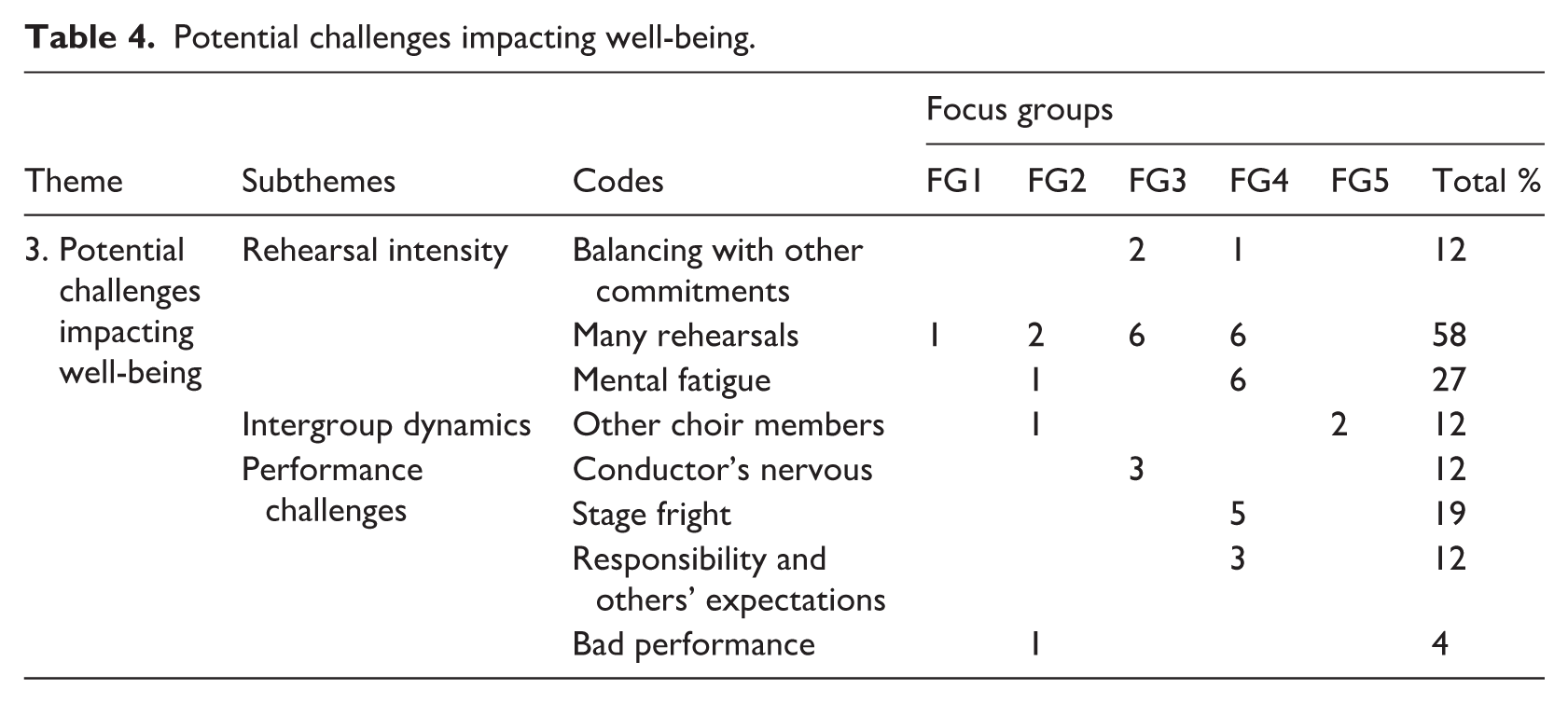
While choir participation was generally experienced positively, some participants identified challenges that occasionally affected their well-being, including: Rehearsal Intensity, Intergroup Dynamics, and Performance Challenges (Table 4).
Potential challenges impacting well-being.
Rehearsal Intensity
The demanding rehearsal schedule was a common challenge, with many reporting that the high number of weekly rehearsals (58%) sometimes led to physical or mental exhaustion (27%), especially before concerts: The periods before performances intensify rehearsals. Sometimes we have rehearsals on Sundays and Saturdays, even during the holidays. (FG4);
Balancing choir with other academic or extracurricular commitments was also challenging for some (12%): Maybe it’s because I attend two schools, so it’s a bit of a problem to align with the other school to figure out when I can come. That’s the only issue. (FG3)
These findings align with previous research indicating that intensive rehearsal schedules can temporarily reduce motivation and increase fatigue among choir members (M. Barrett & Vermeulen, 2019; Kokotsaki & Hallam, 2011; Petrović, 2023).
Intergroup Dynamics
Although less frequently mentioned, some noted that negative group behaviors (12%), such as resistance or disagreement from peers, occasionally affected the overall atmosphere: The only thing I don’t like is that some choir members see it as a big obligation, and with that comes a sense of resistance. They spread that negativity around. (FG5)
Such experiences highlight the importance of supportive and respectful group environment to maintain positive social interaction. Interpersonal conflicts, cliques, or lack of cooperation within the group have shown to negatively affect social cohesion and satisfaction (Koulouriotou & Papakitsos, 2023; Parker, 2014; Petrović, 2023). While not frequent, these experiences point to the importance of a supportive and respectful environment in maintaining the positive effects from choir participation.
Performance Challenges
Stage fright (19%) was the most common performance-related challenge: A performance definitely comes with a sense of responsibility; it’s not the same as singing in a rehearsal. I think it’s realistic to feel some level of nerves, and it’s better if it’s a positive kind, but sometimes I still feel shaky. (FG4)
Conductor’s nervousness (12%) influenced group mood: Our conductor is the one who raises the tension, and we feel the nervousness. (FG3)
Some reported experiencing pressure from high expectations and responsibility placed upon them (12%), or distress after poor performances (4%).
I feel pressure to meet certain expectations from other people. (FG4)
Performance-related pressures, including conductor’s tension, stage fright, and high expectations from others, occasionally caused stress, self-criticism, and reduced confidence, especially after poor performances, consistent with previous findings (M. Barrett & Vermeulen, 2019; Orton & Pitts, 2019).
Conclusion
The study highlights the potential of youth choirs to enhance well-being, emphasizing the value of creating more youth choirs, where voluntary participation fosters intrinsic motivation, autonomy, and emotional engagement. Qualitative focus groups enabled participants to share rich personal perspectives on their experiences, capturing nuanced socio-emotional dimensions. Integrating SDT and the PERMA model provided a strong theoretical foundation, while also allowing the identification of additional themes, such as conductors' influence, musical benefits, and challenges associated with choir participation.
The study’s limitations include a relatively small sample a focus on a single cultural context, which restricts its size and generalizability. Reliance on self-reported focus group data may have introduced social desirability bias, as participants could potentially moderate responses in front of peers. Additionally, while qualitative methods provide rich insights, they cannot establish quantitative causal relationships between choral singing and well-being outcomes. Future research could explore potential gender-related differences in choir experiences, as well as the influence of conductor and participant gender dynamic and well-being outcomes.
The findings showed that conductors significantly shape the overall choir experience for youth, suggesting that their training should also focus on youth psychology and empathetic leadership, alongside musical skills, to create supportive and motivating environments. The study also emphasizes the importance of balanced, well-organized rehearsals and positive peer interactions to prevent burnout and stress, ensuring that choir participation remains enjoyable and beneficial for all youth involved. Choir programs should be recognized as effective interventions for youth well-being and inclusion, offering educational, psychological, and community benefits.
Supplemental Material
sj-docx-1-ijm-10.1177_02557614261418508 – Supplemental material for Youth Well-being Through Choral Singing: Qualitative Study
Supplemental material, sj-docx-1-ijm-10.1177_02557614261418508 for Youth Well-being Through Choral Singing: Qualitative Study by Jovana Blagojević and Katarina Habe in International Journal of Music Education
Footnotes
Acknowledgements
We would like to express our gratitude to the choir conductors for their support in sharing information about this research with their choir members and for providing the space to conduct interviews. We are especially grateful to the choir members for their generous participation and valuable contribution to this study. This research is a part of a doctoral research.

Ethical Considerations
This study was conducted in Serbia, in accordance with the Declaration of Helsinki, and was approved by the Ethics Committee of the Faculty of Arts, University of Ljubljana (approval no. 388-2024, on the 10th of June, 2024).
Consent to Participate
Participants involved in the study received written information about the purpose and procedures of the study prior to participation. Written informed consent was obtained from all participants, and parental signatures for juveniles. Participation was voluntary and confidentiality was assured.
Author Contributions
Jovana Blagojević: Conceptualization; Data curation; Formal analysis; Investigation; Methodology; Resources; Writing – original draft. Katarina Habe: Conceptualization; Data curation; Formal analysis; Methodology; Supervision; Writing – review & editing. All authors have read and agreed to the published version of the manuscript.
Funding
The authors received no financial support for the research, authorship, and/or publication of this article.
Declaration of Conflicting Interests
The authors declared no potential conflicts of interest with respect to the research, authorship, and/or publication of this article.
Data Availability Statement
The datasets generated and analyzed during the current study consistent of interview transcripts with youth choir members. These are not publicly available due to confidentiality and ethical restrictions, but are available from the corresponding author* upon reasonable request, subject to approval from the Ethics Committee of the Faculty of Arts, University of Ljubljana.
Supplemental Material
Supplemental material for this article is available online.
References
Supplementary Material
Please find the following supplemental material available below.
For Open Access articles published under a Creative Commons License, all supplemental material carries the same license as the article it is associated with.
For non-Open Access articles published, all supplemental material carries a non-exclusive license, and permission requests for re-use of supplemental material or any part of supplemental material shall be sent directly to the copyright owner as specified in the copyright notice associated with the article.
