



Abstract
Music education integration in primary classrooms continues to challenge generalist teachers, particularly in British curriculum schools in the United Arab Emirates (UAE) where the delivery model favours specialist input. Using the Theory of Planned Behaviour (TPB) framework, this study examined 16 trainee teachers’ intentions to implement cross-curricular musical activities into their lessons. Participants’ attitudes, perceived social norms, and behavioural control regarding music instruction were analysed through interviews, guided seminars, and reflective journaling conducted over an academic year. While trainees acknowledged music’s holistic benefits, significant implementation barriers emerged, including institutional prioritisation of core subjects and perceived student judgement. Trainee confidence in music teaching was heavily influenced by self-perceived musical ability, with reliance on music specialists further diminishing independent teaching expectations. The research reveals complex psychological and systemic obstacles to music education integration. Recommendations include policy adjustments to prioritise music in primary education and sustained musical engagement to enhance trainee teachers’ musical confidence and mitigate this embedded fear of judgement. Future investigations should track early-career teachers’ music integration practices to assess the long-term impact of institutional support and resource accessibility.
Keywords
Introduction
Since the establishment of the United Arab Emirates (UAE) in 1971, much effort has been put into preserving its deeply embedded cultural traditions and values. While limited research specifically examines music education in UAE international schools, the unique intersection of Western curriculum delivery in its international schools presents distinct challenges, with little to no presence of Arab music in primary and secondary schools (Good-Perkins, 2019). The present study focussed on music delivery in predominantly British international curriculum schools, which in the emirate of Dubai represent 58 of the 227 schools alone. In similarly structured educational landscapes like Singapore, it is recommended that teachers be trained in inclusive pedagogies that do not just cater to Western musical concepts and skills (Cain, 2010). Fee-paying international schools often delegate specialist delivery in subjects like music to demonstrate educational value to parents, freeing the so-called “generalist” teacher of music teaching responsibilities (Aróstegui & Kyakuwa, 2021). However, when equipped with appropriate resources and support, generalists have been found to facilitate engaging musical experiences that foster a sense of inclusion and creativity among their students, even if their formal music training is minimal (Henley, 2017).
Despite these findings, the integration of music into the general primary classroom presents unique challenges for trainee teachers, particularly regarding confidence, institutional expectations, and perceived competence (Anderson, 2025; Anderson & Benson, 2025). This study employed the Theory of Planned Behaviour (TPB; Ajzen, 2011), as a framework to understand these challenges, examining how trainee generalist teachers studying for their Primary Postgraduate Certificate of Education (PGCE) in the UAE support musical integration into the classroom. PGCE students gain knowledge from a combination of in-school practice and via their university of study. The collaborative “partnership” between schools and universities merges practical experiences in real-world environments with theoretical knowledge and pedagogical methods to foster the best development of trainee teachers (Wilson, 2004). One challenge for trainee teachers is reconciling theoretical with practical knowledge (Brindley & Riga, 2009). While those who take the course appreciate the value of pedagogical knowledge (Bertram et al., 2013), some take the “path of least resistance” by using more familiar approaches that they have encountered during their time in schools (Cullen & Greene, 2011; Teo & Beng Lee, 2010).
The Theory of Planned Behaviour
TPB provides a well-established foundation for investigating the factors that drive human actions and decisions. According to this framework, an individual’s choices are shaped by three factors: their personal attitudes, subjective norms, and perceived behavioural control. The attitude towards a potential behaviour encompasses an individual’s overall positive or negative evaluation of performing the behaviour, stemming from their beliefs about its consequences (Ajzen, 1991). For example, research indicates that trainee teachers with a positive attitude to new pedagogical methods are likely to use resources that integrate them into their teaching (Cullen & Greene, 2011; Watson & Rockinson-Szapkiw, 2021). These positive attitudes can stem from perceived relevancy to practice, alignment with their goals (Dunn et al., 2018), and a belief that the student experience can be enhanced (Watson & Rockinson-Szapkiw, 2021).
Subjective norms reflect the perceived social pressure to engage in or refrain from the behaviour based on an individual’s beliefs about what important others think they should do (Ajzen, 1991). This can often come from teachers, peers, or parents (Dunn et al., 2018; Hewitt & Allan, 2013). Cullen and Green’s (2011) study on technology adoption found that trainee teachers were motivated to adapt their teaching if they knew it would gain approval from other teachers. Opoku et al. (2021) also found that across multiple studies, subjective norms emerged as significant predictors of teachers’ intentions, with perceived support from school leaders being particularly influential. This suggests the complex and sometimes contradictory nature of social influences on teacher decision-making.
Finally, perceived behavioural control represents how an individual sees the ease or difficulty of performing a behaviour, and is closely tied to confidence in overcoming potential barriers. While Qin and Tao’s (2021) study found that trainee teachers’ perceived competence did not predict their intention to remain in teaching, Dunn et al. (Dunn et al., 2018) discovered that teachers’ lack of confidence in their mathematical skills prevented them from seeking professional development opportunities. These varying outcomes suggest that perceived behavioural control influences teachers’ decisions differently depending on the specific teaching context and type of behaviour studied (Habibi et al., 2023; Qin & Tao, 2021). Importantly, Demir (2010) found that effective mentorship can help shape positive trainee intentions by addressing both perceived behavioural control and subjective norms, ultimately influencing teaching practice.
Attitudes to Music
Research indicates that many view musical ability as a fixed trait rather than a skill that can be developed (Hennessy, 2000; Seddon & Biasutti, 2008; Welch & Henley, 2014). This perception often stems from formative school experiences, whether through a lack of exposure to music (Burak, 2019), or negative classroom encounters (MacGregor, 2024). Hennessy (2000) describes a “cycle of low expectation” (2000, p. 184) where trainees gravitate towards content they feel more comfortable with, avoiding musical activities, despite their capability (Mills, 1989). This pattern can perpetuate across the classroom, as teachers’ reluctance to engage may lead their students to develop similar hesitations and make them equally reluctant to try anything where they might fail (Hennessy, 2000). Bullock (2013) suggests that trainee teachers tend to imitate the practices of their mentors and peers, lacking the confidence and capability to implement alternative approaches independently.
Despite these documented challenges, researchers continue to advocate for music’s essential role in the curriculum (Turton & Durrant, 2002), emphasising the need for more inclusive teaching approaches to accommodate diverse musical needs (Palkki, 2022). Successful interventions regarding musical reluctance have suggested that those initially hesitant may have been more willing to engage if their previous experiences had been more inclusive (Seddon & Biasutti, 2008). Those confident in their musical subject and practical knowledge are more likely to negotiate time to include it in their lessons and make it part of their professional identity (Henley, 2017). This is regardless of whether musical training is formal or informal (Seddon & Biasutti, 2008).
Research Context
Primary PGCE graduates must demonstrate proficiency in both the “core” subjects of Maths, English, and Science, and the remaining “foundational” subjects (Kutnick, 1997). This broad teaching requirement leads these teachers to be known as “generalist” or “homeroom” teachers (Henley, 2017). The emphasis on the “core” subjects often leads schools to delegate subjects like PE, Art, and Music to subject specialists rather than generalists (Caldwell et al., 2021). However, several studies show that informal engagement with music—such as playing and singing in groups, music listening and appreciation—can prepare teachers to deliver music instruction (Mills, 1989; Russell-Bowie, 2010; Seddon & Biasutti, 2008; Stunell, 2010). Successful interventions for developing generalist teacher confidence in music have emphasised the importance of sustained support and collaboration. Holden and Button (2006) recommend in-class support from music specialists, while Seddon and Biasutti’s (2008) research proposes informal music engagement and sustained partnership. The UK’s Listen, Imagine, Compose project (Faultley et al., 2014) further validates these approaches by favouring structured reflection and ongoing collaboration over “seagull projects” where artists briefly parachute in. These studies recognise that even without “specialist” knowledge, generalists can effectively teach the subject and create a positive classroom environment (Welch & Henley, 2014).
Given these challenges faced by primary PGCE students, this research looks to address the following questions: What are the attitudes towards integrating music into the curriculum amongst trainee primary teachers? How do trainee primary teachers’ attitudes and perceptions influence their intentions to integrate musical resources into their teaching, as analysed through the Theory of Planned Behaviour?
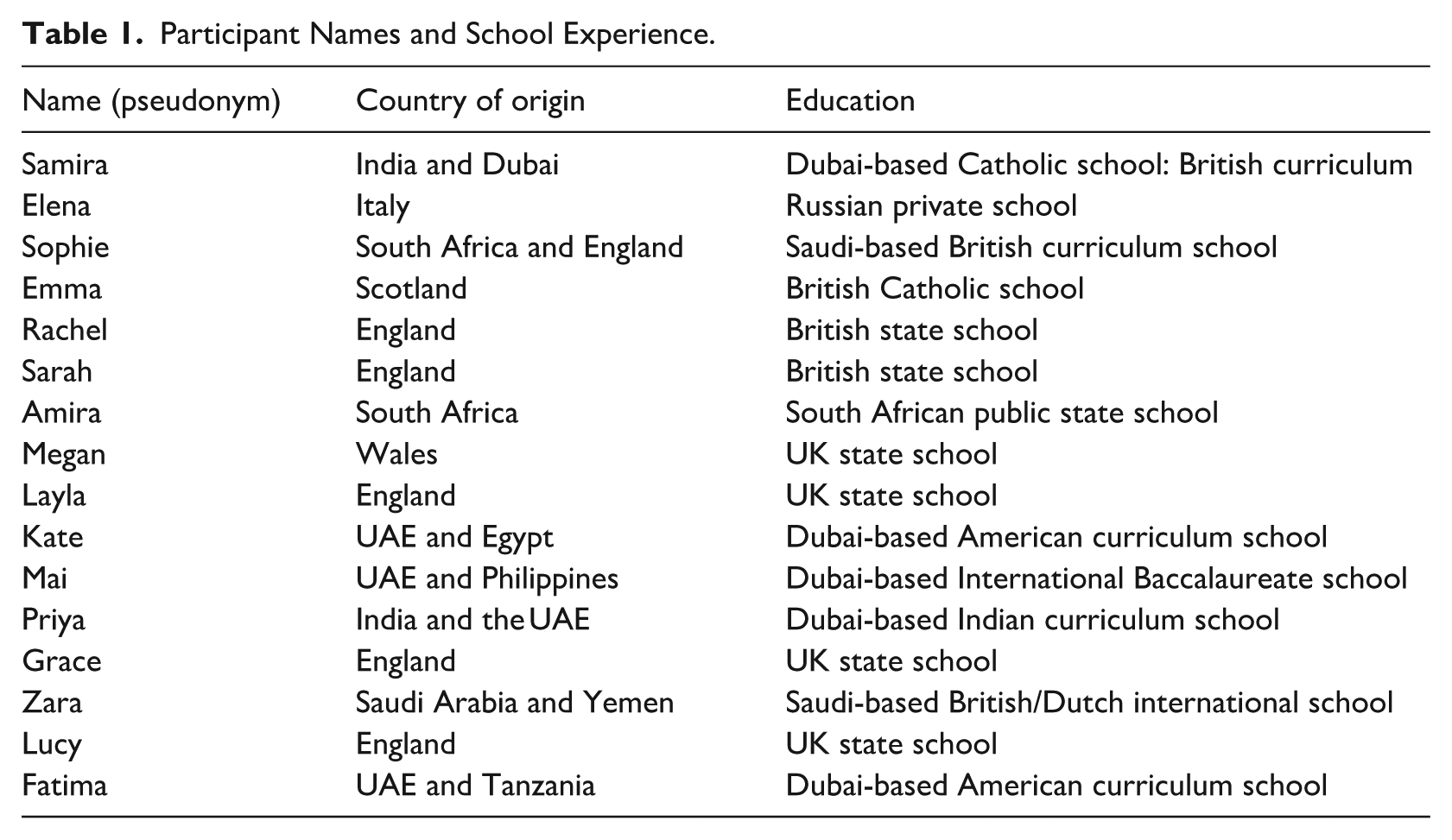
This study employed a multi-method approach to investigate trainee primary teachers’ intentions to integrate music into their teaching through the TPB framework. The research design combined qualitative interviews, guided seminars, and reflective journaling conducted over the academic year to capture the complexity of the participants’ attitudes, subjective norms, and perceived behavioural control regarding music integration. The participants were enrolled in a UK university’s Initial Teacher Education (ITE) Postgraduate Certificate of Education programme, serving the UAE’s 200-plus private British Schools. Participants represented diverse educational backgrounds, as detailed in Table 1, with varied prior musical experiences and cultural contexts.
Participant Names and School Experience.
The multi-method approach was applied due to the intense nature of the PGCE course and the challenges of scheduling time with participants during this period. Data collection occurred in three phases over the academic year. Phase 1 occurred in September, before the students began their school placements. To address research question one, understanding attitudes to integrating music, 16 initial interviews took place on campus during the week-long “block-teaching” as well as three 1-hour seminars on music in the primary curriculum. This time on campus was seen as the only opportunity to arrange face-to-face interviews, as school placements involved long full-time hours on top of university assignments.
Phases 2 and 3 were designed to address research question two, understanding how the attitudes and perceptions influenced intentions to integrate music into their teaching. A collection of 48 open-ended resources was made available to the trainee teachers to utilise alongside their placement lessons. This asynchronous model drew on Seddon and Biasutti’s (2008) successful intervention with trainee teachers, with resources developed with generalists in mind to respond to key challenges identified in the literature. Those who used the resources were asked to journal their implementation either through voice note, uploaded to the university’s learning platform, or through an email directly to the researcher if they were uncomfortable with the voice recording. The third phase was in June the following year. Fifteen follow-up interviews (one participant withdrew from the programme) were conducted after both placements had concluded to assess changes in attitude and intentions.
Asynchronous resources were developed based on the musical challenges identified in the literature and feedback from a pilot study. Each resource was assigned a “confidence” rating:
Beginner resources targeted participants with no formal musical training explicitly labelled as, “focussed on integrating music into the classroom, regardless of the teacher’s level of musical confidence.”
Intermediate resources required familiarity with basic musical terminology (pitch, rhythm, metre) and targeted participants with current or past formal training.
One of the seminars demonstrated a beginner-level resource on clapping games to help participants understand resource implementation.
Data analysis followed a reflexive thematic analysis approach, as Braun and Clarke (2022) outlined. The initial inductive phase identified preliminary codes and developed an initial set of themes. Following this, a deductive approach examined the emergent themes in alignment with the key constructs of the TPB. This was developed into the adapted TPB diagram (Figure 1). The construct of “attitudes” was amended to “attitudes to music integration.” The reflexive approach enabled the researcher to develop a rich, contextual understanding of the factors shaping the participants’ attitudes, perceptions, and intentions (Braun & Clarke, 2022).
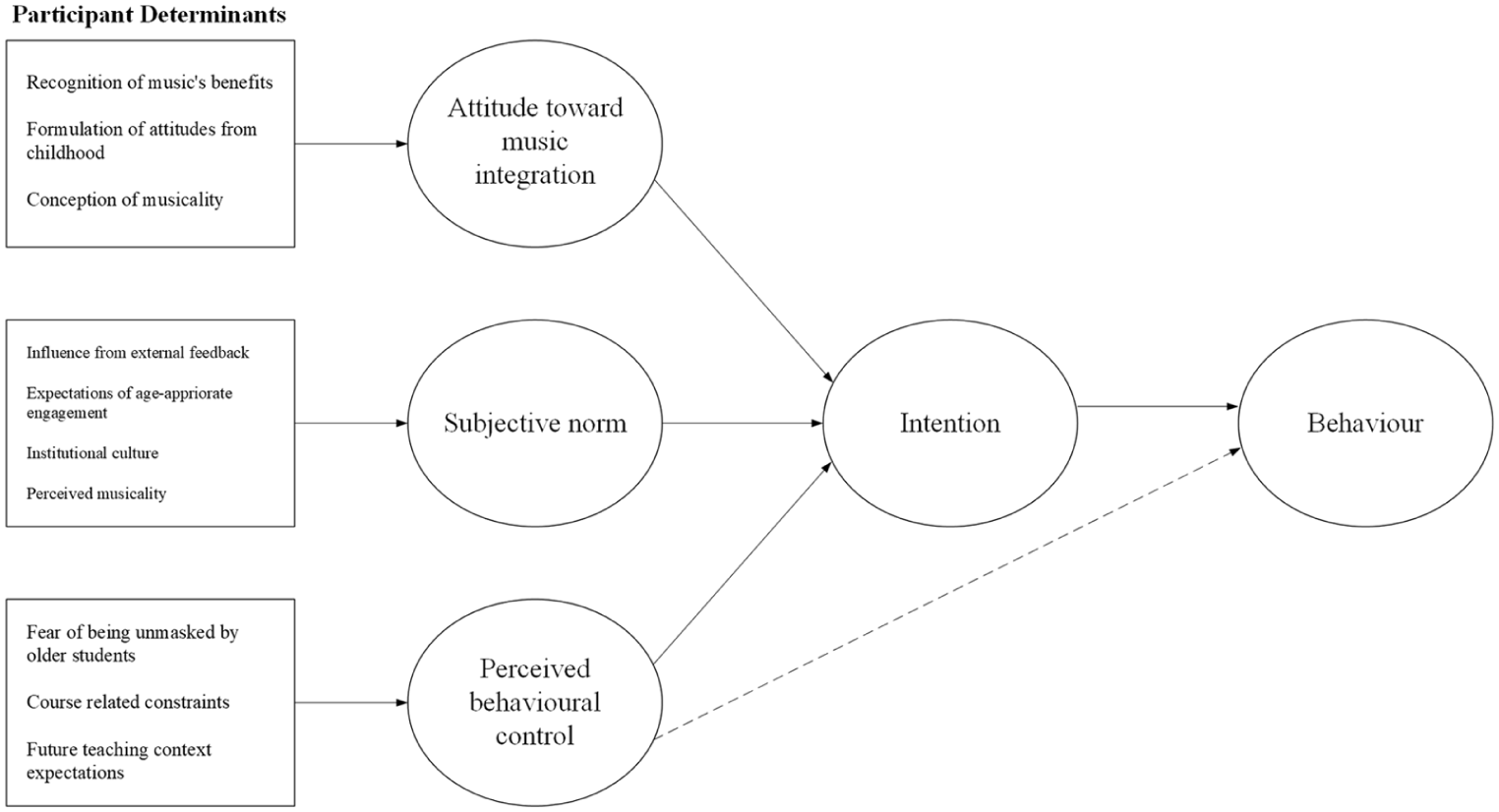
Theory of planned behaviour, adapted from Ajzen (1991).
The research was ethically approved according to guidelines laid out by the British Ethical Research Association (BERA, 2024) through the university’s ethics panel. Participants were given an information sheet that contained all relevant details, including the voluntary nature of their participation. They were also given a consent form and debrief forms.
Findings
Attitudes to Music Integration
The cohort had a universally positive attitude towards music and its benefits for children and young people, as summarised in Table 2. These were revealed through themes relating to cognitive, linguistic, and self-expressive development benefits. Music was seen to assist with cognitive “critical thinking, verbal skills and listening skills” (Samira). Similarly, Elena emphasised language benefits, discussing her experiences teaching vocabulary and grammar in a bilingual school. A popular perspective was music’s ability to enhance student engagement and maintain student concentration (Sophie).
Attitudes to Music Integration.
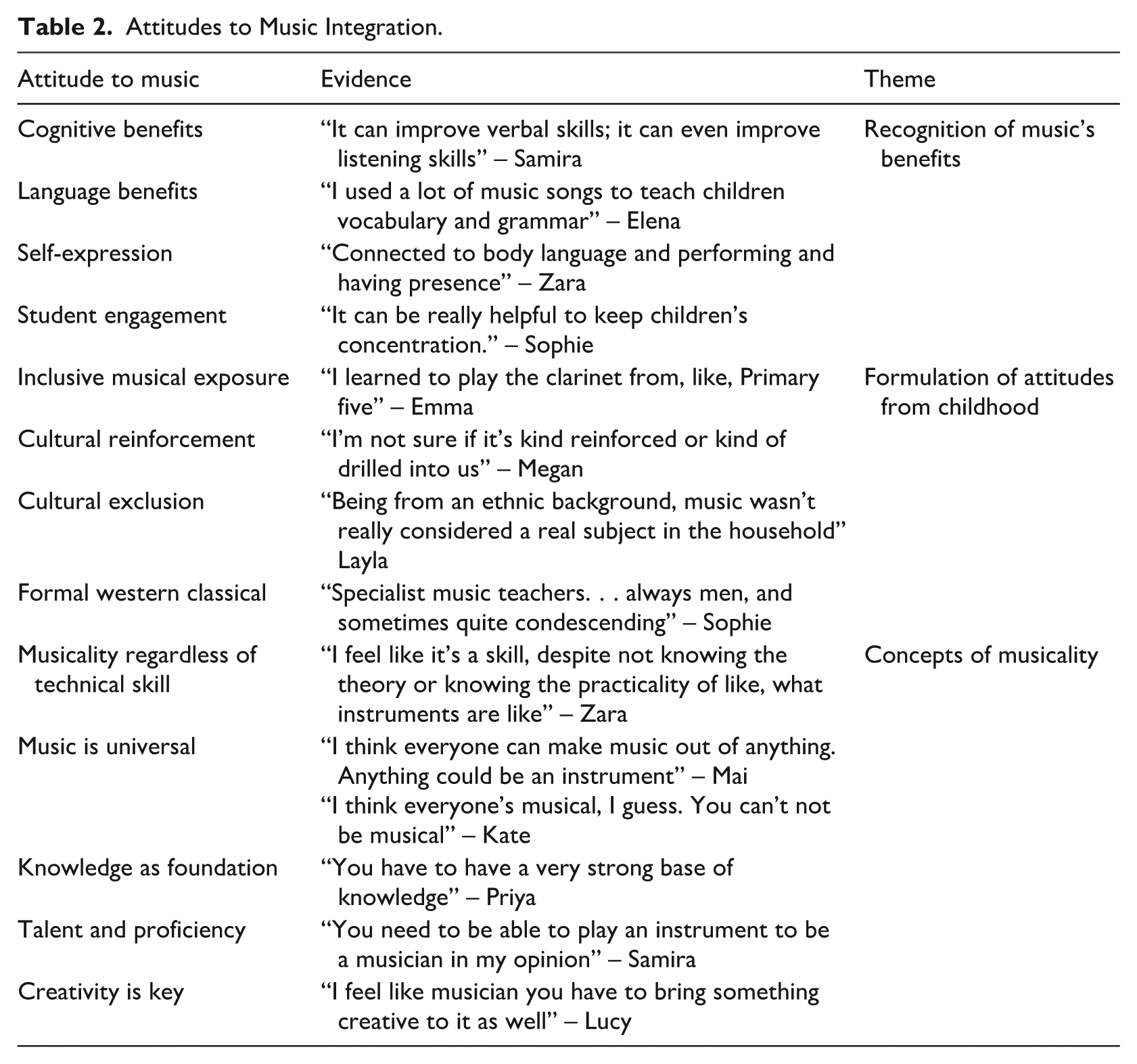
In some cases, musical attitudes were shaped by personal childhood experiences. Emma, Rachel, and Sarah reported positive early exposure to inclusive structured musical programmes, which led to their positive outlook on the subject’s place in the curriculum. Conversely, Amira experienced marginalisation of music in her curriculum, with its place on the table used by other subjects. The positive and negative influences of external attitudes were also found in Megan discussing her home country of Wales being the “land of song” and Layla saying it was not a big part of her household growing up. Sophie described a condescending emphasis on Western Classical music that left musicality being “signposted a certain way.” This notion of what it means to be musical was highlighted by varying attitudes to musical accessibility, with participants like Kate and Mai respectively commenting that “everyone’s musical” and “everyone can make music out of anything,” while on the other hand, Priya felt that a “strong knowledge base” was essential with Samira agreeing, saying that “teaching [it] is a different thing.”
Personal beliefs about a lack of musicality were noted as potentially affecting students’ attitudes to integrating music into the classroom, despite the subject’s perceived benefits amongst the cohort. Amira, Grace, Layla, and Kate believed they had no natural talent, while Sophie and Elena did not identify with being musical. Elena felt that, despite being able to play the violin, flute, and piano, she did not have the personality. Similarly, former opera singer Megan said she was good but “not the best.”
After the first placement, an anonymous survey with Likert questions and an open-ended question revealed that only four students had used the online resource bank. However, when asked if they intended to use the resources in the future, only one participant disagreed, three remained neutral, and the majority—13—agreed or strongly agreed.
Subjective Norms
Social pressures and perceived expectations of judgement heavily influenced participants’ attitudes towards music integration. As highlighted in Table 3, external judgements from family, peers, or even children shaped self-perceptions of musical ability and willingness to use music. Fatima shared a memory of being criticised for her singing, which impacted her perceived musicality. This aligns with subjective norms in the TPB framework, where the perceived expectations of others create social pressures that can hinder teachers from engaging with music.
Subjective Norms.
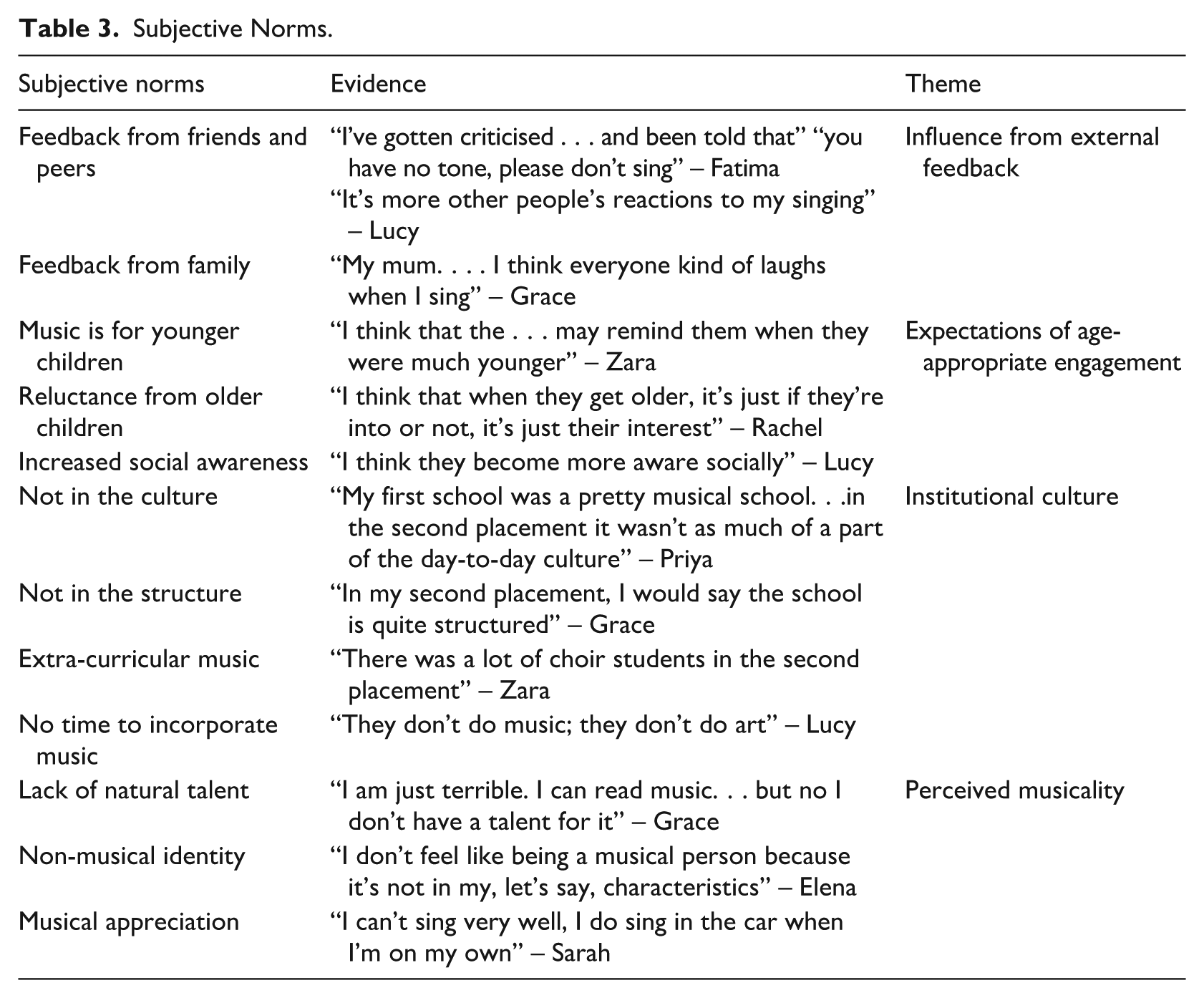
Findings also revealed complex norms around the relationship between student age and classroom musical engagement, potentially reflecting participants’ own musical insecurities. Many participants believed younger students were more accepting of music and musical activities. For example, Sophie noted that “the higher up you go [in year group], the less engaged children become in things that put them on the spot,” reflecting a belief that older students’ increasing social awareness could discourage active participation in music. This perception of older childrens’ insecurities parallels many participants’ own expressed musical self-doubts, with some describing themselves as “not musical” (Elena) or lacking a natural talent. The projection of these personal concerns onto older children suggests that teachers’ own musical self-perception may influence their assumptions about willingness to engage with musical activities.
Another subjective norm was related to the school’s expectation, or lack of expectation, of them as a teacher to deliver music. Priya noted a marked difference between the musical first placement and her second, where it was not “as much of a part of the day-to-day culture.” Grace and Lucy also pointed to a more rigid curriculum, respectively explaining their second placements were “quite structured” and had “very few frees,” with Lucy’s having no performing arts teacher. At the same placement school, Rachel thought that even if she tried to incorporate musical activities with her Year 6 class, it would be a “struggle, as they’ll all look at me like I’m strange,” reinforcing the above expectation around older children.
Perceived Behavioural Control
As with subjective norms, Table 4 indicates that participants expressed concerns about judgement from older children, particularly in Key Stage 2 (ages 7–11). This was tied to their perceived behavioural control, specifically the fear of being “unmasked” as musically incompetent, which limited their willingness to introduce musical activities. Variations on the word “judge” were a common theme. Kate, Sophie, and Lucy noted that younger children are “less likely to judge,” are “not as judgey,” and are “less judgmental.” Amira and Grace indicated that children aged seven and above tend to be more “judgmental.” With Elena, this also applied to her peers, with her expressing a preference for teaching music without adults to avoid feeling “judged” despite her instrumental proficiency. Although Kate, Megan, and Sophie changed this viewpoint over the placement period, this perceived judgement reflects a trend that engagement in music becomes challenging as children get older, influencing teachers’ sense of comfort and control over using music in class.
Perceived Behavioural Control.
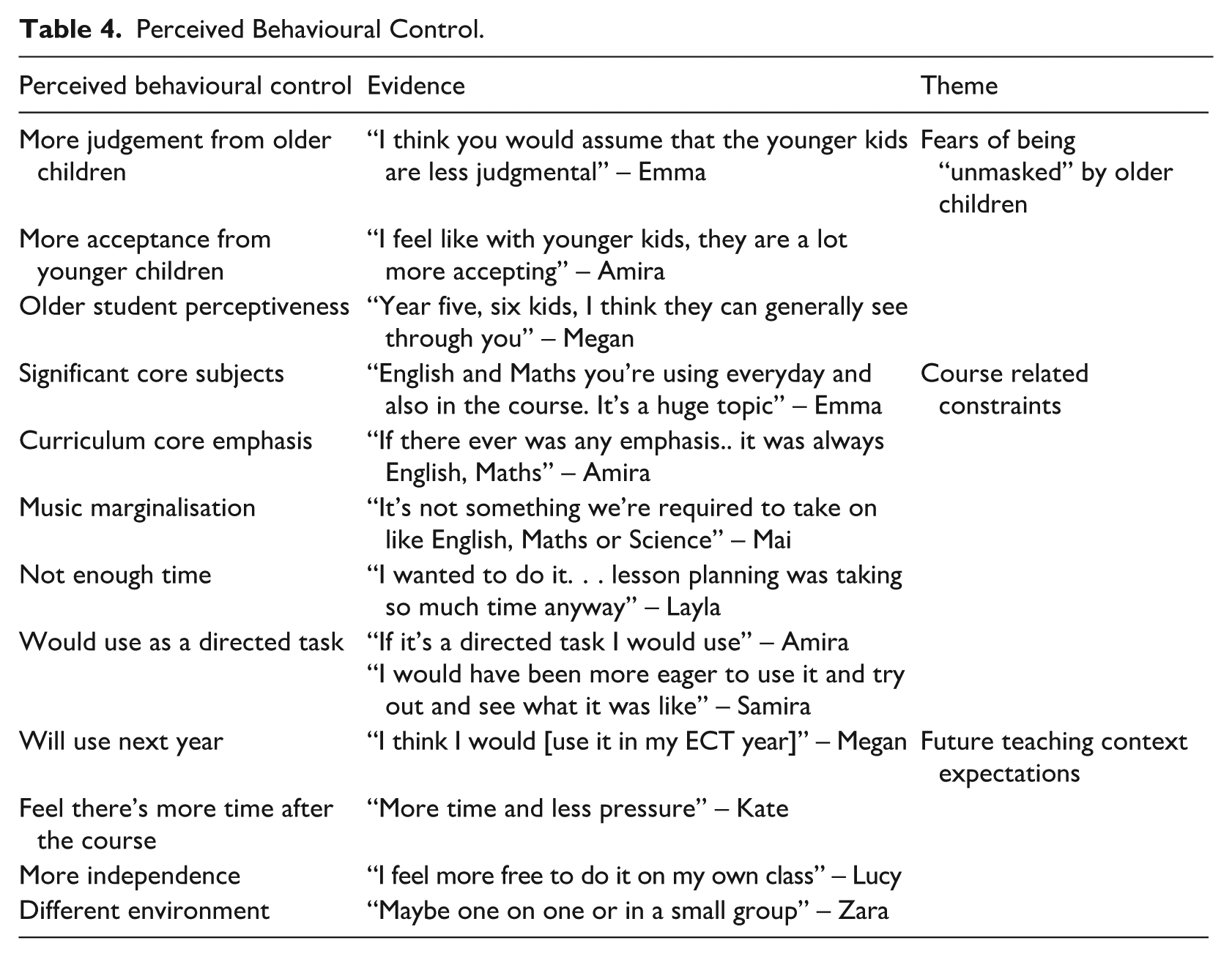
When both placements had been completed in June, the interviews indicated that limited time and the fact that the resources were not a requirement of the course reduced the likelihood of integrating music into their lessons. With extra “directed tasks” already incorporated into the PGCE curriculum, participants indicated that if music had also been incorporated, they would have been more likely to integrate it. Amira noted, “if it’s a directed task, I would use it”, and Samira said it would have made more “more eager to try it out.” Similarly, participants anticipated more freedom to incorporate music once they had control over their own classrooms, particularly during their Early Career Teacher (ECT) year. Megan and Lucy both expressed this view, believing that having “my own classroom” would provide the flexibility and autonomy to experiment with music integration.
Another critical factor was the focus on core subjects like English, Maths, and Science, which participants noted were emphasised over music in both teacher training and school settings. Emma observed that “English and Maths. . . are huge topics.” This prioritisation affects perceived control, as participants may feel less empowered or justified in allocating time and resources to music when it is not mandated.
Use of Music in the Classroom
Five participants engaged in the music activities from the online resource bank. Priya used the “cup game” resource, for which she found the instructions “a bit challenging,” and “flow state” resources (beginner) which was a “nice calm activity after a long week.” Mai used music for mindfulness (beginner), which “the children enjoyed,” and Megan introduced singing rounds (intermediate), which went “brilliantly.” Lucy, Amira, and Sarah incorporated the clapping game resource demonstrated in their earlier lecture (beginner).
Outside of the resources, trainees used music passively as background sound. Layla and Zara used music as a behavioural cue, employing a tambourine and bell, respectively. Kate, Sophie, Jackie, and Zara played songs with catchy hooks from the internet to support concept retention. All participants indicated they were likely to use the musical bank of resources in their teaching during their ECT year. Lucy shared, “I would feel more free to do it in my own class because I feel more comfortable.” At the same time, Samira expressed eagerness to use music once she had her own classroom and resources, and Rachel looked forward to generating musical ideas from the website for lesson planning.
Discussion
This study used TPB to understand trainee teachers’ attitudes towards incorporating musical activities into their placement year. An analysis using the three constructs of the TPB was carried out to understand whether positive attitudes to music translate into behavioural action or if other variables affect these behaviours. The findings showed that despite a positive attitude to music in the classroom, there was limited resource usage. Using secondary research, this discussion examines these perspectives further.
Attitudes and their influence on behaviour form the first component of TPB (Ajzen, 2011). The trainee teachers consistently recognised music’s holistic benefits (Henley, 2017; Russell-Bowie, 2010), with those who used them maintaining positive attitudes throughout the academic year (Cullen & Greene, 2011). This aligns with previous research demonstrating generalist teachers’ capacity for delivering music (de Vries, 2013; Mills, 1989). However, participants’ doubts about their teaching ability often undermined these positive attitudes, stemming from past experiences (Henley, 2017), perceived lack of talent, or questions about their musical identity. Hogle’s (2021) concept of musical “wounding” helps explain these contradictions by showing how experiences of criticism and comparison shape future musical engagement, especially in cases of negative feedback about singing ability and family criticism. Conversely, positive participation in school music ensembles contributed to favourable views of music in the classroom. As MacGregor (2024) suggests, these experiences can lead to a more nuanced response from teachers who may use negative experiences as motivation for better future experiences for their students.
Subjective norms were found to play a substantial role in shaping participants’ intentions to integrate music into their lessons. The perception of support and expectations from colleagues and school leaders influenced participants’ intentions to incorporate musical activities, even without explicit directives to do so. This sense of social approval for music integration emerged as a factor in the decision-making process. Research shows that less confident student teachers tend to imitate their professional peers (Bullock, 2013), particularly when theory conflicts with their experiences on placement (Brindley & Riga, 2009). The social environment of the classroom also created normative pressures, with participants perceiving older children as more judgemental about musical activities. This perception of potentially negative assessment from children acted as a constraint on musical integration (Azjen, 1991). These findings align with Demir’s (2010) assertion that anticipation of negative feedback can limit behavioural intentions through subjective norm mechanisms.
The construct of perceived behavioural control was evident through both internal and external constraints on the trainee teachers. Limited time and the prioritisation of core subjects over music (Henley, 2017) reduced participants’ perceived control over being able to integrate the resources. All placement schools had a music or performing arts specialist, potentially reducing the perceived need to incorporate music into the classroom (Caldwell et al., 2021). When proficiency in core subjects is front and centre of the curriculum, teachers may feel discouraged from allocating time to anything else, regardless of positive attitudes.
The relationship between past experiences and resource usage revealed interesting patterns in perceived behavioural control. Among the five who engaged with the resources, successful implementation was observed from participants with varied musical backgrounds, from those with professional training to those without formal music education. This challenges simplistic correlations between musical background and teaching confidence and suggests that perceived behavioural control in music teaching goes beyond formal training. Participants anticipated greater control over music integration in their ECT year when they would have their own classrooms. Greater autonomy and reduced pressure were predicted to allow more freedom to experiment. This anticipated shift in time constraints reinforces their positive intention to integrate music and reflects an optimistic outlook on their autonomy (Habibi et al., 2023).
The findings also support Palkki’s (2022) call for a more inclusive pedagogy. Broader views of musicality demonstrated increased motivation for musical integration. This inclusive mindset influenced perceived behavioural control as in resource choice and implementation strategies. The beginner resources were most popular, especially the clapping activity introduced by three participants in their university seminar. This was chosen after a demonstration in the seminar and reinforced by the class’s enjoyment of the activity (subjective norms), suggesting a need for further scaffolded instruction. Notably, even participants with perhaps lower perceived behavioural control found ways to integrate music through passive background music and instruments for behavioural cues, often confirming their opinions on the positive effects of music on behaviour management, engagement, and well-being.
Conclusion
This study’s findings illustrate how the constructs of the TPB explain motivations behind the behavioural intentions of trainee generalist teachers integrating music in the classroom. Participants held positive attitudes about music, but key barriers emerged relating to a fear of judgement and the course’s priority for core subjects. These barriers persisted, suggesting a more comprehensive approach is needed, beyond basic resources and minimal training. Systematic, high-quality, inclusive music training is essential for generalist music teachers. Policy frameworks must recognise music’s role in primary teacher training and provide protected teacher time and sustained engagement that normalises integration and reduces anxiety around musical judgement. These policy amendments would need to go beyond a simple mandating of musical integration by creating supportive structures that address time constraints and teacher confidence.
Implications for Teacher Training Programmes
While participants’ experiences varied widely, the findings highlight the need for the PGCE to supply targeted support through scaffolded resources and enhanced cross-curricular integration. Adding a music-focussed “directed task” to existing pedagogical requirements would allow trainees to develop confidence and practical experience, fostering greater classroom agency and challenging fixed mindsets about musical ability. The “confidence rating” system showed promise as a design feature, but a commitment to high-quality music training for generalist teachers is necessary to enable them to integrate music into their daily practice. This would involve structured, sequential professional development that builds skills and confidence over time, extending to partnership schools and promoting school-wide recognition of music’s value.
Limitations
This study acknowledges several important limitations, beginning with the sample size of 16 trainee teachers from a single PGCE cohort, which limits the generalisability of the findings. The participants represented a convenience sample with varied musical backgrounds, potentially creating selection bias that affected the results, while the voluntary nature of incorporating the provided music resources could have meant that the bank of materials tended to be used by participants who already had a greater interest in music integration.
Most significantly, the music training offered in this study was minimal due to course constraints, meaning this limited intervention cannot allow conclusions to be drawn about the potential impact of comprehensive training on classroom integration. The barriers to implementation observed in the study could have been mitigated through sustained professional development; therefore, it cannot be concluded that more substantial training would have had a greater positive effect than the barriers encountered.
The self-reported nature of the data also introduces potential response biases, particularly given the researcher’s role as instructor and interviewer. Finally, the study’s timeframe did not allow for tracking long-term changes, but longitudinal exploration could prove a fruitful avenue for future research.
Future Directions
Future studies could track PGCE graduates into their ECT year to see if the increased autonomy predicted affects their behavioural intentions. Analysing different types of musical integration—active (e.g. singing, clapping games) versus passive (e.g. background music)—could reveal which strategies yield the best results for teachers and students.
This study underscores the need for institutional support, structured training, and resource development to facilitate the integration of music into primary education, as acknowledging the value of creative subjects alongside core disciplines will enhance the primary educational experience by providing a holistic learning environment.
Footnotes
Author Note
Research was conducted at the University of Birmingham Dubai before the researcher worked there.

Ethical Considerations
Ethical approval was given by the Ethics committee of Durham University. Informed consent was given by all participants through information sheets, consent forms, and debriefing sheets.
Author Contributions
Funding
The author received no financial support for the research, authorship, and/or publication of this article.
Declaration of Conflicting Interests
The author declared no potential conflicts of interest with respect to the research, authorship, and/or publication of this article.
Data Availability Statement
The datasets generated during and/or analysed during the current study are available from the corresponding author upon reasonable request.