



Abstract
Societies around the world witnessed a necessary increase in the use of Information and Communication Technology (ICT) during COVID-19. This facilitated communication and learning across all sectors, sustaining connectivity. Digital technology provided the conduit for the continuation of music lessons as innovative teaching and learning emerged across diverse locations and contexts. This article examines data collected from the Phase 2 of a national project Re-imaging the future: Music teaching and learning, and ICT in blended environments in Australia and investigates teachers’ levels of confidence and professional use of ICT and music technologies since 2022. Applicable comparisons are made between data from the Phase 1 sample collected at the start of 2021. Australian music teachers’ preferences for different devices, tools, and resources used in teaching and learning are presented using a combination of descriptive and correlational data. The findings indicate increased teacher ICT confidence, application of music technology and ICT to deliver lessons, and incorporation of diverse devices and tools in music education. The frequency and confidence appear to be sustained post-pandemic across a range of technologies and teaching contexts. The heightened and sustained inclusion of music and video technologies, such as video streaming (YouTube and Vimeo), music streaming services, and many online tools and software emerged as the most popular technologies used for musical tasks and productivity tasks across all participants. While generalisations cannot be made due to the small sample size (n = 109) in this study, the findings confirm ways in which teachers employed multiple devices, software, online resources, and music-media applications with increased confidence and frequency.
Keywords
Introduction
During the global COVID-19 pandemic, societies around the world witnessed an increased demand for Information and Communication Technology (ICT) and digital technologies to facilitate communication and inclusion, and to sustain learning across all sectors (Lorente et al., 2020; Rachmawati et al., 2021). The use of ICT became essential in the education sector where teachers employed a multitude of devices, software, and learning management systems. Individuals depended on digital technologies and online communication as isolation necessitated new and innovative ways to remain connected. Educators in Australia demonstrated the capacity to adapt and respond through modification of their practice with increased dependence on technology enabling the continuity of learning (Bond, 2021; Dabrowski et al., 2020).
This article focuses specifically on the ways in which Australian music educators recalibrated their approach to teaching music using different technologies to enhance student learning. The authors are tertiary music educators based in Australia, drawing on Phase 1 (n = 105 in 2021) and Phase 2 (n = 109 in 2022) data from the larger ongoing study. This research provides a granular understanding of teachers’ applications of digital technology in their practice across Australia, exploring music educators’ teaching practice on return to the classroom since 2022. It examines two key questions:
In what ways have teachers’ confidence in and understanding of different ICT and music technology influenced the frequency of usage in classes?
How have these shifts been a catalyst for change in teachers’ pedagogy and application?
We offer key theoretical perspectives in relation to key areas, examining the ways that music educators have embraced digital technologies in productivity and music tasks in relation to learning, adaption, perception, teaching, skill, and self-efficacy. This continued change in the role of teachers in Australia further highlights the need to review and adapt approaches to be included in initial teacher education programmes.
Digital technology and learning
Digital literacy has attracted increased attention in education as society has assessed the response to COVID-19 and we have learnt new things from the heightened engagement with technologies (Calderón-Garrido & Gustems-Carnicer, 2021; Dabrowski et al., 2020). In education a key factor has been ensuring equitable access for all students (Becker et al., 2020) by considering ways to integrate sustainable, cost-efficient, equitable, and connected learning opportunities. The importance of integrating technologies to develop digital literacy amongst students remains at the forefront of educational debate, notwithstanding disparity issues regarding access and equity in Australia (Flack et al., 2020) and around the world (Czerniewicz et al., 2020). Buckingham (2015) emphasises that “if we want to use the internet or computer games or other digital media to teach, we need to equip students to understand and to critique these media” (p. 4).
Bell (2016) notes the importance of transforming the global economy rather than just servicing it, highlighting the need for 21st-century education “to prepare learners for the varied and interrelated environmental, social and economic challenges they will meet as they confront a changing world” (p. 48). This debate highlights the need for learners to have wide-ranging technology access across different devices and locations, allowing educators and students to explore the intersection of technologies and develop new digital pedagogy and literacies. This is critical, given that blended learning became the norm (Ní Uigín & Cofaigh, 2021) during the pandemic, and an increased application of online delivery became the baseline in education (Ali, 2020). As the intersection between the use of media and technologies has become blurred (Buckingham, 2015), music education occupies a pivotal role as it seeks to develop the creative capacity of individuals while nurturing social and environmental growth around the world (Nanjundaswamy et al., 2021).
Teacher usage, perception, skill, and self-efficacy
The use of technology and adoption of new approaches to learning are impacted by various factors such as self-efficacy (Hatlevik, 2017)—one’s beliefs about one’s capability to undertake and complete a given task (Bandura, 1997). Combined with a teacher’s skill, perception, and overall confidence, these can impact the degree and type of ICT usage within the teaching process (Kaarakainen & Saikkonen, 2021; Merrick & Joseph, 2023a). COVID-19 increased engagement with technology, which was reflected in the significant increase in the number of connections and new devices during this time (Cisco, 2020). This shift amplified ways in which teachers were adaptive and resilient, staying connected to students around the world via technologies. Educators fostered academic outcomes while sustaining a sense of wellbeing amongst students across diverse locations and settings using technology (McMahon et al., 2021). In music education teachers displayed increased confidence and creativity as they modified pedagogy through increased technology integration within learning environments (Calderón-Garrido & Gustems-Carnicer, 2021; Camlin & Lisboa, 2021; Merrick, 2020; Merrick & Johnson, 2024).
During the pandemic, society witnessed firsthand how teachers regularly reviewed and modified curriculum, pedagogy, and strategies to enable connection within education communities, while seeking to maintain a balance of relationships in learning (Weller & Anderson, 2013). Digitisation due to the pandemic meant practice was shared in real time through illustrations of creative teaching across myriad of settings. Diverse technological skill was shared and acknowledged instantaneously across online communities (Bond, 2021; Merrick & Joseph, 2023b). A renewed sense of teaching capacity, skill, and knowledge emerged amongst educators. Employing digital technology around the world was a catalyst in the reshaping of roles, whereby “an entire generation of teachers has effectively gone digital” (Adam & Metljak, 2022, p. 1), catering for the differentiated learning needs of students (Kilcoyne, 2021).
Online videos and resources, music streaming, web-based learning, and collaborative tools
In the face of change, Haleem et al. (2022) note that “the efficiencies such technologies provide are simply unrivalled by traditional learning methodologies,” saying that “indeed, today’s technology’s adaptability and non-intrusive character make learning more appealing to the next generation” (p. 275). Aligning teacher preparation and practice with technologies as a means of supporting learning continues to be a challenge and is a critical area to understand and review within initial teacher education preparation programmes (Ottenbreit-Leftwich et al., 2012).
It is no surprise that YouTube is one of the most accessed and preferred modes of online entertainment amongst people of all ages. Global data indicate that following the category of “all videos” (92.3%), “music videos” (49.4%) are the second most popular category accessed, followed by “educational video” (26%) usage, with access to music and education videos having a higher frequency of use than sports clips or gaming videos (Statista, 2023a). In 2024, it is predicted that there will be 933 million users of YouTube globally (Statista, 2023b). It is significant that YouTube hosts more than four billion accessible videos on its site. More than 50% of all videos are accessed via mobile devices (Arthurs et al., 2018). Beuscart et al. (2022) observe that YouTube is the most accessed and used platform for music streaming, with users preferring to listen to videos despite having the option to view them online. YouTube is identified as “an efficient soundtracking device” (p. 654) supporting music listening and sharing of digital audio amongst users. YouTube offers new approaches that support ways for people to interact, create, and disseminate music (Cayari, 2011) fostering cross-media listening in the classroom setting (Webb, 2007), and virtual music performances (Cayari, 2018).
Contrary to the provision of dedicated online audio and music streaming services such as Spotify, Apple Music, and the like, YouTube functions predominantly as a music streaming platform via video, providing a powerful “informal” mode of digital music instruction, learning, and engagement across a multitude of different functions, such as live performance demonstration, backing tracks, or for sharing resources (Stowell & Dixon, 2014). YouTube is used as a platform by teachers to support components of music education (i.e., performance, composition, aural, musicology, and history) across a diverse range of contexts such as ukulele learning (Smith & Secoy, 2019), online communities (Kruse & Veblen, 2012; Waldron, 2013), instrumental music (Hanson, 2018) and music performance (Monkhouse & Forbes, 2015). The intersection between teachers’ individual use and their confidence to engage YouTube and various types of ICT is critical in a digital world. Students perceive YouTube to be effective to assist “teaching and learning” and to “make it easier [. . .] to visualise and actually understand the topic” (Moghavvemi et al., 2018, p. 41).
Digital technologies have resulted in changes to music consumption, whereby consumers use it to accompany their lives and activity by “soundtracking” rather than “listening” to music as a separate activity or part of their day. New technologies become part of people’s identity, as they interact and access it in different ways, “integrating music into their daily lives” (Krause et al., 2015, p. 155). In this way, “digital technologies are supplementing rather than replacing previous technologies” (Beuscart et al., 2022, p. 657). Krause et al. (2015) note that people adopt and access music relative to age, whereby younger people use mobile devices and older people use traditional formats such as the radio or compact disc (CD). Collaboration and online learning continue to be rapidly developed and integrated within the music education context, whether through cloud-based Digital Audio Workstations (DAWs) to facilitate composition (Holdhus et al., 2023), the exploration of technology-based online instrumental pedagogy, or facilitating online tutorials (Vaizman & Harpaz, 2023).
The changing roles of teachers in education: ICT and digital technology
To meet the demands of COVID-19 head on, strategies around areas such as “Teaching, Learning and Assessment using ICT, Teacher Professional Learning, Leadership, Research and Policy and ICT Infrastructure” were reshaped as teachers adopted a more constructivist orientation in their classrooms (Kilcoyne, 2021, p. 248) across varied online settings. Teachers expanded their digital vocabulary and repertoire to improve teaching strategies using ICT, increasing digital literacy, and expanding learning opportunities for students (AITSL, 2023). Concurrently, teachers’ professional identities and roles changed as they daily modified their practice and assessment processes (Merrick & Joseph, 2023b; Oguguo et al., 2023).
Teachers’ roles shifted as they implemented online teaching as a necessity (Ali, 2020), responding to increased usage and necessity during the pandemic (Lee at al., 2021; Merrick & Joseph, 2023a). Historically, the many benefits that ICT integration affords education in many contexts have not been acknowledged. Ali (2020) reiterates that user willingness and openness to embrace change is necessary for successful implementation of technology in learning. For many years, music educators have encountered challenges with accessing training, growing in confidence, and developing the skill to adapt and apply their pedagogy (Bauer & Dammers, 2016; Merrick, 1995; Webster, 2012). There has been a noticeable delay in the system-wide acceptance and application of digital technologies in music education (Spieker & Koren, 2021), especially since teachers often use technology “away from students for nonpedagogical tasks” (Dammers, 2019, p. 365).
Seeking to understand students’ perceptions and approaches to using technologies in music education activities has proved critical over many years, providing insight into ways teachers apply digital tools to develop student motivation (Merrick, 2002; Merrick 2006; Partti, 2017; Serra-Marín & Berbel-Gómez, 2021; Wan & Gregory, 2018). The development of suitable curriculum structures, course design, and access and support have been identified as factors that have impacted teacher professional learning (Gall, 2013; Hodes et al., 2011), despite the perceived educational value of media-rich resources that digital technologies offer music education (Cayari, 2011; King et al., 2017; King & Himonides, 2016; Kruse & Veblen, 2012). Research also continues to explore the types of learning experiences students encounter in web-based environments (Ruokonen et al., 2019) further highlighting the need for teachers to adapt and change their pedagogies and roles accordingly.
Methodology
Ethics was sought and granted by Deakin University’s Human Ethics Advisory Group in 2021 to undertake the ongoing study Re-imaging the future: Music teaching and learning, and ICT in blended learning environments in Australia. Key professional organisations including the Australian Society for Music Education, Australian Band and Orchestra Directors Association National, Kodály Australia, Midnight Music, Australian National Council of Orff Schulwerk, Association of Music Educators, Victorian Music Teachers Association, and Australia New Zealand Association for Research in Music Education were approached to be involved. They consented to disseminate an invitation to their membership through email, webpage, and social media, containing a Plain Language Statement (PLS) about the study and an online survey link. Qualtrics enabled the collection of qualitative and quantitative data from early childhood, primary, secondary, tertiary, and instrumental teachers in different teaching contexts. The use of a mixed methodology for the broader project enabled rich data collection, supporting in-depth understanding of the research problem, accompanied by robust descriptions and interpretation of the responses (Creswell & Plano-Clark, 2011).
Phase 1 was administered between March and April 2021 (n = 105) and Phase 2 between December 2022 and February 2023 (n = 109). For this article, we focus mainly on Phase 2 data, and at times make comparisons from participant responses in the Phase 1 data to illustrate changes between the Phase 1 participants (during COVID-19) and the Phase 2 respondents as they returned to classes after COVID-19. It is important to note that the samples are different combinations of music educators, and not a longitudinal examination of the same participants over time; as data were collected anonymously it was not possible to know whether the same participants responded to Phase 2. This is a limitation, although the descriptive data serve as a marker through which to examine and illustrate changes, and to reflect on the apparent realignment amongst music educators in Australia.
The design of the survey was piloted with various music educators to ensure reliability and validity of items (Taherdoost, 2022) for each phase. A check of the reliability of the technical elements of the Qualtrics survey was also undertaken to detect possible coding errors (Weber, 2021). Given that participants were anonymous, they were required to tick a box confirming that they had read the PLS prior to commencement. Online surveys enabled a broader reach to a wider population, increasing accessibility in comparison with meeting participants and handing out hard copies (Wright, 2005). However, while online surveys are quick to complete, it is accepted that respondents may not answer as truthfully compared with completing a hard copy questionnaire (Baruss & Johnson, 2021). The relatively low number of responses could indicate that respondents received requests to complete many surveys, were unable to undertake the survey, or that email messages may have been sent to their junk folder (Lefever et al., 2007).
The survey design included closed items such as state and territory, qualification, age, gender, and year level taught, and a range of 11-point rating scales items with 10% distances collected teachers’ perceptions and attitudes about different components of their teaching. Statements were structured as follows: “I am confident in my ability to use a laptop in my teaching” (0 = “totally disagree” and 100 = “totally agree”). Frequency of ICT usage items employed a scale of 0 = “not at all” through to 10 = “all the time”). For this article, quantitative data were analysed descriptively, reporting mean levels and percentages. SPSS Version 29 was used to undertake statistical analysis including descriptive means, and Spearman’s rank order correlation test was used to ascertain if association existed between ordinal variables. Cronbach’s alpha co-efficient was used to validate the consistency of items in the scale used (Russell, 2018). Cronbach’s alpha reliability coefficient for these rating scales was α = .87.
Findings
In this section, two research questions are examined in relation to participants’ experiences of returning to the classroom from 2022, after COVID-19:
What are the perceived levels of ICT confidence and technology application amongst music educators, post-pandemic?
What types of software do music educators employ and how frequently do they use them in their teaching?
What are the perceived levels of ICT confidence and technology application amongst music educators, post-pandemic?
The data in Table 1 indicate a positive shift in ICT and music technology confidence amongst music teachers after the application of ICT across COVID. The data suggest that teachers developed sustained skills across a range of devices, whether using laptops, tablets, or their mobile phones when teaching. Key statements like “I am able to use technology to enhance my teaching” (80.5) suggest that collectively music teachers had a high perception of their capacity to employ technology across all areas of their teaching to enhance learning. This implies that there was sustained integration across the learning process. Table 1 illustrates how teachers displayed a “distributed confidence” across multiple devices and diverse technologies, which indicates a more integrated pedagogical approach, whereby multiple devices formed part of a wider repertoire of digital tools.
Phase 2 Participant Mean Confidence Levels When Using ICT and Music Technology (n = 109).
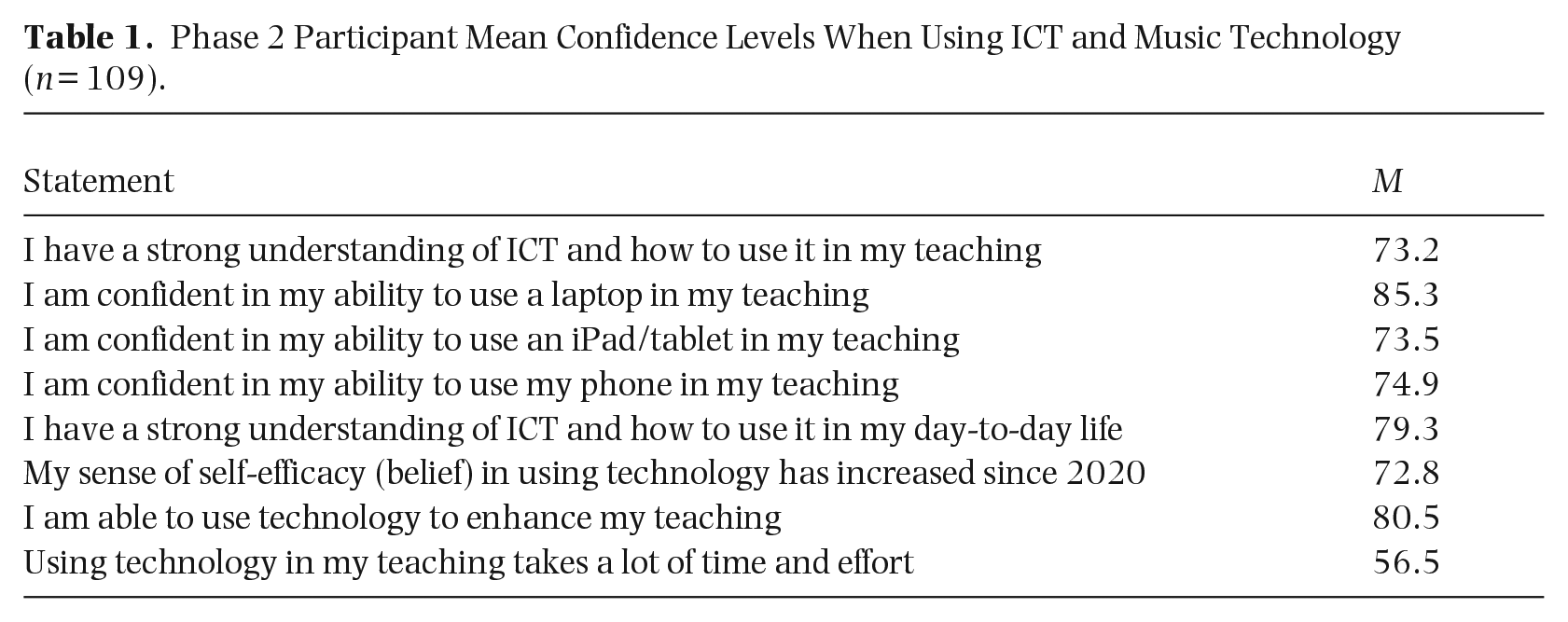
Teachers’ broad perceptions about their technology use, coupled with the high degree of usage and confidence (79.3) in their daily lives, was interesting. The mean result (56.5) for the statement, “Using technology in teaching takes a lot of time and effort,” in Table 1 suggests that teachers found ways to adapt and modify ICT application in effective ways that did not impact the amount of time required for preparation.
Table 2 highlights a significant correlation between these teachers’ reported self-efficacy about using ICT to enhance their teaching (2) and their perceived understanding of technology (1) (r = .72, n = 75, p < .001). Table 2 also indicates how teachers’ levels of ICT self-efficacy and their ICT understanding influenced both their choice and level of technology usage when teaching music. The findings suggest a very strong correlation between the teachers’ reported levels of ICT understanding and their use of tablets (r = .42, n = 60, p < .001), mobile phones (r = .43, n = 66, p < .001) and laptops. Teachers’ self-efficacy beliefs about using ICT were also significantly correlated with laptop usage (r = .28, n = 74, p < .017), tablets (r = .29, n = 60, p < .023), and mobile phones (r = .31, n = 66, p < .011). The findings suggest that efficacious teachers with high levels of ICT understanding could transfer this confidence across devices. Significant correlations emerged between teachers’ use of laptops and tablets (r = .36, n = 60, p < .004), laptops and mobile phones (r = .26, n = 64, p < .038), and tablets and mobile phones (r = .37, n = 52, p < .007), further highlighting the ways in which teacher confidence and understanding underpinned teachers’ choices of device and their subsequent application.
Correlation Between Teachers’ Perceived Levels of ICT Understanding and Device Usage in Lessons.
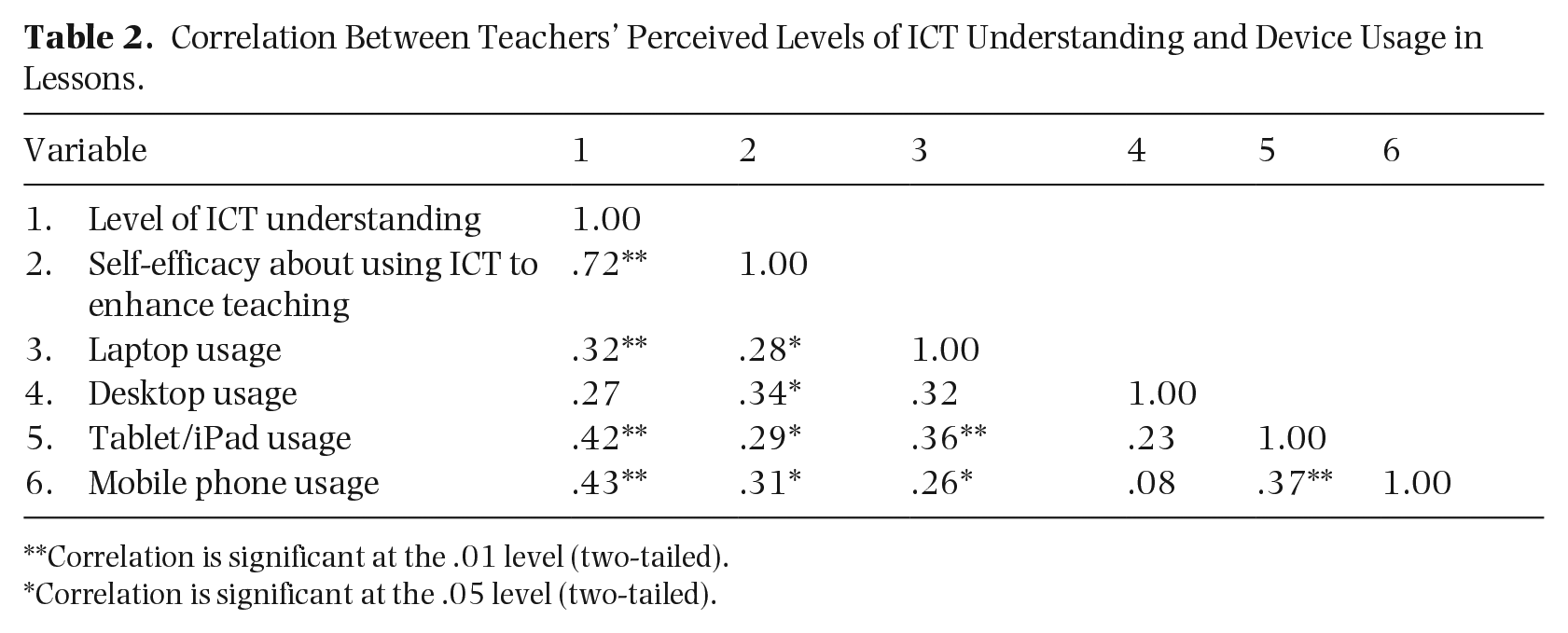
Correlation is significant at the .01 level (two-tailed).
Correlation is significant at the .05 level (two-tailed).
What types of software do music educators employ and how frequently do they use them in their teaching?
The comparison of mean scores for all items (0–10) for levels of usage across Phase 1 and Phase 2 in Figure 1 indicates an observable move upwards in usage by Phase 2 across device use, software applications, and various online resources when compared with Phase 1. The subtle variation in the use of laptop and desktop devices may have arisen and been complemented by a slight change in the use of mobile devices, which may be dependent on the context, location, and type of teaching being undertaken. Broadly, the comparison of mean scores between the Phase 1 (n = 105) and Phase 2 (n = 109) samples of teachers indicates an increasing prevalence of diverse technology usage across a range of software, online resources, and productivity tools.
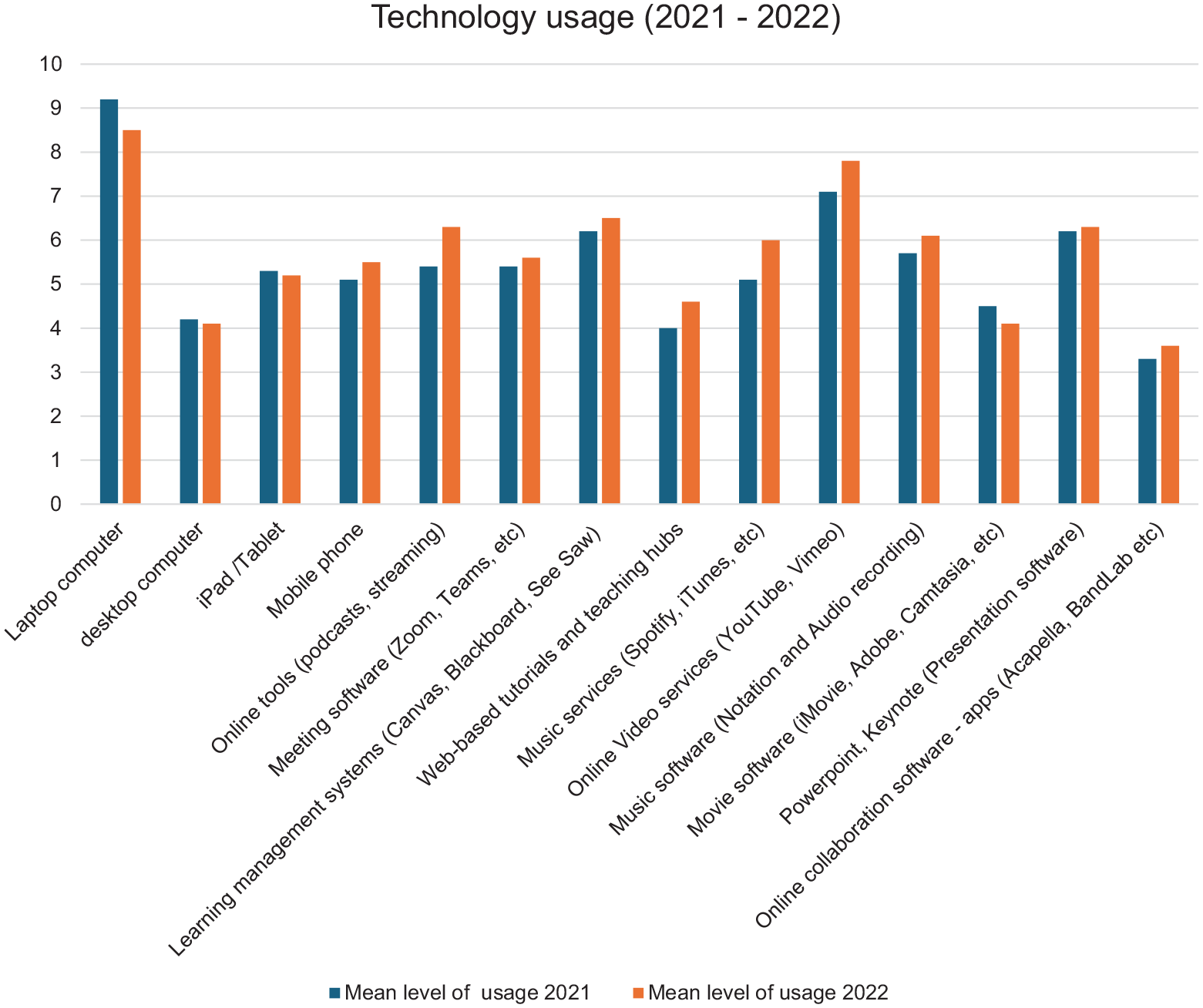
Comparative Means of Technology Usage (Devices, Software, and Resources) of Music Teachers: Phase 1 2021 (n = 105) and Phase 2 2022 (n = 109).
Upward shifts in the usage of meeting-communication software, learning management systems, and notation and audio-based software (e.g., Sibelius, GarageBand) within teachers’ practice in Figure 1 are interesting to observe and may indicate more confidence and willingness to include these technologies in the teaching process. Although each phase represents data from different samples of music educators in Australia, it is interesting to see how the ratings changed across many technologies and categories. The use of online tools (podcasts and streaming), web-based tutorials and teaching hubs, online music services (Spotify and Apple Music), and the use of online video services (YouTube and Vimeo) are trending upwards. The data reflects sustained preference for and inclusion of audio- and media-based technologies across music educators’ teaching practice.
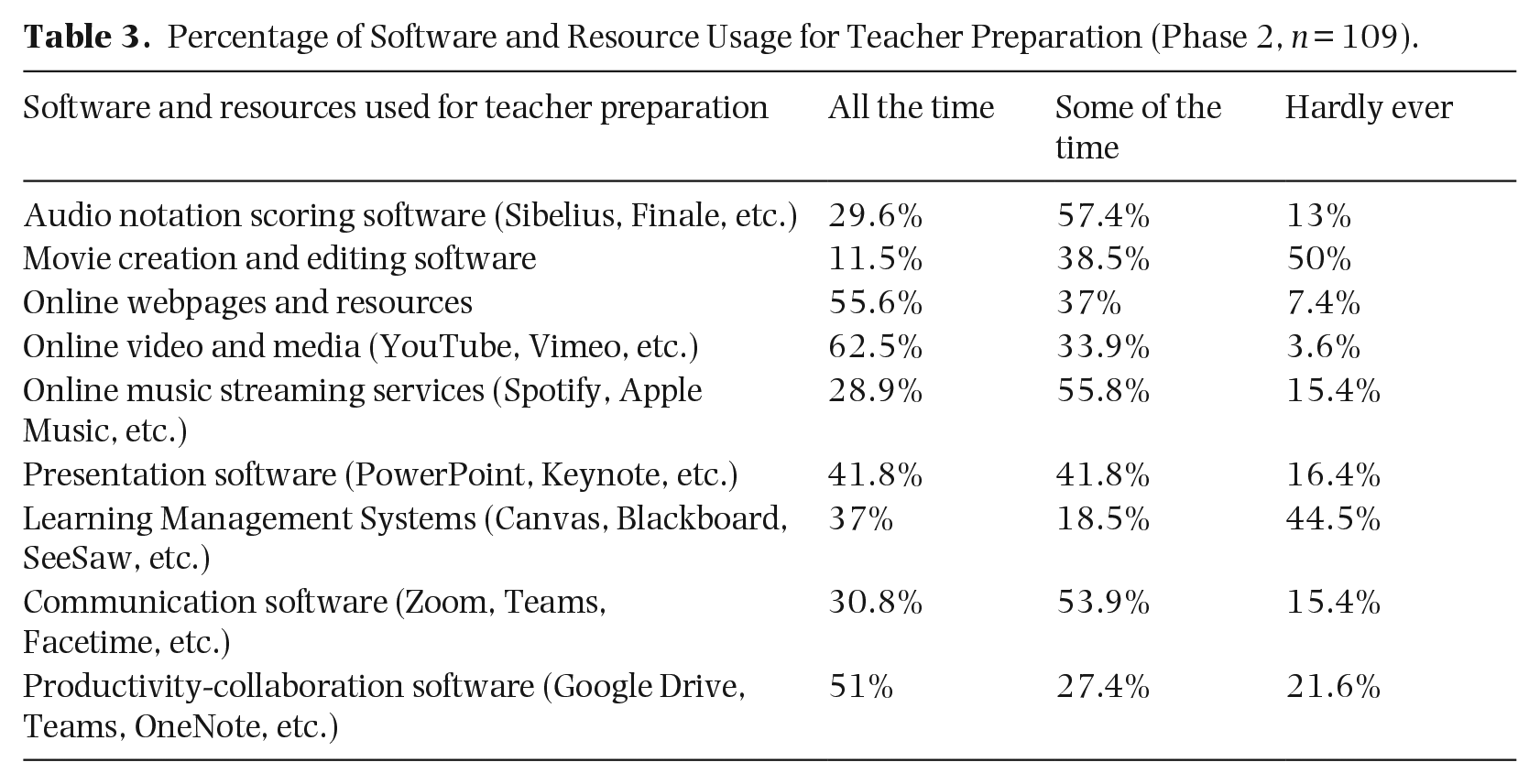
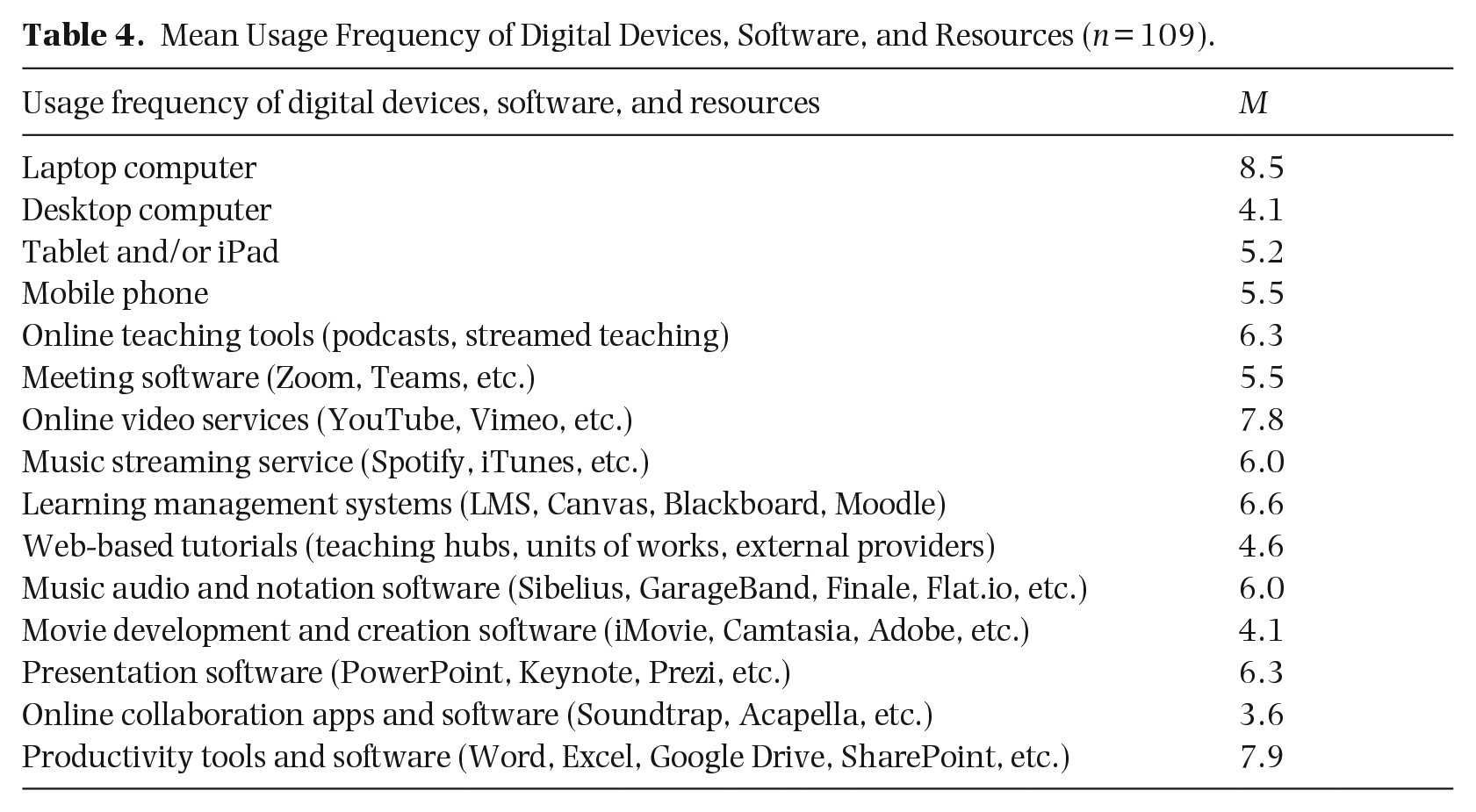
The different usage categories in Table 3 illustrate the shifting landscape as teachers employed a diverse range of technologies and ICT (see Table 4) to support their music teaching, highlighting ways they used them to prepare materials for lessons. The most preferred were online webpages and resources, online video and media, and online music streaming, followed by the ongoing use of audio notation scoring software. The findings indicate that there was a sustained use of presentation software (PowerPoint, Keynote, etc.) combined with ongoing application of productivity and collaboration software. These diverse patterns are worth noting in conjunction with data from Figure 1, which also indicates an upward shift across Phases 1 and 2.
Percentage of Software and Resource Usage for Teacher Preparation (Phase 2, n = 109).
Mean Usage Frequency of Digital Devices, Software, and Resources (n = 109).
Discussion
The discussion provides an overview of key findings, presented under six distinct headings of themes that emerged during analysis.
Transformation in teacher practice
The findings presented are important as they identify key components of these teachers’ belief systems, including the combination of teachers’ self-efficacy with their perceptions and understanding of technology as critical components that influenced how teachers increased their confidence and sustained their technology integration post-pandemic. Most importantly, the data reinforce teachers’ acceptance and realisation of the value of employing a range of digital technologies. Mean scores of all responses in every confidence category in Table 1 were higher than 70%, supporting teachers’ willingness to embrace changes and modify their practice (Nanjundaswamy et al., 2021).
Adding further strength to this transformation are the Phase 1 and 2 data presented in Figure 1, which indicate an upward shift in the application of ICT and music technology across a wide range of devices, software, and resources. The transformation suggests that the changes that arose while teachers worked remotely later became embedded as part of their pedagogy. This indicates how music educators developed a more comprehensive digital “teaching toolkit” that they implemented as a part of their teaching. This transformation reflects the reshaping of strategies that have since become accepted practice in this area of music teaching (Kilcoyne, 2021).
Shifts in pedagogy
The study provided a range of data that highlighted how teachers were confidently integrating a range of different devices in their day-to-day delivery of lessons, with percentages and ratings indicating increased application of technologies, whether using laptops, tablets, or phones within their teaching. The findings demonstrate how there appeared to be a crossover between device usage and teacher preference for resources and software. The findings indicate that music educators developed increased levels of engagement and usage of ICT and music technology, and were integrating diverse audio, video, and productivity software to prepare and deliver lessons (see Table 4). These shifts and authentic experiences during COVID-19 impacted how teachers employed ICT and technology in contextual and meaningful ways, in response to the varied and interrelated learning opportunities that arose (Bell, 2016; Calderón-Garrido & Gustems-Carnicer, 2021).
It is evident from the findings that the “teaching toolkit” of the music educator has been reimagined through a wide choice of devices, coupled with the intersection of productivity, communication, and multimedia software and resources employed as the staple components—or “main menu”—of their teaching. This evidence indicates that there has been a sustained shift across the two phases of this study, indicating that new skills, knowledge, confidence, and belief were firmly embedded within the teaching practice of music educators in Australia. The findings suggest that teachers had the necessary knowledge and skill to support the learning and academic standards for their students (Ratheeswari, 2018), while creating approaches to expand curriculum integration and provide new opportunities for students (AITSL, 2023).
Confidence, self-efficacy, and application
It appears that the enforced technology use across the pandemic and beyond contributed to a substantial increase in participants’ perceived and reported levels of confidence and application of technology. The data in Table 1 show how this changed between Phases 1 and 2, critically reinforcing how the development of self-belief and confidence in using digital technologies is critical for successful classroom integration. Here, the intersection with practice was noticeable across respondents (Ertmer & Ottenbreit-Leftwich, 2010) as they embedded technology in daily teaching and learning. These findings align with Hatlevik’s (2017) research regarding the positive relationships between digital competence and increased confidence. This, in turn, leads to increased frequency of use within teaching as skills are developed (Kaarakainen & Saikkonen, 2021). To maintain and develop teacher capacity and confidence, it will be important to provide training opportunities that meet the personal needs of teachers to develop their confidence to employ ICT across different learning environments in music education (Merrick & Joseph, 2022).
Overlapping use of ICT
The most interesting finding in the present study illustrated how teachers were regularly engaging with a wide range of applications (see Figure 1 and Table 3), with integrated and heightened use of online video (such as YouTube and Vimeo), coupled with streaming (such as Spotify and iTunes). This illustrates how teachers were regularly accessing diverse media, coupled with many productivity tools, to maintain the sustained use of varied technologies. These educators had most certainly moved into the digital arena (Adam & Metljak, 2022). These findings and the increased levels of access, confidence, and application further evidence the need to revisit how we train and develop music teachers relative to their experience and preference. This needs to be facilitated by more customised professional learning aligned with the needs, capacities, and interests of teachers (Merrick & Joseph, 2022). This study confirmed the findings of Dammers (2019), whereby teachers use a high level of non-pedagogical applications within their teaching practice. It is encouraging to see how music educators have sought to employ a rich array of technologies in their teaching, whether via the mixture of media (Cayari, 2011; King & Himonides, 2016) or regular use of YouTube (Arthurs et al., 2018). Across the dataset from Phase 2 (n = 109), findings indicate how the eclectic application of a multitude of software, resources, and tools became embedded in day-to-day practice of music teachers in Australia since 2022.
Reshaping pedagogy using ICT
Participants reported increased integration of different technologies and ICT as part of their lesson preparation (see Table 3), in partnership with sustained confidence across different devices (see Table 1). The strong intersection between teachers’ applications of laptops, tablets, and mobile phones would suggest that ICT application has evolved across various learning areas—such as performance, composition, and listening—and within diverse contexts—studio, classroom, ensemble, or online. Music teachers were using more ICT (Bell, 2016) to cater for student learning needs (Ertmer & Ottenbreit-Leftwich, 2010), while modifying pedagogy and resources across different learning contexts (Hall et al., 2022; Ní Uigín & Cofaigh, 2021; Merrick, 2020).
Big data would suggest that sustained patterns will be accompanied by a continued increase in digital access and device numbers in coming years (Cisco, 2020). Ongoing examination of the ways teachers integrate these media-based technologies in learning and how students engage with ICT will be critical for future teaching and initial teacher education programmes. While other research has investigated how YouTube is used by music teachers (Cayari, 2018; Kruse & Veblen, 2012), this study identified the importance of underlying teacher efficacy and belief in using technology. The findings show the intersection of varied multimedia applications such as YouTube and music streaming. They also highlight how a range of productivity, communication, and collaboration software is employed to support teaching practice.
The findings illustrate how music educators were seeking to adapt to societal change as they strived to meet both students’ and society’s needs by embracing ICT as a means of sustaining connection (McMahon et al., 2021) and using different digital tools to increase motivation (Serra-Marín & Berbel-Gómez, 2021; Wan & Gregory, 2018). This study has highlighted how music educators confidently and curiously seek to engage with technology to develop creative, innovative, and engaging learning opportunities (Kilcoyne, 2021; Merrick & Joseph, 2023a; Nanjundaswamy et al., 2021). In doing so, music educators align with teaching expectations (AITSL, 2023) through sustainable integration and continued digital literacy development within teaching and learning.
Conclusion
The overarching research questions that drove this study sought to understand and identify, “What are the perceived levels of ICT confidence and technology application amongst music educators, post-pandemic?” and “What types of software do music educators employ and how frequently do they use them in their teaching?” since the return to in-person teaching in 2022.
The unforeseen COVID-19 catalyst created new learning environments, seeing teachers move out of their comfort zones and embrace new technologies, ICT platforms, and software. Confidence, access, and implementation is apparent in music education, whereby teachers use technology where it works best to meet the needs of their students. Music teachers are no longer likely to adopt a “one-technology fits all” approach, which has been previously reported on from the wider project (Merrick & Joseph, 2022). Rather, it is evident that diverse contexts and technologies are regularly integrated into the daily delivery of music education across a range of education settings in Australia.
Despite the day-to-day challenges and frustrations that can exist in the digital space, this study affirms how participating teachers transformed their teaching practice beyond 2022, with increased levels of confidence, self-efficacy, and diverse integration as they reimagined what and how they taught. YouTube and online music streaming has become “top of the pops,” whereby intersections between personal and professional technology usage now informs learning in new and different ways. Music educators recalibrated their approaches to enhance their familiarity and understanding of technologies within their teaching. From the findings it was evident that Australian music educators demonstrated the capacity to adapt and respond through wide-ranging modification of their practice, acknowledging the opportunities made available by highly accessible, multimedia resources (such as YouTube, Vimeo, Spotify, audio tools, and notation software) and productivity tools, to provide diverse opportunities within the learning experience.
While studies have examined music technology use over many years across different locations and contexts (Gall, 2017; King et al., 2019; Stevens, 2018), this study has provided a valuable exploration of new skills and knowledge that are emerging in music education, particularly the intersection between audio-visual materials, and the sustained application of online resources including YouTube (Rahmaturrizki & Sukmayadi, 2021). Though this shift in acceptance is a positive outcome, the use of technology also remains a challenge for teachers who lack the relevant skill, knowledge, and confidence. As the data have shown, confidence, belief, and understanding are critical for effective and successful integration and application in music education. Like all good teaching, there is no substitute for explicitly developed knowledge and skill that can be applied in meaningful and purposeful ways.
While generalisations cannot be made due to the small size of the sample in the present study, the findings may resonate with other countries and other teaching areas. Given the data in Figure 1, further research to explore teachers’ software usage and pedagogy is recommended, particularly given the high degree of video- and audio-based resources that exist. A longitudinal study across secondary and tertiary institutions would be necessary to examine pedagogical shifts through the collection of qualitative and quantitative data across Australia and globally. This would further enhance understanding of teaching practice, digital confidence, resource preference, and the pedagogical application of ICT and music technology.
From this study we recommend:
Professional learning specifically designed to explore different types of multimedia resources and software that align with the key curriculum learning areas including performance, composition, creativity, and listening.
Development of online resource packages and exemplars, demonstrating and modelling “best practice” for how different learning experiences can be integrated, created, supported, and assessed using a range of different digital technologies.
Professional music organisations develop systems to encourage collaboration across locations, settings, systems, contexts, and experience levels, to facilitate a connected community of digital music educators.
Further research (personal and professional) that explores these shifts in preference and practice with increased attention to location, devices, application, skills, and knowledge.
Customised professional learning that aligns with the needs, capacities, and interests of teachers (Merrick & Joseph, 2022), with specific reference to teachers’ access, confidence, and ICT application.
This study affirms the need for a “seismic shift” in the way we view technology within music education across formal and informal modes. Educators need to acknowledge and celebrate the acceptance and integration of new technologies to enhance student engagement and enjoyment.
It is imperative for music educators to harness the increasing levels of understanding and self-efficacy within the profession, looking to adopt new ways to think about and sustain digital practice. As highlighted, successful teachers modify pedagogy and provide experiences that encourage further intersection of technologies across multiple contexts for their students. As music educators we have a responsibility to ensure the learners of the future have the necessary competencies, skills, and knowledge to thrive and endure within the global digital arena in which we live.
Footnotes
Author Contributions
Declaration of conflicting interests
The author(s) declared no potential conflicts of interest with respect to the research, authorship, and/or publication of this article.
Funding
The author(s) received no financial support for the research, authorship, and/or publication of this article.
