




Abstract
Background:
Suicide attempts have become a major mental health concern, with increasing rates in recent years. There is a clear connection between suicide attempts and depression. Many studies suggest that people suffering from depression show increased platelet activity. However, the changes in mean platelet volume (MPV) in individuals with attempted suicide have not been well-studied in the Indian setup. Understanding the psychosocial and biological factors is crucial for effective prevention and intervention strategies. This study aims to explore the relationship between clinical and psychosocial factors and MPV in individuals with attempted suicide.
Methodology:
This was a hospital-based, descriptive, observational, cross-sectional study. Data was collected from 150 consecutive referrals of suicide attempt cases to the psychiatry outpatient department from January 2021 to December 2021 after obtaining informed consent. Socio-demographic information was gathered using a semi-structured proforma. Clinical and psychological evaluations were conducted using the Beck Suicidal Intent Scale (BSI), Beck Depression Inventory (BDI), and the Presumptive Stressful Life Events Scale (PSLE). MPV values were obtained from complete blood count reports using the Beckman Coulter method.
Results:
In this study, 150 individuals who attempted suicide were assessed, with a majority being male (70%). The most common method of attempt was pesticide consumption, accounting for 88.7% of cases. Depression was present in 27.3% of these cases. We found a significant positive correlation between the severity of depression (p < .001) and the level of suicidal intent (p < .05). Additionally, patients with depression had significantly higher MPV levels (p < .05) compared to those without depression.
Conclusion:
Our findings highlight the link between suicide attempts and increased platelet activity, emphasizing the need for further research to understand the biological markers associated with suicide risk. This understanding could lead to better prevention and intervention strategies, ultimately helping to save lives.
Psychosocial and biological factors interact, which is vital for effective suicide prevention strategies. Elevated MPV correlates with the severity of depression and suicidal intent, suggesting it could serve as a valuable biomarker for assessing suicide risk and facilitating early intervention.Key Messages:
According to the International Classification of Diseases, 10th edition (ICD-10), self-inflicted harm in an attempt to end one’s own life is defined as a suicide attempt. 1 Given the complex nature of such behavior, the term “suicide attempt” is preferred over “deliberate self-harm” or “parasuicide.” Suicide attempts have increased sharply in recent years, posing significant mental health challenges. 2 These attempts are associated with high mortality rates and represent a considerable burden on mental health systems, regardless of the presence of suicidal intent. 3
Several researchers have identified various factors associated with suicide attempts, including young age, male gender, rural residence, and employment in agricultural occupations.4,5 The most common method of suicide attempt involves organophosphorus compounds. 5 Additionally, many studies have found that high suicidal intent and depression are consistently linked to suicide attempts.5,6 Despite extensive research, no reliable biological markers have been found for assessing suicide risk.
The rationale for focusing on Mean Platelet Volume (MPV) as a potential biomarker for suicide risk stems from its association with platelet activity. Platelets containing two-thirds of the body’s total serotonin content play a crucial role in the inflammatory cascade. High platelet serotonin levels have been linked to increased suicidal intent among depressed inpatients, suggesting elevated platelet activity in depressed suicidal patients. 7 MPV, a dimensional index of platelet activity, is typically increased in inflammatory conditions, cardiovascular diseases, and metabolic syndrome. 8 Studies have found that patients with depression have been shown to have higher MPV than the general population, indicating a potential link between MPV and suicide risk.7,8
Several studies have investigated the relationship between platelet activity and suicidal behavior. A Study by Jokinen et al. (2010) found that increased platelet serotonin uptake is associated with high suicidal intent in patients with major depressive disorder (MDD). 9 Study by Kim et al. (2015) reported higher MPV levels in patients with depression, particularly those with a history of suicide attempts. 10 This evidence suggests that MPV could serve as a biomarker for suicide risk, given its economical and readily available measurement through routine complete blood counts.
Although a few international studies have explored the relationship between MPV and suicide attempts, this is the first study in India to examine this critical relationship. Understanding the psychosocial and biochemical correlates of self-harm behavior can significantly enhance suicide prevention programs.11-14
The present study aims to examine the association of MPV, depression, and suicidal intent among suicide attempters seen in a tertiary care hospital in Central India. Achieving the study objectives will facilitate the development of a simple and readily available scoring system for assessing suicide risk, aiding in the planning of interventions according to the severity of depression and suicidal intent. This study will contribute to effective suicide prevention strategies, addressing a critical need in mental health care.
Methods
The research was conducted at a rural tertiary healthcare facility in Central India, serving patients from eastern Maharashtra, Chhattisgarh, Madhya Pradesh, and Telangana. Patients presenting with a history of suicide attempt are initially admitted. Following medical stabilization, they are referred to the psychiatry outpatient department (OPD) and evaluated by a consultant psychiatrist. All patients aged 18 years and older who directly visit or are referred to the Psychiatry OPD with a history of suicide attempts from various clinical departments were included in the study after obtaining informed consent, and a consultant psychiatrist did a psychiatry review. The patients found to be having depression on the Beck Depression Inventory (BDI) were referred to a consultant psychiatrist to confirm the diagnosis. Patients with physical illness (Diabetes Mellitus, Hypertension, Cardiovascular disorders, Metabolic disorders, etc.) and those unable to cooperate in the interview due to acute physical or mental illness (Acute Psychosis, Schizophrenia, Delusional disorder) were excluded. Data collection occurred between January 2021 and December 2021, following approval from the Institutional Ethics Committee.
The sampling technique used for this study was consecutive sampling. The sample size was determined using Open Epi software, specifically to compare the difference between the two means. The calculations were based on 95% confidence interval, 80% power, and an effect size of 1.5. Initially sample size of 126 participants was determined.
Out of 165 patients referred to the Psychiatry OPD for suicide attempts, 15 individuals were excluded from the study due to physical health issues. Consequently, the study comprised a total of 150 patients.
Tools
Socio-demographic Profile
Demographic information, including age, sex, religion, education, and occupation, was collected using a pre-designed format.
Beck Suicide Intent Scale 15
The Beck Suicide Intent Scale (BSI) was developed by Beck et al. in 1973, is a 21-item self-report Likert scale designed to measure the desire for death, preparation for a suicide attempt, and actual suicidal desire within the past seven days. Each item on the scale is scored from zero to two, indicating increasing severity. This scale, renowned for its reliability and validity (Cronbach’s alpha of 0.87 to 0.97), was utilized to assess the mental state of patients immediately before the suicide attempt.
Beck Depression Inventory 16
The BDI, created by Beck et al. in 1961, is a 21-item self-report questionnaire utilized to evaluate the severity of depression. Each item is scored from zero to three, reflecting increasing severity levels. The standard cutoff scores from the manual were applied for analysis: 0–18 for minimal depression, 18–30 for mild depression, 19–29 for moderate depression, and 30-63 for severe depression. The BDI demonstrates high internal consistency (α = 0.80) and established construct validity, effectively distinguishing between depressed and non-depressed individuals, as per a study by Karmarkar et al. 17
Presumptive Stressful Life Events Scale 18
The PSLE was developed by Singh et al. in 1981 to assess stressful life events among Indian patients. It is based on the work of Holmes and Rahe, who identified common stressors. The PSLES comprises 51 life events categorized as desirable, undesirable, or ambiguous, as well as personal or impersonal. Subjects report which events they experienced over the past year, and each event is assigned a stress rating. The scale demonstrates a high reliability and validity.
Blood Parameters
The MPV values were obtained from complete blood count reports conducted using the Beckman Coulter method. The phlebotomy was carried out on the first morning by 8:00 am, on an empty stomach, after admission. The normal range for MPV is 8–11 femtoliters (fL). 19
Statistical Analysis
Initial data entry and cleaning were performed using MS Excel software, followed by analysis utilizing EPI INFO software. 20 Categorical data were presented as frequencies and percentages, while quantitative data were expressed as means with standard deviations (SD). The comparison of means was conducted using the unpaired t-test, and the Pearson correlation test was utilized to assess correlations between quantitative variables.
Results
Socio-demographic Characteristics
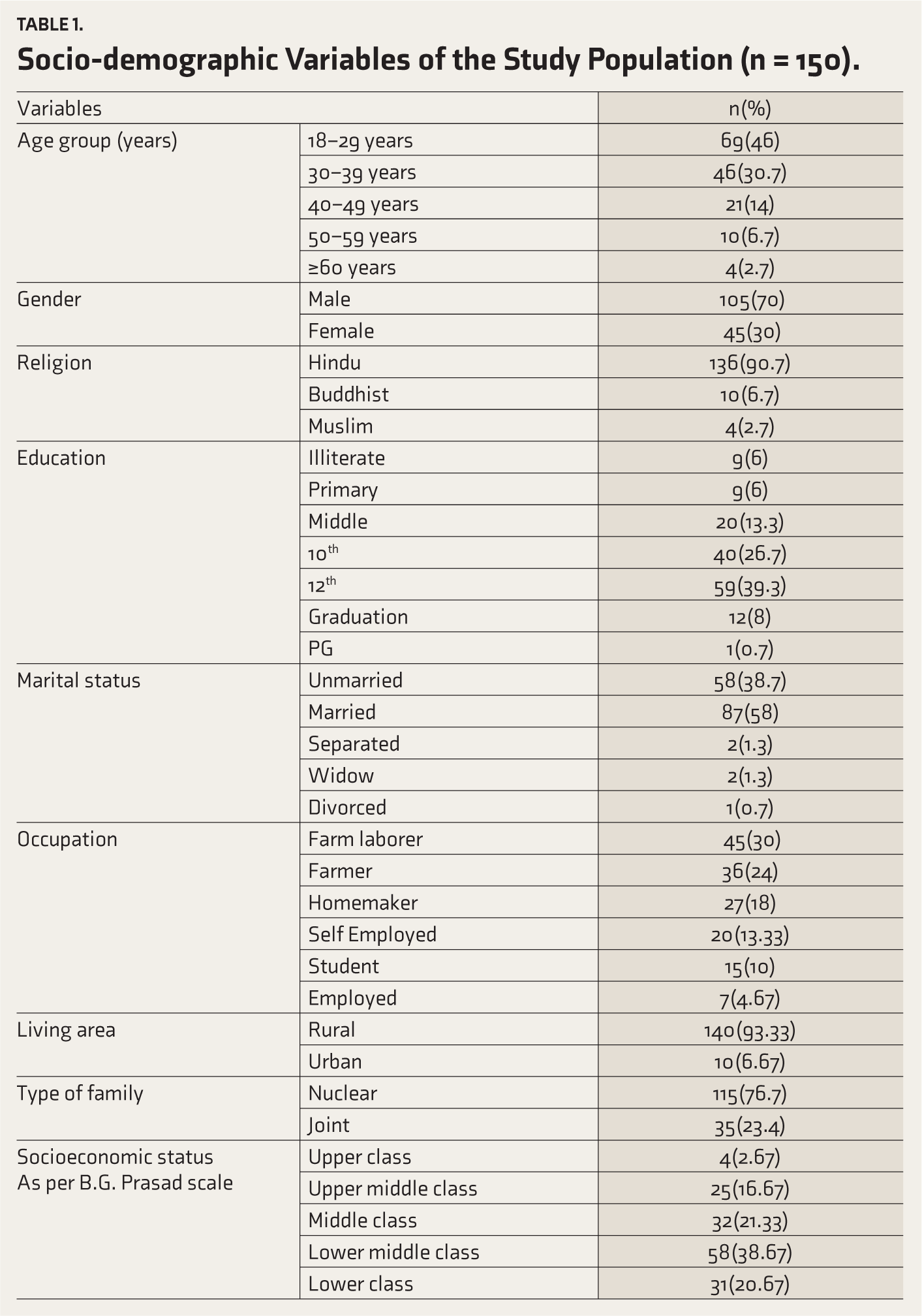
Table 1 illustrates that the majority of the study participants (46%) were falling in the 18–29 age group, followed by 30.7% in the 30–39 age group. There was a male preponderance in self-harm cases, with a male-to-female ratio of 2.3:1. Most participants had achieved High School Certification (39.3%) and Secondary School Certification (26.7%), while only 6% were illiterate. Regarding marital status, 58% were married, 38.7% were unmarried, and approximately 3% were separated, divorced, or widowed. The majority of the participants were primarily farm laborers (30%) and farmers (24%), followed by homemakers (18%), students (15%), and business owners (13%). The majority resided in rural areas (93.33%) and lived in nuclear families (76.7%). Regarding socioeconomic status, 21 of the participants belonged to the lower middle class (38.67%), followed by the middle class (21.3%) and the lower class (20.6%).
Socio-demographic Variables of the Study Population (n = 150).
Psychosocial Factors of Suicide Attempters
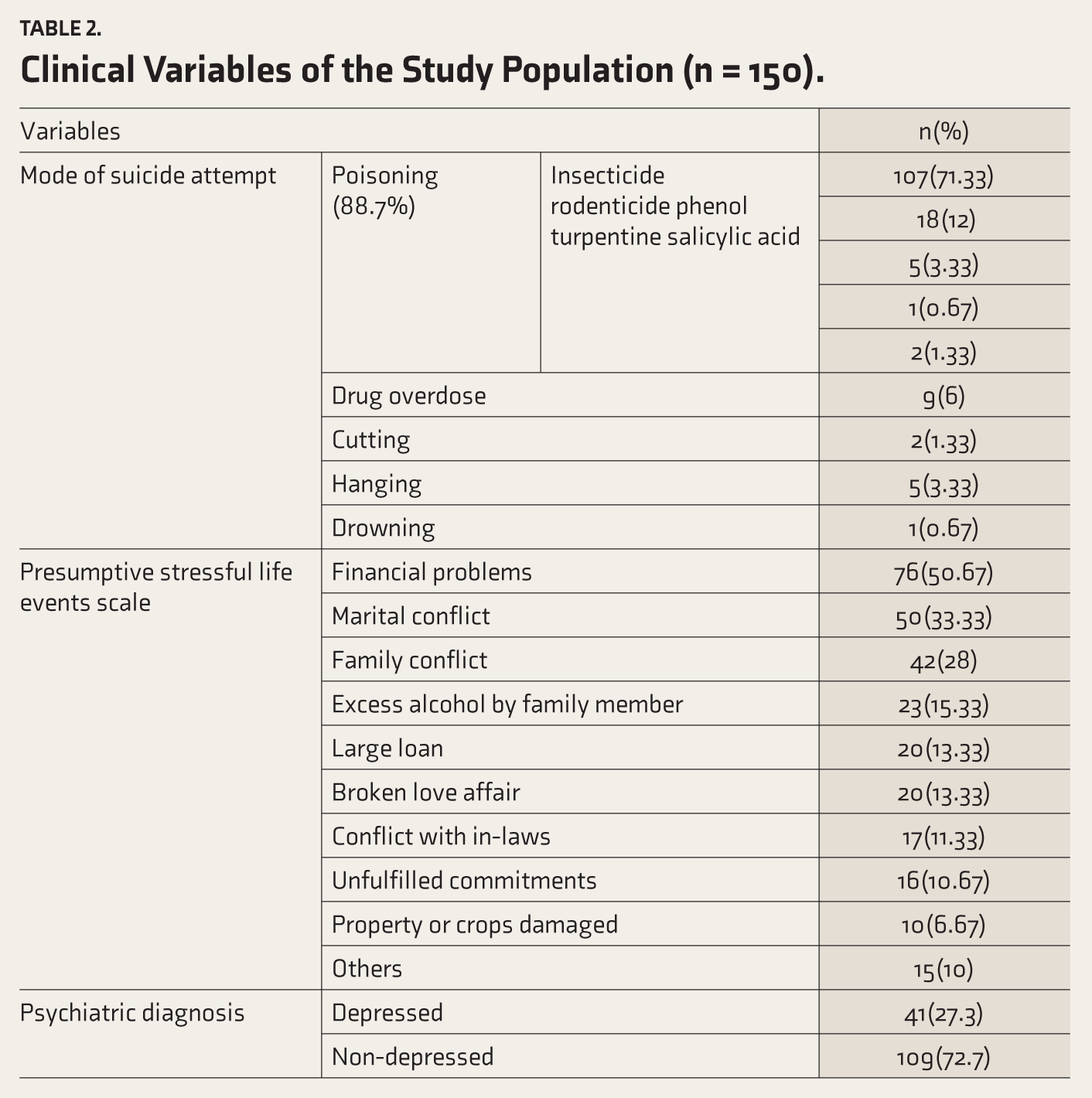
Table 2 shows that the majority of participants attempted suicide by consuming poison (88.7%), in which 71% of these cases involved insecticide poison, followed by rodenticide (12%). Drug overdose accounted for 6% of cases, while a small proportion (5.3%) attempted suicide by cutting wrists, hanging, or drowning. Most participants reported experiencing multiple stressful life events, with Financial Problems being the most common (50%), followed by Marital Conflict (33%), Family Conflict (28%), Excessive Alcohol Consumption by a Family Member (15.33%), Large Loan Burdens (13%), Broken Love Affairs (13%), Conflicts with In-Laws (11.33%), Property or Crop Damage (6.6%), and Other Stressors (10%). Regarding depression, 72.7% of patients did not exhibit symptoms, while 27.3% were found to have depression based on the BDI.
Clinical Variables of the Study Population (n = 150).
Correlation of MPV with Severity of Suicidal Intent and Depression Among Suicide Attempters
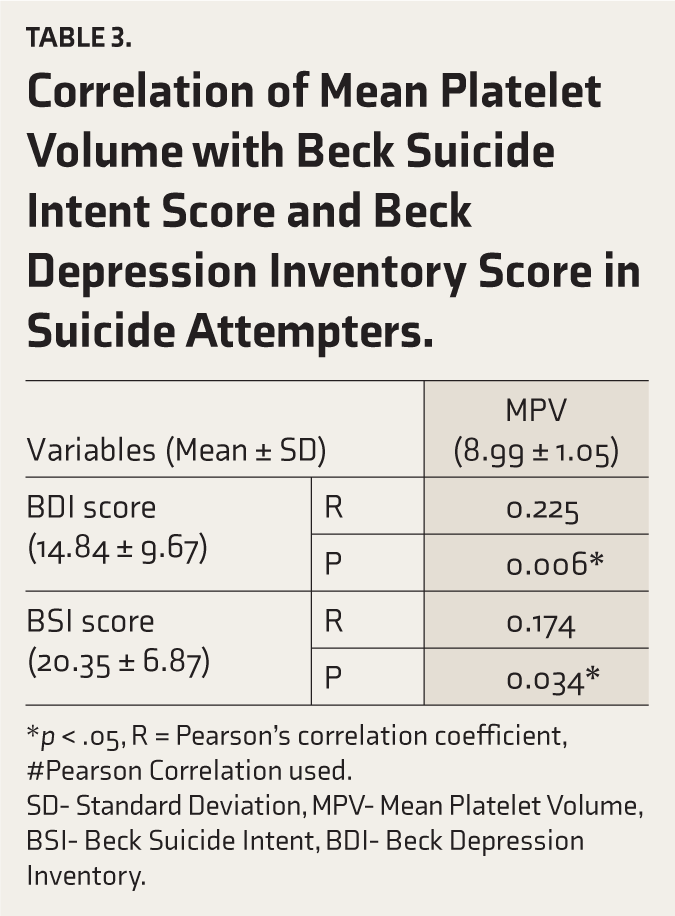
A significant positive correlation was observed between MPV and BDI scores (r = 0.225, p < .05) and BSI Scores (r = 0.174, p < .05), indicating a relationship between platelet volume and the severity of depression and suicidal intent among suicide attempters. Table 3 presents the detailed results.
Correlation of Mean Platelet Volume with Beck Suicide Intent Score and Beck Depression Inventory Score in Suicide Attempters.
*p < .05, R = Pearson’s correlation coefficient, #Pearson Correlation used.
SD- Standard Deviation, MPV- Mean Platelet Volume, BSI- Beck Suicide Intent, BDI- Beck Depression Inventory.
Comparison of MPV Among Suicide Attempters with Depression and Without Depression
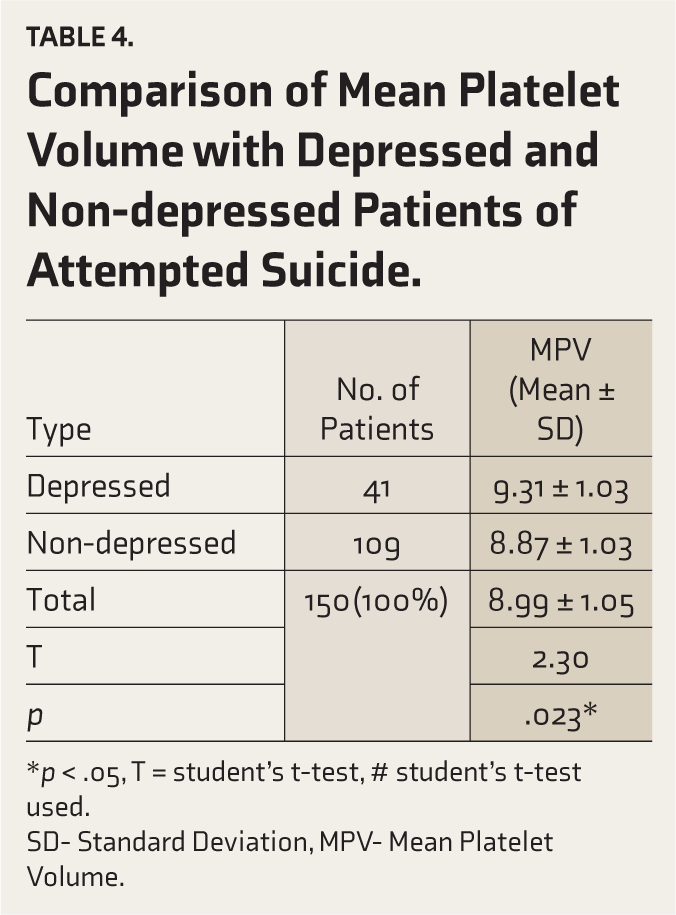
Comparison of MPV between suicide attempters with depression (mean ± SD = 9.31 ± 1.03) and those without depression (mean ± SD = 8.87 ± 1.03) revealed a significantly higher MPV in the depressed group (p < .05), as shown in Table 4.
Comparison of Mean Platelet Volume with Depressed and Non-depressed Patients of Attempted Suicide.
*p < .05, T = student’s t-test, # student’s t-test used.
SD- Standard Deviation, MPV- Mean Platelet Volume.
Discussion
We carried out this study in a rural-based tertiary care hospital in Central India serving areas from eastern Maharashtra, Chhattisgarh, Madhya Pradesh, and Telangana, allowing us to have a sample with wide-ranging socio-demographic characteristics. A detailed assessment of the suicide attempt factors, including demographic characteristics, education, occupation, living situation, and socioeconomic status, was evaluated. Commonly used methods of suicide attempts were evaluated with special reference to pesticide ingestion. We studied the relation of severity of depression and suicidal intent with platelet activity assessed by MPV.
With regards to the age distribution of the study sample, a significant majority of the cases belonged to young age groups of 18–29 years and 30–39 years (46% and 30.7%, respectively). This is consistent with the studies done by Badrinarayana et al., and Singh et al., that young adults constitute the majority of suicide attempters.22,23 Present study showed male preponderance with a male-to-female ratio of 2.3:1. This is in contrast to the expected predominance of suicide attempts in females. In a study conducted in Ludhiana by Narang et al., 58% of men and 42% of women attempted suicide. The study showed a ratio of 1.7:1, which is similar to the attempted suicide ratio in the index study. This difference could be due to different reasons like societal stigma, cultural beliefs, and underreporting. In many societies, men are often expected to be the primary breadwinners and bear the responsibility of providing for their families. This pressure can lead to immense stress and feelings of failure, particularly in times of economic hardship or personal setbacks, potentially increasing the risk of suicidal behavior. 24
On evaluating the marital status, we found that the majority of the cases were married (58%), followed by a significant number of unmarried (38.7%). Sudhir Kumar et al. reported that married individuals were more among the suicide victims. 25 However, Srivastava A et al. and Narang et al. observed unmarried were attempting suicide more compared to married individuals. The study was done in the agrarian rural population where males experience financial stress and financial burden and are at risk of suicide attempts due to financial stress.6,24
Our study found a significant percentage of cases had accomplished higher secondary or high school education (39.3% and 26.7%, respectively), similar to the Latha KS study, where over half troubled by suicidal thoughts have done so. 26 Ray S has reported that among the people who attempted suicide, the number who completed 10th or 12th grade has sharply increased. 27 About 54% of the cases were farm laborers and farmers, which indicates the socioeconomic factors in farming societies. The study resonates with earlier findings that have been represented in different studies as far as the issue of economic strain, involvement in agriculture, and high levels of attempted suicide among farmers. The majority of the study population lived in nuclear families (76%) and rural areas (93%), similar to what Mishra et al. found in their research about suicide attempts in rural agrarian communities. 28 It is worth noting that living alone was found to be a significant risk factor for suicide attempts, which underscores the importance of having strong social support systems in place for suicide prevention efforts.29,30 A study conducted in a rural area of Madhya Pradesh by Ebenezer and Joge found similar results where they found that 69% of patients came from rural agricultural households. In comparison, only 31% had urban or semi-urban upbringings. 5 In terms of socioeconomic status, 38.67% of the patients belonged to the lower middle class, and 20.6% belonged to the lower class. Present study aligns with the findings of Niaz U et al., who also observed that the majority of people in their study came from lower socioeconomic backgrounds and were unemployed. 31 Several studies by Sharma et al., Srivastava et al., and Gunnell et al. consistently highlight pesticide consumption as the most common method of suicide attempt.32-34 Pesticides are easily available and, therefore, often preferred for suicide attempts.
Around 72.7% of the cases in the study did not have depression, while 27.3% were diagnosed with depression. We noticed a connection between the severity of depression and suicide attempts, which aligns with what Srivastava et al. found. 35 Even though most individuals did not experience depression, many patients did report feeling stressed. This suggests that trying to harm oneself could be seen as a not-so-helpful way of coping, leading to impulsive actions, as Bhattacharya, AK et al. found in their study. 36 O’Brien et al. also reported similar findings, linking the intensity of depression with thoughts of suicide as people age. 37
Present study reveals a positive correlation between suicide intent and depression, which lines up with previous research by Thompson et al., who also found a connection between depression and suicidal intent. 38 This emphasizes the well-known link between depression and suicidal behavior. In a study by Canan et al., they noticed that 12.6% of the participants met the criteria for major depression, and those with major depression had higher MPV, which matches our findings. 14 This suggests that depression might contribute to increased platelet activation. Similarly, Ataoglu and Canan found elevated MPV levels in patients with major depression, but those levels went back to normal after treatment with escitalopram. 13 Additionally, Kim et al. showed a significant correlation between depressive symptoms and increased platelet activity in depressed individuals who were otherwise healthy, supporting our study’s findings. 39
Results indicate that higher MPV levels in suicide attempts may be due to an increase in sympathetic system activation. Orum MH et al. proposed a mechanism that connects increased platelet activity in people with MDD to heightened sympathetic system activation. This activation stimulates thrombocyte 5HT-2 receptors, resulting in increased platelet activity and volume. 7 This study, which used MPV as a measure of platelet activity, supports previous findings by showing higher platelet activation levels in individuals with depression. These findings suggest that depression plays a role in raising platelet activity, potentially contributing to the underlying causes of suicidal behavior, as shown in Figure 1.
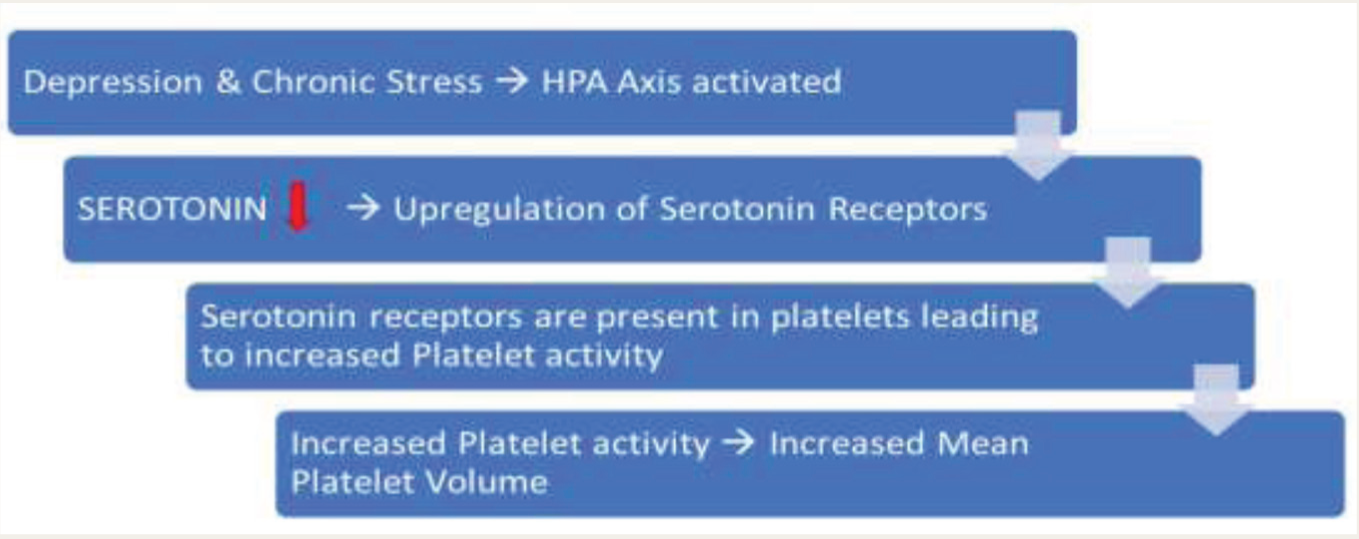
Canan et al. (2012).
Varol et al. found that pesticide exposure can significantly affect platelet indices, including MPV, in farm workers. 40 This indicates that environmental and occupational factors can modulate MPV, potentially contributing to the biological pathways linked to suicide attempts. Similarly, Manyilizu et al. demonstrated the association of long-term pesticide exposure with various biological parameters in female farm workers, emphasizing the impact of chronic environmental stressors on platelet activity and mental health. 41 By incorporating these findings, our study gains a broader context, acknowledging that MPV variations could result from a combination of psychological, biological, and environmental factors.
Limitations
Due to potential socioeconomic biases, the consecutive sampling method might only capture some of the population served by the facility. Additionally, the small sample size, hospital setting, and cross-sectional design limit the generalizability of the present study’s findings.
Future Research
Future research should consider larger sample sizes, control groups, and longitudinal designs to understand better the causative factors of suicide attempts and the role of MPV. Exploring interventions that address both psychosocial and biological factors may enhance suicide prevention strategies.
Conclusion
Study in Central India highlights the predominance of suicide attempts in young individuals within agricultural communities, most prominently in rural areas with lower socioeconomic status. Indeed, pesticide consumption was the preferred mode of self-injury, highlighting the need for targeted prevention efforts. The association of depression severity, suicidal intent, and increased platelet activity suggests that MPV may have utility as a biomarker for assessing suicide risk. Earlier identification and prevention of depressive symptoms are associated with lower suicide attempts. Our study findings bring important insights for targeted strategies of suicide prevention, aiming at this complex interplay of psychosocial and biological factors linked to suicidal behavior.
Supplemental Material
Supplemental material for this article is available online.
Footnotes
Declaration of Conflicting Interests
The authors declared no potential conflicts of interest with respect to the research, authorship and/or publication of this article.
Ethical Approval
Ethical Approval was taken from Institutional Review Board of MGIMS Sevagram (approval number: MGIMS/IEC/PSY/71/2021).
Funding
The authors received no financial support for the research, authorship and/or publication of this article.
Informed Consent
Informed Consent taken from the patient.
References
Supplementary Material
Please find the following supplemental material available below.
For Open Access articles published under a Creative Commons License, all supplemental material carries the same license as the article it is associated with.
For non-Open Access articles published, all supplemental material carries a non-exclusive license, and permission requests for re-use of supplemental material or any part of supplemental material shall be sent directly to the copyright owner as specified in the copyright notice associated with the article.
