




Abstract
Background:
Prison settings are stress-inducing environments that make individuals more vulnerable to psychopathology. Defense styles and personality traits have long been associated with psychopathology. The current study aimed to explain the intervening role of maladaptive personality domains on the relationship between defense styles and psychiatric symptoms among male convicts imprisoned in nine Central Jails of Punjab, Pakistan.
Method:
Through cross-sectional design, data was collected through purposive sampling. 509 respondents (who were serving their sentence for the crime committed) with a Mean age of 35 years (10.21) provided data on self-reported translated versions of the Cross-Cutting Symptoms Measure, Personality Inventory for DSM 5 - Adult version (Short Form), and Defense Style Questionnaire.
Results:
Findings of the mediation analysis showed that negative affectivity, disinhibition, and psychoticism mediated the relationship between immature defense style and psychiatric symptoms whereas moderation analysis showed a significant interactional effect of antagonism with mature and neurotic defense style on psychiatric symptoms exclusively.
Confusions:
Findings have highlighted that defense styles and certain personality domains intervene to have a combined indirect effect on psychiatric symptoms. The study also contributes to the literature by specifying the interactional effect of antagonism and mature defense style on predicting psychiatric symptoms.
Keywords
The study delves into how defensive styles and psychiatric symptoms among male prisoners relate to dysfunctional traits. Data on self-reported symptoms, personality traits, and defense-style questionnaires was collected from convicts. Antagonism, with mature and neurotic defensive styles, has a major influence on psychiatric symptoms, but negative affectivity, disinhibition, and psychoticism mediate the association between immature defense style and psychiatric symptoms.Key Messages:
Psychological symptoms usually threaten the general health of certain groups such as prisoners. These symptoms are very common among prisoners all over the world and also in Pakistan. 1 72% of the adult prisoners reported at least one psychiatric problem including approximately 20% reporting psychiatric symptoms like depression, alcohol addiction, and psychosis. 2 Prisoners with mental health issues are at high risk for future offenses and have difficulty sustaining a normal non-violent life even after the punishment. 3 The high prevalence of these symptoms is often linked with the poor condition of prisons especially where overcrowding is there and the psychological wellbeing of prisoners is not considered as a priority. 4 Prisoners who are sentenced for their crimes (convicts) often spend prolonged time in prison and are vulnerable to psychiatric symptoms. 1 A punitive prison environment causes a decline in the quality of life. 5 Convicts were found to have multiple coexisting psychiatric symptoms including depression, anxiety, suicidal ideations, substance use, and somatoform disorder.2,3,6 Researchers found that psychiatric symptoms are associated with re-imprisonment among Pakistani convicts and it is suggested to identify the factors involved in this association. 1
Lack of freedom and autonomy, restrained resources, boredom, discriminatory behavior, and enclosed space make imprisonment a stress-inducing situation. 7 Inmates use different survival strategies to cope with such circumstances including unconscious defense styles. 8
Defense Styles
The defense styles are derived from the ego defense mechanisms which act as an automatic response to distress or anxiety-provoking situations. 9 Defense mechanisms include patterns of involuntary thoughts, behavior, or feelings that arise as a result of an anticipated danger and act in a way to alleviate the stressors that give rise to anxiety. Researchers categorize three defense styles based on different defense mechanisms which are labeled as mature, neurotic, and immature. 9
Mature Defense Style (MDS) is considered adaptive because it is associated with better personality functioning. 10 This defense style is acceptable as unpleasant thoughts and feelings are channeled into less threatening methods rather than avoidance or rejection. 11 It comprised of anticipation, humor, suppression, and sublimation. 9 Neurotic Defense Style (NDS) involves distortion of reality and is maladaptive. 12 It is comprised of pseudo-altruism, idealization, undoing, and reaction formation. Such defense mechanisms are damaging to one’s psychological health. 10 Immature Defense Style (IMDS) results in withholding emotional awareness of the situation and hence acts as a major contributor to psychopathology.13,14 It is comprised of dissociation, acting out, denial, displacement, projection, autistic fantasy, isolation, devaluation, passive aggression, splitting, somatization, and rationalization. 9
The study conducted on prisoners in Iran reported that prisoners scored significantly higher on NDS compared to adults with no criminal record. 15 Prisoners use defense mechanisms to cope with their stress or boredom for adjustment in a hostile prison environment. 16 Prisoners sentenced for murder serve extensive sentence lengths. Upon entry, young adults report dissociation and denial with physical numbness (taken as entry shock).17,18 They also reported temporal vertigo or time-based anxieties and pain generated from fear of the future or intrusive recollections. 19 To adapt to the prison environment, young adults use suppression, denial, and sublimation to make their stay in jail less pain-inducing mental or physical torture. 20
Individuals with a maladaptive personality often do not show healthy maturation of defenses and instead exhibit a principal or almost exclusive use of primitive immature defense (including splitting, denial, and devaluation).21,22 Though their relative use of these defenses differs under stressful circumstances, deregulating defensive functioning can alter basic personality constructs. 23 From a clinical viewpoint, maladaptive personality traits reflect specific defense mechanisms used repetitively by an individual across various situations.24,25
Maladaptive Personality Domains
The Diagnostic and Statistical Manual for Mental Disorders (DSM-5) revived the concept of personality dynamics and incorporated an Alternative Model for Personality Disorders (AMPD) on the recommendation of the American Psychiatric Association. 26 The two-dimensional components that are suggested to consider while diagnosing personality disorder. These components include disruption in functioning (Criterion A) and the presence of certain maladaptive personality traits (Criterion B)27,28 and this is a significant novelty of AMPD. The discriminant validity of these criteria has been the subject of debate in recent international empirical investigations.29,30 This hybrid model states that a particular pattern of abnormal personality features reveals itself as a style of personality pathology. Maladaptive behaviors, thoughts, and emotions that are represented through personality domains influence how people perceive events and convey particular ways of thinking about themselves and their relationships with others. 26
Personality traits are the set of characteristics that make up an individual’s personality and make them distinguishable from one another. 31 According to DSM 5 26 traits are combined to form domains named negative affectivity, psychoticism, disinhibition, detachment, and antagonism. Negative affectivity includes emotions signified by nervousness, shame, fear, guilt, disgust, and anger. Negative affectivity is linked to pessimism and poor self-concept. 32 Psychoticism is associated with interpersonal hostility, impulsivity, and aggressiveness. An individual’s vulnerability to developing psychosis increases with a high degree of psychoticism such as delusions, hallucinations, or schizophrenia. 33 Disinhibition involves a disrespectful attitude towards social rules with impulsive behavior that lacks risk assessment. In disinhibition, an individual is affected at behavioral, cognitive, instinctual, emotional, and perceptual levels. 34 Detachment is an inability to connect with people at an emotional level, depressive affect, interpersonal withdrawal, and mistrust. The individual high on detachment observes a difficulty or inability to give or receive empathy. 35 Antagonism involved active opposition, lack of agreeableness, excessive resistance, distrust, grandiosity, and callousness. Antagonism is strongly related to substance use, antisocial behavior, and aggression. 36
Low scores on agreeableness predicted depression and anger hostility among male offenders. 37 The antisocial personality traits (antagonism and disinhibition) predict institutional infractions. 38 Among prisoners, higher hostility and risk-taking predict aggression, suggesting that individuals tend to engage in aggressive behavior more when they perceive, interpret, and judge environmental events in a hostile, malevolent, and threatening manner.37,38 Such negative perceptions activate aggression-related schemas, scripts, and normative beliefs stored in memory, causing persistent anger and irritability thus, maintaining aggressive behavior over time. In addition, constant hostile attitudes and high risk-taking may lead to aggressively denying dangers to themselves or others or discounting long-term adverse consequences.39,40
Psychiatric disorders are more prevalent among prisoners when compared to the general population. 41 Mental health is a considerable public health challenge in prisons worldwide where suicide is listed as the leading cause of death that accounts for about half of all prison deaths. 42 Systematic reviews have shown that people in prison have two to four times higher rates of psychotic illnesses and major depression. Antisocial personality disorder is about ten times higher than the general population. 41
In the general population, maladaptive personality domains are also evident to have a relationship with psychiatric symptoms and defense styles.10,43 Based on correlational studies, mature or NDS is associated with significantly fewer psychiatric symptoms whereas IMDS plays an important role in the development and exhibition of psychiatric symptoms.44,45 The effect of personality on these relationships has not been explored especially on convicts incarcerated in Pakistan. The current study explores the intervening role of personality in the relationship between defense styles and psychiatric symptomology in the prison setting. The present study addresses the following research question.
Do maladaptive personality domains mediate the relationship between IMDS and psychiatric symptoms among prisoners?
Does MDS act as a protective factor against psychiatric symptoms or Can MDS leads to psychiatric symptoms due to certain personality domains among prisoners?
Can NDS lead to psychiatric symptoms due to certain personality domains among prisoners?
Method and Materials
Sample
Each jail has its unique environment and to get a true picture of the phenomena, data from all central jails of Punjab, Pakistan was collected through a cross-sectional research design. Convicts (sentenced prisoners) were approached based on their availability and willingness to participate through purposive sampling. G*Power software version 3.1.9.7 was used to determine the sample size where specifications include α < 0.05, the medium size effect is 0.15, and a power of 0.80.46,47 Slightly larger data was collected from 509 male respondents imprisoned in Central Jails of Bahawalpur (n = 50), Gujranwala (n = 56), Sahiwal (n = 38), Rawalpindi (n = 67), Faisalabad (n = 96), Mianwali (n = 55), Multan (n = 60), Lahore (n = 64), and DG Khan (n = 23). Only a male sample was selected due to the relatively very low and disproportionate prevalence (250:4) of female convicts and even some jails either do not have female barracks or have a separate specialized jail for females (in the case of Multan). The inclusion criteria were having five or more years of education (five classes or above). Data was collected through self-report measures.
The age range of the participants was between 17 and 77 years with a Mean age of 35.36 years (SD = 10.21). Monthly income before coming to jail ranged from 2000 PKRs to 400000 PKRs with M = 33964.43 and SD = 42017.85. 389 respondents (76.42 %) had one case filed against them and 23.58% reported multiple offences charged in current conviction. Murder was reportedly the most committed crime (n = 351). The Mean duration for imprisonment was 6.51 years (SD = 4.61) whereas the range includes one month to 30 years. 28.39 years was the reported average age at the time of the crime committed (SD = 10.11). Although mental health issues are prevalent in Pakistani prisons, official data for psychiatric diagnoses for the current sample remained unavailable due to a widespread absence of psychological and mental health treatment in Pakistani jails. 1
Instrument
Crosscutting Symptom Measure was developed to facilitate additional empirical investigation of the dimensional nature of mental health issues. 26 Generally speaking, regardless of the main presenting problem of treatment-seeking clients, the DSM-5 level 1 measure is a quick but thorough assessment of mental health symptoms. 26 To be more precise, the DSM-5 level 1 measure consists of 23 self-rated symptoms that correspond to 13 different mental health categories (such as depression, mania, anger, and so forth). Utilizing a five-point rating scale, respondents indicate the degree (or frequency) of botheration they have experienced from each symptom over the previous two weeks (none, not at all to severe, practically every day). After the scale was translated into Urdu, the CCSM’s reported alpha is 0.82. 1
The Personality Inventory for DSM-5 (PID-5) originally consisted of 220 items and was constructed to measure maladaptive personality traits among adults. 48 A 100 items based short form of the PID-5 is used in the present study to measure maladaptive personality domains. 49 Participants are asked to score each item using a four-point rating scale: 0 represents extremely false or often false; 1 represents sometimes or somewhat false; 2 represents sometimes or somewhat true; and 3 represents very true or often true. The PID-SF evaluates five domains, namely Negative Affectivity, Detachment, Antagonism, Disinhibition, and Psychoticism, as well as 25 personality trait facets, each of which consists of four items. Every domain is assigned a score based on averages. Alphas of PID-SF ranged from 0.91 to 0.72. 49 PID-SF Urdu translated version 50 was used in the present study.
Forty items-based Defense Styles Questionnaire (DSQ) covered a broad diversity of defense mechanisms distinctively organized into three defense styles: mature (eight items), immature (eight items), and neurotic (24 items). 9 This scale is a self-report instrument in which participants respond by a nine-point Likert scale extending from one (strongly disagree) to nine (strongly agree). Thus, elated scores point out higher utilization of the target defense style. Alpha coefficients for subscales of DSQ-40 ranged from 0.58 (NDS) to 0.80 (IMDS). 9 Researchers have suggested that for less educated and general population-based samples, fewer response points yield better results in terms of improved comprehension, ease, and quickness of use. 51 More than five points on an agree-disagree scale do not enhance the quality of the data. 52 Accordingly, the response format for the Urdu Version of DSQ-40 was changed from a nine-point Likert scale to a five-point Likert scale to facilitate data collection. 53
Data Collection
At the initial level, the institutional ethical committee entitled as National Ethic Committee for Psychological Research (NECPR) and Advanced Studies and Research Board (ASRB) of Quaid-e-Azam University, Islamabad approved the study. Inspector General (I.G) Punjab Prisons granted permission for data collection from all nine central jails of Punjab, Pakistan. Data was then collected from convicts (who were sentenced by the authority) incarcerated in central jails from June 2018 to December 2018. A purposive sampling technique was used to extract a relatively literate sample as filling out the questionnaire required at least a primary level of education. More than 95% of the prison population was comprised of males so, including females in the study could create a disproportionate distribution of gender. So, it was decided to limit the sample to males only. The researcher showed the granted permission letter to the respective Superintendents of all jails and explained the details of the study. After that researcher was taken to the courtroom or visiting shed inside the respective prison where convicts were collected. The researcher after the introduction explained the study, read out loud the informed consent, and then provided a questionnaire to the sample. Questionnaires were then distributed with the help of literacy teachers who themselves were convicts but were paid by the Literacy Department working under the Government of Pakistan. Before data collection, written informed consent was obtained. Participants in the study were assured that the research method would not in any way hurt them and that the results would remain anonymous and confidential. It was also mentioned in the questionnaire that they could withdraw from the study whenever they want yet no one refused to participate after signing the informed consent. Collected data was then analyzed by using the SPSS 22 version.
Data Analysis Strategy
Normal P-P plot of regression standardized residual was used to evaluate multivariate normality assumption on residuals. The detect or screen outliers or influential cases from the data, Cook’s distance index < 1 was used as the acceptance level. Variance Inflation Factor (VIF), was used to check multicollinearity among predictor variables where VIF < 3 is defined as the acceptance level. Cronbach alpha was used to measure the internal consistency (reliability) of the instruments. The inter-scale correlation was calculated through Bivariate Pearson correlation to explore the relationship between the constructs. Process Macro (version 4.1) was used to test the parallel mediation effect of personality traits by using Model – 4. 54 Statistically, parallel mediation analysis includes multiple mediators and their combined effect (direct and indirect effect) on the dependent variable. To explore, the interaction effect of defense style and personality on psychiatric symptoms, moderation analysis was also carried out to explore any intervening effect on mature and NDS and psychiatric symptoms.
Result
Table 1 demonstrates the psychometric characteristics and relationship between study variables. Reliability coefficients for all the variables (i.e., >0.70) showed good internal consistency of the measures administered to convicts in the present study. 55 IMDS demonstrates a significant positive relation with psychiatric symptoms and all maladaptive personality domains. MDS showed a significant correlation with negative affectivity and psychoticism but no significant relation was found between MDS and PS. Similarly, no correlation exists between NDS and PS where NDS exhibits a significantly positive association with negative affectivity, detachment, and psychoticism.
Psychometric Characteristics and Correlation Estimates for Study Variables (
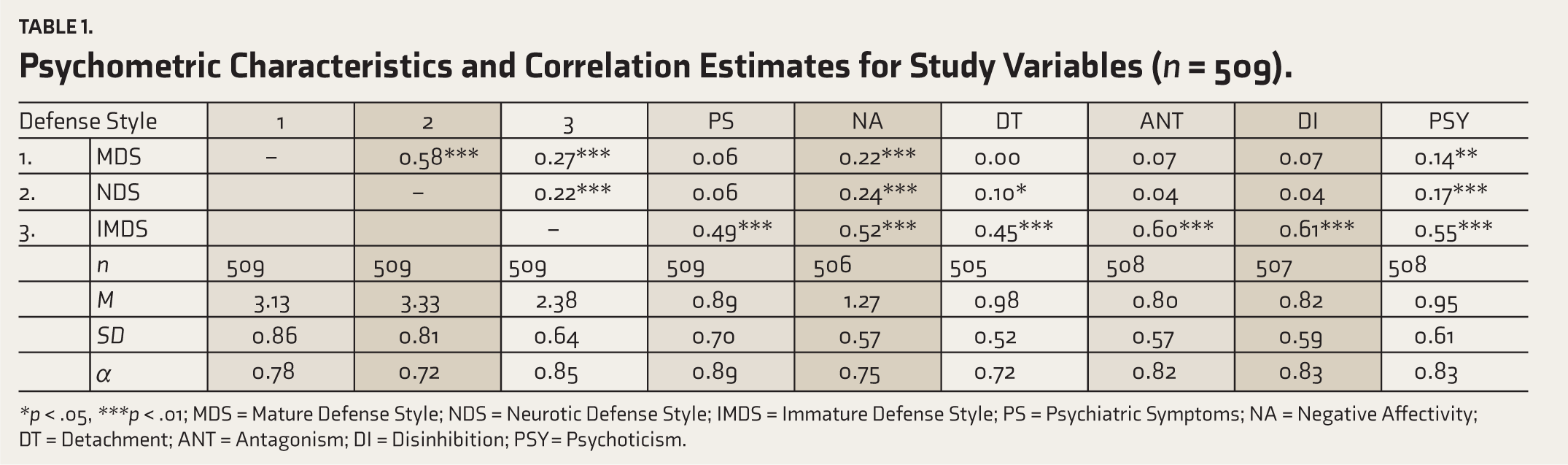
*p < .05, ***p < .01; MDS = Mature Defense Style; NDS = Neurotic Defense Style; IMDS = Immature Defense Style; PS = Psychiatric Symptoms; NA = Negative Affectivity; DT = Detachment; ANT = Antagonism; DI = Disinhibition; PSY = Psychoticism.
To test the research question that maladaptive personality domains mediate the relationship between IMDS and psychiatric symptoms among prisoners. The findings of the mediation analysis are presented in Figure 1.
Direct and Indirect Effect of Immature Defense Style on Psychiatric Symptoms.
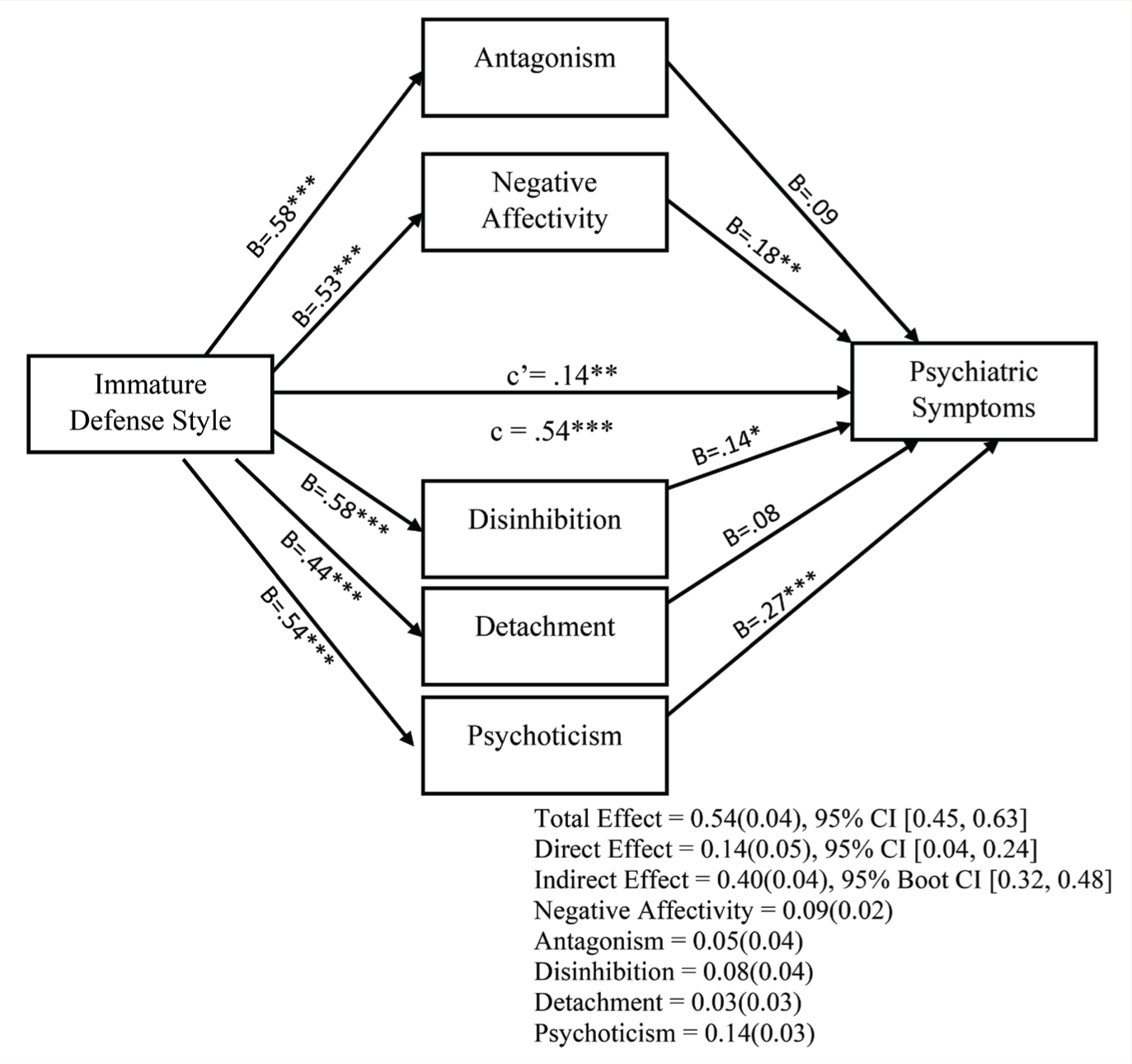
Findings in Figure 1 showed that Negative Affectivity, Disinhibition, and Psychoticism mediated the relationship between IMDS and PS. R2 change due to the mediation effect is reported to be .41 (F (6, 492) = 45.95, p < .000). Completely standardized indirect effect of IMDS on PS for Negative Affectivity is 0.08 (0.02), Disinhibition is 0.07 (0.03), for Psychoticism = 0.13 (0.03). Though findings of Table 1 showed that there is no significant or negative correlation between MDS and PS thus, for sentenced prisoners, MDS do not act as a protective factor against psychiatric symptoms.
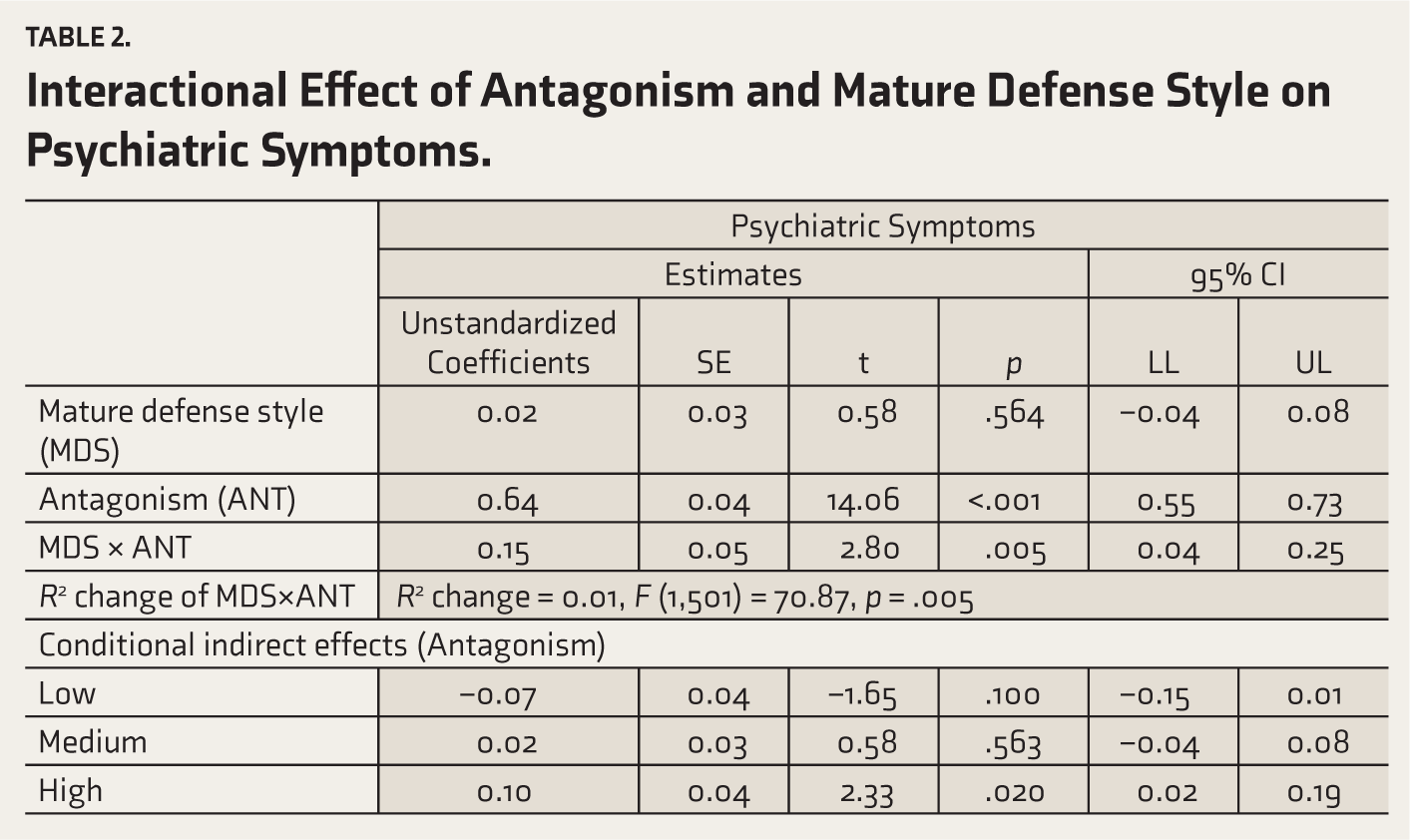
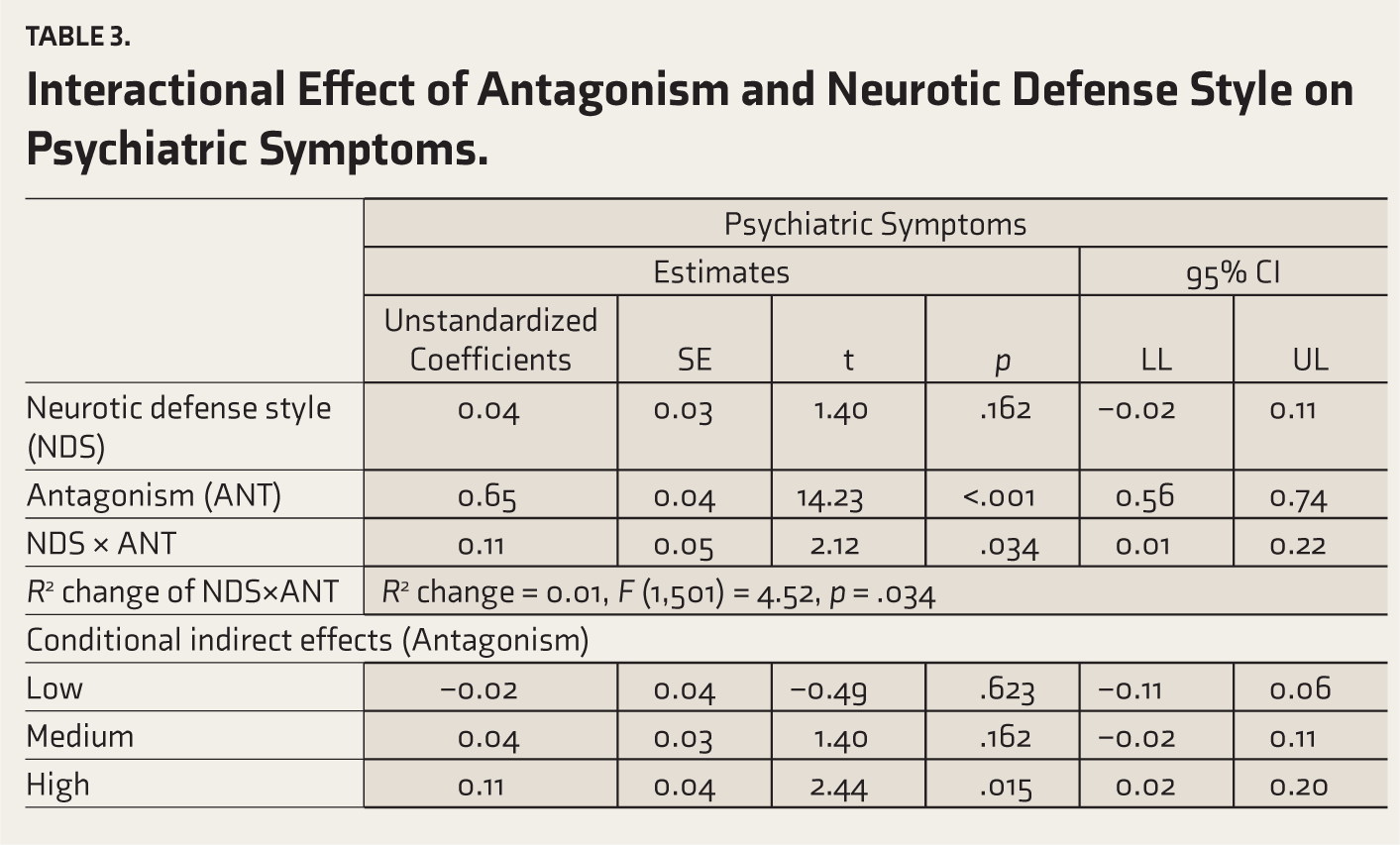
To explore the conditions (personality domains) in which the role of MDS and NDS can be weakened or strengthened to explain psychiatric symptoms. Significant Findings are presented in Tables 2 and 3.
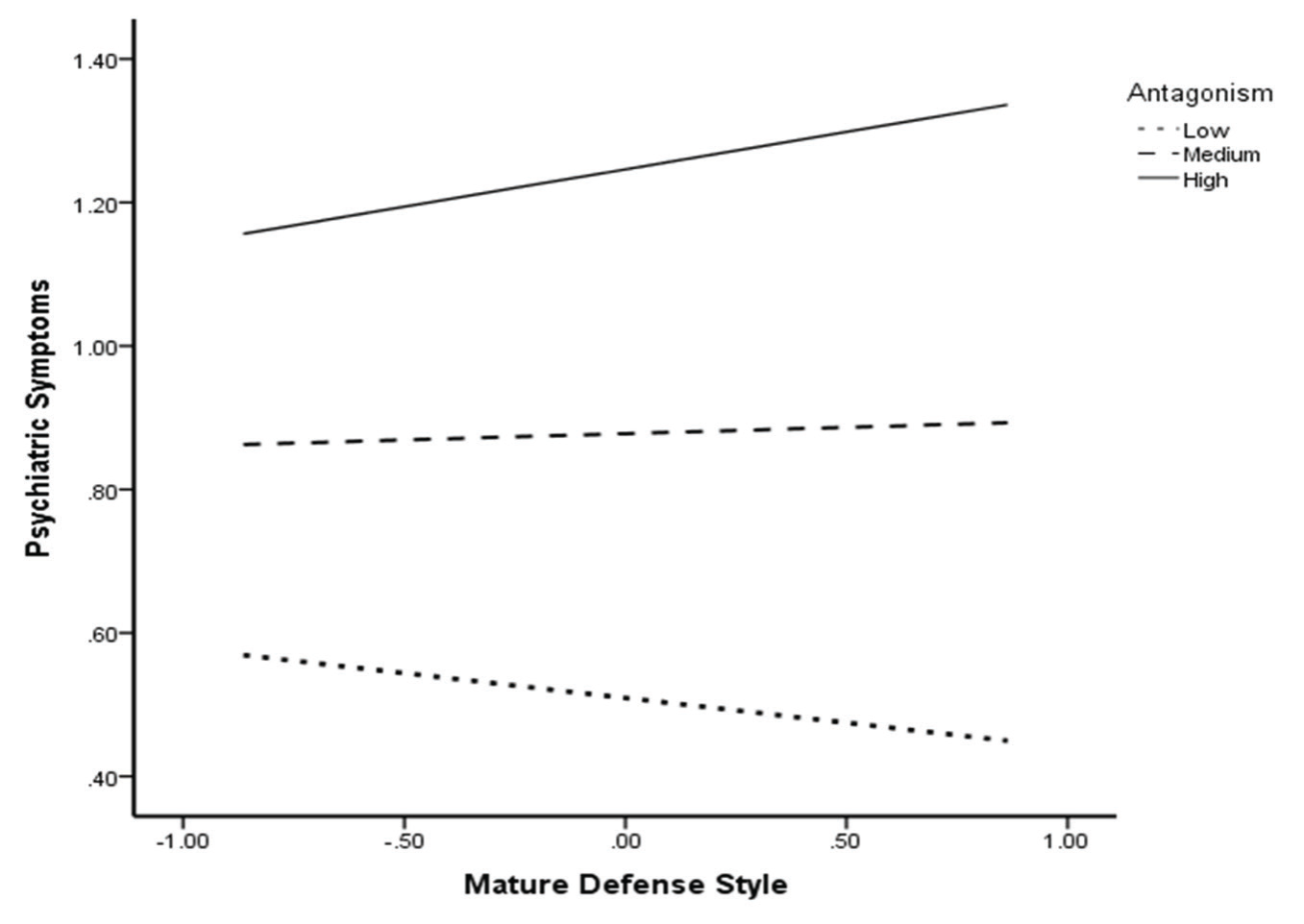
Interactional Effect of Antagonism and Mature Defense Style on Psychiatric Symptoms.
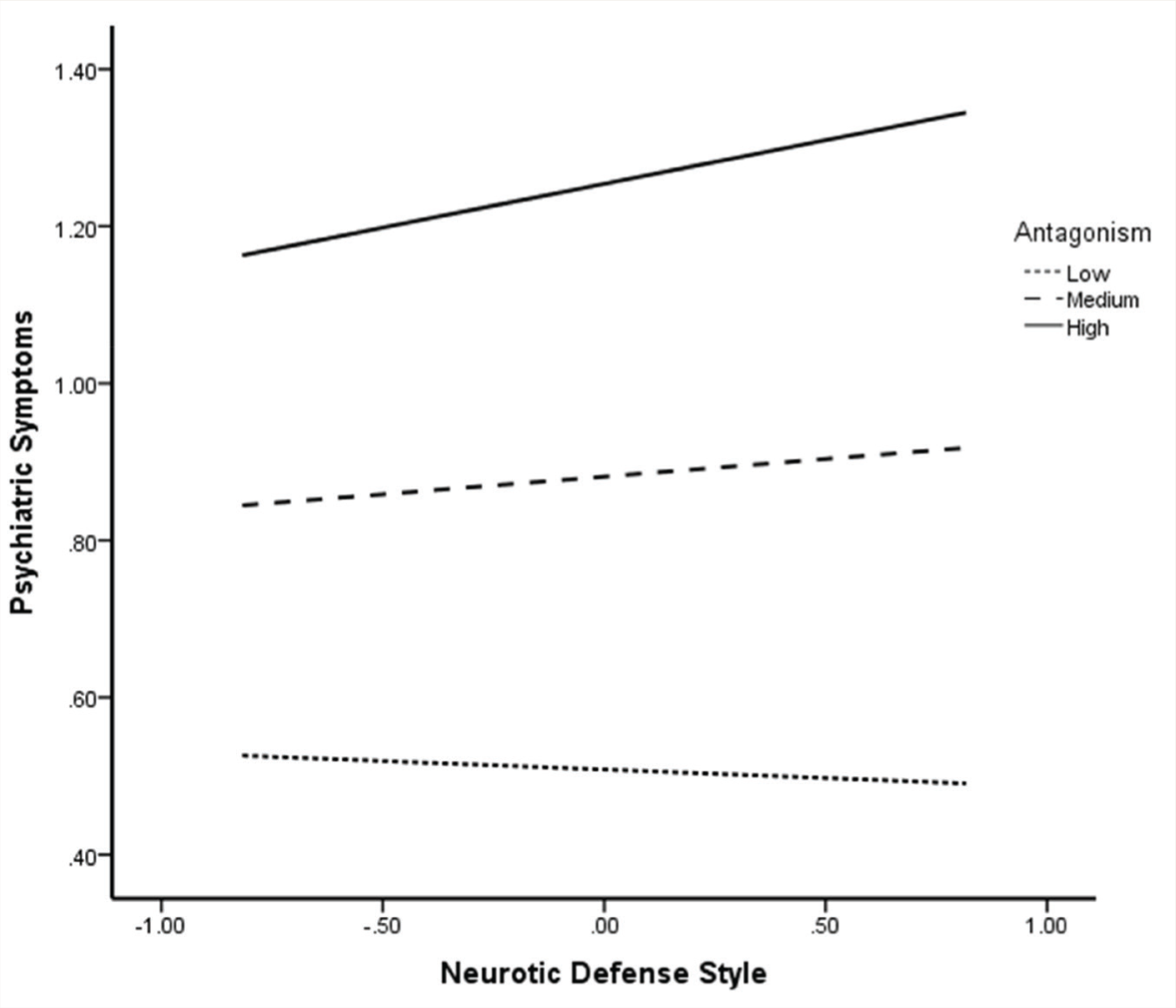
Interactional Effect of Antagonism and Neurotic Defense Style on Psychiatric Symptoms.
Findings in Figure 2 and Table 2 showed the moderating effect of Antagonism on the relationship between MDS and PS. Though there is no significant direct predictive relationship between MDS and PS (according to Table 1 and after centering of variables before running moderation) high scores on antagonism, create an interaction effect with MDS on PS for sentenced prisoners. This relationship is only significant for the group who score high on traits like manipulativeness, deceitfulness, grandiosity, etc. and use MDS (humor, anticipation, suppression, sublimation) in jail. They also reported high psychiatric symptoms morbidity.
Interactional Effect of Antagonism and Mature Defense Style on Psychiatric Symptoms.
The same is the case with NDS (see Table 3 and Figure 3), those who scored high on antagonism and NDS also reported high psychiatric symptoms morbidity. According to conditional effects in Table 3, this relationship is also only significant for sentence prisoners who scored high on antagonism. Thus, the answer to research question 3 is that NDS can lead to psychiatric symptoms in the presence of antagonistic personality traits among prisoners.
Interactional Effect of Antagonism and Mature Defense Style on Psychiatric Symptoms.
Discussion
The prison population is among the least explored sections of Pakistan in terms of psychological processes. The current study is an attempt to address mental health issues and tested two important variables in predicting and explaining psychiatric symptoms among convicts. The psychometric properties of the study variables (see Table 1) showed that all the study instruments show adequate internal consistency (alpha coefficient > 0.70) and thus are valid to measure the construct in Pakistani culture. 56 Findings also showed that all three defense styles (i.e., mature, neurotic, and immature) are strongly associated with each other. The literature also supports that defense styles are related to each other and an individual may use multiple defenses depending upon the personality type.10,45 The correlation estimates indicated a significant positive correlation between negative affectivity and psychoticism with all three defense styles. Studies have shown that often prolonged use of NDS and IMDS is linked to negative affectivity or psychoticism, and might exhibit symptoms like depression, low psychological well-being, anxiety, and hostility.10,57 Surprisingly no negative relationship was observed between MDS and PS rather a low but significant correlation was found between MDS, NA, and PSY. It is important to understand that the sample of the current study was sentenced prisoners and literature has shown that prolonged use of any defense style under stress can lead to personality pathology. 10
The finding in Figure 1 showed that negative affectivity, disinhibition, and psychoticism mediated the relationship between IMDS and PS. The model explained 41% of the variance in psychotic symptoms among convicts. Individuals who use IMDS often exhibit negative affects like low psychological well-being, anxiety, and hostility, 57 feeling of detachment from others due to suspiciousness and intimacy avoidance, 58 characteristics like manipulating others or exhibiting grandiosity, 59 risk-taking and impulsive attitude, 34 and also psychotic symptoms, for example, unrealistic or irrational beliefs, dysregulation, and dissociation. 60 A current study tested the mediating relationship between IMDS and PS and found that IMDS affects the emotional, impulsive, and dissociative aspects of personality which further contributes to different psychiatric symptoms. Literature advocated the same point of view that disorders have their personality profile and psychopathological symptoms were predicted by a unique combination of traits and defense styles. 61
A significant interaction effect of MDS and Antagonism was found on psychiatric symptoms. However, researchers reported that MDS is least associated with psychiatric symptoms and facilitates the psychosocial functioning of an individual. 43 Findings in Figure 2 and Table 2 showed that high scores on antagonism and MDS collectively predict PS. Findings can be explained by considering prison samples, prisonization, and inappropriate/rigid use of defense style.20,62 Literature has shown that antagonism has always been a core trait of externalizing disorder and impactful psychopathological constructs (e.g., psychopathy, antisocial and narcissistic personality disorders).36,63 A study conducted on prisoners in Thailand showed that the majority of prisoners reported poor mental health though their score on MDS was higher than NDS and IMDS, respectively. 64
A MDS is adaptive, but its function varies and depends upon the population in which the phenomenon is being explored. 20 The adaptive potential of defense depends on the appropriateness and adequacy of the context. 65 Findings can be explained by considering an adaptation of a MDS (sublimation, suppression, humor, and anticipation) as a strategy used by a prisoner with antagonistic traits to facilitate prison survival for extended periods. Suppression delays the reaction toward stressful events and humor channels negative energies into ironic milder tones. Sublimation, suppression, and anticipation facilitate survival in the prison setting and forming new criminal identities, internalizing them to develop new connections in the prison setting. 66 Thus, highlighting the inclination towards antagonistic psychopathology, 63 that is, further reinforced by the use of MDS. Similarly, an interaction effect of NDS and antagonism on PS shows that channeling the anxiousness into pseudo-altruism, idealization, reaction formation, or undoing increases psychiatric symptoms67,68 when the individual scores high on antagonism.
Findings of the present study concluded that personality acts as a mediator between IMDS and PS whereas, for MDS and NDS, a significant interactional effect was found with antagonism on PS. Limitations of the current study include restricting the sample to male convicts incarcerated in the central jails of Punjab. The findings of the study cannot be generalized to female convicts, under-trial offenders, and prisoners outside the Punjab, Pakistan. Permission for data collection was given for a short period and the presence of police officials with the researcher on the premises of the prison was declared mandatory for security reasons. This could induce the element of social desirability in responses. The inclusion criteria for data collection was having a primary level education whereas the majority of the jail population is comprised of illiterate respondents whose responses could be different than that of educated respondents. So, this is again a limitation of this study as due to conditional permission it was impossible to collect data through interviews, focus group discussions, etc. No official Information was available on psychiatric diagnoses in the current sample is one of the limitations. Thus, it is difficult to determine the initiation and severity of these psychiatric symptoms at the disorder level.
Conclusions
Respondents incarcerated in central jails are sentenced for longer periods and suffer from psychiatric symptoms during imprisonment. The current study’s strength is that it gathers data from all nine central jails in Punjab, Pakistan, covering a wide spectrum of charges from theft to murder (albeit the sample distribution mirrored the population’s trend, with murderers being more common than drug abusers and thieves). It is an initial attempt to explore the predictive and intervening relationship of variables that contribute to the prevalence of psychiatric symptoms among offenders. The implication of the current study is to identify defense styles and personality as important factors for prisoner’s mental health and rehabilitation in prison settings.
Footnotes
Data Availability Statement
The data supporting the conclusions of this study can be obtained upon request from the corresponding author. The data were gathered from a correctional environment and required third-party consent before dissemination. The data are not accessible to the general public because of ethical and privacy concerns.
Declaration of Conflicting Interests
The authors declared no potential conflicts of interest with respect to the research, authorship and/or publication of this article.
Declaration Regarding the Use of Generative AI
None used.
Ethical Approval
The National Ethic Committee for Psychological Research (NECPR), an institutional research committee, examined and approved all procedures used in studies involving human subjects.
Funding
The authors received no financial support for the research, authorship and/or publication of this article.