




Abstract
Background:
The higher prevalence of depressive symptoms among women demands an in-depth exploration of every possible mechanism through which depressive symptoms may prevail. Identifying any malleable mechanism may open a new pathway through which such symptoms could be targeted. We explored the association between neuroticism, rumination, anxiety, and depressive symptoms and tested a moderated mediation model with anxiety as a mediator in the relationship between neuroticism and depressive symptoms, and rumination as a moderator of the effect of neuroticism on anxiety.
Method:
This cross-sectional study was conducted on Indian women living in the state of Punjab. A total of 671 adult females responded to the translated versions of standardized questionnaires measuring the relevant constructs.
Results:
The mean (SD) age of the sample was 23.71 (6.09) years. As hypothesized, anxiety significantly mediated the relationship between neuroticism and depression, and the use of rumination moderated the effect of neuroticism on anxiety. Among women with a high score on neuroticism, those with low ruminating tendencies showed less anxiety and depression than others who scored high on rumination.
Conclusion:
The findings imply that a reduction in rumination may help women, especially those who are high on neuroticism, manage their vulnerabilities toward anxiety and depressive symptoms. Personality traits being not that malleable, targeting a reduction of rumination usage, which is both a trans-diagnostic factor and a malleable one, can help address the surging prevalence of common mental disorders such as anxiety and depression through appropriately devised interventions.
Identifying inter-construct dynamics of depression may have clinical significance. The study observed that less usage of rumination moderated the negative effect of neuroticism on anxiety and depressive symptoms. Managing rumination may help women with high neuroticism deal with affective issues.Key Messages:
Depression is one of the leading causes of global years lived with disability, as per 2019 data.1,2 Across the globe, depression is more prevalent among women (4.5%) than men (3.0%), and the difference is almost similar in India, with figures of 5.7% among women and 4.7% among men.3,4 The reasons behind these differences between the two genders, apart from biological ones, may be many, such as gender-based violence and the strict imposition of gender roles.5,6 In addition, in a patriarchal setting, women in India have been facing social exclusion. This is a cause of a loss of psychological capital, which may translate into depression. 7 Conflict and violence with family members, a lack of financial independence and security, pregnancy-related problems, and life’s challenges after losing a spouse are other crucial factors related to depression among women in India.8,9 Sensitization and the availability of appropriate therapeutic interventions remain lacking amid other contextual challenges, and there is a need to fill these gaps with grass-root level research and interventions. Such interventions require crucial preparatory research, which involves identifying and unveiling intricate mechanisms between relevant factors and the pathway through which an intervention may target the issue to bring about change. The present study tried to identify a few potential factors and the underlying mediating and moderating dynamics that may contribute to one such pathway and update our understanding of depressive symptoms. The primary purpose was to explore the role of rumination, a relatively more malleable factor, in the interplay of neuroticism, anxiety, and depressive symptoms among women living in India. Although rumination is considered a cognitive process, it has not been observed only in this way. Rumination is involved in the response to stressful situations or triggering events; therefore, it belongs to the category of a maladaptive emotion regulation strategy as well. 10 Maladaptive regulation of emotions significantly predicts depressive and anxiety symptoms. Individuals who tend to engage in rumination misperceive that the strategy facilitates solving a problem, but generally, it leads to mental health issues such as anxiety and depression. 11
Among other risk factors, neuroticism is closely related to negative emotions, anxiety, and depression,12–15 especially among women. 16 Concerning its relationship with anxiety, the literature indicates an inheritance-based link between neuroticism and anxiety, but there are few findings on how neuroticism affects anxiety symptoms. 17 Additionally, neuroticism has also been associated with rumination, 18 which further magnifies the negative effects of neuroticism on mental health issues.19,20 Similar to the differences across the two sexes in the case of depressive symptoms, research has shown that women score higher on neuroticism, 21 anxiety, 22 and rumination. 23 Furthermore, the previous findings show that the effect of dispositional traits on depressive symptoms increases if other conditions, such as anxiety and rumination, are also present.24-26 It implies that controling rumination may reduce the negative impact of neuroticism on anxiety and depression; however, empirical evidence in this regard is scarce. 14
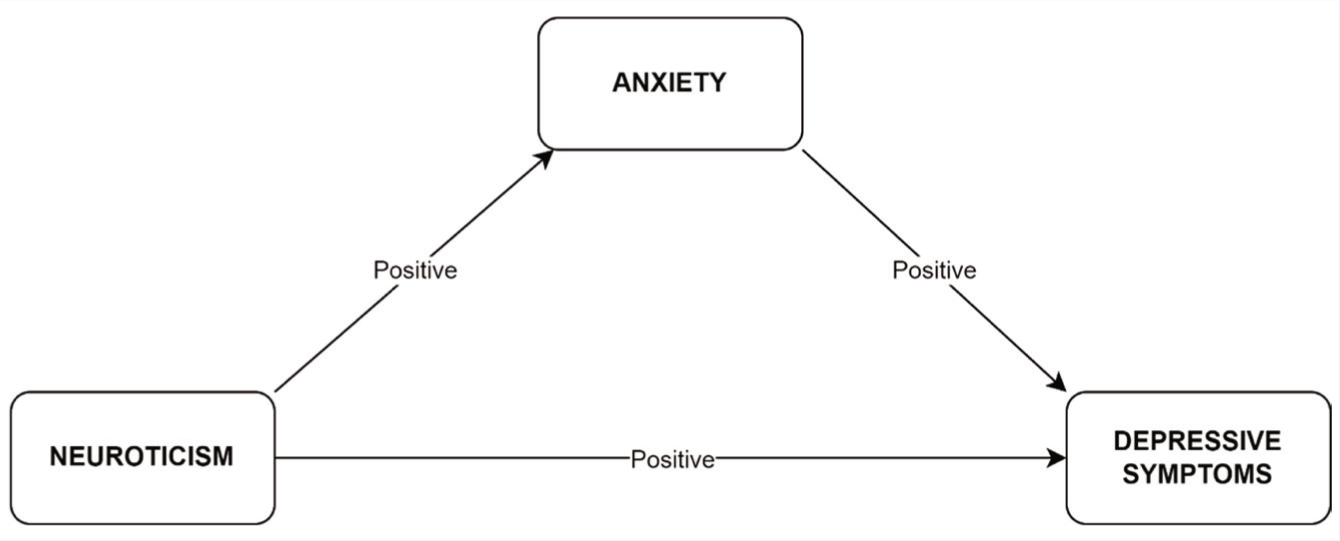
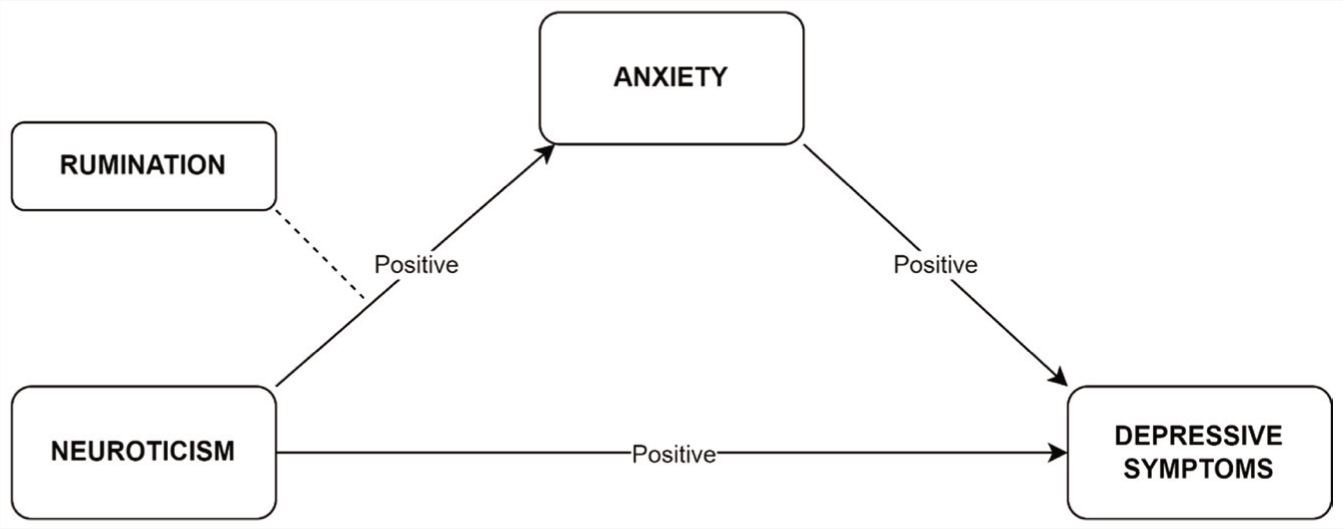
Though existing literature indicates that neuroticism and rumination are significant predictors of depression and that anxiety and depression coexist as comorbidities, 27 some studies have shown that not all individuals with high levels of neuroticism and rumination experience depression similarly.28,29 Thus, there is a need to explore the inter-construct relationships between neuroticism and depression, directly and indirectly, through rumination and anxiety. Therefore, the present study is intended to test a moderated- mediational model in which neuroticism is expected to indirectly lead to depressive symptoms through anxiety and rumination, where rumination would moderate the relationship between neuroticism and anxiety. Some previous studies have found rumination moderating the relationship between stressors and negative emotions such as depression and anxiety. 30 Rumination can influence the vulnerability posed by neuroticism in the case of psychopathology. 31 Therefore, rumination is expected to influence the impact of neuroticism on anxiety and depression. Considering the available literature, it was hypothesized that, among women, neuroticism would lead to depressive symptoms through anxiety (H1; Figure 1). Also, the relationship between neuroticism and anxiety will be weaker among women with less rumination usage than among women with high rumination usage (H2; Figure 2).
Conceptual Framework Pertaining to the First Hypothesis.
Conceptual Framework Pertaining to the Second Hypothesis.
Methods
Research Design
A cross-sectional survey design was used, in which 671 females were assessed using standardized measures of depressive symptoms, emotion regulation strategies, anxiety, and neuroticism. Multi-level cluster sampling (probability sampling) was used (details are in the section “Procedure”).
Participants
A total of 750 respondents filled out the questionnaires. The inclusion criteria were (a) above the age of 18 years, (b) currently living in the state of Punjab, (c) able to read and write Punjabi language (Gurmukhi script), and (d) never diagnosed with any mental disorder and not under medication/treatment for any chronic health/mental health issue. Out of the 750 respondents, 671 were included in the study; the rest were excluded from the analysis due to incomplete responses, the selection of specific options on a few control items/fillers, and age requirements.
Measures
The Beck Depression Inventory-II (BDI-II) was employed to assess depressive symptoms. 32 The BDI-II is a widely used standard measure of depressive symptoms. It has 21 items, and scores range from 0 to 63, where scores >13 indicate the presence of depressive symptoms. 32
The Beck Anxiety Inventory (BAI) was used to assess for anxiety indicators. 33 The BAI is a 21-item measure with a four-point rating scale, where the ratings range from 0 to 3 for each item.
The rumination subscale of the Heidelberg Form for Emotion Regulation Strategies (HFERST) questionnaire was used to assess the magnitude of the use of rumination. 34 The form, which is reliable and valid, consists of 28 items with a five-point (1–5 for each item) rating scale. 34 The total score on the rumination subscale ranges from 4 to 20, and higher scores indicate more use of rumination. This independent subscale was also reliable 35 and positively correlated with psychopathology. 34
Neuroticism was measured using the neuroticism subscale of the International Personality Item Pool (IPIP) questionnaire. The ratings range from 0 to 4 for each of the 12 items. 36 The measure is reliable (Cronbach’s α = 0.90), and its validity has also been established and is considered sufficiently robust for use in research. 37 The subscale was reliable independently in previous studies as well. 38 The overall Cronbach’s α for all the scales ranges between 0.71 and 0.90. Additionally, the scale has shown significant convergence with the Revised Neuroticism-Extraversion- Openness (NEO) Personality Inventory and strong criterion validity. 39
All the standardized measures were translated into Punjabi (Gurumukhi script) using the forward-backward translation method. In this process, the original scales in English were first given to the experts (with Punjabi as their mother tongue and well-versed in English) for translation into Punjabi. After a thorough review, the Punjabi translation of the scales was given to other experts for translating the same into English. Significant correlations observed among the variables like depression, anxiety, neuroticism, and rumination, measured using the translated versions, supported the soundness of the scales, and indicated the convergent validity of the translated measures.
Procedure
Initially, the required sample size was calculated following Cohen’s guidelines 40 regarding the minimum sample size for the given number of predictors. The guidelines mentioned that for α = 0.01, a small effect size, and a power of 0.80, a total of 698 participants are required. G-Power software version 3.1.9.7 also confirmed the required sample size of 698. 41 We approached 750 participants, considering the potential for non-response or dropouts, of whom 671 were finally included in the analysis. Cohen’s f 2 was used as the effect size indicator. 40 Ethics approval was obtained from the Ethics Committee of the institute. A multi-level cluster sampling (districts, villages, and participants) was used. Five districts in Punjab (Jalandhar, Mohali, Fatehgarh Sahib, Patiala, and Ropar) were randomly chosen. Four to six villages/wards were chosen from each selected district, and then, from each village/ward, 30 participants were selected randomly and assessed for selected variables. The data collection lasted from November 2019 to February 2020. The premises used for community programs in the villages were used to gather the participants, with the help of the local administration and elected bodies. The participants were called to the community centers under a mental health awareness program titled “Mann-Jitt” (a phrase used in Punjabi to refer to conquering the mind). The district authorities permitted the program, and the local administration bodies facilitated the outreach to the participants. The data were collected before the commencement of the program. After getting their consent, the measures were administered individually.
Statistical Analysis
The data were organized and analyzed using correlation, mediation, and moderated mediation regression analysis with the help of SPSS PROCESS macro 42 and SPSS AMOS version 26.0. 43 Mediation analysis is an important statistical tool for gaining insight into the mechanisms of exposure-outcome effects. Mediation analysis decomposes the total exposure-outcome effect into direct and indirect effects through a mediator variable. It can be used to investigate a variable as a mediator (M) of the relationship between a predictor (X) and a criterion variable (Y). Moderated mediation tests the influence of a fourth (or more) variable on the mediated relationship between X and Y. Another variable moderates the effect of the mediator.
Results
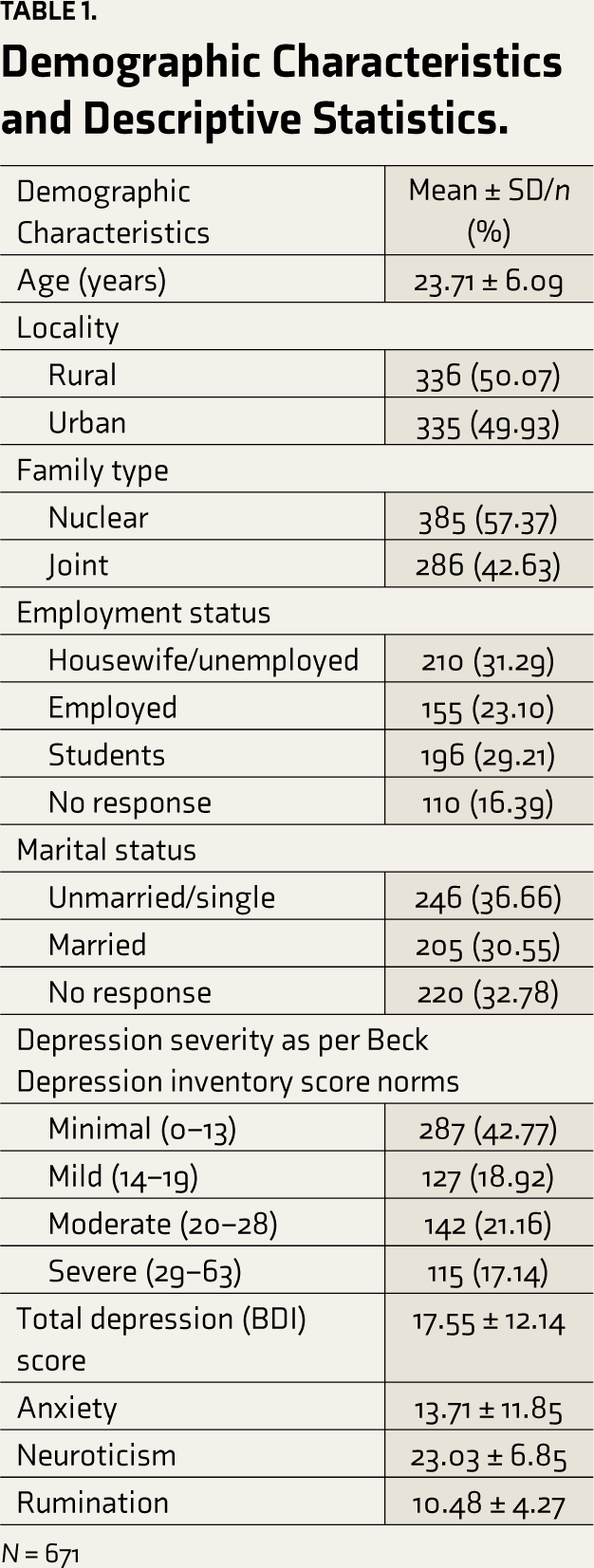
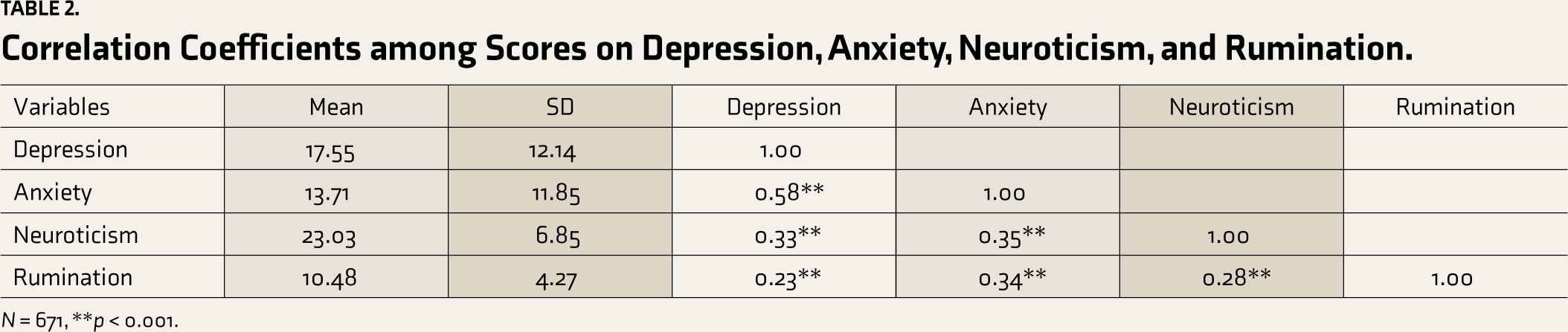
The socio-demographic features and the descriptive statistics of the sample have been presented in Table 1. Reliability analysis conducted for the translated versions of the questionnaires showed acceptable reliability; Cronbach’s α for the BDI-II, BAI, rumination subscale of the HFERST, and the neuroticism subscale of the IPIP ranged from 0.79 to 0.94. The correlation coefficients between the original and translated versions for all the scales were >0.96. Of the 671 women (Mage = 23.71, SDage = 6.09) who participated, 384 (57.23%) reported mild, moderate, or severe categories of depressive symptoms. Table 2 depicts the correlation coefficients among the studied variables. Depressive symptoms were significantly associated with anxiety [r(671) = 0.58, p < 0.001], neuroticism [r(671) = 0.33, p < 0.001], and rumination [r(671) = 0.23, p < 0.001]. Anxiety showed significant associations with neuroticism [r(671) = 0.35, p < 0.001] and rumination [r(671) = 0.34, p < 0.001]. Also, neuroticism and rumination were significantly correlated [r(671) = 0.28, p < 0.001].
Demographic Characteristics and Descriptive Statistics.
N = 671
Correlation Coefficients among Scores on Depression, Anxiety, Neuroticism, and Rumination.
N = 671, **p < 0.001.
Table 3 presents the findings of the mediational analysis and shows the total effect of neuroticism and anxiety (βtotal = 0.33, p = 0.006), the direct effect of neuroticism (βdirect = 0.14, p = 0.007), as well as the indirect effect of neuroticism through anxiety (βindirect = 0.19, p = 0.003) on depressive symptoms. Figure 3 depicts the findings given in Table 3. Three paths are shown in the Figure 3 (a, b, and c): “a” depicts the standardized regression coefficient for the predictor concerning the mediator, “b” shows the standardized regression coefficient for the mediator predicting the criterion variable, and “c” represents the standardized regression coefficient for the predictor concerning the criterion variable, that is, the direct effect while controling for the effects of the mediator. As given, the indirect effect of neuroticism (through anxiety) was relatively more significant than the direct effect.
Standardized Total, Direct (Controling Anxiety), and Indirect Effects (Through Anxiety) of Neuroticism on Depression.
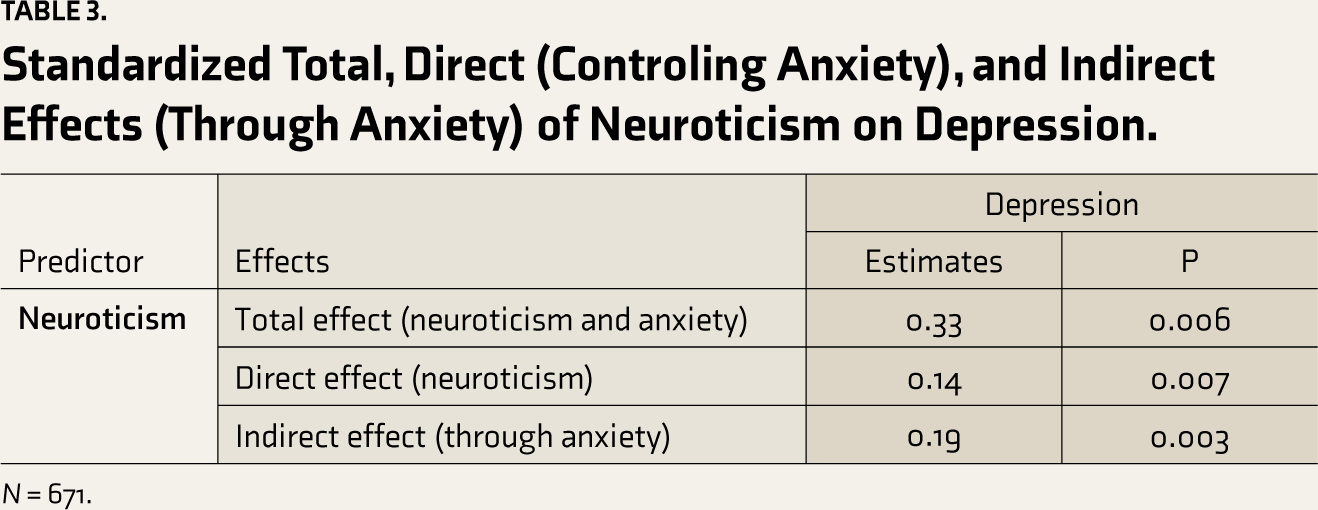
N = 671.
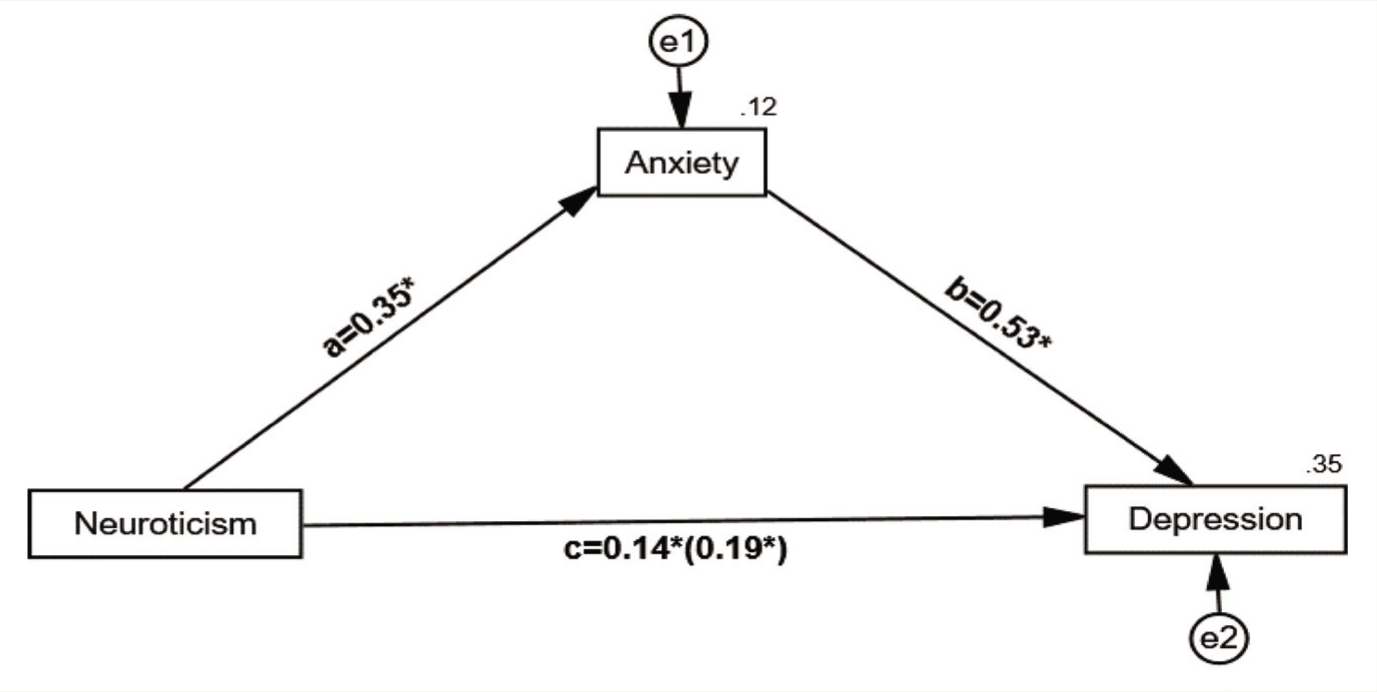
*Path a = standardized regression coefficient for the predictor in relation to the mediator; path b = standardized regression coefficient for the mediator predicting the criterion variable; path c = standardized regression coefficient for the predictor in relation to criterion variables with the mediator in the model; indirect effect is in parentheses.
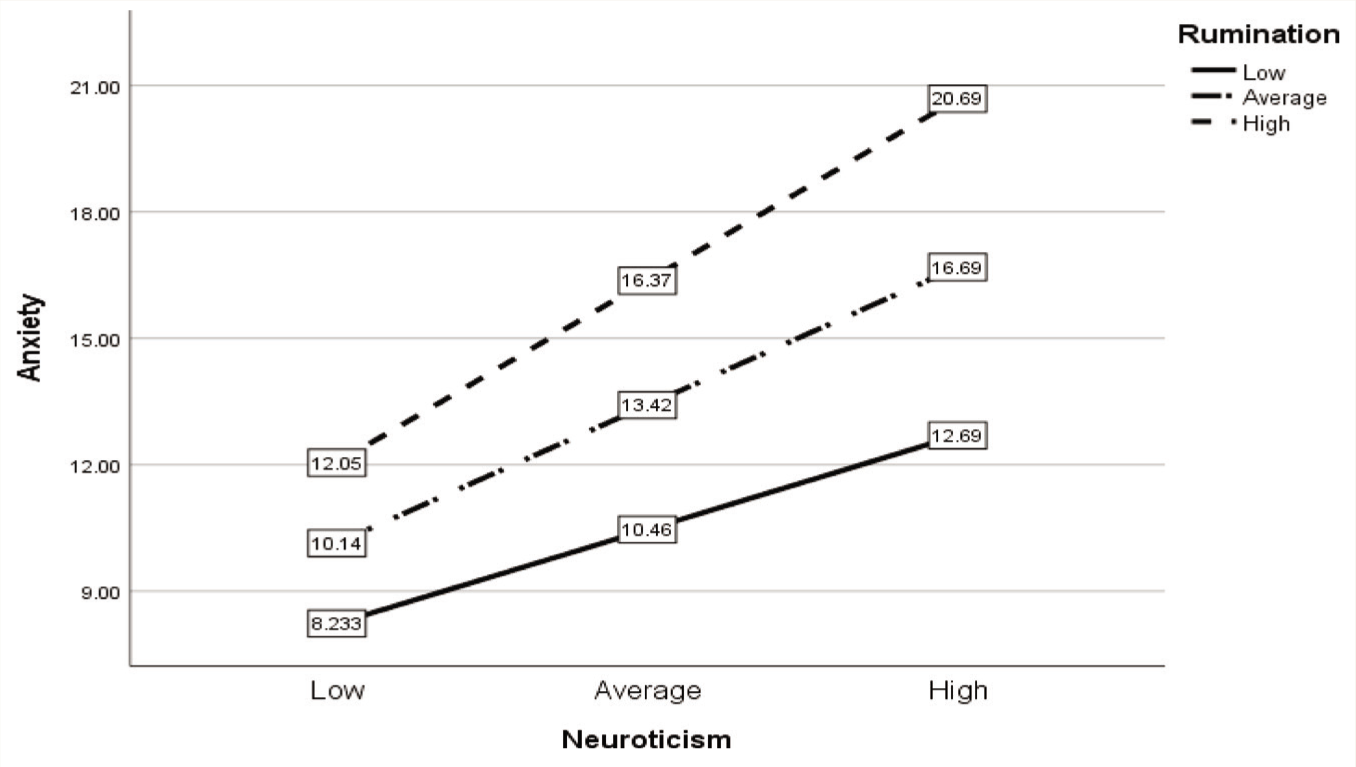
Table 4 presents the moderated mediation analysis, which was done to test the hypothesized model using the PROCESS macro. 42 The first part of the table shows the moderating effect of rumination between neuroticism and anxiety. Rumination was found to be moderating the effect of neuroticism on anxiety, and significant interaction effects between neuroticism and rumination caused a significant increment in the total variance [R 2 change = 0.008, F(1,667) = 6.93, p < 0.008]. In the second part of Table 4, the conditional indirect effects show that the level of rumination significantly moderates the mediational dynamics among neuroticism, anxiety, and depressive symptoms. For participants high on rumination, the relationship between neuroticism and depressive symptoms through anxiety was stronger (β = 0.34, p < 0.001), compared to participants with average rumination (β = 0.26, p < 0.001) and low rumination (β = 0.17, p = 0.002). The difference between the above three groups was statistically significant. Moreover, the index of moderated mediation also came out to be significant (p < 0.01). Figure 4 presents the findings given in Table 4. As given, participants with the same level of neuroticism but different levels of rumination vary in their experience of anxiety, while the existing levels of rumination moderate this difference.
Moderated Mediation Regression Analysis Summary for Depressive Symptoms (Criterion Variable) with Neuroticism as a Predictor, Anxiety as a Mediator, and Rumination as a Moderator of the Relationship between the Predictor and Mediator.
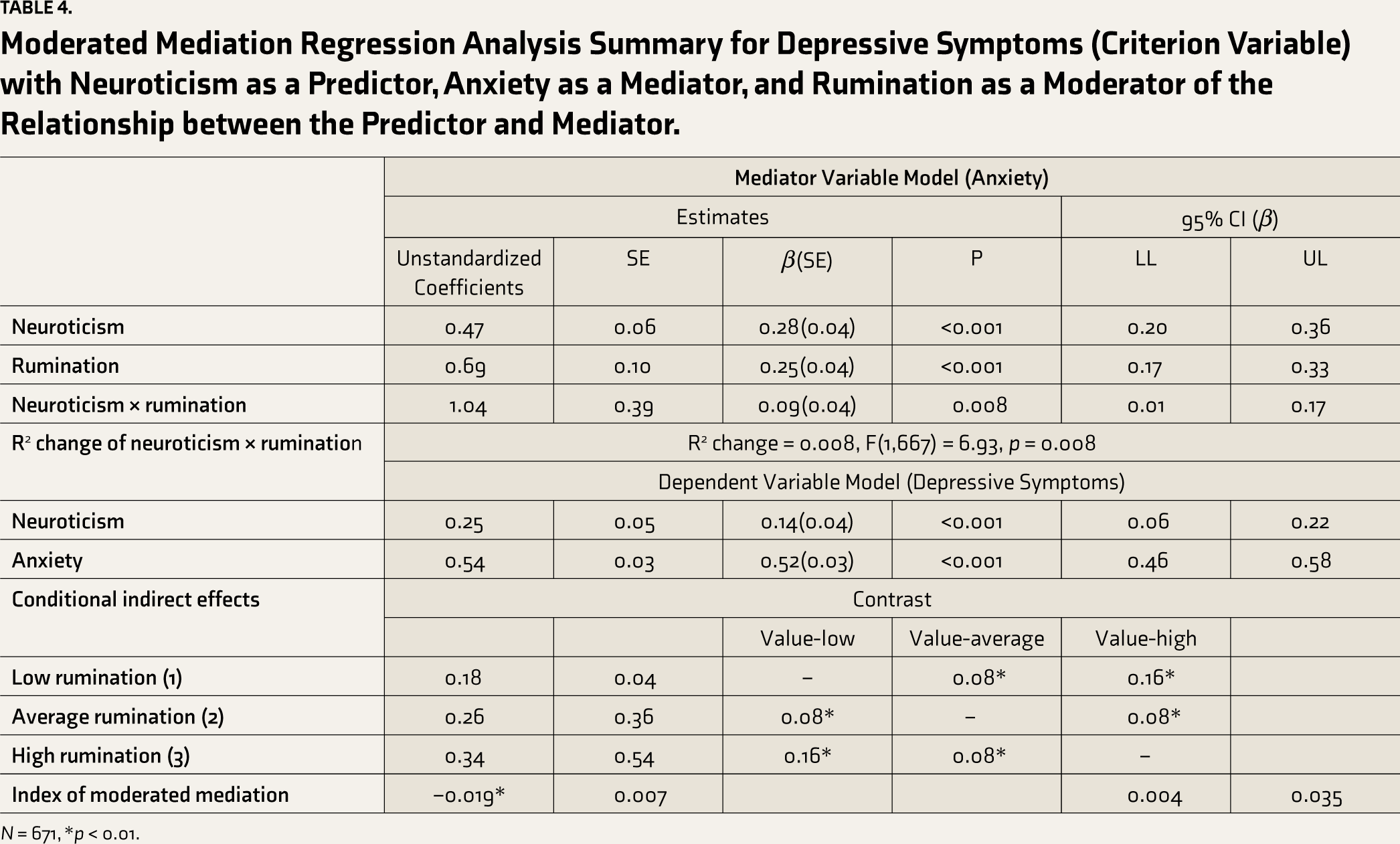
N = 671, *p < 0.01.
Neuroticism Predicting Anxiety with Rumination as a Moderator of the Relationship between Neuroticism and Anxiety.
Discussion
The data from the present study supported the hypothesized model; the rumination level of women moderated the effect of neuroticism on anxiety, and neuroticism predicted depressive symptoms through anxiety. Our findings about the role of rumination in the dynamics of neuroticism, anxiety, and depression align with the previous studies. Rumination is not only a significant risk factor for depression; interacting with other vulnerabilities, such as stressful life events and low self-esteem, it also plays a crucial role in the onset and maintenance of depressive symptoms. 44
The observed association between depressive symptoms and personality traits, such as neuroticism, is not a new finding. High neuroticism is a vulnerability factor associated with increased depressive symptoms. 45 A possible pathway through which neuroticism makes an individual vulnerable to depression has been explored in previous research. 46 It was found that neuroticism could be the source of individual differences in the use of emotion regulation strategies. Individuals high on neuroticism might be more likely to use a maladaptive emotion regulation strategy such as rumination. Therefore, it was concluded that the tendency of women high on neuroticism to use rumination leads to depression because a putatively maladaptive strategy, that is, rumination, predicts depressive symptoms. 47 The present study supports the phenomenon and provides evidence from a sample of Indian women.
Anxiety was also found to be significantly related to neuroticism levels. A potential mechanism through which these variables could have an association is that women high in neuroticism tend to experience unpleasant emotions more frequently and with high intensity, which makes them more sensitive to minor threatening cues in the environment. For instance, they interpret ordinary situations as threatening. In the same regard, psychological flexibility, emotion dysregulation, and feelings of shame may be the underlying mediators in the relationship between neuroticism and anxiety. 15 Besides these mediators, rumination has also been found to mediate the relationship between neuroticism and anxiety. 18 The present study also found a significant association between neuroticism and rumination. Individuals high on neuroticism tend to engage in emotional overproduction, especially during a sad episode, and experience many negative emotions simultaneously, which may set the stage for rumination. 48
As was hypothesized, anxiety significantly mediated the relationship between neuroticism and depression. The indirect effect of neuroticism (through anxiety) was relatively stronger than the direct effect. It shows that anxiety is a significant mediator, implying that among Indian women, effective management of anxiety, even among those high on neuroticism, may have favorable outcomes for depressive symptoms. A few potential mechanisms between personality disposition and anxiety have been discussed above. Furthermore, the findings on the relationship between anxiety and depression are not isolated. It has been observed that behavioral inhibition or extreme temperament is associated with a three- to fourfold increase in the possibility of developing an anxiety disorder, which is further associated with increased susceptibility to developing a depressive disorder. 49 Additionally, neuroticism is a strong predictor of behavioral inhibition, which further poses a potential explanation for the hypothesized mediation model involving neuroticism, anxiety, and depressive symptoms. 50
Another interesting finding was that rumination moderated the relationship between neuroticism and anxiety in the hypothesized moderated mediation model. The conditional indirect effects show that the level of rumination significantly moderates the meditational dynamics between neuroticism, anxiety, and depressive symptoms. For women high on rumination, the relationship between neuroticism and depressive symptoms through anxiety was stronger than for those with average or low rumination. It can be explained through the findings of other studies: individuals high in neuroticism tend to have sensitivity towards negative information and experience more intense negative affect while facing stressors. 51 The presence of rumination aggravates this negative experience, as brooding over its causes or influences maintains the negative affect and moves individuals away from the standards set by themselves, consequently culminating in anxiety and depression.
Studies have highlighted the role of rumination as a mediator between neuroticism and anxiety in women. 29 The association of rumination with anxiety may be understood in the way that rumination decreases the capacity of women to disengage attention from negative information and hinder the possible recall of effective strategies to resolve the issues. Therefore, after a stressful event, rumination could deteriorate women’s problem-solving and positive coping abilities, leading to internalizing disorders such as depression and anxiety.
A low ruminating tendency, even among women with high neuroticism, reduced the strength of the relationship between neuroticism, anxiety, and depression. In contrast, high rumination aggravated this association among women with similar characteristics. To the best of the authors’ knowledge, no moderated mediation model such as the one hypothesized in the study is available in the existing literature. Therefore, the findings can have crucial diagnostic and therapeutic implications for devising interventions targeting depressive symptoms and associated psychopathology among Indian women. The findings gain corroborative support from existing therapeutic approaches, such as rumination-focused cognitive behavioral therapy and metacognitive therapy, which have been found to mitigate depressive symptoms with rumination at the core.52,53
Implications for Practice
It is always an advantage in the field of diagnosis and interventions to have a trans-diagnostic model identifying and explaining the potential interplay between vulnerabilities and psychopathologies. With advances in diagnostic and therapeutic research, identifying relatively less explored or unexplored pathways culminating in trans-diagnostic models may have additional benefits. Our findings provide some insights in this vein. Personality traits being not that malleable, targeting a reduction of rumination usage, which is both a trans-diagnostic factor and a malleable one, can prove instrumental in addressing the surging prevalence of common mental disorders, such as anxiety and depression, among women through appropriately devised interventions. Such interventions can boost the efficiency of women’s health promotional programs, especially mental health-related endeavors, by different stakeholders. Training programs based on adaptive emotion regulation, especially mitigating rumination, which is a crucial risk factor in many psychopathologies, may be included in the school curriculum, especially for women. This will help the adolescents build their capacity before exposure to some upcoming stressors at different junctures of life. A similar and simpler training program based on the findings can be used as a preventive program in the community or non-specialized health settings, as recommended by WHO. 54
Limitations
The present study was cross-sectional and had limited ability to provide an understanding of the cause-and-effect mechanism among the variables. Future studies may consider applying a longitudinal/experimental design to better understand the causal relationship. The findings are from a women-only sample; thus, generalizations should be made cautiously. Also, self-report measures could have invited response biases and issues in reporting.
Conclusion
Neuroticism has been a significant predictor of psychopathologies such as depression and anxiety among women, and the literature is abundant with these direct outcomes. The present study identified anxiety as a mediator of the relationship between neuroticism and depression among women, where the usage of rumination moderated the effect of neuroticism on anxiety and depression. This moderation implies that even in the presence of neuroticism, women’s vulnerability toward anxiety and depression could be reduced by targeting and reducing the usage of rumination.
Footnotes
Data Availability Statement
The data supporting this study’s findings are available from the corresponding author upon reasonable request.
Declaration of Conflicting Interests
The authors declared no potential conflicts of interest with respect to the research, authorship, and/or publication of this article.
Funding
This study was funded by the Indian Institute of Technology Ropar, Punjab, under the 'Institutional Support for Innovative Research & Development' scheme (Sanctioned file no. 9-312/2018/IITRPR/ 3215 dated 16/05/2019).