




Abstract
Elders Helpline has been operational in Bangalore by joint effort of the Nightingales Medical Trust (NMT) and the City Police since its inception in 2002. The Elders Helpline is unique as it is the first of its kind in India that offers services for the welfare of the older people in Bangalore city. The objectives of this article were to review the process of setting up of the helpline services, its evolution, range of services offered, to evaluate the services to ascertain the social difficulties with a focus on abuse experienced by the older people in Bangalore and find out the common themes. From the records, the Elders Helpline has responded to as many as 144058 calls between April 2009 and March 2020. This article reviewed functions of the Elders Helpline including supervision and training to its staff members, offering counselling to the Older adults by resolving family conflicts and other social issues by upholding and safeguarding their rights. The article highlights the need and impact of Elders Helpline suggesting the need to expand this type of Helpline to other Districts of the country. This study indicates that the Elders Helpline has become a platform for the elderly people to express their concerns and to make them feel secure. The Elders Helpline model is now launched nationally in October 2021 through the expansion of helpline services. There is a need to gather more comprehensive data and for ongoing research and training to reach out many needy older people.
Introduction
The Elders Helpline in Bangalore, the first of its kind, was set up in the year 2002 as a joint effort between the Bangalore City Police and Nightingales Medical Trust (NMT) to provide help to the older adults in distress. Department for the Empowerment of the Differently Abled and Senior Citizens, Government of Karnataka. The goal of the helpline is to help the harassed, exploited, and neglected older people and curb exploitation. Also, it will offer relevant advice to create awareness about the rights and safeguard older adults’ lives and property. This is achieved by supporting the needs of the older adults over the phone, arranging personal meetings by appointment, and introducing relief measures to older adults in distress. Elders Helpline facilitates awareness and advocacy programs to sensitize the community and the government to the changing needs of older people. They are given access to a forum to address issues by partnering with like-minded Non-Governmental Organization (NGO) and other social organizations.
Elders Helpline
Staff members of Elders Helpline are social work professionals and trained counsellors, trained who will have induction period of 15 days. Observational learning is facilitated for another 15 days and experiential learning is facilitated every week by the project manager by way of supervising. An action plan is discussed with the project manager in NMT. There is a systemized review of cases once a month to understand staff members’ progress and continued learning. The complaint is considered resolved if the solution is favorable to the complainant or for all the parties involved. A coordination committee is a deciding authority on closing the cases. Cases that are not resolvable or already filed in the court of law would be reviewed by this committee before considering it closed. The feedback or a letter of the closing process is collected from the complainant for documentation.
Nightingales Medical Trust (NMT)
NMT is a not-for-profit NGO that has been working to alleviate different problems older adults face since 1998. The Trust has established various innovative and need-based projects focusing on dementia care, research-based interventions for healthy aging and dementia risk reduction through active aging programs, elder abuse, social and integration, economic empowerment, and capacity building catering to all sections of the society. NMT runs 17 projects/programs in Bangalore and Hyderabad and looks to expand its services to other parts of the country.
Older Adults and Their Social Difficulties
Conventionally, a person aged 65 years or more is referred to as older adults. 1 In the Indian scenario, older adults are also termed as senior citizens aged 60 years and over. 11 India’s population is growing with older people constituting 8.6% of the total population and projected to reach 20% by the year 2050. 2 Life expectancy has also increased and it has always been higher for women in India. Most of the children from the Baby Boomer generation have had education and left for work in different parts of the world looking for opportunities. The shrinking of family structure, i.e., an increase in the number of nuclear families, means that the older adults in the family are left home on their own without support. This situation can render older adults vulnerable to neglect.
Cognitive Impairment and Dependency
Cognitive impairment is an emerging public health issue because of its high prevalence rate. 3 Advancing age, female gender, unmarried or widow/widower, illiterate, not working presently, staying alone, and poverty were noted as risk factors for dependancy. 4 Service development for supporting the mental health needs of older people in the resource-limited setting is a challenge. 5
Elder Abuse
As the older adult population is increasing, the number of abuse reported is also rising. Understanding the concept of elder abuse and preventing the occurrence is a challenge. Elder abuse is defined as activities or lapses occurring in a relationship of trust. Offering care brings out hurt or serious risk of damage(intended or unintended) to a susceptible older adult or denies the basic needs of an older adult. 6 There is a steady increase in domestic abuse toward older people during 1986–1994. 7 Although older adults have theoretical knowledge about abuse, it is important to develop an experiential understanding that can help them identify abuse. 12 The literature review identifies the following types of abuse: (a) physical abuse, identified as acts carried out to cause physical pain or injury; (b) psychological abuse, which includes acts carried out to cause emotional pain or injury; (c) sexual assault; (d) material exploitation, involving the misappropriation of the older peoples’ money or property; and (e) neglect, or the failure of a designated caregiver to meet the needs of a dependent older person.8–9 A study of elder sexual abuses revealed that offenders who sexually abused older adults with cognitive disabilities staying with them at home were under the age of 40. 10
Elders Helpline—Service Development, The Inception
One of the first services initiated by NMT was an Enrichment Centre for senior citizens. In further interaction with seniors, the Founder Trustees discovered that the citizens had several issues that informal Counselling could not address. Some older adults came up with issues regarding family relationships. Others had legal concerns for which they hesitated to approach the Judicial Courts as it was unaffordable and justice would be delayed. There was a felt need for quick redressal in a structured environment. Older people were unwilling to take legal recourse of making any formal complaint against their family members because of the stigma attached to such steps.
Perceiving this need in the community, the trustees approached the Commissioner of Police to initiate a helpline for senior citizens. At that time, the woman helpline and child helpline were already established as community-based interventions by the police department. Hence, police invited NMT to establish the Elders Helpline as a joint project with them.
The Helpline was started in April 2002, and publicity was given to the toll-free helpline number 1090. Initially, the calls were fewer as older people hesitated to come forth and complain. Over time, the Elders Helpline slowly gained recognition.
The Helpline was set up in the Office of the Commissioner of Police. This location was an advantage and call notices going in as a joint police project helped get immediate response and cooperation from the opposite party. Many cases that could have been dragged to a court of law were settled amicably at the Helpline.
Funding for the Helpline services has always been a challenge. Although the Police Department provided space, basic infrastructure and minimal staffing, the staff salary and other recurring costs had to be supported by the Trust. In the absence of a visible beneficiary, many donors hesitated to support the helpline services. The situation has not changed over the years. It does not come under approved causes covered through corporate social responsibility and this has been a deterrent in investing additional finances in expanding the services.
Seeing the establishment of the helpline for older adults as a need-based intervention for older adults in the community, the Trust advocated for establishing such services to the Department for the Empowerment of Differently Abled and Senior Citizens. The helpline model was taken up as a state government scheme, and it was decided that such helplines should be established at the district level as a joint project with the police establishment.
In 2006, the helpline services got recognition and financial support from the state government, and over the years, it was established in almost all districts of Karnataka. In 2006, the helpline was also recognized by the International Association of Homes and Services for the Ageing (now called the Global Ageing Network) as an innovative community-based intervention for older adults.
The trustees further advocated the helpline model to the national level. Several presentations were made to the Ministry of Social Justice and Empowerment in 2013, and the proposal for a national helpline was mooted. After several years, in 2020, the national helpline proposal was revived.
Broad Services Offered by Elders Helpline
The general services provided by the helpline are as follows.
Information: The Helpline is a resource base for all information that older adults seek. Information base would range from local amenities, low-cost services, age care providers, civic authorities, etc. In the absence of the relevant information, the helpline should have the skill and technical expertise to source the same from all possible resources and provide it for the older adults.
Some of the information are readily available at the helpline are as follows.
Contact details of emergency services such as ambulance, police, hospitals, fire, etc.
Contact details of civic and local authorities and procedures involved in grievance redressal.
Contact details of police stations and hospitals for emergencies.
Contact details of care service providers like blood banks, pharmacies, NGOs running old age homes, other care services, nursing services, etc.
Details of various welfare schemes for the aged run by the state and central government, and the procedure for applying for benefits under such schemes.
Information on the various benefits and concessions made available to senior citizens by government and private service providers.
Information about the legal process, prevalent law relating to older adults, mechanisms for enforcement of rights of older people, and alternative dispute resolution mechanisms.
Referral: The helpline provides immediate referral services corresponding to the nature of help sought by older adults. Referrals could be police assistance, legal assistance, medical aid, financial assistance such as pension, civic matters, etc. The helpline would therefore require strong networking with all service providers.
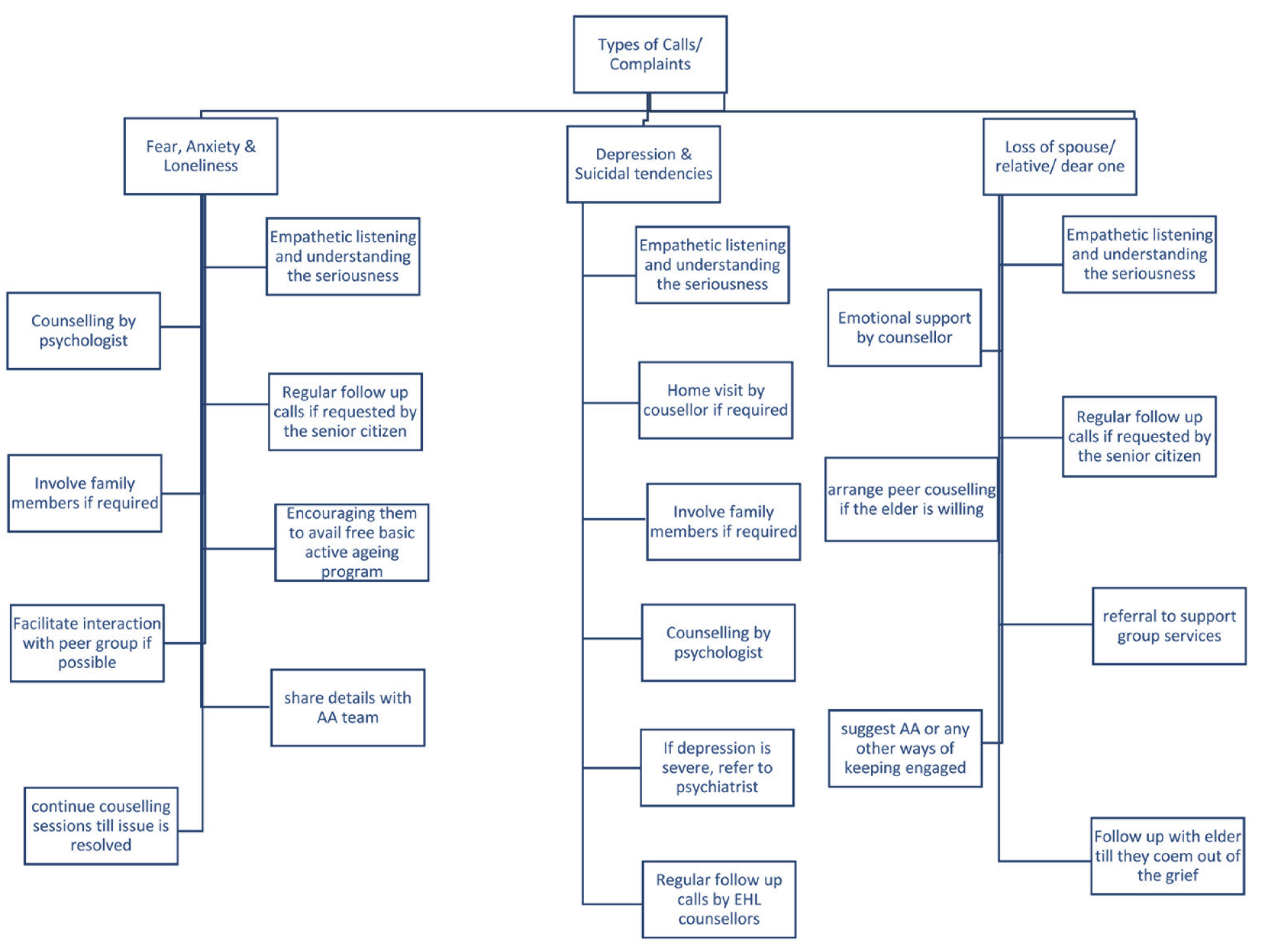
Counselling Support: The helpline provides Counselling support to older adults. The small-family norm means that fewer working, younger individuals are called upon to care for an increasing number of older adults. The collapse of the joint family system, emotional alienation, migration of youth to cities, and spiraling costs of health care are a few of the aggravating factors for the aged in India. Because of the generation gap and the pressures of modern life, the younger generation are not able to be available to care for their older people. Many of the older adults being dependent on their children hesitate to go against their children and suffer in silence. The helpline can provide much-needed counselling support and mediate to resolve conflicts within the family. The older adults also face problems with their neighbors/tenants. Due to age-related vulnerability, older adults are forced to suffer injustice in silence. The helpline can provide much needed emotional support to the older adults undergoing such problems. Older adults faced with mental health conditions and psychosocial stressors also received counselling support (Figure 1).
Rescue and Rehabilitation: In times of emergency, where the older adults are constantly ill-treated or abused, the helpline on receiving a complaint can rescue the older adults with the assistance of the police. Older adults found abandoned or homeless were rehabilitated, by networking with the homes for the aged (Figure 2).
Service facilitated free legal services, including representation in courts and other quasi-legal forums to enforce older peoples’ legal/statutory rights. It created a pool of trained mediators who would provide dispute resolution services.
Research and Development: Studies would help identify and understand the nature of the problems faced by older adults. Based on such studies and data, the helpline services could be improved and enhanced for better service delivery. Such studies would also help refine the advocacy efforts and keep them in tune with the dynamic nature of problems faced by older adults.
General Psychological Counselling by the Elder Helpline
Missing Elders
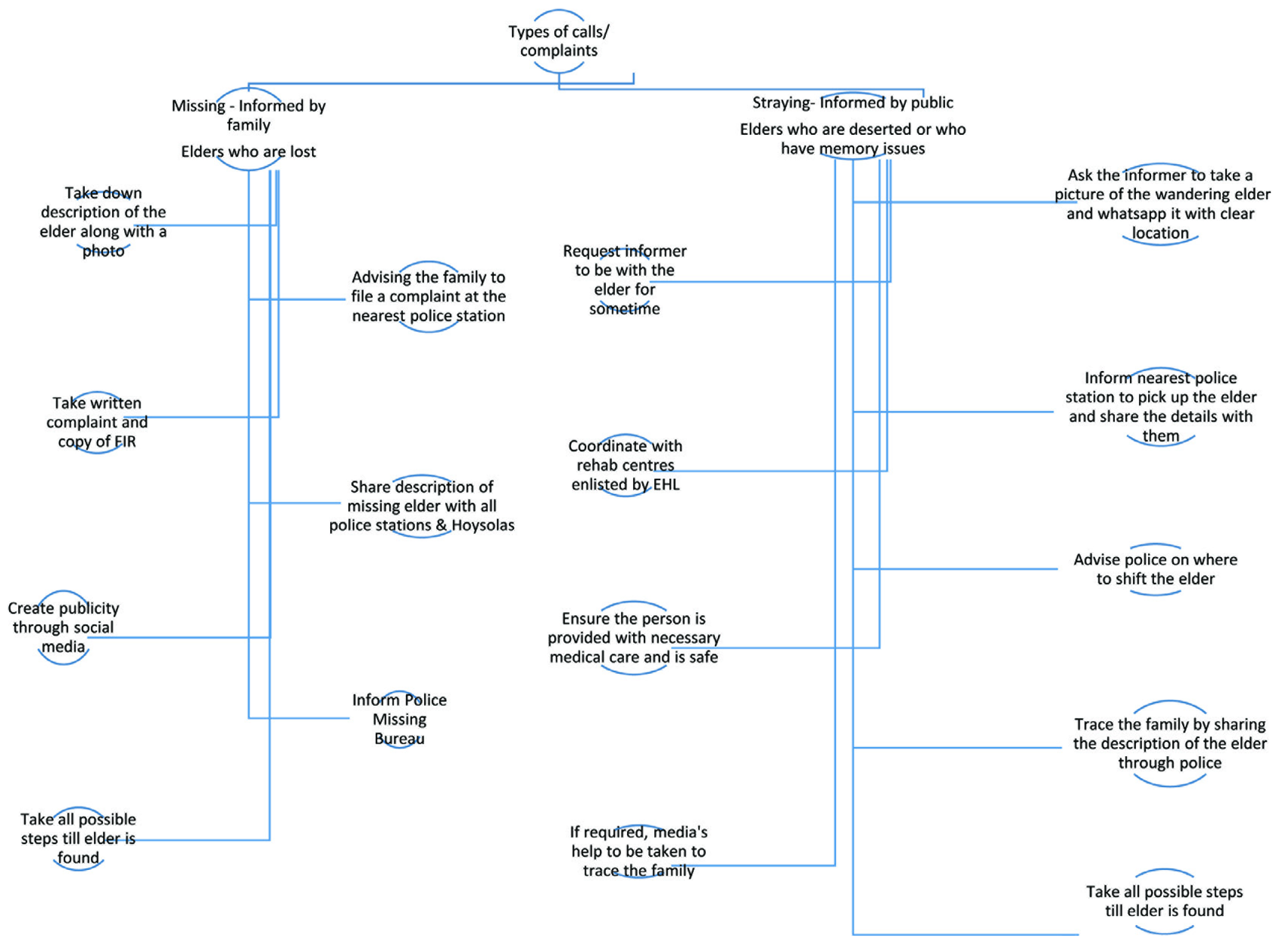
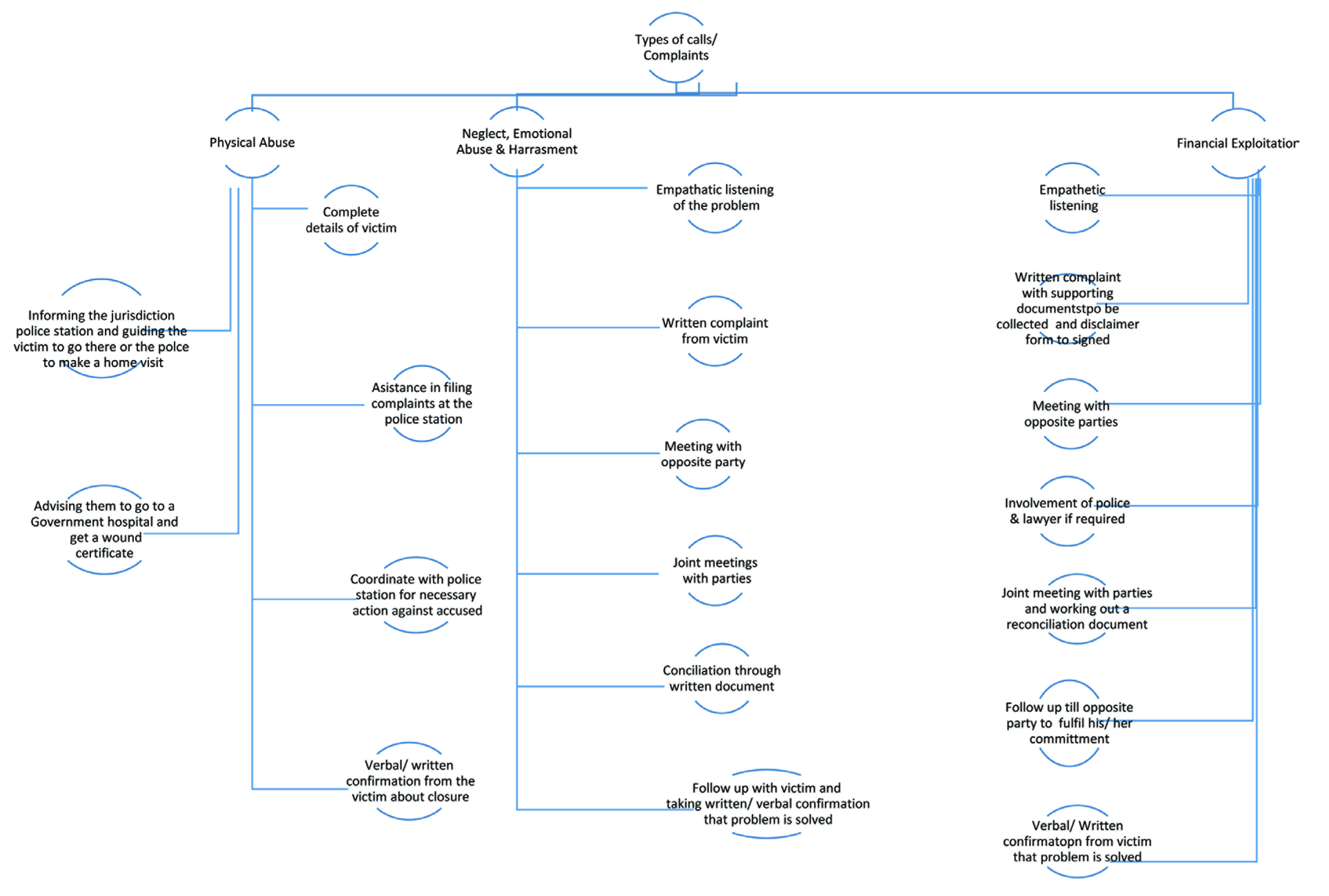
Illustration of Managing Calls on Abuse
Other Initiatives of Elders Helpline
Along with the day-to-day services, the Elders Helpline took the initiative to contribute to the cause of the older adults in various ways. In 2006, it launched a Pension Helpdesk to help deserving older adults seeking old age pension by guiding and assisting them in the process. Helpline intervened to ensure that their pension applications were processed.
In 2005, an “Elder Police Hotline and concerned neighborhood scheme” was initiated in collaboration with the City Police. In this scheme, the seniors registering for the service need to keep the phone receiver of the hook for 20 seconds, which would alert the Police Control Room, in turn alerting the neighbors and got them to check on the seniors.
To ensure that Elders Helpline services reach the community, the helpline initiated an outreach service at eight police stations in 2005. Helpline counsellors visited each police station once a week, created awareness about the services, and took on cases of abuse reported at these police stations.
In 2006, the Department for the Empowerment of Differently Abled and Senior Citizens extended support to Elders Helpline. It also initiated the issuance of senior citizens identity cards through the Elders Helpline to create a database of seniors and extend concessions on various services to seniors.
In 2008, Elders Helpline initiated a helpdesk to popularize the reverse mortgage scheme for senior citizens.
The helpline took out the publications of all useful information for the senior citizens based on their experience. Some of the publications included “old age homes in and around Bangalore,” “Be a cautious senior citizen,” “Seven Steps to Elders Safety,” “Concessions and other useful information for Senior Citizens.” These publications were provided free of cost to senior citizens visiting the helpline and availing of other services of the trust. Some of these publications were revised, updated, and republished over the years.
The Elders Helpline started observing the Elder Abuse Awareness Day in 2008 and has been conducting several public awareness events to observe this day in a meaningful way—to give visibility to the issue of elder abuse. From seminars and sensitization programs to roadshows, street plays, and awareness walks, the helpline has been observing this day every year.
In 2013 and 2014, two extension centers of the Elders Helpline were set up at two other police divisions in South and North Bengaluru to expand its work and reach out to more seniors in need.
The Elders Helpline also contributed to passing the Maintenance and Welfare of Parents and Senior Citizens (MWPSC) Act 2007. In 2004, the Elders Helpline advocated for the need for legislation to protect older adults’ rights. Helpline initiated the “Elders Moving Forward” group of 35 NGOs and senior citizen forums, and a draft bill was prepared and submitted to the government. This draft bill was instrumental in the establishment of the MWPSC Act 2007.
Short Summary of Findings from the Helpline
The Elders Helpline has collected data from 2002 but initially had only registry-like records. Additional information about the type of complaints and more details have only been available from April 2009 onward. As this is the first Elders Helpline, which is a collaborative approach between the government and the NGO, it has gradually evolved based on the resources available and modifications based on learning from the experience. The objectives of the study are as follows. (a) Review of the service development from its inception and about the services. (b) Service evaluation study; a descriptive study of the social difficulties of the older adults with a focus on the abuse, retrospectively analyzing the data from the helpline calls received for 11 years between the period April 2009 and March 2020.
Data
All the data available for the 11 years between April 2009 and March 2020 were retrieved by going through the documents. Data collected through telephone and maintained by the counselors since the inception of the Elders Helpline were added in an anonymized pro forma created in Microsoft excel worksheet. There were missing data as some of the older people did not turn up for follow-up or could not be found to be recorded as part of the complaints calls received.
Findings
Data analysis found that Fig 4 144058 calls were registered from April 2009 to March 2020. Out of the 144058 calls received, 54730 (37.9%) calls were to seek information about older adults’ associated government schemes and welfare measures. 4094 (2.8%) complaints were registered, of which 2678 (65.4% of the total registered) complaints were resolved. 1253 (30.6% of the registered) complaints were closed.
Based on the data (fig 5), categorization of services, it could be stated that 4465 cases were offered legal aid services. A total of 31,151 sessions of counselling were offered to support the older adults who were in distress. Three hundred twenty sessions of supportive interventions from police have been offered in dealing with the complaints of older adults. Thirty-seven cases were requiring rehabilitation. A total of 335 home visits were done to support the older adults. This data were retrived from the annual reports of Elders Helpline.
One thousand four hundred complaint calls regarding abuse were registered from the older adults in Bangalore from April 2009 to March 2020. The range of age for the complainants varies from 60 years to 97 years. The median age of the complainants was found to be 68 years.
Out of these, 740 complainants were males and 660 complainants were females.
Coding was done and categorized into the following: (a) alleged perpetrators were immediate family members spouse or children; (b) perpetrators were other individuals like friends or neighbors; (c) perpetrators were tenants; (d) perpetrators were extended family like a daughter-in-law, son-in-law, nephew, niece, grandchildren, or siblings; and (e) perpetrators were other private or public agencies.
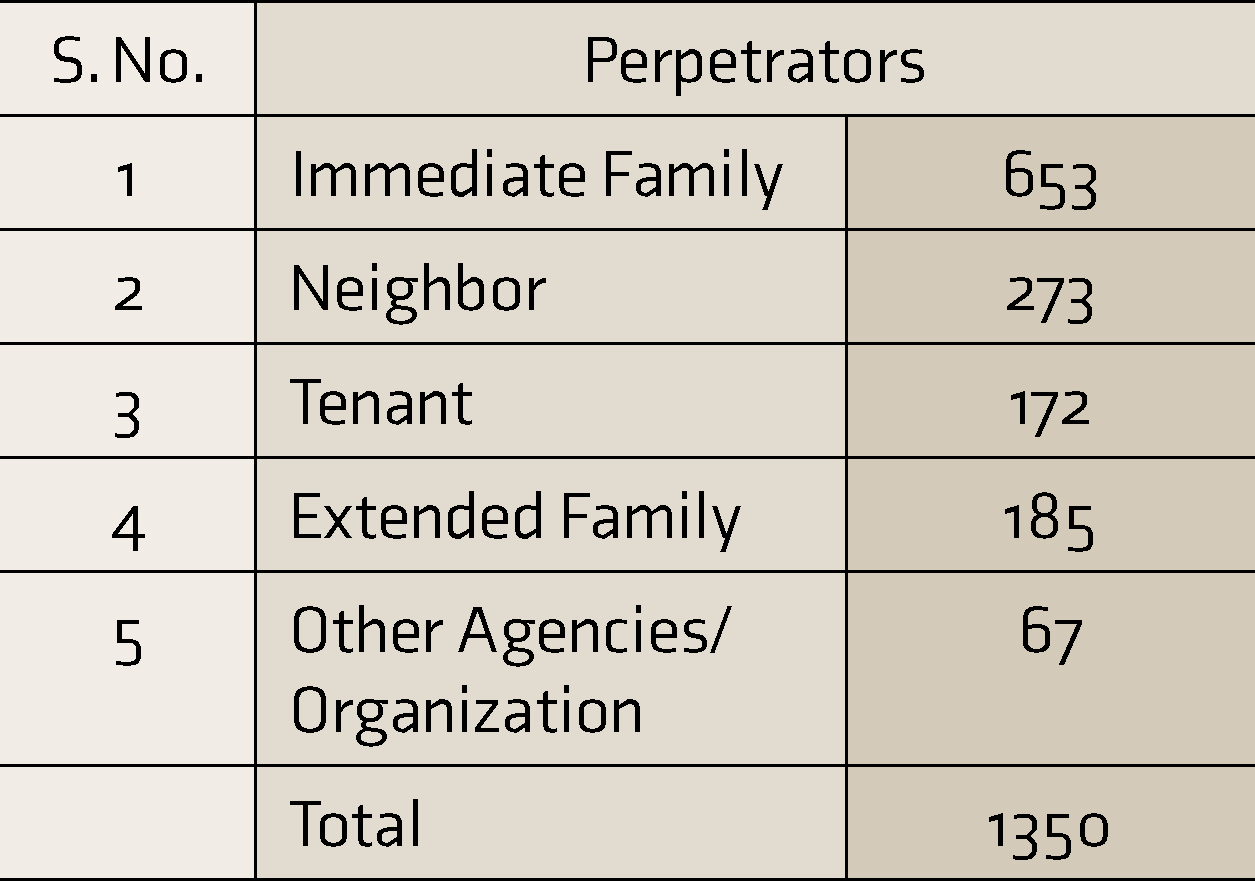
Table 1 shows data based on the categorization of perpetrators during the period April 2009 to March 2020. In 653 cases, perpetrators were immediate family members like son, daughter, or wife, and 273 perpetrators were other individuals like friends or neighbors. One hundred seventy-two perpetrators were tenants and 185 perpetrators were extended family like daughter-in-law, son-in-law, nephew, niece, grandchildren, or siblings. It was found that 67 perpetrators were other private or public agencies.
Data of Categorization of Perpetrators
Lessons Learnt from Findings
This is the first study in India that analyzes the data available from a formal Elders Helpline. After assorting the themes with different categories of the complaints, it was found that on most occasions, one type of abuse does not occur in isolation, and people are subject to more than one type of abuse simultaneously. The thematic categorization of the cases was done to identify the culturally specific types of elder abuse and the service delivery of the Elders Helpline to cover the lack of literature in terms of elder abuse in the lower income countries.
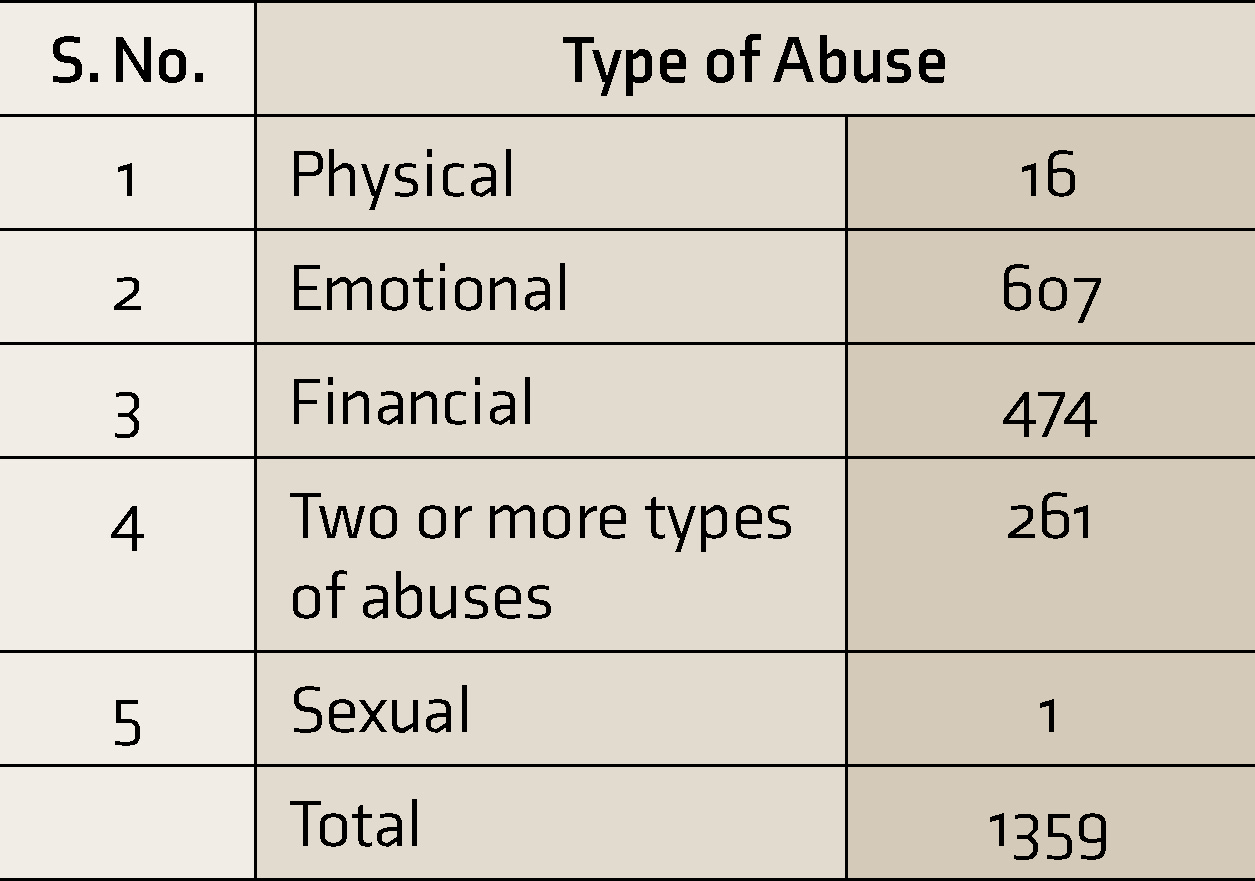
On analyzing the data of 1359 cases, Table 1 shows that 16 older people reported physical abuse. Six hundred seven complainants reported emotional abuse, whereas 474 complainants reported financial abuse. One person reported sexual abuse. Most strikingly, data show that 261 complainants reported being victims of two or all types of abuses by the perpetrators.
The distress of the care provider of a care home and exposure to violence at a younger age may be reflected on the older adults as there is a higher level of dependence and deficiency of social services for empowering older adults.11–12 The prevalence of physical abuse is lesser in India compared to Nigeria. 13
Literature review shows that 4.6% of older people reported emotional abuse in the USA, and 7.9% reported to police for support. Lower age, unemployment or low income, poor health, dependence on activities of daily living, and lack of social support increase the probability of being a victim of emotional abuse. 14 Financial Abuse use toward older adults is on the rise. It occurs as theft, scams, abuse, or lack of power of attorney or exploiting joint bank accounts. This happens in the varied nature of relationships like family, neighbors, tenants, and friends or even through agencies. 3
Study shows that abusers are likely to depend on their victims for emotional support, financial help, and house15, 16, 17 Higher the amount of unmet needs faced by the older adults, higher the types of abuse they face leading to mistreatments, property disputes and financial loss, neglect, and physical abuse by the perpetrators who are in some way responsible for supporting the older adults. Lack of optimum mental and physical health conditions may victimize older adults as they rely on family, neighbors, or agencies. Older adults above the age of 70 years face multiple types of abuse. 18
The number reported is the least in sexual abuse. There could be distressing impacts on the older adults, including anxiety, depression leading to a decline in functioning and well-being. Older adults with cognitive impairments are more vulnerable as they cannot communicate about sexual assault. Sexual abuse is reported in the institutional setting. Paucity of literature and data makes it difficult to circumvent the issue.
Perpetrators as Family Members
The collectivistic culture that kept individuals interwoven for generations has changed over time. The results show that 653 older people face abuse from family members in higher proportion than nonfamily members (See Table 2). The reflection of financial recession, losing jobs at younger ages, lack of employable skills, and being dependent for longer duration makes them susceptible to the abuse from their family members. The care-givers are also awaiting social reforms for life-changing events. Incidence of abuse increases with dependence on the perpetrator. Types of abuse by family members include the following: (a) verbal abuse also could be associated with increased caregiver burden; (b) with the desire of perpetrator to benefit from the property belonging to the senior citizen; and (c) in case abuse is by spouse, it is continuation of a relationship and increased caregiver burden.
Categorization Based on the Type of Abuse
Perpetrators Were Other Individuals Like Friends or Neighbors
Vulnerable older adults can become victims of emotional abuse by their neighbors or friends. This emphasises efforts to be taken to improve the understanding amongst the public and implementation of local strategies strategies to enhance cultural values. Sometimes the seniors’ uncompromising and rigid attitude may also lead to breakage of bonds with the neighborhood.
Perpetrators Were Tenants
Data show that 172 acts of financial (money or property) abuse on vulnerable older adults were perpetrated by tenants. This is most evident in older adults who were weak and isolated because of losing family members or friends or lacking social support. This form of abuse helps in the monetary benefits of the perpetrators. In some cases, the senior is the owner and is dependent of the rental income for sustenance. The tenants do not pay the rent on time and refuse to vacate the property. In some cases, the senior citizen tenants are harassed by owners by refusing to return the deposit, reduction on the amount with the awareness that the senior is vulnerable and unable to fight for their rights.
Perpetrators Were Extended Family
The data represent that the perpetrators were extended family like a daughter-in-law, son-in-law, brother-in-law, nephews, niece, or grandchildren on 185 occasions. The abuse could happen because of the absence of an immediate family member such as a spouse or children or ill mental and physical health. This can be done by neglecting the nutritional and health needs of older adults. It can also be due to the lack of awareness about the services available for needy older people.
Perpetrators as Private or Public Agencies
The data show 67 incidents of abuse by public or private agencies. These are mostly financial abuse or abuse associated with property matters. Because of no income and reduction in savings, older people are in constant search of investments that offer quick and good returns. They become an easy target for scams. This is an intentional fraudulent form of behavior. Older adults become vulnerable as, in most cases, they are emotionally dependent.
Study Limitations
There is a lack of comprehensive data to analyze the demographics in detail for statistical analysis. Information about past employment and family details would have been beneficial. Comprehensive documentation can help in cross-sectional studies. Data were limited only to Bangalore urban and missed out older peoples’ issues in rural settings.
Recommendations
The study by its functions and evaluation implies the need for expanding the Elders Helpline like services to all the district headquarters of the country, for the older people to connect and express their concerns. Social difficulties and issues can cause distress and chronic stress, leading to depression and anxiety, which can only be managed by resolving the cause for distress. This can be offered by trained counsellors who are supervised by qualified and experienced nurses or social worker, also with assistance from the statutory agencies police, judiciary, government agencies for vulnerable people, and NGOs. The Elders Helpline in Bangalore urban can serve as a model for the rest of the country. Similarly, there is a need for rapid response crisis management of older people in distress across the country to cater to health and social welfare services and prevent the impact of social issues such as abuse. There is a need for educating general public about the legal safeguards. The Elders Helpline is one medium through which the older peoples’ problems can be addressed ensuring their health and social well-being. There must be a minimum criteria defined for the staff members with regard to their training with adequate supervision. Team of Elders Helpline should meet regularly and understand the themes, there must be ongoing research and development, for protocol development and implementation.
Conclusion
The article summarized the service setup, its development, range of functionaries, and its contribution to managing social issues experienced by older people. We evaluated the service based on the data available about its utilities. The study found various types of social difficulties and different types of abuse, with some common themes demonstrating the vulnerability of the older people in the current situation. The study also demonstrated how the evolving helpline services have catered to resolving many of these difficulties. The study also found the common perpetrators, which gives way for planning interventions, preparing policies, and educating older people. The experience from Elders Helpline has shown the way in managing and reducing the abuse in the society by the medium of a helpline. This report has generated results that exhibit deterioration in the societal culture. There could be a decrease in informal support that the older adults could seek. In addition, there is a higher report of abuse from older men than women. It also shows incidents where the perpetrators were family members. Widespread evidence of financial abuse is noted. 19
It points to the need to create awareness about older peoples’ issues and sensitize the younger generation so that it fosters intergenerational bonding. This would be a preventive measure to reduce the incidence of abuse in the future. Interventions should focus on the dyad (perpetrator and victim), targeting various types of abuse and neglect, e.g., physical and financial; settings; and characteristics, e.g., psychological state and relationships (e.g., family, neighbor, roommate, and staff). In addition, supportive actions can be connected to services available in the community aiming to help older adults with cognitive impairment. In conclusion, a multidisciplinary and multidimensional approach may be beneficial. 19 In places where rigorous advocacy is followed, interventions in improving situations associated with elder abuse have been implemented.
It raises the importance of further research exploring the underlying factors that have led to this deterioration, laying importance to inevitable scientific knowledge about elder abuse; thus, benefitting the upliftment of society to prevent or manage elder abuse efficiently. The study finds that the Elders Helpline can provide the scope of opportunity for the older people to seek help. A New National Helpline with number 14567 for older adults was launched on 1 October 2021 to offer this kind of services to older people from different parts of India.
Footnotes
Declaration of Conflicting Interests
The authors declared no potential conflicts of interest with respect to the research, authorship, and/or publication of this article.
Funding
The authors received no financial support for the research, authorship, and/or publication of this article.
Acknowledgements
Authors offer sincere thanks to the Bangalore City Police and Staff members involved in the Elder Helpline and acknowledges the support from Department for the Empowerment of Differently Abled and Senior Citizens.