




Abstract
Background:
The number of times a publication is cited in scientific research papers is often considered to estimate its contribution to biomedical literature. Although extensive research has been conducted on panic disorder over time, attempts at a citation analysis have yet to be made to the best of our knowledge.
Aim:
The aim of this study was to understand the trends of research on panic disorder from the top 100 most-cited publications worldwide.
Materials and Methods:
A citation analysis of the top 100 panic disorder publications was conducted, using Harzing’s Publish or Perish to identify articles from Google Scholar. The study analyzed citation patterns, authorship, publication types, and themes. Exclusions comprised non-scientific materials. No ethics approval was needed as it involved published data, not human subjects.
Results:
Publications with more than 500 citations were 11, and those with more than 400 citations, known as citation classics, were 27. Fifty-nine publications were funded, of which 14 (23.8%) were clinical trials and 24 (40.7%) were observational studies. The maximum number of articles was published between 1990 and 1999 (n = 45), followed by 2000 and 2009 (n = 26). The h-index of the first author showed a significant positive correlation with the number of citations of the paper (Spearman’s ρ = 0.480, P = 0.02). Among research papers, the maximum were observational studies (n = 44), followed by 19 randomized controlled trials (RCTs) and eight non-randomized clinical trials. Additionally, among RCTs (n = 19), 17 were focused on the management theme.
Conclusion:
This bibliometric analysis is an invaluable resource for scholars and students who might be interested in learning about the developments and patterns in the field of panic disorder research.
The top-cited publication on panic disorder received only 1561 citations, which is significantly lower than top-cited articles on other Psychiatric conditions. The majority of the top cited publications originated from the USA. Most of the publications were cross-sectional observational studies, with a relatively low number of clinical trials. Most studies focused on assessment themes, utilizing objective assessment tools for screening and diagnostic purposes.Key Message
Anxiety disorders are among the major contributors to the worldwide burden of psychiatric illnesses, with global prevalence estimated at 4.05%. 1 Panic disorder (PD), defined by the presence of recurrent, unexpected panic attacks, is one of the most common among anxiety disorders. 2 In the 17th century, Robert Burton described anxiety in The Anatomy of Melancholy. Panic attacks were recognized among “panophobias” in the first significant medical nosological system published by Boissier de Sauvages in the 18th century. 3 The DSM-III (1980) described PD among anxiety disorders along with generalized anxiety disorders along with phobic disorders, with or without panic attacks. Since then, PD has been extensively studied and published in scientific literature.
The number of times a publication is cited in scientific research papers is often considered to estimate its contribution to biomedical literature.4, 5 Citation classics are articles with 400 citations or more, indicating that they are among the most referred to in that field. 6 These publications give important insights into any discipline’s high-impact areas, draw attention to existing lacunae, and suggest future lines of research. 7
Although extensive research has been conducted on PD over time, attempts at citation analysis have yet to be made, to the best of our knowledge. Citation analysis measures the impact of scholarly works by tracking how often a paper, author, or publication is cited in other works. The authors aim to understand research trends on PD from the top 100 most-cited publications on PD worldwide.
Methodology
The top 100 most cited papers on PD were studied for their citations in this research. A bibliometric method called citation analysis examines the trends of citations of publications articles. Harzing’s Publish or Perish, a free, open-access search software, was used in November 2023 to identify the top 100 cited articles on PD. The software retrieves scholarly citation information from numerous sources, such as Web of Science, PubMed, and Google Scholar. An up-to-date, publicly accessible database was needed for the study’s objectives. Since Google Scholar has a wider scope, is more accessible, and produces dependable results because of precise citation counts, it was chosen as the source database.
Using the Google Scholar database on Harzing’s Publish or Perish Version 8, we searched for articles with the terms “Panic,” “Panic Disorder,” or “Panic Attack” in their titles. We included the top 100 relevant English-language publications from the results. Letters to the editor, patents, case reports, and non-scientific publications such as blog entries and magazine articles were not included.
The complete texts of all these articles were obtained and carefully examined. The data were listed in an MS Excel spreadsheet with the following details: the study’s title, the number of citations, the number of authors, the country of origin, the year it was published, the institution, the type of publication, the study design, and the main theme.
This study was a bibliometric analysis of previously published articles and did not involve human subjects, so it did not require approval from the Institutional Ethics Committee.
Statistical Analysis
Analysis was performed on the data using SPSS version 26.0.
Results
The software generated a list of the top 1000 cited publications on PD, and the top 100 most cited articles were identified (Table S1). Total number of citations varied from 1561 to 103. Publications with more than 500 citations numbered 11, and those with more than 400 citations (citation classics) numbered 27. The mean citation count was 309.4 (±240.3), and the median was 241 (IQR 167–403.5). Annual citations ranged from 3.3 to 72.5, with a mean of 13.2 (±12.4) and a median of 9.3 (IQR 6.9–14.6). The most cited publication (n = 1561) was a randomized controlled trial (RCT) titled “Cognitive-Behavioral Therapy, Imipramine, or Their Combination for Panic Disorder,” published in the Journal of American Medical Association in 2000. A chapter on Panic Disorder received a maximum number of citations per year (72.5) in a book titled Clinical Handbook of Psychological Disorders: A Step-by-step Treatment Manual, published by Guilford Press in 2013.
Authors, Countries, and Institutions
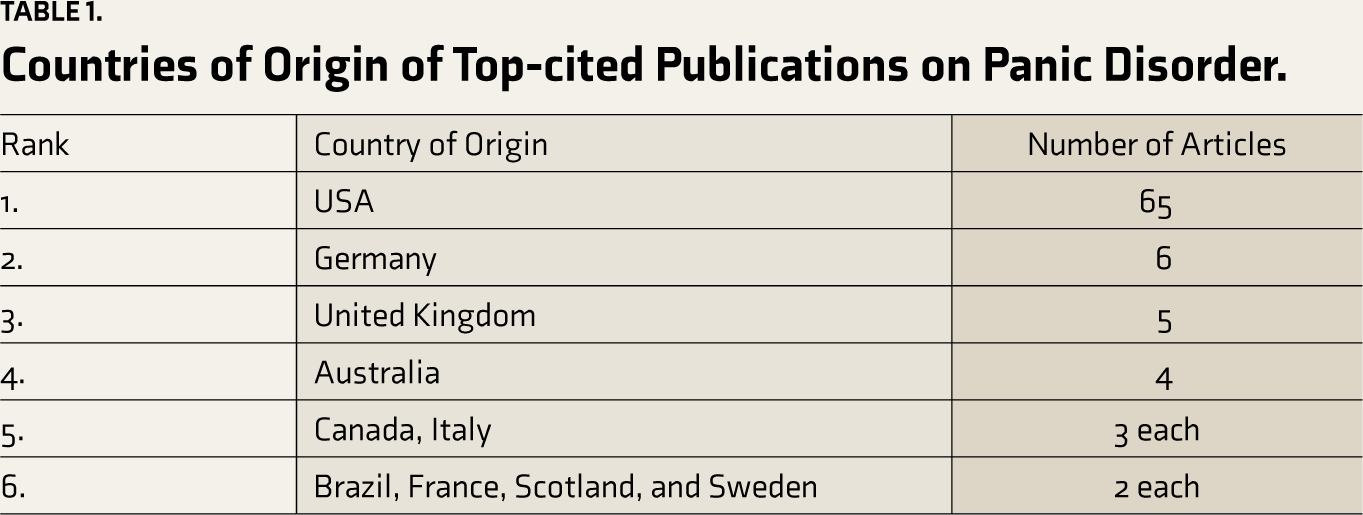
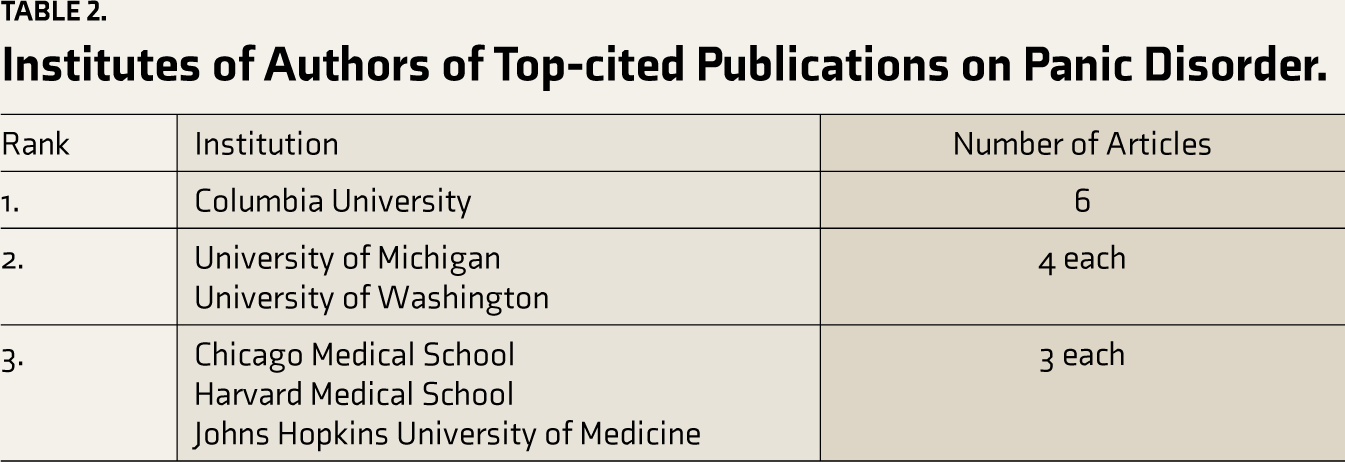
The authors ranged from one to six with a mean of 3.3 (±1.2) and a median of 3 (IQR 2–4). The first authors of a majority of publications belonged to the USA (n = 65), followed by Germany (n = 6) and the United Kingdom (n = 5; Table 1). In terms of specialization, the first authors of 57 publications were psychiatrists, 23 belonged to Psychology, and the remaining specialized in Family Medicine (n = 4), Social sciences (n = 4), Neurosciences (n = 4), Biostatistics (n = 3), Genetics (n = 2), chronic pain conditions (n = 2) and health economics (n = 1). The h-index of the first authors ranged from 179 to 0, with a median of 74 (123–48). The h-index of the first author showed a significant positive correlation with citations of the paper (Spearman’s ρ 0.480, P = 0.02). The top three institutions contributing to the list were Columbia University (n = 6), University of Michigan, and University of Washington (N = 4 each; Table 2).
Countries of Origin of Top-cited Publications on Panic Disorder.
Institutes of Authors of Top-cited Publications on Panic Disorder.
Year of Publication
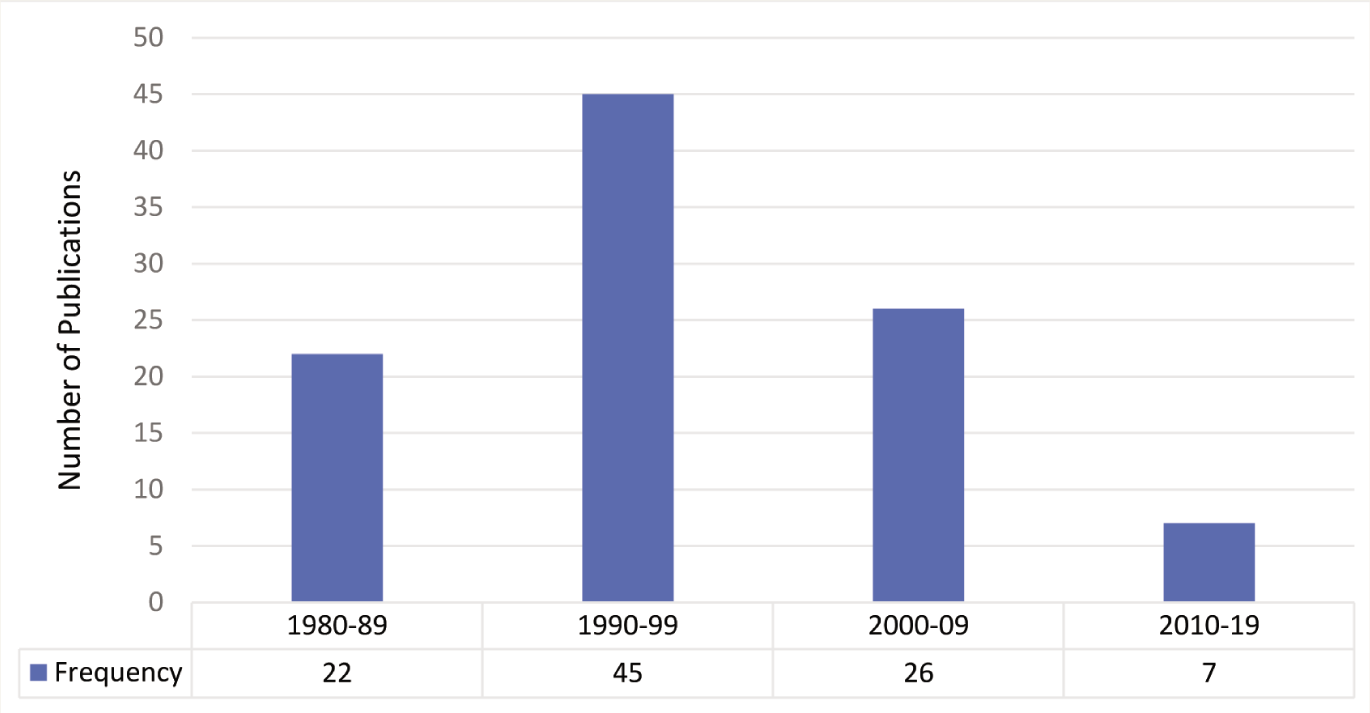
The years of publication ranged from 1984 to 2017, with the maximum number of articles published in 1993 and 1998 (n = 3; Figure 1). The maximum number of articles were published from 1990 to 1999 (n = 45), followed by 2000 to 2009 (n = 26).
Decade-wise Distribution of the top 100 Cited Publications on Panic Disorder.
Journals
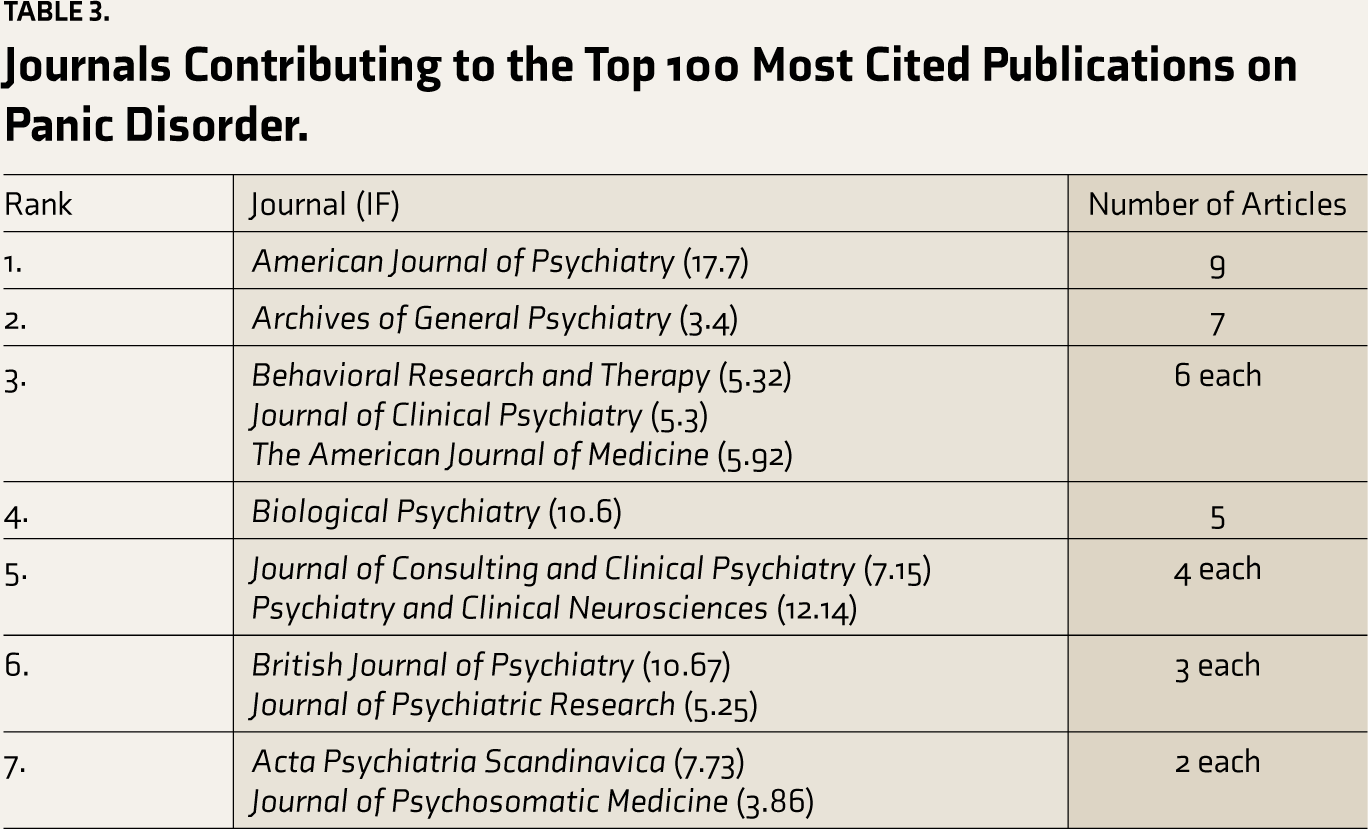
Most of the articles on the list were published in the American Journal of Psychiatry (n = 9), followed by the Archives of General Psychiatry (n = 7; Table 3). The Lancet, Journal of American Medical Association, New England Journal of Medicine, British Journal of Psychiatry, and Nature contributed one publication each. The impact factor of the journals varied from 202.7 (The Lancet) to 1.22 (International Journal of Cognitive Therapy). However, journals with multiple publications on PD had lower impact factors.
Journals Contributing to the Top 100 Most Cited Publications on Panic Disorder.
Study Design
Among the 100 publications, 71 were original research papers, 25 review articles, three books/chapters, and 1 case series (Table 4). Among research papers, the maximum were observational studies (n = 44), followed by 19 RCTs and eight non-randomized clinical trials. Fifty-nine publications were funded, 14 (23.8%) were clinical trials and 24 (40.7%) were observational studies. Among non-funded publications (n = 41), 3 (7.3%) were clinical trials, and 18 (44%) were observational studies. The median of citations for funded papers was 276 (231.5–425), and that of non-funded papers was 169 (125–197). Mann–Whitney U test indicated a significant difference between the two medians (U = 531, P < 0.001).
Publication Types Among the Top 100 Most Cited Publications on Panic Disorder.
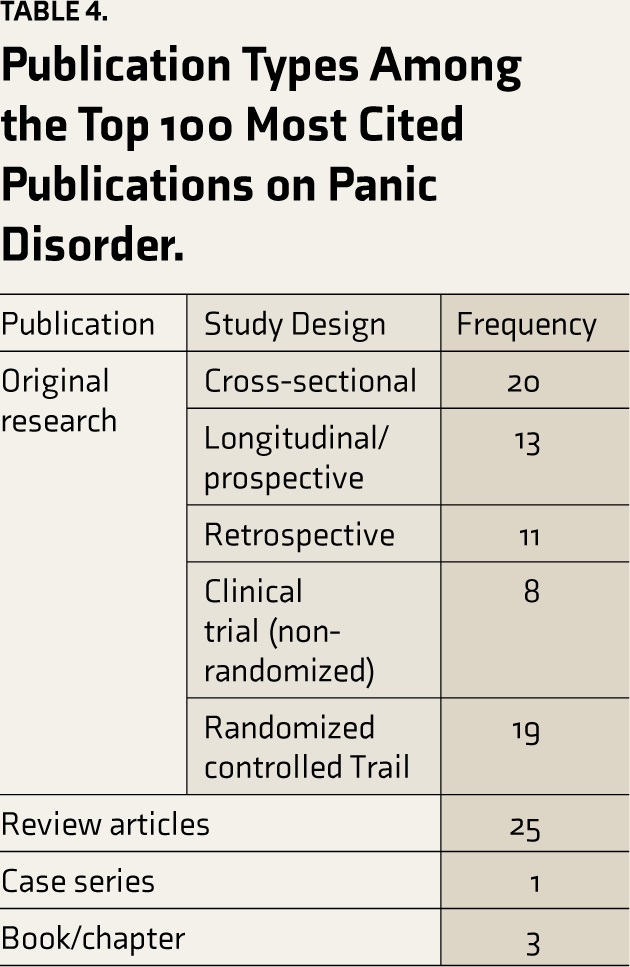
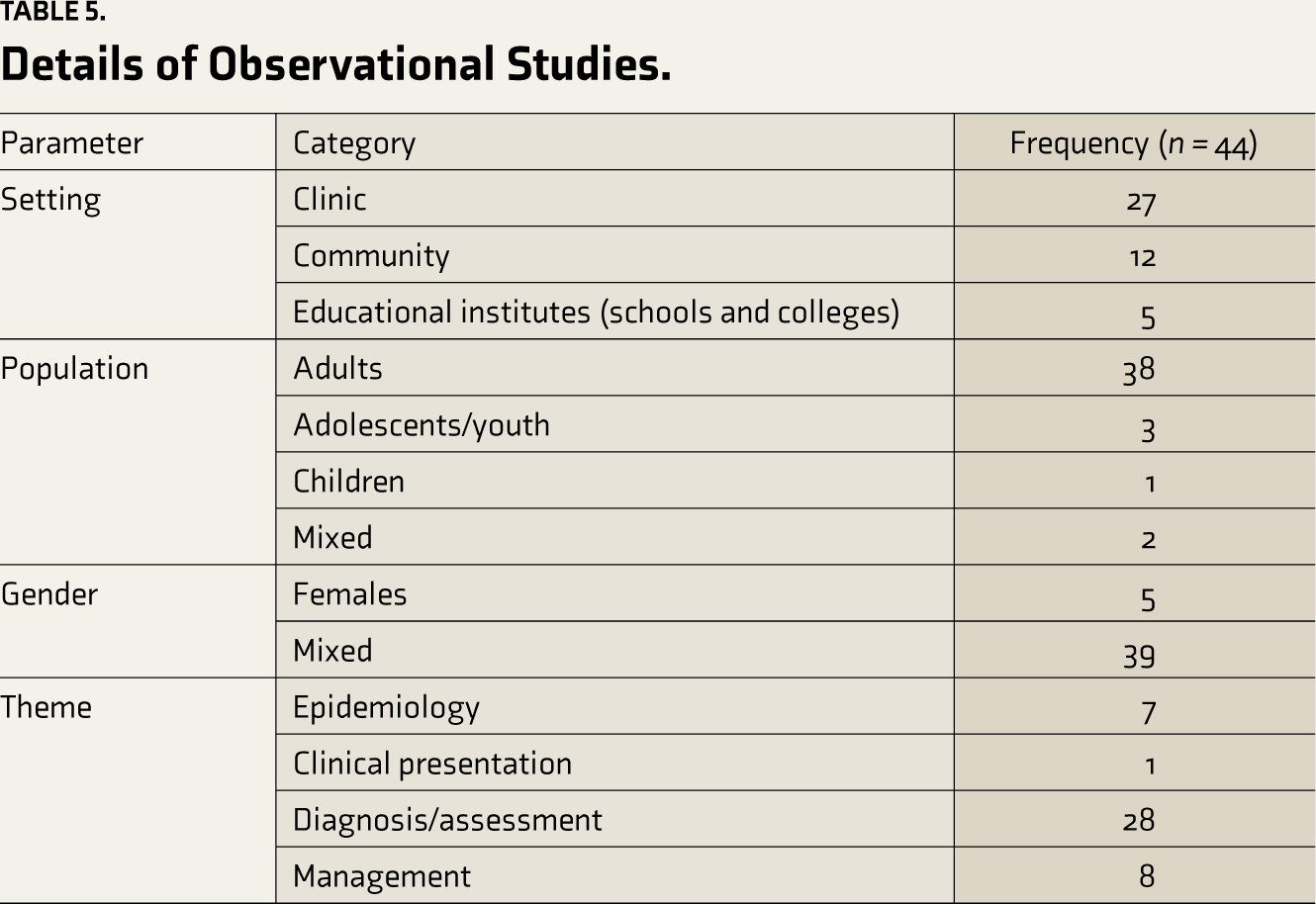
In observational studies (n = 44), 20 were cross-sectional, 13 were prospective, and 11 were retrospective. The study population was clinical (n = 27) in most studies, followed by community-based (n = 12; Table 5). Thirty-eight studies were conducted on adults; three focused on adolescents and one on children. Two studies had both adolescent and adult populations. Five studies were conducted among females; the rest had no gender-based exclusion. No studies conducted among sexual minorities made it to the list. Sample size ranged from 9 to 99695 with a median of 60 (IQR 73–327.5). The majority of observational studies focused on diagnosis/assessment (n = 28), followed by management (n = 8) and epidemiology (n = 7). Standardized questionnaires were used in 31 of these.
Details of Observational Studies.
Among RCTs (n = 19), 17 focused on the theme of management. Seven RCTs were conducted exclusively on pharmacotherapeutic agents (SSRIs and TCAs most common) and nine on psychotherapies (cognitive Behavior therapy most common). At the same time, one compared a pharmacotherapeutic agent, a psychotherapy, and a combination of both. Cognitive Behavioral Therapy was the most commonly studied treatment modality. Sample sizes of RCTs ranged from 11 to 1168, with a median of 61 (IQR 37.5–319.75).
Discussion
In biomedical literature, the impact of a publication is frequently measured by the number of times other authors cite it. 4 Citation analysis is a widespread exercise across medical specialties, including areas related to neuroscience. 8 Citation analysis is based on the premise that these articles are more likely to be authored by field experts and demonstrate important emerging trends in research. Citation analysis has been reported previously in the field of Psychiatry as a whole as well as in niche topics such as depression, Obsessive-compulsive Disorder, and Suicide.7, 9–11 This study aimed at analyzing the top 100 most-cited publications on PD, providing an encyclopedic view into their details such as countries and institutes of origin, citation trends, major themes, and study designs.
The top-cited publication on PD received only 1561 citations, which is significantly lower than other top-cited articles in Psychiatry (n = 26,578), anxiety disorders (n = 17,585), depression (n = 15,590), and OCD (n = 7089). This difference indicates a greater research interest in these psychiatric conditions as compared to PD.7, 10–12 Even among research on anxiety disorders, publications on PD appear lower in the list of most cited works, indicating greater research importance to other anxiety disorders in comparison. 12 These findings contradict an older review stating that PDs are by far the most studied among anxiety disorders. 13 This may suggest a change in research focus regarding anxiety disorders somewhere between the last two decades, also substantiated by a declining trend of citations of works on PD within the same period as observed in our study.
A majority of publications in the list came from the USA, which has also been reported as the top contributor towards citation classics in Psychiatry, such as those on depression and OCD, and other specialties such as Surgery, anesthesia, and Otorhinolaryngology.11, 14–16 None of the publications in the list originated from India. Recent studies on nationally representative data indicated lifetime and current weighted prevalence of PD were 0.5% (95% CI 0.49–0.52) and 0.3% (95% CI 0.28–0.41), respectively, with a treatment gap of 71%. 17 This indicates a need for greater attention towards PDs in India, both from clinical and research perspectives.
The first authors of most papers belonged to the fields of Psychiatry and Psychology, and only a handful of authors belonged to other fields such as neurosciences, family medicine, etc. This indicates limited interdisciplinary collaboration in research on PDs, which is surprising, considering the varied physical symptoms in its clinical presentation and PD being a common comorbid condition in various somatic illnesses, including cardiac and pulmonary diseases. 18 Also, the h-index of the first authors showed a wide variation and shared a positive correlation with the number of citations. An explanation could be that first authors with a higher h-index have a larger body of papers with higher citations to their name, indirectly meaning that they have spent a longer time in the field, giving their papers ample time to garner larger citations over the years. Another explanation could be the practice of self-citation, which not only inflates the paper’s citations but also the author’s h-index.19, 20
The American Journal of Psychiatry published the most articles in the list, highlighting American dominance in scientific research. The rest of the world looks up to the USA and readily cites evidence from regional research conducted there; however, it might be worthwhile to consider that the prevalence and presentation of those findings may vary depending on the geopolitical context. For a thorough assessment of the literature on a given topic, regional research must be given the weight it deserves in addition to citation classics, particularly in psychiatry, where socio-cultural influences are crucial.
Most common among the top-cited papers based on research designs were cross-sectional observational studies. The number of RCTs was low, and meta-analyses were conspicuously absent. Other than a lack of research interest, another explanation for this could be the relatively recent publication of these trials and meta-analyses, which could eventually receive citations and rank higher among the top 100 cited papers on PD in the future due to an increased amount of high-quality systematic research. A median number of citations for funded versus unfunded papers was substantially higher, suggesting that funded papers had a greater impact on PD research. Possible reasons for this can be explained by prior studies on Infometrics, which report that funded studies get₹ published in more prestigious journals and are more likely to get published as open access articles, enhancing their number of citations.21, 22
A few limitations hindered this study, such as using Google Scholar as the only searchable literature database despite its wider reach, accessibility, and ability to produce results with accurate citation counts. Time impacts how many citations an article receives. Therefore, the most recent articles are at a disadvantage. This was made clear by the papers in our analysis; only one had been published within the last ten years.
Conclusion
This study identified and analyzed the top 100 cited papers on PD. Results showed a downward trend in the number of publications on PD, with the majority coming from the USA and also published in journals based out of the USA. Most papers were observational studies, most dealing with diagnosing and treating PD. This bibliometric analysis is an invaluable resource for scholars and students who might be interested in learning about the developments and patterns in the field of research on PD.
Supplemental Material
Supplemental material for this article is available online.
Footnotes
Declaration of Conflicting Interests
The authors declared no potential conflicts of interest with respect to the research, authorship and/or publication of this article.
Ethical Approval
The study did not involve any human subjects so it did not require approval from the Institutional ethics committee.
Funding
The authors received no financial support for the research, authorship and/or publication of this article.
Informed Consent
The study did not involve any human subjects and hence no informed consent was required.
References
Supplementary Material
Please find the following supplemental material available below.
For Open Access articles published under a Creative Commons License, all supplemental material carries the same license as the article it is associated with.
For non-Open Access articles published, all supplemental material carries a non-exclusive license, and permission requests for re-use of supplemental material or any part of supplemental material shall be sent directly to the copyright owner as specified in the copyright notice associated with the article.
