




Abstract
Populist parties are often described as highly centralised and personalistic, with low levels of party institutionalisation. However, there have been few empirical studies to assess the features of decision-making processes within this party family. This study aims to address this gap by examining the extent to which the internal distribution of power varies within populist parties. The Political Party Database is used to systematically compare Eastern and Western European parties in terms of intra-party democracy and the powers given to party leaders. The results suggest that although populist parties differ from non-populist parties in that they grant more power to their leaders, they are less likely to rely on plebiscitary and deliberative decision-making processes. In addition, the findings reveal that while the degree of leadership centralisation and plebiscitary decision making varies by region and ideological background, there are no differences between older and new populist parties.
Introduction
Populist parties have emerged as significant actors in contemporary democracies, garnering notable success in the electoral arena. They appeal to voters disenchanted with the state of politics, politicians and established political parties. While their anti-establishment rhetoric and the heightened politicisation of crucial issues have reshaped the landscape of party competition and governance, populist parties also aspire to regenerate everyday politics by fostering new methods and avenues to reconnect the ‘people’ with the ‘political class’ and with representative institutions. As a result, populists believe in empowering sympathisers to participate in politics, rather than granting ultimate decision-making authority to party elites (Best, 2020; Gherghina and Pilet, 2021; Junius et al., 2020). However, the extent to which populist rhetoric aligns with genuine intra-party democracy remains ambiguous. This raises the question of whether these parties truly adopt mechanisms to empower their members within their own organisation, or if this promise of democratisation is just a superficial claim made to conceal top-down control.
The link between populism and party organisations has traditionally been examined through the lens of leadership characteristics. Indeed, populist parties in Europe have (implicitly or explicitly) been considered ‘charismatic parties’, with a strong leader and weak party organisations (e.g. Mudde, 2007; Taggart, 2000). However, recent comparative evidence indicates that populist parties do not have a standard or typical way of being organising (van Kessel and Albertazzi, 2021; Vittori, 2020). Although populist parties centralise powers in their leaders, there are significant variations in the ways they adopt more or less deliberative, participatory or plebiscitary decision-making processes, which oscillate between ‘movement parties’ (Pirro and Castelli Gattinara, 2018) and ‘mass party’ models (Saarts et al., 2021). The lack of a systematic evaluation of intra-party democracy (IPD) in populist parties is also related to the use of different notions and measures of IPD (Cross and Katz, 2013). Managing this elusive concept is made more challenging by the qualitative approach employed to evaluate the internal distribution of power, which limits the validity and reliability of results. Finally, most evidence is based on case studies and is limited to populist right-wing parties (Heinisch and Mazzoleni, 2016; van Kessel and Albertazzi, 2021) or a restricted number of independent variables (Böhmelt et al., 2022). Our aim is to address these shortcomings by systematically comparing IPD in populist parties and exploring party-type differences across Europe.
Putting IPD and decision-making processes at centre stage is important for several reasons. First, it allows us to expand our understanding of the distinctiveness of populist parties and delve further into their organisational features (e.g. Zaslove, 2008). Second, it enables us to build more knowledge about party organisational change, to add new evidence on the major trends of party transformations (e.g. van Kessel and Albertazzi, 2021) and to highlight how populists affect party innovations. In addition, organisational features may impact the electoral performance of parties, by putting more emphasis on the role of party leaders, for example. Indeed, previous research found that more plebiscitary modes of leadership selection increase leaders’ importance for voters (Ferreira da Silva, 2021; Michel et al., 2020). From this viewpoint, our findings may help explain why some populist parties are more successful than others. Lastly, it is crucial to recognise that the organisational structure of political parties holds profound implications for the revitalisation of representative democracies. Effective party organisations can contribute to enhanced citizen participation, bolster political trust, and strengthen the legitimacy of party government (Webb et al., 2022). This becomes particularly pertinent in the case of populist parties, often viewed as potential challenges to liberal democracies due to their tendency to adopt closed decision-making processes and authoritarian values.
To what extent have populist parties adopted different models of intra-party democracy? How centralised is the leadership of populist parties? To what extent do party-related factors account for the adoption of deliberative or plebiscitary decision-making processes by populist parties? These are the main questions addressed in this article. With these objectives in mind, this study aims to make two important contributions. The first is to make a systematic comparison of the internal distribution of power in populist parties. The second is to link the variation in the IPD of populist parties to potential factors at the party level across different countries. The study stands out from existing research by utilising more reliable and comprehensive sources. It considers various conceptions of IPD widely employed in the party politics literature (see Scarrow et al., 2017). In addition, it explores previously overlooked variables, enabling us to test new hypotheses. Specifically, we delve into the ‘host’ ideology of populist parties to expand upon existing findings, which have predominantly concentrated on right-wing populist parties.
We rely on the Political Party Database (PPDB) to examine how IPD varies in populist parties, as it is by far the most comprehensive dataset on party organisations to date. Although the project now includes countries from all over the world, we decided to focus specifically on populist parties in both Western and Eastern European countries. This is because many countries outside Europe are not consolidated democracies and display different political trajectories. Moreover, non-European countries present distinct economic and societal characteristics that influence the way parties mobilise civil society and their organisational culture.
The article is organised as follows. First, we briefly present the literature dealing with populist parties and IPD, reviewing and discussing the main empirical results. The next section deals with data, methods and case selection. The following section provides the empirical analysis. The conclusion summarises the main findings, discusses the implications and, given the current study’s limitations, presents some suggestions for future research.
Populism and intra-party democracy: Literature review and hypotheses
Populist parties have been the focus of growing scholarly attention over the last decades. Despite different approaches, populism is generally characterised as ‘an ideology that considers society to be ultimately separated into two homogeneous and antagonistic groups, “the pure people” versus “the corrupt elite”, and which argues that politics should be an expression of the volonté générale (general will) of the people’ (Mudde, 2004: 543). While most studies have investigated the electoral basis of populist parties or their policy positions, recent scholarship has generated a substantial body of research on their organisational structures, particularly within the context of ‘traditional’ party models (e.g. Heinisch and Mazzoleni, 2016; van Kessel and Albertazzi, 2021; Vittori, 2020). Yet our understanding of the organisational structures and variations in IPD among populist parties remains limited.
Scholarship on populist party organisation has focused mainly on the radical right, identifying the key features of their functioning and formal structure. The ‘classic model’ suggests that populist party organisation is characterised by a combination of charismatic leadership and centralisation of power. Indeed, in their comprehensive comparative work, Heinisch and Mazzoleni found that populist parties ‘tend to concentrate power in the leadership to an extent greater than in other parties in their respective political systems’ (Heinisch and Mazzoleni, 2016: 227). In particular, subordinate organisational units present a low level of autonomy, whereas the influence of party members on candidate selection or other key decision-making areas is very limited.
However, there is considerable variation in the distribution of power within populist parties and in their internal decision-making processes. A survey of a large number of populist radical right parties by van Kessel and Albertazzi found that there is not a ‘one-size-fits-all’ model, as some parties are more like mass parties, while others are highly centralised and run from the top down. Focusing on four ideologically distinct populist parties (National Front [FN], since 2018 The National Rally [Rassemblement National,France), Movimento Cinque Stelle [M5S, Italy], Podemos [Spain] and Syriza [Greece]), Vittori’s (2020) study found that left-wing populist parties tend to give more power to intermediate bodies, whereas the far-right National Front uses direct democracy tools primarily as a means of legitimising the party leadership. Moreover, the findings suggest that the institutional context is key in shaping the particular implementation of power dispersion, as local organisations are more likely to have greater autonomy in states with federalist traits (e.g. Belgium and Switzerland).
These findings seem to be at odds with the conception of intra-party democracy associated with populist parties. There is an assumption that the anti-elitist ideology of populist parties and their emphasis on representing ‘the people’ – against the interests of ‘the corrupt elite’ – should be accompanied by higher levels of inclusion of party members in decision-making processes, as well as stronger participation rates. Indeed, a key feature of IPD is the influence that party members can have on personnel selection (leadership and candidates), policies and party strategy (e.g. Höhne, 2023; Kamenova, 2021). 1 Although IPD is only a specific aspect of the overall organisational model, it is of the utmost importance not only because it relates to party reforms and innovation in intra-party functioning, but also due to its implications for party mobilisation, electoral support and parties’ performance in the institutional arena.
Examining the intra-party decision-making processes of populist parties extends beyond the realm of party organisational typologies. While the ascendancy and triumph of populist parties frequently hinge on charismatic or influential leaders, there is limited understanding of the precise nature of the roles of these leaders and the power dynamics within their respective party organisations. It is also important to look at IPD because it helps to assess the long-term viability of populist parties, especially how they respond to internal challenges and manage leadership transitions. Indeed, party institutionalisation is a crucial determinant for the prevalence of populism in a given party system (Self and Hicken, 2018). It is also relevant to examine the resolution of internal conflicts, in terms of factionalism or party splits, for example (e.g. Scarrow, 2021). Finally, assessing IPD for populist parties also matters for interpreting current challenges to liberal democratic values, not only for gauging whether these parties operate in ways that are consistent with democratic norms, but also to evaluate their potential contribution to the regeneration of democratic legitimacy. In a recent comparative study, it was revealed that the conventional party model, characterised by top-down linkages, tends to yield more favourable effects on citizens’ satisfaction with democracy compared to more bottom-up or plebiscitarian configurations (Webb et al., 2022).
Research based on case studies contributes to qualifying conventional wisdom on the relationship between populist parties and IPD. For example, the populist radical right party AfD in Germany has displayed relatively high levels of internal democracy, not only through internal referenda and member party conferences, but also due to its collective leadership. As Heinze and Weisskircher (2021) found, ‘power within the party has never been concentrated in one (charismatic) leader’ (p. 269). Populist left-wing parties also depart from conventional wisdom with regard to IPD. The ‘new’ movement parties, such as Podemos, M5S or La France Insoumise (LFI), aim to foster members’ mobilisation and their internal participation in decision-making processes. In particular, these parties have adopted new digital technologies to give members a wider range of opportunities to intervene directly in several arenas. Although the practices adopted by these new parties have involved some limitations on members’ direct participation (Gerbaudo, 2021; Vittori, 2022), they clearly present a different conception of IPD compared to those of their populist right-wing counterparts.
Other empirical studies suggests that it is not easy to characterise the internal life of populist parties. For example, the True Finns (PS) have been defined as a ‘Frankenstein monster’ (Hatakka, 2021: 304) from an organisational point of view, as they combine radically democratic elements with an extreme level of centralisation of power in the party executive. The same applies to EKRE (Estonia), which combines both institutionalised and non-institutionalised intra-party democracy arenas with a leader-centred configuration (Saarts et al., 2021).
A recent study (Böhmelt et al., 2022) focuses on the intra-party democracy of populist parties using the POPPA dataset (http://poppa-data.eu/). The authors show that populist parties display lower levels of IPD compared to non-populist parties, and they also present more personalised styles of leadership. In addition, results demonstrate that there are differences between left-wing and right-wing parties, as the latter party family is more likely to adopt less democratic structures and more personalised leadership. Yet the measurement is not based on a standard, objective operationalisation of IPD, which thus increases potential bias related to experts’ subjective interpretation of its meaning. 2 The dependent variables used in this work are highly contingent on the political environment, as well as the cultural and social landscape. This holds particularly true for the concept of ‘personalised leadership’, commonly linked to communication strategies or leadership styles rather than intra-party decision-making processes. This study also neglects the fact that the concept of intra-party democracy is complex and controversial and may entail several dimensions and distinct interpretations. Last, but not least, this contribution does not consider the impact of democratic trajectories. As a number of authors have emphasised (e.g. Gherghina, 2015; March, 2017), most parties in Eastern Europe present less institutionalised party structures than Western counterparts, strengthening the role of personalistic leadership.
Several studies have provided general explanations for the level of IPD in both populist and non-populist parties. Scholars have emphasised the importance of party institutionalisation, legal regulations (Biezen and Piccio, 2013) or party unity (Scarrow, 2021). As far as populist parties are concerned, the ‘host ideology’ (Vittori, 2020) seems to be an important factor. A less frequent yet crucial line of research is concerned with members’ preferences, but this accounts for attitudes towards IPD rather than formal internal functioning (Heinze et al., 2023; Höhne, 2023).
Overall, this literature review highlights three main gaps. First, no consistent findings emerge when we observe IPD in populist parties. Not only does empirical evidence rely mostly on the right-wing party family, but there are also deviant cases that cast doubts on the homogeneity of populist parties in terms of internal democracy. Second, there is no consistent application of IPD to populist parties, as empirical studies have relied on distinct types of conceptualisation and operationalisation. Finally, most accounts of IPD in populist parties are idiosyncratic, i.e. they fail to offer systematic explanations of variation in both the kind of internal democracy and the level of IPD. The following paragraph explains how we address these challenges.
Hypotheses
This study adds to approaches that offer explanations of specific case studies by adopting a more systematic and comprehensive analysis of IPD. Besides the broader scope, this work builds on extant scholarship by considering party-related variables that have been relatively neglected. In addition, we use a different operationalisation of IPD that allows us to distinguish between different modalities of internal functioning and distinct organisational features. Before discussing the research design, we explain the rationale behind the main hypotheses that guide our empirical analysis.
Focusing on internal democracy, this article examines which models of IPD populist parties adopt, as well as the extent to which they differ from non-populist parties. To do so, we rely on Poguntke et al.’s (2016) conceptions of IPD, distinguishing between assembly-based IPD (AIPD) and plebiscitary IPD (PIPD). This enables us to capture different dimensions of participation and representation. While AIPD assigns decision making to collegial bodies, whose participants deliberate and then make a decision, plebiscitary IPD ‘separates the stages of debate and decision making, and places the latter stage in the hands of the mass membership’ (Poguntke et al., 2016: 671). PIPD can be considered more innovative due to previous findings (Poguntke et al., 2016: 671), but also because it seems to be related to the growing importance of digital tools in fostering top-down plebiscitary decision-making processes, centralisation and charismatic leadership. In addition, we focus on leaders’ power, given the growing importance party leaders are assuming in intra-party dynamics (see Lobo, 2014; Rahat and Kenig, 2018). 3 The next section explains the operationalisation of these three dependent variables.
As mentioned above, previous research has shown that the intra-party functioning of each populist party is distinct, not only because of the peculiarities of their discourse and strategy, but also because they follow different developmental paths in terms of institutionalisation (see Harmel and Svåsand, 1993; Pedhazur and Brichta, 2002). In particular, non-populist parties are more susceptible to developing oligarchies and more traditional (i.e. assembly-based) decision-making processes. In contrast, populist parties are expected to grant party leaders more autonomy, and to bypass bureaucratic structures and representative bodies through the use of direct democracy instruments. As mentioned in the literature review, new populist parties have relied on plebiscitary elements in their internal functioning, through inclusive practices or for propaganda purposes. Therefore, we expect to find differences between populist and non-populist parties within each country.
H1a: Populist parties are likely to present higher levels of leadership power than non-populist parties.
H1b: Populist parties are likely to present higher levels of plebiscitary IPD than non-populist parties.
H1c: Populist parties are likely to present lower levels of AIPD than non-populist parties.
There is broad consensus in the literature that ideological genetic background is key to explaining variations in the nature and functioning of populist parties. As mentioned above, leftist parties are expected to emphasise a more deliberative decision-making process and to adopt more inclusive strategies, while right-wing organisations are more prone to stressing the role of party leaders and to de-energising party deliberative bodies. Left-wing populist parties typically embrace an organisational structure divergent from that characterising their right-wing counterparts (e.g. Katsambekis and Kioupkiolis, 2018). The former tend towards a horizontal logic of political association, prioritising collective decision making, while the latter underscore individual leadership and top-down linkages, leading to noteworthy implications for internal party democracy practices. Indeed, new populist parties on the left have emphasised plebiscitarian democracy by strengthening their level of inclusiveness through granting registered members the possibility to debate and vote on various issues (e.g. Gerbaudo, 2018; Vittori, 2022). Böhmelt et al.’s (2022)016) approach by creating an additiv comparative study confirms a stronger association between populist scores and IPD in populist right-wing parties than in populist left-wing parties. Although left-wing populist parties formed during the 21st century have tried to attribute greater decision-making power to their leadership, they still adopt democratic principles in their internal functioning, namely in terms of participation and deliberation (Damiani, 2020). This attempt to ‘square the circle’ has led to a substantial heterogeneity in their organisational configurations. Based on this, we expect the following.
H2a: Left-wing populist parties are more likely to show lower levels of leadership power than right-wing populist parties.
H2b: Left-wing populist parties are more likely to show lower levels of plebiscitary IPD than right-wing populist parties.
H2c: Left-wing populist parties are more likely to show higher levels of AIPD than right-wing populist parties.
Data and methods
The preliminary methodological choice implies the selection of populist parties. We can distinguish two approaches to the study of populist parties. The first relies on ‘grading’ populist discourse through either content analysis of official documents or experts’ judgements. This allows populist parties (or leaders) to be classified according to a scale from non-populist to completely populist discourse. The second approach is based on distinguishing populist parties as a specific party type. In other words, it is not a matter of degree but rather the case that parties can be differentiated based on whether or not they present populist characteristics. While the former approach is more suited to examining the programmatic or strategic features of populist parties, dichotomous classification allows us to investigate whether populist parties fit the same model, that is, whether they present the same organisational configuration. Therefore, we follow the second approach by identifying populist parties as per The PopuList. This project classified populist parties according to the ideational approach (Mudde, 2017), and the final list has been reviewed by more than 80 academics and used in a wide range of academic and peer-review publications. 4 It is crucial to emphasise that the empirical findings persist irrespective of how populist parties are operationalised. Indeed, the results demonstrate minimal variation when utilising a populism scale to evaluate the political parties examined in this study. 5
The second methodological choice is associated with the measurement of IPD. Previous studies have relied on expert surveys to assess the level of extent of IPD in populist parties (Böhmelt et al., 2022). This methodological approach is particularly problematic for the study of party organisations, as the validity and reliability of experts’ judgements are uncertain, especially for new parties. Experts may also disagree about the organisational features of populist parties, and they can base their assessment on a variety of factors, including their own political beliefs, or personal knowledge of parties. This can lead to inaccurate or biased results. To circumvent these problems, we rely on the Political Party Database (PPDB) to describe parties’ functioning and to compare their organisational features. 6 This international research programme aims to collect data on intra-party structures and member participation, leadership management, and parties’ human and financial resources. 7 The data is collected by a team of country experts using a common questionnaire, complemented by additional qualitative information for some specific dimensions (e.g. leadership elections).
To our knowledge, this is the most extensive dataset currently available on party organisational characteristics, covering a wide range of countries. Undoubtedly, party statutes do not tell us everything about how parties are internally organised and especially how decision-making authority is distributed. However, we believe this is a good starting point to examine the specificities of populist parties and to compare them to non-populist party organisations. Based on The PopuList, our analysis focuses on populist parties operating in the European context, including both consolidated and newer democracies. Our final dataset covers 41 populist parties that entered their national Parliament in 23 European democracies (see the Appendix, Table A5). 8
To examine internal decision-making processes of populist parties, we focus on the configuration of their core party bodies and the linkage between organisations and citizens. As previously mentioned, these features have been operationalised in the PPDB framework through two different indexes of intra-party democracy, namely AIPD and PIPD (Poguntke et al., 2016). We follow Poguntke et al.’s criteria for the operationalisation of these two dependent variables. Therefore, AIPD is based on three logically independent components (programme drafting, personnel selection and organisational structure), whereas plebiscitary IPD consists of two distinct dimensions (programme writing and personnel selection). 9 When we have incomplete information about one component, we follow the same rules applied by the project coordinators, that is, we calculate the average considering valid data only (for at least two of the selected components).
In order to specify varieties of IPD in populist parties, we also consider a third dimension, namely the centralisation of leadership powers. This is an important indicator of the internal distribution of power not only because of the increasing significance that party leaders have assumed within party structures, but also because they are a key mechanism of coordination between different ‘faces’ of party organisations. We again follow Poguntke et al.’s (2016) approach by creating an additive index of leadership power that relies on nine items included in the PPDB. These items comprise a wide range of indicators, such as leaders’ accountability, their rights and obligations and their position within party hierarchies.
IPD can also be influenced by contextual factors, such as the environment in which party organisations develop and the period in which they were formed. Looking at the first dimension, it is important to distinguish between Eastern European and Western European countries. As a number of studies have shown (e.g. Biezen, 2003; Engler et al., 2019), populist parties in Eastern Europe have displayed more eclectic and diverse anti-establishment orientations as well as higher levels of centralisation and lower intra-party democracy. Most of these populist parties originated through a top-down process, by splitting from or merging with previous parties and by centralising key personnel or material resources (e.g. Gherghina and Soare, 2021). Case studies seem to confirm these findings. For example, PiS in Poland has remained ‘a strongly centralised party built around patronal networks and the power of its long-time leader’ (Pytlas, 2021: 350), while the populist SNS (Slovakia) ‘strengthened the position of party leader, relegating almost everyone else, including ordinary party members, to the role of cheerleaders’ (Haughton et al., 2021: 336).
Age is another important factor that shapes the organisational features of populist parties. In general, older parties are expected to be more institutionalised and are more likely to place important constraints on leadership’s freedom (Panebianco, 1988). Therefore, a distinction must be made between newly created parties, which have developed in a digital environment, and ‘rooted’ populist parties. New parties have a low routinisation of internal processes and tend to be strictly dependent on the role of agency for their organisational development and party building (De Lange and Art, 2011; Pedhazur and Brichta, 2002). Older parties present an organisational legacy based on heavier infrastructures and are less likely to empower party members, whereas new (populist) parties aim to mobilise dissatisfied and volatile voters. From this viewpoint, new populist parties are more prone to using new ICT to experiment with plebiscitary forms of intra-party decision making, while reducing the importance of deliberative mechanisms.
The majority of populist parties (64.3%) considered in this study were formed in the 21st century, notably after the onset of the Great Recession of the late 2000s. The average age of populist parties in our dataset is 23 years. Despite considerable variation between the surveyed parties, 10 most of them were formed after 1990 (roughly 76% of parties are 33 years old or less, as of 2023). This is especially true if we consider Eastern European democracies; older parties are only found in Western Europe. In order to test the impact of ‘newness’, we split our sample into two groups. The first category identifies parties that have participated in two or fewer elections as ‘new’, and the second category encompasses parties having run in three or more elections. This decision is grounded in the insights provided by Bolleyer (2013), who contends that achieving short-term success, such as parliamentary entry, does not guarantee the organisational consolidation and sustained viability of new party formations. This distinction enables us to differentiate between well-established, persistent parties and those that are comparatively less institutionalised and newer. 11 Finally, we employ two different operationalisations to measure party ideology. The first utilises the categories established in the PPDB to classify parties into distinct ideological families. The second approach is derived from the ParlGov dataset and employs a 0–10 LR scale (0–4: left; 4–6: centre; 7–10: right) to gauge party ideology.
The analysis proceeds in two steps. First, we present a descriptive analysis that provides an overall picture of IPD in European populist parties. We also test for means difference, controlling for the main variables that may account for distinct models (and levels) of decision-making processes. In the second step of the empirical analysis, we run a multivariate model to identify the weight of each potential predictor on the variation of IPD displayed by populist parties.
Varieties and levels of intra-party democracy in populist parties: Empirical findings
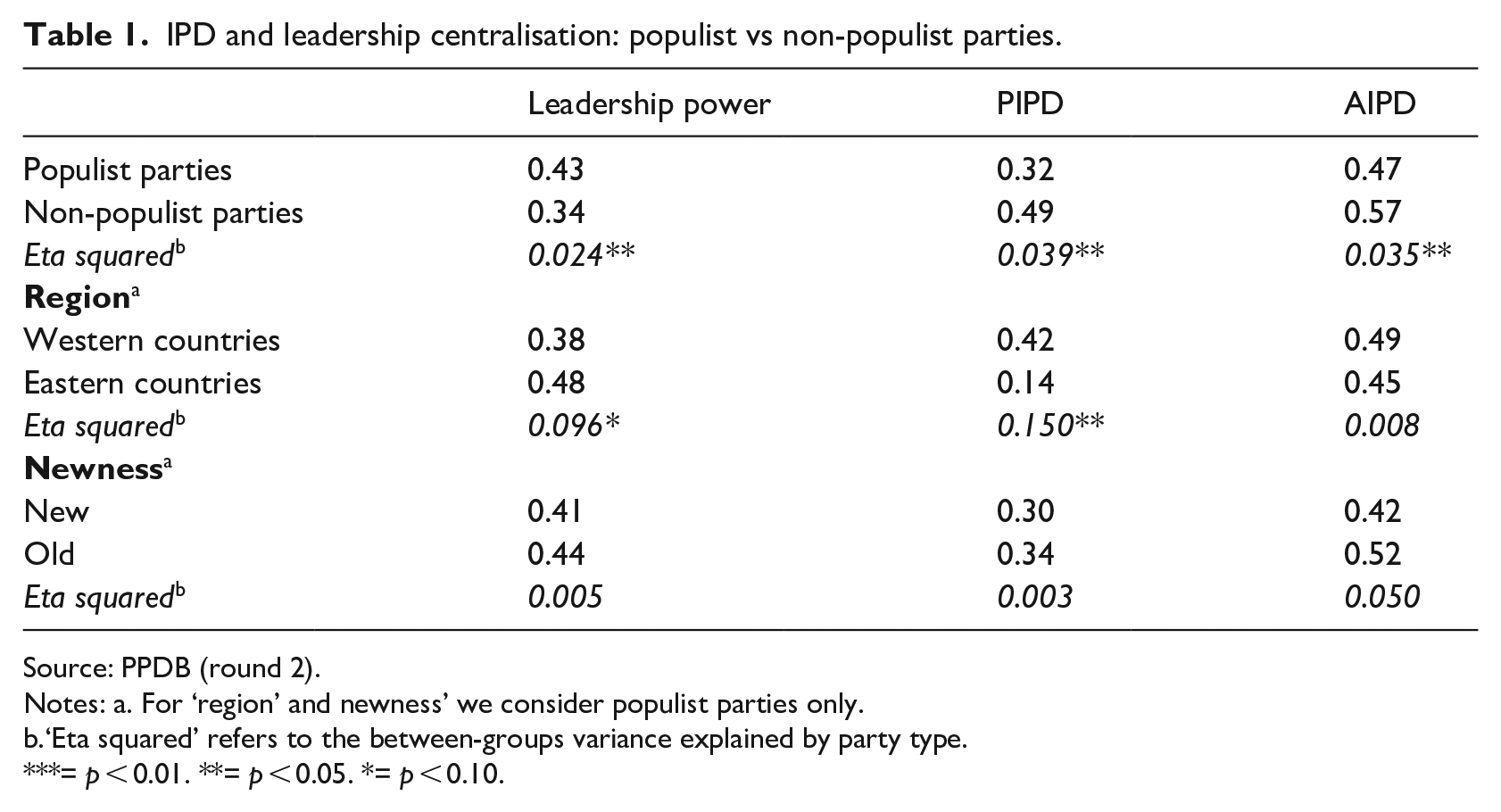
To assess key features of IPD in populist party organisations, we start with a descriptive analysis of our key variables (see the Appendix, Table A1). The findings demonstrate that most populist parties present quite high levels of AIPD, corresponding to 0.47 (the overall mean is 0.54, including non-populist parties). As for plebiscitary IPD, our average is substantially lower (0.32), suggesting that most populist parties do not allow for non-assembly decisions on a ‘one member, one vote’ basis. On the other hand, the average for leadership power is significantly higher for populist parties than non-populist ones (0.43 vs 0.34). 12 However, we should be cautious in interpreting this indicator, because party statutes on leadership rights are completely missing in some cases. This may indicate the presence of leaders’ discretionary power, corresponding to a de facto lack of party institutionalisation. 13
Our indicators reveal distinct aspects of the internal distribution of power (see the Appendix, Table A2). Indeed, while leadership centralisation is only moderately related to AIPD, with a correlation coefficient of 0.361 (significant at 0.05 level), there is no significant correlation with plebiscitary IPD (Pearson correlation r = 0.143). Interestingly, the direction of this association suggests that higher levels of leadership power correspond to lower levels of AIPD (see Figure A2 in the Appendix for a visualisation of this relationship). There is also a positive correlation between plebiscitary IPD and AIPD, but the strength of this association is quite weak (r = 0.228, not significant). In addition, all the dimensions included in the AIPD component present moderate or high levels of association with the final index (always significant at the 0.01 level), with the decision-making programme displaying the highest correlation score (r = 0.836). The individual components of the final AIPD index also confirm the dialectic relationship between leadership centralisation and organisational structure, as higher levels of inclusiveness are at odds with a greater concentration of power in leaders’ hands.
Our first hypothesis states that populist parties present decision-making processes distinct from those of non-populist actors. The results support this expectation (see Table 1). After controlling for country differences, we find that populist parties differ significantly in terms of the specific IPD indicators considered in this study. Overall, populist parties show higher levels of leadership power (0.43 and 0.34, respectively) and lower levels of AIPD (0.47 vs 0.57). However, populist organisations display a lower score for plebiscitary IPD compared to non-populist parties (0.32 and 0.49, respectively). Ten of the 23 countries included in this study have higher levels of plebiscitary IPD for populist parties relative to non-populist parties. Nevertheless, on average, non-populist parties still have higher scores than their populist counterparts. In addition, populist parties often have leaders with relatively significant powers. These findings confirm one of the key hypotheses about the distinctiveness of populist party organisations (H1a is validated). Although more research is necessary to fully understand these findings, one plausible interpretation is that the lack of organisational development and the pressure of electoral competition have led to populist parties giving leaders more leeway. In contrast, the relevance of representative bodies in non-populist parties is evident, as they place greater importance on collective decision-making bodies (H1b is confirmed).
IPD and leadership centralisation: populist vs non-populist parties.
Source: PPDB (round 2).
Notes: a. For ‘region’ and newness’ we consider populist parties only.
‘Eta squared’ refers to the between-groups variance explained by party type.
= p < 0.01. **= p < 0.05. *= p < 0.10.
There are, naturally, outliers to this observed pattern, exemplified by cases such as AfD and the Lithuanian Labour Party (DP). In the former, there is a notable high level of both AIPD (0.85) and PIPD (0.75), while leadership strength is comparatively low (0.44). Conversely, DP showcases a combination of robust decision-making bodies (AIPD) and a substantial degree of leadership centralisation (0.72 and 0.67, respectively). These instances underscore the significance of elucidating the variations in IPD features across diverse populist parties.
Another important aspect worth noting is that there are striking differences between countries (see the Appendix, Table A3). In terms of AIPD, Swiss and German populist parties show the highest average score, whereas populist parties in Denmark, Bulgaria and Slovakia present the lowest scores. On the other hand, SNS and SR show the highest level of leadership centralisation, while leaders in populist parties in the Netherlands seem less powerful (but data for the Party of Freedom is not available). Finally, very few populist parties grant members the right to directly intervene in decision-making processes. Most such parties display very low scores, while the highest level of plebiscitary IPD is registered for populist actors in Denmark, Finland, Spain and the UK. It should also be noted that country differences are particularly relevant for plebiscitary IPD (statistically significant at 0.01 level), but no significant divergences can be found for AIPD or leadership centralisation.
Interpreting country differences is challenging. When we differentiate between Eastern and Western democracies and examine different indicators of IPD, we find systematic differences between the two regions (Table 1). Only in the case of AIPD do statistical tests for mean differences indicate that there is no significant variation for populist parties. However, Eastern democracies tend to have higher levels of power concentration in party leadership compared to their Western counterparts. Differences between the two regions are also striking when it comes to plebiscitary IPD, with Eastern countries scoring lower. This implies that party legacies or the political environment have an impact on the organisational models of populist parties, leading to divergent patterns of party development between Western and Eastern Europe, including when it comes to populist actors.
It might be argued that the level of IPD tends to be higher when a party organisation is new. However, we do not find any significant difference in terms of organisational configuration when we distinguish populist parties according to their stage of development (Table 1). Looking at leadership centralisation, this expectation is not confirmed, as newer populist parties do not present higher levels of leadership power. Indeed, the conventional statistical test used to determine whether the means of two groups are equal (t-test) suggests that there are no significant differences between distinct types of parties, regardless of the specific operationalisation. As for PIPD and AIPD, the scores indicate that older parties display higher levels of intra-party democracy, but the difference in mean does not achieve standard levels of significance. However, these findings may be influenced by the way we operationalise this variable, and we need to control for party age to test whether ‘newness’ affects IPD in populist parties (see below).
These findings highlight two important considerations. First, leaders play a significant role in populist parties, regardless of the age or development of the party. Secondly, there appears to be a contagion effect that shapes the internal distribution of power. While new populist parties have slightly lower levels of plebiscitary IPD, older or ‘rooted’ parties have higher scores for AIPD. However, these differences are not statistically significant, thus confirming the null effect of party age on IPD (Bolin et al., 2017). This once again demonstrates that populist parties are not radically different from non-populist organisations in terms of the distribution of their internal decision-making powers.
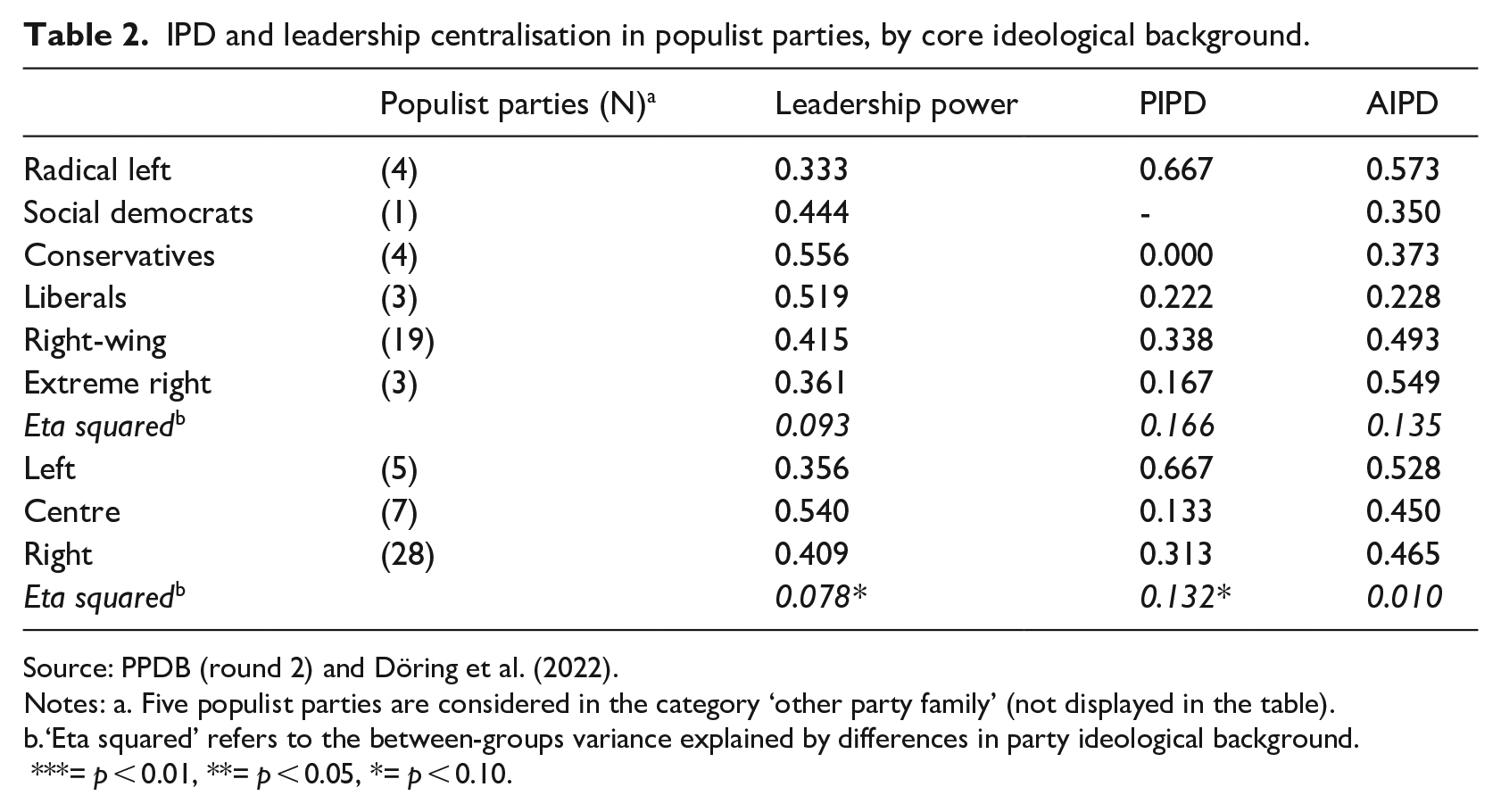
Finally, we test for mean differences in the ideological orientation of populist parties. By and large, our results indicate that left-wing, centrist and right-wing populist parties differ significantly in the way formal power is distributed internally (Table 2). Although previous studies have found that there is no uniform pattern in IPD adopted across distinct party families or ideologies (Bolin et al., 2017; Poguntke et al., 2016), it is important to distinguish populist parties based on their ideological orientation. For instance, whereas left-wing populist parties are more likely to adopt measures of plebiscitary IPD, right-wing parties are more hesitant to do so. In addition, left-wing populist parties display the highest AIPD scores, followed by right-wing and centrist populist organisations. In terms of leadership centralisation, while left-wing populist forces are less likely to grant more powers to their leaders, centrist populist parties present the highest score (0.540). The fact that the populist far right displays lower levels of both AIPD and plebiscitary IPD compared to left-wing actors confirms previous studies on the topic (such as Bolin et al., 2017: 170). Overall, the ideological imprint – measured along the left–right continuum or through party families – appears to have a significant impact on the intra-party functioning of populist parties. These findings lead us to confirm H2a and H2c.
IPD and leadership centralisation in populist parties, by core ideological background.
Source: PPDB (round 2) and Döring et al. (2022).
Notes: a. Five populist parties are considered in the category ‘other party family’ (not displayed in the table).
‘Eta squared’ refers to the between-groups variance explained by differences in party ideological background.
= p < 0.01, **= p < 0.05, *= p < 0.10.
The final test of our hypotheses relies on multivariate analyses, using the main predictors (populism and ideology) for the three distinct dependent variables. More specifically, we aim to examine the extent to which populist parties and their ideological genetic background are correlated to IPD features, namely leadership centralisation, plebiscitary IPD and AIPD. 14 Given the small number of cases, we opt for a multivariate analysis of all parties in the dataset, and include a dummy variable that gauges for populist and non-populist parties. 15 Furthermore, we examine various models that incorporate interaction terms between populism and crucial independent variables (ideology, region and ‘newness’). However, introducing interaction variables alongside all independent variables gives rise to multicollinearity issues. Consequently, we initially present the comprehensive model without interaction terms, subsequently incorporating these variables in successive models alongside relevant correlates. This gives us the opportunity to disentangle the impact of populism under specific conditions. We also add two control variables, namely party age and party size (using their logarithmic terms). While the first dimension is traditionally considered as a proxy for the overall level of party institutionalisation, scholarship suggests that party size – measured through the number of party members – is an important factor in intra-party functioning and can influence the internal distribution of power (e.g. Kölln, 2015). All models also include country fixed effects. 16
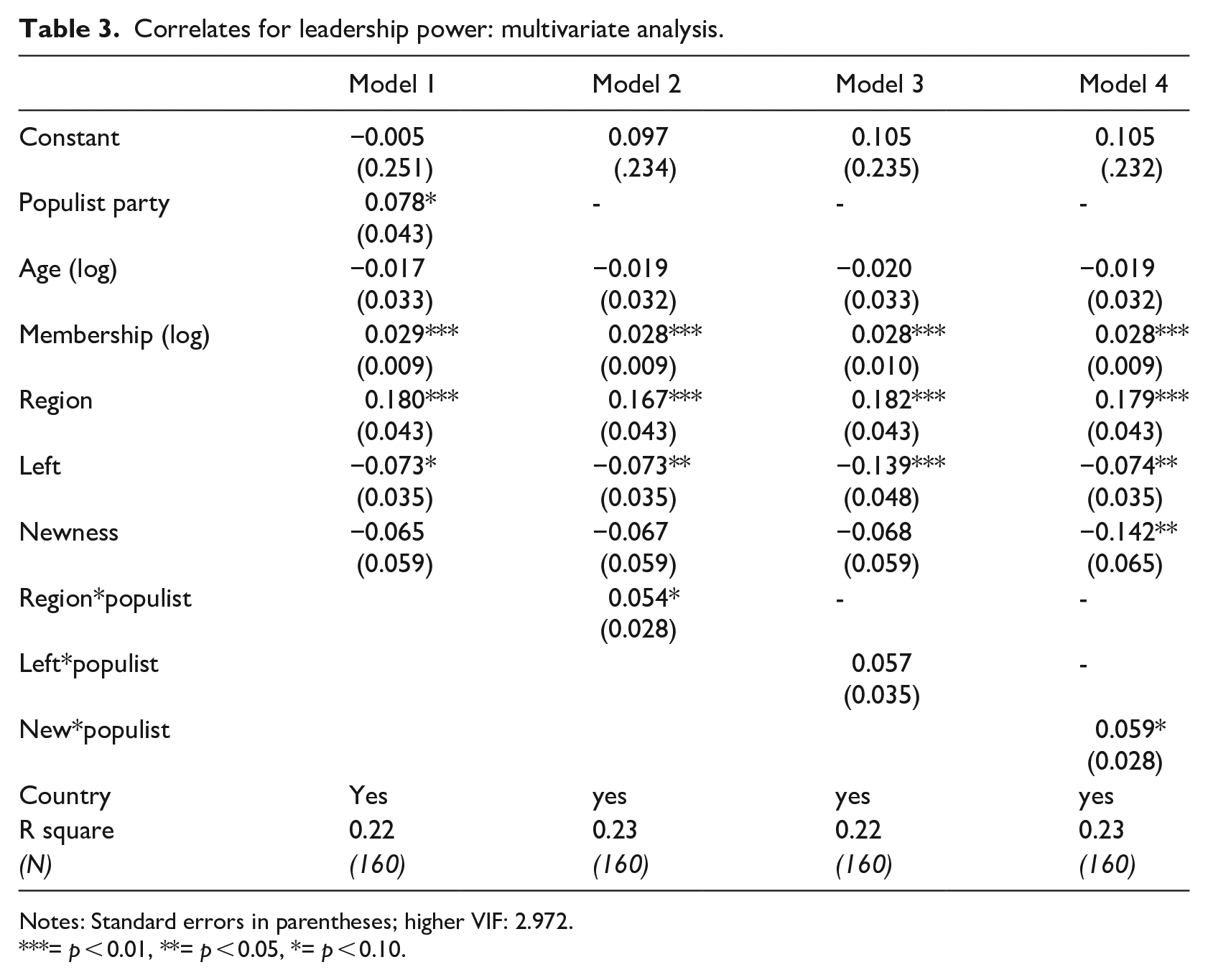
Looking at leadership centralisation, the results of our regression analysis tell us that populist parties differ from non-populist party organisations (Table 3). However, region has the strongest impact on the dependent variable: this means that populist parties in Eastern European countries present higher levels of leadership centralisation. Interestingly, the negative coefficient indicates that left-wing populist parties tend to display lower levels of leadership power. Membership size also has a significant impact on leadership centralisation, suggesting that parties with a larger membership base tend to be positively associated with a higher score of leadership centralisation. When we add the interaction term between region and populism, the results suggest that populist parties in Eastern Europe present higher levels of leadership strength. In addition, we also find that the interaction between ‘newness’ and populism has a significant impact, indicating higher levels of leadership centralisation for new populist parties (model 4). Overall, newer parties are likely to give leaders more powers, and this association is even stronger when these actors adopt populist discourse.
Correlates for leadership power: multivariate analysis.
Notes: Standard errors in parentheses; higher VIF: 2.972.
= p < 0.01, **= p < 0.05, *= p < 0.10.
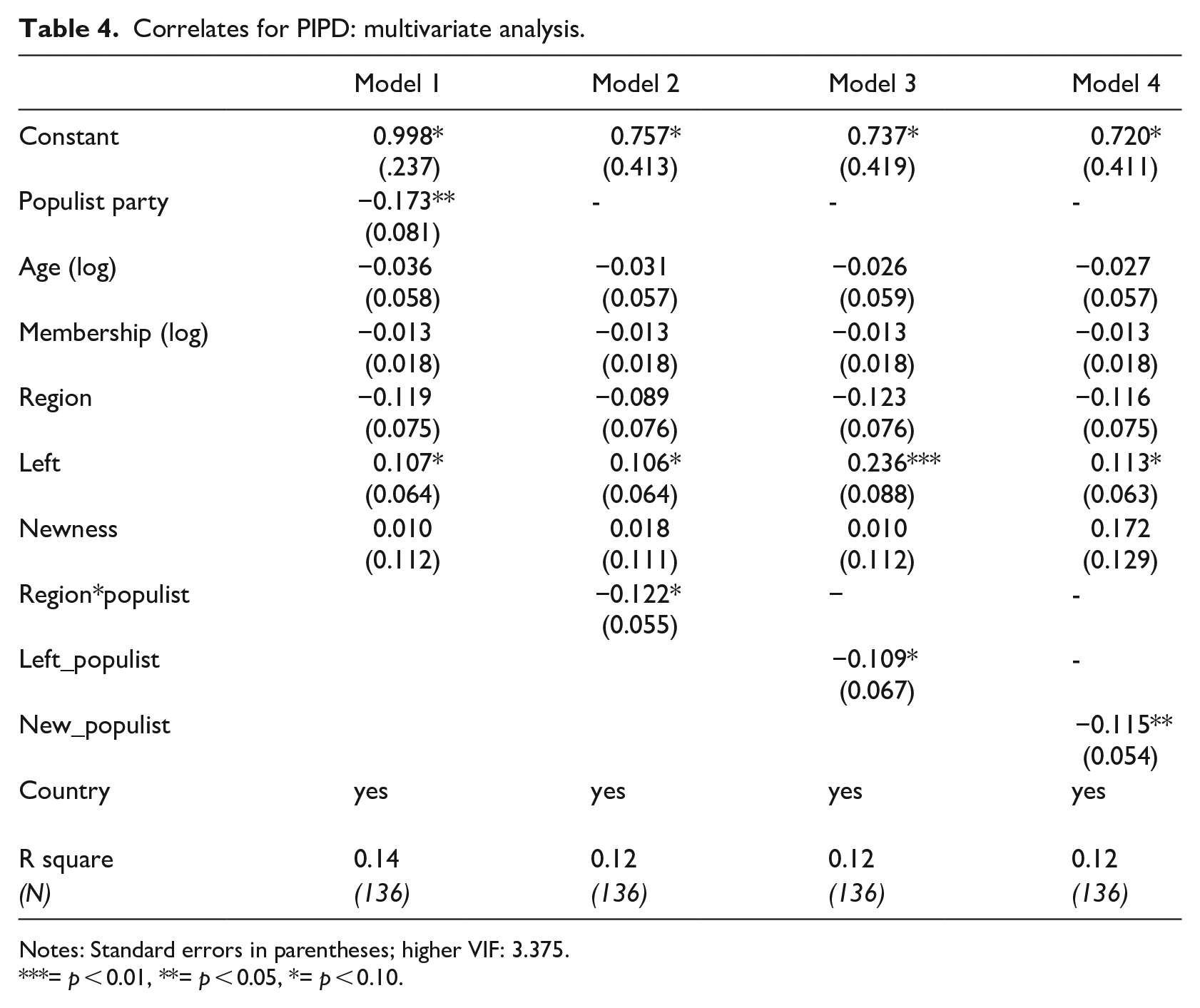
Our analysis of PIPD provided similar results (Table 4). First, populist parties tend to present lower levels of PIPD than non-populist party organisations. Second, left-wing parties tend to display higher levels of plebiscitary IPD, which confirms one of our hypotheses (H2b). Third, region has a significant impact, indicating that populist parties in Eastern Europe are particularly unlikely to rely on plebiscitary decision-making processes. Moreover, ‘newness’ displays statistically significant effects only when combined with populism, suggesting that new populist parties tend to display lower levels of PIPD. Finally, country differences are statistically significant in all models.
Correlates for PIPD: multivariate analysis.
Notes: Standard errors in parentheses; higher VIF: 3.375.
= p < 0.01, **= p < 0.05, *= p < 0.10.
Populist parties also distinguish themselves from non-populist parties when we use AIPD as the dependent variable (Table 5). Although the negative coefficient goes in the expected direction, its impact does not achieve standard levels of statistical significance. Therefore, H1c is only partially confirmed. In contrast, hypotheses regarding the effect of the ‘host’ ideology are fully confirmed. First, left-wing parties exhibit higher AIPD levels compared to their right-wing counterparts across all models employed in the multivariate analysis. Second, the model incorporating the interaction between ideological background and populism demonstrates the strongest fit (model 3). The negative coefficient suggests that left-wing populist parties tend to allocate less authority to their primary party structures when compared to non-populist organisations belonging to the same end of the political spectrum. Additionally, while higher membership levels are positively linked to elevated AIPD, neither the region nor the party’s newness makes a significant impact.
Correlates for AIPD: multivariate analysis.
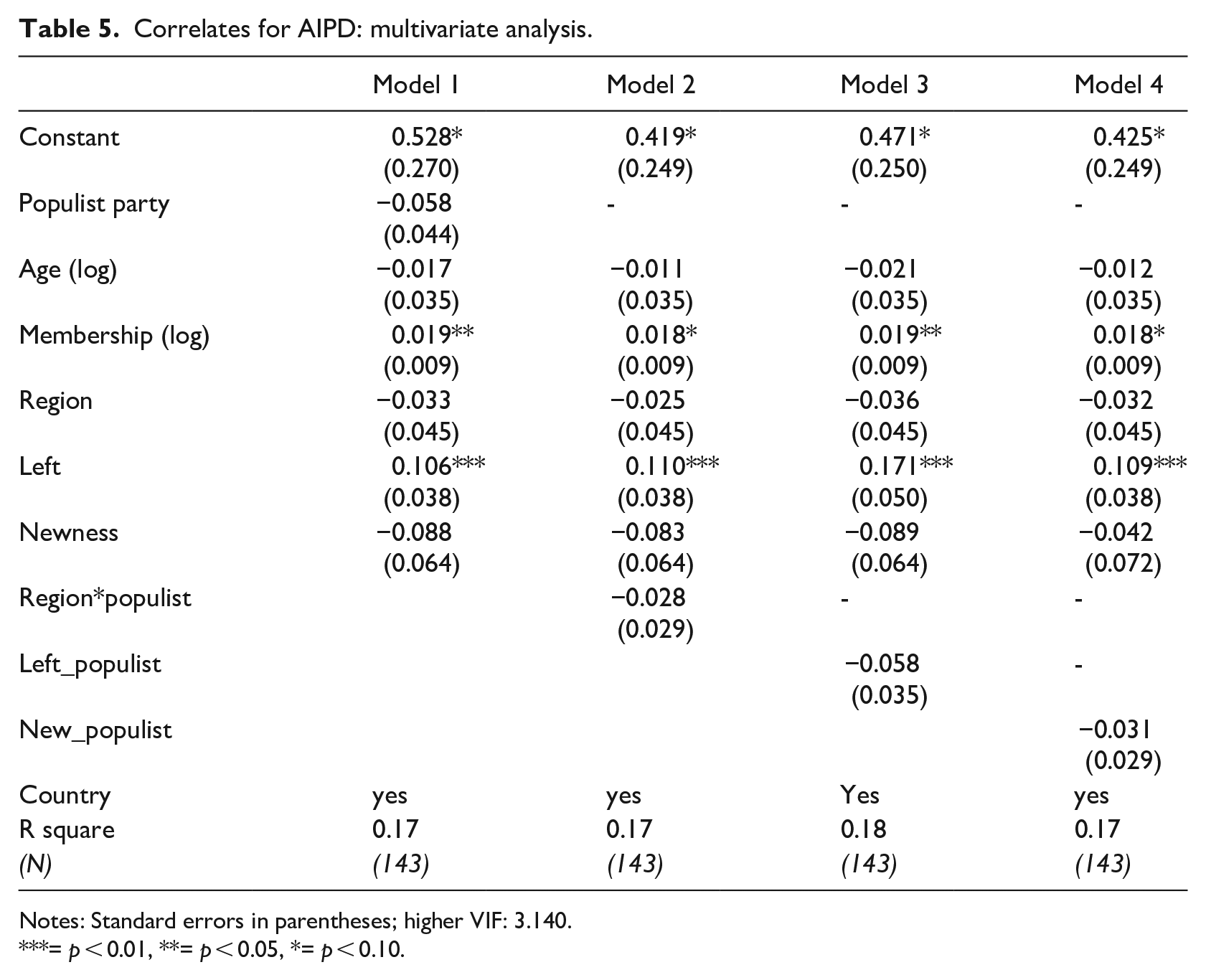
Notes: Standard errors in parentheses; higher VIF: 3.140.
= p < 0.01, **= p < 0.05, *= p < 0.10.
Conclusion
This article discusses how populist parties organise their decision-making processes, focusing on leadership power and two distinct notions of IPD. Over the last two decades, populist actors have gained significant representation in national elections, yet research on their internal decision-making processes has been limited and presents many shortcomings. Thus, this article makes a first contribution by empirically assessing how IPD in populist parties varies, and examining distinct components of their internal distribution of power. The second contribution is an investigation into the correlates that account for this variation. This allows us to fill a gap in the fast-growing literature on populism and to reassess trends in party change, with a particular focus on the distinctiveness of this new party organisation.
The results show that, in general, populist parties present a higher level of leadership centralisation and lower levels of plebiscitary IPD and AIPD compared to non-populist parties. Drawing on previous studies on the topic, this article was able to qualify the relationship between populism and varieties of IPD. While our findings support the idea that leadership-centredness represents a key feature of populist party organisation, this work shows that the internal life of populist parties is less inclusive than that of non-populist organisations, i.e. the former rely less on the plebiscitary logic of one-member-one-vote. This suggests that the ‘newness’ and the degree of innovation brought to the fore by populist parties is very limited and that they tend to imitate more conventional models of decision-making processes. Therefore, we can argue that populist parties are not characterised by innovative organisational models, but by the fact that they give leadership greater leeway. From a methodological standpoint, this study goes beyond existing research by utilising more objective indicators, enabling a more systematic and comprehensive assessment of intra-party power.
However, IPD in populist parties varies, and this is something that needs to be explained. We were able to identify two key variables that account for variations in their internal democracy. First, our findings confirm ideological background as a prominent factor in the explanation of intra-party life of populist party organisations. Second, region is a relevant factor, as populist parties in Eastern Europe present lower levels of IPD, thus supporting our general expectations.
Party organisations are an essential component in ensuring linkages between citizens and democratic institutions. From a systemic perspective, our findings indicate that populist parties tend to emulate non-populist parties in terms of inclusiveness, specifically favouring assembly-based internal processes. This observed pattern may be attributed to a strategic pursuit of legitimacy, prompting populist parties to align with organisational structures more closely resembling those of representative democracies (Ignazi, 2017). While legal frameworks may contribute to a homogenisation effect, further investigation is needed for a more systematic analysis. However, the fact that most populist parties do not prioritise plebiscitary forms of decision making may increase the disillusionment towards political parties, as well as their organisational instability and cohesion.
The implications of these results are threefold. First, it is likely that the de facto centralisation of party leadership is even higher, as informal practices tend to give leaders greater leeway. It is impossible to establish a link between the degree of leadership autonomy and electoral performance, but party leaders are clearly more centre stage in the internal distribution of power in populist parties compared to non-populist party organisations. Second, it would be useful to follow the trajectory of populist parties and to investigate their processes of institutionalisation. In other words, party persistence may be associated with organisational reforms that significantly alter internal decision-making processes. Third, our results indicate that leadership powers are somewhat unrelated to models (and degree) of intra-party democracy. Some authors argue that plebiscitary elements reinforce leadership dominance (e.g. Ignazi, 2017; Scarrow et al., 2022), but this is something that requires more empirical investigation.
Future research addressing the limitations of this study is needed to obtain a more complete picture on how populist parties adopt decision-making processes. Although the variance explained in the models is reasonable, there are certainly other important factors that may shed more light on IPD, such as membership features (e.g. levels of engagement, political attitudes) or leadership characteristics. Additionally, this study focused on formal rules, rather than internal practices. Comparative works investigating the use of IPD instruments can further illuminate the internal party mechanisms that best characterise and distinguish populist political parties from non-populist actors.
Supplemental Material
sj-docx-1-ips-10.1177_01925121241256482 – Supplemental material for Do populists practise what they preach? Intra-party democracy in populist parties
Supplemental material, sj-docx-1-ips-10.1177_01925121241256482 for Do populists practise what they preach? Intra-party democracy in populist parties by Marco Lisi in International Political Science Review
Footnotes
Acknowledgements
The author would like to express his gratitude to the anonymous reviewers and to the participants of the panel on populism organised at the 2023 Conference of the Portuguese Political Science Association for their valuable feedback on a previous version of this article.
Funding
The author(s) disclosed receipt of the following financial support for the research, authorship, and/or publication of this article: This study is supported by IPRI-NOVA through the multi-annual funding provided through the Foundation for Science and Technology (DOI: 10.54499/UIDB/04627/2020).

Supplemental material
Supplemental material for this article is available online.
Notes
Author biography
References
Supplementary Material
Please find the following supplemental material available below.
For Open Access articles published under a Creative Commons License, all supplemental material carries the same license as the article it is associated with.
For non-Open Access articles published, all supplemental material carries a non-exclusive license, and permission requests for re-use of supplemental material or any part of supplemental material shall be sent directly to the copyright owner as specified in the copyright notice associated with the article.
