




Abstract
Heritage crafts – craft occupations with storied histories that provide value through connection to tradition – can be surprisingly resilient, often re-emerging despite periods of decline. However, this endurance is neither simple nor automatic and can seem puzzling in the face of modernizing forces, such as advancing technology. Using a paradox lens, I suggest that craftspeople’s responses to the tension between novelty and tradition are key to the endurance of heritage craft over time. Although the existing literature has begun to explore these tensions, we have lacked an overarching theoretical framework to explain how heritage crafts can overcome cycles of decline and resurgence. I present a conceptual framework for understanding how craft workers can effectively navigate tradition–novelty tensions, creating virtuous cycles which enable growth. I outline three strategies – preserving, segmenting and synthesizing – which are influenced by a variety of enabling factors (e.g. individual characteristics, environmental factors). Additionally, I theorize three factors – revaluing heritage, developing reputation and exposure to new domains – which dynamically shape how craftspeople move between strategies over time. My framework builds theory around the endurance of craft over time, stability and change in tradition, and creativity in highly traditional occupations.
Introduction
Craft – a timeless ideology of work emphasizing human engagement in making (Kroezen et al., 2020) – shows surprising resilience over time. Despite periods of decline, craft occupations and practices endure, often rediscovered or revitalized in new forms (Kroezen & Heugens, 2019; Raffaelli, 2019). Craft seems to have enduring appeal as an approach to work (Pratt, Pradies & Lepisto, 2013). This seems especially true of heritage crafts, 1 those with long, storied histories that provide value through authentic connections to tradition (Sasaki, Ravasi, & Micelotta, 2019; Toraldo, Mangia, & Consiglio, 2019), thanks to nostalgia and an air of authenticity (Bell, Dacin & Toraldo, 2021). Yet despite craft’s apparent resilience, endurance is neither simple nor automatic: many crafts remain ‘endangered’ (UNESCO, 2003) and valuable craft knowledge can be lost (Cattani et al., 2013); heritage crafts are at risk of being ‘victimized by their own tradition’ (Smith, 2023, p. 159). The endurance of heritage crafts seems particularly puzzling given the dynamic changes in the modern economy. Technological changes, the incursion of new actors, or changes in consumer taste or making practices can threaten heritage crafts with obsolescence or decline (Erdogan, Rondi & De Massis, 2020; Raffaelli, DeJordy & McDonald, 2022; Sasaki, Kotlar, Ravasi & Vaara, 2020).
While not all crafts are in such a precarious position, the traditions that make heritage crafts unique and valuable seem especially precarious if they do not adapt to modern contexts by introducing novelty. As Blundel and Smith (2013, p. 68) put it, ‘reinventions of artisanal knowledge will doubtless be required if enterprises of this kind [heritage crafts] are to continue to thrive in the face of the remorseless, economising logic’ of modern industries. How, then, do craft occupations endure in the face of such modernizing forces? Existing accounts focus primarily on resurgence, the revitalization of craft after a long decline (Kroezen & Heugens, 2019; Raffaelli, 2019; Wiedner, Dacin & Furnari, 2024). Here, tradition or expertise is lost, destroyed, or decays and is then recovered through ‘excavation’ (Kroezen & Heugens, 2019), fuelled by a search for meaning, nostalgia, or quality among makers and consumers. Shifting environments are thus key to craft resurgence, emphasizing organizational and institutional characteristics, the interests of various stakeholders (e.g. makers, customers), and cycles of social or technological upheaval (Greenhalgh, 1997).
Yet this does not necessarily tell us how heritage crafts can endure – survive, grow, or thrive – in the face of forces which threaten decline in the first place. Indeed, recent work has questioned the assumption that craft is ‘primitive or “traditionalistic”’ and thus doomed to extinction by technological advancement (Kroezen et al., 2020, p. 503), instead recognizing craft as a ‘timeless’ approach to work. This shift calls for understanding how such timelessness is achieved – that is, greater understanding of why work is approached as a craft and how it endures over time. Using paradox theory (Lewis & Smith, 2014), I suggest that a key to heritage craft endurance is how makers respond to craft’s paradoxical tension between novelty, the basis for creativity, providing something new in a given domain (Harvey & Berry, 2023), and tradition, beliefs and practices identified with a shared past (Dacin, Dacin & Kent, 2019). I argue that craft can endure by embracing both poles of this tension (tradition and novelty), sparking virtuous cycles of generativity, and thus avoiding cycles of decline and resurgence which seem to arise from the seesaw between tradition (e.g. carrying forward past practices without change) and novelty (e.g. scrapping tradition in favour of modern approaches) at the macro level.
Specifically, I develop a framework with three strategies – preserving, segmenting and synthesizing – that individual craftspeople may use to pursue both novelty and tradition. I then theorize factors which may drive craftspeople to shift strategies over time: revaluing heritage; developing reputation; and exposure to new domains. My theory centers the actions of craftspeople, while considering the influences of, and outcomes for, broader occupational contexts. I illustrate my framework with the case of guitar lutherie, the craft of guitar building and repair (Dudley, 2014; Smith, 2023). My work makes at least three theoretical contributions. First, I move beyond only craft decline and resurgence to theorize craft endurance over time, proposing how craftspeople may break these cycles by embracing paradox. Second, my work sheds light on how tradition can be both past and future oriented, serving as a resource for preservation and renewal. Finally, I challenge assumptions in creativity research around novelty, demonstrating a tradition-forward approach where tradition both enables and constrains creativity.
Tradition and Novelty in Craft: Tensions and possibilities
Craft is an approach to work involving human (rather than machine) engagement in making, emphasizing dedication to quality, tradition and authenticity (Bell, Toraldo, & Taylor, 2019; Kroezen, Sasaki, Żebrowska, Ravasi & Suddaby, 2020; Pratt et al., 2013). While craft scholarship reflects various disciplines and perspectives, tradition and novelty are fundamental, but essentially opposing, themes. For example, Kroezen and colleagues’ (2020) recent review organized craft into five ideal-type configurations – traditional, industrialized, pure, technical and creative – which reflect distinct approaches to organizing, as well as distinct approaches to the balance of tradition and novelty (see Table 1 for a summary). Heritage crafts are distinctive for having an occupational identity tied to historical making practices (Holt & Yamauchi, 2023); tradition is key not only to how makers craft their products, but also why the products are meaningful (Ranganathan, 2018). The dominant focus in the existing literature has been on how heritage crafts look to the past to guard tradition (Bell et al., 2021; Sasaki et al., 2020; Toraldo et al., 2019; but see Sasaki & Ravasi, 2024, for a notable exception). Craftspeople often face the challenge of perpetuating a tradition in its historically truest form – preserving authenticity – but thereby risking opportunities which come from increasing novelty. Yet such tensions can provide opportunities (Raffaelli et al., 2022) if actors respond effectively.
Craft Configurations (from Kroezen et al., 2020).
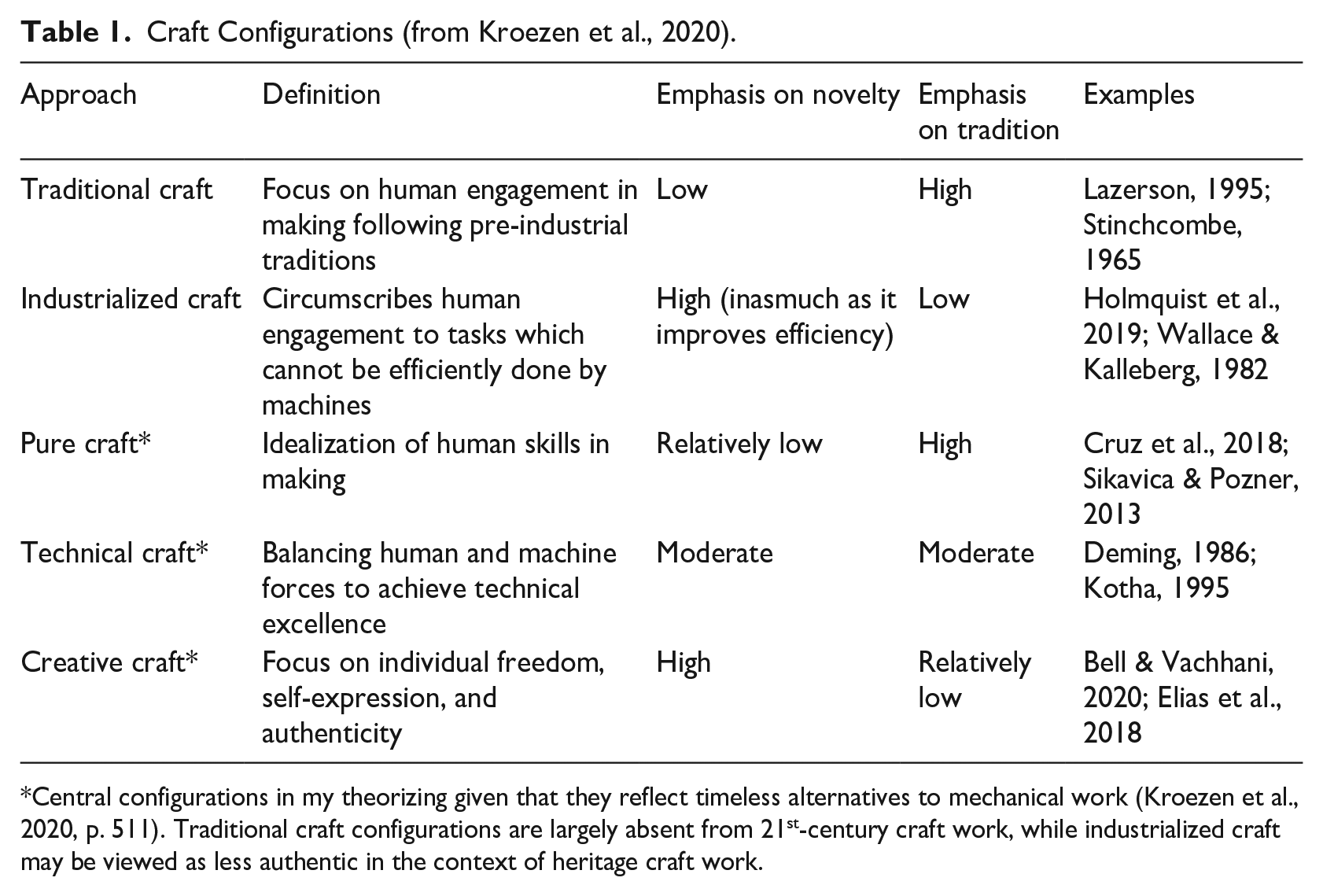
Central configurations in my theorizing given that they reflect timeless alternatives to mechanical work (Kroezen et al., 2020, p. 511). Traditional craft configurations are largely absent from 21st-century craft work, while industrialized craft may be viewed as less authentic in the context of heritage craft work.
Tradition as a source of authenticity
Tradition provides resources (Soares, 1997), including practices (e.g. techniques for producing high-quality products), materials (e.g. components from a particular region) and values (e.g. the importance of completing work by hand), expressing identification with a shared past (Dacin et al., 2019). Craftspeople tend to rely on traditional techniques and tools to do their work (Bell & Vachhani, 2020): they could make products using modern methods, yet they choose the ‘old ways’ of making things, implying some identification with the past. In heritage craft, tradition is not just a matter of practices, but also values – preserving the past for its inherent worth (Bacco & Dalpiaz, 2022). Heritage crafts have carried forward traditions which define the craft’s identity (Cattani, Dunbar & Shapira, 2017); for example, silk tie makers in Naples rely on historically embedded relationships and practices, even eschewing modern distribution practices, as these are central to how they do business (Toraldo et al., 2019).
More broadly, traditions provide the authenticity that is critical for differentiating craft from other work – ‘a sense of the “authentic” in an “inauthentic” world’ (Luckman, 2015, p. 68). For craftspeople, tradition provides normative weight which is highly meaningful. As Bailey and Madden (2017, p. 8) noted among stonemasons, ‘The most important thing . . . is . . . working stone and using traditional mortars . . . you are protecting the actual art of working a stone by hand.’ In this way, traditions anchor makers’ efforts in time, situating them in relation to a meaningful past (Dacin et al., 2019). In addition, traditions provide the legitimate categories for evaluation, to ‘prove’ authenticity to both makers and external audiences. Authentic craft products offer the promise of taking consumers back to a time before mass production, industrialization and the dominance of corporate profits (Cope, 2014; Thurnell-Read, 2019). For example, craft brewers emphasize connection to traditional locales to project authenticity: ‘All our beers are . . . of the Belgian type. It is Belgian 100%, produced following Belgian recipes’ (Lamertz, 2022, p. 22). Tradition thus serves as a central marker of authenticity in craft. Evidence of craft traditions generally provides authenticity-as-conformity, conformity to a claimed or assigned social category, and authenticity-as-connection, connection to a person, place or time as claimed (Lehman, O’Connor, Kovács & Newman, 2019).
Given the close connection to tradition in heritage crafts, it is natural that craftspeople would be key custodians – actors who guide, adapt and protect traditions (Dacin et al., 2019, p. 351). Custodianship seems especially important for craft endurance as it shapes how crafts continue and in what form – that is, how much a craft changes, preserves tradition, or evolves. Importantly, the transmission of heritage is often complex; for example, the craft knowledge behind Cremonese violins (Stradivarius violins among them) was lost as its value was not recognized at the time (Cattani et al., 2013). Desire to preserve tradition can prevent craftspeople from embracing new ideas and possibilities; traditional shoemakers, for example, were largely unable to adapt to technological changes and saw their craft decline as a result (Commons, 1909; Gannon, 1912). Research on custodianship emphasizes the complex ways in which traditions are carried forward, and often changed in the process (Dacin & Dacin, 2019), demonstrating the value of equifinality (i.e. different strands) in generating resilience for tradition over time (Wiedner et al., 2024), though more work is needed to explore these dynamics. The need for adaptation in transmitting traditions indicates another central craft theme – novelty.
Novelty as a source of adaptation
Adaptation involves change and injection of novelty – something new, unique, or original in relation to a comparison set (Campbell, 1960). Novelty is central to craft, where ‘expressions of novelty and creativity can have a deliberately open orientation toward the future’ (Holt & Yamauchi, 2023, p. 2). The heritage of most craft occupations is, paradoxically, centered on novelty, given that craft movements are often spurred by the search for freedom and self-expression (Endrissat & Noppeney, 2018; Gauntlett, 2013). Heritage craftspeople emphasize the importance of originality and self-expression, often classifying themselves among the creative industries (Luckman, 2015); even heritage craft is a form of creative work (Rouse & Harrison, 2022). Recent organizational scholarship on craft has shown the centrality of novelty in making, such as how arts entrepreneurs imaginatively sense new possibilities and co-create meaning with their clients (Elias, Chiles, Duncan & Vultee, 2018) or how craftspeople engage bodily with materials as they create (Bell & Vachhani, 2020). It seems, therefore, that the creation integral to heritage craft is likely to generate novelty. What remains less clear, however, is how heritage craftspeople can honour tradition while infusing novelty, given the contradictions involved (De Massis, Frattini, Kotlar, Petruzzelli & Wright, 2016; Erdogan et al., 2020), and what implications this has for their occupations. The presence of multiple craft configurations implies multiple possible strategies for navigating tensions (Kroezen et al., 2020), like the need for variation in preserving tradition (Wiedner et al., 2024), yet we lack a conceptual framework to connect these insights.
Creativity and innovation research, defined by ‘an ongoing quest for novelty’ (Slavich et al., 2020, p. 271; see Amabile & Pratt, 2016; Anderson et al., 2014), provides useful tools to understand how novelty emerges. To the extent that a craft product reflects a maker’s unique perspective, all products are novel, yet the referent for novelty matters (Csikszentmihalyi, 1990). For my purposes here, novelty involves differentiation relative to a comparison set; changing the comparison set may change a product’s novelty (Harvey & Berry, 2023). Tensions between novelty, originality, or uniqueness on the one hand, and usefulness, appropriateness, or value on the other (Islam, Endrissat, & Noppeney, 2016; Miron-Spektor & Erez, 2017; Patriotta & Hirsch, 2016) have also been studied extensively in creativity and innovation research. Despite some similarities, however, I argue that the tradition–novelty tension is distinct and of particular interest to craft, which sits in a unique position, pulled between history, art and technology (Becker, 1978; Kroezen et al., 2020). Craftspeople often blend these themes in their products, ‘like a novel set in the past but written in the present’ (Adamson 2013, p. 210), yet craft remains ‘a site of tension and contradiction’ (Fox Miller, 2017, p. 10). Tradition and novelty are both central to craft, making the tension particularly ingrained and contradictory.
Tradition differs in important ways from the criteria generally used to assess creativity: 2 usefulness (the degree to which an idea has some utility) and appropriateness (the degree to which an idea fits with the norms of a domain; Sternberg & Lubart, 1999). Usefulness emphasizes the present and future use of an idea: how it will solve a problem or provide value in the future (Weisberg, 2015). Tradition, by contrast, is oriented toward the past, ‘reinterpreting the past and connecting it to the present and future’ (Bell et al., 2021, p. 22). This is not to say that traditions do not influence the criteria used to evaluate usefulness in a domain, as they certainly do (e.g. art conventions; Patriotta & Hirsch, 2016). It could be said that tradition and usefulness are related but facing in different directions: tradition toward the past and usefulness toward the future. What’s more, an idea being traditional need not make it more useful or functional – indeed, it is easy to imagine how the opposite may be true (e.g. making a product or idea less standardized, less efficient, and so on).
Likewise, appropriateness, which overlaps significantly with usefulness (Long, 2014), is concerned with an idea’s fit in terms of being correct or normative. While traditional ideas can be useful or appropriate, all useful or appropriate ideas are not necessarily traditional. In this way, tradition may appear to be a subset of appropriateness (e.g. traditional practices develop over time in relation to appropriateness norms), yet it can also detract from appropriateness (e.g. when traditional practices no longer resonate with appropriateness norms). It seems clear, therefore, that while tradition informs appropriateness in craft, it also goes beyond mere appropriateness, bringing to the fore the meaning or significance of an idea. Craft traditions are not simply a matter of utility or function, but rather involve a certain veneration, respect, or meaningfulness associated with beliefs and practices of the past (Fetzer & Pratt, 2020). If appropriateness is the what, tradition provides the why. In this sense, embracing both tradition and novelty is more meaning-laden than embracing both appropriateness and novelty. Indeed, this could even have implications for how ideas are developed. If creators begin with novel ideas which they make appropriate (Berg, 2014; Simonton, 1999), tradition’s centrality in craft could reverse this sequence; the meanings derived from tradition could shape idea novelty rather than being a distinct characteristic (Harvey & Berry, 2023; Sasaki & Ravasi, 2024). Tradition thus provides bridges between novelty and usefulness or appropriateness, as it can be both normative and a source of uniqueness.
Taken together, the preceding review points to tradition and novelty as central, if contradictory, pillars of craft – tradition provides authenticity, while novelty provides expression and growth. Effectively navigating tensions likely involves engaging both and dynamically responding over time – no single strategy is likely to be effective across changing environments. Here a paradox lens is particularly relevant.
Paradox lens
The tradition–novelty tensions described above have been noted in prior literature (Blundel & Smith, 2013; De Massis et al., 2016; Erdogan et al., 2020; Raffaelli et al., 2022), yet the fundamental nature of the tension to craft itself has not been theorized. A paradox lens, as a meta-theoretical perspective (Lewis & Smith, 2014), illuminates these fundamental and pervasive tensions. Paradox involves persistent, interdependent contradictions (Putnam, Fairhurst & Banghart, 2016; Schad, Lewis, Raisch & Smith, 2016) and emphasizes accepting, embracing, navigating and working through tensions to enable effective action, rather than focusing on either/or solutions (Smith & Lewis, 2011). ‘Paradox involves responding; that is, actors move forward amid these contradictory and interrelated tensions’ (Fairhurst et al., 2016, p. 79; see also Lewis, 2000; Poole & Van de Ven, 1989). A paradox lens is also cross-level, in that tensions and responses exist at and between different levels of analysis (e.g. individual or occupational levels) and mutually influence each other (Schad et al., 2016). As such, it enables theorizing the cross-level dynamics of how individual actions could shape the endurance of organizations and occupations (e.g. Raffaelli et al., 2022).
A paradox lens illuminates the foundational nature of the tensions between novelty and tradition (e.g. they cannot be resolved by splitting or choosing), as well as providing tools to theorize how craftspeople can respond. These responses recognize that the tensions are inherent and that effective management will involve doing both/and rather than either/or (Jarzabkowski & Lê, 2017). Tensions can be constraining, leading to vicious cycles, or generative, leading to virtuous cycles (Smith & Lewis, 2011). Vicious cycles often ensue when individuals react defensively to tensions or attempt to split them, reinforcing intractable conflict (Lewis, 2000), while virtuous cycles emerge from accepting the tensions and finding ways to address both sides simultaneously (Pradies, Tunarosa, Lewis & Courtois, 2021). Responding in a paradoxical way is also likely to require temporary settlements, which are ‘neither static, nor suggest an equal weighting of alternative perspectives’ (Schad et al., 2016, p. 37). Rather, effective responses create and maintain dynamic equilibrium, ‘constant motion across opposing forces’ (Smith & Lewis, 2011, p. 386), which can produce virtuous cycles (Calabretta, Gemser, & Wijnberg, 2017). Using a paradox lens, I present a framework of strategies which craftspeople may use to navigate tradition–novelty tensions in a generative way, allowing for virtuous cycles that promote heritage craft endurance.
A Framework for Navigating Tradition–Novelty Tensions in Craft
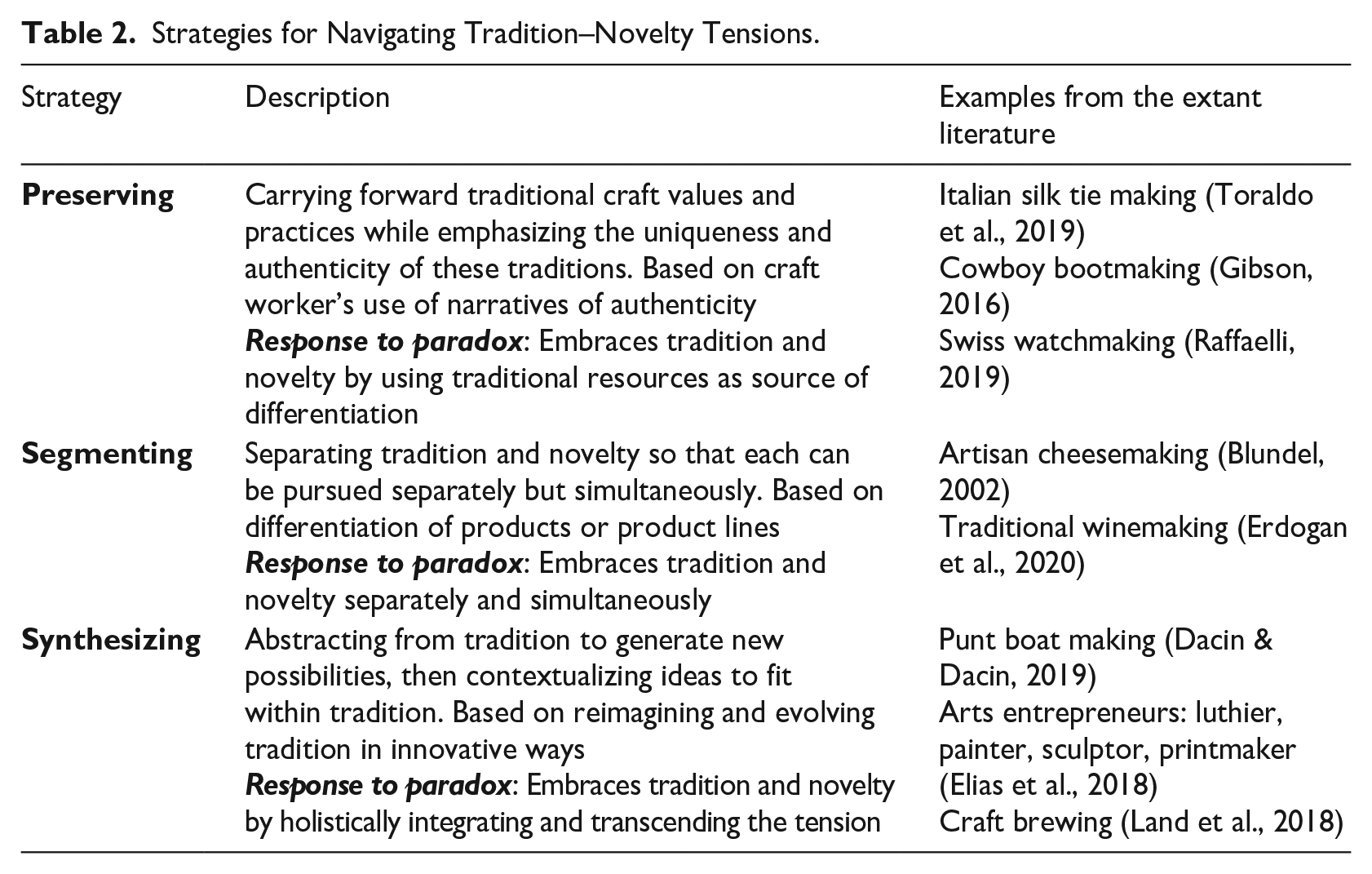
I theorize three strategies craftspeople may use to navigate tradition–novelty tensions: preserving, maximizing the historical and traditional characteristics of the craft product to differentiate from modern products and generate novelty; segmenting, drawing upon traditional resources to develop legacy products while separately developing novel products using modern resources; and synthesizing, integrating novelty with tradition holistically to create a product(s) which transcends the tension. I argue that each strategy provides a way to generate both novelty and authenticity, grounded in tradition. Preserving enables novelty and authenticity by underlining tradition as a source of differentiation and thereby novelty. Segmenting enables craftspeople to pursue both novelty and authenticity (via tradition) separately and simultaneously. Synthesizing enables craftspeople to integrate tradition and novelty within a single product by challenging the assumptions underlying the tension, potentially evolving tradition.
I argue that these strategies are temporary settlements aimed at achieving equilibrium at a given time point. Strategies that fit with a given context can foster an equilibrium between novelty and tradition, enabling virtuous cycles of growth (Smith & Lewis, 2011). I view effectiveness in relation to the survival of a heritage craft occupation and its practices, meaning that the core identity of the craft is preserved and remains recognizable to both craftspeople and audiences (cf. Suddaby & Jaskiewicz, 2020). I suggest that each strategy will be more or less effective in terms of fostering equilibrium and virtuous cycles based on craft configurations (e.g. pure, technical, creative) which are dominant in the organization or occupation, individual characteristics (e.g. skills) and contextual factors (e.g. audience characteristics). These sets of enabling factors run throughout each different approach for engaging the tradition–novelty paradox, shaping the extent to which individual actions will impact the collective level. See Table 2 for a summary of each strategy.
Strategies for Navigating Tradition–Novelty Tensions.
Throughout my framework I draw on the illustrative case of guitar lutherie, alongside other examples, with the goal of showing how my theory can be embodied in real-world phenomena (see Siggelkow, 2007). The craft of lutherie dates back to at least the Middle Ages, with the making of lutes and violins; guitars are a more recent creation, emerging in the early 19th century. Historically, guitar making was carried out in small shops, and later in factories, where making generally followed a clear division of labour (e.g. one worker shapes the neck, another the bracing; Martin, 1998). After World War II, guitar manufacturers increasingly moved to an industrialized production model incorporating machines and automation. During the 1960s and 1970s, however, a movement of independent luthiers sparked a craft revival to recreate the guitars built between the 1920s and 1940s (referred to as ‘the golden age of lutherie’), eschewing the traditional division of labour common to 20th-century guitar making (Dudley, 2014). Today, handmade guitars have a market alongside factory guitars (Bozanic, 2015).
Preserving
The preserving strategy involves promoting, sustaining and enhancing the traditional elements in the craft product to differentiate it and thus generate novelty – in other words, a product is novel precisely because it is traditional and unique relative to modern products. Craftspeople emphasize preserving the traditional practices and values of their craft, drawing upon traditional occupational resources (e.g. practices, materials; Dacin et al., 2019). They then construct a narrative of authenticity to highlight the uniqueness of these traditions (Bell et al., 2021; Blundel, 2018), situating craft products within a larger temporal trajectory, often connected to a sense of nostalgia (Fox Miller, 2017). As a result, workers use preservation of tradition to create authenticity-as-connection, showing that their products are truly connected to the past and thus distinct from modern offerings (see Figure 1). Novelty comes from differentiation in terms of practices (Harvey & Berry, 2023), generally from a specific craft community within a domain. For example, the piano makers at Steinway & Sons differentiated their products by maintaining a craft-based production model even as competitors moved to mass-production methods in the 19th century. This traditional approach allowed for both innovation (e.g. a new dominant design) as well as enduring success among virtuoso pianists (Cattani et al., 2017).
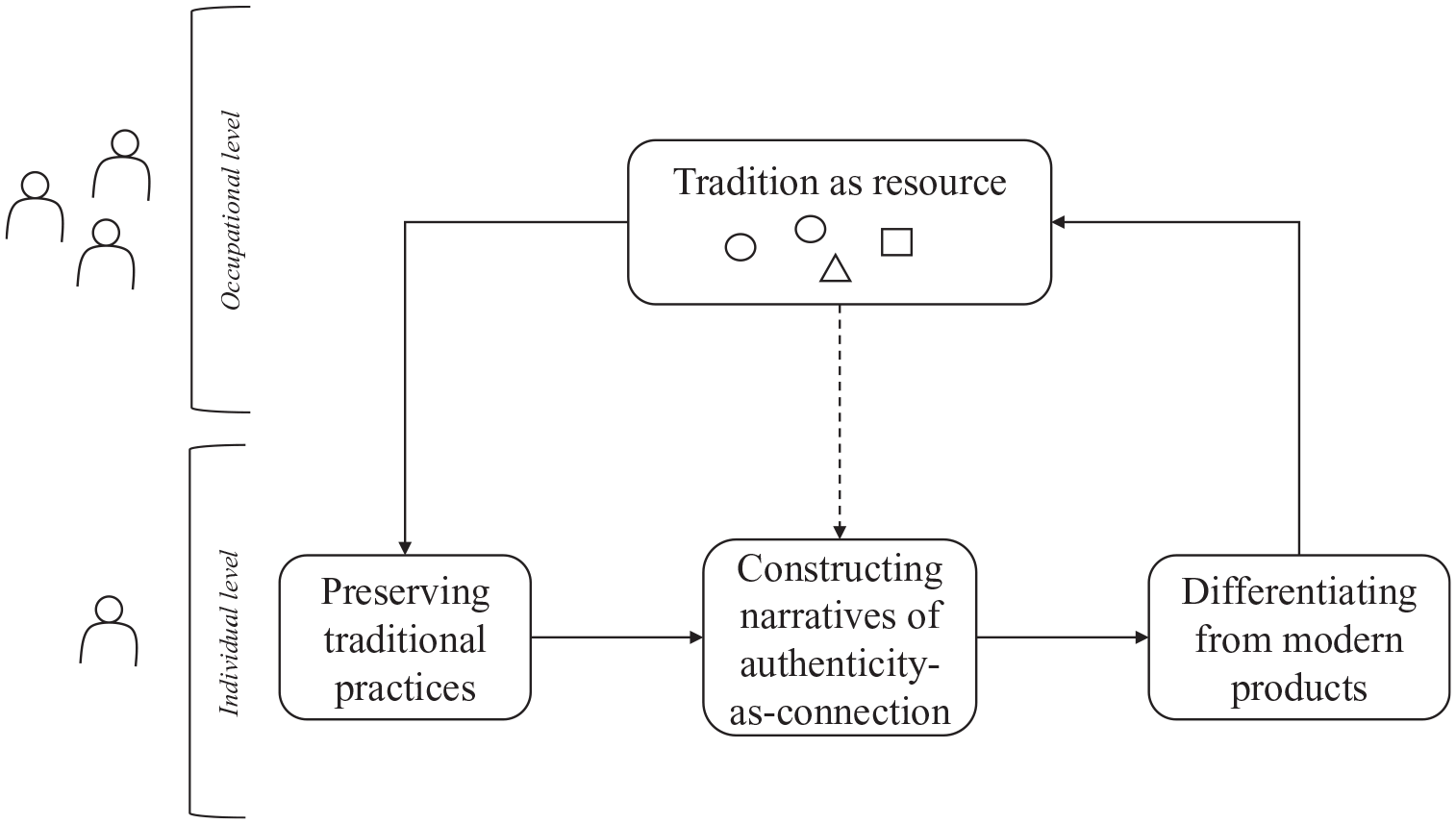
Preserving Strategy.
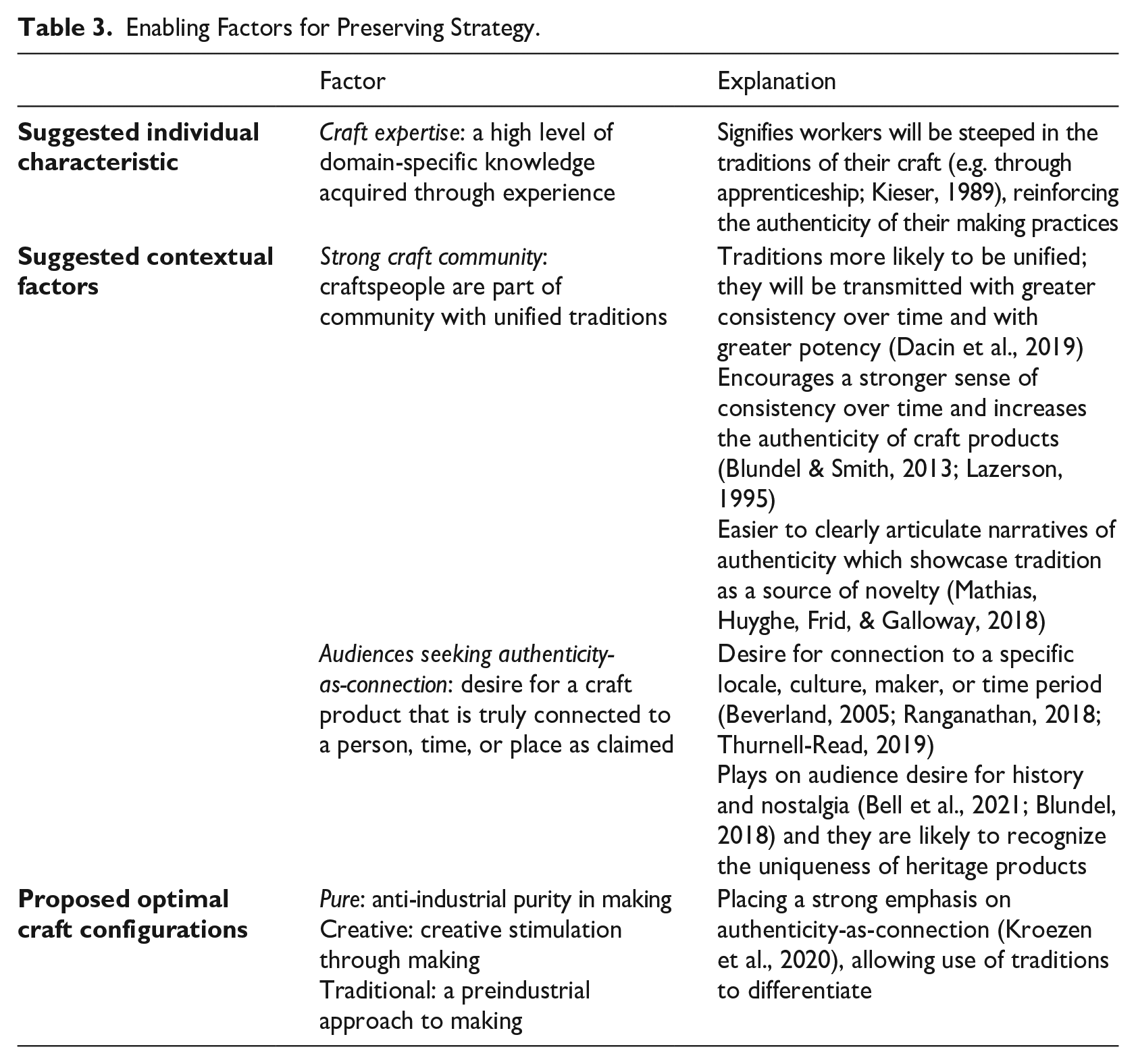
Key to craftspeople’s use of the preserving strategy is developing and promulgating narratives which portray authenticity-as-connection and (re)construct the craft’s heritage. For example, in Swiss watchmaking (Raffaelli, 2019), key custodians connected the purchase of a Swiss watch to history and craftsmanship, casting ‘themselves in the role of guarantors of a centuries-old regional tradition’ (Pasquier, 2008, p. 314). The narratives they crafted were key to the resurgence of the occupation by casting mechanical watches in a new light. Craftspeople’s narratives use authenticity-as-connection, showing that heritage products provide something modern products cannot – a sense of place, humanity, or nostalgia (Toraldo et al., 2019; Vachhani, 2013). The Swiss watch example highlights how preserving can embody both tradition and novelty – by enhancing the value of tradition, they preserved the craft’s history while also gaining clients and developing new innovations (Raffaelli, 2019). See Table 3 for a summary of the enabling factors for the preserving strategy.
Enabling Factors for Preserving Strategy.
Preserving in guitar lutherie
In the case of lutherie, preserving is most obvious in the revival of independent guitar making which emerged in the 1960s and 1970s in North America (Dudley, 2014; Smith, 2023). Independent luthiers sought to reconstruct the craft tradition, building entire instruments by hand, even as their archetypes were instruments built in the ‘golden age of lutherie’, the 1920s to 1940s: ‘the lutherie movement sought to revive a craft tradition that was both “preindustrial” and “industrial”’ (Dudley, 2014, p. 21). Notably, this demonstrates the interpretive flexibility possible in crafting narratives of authenticity. These luthiers presented their guitars as novel due to being handmade, recapturing the quality of instruments produced in the past, while still being traditional. As one recounted, ‘We thought we could make something that was a little better, that was more like the old ones that [Martin and Gibson] had forgotten’ (quoted in Dudley, 2014, p. 46). These guitars were novel because they were traditional. While independent luthiers did eventually introduce new methods, they were recovering and preserving ‘forgotten’ traditions, which were novel primarily because they were lost or had been abandoned by the industry.
Segmenting
The segmenting strategy involves separating tradition and novelty so that each can be pursued separately but simultaneously. Craftspeople draw upon traditional resources (e.g. practices, materials) to make heritage products which preserve the values and aesthetics of the past, while drawing on modern resources (e.g. automated machines) to make modern, novel products in the same category but which make no claim to tradition (see Figure 2). There are various ways in which paradoxical tensions can be separated so that each can be pursued separately but conjointly, such as temporal separation, pursuing one competing goal and then another (Smith & Besharov, 2019), or spatial separation, different groups pursuing different goals in concert (Smith & Tushman, 2005). Craftspeople can implement a similar strategy by focusing on developing heritage products which embody traditional practices and values, while simultaneously developing novel products which use industrial or modern production techniques, either alone or in conjunction with traditional resources (Erdogan et al., 2020).
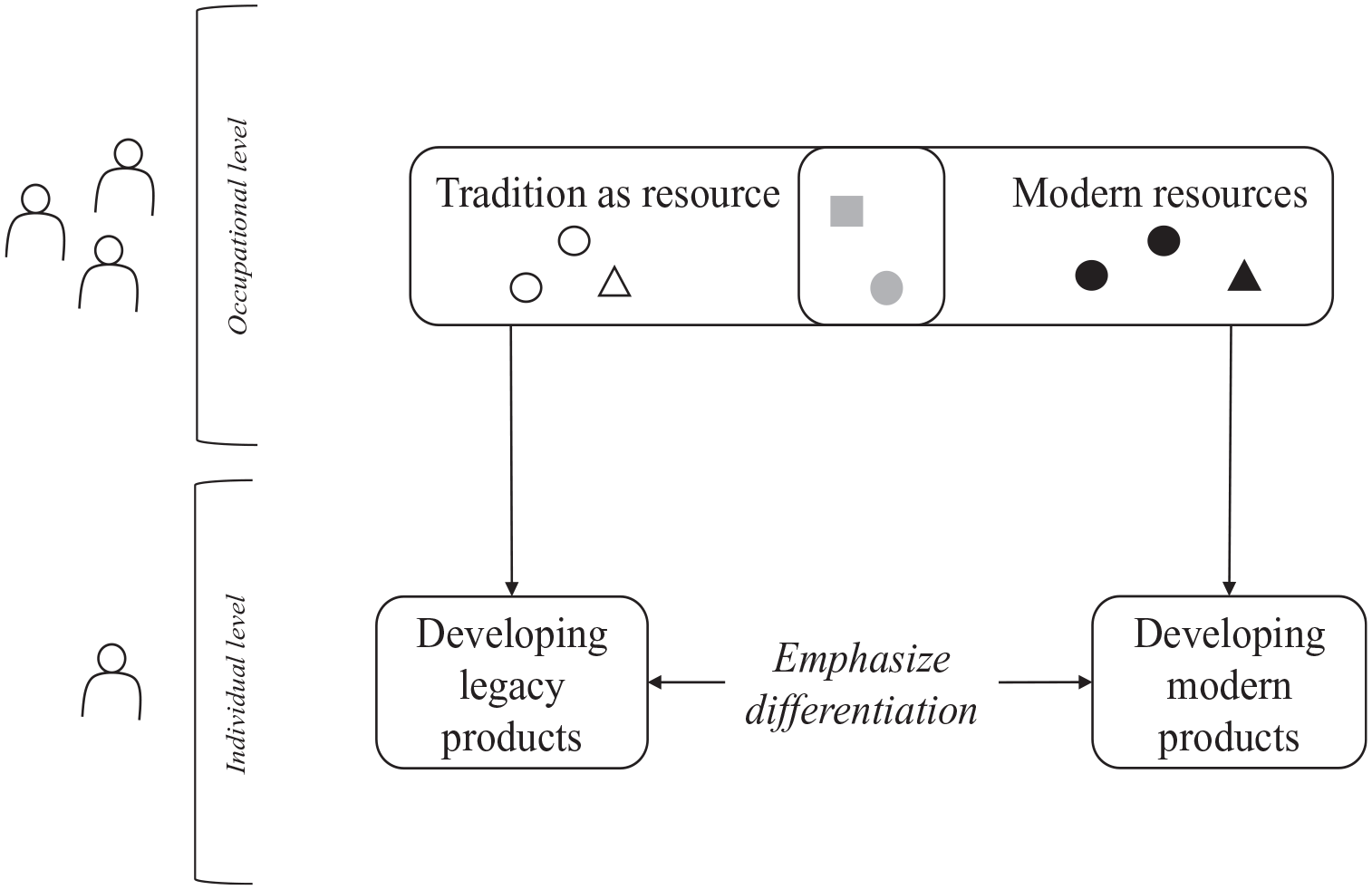
Segmenting Strategy.
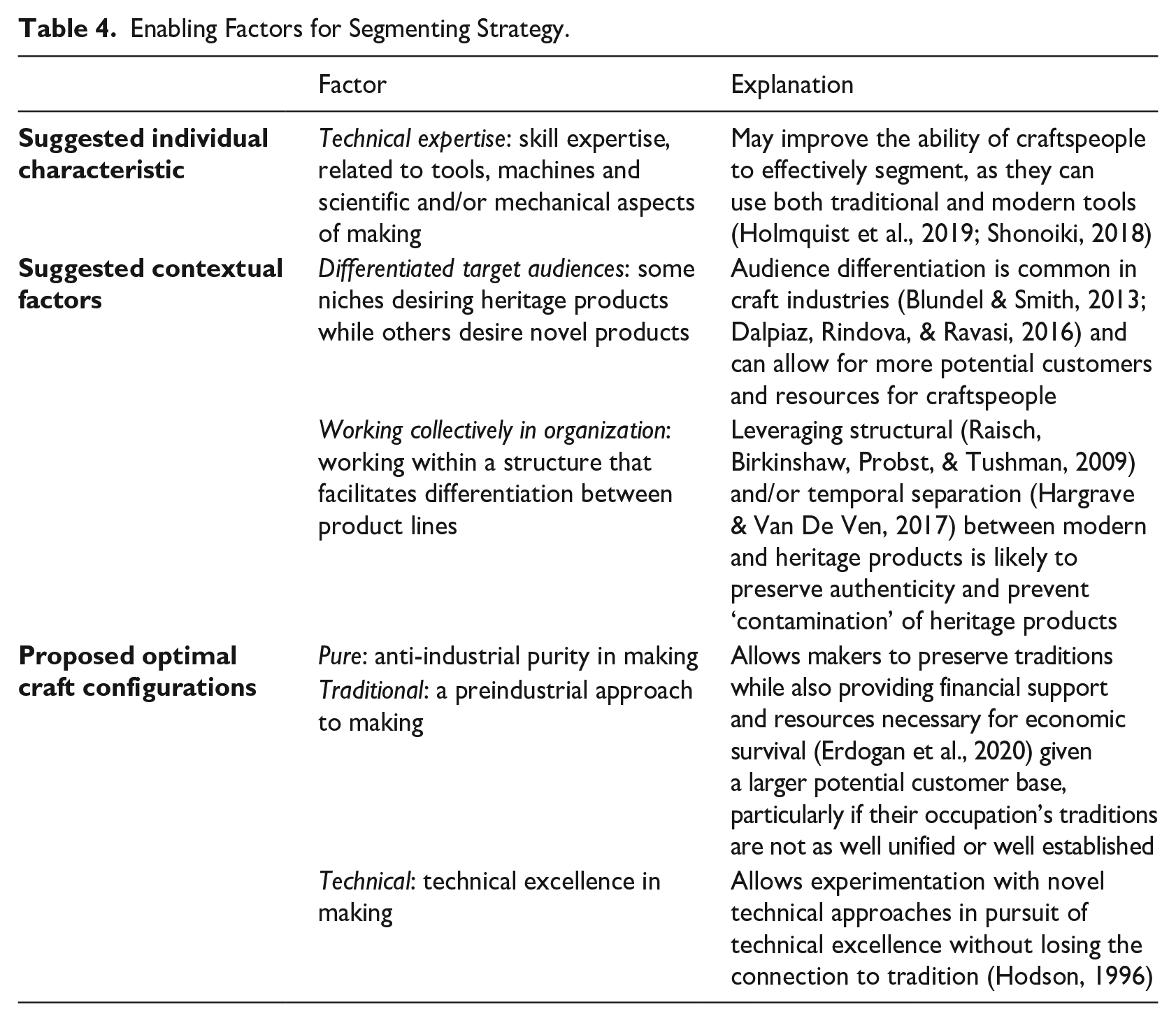
Like preserving, the segmenting strategy allows craftspeople to use authenticity to differentiate heritage products, yet here they also reap the benefits of modern products (e.g. higher efficiency). Key to craftspeople’s use of this strategy is differentiation between products or product lines, as each appeals to different customers and involves different making processes (Negro, Hannan, & Rao, 2011). Maintaining separation between product lines, and emphasizing the differences between how products are made, marketed and sold, is critical to prevent perceptions of ‘selling out’ – being inauthentic to, or taking advantage of, tradition (Carroll & Wheaton, 2009). Recent examples show that effective segmentation depends on displaying an authentic commitment to heritage (Gaytán, 2019) and preventing ‘contamination’ of the traditional products (Erdogan et al., 2020). In some cases, such separation may be more a matter of decoupling actual production from ‘outwardly presented images of craft production’ (Beverland, 2005, p. 1025). Segmenting allows craftspeople to embrace both tradition (heritage products) and novelty (modern products). Tradition and authenticity can be preserved, even subsidized, by making modern products which adapt to contemporary markets, technologies, prices and aesthetics. See Table 4 for a summary of the enabling factors for the segmenting strategy.
Enabling Factors for Segmenting Strategy.
Segmenting in guitar lutherie
Luthiers at Martin Guitars provide an excellent illustration of segmenting. Martin has been a family-owned craft business since 1833; over the firm’s long history, its luthiers have developed a reputation for quality and craftsmanship (Bozanic, 2015; Carter, 2006). Today, while Martin produces nearly all its guitars using mostly industrial methods (Smith, 2023), they also offer ‘Marquis Collection’ guitars hand built by luthiers in their custom shop (Martin Guitars, n.d.). The custom shop, opened in 1997, focused on guitars ‘made the old way, by hand with premium woods that exactly match the specifications, down to the millimeter, of the instruments Martin produced during the so-called Golden Era of the 1930s’ (Smith, 2023, p. 185). The custom shop reflects Martin’s segmenting strategy to address both demand for guitars authentic to the ‘golden age’ tradition, and mass-produced models which are much more lucrative. Importantly, Martin luthiers are able to do both and be perceived as legitimate thanks to their storied history – some have gone as far saying Martin ‘invented the American guitar’ (Shaw & Szego, 2013) – which ensures authenticity. What’s more, Martin’s separate product lines appeal to different customers. Marquis Collection instruments cost from $8,000 to $50,000 and appeal primarily to collectors and professionals, while the company offers many more affordable (e.g. $550) models which appeal to average players.
Synthesizing
Finally, craft workers can synthesize the tensions between novelty and tradition so that both are represented in the same product (Lewis, 2000), rather than using tradition to differentiate or pursuing each separately. In furniture making, for instance, the Eames lounge chair combined traditional elements of an English club chair – leather, wood, padded arms – with a novel process for moulding plywood forms (Kirkham, 1998). This synthesis has since influenced even traditional handmade furniture, such as Tom Faulkner’s custom designed chairs (Faulkner, n.d.). I argue that this process will involve abstracting from traditional occupational resources (e.g. practices, traditional materials) to allow craftspeople to see these meanings from a new perspective and thus generate possibilities. Craftspeople will then contextualize these possibilities to ensure that they fit coherently with the craft’s tradition (see Figure 3). This process echoes theories of integration in creativity (Harvey & Berry, 2023) in that craftspeople find interconnections between apparently conflicting ideas.
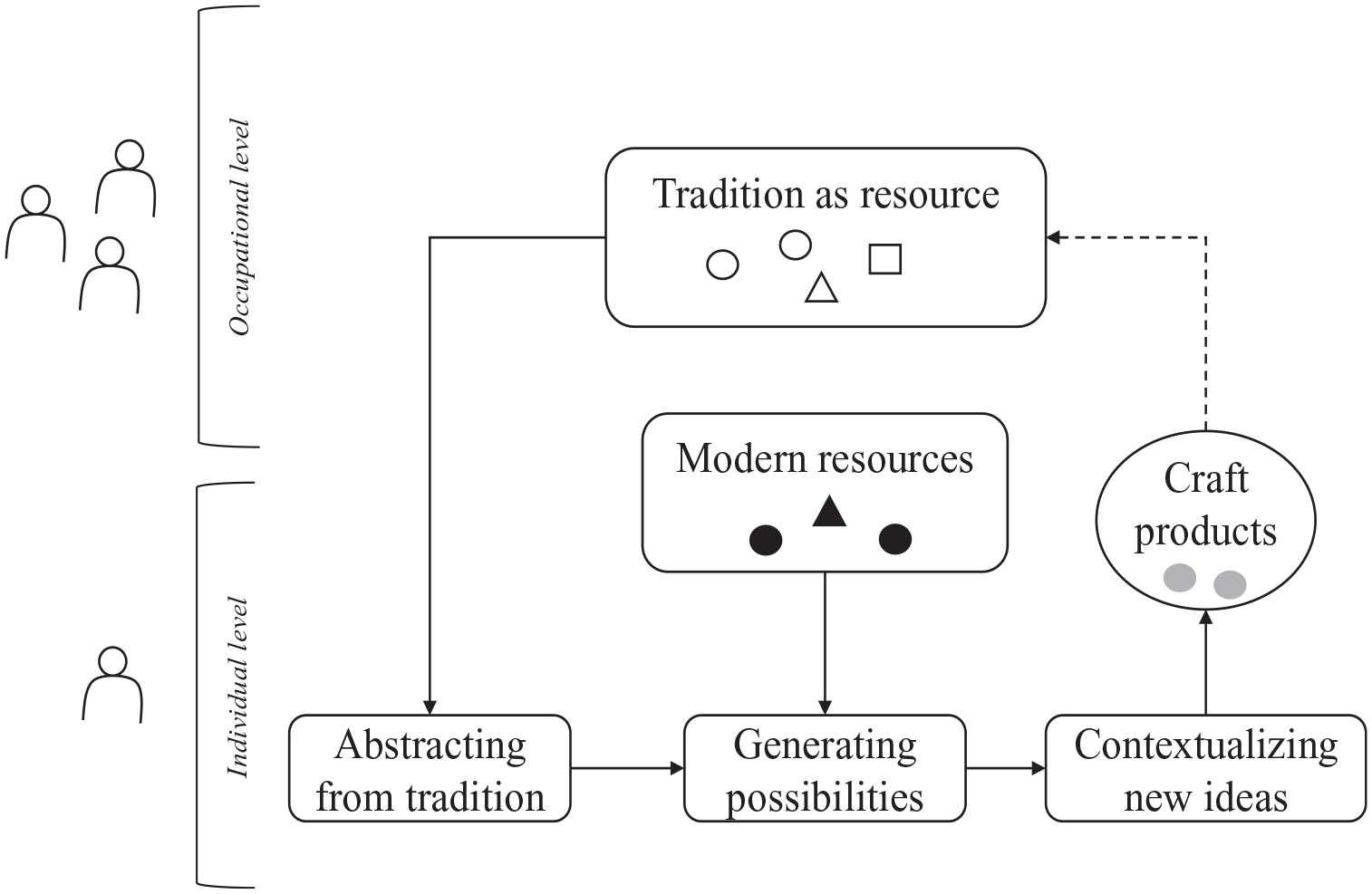
Synthesizing Strategy.
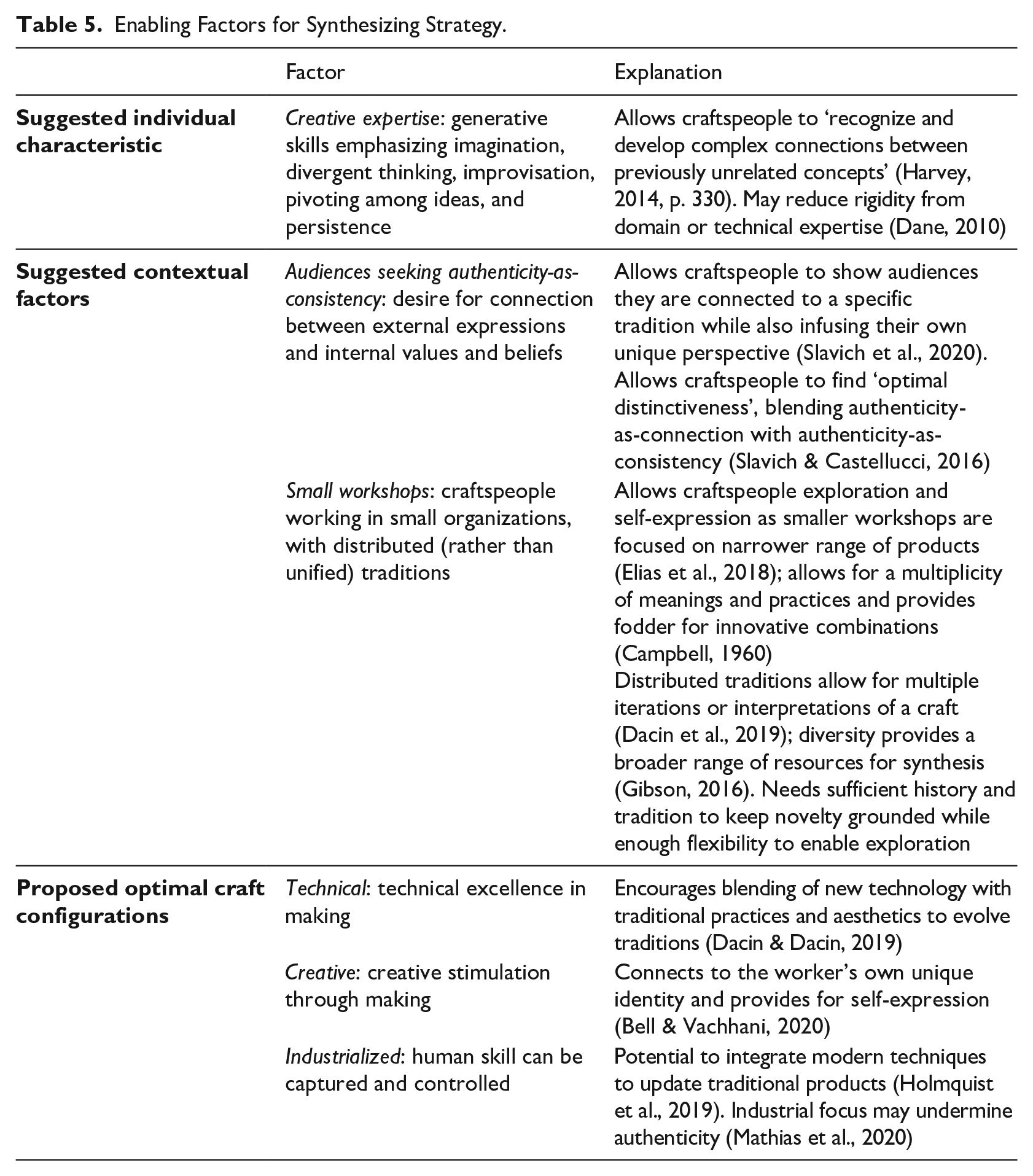
This approach involves ‘an ongoing dynamic interaction’ (Schad et al., 2016, p. 37) between novelty and tradition. Often self-expression, deriving from a craftsperson’s unique identity or experience, can foster integrating novelty into a traditional domain (Elias et al., 2018; Svejenova, 2005). Effective syntheses of tradition and novelty can thus provide authenticity-as-consistency, showing that craft workers are true to traditional values, while also providing a unique perspective. For example, Mexican-Austrian artisan David Pompa creates tiles made with modern patterns but using traditional barro negro clay, a material native to Oaxaca with a unique dark black color (Pompa, n.d.); integrating traditional materials with his modern aesthetic helped revitalize craft communities in Mexico (Prehofer, 2019). Such syntheses rely on rethinking the assumptions embedded in both novelty and tradition (e.g. traditional materials use traditional aesthetics). Synthesizing can foster the evolution of tradition, taking a step forward while following in the trajectory of the past, and thus opening new opportunities for others to follow, fostering virtuous cycles of growth. See Table 5 for a summary of the enabling factors for the synthesizing strategy.
Enabling Factors for Synthesizing Strategy.
Synthesizing in guitar lutherie
Several independent luthiers exemplify the synthesizing strategy. For some, synthesizing has involved blending novelty into the traditional design of the guitar itself. For example, Ken Parker described how he explored a variety of domains, including harpsichord and grandfather clock making, in creating his redesigned archtop acoustic guitar (Bilger, 2007). Parker combines traditional materials, like tonewood, as well as new materials like carbon fibre; he also draws on training he developed as a toolmaker early in his career to design new tools and machinery, inspired by his apprenticeship with violin makers (Parker, n.d.). Parker is well known for combining tradition and novelty in innovative ways, such as his ‘floating’ neck connection and a unique bridge (Drake, 2011). Other luthiers have blended novelty with tradition in their artistic influences, such as inlay art (inserting small pieces of precious material, such as abalone, into the wood of the guitar). Such ornate instruments have shifted the traditional emphasis on a guitar’s tone being primary and thus reshaped the meanings traditionally attached to a guitar, casting it as both artwork and instrument (Perlmutter, 2016).
Dynamic Responses Over Time
Each strategy related above provides a starting point for understanding how craftspeople can effectively address both novelty and tradition at a given point in time. Yet, navigating paradox requires different responses as the environment (e.g. the industry or occupation) and the craftsperson themselves change (Pradies et al., 2021). Virtuous cycles do not always remain so, particularly as contexts are dynamic, and to maintain positive cycles requires purposeful, ongoing adjustment (Smith & Lewis, 2011, p. 394). I posit three factors likely to shift craftspeople’s strategies over time: revaluing heritage, developing reputation and exposure to new domains (see Figure 4). I consider these a theoretical starting point, not a comprehensive list.
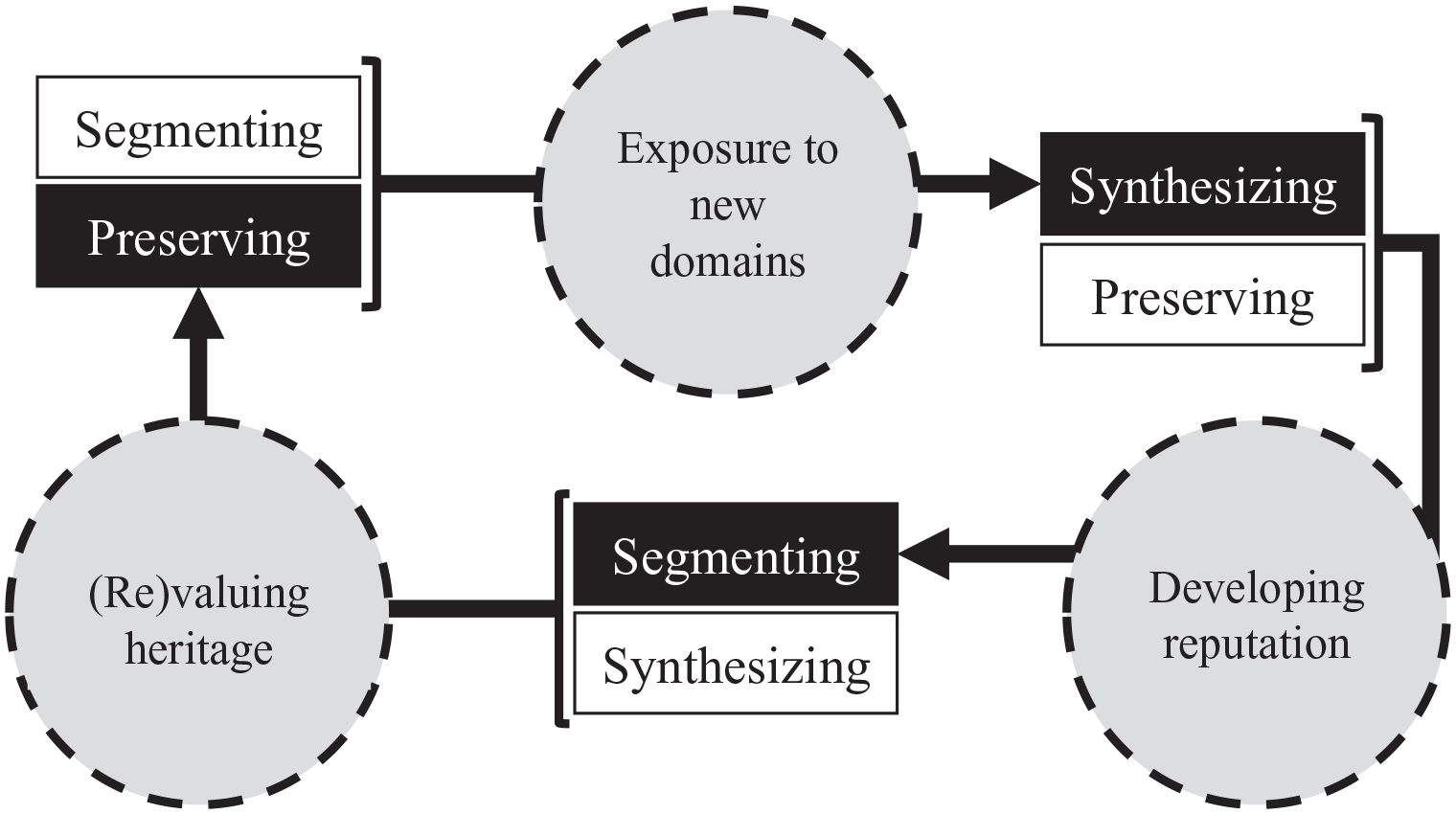
Dynamics of Change between Strategies.
Revaluing heritage
The rediscovery and/or revaluing of a craft’s heritage is one key factor which can shift craftspeople from segmenting or synthesizing to preserving. Extant work has acknowledged that interest in craft is often cyclical (Blundel, 2018; Greenhalgh, 1997), suggesting that craft workers need to respond dynamically. Revaluing can be internal, in that it emerges from the efforts of individual craftspeople within the occupation, or external, in emerging from outside audiences or collectively in the broader industry. Internal revaluing is likely in heritage crafts as makers are ideally positioned to rediscover a meaningful practice, artifact, or material connected to the craft’s past due to their passion as custodians of the craft’s traditions. For example, The Merchant of Venice, a perfumery by Marco Vidal, spent years working to resurrect the lost tradition of Venetian perfume-making. After collecting historical sources, ‘Vidal began re-embodying some elements of the tradition into new products that could yet appeal to a contemporary audience’ (Bacco & Dalpiaz, 2022, p. 12). Similarly, Sasaki and Ravasi (2024, p. 31) recount how a president of Japanese sake firm Masuda Tokubee searched for inspiration in a popular 18th-century book about food and drinks, allowing the firm to pioneer the rediscovery of a genre of sake, nigori, banned in Japan for two centuries. In this sense, revaluing heritage can be driven from the bottom up as custodians shape the broader domain (Bacco & Dalpiaz, 2022).
Revaluing heritage can also be externally driven. In crafts, like other creative industries, actors ride tides of taste, and there may be periods where heritage (and the accompanying nostalgia) become prominent (Bell et al., 2021). As the environment shifts, such as increasing consumer demand for artisanal products or crises of quality (Carroll & Swaminathan, 2000; Casco, 2015), tradition becomes appealing and sought after by outside audiences. In this sense, revaluing heritage can be top-down, as industry or occupational trends shape how craftspeople emphasize tradition versus novelty. Kroezen and Heugens (2019, p. 30), for example, described how one key to the field-level regeneration of traditional Dutch beer brewing practices was ‘nostalgia triggers’, which created awareness of, and longing for, the revival of tradition. In either case, as heritage becomes more valuable (internally or externally), makers are more likely to emphasize the traditional aspects of their practices and products as a key differentiating factor. Revaluing heritage seems likely to drive preserving, rather than segmenting or synthesizing, as narratives of authenticity generally demand some level of ‘purity’ or single-mindedness (Beverland, 2005).
Revaluing heritage in lutherie
In the early 1970s, external dynamics played a large role in the revaluing of the ‘golden age’ guitar heritage and making practices (Dudley, 2014; Smith, 2023). Changes in the manufacturing practices of large guitar makers (e.g. Gibson and Fender) left many players dissatisfied with the quality of new instruments, leading to a crisis of quality and driving demand for vintage guitars. Guitar dealer George Gruhn described: Gibson, and Fender dominated the market so thoroughly that they were able . . . to produce absolute crap without it noticeably hurting their bottom line. But then it started to create a demand where the little guys [independent luthiers] got into it. These little guys rapidly gained a reputation for being better than the big boys. (Dudley, 2014, p. 47)
At the same time, folk musicians promoted vintage guitars as central to their sound (Smith, 2023). The movement was also supported by a countercultural zeitgeist in the 1960s and 1970s which supported craft and open sharing of information: ‘That principle of the ’60s, you know, that information is free, was very clear . . . That is one principle – at least in this craft – that is alive and well’ (Dudley, 2014, p. 23). These external dynamics led many players and luthiers to begin revaluing heritage and seeking to create instruments which emulated the ‘golden age’ guitars of the 1920s to 1940s built by Martin and Gibson. The revaluation of heritage, as it became widespread, likewise influenced larger guitar manufacturers. For example, Martin’s Marquis Series, described above, developed in part to show that independent luthiers could not build a ‘better Martin than Martin’ (Smith, 2023, p. 186).
Developing reputation
Developing reputation is another factor which can shift craftspeople’s strategies, from synthesizing or preserving to segmenting. Unlike revaluing heritage, which is inherently cross-level (e.g. occupational and individual level), reputation is primarily concerned with the individual craftsperson. I define reputation as recognition based on characteristics, accomplishments, behaviour and intended images presented over time (Ferris et al., 2003, p. 215; see also Fetzer et al., 2023). Reputation often plays an important role in craft (Barlow, Verhaal & Hoskins, 2018) as it is closely linked with authenticity – authenticity perceptions can shape reputation and reputation signals authenticity (Beverland, 2005; Carroll & Wheaton, 2009). Craftspeople generally develop a reputation through social relationships (Elias et al., 2018), such as informal networks and word of mouth; as one maker described: ‘it’s really just building up the value of your name. Sometimes it’s not just a piece of work they buy, it’s because it’s by so-and-so’ (Fillis, 2003, p. 247).
As a craftsperson progresses in their career, gaining awards and attention, they can develop a reputation for quality which signals that they are an authentic artisan. For example, Del Maguey, producer of craft mezcal (a traditional Mexican spirit), launched in 1995 with its goal ‘to bring this liquid art form, this 400-year-old culture, to a global audience completely intact’ (Baggett, 2023). They became well-known for producing single-village mezcal, authentic to Indigenous traditions in Mexico. In 2017 the company was acquired by Pernod Ricard, one of the largest wines and spirits conglomerates in the world, and in 2023 they introduced a new spirit, Vida Puebla, intended to be accessible beyond just mezcal aficionados. Del Maguey’s reputation for quality allowed them to segment into both pure craft mezcal and modern varieties (in partnership with a large corporation) while maintaining authenticity (Gaytán, 2019). Developing reputation is most likely to lead to a segmenting strategy as it builds one’s credibility and perceived authenticity, key factors in segmenting effectively. Segmenting also provides possibilities to grow the business and one’s reputation while staying true to one’s roots.
Developing reputation in lutherie
As the niche for handmade guitars grew over the last 40 years, so did the reputation of pioneering independent luthiers. While many stayed ‘pure’ in traditional practices, others began incorporating some industrialized processes, leveraging their reputation to make both handmade and mass-produced guitars. For example, Dana Bourgeois set up a one-man lutherie shop during the 1970s, during the craft revival; as his reputation grew, Bourgeois expanded and began incorporating more industrial making practices (Bourgeois, 2022). Bourgeois Guitars now makes both custom shop guitars built by hand with traditional materials, and mass-produced guitars, including a recent agreement with Chinese guitar manufacturer, Eastman. Bourgeois provides the tops and backs, which have been ‘voiced’ (shaped to produce the best sound), and Eastman builds the guitars. Dana noted how segmenting helps them grow: ‘Eastman is able to open up markets for us and help us acquire raw materials. They’ve also been able to help us fill in and expand our product line into price points that we frankly could never get into, unless you’re on a much larger scale’ (Verlinde, 2021). Key to the success of segmenting here is Dana’s reputation as an authentic craftsman, someone who seeks to ‘achieve a more vintage sound’ (Bourgeois Guitars, n.d.). The company notes: ‘Dana meticulously oversees the top and back voicing of every guitar and approves selection of all tonewoods, skills that have become legendary in the world of acoustic guitar lutherie’ (Bourgeois Guitars, n.d.) – these traditional touches preserve the authenticity associated with their guitars.
Exposure to new domains
Finally, exposure to new domains could shift craftspeople’s strategies from segmenting or preserving to synthesizing. As craft becomes more prevalent in society (Bell et al., 2019), there is increasing opportunity for cross-domain connections. Following research on creativity (Cattani & Ferriani, 2008; Perry-Smith & Mannucci, 2017), I argue that exposure to new domains can inject novelty into craftspeople’s thinking and practices. Artisan perfumeries, for instance, have begun working with designers to develop innovative fragrances, using images from a visual designer and scents created by perfumers (Islam et al., 2016). Exposing perfumers to visual design, such as the depiction of a specific feeling, and translating these different modalities across domains, transforms traditional scents in novel ways (Endrissat, Islam, & Noppeney, 2016). Exposure to new domains seems more likely to push craftspeople to a synthesizing strategy rather than preserving or segmenting, as new areas of knowledge are likely to shift maker’s perspectives, allowing them to see their traditions in a more abstract way, enabling new possibilities.
Exposure to new domains has been fostered in many ways, including the creation of internet communities focused on craft (Bonanni & Parkes, 2010) and a resurgence of local craft fairs (Crafts Council, 2020). These communities provide space where craftspeople encounter others with different materials, practices and assumptions, allowing for creative abrasion (Skilton & Dooley, 2010). For example, when traditional glass blower Stefanie Pender became an artist in residence at Pier 9, the innovation workshop for Autodesk, she sought to ‘merge my traditional craft training with strategies of human/machine collaboration’ (Nordstrom, 2017). She became intrigued by a welding robot in the shop, eventually combining this technology and her tacit knowledge of glass to develop a glass welding 3D printer which could produce complex geometries impossible with traditional techniques. Her exposure to new domains shifted Stefanie from a preserving strategy – ‘the same path glassmakers have been walking down for hundreds of years’ (Nordstrom, 2017) – to as synthesizing strategy, transforming her traditional practices with new technologies.
New domains in lutherie
As independent lutherie grew, makers were exposed to new materials and technology not traditionally used. Some luthiers began integrating materials such as carbon fibre and fibreglass, fairly radical departures from the traditionally revered tonewood. Charles Kaman, founder of Ovation Guitars, developed a guitar with a rounded back made of fibreglass combined with a Sitka spruce top, a traditional tonewood (Carter & Eiche, 1996). The combination proved popular with similar combinations of natural and synthetic materials being used by others. Classical guitar makers have also experimented with other new materials, including the double top guitar designed by Matthias Dammann, which includes a layer of Nomex (a lightweight polymer) between two layers of tonewood on the guitar’s top (Kame, 2017). This design allows for increased strength and resonance while also being lightweight and maintaining the traditional aesthetic. Double top guitars are a recent innovation to the highly-traditional classical guitar world (Cooper, 2006).
Discussion
I have argued that tradition and novelty are paradoxically linked in heritage crafts and play an important role in how they endure over time by spurring virtuous cycles. I have presented a framework for how craftspeople can engage both tradition and novelty – drawing on cherished traditions while adapting to modern contexts. I describe three strategies which can shape the ways craftspeople can adapt, gain access to resources, and attention from external audiences, encouraging virtuous cycles and enabling heritage crafts to thrive over time. I then theorized three emergent factors which may shape how craftspeople dynamically move between strategies over time. My framework has implications for theories of craft, tradition and creativity.
The endurance of heritage craft
My primary contribution is theorizing the micro-foundations of how heritage crafts endure over time. My framework extends research on craft resurgence by examining how individual craftspeople may respond with different strategies to shifting environments, as these seem key to the cycles of decline and resurgence in existing research (Bell et al., 2019; Kroezen & Heugens, 2019; Raffaelli, 2019). For example, if heritage begins to be more valued by the industry or domain (e.g. when institutional remnants are reawakened; Kroezen & Heugens, 2019), craftspeople can respond effectively by adopting a preserving strategy; this allows them to adjust to the changing environment while still riding the dual horses of tradition and novelty. When such nostalgia dies away, craftspeople would do well to shift the balance between tradition and novelty to effectively survive and grow (e.g. segmenting or synthesizing strategy). When craftspeople shift their responses to the tradition–novelty paradox in relation to the environment, they are more likely to help their crafts endure and thrive over time by preventing the extreme oscillation between poles of the tension, which can trigger vicious cycles (Smith & Lewis, 2011). My theorizing thus expands on how work is organized as a craft (e.g. combining tradition and novelty) and the consequences this can have occupational endurance or decline. Future work is needed to validate and extend this theory and understand more about how craftspeople may ‘smooth out’ cycles of decline and resurgence.
Although my framework centers craft endurance, there are at least two implications for craft decline. First, while the factors influencing decline are always complicated and multifaceted, allowing one pole of the tradition–novelty tension to dominate seems likely to accelerate craft decline. Extant studies lend credence to this: embracing industrial techniques can erode tradition (overemphasis on novelty), triggering crises of quality or authenticity, as occurred in crafts such as beer brewing (Kroezen & Heugens, 2019) and lutherie (Dudley, 2014). Likewise, overreliance on tradition can inhibit adaptation, as occurred in bespoke shoemaking (Country Craft, 2017) and printing (Wallace & Kalleberg, 1982). The both/and approach advocated by a paradox lens has the potential to ameliorate some of these challenges. A second implication for craft decline is that even when embracing tradition and novelty, certain strategies are likely more effective at a given moment than others – equilibrium is dynamic rather than static (Smith & Lewis, 2011). For instance, in highly unified craft communities, segmenting may be seen as selling out (England, 2023; Mathias, Huyghe & Williams, 2020). Likewise, when audiences are seeking authenticity-as-connection, synthesizing may alienate key stakeholders (Solomon & Mathias, 2023). Decline thus seems shaped by the interaction between craftspeople’s responses to tradition–novelty tensions and the sociohistorical context of their craft. Further research is needed on craft decline, considering not just crafts which were revitalized but also crafts which have been lost (Cattani et al., 2013; Gorvett, 2021).
Tradition as both stability and change
My theory also contributes to the custodianship perspective on tradition (Dacin et al., 2019). The dominant emphasis in prior work has been on guarding traditions – protecting them from change, dilution or corruption (Crawford & Dacin, 2021; Dacin & Dacin, 2008).
In line with others, I argue that custodianship can be a creative process involving both preservation and adaptation (Dacin et al., 2019). In this way, my framework dovetails with emerging work showing how traditions become more resilient through variation (Wiedner et al., 2024). I theorize different ways in which custodians who are producers are uniquely positioned to evolve or reimagine tradition in creative ways. While much existing work has pointed to synthesizing as a strategy for carrying on tradition (De Massis et al., 2016; Erdogan et al., 2020), I suggest alternatives, including separating tradition and leaning into tradition (Sasaki & Ravasi, 2024). Indeed, not only do I argue for multiple possible strategies, but I suggest that multiple strategies will be necessary over time to keep traditions alive and vibrant. I thus continue the exploration into ways of conceiving tradition not as a constraint but as a set of resources which can be used in innovative ways (Dacin & Dacin, 2019).
I also begin uncovering new ‘mechanisms by which traditions are used as resource for adaptation and change’ (Suddaby & Jaskiewicz, 2020, p. 240). A paradox lens highlights that for heritage craft, both tradition and novelty are central and enduring themes; heritage craftspeople, then, must find a way to ‘change without changing’ (Sasaki et al., 2020, p. 606). This perspective goes beyond changing the periphery while preserving the core (Cancellieri et al., 2022), instead recognizing that, at least in craft, tradition and novelty are both core, and therefore require more complex, both/and responses. Heritage crafts are generally assumed to be oriented to the past (Holt & Yamauchi, 2023; Sasaki et al., 2020; Toraldo et al., 2019), yet I argue that heritage craft need not be temporally static. My theory echoes the recent findings of Sasaki and Ravasi (2024) in recognizing that preservation of history requires not just a focus on the past, but an eye to the present and future. My work demonstrates that a maker’s balance between past, present and future may change over time, as their occupation experiences dynamic changes. It seems that heritage crafts would do well to learn from long-lived firms how to balance imagination with history in a way that may stabilize cycles of decline and resurgence (Sasaki et al., 2020; Sasaki & Ravasi, 2024).
Beyond novelty in creativity
Finally, my framework extends theory on creativity and creative work by questioning an overemphasis on novelty, indicating new ways of engaging in the creative process. Dominant perspectives on creativity position novelty as the primary factor distinguishing ideas as creative or not (Harvey & Berry, 2023; Hua, Harvey & Rietzschel, 2022), with usefulness or appropriateness being secondary (Weisberg, 2015). I show that this perspective risks de-contextualizing the temporal embeddedness of ideas within occupational traditions. I highlight the importance of looking to the valued past in generating and evaluating ideas (e.g. tradition as uniqueness). I also question the assumption that ‘the possibilities for creative deviation emerging from within craft practices are often limited to incremental twists of patterns that remain, fundamentally, unquestioned’ (Holt & Yamauchi, 2023, p. 3). I show how tradition can provide novelty, as well as being synthesized with, or alongside, novel ideas and practices (Wiedner et al., 2024), in ways which can evolve tradition. Future research should explore the role of tradition in shaping creativity (cf. Li, 1997), for example, in creative industries that rely on reinterpreting traditional or classic works (Cancellieri et al., 2022).
My tradition-forward perspective on creativity also advances the emerging scholarly conversation on the boundaries of creativity and imagination, particularly in craft work (Schaefer & Hallonsten, 2024). The dominant perspective has long been that creativity is primarily beneficial and should be unfettered, with the accompanying belief that more novelty is better (Simonton, 1999). New research has shown the limitations of creativity in certain contexts, such as revenant organizations, where tradition, nostalgia and authenticity must be established before innovating (Solomon & Mathias, 2023). Similarly, research on long-lived firms (Sasaki & Ravasi, 2024) shows that managers’ creativity and imagination are bounded by history and tradition – an orientation towards both the past and the future meant that tradition was both a constraint and an inspiration. My framework integrates these insights into our understanding of individuals’ creative work, showing that initial boundaries or meanings created by tradition can shape how new ideas form and are elaborated, analogous to creativity which emerges from convergent rather than divergent thinking (Runco, 2010). My framework thus answers the call to explore craft as an alternative approach to creativity, ‘creatively combining past and present craft conventions with future challenges’ (Schaefer & Hollonsten, 2024, p. 825).
Future Research Directions
My framework is a conceptual jumping off point and suggests several areas for future research. First, an important boundary of my theory is the degree to which traditions resonate with craftspeople. Tradition may not resonate as strongly with some modern craft workers whose crafts are less steeped in history (see Ocejo, 2010, 2017); however, even workers not deeply connected to a heritage craft likely gain some authenticity from doing things in a way perceived to be traditional (e.g. handmade; Fuchs et al., 2015). Future work should consider variation in how makers connect to tradition within and across crafts. It would also be valuable to consider complexities among my proposed strategies. The dynamics of fit, resurgence,and decline are complex and there may be challenges moving from certain strategies to others. For example, moving from preserving to segmenting could risk alienating audiences by threatening authenticity (Endrissat & Noppeney, 2018). Strategies may also overlap or relate in other ways; for example, segmenting could connect to, or be used in concert with, preserving as makers use modern products to emphasize the uniqueness of heritage products. Although I do not argue that certain strategies will be dominant in a given occupation, future work could examine the prevalence of specific strategies in particular crafts, or explore which strategies might be more common, even institutionalized.
Finally, future research should elaborate much more on my propositions around the temporal dynamics of craft endurance. Future work could explain how the historical state of the craft at a given moment shapes these processes over time – for example, is it harder or easier to reverse previous or longstanding decline? Are there natural trajectories which craft occupations take? It would be interesting to compare long-lived versus relatively younger crafts to explore these dynamics. A cross-level perspective is also valuable, examining not just industry or occupational dynamics, but also the actions of individual craftspeople, as I demonstrate. The illustrative case I use, guitar lutherie, does well to illustrate the pieces of my framework, but does not fully address endurance over time – lutherie has not faced significant threats to the craft’s survival, but it has faced crises of quality (Dudley, 2014). Future work is needed to test my theory over longer timescales.
Conclusion
Adapting to novelty while preserving tradition is a fundamental and enduring concern for heritage crafts. As Jauss (1988, p. 376) notes, ‘tradition realizes itself neither in epic continuity nor in a creation perpetua, but in a process of mutual production and reception, determining and redetermining canons, selecting the old and integrating the new’. My theory provides a micro-perspective on how craftspeople can navigate this process, suggesting how these tensions should be key to understanding the endurance of heritage crafts.
Footnotes
Acknowledgements
I am very grateful to the special issue editors and the three anonymous reviewers for their generous and thought-provoking comments and critiques throughout the review process; the paper improved immensely under their guidance and I learned much along the way. The paper also benefitted from excellent feedback from Gabriel Sala, Mike Pratt, Ben Innis, and the members of BOSCON, as well as numerous conversations with colleagues. An earlier version of this paper was presented at the 2023 Academy of Management annual meeting.
Funding
The author received no financial support for the research, authorship, and/or publication of this article.
