




Abstract
The contemporary German food market is marked by a large number of food items on retail shelves—the choice and abundance of products stand in sharp contrast to the market of the 1950s. We conduct a qualitative, interpretive analysis of the archives of a food magazine from West Germany between 1949 and 2014 to understand the changes the German food market has undergone. Drawing on category research, we discover three inter-related category dynamics that contribute to the change in the market: category member proliferation, category member valorization, and category member entanglement. We then discuss the implications of category dynamics and theorize how they drive category change.
Introduction
The efficient organization of food in any given geographical location—its production, exchange, consumption, and eventual disposal—is a key contemporary challenge. To understand the organization of food in a culture is in many ways critical to understanding the organization of the culture itself (Bourdieu, 1984; Pollan, 2008; Schlosser, 2001). Food is also one of the most basic categories of organized life that has undergone a radical change in approximately the last half century (Gollnhofer, 2017), especially in the so-called developed nations (Pollan, 2008; Waters, 2006). Germany, a paragon of modern development and economic progress but with well-documented struggles during the war years, is no exception. The organization of food in Germany has been radically transformed in the last several decades. Historical accounts of the post-war years emphasize food scarcity and hunger (Andersen, 1997; Haupt & Torp, 2009; Küng, 1972; Wildt, 1994), but accounts of later years paint a picture of plentiful and abundant choice, the retail shelves packed with all manner of food items (Handelsdaten, 2015; Pritchard, 1972).
There was no singular powerful organization, say a producer’s guild, a high impact entrepreneur or a new social movement that drove this change, nor could it simply be ascribed to advances in technologies of food storage and display. The reorganization of food involved changes in the buying and consumption habits of West Germans, as well as the introduction and acceptance of new norms of evaluation for what constituted good food. There was a complex interplay of multiple and connected dynamics that gave shape to the contemporary West German food retail market. Investigating the reorganization of the German food market is theoretically generative as it offers an opportunity for a more dynamic explanation of how category change unfolds over time. We study this reorganization to answer the question: What category dynamics contribute to the contemporary organization of food?
We take food products on German supermarket shelves as the focal category. We draw on the sociological perspective on categories to investigate the reorganization of the German food market (Durand, Granqvist, & Tyllström, 2017; Durand & Paolella, 2013). The sociological perspective argues that categories are shaped by the interplay between multiple organizational actors, and are often prone to change (Kodeih, Bouchikhi, & Gauthier, 2018; Pedeliento, Andreini, & Dalli, 2019). However, these studies work largely on the assumption that change occurs from one stable category configuration to another through a sequential process largely initiated by agentic organizational actors (Delmestri & Greenwood, 2016). For example, Delmestri and Greenwood (2016) show how one agentic organization—a grappa distiller—could change the meaning, status, and value of its offering within a small-scope category—single-grape grappa—in a relatively short period. Our findings, on the other hand, show that category dynamics do not always unfold in a sequential fashion but can be marked by a parallel coexistence and multiplicity. Our study investigates the presence and interplay of category dynamics—not necessarily driven by a single agentic organizational actor (e.g., one specific retail chain)—over a significant period of time (more than 60 years) in a large-scope category (the German food category).
In order to identify category dynamics and their interplay in the German food category, we study the archives of a nationally distributed customer-facing food magazine, Die Kluge Hausfrau (DKH) (trans: The Clever Housewife) published between 1949 and 2014. We approach the magazine as an archival source through which we can reconstruct and investigate changes in the German food category (Abrahamson, 2015).
We proceed by reviewing the literature on category change, problematizing one significant implicit assumption, and identifying three research design choices that have become the norm in this stream of literature. We then reflect on our methodological approach to archival material and lay out a three-step analytical approach. We move on to the findings, and explain the first dynamic—category member proliferation, where new members are continually added to the food category. We find two additional category dynamics—one that refers to an increase in the number of evaluation criteria for category members (category member valorization) and another where previously unconnected members of a category become connected (category member entanglement). We then discuss the implications of discovering this particular set of category dynamics and theorize how they drive category change.
Categories and Change Dynamics
A significant stream of literature has come to explain changes in the organization of markets through the lens of category change (Delmestri & Greenwood, 2016; Khaire & Wadhwani, 2010; Pedeliento et al., 2019). Categories are “conceptual boundaries that cluster . . .and distinguish. . .substitutable groupings” (Rosa, Porac, Runser-Spanjol, & Saxon, 1999, p. 64). They are the “building blocks of societies, fields, markets, professions, and organizations” (Delmestri, Wezel, Goodrick, & Washington, 2016, p. 1). An emerging school of thought from this stream, the sociological perspective, explains the mechanisms and dynamics of category change by taking an approach “rooted in cultural understandings and expectations” (Glynn & Navis, 2013, p. 1125).
The sociological perspective views categories and their boundaries as mutable social constructions susceptible to changes initiated by agentic organizational actors (Durand et al., 2017; Glynn & Navis, 2013; Jones, Maoret, Massa, & Svejenova, 2012). Institutional entrepreneurs can enhance the status of an entire category previously considered low status (Delmestri & Greenwood, 2016). A category outsider can come in with a new offering that exploits existing cultural characteristics to de-stigmatize a previously stigmatized category (Pedeliento et al., 2019). A new social movement can change the meaning and status of a method of beef production historically associated with cheap and low-quality meat, so that it becomes the new flagbearer of premium, high-quality meat (Weber, Heinze, & DeSoucey, 2008).
While these studies offer rich insights into the underlying mechanisms of how categories change, they rest on a problematic assumption (Alvesson & Sandberg, 2011). They often understand category change as a move from one stable state to another following a step-by-step sequential process. For instance, Delmestri and Greenwood (2016) explain change as a sequential process of detachment, emulation, and sublimation. Similarly, Pedeliento et al. (2019) explain the contemporary artisanal status of gin through a process of emergence, settlement, and resettlement. Khaire and Wadhwani (2010) describe the recategorization of provincial Indian art into modern Indian art through a process of redefinition, establishment, and institutionalization.
We argue that this focus on a step-by-step sequential process might overlook category dynamics that involve parallel coexistence and multiplicity. Category dynamics are internal and external forces that may work together or in opposition to induce or inhibit a change in the category. We understand categories as mutable social constructions that are constantly being stabilized or revised. Traces of a more dynamic, pluralistic, and intertwined view of change are present in some previous studies (e.g., Khaire & Wadhwani, 2010) especially as the starting point for a more social perspective was the “inherently dynamic nature of market categories” (Durand et al., 2017; Granqvist & Ritvala, 2016, p. 211).
Prior research on categories has provided a limited and bounded understanding of category change because of three kinds of issues in their research design. First, prior research often focuses on strategic organizational goals. Hence, an organization’s achievement of its strategic goal naturally brings to a close all empirical investigations and theoretical explanations about change (Khaire & Wadhwani, 2010). However, focusing on organizational goals leads to a focus on organizational acts of categorization, limiting our understanding of the dynamics of change. For instance, Delmestri and Greenwood’s (2016) study of radical status change in a category concentrates on the entrepreneurial Nonino family whose success in recategorizing grappa as a premium spirit was preceded by several failed attempts. The analytical focus of the study remains the eventual successful recategorization of grappa as a premium, sophisticated spirit, not on the presence of multiple dynamics and their interplay, which remain undertheorized.
The second issue in the research design of category change studies is the brevity of the time period during which evidence of categorical change is tracked. For instance, Weber et al. (2008, p. 533) focus on the rapid emergence and premiumization of grass-fed beef over a six-year period (2000–2006) with the caveat that “influence at later stages is likely to have a different emphasis and is beyond the scope of this study” (Weber et al., 2008, p. 533). Similarly, Khaire and Wadhwani’s study of the emergence of modern Indian art (2010, p. 1283) collects empirical material over a twelve-year period between 1995 and 2007. Kodeih et al.’s (2018, p. 1001) study of recategorization strategies of two competing business schools originates in the late 1990s and concludes in 2005. Like most social constructions, categories experience change dynamics that can be discerned immediately as well as those that take place over a much longer duration (McCracken, 2010). Even though some studies explicitly argue that “the time period covered by a research project may influence the interpretation of how change . . .occurs” (Arndt & Bigelow, 2005, p. 254), much of categorization research continues to mobilize a relatively short-term tracking of change that can hinder the identification and theorization of long-term change dynamics. We argue that taking a longer-term view would complement existing explanations of category change.
The third issue is that many of the categories investigated are what we call small-scope categories. Small-scope categories have a small number of nested subcategories. For instance, nanotechnology (Granqvist & Ritvala, 2016), satellite radio (Navis & Glynn, 2010), grappa (Delmestri & Greenwood, 2016), grass-fed beef (Weber et al., 2008), gin (Pedeliento et al., 2019), and modern Indian art (Khaire & Wadhwani, 2010) are all small-scope product categories. Gin, for example, contains the subcategories of premium gin, dry gin, artisanal gin, and possibly a few others (Pedeliento et al., 2019). In contrast, the category of food is a large-scope category because of the substantial number of nested subcategories—fruits, vegetables, breads, meats, etc. The absence of theorization about large-scope categories in the literature is surprising given that the history of category studies in sociology and anthropology began with studying very broad foundational large-scope categories (Douglas, 1999) such as purity and pollution. We argue that studying small-scope categories makes it difficult to distinguish the presence of multiple dynamics and their interactions. In addition, change can take time to become salient in large-scope categories and can only be surfaced if studied over a longer timeframe.
To summarize, we still lack a holistic understanding of how category dynamics contribute to change. We argue that this oversight is rooted in certain research design choices—a focus on specific organizational goals, collecting empirical material from relatively short spans of time, and engaging with small-scope categories. Our research design complements these studies and sheds new light on the presence of multiple, interlinked, and long-term dynamics. To this end, we focus on food items on retail shelves as our category (hereafter: German food category) and employ a sociologically informed approach to study what category change dynamics contribute to the contemporary organization of the German food category.
Context
Up to 1949, and in the years following the Second World War, the organization of German food was marked by scarcity. The period was memorialized in popular media as the era of Fettlücke (trans: “scarcity of cooking fat”) (Andersen, 1997; Haupt & Torp, 2009; Küng, 1972; Wildt, 1994). Food imports were minimal, food scarcity was widespread, and households spent an inordinate share of their income on groceries (Tietz, 1983). Meat of any kind was a luxury and basic staple foods such as rice, potatoes, and plain bread dominated retail shelves. Variety and choice were almost nonexistent. Regional, easily available foods dominated consumption patterns and recipes. For instance, locally grown apples were the main available fresh fruits whereas bananas were conspicuous by their absence (BMEL, 2012). The Fettlücke phase left a lasting impression on the vast majority of German citizens (Protzner, 1987).
A few years later, in the 1950s, West Germany went through a period of accelerated economic growth, popularly referred to as the Wirtschaftswunder (“economic miracle”). This was an era of economic prosperity and of variety and abundance in food (Wachter, 2015). This period was marked by technological progress, growing household income, and new types of food retail. The pent-up demand and lack of availability from the Fettlücke phase translated to a period of excessive food consumption, the age of Fresswelle (“wave of gluttony”).
These economic and social changes had many implications for food consumption and organization in West Germany. West Germany’s gross domestic product saw significant increase, as did salaries, agricultural productivity, and per capita food consumption (Jessen & Langer, 2012; Statista, 2017). The country quickly went from hunger and scarcity to food sufficiency and to high levels of prosperity, abundance, and choice. Technological advances, an increase in household income, and changes to the structure of food retail contributed to this development. For instance, in the early 1960s, refrigerators and freezers became widespread in German households, adding flexibility to grocery shopping, preparation, and consumption practices. Technological changes contributed to high levels of food consumption and changed the way West Germans bought and consumed food. They did not need to immediately consume what they bought at the store and could buy more than for their immediate needs. The development of superior supply chains, propped up by a rapidly expanding economy, meant that food retailers could import international food and drink. This change led to West German consumers moving away from small-scale, specialized grocery stores attuned to local supply chains to supermarkets and big national retail chains that could accommodate and display a vastly greater number of products on their shelves (Langer, 2013; Tietz, 1983). All these developments together contributed to a significant variety of food items becoming available on retail shelves. The change, seeded in the 1950s boom years, persisted long after. For instance, in 2010 more than 1,800 new food items found their way onto German retail shelves (Brück, 2011). Today, retail shelves are stacked with food items of all sorts (Gollnhofer, Weijo, & Schouten, 2019; Handelsdaten, 2015).
As the conversations around food moved from scarcity and hunger to abundance and choice, West German consumers were confronted with a different set of questions. Where once the focus was on making do with whatever was available and extracting the maximum possible nutritive value from food (Fettlücke), the focus was subsequently on living the good, gluttonous life and enjoying the fruits of economic wonder (Fresswelle). While this descriptive account likely resonates with other accounts of food reorganization, little is known about the category dynamics that were at the heart of this change.
In order to better understand the dynamics of change that contributed to the reorganization, we study a widely distributed, customer-facing food-oriented magazine, Die Kluge Hausfrau (DKH). Magazines are a powerful source of historical insight (Patterson, 2015) because they serve as a mirror “for the tenor and tone of the sociocultural realities of their times” (Abrahamson, 2015, p. 1). According to leading magazine scholars, successful, widely read magazines are unique in their ability to “bring high-value interpretative information to specifically defined yet national audiences” (Abrahamson, 1996, p. 1; Holmes, 2007). In other words, DKH, with its wide readership and close ties to food retail, is a good source for identifying changes that were taking place in the German food category at the time. We explain the particular choice of data source and the methodological approach in more depth in the following section.
Methods and Analysis
The contemporary organization of German food retail, marked by a large variety of food items on retail shelves, stands in stark contrast to the way it was organized in the 1950s, marked by low availability and rationing. We argue that new insights into the category dynamics of contemporary food organization can be offered by reconstructing its origins (Wadhwani & Decker, 2017). Focusing on archival material is one way to revisit the origins of food organization. Archival material has the potential to challenge and revise explanations and theories rooted in the present (Wadhwani & Decker, 2017) and can offer new insights on the “form and origins of significant contemporary phenomena” (Maclean, Harvey, & Clegg, 2016, p. 612) by stripping “current institutional arrangements of their taken-for-granted-ness” (Kipping, Wadhwani, & Bucheli, 2014, p. 307). To this end, we collected and analysed the archives of DKH, a popular German food-related magazine.
Sociological category studies have often drawn on archival material; for instance, to explain how agentic actors can induce category change (Arndt & Bigelow, 2005; Khaire & Wadhwani, 2010; Pedeliento et al., 2019). Similar to Arndt and Bigelow’s (2005) study that traces the masculinization of hospital administration previously dominated by women in the early 1900s, we make use of primary historical sources (DKH and newspaper archives) and analyse them using methodologies inspired from qualitative research.
Our research builds on and complements previous archival studies through one significant change in the research design—expanding the time span of collected archival material. Where previous research has collected and theorized from relatively short-term archival material (Delmestri & Greenwood, 2016; Khaire & Wadhwani, 2010), our research draws on archives spanning almost 65 years in order to leverage “the exceptional value of the long-time span” (Braudel, 1980, p. 27). The key motivation for selecting this lengthy archival time frame was to uncover new insights “about processes that take a long time to unfold” (Wadhwani & Decker, 2017, p. 115).
Data sources
The primary data source was the archives of Die Kluge Hausfrau (DKH), West Germany’s most widely distributed food-centric customer-facing magazine. Founded in 1914, DKH enjoyed a significant readership that had grown to more than 2.5 million readers by 2016 (DKH 2016/1, p. 3). It was edited and distributed by Edeka, Germany’s biggest retail cooperative. DKH was a rich data source to understand the food retail in supermarkets. The magazine had, for instance, regular features on the latest trends such as which new food items had taken over retail shelves and which food items—used in DKH recipes—were available to German consumers. As we reflected on the best use of the archives, we decided to exclude paid advertising from the empirical data set. This decision was consistent with previous research that used magazine archives as a way to retrace social change (Abrahamson & Prior-Miller, 2015). The empirical material that we focused on was primarily editorial content of a more general nature, to do with how Germans prepared, drank, ate, and bought food. It did not contain explicit references to specific brands.
The choice of time frame presented itself early in the analysis process. We chose to analyse the archives from 1949 to 2014. We began analysing magazine issues from 1949 as it was the year that the German Federal Republic came into being and it was also the first year that DKH was published after the Second World War. In many ways, 1949 was the foundation, towards gaining a degree of independence from the Allies, the beginning of the economic boom, and marked the first steps from food scarcity to saturation and, over time, to abundance. The analysis ends in 2014—the last year in the archival data.
Although DKH is but one source among many that could be used to study changes to the German food category, it is a robust and legitimate source for tracking changes within the German food category for a number of reasons. First, historical accounts describe DKH as an influential magazine on a par with Stern, a leading weekly news magazine (Lüdtke, Marssolek, & von Saldern, 1996). Second, DKH was one of the most trusted and comprehensive sources of food-related information over several decades. This influence was reflected in interviews conducted with German consumers. For each of our informants, DKH had been a crucial and regular source of information for matters of food purchase and preparation over the last few decades. Third, magazine archives were available for almost every year of investigation (except for 1974; please see Figure 1 for the distribution of the analysed food-related pages per year).
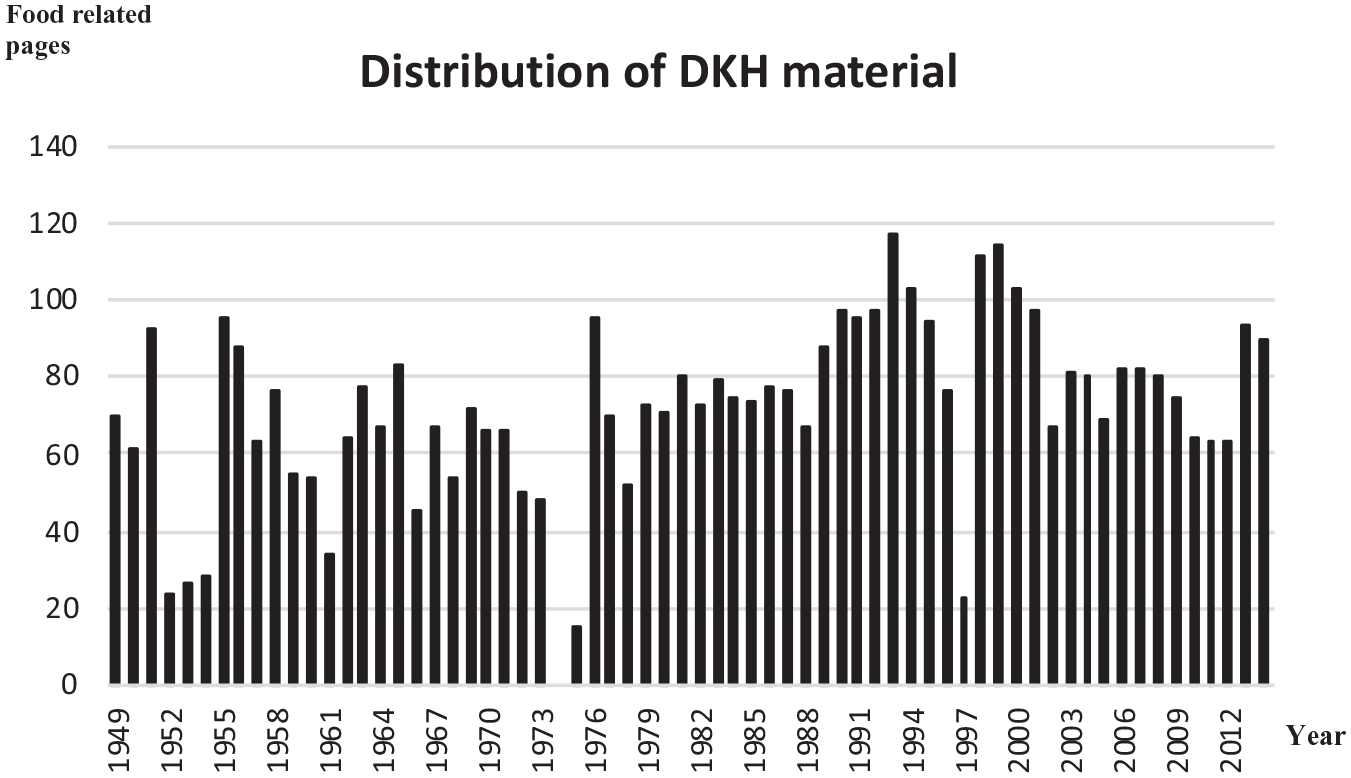
The distribution of food-related pages per year (in total equaling to more than 4500 pages). Archival material is reasonably evenly distributed over all of the years from 1949 to 2014. There is one year (1974) where magazine issues were not available at both archives.
DKH as a source also lives up to the source requirements put forth by Kipping et al. (2014). It is a valid source, close in time to the phenomena we are trying to understand. It is credible because DKH was an important food-related magazine at the time, and it is transparent because it can be revisited by other researchers. These characteristics made DKH a robust archival source to study change dynamics.
We gathered empirical material from two different archives—the German National Library in Leipzig and the Edeka Company Archives in Hamburg. With the publisher’s permission, we digitized DKH issues from 1949 to 2014. We collected 15,937 scanned pages (including nonfood-related pages) from more than 2,500 available archival issues of DKH.
Supplementary archival material
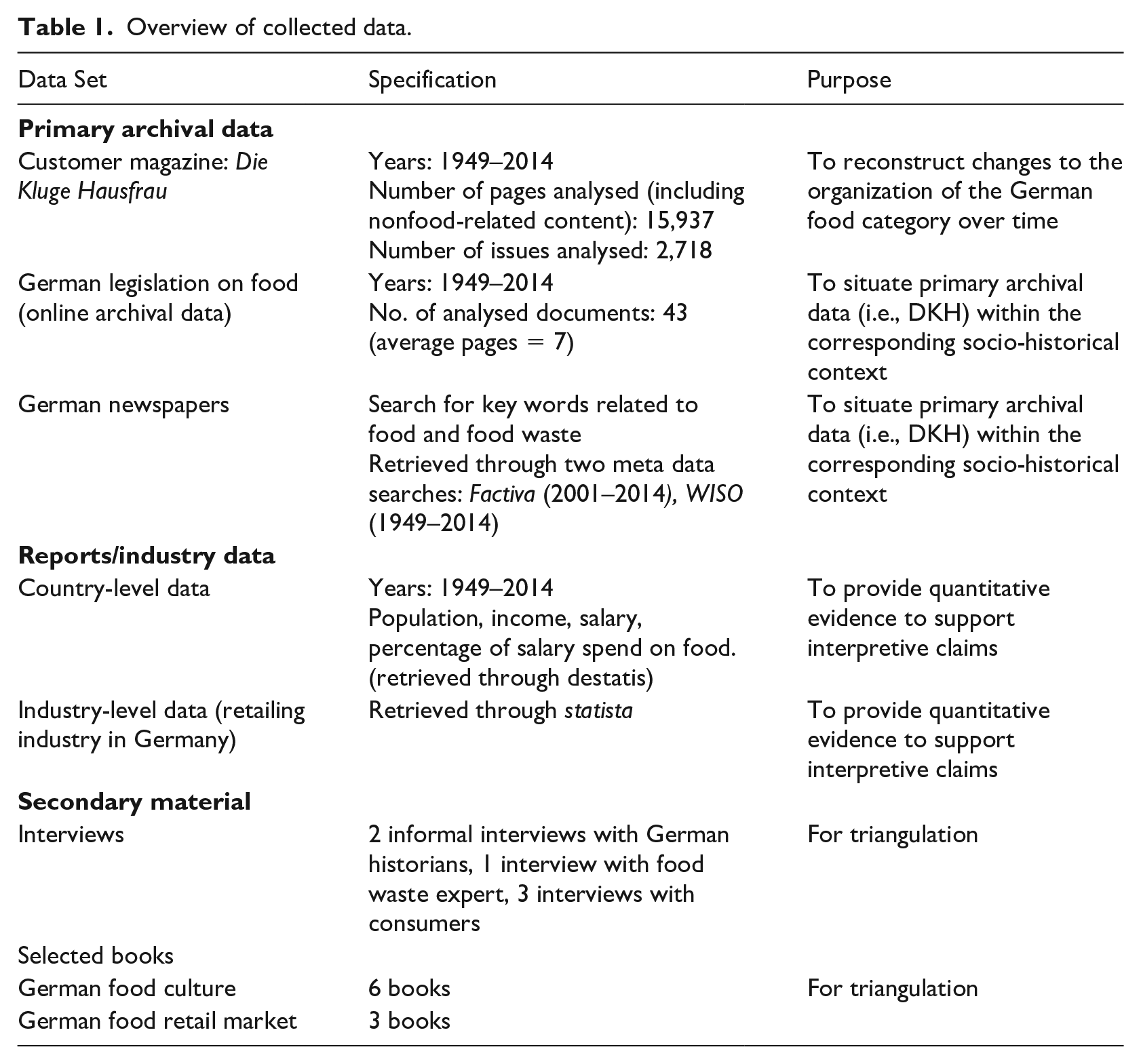
The first author also collected supplementary archival material for the same time period (i.e., 1949 to 2014) in order to better situate and contextualize our analysis, “to consider contingencies, conjunctures, and events” (Wadhwani & Decker 2017, p. 115) that might not always have been discussed in the pages of DKH. These supplementary materials consisted of primary as well as secondary sources. We consulted German food legislation and newspaper articles engaging with issues of food production, retail, or consumption. We consider these materials as primary sources because of their “closeness in time and space to the event, phenomena, or puzzle being examined” (Wadhwani & Decker, 2017, p. 118). We also consulted secondary sources such as books and articles about the history of German food culture. Together, these supplementary materials helped us to construct a socio-historically sensitive account of the German food market (Wadhwani & Bucheli, 2014). Table 1 presents a detailed overview of the material collected.
Overview of collected data.
Data analysis
We analysed the archival empirical material in three stages. In each stage, we moved back and forth between empirical material and emerging theoretical constructs (Strauss & Corbin, 1998).
Step 1
We followed prior research in management and organization studies that analyses archival material (Kodeih et al., 2018; Rowlinson, 2004) to construct an “event history database” (Garud & Rappa, 1994). The result was a chronicling timeline that shed light on significant food-related events from 1949 to 2014 (Figure 2). We triangulated with different primary sources of data, such as government and research accounts of corresponding time periods, as well as secondary historical accounts of German food. Through this timeline we were able to explicate the socio-historical context in which changes to the food category took place. Events on the timeline mark changes regarding food availability, food technology, the introduction of new regulations, as well as the origins of broader food-related conversations.
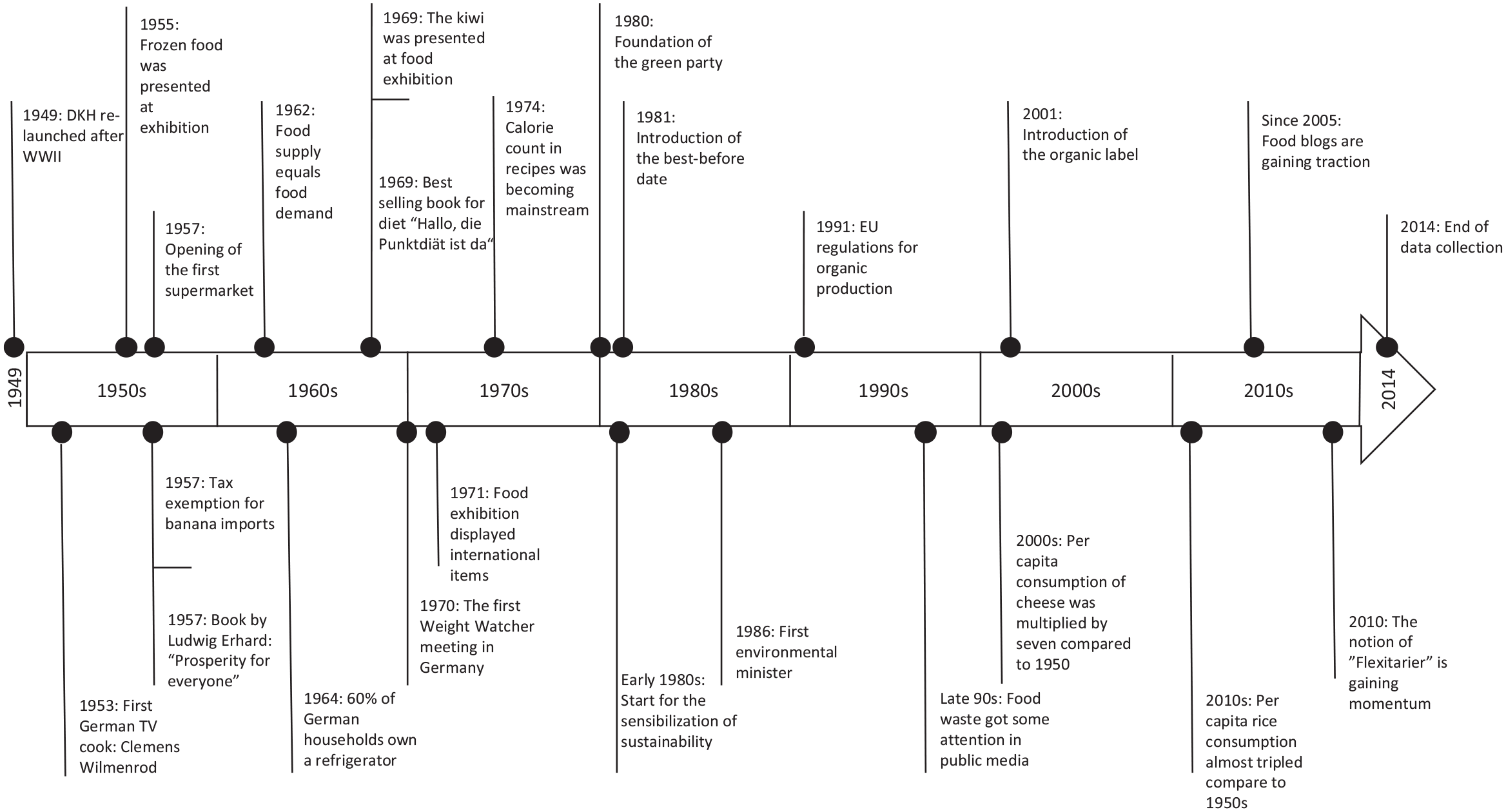
Significant food-related events in the time period 1949–2014. The timeline is based on reports and country-level data, German newspapers, and selected books.
Step 2
We read through every issue of DKH from 1949 to 2014 and identified food-related text and images in the magazine. We identified any material that had to do with ingredients as well as cooked dishes. This material became our main data set for studying changes in the German food category. We began with a comprehensive reading of this data set in line with the tenets of interpretive qualitative analysis (Miles & Huberman, 1994). In this step we aimed for immersion in the data set without coding for change or variation.
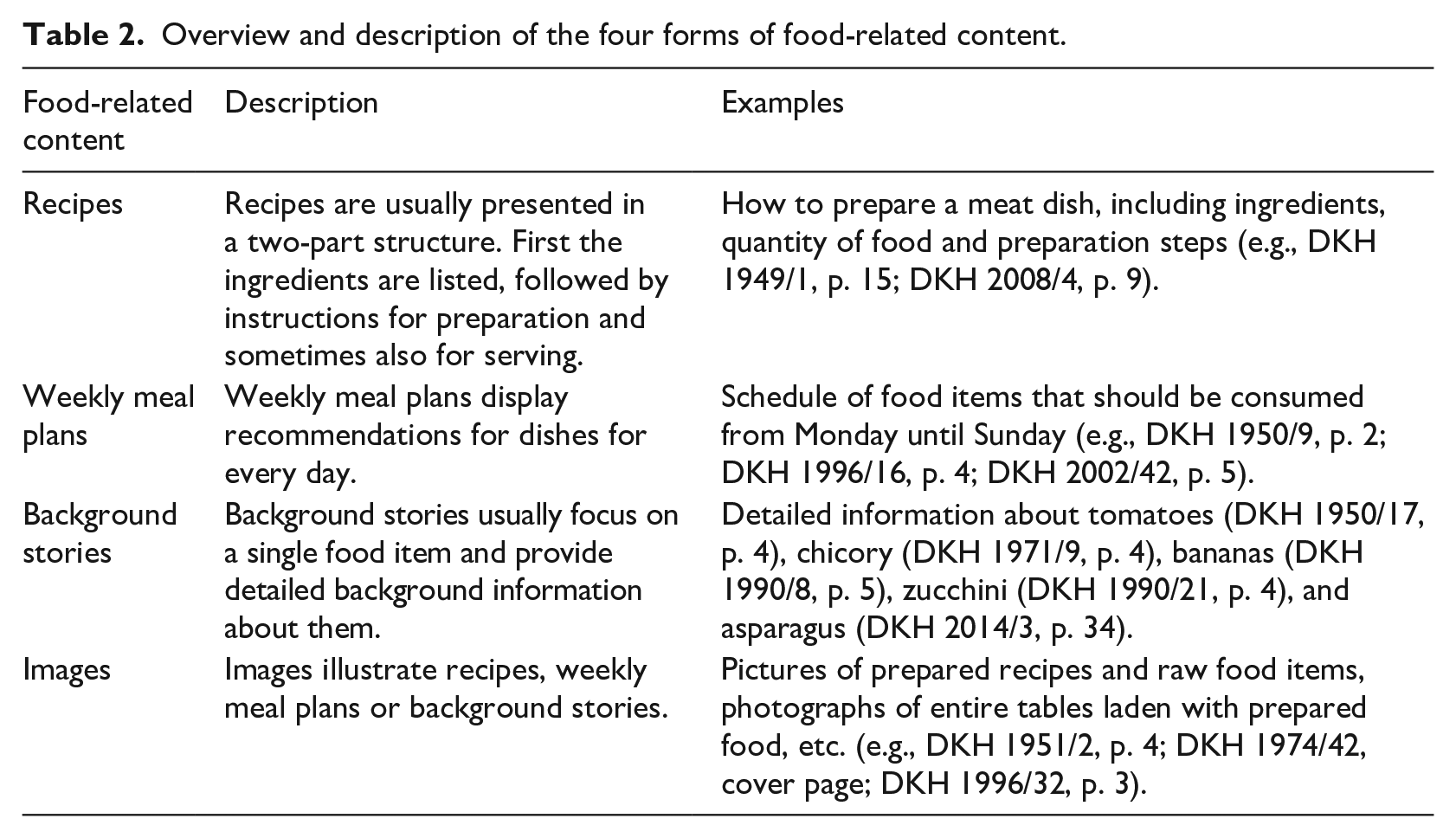
The first insight related to a recurrent structure in the data set (Patterson, 2015; Prior-Miller, 2015). There were numerous instances where food-related content was presented in a similar form. There were four food-related forms that recurred, in addition to other forms such as advice columns or letters to the editor. The food-related forms were (1) recipes (N = 19,055), (2) images (N = 2,010), (3) background stories (N = 179), and (4) weekly meal plans (N = 165). Recipes and images were the forms used the most often, while background stories and weekly meal plans were used less frequently as the years progressed.
Table 2 explains these four types of food-related forms and provides a few examples of each.
Overview and description of the four forms of food-related content.
Step 3
In step 3, we began analysing the content of those four types of food-related forms to investigate how the food category changed from 1949 to 2014. We first identified the important tipping points with respect to our timeline. For instance, we expected that some events, such as the introduction of the best-before date in 1981, would be reflected in conversations and content within DKH and other primary material. As this was not the case, we applied a new strategy: we analysed the four forms of food-related content for each decade (1950, 1960, 1970, 1980, 1990, 2000, 2010), paying special attention to changes that occurred from one decade to the next (Martens & Scott, 2005). Consistent with previous research, we used a historical slicing approach (Abrahamson & Prior-Miller, 2015). However, in contrast to prior research that only engaged with content from the first year of each decade, we collected and analysed material from each issue to make analysis more empirically grounded and robust. Figure 3 captures our approach.
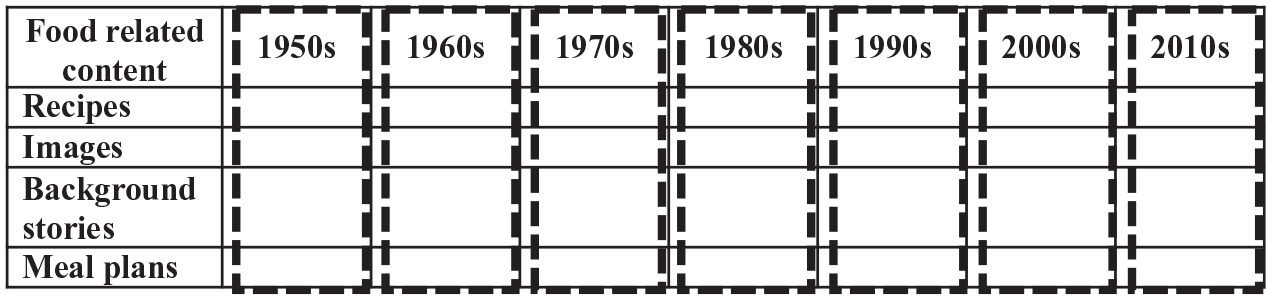
Displays our approach to data analysis over the years.
In this step, we focused on changes to how food items were presented and written about (Arndt & Bigelow, 2005). Through interpretive analysis of changes to the content of different food-related forms, we identified three dynamics that together contributed to category change and showed variation (as highlighted by the term “increase”). We were able to identify an increase in category members (i.e., category member proliferation), an increase in the number of evaluation criteria (i.e., category member valorization), and an increase in interconnections between category members (i.e., category member entanglement).
Findings
We approached DKH archives as a robust archival source through which we could track and reconstruct changes to the German food category from 1949 to 2014. We found three dynamics that contribute to the reorganization of the German food category: category member proliferation, category member valorization, and category member entanglement. For analytical clarity, we present the three dynamics separately even though they are interdependent. In the findings we present our interpretive claims accompanied by some quantitative support (e.g., counting the number of ingredients in recipes).
Dynamic 1: Category member proliferation
Category member proliferation refers to an increase in the number of category members within a category. In the immediate post-war years, category member proliferation was a reaction to latent demand as the German population satiated its pent-up need (Küng, 1972). Changes in food transport and storage technology also contributed to an increase in the number of category members. Technological changes often extended the lifetime of food items by better preserving them. For instance, many German households began owning refrigerators in the 1950s, and by 1964, more than 60% of German households had one (BMEL, 2012). Concurrently, grocers began to introduce frozen foods in 1955, and the first supermarkets opened in 1957 with much larger displays and storage capacities than traditional groceries (Langer, 2013). Category member proliferation continues till contemporary times and is reflected by the high number of new products that are introduced to retail shelves every year (Handelsdaten, 2015).
When it came to the different forms of content in DKH, each reflected on and recursively contributed to member proliferation in its own way. Background stories first featured well-known food items such as regional mushrooms (DKH 1950/16, p. 4), pumpkin (DKH 1958/41, p. 4), and locally grown asparagus (DKH 1959/18, p. 4), and later introduced more exotic imported foods and dishes. For instance, avocados (DKH 1987/1, pp. 4–5), bananas (DKH 1990/8, p. 5), kefir (DKH 1990/1, p. 2), tofu (DKH 1990/27, p. 5), and soy (DKH 1990/33, p. 2) had entire pages dedicated to them. In later years, this trend extended to new products that filled the shelves (e.g., DKH 2006/1, pp. 4–5; DKH 2011/4, p. 0).
In addition to featuring new food items, DKH began presenting more variants of food items that were already present. For instance, instead of a generic fruit sauce for a recipe, DKH began specifying variants such as banana sauce or apricot sauce (DKH 1970/11, p. 4). A similar shift occurred with variants of salad sauce (DKH 1988/1, p. 2), steak (DKH 2003/35, p. 10), and sausages (DKH 2003/35, p. 3). Gone also were the days of a single variant of ice cream. The DKH reader became familiar with many different variants of ice cream (DKH 2003/29, p. 3). This emphasis on variants was also illustrated in a salad recipe in 2010 (DKH 2010/1, p. 26). It was not enough to buy generic salad, the base had to be a specific variant, the red leaf lettuce, and it was equally important to only use red onions and balsamic vinegar. A salad was not just a salad anymore, it had to be either Batavia lettuce, chicory, iceberg lettuce, lamb’s lettuce, frisée, red leaf lettuce, lollo blonda, or radicchio (DKH 2011/1, p. 14).
Another key piece of evidence for the proliferation of category members was the substantial increase in the space that DKH gave to food-related content. As members proliferated and the socio-economic and cultural importance of the category grew bigger, food-related content took up almost five times more space in later issues compared to the immediate post-war years (Figure 4).
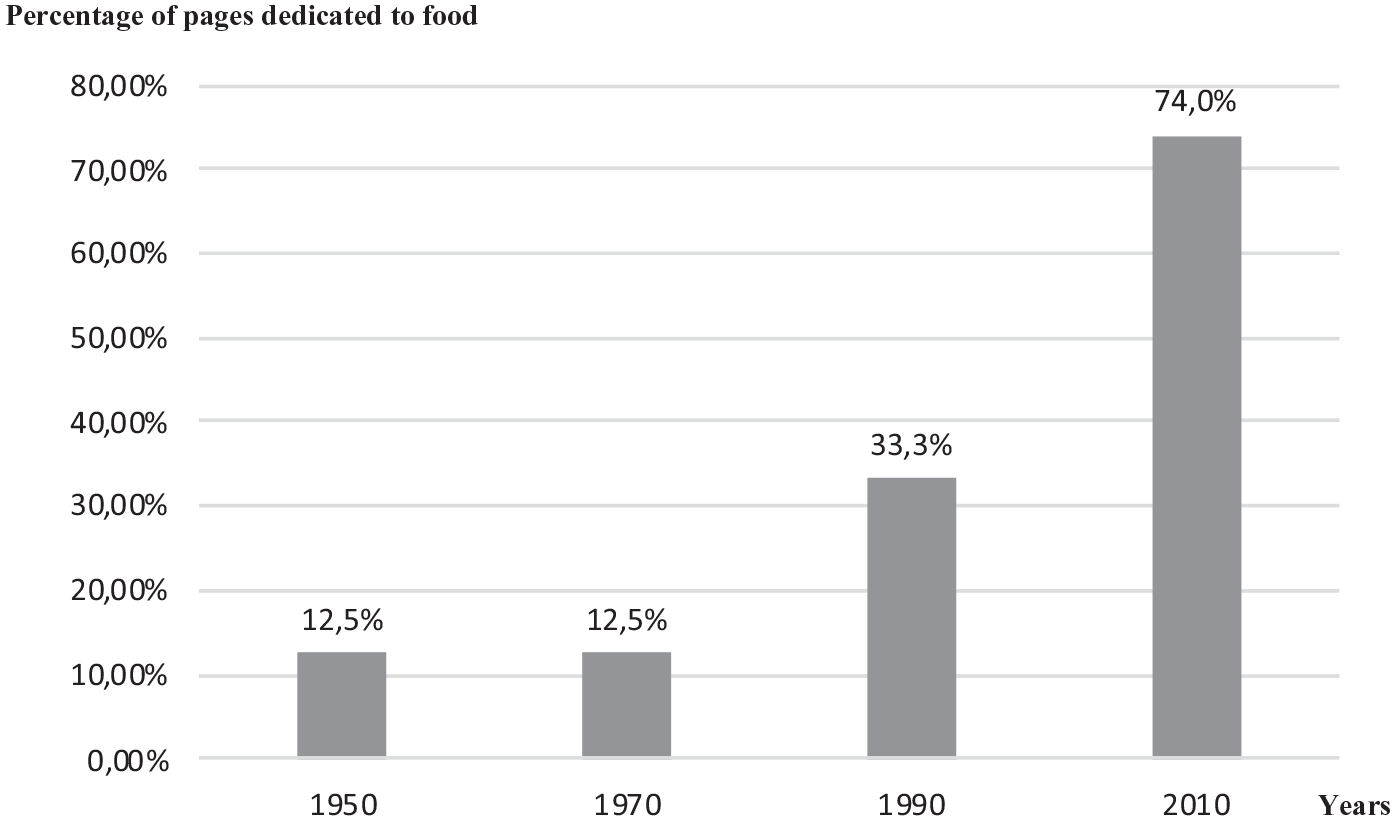
Percentage of pages dedicated to food per issue (on average). In the year 2010, on average 74% of the pages of DKH were dedicated to food. We interpret this development as an instance of category member proliferation.
Category member proliferation could also be seen in the way recipe contents changed over the years. In the 1950s, recipes mainly featured short descriptions, a few ingredients, and limited steps for making the dish. For instance, a recipe in the 1950s contained on average 10 lines, with each line only containing six words (e.g., DKH 1950/4, p. 6). Compare this with recipes from the 1980s where the ingredients were listed first (on average more than 7 lines) followed by many more lines of explicit cooking and preparation instructions (e.g., DKH 1988/4, pp. 4, 5). In later issues, recipes ran over multiple pages and were accompanied by images and long, detailed instructions for preparation (e.g., DKH 2003/25, p. 6).
Around 1962, member proliferation had helped turn food scarcity to sufficiency and hunger to satiation (Abelshauser, 2011). Shelves in retail stores, dinner tables, and refrigerators were filled with a huge variety and quantity of food items. For instance, in 1981, consumers were offered around 10 million articles across all grocery stores. In 1912, stores offered only 100,000 articles. In later years, member proliferation continued apace and showed no signs of abating (Handelsdaten, 2015).
In the next section, we discuss a second dynamic that pointed to how the conversation had shifted from getting the right amount of food to getting “good” food (i.e., category member valorization).
Dynamic 2: Category member valorization
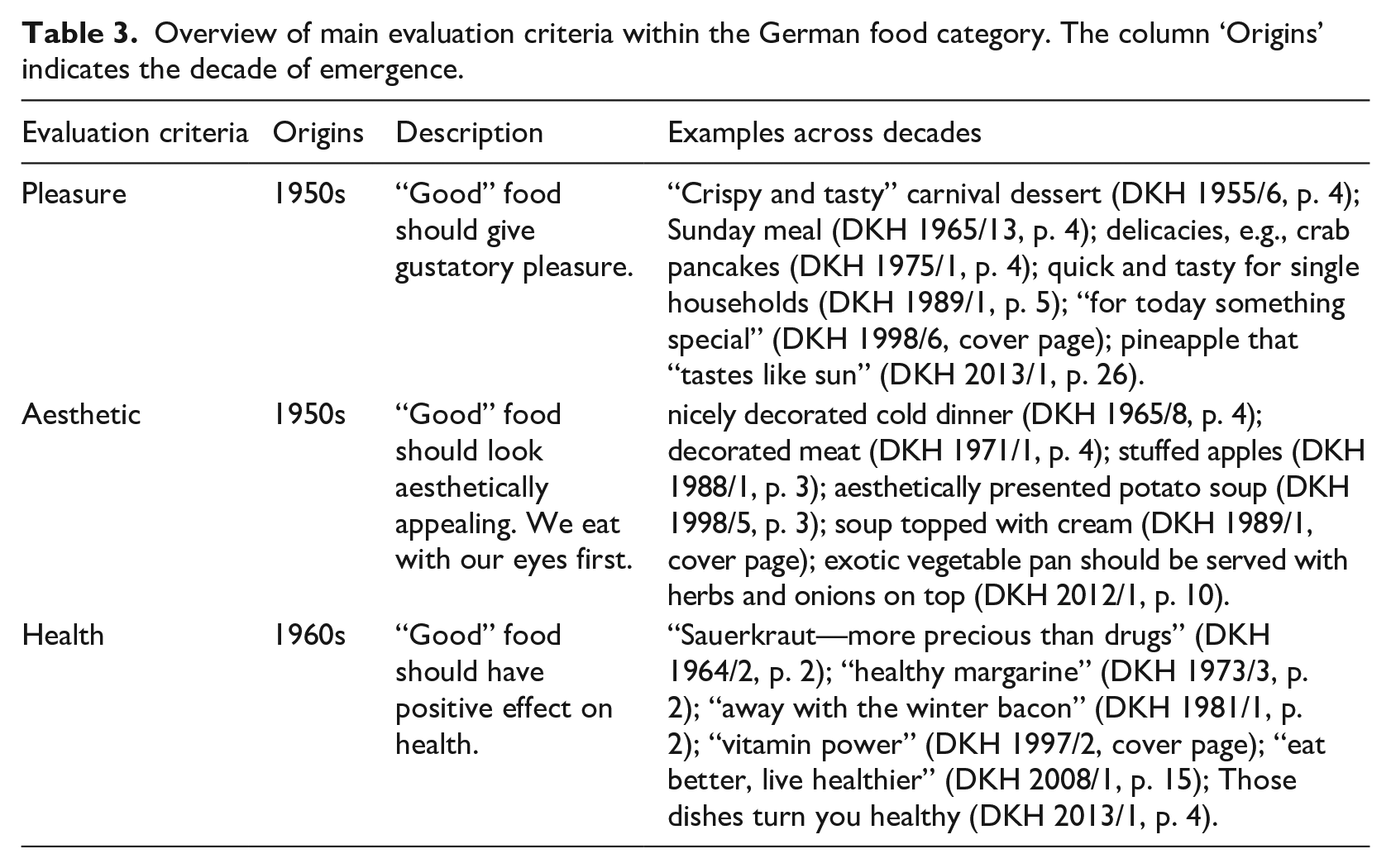
Category member valorization refers to an increase in the number of evaluation criteria for category members. These evaluation criteria helped audiences and other stakeholders identify and judge what was “good” food. We identified three emerging evaluation criteria. For analytical clarity, we present these evaluation criteria separately (Table 3), although they have a certain degree of interdependence.
Overview of main evaluation criteria within the German food category. The column ‘Origins’ indicates the decade of emergence.
Pleasure
In the early 1950s, the language used to describe food items was plain and simple. Recipes were straightforward and modest, focused on efficiency in the steps of production. Consider this early recipe for a dish of cabbage and tomatoes: “Take 1.5 kilos of cabbage, and 2–3 big tomatoes and cook them together, if possible, with mutton. Serve with potatoes and the dish is ready” (DKH 1949/4, p. 15). Notice how neither the cabbage nor the tomatoes had any qualifying evaluation criteria. There was no mention of ripeness or juiciness of tomatoes, nor of the freshness or pungency of the cabbage. In contrast, the emphasis was on how “big” the tomatoes were and the large quantity of cabbage (1.5 kilos). Even desserts, such as the apple strudel, closely associated with gustatory pleasure, were described without much emphasis on flavor and without a single reference to the gustatory pleasure that the dish might have provoked (DKH 1949/5, p. 15).
Soon, however, there was a clear shift from scarcity to prosperity. Uniting under the slogan Prosperity for Everyone, the title of a book published by the Commerce Minister in 1957, Germany was at the starting point of an economic boom and food transformation. In 1953, the first German TV cook conquered television screens and entertained the German population with his creations (Iken, 2008). Food was no longer just fuel for the body, it was also about pleasure (Gordon, 1998).
These sociocultural shifts were well reflected in the pages of DKH as food began to be associated with gustatory pleasure. For instance, good tomato soup was no longer just a filling staple but was a “feast” that could delight guests (DKH 1952/4, p. 4). A good breakfast should be able to “refresh” the senses (DKH 1955/5, p. 4). The zucchini was a “special delicacy” because it became so “soft and tender” when cooked well (DKH 1958/41, p. 4). The emphasis on pleasure continued in the following decades. Readers were encouraged not to add too much celery, which could potentially spoil the rich taste, when preparing a soup (DKH 1966/2, p. 2). The many pleasures of bananas were highlighted by showing flambeed or fried bananas decorated with tomatoes (DKH 1972/1, p. 4). The language used to describe locally grown food such as cabbage also displayed a much stronger orientation toward pleasure. Cabbage—in former years considered a simple winter dish—was turned into something delightful with seductive scents that added that little something to the harsh winter (DKH 1976/2, p. 4). In continuation of the gourmet theme, fish was described as “juicy and light” (DKH 1984/1, p. 2), and oyster mushrooms were the right choice if one wanted to taste some “exotic pleasure” (DKH 1989/3, p. 13). Certain kinds of pasta, such as lasagna, could deliver a taste so enthralling and captivating that consumers might become addicted (DKH 1999/8, p. 3; DKH 2007/1, p. 6). Duck breast had a taste so pleasurable that it could transport readers into a whole new “cosmos of delightfulness” (DKH 2007/1, p. 28). Background stories for new varieties of pasta spoke glowingly of how their particular smell, taste, and mouthfeel could elevate the mood in harsh autumn times (DKH 2010/4, p. 30) and even make for a great Christmas spread (DKH 2010/6, p. 9).
Aesthetics
Another evaluation criterion, one with aesthetics at its core, originated in much the same time period—the early 1950s. The emphasis on aesthetics was initially restricted to food prepared on Sundays (DKH 1956/5, p. 4) or special festive occasions. In the early years, Christmas meal recipes were only focused on the preparation, but by 1957 recipes for Christmas delicacies such as roast goose included instructions on decorating it with oranges (DKH 1957/51, p. 4). However, the foregrounding of aesthetics soon found its way into more mundane, everyday items and recipes.
Food items that were not especially known for their aesthetic appeal were being reimagined as facilitators of visual appeal. For instance, cabbage was presented in appealing rolls and decorated with other food items (DKH 1956/7, p. 4). “Cucumber surprises” transformed mundane cucumbers into something special (DKH 1958/28, p. 4). This focus on the aesthetics of food items and meals could also be seen with other staple food items such as potatoes “wrapped exquisitely” in a red and white colored cloth (DKH 1959/3, p. 4).
The emphasis on aesthetics continued throughout the next decades. Recipes began to explicitly include a final step about the proper way to plate or present a particular dish. Readers could learn the proper way to decorate food, a sandwich needed to be adorned with pepper and a fruit yoghurt with a drinking straw (DKH 1962/1, p. 4). Over the years, the skill on how to decorate and serve food items was further developed and found more space in the recipe lines. Entire dishes, such as salad, were increasingly accompanied by photos that showed to consumers how to appealing present a salad and even decorate the table with walnuts, herbs, and oranges (DKH 1972/3, p. 4). Tomatoes were presented in an appealing way, each tomato topped with herbs on a single leaf and on its own plate (DKH 1990/33, p. 3). Cherries became known for their exceptional aesthetic potential. For instance, they could be presented in appealing glass containers (DKH 2012/4, p. 26). In addition, the guidelines for meal preparation increasingly focused on the presentation of the meal. Recipes featured small descriptions and beautiful pictures, and the explicit instructions on how to prepare those dishes were then only found in the following pages (DKH 2013/1, p. 7).
This shift towards aesthetics was also evident in images of most food items. For instance, a salad recipe featured an accompanying, aesthetically appealing image that highlighted the multicolored nature of the items for purely aesthetic purposes. A salad was no longer a mix of different available ingredients. Instead, the ingredients were chosen for their aesthetic appeal as much as for their nutritional value. For instance, consider Figure 5 (right) where the plate of salad showcased the full spectrum of colors from the bright red of peppers and tomatoes, to the orange of carrots, the different shades of green provided by spinach and olives, and garnished with little flowers cut out of small radishes. The recipe recommended topping it with tuna or sea fruits. This mise-en-scène stands in sharp contrast to salad recipes from the 1950s, where the recipe was a short list of ingredients and preparation steps without any presentation guidelines (Figure 5, left).
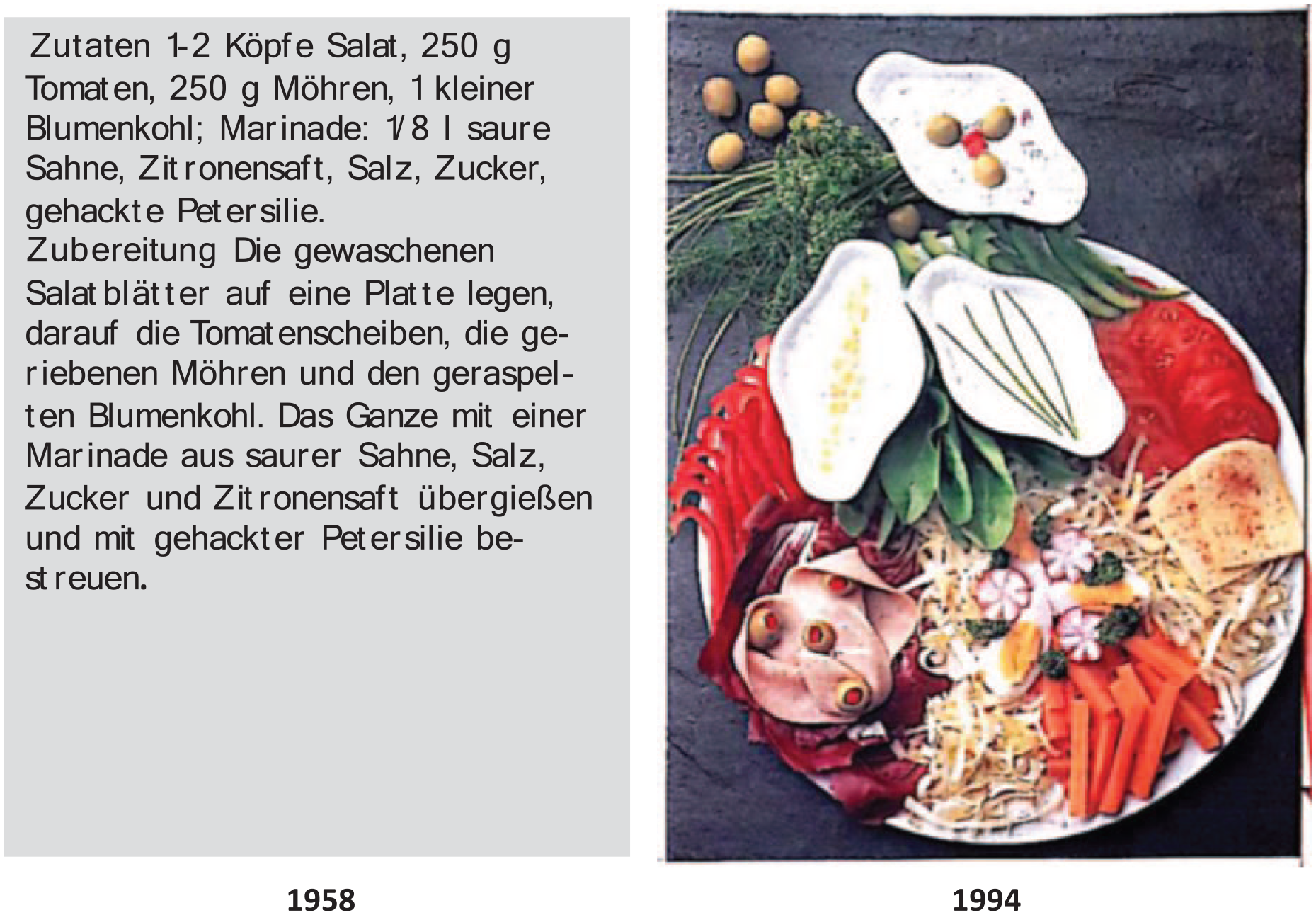
Differences in presentation of salad recipes. 1958: The salad recipe follows a two-part structure. The first five lines list the ingredients. The remaining lines are used to delineate preparation steps. 1994: The recipe gives different choice and recommendations (including salad sauces) and is accompanied by a colorful picture.
Health
Starting in the early 1960s, there was enough food to satisfactorily nourish the West German population (Abelshauser, 2011). The rising socio-economic power of the average German household coupled with the newfound emphasis on pleasure was partly responsible for a multitude of health problems (Weinreb, 2009). The broader conversation around food and consumption began to change as West Germans struggled with their weight. Healthy diets began to be offered as a solution to obesity (Spiekermann, 2018). This change was reflected in the increasing offers for dietary interventions. A diet book called Hallo die Punktdiät ist da (“Hello, The Pointdiet Is Here”), published in 1969, became a bestseller. The first Weight Watchers meeting was held in 1970 (Lindner, 2014).
DKH’s pages reflected these new conversations around food by making the connection between good food and good health. Simply put, certain food items such as dried fruits were declared especially healthy and nutritious (DKH 1955/4, p. 2). New formulations of food, such as having quark with apples, oranges, and whole wheatbread, were good for the health-conscious housewife looking to “eat [her]self thin” (DKH 1962/1, p. 4). Vegetables in general were favorably compared to meat-and-potato staples and were especially praised for their healthfulness (DKH 1962/12, p. 4). The humble sauerkraut gained a new lease of life and was claimed to be better for health than any medicine (DKH 1964/1, p. 2).
The emphasis on good health continued over the years. Many staple items such as “red meat, full-fat cheese, eggs, chocolate, pralines, cream, and mayonnaise” (DKH 1970/8, p. 2) were written about as not being “good” as they made one fat and unhealthy. In contrast, margarine was praised as better than regular butter because it contained more “good fats” (DKH 1973/3, p. 2). By the mid-1970s, conversations around health had become more sophisticated. Starting from mid-1973, almost every DKH recipe began to list the expected calorie count for the dish (e.g., DKH 1973/11, p. 4). Salads, cold soups, and raw food were proclaimed as being especially healthy and low in calories (DKH 1979/1, pp. 4, 5). Buttermilk was compared to medicine, which could help readers reduce weight and regain a youthful, healthy appearance (DKH 1989/2, cover page).
In the 1990s, there was an emerging consensus that good food could positively impact mental health in addition to physiological health. DKH’s pages reflected this consensus and began to foreground connections between food and mental health. Ham and peas were recommended to better prepare readers to the upcoming springtime (DKH 1990/13, p. 7). Foods considered indulgent and less healthy, such as chocolate, were now seen as “happy foods” which could uplift one’s mental state (DKH 1993/7, p. 6). Similarly, pancake recipes began to highlight their ability to warm both body and soul. They were portrayed as the new “happiness makers” (DKH 2005/9, cover page). In 2006, healthfulness was proclaimed as being important for a happy life (DKH 2006/1, pp. 14, 15).
The emphasis on good health continued over the years with artifacts such as the “nutrition pyramid” that informed potential readers of the “ideal healthy diet” (DKH 2008/1, p. 17). This pyramid, backed up by scientific health research, associated particular food items with good health in a succinct, easy-to-understand, and visually interesting manner. For instance, it was easy to see that milk, fresh fruits, and vegetables were healthy for us whereas butter and red meat were not. Good food could give you an energy boost, and make you feel robust and lively. For instance, pineapple is full of tropical aromas and allows the reader to “taste the sun” (DKH 2013/1, p. 26).
Coexistence of evaluation criteria
In the above sections, we traced three evaluation criteria that persisted throughout the years once they emerged. Even though these evaluation criteria emerged at different times, in the later years they existed in parallel (Figure 6).

Parallel coexistence of three main evaluation criteria. Light grey highlight their origin, dark grey points to their continuation and occasional reinforcement.
We also found other evaluation criteria that were less prominent, for instance, exoticness (DKH 1985/1, p. 4; DKH 2007/4, p. 14) or food sustainability (DKH 2010/1, p. 14) The lack of a single dominant criterion to determine “good” food necessitated the coexistence of multiple understandings of what the West German population would count as “good” food. Thus, contemporary retail shelves had to cater to the coexistence and plurality of evaluation criteria.
Dynamic 3: Category member entanglement
Category member entanglement refers to an increase in the number of interconnections between category members. Each of the four content forms—recipes, images, background stories, and meal plans—reflected the formation of new interconnections as well as the strengthening of existing ones.
The way in which DKH recipes changed over the years reflects the substantial increase in new interconnections between food items, old and new. Consider the following fruit salad recipe from an early issue of DKH. The fruit salad recipe featured six ingredients. There were five fruits—apples, pears, orange, bananas, lemon—and sugar (DKH 1949/6, p. 15). In later years, fruits were paired with other hitherto unconnected food items, e.g., it was recommended to combine apple, pears and plums with potatoes and meat (DKH 1965/6, p. 4). The humble apple was combined with a large variety of other foods such as radish, liver, asparagus, mussels and leek (DKH 1971/4, p. 4). Oranges were paired with apricots, cherries, and strawberries and then wrapped in a tasty-looking crepe (DKH 1971/22, p. 4). Pineapple was paired with sauerkraut, onions and ham (DKH 1989/1, p. 4). Fruits were no longer fruits but could be combined with many different ingredients into a tasty spread (DKH 2008/1, p. 6).
Recipes for other dishes followed a similar pattern of increasing and surprising interconnections between different food items. For instance, in 1958, the recipe for green salad listed five ingredients—four vegetables—green leaves, tomatoes, carrots, cauliflower—plus sour cream, lemon, salt, sugar and parsley for the dressing (DKH 1958/31, p. 2). In 1975, the “jenny” salad combined mushrooms, chanterelles, onions, baby cucumbers, and corn with salt, pepper, mustard, sugar and oil (DKH 1975/1, p. 4). Over time, salad recipes combined more food items such as potatoes, apples, radish, cucumber, chives, bacon, and ham—topped with white vinegar, pepper, sugar and herring fillets (DKH 1998/27, p. 3). In 2005, a salad recipe included lamb and other meats (DKH 2005/15, pp. 10/11). Green salad could be combined with any food item, including crevettes and meatballs (DKH 2008/1, p. 6). Other salad recipes reflected and recursively reinforced the strength of certain interconnections, for instance, citrus fruits and radicchio (DKH 2008/1, p. 6). Increasingly fruits such as pears, apples or oranges were added to green salads (DKH 2008/2, p. 24).
Background stories also increasingly reinforced interconnections and contributed to category member entanglement. For instance, an early background story for vinegar made connections to other food items. Consider the excerpt where diverse salads couldn’t do without vinegar. Vinegar gave many sauces, meat and fish dishes their delicious taste. Further, vinegar also went well in conserves with vegetables (DKH 1954/21, p. 2). The text reinforced vinegar’s strong and multiple connections to other food items. A background story for chicory (DKH 1971/9, p. 4) connected chicory with fruits such as oranges and apples as well as with salad leaves, peppers, tomatoes, Roquefort cheese, and ham. In later years, background stories linked bananas with milk and cream, to be turned into tasty ice cream and even linked them with fish (DKH 1990/8, p. 5).
As we investigated how weekly meal plans had changed over the years, we identified an increase in the number of interconnections between category members that were less connected or even unconnected to each other. In the immediate post-war years, weekly meal plans featured significant repetition, with main ingredients and dishes often repeated in a given week. For instance, in 1950, a weekly dinner plan recommended potatoes with apple mash on Monday, liver dumpling with sauerkraut and potatoes on Tuesday, bread casserole with fruit sauce on Wednesday, bread cutlets with carrots and potato mash on Thursday, fish cakes with rice on Friday, lentils with bacon, onions, and potatoes on Saturday, and meatloaf with potatoes and apple on Sunday (DKH 1950/24, p. 4). Potatoes featured four times in this timetable, bread and apples featured twice. Not only were the dishes repeated, but the dishes that were repeated were relatively simple foods prepared with limited food items. Thus, a limited set of food items would have been repeatedly and strongly interconnected. In later years, weekly meal plans became much more diverse and featured less repetition. For instance, in a 2003 issue, the weekly dinner plan featured stir-fried vegetables with a pepper dip on Monday, butterfly steaks on Tuesday, pork schnitzel à la Toscana on Wednesday, pasta with eggplant sauce on Thursday, potato soup with shelled prawns on Friday, spätzle (German egg noodles) with mushrooms and minced meat on Saturday, and turkey strips with seasonal vegetables on Sunday (DKH 2003/31, p. 5). This schedule featured no repetition and had much more diversity and heterogeneity in its dishes. This diversity and heterogeneity reflected and recursively contributed to the increase in the number of interconnections between different category members. The shift from repetition and sameness to diversity and heterogeneity in German weekly meal plans reflected increasing interconnections between an ever-larger number of category members.
Food imagery also reinforced an increase in the interconnections of the food being presented. For instance, consider how images of pan-based dishes varied over the years (Figure 7). In 1960, images of pan-based dishes showed a limited amount of familiar, simple ingredients—like pigeon and rice for a dish of cooked pigeon (DKH 1960/5, p. 4). In 1971, images of a similar dish showed rice accompanied by a mix of bacon, onions, potatoes, olives, sardines, eggs, cheese, parsley, salt, pepper, and garlic powder (DKH 1971/41, p. 6). In 1989, images of the pan dish incorporated even more food items (DKH 1989/27, p. 3). In 2009, pan dishes were full of different ingredients (DKH 2009/4, p. 3).
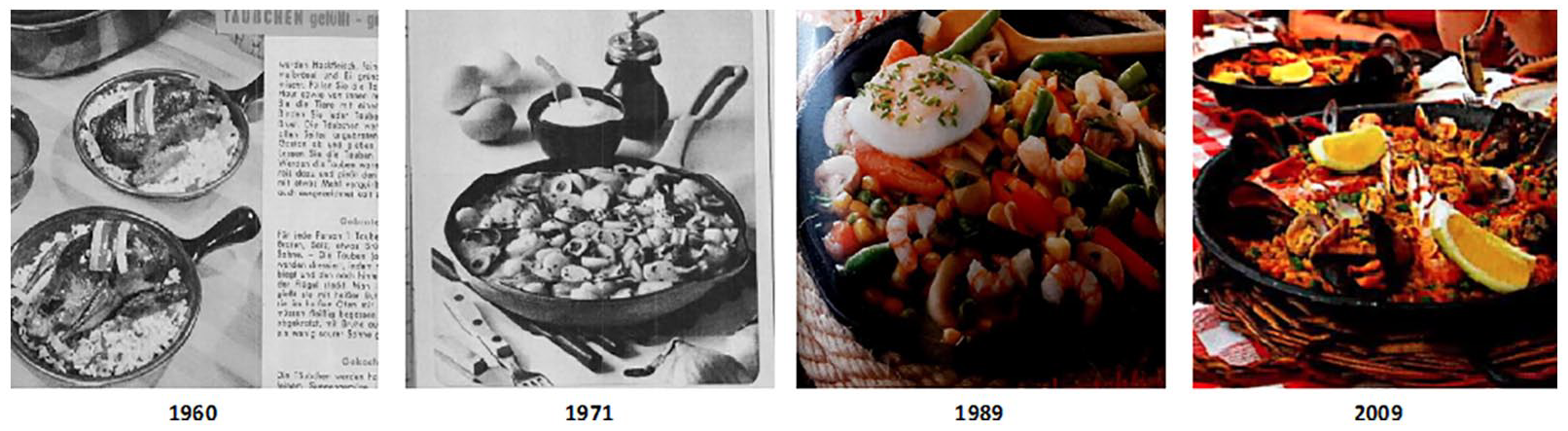
Increasing and diverse interconnections within pan dishes over time.
Taken together, recipes, images, weekly meal plans, and background stories reflected increased interconnections between different food items.
Discussion
The aim of this study was to explain the reorganization of a large-scope category through a focus on category change dynamics. We took the German food category as an empirical example to answer the following research question: What category change dynamics contribute to the contemporary organization of food? We collected and analysed data over an extended timeframe (1949–2014) and identified three separate but interconnected category dynamics that contribute to category change. In the following section, we will discuss the implications of our findings for sociological category research.
Change dynamics in categories
Sociological category research that theorizes change over time often showcases an influx of new members to the category. For instance, we observe category member proliferation in the small-scope categories of gin (Pedeliento et al., 2019), nanotechnology (Granqvist & Ritvala, 2016), grappa (Delmestri & Greenwood, 2016), independent movies (Khaire, 2017), and postcolonial fiction (Anand & Jones, 2008), among others. Potential entrants have to possess the necessary set of characteristics and features to fulfill certain membership criteria to be included in the category (Ruef & Patterson, 2009). For instance, to become a member of the gin category, a spirit must be “a neutral grain alcoholic spirit with a minimum alcohol by volume of 37.5% (40% in the United States) with a predominantly juniper flavor” (Pedeliento et al., 2019, p. 2).
As a category sees a rush of new entrants, there appear to be two potential regulation mechanisms for the number of members present in the category. First, past research has found evidence of category members exiting in large numbers from any category that experiences an influx of new category members (Durand et al., 2017, p. 14). Those large-scale exits are often associated with a change in evaluation criteria. Evaluation criteria refer to the set of criteria used by intermediaries or audiences to rank existing members of a category, that is, to make sense of how “good” a category member is. The exits are in many ways reflective of how well a category member fits the redefined evaluation criteria of a changing category. For instance, as the evaluation criteria for the grappa (Delmestri & Greenwood, 2016) and gin (Pedeliento et al., 2019) product categories became tied to status and sophistication, both saw large-scale exits of members who did not perform well on the new evaluation criteria. A similar dynamic can be seen with the category “hospital superintendent.” A good hospital superintendent was initially assumed to have feminine characteristics, such as strong care orientation. In later years, the evaluation criteria became more masculinized, such as valuing efficiency, hence pushing females out of hospital superintendent positions (Arndt & Bigelow, 2005).
The second potential mechanism of category member regulation is that the focal category splits into clearly distinguished subcategories. A good example is the way the “hotel” category has clearly split into subcategories such as “budget,” “premium,” “boutique,” “luxury,” etc. Each of these subcategories are relatively mutually exclusive, although there could be some potential for recombination. This mechanism works especially well when audiences are heterogeneous and have different goals, or when producers question the focal category (Hsu & Grodal, 2015). We can also see this subcategorization in the case of nouvelle French cuisine (Rao, Monin, & Durand, 2005).
As we analysed changes to the West German food category in the initial post-war years, we did not expect either of these two mechanisms to surface. In those years, the sociocultural context was one of economic recovery, away from food rationing and undernutrition. Audiences and other stakeholders collectively benefited from and accommodated member proliferation. As a result, retail shelves began filling up. However, as the per capita calorific intake stabilized in the early 1960s and rationing became a distant memory, we expected large-scale exits or the splitting of the category into subcategories. However, neither of these two mechanisms were activated in the later years.
We argue that, in our empirical case, the food category saw a continual influx of category members because, contrary to prior studies, (1) new evaluation criteria did not replace existing ones, rather new and old criteria coexisted in parallel and (2) category members were highly entangled. We explain both below.
We know from past research that new entrants or existing members seeking to change the status quo of a category problematize existing evaluation criteria or supply new ones so that a new set of dominant evaluation criteria replaces the previous one (Khaire, 2017; Pedeliento et al., 2019; Weber et al., 2008). For instance, consider how the Sundance Institute provides novel evaluation criteria for films that are more about the origin, situation, and quality of their stories, rather than merely their dramatic genre (Khaire, 2017). Or how the organic social movement problematized existing evaluation criteria for beef associated with fat content and marbling and replaced it with criteria based on sustainability and ecological impact (Pedeliento et al., 2019). Category members who do not live up to these new evaluation criteria are no longer part of the category. However, in our reconstruction of the German food category, we discovered that instead of one dominant evaluation criterion giving way to another, each evaluation criterion—pleasure, aesthetics, and health—coexists with the others. Furthermore, these novel understandings of good food were not linked in time in a sequential step-by-step change process, with one dominant idea giving way to another. Even if a particular food item, an existing category member, was not judged to be “good” on one particular evaluation criterion—for instance full fat milk is not considered and associated with good healthy food—it would be judged as a good category member on another evaluation criterion—for instance, pleasure. In fact, it is the very co-presence of different evaluation criteria that limits exits from the category.
Another key explanation for the lack of exits and the absence of splitting into subcategories in our focal category is rooted in the interconnected nature of category members, which we refer to as category member entanglement. In other words, due to the entanglement, food items cannot be isolated and judged on their own. Hence, the entanglement makes it difficult to exit the category or become members of mutually exclusive subcategories. They are part of larger arrangements—a recipe, a weekly meal plan, an image—and each food item is often part of many such arrangements. Even if a particular food item is only needed for a very specific recipe, it still finds itself on the retail shelf as long as the larger arrangement, for example, the recipe calling for that ingredient, continues to persist. The four food-related content forms in DKH seem to carry out the interpretive work necessary to sustain an existing member’s continued presence in the category and inhibit its exit from the category. The category also did not split into subcategories due to the interconnectedness between food items (i.e., category member entanglement).
Conclusions and Future Research Possibilities
Our study draws on the archives of a popular food-related magazine to show how an increase in the number of new category members, the co-presence of evaluation criteria, and a high degree of interconnections between members contributes to category change. This study’s findings and theoretical contributions must, however, be seen in light of a few boundary conditions, which could be fruitful avenues of investigation for future research.
Previous research assumes that “the presence of an institutional entrepreneur seems to be a necessary although not sufficient condition for sustained change” (Delmestri & Greenwood, 2016, p. 541). Interestingly, we did not find an institutional entrepreneur that explicitly drove category change. One explanation for this absence might be linked to the broader scale and scope of archival material as well as the broader focal category. It may be difficult, though not impossible, for institutional entrepreneurs to strategically influence a large-scope category. Our research does highlight dynamic and complex processes of change that seem to be beyond the reach of the institutional entrepreneur. Yet, previous research shows that strategic agency matters to category change. Future research could better study the interplay between strategic agency and more complex dynamics, especially in large-scope categories, to determine the importance of institutional entrepreneurs for large-scope categories. Such a study would contribute a better understanding of the conditions for effective entrepreneurial action when embedded in complex category dynamics.
Another avenue for future research, and one especially significant to the particular empirical context, relates to the unintended consequences of category change. For instance, in some supplementary empirical material, we discovered emerging conversations around edible food waste at the retail level. Edible food waste isn’t beneficial to grocery stores, supply chains, government regulators or consumers and as such can be considered an unintended consequence. It occurred because the market couldn’t fully absorb all the food items on the retail shelves. In our view, this happened because multiple evaluation criteria emerged in a category with strongly entangled category members. Some recent research also hints at unintended consequences of strategic organizational actions (Kodeih et al., 2018), especially when investigating long-term changes in categories. For instance, the delegitimization of midwifery (Arndt & Bigelow, 2005) and the intense market orientation and neo-liberalization of business schools (Khurana, 2010) are both instances of such unintended consequences. Future research would do well to investigate how and when such unintended consequences emerge and what institutional entrepreneurs or other kinds of category stakeholders can do to mitigate such consequences.
Footnotes
Funding
The author(s) received no financial support for the research, authorship, and/or publication of this article.
