




Abstract
The aim of the International Commission on Radiological Protection (ICRP) is to protect humans against cancer and other diseases and effects associated with exposure to ionising radiation, and also to protect the environment, without unduly limiting the beneficial use of ionising radiation. As of the second half of 2017, four committees are contributing to the overall mission of ICRP, including Committee 1 (Radiation Effects). The role of Committee 1 includes consideration of the risks and mechanisms of induction of cancer and heritable disease; discussion of the risks, severity, and mechanisms of induction of tissue/organ damage and developmental defects; and review of the effects of ionising radiation on non-human biota at population level. This paper gives an overview of the recent activities of Committee 1, and discusses the focus of its active task groups.
1. The remit of ICRP committee 1
Committee 1 of the International Commission on Radiological Protection (ICRP) deals with biological effects after exposure to ionising radiation and their relevance for radiation protection. The effects include those manifesting at various organisation levels, from subcellular systems (e.g. DNA), to cells, tissues, animals, and humans. Endpoints considered important are the induction of cancer and heritable disease (stochastic effects), the underlying mechanisms of radiation action, and the severity and mechanisms of induction of tissue/organ damage and developmental defects (tissue effects). More recently, effects on non-human biota at population level have been added to the remit of Committee 1.
Typically, Committee 1 includes approximately 16 members from various countries, all of whom are internationally renowned experts in different scientific fields such as biology, genetics, human and veterinary medicine, mathematics and statistics, physics and dosimetry, and epidemiology. This variety in scientific background reflects the interdisciplinary nature of work undertaken by the committee members to quantify radiation risk. Many of the committee members serve on other national and/or international bodies. For example, approximately half of the members of Committee 1 are delegates of their country on the United Nations Scientific Committee on the Effects of Atomic Radiation (UNSCEAR). Moreover, most committee members serve in their home countries on various national committees dealing with radiation protection. In addition, many committee members are involved in the coordination of international radiation protection research programmes and/or projects.
Currently, Committee 1 is leading four active task groups: Task Group 64 on Cancer Risk from Alpha Emitters, Task Group 91 on Radiation Risk Inference at Low Dose and Low Dose Rate Exposure for Radiological Protection Purposes, Task Group 99 on Reference Animals and Plants Monographs (this is a joint task group of Committee 1 and Committee 4), and Task Group 102 on Detriment Calculation Methodology. Committee 1 members also contribute to task groups led by the Main Commission or other committees: Task Group 79 on the Use of Effective Dose as a Risk-related Radiological Protection Quantity (led by Committee 2), Task Group 104 on Integration of Protection of People and of the Environment in the System of Radiological Protection (led by the Main Commission), and Task Group 105 on Considering the Environment when Applying the System of Radiological Protection (led by Committee 4).
2. Committee 1 meeting in chennai, india in november 2016
Typically, Committee 1 meets once per year. The last meeting was held on 12–13 November 2016 in Chennai, India, in conjunction with the International Conference on Radiation Biology, which took place on 9–11 November 2016 (http://mysrm.srmuniv.ac.in/icrb/). In addition, a number of satellite meetings with Indian scientists and organisations were held, with participation of committee members. Fig. 1 shows the members of Committee 1 present in Chennai, India.
Committee 1 participants at the 2016 meeting in Chennai, India. From left to right: Andrzej Wojcik (Sweden), Richard Wakeford (UK), Simon Bouffler (UK, Vice-Chair of Committee 1), Wolfgang Dörr (Austria, former Chair of Task Group 92), Dominique Laurier (France, Secretary of Committee 1), Michael Hauptmann (Netherlands), Preetha Rajaraman (India), Sisko Salomaa (Finland), Werner Rühm (Germany, Chair of Committee 1 and Chair of Task Group 91), Tamara Azizova (Russia), Anna Denisova (Russia, interpreter), Chris Clement (Canada, Scientific Secretary of ICRP). Missing: Nobuhiko Ban (Japan, Chair of Task Group 102), Ranajit Chakraborty (USA), Dan Stram (USA), Quanfu Sun (China), Margot Tirmarche (France, Chair of Task Group 64).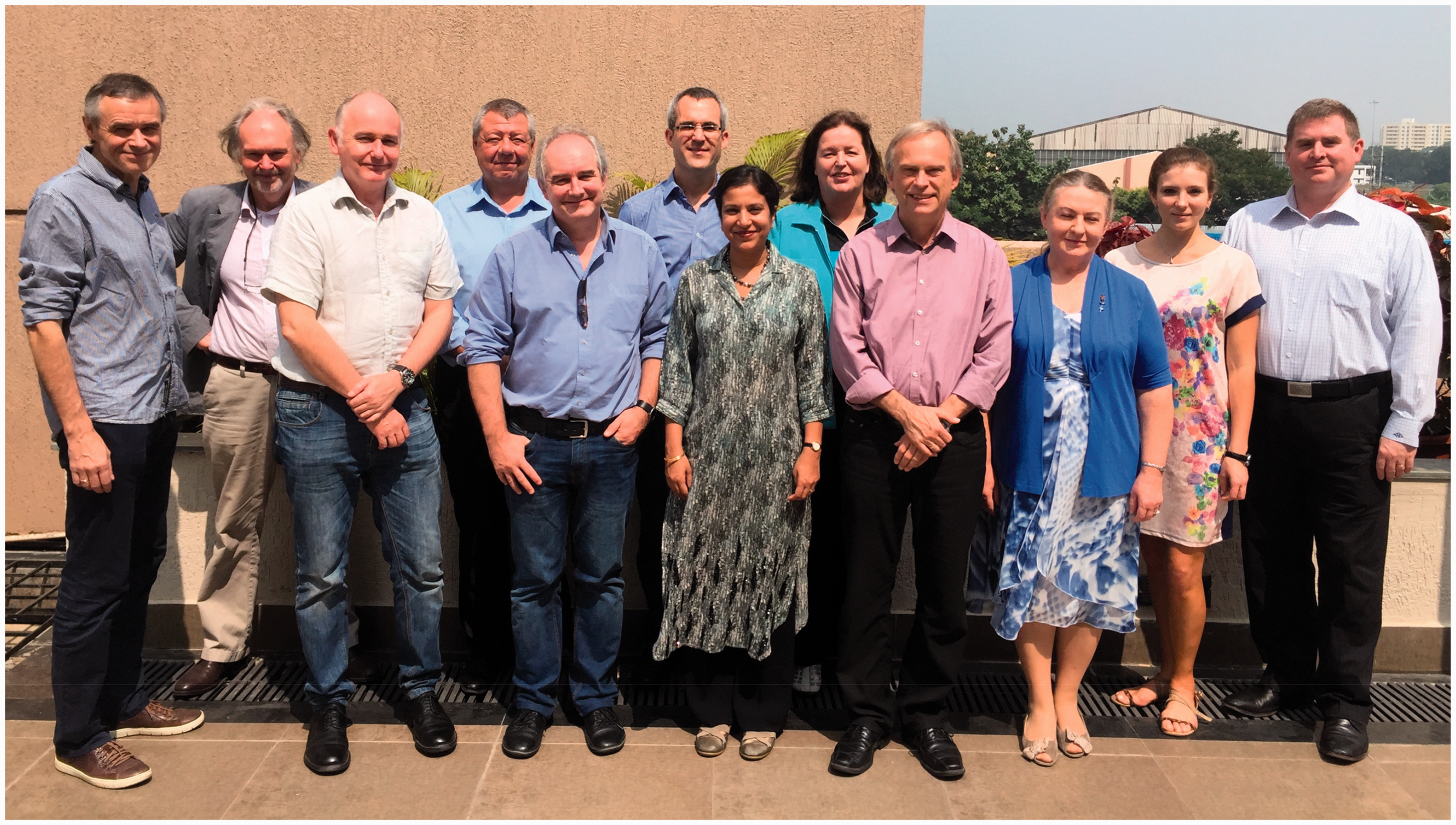
During the meeting, emphasis was first placed on discussion of the work of the various task groups mentioned above. A more detailed overview on three active task groups led by Committee 1 is given below. Additional topics of interest for Committee 1 were also discussed, including radiation detriment, use of effective dose, individual sensitivity to radiation-induced risk, radiation-induced circulatory disease, and tissue reactions/stochastic effects.
An update on the work of various international organisations followed, including UNSCEAR, the US National Council on Radiological Protection, the US Department of Energy, the US National Institutes of Health/US National Cancer Institute, the Radiation Effects Research Foundation in Japan, the International Agency for Research on Cancer of the World Health Organization, the European Joint Programme for the Integration of Radiation Protection Research (CONCERT), and related activities. Studies on Fukushima (Japan) and the Southern Urals (Russia), including those on Mayak workers and the Techa River population, were also discussed, as well as those on Epi-CT (Epidemiological Study to Quantify Risks for Paediatric Computerised Tomography and to Optimise Doses) and computed tomography scans, nuclear workers (e.g. the INWORKS study), radon, biostatistics, stem cells, non-cancer effects, radiation biology, epigenetic effects, and cancer survivors.
Participation in the International Conference on Radiation Biology (organised under the auspices of the Indian Society for Radiation Biology by the Centre for Environmental Nuclear Research, Sri Ramaswamy Memorial University, Chennai, India) included a panel session dedicated to the work of Committee 1. At this session, the following members of Committee 1 gave presentations: W. Rühm (Germany) on Committee 1 activities and issues associated with low dose and low dose rates, D. Laurier (France) on risks associated with alpha emitters, P. Rajaraman (India) on individual sensitivity to radiation, R. Wakeford (UK) on effective dose as an indicator of risk, and S. Bouffler (UK) on stem cell biology with respect to carcinogenesis aspects of radiological protection. The session was followed by a panel discussion with significant participation of members of the Bhabha Atomic Research Centre, India.
At the conference, members of Committee 1 gave additional presentations on radiation and cardiovascular disease: review of epidemiological results (T. Azizova, Russia), biology-based strategies to modify normal tissue radiation effects (W. Dörr, Austria), review of studies on medical exposures (M. Hauptmann, Netherlands), results of epidemiological studies among nuclear workers (D. Laurier, France), ongoing research in radiation protection in Europe (S. Salomaa, Finland), review of studies of leukaemia risk in the vicinity of nuclear installations (R. Wakeford, UK), overview of studies of high background radiation areas, and studies of cancer risk associated with natural background radiation in Europe (R. Wakeford, UK), and DNA damage response to mixed beams of high- and low-linear energy transfer radiation (A. Wojcik, Sweden). Finally, the ICRP Scientific Secretary (C. Clement, Canada) talked on ICRP and radiation biology: the role of science in ICRP recommendations.
Committee 1 members also participated in meetings at Indira Gandhi Centre for Atomic Research and at Sri Ramachandra University.
3. Task group 64 on cancer risk from alpha emitters
The mandate of Task Group 64 is to evaluate how recent results from epidemiological studies related to alpha emitters might contribute to the consolidation or revision of assumptions underlying the current radiation protection system. Task Group 64 is a collaborative group including experts from Committees 1 and 2 as well as external experts. For alpha emitters, the conversion of the observed risk in adequate communication to dose in mSv is one of the major challenges of this task group.
The exposure to radon decay products and related risk of lung cancer, and the corresponding risk coefficient per unit of exposure, estimated from occupational exposure (mainly on uranium miners) and domestic exposure, was published by Task Group 64 in Publication 115 (ICRP, 2010). In this publication, a revision of the recommended exposure reference level is discussed, as the expected life-long risk for lung cancer turned out to be higher than the level used in the past by ICRP (ICRP, 1993).
Cancer risks linked to occupational exposure to uranium (in different forms as encountered by workers during the nuclear cycle) and plutonium are presently under revision, and two major articles were published recently (Gillies et al., 2017; Grellier et al., 2017).
Results from these two articles are important as they both include an assessment of individual internal exposures estimated with a validated dosimetric methodology. The study on uranium is an international case–control study on nuclear workers, while the study on plutonium is a large joint cohort study on Mayak and Sellafield workers. In both studies, much effort was made to discuss the results in terms of working conditions, long-term organ exposure, radionuclide solubility, and uncertainty linked to the relatively sparse number of individual internal exposure measurements. As the Mayak and Sellafield workers experienced different levels of exposure to plutonium, a joint analysis based on both cohorts is the most appropriate approach for estimating a dose–response relationship. Task Group 64 will focus mainly on the results on the risk of lung cancer from this joint analysis, and therefore Task Group 64 is in close contact with the authors of this study.
Additionally, a synthesis of the UNSCEAR report on uranium published in 2017 (UNSCEAR, 2017) is also being considered by Task Group 64.
Finally, Task Group 64 considers life-long risk of lung cancer of workers from each of these alpha emitters by taking uncertainty into account. The results of this analysis will be discussed and compared with the expected life-long risk of cancer linked to external gamma exposure, as calculated from other cohorts that have experienced external exposure alone.
A meeting organised by Task Group 64 in Barcelona, Spain on 3–6 July 2017 made it possible to discuss recent results, and to validate the methodology and scenarios for the life-long risk calculations using long-term radon and plutonium exposures with the corresponding risk coefficients. As mentioned above, the final aim is comparison with the life-long risk of lung cancer obtained from external gamma exposure. Results from uranium cannot be used for this purpose due to the lack of a clear dose–response relationship or absence of precise organ dose calculation in several publications. Task Group 64 will recommend that research on workers exposed to various forms of uranium should be coordinated at international level in order to increase statistical power and obtain more precise risk estimates for specific organ doses.
Members of Task Group 64 presented their work on the risk of lung cancer and radon risk management on several occasions, including a workshop on radon in workplaces organised in 2015 by the International Labour Office, the World Health Organization, and the Heads of the European Radiological Protection Competent Authorities in Geneva, Switzerland; and a radon workshop organised by the German Radiation Protection Commission in Bonn, Germany (Müller et al., 2016). A paper on radon dosimetry for workers was published in Radiation Protection Dosimetry (Marsh et al., 2017).
4. Task group 91 on radiation risk inference at low dose and low dose rate exposure for radiological protection purposes
Exposure scenarios relevant for radiation protection are typically governed by low doses and low dose rates. However, as knowledge on stochastic effects of ionising radiation is largely based on data from high dose and high dose rate studies, extrapolation of these effects (particularly stochastic effects such as cancer) to lower doses and lower dose rates is necessary. For this purpose, ICRP has introduced the dose and dose rate effectiveness factor (DDREF), assigned a value of 2 to this factor, and applied it to risk estimates from studies on the Japanese atomic bomb survivors (ICRP, 1991, 2007). The aim of Task Group 91 is to review the currently available information on the estimation of risk coefficients and recommend: (1) whether it is desirable to continue to estimate risk at low doses by assessing the slope of the dose response at high doses and then applying a DDREF reduction factor; and (2) whether such coefficients are applicable to acute, protracted, and prolonged exposure or need a particular correction.
At a workshop held in Kyoto, Japan in 2015, members of Task Group 91 discussed the topic intensively with Japanese scientists (Rühm et al., 2015). Based on these and other discussions, the task group recommended the following: (1) to review any data on low dose and low dose rate effects separately before a joint evaluation is done; (2) to perform a thorough review on effects on cellular and subcellular data relevant for the process of carcinogenesis; (3) to take advantage of newly existing databases that include data on historical animal experiments from all over the world, and perform systematic pooling of appropriate data; (4) to perform a meta-analysis of dose rate effects among the most recent human epidemiological data; (5) to analyse curvature of dose–response effect curves from the atomic bomb survivors, and quantify the effect of low-dose extrapolation; (6) to include leukaemia in the review, although a DDREF is not applied in this case and a linear-quadratic model is used instead to extrapolate risk to low doses; and (7) to explore whether the current mechanistic understanding on cancer development is mature enough to combine biologically motivated mechanistic models of carcinogenesis with epidemiological data, and then extrapolate to low doses and low dose rates.
Since the last ICRP symposium in Seoul, South Korea in 2015, where Task Group 91 presented the first results of their work (Rühm et al., 2016), the task group has published a number of articles on some of the aspects mentioned above. Rühm et al. summarised, for example, the historical developments that ultimately led to the introduction of the DDREF, as well as the more recent positions of various international organisations on this topic (Rühm et al., 2015). Haley et al. initiated an analysis of animal data available in the US Janus and European Radiobiological Archives (ERA) databases (Haley et al., 2015). The same group analysed dose rate effects among animals (basically mice), and estimated values for the dose rate effectiveness factor based on life-shortening (paper in preparation). Tran and Little (2017) analysed a similar data set with respect to cancer mortality of mice. Shore et al. published the results of a meta-analysis of recent epidemiological studies on radiation-induced solid cancer at low dose rates (Shore et al., 2017). Rühm et al. reviewed the development and application of mechanistic models to describe epidemiological data (Rühm et al., 2017). The results of these studies and their significance for further work of Task Group 91 were discussed in June 2017 in Vienna, Austria with participation of the UNSCEAR Secretariat and further colleagues involved in the preparation of UNSCEAR reports, demonstrating close cooperation and flow of information between ICRP and UNSCEAR.
Future work of Task Group 91 will include analysis of animal data from different species, analysis of tumour-specific and leukaemia data from epidemiological cohorts, and analysis of curvature among the dose–response curves of atomic bomb survivors.
5. Task group 102 on detriment calculation methodology
Accumulation of epidemiological findings about radiation-related circulatory disease prompted discussion on whether to include the disease in the detriment calculation. During the joint meeting with Committee 2 in 2013, it was agreed that an exercise should be undertaken to understand the possible implications. A preliminary study by the working party on this issue led to recognition of the need to consolidate the methodology for calculating radiation detriment. It was therefore decided to focus on the procedure for detriment calculation, and the working party was restructured into Task Group 102, which was approved by the Main Commission in March 2016. Its mandate is to review and document the process of detriment calculation in a reproducible manner to form a solid basis for future ICRP recommendations.
The concept of radiation detriment was first introduced in Publication 26 (ICRP, 1977), and was elaborated in later publications. It is used to quantify the overall harm to health from stochastic effects of radiation. The tissue-specific detriment is determined from the nominal tissue-specific risk coefficient, weighted by the severity of the disease in terms of lethality, impact on quality of life, and years of life lost. Total detriment is the sum of the detriments for separate tissues and organs. Detriment values are used to specify tissue weighting factors used in the calculation of effective dose.
Task Group 102 reviewed the current methodology, which was outlined in Annex A of Publication 103 (ICRP, 2007), and has resolved ambiguities to reproduce the calculation in every detail. Currently, sensitivity analyses are being conducted to assess potential variability of detriment values and to identify parameters of great influence. Based on the results, possible modification and improvement will be discussed.
Footnotes
Acknowledgements
The authors wish to acknowledge the hard work of all members of Committee 1, as well as continuous support by the ICRP Secretariat.