




Abstract
Mature cystic teratomas most commonly arise from the ovaries and testes, but may also occur at extragonadal sites, with a relatively higher incidence in children. However, mature cystic teratomas located on the ventral surface of the tongue are exceedingly rare. We report a case of a 6-month-old female infant with a gradually enlarging oral mass since birth, causing feeding and breathing difficulties. The tumor was situated beneath the mucosal layer on the ventral tongue. Preoperative magnetic resonance imaging suggested a sublingual gland cyst or dermoid cyst, but histopathological examination following surgical excision confirmed the diagnosis of mature cystic teratoma.
Introduction
Congenital mature cystic teratomas of the ventral tongue are rare neoplasms composed of tissues derived from all 3 germinal layers. 1 They often cause tongue elevation and glossoptosis, which may lead to respiratory and feeding difficulties, apnea, and oral deformities. While mature cystic teratomas typically exhibit rapid growth, malignant transformation is exceptionally rare. 1 The most common anatomical sites for teratomas are the gonads, the sacrococcygeal region, the retroperitoneum, and the mediastinum. 2 Head and neck teratomas in infants and children account for only 0.47% to 6% of all teratomas, with an estimated incidence of 2.5 to 5/100 000 live births.2,3 Among these, ventral tongue teratomas constitute an even smaller subset, with no cases previously reported in the literature reviewed. Recurrence may occur. Treatment aims to restore normal tongue position, improve respiratory function, and resolve feeding difficulties. With appropriate management, patients generally have a favorable prognosis. This report describes a case of congenital mature cystic teratoma of the ventral tongue in a 6 -month-old female infant.
Case Report
A 6 -month-old female infant, born to nonconsanguineous parents after an uneventful term delivery, presented with a progressively enlarging oral mass noted since birth. Clinical examination revealed upward displacement of the tongue and restricted tongue protrusion (Figure 1), but no signs of dyspnea were observed. No other oral masses, swellings, or indurations were detected. The infant had not received prior medical intervention for the tumor. As the mass gradually enlarged, significant feeding difficulties developed. Magnetic resonance imaging (MRI) revealed a well-circumscribed, multilocular cystic lesion that completely occupied the ventral tongue and extended to the oral floor (Figure 2a–c), with no evidence of invasion into adjacent structures. Chest radiography and routine hematological tests were normal.
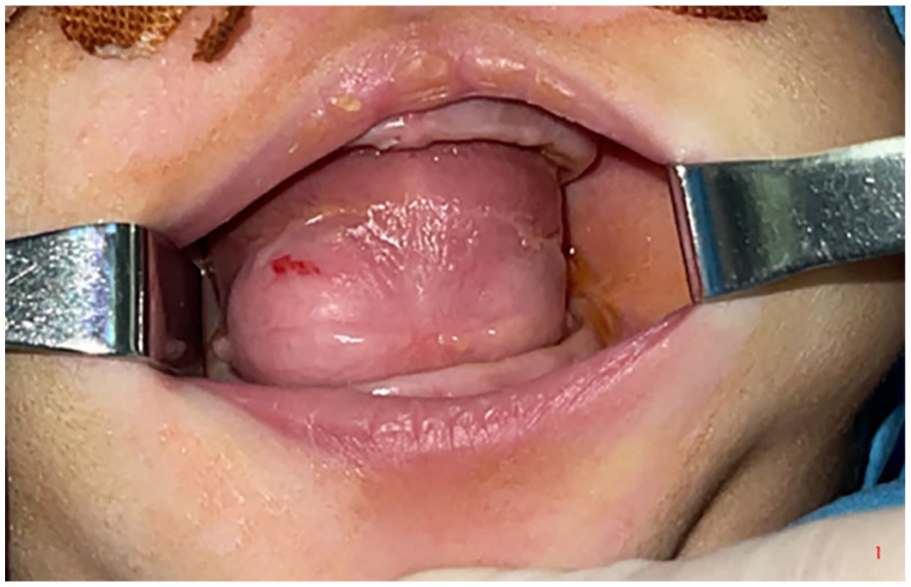
Preoperative image of the mass located at the ventrum of the tongue.
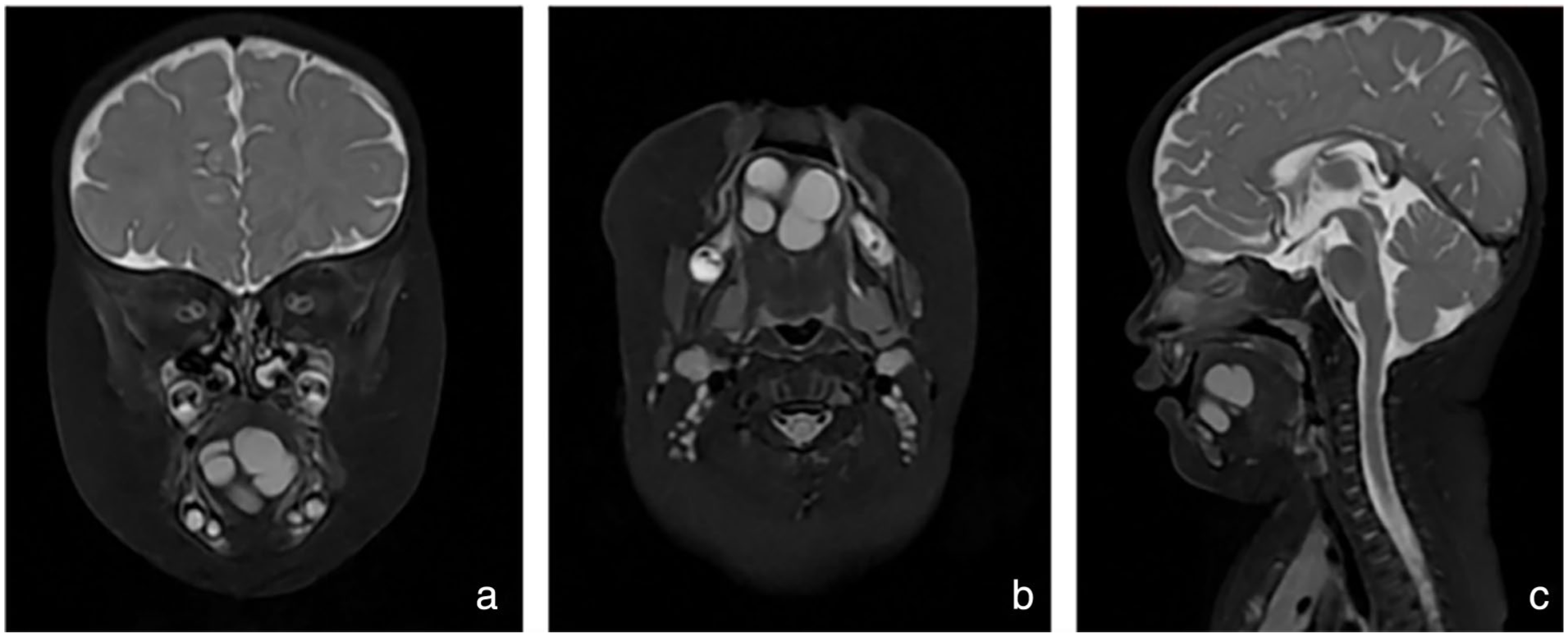
(a–c) MRI showed a well-defined, multinodular mass. MRI, magnetic resonance imaging.
Complete surgical excision was performed via a ventral tongue mucosal incision (Figure 3a). Critical structures including the lingual nerve, hypoglossal nerve, and sublingual and submandibular gland duct orifices were carefully preserved. Histopathological examination of the excised specimen revealed a lesion composed of squamous epithelium, ciliated columnar epithelium, and cutaneous appendages within the cyst wall (Figure 3b), confirming the diagnosis of mature cystic teratoma. Postoperatively, tongue deformity was corrected and function improved. Follow-up every 6 months was advised to monitor for recurrence.
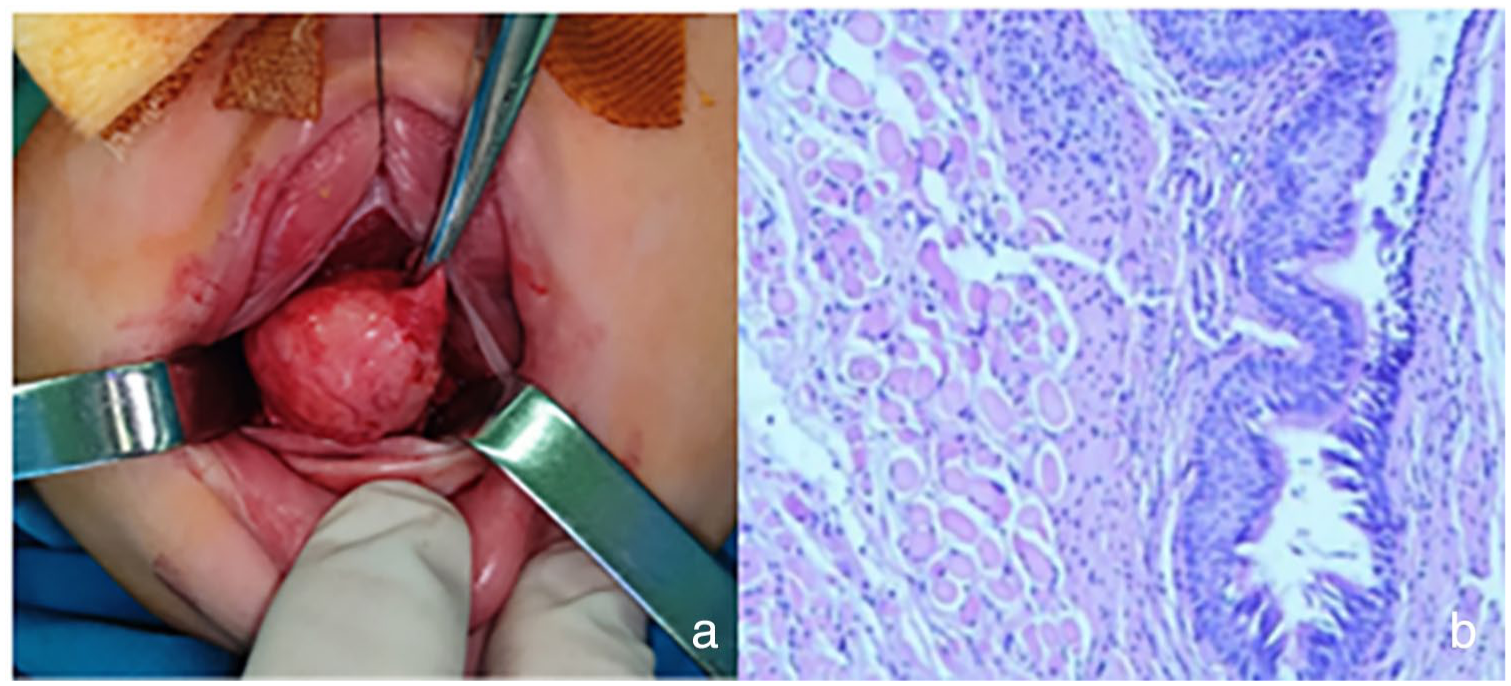
(a) Intraoperative image showing the approach and the lesion. (b) The tumor contains well-differentiated mature tissues derived from multiple germ layers and microscopic examination shows skin tissue and its appendages, such as epithelium, dermis, hair follicles, and sebaceous glands (H&E, ×4). H&E, hematoxylin and eosin.
Discussion
Teratomas are the most common germ cell tumors in pediatric patients and are classified into 3 main types: mature, immature, and malignant. 4 Mature teratomas most frequently occur in the ovaries and testes and are generally benign. 5 Extragonadal teratomas are relatively rare, comprising about 15% of all teratomas, 6 and typically develop in midline structures such as the sacrococcygeal region, head and neck, retroperitoneum, mediastinum, and brain. 6 The present case is a rare example of a mature cystic teratoma arising on the ventral tongue of a 6-month-old female infant. Although a limited number of oral teratomas have been reported, most involve the parotid or submandibular regions. To our knowledge, this is the first reported case of a primary mature cystic teratoma of the ventral tongue in the English-language literature, thereby contributing to the understanding of this rare clinical entity.
In this case, preoperative MRI showed hyperintensity on both T1- and T2-weighted sequences, with visible cystic components and nodular enhancement in some areas of the lesion. Based on these features, the differential diagnosis included sublingual gland cyst and dermoid cyst; however, histopathology ultimately confirmed a mature cystic teratoma, underscoring the importance of pathological examination for accurate diagnosis of rare oral tumors.
Due to the extreme rarity of mature cystic teratomas of the ventral tongue, no standardized management guidelines exist. Based on the principles for treating mature teratomas in other sites—which are resistant to chemotherapy and radiotherapy and carry a very low risk of malignant transformation 1 —complete surgical excision at initial intervention is considered optimal. In our case, near-total resection achieved excellent clinical outcomes. Periodic follow-up MRI was advised to detect any recurrence.
Footnotes

Ethical Considerations
The studies involving human participants were reviewed and approved by the ethics committee of Qingdao Women and Children’s Hospital.
Consent to Participate
The patient’s legal guardian provided written informed consent to participate in this study.
Funding
The authors disclosed receipt of the following financial support for the research, authorship, and/or publication of this article: Supported by Qingdao Key Medical and Health Discipline Project.
Declaration of Conflicting Interests
The authors declared no potential conflicts of interest with respect to the research, authorship, and/or publication of this article.
Data Availability Statement
The raw data supporting the conclusions of this article will be made available by the authors, without undue reservation.