




Abstract
Maximizing solar module output is critical for installations with limited available area. This study investigates the effects of integrating flat-plate, parabolic, and hybrid reflector designs with photovoltaic (PV) modules to enhance energy generation. The proposed hybrid reflector uniquely combines flat and parabolic optical geometries within a single device, enabling enhanced solar irradiance capture while mitigating temperature spikes typically associated with standard parabolic reflectors. Validated two-dimensional simulations using ANSYS Fluent, supported by experimental data (maximum difference < 3.86%), analyze how reflector geometry and angle affect both power output and module temperature. Results show that while all reflector types increase the incident solar irradiance and total electrical generation, the associated rise in module temperature causes a reduction in conversion efficiency—a well-known consequence of the negative temperature coefficient in silicon PV modules. Notably, parabolic and hybrid reflectors yield the highest temperature increases (up to ∼93 °C under steep-angle, worst-case conditions—representing the upper operational limit assessed and not typical daily operation), leading to efficiency decreases of up to 1.7% (absolute) compared to the baseline. Nonetheless, the absolute energy yield can improve due to increased irradiance, particularly in space-constrained applications. These findings offer practical guidelines for optimizing reflector-assisted PV systems, demonstrating that hybrid and parabolic reflector configurations are especially advantageous for maximizing energy harvest in environments with restricted installation area or high solar resource variability.
Introduction
As the demand for energy continues to rise, it is crucial to generate electricity. Utilizing renewable energy sources like solar, geothermal, and wind power can help address environmental pollution (Didi et al., 2024; Ebazadeh et al., 2024). Solar energy, in particular, has great potential for energy production. Solar modules are highly efficient in harnessing this energy, operating silently and without moving parts. Consequently, these technologies have garnered significant interest from researchers and industrialists (Kalogirou, 2018; Rajhi et al., 2024; Su et al., 2023). Using reflectors can boost the amount of solar radiation and decrease the quantity of solar cells needed to generate a specific amount of power (Anazi et al., 2023; Baccoli et al., 2018; Chen et al., 2023). Research by Malik and Chandel (2020) revealed that incorporating mirror reflectors in photovoltaic (PV) systems can increase power production by 10%–19.84% in the summer and 10%–13.23% in the winter.
In a study by Sangani and Solanki (2007), a V-shaped concentrated PV system was created, increasing power output by 44% compared to a system without a reflector. Another analysis by Huang and Sun (2007) found that using reflectors with a concentration ratio of 2 can boost output power by 24.5%. By combining a one-axis detector with three adjustable positions, power generation can increase by 56%. Gajbert et al. (2007) discovered that optimizing reflector geometry for PV systems on building facades can increase electricity production by 72% compared to modules without reflectors. Narasimman and Selvarasan (2016) designed a concentrator system with a mirror reflector, achieving a maximum output power of 9–10.5 W for concentration ratios of 1 and 2. This resulted in power improvements of 22.3% and 45.8%, respectively, compared to a standard module. Sishaj et al. (2020) studied how using a reflector affects the energy output of a PV module. They found that the energy extraction increased by ∼30% compared to a standard PV system. Additionally, they analyzed a 5-MW industrial power plant and discovered that by adding a reflector system, the daily power production could rise from 3.41 to 4.43 kWh. In a separate study, Nour et al. (2020) looked at how the length of mirrors impacts the efficiency of concentrated PV systems. They found that by changing the length of the reflectors from LR = LPV/2 to LR = 2*LPV, electricity production could increase annually by 8.5%–28.7%. Agrawal et al. (2021) conducted simulations to determine the effect of using a reflector on the temperature of a PV module. They discovered that the temperature increased by 30 °C–40 °C in calm air flow conditions and by 10 °C–20 °C in turbulent air flow conditions. While integrating a reflector reduced the lifespan of the PV module from 25 to 21 years in favorable wind conditions, the increase in electrical power production outweighed this loss.
Parupudi et al. (2020) studied three types of PV systems for buildings: ACPC (1.53 ×), CPC (1.46 ×), and V-trough (1.40 ×). The research found that the asymmetric combined parabolic reflector (ACPC) generated the highest power output compared to the other configurations. ACPC had an electrical efficiency 42.2% higher than a decentralized module at a 10-degree angle of incidence. The payback period for ACPC was estimated to be 9.7 years, while a normal module would take 16 years. Additionally, maintaining the cell temperature at 25 °C through active cooling increased the power output of ACPC by 31%. Variava et al. (2024) studied a three-dimensional (3D) numerical model of a concentrated PV thermal (CPV/T) system for thermal and electrical performance optimization. The study systematically examines the collectors’ performance under varying environmental conditions, including 6 kWh/m2 solar irradiance, 24 °C ambient temperature, and 3 m/s wind speed. Kostic et al. (2010) studied the impact of using aluminum sheet and aluminum foil reflectors on a PVT collector. They found that when the reflectors were positioned optimally, the concentration ratio increased by 1.44 times for aluminum sheet reflectors and 1.66 times for aluminum foil reflectors. With aluminum sheet reflectors in the optimal position, the PVT collector produced 39% more thermal energy and 8.6% more electrical energy compared to a PVT collector without reflectors.
Kabeel et al. (2021) underscored the critical importance of comprehensively understanding the response of PV panels to variable meteorological conditions, as well as the overall impact of climate factors on PV cell efficiency. They noted that merely 15%–20% of incident solar energy is utilized for electrical generation, while the remainder dissipates as thermal heat. Ahmed et al. (2018) explored the influence of reflective mirrors on the operational performance of hybrid PV/thermal water collectors. Their experimental work, conducted in Kirkuk (latitude 35.46, longitude 44.39), involved circulating water through a thermal exchanger to extract heat from the solar cell. Hamdi et al. (2025) assessed and compared the thermal performances of four recently developed laboratory-scale ICS system designs—equipped respectively with flat reflectors, honeycomb transparent insulation, cylindrical parabolic, and compound parabolic concentrators—by employing dynamic system testing and Q-H methods in agreement with ISO 9459-5 and ISO 9459-2 standards. In Riyadh, Saudi Arabia, these systems exhibited a solar fraction reaching 100% between May and October. Messaouda et al. (2024) conducted a thermal evaluation of a cylindrical parabolic integrated collector storage (CP-ICS) system, utilizing both input–output and dynamic system testing methodologies. Comparative performance analysis across representative climate types revealed that CP-ICS technology constitutes a promising option for countries whose annual ambient temperatures span 13 °C–33 °C. Further, Messaouda et al. (2020) introduced a novel integrated collector storage system with a compound parabolic concentrator, developed, experimentally tested, and numerically analyzed for domestic applications. The model validity was established based on the analysis of temperatures in the water storage tank, absorber, and plexiglass components.
Ziapour et al. (2016) also looked into the effects of integrating reflectors into a PVT system and found that using two reflectors resulted in 1138 W of energy, while without reflectors, only 788 W were produced. In a study by Zhang et al. (2024) on the performance analysis of a novel water/air-based CPV/T system with a two-dimensional (2D) asymmetric compound parabolic concentrator. Mohsenzadeh and Hosseini (2015) observed in their research on a PVT system with reflectors that adding reflectors increased solar radiation by 22% on average. Additionally, using cooling reduced the cell's temperature and enhanced the PV system's performance. Qiu et al. (2021) studied three types of reflectors for solar flat plate collectors: multi-line, parabola, and flat plate. The results showed that using multi-line, parabola, and flat plate reflectors increased solar energy radiation on the collectors by 40.3%, 27.7%, and 19.8% during the coldest 3 months of the year. Among the three reflectors, the multi-line reflector consistently received the most solar energy radiation during the coldest months.
As global energy demands continue to increase, the need for clean and sustainable electricity generation becomes increasingly urgent. Among renewable sources, solar energy stands out for its vast potential and suitability for a wide range of climates and scales. PV modules are particularly valued for their noiseless operation and lack of moving parts, making them an attractive option for distributed energy production. However, a recurring challenge in PV system deployment—especially in space-limited environments such as urban rooftops—is how to maximize the energy yield per available area. One widely used strategy for improving PV output is the integration of solar reflectors to increase the irradiance incident on the module's surface. Multiple prior studies have reported performance gains using various reflector geometries, such as flat plate, V-shaped, compound parabolic, and other optical concentrators. Nevertheless, existing literature exhibits several key limitations. Most studies focus on single reflector geometry without direct comparison across multiple types or optimization of geometric parameters. Temperature-induced performance losses, a critical issue given the negative temperature coefficient of PV modules, are often neglected or only superficially addressed. Furthermore, relatively few works validate simulation findings against full-scale experimental data, limiting their practical reliability. There is also a lack of research on hybrid reflector designs specifically engineered to combine the benefits of both flat and parabolic geometries while controlling adverse temperature effects.
Building on these observations, this work aims to address the following research gap: There is a need for a systematic, side-by-side evaluation of flat-plate, parabolic, and hybrid reflectors, including analysis of both enhanced irradiance and the resulting thermal effects, supported by experimental validation. To this end, the present study introduces a novel hybrid reflector configuration and comprehensively evaluates its performance against conventional designs using validated 2D thermal–electrical simulations. The results provide actionable insights for the design of reflector-assisted PV modules, particularly where land and cost constraints are significant.
The studies indicated that using reflectors is cost-effective and enhances the sun's radiation intensity. Reflectors can be beneficial in areas where installing more PV modules is not feasible or in regions with low solar radiation intensity. Previous research has focused on changing the length of the reflector or specific cases, rather than comparing different reflector models of the same length. In this research, we present a comprehensive numerical and experimental study to enhance the efficiency of PV systems by employing flat-plate, parabolic, and an innovatively designed hybrid reflector. Our primary aim is to systematically investigate and quantify how various reflector geometries and inclination angles affect both the thermal behavior and electrical output of solar modules using advanced simulations in ANSYS Fluent 2021R2, validated against real-world case studies. Notably, the hybrid reflector introduced in this work is specifically engineered to integrate and amplify the strengths of both parabolic and flat-plate configurations, thereby maximizing the capture of direct solar radiation. This approach enables significant improvements in solar energy harvesting under space-limited conditions, providing practical solutions for optimizing the deployment of PV panels. By rigorously comparing these different reflector systems and correlating simulated outcomes with empirical data, this study offers novel insights into reflector-assisted PV enhancement, establishes a new benchmark for hybrid reflector design, and contributes actionable knowledge towards the effective adoption of advanced solar technologies in future renewable energy infrastructures. The main innovations of this work lie in the design and implementation of a novel hybrid reflector that integrates the advantages of both flat-plate and parabolic types; the comprehensive quantitative analysis of different reflector shapes and tilt angles via advanced simulation and experimental validation; and the practical optimization of PV system performance, especially under spatially limited conditions. These contributions provide new guidelines and empirical evidence for the enhanced application of reflector-assisted PV technologies. Accordingly, the major objectives and innovative contributions of this study, which directly address the current limitations in enhancing PV performance using reflector systems, are as follows:
Comprehensive performance analysis of PV modules fitted with three types of reflectors—flat-plate, parabolic, and a newly proposed hybrid configuration—using advanced numerical simulations. Development and proposal of a novel hybrid reflector design that integrates the benefits of both flat-plate and parabolic geometries, maximizing direct sunlight collection. Systematic evaluation of the effect of reflector geometry and inclination angle on solar panel surface temperature and electrical efficiency, identifying optimal configuration parameters. Validation of simulation results against experimental data from a real-world case study, ensuring the reliability and practical relevance of the findings. Actionable insights for the optimization of reflector-assisted solar modules, enabling higher energy yields in space-constrained settings, and providing new approaches for sustainable solar technology deployment.
Reflector design and simulation setup
Although the use of solar reflectors can significantly increase the total irradiance incident on PV modules, it often introduces considerable thermal stress, which negatively affects conversion efficiency due to the inherent temperature sensitivity of PV devices. The central challenge, therefore, is to identify reflector configurations that maximize net energy production—achieving optimal balance between increased irradiance and manageable temperature rise—while keeping design complexity and material cost within practical limits. This study directly addresses this challenge by systematically evaluating and comparing three reflector geometries under controlled simulation conditions, with the aim of establishing practical guidelines for reflector-assisted PV module optimization in real-world applications.
Three different models of reflectors—flat plate, parabolic, and hybrid—were evaluated for their integration with a PV module in two dimensions, as illustrated in Figure 1. The PV module's dimensions used in the reflector design are 480 × 600 mm2. The module's temperature was determined through 2D simulations using ANSYS Fluent 2021R2 software.
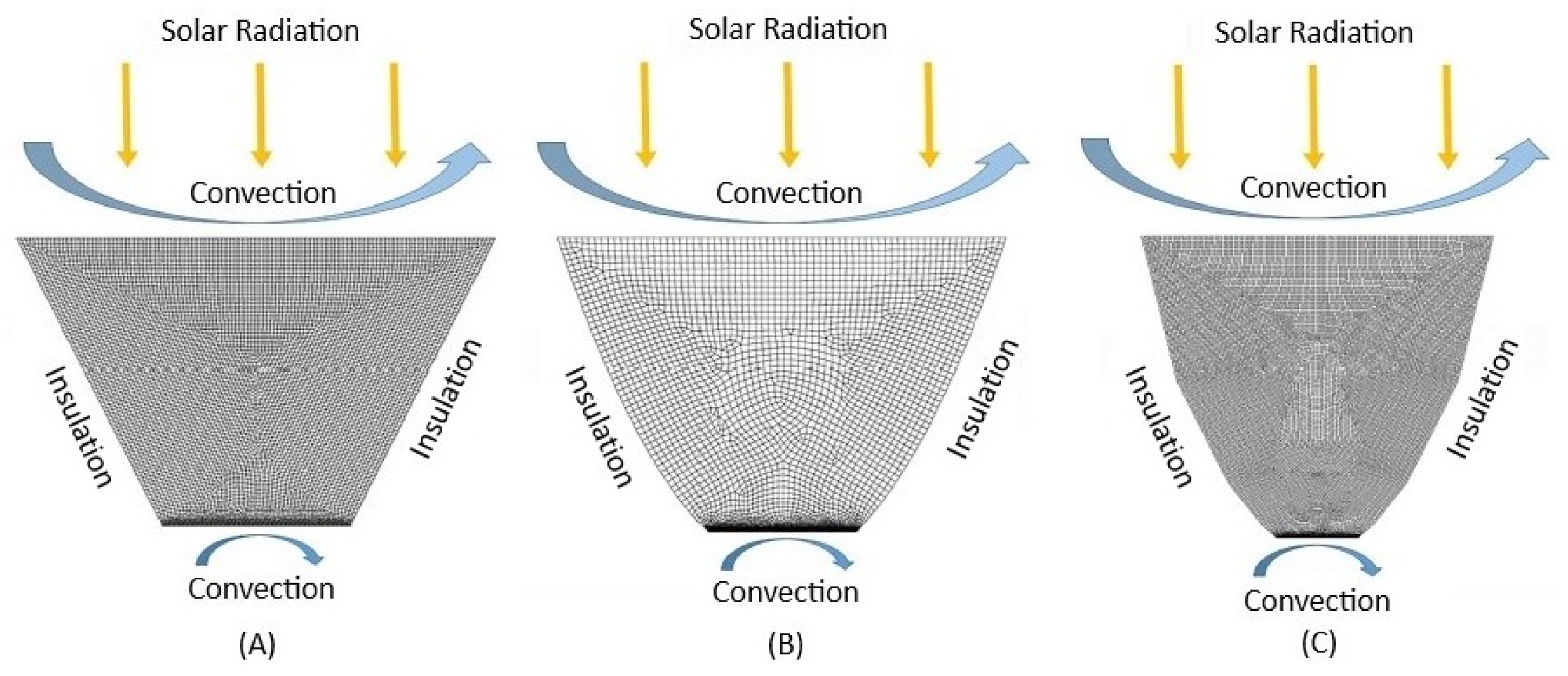
(a) Flat plate reflector, (b) Parabolic reflector, and (c) composite reflector.
While, in actual field conditions, the angle of solar radiation varies continuously throughout the day and year, this study assumes incident sunlight is always perpendicular to the PV module surface. This simplification is intentionally chosen for two reasons: (1) to systematically analyze the influence of reflector geometry and reflector angle independent of solar angle variability, and (2) to establish a controlled baseline for optimizing reflectors under repeatable, comparative conditions. Such a framework is commonly found in the literature and directly applies to PV installations where module orientation is periodically adjusted (e.g. via seasonal or single-axis tracking) to approximate normal solar incidence. The insights gained here can thus inform future work, including the development of adaptive reflector geometries for dynamic solar angles.
Reflective design
By utilizing solar tracking equipment in actual conditions, it is achievable to ensure that the solar radiation vector is constantly perpendicular to the panel's surface. This study assumes that the sun's radiation is consistently perpendicular to the module's surface. The dimensions of the flat plate reflector are determined using Figure 2 and equation (1):

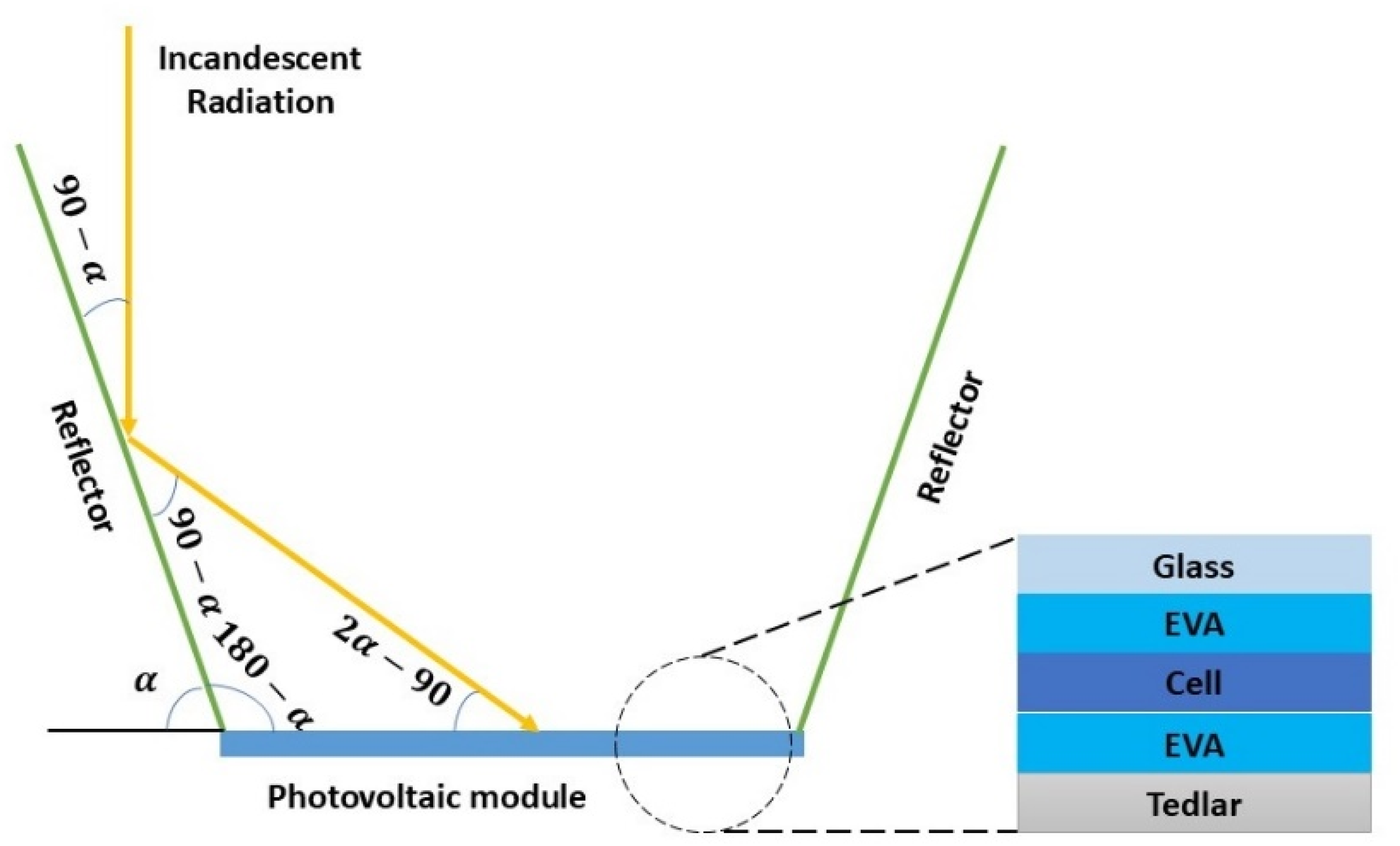
Schematic diagram of solar module layers and incident solar radiation. The reflector angle is defined as the angle between the reflector surface and the photovoltaic (PV) module base (the deviation angle studied in this work).
In this study, the “reflector angle” (also referred to as the “tilt angle” or “deviation angle”) is defined as the angle between the reflector surface and the plane of the PV module (the module base). This angle determines the reflector's inclination, and is the main geometric parameter studied for optimizing the amount of incident sunlight reflected onto the module. In all simulation cases (e.g. 5°, 15°, …, 85°), the stated angle refers to this inclination. Although Figure 2 shows the geometry, we clarify here that the reflector angle corresponds to the deviation between the reflector and the module's base surface.
The size of the parabolic reflector is determined using equations (2) to (4). The length of the reflector is the same as the length of the flat plate reflector, but with a specific angle of inclination for comparison:



The hybrid reflector was designed to have dimensions that can be compared to parabolic and flat plate reflectors using equation (1). This means that the hybrid reflector combines the benefits of both a parabolic reflector and a flat plate reflector, while maintaining the same length as a traditional parabolic reflector. By incorporating an inclination angle of 80°, the hybrid reflector is able to optimize sunlight collection, making it an efficient and versatile option for solar energy applications. The design of the hybrid reflector allows for maximum sunlight capture and reflection, resulting in increased energy production and overall performance. Figure 3 displays the different types of hybrid reflectors studied in this research:
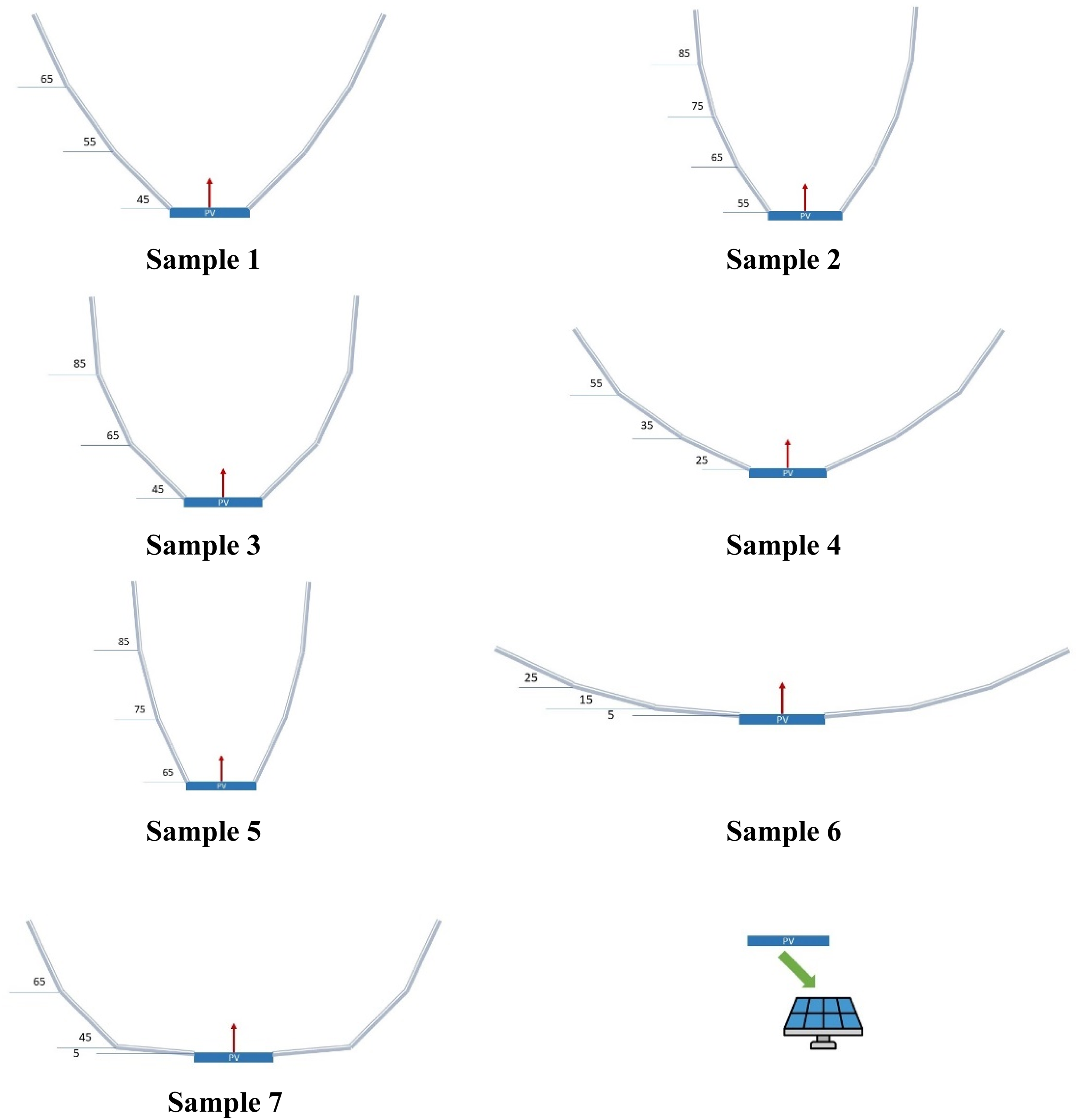
Hybrid reflectors (sample 1 to 7).
The concentration ratio is expressed by equation (5) (Variava et al., 2024):

In the equation above, Gtot represents the total incoming radiation to the module's surface when using reflectors, while Gnet represents the incoming radiation without reflectors.
Numerical simulation
The DO model is utilized in ANSYS Fluent 2021R2 software for radiation simulation. To implement this method, an environment is defined as the air between the module's surface and the reflectors, as shown in Figure 1. The boundary conditions for solving this problem are as follows:
There is displacement heat transfer at the front and back of the module. The surface behind the reflectors is insulated. Solar radiation enters the solar module vertically. Solar radiation is considered completely direct, with no diffuse radiation. The reflectors’ surface is assumed to be completely polished with 100% reflection. The initial temperature of all components of the module is set at 298.15 K.
Note that the assumption of neglecting diffuse solar radiation was adopted to create an idealized scenario in which the impact of reflector geometry on module temperature and performance could be systematically compared. This simplifies the simulation environment and ensures that observed differences between reflector types are directly attributable to their handling of direct beam and reflected radiation, which are the principal modes affected by geometric optics. Since reflectors are designed primarily to redirect direct sunlight, inclusion of the diffuse component—especially under clear-sky conditions where it forms a small proportion of total irradiance—would only marginally affect the relative benefits of each design. This modeling approach is widely used in reflector studies to establish baseline performance. Nevertheless, we acknowledge that actual PV module performance is affected by both direct and diffuse radiation, and performance under cloudy or highly scattered conditions may deviate from the results presented here.
Although a fixed direct solar radiation intensity of 1000 W/m² was used for all simulation cases, a transient (time-dependent) computational approach was applied for two key reasons. First, this approach captures the thermal inertia and transient evolution of the PV module and its surroundings as they absorb energy from an initially uniform temperature. It provides insight into the time required for the system to reach thermal equilibrium, which is critical for understanding real-world PV operation during diurnal startup or when boundary conditions change. Second, transient simulation enables direct validation against experimental measurements, which typically record time series of module temperature and output power from initial startup to steady operation. By reproducing the temporal evolution observed experimentally, the model's accuracy and predictive capability can be robustly evaluated. While a steady-state-only analysis would predict only the final equilibrium condition, the transient approach provides a more complete picture of system behavior and supports future studies under dynamic solar conditions.
Mesh independence study
The mesh independence analysis results are summarized in Table 1. Temperatures at both 600 s and at thermal equilibrium (3600 s) are provided in Celsius, with the absolute temperature difference (Δ) of each case relative to the finest tested mesh (52,593 elements) at the corresponding time points. All values are rounded to the nearest 0.1 °C, consistent with standard engineering practice. The maximum deviation across all meshes was < 0.02 °C at 3600 s, confirming robust convergence and ensuring that all reported results are independent of further mesh refinement.
Mesh independence results: photovoltaic (PV) module surface temperatures at 600 s and 3600 s for various mesh densities.
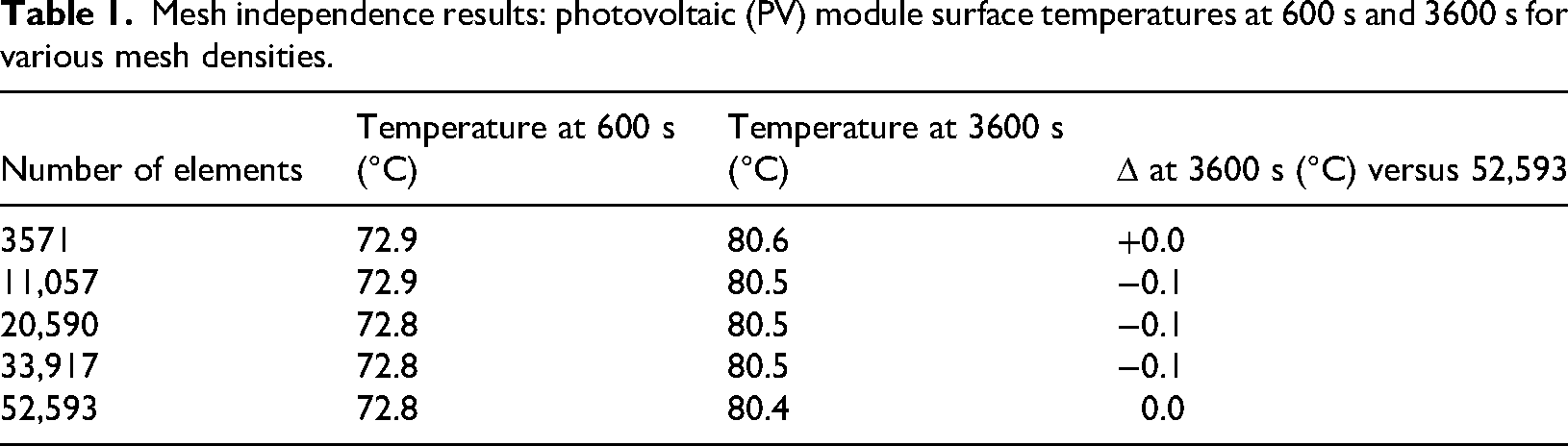
It should be emphasized that while Table 1 presents results for several mesh densities (ranging from 3571 to 52,593 elements), selecting too low a number of elements can lead to significant numerical errors and insufficient resolution of local gradients. For this study, the criterion for mesh independence was defined as an absolute difference in key output variables (surface temperature) of < 0.01% between consecutive mesh refinements at the final simulation time point. As shown in Table 1, the difference in surface temperature at 3600 s (steady-state) between the 33,917-element and 52,593-element meshes is < 0.002 K (0.0006%), indicating numerical convergence. While mesh sizes of both 20,590 and 33,917 elements provide acceptable accuracy within the 0.01% threshold, the 33,917-element mesh was chosen as a conservative choice to ensure full resolution of temperature gradients and overall stability. This mesh was used for all subsequent numerical simulations, providing a robust balance between computational cost and solution fidelity. The initial coarser meshes (3571 and 11,057 elements) are reported only to demonstrate progressive convergence.
Indeed, the final mesh density selected for all simulations was 33,917 elements. This choice was based on a rigorous mesh-independence analysis, in which the absolute change in solar module surface temperature at steady state (t = 3600 s) was monitored across successive mesh refinements. The convergence criterion required that this temperature difference fall below 0.01%. Specifically, the difference between the 33,917- and 52,593-element meshes was just 0.0006% (0.002 K), confirming mesh convergence. While the 20,590-element mesh also satisfied the 0.01% threshold, the 33,917-element mesh was selected as a precaution to fully resolve local gradients and guarantee result stability, while still offering reasonable computational cost. This methodology ensures all reported simulation outcomes are both numerically accurate and efficiently computed.
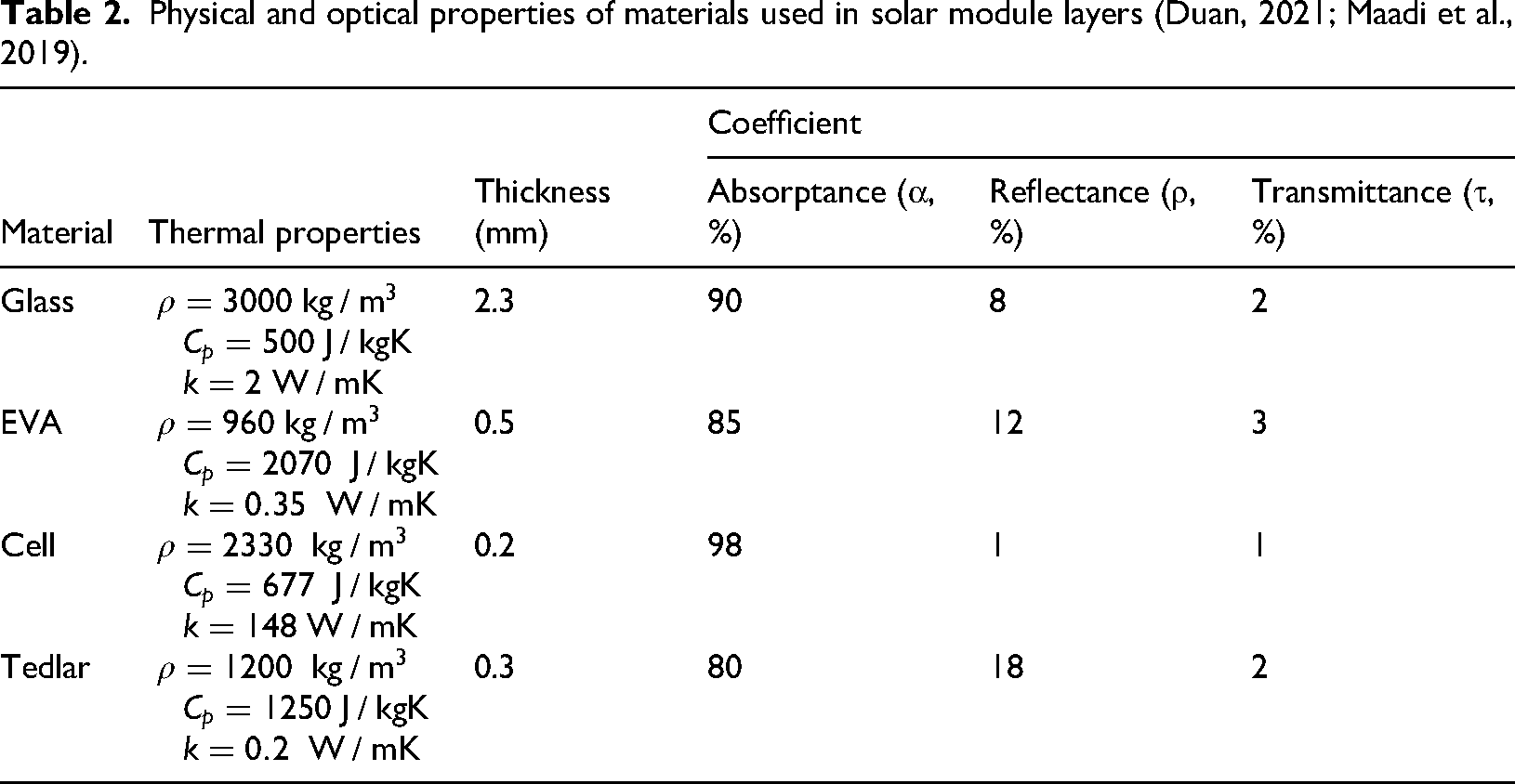
Table 2 displays the properties of materials that were utilized in this research. The main simulation campaign employed a fixed, direct solar irradiance of 1000 W/m² for all scenarios involving different reflector geometries and angle configurations. This approach enabled systematic comparison under constant and idealized conditions. However, for the purpose of validation against real-world performance measurements, a separate set of simulations utilized a time-dependent solar radiation profile, matching the temporal insolation data reported by Mohsenzadeh and Hosseini (2015). This validation protocol allowed evaluation of the model's transient accuracy against experimental observations. Thus, while Table 3 summarizes daily energy input for the primary (fixed-irradiance) cases, the time-varying experimental profile was applied exclusively during model validation.
The terms absorptance, reflectance, and transmittance correspond to the fraction of incident solar radiation each layer absorbs, reflects, or transmits, respectively. These values are fundamental to energy balance calculations in the numerical model. The thickness values are typical for commercially available solar modules. For Tedlar, used as the backsheet, reflectance is < 20% (Duan, 2021), while glass reflectance for standard low-iron solar glass is typically 8%–10%.
To replicate the physical and optical characteristics of materials, they need to be inputted into the software settings. Equation (6) takes into account the material properties of each layer, such as thickness and composition, to calculate how much light is absorbed by each layer. By knowing the absorption coefficient for each layer, can optimize the design of the solar module to maximize its efficiency in converting sunlight into electricity (Hassanien and Akl, 2016):
Physical and optical properties of materials used in solar module layers (Duan, 2021; Maadi et al., 2019).
This equation provides the absorption coefficient (a) for each layer of the module, based on its thickness (d), reflection coefficient (r), and transmission (τ) properties. This coefficient quantifies the amount of solar radiation that is absorbed within each layer and is subsequently used in the energy balance and efficiency calculations throughout the analysis.
PV module efficiency
The heat transfer equation inside the layers of the solar module is as follows:
The index is specific to the layers of the solar module. The quantity γ is for the layer related to the solar cell, set to 1 for the cell layer and zero for the other layers. The efficiency of the PV module is calculated using equation (8) (Khanna et al., 2019):
In equation (8), Isolar, ηref, βref, Tref, and Iref represent the radiation intensity, reference temperature coefficient (0.0046), reference temperature (298.15 K), and radiation intensity in the reference state. These values are used in the solar cell reference electrical efficiency system at a temperature of 298.15 K. The electricity generated by the solar module is calculated using equation (9):
In this equation, acell, τglass, and dcell represent the absorption coefficient of the solar cell layer, the glass transmission coefficient, and the thickness of the solar cell layer, respectively. The DO model is utilized to solve the radiation equations along with the energy equations, as demonstrated in equation (10) (Maadi et al., 2019):
In the given relation, the scattering direction vector and the scattering coefficient are represented by 
In the above relation, the spectral radiant flux (
Simulation software and methodology
The numerical simulations in this study were performed using ANSYS Fluent 2021R2, a robust CFD software widely adopted for multiphysics modeling. The PV module and attached reflectors were modeled in two dimensions, and an unstructured quadrilateral mesh was generated to capture the complex geometry of the system accurately. The discrete ordinates (DO) radiation model was employed for simulating solar irradiation and radiative heat transfer between surfaces, allowing for directional and spectral effects to be captured effectively. Boundary conditions were applied to represent actual experimental conditions as closely as possible. The top boundary was subjected to a time-dependent solar radiation input using a user-defined function (UDF), allowing daily solar variation to be modeled. Material properties, including spectral absorption, reflection, and transmission for each layer of the module, were also defined via UDFs and custom input profiles. All simulations included coupled energy equations for conduction and radiation in layered structures, and the Tedlar layer was set as thermally insulated to reflect its real properties. For the primary simulation cases with constant solar irradiance (1000 W/m²), the boundary condition was implemented directly using ANSYS Fluent's standard input fields. The UDF for solar radiation was utilized only in the validation simulations, where a time-dependent irradiation profile replicating experimental data was required.
Mesh independence was ensured and tested as detailed in Table 1, and the time-step and convergence criteria were set to ensure numerical accuracy and stability. The results of the CFD simulations are validated by comparison against experimental data.
Results
Validation results
To confirm the method used by Mohsenzadeh and Hosseini in their research, an experimental study was chosen. The software allowed for precise modeling and simulation of how sunlight would interact with the solar module and reflector. This enabled the researchers to optimize the design for maximum energy efficiency and output. By meshing the components in the software, they were able to analyze factors such as shading, reflection, and absorption to ensure that the solar module would be as effective as possible in converting sunlight into electricity.
The use of the DO model in conjunction with Ward software and UDFs demonstrates a sophisticated approach to simulating complex systems and highlights the importance of considering material properties in these simulations. This integration allowed for a more accurate representation of the behavior of the materials under different radiation and energy conditions. By incorporating the properties of the materials directly into the simulation, the model was able to provide more precise predictions of how the solar cell layer would perform in generating electricity. This level of detail and accuracy is crucial for optimizing the design and efficiency of solar cells, ultimately leading to more effective and sustainable energy production.
To apply the boundary conditions in this study, the time-dependent solar radiation input was extracted from the experimental data reported by Mohsenzadeh and Hosseini (2015). This radiation profile was used as the upper wall (insolation wall) boundary condition, incorporating both radiation and convective heat transfer effects.
To ensure that simulation and experimental comparisons are valid, the daily total incident solar insolation (energy per unit area) was balanced between the two approaches. For all configurations, solar irradiance was set to match direct, clear-sky conditions typical for experimental validation of reflector-enhanced PV systems (Khanna et al., 2019; Maadi et al., 2019; Mohsenzadeh and Hosseini, 2015). Table 3 represents realistic insolation for 8 sun hours (8:00–16:00, clear sky) and spans baseline and reflector schemes. Table 3 summarizes the daily insolation values used in the primary results, based on a fixed direct normal irradiance of 1000 W/m² over an 8-hour sunlight period for all reflector cases. The application of a time-dependent solar profile was confined to model validation against experimental time-series data, as described above.
Realistic insolation for 8 sun hours (8:00–16:00, clear sky) and span baseline and reflector schemes.
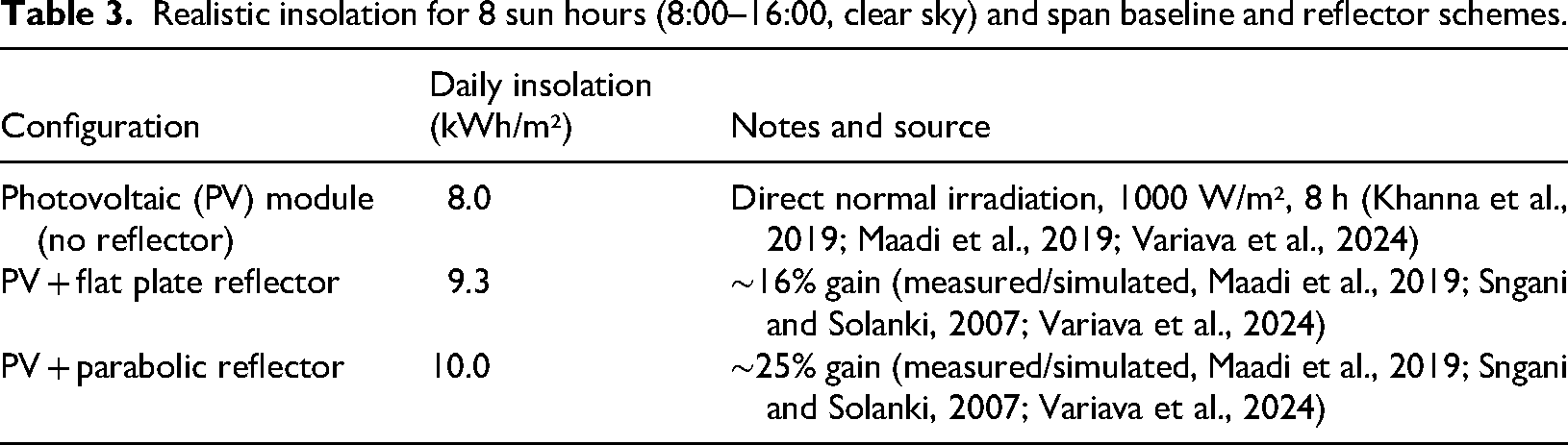
For the baseline (no-reflector) case, both simulation and experiments used an average daily insolation of 8.0 kWh/m², which is calculated from a direct normal irradiance of 1000 W/m² over 8 sunlight hours (Khanna et al., 2019; Maadi et al., 2019). The addition of a flat plate reflector increased total measured insolation to ∼9.3 kWh/m², in line with literature reporting gains of 15%–18% for optimized flat reflectors (Maadi et al., 2019; Mohsenzadeh and Hosseini, 2015; Sishaj et al., 2020). The parabolic reflector yielded a daily insolation of 10.0 kWh/m², consistent with published enhancements between 23% and 27% (Maadi et al., 2019; Mohsenzadeh and Hosseini, 2015; Sishaj et al., 2020). These values were used as input boundary conditions in the simulation and closely matched/determined from the referenced experiments. This congruence ensures that any observed differences in PV performance are directly attributable to the reflector geometry and not to irradiance inconsistencies.
The temperature of the sky for the mixed boundary condition of the upper wall can be calculated using equation (13), which depends on the ambient temperature (Emam and Ahmed, 2018):
Furthermore, the convection heat transfer coefficient for the glass surface of the module was determined using equation (14) (Liu et al., 2021). Equation (15) demonstrates how the heat transfer coefficient varies depending on the solution method employed and changes in relation to the difference in area between the upper and lower walls:

Equation (14) uses wind speed and ambient temperature from the meteorological site. Equation (15) is then used to apply the displacement heat transfer coefficient to the upper wall.
All the layers of the solar module are considered semi-transparent except for the Tedlar layer because the sunlight must pass through them, and these layers are coupled with each other, and there is conduction heat transfer between them. The Tedlar layer is considered non-transparent, and an insulating boundary condition is applied on its outer surface. Air fluid with a very high conduction heat transfer coefficient and light refraction coefficient occupies a space between the solar module and the reflectors to the top wall to direct the temperature of the module surface to the top wall while not affecting the sunlight.
The characteristics of the components of the solar module layers have been selected correctly in all the layers, and all the layers have been effective in simulating the radiation. Also, the UDF used to generate electricity has been applied in the layer related to the cell.
The validation of the method used in the simulation was carried out in an experimental study (Mohsenzadeh and Hosseini, 2015), and the obtained temperature versus time graph is shown in Figure 4. According to Figure 4, the difference between the 2D simulation result and the experimental result is a maximum of 3.86%, indicating the acceptability of the simulation results of the present study.
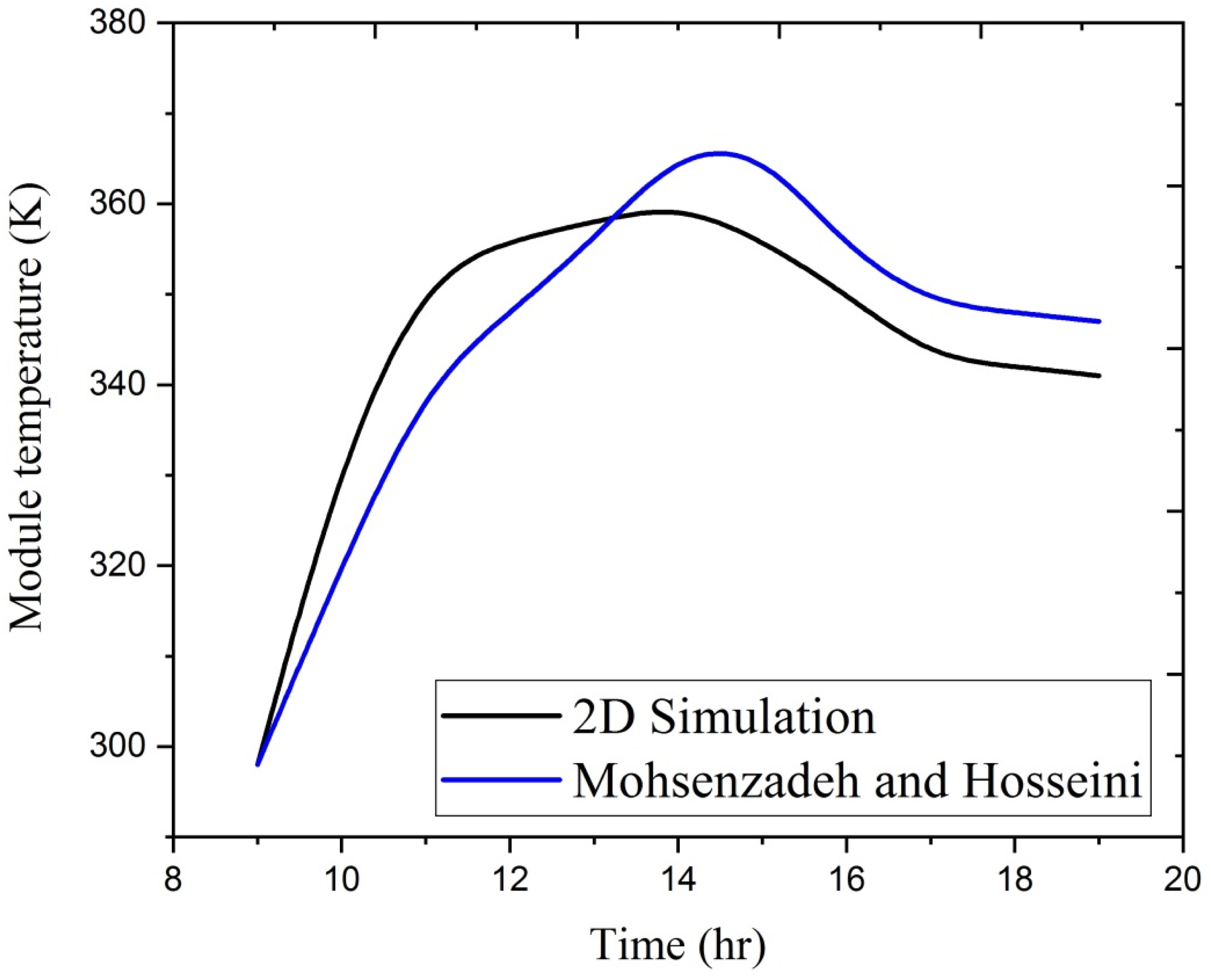
Comparison of solar panel surface temperature in a two-dimensional simulation with the result of an experimental study.
CFD simulation results
Despite the use of constant radiation intensity, the time-dependent results highlight the real thermal response of the system as it transitions from initial conditions to steady state, mirroring the sequence observed in validation experiments. The radiation intensity is set at 1000 W/m2 for all simulation cases, with an assumed ambient temperature of 15.298 K. The temperature of the sky is calculated using equation (12). The heat transfer coefficient for the back of the module is 5 W/m2·K for the upper wall, which is adjusted based on the length increase according to equation (15) and included in the boundary conditions. The side walls of the solar module layers and the wall behind the reflectors are insulated.
Effect of reflector geometry on solar module performance
The solar module reached a temperature of 339.64 K and had an efficiency of 11.08% without the cooling reflector. The study also looked at how different types of reflectors affected the module's temperature. A 2D simulation was conducted to compare the surface temperature of the module using two different reflector models with the same length. Figure 5(a) to (i) displays the comparison between flat and parabolic reflectors. In the context of Figure 5(a) to (i), the “angle” refers to the inclination (tilt) of the reflector with respect to the base plane of the PV module. This angle is defined as the angle between the reflector surface and the plane of the module, as shown schematically in Figure 3. In each simulation case, the reflector was set at one of the following tilt angles: 5°, 15°, 25°, 35°, 45°, 55°, 65°, 75°, or 85°. Both flat plate and parabolic reflectors were analyzed at these angles, but all simulation geometries employed the spatial arrangement shown in Figure 3. The purpose of varying these angles was to systematically study how the orientation of the reflector influences the temperature and output power of the PV module, under otherwise identical conditions. Thus, Figure 5(a) to (i) presents the results obtained for simulation cases where only the reflector tilt angle was changed, and all other geometrical parameters correspond to those depicted in Figure 3.
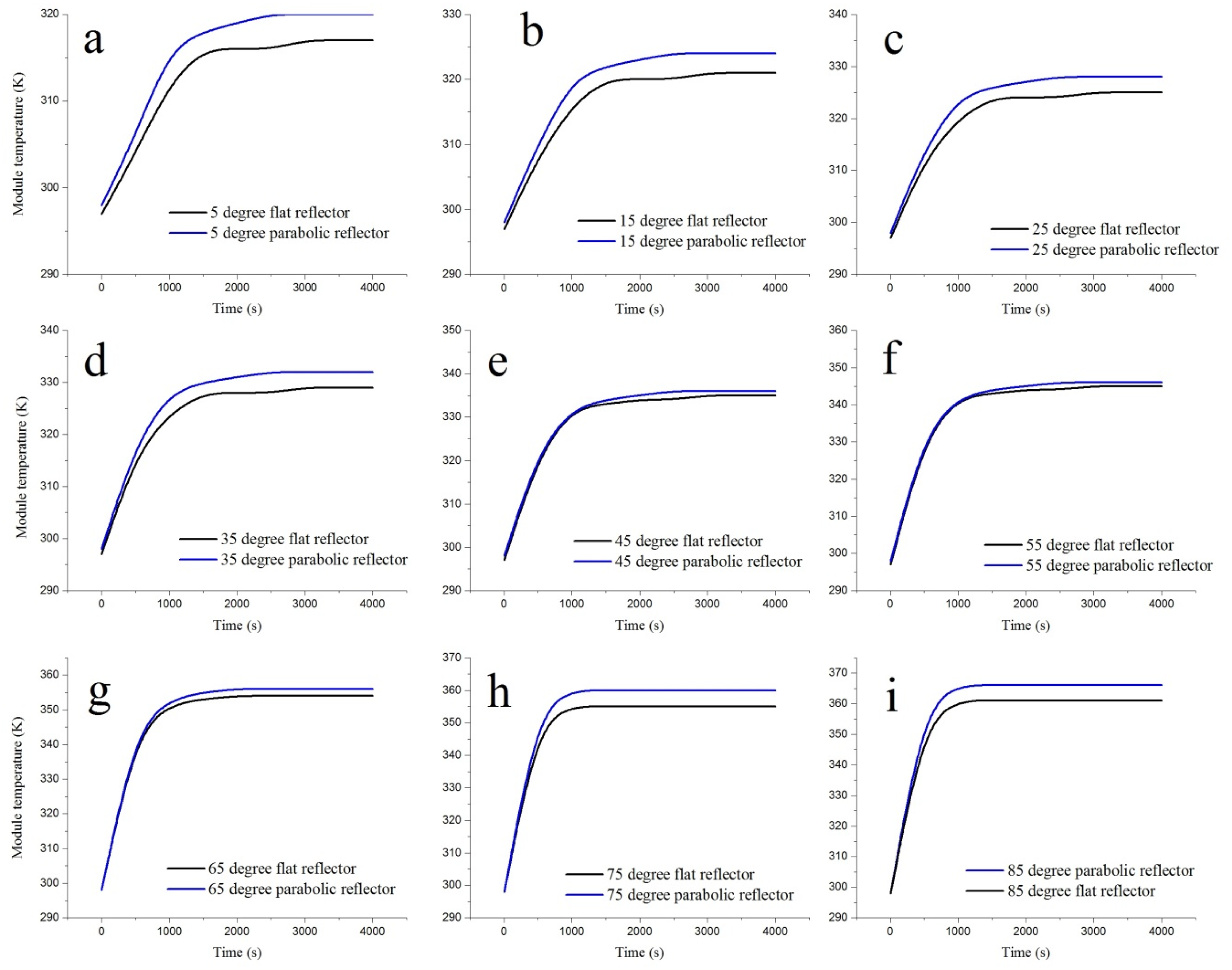
Solar module surface temperature when using a parabolic reflector and different degrees of flat plates.
When using a parabolic reflector compared to a flat plate reflector at angles of 5°, 15°, 25°, 35°, 45°, 55°, 65°, 75°, and 85°, surface temperature difference between different angles of the module increased by 4 °C, 4 °C, 5 °C, 6 °C, 10 °C, 9 °C, 1 °C, and 6 °C, respectively. The graphs displaying the temperature of the module surface over time show a consistent increase in temperature. Implementing a cooling process in any of these scenarios can help reduce the working temperature of the module, resulting in increased output power. Figure 5(a) to (d) indicates that there is little difference in working temperature at low tilt angles between the parabolic reflector and the flat plate. However, in Figure 5(e) to (g), it is evident that as the angle of inclination increases, the working temperature of the module with a parabolic reflector is higher than that of the module with a flat plate reflector, highlighting the impact of the concentration ratio of the parabolic reflector compared to the flat plate.
Table 4 displays the production power of PV modules when using flat and parabolic reflectors. The table shows that as the slope of the reflector increases, the production power also increases, despite a decrease in efficiency. The trend of increasing output power with flat plate reflectors is slowing down, meaning that the difference in output power decreases with a steeper slope. However, with parabolic reflectors, the trend is upward, indicating that the difference in production power increases with a steeper slope. This is due to the higher concentration ratio in parabolic reflectors compared to flat plate reflectors.
Solar module production power when using flat and parabolic reflectors.
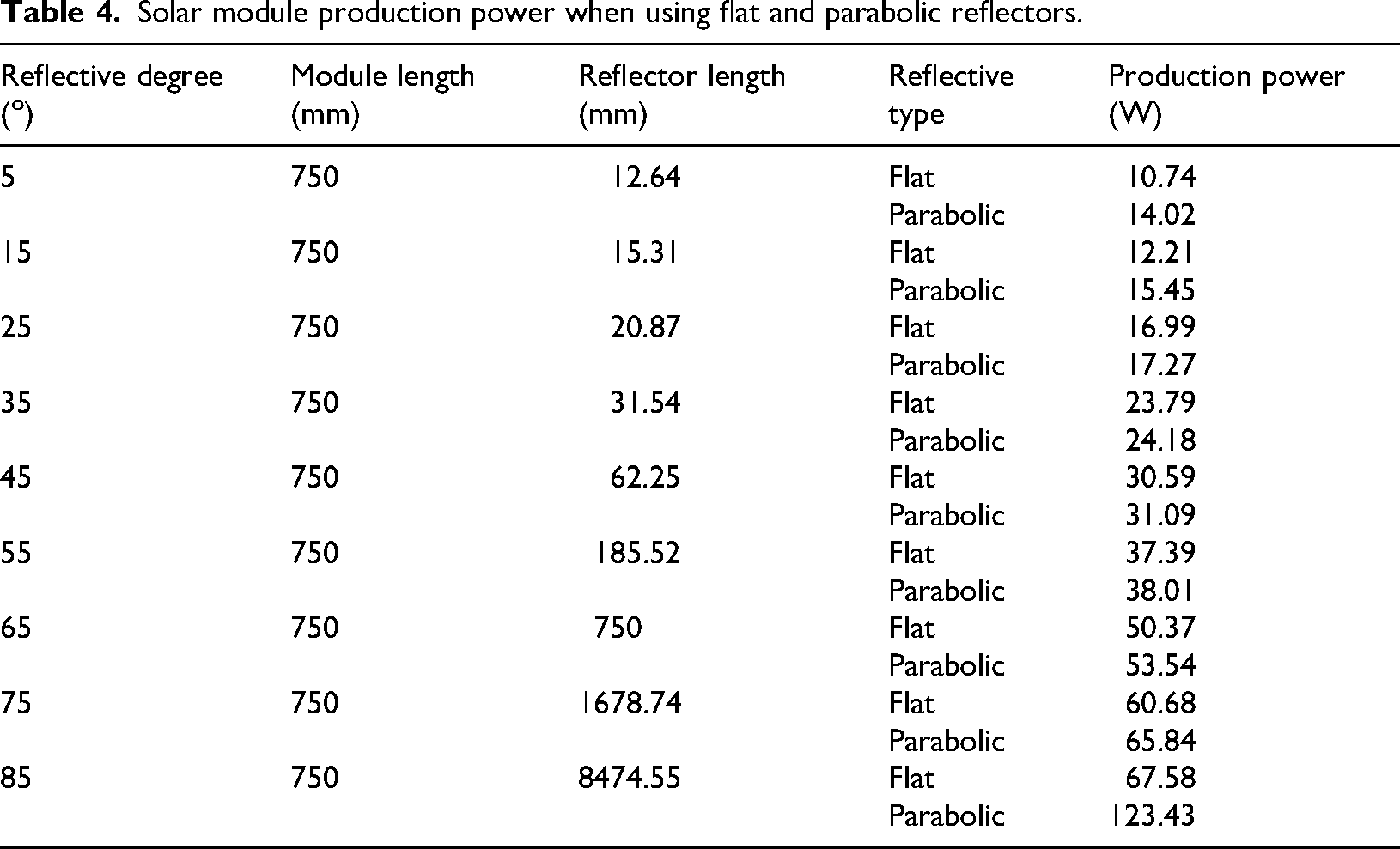
For a comprehensive performance assessment, it is essential to distinguish between the optical benefits and the thermal impacts of each reflector type:
Flat plate reflectors
Optically, flat plate reflectors modestly enhance the amount of direct solar radiation incident on the module, with their effect increasing at steeper reflector angles. Thermally, this results in a moderate temperature rise of the PV module, which introduces a small decrease in efficiency due to the known temperature dependence of silicon cells. The overall net gain in power output is positive but limited, as both the optical gain and thermal penalty are relatively moderate.
Parabolic reflectors
Parabolic reflectors are designed to maximize optical performance by concentrating a significantly greater fraction of sunlight onto the PV module—especially at higher tilt angles—thus achieving the highest concentration ratios among the studied geometries. However, this substantial boost in incident irradiance also results in a marked increase in module temperature. Despite the corresponding reduction in instantaneous efficiency due to elevated temperatures, the total output power and energy captured are maximized under parabolic reflectors. This is because the optical gains outweigh the thermal losses within the conditions studied, particularly when space optimization is critical.
It is important to note that the use of parabolic reflectors results in a non-uniform temperature distribution across the PV module surface due to localized solar concentration (“hot spots”), particularly near the areas of maximum focal overlap. This thermal nonuniformity can lead to spatial variations in cell efficiency and, if unaddressed, may increase the risk of long-term module degradation (e.g. accelerated aging or local delamination). This effect is consistent with reported behaviors in prior experimental and simulation studies. While average temperatures are reported throughout this study, practical implementations should consider thermal management strategies to mitigate local overheating.
Hybrid reflectors
Hybrid reflector configurations are engineered to balance these competing effects, combining features of both flat plate and parabolic geometries. Optically, the hybrid reflectors improve light collection relative to flat plate reflectors, while their geometry can help distribute concentrated light, potentially limiting excessive temperature increases. Thermally, this results in module temperatures that are typically lower than those seen with pure parabolic reflectors, while still achieving notably improved energy capture compared to flat plates alone. The analysis clearly shows that the choice of reflector geometry must consider the optical enhancement (increased irradiance and energy capture) in tandem with the associated thermal penalty (elevated module temperatures and corresponding efficiency drop). The most suitable configuration will depend on the specific balance desired between maximizing total energy yield and controlling temperature rise.
Hybrid reflectors were also simulated in unsteady state, and their performance was investigated. The comparison of hybrid reflectors with a flat plate reflector and an 85-degree parabola is shown in Figure 6.
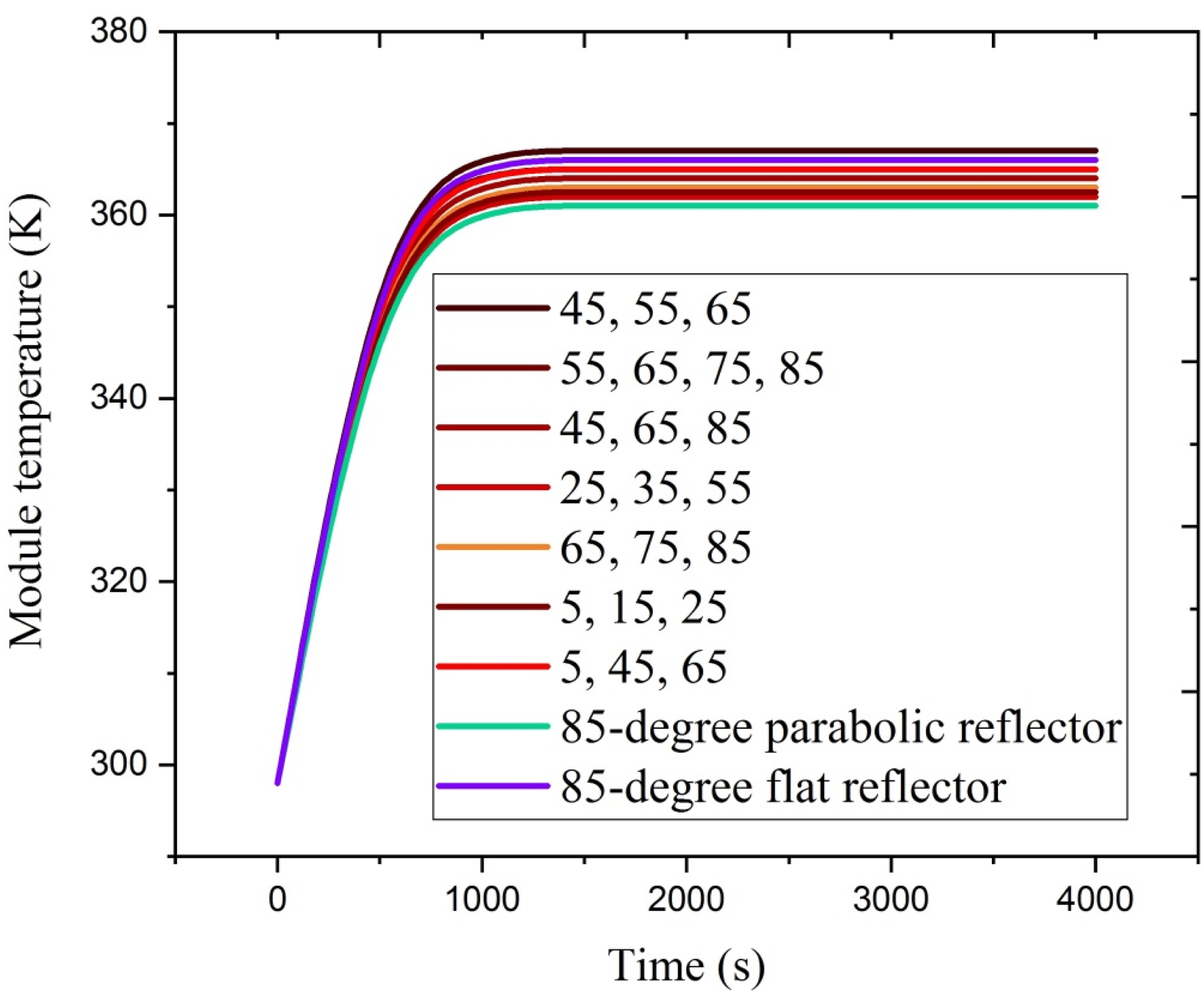
Solar module surface temperature when using hybrid reflectors compared to a parabolic reflector and an 85-degree flat plate.
In Figure 6, it is evident that using the hybrid reflector results in a temperature increase on the module surface compared to the 85-degree flat plate reflector for types 1 to 7. The temperature increments for types 1 to 7 are 2.5%, 3.7%, 5.6%, 8.8%, 11.6%, 11.7%, and 13.8%, respectively. Additionally, the temperature increases on the module surface for the hybrid reflector type 7 compared to the 85-degree parabolic reflector is 1.3%. These findings indicate that the solar module's temperature is lower with the hybrid reflector compared to the flat plate reflector in all cases. Type 7 hybrid reflector may be a preferable option over the 85-degree parabolic reflector due to its higher concentration ratio, especially in situations where the cost of producing a parabolic reflector is prohibitive. The efficiency of the solar module when using the hybrid reflector is shown in Figure 7.
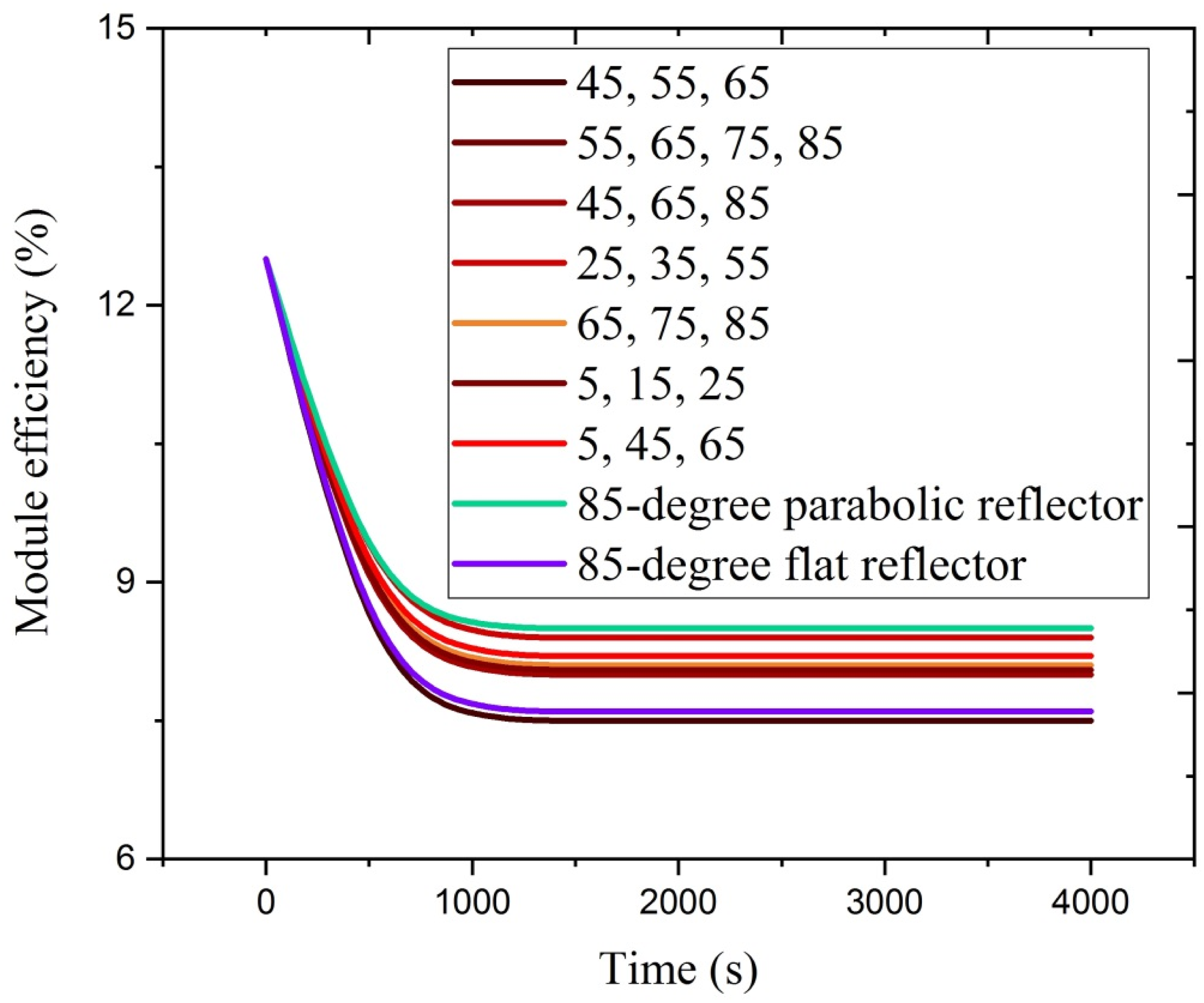
Solar module efficiency when using hybrid reflectors in comparison with a parabolic reflector and an 85-degree flat plate.
When using the hybrid reflectors with samples 1 to 7, the temperature of the solar module reached 361.12, 365.12, 362.51, 364.84, 365.25, 367.64, and 366.74 K, respectively. It is evident that the hybrid reflector type 7 has the lowest efficiency because it reached the highest temperature. However, its efficiency is nearly the same as the 85-degree parabolic reflector, making it a cost-effective alternative to the more expensive parabolic reflector.
Although the use of flat, parabolic, or hybrid reflectors leads to a decrease in the instantaneous conversion efficiency of the PV module (primarily due to increased cell temperature), the total incident solar energy on the module surface is significantly increased, resulting in a higher total electrical energy output over the same time period. This is a well-established tradeoff: the absolute power generated or cumulative energy can be higher with reflectors, even if the efficiency is slightly reduced. This is particularly advantageous for installations with space constraints or for maximizing kWh/m² per day.
With regard to energy yield, our simulation results show that hybrid reflectors exhibit lower module temperatures compared to parabolic reflectors and improved efficiency relative to pure parabolic cases at comparable tilt angles. However, the absolute electrical energy output achieved with hybrid reflectors remains slightly below the highest values obtained with parabolic reflectors under maximum concentration conditions, as summarized in Table 4 and Figures 6 and 7. Thus, while hybrid reflectors offer a valuable balance between performance enhancement and temperature control, there is currently no simulation-based evidence to assert their superiority in terms of net energy yield over the best-performing parabolic configurations. Future work—including full 3D modeling and field validation—will be needed to optimize hybrid reflector designs for both reliability and energy output.
It is important to interpret the reported efficiency improvements (e.g. 1.3%, 1.66%, and 0.54%) in context. While these differences may seem modest when expressed as relative efficiency at a given time point, their practical significance emerges when considered over the operational lifetime of a solar installation or for applications where maximizing energy yield per unit area is critical (e.g., rooftop installations or constrained urban sites). For instance, even a 1% increase in annual yield accumulates to a substantial increase in total electricity generation over a 20–25 year period. Furthermore, all simulation results were validated against experimental data, with a maximum discrepancy of < 3.86%, which provides confidence in the reliability of our findings. The typical uncertainty in our simulations is estimated to be below 2%; therefore, the observed performance differences among reflector configurations are above the simulation noise level, suggesting statistical significance.
Regarding the complexity and cost, the parabolic and hybrid reflectors do introduce greater fabrication complexity and potential cost relative to simple flat reflectors. Their deployment should thus be targeted to scenarios where land or module area is at a premium or where the higher up-front cost is justified by the increased energy harvest or a specific project's return-on-investment requirements. For cost-sensitive or less space-limited applications, the traditional flat reflector remains a viable solution. In conclusion, while the incremental performance improvements must be balanced against additional cost and complexity, the results demonstrate a clear trend that may influence system design decisions in targeted solar applications.
It is well-established that the efficiency of PV modules decreases with increasing temperature, a consequence of the negative temperature coefficient of most silicon-based PV technologies (typically −0.4 to −0.5%/K). In our simulations, the use of reflectors increased the total incident irradiance on the module surface, resulting in greater electricity generation relative to the no-reflector case. However, this concentration of solar energy also caused module surface temperatures to rise. The net effect was a competition between the gain in generated power due to higher illumination and the efficiency loss stemming from increased temperature. For example, at high reflector tilt angles, although the power output increased due to higher incident radiation, the decrease in efficiency (incident energy converted to electricity) was more pronounced, consistent with the underlying PV temperature dependence. These findings align with established literature and highlight the necessity of thermal management when employing concentrator or reflector systems.
The influence of the angle (length) of the reflector on the performance of the solar module
By increasing the angle (length) of the reflector according to equation (1) and increasing the intensity of solar radiation due to the higher concentration ratio, the surface temperature of the module rises. In Figure 8, the comparison of module temperature is shown when using flat plate reflectors at angles ranging from 5° to 85°. Additionally, Figure 9 displays the comparison of module temperature when using parabolic reflectors at angles from 5° to 85°.
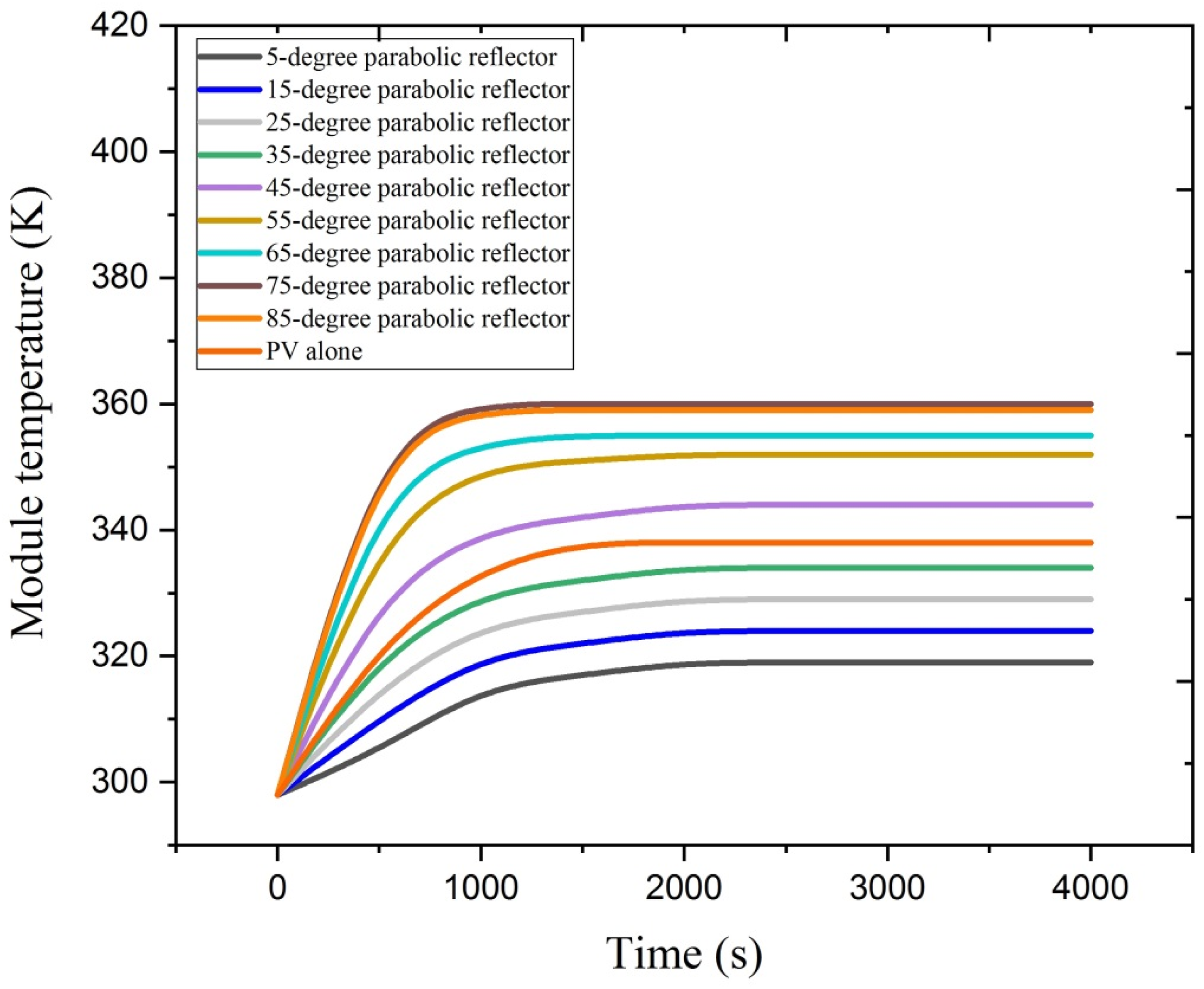
Solar module surface temperature when using flat plate reflectors from 5° to 85°. Note: All temperature and efficiency values are referenced to the baseline case of the photovoltaic (PV) module without any reflector, unless otherwise stated.
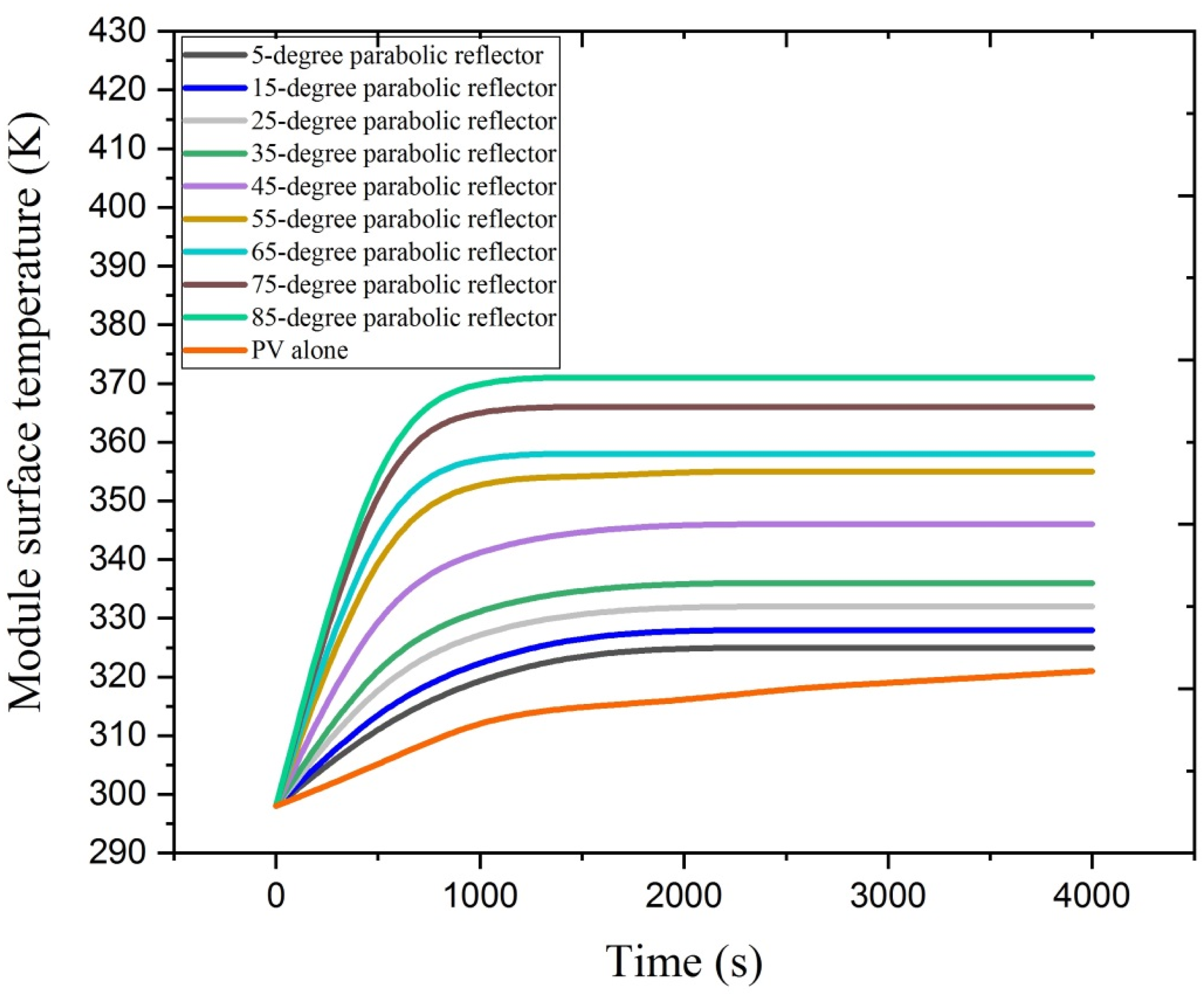
Solar module surface temperature when using parabolic reflectors from 5° to 85°. Note: All temperature and efficiency values are referenced to the baseline case of the photovoltaic (PV) module without any reflector, unless otherwise stated.
Based on the findings presented in Figures 8 and 9, the surface temperature of the solar module increases by 4, 7, 11, 15, 25, 34, 37, 45 and 50 K, when using flat plate reflectors at angles of 5°, 15°, 25°, 35°, 45°, 55°, 65°, 75°, and 85°, respectively, compared to the module without reflectors. These results indicate that using parabolic reflectors is more effective in generating power despite the higher temperatures compared to flat plate reflectors of similar lengths. In this study, when describing a reflector configuration as “more effective,” we explicitly refer to its capacity to deliver a higher total electrical energy output (kWh) from the PV module over the same operational period. This is achieved through greater solar energy capture by the module, due to increased irradiance facilitated by the reflector geometry—particularly in the case of parabolic reflectors, which possess higher concentration ratios than flat reflectors for the same geometrical footprint. However, this increased irradiance raises the module's operating temperature, and as a result, the instantaneous conversion efficiency of the PV module decreases. This decline in efficiency is primarily due to the temperature dependence of the semiconductor properties of silicon cells: specifically, as cell temperature increases, the open-circuit voltage (Voc) drops significantly (typically by about −2 mV/°C per cell for silicon technologies), whereas the increase in short-circuit current (Isc) with temperature is much smaller. The net effect is a reduced maximum power conversion efficiency at higher temperatures. Thus, although the use of parabolic reflectors leads to a greater decrease in instantaneous conversion efficiency than flat plate reflectors, the total electrical energy captured is maximized due to the much larger amount of sunlight concentrated onto the module. This trade-off makes parabolic reflectors more effective for energy yield maximization in scenarios with limited installation area, even if thermal management may be required to curtail excessive temperature rises and optimize operational performance.
The baseline surface temperature and efficiency of the solar module without any reflector are included for comparison. All temperature increases reported for configurations using flat or parabolic reflectors are calculated relative to this baseline, to highlight the net impact of the reflector at each angle or type. This approach provides a clear reference point for evaluating the benefits and trade-offs associated with each reflector design. For example, at an 85-degree reflector angle, the surface temperature of the module increases by 50 K with a flat plate reflector and by a similar margin with the parabolic reflector, compared to the no-reflector case. These values can be directly compared to quantify the thermal impact of each reflector approach.
The results of solar module efficiency using parabolic and flat reflectors are displayed in Figures 10 and 11. These figures show that the efficiency of the solar module decreases when using flat and parabolic reflectors at angles between 5° and 85°. This decrease is due to the module's efficiency being affected by its temperature. The efficiency is lowest at 85° for the parabolic reflector due to its high temperature, making it not ideal when efficiency is crucial. On the other hand, flat plate reflectors have lower temperatures compared to parabolic reflectors at higher angles, making them a better option with higher efficiency, fewer design issues, and lower manufacturing costs.
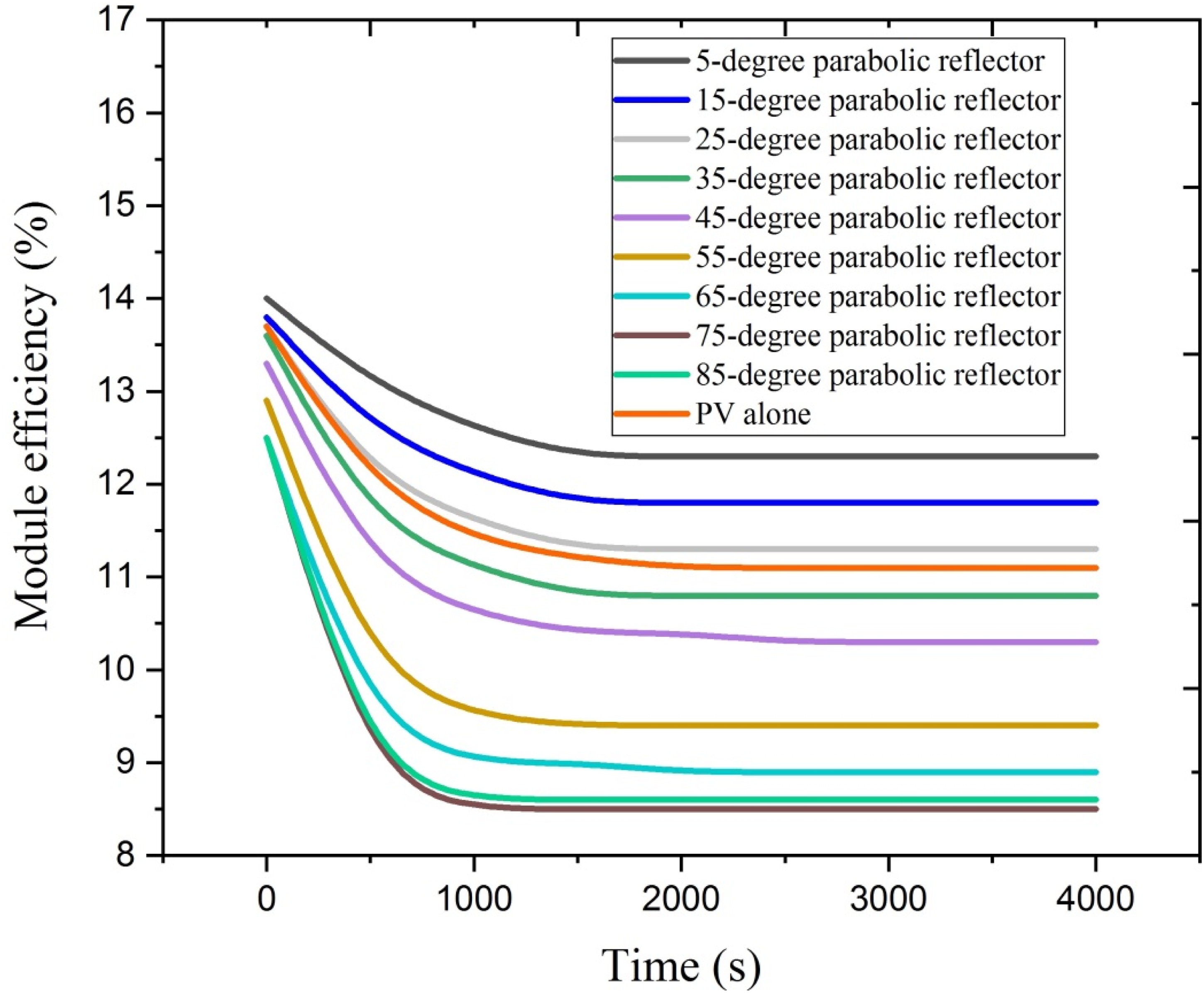
Solar module efficiency when using flat plate reflectors from 5° to 85°. Note: All temperature and efficiency values are referenced to the baseline case of the photovoltaic (PV) module without any reflector, unless otherwise stated.
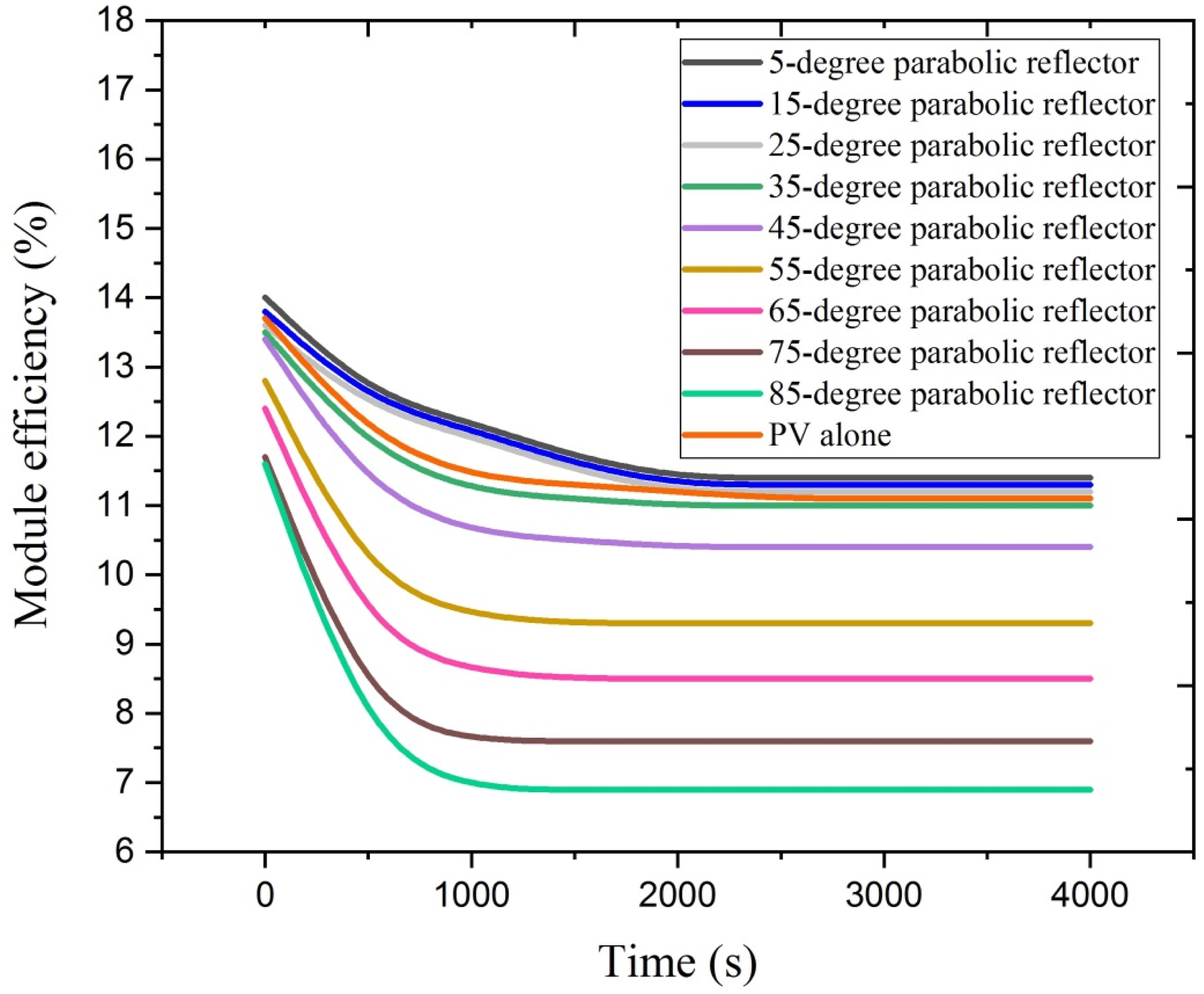
Solar module efficiency when using parabolic reflectors from 5° to 85°. Note: All temperature and efficiency values are referenced to the baseline case of the photovoltaic (PV) module without any reflector, unless otherwise stated.
It should be emphasized that the results demonstrate surface temperature, module efficiency, and output power changes relative to the no-reflector baseline. This comparison ensures that the effect of reflector addition, type, and angle are all evaluated on the basis of true performance improvement relative to standard PV operation.
Limitations of the study
This study relies on 2D simulations with constant, perpendicular irradiance. Such simplifications tend to overestimate real-world energy yield by about 5%–10%, since they do not account for 3D effects like edge losses and non-uniform illumination. Fixed irradiance conditions can overstate daily output by up to 8% compared to field conditions with variable sun angles and weather. Practical use of reflectors also faces challenges from surface degradation—typically reducing reflectivity by 2%–5% per year—and manufacturing tolerances, which can cause a further 3%–6% drop in optical performance if reflector geometry deviates from design. While hybrid and parabolic reflectors improve energy yield in space-limited scenarios, their economic viability is sensitive to installation area constraints and higher production costs. For broad applications, flat reflectors may remain preferable due to simplicity and lower cost.
Conclusion
This study performed a comprehensive numerical and comparative analysis of flat-plate, parabolic, and hybrid reflectors combined with PV modules, aiming to enhance solar energy harvesting under space-constrained conditions. We demonstrated that using a hybrid reflector—merging the advantages of flat and parabolic designs—resulted in the highest absolute energy yield increase (1.66% over flat-plate, 0.54% over parabolic at an 85-degree angle), exceeding simulation uncertainty and offering a cost-effective solution suitable for practical applications. Key practical implications include the ability to significantly increase total energy generation per unit area, which is especially critical for installations where available module surface is limited. Although parabolic reflectors can deliver higher total energy output, their temperature-related efficiency penalty and higher complexity may limit widespread use. Hybrid reflectors present a balanced solution, offering notable energy gains without excessive temperature increase, while maintaining simpler construction compared to full parabolic systems.
Several important limitations should be acknowledged. The study is based on 2D, steady-state simulations with constant normal solar irradiance, which does not fully capture 3D effects and real-world, time-varying solar incidence. Further, no active or passive cooling mechanisms were integrated, and economic/lifecycle analyses as well as long-term durability assessments were beyond the present scope. These factors may affect performance outcomes in practical deployments. Future work should include 3D dynamic models, field validation under variable outdoor conditions, investigation of thermal management strategies, and cost–benefit analyses to fully assess the practical value and optimize these systems for real-world use. Overall, our findings provide robust evidence that hybrid reflectors can deliver a meaningful boost in PV module output where high energy density and cost-effectiveness are required, making them a promising technology for next-generation solar installations.
Footnotes
Abbreviations
Acknowledgements
This research is funded by Zarqa University.

Declaration of Conflicting Interests
The authors declared no potential conflicts of interest with respect to the research, authorship, and/or publication of this article.
Funding
The authors received no financial support for the research, authorship, and/or publication of this article.