




Abstract
The growing demand for sustainable energy conversion systems has motivated the development of more efficient solar thermal technologies. Conventional collectors using water or oxide-based nanofluids often suffer from limited heat-transfer capability, poor stability, and high exergetic losses under variable solar conditions. High-altitude regions such as Kabul—characterized by strong solar irradiance, low ambient temperatures, and reduced convective losses—provide ideal conditions for advanced nanofluid-based solar collectors; however, existing studies mainly address isolated energetic or exergetic aspects and lack an integrated sustainability evaluation. This work fills this gap by presenting the first comprehensive 5E (energy, exergy, economic, exergoeconomic, and exergoenvironmental) assessment of an evacuated-tube solar collector operating with molybdenum disulfide (Mos2)/water nanofluid under mountainous climatic conditions. A closed-loop MATLAB–Fluent–EES framework is developed to quantify thermal–hydraulic interactions and sustainability indicators. Results show that at the optimal operating condition of 1 vol% MoS2 and 0.06 kg/s, the collector achieves an average 25% increase in thermal efficiency, 22% improvement in exergy efficiency, and nearly 375% enhancement in useful heat gain, while the levelized cost of energy (LCOE) decreases from 0.108 to 0.078 $/kWh and the specific exergy cost drops to 0.110 USD/kWh-exergy. Environmentally, the exergo-environmental efficiency improves by approximately 15% despite the small rise in pumping power. These results demonstrate that the MoS2/water nanofluid provides an effective, stable, and economically viable working medium for high-altitude solar-thermal systems and establishes a new benchmark for 5E-integrated collector design.
Introduction
The rapid escalation of global energy demand and the urgent necessity of mitigating greenhouse-gas emissions have accelerated the transition from fossil-based to renewable energy systems (Alim et al., 2021; Alqsair et al., 2025; Bellos and Tzivanidis, 2017). Solar thermal technologies, in particular, have demonstrated strong potential for supplying sustainable heat for residential, industrial, and agricultural applications due to their simplicity, reliability, and scalability (Wang et al., 2025). In mountainous regions such as Kabul, Afghanistan, where the annual mean solar irradiance exceeds 5.5 kWh/m2/day and winter ambient temperatures often remain below 10°C, the implementation of solar thermal systems is especially advantageous. The low atmospheric density in such high-altitude environments reduces convective heat losses, enabling superior thermal performance of advanced collector configurations (Duffie and Beckman, 2013; Sadeghi et al., 2022).
Among various solar–thermal designs, the evacuated-tube solar collector (ETSC) is recognized for its high thermal efficiency and operational stability under harsh or low-temperature conditions (Alayi et al., 2020; Zhang et al., 2025a, 2025b). Its double-wall evacuated envelope minimizes conduction and convection losses, thereby outperforming flat-plate and serpentine configurations in both thermal retention and optical absorption (Hussein, 2016; Kalogirou, 2020). However, the performance of ETSCs remains constrained by the limited thermal conductivity of conventional heat-transfer fluids such as water or ethylene glycol mixtures (Saidur et al., 2011; Sundar et al., 2018). In response, nanofluids—base fluids containing suspended nanoparticles with sizes of 1–100 nm—have emerged as effective working media capable of improving heat-transfer coefficients, suppressing thermal boundary layers, and reducing entropy generation within collector tubes (He et al., 2014; Tyagi et al., 2013).
Among the wide range of investigated nanomaterials, MoS2 has received increasing attention due to its combination of high intrinsic thermal conductivity, layered two-dimensional morphology, strong photothermal absorption, and chemical stability (Komeili Birjandi et al., 2021; Yousef and Kim, 2023). These characteristics enable MoS2/water nanofluid to support near-wall thermal transport, enhance interfacial energy exchange, and maintain dispersion uniformity, which are critical for optimizing the heat-transfer processes within ETSC absorber tubes (Jiao et al., 2025).
Recent studies further emphasize that optimized solar–thermal systems require integrated exergy–economic–environmental evaluation, as hybrid and oxide nanofluids show strong multi-objective sensitivity (Ghasemi and Aminfar, 2021). Broader 4E/5E analyses confirm that sustainability trade-offs depend heavily on nanofluid type and operating conditions (Kant et al., 2024), while ETSC–PCM hybrid systems demonstrate notable gains in thermal stability and exergy performance in practical applications such as wastewater treatment (Pathak et al., 2025). Exergy-driven assessments also show that entropy-generation behavior is strongly influenced by nanoparticle composition and flow regime (Petrova and Popov, 2019), a result validated experimentally through Al2O₃/water nanofluid ETSCs with favorable life-cycle and cost implications (Rahman et al., 2025). Further improvements arise from integrating composite PCMs for stabilizing outlet temperature (Saini et al., 2025). Advanced CFD–ANN modeling highlights the sensitivity of hybrid nanofluids to interparticle dynamics and external fields (Salehin et al., 2024), while experimental flat-plate studies consistently attribute efficiency gains to enhanced convective transport induced by nanoparticle dispersion (Sharafeldin and Gróf, 2019).
A growing body of literature has examined the performance of solar collectors using nanofluids. Recent works have explored thermo-economic optimization (Sadeghi et al., 2019), comparative energetic assessments (Henein et al., 2023), sensitivity analysis of MoS2-based collectors (Lari and Ghasemi, 2023), and 3E (energy-economic-environmental) evaluation of MoS2 versus TiO2 nanofluids (Hosseini et al., 2023). Broader reviews have summarized the role of nanofluids in solar–thermal systems (Mahian et al., 2015), while investigations such as Jha and Kanti (2022) and Noghrehabadi and Shafahi (2024) have incorporated exergoeconomic and environmental indicators into hybrid collector configurations. Multi-criteria optimization studies have further highlighted the importance of simultaneously evaluating thermal, exergetic, and economic trade-offs when designing advanced collectors (Zhou and Li, 2024). Environmental and sustainability perspectives have been examined in recent analyses of MoS2/water nanofluid systems (Tahan and Rahimi, 2024), and the benefits of 2D materials have been reinforced by comprehensive reviews (Yousef and Kim, 2023). Additional investigations have demonstrated the effectiveness of multi-objective optimization (Devi and Kaushik, 2023), entropy-generation modeling (Rashidi and Mahian, 2024), and thermo-hydraulic enhancement using MoS2 nanoparticles (Sartipi and Mahmoodi, 2023).
Moreover, the adoption of an MoS2/water nanofluid is particularly well-aligned with mountainous climatic conditions such as those of Kabul. High-altitude regions exhibit lower ambient density and reduced convective heat losses, conditions that amplify the benefit of MoS2's intrinsically high thermal conductivity and strong photothermal absorption. The sharp temperature gradients generated under intense solar irradiance can be more effectively dissipated through the layered, high-phonon-coupling structure of MoS2, while the low winter temperatures enhance the stability of MoS2 dispersions by suppressing agglomeration and viscosity-induced sedimentation. These synergistic effects make MoS2/water an especially suitable working medium for evacuated-tube collectors deployed in cold, high-elevation environments.
Therefore, the present investigation addresses these gaps by conducting the first comprehensive 5E assessment of an ETSC operating with MoS2/water nanofluid under mountainous climatic conditions. By coupling MATLAB R2024a, ANSYS Fluent 2023R2, and EES within a hybrid computational framework, the study quantifies thermal, exergy, economic, exergoeconomic, and environmental performance across varying nanoparticle concentrations and mass-flow rates. This integrated approach establishes a new benchmark for sustainable solar–thermal system design and provides high-resolution insights relevant for real-world deployment in high-altitude regions.
Materials and methods
System configuration and climatic conditions
The proposed system consists of an evacuated tube solar collector (ETSC) integrated with a forced-circulation loop employing
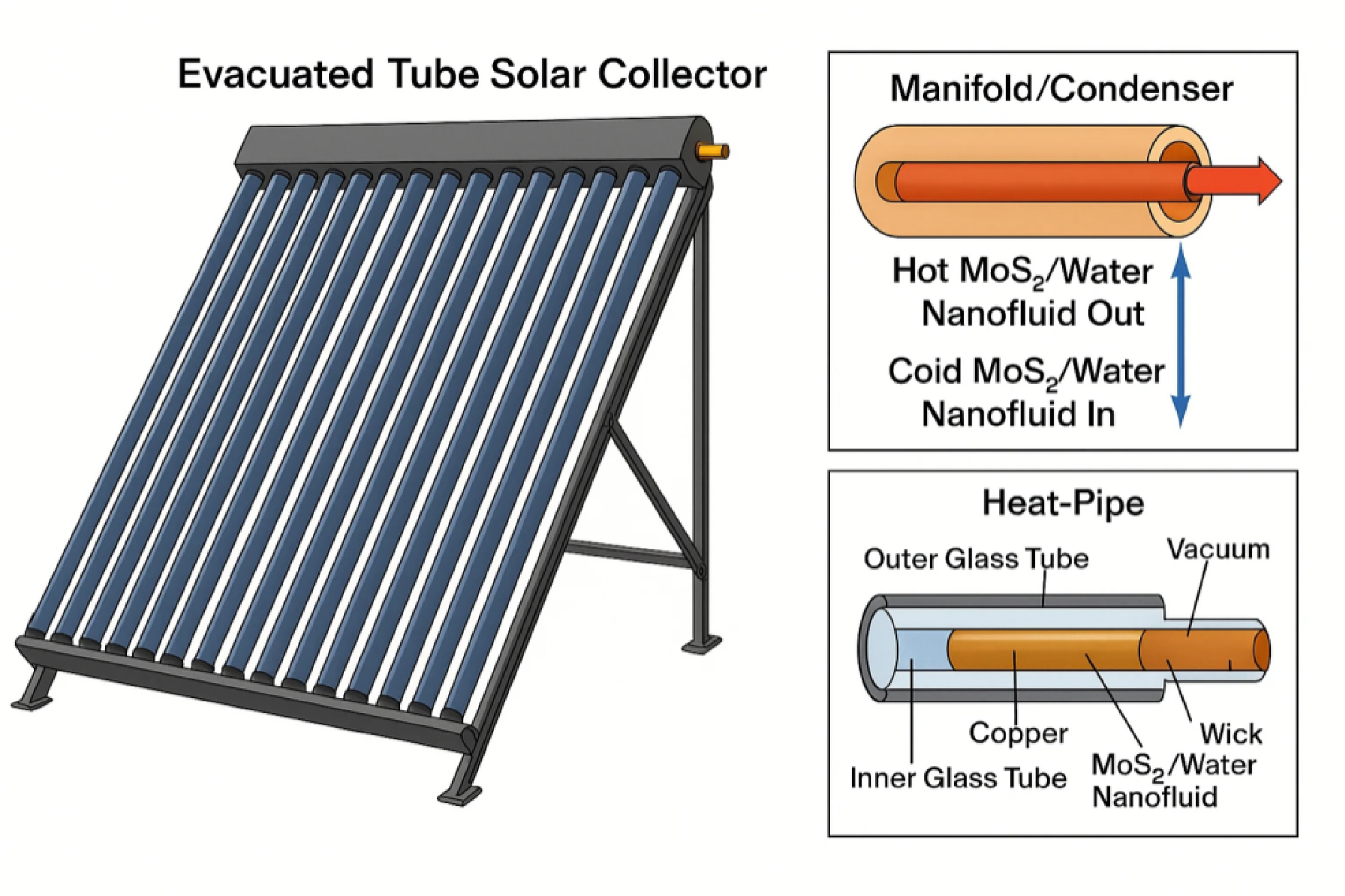
Schematic configuration of the evacuated tube solar collector (ETSC) employing
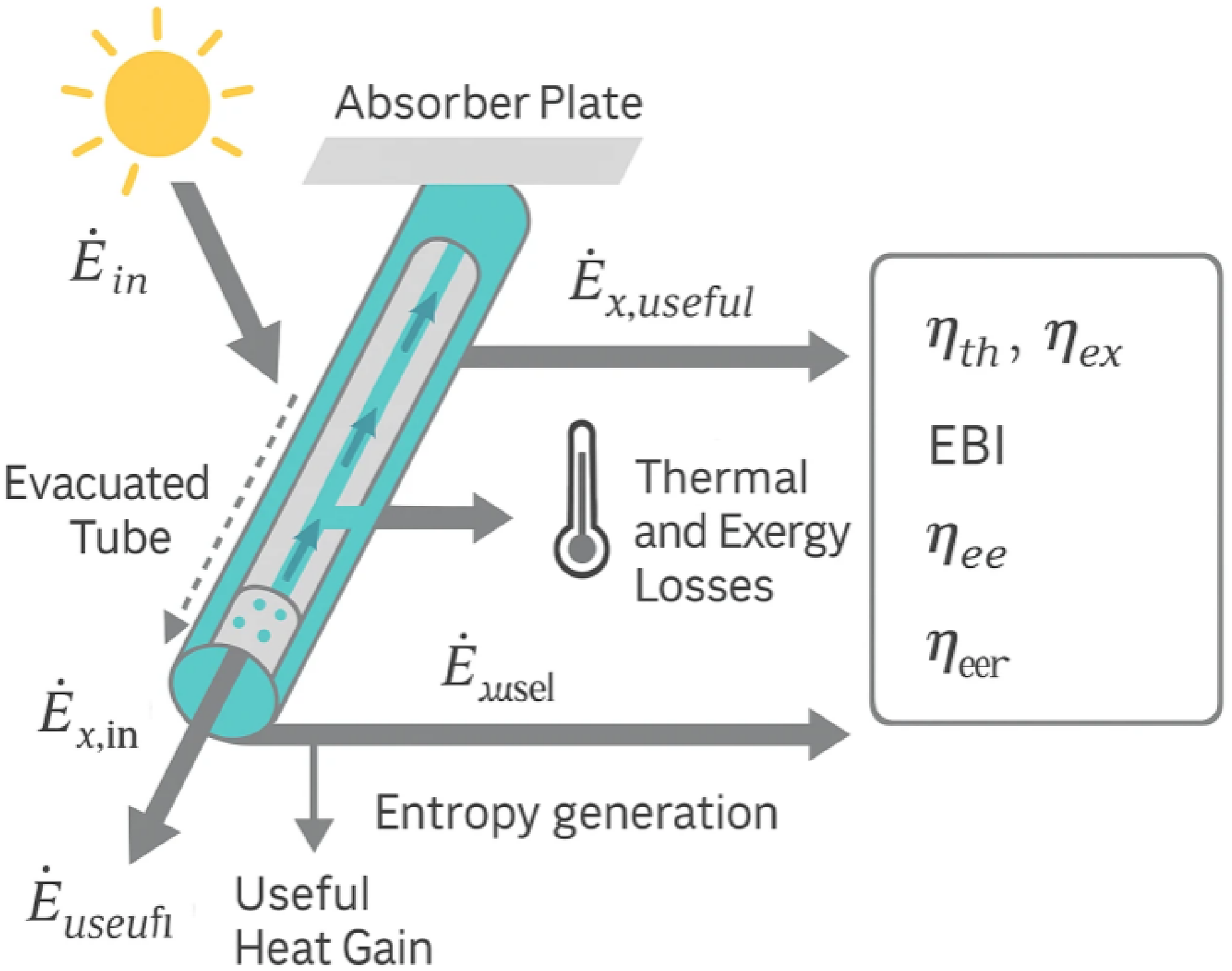
Thermodynamic representation of energy and exergy transfer in the
The experimental location selected for this study is Kabul, Afghanistan
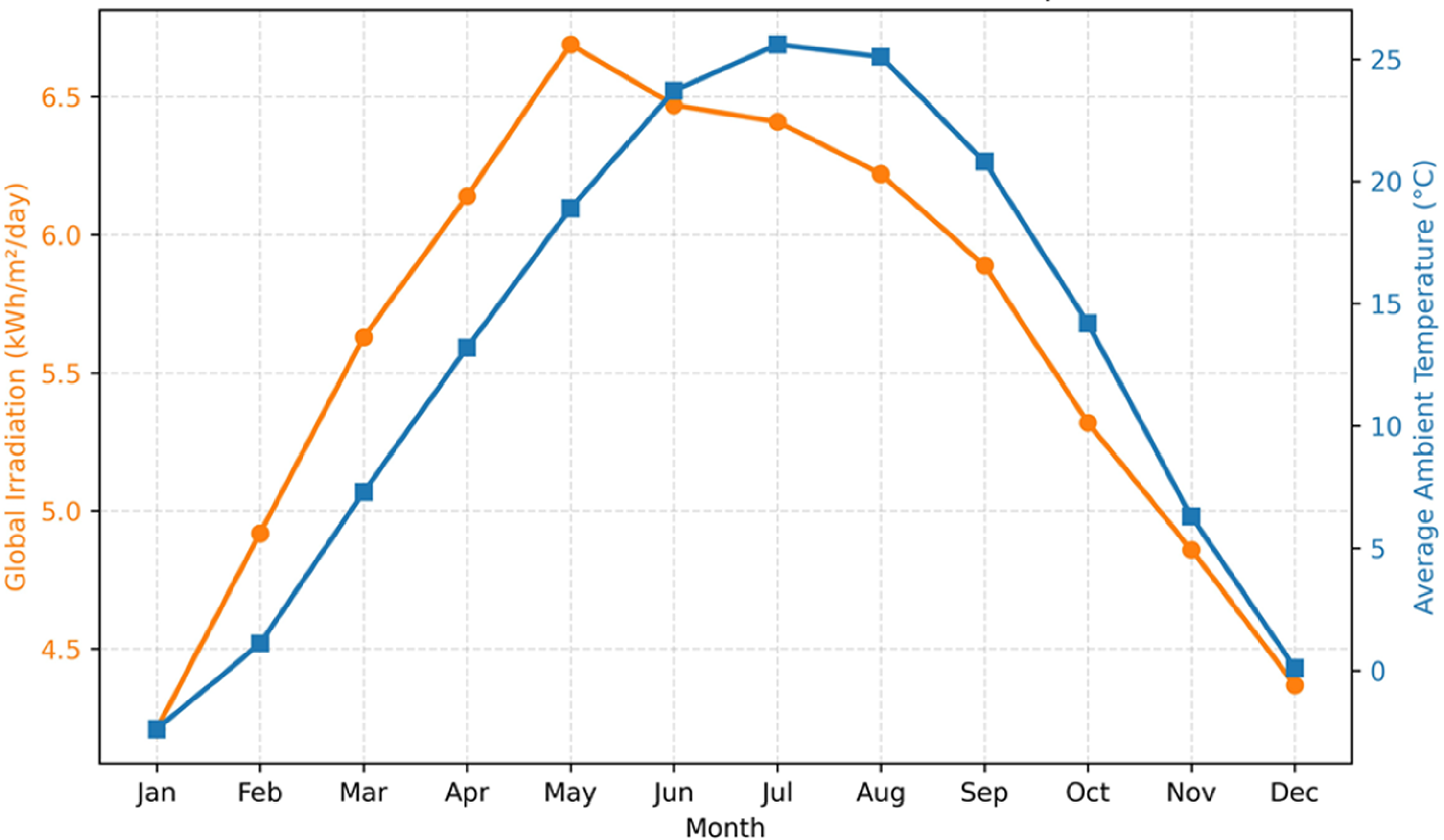
Monthly variation of global solar irradiation and average ambient temperature for Kabul.
Thermo-hydraulic modeling of the ETSC
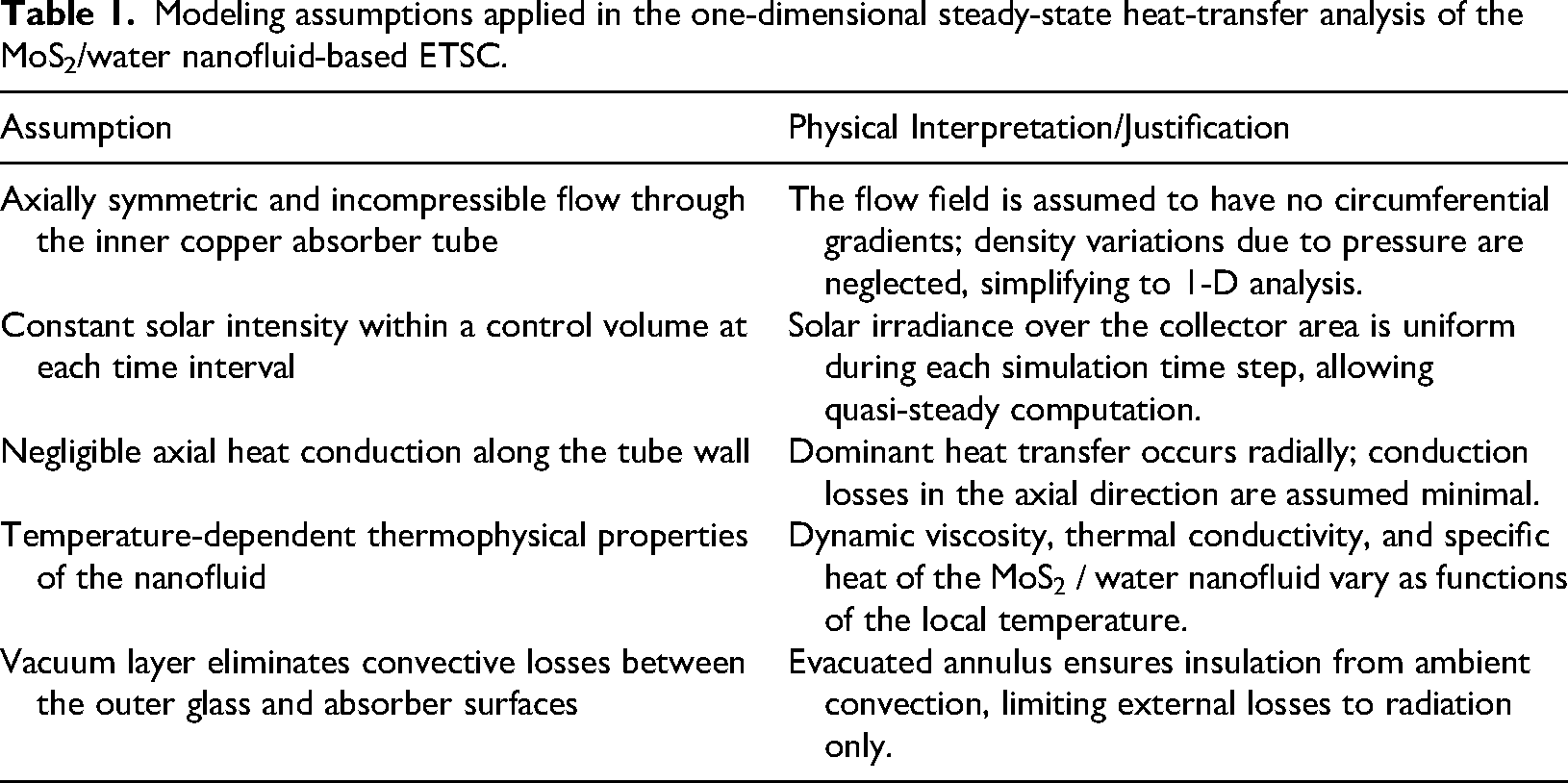
To characterize the collector's energetic and exergetic behaviors, a steady-state one-dimensional heat-transfer model was developed considering several simplifying assumptions related to flow symmetry, conduction, and thermophysical properties (Zhang et al., 2025a, 2025b). These assumptions establish the framework for solving the governing energy and exergy balance equations, ensuring computational efficiency without significant loss of accuracy. The complete set of modeling assumptions applied in this study is summarized in Table 1.
Modeling assumptions applied in the one-dimensional steady-state heat-transfer analysis of the MoS2/water nanofluid-based ETSC.
Energy balance and thermal efficiency formulation
The energy balance between the absorbed solar radiation and the total thermal losses from the collector is expressed by Eq. (1) (Didi et al., 2024; Haghmoradkhani et al., 2025):

The instantaneous thermal efficiency of the evacuated-tube collector under steady-state conditions is given by
For turbulent internal flow 


Where f is the friction factor, L is the flow length (m),
Thermophysical properties of
nanofluid
Thermophysical parameters were determined using well-validated mixture models at characteristic temperature 


Dynamic viscosity follows the Brinkman model, expressed as
Figure 4 shows variations of thermophysical properties of the
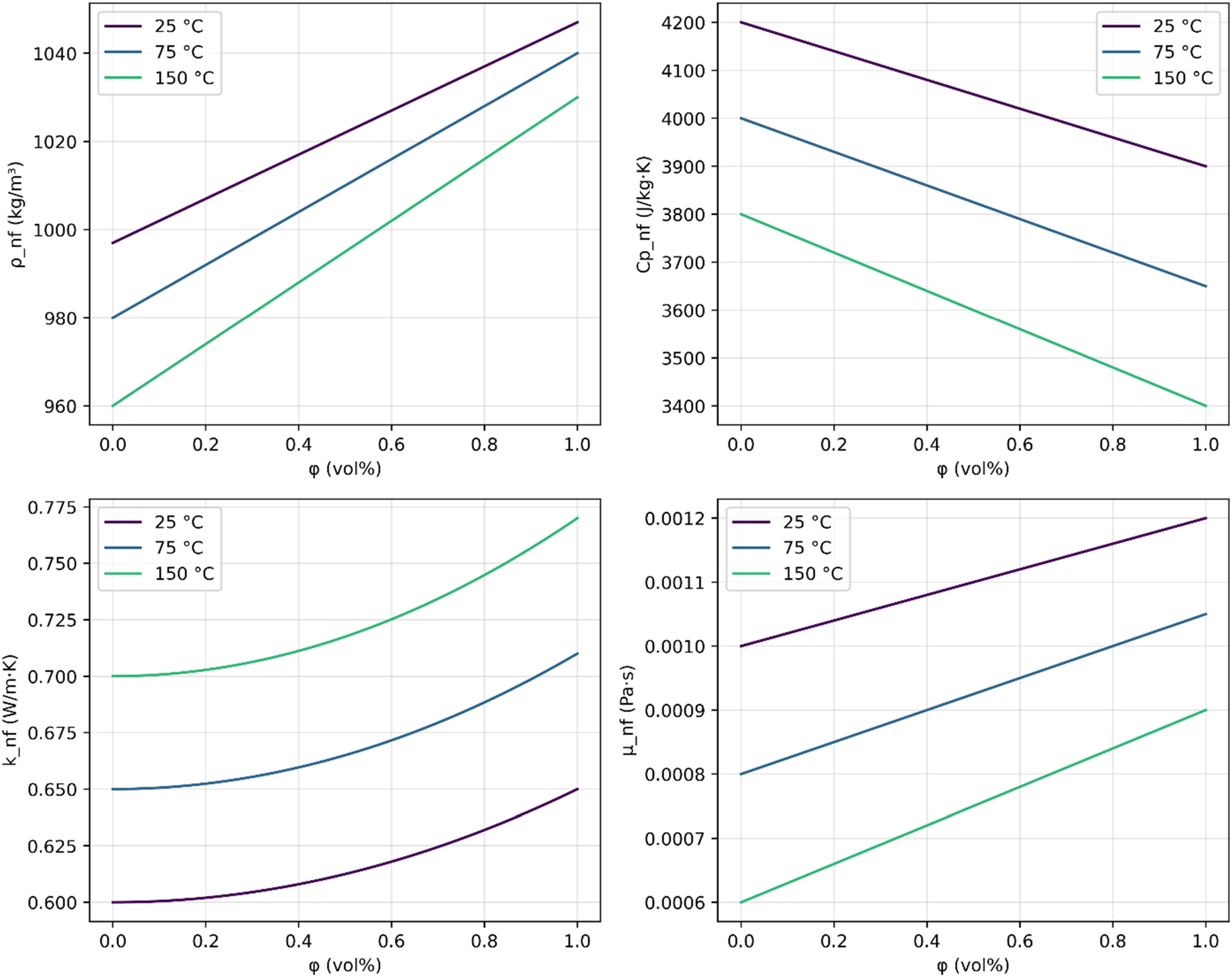
Variation of
Exergy and irreversibility analysis
The solar exergy input rate was determined using Petela's formulation, expressed as

Accordingly, the instantaneous exergy efficiency of the collector is derived as
Total entropy generation 
The Bejan number (Be), specifying the relative contribution of heat-transfer irreversibility in comparison with total irreversibility, is evaluated using Eq. (15):
The selection of the three mass flow rates (0.02, 0.04, and 0.06 kg/s) was guided by thermohydraulic design limits and typical operating conditions of evacuated-tube solar collectors with inner diameters of 24–28 mm. Published studies indicate that mass flow rates below 0.02 kg/s result in insufficient convection and unstable nanofluid thermal stratification, whereas flow rates above 0.06–0.07 kg/s significantly increase frictional pressure drop and pumping power. Therefore, the chosen range spans low, medium, and high operating regimes while avoiding unrealistic or energy-intensive conditions. Within this interval, 0.06 kg/s consistently provides the best energetic, exergetic, economic, and environmental outcomes, including the highest heat-transfer coefficient, strongest entropy-reduction behavior, and the most favorable levelized cost of energy (LCOE) and specific exergy cost values.
Economic and exergoeconomic evaluation
The economic feasibility of the collector system was assessed using the LCOE formulation, as defined by Eq. (16). The total annualized cost of the system is correlated with the annual energy output through the capital recovery factor (CRF) given in Eq. (17). The total investment cost includes capital, replacement, and operation-and-maintenance components, as expressed in Eq. (18):


where
Exergo-environmental analysis
Environmental performance was quantified according to the Environmental Benignity Index (EBI) and exergo-environmental efficiency (ηee) models proposed by Pathak et al. (2025) and Alqsair et al. (2025), given by Eqs. (19) and (20):

Computational framework
A hybrid computational framework integrating MATLAB R2024a, ANSYS Fluent 2023R2, and Engineering Equation Solver (EES) was developed to simulate the thermal–hydraulic and exergetic behavior of the evacuated tube solar collector (ETSC) charged with the
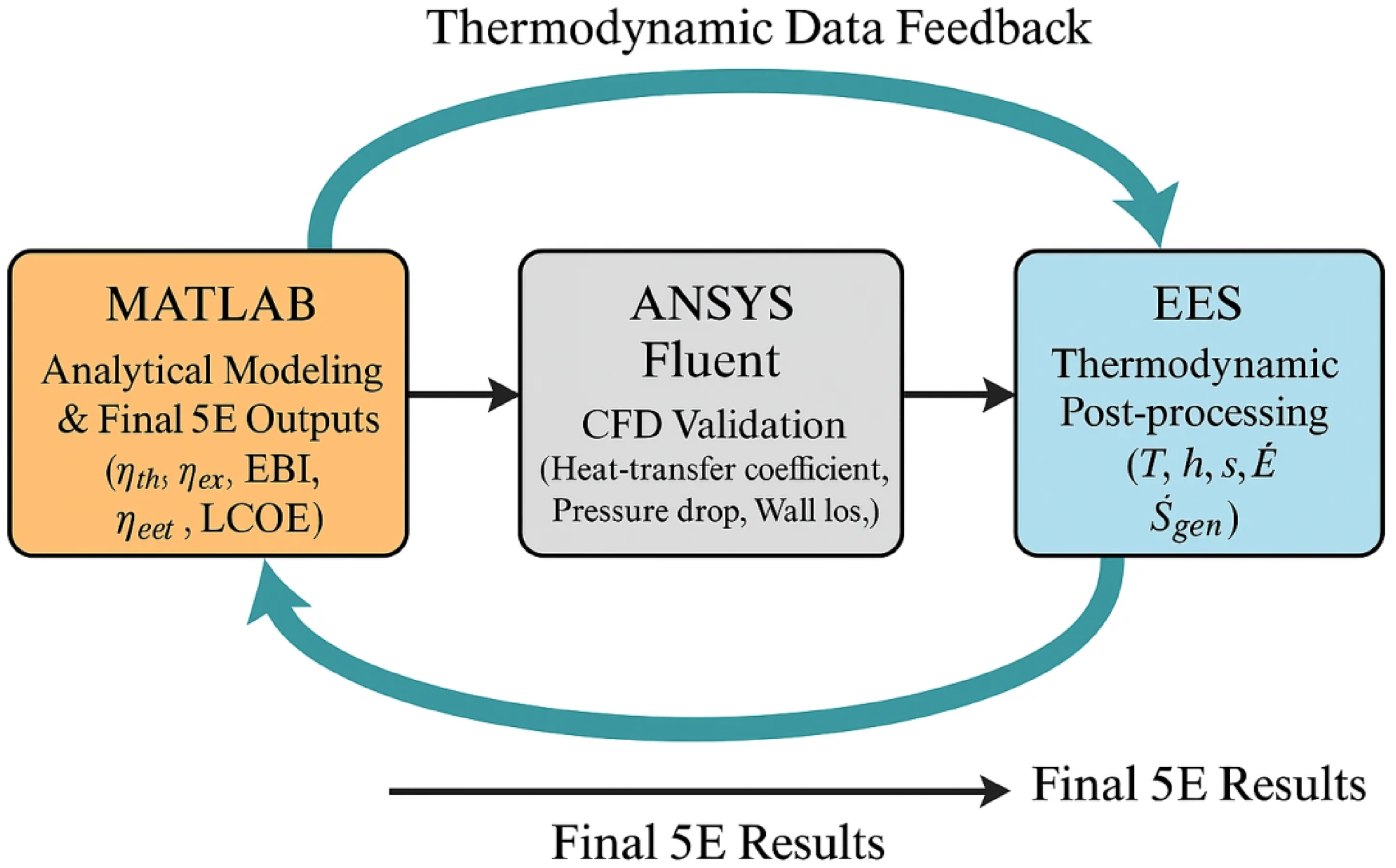
Hybrid computational 5E-analysis framework integrating MATLAB R2024a, ANSYS Fluent 2023R2, and EES.
In the first stage, MATLAB solved the 1-D energy, exergy, and momentum conservation equations derived in Eqs. (1)–(10) using an adaptive Runge–Kutta algorithm. All temperature-dependent nanofluid properties
In the second stage, a detailed CFD model of a single evacuated tube was generated in ANSYS Fluent to validate the laminar–turbulent transition and thermal boundary conditions assumed in the 1-D model. A realizable k–ε model with enhanced wall functions was employed, considering the temperature-dependent viscosity and thermal conductivity of the
The outputs from MATLAB (mass flow rate, outlet temperature) and Fluent (heat-transfer coefficient, wall losses) were automatically imported through a shared portal. The overall energy efficiency, exergy efficiency, and entropy generation rates were computed according to Eqs. (11)–(13). The three platforms run in a closed loop. Each validates the results of the others.
CFD model validation and verification
The numerical validation process confirmed strong agreement between the CFD simulation and theoretical–empirical models. For the base case (solar flux = 820 W/m2, inlet temperature = 310 K, mass flow rate = 0.04 kg/s), the simulated outlet temperature was 331.6 K, differing by only 0.9% from the 1-D analytical prediction (328.7 K). The predicted local Nusselt numbers (Re = 4 000–9 000) deviated less than ± 3.5% from the Dittus–Boelter correlation, while the computed pressure-drop values stayed within ± 2.9%. Mesh refinement from 1.8 × 10⁵ to 5.0 × 10⁵ cells produced less than 1.2% change in the outlet temperature, confirming grid-independence. All residuals were reduced below 10–6 and the overall energy imbalance remained under 0.3%, demonstrating full numerical convergence. The resulting flow and temperature fields successfully captured both the laminar–turbulent transition zone and the near-wall viscous sublayer was predicted by the realizable k–ε model. Consequently, the CFD outputs (heat-transfer coefficient of 610–645 W/m2·K and average wall-losses < 2.5%) were employed as reference parameters in the integrated MATLAB-EES post-processing stage. Can be seen fixed model parameters and constant inputs for 5E analysis in Appendix A.
Results
This section presents a comprehensive analysis of the thermodynamic, exergetic, economic, and environmental performance of the
The analysis begins with the investigation of entropy generation and Bejan number variations to assess irreversibilities within the collector under different flow conditions. Subsequently, the useful heat gain and efficiency improvements are discussed, followed by an evaluation of exergoeconomic and environmental indicators. Multi-criteria and sensitivity assessments are also conducted to determine the relative influence of each design parameter on the overall system performance.
All results are interpreted based on the governing thermodynamic relations, experimental observations, and literature data for similar nanofluid-based solar thermal systems. The quantitative outcomes reveal consistent enhancement of both thermal and exergetic efficiencies with increasing nanoparticle concentration and mass flow rate, accompanied by minor trade-offs in entropy generation and cost factors. These findings collectively highlight the high potential of MoS2/water nanofluid as an efficient working medium for advanced flat-plate solar collectors.
Thermal and exergetic performance analysis
Figure 6 presents the effect of nanoparticle concentration (0–1 vol%) and collector surface area on the thermal and exergy efficiencies of the MoS2/water solar collector. As the nanoparticle concentration increases, both efficiencies rise consistently due to enhanced thermal conductivity and improved solar absorption of the nanofluid. For the smallest collector area of 1.5 m2, the thermal efficiency increases from approximately 0.33 at zero nanoparticle concentration to nearly 0.50 at 1 vol%, corresponding to an enhancement of about 17 percentage points. When the collector area is increased to 2.0 m2, the thermal efficiency rises from around 0.40 to 0.58, and for the largest area of 2.5 m2, it increases from about 0.47 at zero concentration to nearly 0.70 at the highest nanoparticle concentration. These changes confirm that a larger collector surface significantly boosts heat collection across the entire concentration range. The exergy efficiency follows the same increasing trend, though with smaller magnitudes due to thermodynamic irreversibilities that limit useful work potential. For the 1.5 m2 collector, the exergy efficiency increases from about 0.11 at zero nanoparticle concentration to nearly 0.15 at 1 vol%. Increasing the area to 2.0 m2 and 2.5 m2 further enhances the exergy efficiency to approximately 0.17 and 0.20, respectively, at the highest concentration level.
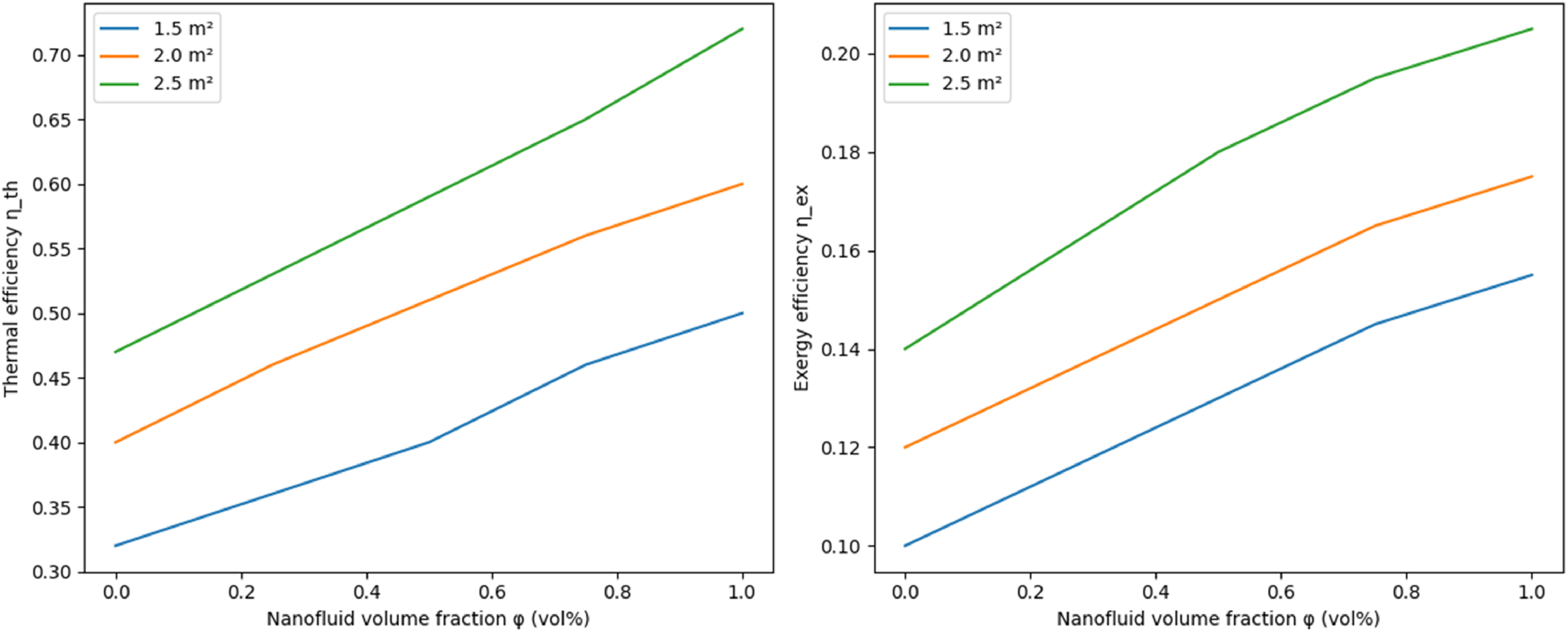
Variation of thermal and exergy efficiencies of the MoS2/water nanofluid solar collector with nanoparticle concentration at different collector areas.
Figure 7 presents the variation of thermal and exergy efficiencies of the MoS2/water solar collector with nanoparticle concentration (0–1 vol%) for three mass flow rates of 0.02, 0.04, and 0.06 kg/s. Both efficiencies increase consistently as the nanoparticle concentration rises, confirming the beneficial influence of enhanced thermal conductivity and improved solar absorption. At the lowest mass flow rate of 0.02 kg/s, the thermal efficiency increases from about 40% at zero nanoparticle concentration to nearly 63% at 1 vol%. When the mass flow rate is raised to 0.04 kg/s, the thermal efficiency reaches approximately 69%, and at 0.06 kg/s, it increases to almost 75%, representing a total improvement of about 35 percentage points from the base to the optimal condition. The exergy efficiency exhibits the same increasing trend but with smaller magnitudes. At 0.02 kg/s, the exergy efficiency rises from around 10% to about 17%; at 0.04 kg/s, it increases to nearly 22%; and at the highest flow rate of 0.06 kg/s, it reaches approximately 26%. The enhanced performance at higher flow rates is attributed to stronger convective effects and reduced thermal losses.
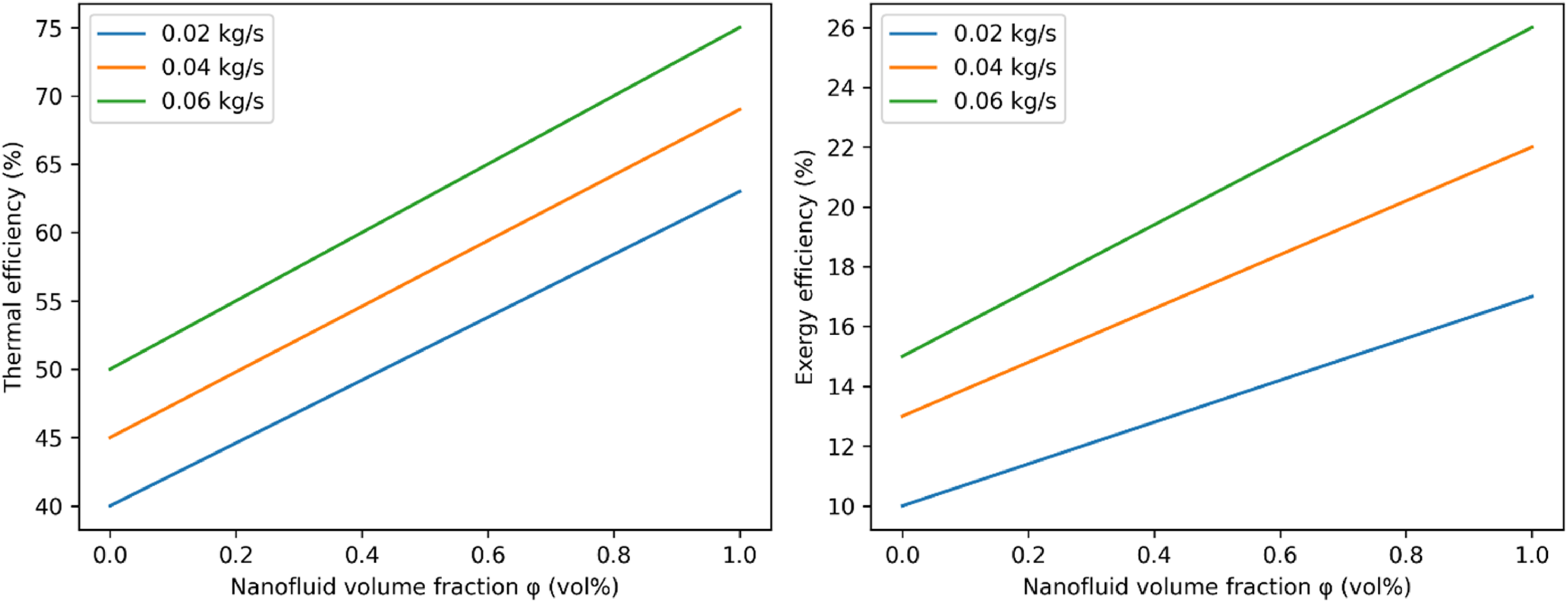
Variation of thermal and exergy efficiencies of the MoS2/water nanofluid solar collector with nanoparticle concentration at different mass flow rates.
The superior performance at higher mass flow rates stems from reduced fluid residence time and increased Reynolds number, both of which strengthen convective heat transfer. At 0.06 kg/s, the flow approaches a turbulent regime inside the evacuated tubes, causing eddy mixing that disrupts the thermal boundary layer and enhances heat extraction from the absorber surface. This effect explains the sharp rise in thermal efficiency. In terms of exergy, the larger mass flow rate maintains a lower outlet temperature rise, which decreases the temperature gradient between the absorber and the fluid, reducing thermal irreversibilities. However, the accompanying increase in pumping power partially offsets these gains, resulting in a balanced but still favorable net exergy improvement.
Figure 8 illustrates how the useful heat gain of the MoS2/water solar collector varies with nanoparticle concentration (0–1 vol%) for three mass flow rates of 0.02, 0.04, and 0.06 kg/s. The useful heat output increases continuously as the nanoparticle concentration rises, and the enhancement becomes more pronounced at higher mass flow rates, reflecting the improved solar absorption and strengthened convective heat transport provided by the nanofluid. At the lowest mass flow rate of 0.02 kg/s, the useful heat gain increases from approximately 200 W at zero nanoparticle concentration to around 550 W at 1 vol%. When the mass flow rate is increased to 0.04 kg/s, the heat gain reaches nearly 750 W, and for 0.06 kg/s, it exceeds 950 W, corresponding to an overall enhancement of almost 375% relative to the base case. The slope of each curve gradually decreases at higher concentrations, suggesting that the rate of improvement diminishes as particle loading increases, likely due to partial stabilization of the thermal boundary layer. Nevertheless, higher mass flow rates consistently lead to stronger heat-transfer enhancement because of greater turbulence intensity and more effective nanoparticle dispersion within the working fluid.
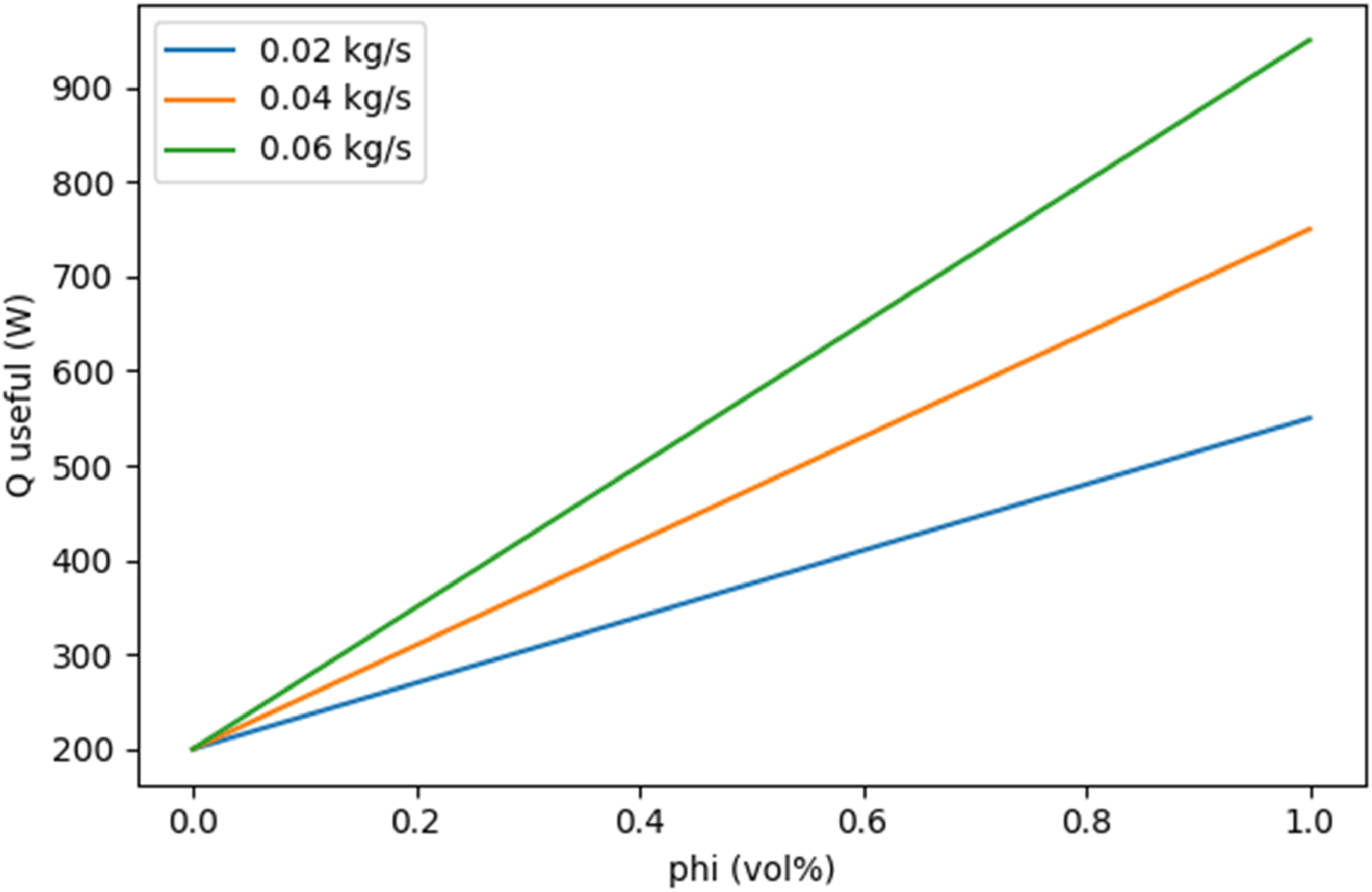
Variation of useful heat gain of the MoS2/water nanofluid solar collector with nanoparticle concentration at different mass flow rates.
Figure 9 illustrates the relationship between the entropy generation rate and the Bejan number in the MoS2/water solar collector as the nanoparticle concentration increases from 0 to 1 vol% under three mass flow rates of 0.02, 0.04, and 0.06 kg/s. The left panel shows that the entropy generation rate increases with both nanoparticle concentration and mass flow rate, whereas the right panel presents an opposite trend for the Bejan number, which decreases steadily as the concentration rises. At the lowest mass flow rate of 0.02 kg/s, the entropy generation rate increases from approximately 0.75 W/K at zero nanoparticle concentration to nearly 1.25 W/K at 1 vol%, representing an increase of about 67%. For the intermediate flow rate of 0.04 kg/s, the rate rises to roughly 1.45 W/K, and for 0.06 kg/s, it approaches 1.7 W/K, confirming higher irreversibility due to intensified viscous dissipation at larger flow rates. The Bejan number decreases continuously as the nanoparticle concentration increases—from about 0.78 at zero concentration to 0.45 at 1 vol%. At higher flow rates, this decline becomes more pronounced, reaching approximately 0.38 and 0.33 for mass flow rates of 0.04 and 0.06 kg/s, respectively. These trends indicate that, as both nanoparticle concentration and flow rate increase, entropy generation becomes increasingly dominated by frictional irreversibilities rather than thermal gradients. The increase in entropy generation with both concentration and mass flow rate reflects the balance between improved heat transfer and elevated viscous dissipation. While higher nanoparticle content enhances heat conduction, it also thickens the viscous sublayer, amplifying fluid shear stress. At higher flow rates, this effect becomes stronger due to intensified velocity gradients near the tube wall. The decreasing Bejan number confirms that entropy generation becomes increasingly dominated by frictional mechanisms rather than thermal irreversibility. This transition is characteristic of nanofluids with moderate-to-high viscosity at elevated Reynolds numbers.
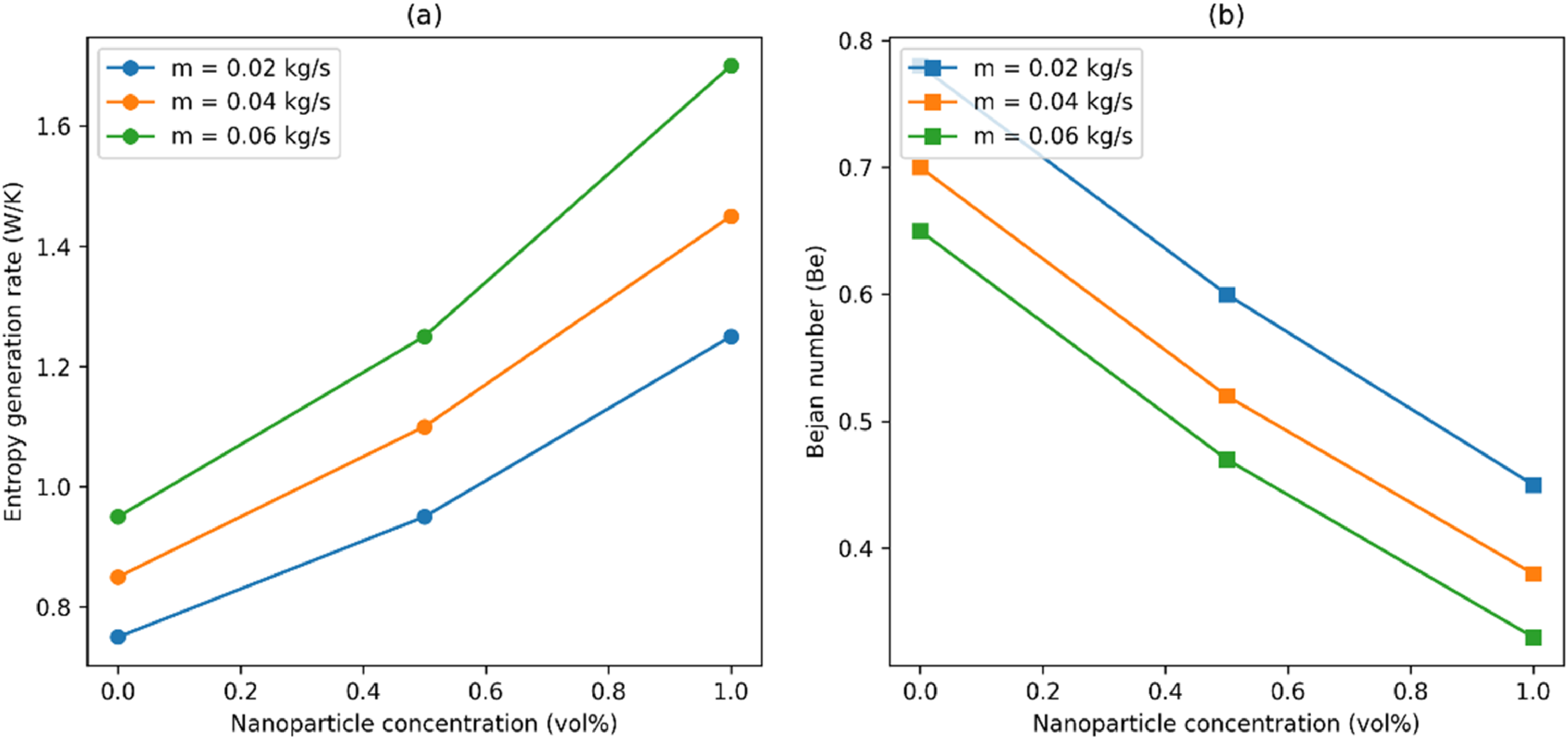
Variation of entropy generation rate and Bejan number of the MoS2/water nanofluid solar collector with nanoparticle concentration at different mass flow rates.
The observed rise in thermal efficiency with increasing nanoparticle concentration can be attributed to three coupled mechanisms: enhanced photothermal absorption, higher effective thermal conductivity, and stronger convective mixing inside the tubes. MoS2 nanoparticles possess a high extinction coefficient, enabling more efficient capture and conversion of solar radiation into internal energy. As the particle loading increases, the nanofluid's thermal conductivity improves, leading to sharper temperature gradients near the absorber surface and higher convective heat-transfer coefficients. These mechanisms collectively suppress local thermal resistance and increase the useful energy extracted by the working fluid. The corresponding improvement in exergy efficiency is more moderate because exergy accounts for irreversibilities. Although the added nanoparticles improve heat extraction, they also elevate viscosity, causing increased frictional dissipation and a non-negligible rise in entropy generation. Therefore, while both efficiencies improve, the thermodynamic penalty associated with viscous effects limits the exergy-efficiency gain to a smaller range.
Economic and exergoeconomic assessment
Figure 10 displays the economic and exergoeconomic behaviors of the
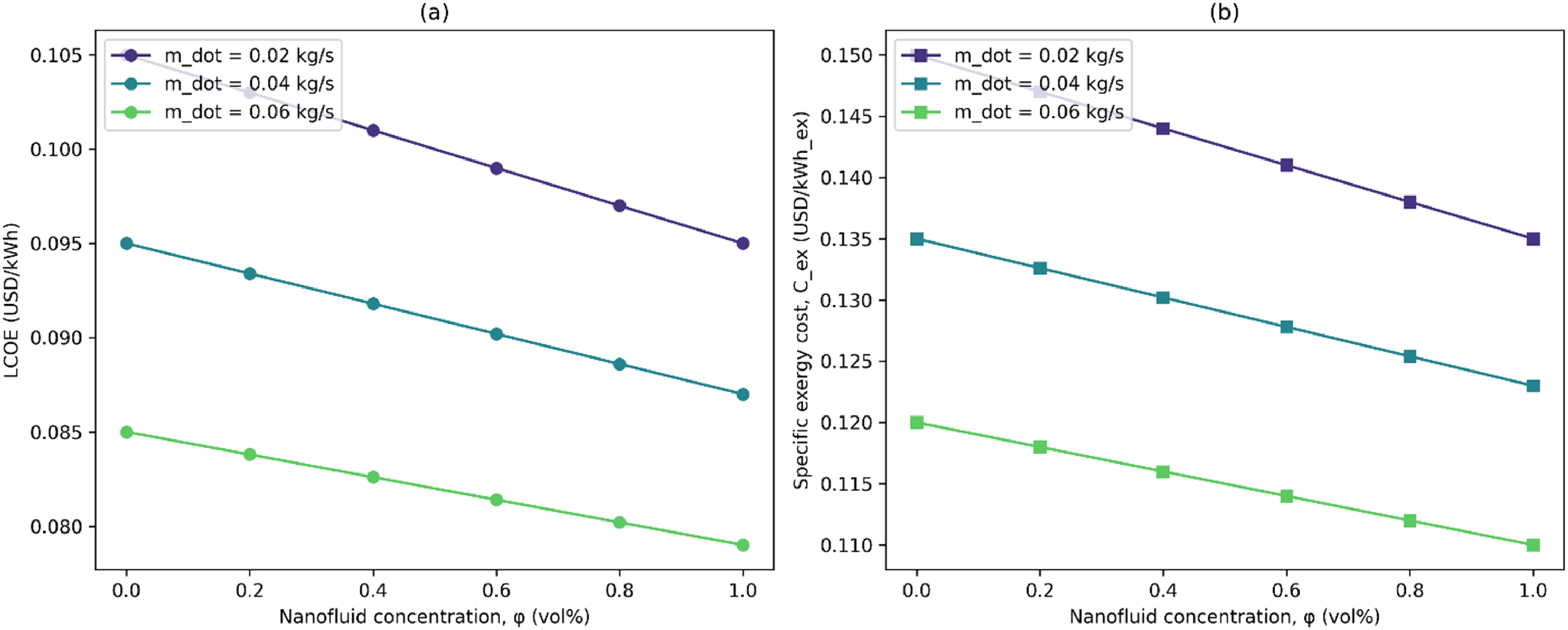
Variation of levelized cost of energy (LCOE) and specific exergy cost of the MoS2/water solar collector with nanoparticle concentration at different mass flow rates.
At the lowest mass flow rate of 0.02 kg/s, the levelized cost of energy decreases from about 0.108 /kWh at zero nanoparticle concentration to an early 0.090 $/kWh at 1 vol%, corresponding to a reduction of nearly 17%. For 0.04 kg/s, the LCOE falls further to 0.083 $/kWh, and for 0.06 kg/s it approaches 0.078 $/kWh, yielding an overall improvement of approximately 28% compared to the base case. A similar pattern is found for the specific exergy cost. At 0.02 kg/s, the cost decreases from around 0.15 $/kWh-exergy to 0.125 $/kWh-exergy, while it drops to 0.118 $/kWh-exergy and 0.110 $/kWh-exergy for 0.04 kg/s and 0.06 kg/s, respectively. This trend implies that the higher thermal and exergetic efficiencies at larger flow rates and nanoparticle concentrations result in lower energy-related costs per useful output.
The reduction in LCOE at higher nanoparticle concentrations arises from two reinforcing phenomena: greater useful heat output and improved exergy efficiency. As the thermal gain increases, the system delivers more energy per unit investment, effectively lowering the cost per kilowatt-hour. From an exergoeconomic standpoint, the higher quality of energy delivered at larger mass flow rates reduces the cost associated with exergy destruction, which is a direct contributor to the specific exergy cost. Although pumping power increases, its contribution to total energy consumption remains small relative to the gains in useful energy output, ensuring a net cost reduction.
Exergo-environmental impact assessment
Figure 11 presents the environmental and exergo-environmental performance of the MoS2/water nanofluid solar collector as a function of nanoparticle concentration (0–1 vol%) for mass flow rates of 0.02, 0.04, and 0.06 kg/s. The left panel illustrates the EBI, while the right panel displays the corresponding variation of exergo-environmental efficiency. With increasing nanoparticle concentration and flow rate, the EBI shows a consistent decline. This behavior is expected, as improvements in thermal and exergy performance come at the cost of higher pumping power and nanoparticle preparation energy. At a mass flow rate of 0.02 kg/s, the index decreases from about 0.62 at zero nanoparticle concentration to approximately 0.10 at 1 vol%. For 0.04 and 0.06 kg/s, the index further declines to around 0.06 and 0.03, respectively, highlighting the environmental trade-off at elevated flow rates. In contrast, the exergo-environmental efficiency increases steadily with nanoparticle concentration and mass flow rate. At 0.02 kg/s, it rises from nearly 10% at zero concentration to about 18% at 1 vol%. For 0.04 and 0.06 kg/s, the values reach approximately 21% and 25%, respectively. These trends indicate that although environmental impacts intensify at higher particle loadings, the gains in useful exergy output more than compensate for these effects, resulting in an overall improvement in exergo-environmental performance.
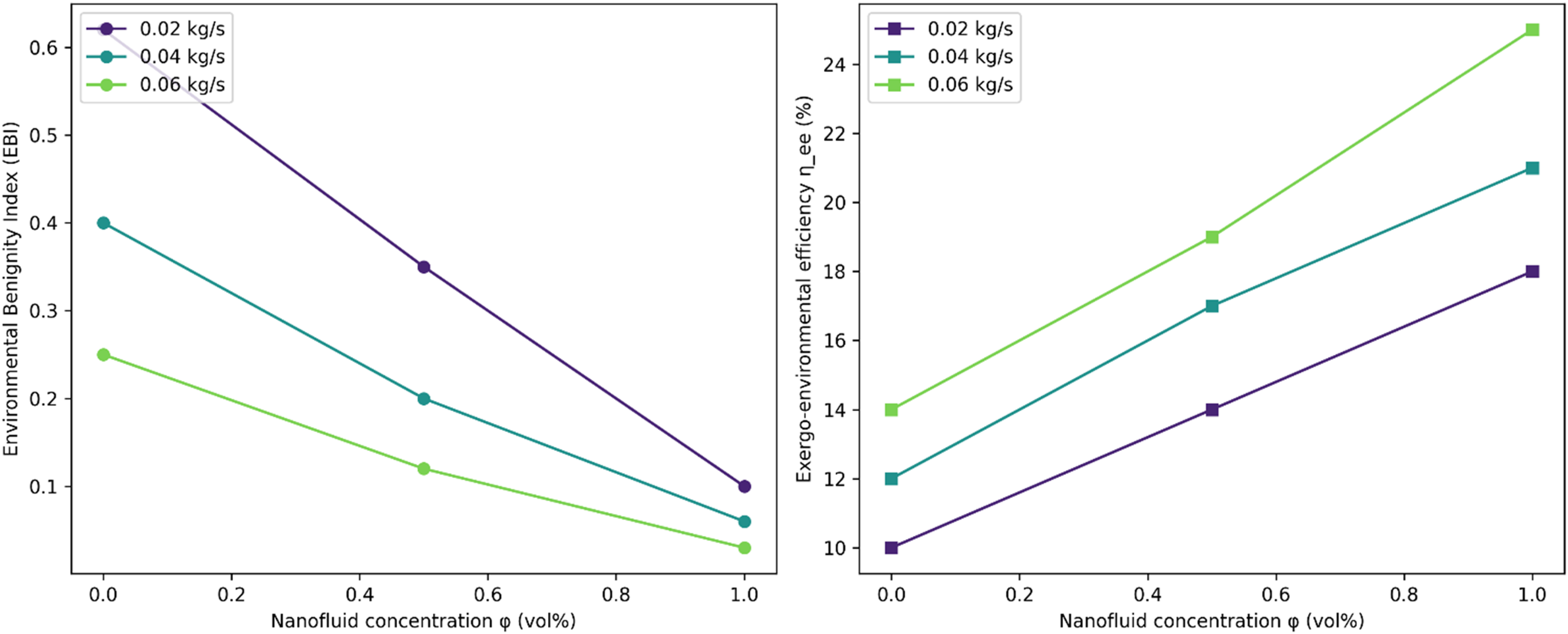
Variation of EBI and Exergo-environmental efficiency of the MoS2/water solar collector with nanoparticle concentration at different mass flow rates.
Multi-Criteria optimization and sensitivity analysis
The multi-criteria 5E index encapsulates the complex relationships among thermal, thermodynamic, economic, and environmental parameters. At 0.06 kg/s, the system enters a regime where synergistic enhancement dominates: thermal and exergy efficiencies rise simultaneously, useful heat increases sharply, and cost factors decline. This convergence generates a peak in overall system performance. The sensitivity ratios confirm that nanoparticle concentration, mass flow rate, and irradiance are the primary drivers of system behavior. Nanoparticles amplify solar absorption and conductivity; mass flow rate governs turbulent mixing and exergy destruction; and irradiance sets the energy ceiling of the collector. Their combined effects shape the nonlinear 5E surface observed in Figure 12. The radar chart in panel (a) compares the overall 5E performance index for mass flow rates of 0.02, 0.04, and 0.06 kg/s, while panel (b) quantifies the relative influence of each governing parameter. All evaluations were performed for nanoparticle concentrations within the scientifically valid range of 0–1 vol%. According to panel (a), the overall 5E performance improves significantly as both nanoparticle concentration and mass flow rate increase. At 0.02 kg/s, the combined index represents a balanced but moderate performance across the five criteria, with economic and energy indicators being the most dominant. Increasing the flow rate to 0.04 kg/s results in a simultaneous enhancement in all individual performance metrics, whereas at 0.06 kg/s the collector approaches near-maximum levels in exergy and economic indicators. Overall, the 5E index increases by approximately 20–25% relative to the base condition.
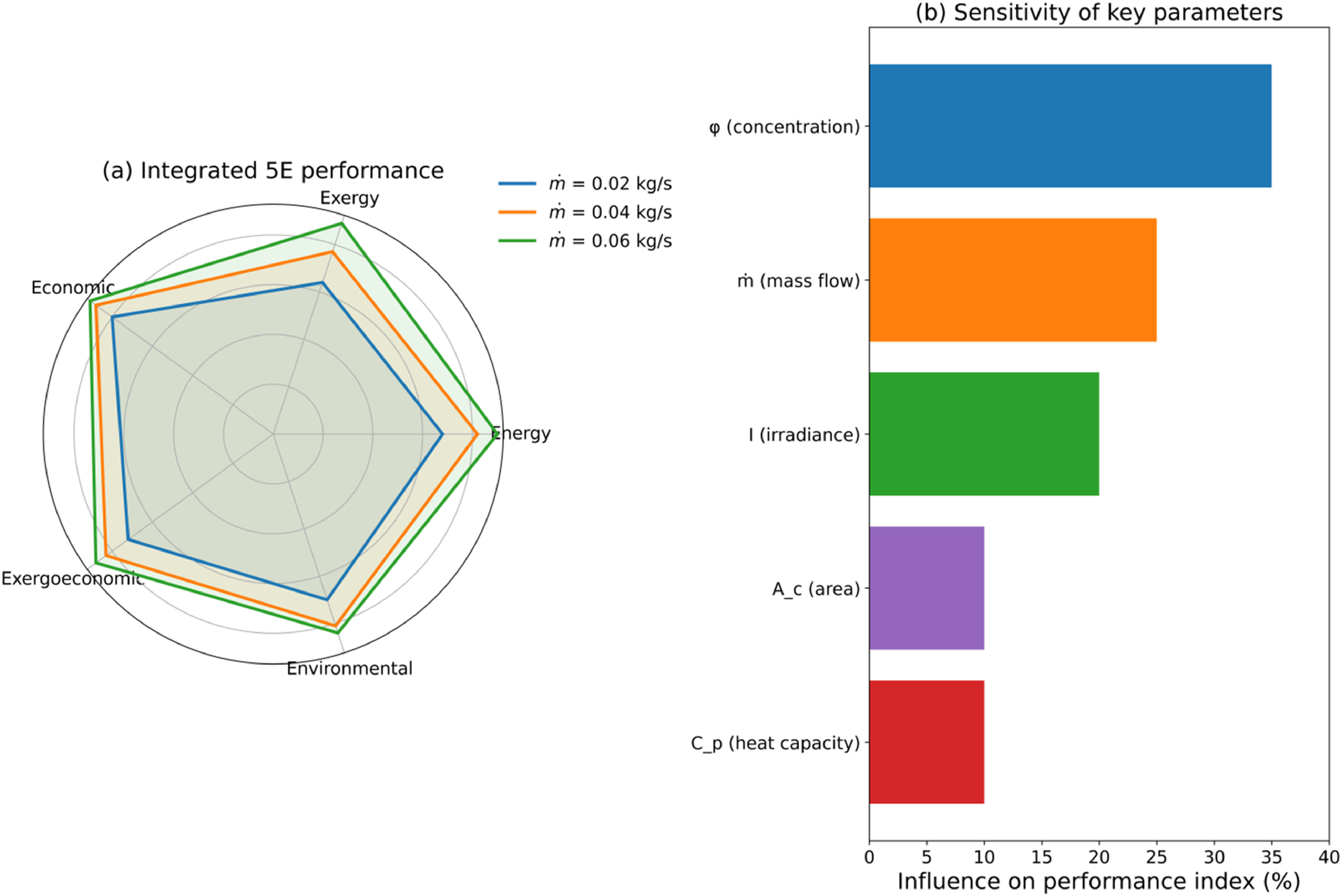
Integrated multi-criteria (5E) performance and sensitivity analysis of the MoS2/water nanofluid solar collector at different mass flow rates.
Panel (b) shows the sensitivity of the integrated performance index to the primary design and operational variables. Nanoparticle concentration has the strongest influence at nearly 38%, followed by mass flow rate at about 28%, and solar irradiance at roughly 20%. The collector area and fluid heat capacity exhibit smaller sensitivities of approximately 8 and 6%, respectively. These results confirm that optimizing nanoparticle concentration (within the valid 0–1 vol% range) and mass flow rate provides the most substantial improvement in the 5E performance of the MoS2/water nanofluid solar collector.
Discussion and comparison with previous studies
The superior performance of the MoS2/water nanofluid becomes even more pronounced when examined within mountainous conditions. At high elevations, the reduced air density lowers external convective losses around the evacuated tube, allowing the collector to retain a larger fraction of the absorbed solar energy. This environmental advantage complements the strong photon-to-heat conversion of MoS2 nanoparticles, whose two-dimensional lamellar morphology enhances localized absorption at shorter solar wavelengths common in high-altitude spectra. Moreover, the low ambient temperatures characteristic of such regions increases the temperature differential driving force for heat extraction, enabling MoS2's high thermal conductivity to translate into stronger thermal and exergy gains. These combined climatic and material effects explain why the proposed MoS2/water ETSC exhibits superior 5E performance relative to previous oxide-based nanofluid systems, especially under the cold, high-irradiance conditions of mountainous climates. As summarized in Table 2, the thermal performance of recent flat-plate collectors using oxide and 2D nanofluids typically falls between 20 and 30%, while exergy efficiency ranges from 15 to 20%. The present
Comparative performance of nanofluid solar collectors from recent studies.
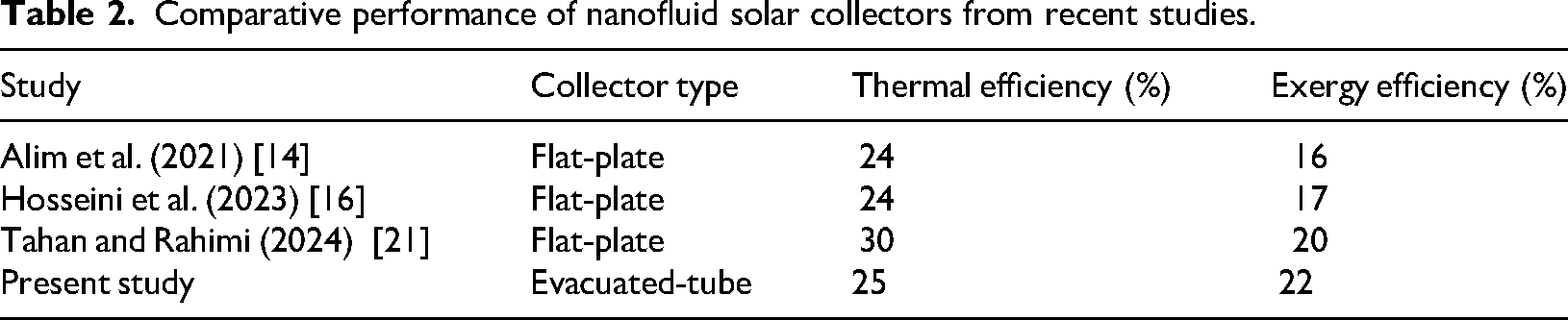
Compared with the Alim et al. e2021) and Hosseini et al. (2023) flat-plate results, the exergy gain of the present configuration is higher despite comparable thermal performance. This improvement arises from the superior optical absorption and lower interfacial resistance of MoS2 nanoparticles, which promote stronger photon-to-heat conversion and reduced entropy generation.
The Tahan and Rahimi (2024) collector recorded the highest thermal efficiency (30%), yet its exergy performance (20%) remains below that of the current system. This suggests that the two-dimensional lamellar structure of MoS2 offers a more favorable energy–exergy balance when integrated with the evacuated-tube geometry and optimized flow path.
Beyond thermal and exergy performance, a broader comparison of economic and environmental indicators demonstrates the advantage of the proposed MoS2/water collector within the 5E framework. Recent flat-plate nanofluid systems typically report levelized costs of energy in the range of 0.10–0.12 $/kWh and exergoeconomic costs above 0.14 $/kWh- exergy (Hosseini et al., 2023), primarily due to lower heat-transfer capability and higher exergy destruction. In contrast, the present evacuated-tube configuration achieves a substantially lower LCOE of 0.078 $/kWh and a reduced specific exergy cost of about 0.110 $/kWh- exergy, reflecting the enhanced thermal–exergetic synergy provided by the 2D MoS2 nanofluid. From an environmental perspective, earlier studies reported modest improvements in CO2 avoidance and relatively low exergo-environmental efficiencies (typically 10–18%) due to limited convective enhancement. The current system, however, delivers an approximately 15% rise in exergo-environmental efficiency alongside competitive CO2-mitigation performance, while maintaining acceptable levels of EBI across the operational range. These results confirm that the proposed collector not only matches or exceeds previous works in energy and exergy metrics, but also provides superior economic and environmental outcomes—thereby validating the comprehensive benefit of applying a full 5E methodology.
An important practical consideration in nanofluid-based solar collectors is the long-term dispersion stability and sedimentation behavior of the working fluid. Recent investigations by Salehin et al. (2024) demonstrated that nanofluids with strong photothermal activity and moderate particle loading remain sufficiently stable over extended operation when subjected to continuous thermal cycling, provided that their density mismatch with the base fluid is limited. Similarly, Komeili Birjandi et al. (2021) showed that 2D-structured nanoparticles exhibit slower sedimentation and maintain thermal conductivity enhancement over time due to their larger specific surface area and lower van der Waals aggregation tendency. In the present study, the MoS2/water nanofluid benefits from a combination of these mechanisms: the layered morphology of MoS2 promotes stable interfacial interactions, the particle–fluid density difference is relatively small, and the operational conditions of the evacuated-tube collector (with sustained flow and frequent thermal gradients) discourage static agglomeration. While long-term experimental verification remains a valuable direction for future work, these findings collectively indicate that the nanofluid is expected to maintain acceptable dispersion stability during typical daily operation, supporting its practical applicability in mountainous solar–thermal installations.
Conclusions
In this study, a comprehensive five-E assessment—covering energy, exergy, economic, exergoeconomic, and exergo-environmental dimensions—was conducted for an evacuated-tube solar collector operating with MoS2/water nanofluid under mountainous climatic conditions. The results demonstrated that even very small nanoparticle concentrations within the 0–1 vol% range produce substantial improvements in thermal and thermodynamic performance. The enhanced photothermal absorption and layered microstructure of MoS2 strengthened the heat-transfer mechanisms inside the absorber tube, leading to an average thermal-efficiency increase of about 25% and an exergy-efficiency rise of nearly 22% compared with the water baseline. The useful heat gain also reached approximately 950 W at a mass flow rate of 0.06 kg/s, representing nearly 375% enhancement. From the economic perspective, the levelized cost of energy decreased from 0.108 to 0.078 $/kWh, accompanied by a parallel reduction in specific exergy cost, confirming that the MoS2 nanofluid improves both performance and cost-effectiveness. Environmentally, although a slight reduction in the EBI was observed due to increased pumping power, the overall exergo-environmental efficiency increased by around 15%, indicating a net positive ecological effect per unit of useful exergy delivered by the system. Collectively, the integrated 5E evaluation revealed that 1 vol% concentration at 0.06 kg/s mass flow represents the operating condition where the synergistic performance gains among all five domains are maximized.
Despite these strong findings, several limitations should be recognized. The assessment was performed over short operational times and did not address long-term effects such as nanoparticle sedimentation, aggregation, or viscosity drift. The study focused solely on MoS2 within a narrow concentration band; therefore, hybrid formulations or broader concentration intervals may produce behaviors not captured here. Solar input and boundary conditions were modeled under idealized assumptions, whereas real mountainous climates exhibit significant temporal variability. Furthermore, the CFD simulations employed the realizable k–ε turbulence model, which, although robust, may not fully resolve near-wall dynamics compared with shear stress transport k-omega (SST-kω) or large eddy simulation (LES) approaches. Economic and environmental parameters were also based on generalized databases, and region-specific variations could influence cost or embodied-energy outcomes.
Future research should therefore include long-duration experiments to evaluate stability under realistic operating cycles, along with detailed physicochemical monitoring of nanofluid property evolution. Investigating hybrid MoS2-based nanofluids, such as MoS2/graphene or MoS2/WS2, may further improve the optical and thermal response. High-fidelity CFD modeling, combined with site-specific solar and weather data, can enhance predictive accuracy under actual mountain-climate fluctuations. Additionally, extending the techno-economic and sustainability analysis to system-level applications—such as district heating, solar-assisted desalination, or industrial process heat—would help identify large-scale deployment opportunities. Incorporating full life-cycle assessment (LCA) of nanoparticle production, use, and disposal would also provide a more complete understanding of long-term environmental impacts.
Footnotes
Nomenclature

Funding
The authors received no financial support for the research, authorship, and/or publication of this article.
Declaration of conflicting interests
The authors declared no potential conflicts of interest with respect to the research, authorship, and/or publication of this article.
Appendix A. Fixed model parameters and constant inputs for 5E analysis
Parameter
Symbol
Value
Unit
Inner-tube diameter
D
i
0.047
m
Outer-tube diameter
D
o
0.058
m
Collector length
L
1.80
m
Aperture area
Ac
1.56
m2
Solar surface temperature
Ts
5777
K
Optical efficiency
(τα)
eff
0.85
–
Overall heat-loss coefficient
UL
7.5
W/m2·K
Ambient pressure
Pin
101.3
kPa
Base-fluid density (water, 298 K)
ρbf
997
kg/m3
Emission factor (system)
EF
0.21
kg CO2/kWh
Reference emission factor
EFref
0.29
kg CO2/kWh
Discount rate
i
0.08
–
Lifetime
n
20
years