




Abstract
The study of coal seams provides valuable insights into the environmental changes that have occurred throughout Earth's geological history. Coal formation was notably widespread during the Jurassic period in mid-latitude East Asia. To reconstruct the paleoenvironmental conditions prevailing during the formation of peat in the Turpan-Hami Basin, China, we conducted a comprehensive study of 44 Middle Jurassic coal samples. Our investigative approach encompassed coal petrographic analysis, and gas chromatography-mass spectrometry to compare our findings with existing literature. Biomarkers from steranes and diterpenes suggest OM in coals of No. 4 seam predominantly originated from terrestrial higher plants, with conifers being one of the important sources of OM. Vitrinite reflectance, hopane, and sterane maturity biomarkers indicate that most of the samples exhibit low thermal maturity. Previous studies suggested that the No.4 coal seam formed in a saline water environment based on trace element indicators. However, this study, based on biomarker analysis (low gammacerane index, high Pr/Ph ratio, and low sulfur content), suggests that peat accumulation occurred in freshwater environments. The anomaly of element indicators in previous studies may be attributed to the introduction of trace elements from overlying strata into the coal seams via surface (groundwater) water or hydrothermal fluids. Since the vegetation and depositional environments indicated by biomarkers are more consistent with the Jurassic geological setting, biomarkers offer a more reliable indication of depositional environment compared to trace element indicators.
Introduction
Coal is not only a crucial fossil fuel (Shafizadeh et al., 2024; Thurber and Morse, 2015) but also a valuable resource for geochemical archives (Banerjee et al., 2024; Chakladar et al., 2024; Kumar et al., 2023, 2024b; Kumari et al., 2023). It records diverse environmental information within paleomires, including paleovegetation, paleoclimate, paleohydrology, paleowildfire, and paleotectonic events (Dai et al., 2020; Hakimi et al., 2024; Karadirek, 2023; Kumar et al., 2020, 2021, 2024a, 2024b; Liu et al., 2019; Oskay et al., 2019; Singh and Kumar, 2020; Sun, 2024). For instance, the palynological record preserved within coal not only reflects the flora of the past mire but also provides insights into the paleoclimate during the accumulation of peat (Pandey et al., 2024; Xie et al., 2022). Coal petrography is used to interpret paleoenvironments and vegetation in paleomires (Gopinathan et al., 2024; Kumar et al., 2022, 2024b; Liu et al., 2018; Nath and Kumar, 2022; Oskay et al., 2019; Sun, 2003). In recent years, inertinite has been increasingly recognized as originating from the combustion of biomass, which has been regarded as evidence of paleo-wildfires in peat (Chu et al., 2025; Han et al., 2024; Robson et al., 2015; Scott, 2000; Shen et al., 2023; Sun et al., 2017; Wang et al., 2021b). The inertinite content of coals of different ages has been used to indicate paleoxygen concentrations in different geological periods (Baker et al., 2017; Glasspool et al., 2015; Liu et al., 2022b; Scott, 2000; Zhao et al., 2023a). Additionally, coal contains a variety of minerals. The occurrence and crystal morphology of these minerals offer valuable insights into the paleoenvironment during peat accumulation and help us understand the regional geological conditions (Dai et al., 2020; Hakimi et al., 2024; Kumar et al., 2024a; Kumari et al., 2023; Singh et al., 2021; Ward, 2016). Several element ratios in coals, including FeO/MnO, Mg/Ca, Al2O3/MgO, Sr/Cu, Sr/Ba, and V/Cr, have been employed to infer the depositional environment during the peat-forming period (Dai et al., 2020; Gan et al., 2018; Scheffler et al., 2006). However, these mineral and elemental proxies can be altered by groundwater and hydrothermal fluids (Dai et al., 2020; Ward, 2016), potentially yielding results that misrepresent the actual geological context. In contrast, biomarker compounds exhibit a degree of stability during OM evolution, resisting the effects of various geological and chemical processes and largely preserving the original information of OM deposition (Jiang and George, 2018; Liu et al., 2020, 2024; Peters et al., 2005; Zhao et al., 2024). Biomarkers in coal are valuable indicators of environmental conditions and organic matter sources during peat accumulation (Hakimi et al., 2023; Karadirek, 2023; Kumar et al., 2020; Liu et al., 2022a; Qi et al., 2020; Sidik et al., 2024; Singh and Kumar, 2018; Sun et al., 2002). For a comprehensive understanding of peat formation, it is essential to integrate data from geochemistry, mineralogy, petrology, and palynology. This multidisciplinary approach enables the extraction of geological information preserved in coal, which is crucial for elucidating the mechanisms of peat formation. Such insights are not only vital for advancing our scientific knowledge but also for promoting the sustainable utilization of resources from both economic and environmental perspectives (Dai et al., 2020; Gopinathan et al., 2024).
Jurassic terrestrial sediments are extensively distributed across Northwest (NW) China, which offers valuable opportunities to study the continental paleoenvironment during the Jurassic period (Huang et al., 2024; Xu et al., 2020). The Turpan-Hami Basin stands out as a significant coal-bearing region with abundant coal reserves (Cao et al., 1999). While prior research on the Jurassic Turpan-Hami Basin has extensively explored sedimentary facies, basin evolution, and stratigraphic sequences (Ashraf et al., 2010; Cao et al., 1999; Greene et al., 2001; Qin et al., 2022; Shao et al., 2003; Shen et al., 2020; Wang et al., 2024; Wartes et al., 2002), the study of coal seams, particularly their biomarkers, remains limited. Analyzing these biomarkers could offer valuable insights into the peat deposition period at a molecular level.
Geological settings
Turpan-Hami basin is a significant coal-bearing basin in western China, located in the intersection of Kazakhstan, Siberia, and Tarim plate, with a paleolatitude of ∼42°N during the Middle Jurassic (Figure 1(a) and (b)) (Kuang et al., 2021). It is adjacent to the Bogda Mountains, the Jueluotak Mountains, the Harlik Mountains, and the Kalawucheng Mountains (Chen et al., 1999) (Figure 1(c)). The Turpan-Hami Basin's basement is part of the Junggar-Turpan secondary plate, which itself is situated within the ancient Kazakhstan plate. As the Carboniferous period was ending, the Tarim and Siberian plates collided, forming the Harlik Mountains (Cao et al., 1997). A significant rise of the Harlik and Bogda Mountains occurred during the Middle Jurassic, making them the primary source of sediment for the Turpan-Hami Basin (Qin et al., 2022). Based on the sedimentary environment and tectonic characteristics, five depressions and four uplifts formed in the Jurassic are recognized in the Turpan-Hami Basin (Figure 1(c)). The Sandaoling Coalfield is situated in the northwestern part of the Hami Depression (Figure 1(c)). The Low and Middle Jurassic rock series includes the Badaowan, Sangonghe Formations, and Xishanyao Formation (Figure 2). The minable coal seams are distributed mainly in Badaowan and Xishanyao Formations. The Xishanyao Formation is comprised of four members (Figure 2). The first section (J2×1) of the Xishanyao Formation consists of fine-grained and pebbly sandstone. The second section (J2×2) consists of thick coal seams, mudstone, and sandstone. This is the primary coal-bearing zone and the focus of this study. The third and fourth sections (J2×3 and J2×4) are composed predominantly of interlayered sandstone and mudstone, with occasional thin interbeds. The Sandaoling Coalfield contains seven coal seams (Figure 2). The No. 4 coal seam, which has an average thickness of 11.5 m, is extensive and is the primary seam mined, while the other seams are mined only in specific locations.
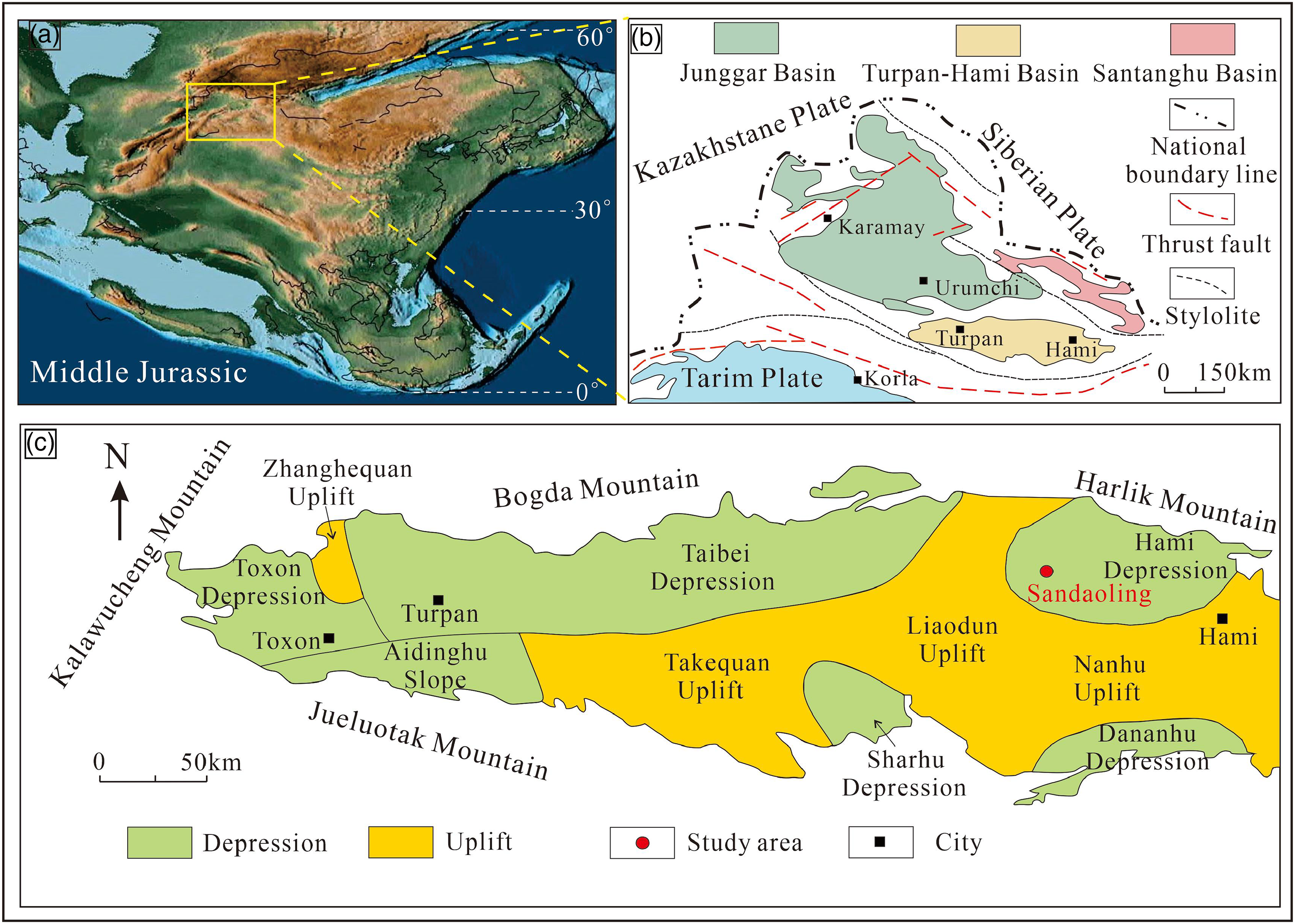
(a) Palaeogeography of NW China in the Middle Jurassic period (Scotese and Wright, 2018). (b) Geotectonic map of the Turpan-Hami Basin (Huang et al., 2024). (c) Geological structure map of Turpan-Hami Basin and the location of the Sandaoling Coalfield (Shao et al., 2009).
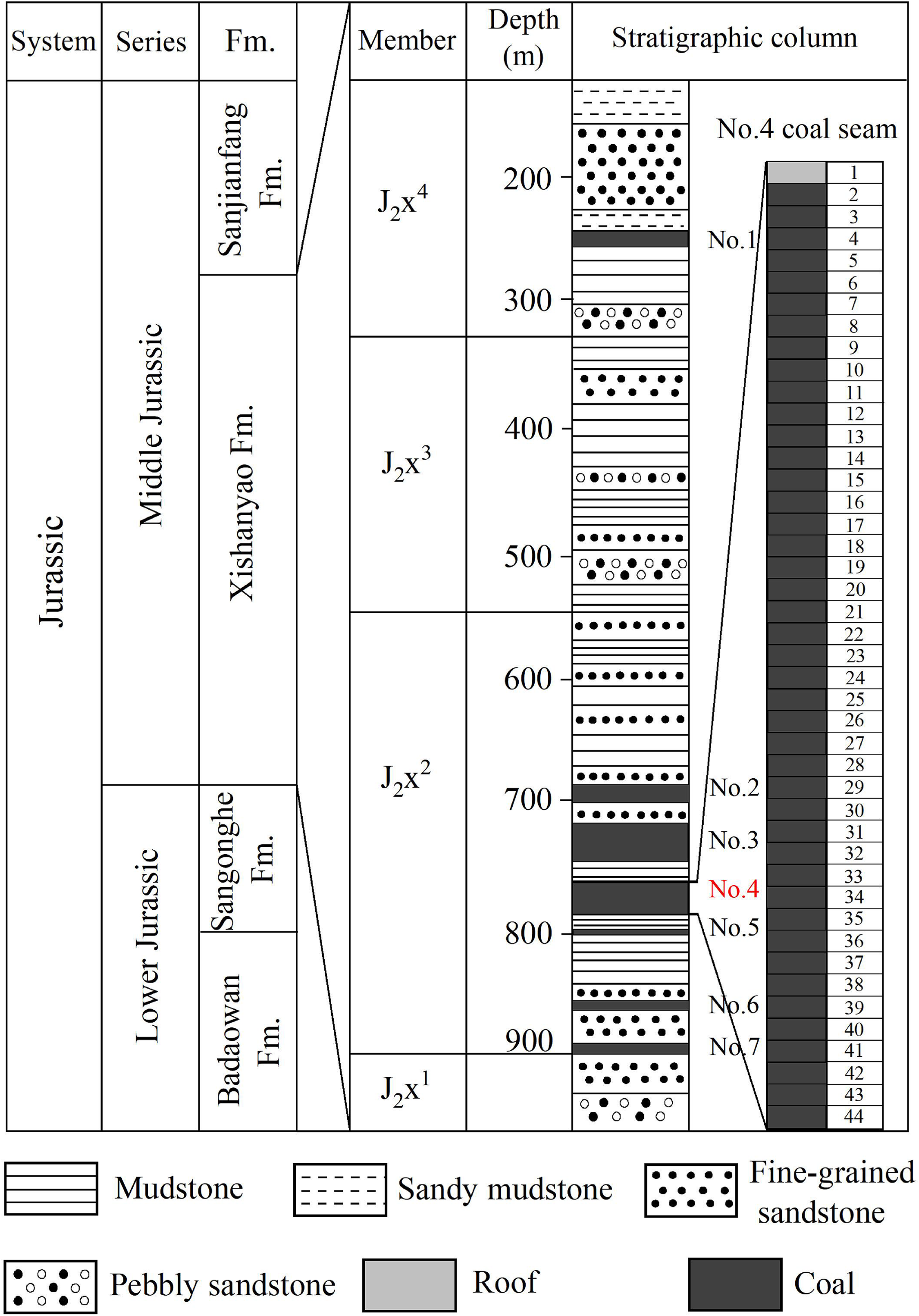
Stratigraphy of the Sandaoling Coalfield in Turpan-Hami Basin and studied coal seam (Shao et al., 2009).
Material and methods
Forty-four samples, representing the entire vertical extent of the No. 4 coal seam, were obtained from the Sandaoling Coalfield within the Turpan-Hami Basin. This included one roof sample (Figure 2). Each sample was collected across a 20–30 cm interval of the coal seam. Samples were rapidly secured in airtight plastic bags to minimize contamination risks.
Petrographic and biomarker analyses were applied to investigate the coal samples. The total sulfur content and proximate analysis, which include measuring moisture, ash yield, and volatile matter, were conducted according to Chinese standards GB/T 214-2007 and GB/T 212-2008, respectively. For vitrinite reflectance and maceral analysis, the coal samples were crushed to a grain size of 15–30 mesh, prepared as epoxy-bonded pellets, and subsequently ground and polished (ISO 7404-2, 2009). Vitrinite reflectance was then measured using a Leica DM2500P reflected light microscope with oil immersion and a Craic QDI 302 spectrophotometer. Calibration of the instrument was performed using gadolinium gallium garnet (Ro = 1.719%), yttrium aluminum garnet (Ro = 0.904%), and sapphire (Ro = 0.590%). For each sample, 100 random vitrinite reflectance measurements were performed on collotelinite according to Chinese standard GB/T 6948-2008.
The powdered coal samples were extracted by Soxhlet extraction with dichloromethane, then the extractable organic matter was separated into saturated hydrocarbons, aromatic hydrocarbons, and polar compounds. The detailed experimental procedures have been previously documented by Liu et al. (2018).
GC-MS analyses were performed using an Agilent 7890B GC coupled to an Agilent 5977A quadrupole mass spectrometer. Squalane was employed as an internal standard for the quantification of aliphatic hydrocarbons. The GC-MS operating conditions have been described by Xu et al. (2020).
Results
Coal characteristics
Table 1 summarizes the physico-chemical properties and micro-constitutional variations observed in the analyzed coal samples. The moisture content in the studied samples is low (5.74–9.57 wt% on an air-dried basis with avg. 8.05 wt%), exceptionally low ash yield (1.24–24.1 wt% and avg. 6.74 wt%), and medium volatile matter content (23.7–46.9 wt% and avg. 30.3 wt%). The volatile matter in the coal samples showed a slight increase, while ash yield and moisture content showed minor variations throughout the depths. Coal samples showed a low total sulfur content (avg. 0.24 wt%), characteristic of coals originating from terrestrial deposits. The vitrinite reflectance (Rr) ranges from 0.47% to 0.61% (avg. 0.52%), classifying the coal as bituminous according to the ASTM D388-2017.
The content of proximate (%), total sulfur (%), and vitrinite reflectance (%) in the No. 4 coal from the Sandaoling Coalfield.
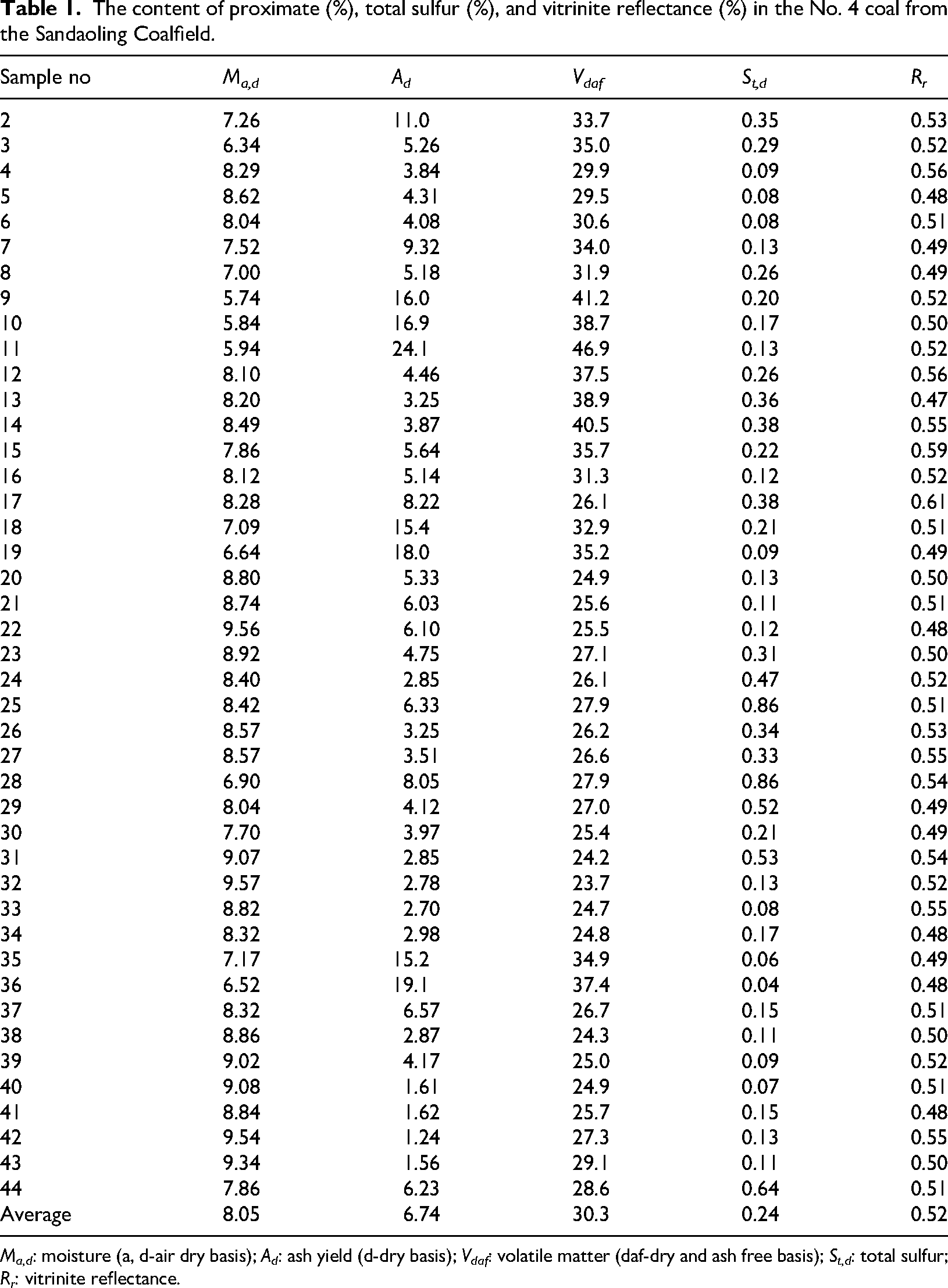
Ma,d: moisture (a, d-air dry basis); Ad: ash yield (d-dry basis); Vdaf: volatile matter (daf-dry and ash free basis); St,d: total sulfur; Rr: vitrinite reflectance.
Molecular composition
Figure 3 shows that n-alkanes were predominantly distributed within the range of n-C14 to n-C29. Most samples exhibited an unimodal distribution, peaking at either n-C17 or n-C23 (Figure 3). The samples analyzed showed a high proportion of mid-chain (n-C21-25, 28.5%–72.1%, avg. 52.0%) and short-chain n-alkanes (<n-C20, 6.10%–58.3%, avg. 30.9%). Long-chain n-alkanes (n-C27-29, 2.60%–11.9%, avg. 4.90%) were present in smaller amounts (Table 2). The carbon index (CPI22-28) of the studied samples was greater than 1.0 (1.04–2.93, avg. 1.41), and the odd-to-even predominance (OEP) ranged from 1.11 to 3.04 (avg. 1.37) (Table 2).
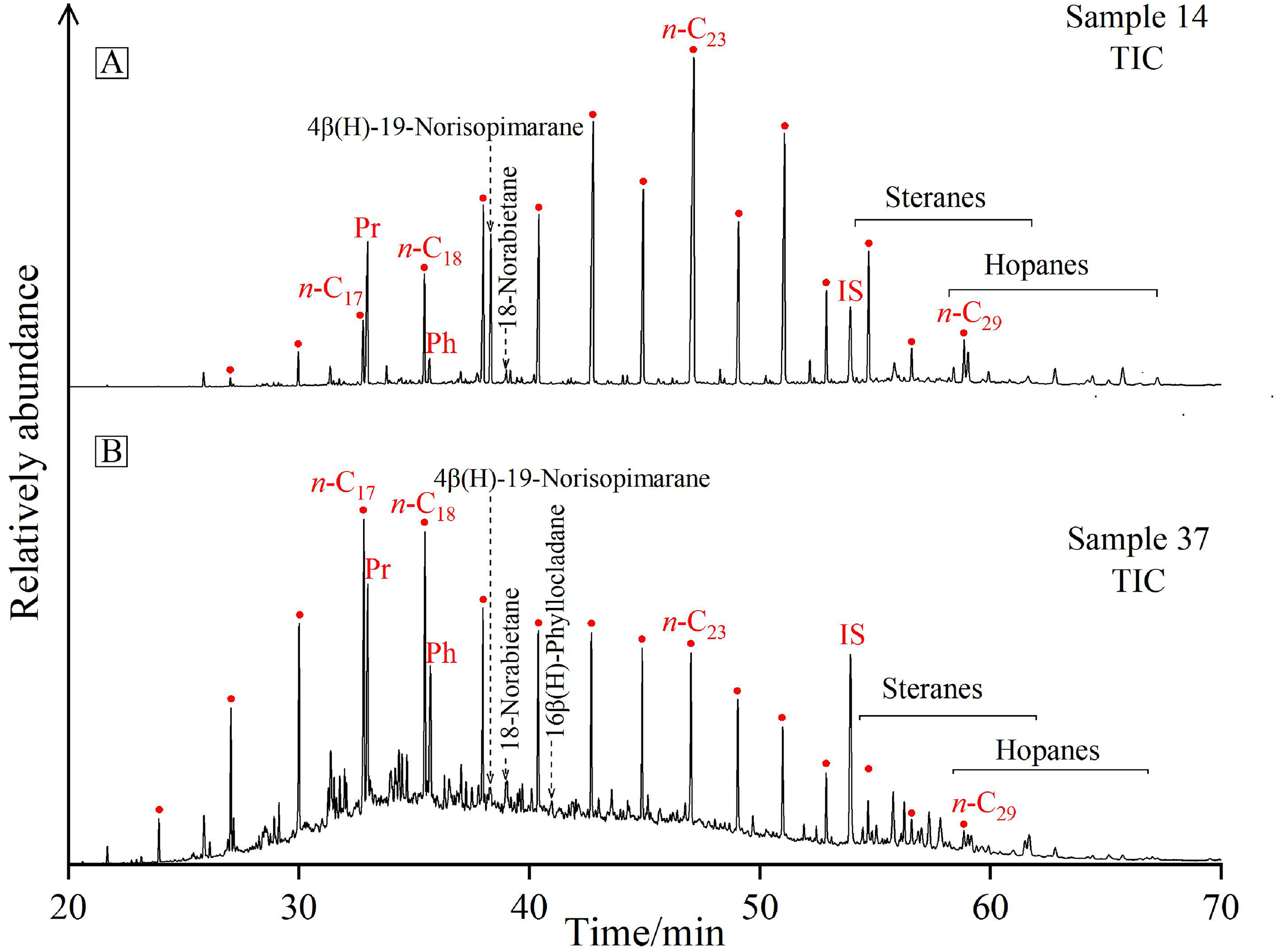
Gas chromatograms of the saturate fractions of the representative samples in the No.4 coal from the Sandaoling Coalfield.
Saturated hydrocarbon parameters in the No.4 coals from the Sandaoling Coalfield.
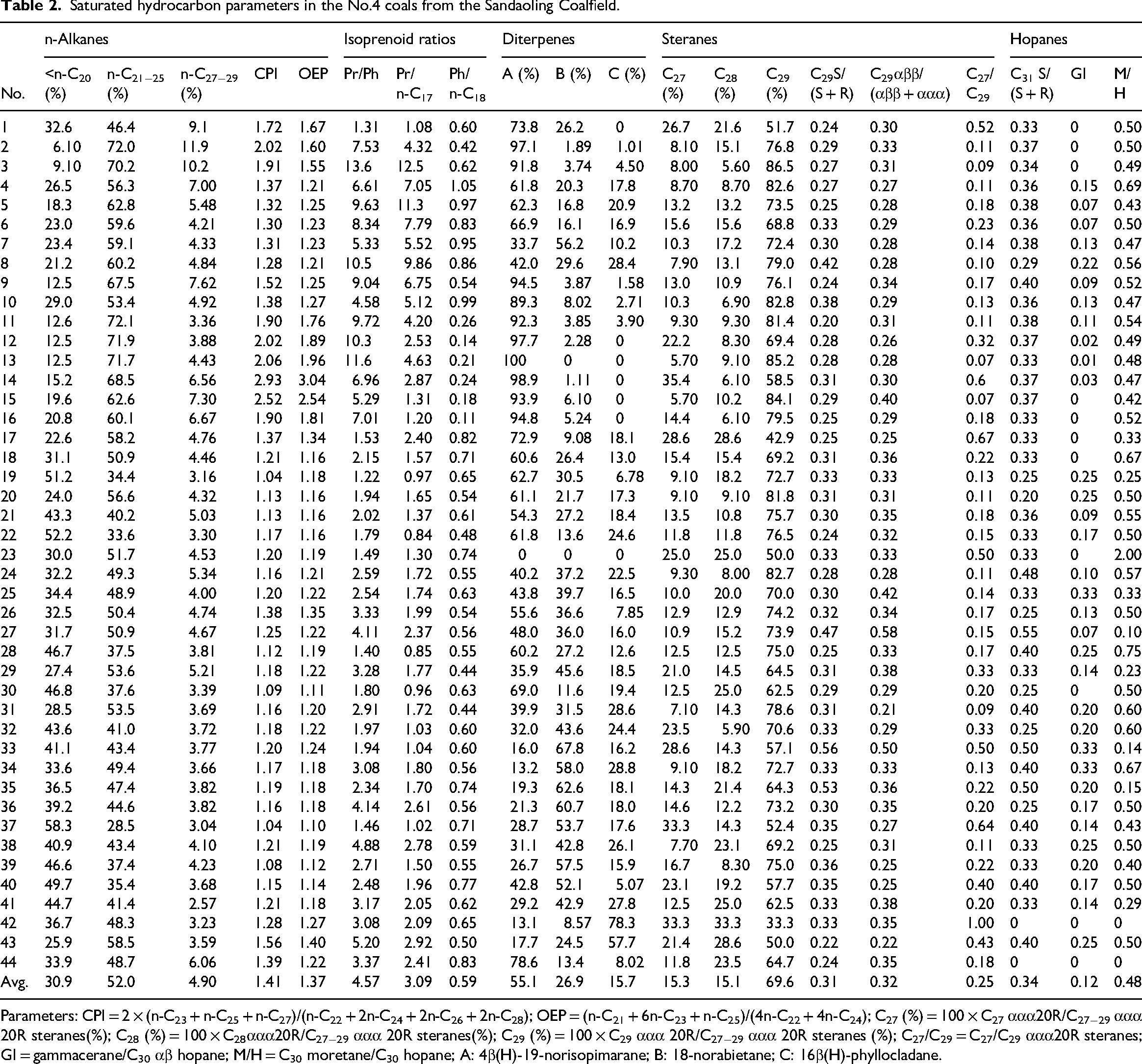
Parameters: CPI = 2 × (n-C23 + n-C25 + n-C27)/(n-C22 + 2n-C24 + 2n-C26 + 2n-C28); OEP = (n-C21 + 6n-C23 + n-C25)/(4n-C22 + 4n-C24); C27 (%) = 100 × C27 ααα20R/C27−29 ααα 20R steranes(%); C28 (%) = 100 × C28ααα20R/C27−29 ααα 20R steranes(%); C29 (%) = 100 × C29 ααα 20R/C27−29 ααα 20R steranes (%); C27/C29 = C27/C29 ααα20R steranes; GI = gammacerane/C30 αβ hopane; M/H = C30 moretane/C30 hopane; A: 4β(H)-19-norisopimarane; B: 18-norabietane; C: 16β(H)-phyllocladane.
Pristane (Pr) generally occurs in relatively higher concentrations than phytane (Ph) in the analyzed samples, with Pr/Ph ratios varying from 1.22 to 13.6 (avg. 4.57). The highest Pr/Ph value is 13.6, observed in sample 3 (Table 2). The abundance of Pr is generally higher than those of the n-C17 in the analyzed samples, while phytane concentrations are usually lower than those of n-C18. The values of Pr/n-C17 varied from 0.84 to 12.5 (avg. 3.09), and the Ph/n-C18 varied from 0.11 to 1.05 (avg. 0.59) (Table 2). Diterpenoids identified in most samples (Figure 3) include 4β(H)-19-norisopimarane, 18-norabietane, and 16β(H)-phyllocladane. 4β(H)-19-Norisopimarane is the most abundant (55.1%), followed by 18-norabietane (26.9%), and 16β(H)-phyllocladane (15.7%) (Table 2).
Regular C27, C28, and C29 steranes, along with rearranged C27 and C28 steranes (diasteranes), were identified in all investigated samples (Figure 4). In this study, the diasterane distribution is dominated by C28 βαS, while C27-C29 αββ isomers make a significant contribution to the regular steranes. Additionally, all samples exhibit a greater proportion of C29 ααα 20R (42.9%–86.5%, avg. 69.6%) compared with C27 ααα 20R steranes (5.70%–35.4%, avg. 15.3%) and C28 ααα 20R steranes (5.90%–33.3%, avg. 15.1%). In steroid compounds, the C27/C29 ααα 20R ratio ranges from 0.07 to 1.00 (avg. 0.25) (Table 2). The average ratios C29 ααα 20S/(20S + 20R) and C29 αββ/(αββ+ααα) are 0.31 and 0.32, respectively (Table 2). Low-abundance C30 4-methylsteranes were also identified in the majority of the samples (Figure 4).
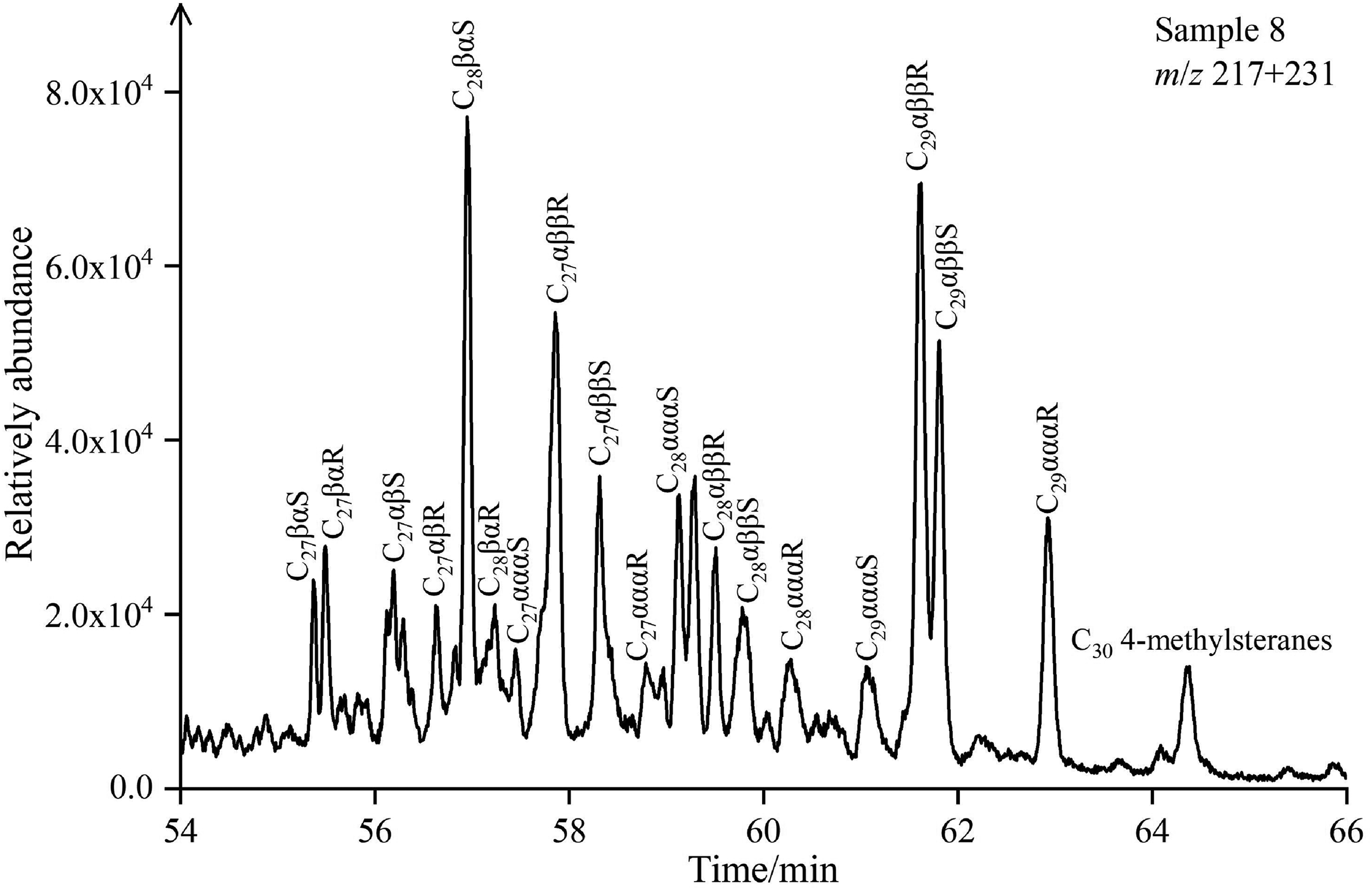
Partial and m/z 217 and 231 mass chromatograms showing the sterane and diasterane distributions in the No.4 coal from the Sandaoling Coalfield.
The primary hopanoids in all samples were C₂₇ trisnorhopane, C₂₉ norhopane, and C₃₀ hopane (Figure 5). C₃₁–C₃₂ homohopanes and gammacerane occurred in relatively low abundance. C27 17α(H)-22,29, 30-trisnorhopane (Tm) was more prevalent than its isomer C27 17β(H)-22,29,30-trisnorneohopane (βTm) in the analyzed samples. However, C27 18α(H)-22,29,30-trisnorneohopane (Ts) was consistently below the detection limit. The ratio of C31 αβ22S homohopane to the sum of 22S and 22R homohopane isomers (C31 αβ22S/(22S + 22R)) varied considerably, varying from 0.20 to 0.55, with an average value of 0.34 (Table 2). Low levels of C29 αβ, βα, ββ norhopane, and 30-norneohop-13(18)-ene were observed (Figure 5). The ratios of gammacerane/C30 αβ hopane (gammacerane index, GI) ranged from 0 to 0.33, with an average value of 0.12 (Table 2). In most samples, C30 βα/C30 αβ ratios varied between 0.10 and 2.00 (Table 2).
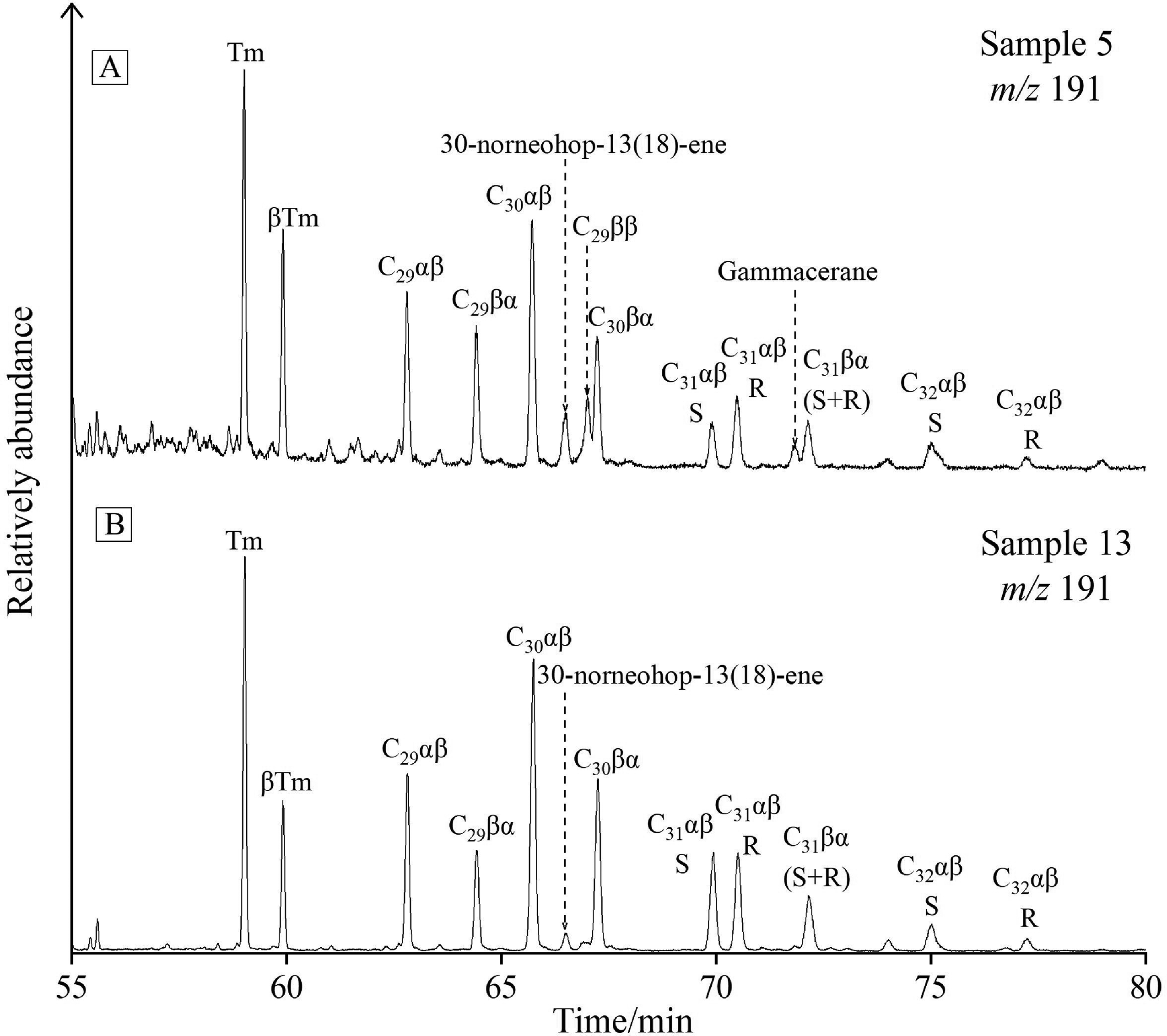
Partial m/z 191 mass chromatograms showing the hopane distributions in the No.4 coal from the Sandaoling Coalfield.
Discussion
Organic matter origin
The aliphatic hydrocarbon fractions consist of n-alkanes, derived from various sources based on their chain length. Shorter chain n-alkanes (<n-C20) are typically produced by algae and microorganisms (Cranwell, 1977; Hanson et al., 2000), while longer chain n-alkanes (> C27) are primarily sourced from terrestrial plants (Sun et al., 1998). Sphagnum moss and aquatic plants are the primary sources of mid-chain n-alkanes (n-C21–25) (Peters et al., 2005). The studied coal exhibits a high proportion of middle chain n-alkanes (n-C21–n-C25) (avg. 52.0%; Table 2), suggesting that these plants were the main contributors to the coal's OM. All the CPI and OEP are > 1 (Table 2) suggesting a substantial input from terrestrial higher plants (Peters et al., 2005). This conclusion is reinforced by the Pr/n-C17 versus Ph/n-C18 cross-plot (Figure 6). Furthermore, the source of OM can be determined by analyzing the distribution of steranes (Huang and Meinschein, 1979; Jiang and George, 2020). Specifically, C27 regular steranes are linked to marine plankton, while C28 regular steranes are typically originated from plankton and algae, and C29 regular steranes, on the other hand, are primarily derived from higher plants (Havelcová et al., 2012; Oskay et al., 2019; Qi et al., 2020). Figure 7(a) (the ternary diagram of C27, C28, and C29 ααα 20R), indicates a strong influence from terrestrial higher plants with a smaller contribution from planktonic organisms. The C27/C29 ααα 20R sterane ratio has been previously established as a useful indicator of OM sources (Gorter, 2001). In this article, the predominantly low ratios observed in the majority of samples (below 1.0, Table 2) align with a terrestrial higher plant origin for the dominant OM component (Figure 7(b)). Inertinite within coal sometimes preserves plant anatomical features, offering insights into the plant composition during peat accumulation (ICCP, 1998, 2001; Moore et al., 2021). Gymnosperm tracheids, particularly those of conifers, typically appear as round, square, or polygonal voids in cross-section, while their rays are generally uniseriate and of varying lengths (Meng et al., 2021; Moore and Swanson, 1993). Conifer identification in coal often relies on microstructural characteristics like uniseriate tracheid pits and taxodioid or cupressoid cross-field pitting in radial walls (Hui et al., 2024). This research identified gymnosperms within fusinite (Figure 8(a)) and telinite (Figure 8(b) and (c)) based on these anatomical features, suggesting a significant role for gymnosperms in peat.
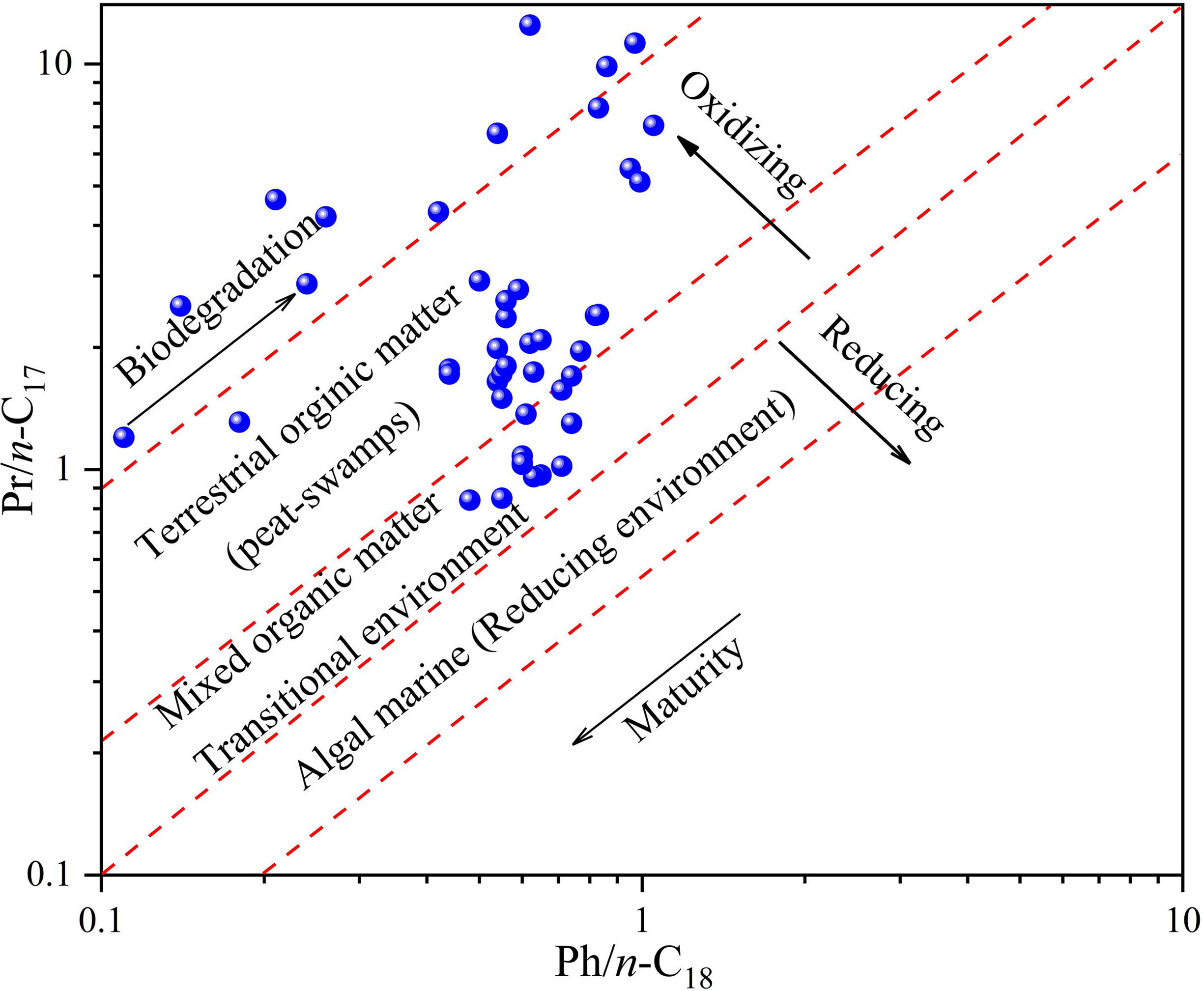
Cross-plot of Ph/n-C18 and Pr/n-C17 in the No.4 coal from the Sandaoling Coalfield (Shanmugam, 1985).
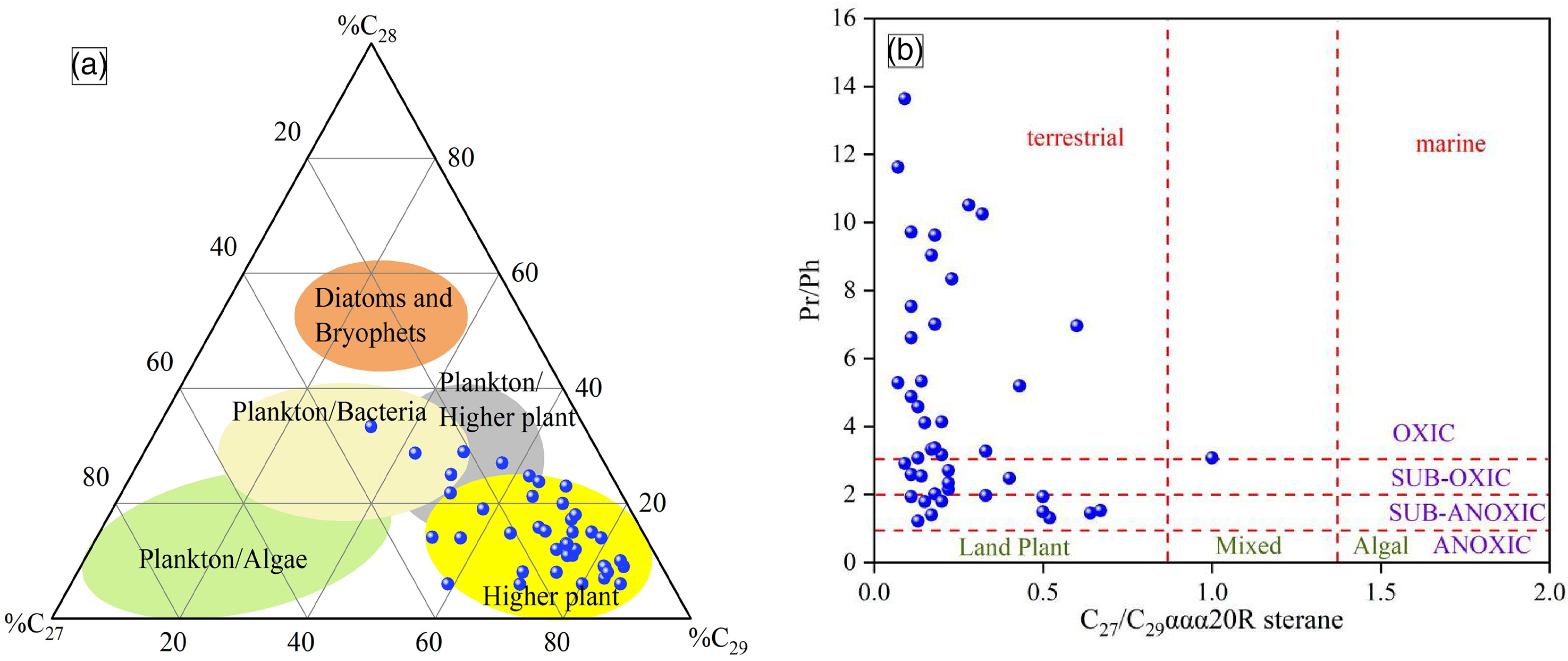
(a) A ternary diagram of C27, C28, and C29 ααα 20R steranes in the No.4 coal from the Sandaoling Coalfield (Moldowan et al., 1985). (b) Cross plot of C27/C29 ααα 20R sterane ratio versus Pr/Ph ratio in the No.4 coal from the Sandaoling Coalfield (Jiang and George, 2018).
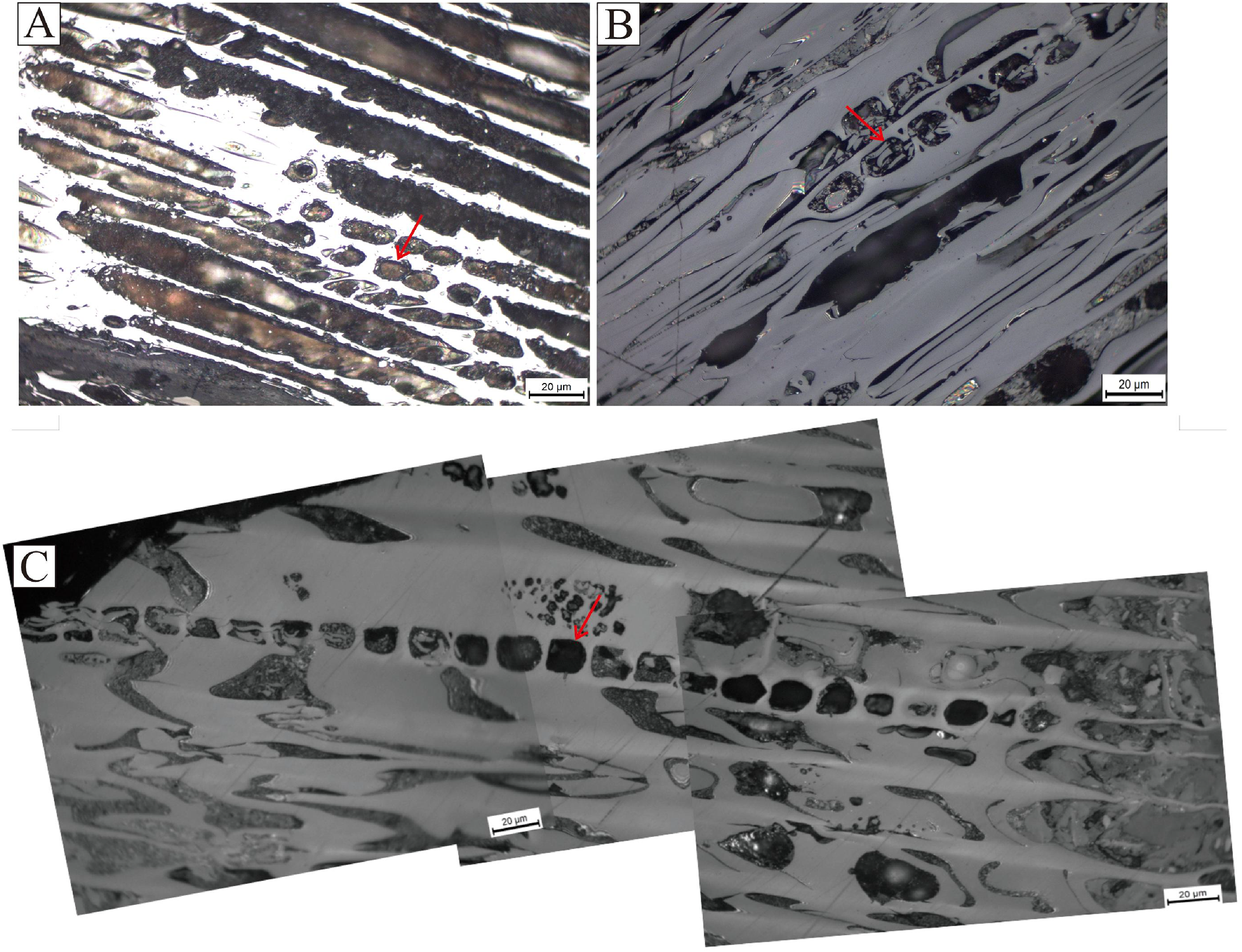
Fusinite and telinit with ray cells in the gymnosperm (A-sample 13, B-sample 19, and C-sample 11).
Diterpenoids serve as valuable biomarkers for terrestrial plants. These compounds are categorized into tricyclic and tetracyclic forms (Hautevelle et al., 2006; Otto and Wilde, 2001; Sun et al., 1998). Conifers within gymnosperms are primary sources of pimarane and abietane-type diterpenoids. Tetracyclic diterpenoids are also prevalent in most conifers, with the exception of Pinaceae (Hautevelle et al., 2006). This study found relatively high levels of 4β(H)-19-norisopimarane and 18-norabietane in the majority of samples, indicating that conifers are a significant source of OM in the coals (Table 2). Conversely, the tetracyclic diterpenoid, 16β(H)-phyllocladane, was present in low concentrations (Table 2). The observed high levels of tricyclic diterpenoids coupled with the low levels of tetracyclic diterpenoids may point to Pinaceae as the dominant conifer family contributing to the coal's OM.
Palynological analyses of the Xishanyao Formation across several basins (Turpan-Hami, Santanghu, and Junggar) indicate a dominant early Middle Jurassic vegetation of mixed coniferous and broad-leaved forests (Feng et al., 2019; Ji, 1997). Specifically, within the Xishanyao Formation of the Sandaoling Coalfield, bisaccate conifer pollen is prevalent (>20%), with Alisporiters, Protoconiferus, Protopinus, and Piceites being the most abundant genera (Liu, 1994). Our current research, utilizing diterpenoid biomarkers, corroborates the palynological findings, demonstrating the significant role of conifers in the regional vegetation and highlighting a substantial contribution from Pinaceae to the OM composition.
While steranes and diterpenoids suggest a predominantly terrestrial higher plant origin for the OM, the n-alkane distribution presents a discrepancy. This inconsistency may be explained by several factors. Research indicates that many gymnosperm species, particularly within the Pinales order, lack detectable n-alkanes (Oskay et al., 2019). Furthermore, biomass burning or charring can alter n-alkane profiles by breaking down longer chains into shorter ones (Havelcová et al., 2012). The Middle Jurassic was characterized by frequent and widespread wildfires, especially in Northwestern China (Marynowski et al., 2011; Wang et al., 2021a; Xie et al., 2022; Xu et al., 2020; Zhang et al., 2023; Zhao et al., 2023a). These fires could have significantly influenced n-alkane distributions by promoting their degradation. Consequently, caution is advised when using n-alkane data alone to determine the origin of OM.
Thermal maturity of organic matter
Organic matter maturity can be effectively assessed using biomarkers. The presence of Ts, a thermally stable compound, generally signifies a high level of OM maturity, and, βTm, being less thermally stable than Ts and Tm, is typically associated with early diagenesis (Peters et al., 2005; Romero-Sarmiento et al., 2011). βTm was detected in all samples (Figure 5), but Ts was absent, suggesting low maturity. Hopane isomerization at C-22 is a common method for assessing OM maturity (Qi et al., 2020). The C31 αβ22S/(22S + 22R) homohopane ratio rises as the maturity of OM increases, eventually stabilizing at equilibrium values of 0.57–0.62 (Peters et al., 2005). The average value of C31 αβ22S/(22S + 22R) in this study is 0.34 (Table 2), indicating low maturity of the OM. The presence of thermally unstable C29 ββ norhopane and 30-norneohop-13(18)-ene in the samples further demonstrates the low maturity of the OM (Figure 5). The C30 moretane/C30 hopane ratio is used as an indicator of sediment maturity (Oskay et al., 2019; Qi et al., 2020). This is because 17α, 21β(H)-hopanes exhibit greater thermal stability compared to 17β, 21α(H)-moretanes. In immature sediments, this ratio typically hovers around 0.8, while mature sediments display a ratio below 0.15 (Oskay et al., 2019). The C30 moretane/C30 hopane ratios in this study fall within the range of 0.10–0.75, which are indicative of an early stage of maturity.
Sterane isomerization, a process indicative of thermal maturity, is influenced by thermal breakdown, and the C29 ααα 20S/(20S + 20R) and C29 αββ/(αββ + ααα) sterane ratios are commonly employed (Peters et al., 2005). Analysis of these values reveals that the majority of OM exhibit low maturity levels (Figure 9). However, samples 27, 33, and 35 stand out as potentially more mature based on the sterane maturity index. This observation is further supported by similar trends in the C31 αβ22S/(22S + 22R) homohopane and C30 moretane/C30 hopane ratios, possibly attributed to localized thermal activity during diagenesis. Moreover, the average random reflectance (Rr) value of 0.52% suggests a low OM maturity.
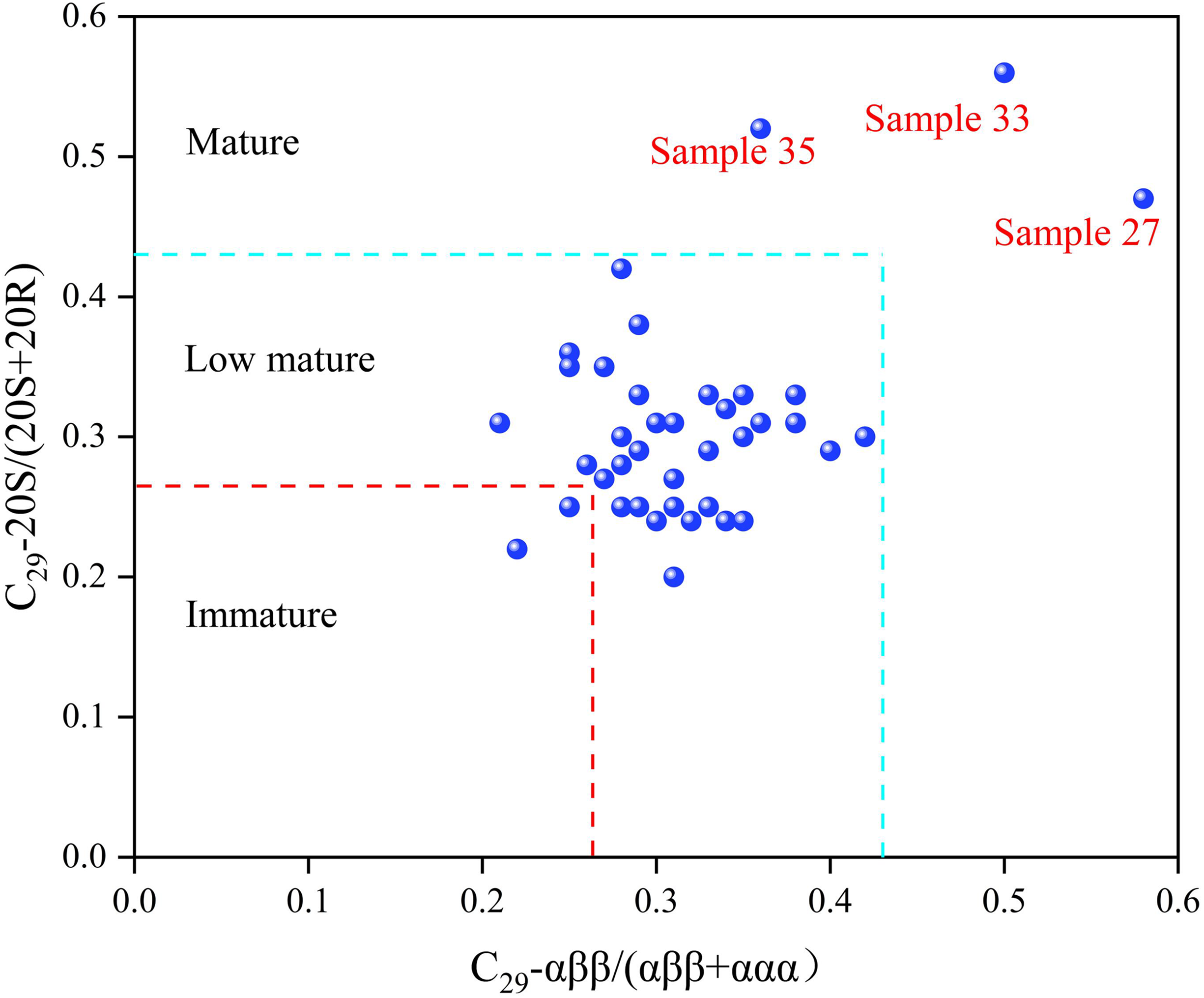
Cross-plot of the C29 αββ/(αββ + ααα) sterane ratio and the C29 ααα 20S/(20S + 20R) sterane ratio in the No.4 coal from the Sandaoling Coalfield.
Depositional environment
The ratio of Pr/Ph is employed as an effective indicator for evaluating the redox conditions within a sedimentary environment. Generally, Pr/Ph ratios >3 reflect oxic conditions, Pr/Ph values in the range 1−3 show suboxic environments, and Pr/Ph < 1 values suggest anoxic conditions (Oskay et al., 2019; Peters et al., 2005). The OM maturity source will affect the ratio of Pr/Ph (Alexander et al., 1981; Oskay et al., 2019). However, based on the low thermal maturity indicated by our analysis, the impact of maturity on this ratio is considered negligible in our study. Coals typically exhibit high Pr/Ph ratios (>3), attributed to oxidative and decarboxylation processes occurring in terrestrial environments (Didyk et al., 1978; Hoş-Çebi, 2017). Furthermore, elevated Pr/Ph values can be linked to significant input from vascular plants within the ancient mire (Fabiańska et al., 2013; Oskay et al., 2019). The Pr/Ph ratios in Stage I (Figure 10) primarily fall within the range of 1–3, suggesting deposition occurred under suboxic conditions during this period. However, in Stage II (Figure 10), all ratios exhibit values substantially exceeding 3. This deviation may be attributed to a combination of factors, including plant community and the prevailing depositional environment. The relative increase in C29 steranes in the upper coal seam suggests a period of greater abundance of higher plants (Stage II, Figure 10).
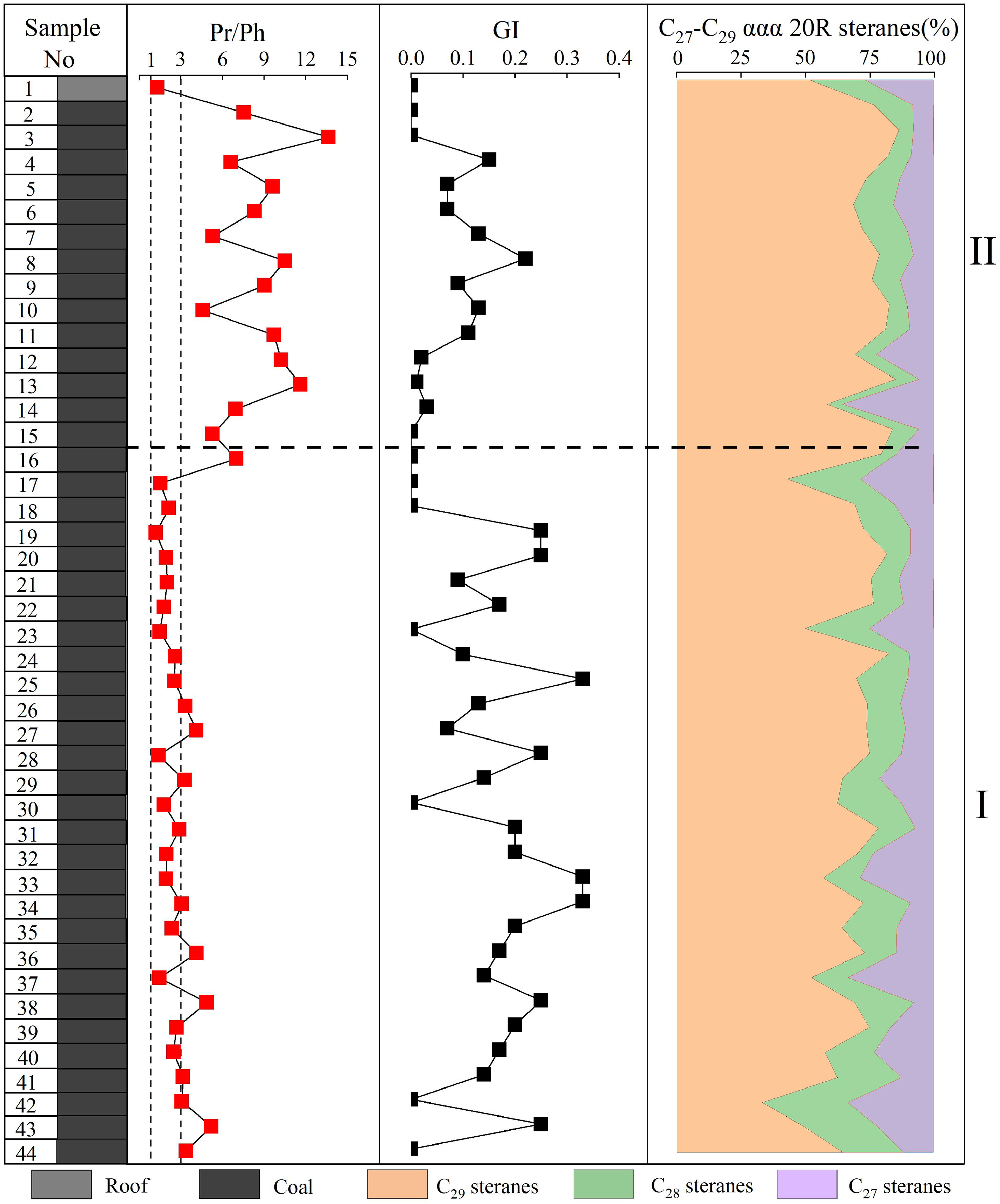
The vertical variation of Pr/Ph, GI, and C27-C29 ααα 20R steranes (%) in the No.4 coal from the Sandaoling Coalfield.
Gammacerane concentrations are often used to infer salinity and water column stratification in ancient depositional environments, and its presence is associated with reducing conditions (Jaap et al., 1995; Xu et al., 2015). Generally, a low GI (<0.3) in conjunction with a high Pr/Ph ratio (>1) suggests a freshwater sedimentary setting. Conversely, a high GI (>0.57) alongside a low Pr/Ph ratio (<1) indicates a brackish to saline sedimentary environment (Shen et al., 1999). This investigation suggests a primarily freshwater depositional setting for the mire, supported by a low GI and an elevated Pr/Ph ratio (Figure 10). The sulfur content within the coal demonstrates a strong association with the peat-forming environment. Previous research has demonstrated that peat formed in marine settings typically exhibits higher sulfur content compared to peat formed in freshwater settings (Chou, 2012; Williams and Keith, 1963; Zhao et al., 2021, 2023b, 2024). Berner (1984) suggested that freshwater sediments typically contain <0.3% sulfur. The analyzed samples reveal an average sulfur content of 0.24% (Table 1). This finding, coupled with a low GI, suggests that No.4 coal likely originated from a freshwater depositional environment.
While Wei et al. (2023) suggested a salt-lake origin for the coal seam based on Sr/Ba ratios, it's important to note that trace element ratios in coal, including Sr/Ba, B/Ga, and Th/U, are commonly employed to reveal depositional environments (Dai et al., 2020; Gayer et al., 1999; Zhang et al., 2020a). However, these indicators can be significantly influenced by various geological processes, such as groundwater or hydrothermal fluid interactions, which can alter trace element concentrations within the coal (Dai et al., 2020; Rimmer, 2004). An alternative pathway for trace element incorporation into coal seams involves their transport by surface water or hydrothermal fluids (Hower et al., 1999). Consequently, interpreting depositional environments solely based on trace element ratios require careful consideration (Dai et al., 2020; Rimmer, 2004). Notably, Jurassic coals within the Junggar and Turpan-Hami Basins of Xinjiang, China, exhibit significantly elevated concentrations of alkali metals (Na, K, and Ca) (Bai et al., 2024; Li et al., 2018; Liu et al., 2014). Research indicates that these alkali metals are primarily derived from surface water infiltration, which carries dissolved ions into the coal, leading to the formation of high-alkali coal (Bai et al., 2024). Therefore, it is plausible that surface water influence may have led to an increase in the concentration of trace elements in the coals examined by Wei et al. (2023), potentially explaining the elevated Sr/Ba ratios. This study, based on sulfur content and GI analyses, indicates a freshwater depositional environment. Previous research (Deng et al., 2017; Shao et al., 2003; Zhang et al., 1998, 2020b) has established that global average temperatures during the Middle Jurassic surpassed present-day levels, with Northwest China experiencing a subtropical climate at that time. Furthermore, palynological investigations conducted by Zhang et al. (1998, 2002) revealed that gymnosperms and pteridophytes were the dominant plant groups in the Turpan-Hami Basin during the Middle Jurassic. This finding aligns with biomarker evidence from the current study. As a significant proportion of modern pteridophytes and gymnosperms thrive in freshwater habitats, it is inferred that the OM within the analyzed coal seams originated in freshwater environments. To accurately characterize the depositional environment, a multi-proxy approach is crucial, integrating biomarker, petrological, and palynological analyses. Biomarkers, exhibiting greater resistance to diagenetic alteration, preserve a more authentic record of the depositional period. Consequently, biomarker-based interpretations of depositional environments are generally considered more robust compared to those solely reliant on trace element indicators.
Analysis revealed the presence of C30 4-methylsteranes in all samples, albeit at relatively low concentrations (Figure 4). While 4-methylsteranes are generally linked to dinosterol, a compound found in dinoflagellates (Boon et al., 1979; Fu et al., 1985), the scarcity of dinoflagellates in terrestrial environments contrasts with the widespread occurrence of 4-methylsteranes (Huang et al., 1989). Alternative origins for these compounds have been proposed, with microbial activity during diagenesis emerging as a significant contributor (Bird et al., 1971 ; Huang et al., 1989). The low abundance of C30 4-methylsteranes in the analyzed samples may have a microbial origin. The identification of UCM in the samples indicates bacterial activity (Figure 3), suggesting microbial involvement in peat formation. This conclusion is further corroborated by the presence of hopanes in the coal samples (Figures 3 and 5). These findings collectively point towards a peat-forming environment significantly influenced by microbial processes.
Conclusions
Biomarkers (n-alkanes, steroids, and diterpenes) show that the OM in coals primarily originated from terrestrial higher plants, with conifers being a significant contributor to coal formation. The n-alkanes can be influenced by both vegetation composition and the frequent occurrence of wildfires. Gymnosperms typically have shorter n-alkane chain lengths, which may even be undetectable in pinales. Frequent wildfires can break down long-chain n-alkanes, thus altering the overall distribution of n-alkanes within the aliphatic hydrocarbon fraction.
Geochemical analyses, including vitrinite reflectance and biomarker distributions (hopanes and steranes), suggest that the investigated coal samples present low thermal maturity. The presence of C30 4-methylsteranes, hopanes, and UCM within the coal matrix points towards significant bacterial activity during the peat deposition period.
The geochemical characteristics of No.4 coal, including a low GI, a high Pr/Ph ratio, and low sulfur content, strongly indicate a freshwater depositional environment for the precursor peat. While some studies utilizing trace element analysis have suggested a saline water environment, this interpretation may be influenced by the potential for trace element mobility and alteration during peat deposition and subsequent diagenesis. Coal-forming plants are typically associated with freshwater environments, making the saline water hypothesis less likely. Biomarkers, relatively stable organic compounds preserved within the coal, offer a more robust approach to reconstructing the depositional environment. These biomarkers retain valuable insights into the original OM and its depositional setting, providing a more reliable assessment of the paleoenvironment.
Footnotes
Acknowledgements
This research was supported by the National Natural Science Foundation of China (No. 42372197) and, the Science and Technology Project of Hebei Education Department (BJK2024142).

Funding
The author(s) disclosed receipt of the following financial support for the research, authorship, and/or publication of this article: This research was supported by the National Natural Science Foundation of China (No.42372197), Science and Technology Project of Hebei Education Department (BJK2024142 and 246Z4103G), Central Guide Local Fund for Scientific and Technological Development of Hebei Province(246Z4103G).
Declaration of conflicting interests
The author(s) declared no potential conflicts of interest with respect to the research, authorship, and/or publication of this article.