




Abstract
The conglomeratic reservoirs of the Permian Wutonggou Formation in the Yingyeer area of the Turpan–Hami Basin are key petroliferous horizons, with enormous potential for hydrocarbon exploration. Existing studies on the conglomeratic reservoirs in this area mainly focus on the sedimentary environment and sand body distribution, while few of them concern the diagenesis and evolution of the conglomeratic reservoirs, leading to deficient knowledge about relevant mechanisms. By comprehensively utilizing the data from ordinary and casting thin section identification, the x-ray diffraction analysis of whole rock and clay, scanning electron microscopy, and other analyses and assays, this study analyzed and investigated the petrological characteristics, diagenetic types, and characteristics, and diagenetic evolutionary stages and mechanisms of the conglomeratic reservoirs of the Permian Wutonggou Formation in the Yingyeer area. The study results are as follows. Under the influence of sedimentary provenances, tectonic evolution, and paleogeomorphology, the conglomeratic reservoirs of the Permian Wutonggou formation have low clastic grain maturity and low structural maturity, suggesting proximal provenances. The reservoirs are subjected to various diagenesis, including carbonate cementation, which fills pores and throats; compaction as a major factor leading to poor reservoir quality, and dissolution, which significantly improves the reservoir properties. The conglomeratic reservoirs in the Wutonggou formation are generally in substage A of the middle diagenetic stage. The diagenetic evolution of the reservoirs generally underwent early mechanical compaction, calcite precipitation, secondary quartz overgrowth, the injection of organic fluids, the dissolution of feldspars and lithic grains, the transformation of clay minerals, and calcite cementation in sequence. Hydrocarbon charging mainly occurred during the late Middle Jurassic and was greatly influenced by early compaction and dissolution.
Keywords
Introduction
The conglomeratic reservoirs of the Permian Wutonggou formation in the Yingyeer area are characterized by a wide distribution, a large sedimentary thickness, and multiple exploration fields, thus, are the key exploration strata presently. With the increasing demand for hydrocarbon resources, a series of surveys and explorations have been conducted in the Turpan–Hami Basin. As a result, new understandings and findings of the Wutonggou formation in the Yingyeer area have been gradually obtained, and increasing attention has been paid to special hydrocarbon reservoirs such as tight and conglomeratic reservoirs (Liu et al., 2022; Yu et al., 2018). Conglomeratic reservoirs, whose physical properties are significantly affected by diagenesis, have gradually become a new area of interest for hydrocarbon exploration (Zan et al., 2011; Zhang et al., 2014; Zhou et al., 2021). The Permian conglomeratic reservoirs in the Yingyeer area exhibit strong sedimentary heterogeneity, rapid lateral and vertical variations of sand bodies, complex lithologies, tight physical properties, and poor petroliferous properties. Therefore, research on the diagenetic process of the reservoirs is an important factor that determines the further hydrocarbon exploration deployment in the Yingyeer area. Existing studies on the reservoirs mainly focus on the sedimentary environment and sand body distribution, and there is a lack of sufficient knowledge about the diagenesis and evolutionary mechanisms of the reservoirs. Therefore, this study investigated the diagenesis and evolutionary mechanisms of the conglomeratic reservoirs of the Permian Wutonggou Formation in the Yingyeer area. The results of this study are of great significance for guiding further hydrocarbon exploration of the Wutonggou formation in the Yingyeer area.
The Wutonggou formation in the Yingyeer area has very complex lithological and tectonic characteristics. A series of diagenesis and hydrocarbon accumulation studies have been conducted on the oil reservoirs in the Wutonggou formation since they were discovered. Si et al. (2018) studied the indicators and distribution of sedimentary facies, provenance direction, and sedimentary model of the Permian Wutonggou formation in the Lukeqin area of the Turpan–Hami Basin. By studying the filling characteristics of the Permian strata in the Tainan Sag of the Turpan–Hami Basin, Li (2019) found that sequence stratigraphy can guide the source rock distribution and effective reservoir prediction. Wu (2013) formulated the criteria for determining the effective reservoir thickness of the Wutonggou formation by studying the lithology, physical properties, electrical properties, and oil-bearing capacity of the formation and their correlations. By analyzing the rock and mineral characteristics and diagenesis of reservoirs in the Yingyeer area, Ren (2015) concluded that compaction is the root cause of the deterioration of the storage and permeability of the Wutonggou formation reservoirs and that the dissolution of lithic fragments and feldspars increased secondary porosity and improved the physical properties of the reservoirs to a certain extent.
This study determined the mineral composition and rock structures of the conglomeratic reservoirs in the Wutonggou formation in the Yingyeer area by analyzing the rock and mineral characteristics of the reservoirs based on the data on regional geology, x-ray diffraction, cores, and thin section identification. It analyzed the diagnosis of conglomeratic reservoirs in detail through scanning electron microscopy (SEM) analysis and casting thin section identification. Then, this study determined the diagenetic stages of the Wutonggou formation based on the variations in clay minerals, grain contact modes, pore characteristics, and vitrinite reflectance (Ro). Finally, this study summarized the diagenesis and diagenetic evolution in the Yingyeer area and their coupling relationships with hydrocarbon charging based on the analysis and induction of experimental data, as well as the burial and tectonic evolution histories.
Geological setting
The Turpan–Hami Basin, a multi-cycle petroliferous basin, was formed by multi-cycle Indosinian, Yanshanian, and Himalayan tectonic movements based on the development of cratons from the Sinian to the Triassic (Wu et al., 2021). The Yingyeer area is located in the central Turpan Depression, extending from the Shengjin area, Huoyanshan in the west to the Hongnan–Lianmuqin area in the east and from the nose-like Lunan uplift belt in the south, to Well L4-s in the north (Wang, 2015; Figure 1(a)). This area boasts abundant hydrocarbon resources and considerable oil reserves, and oilfields have a Gobi surface. The Permian strata in the Yingyeer area encountered during drilling include the Wutonggou and Quanzijie formations of the Lower Cangfanggou Group (P2cfa) and the Taerlang and Daheyan formations of the Taodonggou Group (P2td) from top to bottom (Figure 1(b)). The target stratum of this study is the Permian Wutonggou formation (P3w), which is divided into three members from bottom to top. The lower member (P3w3) consists of gray mudstones, siltstones, and fine-grained sandstones, as well as a set of mottled conglomerates with a thickness of approximately 150 m at the bottom. The oil beds of this member were penetrated by Well Y17. The middle member (P3w2) consists primarily of brown mudstones and is interbedded with a small quantity of gray argillaceous siltstones. The upper member (P3w1) consists of brown mudstones and is interbedded with thinly laminated gray conglomerates, siltstones, and argillaceous siltstones (Wu, 2016).
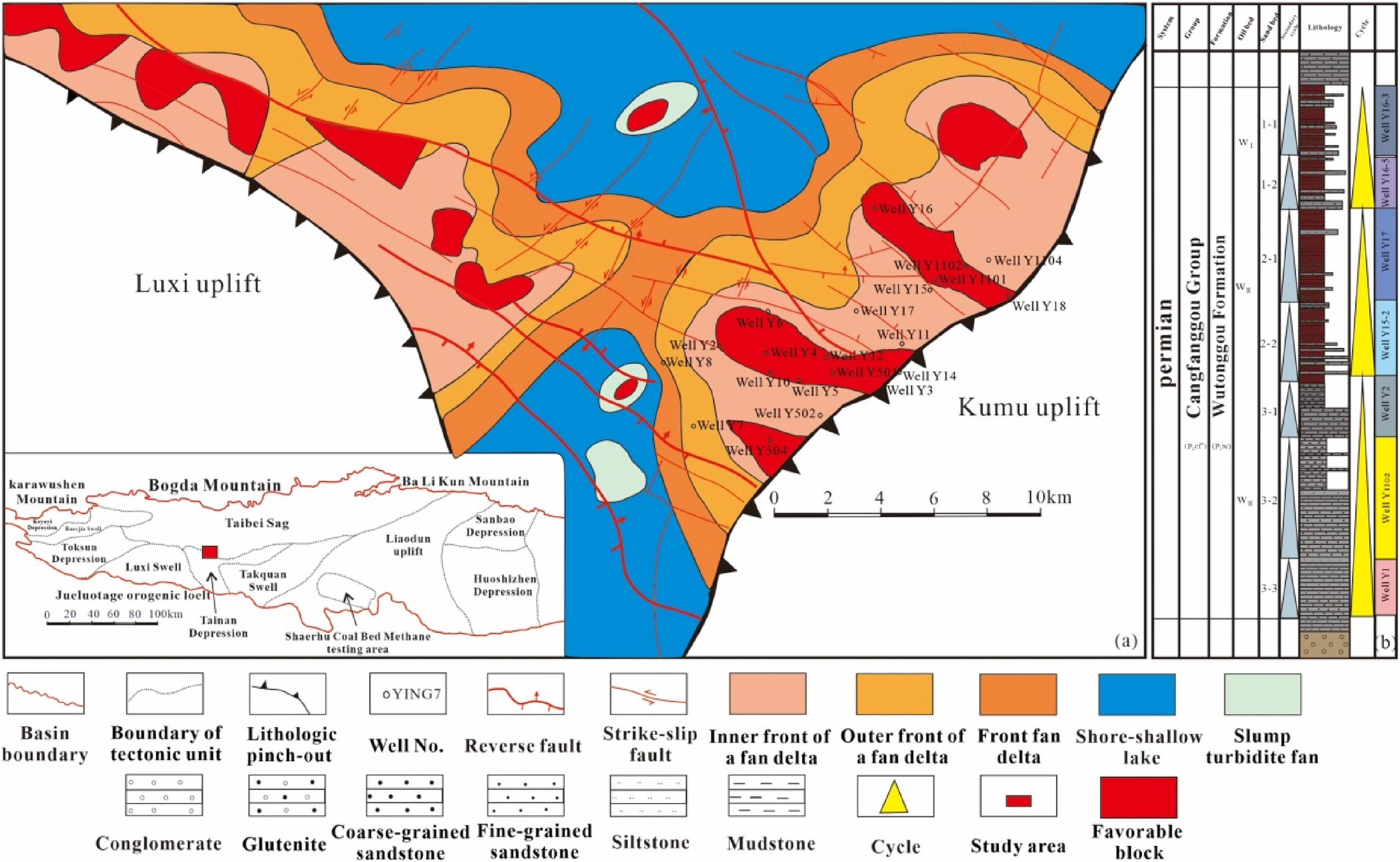
Tectonic units of the Yingyeer area (a) and the comprehensive histogram of the study area (b).
The Permian Wutonggou formation in the Yingyeer area is a deposited faulted lacustrine basin and holds more than 20 northwest (NW)- and northeast (NE)-trending faults dominated by normal faults. The NW-trending faults generally have a large scale and control the strike of the tectonic zones, while the NE-trending faults are small in scale. The two sets of faults cut the study area, forming a gridded fault framework. During the early Permian, early rift fault depressions were formed as a result of magmatism and tectonic movements (Liu et al., 2016). During the late Permian, the peripheral foreland basin was gradually formed by the tectonic uplift caused by the Hercynian movement, as well as the thrusting and compression of surrounding mountains. During the late Triassic, the Indosinian movement folded and uplifted the basin, resulting in severe denudation. During the late Indosinian movement, local structures underwent a series of changes and evolved into a paleo-landform that is high in the east and low in the west. During the early Yanshanian, the basin landform took shape in the study area (Li et al., 2021).
The sedimentary environment in the Yingyeer area gradually transitioned from a humid type to a semi-arid type. Synsedimentary normal faults developed during the sedimentary period, creating favorable conditions for the deposition and development of continental fans (Wu et al., 2018). The Wutonggou formation holds various rocks and a high-energy sedimentary environment, with a strong hydrodynamic force. The rocks of the Wutonggou formation are mainly light-gray, gray, and mottled in color and contain a large set of conglomerates (Figure 2). The presence of plant debris in the gray mudstones reflects a reduced sedimentary environment. The reservoirs in the Wutonggou formation have moderate physical properties, and the reservoirs of different lithologies have greatly different porosity and permeability. Specifically, the fine-grained sandstone reservoirs have the highest porosity and permeability, followed by the conglomeratic reservoirs, and the reservoirs of other lithologies have an average porosity of 10% to 15%.
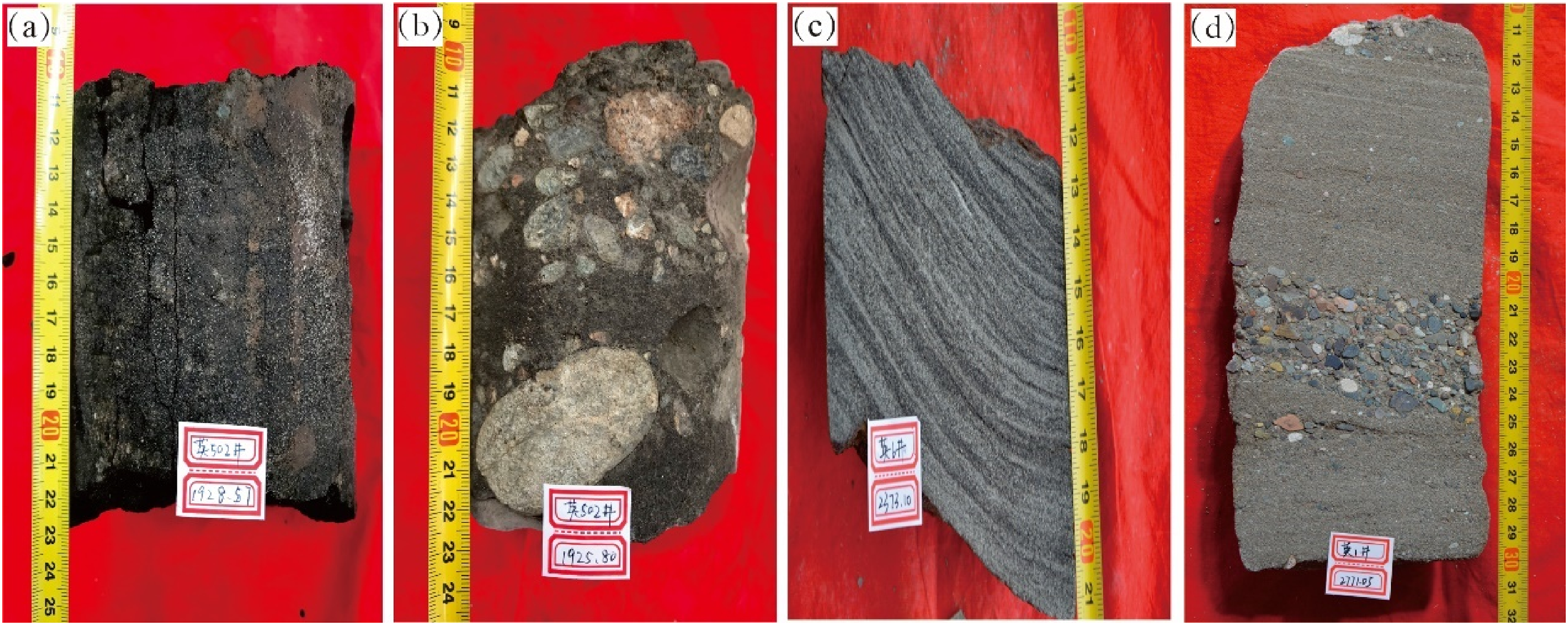
Rock characteristics of the Permian Wutonggou formation in the Yingyeer area: (a) oil-saturated sandstones, Well Y502, depth: 1928.57 m; (b) oil-immersed conglomerates, Well Y502, depth: 1925.8 m; (c) interbeds consisting of gray and black siltstones, cross beddings, Well Y6, depth: 2373.10 m; (d) interbeds consisting of gray medium-grained sandstones and conglomerates, parallel and cross beddings, Well Y1, depth: 2771.05 m.
Petrological characteristics of reservoirs
As revealed by the core observations and thin section analysis of 11 wells in the Yingyeer area, the Permian Wutonggou formation is composed primarily of terrigenous clastics, and the mineral debris includes quartz, feldspars, and lithic fragments. Among them, the lithic fragments have a high content of 40.5% to 97.5%, with an average of 69.0%, and the quartz and feldspars have contents of 5.5% to 32.5% (average: 19.0%) and 2.5% to 27.5% (average: 15.0%), respectively. Clastics are unevenly distributed among the three members of the Wutonggou Formation. Member P3w3 contains a small content of lithic fragments and a high content of quartz, while member P3w2 has a small content of quartz and a high content of lithic fragments. The Permian Wutonggou formation in the Yingyeer area consists primarily of feldspar lithic sandstone (Figures 3 and 4).
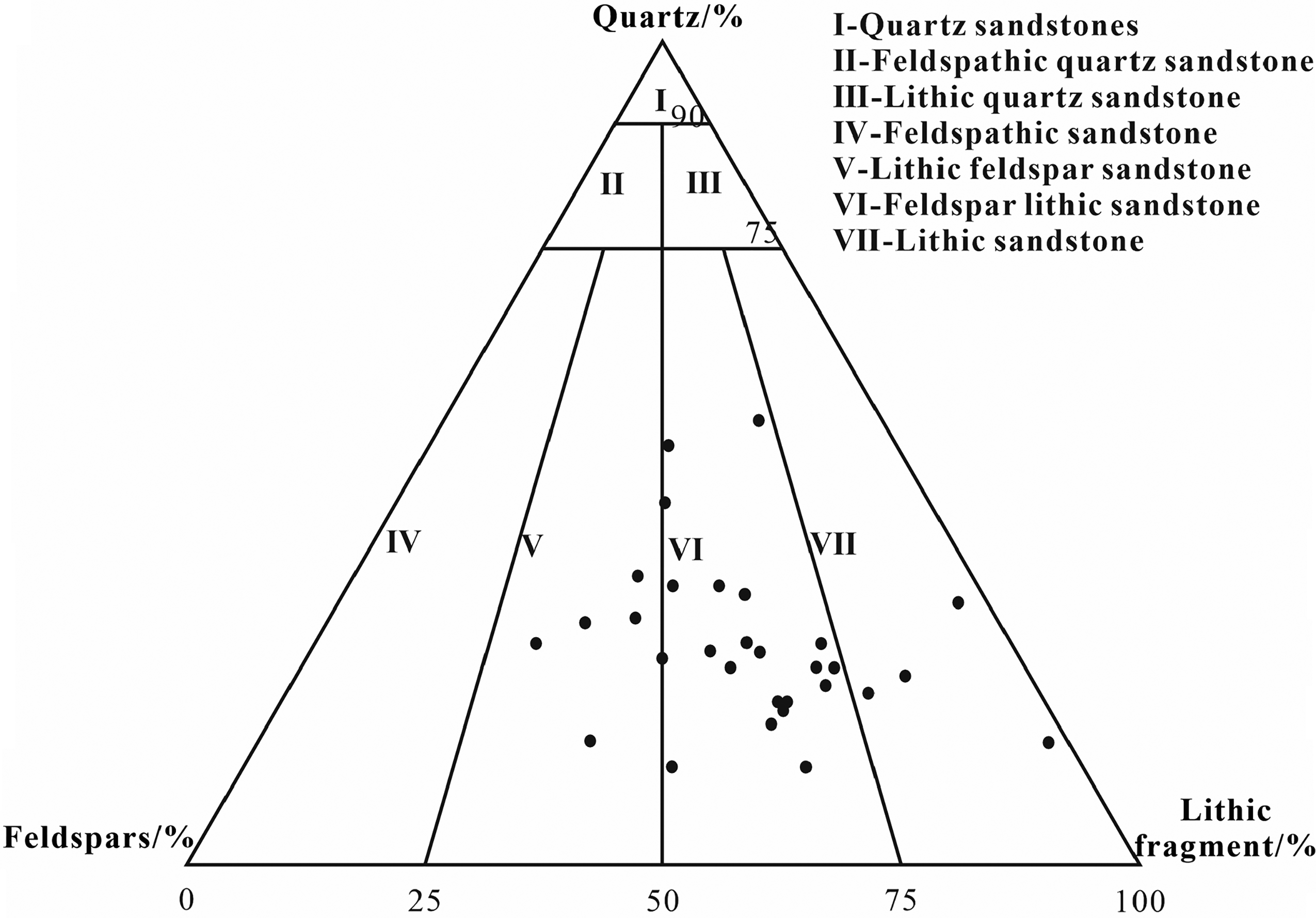
Triangular diagram showing the sandstone classification of reservoirs in the Permian Wutonggou formation in the Yingyeer area.
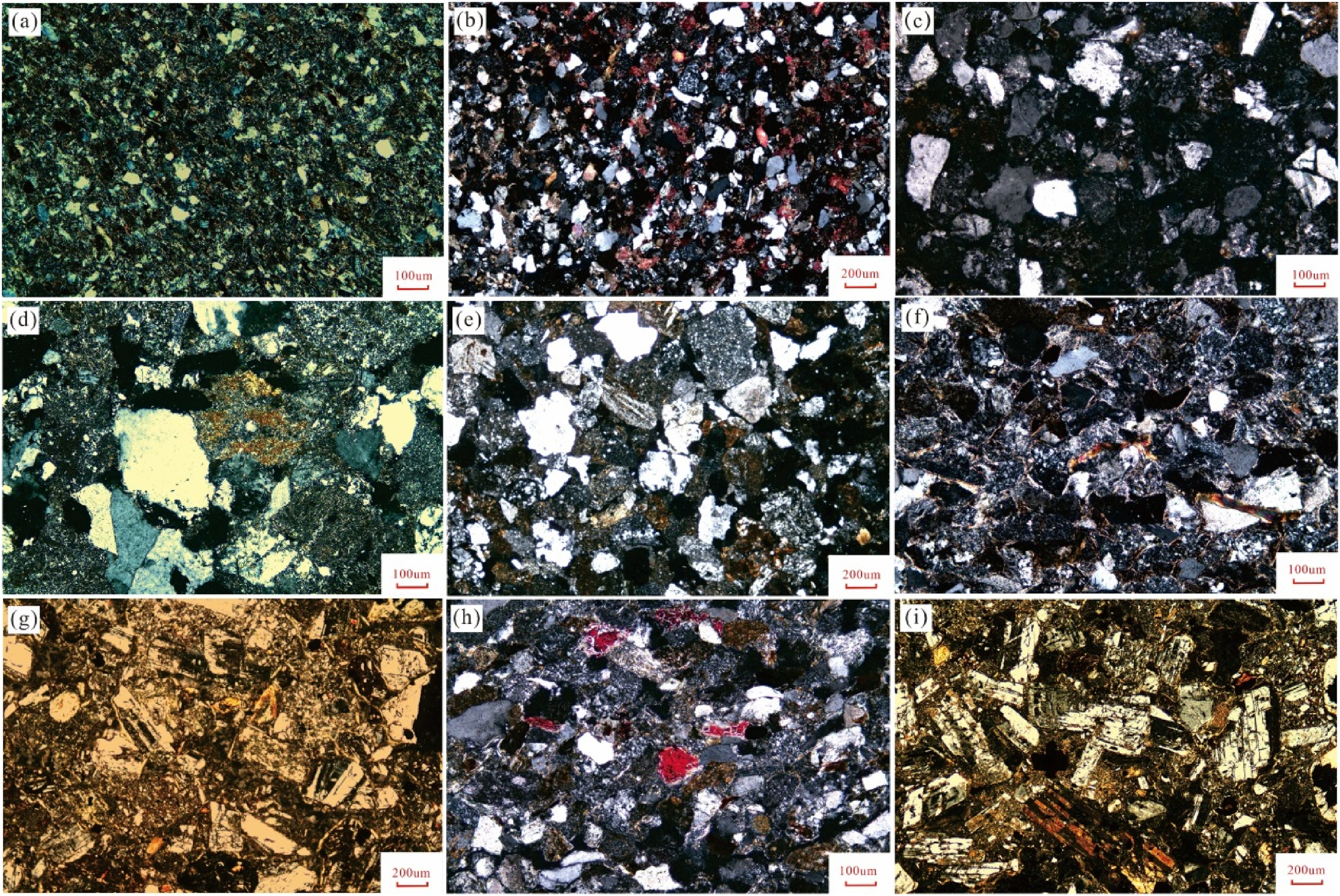
Microscopic characteristics of lithic sandstones, feldspathic lithic sandstones, and lithic feldspathic sandstones of the Permian Wutonggou formation in the Yingyeer area: (a) lithic sandstones, Well Y1, depth: 2768.9 m; (b) lithic sandstones, Well Y1103, depth: 3414.5 m; (c) lithic sandstones, Well Y502, depth: 1932.3 m; (d) feldspathic lithic sandstones, Well Y113, depth: 3780.2 m; (e) feldspathic lithic sandstone, Well Y1, depth: 2738.6 m; (f) feldspathic lithic sandstone, Well Y1102, depth: 3582.2 m; (g) lithic feldspathic sandstone, Well Y1, depth: 3113.7 m; (h) lithic feldspathic sandstones, Well Y6, depth: 2373.1 m; (i) lithic feldspathic sandstones, Well Y1, depth: 2770.9 m.
The Wutonggou formation generally has a low quantity of interstitial materials (Figure 5), which are composed primarily of cements and matrices. The cements include kaolinites, illites, illite–smectite mixed layers, siliceous materials, zeolites, and calcites. The matrices consist mainly of argillaceous materials. As shown by SEM observations, the matrices are filled in an acicular form in the intergranular pores or are distributed as films on the grain surface, and the cements are irregularly distributed around grains. The feldspathic lithic sandstones and lithic feldspathic sandstones have a high matrix content, the lithic sandstones have a high clay content, and other materials are distributed in different types of rocks (Figure 5). The clastics are generally coarse-grained, with dominant grain sizes of 0.25 to 50 mm. Conglomerates dominate in the Yingyeer area, with content >40%. They are followed by fine-grained sandstones, which account for >30% of the area. Mudstones, siltstones, medium-grained sandstones, and coarse-grained sandstones have low contents in the Yingyeer area, and their content decreases in turn (Figure 6(a)). Among them, the fine-grained sandstones have the highest average porosity and permeability, which are 25.0% and 835 × 10−3 µm2, respectively. They are followed by sandy conglomerates, which have a porosity of 15.8% and a permeability of 112.5 × 10⁻³ µm2 (Figure 6(b)). As shown in the porosity versus permeability plot (Figure 6(c)), there is a close correlation between the porosity and permeability of the conglomeratic reservoirs in the Permian Wutonggou formation in the Yingyeer area. The sandstones of the reservoirs vary greatly in sorting, including well-sorted conglomerates, sandy conglomerates, and poorly sorted lithic feldspathic sandstones, with an overall sorting coefficient of 2 to 4 (average: 3.4). The sandstones have greatly varying roundness overall and are round, sub-rounded, and sub-angular in shape. The intergranular contact relationships of the sandstones are dominated by point–line contact, followed by line–line contact. The support types of sandstones are dominated by grain support, followed by matrix support. Overall, the rocks in the Wutonggou formation have low structural maturity, suggesting proximal provenances (Wang et al., 2022).
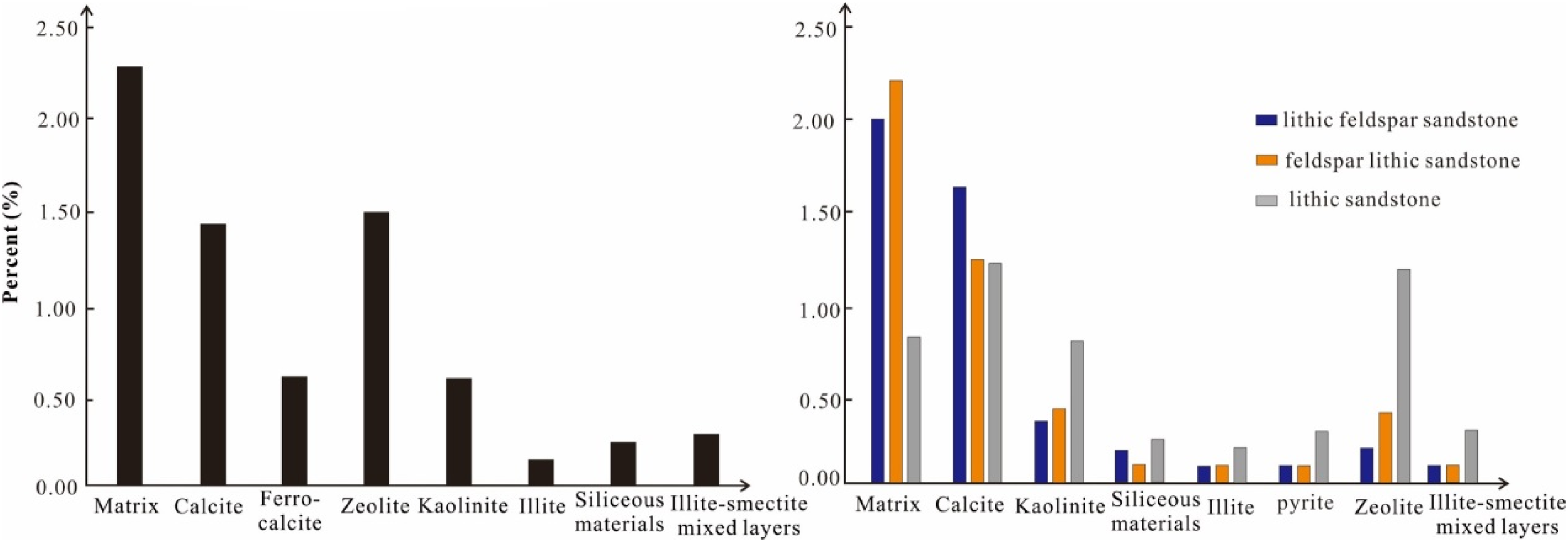
Histograms showing the interstitial material content in the reservoirs of the Permian Wutonggou formation.
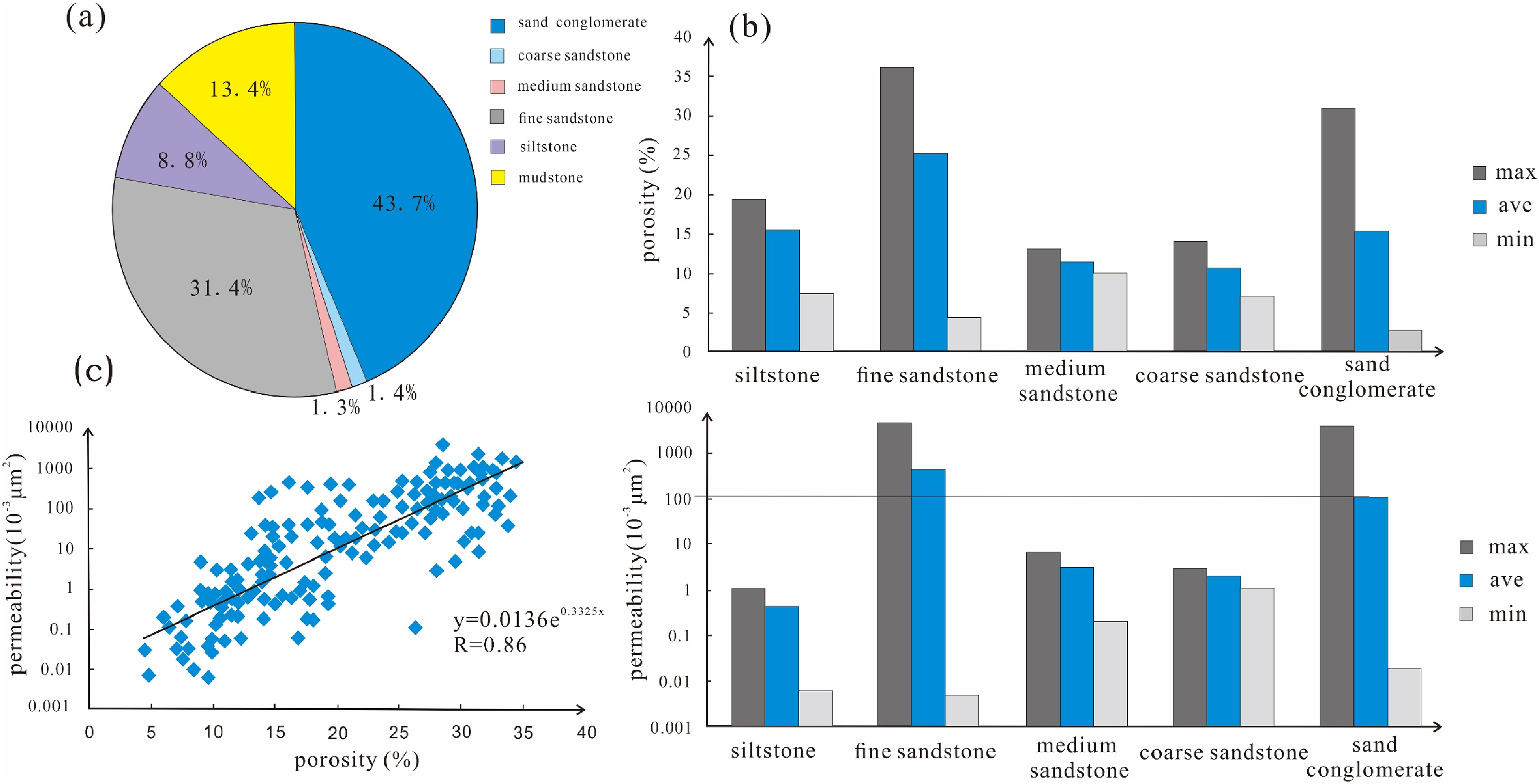
Pie charts of different lithologies (a) porosity and permeability histograms of different lithologies (b) and the relationship between porosity and permeability (c) of Permian Wutonggou Formation in Yingeer area.
Analysis of diagenesis
Compaction
Compaction refers to the effect of water discharge, porosity reduction, and volume reduction after sediment deposition under the heavy load of overlying water or sedimentary layers or under the action of tectonic deformation-related stress. Sediments may be subjected to the sliding, rotation, displacement, deformation, and rupture of grains inside, which leads to the rearrangement of grains and the change in some structures. Compaction is the main factor that directly decreases the size of primary intergranular pores in reservoirs, thus limiting the development of pore throats (Yang et al., 2021; Zhang et al., 2021). As shown by the thin section analysis, compaction has widely developed in the reservoirs of the Permian Wutonggou formation in the Yingyeer area and has severely destroyed the reservoirs. As a result, clastic grains arrange in a certain direction and approach each other, and the intergranular contact mode gradually transitions from point–line contact to line–line contact. Moreover, quartz shows wavy extinction and rupture as a result of strong compression, feldspars crack along cleavages, and plastic grains such as mica show bending deformation due to compression (Figures 7(a) to (d)). As shown by the porosity analysis of 11 wells in the Yingyeer area, the reservoir porosity of the Wutonggou formation tends to gradually decrease as the burial depth increases, with rocks changing from loose to tight and the physical properties of the reservoirs being increasingly poor. The Yingyeer area has a relatively large burial thickness. As revealed by SEM observations, this area shows strong rock compaction and severely destroyed primary intergranular pores after experiencing complex tectonic movements. This area has an apparent compaction rate of >50% on average, with the apparent compaction rate at Well Y502 exceeding 70%. A higher apparent compaction rate corresponds to lower areal porosity. Porosity loss attributable to compaction and cementation, that is, compactional porosity loss (COPL) and cementational porosity loss (CEPL), can be derived from initial or sedimentary porosity (Φ0) and percentage of intergranular volume (IGV):
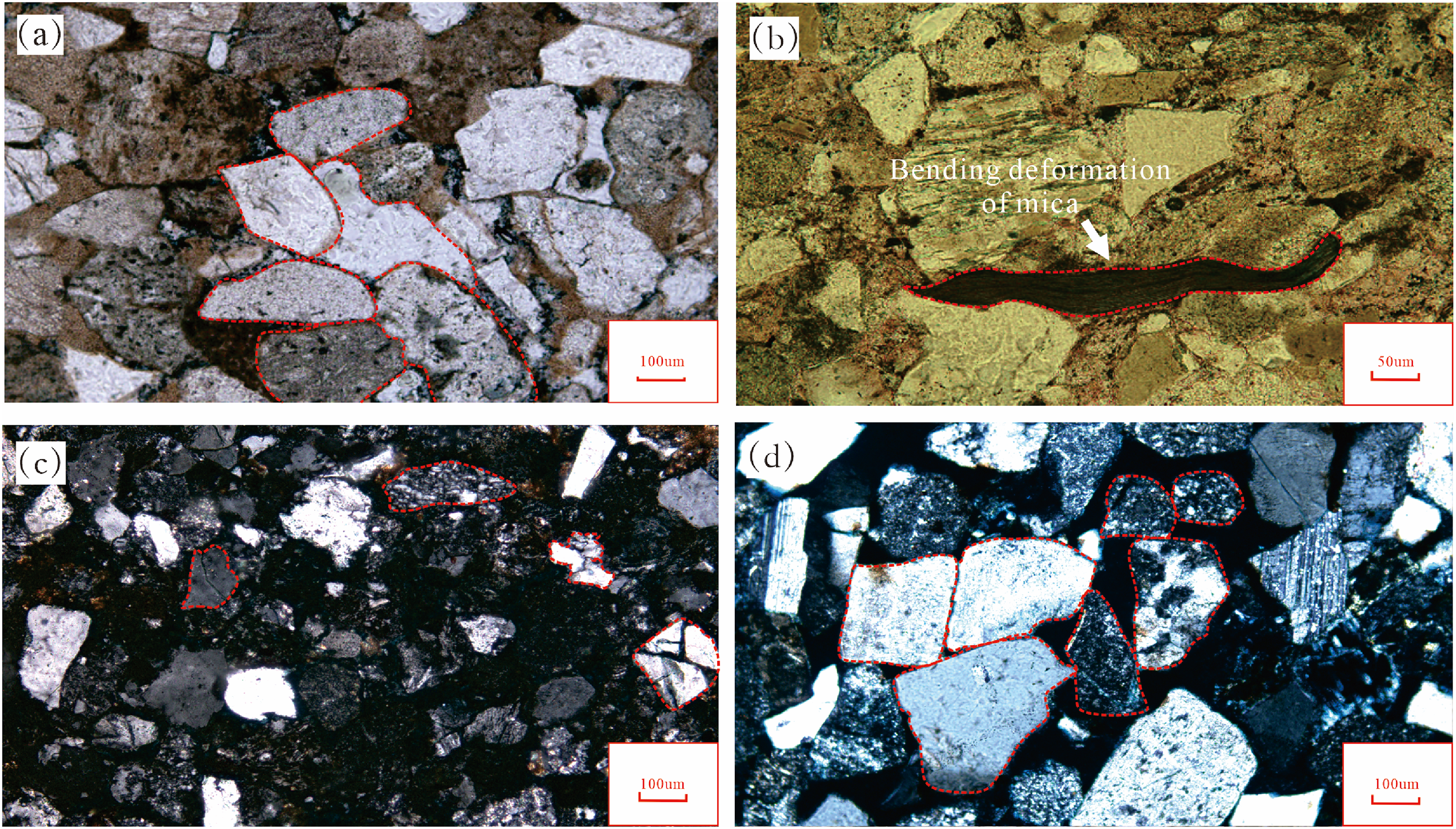
Compaction of the Permian wutonggou formation in the Yingyeer area: (a) strong compaction, intergranular concavo-convex contact, Well Y502, depth: 1926.9 m; (b) bending deformation of mica, Well Y1, depth: 2764.0 m; (c) compressional rupture of grains, Well Y502, depth: 1932.3 m; (d) intergranular point–line and line–line contacts, Well Y6, depth: 2374.4 m.


As shown by the analytical results of the frequency distribution histogram of COPL (Figure 8), pores are poorly developed in the reservoirs, parts of them are completely filled, and the percentage of COPL is concentrated at 60% to 90%, At present, the COPL is mainly caused by conglomerates and fine-grained sandstone masses. Among them, conglomerates have a high quartz content and large clastic grains, and their porosity loss is the highest under compaction. Compared with medium- and coarse-grained sandstones, fine-grained sandstones in the reservoirs have a wide distribution range and a large sedimentary thickness. They also have a high COPL. The conglomeratic reservoirs have an average porosity of only approximately 10%, indicating that compaction has severely destroyed the pores. The analytical results of the cross plot of COPL and CEPL (Figure 9) show that the diagenetic setting of the Permian Wutonggou formation in the Yingyeer area features strong compaction and moderate cementation. Therefore, compaction has a stronger effect on the reservoirs. This diagenetic setting is far below the lowest criteria for high-quality reservoirs (moderate compaction, weak cementation, and strong dissolution; Wang et al., 2017).
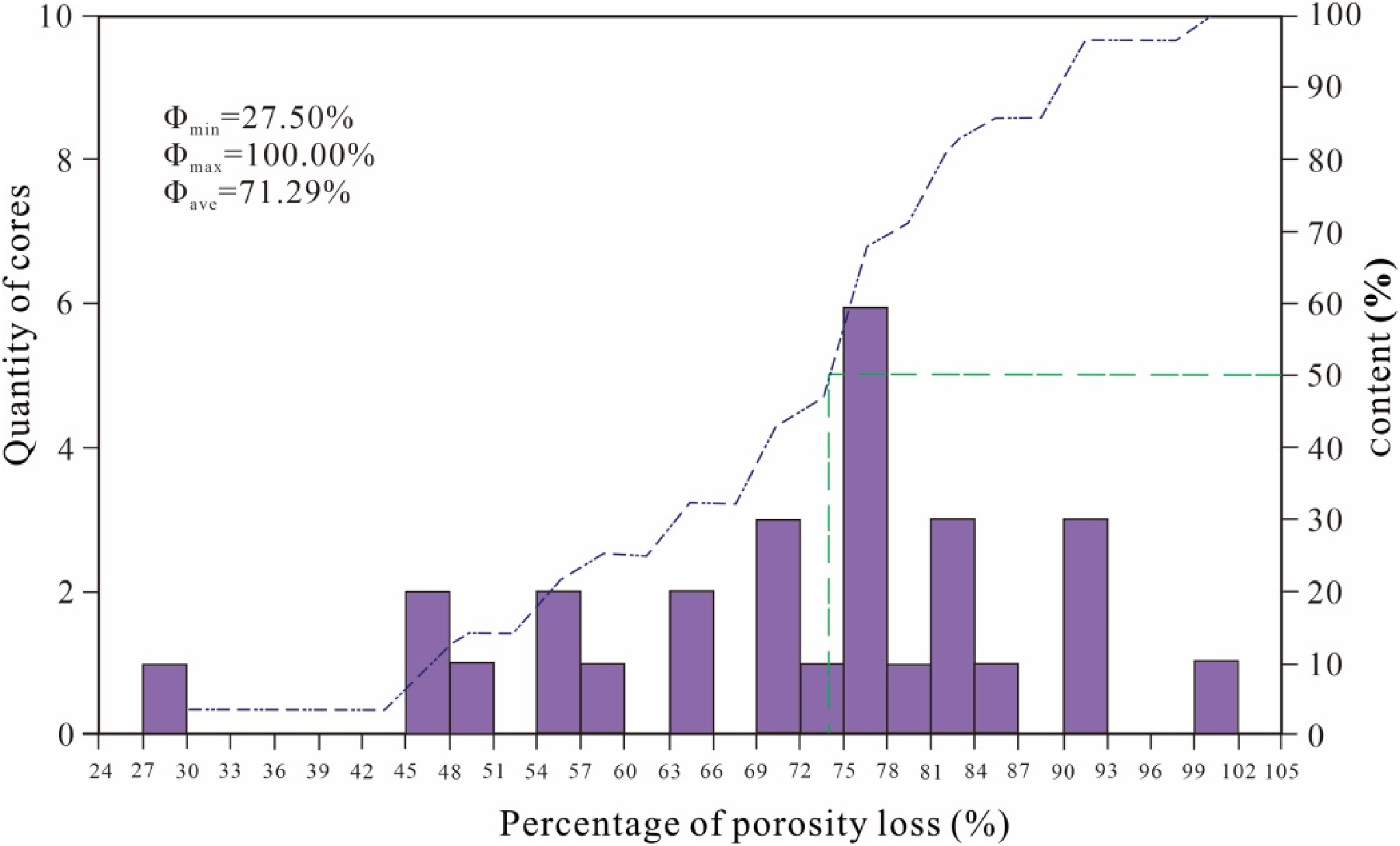
Frequency histogram of compactional porosity loss.
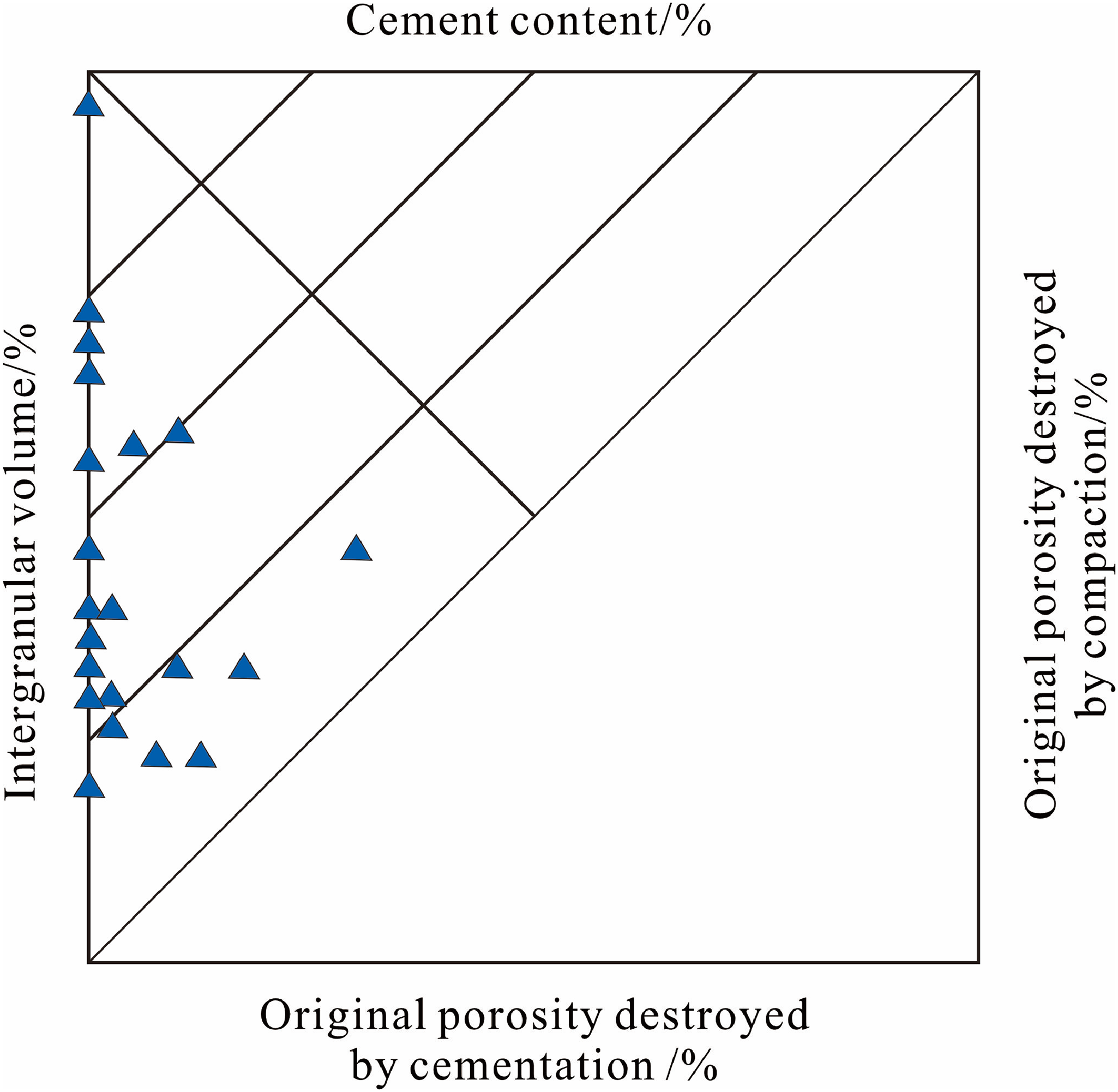
Cross plot of compactional and cementational porosity loss.
Cementation
Cementation refers to the action by which minerals precipitated from pore solutions consolidate loose sediments into rocks. Cementation plays an important role in transforming sediments into sedimentary rocks and is also one of the main reasons for the decrease in the porosity and permeability of sedimentary layers. The cementation of the reservoirs in the Permian Wutonggou formation in the Yingyeer area can be divided into carbonate cementation, siliceous cementation, cementation of clay minerals, and small quantities of pyrite and halite crystals. Siliceous and carbonate cementation are significant for rocks with a high quartz content. The cements in lithic sandstones and greywackes are dominated by a mixture of matrix and chemical precipitates composed of clay minerals, zeolite minerals, and other silicate minerals. The reservoirs have an apparent cementation rate of 0% to 10% on average, indicating weak cementation. As shown by the relationship between the areal porosity and the apparent cementation rate of the reservoirs, cementation damages partial primary intergranular pores, and a higher apparent cementation rate corresponds to lower areal porosity (Xin et al., 2011).
Carbonate cementation
A large number of carbonate cements are present in the reservoirs of the Permian Wutonggou formation in the Yingyeer area, and they consist mainly of calcites and ferrocalcites. The microscopic thin section observations show that some intergranular pores of the reservoirs are filled and blocked by carbonate cements, leading to the poor physical properties and oil-bearing properties of the reservoirs. As the burial depth increases, the reservoirs are difficult to be destroyed, and some residual intergranular pores and cemented residual pores are visible. This finding indicates that carbonate cements can support the reservoirs and mitigate the compaction at a certain large depth (Fares et al., 2022). As indicated by the variation of carbonate content with depth, the Permian Wutonggou formation in the Yingyeer area has a high carbonate content at a depth of up to about 2000 m, Well Ying 1 shows, that carbonate cements fill pores at a depth of 2768.9 m under a microscope, and this phenomenon can also be found in other wells at this depth. This result indicates that hydrochloride cementation has an inhibitory effect on the reservoir porosity of the section at this depth. The microscopic observations of casting thin sections show that carbonate cements are distributed in granular, mosaic, or ring-shaped patterns. Therefore, the carbonate cements belong to porous cementation. The SEM observations show that the calcite cementation is present in rhombic, cubic, and irregularly granular shapes (Figure 10(a) and (c)).
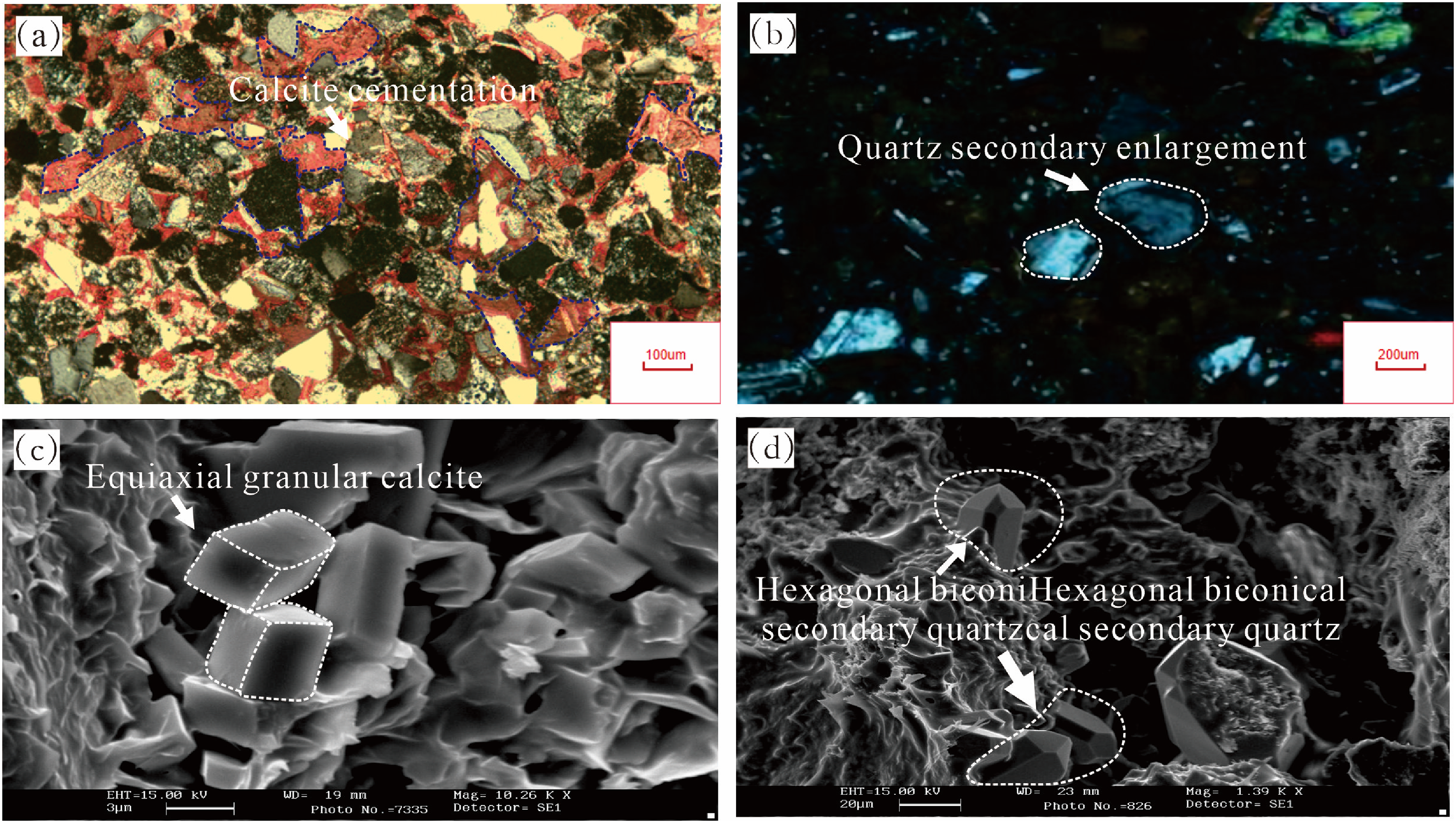
Carbonate and siliceous cementations in the Permian Wutonggou formation in the Yingyeer area: (a) carbonate cement filling pores, Well Y1, depth: 2768.9 m; (b) quartz secondary overgrowth, Well Y1, depth: 3112.5 m; (c) rhombus and irregular equiaxed granular calcites, Well Y4, depth: 1978.37 m; (d) hexagonal bipyramid secondary quartz, Well Y11, depth: 3586 m.
Siliceous cementation
The siliceous cementation of the Permian Wutonggou formation in the Yingyeer area mainly occurs in the form of secondary overgrowth edges of quartz, which are very common and occur as brown shiny edges. Secondary overgrowth begins to emerge at a depth of 1500 m and reaches grade II as the burial depth increases to 2200 m. Quartz microcrystals are visible under a scanning electron microscope, and they grow in intergranular pores (Figure 10(b) and (d)).
Cementation of authigenic clay minerals
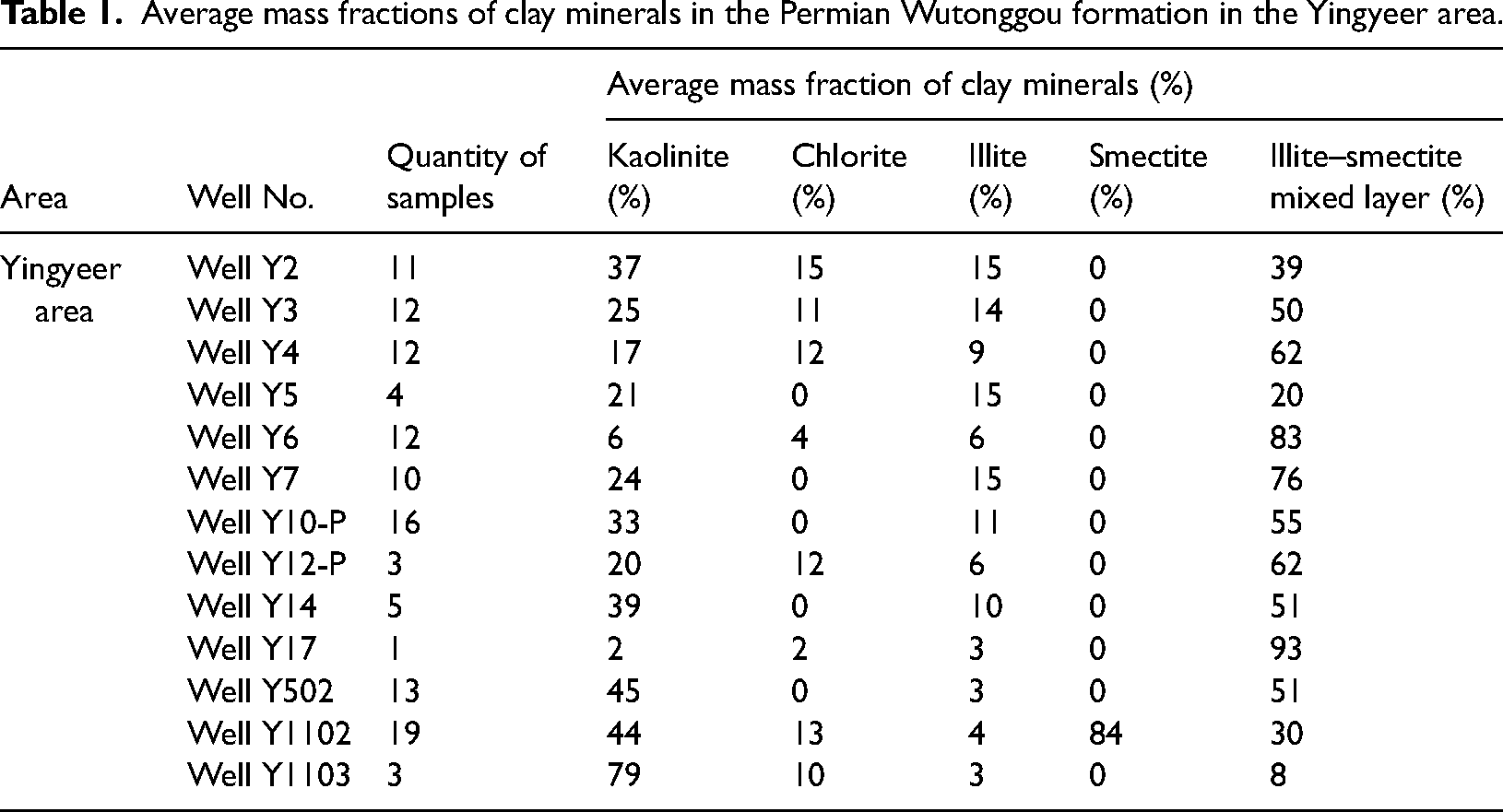
As shown by results from the x-ray diffraction analysis of clay minerals in the Permian Wutonggou formation in the Yingyeer area, the authigenic clay minerals in the reservoirs of this formation are rich in kaolinites, chlorites, and illites and bear a few smectites, which only occur at Well Y1102. The kaolinites, chlorites, and illites have mass fractions of 30.2%, 6.1%, and 8.8%, respectively. The illite–smectite mixed layers have the highest mass fraction, which is 52.3% on average (Table 1). As shown by the SEM observations, kaolinites fill pores in the form of worms, and some of them are dissolved (Figure 11(a) and (b)). The illite–smectite mixed layers fill pores in the form of clay bridges, and some of them are distributed on the grain surface (Figure 11(c) and (d)). The illites and chlorites fill pores in a fibrous or acicular form or preserve primary pores by mitigating compaction (Pan et al., 2021).
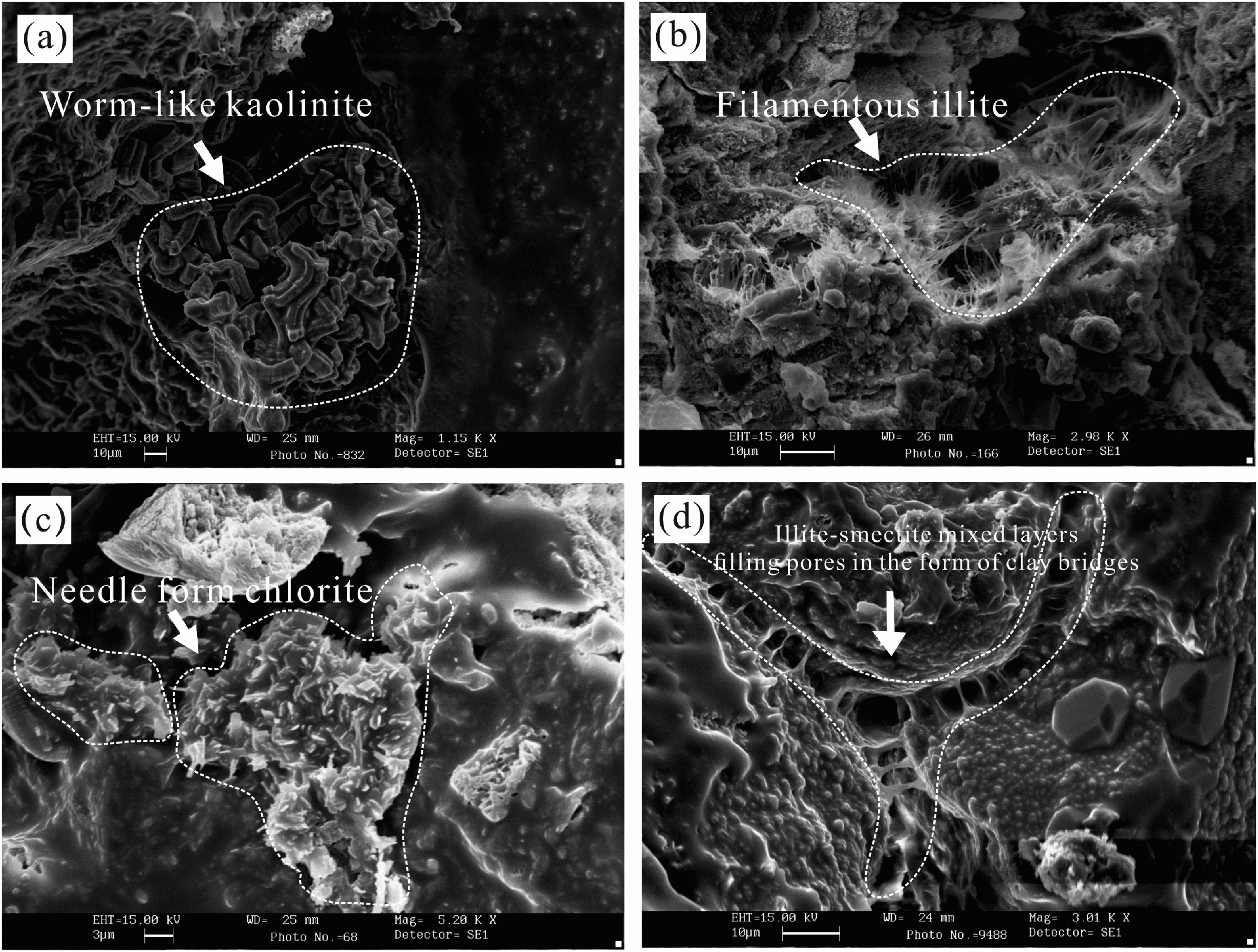
Cementation of clay minerals in the Permian Wutonggou formation in the Yingyeer area: (a) worm-like kaolinites, Well Y11, depth: 3583.3 m; (b) feldspar dissolution, filamentous illites, Well Y502, depth: 2090.58 m; (c) acicular chlorite, Well Y503, depth: 1915.66 m; (d) illite–smectite mixed layers filling pores in the form of clay bridges, Well Y10-P, depth: 2137.53 m.
Average mass fractions of clay minerals in the Permian Wutonggou formation in the Yingyeer area.
Cementation of pyrites and halite crystals
As shown by the results from the SEM data analysis, besides the abovementioned calcite cementation, secondary quartz overgrowth, and authigenic clay minerals, a very small quantity of pyrite cementation and halite crystal cementation have also been found in the reservoirs of the Permian Wutonggou formation in the Yingyeer area. As shown in SEM observations, both pyrites and halite crystals are cubic in shape (Figure 12(a) and (b)) and have a certain effect on the physical properties of reservoir pores. The reservoirs have an average pyrite content of 0.8% and up to about 5% at individual wells and a certain depth, reducing the porosity of the reservoirs to some extent.
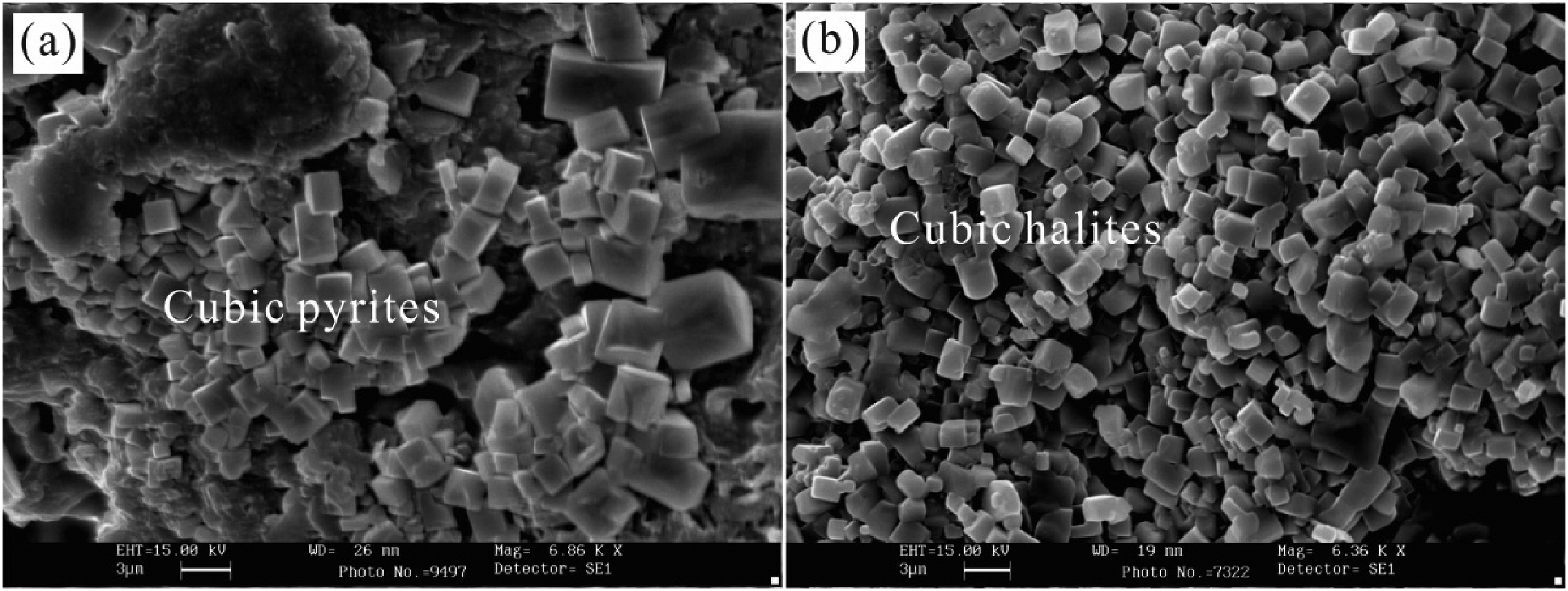
Pyrite and halite cementations in the Wutonggou formation in the Yingyeer area: (a) cubic pyrites, Well Y10-P, depth: 2139.38 m; (b) cubic halites, Well Y4, depth: 1975.27 m.
Dissolution
Dissolution is a type of constructive diagenesis (Cao et al., 2022). Dissolution occurs in quartz, feldspars, lithic fragments, matrices, and cements in the conglomeratic reservoirs in the Yingyeer area to varying degrees. As a result, the conglomerates of the Wutonggou formation in the area have an areal porosity of 2% to 6%. Dissolution is mostly common in feldspars and lithic fragments than in other lithologies in conglomeratic reservoirs. When exposed to an acidic medium, feldspars dissolve along a set of cleavage planes, forming secondary dissolution pores and mold pores inside the feldspars (Figure 13(b)). The increase in the areal porosity of the reservoirs improves the size, distribution, and geometrical morphologies of the pore throats in the reservoirs in the Yingyeer area. Some quartz and lithic fragments are dissolved by acidic solutions and are present in irregular shapes (Figure 13(a)). Owing to the dissolution, illite–smectite mixed layers and dissolution micropores are visible in clay minerals (Figure 13(c) and (d)).
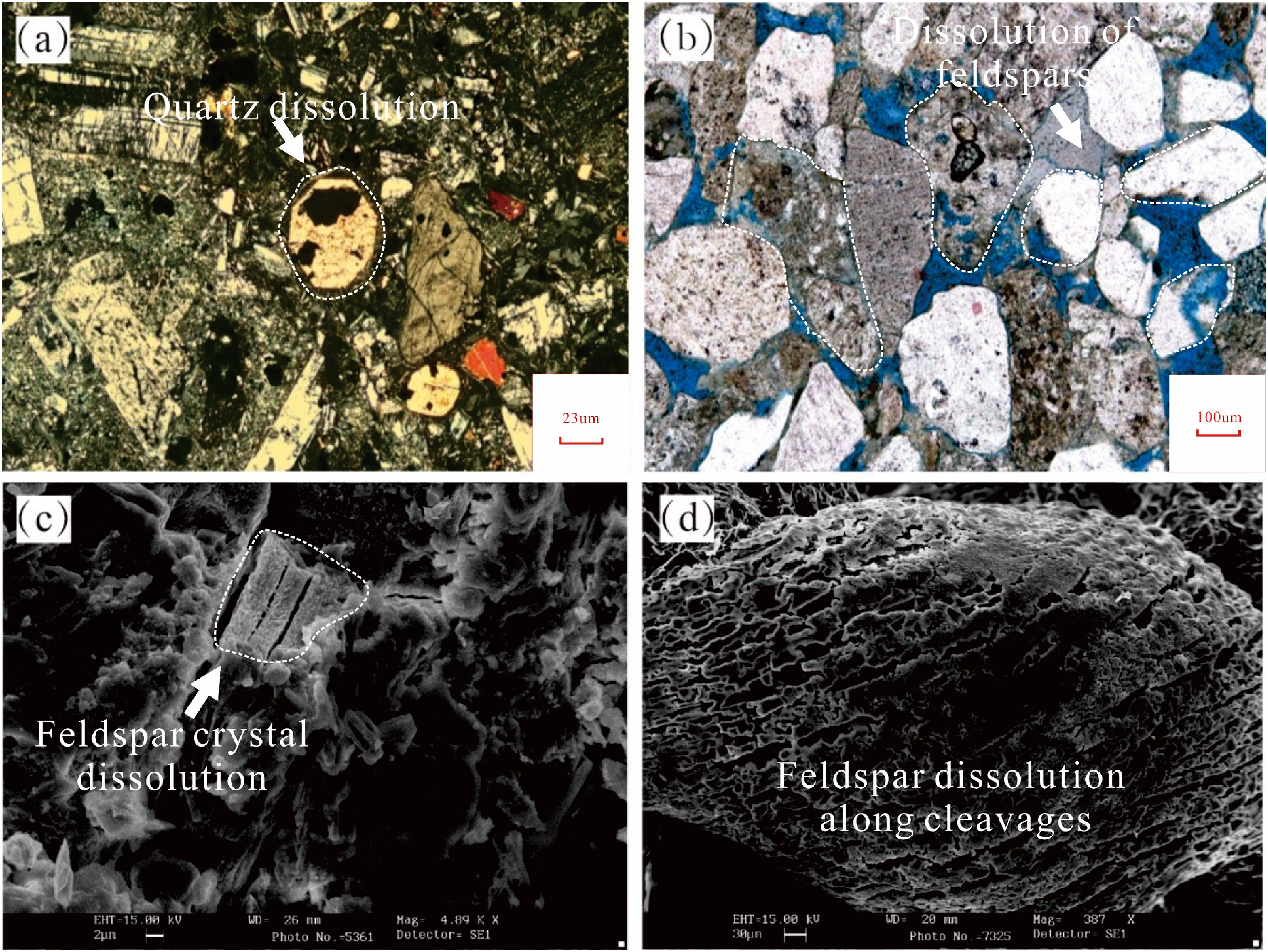
Mineral dissolution of the Permian Wutonggou formation in the Yingyeer area: (a) quartz dissolution, Well Y1, depth: 3113.74 m; (b) strong dissolution of feldspars, Well Y502, depth: 1962.63 m; (c) feldspar crystal fragments and their dissolution, Well Y13, depth: 3495.09 m; (d) feldspar dissolution along cleavages, Well Y4, depth: 2882.6 m.
Diagenetic stages and evolution
Division criteria for diagenetic stages
According to the whole rock x-ray diffraction analysis of the Wutonggou formation in the Yingyeer area, the clay minerals in the Permian conglomerates mainly include authigenic kaolinites, clay minerals in illite/smectite mixed layers, filamentous authigenic illites, foliaceous or villous authigenic chlorites, and clay minerals in chlorite/smectite mixed layers, with smectite roughly invisible. During the diagenetic process, the contents of clay minerals changed regularly due to the changes in formation temperature, formation pressure, and pore fluids, and the clay mineral composition also changed accordingly (Wang et al., 2020). With an increase in the burial depth, kaolinites gradually transition into chlorites or illites, and smectites gradually transition into illite–smectite mixed layers (Cao et al., 2020). As indicated by the statistical data of 121 samples from 13 wells in the Yingyeer area, the clay minerals of the Wutonggou formation are negatively correlated with the burial depth (Figure 14). The mixed layers become increasingly ordered. According to the division of diagenetic stages in clastic rocks based on the standards of an oil company, the reservoirs are generally in substage A of the middle diagenetic stage.
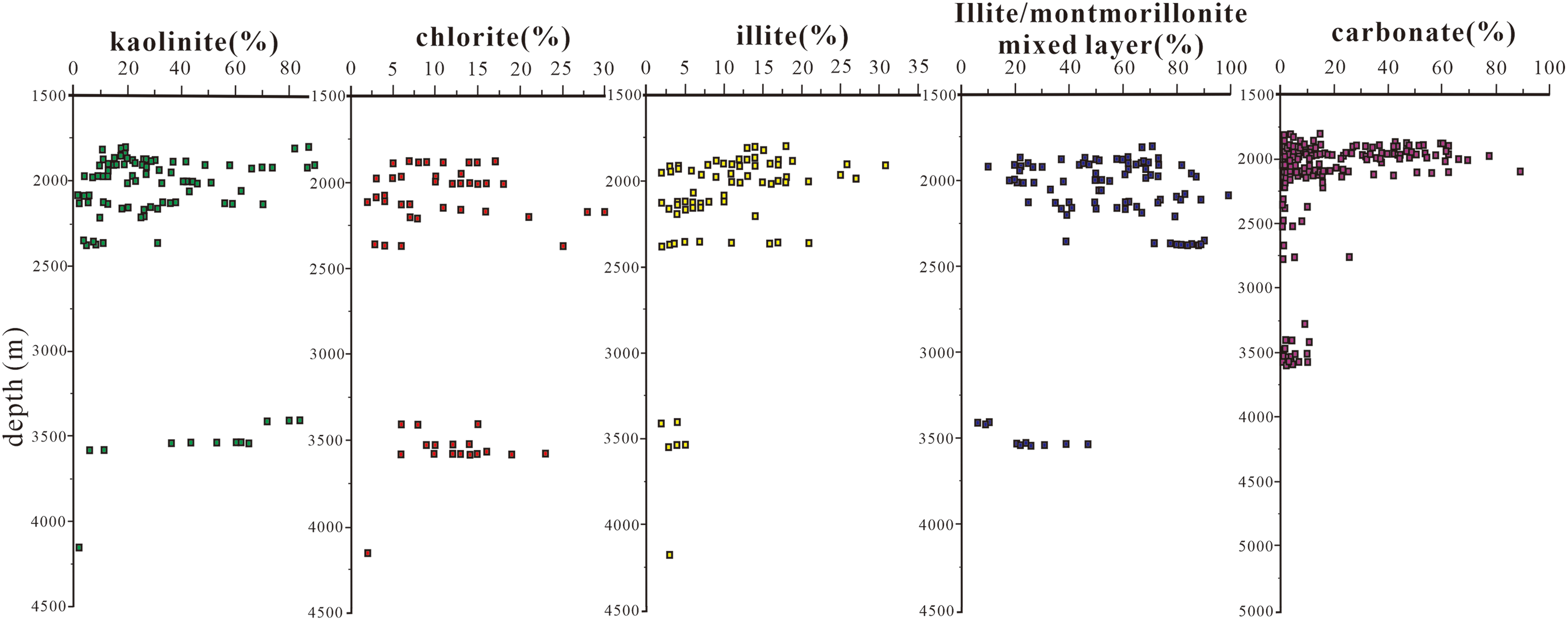
Depth-varying contents of main clay minerals and carbonates in the Permian Wutonggou formation in the Yingyeer area.
The authigenic minerals in the reservoirs of the Permian Wutonggou formation in the Yingyeer area mainly include calcites, ferrocalcites, feldspars, and mica. The calcites usually occur as micrites and undergo cementation, with dissolved feldspars remaining and secondary pores developing. The carbonate content is unevenly distributed in the reservoirs and varies in a wide range of 0.1% to 80%. Carbonates are enriched at a certain depth range. They have the highest content and are densely distributed at a depth of 2000 m, are rarely distributed at a depth range of 2000 to 3500 m, and are rare at a depth of 3500 m. This variation indicates that carbonates were only preserved and enriched at local depths during their diagenetic process (Zhu et al., 2019).
The sandstones in the Permian Wutonggou formation in the Yingyeer area have a high degree of consolidation, the contact types between clastic grains are dominated by point–line contact, and intergranular primary pores and secondary pores have developed. The organic matter maturity is low. The maximum pyrolysis peak temperature (Tmax) of each well (Figure 15(a)) shows that the maximum pyrolysis peak temperatures mostly do not exceed 430 °C. The homogenization temperatures of fluid inclusions (Figure 15(b)) show that the fluid inclusions in the Permian Wutonggou formation in the Yingyeer area have homogenization temperatures of 40 °C to 110 °C, with peak homogenization temperatures of 60 °C to 70 °C. The Permian Wutonggou formation has a Ro range of >0.5% to 1.3%, with plant fossils primarily including ferns and gymnosperms with orange and tawny sporomorphs (Wang et al., 2019). The quartz overgrowth is of grade II. As shown by SEM observations, the feldspar surface is wrapped by illites and illite–smectite mixed layers, the intergranular illites are mostly distributed in a tower bridge pattern, the intergranular sericites have curled edges, and the lumpy gypsum crystals are distributed among the grains. Moreover, hexagonal bipyramid secondary quartz is visible, and the illite–smectite mixed layers have smectite content of 15% to 50% and appear as ordered subzones.
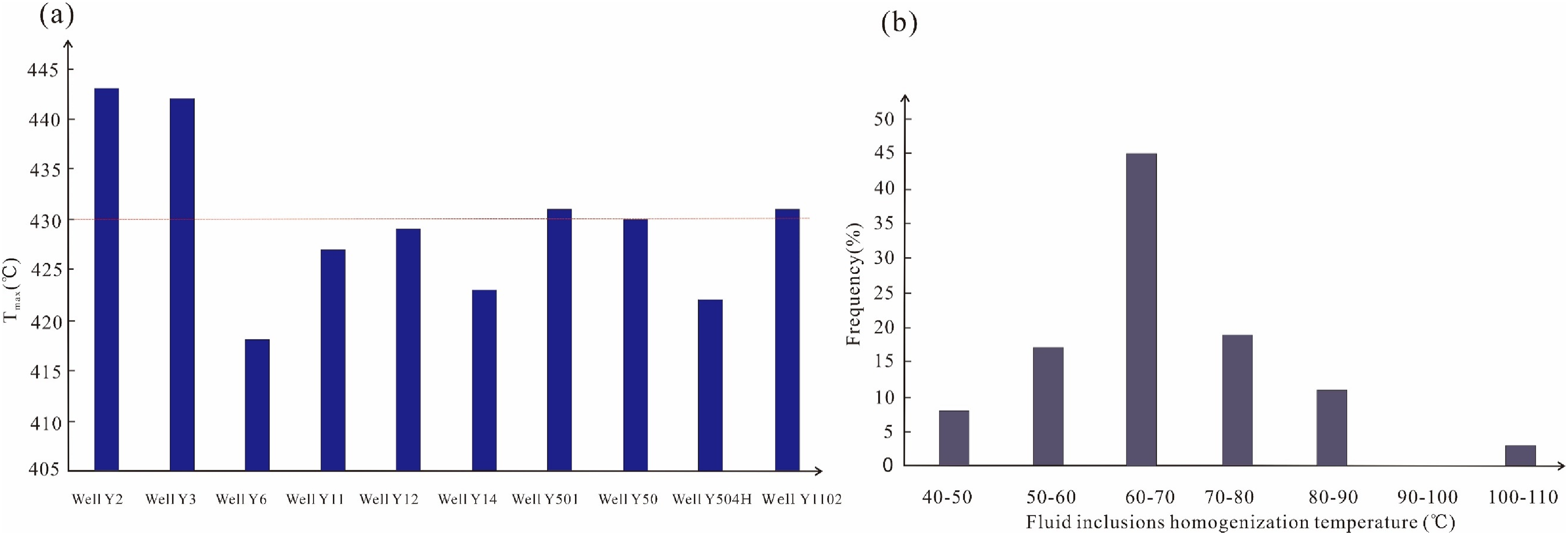
Maximum pyrolysis peak temperature (a) and homogenization temperatures of fluid inclusions (b) in the Permian Wutonggou formation in the Yingyeer area.
Based on the previous division of the diagenetic stages of the Yingyeer area, relevant criteria proposed by the China National Petroleum Corporation in 2003, and the changes in authigenic minerals, and clay mineral assemblages, as well as reservoir parameters including petrological characteristics, pore types, organic matter maturity, paleo-geotemperature, maximum pyrolysis peak temperature, and diagenesis intensity, it can be concluded that the reservoirs of the Permian Wutonggou formation in the Yingyeer area have undergone a series of diagenetic stages and are in substage A of the middle diagenetic stage now.
Diagenetic evolution analysis
After the conglomerates of the Permian Wutonggou formation in the Yingyeer area were deposited, they were compacted first under formation pressure. As a result, the primary pores were destroyed, and the volume of original intergranular pores in the reservoirs increasingly decreased. Quartz and feldspars fractured because of compression, and some of the quartz and feldspar minerals underwent pressure dissolution. Products from carbonate dissolution were attached around clastic grains, forming pseudomatrix, which were recrystallized and formed calcite cements. As the burial depth of strata decreased rapidly, the distance between grains continually decreased under compression, forming point–line contact. Clastic grains formed a wrapped shape since cements filled around them, indicating that compaction mainly occurred in a weakly alkaline environment during the early diagenesis (Shou et al., 2006). Calcite cementation resisted the compaction in the early diagenetic stage and thus preserved partial pores of the conglomeratic reservoirs.
The organic acidic substances produced from thermal evolution and microorganisms entered the conglomeratic reservoirs along with hydrocarbon charging. Owing to the combined effect of the organic acids and the leaching of meteoric freshwater, the diagenetic environment of the reservoirs gradually transitioned to an acidic environment (Zeng et al., 2002), where feldspars gradually underwent intergranular dissolution and partial intragranular dissolution, forming mold pores. Moreover, parts of lithic fragments also dissolved, making secondary dissolution pores better developed. With an increase in the burial depth, the proportion of primary pores gradually decreased, while the proportions of secondary intergranular pores and intragranular dissolution pores and the density of microfractures increased. Meanwhile, the dissolution of feldspars and debris provided materials for quartz secondary overgrowth, forming quartz growth edges. As the thermal evolution degree continuously increased, the Yingyeer area is increasingly conducive to reservoir development due to diagenesis. Hydrocarbon migration caused abnormally high pressure in the reservoirs, which constantly drove the water and other fluids in the intergranular pores and broke the water films attached to the surfaces of clastic grains. Moreover, sufficient abnormal pressure broke the grains of surrounding feldspars and lithic fragments, thus improving the porosity and permeability of the reservoirs (Wang et al., 2019). The hydrocarbon charging and accumulation and the influence of acid fluids caused the partial dissolution of calcite cements, and the presence of dissolution pores in feldspars increased the area of pores and throats, thus improving the physical properties of the reservoirs (Wang et al., 2022).
Alkali metal elements, such as calcium, magnesium, and ferrous iron, produced by the dissolution of clastic grains transformed the diagenetic environment into a weakly alkaline environment. Clay minerals gradually transitioned with a gradual increase in the diagenesis intensity. Specifically, the kaolinite content gradually decreased, while the illite content gradually increased in the conglomerates of the Permian Wutonggou formation in the Yingyeer area. This complementary relationship indicates that kaolinites were formed before illites and that the bundle-like kaolinites gradually transitioned into filiform and acicular illites. The transformation among clay minerals indicates that the diagenetic environment transitioned from the original acidic environment to an alkaline environment (Kang et al., 2021). In the weakly alkaline environment, authigenic illites began to develop, and the dissolution products of quartz and feldspars were gradually cemented by calcites. The cements wrapped clastic grains in the form of rings, reducing the hydrocarbon charging space. In addition, some calcites dissolved and became spherical and granular in shape. Consequently, the reservoirs entered the diagenetic consolidation stage.
As indicated by the analytical results of the burial and tectonic evolution histories of the area, the reservoirs of the Permian Wutonggou formation in the Yingyeer area underwent complex tectonic movements including subsidence, uplift, and denudation (Li et al., 2000; Zhao et al., 2001), and the conglomerates experienced a complex diagenetic evolution process accordingly (Figure 16). Moreover, the diagenetic environment of the conglomerates of the Permian Wutonggou formation mainly transitioned from a weakly alkaline environment to an acidic environment and then an alkaline environment, and the main diagenetic sequence includes the early mechanical compaction, calcite precipitation, the injection of organic fluids, the dissolution of feldspars and lithic grains, secondary quartz overgrowth, the transformation of clay minerals, and calcite cementation successively.
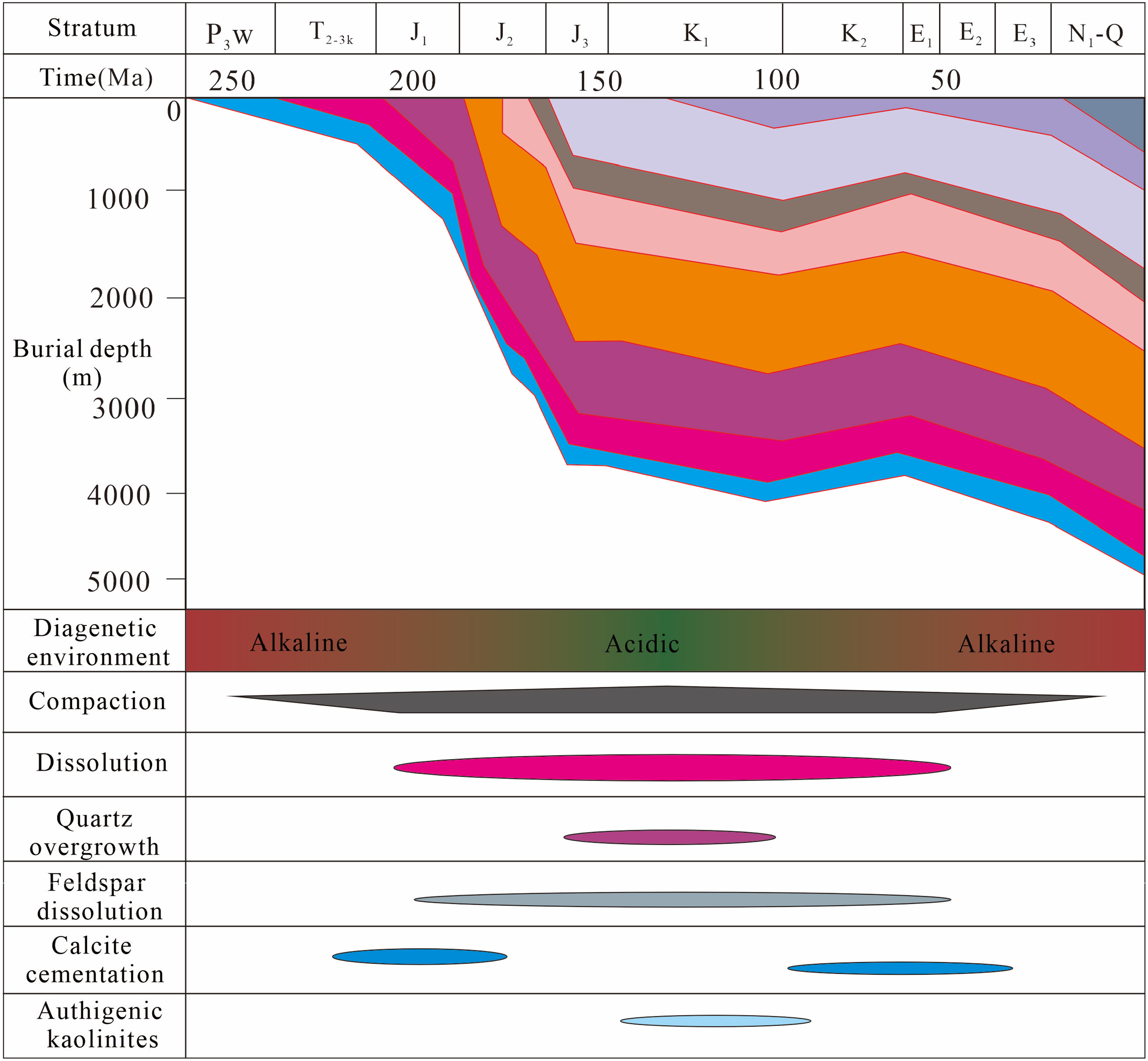
Diagenetic evolution of the Permian Wutonggou formation in the Yingyeer area.
Discussion
Quantitative calculation of porosity evolution
Calculation of original porosity
The original porosity is closely related to grain sorting. Researchers at home and abroad have proposed different calculation models of original porosity, among which the most widely used model presently was established based on statistical data by Beard and Scherer (Beard et al., 1973; Scherer et al.,1987). In this model, the relational expression for the measured porosity of unconsolidated sandstones under different sorting conditions is as follows:

Calculation of COPL
The Permian Wutonggou formation in the Yingyeer area is subjected to strong compaction. To effectively characterize the compaction intensity acting on reservoirs, previous researchers established the corresponding calculation equations to quantitatively analyze the compaction (Pang et al., 2020; Xu et al., 2020) and established the relationship between the compaction and the residual original porosity (Φ1):


Using the equations mentioned above, this study calculated the degree of compaction that the conglomeratic reservoirs in the Wutonggou formation suffered after being buried. The results show that the conglomerates in the Wutonggou formation in the Yingyeer area have a residual original porosity (Φ1) of 13.2% to 25.0% (average: 18.2%), an average COPL (Φ2) of 14.3%, and an average percentage of COPL (Φ3) of 44.6%. Therefore, the reservoirs were subjected to strong compaction. Moreover, the compaction formed fractures in the conglomeratic reservoirs, increasing the porosity and permeability to some extent. Therefore, strong compaction is the main reason for the tightness of the conglomeratic reservoirs.
Calculation of CEPL
Compaction is accompanied by cementation. The degree of CEPL can be characterized based on the CEPL (Φ4) and the percentage of CEPL (Φ5), which can be calculated using the following equations:

The calculation results of the CEPL of the conglomeratic reservoirs in the Wutonggou formation in the Yingyeer area are as follows. These reservoirs had an average CEPL of 2.6% and an average percentage of CEPL of 6.3% in the early diagenetic stage. Calcite cementation occurred in the late diagnosis, during which the conglomeratic reservoirs had an average CEPL of 2.4% and an average percentage of CEPL of 5.1%. The study area experienced many types of cementations. As a result, carbonates, siliceous materials, and clay minerals occupy the reservoir space and block pore throats, further deteriorating the physical properties of the reservoirs. Therefore, cementation played an important role in transforming sediments into sedimentary rocks. Cementation occurs in the Permian Wutonggou formation in the study area and is also one of the main reasons for the decrease in the porosity and permeability of rocks in the reservoirs.
Calculation of DIIP
The dissolved materials in the Wutonggou formation in this study area mainly include clastic grains, lithic fragments, and some carbonate cements. Specifically, the grains are honeycomb or irregular in shape due to their internal leaching and dissolution along the cleavage plane. The dissolution of the Wutonggou formation primarily includes the dissolution of feldspars in the clastic reservoirs by acidic fluids, such as meteoric water, organic acids, and CO2. The dissolution intensity in the study area was characterized using the DIIP (Φ6) and the percentage of DIIP (Φ6):

The calculation results (Table 2) show that the conglomeratic reservoirs of the Permian Wutonggou formation in the Yingyeer area suffered dissolution to a certain extent and had an average DIIP of 3.7% and an average percentage of DIIP of 10.9%.
Statistics of the quantitative calculation results of the porosity evolution of conglomerates in the Permian Wutonggou formation in the Yingyeer area.
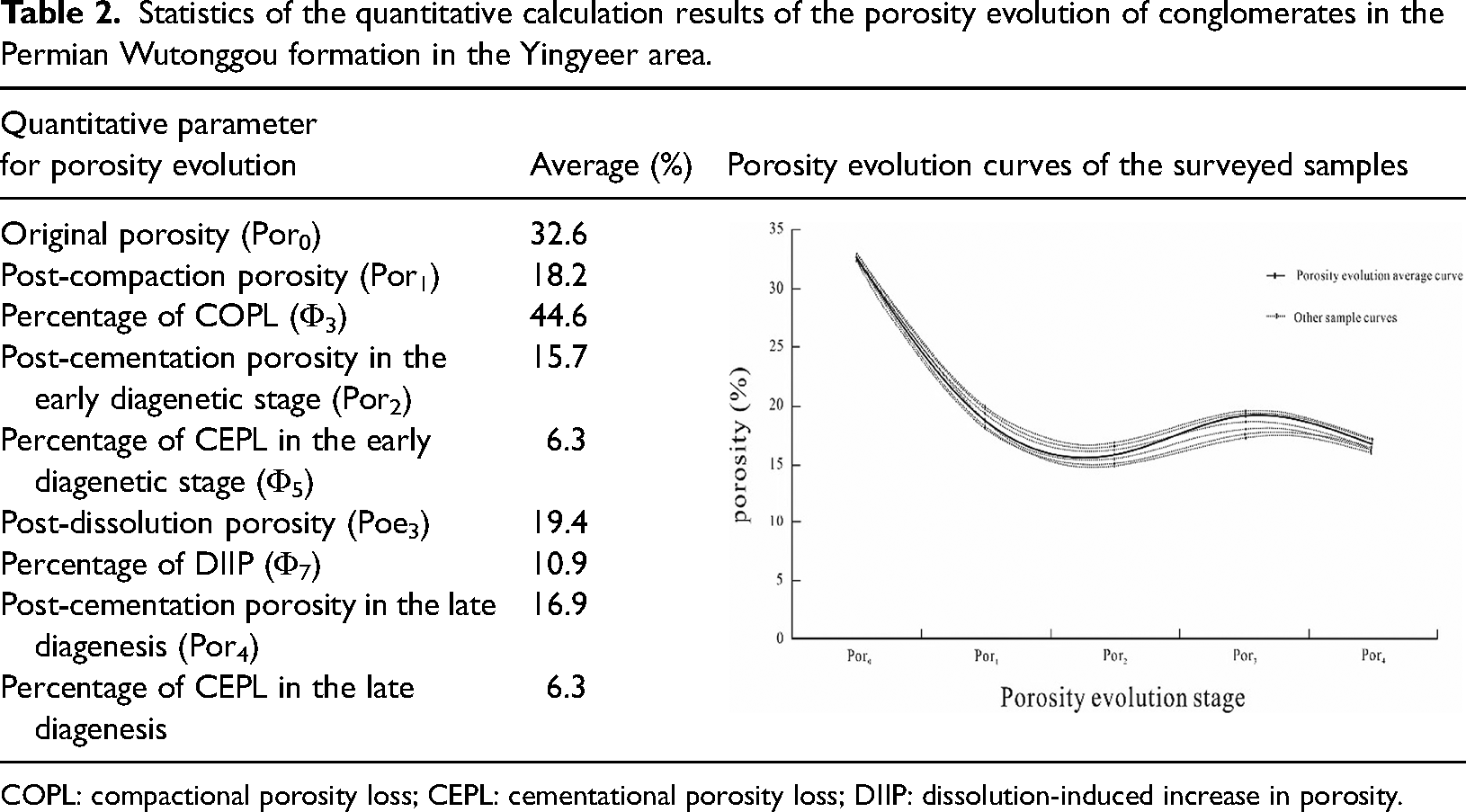
COPL: compactional porosity loss; CEPL: cementational porosity loss; DIIP: dissolution-induced increase in porosity.
Effects of diagenesis on hydrocarbon charging
During the late Hercynian movement in the early Permian, the Yingyeer area began to be gradually uplifted and formed a huge anticlinal tectonic zone and was subjected to a certain thickness of denudation (Hui et al., 1999). During the early Triassic, under the influence of the Indosinian movement, the Yingyeer area experienced large-scale uplift, which largely determined the distribution of source rocks (Xiao et al., 2014). During this period, strata in this area were in their early burial stage overall, and the conglomerates in the Wutonggou formation had a maximum burial depth of <2000 m. During the early Triassic, the Wutonggou formation had a weakly alkaline diagenetic environment, and the diagenesis was dominated by compaction and pressure dissolution, while cementation was weak. Accordingly, calcites began to be formed in the original intergranular pores, and clay minerals were gradually formed. In this period, the Taodonggou Group was in the stage of large-scale hydrocarbon expulsion, and the generated hydrocarbons migrated to the reservoirs in the Wutonggou formation along with deep-seated faults (Li et al., 2015; Zhao et al., 1998).
From the Mesozoic Jurassic to the Mesozoic Cretaceous, the mechanical compaction intensity of the Yingyeer area continued to increase under the influence of the Yanshanian movement. The diagenetic environment of this area transitioned to acidic conditions with the eluviation and infiltration of meteoric freshwater, the formation of organic acids, and the production of carbon dioxide as a result of calcite dissolution. Owing to the strong dissolution during this period, some feldspar and lithic grains dissolved, and their porosity increased, creating favorable conditions for hydrocarbon charging (Zhu et al., 2013). Meanwhile, clay minerals transitioned mutually with the secondary overgrowth of quartz. With an increase in the burial depth, the overburden pressure of the reservoirs increased, the clastic grains ruptured because of pressure dissolution, and the reservoirs cracked. As a result, a large number of hydrocarbons recharged the reservoirs along with faults and were preserved in a large set of conglomerates in the Yingyeer area.
As indicated by the study results of Chi (2016), the fluid inclusions in the Permian Wutonggou formation in the Yingyeer area have a homogenization temperature range of 40 °C to 90 °C dominated by 60 °C to 70 °C, with homogenization temperatures >100 °C occasionally occurring. Data on the fluorescence characteristics show that the fluid inclusions in the Yingyeer area have dark brown or even black fluorescence colors and that the crude oil in the fluid inclusions is viscous crude oil. The hydrocarbon charging in the Yingyeer area occurred at approximately 145 Ma during the late Middle Jurassic (Chi, 2016). At this stage, the reservoirs featured high abnormal pressure, inhibited compaction, high porosity and permeability, strong dissolution, and significant transformation among clay minerals. Moreover, the reservoirs were loose and porous, the feldspar and clastic grains in the reservoirs dissolved, and fractures were well developed. Providing an ideal space for the first-phase hydrocarbon charging. At approximately 20 Ma, the organic matter in the Yingyeer area entered the mature stage, and the reservoirs were subjected to strong dissolution. Consequently, hydrocarbons began to be generated, and the second phase hydrocarbon charging occurred. The hydrocarbons formed in the second phase mixed with the previously charged viscous crude oil, forming reservoirs with a mixed source (Liu et al., 2010).
Conclusions
Based on the analytical and test results, this study investigated the diagenesis and evolution of conglomeratic reservoirs in the Wutonggou formation of the Yingyeer area and discussed the influence factors, such as compaction, cementation, dissolution, diagenetic stages, and evolution mechanisms. The main conclusions are as follows:
The reservoirs of the Permian Wutonggou formation in the Yingyeer area consist mainly of terrigenous clastics and have low contents of interstitial materials and cements. The reservoirs are characterized by porous cementation, grain support, and point–line contact. Moreover, the reservoirs have the highest conglomerate content, poor sorting, strong heterogeneity, low clastic grain maturity, and low structural maturity, suggesting proximal provenances. The reservoirs of the Permian Wutonggou formation in the Yingyeer area underwent four types of diagenesis during their diagenetic process: mechanical compaction occurred throughout the entire diagenetic evolution and is the main cause of the decrease in the reservoir porosity; cementation significantly destroyed reservoir pores; and the dissolution of feldspars and lithic fragments significantly improved reservoir properties. The Permian Wutonggou formation in the Yingyeer area is now in substage A of the middle diagenetic stage. The complex diagenetic sequence of this formation consists of early mechanical compaction, calcite precipitation, the injection of organic fluids, the dissolution of the feldspar and lithic grains, secondary quartz overgrowth, the transformation of clay minerals, and calcite cementation successively. Hydrocarbon charging improves the physical properties of the reservoirs of the Permian Wutonggou formation in the Yingyeer area to a certain extent. Two phases of hydrocarbon charging occurred during the diagenetic evolution of the reservoirs. The first-phase hydrocarbon charging occurred during the late Middle Jurassic. It inhibited compaction and cementation and transformed the reservoir pores through dissolution. The second-phase hydrocarbon charging occurred at approximately 20 Ma when reservoirs were subjected to strong dissolution.
Footnotes
Acknowledgements
The authors would like to extend their gratitude to the reviewers for their careful reviews and detailed comments.
Declaration of conflicting interests
The author(s) declared no potential conflicts of interest with respect to the research, authorship, and/or publication of this article.
Funding
The author(s) disclosed receipt of the following financial support for the research, authorship, and/or publication of this article: This work was supported by the National Natural Science Foundation of China (No. 42164007).
