




Abstract
Sodium in the coals of West China has received persistent attention due to its high contents and severe pollutions’ problems during coal utilization. A total of seven drill samples of the Jurassic coals from Tatuo coalfield, Qinghai Province, were collected and analysed using optical microscopy, scanning electron microscopy in conjunction with energy-dispersive X-ray spectrometry, X-ray powder diffraction, inductively coupled plasma mass spectrometry and X-ray fluorescence spectrometry. The results indicate that the Tatuo coal is of lower-high ash, medium volatile matter and ultra-low sulphur bituminous coal. Tatuo coal contains much more Na2O (> 2%), and belongs to high-sodium coal. The maceral index and element ratios of Sr/Cu, Fe/Mn and Sr/Ba showed that Tatuo coal was formed in a terrestrial peat swamp environment. The minerals in Tatuo coal, including clay minerals and halite, quartz, gypsum and rutile, are mainly concentrated in the bottom and top parts of the coal seam. Combined with scanning electron microscopy in conjunction with energy-dispersive X-ray spectrometry and optical microscope characteristics, the sodium could be carried into the peat/coal after the peat formation by basin fluids. The East Kunlun orogenic belt may be the main source of these minerals.
Keywords
Introduction
Although the proportion of coal in total energy consumption is declining at present, renewable energy is still difficult to replace traditional fossil energy in a short period. Chinese energy supply relies heavily on coal, and clean coal production is a top priority (Luo et al., 2022). Qinghai coal is a promising energy resource with a huge reserve of over 34 billion tons in China. In Qinghai Province, 74.5% of the coal reserves are from the Jurassic period (Xu et al., 2011). The typical features of Jurassic coal are characterized by high quality, especially a low content of sulphur and ash, a high calorific value. However, some Jurassic coal is also characterized by an extremely high content of sodium. The Na2O contents are much higher than 2% in coal, which is belonged to high-sodium coal (Xu et al., 2019). Sodium will cause serious problems in reactors because of its stronger solubility and volatility when burned (Bryers, 1996; Li et al., 2015; Yang et al., 2014). Additionally, it can also promote light aromatic hydrocarbons during coal pyrolysis (Yan et al., 2016).
The previous study of high-sodium coal is mainly focused on clean and efficient utilization (Li et al., 2018; Ma et al., 2021; Song et al., 2017), evolutionary behaviours during pyrolysis and gasification process (Li et al., 2023) and its existence forms (Li et al., 2015; Singh et al., 2015). There is rarely a report about the source of Na in coal. Tatuo Mine drill cores of the Yangqu Formation of the Middle-Lower Jurassic were studied in order to clarify the source of Na in high-sodium coal. Here, we present the mineral and geochemical data of coal and partings, to (a) determine abnormal enrichment minerals of high-sodium coal, and (b) investigate the peat-forming paleoenvironment and the source of sodium.
Geological setting
The Tatuo mine is located in the middle of Qinghai Province, at the south end of Qaidam Basin and the eastern of the Easter Kunlun Mountains in Dulan County. Geologically, the Tatuo area is a syncline, surrounded by faults (Dong et al., 2020). Tectonically, it is situated in the east of the Eastern Kunlun Mountains at the junction of the Eastern Kunlun Orogenic Belt with the Western Qingling which is also the junction of the Qaidam Plate with the South China Plate (Zhang et al., 2004).
The coal-bearing strata in the study area are predominantly Yangqu Formation of the middle and lower Jurassic, with five coal seams M1, M2, M3, M4 and M5 from bottom to top. The thickness of coal seams is about 1.16–9.46 m. The Yangqu Formation is mainly composed of mudstones, fine sandstones, siltstones, black mudstones and carbonaceous mudstones (Figure 1). A carbonaceous mudstone layer contains coal seams and coal lines, and the coal lines contain fragments of plant fossils. The middle part of the formation is grey-black carbonaceous argillaceous siltstone, mudstone, siltstone and carbonaceous mudstone layers, sandwiched with a layer of off-white loose gravel-bearing fine-grained sandstone and siltstone. M4 is a relatively stable minable coal seam; M3 is locally minable; M5, M2 and M1 are non-minable seams, distributed in the middle area of siltstone. The floor consists of carbonaceous mudstone and siltstone, while the roof consists of fine-grained sandstone and siltstone. The upper part of the formation consists of grey-grey-black mudstone and argillaceous siltstone, with carbonaceous mudstone in some places.
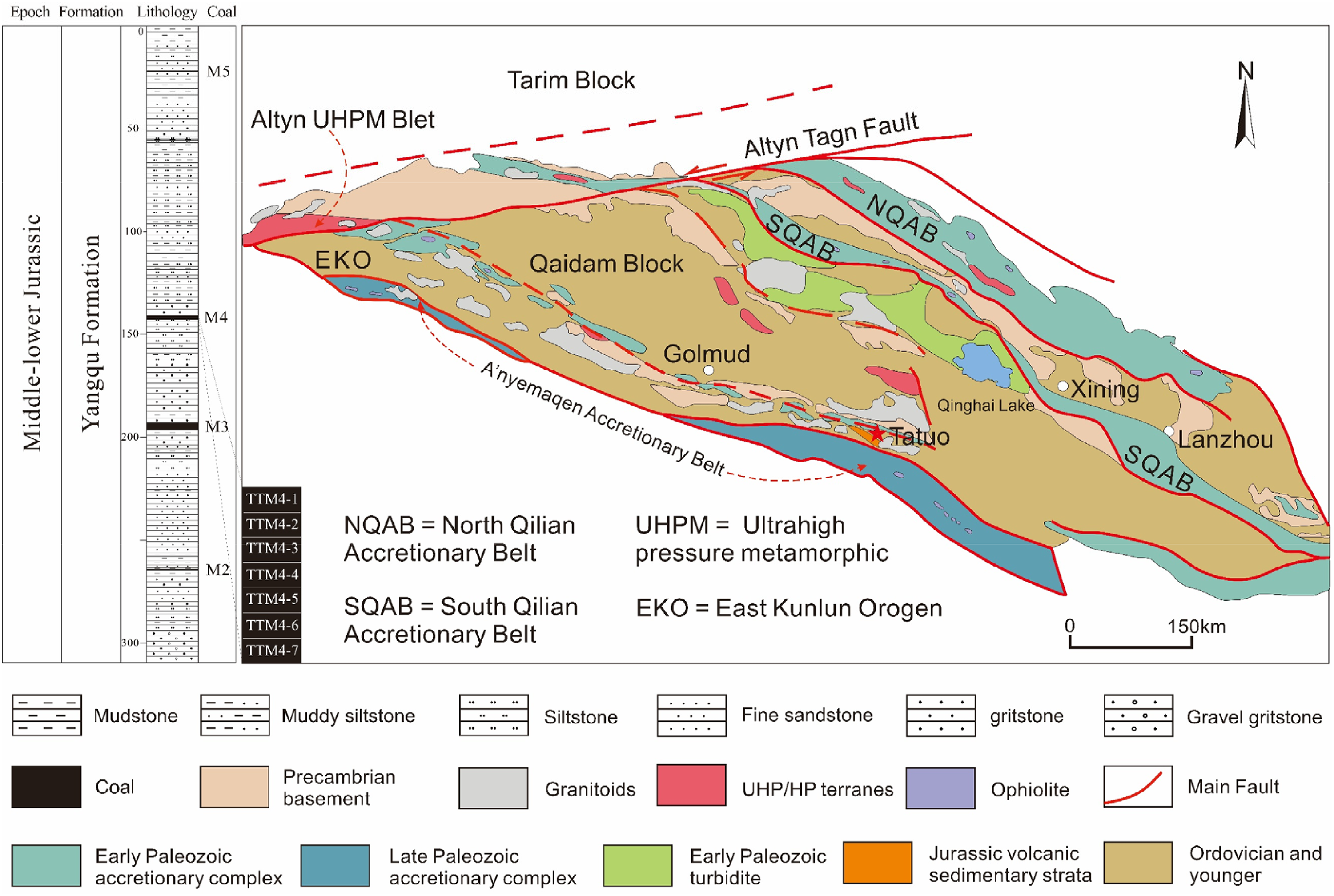
The regional geological map (modified from Dong et al., 2020) and histogram of samples.
Materials and methods
Sample collection
A total of seven drill samples named as TTM4-1 to TTM4-7 were collected from top to bottom from the No. 4 coal seam in Tatuo Mining Area (Figure 1), in which TTM4-2 and TTM4-3 are partings. All samples are immediately wrapped in aluminium foil and stored in bags to prevent pollution and oxidation.
Proximate analysis
Proximate analysis was conducted following GB/T212-2008 standard, and total sulphur was determined following GBT214-2007.
Coal petrologic analysis
The samples were dried, crushed to < 2mm, and made into particles combined with epoxy resin. A Leica DM2500P reflected light microscope and a QDI302TM spectrophotometer were used in the Hebei Key Laboratory of Resource Exploration and Research to study coal petrography macerals.
X-ray fluorescence and inductively coupled plasma mass spectrometry analysis
The major elements in coal were determined by X-ray fluorescence spectrometry (XRF) (Cu-Kα source). The trace elements in the coal samples were determined by inductively coupled plasma mass spectrometry (ICP-MS), model HR-ICP-MS (Element I, Finnigan mat).
X-ray diffraction and scanning electron microscopy in conjunction with energy-dispersive X-ray spectrometry analysis
The coal samples were subjected to low-temperature ashing (LTA) treatment on an EMITECH K1050 X plasma ashing instrument at 200 °C below. X-ray diffraction (XRD) using a D/max-2500/PC powder diffractometer was used to analyse the low-temperature ash. To examine the morphological of minerals in coal using a scanning electron microscope equipped with an energy-dispersive X-ray spectrometer (SEM-EDS) (resolution: 6 nm; magnification: 20–300,000, equipped with quest level II energy spectrum automatic analysis system).
Results
Coal chemistry and vitrinite reflectance
The basic coal chemistry data are listed in Table 1. The moisture content of Qinghai Tatuo coal varies greatly, ranging from 2.01% to 16.09%, with an average of 11.24%. The ash content is between 16.80% and 37.80%, with an average of 22.88%, according to the ash classification of GB/T15224.1-2018, it belongs to lower-high ash coal. In terms of volatile content, it ranges from 21.60% to 28.68%, with an average value of 26.86%, according to MT/T849-2000, it belongs to medium volatile coal. The total sulphur content ranges from 0.35% to 0.41%, with an average of 0.38%, according to the sulphur classification in GB/T15224.2-2021, it belongs to ultra-low sulphur coal. Consequently, Tatuo coal has high ash content, medium volatile matter, and ultra-low sulphur content. The vitrinite reflectance of coal in this study area is between 0.76% and 0.90%, with an average of 0.84%, indicating low bituminous coal.
Proximately analyses, sulphur content and random vitrinite reflectance of the Tatuo coals.
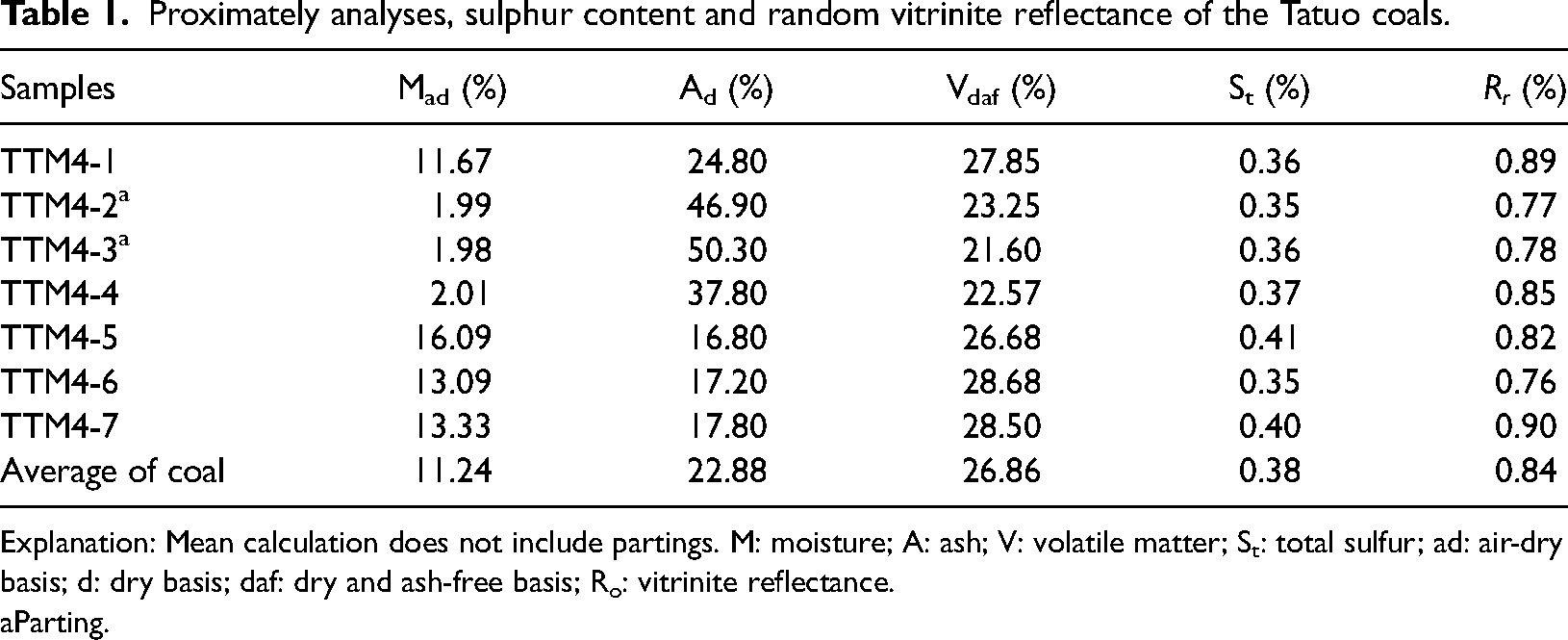
Explanation: Mean calculation does not include partings. M: moisture; A: ash; V: volatile matter; St: total sulfur; ad: air-dry basis; d: dry basis; daf: dry and ash-free basis; Ro: vitrinite reflectance.
Parting.
Coal petrology characteristics
Maceral characteristics
The maceral compositions of the Tatuo coals typically have 64.7% (on average) vitrinite and 30.8% (on average) inertinite (on a mineral-free basis). The vitrinite in the coals is mainly composed of collodetrinite and collotelinite. The inertinite is dominated by semifusinite, fusinite and inertodetrinite. Liptinite is mainly composed of sporinite and cultinite. Additionally, the fracture is much developed in coals. They are basically distributed in vitrinite (Figure 2A to E). The fractures are basically perpendicular to the bedding plane and rarely pass through the macerals. But there is an exception (Figure 2A). The hydrostatic fractures in vitrinite decrease or disappear when encountering inertinite (Figure 2D), indicating that the formation of the coal seam is affected by the pressure of the overlying and underlying strata. Relaxed fractures are curved and uneven, indicating that coal is subject to varying degrees of tectonic stress in the later stage of coal formation.
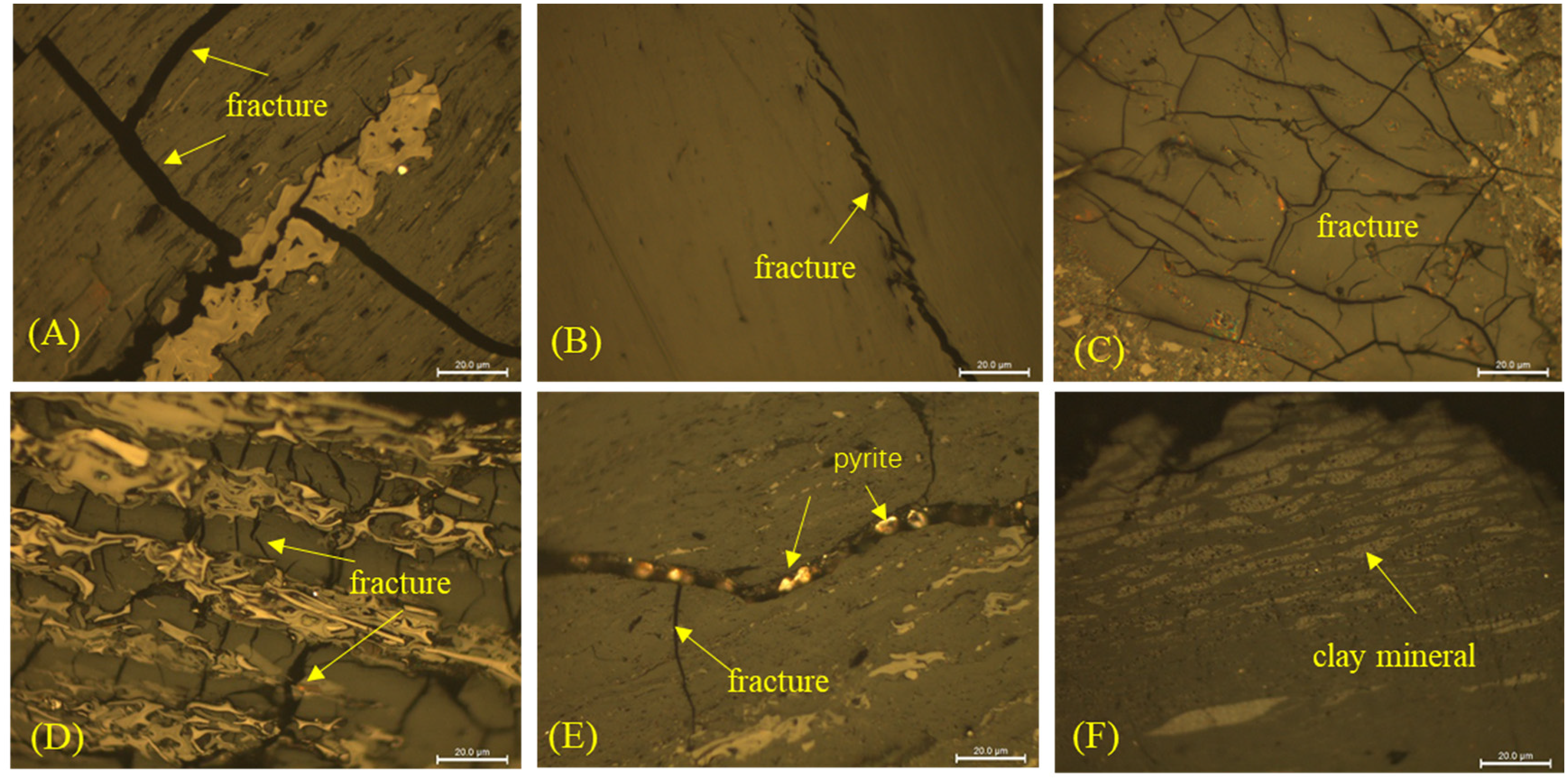
Fracture and minerals in Tatuo coals under an optical microscope (reflected light). (A) fracture in desmocollinite, (B) feather fracture in telocollinite, (C–D) fracture in vitrinite, (E) fracture-filling pyrite and (F) cell-filling clay mineral.
Coal facies characteristics
Gelification index (GI), tissue preservation index (TPI), groundwater indexes (GWIs), vegetation indexes (VI) and the vitrinite–inertinite ratios (V/I) can provide information about coal-forming plants, marsh medium conditions and depositional environment during peat accumulation (Diessel, 2006; Gmur and Kwiecińska, 2002; Singh et al., 2010). Kalkreuth et al. (1991) and Flores (2002) modified the GI and TPI based on Diessel (1986) for low rank coals. Singh et al. (2016) used these indices to analysis the depositional environment, which corresponded to mire types. But the application of these indexes has been fundamentally criticized. Dai et al. (2020) summarized the debates on coal maceral indices as indicators for depositional environments.
The GI measures dampness in peat bogs and the duration of dampness, while the TPI indicates the degradation of plant tissues and the proportion of woody plants in coal-forming plants (Singh et al., 2016). Tatuo coal is characterized by a GI value between 1 and 5 (Figure 3 and Table 2), which are indicative of a continuous wet condition prevailing in the peat swamp. The TPI values of TTM4-2, TTM4-3, TTM4-4 and TTM4-5 < 1 are indicative of undergoing a stronger gelation process having herbaceous plants condition. And the samples near the top and bottom (TTM4-1, TTM4-6 and TTM4-7) with TPI values exceeding 1 indicate woody plants are dominant in the coal-forming plant community.
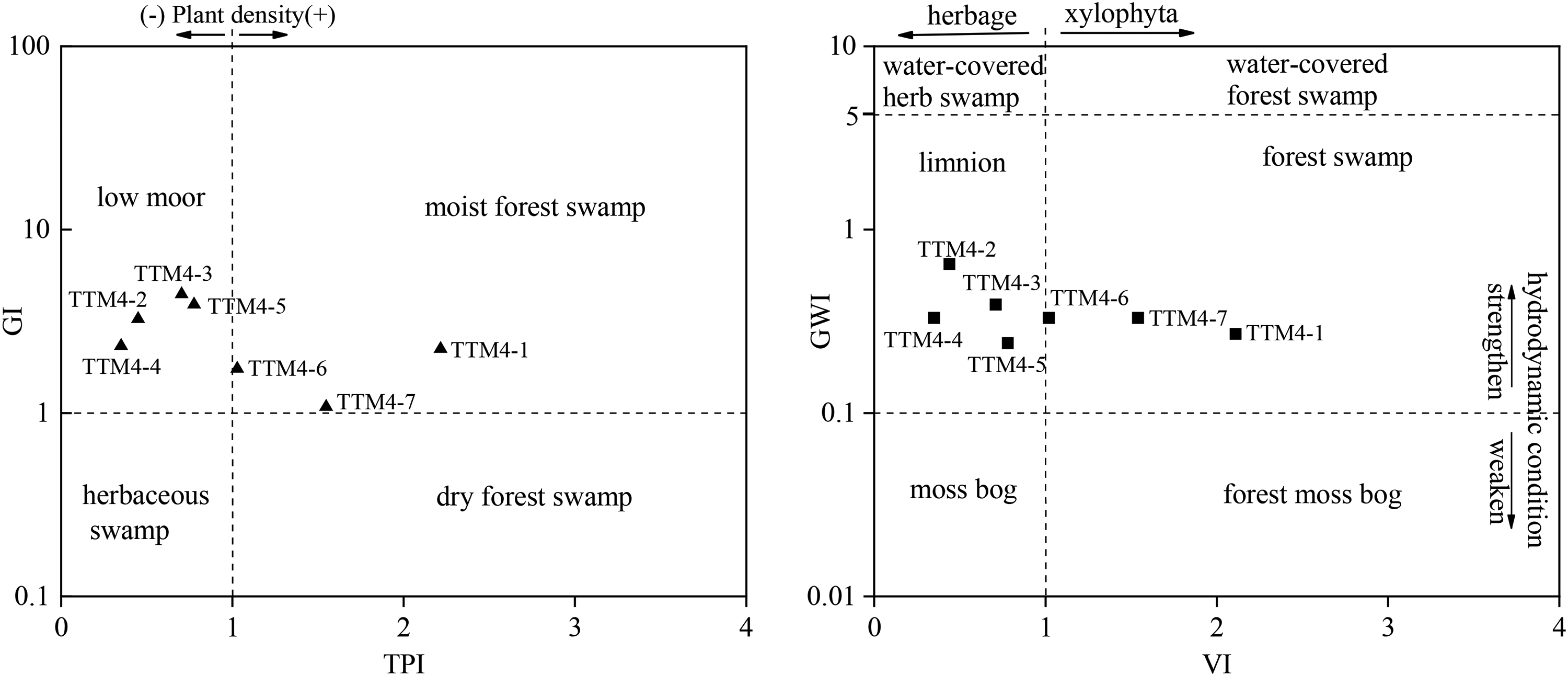
The diagram of GI-TPI and GWI-VI in Tatuo coals.
Parameters of petrological facies of the samples.
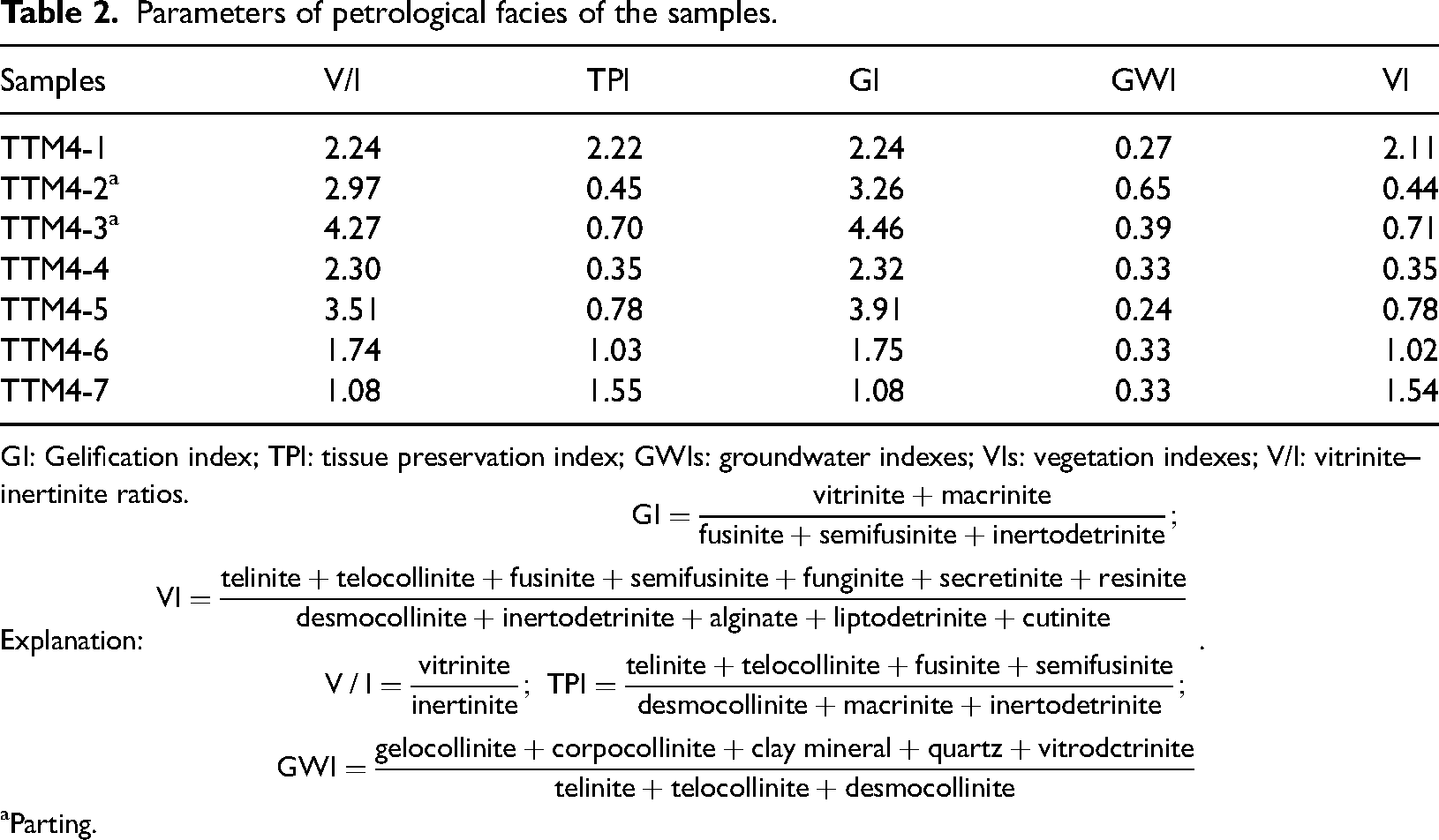
GI: Gelification index; TPI: tissue preservation index; GWIs: groundwater indexes; VIs: vegetation indexes; V/I: vitrinite–inertinite ratios.
Explanation:
Parting.
The GWI is mainly used to reflect groundwater control over peat bogs, changes in groundwater levels, and mineral content, while the VI is mainly used to reflect coal-forming vegetation and its preservation (Singh et al., 2010, 2012). The V/I index is a parameter of the degree of oxidation of the coal-forming peat (Yang et al., 2017), the redox degree of the coal-forming swamp is closely related to the overlying water condition of the swamp, so the V/I index can directly reflect the overlying water degree of coal-forming swamp and the dry-wet status of climate (Sun et al., 1998). The larger the GWI value is, the more strongly the peat bog is affected by groundwater. The Tatuo coal samples are all characterized by low GWI value (<1), which is suggestive of ombrotrophic to mesotrophic paleoenvironments hydrological conditions (Figure 3). The VI value of TTM4-2, TTM4-3, TTM4-4, TTM4-5<1 and TTM4-1, TTM4-6 and TTM4-7>1, indicating their vegetation characteristics of herbaceous and woody, respectively.
The V/I index of the samples ranges from 1.08 to 3.51, similar to TPI and VI, TTM4-1, TTM4-6 and TTM4-7 have a much lower value than any other samples, which indicates that all the samples were formed in an oxidation environment, just these three samples have a lower marsh water level.
Minerals
The main minerals identified in the coal are clay minerals and halite, with a minor amount of quartz, gypsum, sulphide and rutile. The XRD patterns of representative samples are presented in Figure 4. Clay minerals in coal are closely syngenetic with desmocollinite (Figure 2F) or filled in cell cavities (Figures 2F and 5A), indicating authigenic and terrigenous origins. The clay minerals are mainly kaolinite, appearing in flocculent (Figure 5B) or flake (Figure 5C). Kaolinite is found in the cell cavities of the coal macerals (Figure 5A), indicating clear authigenic and probably syn-depositional origin. Tatuo coal is located in the ophiolite melange belt in the middle of the East Kunlun orogenic belt; it is mainly developed with serpentinite and gabbro. The kaolinite in Tatuo coal may be derived from plagioclase in gabbro.
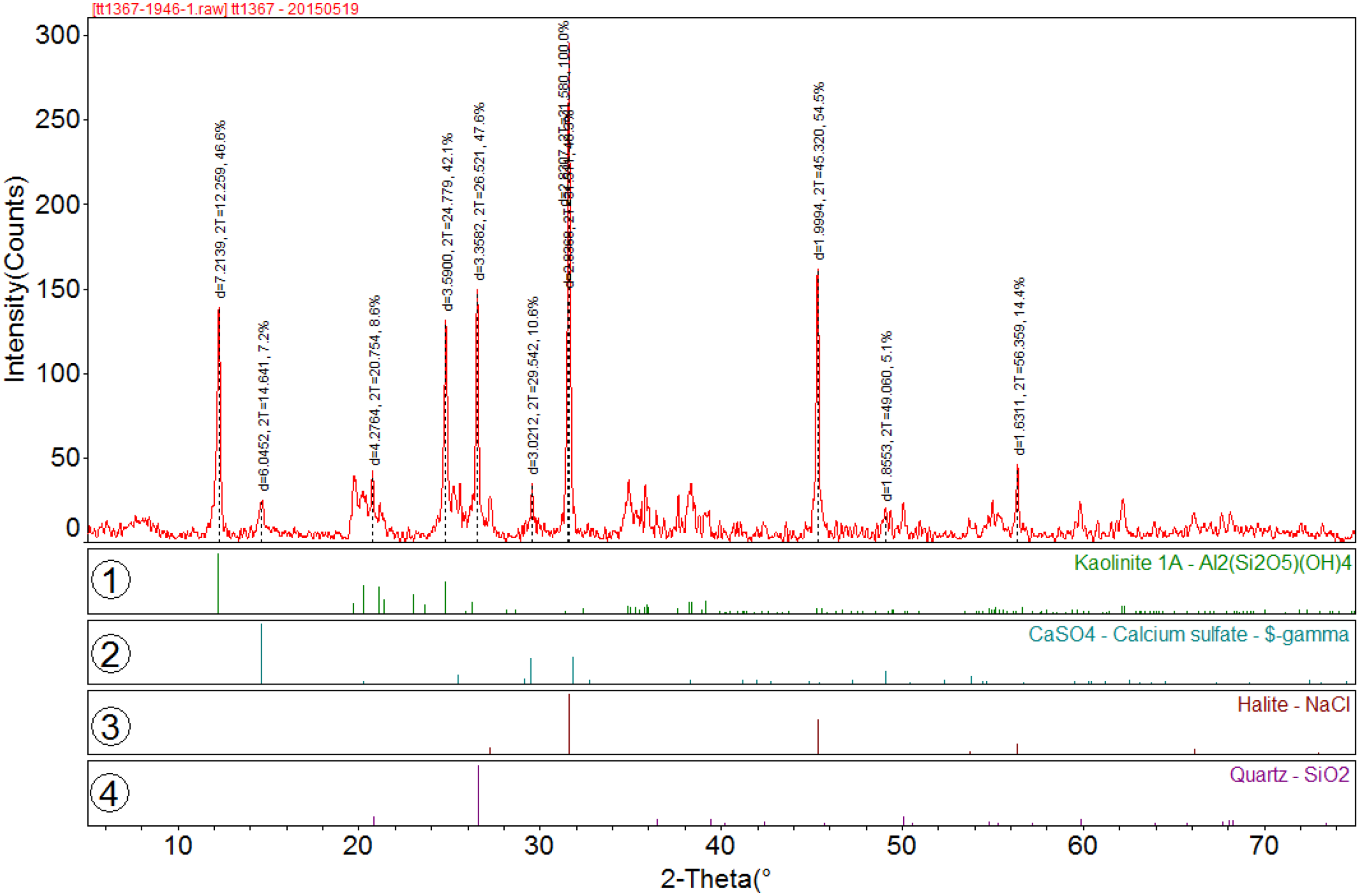
X-ray diffraction pattern of low-temperature ashing (LTA) ash of Tatuo coal.
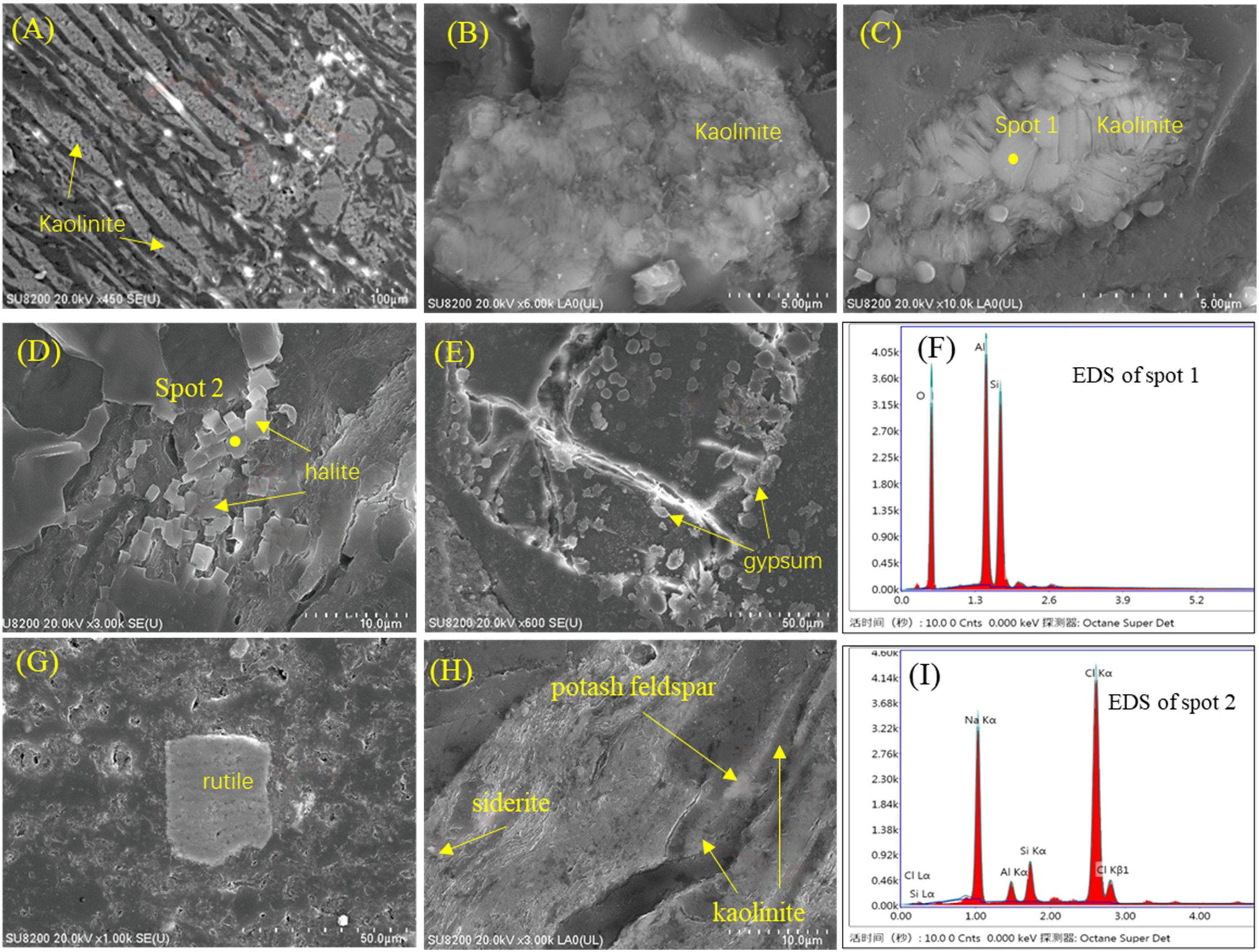
Scanning electron microscopy (SEM) backscattered images of minerals in the Tatuo coal. (A) cell-filling kaolinite, (B) flocculent kaolinite, (C) lamellar kaolinite, (D) halite surrounded by fracture, (E) gypsum along the fracture, (F) EDS data for kaolinite, (G) rutile, (H) kaolinite, siderite and potash feldspar and (I) EDS data of halite.
In the scanning electron microscope (SEM), halite is observed in abundance as a supergene mineral (Figure 5D). Generally, the presence of chevron inclusions in halite is an accepted indicator of primary halite (Goldstein, 2001; Lowenstein et al., 1998). But the chevron halite is absent in our samples, indicating the sodium is not primary. Under stress, halite minerals are separated from the whole into a single NaCl crystal. The crystal morphology of NaCl is the cube or long tetragonal prism with uniform size. The cube particles of halite are found in Tatuo coal seams, with a size of 1–2 μm. Some halite are formed in coal seams, and some may be formed in the process of sampling. After the sample is removed from the water-rich coal seam, some salt minerals may be precipitated during the drying process. In any case, it can be proved that high NaCl existed in the coal seam.
The sulphate minerals in coal are mainly gypsum, which is granular and radial in morphology under the SEM, and sometimes oriented along cracks (Figure 5E). Rutile in coal is mostly massively distributed in desmocollinite, and its original form is intact (Figure 5G). Due to its stable chemical properties, rutile can survive weathering, transportation, and deposition, which makes it a typical terrigenous clastic mineral in coal (Yang et al., 2006). In addition, the coals contain a minor amount of siderite and potash feldspar (Figure 5H).
Major and trace elements
The concentrations of major element oxides in the Tatuo coal samples are listed in Table 3. There is an increase in SiO2, Al2O3, Na2O, MgO, K2O and P2O5, when compared to the average percentages reported by Dai et al. (2012) for Chinese coal, but depleted in CaO, Fe2O3, TiO2 and MnO. The content of Na2O in the ash samples ranges from 0.13% to 7.20%, with an average of 5.06%. However, the content is much lower in the parting samples; it is all below 0.20% (Table 3). The coal with Na2O content greater than 2% in the ash is called high-sodium coal (Li et al., 2018; Xu et al., 2019). According to this standard, Tatuo coal belongs to high-sodium coal. China's high-sodium coal is mainly distributed in parts of Xinjiang, especially in Zhundong Coalfield, where the research degree is the highest (Zhang et al., 2017), while Qinghai's high-sodium coal is rarely reported.
The concentration of major oxides in coal ashes of Tatuo coal (%).
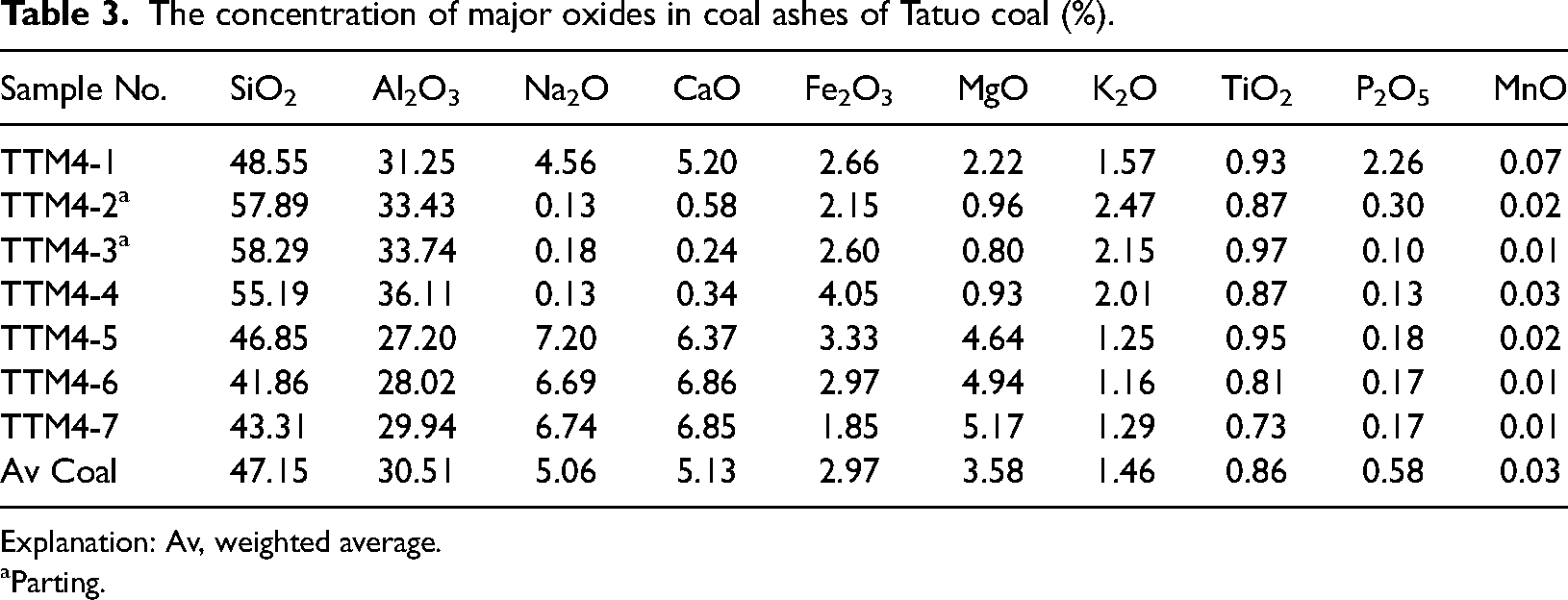
Explanation: Av, weighted average.
Parting.
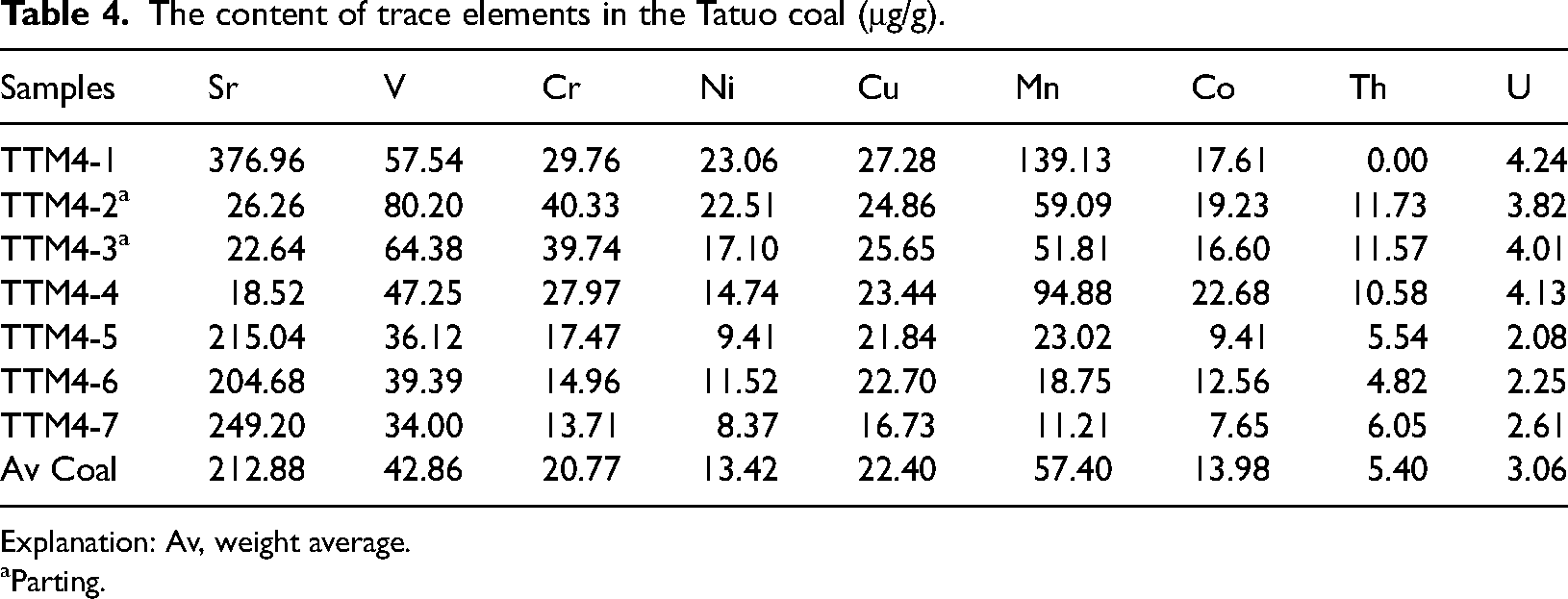
Certain trace elements can indicate the depositional environment during or shortly after peat accumulation by their contents, ratios and distribution patterns under different climatic conditions (Getaneh, 2002; Prachiti et al., 2011). However, these sensitive geochemical indexes for the depositional environment of peat have been subjected to multiple geological processes (Rimmer, 2004). Table 4 lists the content of some trace elements in Tatuo coal. The average content of Sr, V, Cr, Ni, Cu, Mn, Co, Th and U is 212.88, 42.86, 20.77, 13.42, 22.40, 57.40, 13.98, 5.40 and 3.06 μg/g, respectively.
The content of trace elements in the Tatuo coal (μg/g).
Explanation: Av, weight average.
Parting.
Discussion
Occurrence of sodium in coal
The main occurrence forms of sodium in coal include mineral combination state, organic matter-bound, water-soluble state and inorganic salt. Clay minerals, silicates and the organic matter-bound exist mainly as carboxylates and ligands in the mineral combination state (Zhang et al., 2021).
In Figure 6, Na2O content in coal is negatively correlated with ash content, indicating that major minerals in coal (such as clay minerals, quartz etc.) are not the main carriers of sodium; Na2O and macerals are also not correlated with each other in coal, which indicates that Na in coal is not the dependence of organic matter. These results indicated that Na is not authigenic in Tatuo coal. This is also reflected by the NaCl crystals surrounded by fractures (Figure 5D), as mentioned above.
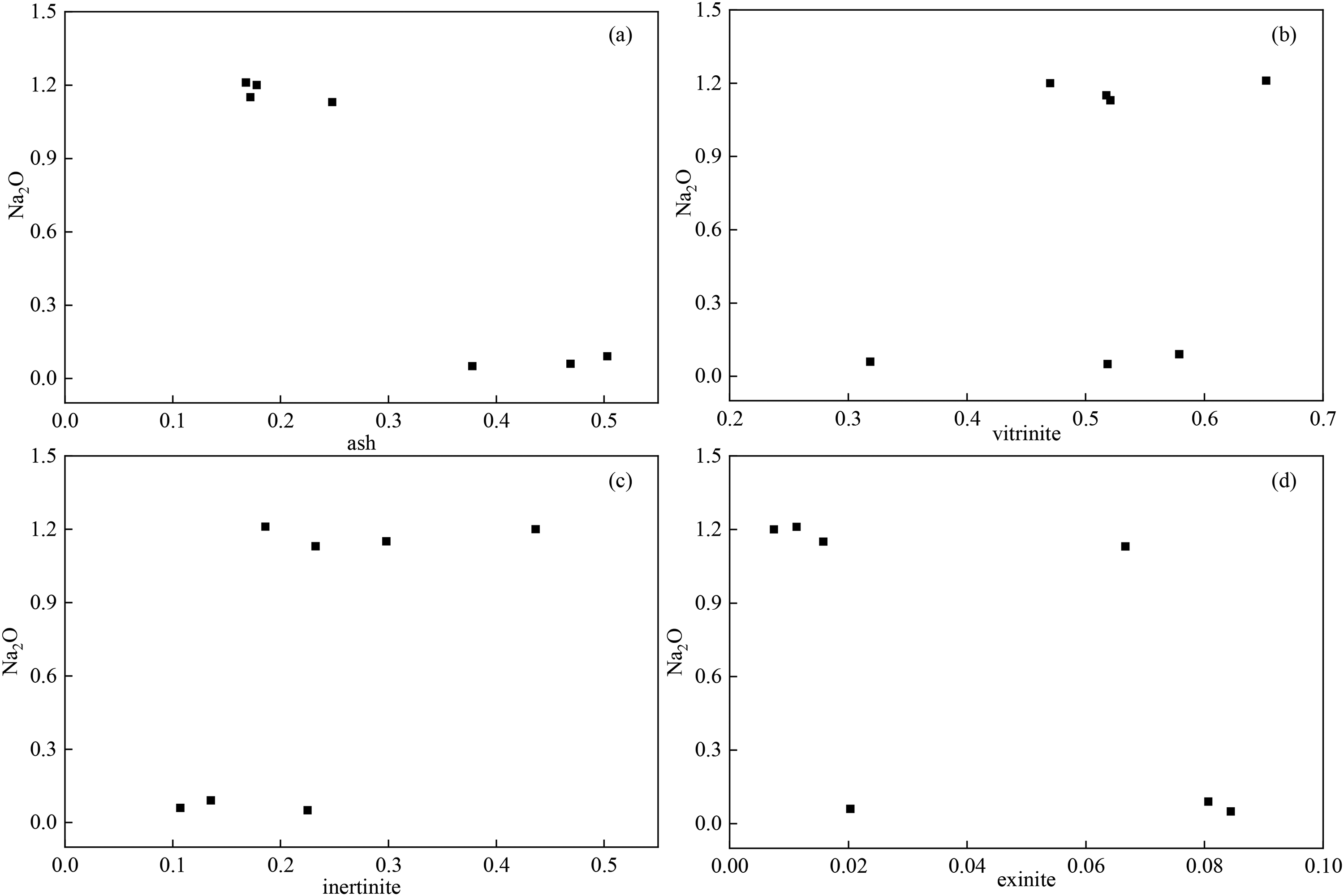
Correlation between ash, organic maceral and Na2O.
Depositional environment
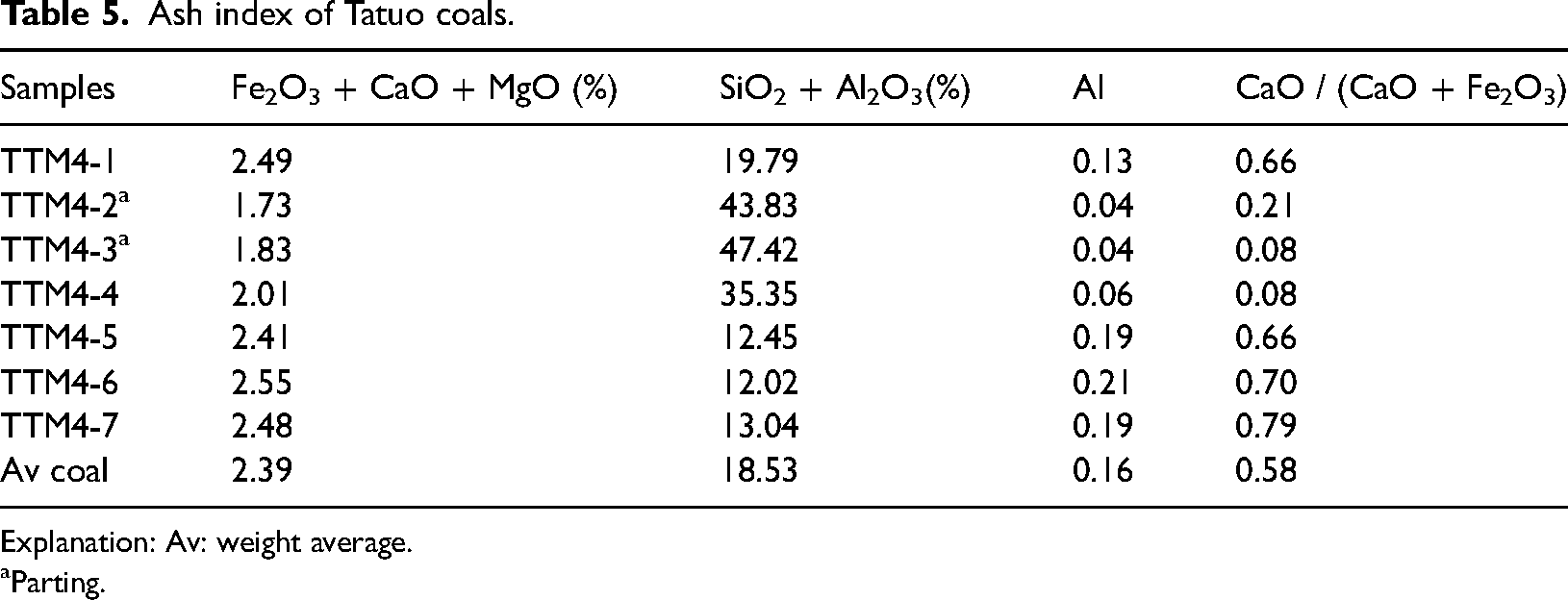
In the process of precipitation or migration, major elements such as Si, Al, Fe, Ca and Mg in coal will be affected by hydrodynamic conditions, water oxidation–reduction conditions, paleoclimate and paleosalinity, so some parameters in ash composition can reflect the characteristics of coal accumulation environment to a certain extent (Chen et al., 2013). The ratio (Fe2O3 + CaO + MgO)/(Al2O3 + SiO2) in coal is usually used as an indicator of the peat-depositional environment, which is categorized into marine (> 0.23), terrestrial (< 0.23), and marine-terrestrial deposits (Qin et al., 2018; Zhang et al., 2014). Dai et al. (2018) argued that this index as an indicator of the depositional environment for coal is not appropriate, owing to the origin of Ca, Mg, Si and Al is not sure of epigenetic minerals or peat-forming. Even so, the proposal idea of ratio is valuable. The ratio (CaO)/(CaO + Fe2O3) can reflect the salinity of the sedimentary water medium. The higher the ratio is, the higher the salinity of the sedimentary water medium is. The (Fe2O3 + CaO + MgO)/(Al2O3 + SiO2) ratio of Tatuo coal is between 0.05 and 0.21, with an average of 0.16 (Table 5), indicating a terrestrial peat-depositional environment. The ratio of (CaO)/(CaO + Fe2O3) is 0.08–0.79, with an average of 0.58 (Table 5), indicating that high salinity water enters into the coal seams in the peat-forming late stage or in the diageneses stage, which is consistent with a large amount of NaCl crystals detected under SEM-EDX.
Ash index of Tatuo coals.
Explanation: Av: weight average.
Parting.
Hao et al. (2000) put forward a new method to judge the coal-forming environment based on ash compositions. As can be seen from Figure 7, the content of SiO2 + Al2O3 is relatively high, ranging from 79.02% to 96.58%, while the content of Fe2O3 + SO3 and CaO + MgO is 1.90%–8.0% and 1.06%–13.45%, respectively, indicating that terrigenous detritus is the main contributor to Tatuo coal peat bog.
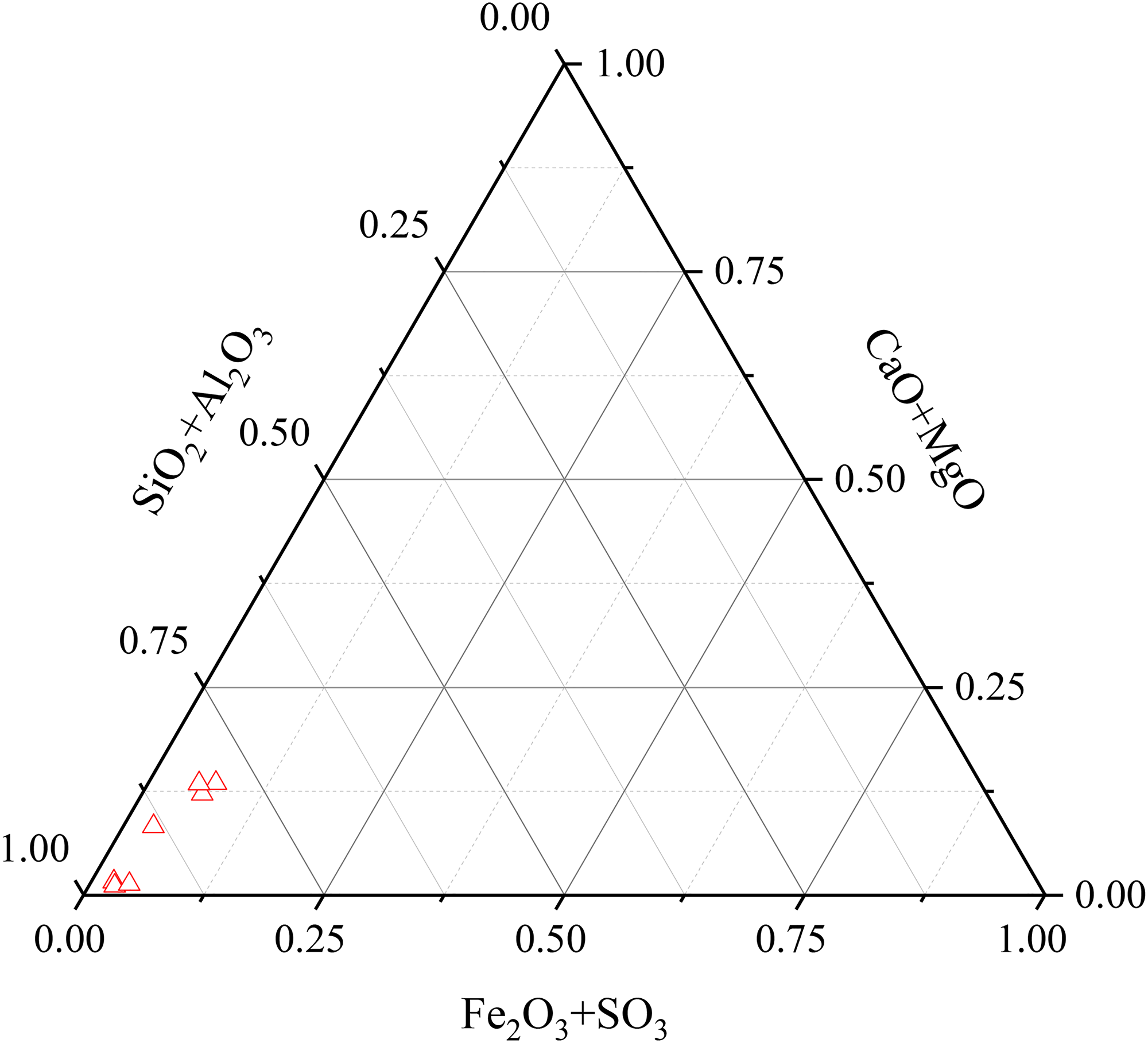
Ternary diagram illustrating the coal ash composition.
As an effective indicator of the depositional environment of coal-bearing strata, sulphur abundance in coal has been successfully used (Chou., 2012, Zhao et al., 2021a; 2021b; 2023). The freshwater peat is accompanied by sulphur content <0.5% (Chou, 2012). The Tatuo coals have a total sulphur content between 0.13% and 0.41%, which indicates that the Tatuo coals were formed in a freshwater environment.
Sr is easy to precipitate under low pH, low water table for peat and oxidizing conditions (Dai et al., 2015). This is also reflected by the relatively low V/I value as mentioned above. The Sr/Cu ratio in sediments can distinguish the characteristics of paleoclimate changes in sedimentary areas. The Sr/Cu ratio of Tatuo coal is greater than 5, indicating a drought and torrid climate led to its formation. (Lerman, 1989; Meng et al., 2011). This environment is conducive to NaCl crystallization.
The ratios of U/Th and Ni/Co are often used as an index to evaluate the redox property of palaeowater. Based on Jones and Manning (1994), Tatuo coal is mainly deposited in an oxidation environment with average U/Th and Ni/Co ratios of 0.46 and 0.99.
Source of sodium in coals
Elements such as Na, Ca, Mg and Sr are typically concentrated near the top and the bottom of the coal seams (Table 3). The correlation coefficients for Na2O–CaO, Na2O–MgO and Na2O–Sr are 0.99, 0.96 and 0.79, respectively, suggesting that these elements have similar sources. Similarly in the case of Gurha lignite seam Ca and Na have a good correlation (Singh et al., 2015). As indicated above, Na does not correlate with organic matter or ash and existed in the form of NaCl crystal same as gypsum. SEM showed that they were in or surrounded by the fracture (Figure 5D and E). Gypsum may have been precipitated from dissolved Ca2+ and SO42− ions with the evaporation of pore water in the coal (Ward, 2002).
Additionally, Strontium concentration is higher (212.88 μg/g on average) in the samples, especially at the top and bottom of the borehole. Dai et al. (2015) reported that the Jurassic coals with high Sr concentration of 526 μg/g on average. Wang (2017) explained higher content of Sr is derived from basin fluid. The coal overlying and underlying layers are siltstone and gritstone (Figure 1), which provide a good channel for basin fluids. And hydrostatic pressure of overlying and underlying rock strata may drive an upward and downward movement of basin fluids through coal beds. Therefore, the source of sodium is mainly attributed to the basin fluid, which enriched Na, Ca and Sr elements.
Conclusions
The Na2O content in Tatuo coal is much greater than 2%, which belongs to high-sodium coal. Maceral and element parameters indicate that the sedimentary environment of Tatuo coal was formed in a terrestrial peat swamp environment and was influenced by freshwater. Therefore, Na2O should not be enriched in the freshwater environment. Na, Ca, Mg and Sr elements all display high concentrations near the top and bottom of the coal seam and have good correlation coefficients between each other. But there is no obvious correlation between Na2O and ash or organic matter. SEM-EDX showed that Na and Ca were surrounded by the fracture, and are existed as crystals. This is due to the basin fluids, which enriched Na, Ca and Sr elements. The hydrostatic pressure of overlying and underlying sedimentary rocks may drive an upward and downward movement of basin fluid through coal beds. Thereafter, Na2O remained in the coal seam under a drought environment and formed a halite crystal.
The minerals in Tatuo coal comprised clay minerals, halite and calcite, as well as a small amount of quartz, pyrite and rutile. The East Kunlun orogenic belt may be the main source of these minerals.
Footnotes
Acknowledgements
This research was supported by the National Natural Science Foundation of China (No. 41872173) and the Natural Science Foundation of Hebei (No. D2017402121).
Declaration of conflicting interests
The author(s) declared no potential conflicts of interest with respect to the research, authorship, and/or publication of this article.
Funding
The author(s) disclosed receipt of the following financial support for the research, authorship, and/or publication of this article: This work was supported by the National Natural Science Foundation of China, Natural Science Foundation of Hebei Province, (grant number No. 41872173, No. D2017402121).
