




Abstract
The digital economy, emerging as a new energy source, is driving the transition to green and sustainable urbanization through its significant enabling effects. While the digital economy enhances productivity, replaces traditional energy, and has the potential to transform production models, further investigation is needed to understand its impact on reducing industrial hazards. This article addresses this gap by acknowledging the transformative impact of digital technologies on economic activities, based on the latest expanded EKC theory. The study highlights the energy efficiency of digitalization as a crucial mechanism for reducing industrial hazards. It also highlights a wealth effect associated with the digital economy that may increase pollution, thereby expanding on the Environmental Kuznets Curve Theory. To clarify the interplay of these effects, the study employs a multidimensional estimation method to analyze the dynamic impact of the digital economy on reducing industrial hazards. Empirical estimates indicate a weak causal relationship between the digital economy and sulfur dioxide emissions, with an increase in broadband subscribers having a slight negative effect on emissions reduction. In contrast, the expanding scientific industry significantly reduces emissions, with reductions ranging from −0.535 to −1.423 tons per billion RMB of output (or 1400 million US dollars). Increased gas supply and Foreign Direct Investment (FDI), often tied to energy-intensive industries, positively influence emissions, with FDI showing a significant coefficient of 0.004. The digital economy's impact on industrial wastewater discharge is unclear, but the scientific industry demonstrates a significant negative effect, with coefficients from −2.501 to −2.819 tons per unit output. The most significant finding of this empirical research is that the wealth effects from the digital economy, particularly through increased private sector employment, lead to a substantial rise in wastewater discharge. While digital technology can enhance energy efficiency and optimize production processes, it also encounters challenges such as job displacement and resistance to change. The research promotes sustainable industrial practices, incentivizes digital adoption, and mitigates negative impacts, guiding companies and investors toward improved environmental performance and responsible digital consumption while fostering public awareness of sustainability challenges. The study recommends a comprehensive strategy to address the environmental challenges posed by the digital economy. Policies include implementing population control measures to reduce overall human impact on the environment, promoting eco-friendly education to foster sustainable practices, shifting focus toward quality living overconsumption, and developing sustainable residential planning.
Keywords
Introduction
The digital economy, emerging as a novel energy source, is driving urban economies toward a path of green and sustainable development through its powerful enabling effects (Litvinenko, 2020; Pagoropoulos et al., 2017). Global heatwaves are becoming more frequent and intense over time, raising concerns about the significant socioeconomic impacts and costs (Kotz et al., 2024; Sun et al., 2024).
The digital economy is a strategy designed to rapidly replace traditional energy sources and drive sustainable development (Creutzig et al., 2022; Dekeyrel and Fessler, 2024; Lange and Santarius, 2020). The European Commission's EU Action Plan on Digitalizing the Energy System, released in October 2022, is the first comprehensive plan for a dual green and digital transition in the European energy sector, outlining the pathway for digitalization in fossil energy replacement. 1 In the digital economy, fuel consumption tends to decrease by 38%‒95%, while electricity usage increases by 20%‒32% (Li et al., 2023). By optimizing urban resource allocation and enhancing production efficiency through data analysis and intelligent management, it reduces resource waste and carbon emission (Baidya et al., 2021; Cheng et al., 2021).
Digitalization serves as a form of clean energy by optimizing resource use, improving efficiency, and reducing waste (Doleski et al., 2022; Lichtenthaler, 2019). It enables smarter systems, such as smart grids and traffic management, which lower carbon emissions and promote sustainable practices, contributing to a greener economy and cleaner environment. Al-Rbeawi (2023) examined opportunities for innovative digital tools and systems to replace traditional energy sources, reducing costs, risks, and environmental impacts. Digitalization should be prioritized to optimize production systems and utilize innovative computing tools for data analysis to maximize oil and gas field capacity (Al-Rbeawi, 2023). Studies have shown that digitization can reduce operating costs in the energy sector, with a clear potential for cost improvements exceeding 25% (Borowski, 2021). Similarly, the digital economy is associated with lower mobility demand, resulting in reduced energy consumption and carbon emissions (Noussan and Tagliapietra, 2020).
Digital technology can replace traditional energy sources and mitigate climate change impacts through data analytics and intelligent management. This can optimize urban resource allocation, enhance production efficiency, and consequently reduce the socioeconomic impacts and costs associated with extreme heat events (Acemoglu et al., 2012; Oloyede et al., 2023). Digitization fundamentally alters production methods, leading to reduced energy consumption and enhanced value creation (Koch and Windsperger, 2017; Ma and Zhu, 2022). Moreover, the digital economy actively drives green technology innovation, fostering development of energy-saving and environmentally friendly industries (Ma and Zhu, 2022). It also encourages green consumption by guiding individuals toward low-carbon and environmentally friendly lifestyles (Shahbaz et al., 2022). The digital economy holds significant potential to reduce industrial hazards and promote green production, thereby paving the way for cities to sustainability.
However, the digital economy generates a paradigm shift in activities that has dynamic effects on reducing industrial hazards (Banalieva and Dhanaraj, 2019). A paradigm shift in economic activity includes production, logistics, and consumption of goods and services facilitated by digital platforms, networks, and data (Pan et al., 2022). This includes a variety of activities such as e-commerce, digital media, software development, and the application of artificial intelligence across industries. The digital economy fosters rapid innovation and interconnectedness, facilitating a shift toward knowledge-based and data-driven business models (Bukht and Heeks, 2017). While the burgeoning digital economy, fueled by automation, expands the tasks performed by capital, it displaces certain industries from their areas of comparative advantage, resulting in disparity and imbalance (Acemoglu and Restrepo, 2022). This dynamic transformation has significant implications for industrial hazardous reduction, presenting both potential benefits and challenges.
Some scholars have also found that while the digital economy increases energy efficiency, it also leads to higher energy consumption (Lange et al., 2020). Frontier research has found that human capital plays the most significant mediating role in the impact of digitalization on energy intensity, while industrial structure distortion has the strongest mediating effect on the impact of digitalization on energy structure (Xu et al., 2022a). When the energy structure is distorted, increased energy efficiency may hinder production automation (Li et al., 2023). Increases in energy efficiency can lead to rebound effects by encouraging excessive physical infrastructure, indicating that digital technology alone cannot solve the challenge of decoupling economic growth from energy consumption (Ghobakhloo and Fathi, 2021; Lange et al., 2020). Nonetheless, the positive impact of digital infrastructure in enhancing energy efficiency must be emphasized for urgent carbon reduction. Digitalization can be considered a clean energy source only when it enhances productive and substitutive effects without promoting excessive consumption (Lange et al., 2020). Based on the conclusion that digitalization can increase energy productivity and serve as a clean energy source, this study focuses on exploring the beneficial effects of digitalization to ensure that the digital economy can transform energy supply.
While the digital economy emerges as a transformative force capable of replacing traditional production models, scholarly attention has largely focused on its general role in energy substitution (Dong et al., 2022; Li and Wang, 2022; Song et al., 2024). This underscores the need for further investigation into its dynamic effects on environmental protection and the reduction of industrial hazards. Recently, Zhang et al. (2022) finds that the digital economy significantly contributes to low carbon development through environmental governance, technological innovation, and industrial structure upgrade, with the largest impact through industrial structure upgrade (Zhang et al., 2022). Subsequent research explored the spatial spillover effect of the digital economy on carbon emissions (Li and Wang, 2022). Lyu et al. (2023) using a Global Malmquist productivity index, spatial econometric model, and intermediary effect model, has assessed the green value of China's digital economy. While their analysis highlights the governance effect of digital monitoring on carbon emission control, it overlooks the potential for the digital economy to directly reduce industrial hazards, a critical aspect of achieving sustainable development (Li et al., 2020; Li and Wang, 2022; Shahbaz et al., 2022; Song et al., 2024; Yang et al., 2023; Zhang et al., 2022). The focus on achieving the carbon dioxide emission targets of the Paris Agreement 2 should not overshadow the broader potential of the digital economy to reduce industrial hazards, highlighting the need for a more comprehensive approach to its role in sustainable development.
Discussions on how digital technology can be practically applied to substitute traditional energy sources remain scarce (Lu et al., 2019; Theile et al., 2022). As climate change becomes increasingly significant, there is an urgent need to seek alternative energy sources to reduce carbon emissions (Salvi et al., 2022). Theile et al. (2022) revealed that digitalization has indirectly reduced energy consumption by influencing financial development and human capital. Similarly, Xue et al. (2022) investigated the mechanism by which digitalization affects energy consumption, highlighting that the development of the digital economy primarily impacts energy consumption through its influence on economic growth, energy efficiency, and industrial structure (Xue et al., 2022). However, the study suggests that basic e-goods such as e-publications, e-news, and e-music offer potential energy savings, while e-business shows less potential in this regard. An empirical study has demonstrated that the correlation between the digital economy and electricity intensity has remained consistently positive throughout the observation period (Lin and Huang, 2023). In contrast, other studies emphasize the role of digital technology in energy saving by driving business model innovation that addresses bottlenecks in integrating sustainable energy technologies into existing structures or maintaining their independence (Loock, 2020). Therefore, the application of the digital economy in energy substitution is controversial (Jeuland et al., 2021).
Notably, scholars warn that digital platform misconduct could worsen industrial pollution (Nuccio and Guerzoni, 2018). The concentration of data-driven market power has led to calls for far-reaching regulations of information technology to curb excessive consumption (Fast et al., 2023). The digital economy indirectly promotes green innovation by enhancing economic openness, optimizing industrial structure, and expanding market potential (Luo et al., 2023). However, this effect diminishes as these factors mature. While green innovation exhibits spatial spillover effects, development in advanced regions can hinder innovation in less developed regions due to talent flow and industrial transfer (Luo et al., 2023). The digital economy, driven by market forces, presents a complex landscape with both potential benefits and challenges. Digitalization has expanded China's e-commerce market, reaching 433.8 billion yuan in 2019 and steadily growing since, creating a wealth effect that boosts industrial discharge (Lu and Chen, 2021). A comprehensive analysis is therefore required to fully understand its dynamic effects on industrial hazardous reduction.
The digital economy, with its inherent complexities and potential, necessitates a reexamination of its origins to understand its framework in industrial hazardous reduction (Yang et al., 2024). The concept emerged from observing the transformative impact of digital technologies on economic activities (Goldfarb and Tucker, 2019). Digital technologies, by promoting efficiency in traditional production, can reduce industrial hazardous discharges, echoing the principles of the Environmental Kuznets Curve (EKC) Theory (Pan et al., 2022). Recent research has expanded the EKC Theory to highlight the role of municipal investment in green production transitions, emphasizing the importance of information infrastructure in reducing industrial hazards (Hou, 2023). Research on the digital economy has identified energy efficiency improvements as a direct mechanism for reducing industrial hazards, aligning with the principles of the EKC Theory (Hu, 2023). Based on the EKC framework, studies have observed an inverted U-shaped relationship between the digital economy and industrial pollution, with variations across regions (Guo et al., 2023). While the digital economy effectively lowers carbon emissions per unit of economic output, it can also contribute to higher overall carbon emissions per person (Dong et al., 2022). While the digital economy improves energy efficiency, reducing local pollution, the spatial spillover effect of digital infrastructure's added value is significantly negative (Peng et al., 2024). This aligns with the principles of the EKC framework, but the introduced dynamics highlight a research gap.
Addressing the research gap in understanding the digital economy's impacts on industrial hazardous reduction and its dynamic effects, this study aims to explore the mechanism of the digital economy's impact on industrial hazardous reduction, considering its heterogeneous effects across the country. The research questions are as follows:
RQ1. Does digital economy improve energy efficiency and optimize production processes aligns with the downward-sloping segment of the EKC? RQ2. Does the digital economy's potential to improve environmental quality while boosting income align with the downward-sloping segment of the EKC? RQ3. What factors contribute to the varying adoption and spread of digital technologies across industries and regions, and how does this variation impact overall environmental performance? RQ4. What role do government policies and regulations play in shaping the environmental impact of the digital economy? RQ5. While the digital economy improves energy efficiency, could its growth also lead to higher overall industrial emissions due to increased consumption and economic activity? How does digitalization dynamically impact the generation of industrial hazards? RQ6. Which kind of industrial hazardous had been reduced the most with the help of digital economy?
The research contribution lies in proposing a framework that acknowledges the complex interplay between the digital economy and industrial hazards. This framework goes beyond simply highlighting the potential benefits of digital technologies in reducing hazards. It also acknowledges the challenges associated with digitalization, including the wealth effect leading to unnecessary consumption and resistance to change.
In summary, the key contribution is the emphasis on a comprehensive and balanced approach to digitalization. This includes incorporating inclusive motivation mechanisms, addressing access restrictions, avoiding unnecessary consumption, and prioritizing environmental sustainability. By advocating for this nuanced perspective, the research offers a roadmap for leveraging the digital economy to achieve a more sustainable future, balancing economic development with hazard reduction.
This research will proceed in several stages. First, a theoretical framework and research design will be established through a comprehensive review of the latest literature. This review will solidify the rationale employed in the study. Next, the methodology section will clarify the concept and estimation of the research subject, describe the statistical features of the observed data, and specify the configuration of the empirical model. The empirical study section will then utilize a multidimensional fixed-effect estimation method to identify the impacts of the digital economy on industrial hazards emissions. Finally, the research will discuss other factors that may also affect average industrial hazardous discharges, identifying research limitations and suggesting avenues for further investigation.
Theoretical framework and research design
The digital economy and industrial hazards: A framework
The framework to examine how the digital economy reduce industrial hazards rests on EKC theory (Guo et al., 2023; Hou, 2023). The theoretical framework for digitalization's role in reducing traditional energy usage suggests that virtual economic activities rely on electricity instead of fossil fuels, aligning with the EKC. The virtualization of economic activities in the energy transition advances the twin transition, which includes the simultaneous processes of digital transformation and environmental sustainability (Cattani et al., 2023; Fusillo et al., 2025).
Industry 4.0, powered by digitalization, reshapes operations and utilizes more advanced and intelligent production and logistics distribution (Ghobakhloo and Fathi, 2021). Digitalization virtualizes activities that enhance energy efficiency, replace traditional energy sources, optimize production processes, and dematerialize economic activities (Dekeyrel and Fessler, 2024; Doleski et al., 2022). The transformative role of artificial intelligence in the invention process is connected to the regional development of environmental technologies (Cicerone et al., 2023), indicating that digital activities are changing production processes and replacing traditional methods of empowerment.
However, the EKC theory needs to be expanded to account for the transformative impact of digital technologies on economic activities within the digital environment. The EKC hypothesis posits an adverse relationship between urbanization and environmental degradation (Oloyede et al., 2023). In the digital context, digital technologies can enhance energy efficiency, optimize production processes, and enable the dematerialization of economic activities, thereby reducing industrial emissions and waste (Guo et al., 2023). This can expand the explanatory power of the EKC theory by capturing the energy saving effects of digital economy. By incorporating the role of digital technologies, the EKC framework can be adapted to more accurately reflect the evolving dynamics between digitalization and environmental sustainability in the modern era (Tian and Meng, 2023).
In details, the impact of digital technology within EKC framework highlights the role of infrastructure in mitigating industrial environmental hazards (Hou, 2023). Digital technologies can enhance energy efficiency and optimize production processes, thereby reducing industrial emissions and waste, thus expanding the explanatory scope of the EKC theory (Hu, 2023). We propose that the enhanced energy efficiency and production optimization provided by digital technologies will contribute to the mitigation of industrial environmental hazards, manifested in the downward-sloping segment of the EKC curve. Consequently, proposing hypothesis: Hypothesis 1 (H1): The digital economy's enhancement of energy efficiency and production optimization will contribute to mitigating industrial environmental hazards, as reflected in the declining section of the Environmental Kuznets Curve. (Table 1 H1)
Research goal.
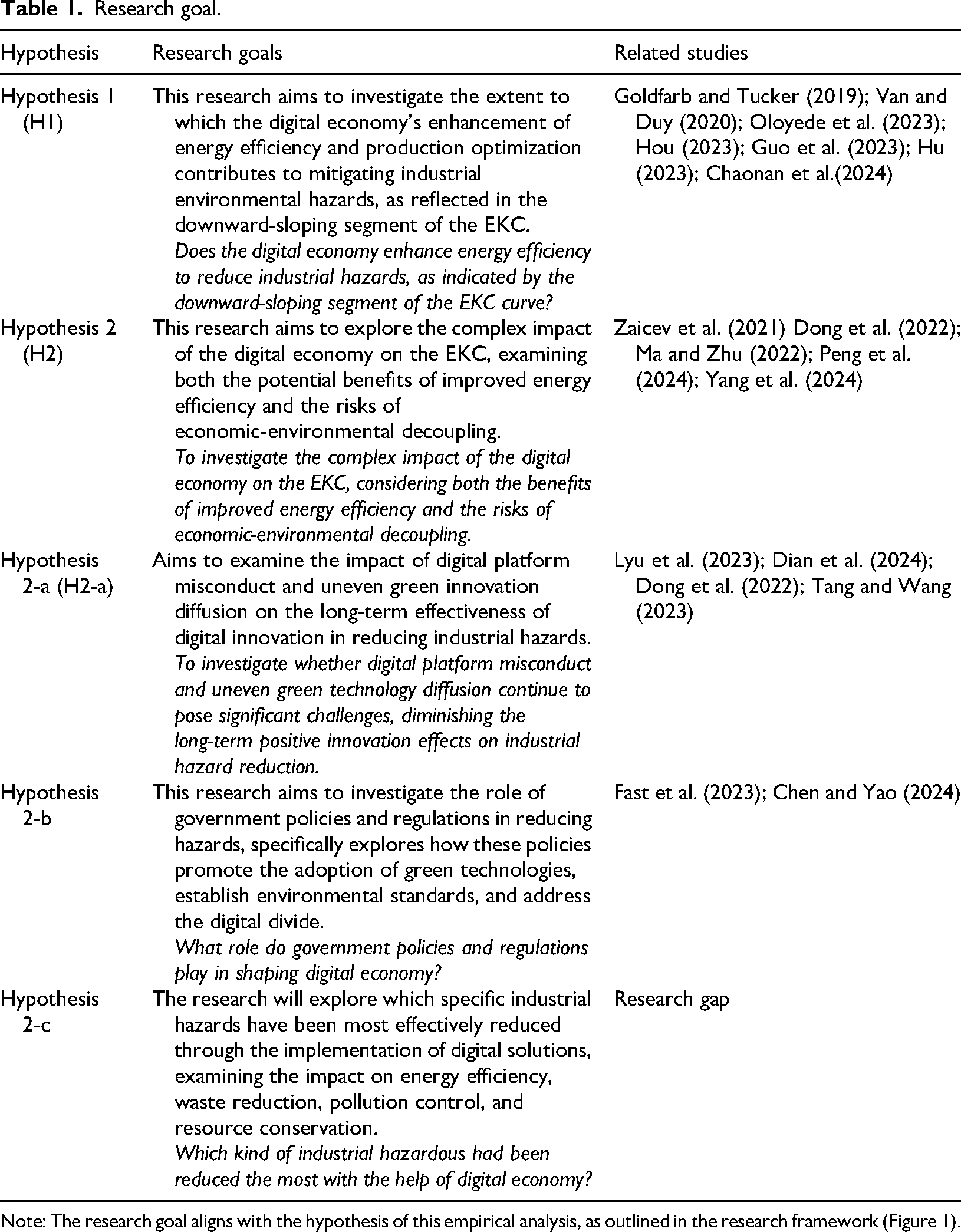
Note: The research goal aligns with the hypothesis of this empirical analysis, as outlined in the research framework (Figure 1).
Recent studies show that European firms in rural areas exhibit a greater capacity for eco-innovation despite having lower digital propensity, while urban firms are more likely to adopt technologies and engage in eco-innovation (Cattani et al., 2023). The contradictory findings suggest that the twin transition, driven by digitalization and encompassing both the “digital transition” and “green transition” aimed at reducing traditional energy usage, is complex. Digitalization significantly reduces carbon emission intensity, but paradoxically leads to higher per capita carbon emission (Dong et al., 2022). While the digital economy improves energy efficiency, reducing local pollution, the spatial spillover effect of digital infrastructure has been found significantly negative (Peng et al., 2024). The dematerialization of digital economic activities may accelerate the decoupling of economic development and environmental restoration, influencing the location of the EKC curve's turning point. These findings underscore the need for nuanced analysis of the digital economy's environmental implications within the EKC framework.
Thus, the effects of digital economy on EKC are complex. Digitalization significantly reduces carbon emission intensity, but paradoxically leads to higher per capita carbon emission (Dong et al., 2022). While the digital economy improves energy efficiency, reducing local pollution, the spatial spillover effect of digital infrastructure has been found significantly negative (Peng et al., 2024). The dematerialization of digital economic activities may accelerate the decoupling of economic development and environmental restoration, influencing the location of the EKC curve's turning point. These findings underscore the need for nuanced analysis of the digital economy's environmental implications within the EKC framework. Thus, this leads to a hypothesis: Hypothesis 2 (H2): The digital economy's complex impact on the Environmental Kuznets Curve (EKC) involves both benefits of energy saving and risks of economic-environmental decoupling. (Table 1 H2)
While the digital economy can indirectly stimulate green innovation, the value generated by the green economy is being undermined by excessive consumption as the wealth effect grows. The digital economy's impact on environmental sustainability is multifaceted, involving both potential benefits, such as promoting green innovation, and risks, including worsening industrial pollution and uneven spatial spillovers. While the digital economy has the potential to help resource-based cities overcome the “resource curse,” an uneven information structure can create a “digital divide” between central and peripheral cities (Lyu et al., 2023). Despite improving energy efficiency, the digital economy's growth can also lead to higher overall industrial emissions due to increased consumption and economic activity. Digital platform misconduct could exacerbate industrial pollution, and that green innovation's spatial spillovers may hinder development in less advanced regions (Dian et al., 2024; Dong et al., 2022; Tang and Wang, 2023). Based on the discussion, the following hypothesis can be proposed: Hypothesis 2 (H2-a-b-c): Digital platform misconduct and uneven green technology diffusion continue to pose significant challenges, diminishing the long-term positive innovation effects on industrial hazard reduction. (Table 1 H2-a-b-c)
Thus, the study is grounded in the EKC framework to examine the impact of the digital economy on industrial hazards reduction, highlighting the dynamics of green innovation and energy-saving effects. This approach addresses the research gap in digital economy and environmental studies. Additionally, the study investigates the role of information infrastructure in enhancing digital technologies, thereby broadening the explanatory power of the EKC theory.
The proposed framework of how digital economy to reduce industrial hazardous shows in Figure 1.
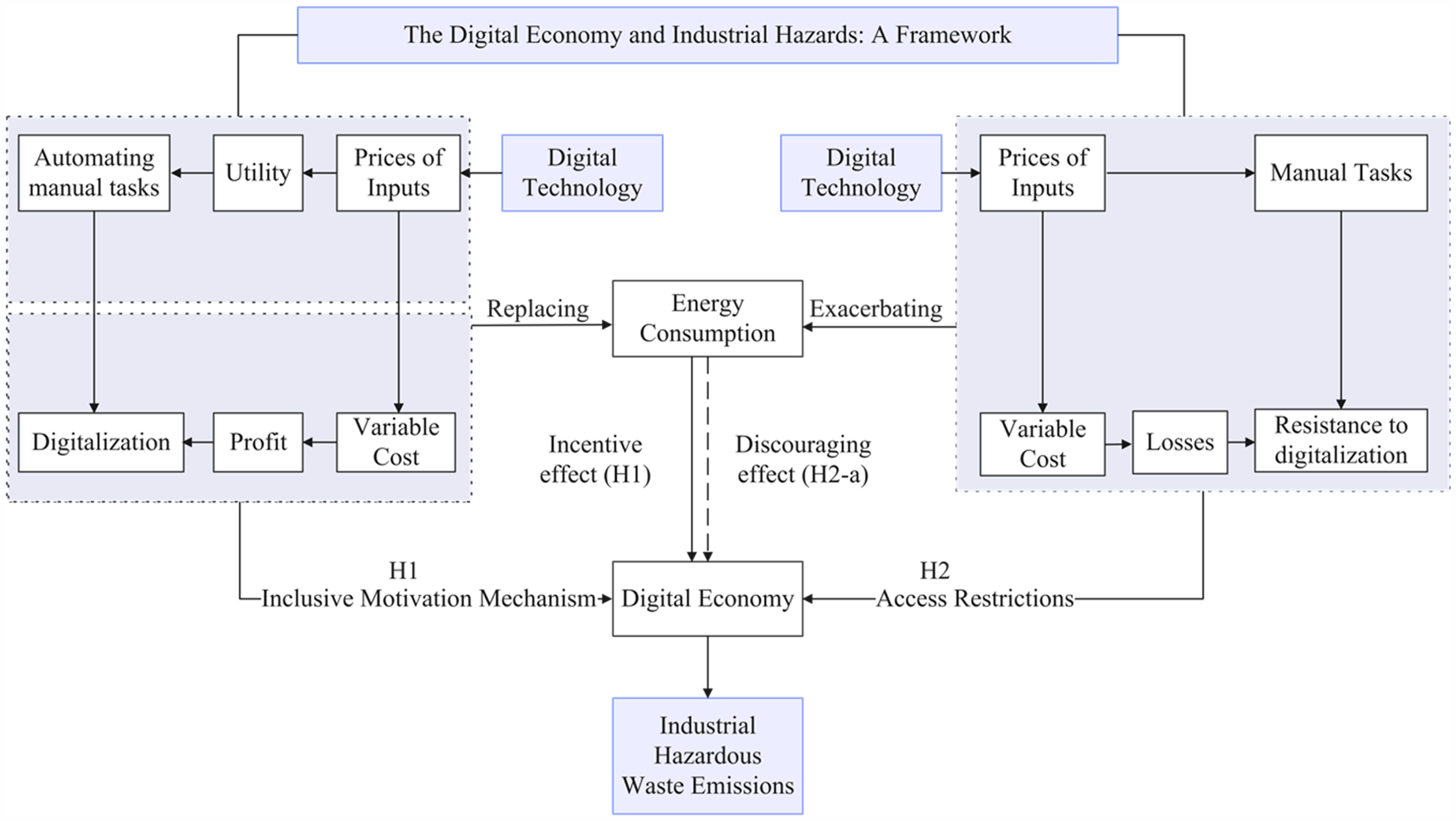
Research framework.
The research framework depicted in Figure 1 is based on the EKC theory, which suggests that digital technologies have the potential to decrease emissions by improving efficiency and promoting dematerialization (Oloyede et al., 2023; Hou, 2023). However, studies by Dong et al. (2022) and Peng et al. (2024) emphasize the challenges associated with the digital economy, such as the rise in per capita emissions and negative spatial spillover effects. This highlights the intricate relationship between digitalization and environmental sustainability. Both viewpoints contribute to elucidating how the Digital Economy helps alleviate industrial pollution hazards. The pollution reduction mechanism is illustrated in Figure 1.
The diagram presents a framework for understanding the complex relationship between the digital economy and industrial hazards (Figure 1). It highlights the potential for digital technologies to reduce industrial hazards through increased efficiency, automation, and data-driven manufacturing. The left side of the diagram shows the incentive effect of digital economies on production, showing how automation and digitalization can lead to increased profitability and reduced costs. There is a potential of digital technologies on both reduced and increased energy consumption. The right side of the diagram examines the digital economy's impact on manual tasks, indicating a resistance to digitalization. It highlights the potential for job displacement and disruptions to existing processes, as well as the resistance that can arise from concerns about job security, privacy, and the ethical implications of technology. The overall impact of the digital economy is complex, which can be influenced by factors such as inclusive motivation mechanisms and access restrictions.
Ultimately, the diagram emphasizes the need for a comprehensive approach to digitalization, one that incorporates inclusive motivation mechanisms, addresses access restrictions, and prioritizes environmental sustainability. By navigating the opportunities and challenges of digitalization in a way that promotes both clean-production and green innovation, we can leverage the digitalization to reduce industrial hazards and create a more sustainable future.
Research design
See Figure 2.
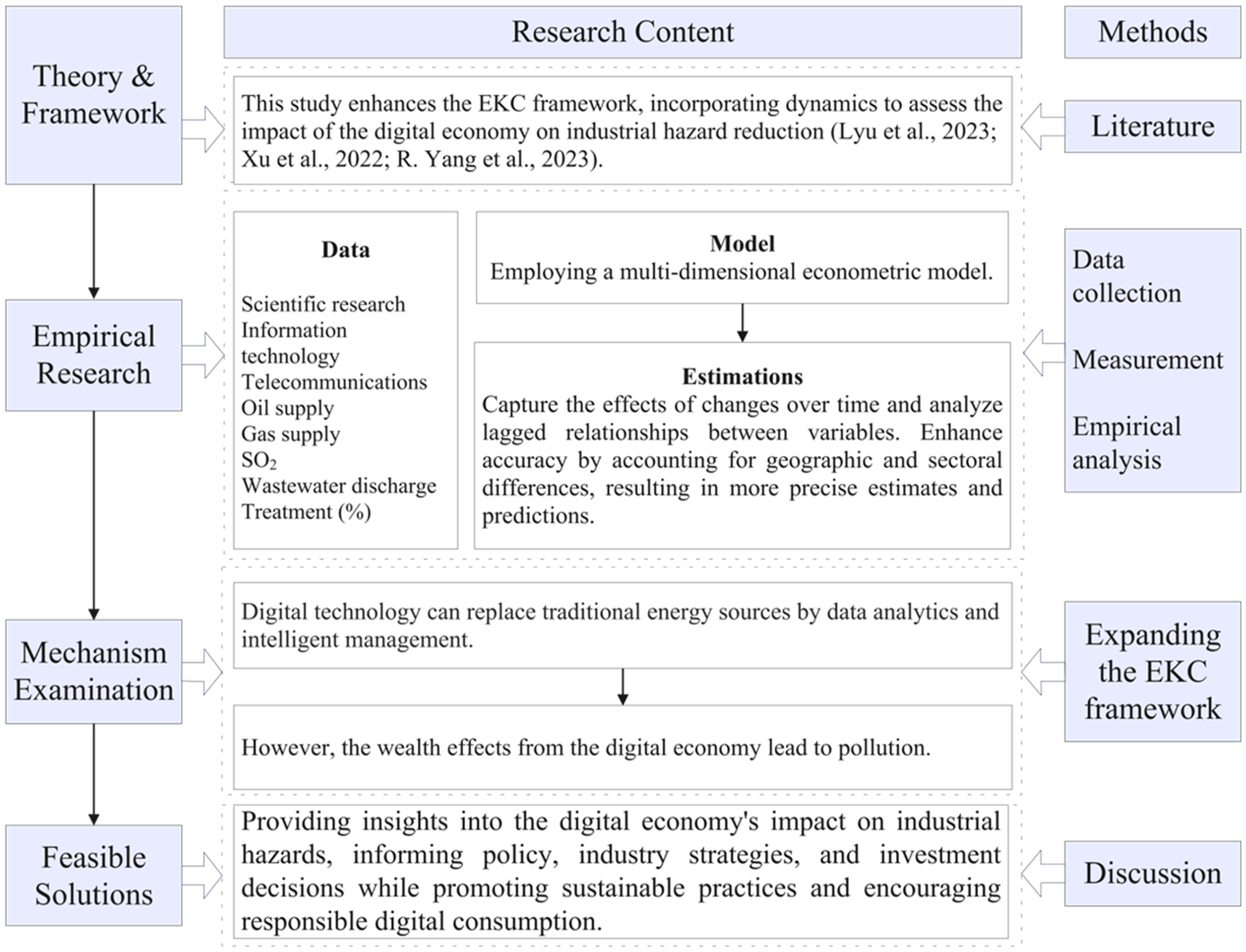
Research design.
Methodology
Concept and estimation of the digital economy
Measuring and monitoring the digital economy is becoming increasingly challenging due to its rapid development. In response, researchers have proposed a conceptual framework and policy recommendations for an indicator system (Chaonan et al., 2024; Van and Duy, 2020; Zaicev et al., 2021). Digitalization has the potential to reduce industrial hazardous discharge through the application of digital technologies (Yang et al., 2024). The digitalized economy exhibits key characteristics, such as high levels of capital investment and high levels of productivity or output efficiency (Goldfarb and Tucker, 2019).
Building on this, this study revised a Digital Economy Indicator System for cities, comprising three subsystems: digital development efficiency, digital industry output, and digital infrastructure. The indicators of digital economy are detailed in Table 2. The assigned weights indicate that the output of scientific and information industries are the most critical factors driving digital economic progress, followed by workforce engagement in the tertiary sector. Meanwhile, internet access and broadband availability are foundational, supporting the overall digital ecosystem, while mobile commerce, telecommunications, and traditional telephone services play more supplementary roles.
Digital economy indicator system.
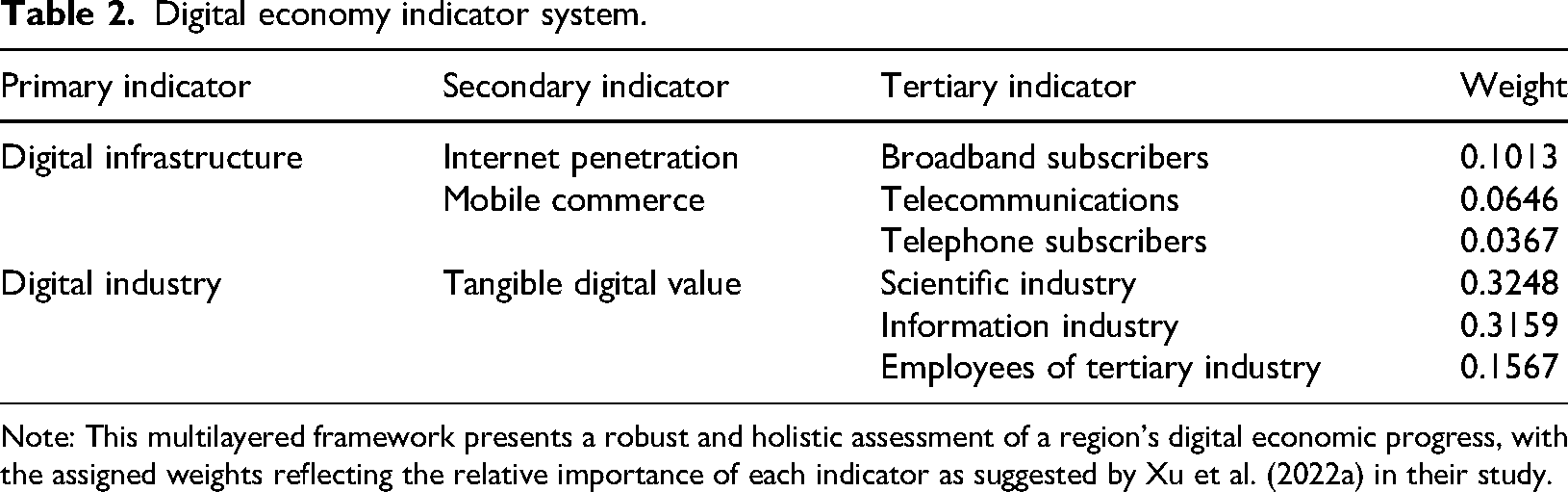
Note: This multilayered framework presents a robust and holistic assessment of a region's digital economic progress, with the assigned weights reflecting the relative importance of each indicator as suggested by Xu et al. (2022a) in their study.
The specific measurement approach is outlined in Table 2. It comprises a set of primary, secondary, and tertiary indicators that provide a comprehensive assessment of digital economic progress. The primary indicators serve as the core metrics, directly measuring critical aspects such as internet penetration, digital infrastructure, mobile commerce, the digital industry itself, and tangible digital value creation. These high-level indicators capture the fundamental drivers and outputs of the digital economy. The secondary indicators offer more granular details on the underlying digital foundations, including broadband subscribers, telecommunications, and telephone subscribers. These foundational elements enable the development and expansion of the digital economy. The tertiary indicators then track the broader impacts and outputs of the digital transformation, such as the scientific industry, information industry, and employment in the service sector. Collectively, this multilayered framework presents a robust and holistic assessment of a region's digital economic progress, with the assigned weights reflecting the relative importance of each indicator in the overall evaluation (Xu et al., 2022b).
The comprehensive framework offers a thorough evaluation of a region's advancement in the digital economy, with the assigned weights reflecting the relative importance of each indicator as proposed by Xu et al. (2022a) in their study. The scientific industry has notably increased tangible digital value to 32.48%, followed closely by the Information industry at 31.59%, while employees in the tertiary industry play a significant role in driving digitalization, contributing 15.67%. Less impactful factors include the number of broadband subscribers at 10.13%, telecommunications growth at 6.46%, and the number of telephone subscribers at 3.67%.
Data source and description
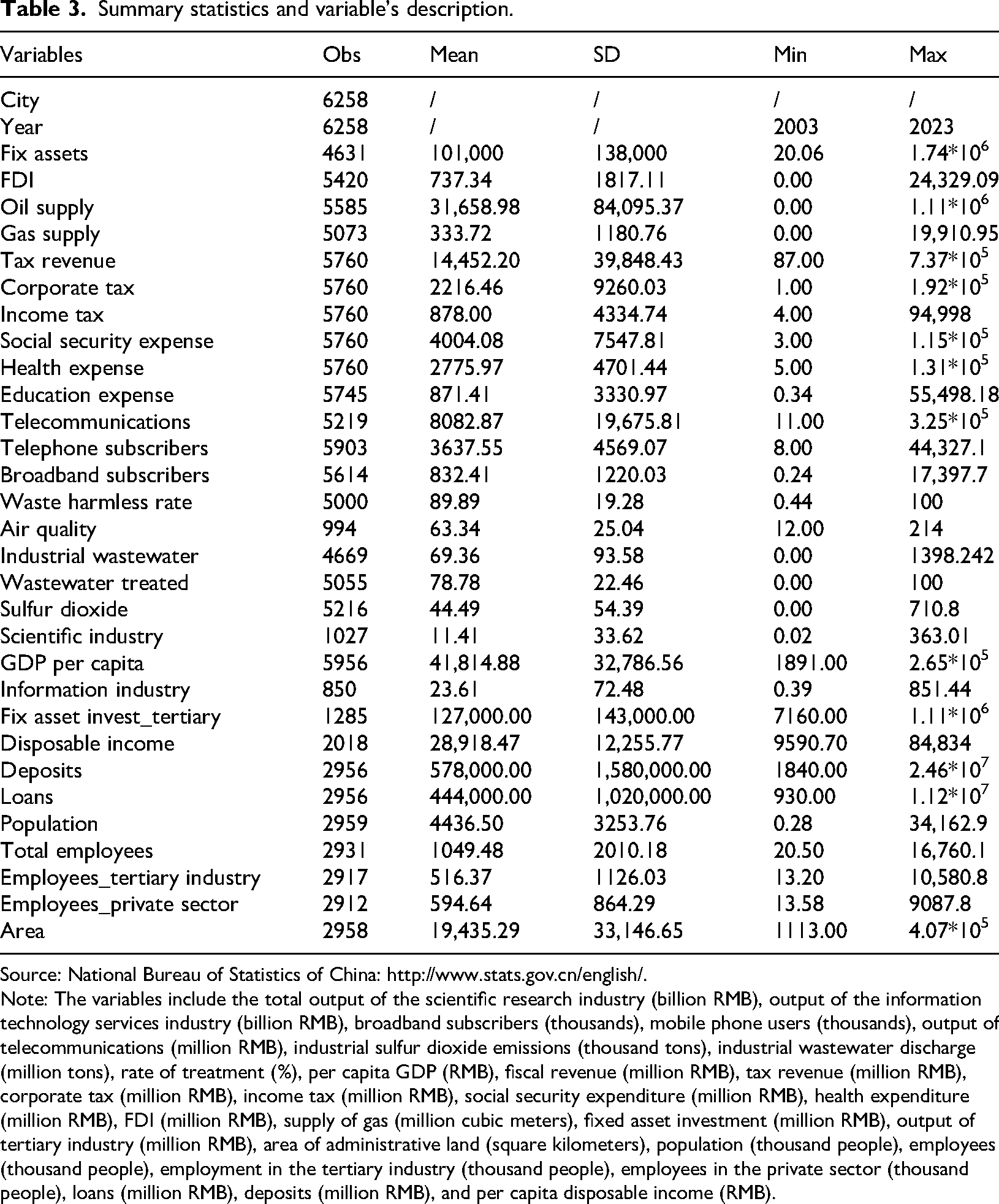
The data used in this study is compiled by the National Bureau of Statistics of China through its Annual Statistical Yearbook System (Table 3). This system provides comprehensive statistical data on various aspects of the economy and society of all provinces, autonomous regions, and municipalities directly under the central government, making it an official and reliable source for understanding regional economic and social development.
The study aims to analyze the dynamic impacts of the digital economy on industrial hazardous reduction, using indicators such as information industry output, scientific industry output, regional GDP per capita, telecommunications output, tertiary industry investment, tertiary industry employment, telephone subscribers, fiscal expenditure on science and education, oil and gas consumption, urban waste harmless rate, air quality, wastewater treatment, and sulfur dioxide emissions. Control variables include employees of the private sector, employees of the tertiary industry, foreign direct investment (FDI), fixed asset investment, population, and land area.
All the data used in this study was collected at the city level from the National Bureau of Statistics’ official website: https://www.stats.gov.cn/sj/ndsj/2024/indexch.htm. The National Bureau of Statistics collected data from 312 cities and towns across China for the period spanning from 2003 to 2023. These cities and towns are geographically located in the southeast, northeast, west, and central regions, and are categorized by administrative rank as provincial capitals and towns. For simplicity in calculations, Beijing, Tianjin, Shanghai, and Chongqing are used as representative regions to assess the digital economy in the North, East Coast, Southeast, and West, respectively.
Given the significant regional disparities in development and concerns about economic imbalances, the observation group is classified into the eastern, central, and western regions, major urban clusters, and secondary county areas.
Digital economy
Figure 3 presents the digital economy growth rates for Beijing, Tianjin, and Shanghai from 2010 to 2025. Beijing shows significant fluctuations, peaking at 33.6% in 2015, indicating robust expansion. However, this is followed by a sharp decline, reaching −12.3% in 2021, suggesting a substantial contraction in its digital economy. Tianjin exhibits a more volatile growth pattern, peaking at 25.7% in 2020 before experiencing a downturn. While it also faces a decline, this drop is less drastic than Beijing's. In contrast, Shanghai demonstrates a more stable trajectory, with a peak growth rate of 8.9% in 2020. Its growth remains relatively resilient during downturns compared to the other two regions.
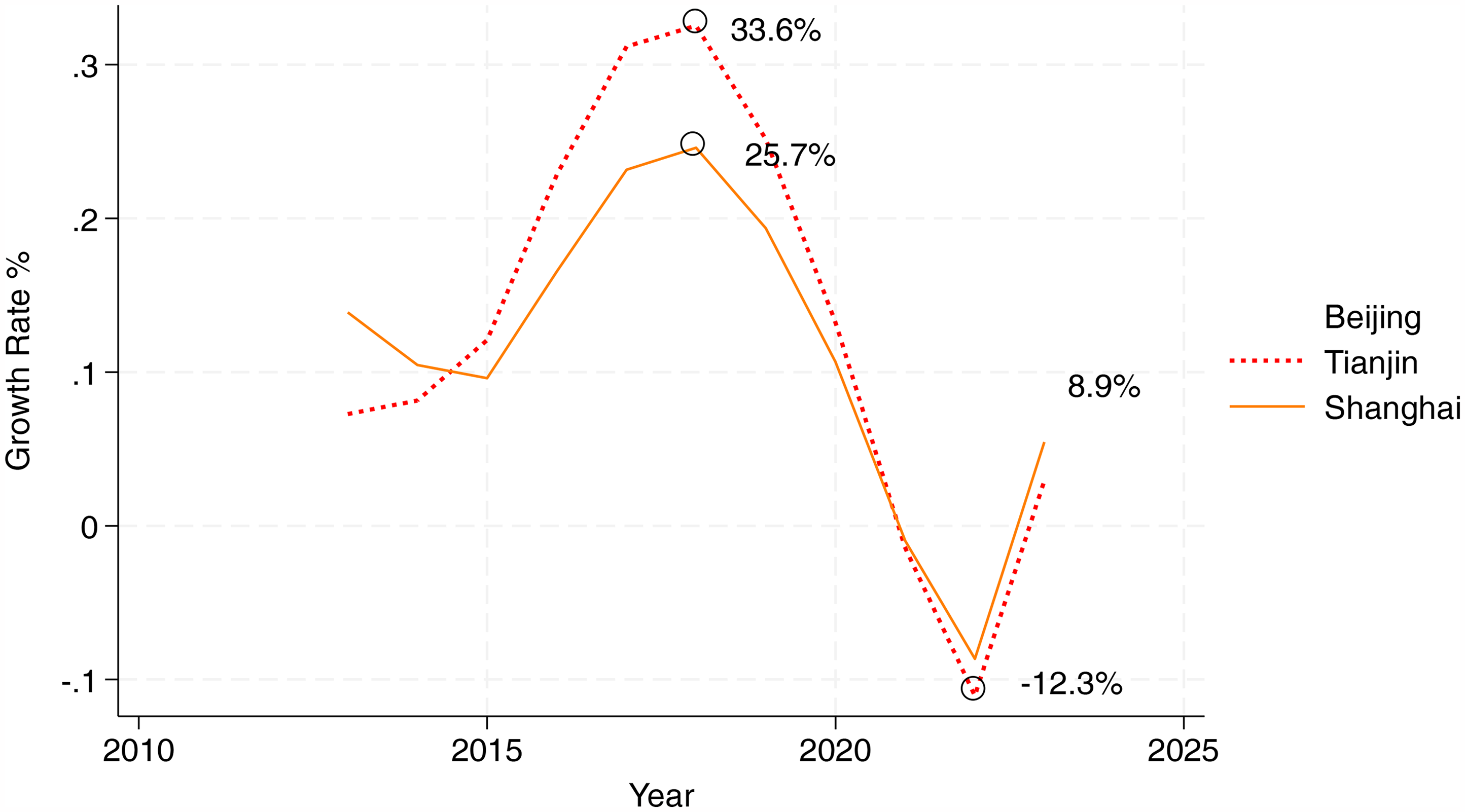
Digital economy growth rate.
Overall, the graph highlights the contrasting dynamics of digital economy growth, emphasizing the volatility in Beijing and Tianjin versus the steadiness of Shanghai, alongside the challenges and recovery needs ahead.
Figure 4 shows the information industry has been rising sharply in the latest 15 years. Overall, the information industry growth rate has been on an upward trajectory across the country. Beijing's information industry growth rate starts around 0.1% in 2005, dips to around −0.1% by 2010, then recovers to around 0.15% by 2015 before fluctuating between 0.1–0.2% until 2025. Tianjin's growth rate is the most volatile, ranging from around −0.15% to 0.25% with significant fluctuations over the time. It experiences a sharp spike to around 0.3% in 2015 before declining again. Chongqin's growth rate follows a generally increasing trajectory, starting around 0.05% in 2005 and reaching nearly 0.2% by 2025, with some dips along the way. Shanghai's growth rate is also quite variable, fluctuating between around −0.1% to 0.2% over the 20-year span, with a notable peak around 0.25% in 2015.
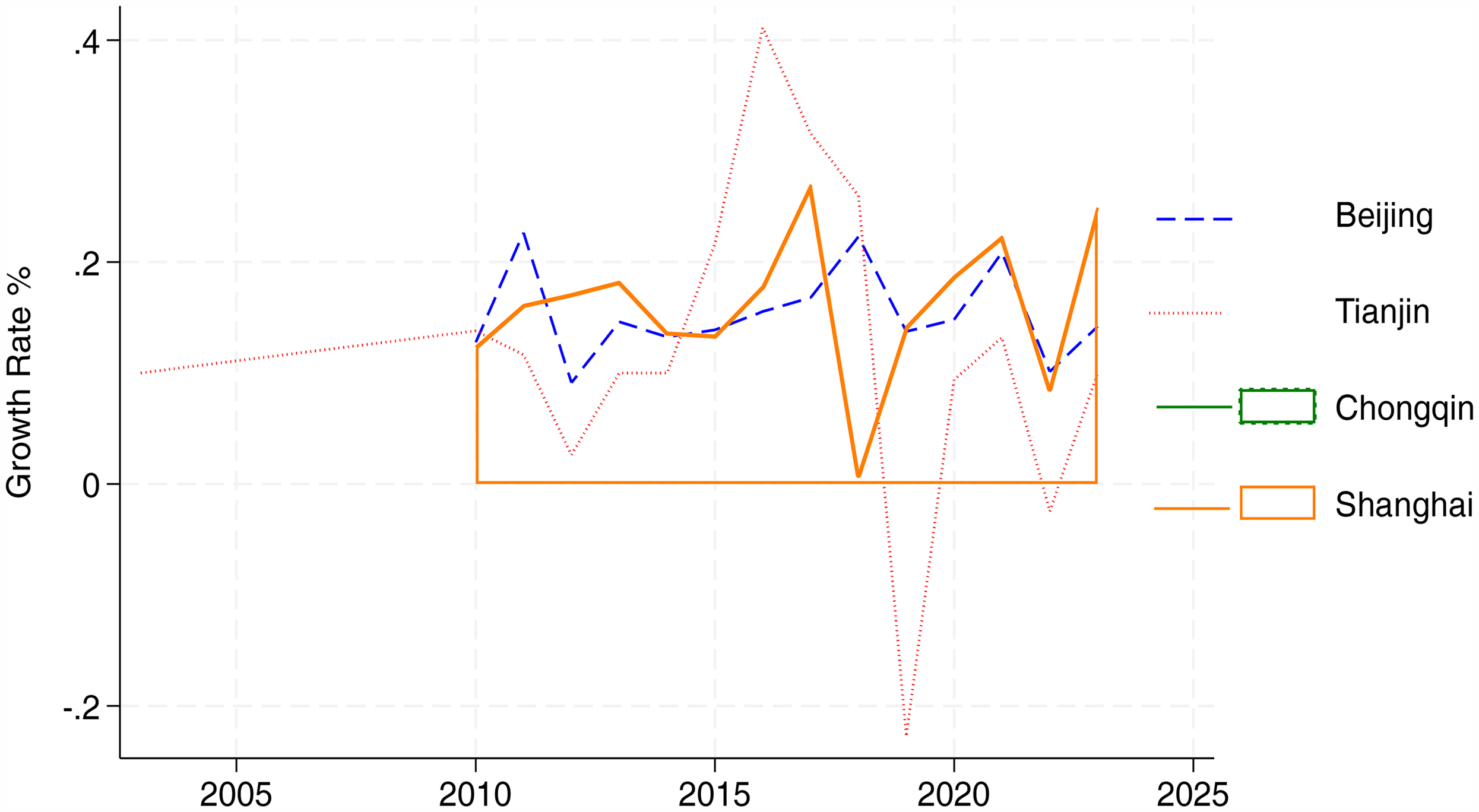
Information industry growth rate.
Industrial hazards
Figure 5 depicts sulfur dioxide emission growth trends for 4 major representative areas from 2005–2025. Beijing and Chongqin exhibit decreasing trends, with their growth rates declining from around 0% to −2.5% over the 20-year period. In contrast, Tianjin's rate is the most volatile, ranging between −6% and 3%, while Shanghai's trajectory is the most erratic, fluctuating sharply from −7% to 4%.
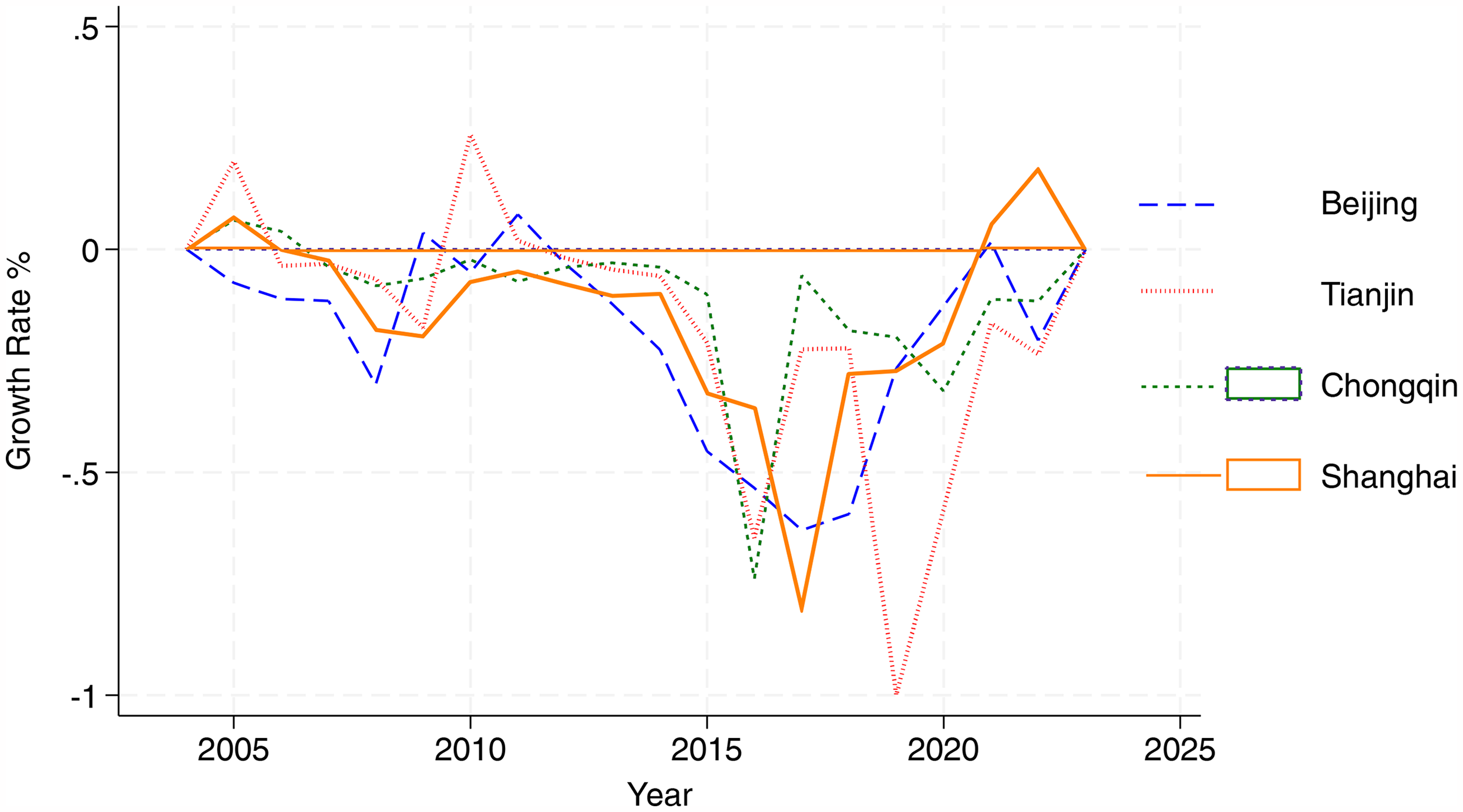
Sulfur dioxide emission growth rate.
In summary, the area representing sulfur dioxide emission growth in this trend figure is below zero, indicating a rapid reduction in sulfur dioxide levels.
Figure 6 shows industrial wastewater discharge growth trends. Beijing and Chongqin exhibit decreasing rates, starting around 0% and declining to around −2.5% and −0.5%, respectively, by 2025. Tianjin and Shanghai have more volatile trajectories - Tianjin ranges from −3.5% to 3%, while Shanghai fluctuates between −2.5% and 2.5%. Despite the fluctuations, all four regions demonstrate an overall downward trend in industrial wastewater discharge growth over the 20-year period.
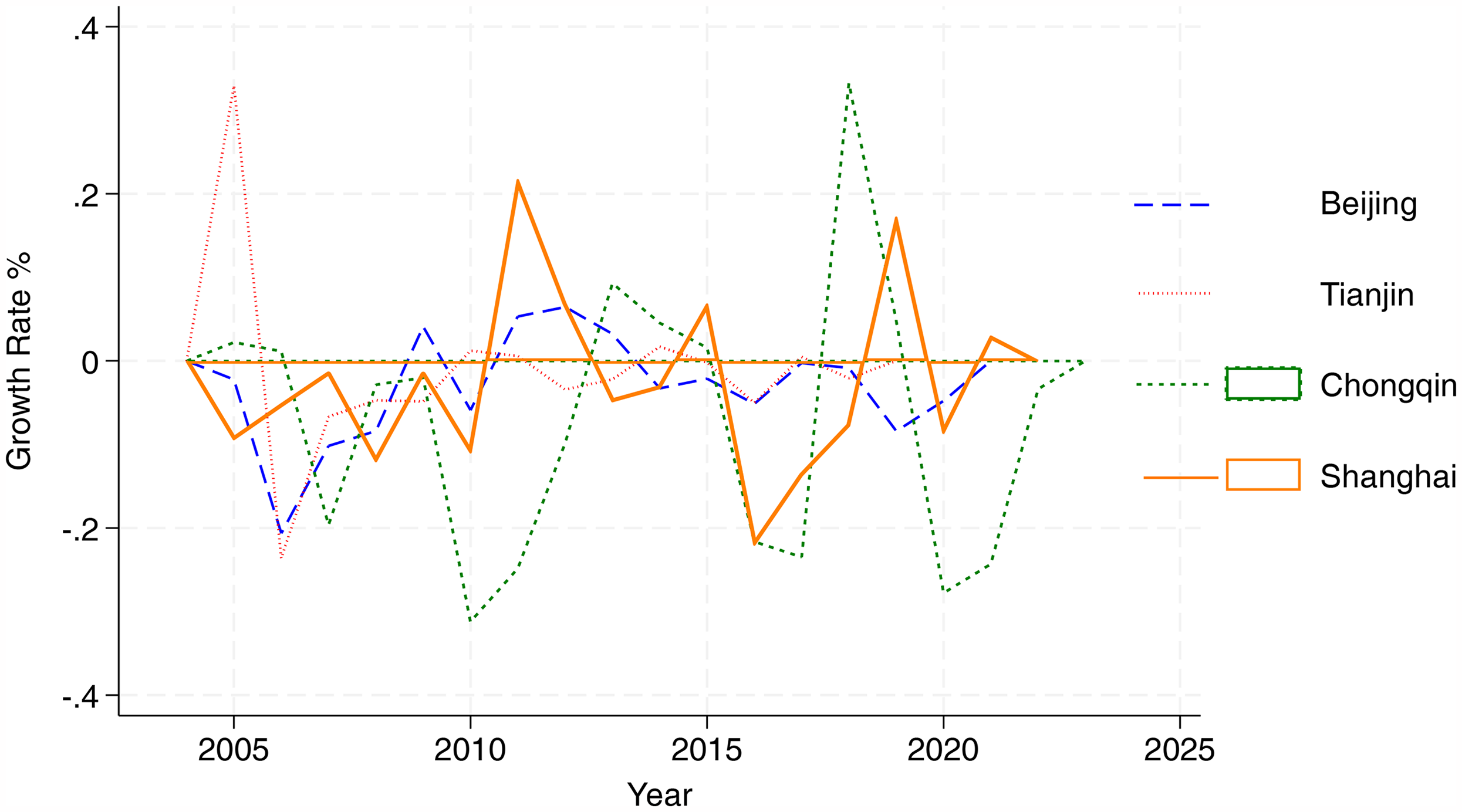
Industrial wastewater discharge growth rate.
In summary, the total area representing industrial wastewater discharge growth is smaller than the area below zero in this trend figure, suggesting a moderate reduction in industrial wastewater discharge.
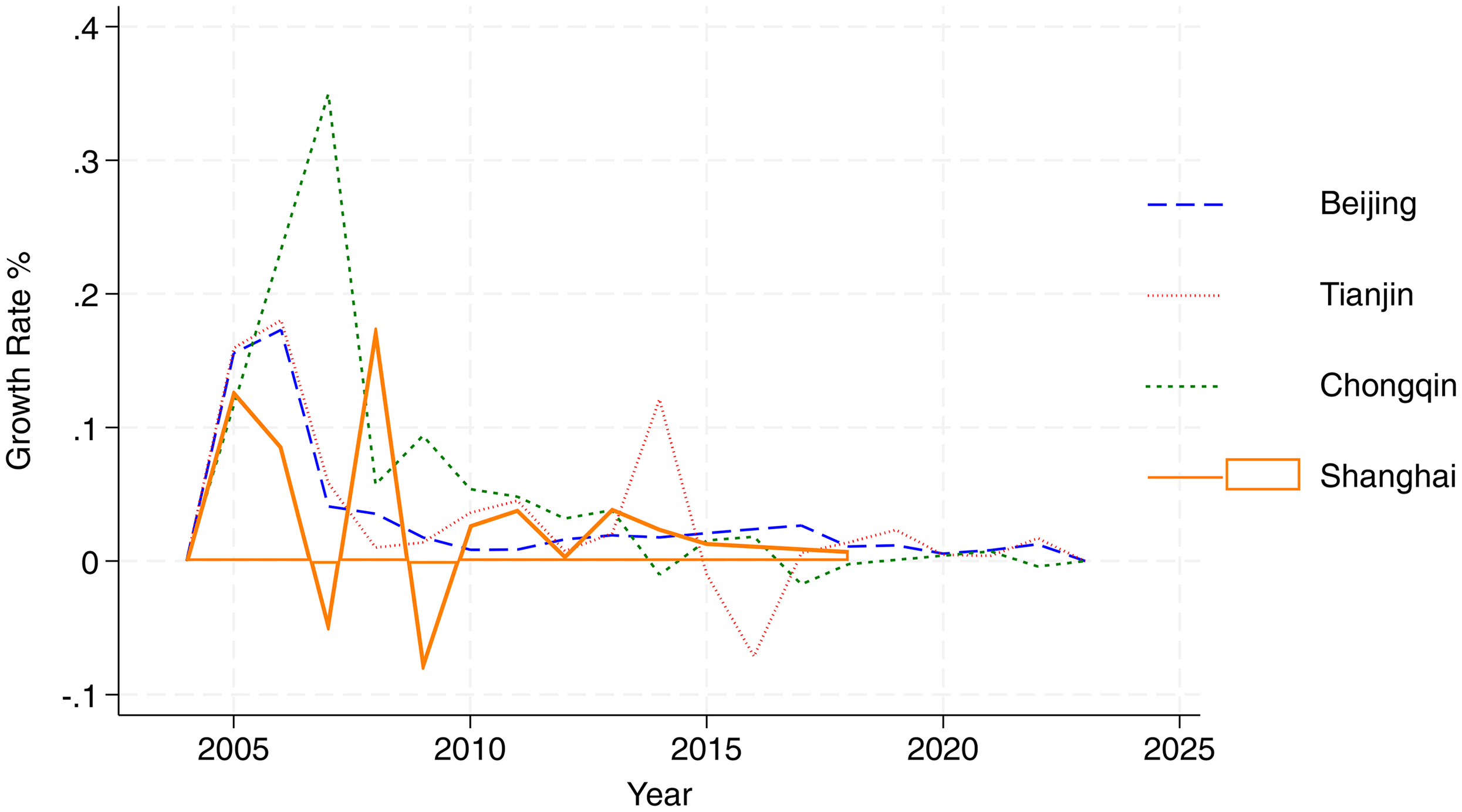
In contrast, Figure 7 depicts a fast industrial wastewater treatment growth. Beijing and Chongqin exhibit divergent paths - Beijing's rate decreases from 0% to around −0.25%, while Chongqin's increases from −0.25% to 0.3%. In contrast, Tianjin's rate is the most volatile, fluctuating between −0.75% and 0.25%. Shanghai's trajectory is also erratic, ranging from −0.75% to 0.15%. Despite these diverse patterns, the chart showcases the complex dynamics in industrial wastewater treatment efficiency across these significant urban centers in China over the 20-year period.
Industrial wastewater treatment growth rate.
In summary, the total area representing industrial wastewater treatment growth is significantly larger than the area below zero, indicating rapid growth in industrial wastewater treatment.
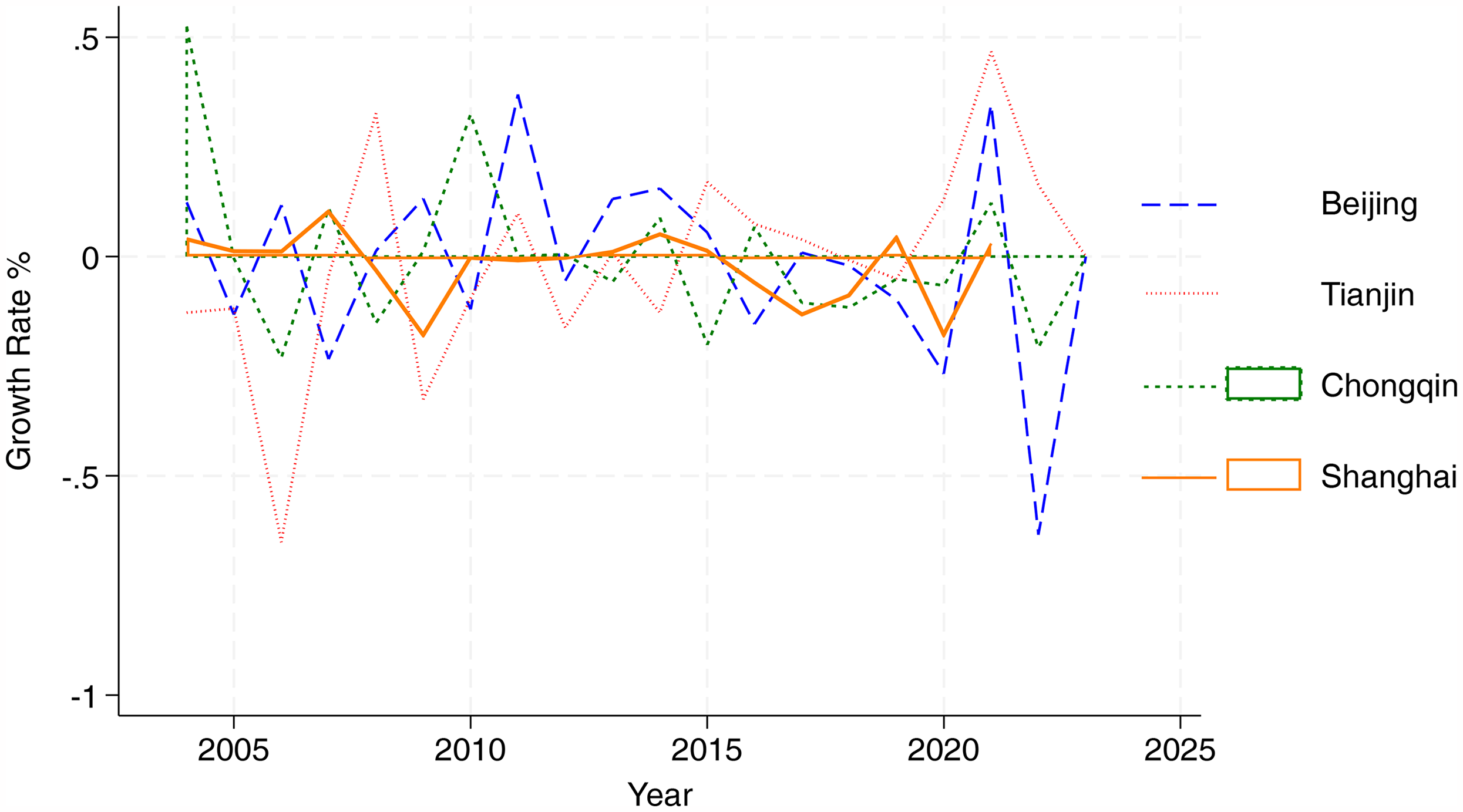
Meanwhile, Figure 8 shows the industrial waste harmless growth rate from 2005–2025. Beijing and Chongqin have decreasing and increasing trends, respectively, while Tianjin and Shanghai exhibit highly volatile trajectories ranging from around −4% to 5%. Despite the fluctuations, the cities demonstrate diverse growth patterns in managing industrial waste in an environmentally harmless manner over the 20-year period.
Industrial waste harmless growth rate.
Model specification
This study expands the EKC framework by employing a multidimensional econometric model based on prior research, incorporating dynamics of digital economy's impact on industrial hazard reduction (Lyu et al., 2023; Xu et al., 2022b; Yang et al., 2023). The dynamic impacts arising from the wealth effect of digital economy will be evaluated using multidimensional econometric models. Thus, the mechanism by which digital economy reduces industrial hazards will be analyzed and validated.
Compared to previous estimation methods, multidimensional econometric models offer several key advantages for analyzing complex economic phenomena (Fisman et al., 2020). First, they offer comprehensive analysis by examining multiple variables and their interrelationships simultaneously, yielding a holistic view. They also incorporate dynamic elements, such as GDP per capita and employment in the tertiary industry, which can lead to over-consumption. This allows the models to capture the effects of changes over time and analyze lagged relationships between variables (Stock and Watson, 2008). Furthermore, these models enhance accuracy by accounting for geographic and sectoral differences, resulting in more precise estimates and predictions (Belloni et al., 2016).
Notably, this study enhances the EKC framework by incorporating dynamic elements such as GDP per capita and employment in the tertiary industry, which can reduce costs and contribute to excessive consumption, to evaluate the adverse effect of digitalization on industrial hazards. This approach demonstrates that misconduct on digital platforms can worsen industrial pollution (Fast et al., 2023; Nuccio and Guerzoni, 2018).


Equations (1) to (3) explore the intricate relationship between digital economy and industrial pollution, focusing on industrial sulfur dioxide emissions, wastewater discharge, and treated wastewater. By incorporating a range of control variables, the models consider other factors that may influence these indicators, such as energy sources, FDI, and tertiary sector employment. Additionally, including polynomial terms for the digital economy allows for a deeper analysis of potential non-linear effects, helping researchers identify both direct impacts and how changes in the digital economy might disproportionately affect environmental outcomes at different economic activity levels. This nuanced approach sheds light on dynamics of digital economy in promoting sustainability in industrial practices.
In Equation (1),
In summary, based on the EKC framework, the model identifies the development of the digital economy as the independent variable affecting the level of industrial hazards over time. While digitalization is expected to reduce industrial hazards, the wealth effect associated with the digital economy can lead to excessive consumption. This highlights the urgency of avoiding misconduct on digital platforms.
Summary statistics and variable's description.
Source: National Bureau of Statistics of China: http://www.stats.gov.cn/english/.
Note: The variables include the total output of the scientific research industry (billion RMB), output of the information technology services industry (billion RMB), broadband subscribers (thousands), mobile phone users (thousands), output of telecommunications (million RMB), industrial sulfur dioxide emissions (thousand tons), industrial wastewater discharge (million tons), rate of treatment (%), per capita GDP (RMB), fiscal revenue (million RMB), tax revenue (million RMB), corporate tax (million RMB), income tax (million RMB), social security expenditure (million RMB), health expenditure (million RMB), FDI (million RMB), supply of gas (million cubic meters), fixed asset investment (million RMB), output of tertiary industry (million RMB), area of administrative land (square kilometers), population (thousand people), employees (thousand people), employment in the tertiary industry (thousand people), employees in the private sector (thousand people), loans (million RMB), deposits (million RMB), and per capita disposable income (RMB).
Empirical results
Industrial Sulfur dioxide
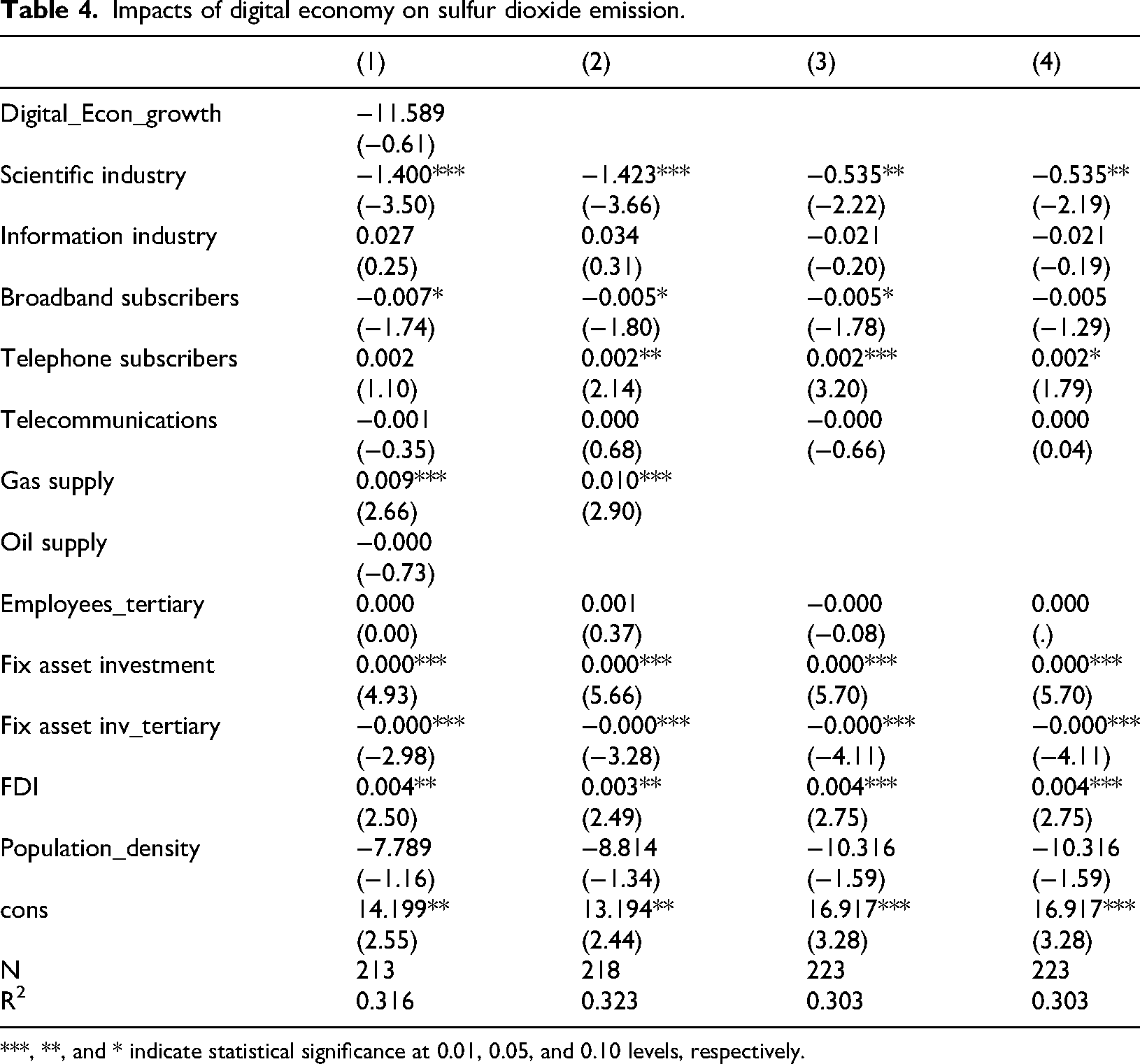
Table 4 displays the regression analysis results examining the factors impacting sulfur dioxide emissions. The study results reveal that the recent growth of the scientific industry has resulted in a significant reduction in sulfur dioxide emissions, with an average decrease of 1400–5350 tons. The expansion of the scientific industry shows a substantial negative effect, with coefficients ranging from −0.535 to −1.423, highlighting a strong association between scientific research advancement and decreased sulfur dioxide emissions.
Impacts of digital economy on sulfur dioxide emission.
***, **, and * indicate statistical significance at 0.01, 0.05, and 0.10 levels, respectively.
Notably, the coefficient for
While an increase in gas supply in million cubic meters has a positive impact on sulfur dioxide emissions, each additional million cubic meters of gas supply results in an increase of 9–10 tons of sulfur dioxide emissions. FDI also shows a positive correlation with higher emissions, with a notable coefficient of 0.004. This suggests that rural areas attracting FDI in low-tech and high energy-consuming industries experience an average increase of 3–4 tons of sulfur dioxide emissions for every million RMB of FDI. The models account for approximately 30% of the variability in sulfur dioxide emissions, as evidenced by R² values ranging from 0.303 to 0.323.
In conclusion, focusing on policies that promote sustainability in the scientific industry and encourage environmentally-friendly practices in sectors attracting FDI could effectively reduce sulfur dioxide emissions. Furthermore, implementing regulations on gas supply and promoting responsible digitalization could play a significant role in mitigating the adverse environmental effects.
Figure 9 depicts the relationship between digital economy indicator (Digital_Econ) and sulfur dioxide emissions. The gray dots represent sulfur dioxide emissions, with most points clustering at lower emission levels. The blue fitted line indicates a downward trend, reinforcing the notion that as digital economy metrics increase, sulfur dioxide emissions tend to decrease. This inverse relationship may suggest that regions with stronger digital economies are adopting cleaner technologies, leading to lower emissions.
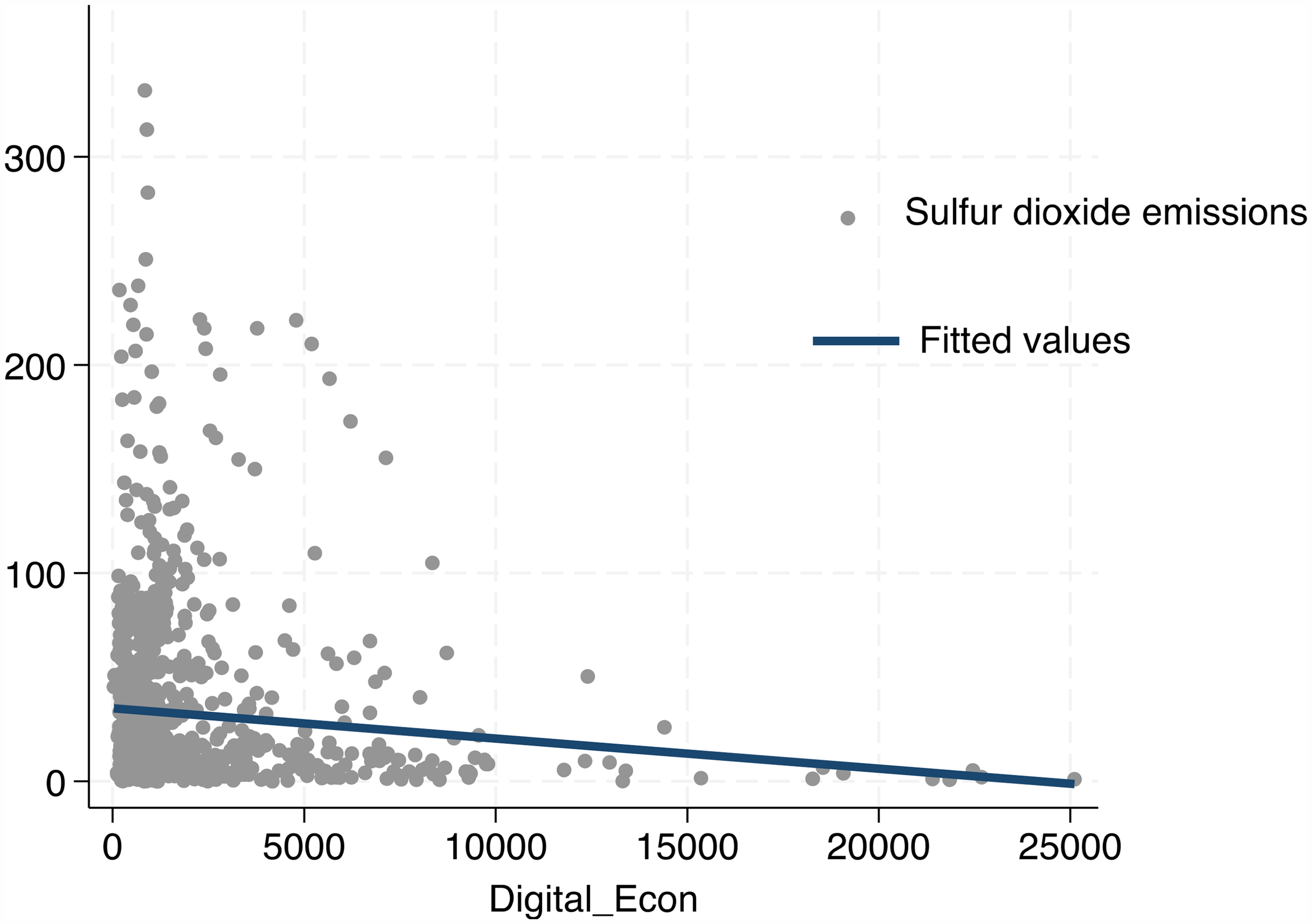
Digital economy and sulfur dioxide emissions.
Industrial wastewater discharge
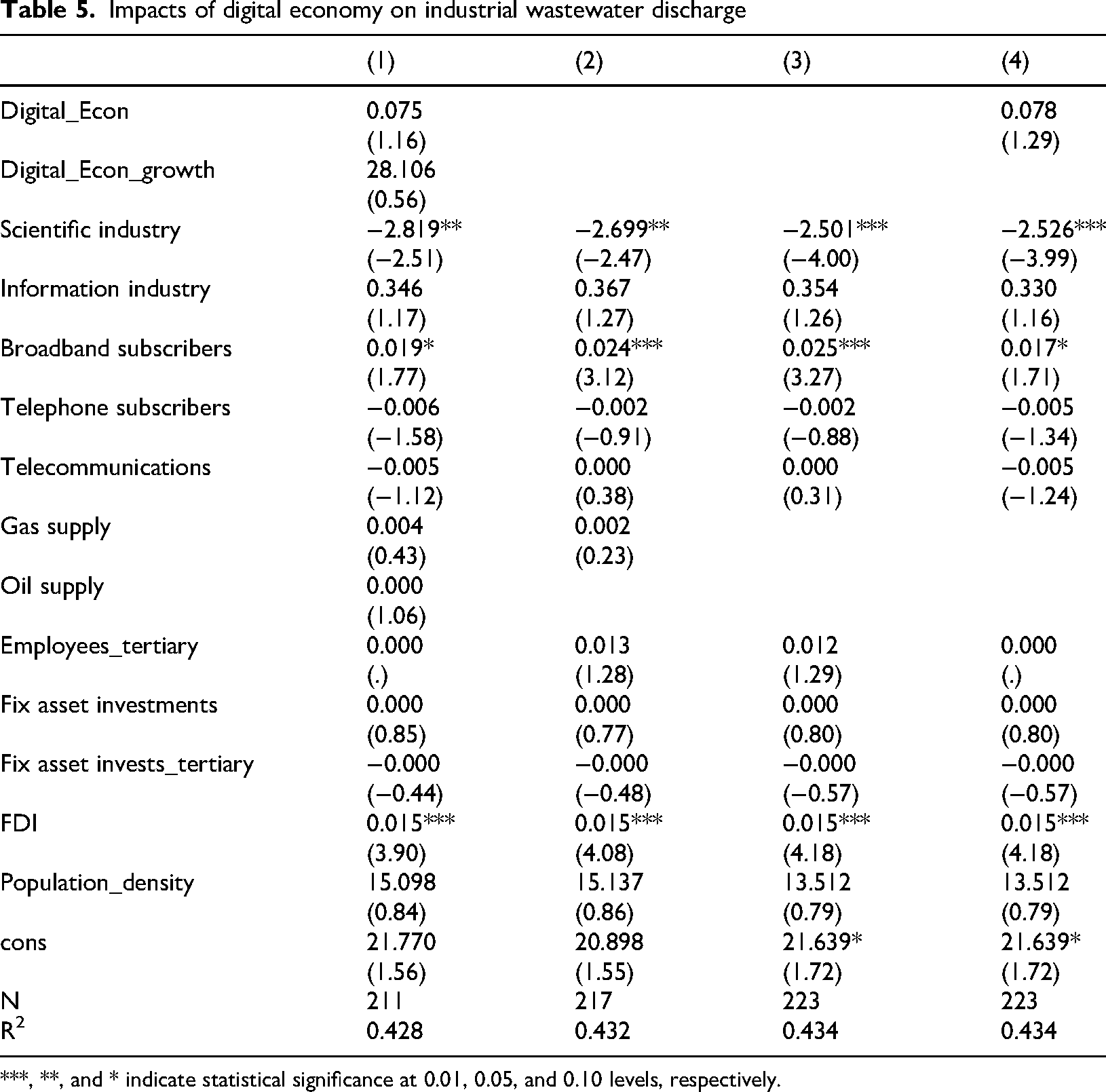
Table 5 presents the regression results analyzing the factors influencing wastewater discharge. The study findings indicate that the recent expansion of the scientific industry has led to a notable decrease in wastewater discharge, with an average reduction of up to 2.819 million tons. For every thousand new broadband subscribers, industrial water discharge increases by 1900 to 2500 tons. This finding is consistent with the idea that the advancement of digital technology, particularly in online commerce, can create a wealth effect that exacerbates industrial pollution. Meanwhile, digitalization, as evidenced by the growth in the telecommunications and information industry, does not demonstrate any impact on reducing industrial wastewater discharge. In contrast, due to the countryside attracting FDI in low-tech and high energy-consuming industries, for every million RMB of FDI, industrial wastewater discharge increases by an average of 15,000 tons.
Impacts of digital economy on industrial wastewater discharge
***, **, and * indicate statistical significance at 0.01, 0.05, and 0.10 levels, respectively.
In detail, the coefficient for digital economy growth is 28.106 in model (1), but it is not statistically significant, suggesting an unclear causal relationship between the digital economy and industrial wastewater discharge. In contrast, the scientific industry consistently shows a negative effect, with coefficients ranging from −2.501 to −2.819 in models (2) to (4), indicating that growth in this sector is linked to reduced wastewater discharge. The information industry, however, does not have a significant impact. Broadband subscribers exhibit a positive and statistically significant relationship with wastewater discharge in models (1), (2), and (3), implying that increased broadband access may lead to higher discharge levels. FDI shows a significant positive effect across all models, implying that increased investment is associated with higher wastewater discharge. Other variables such as telephone subscribers, telecommunications, gas supply, and population density do not demonstrate significant effects.
With R² values ranging from 0.428 to 0.434, the models explain approximately 43% of the variance in industrial wastewater discharge, highlighting the complexity of the relationship between the digital economy and wastewater management.
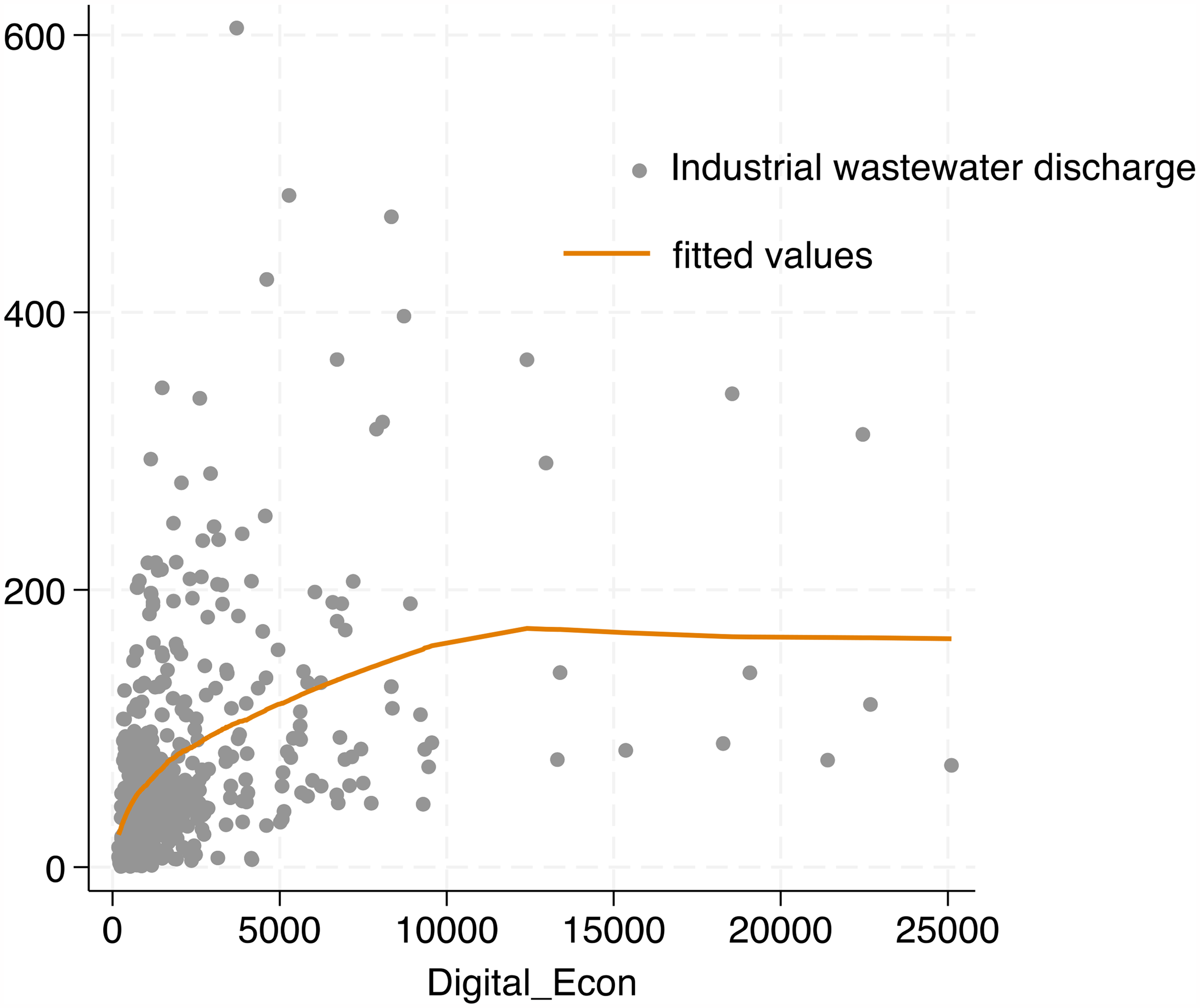
Figure 10 illustrates the relationship between digital economy indicators (Digital_Econ) and industrial wastewater discharge. The gray dots represent levels of wastewater discharge, displaying a noticeable spread across various levels of digital economic activity.
Digital economy and industrial wastewater discharge.
The orange fitted line indicates a positive trend, suggesting that as digital economy metrics increase, industrial wastewater discharge tends to rise as well. This relationship implies that regions with more robust digital economies may also experience higher levels of industrial wastewater, potentially driven by increased industrial activity associated with the wealth effect of digitalization.
However, the scatter shows variability, indicating that while there is a general trend, specific cases may deviate from it. This variability warrants further analysis of the underlying factors influencing this relationship.
Industrial wastewater treatment rate
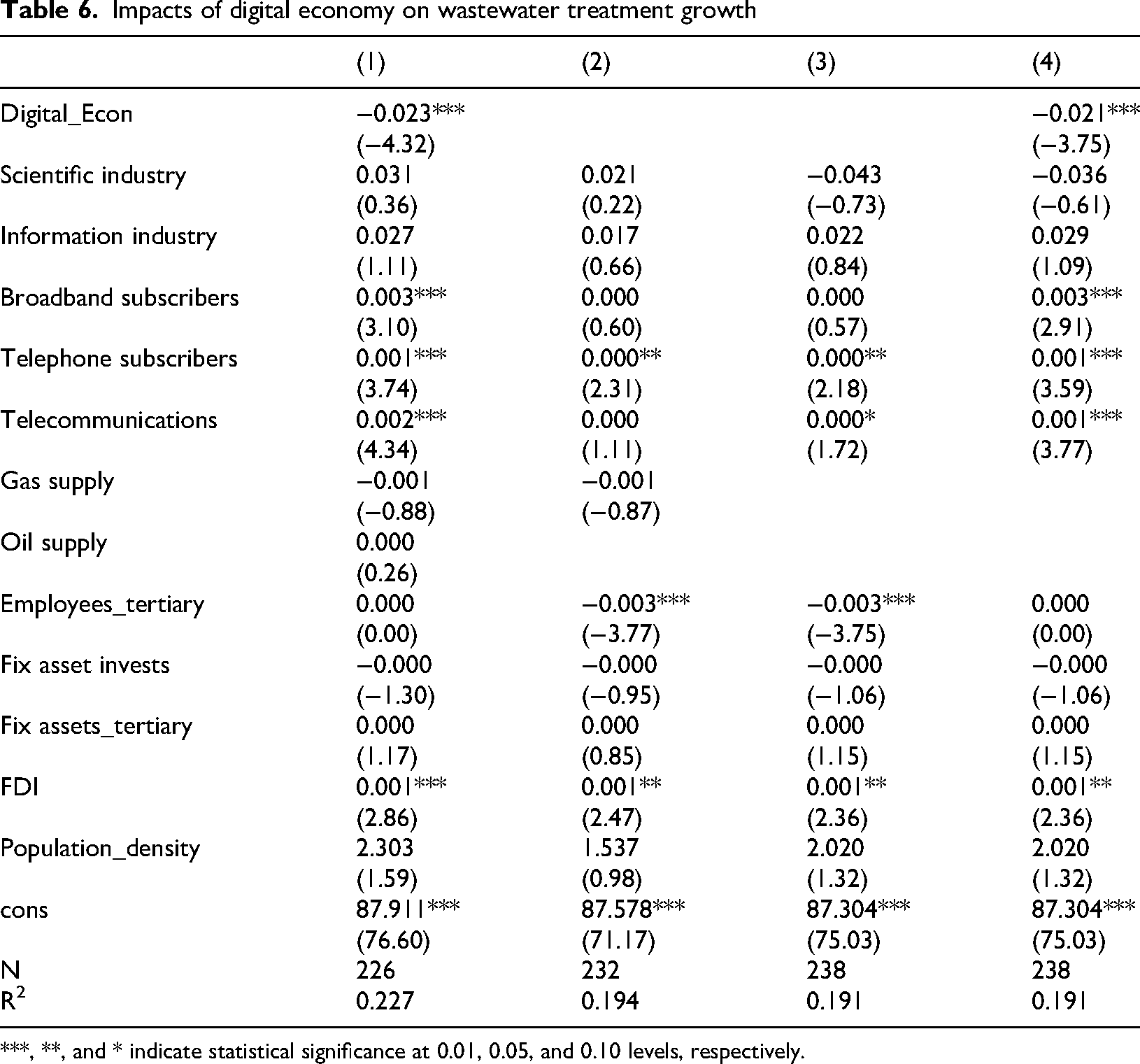
Table 6 presents estimates of factors influencing industrial wastewater treatment. Notably, the digital economy exhibits a significant negative impact, with coefficients of −0.023 and −0.021, suggesting that the overwhelming digitalization is associated with reduced wastewater treatment. In contrast, the growing number of broadband subscribers shows a significant positive effect in models (1) and (4), indicating a minor correlation with increased wastewater treatment. Similarly, both telephone subscribers and telecommunications display slightly significant positive relationships with wastewater treatment.
Impacts of digital economy on wastewater treatment growth
***, **, and * indicate statistical significance at 0.01, 0.05, and 0.10 levels, respectively.
Additionally, FDI consistently demonstrates a positive effect across all models, linking it to increased wastewater discharge and a likely growth rate in treatment. Overall, these findings underscore the complex relationships between urban wastewater levels and various economic factors, highlighting the potential costs and benefits of digital economy growth in addressing industrial wastewater issues.
Figure 11 illustrates the relationship between digital economy indicators (Digital_Econ) and wastewater treatment rates. The gray dots represent treatment percentages, primarily clustering between 50% and 100%, indicating that regions with higher digital economy activity tend to achieve efficient wastewater treatment.
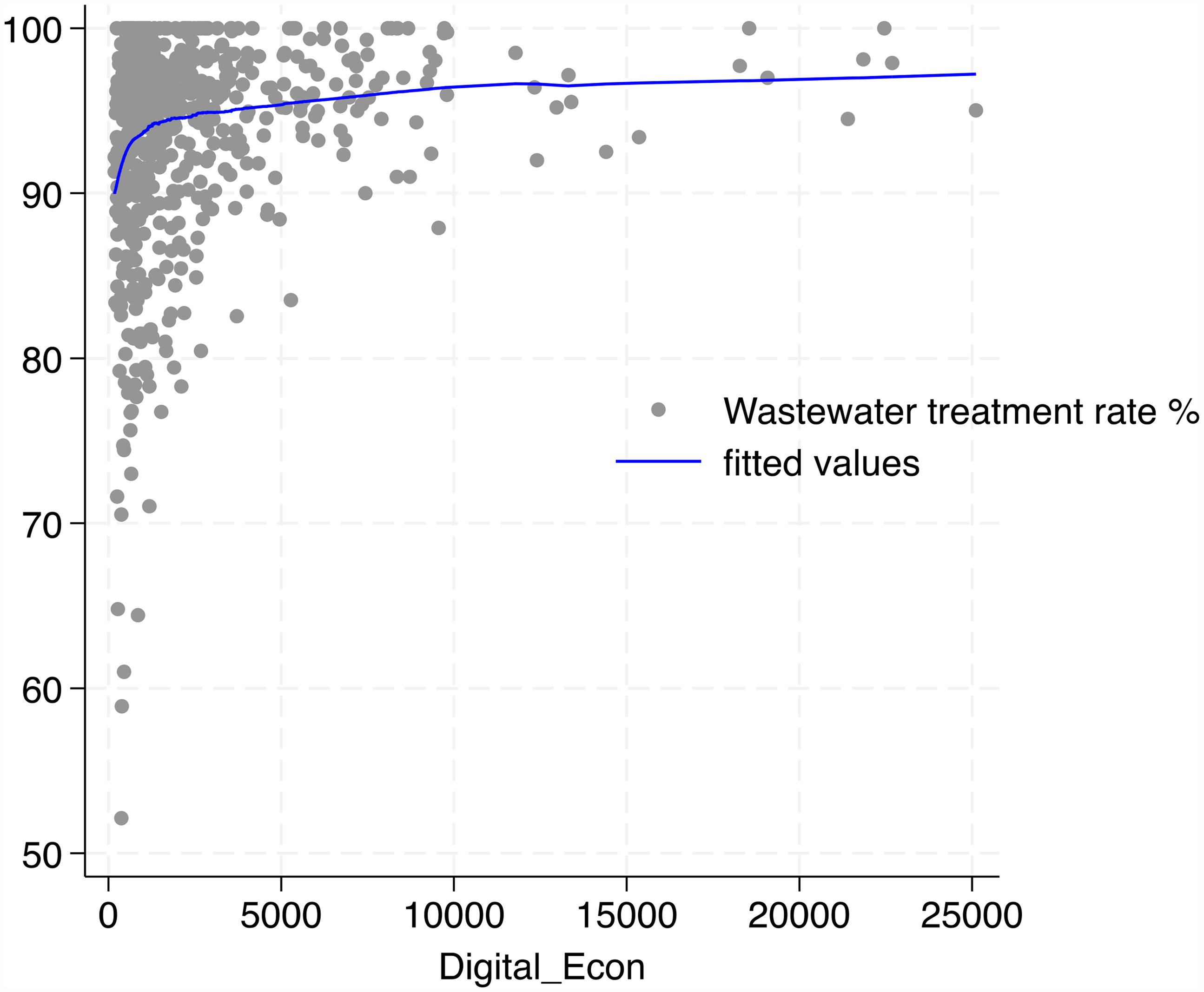
Digital economy and wastewater treatment growth rate.
The blue fitted curve reveals a saturating trend, suggesting that as digital economy metrics increase, treatment rates approach 100%. However, the curve levels off, indicating diminishing returns beyond a certain point of growth. This suggests that while advancements in the digital economy may enhance wastewater treatment efficiency, further growth could lead to limited improvements.
Falsification tests
To validate the empirical analysis, falsification tests will be conducted. Since the digital economy has emerged only in recent years and the information infrastructure is new, these tests are expected to indicate that there was no significant reduction in industrial hazards in the past without digitalization.
The testing period selected was 2003–2015, and the results confirm that the digital economy had not significantly reduced industrial hazards, as expected. While an increase in telephone subscribers reduced industrial sulfur dioxide emissions by 0.004 tons per unit output, a growing number of broadband subscribers significantly increased industrial wastewater discharge without the benefits of digitalization. Thus, the falsification test results align with the empirical analysis presented above.
Mechanism tests
The complexity of the relationship between the digital economy and industrial hazard management suggests that, despite a general trend of pollution reduction, specific cases may deviate, necessitating further analysis of the underlying influencing factors. The following mechanism test aims to identify the wealth effect of the digital economy on industrial pollution, as outlined in the research framework (Figure 1).
Table 7 presents regression results examining the impact of the digital economy's wealth effect on industrial hazards, specifically sulfur dioxide emissions and wastewater discharge. Investments in tertiary industry showed a slight negative effect on sulfur dioxide emissions in models (1) and (2), though this effect is not significant in models (3) to (5). GDP per capita is positively associated with increased wastewater discharge in model (3) and negatively impacts treated wastewater in model (4), suggesting that higher economic activity correlates with greater wastewater generation.
Falsification tests.
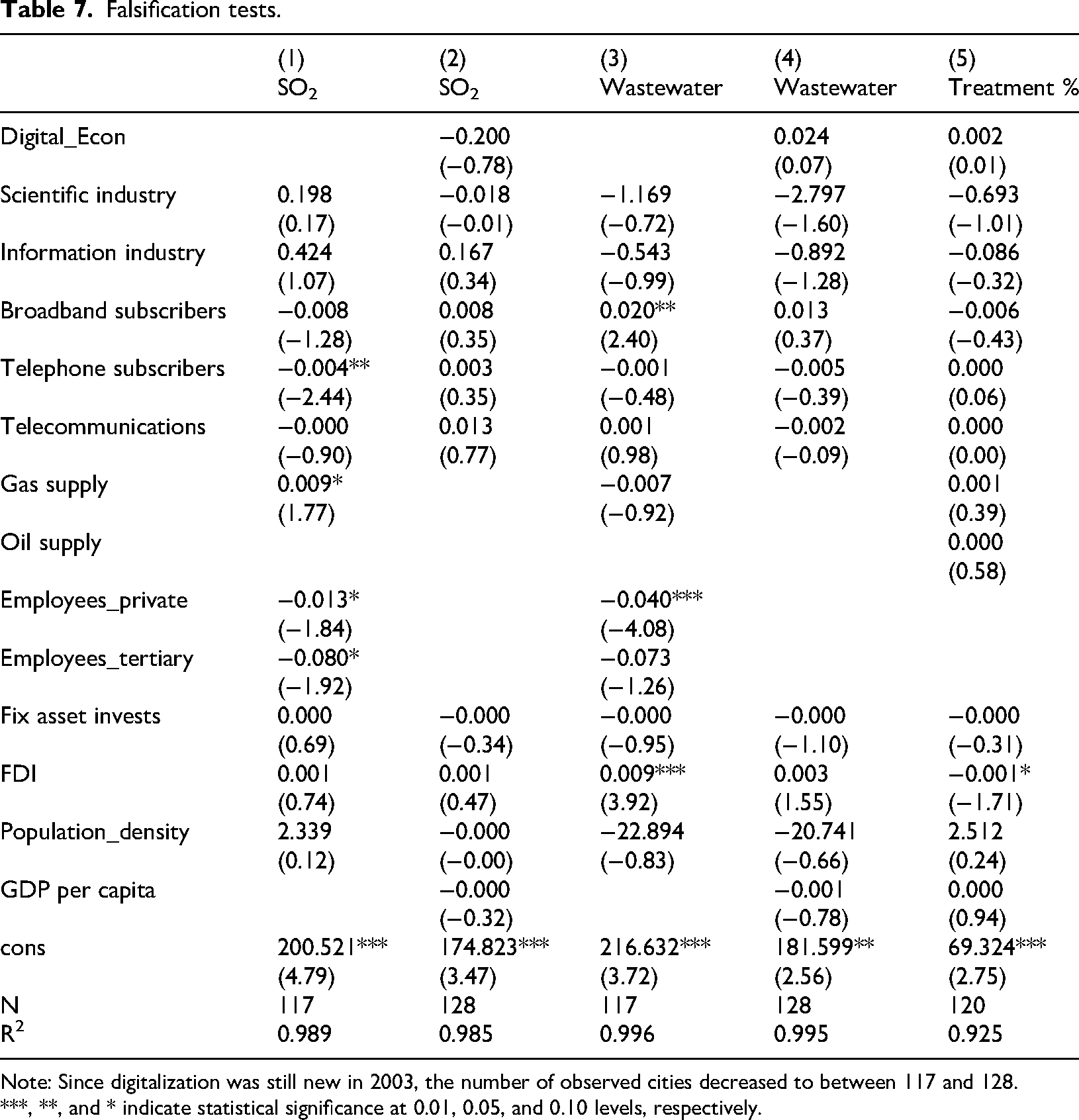
Note: Since digitalization was still new in 2003, the number of observed cities decreased to between 117 and 128.
***, **, and * indicate statistical significance at 0.01, 0.05, and 0.10 levels, respectively.
The wealth effects from the digital economy, particularly through rising private sector employment (Employees_private), demonstrate a significant positive effect on wastewater discharge. This indicates that the digital economy boosts private sector jobs, contributing to higher discharge levels. In contrast, the Scientific Industry consistently shows a significant negative effect across all models, correlating with reduced pollution levels. Additionally, increasing Broadband Subscribers exhibit a significant negative relationship with both sulfur dioxide and wastewater discharge, suggesting that digitalization may help lower pollution.
Digital economy has a dynamic impact on industrial hazards reduction, as it lowers production costs while boosting employment and purchasing power, which positively correlates with wastewater discharge. Overall, these findings emphasize the complex dynamics between the digital economy and industrial hazards, illuminating the role of the digital economy in hazard reduction.
Discussion
The study enhances the EKC framework by employing a multidimensional econometric model that incorporates dynamic elements such as GDP per capita and employment in the tertiary industry. These factors contribute to the wealth effect and over-consumption, enabling a thorough evaluation of how the digital economy reduces industrial hazards. Thus, hypotheses in Table 1 have been testified.
The digital economy is emerging as a powerful force driving urban economies toward green and sustainable development (Litvinenko, 2020; Pagoropoulos et al., 2017). Its enabling effects, such as promoting green innovation, enhancing energy efficiency, and optimizing production processes and logistics, are essential for this transformation (Luo et al., 2023).
However, scholars caution that misconduct on digital platforms could exacerbate industrial pollution (Nuccio and Guerzoni, 2018). The concentration of data-driven market power has prompted calls for rigorous regulations on information technology to curb excessive consumption (Fast et al., 2023). While the digital economy indirectly fosters green innovation, this effect may diminish as these factors mature. Developed regions can hinder clean-production in less developed areas due to brain drain and energy consuming industrial transfer (Luo et al., 2023).
Given the complex literature on how digital economy reduce industrial hazards, this study incorporates dynamic elements such as GDP per capita and employment in the tertiary industry. This approach enhances the EKC framework, offering a nuanced evaluation of the digital economy's contribution on industrial pollution.
To address the research gap, this study develops a framework that illustrates how the digital economy reduces industrial hazards. Building on the latest expanded EKC theory (Guo et al., 2023; Hou, 2023), this study further acknowledges the transformative impact of digital technologies on economic activities. Economic development and environmental degradation exhibit an inverted U-shaped relationship (Oloyede et al., 2023), highlighting how digital technologies can enhance energy efficiency, optimize production processes, and facilitate the dematerialization of economic activities, ultimately leading to reduced industrial emissions and waste. In this case, hypothesis H1 in Table 1 has been confirmed.
Additionally, the study constructs a Digital Economy Indicator System for cities, drawing on the work of Chaonan et al. (2024), Van and Duy (2020), Zaicev et al. (2021), Yang et al. (2024), and Goldfarb and Tucker (2019). The empirical analysis reveals that the scientific research industry significantly contributes to digitalization and drives industrial hazard reduction. Therefore, hypothesis H2-a-c in Table 1 has been confirmed.
Ultimately, this study advocates for a balanced approach to digitalization that incorporates inclusive motivational mechanisms, addresses access barriers, and prioritizes environmental sustainability. Importantly, it emphasizes that digitalization, while beneficial, can also have negative environmental impacts, primarily due to the ‘wealth effect’ (See empirical estimations presented in Table 8). While information technology brings opportunities for upgradation, it can also threaten the environment through overconsumption.
Thus, the study enhances the explanatory power of the EKC theory by capturing the environmental benefits of the digital economy. In other words, this research provides a framework that recognizes the dynamics of digital economy on reducing industrial hazards, shedding lights on the role of digitalization in fossil energy replacement.
Digital economy's wealth effect on industrial hazards
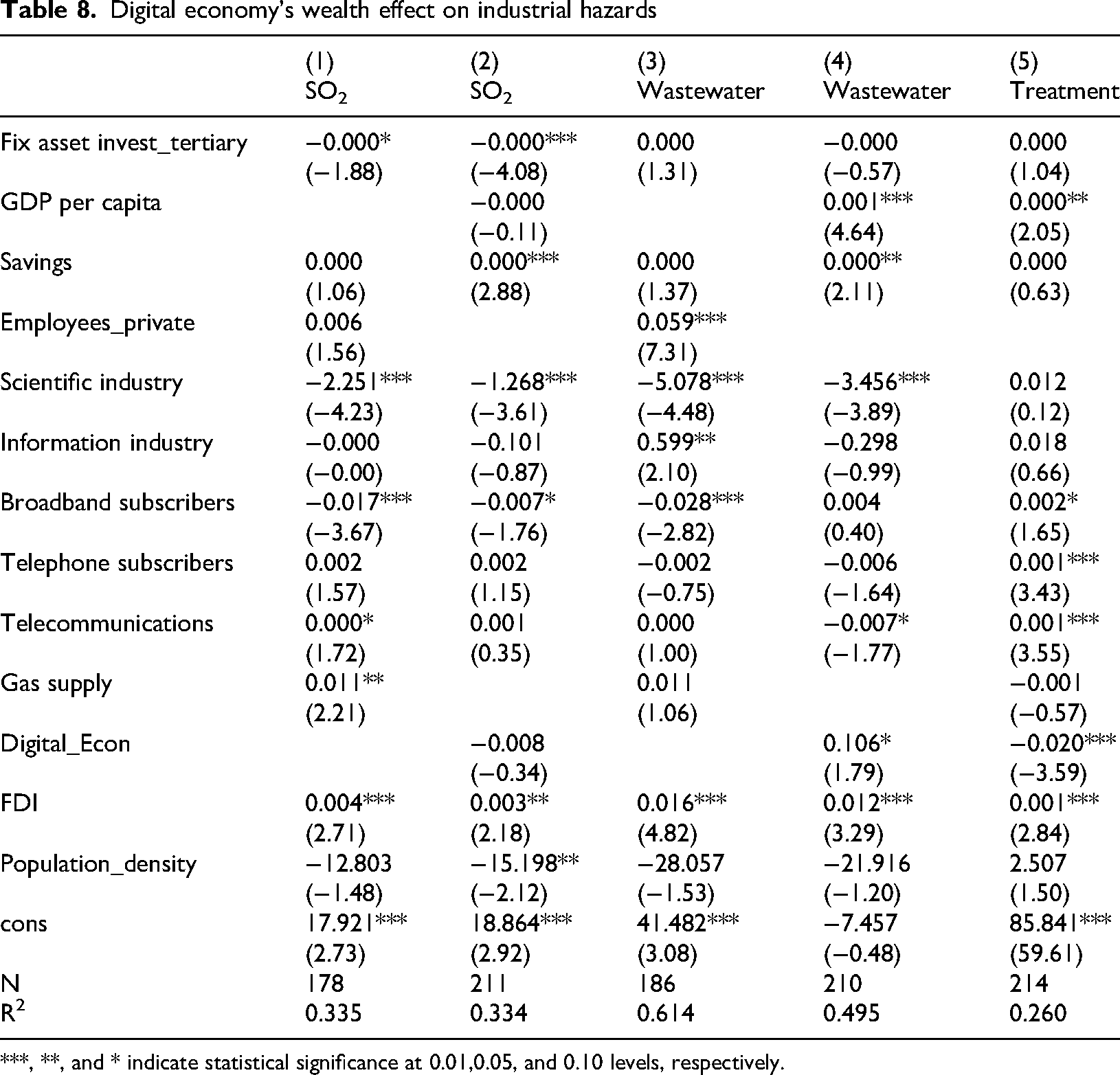
***, **, and * indicate statistical significance at 0.01,0.05, and 0.10 levels, respectively.
Potential applications and future case prospects
This framework allows for a nuanced understanding of digital economic development, highlighting critical areas for eco-friendly investment and responsible digitalization. By using a structured approach, policymakers and stakeholders can identify strengths and weaknesses within the digital economy, guiding strategic decisions to enhance digital infrastructure and industry performance.
By incorporating the role of digital technologies, the EKC framework can be adapted to better reflect the evolving dynamics between economic growth, technological change, and environmental sustainability in the digital age (Tian and Meng, 2023).
While highlighting the potential benefits of digital technologies in reducing hazards, the framework also recognizes the challenges associated with digitalization, such as job displacement and resistance to change. The key contribution lies in emphasizing a comprehensive and balanced approach to digitalization, incorporating inclusive motivation mechanisms, addressing access restrictions, and prioritizing environmental sustainability. By promoting this nuanced perspective, the research provides a roadmap for leveraging the digital economy to enhance energy efficiency while balancing digitalization with hazard reduction.
This research on the digital economy's impact on industrial hazards offers valuable insights for policy development, industry strategies, investment decisions, and public awareness. By informing policy decisions, the research can promote sustainable industrial practices, incentivize digital adoption, and mitigate negative impacts. Companies can leverage the framework to improve their environmental performance through digital transformation strategies, while investors can use it to guide their decisions toward sustainable businesses. Raising public awareness about the potential and challenges of the digital economy can encourage responsible digital consumption and support policies that promote sustainability.
Future research can delve deeper into specific industries, comparing regional impacts and tracking long-term trends, thereby enriching hypothesis H1 in Table 1. International collaboration can foster the development of shared best practices and standards for responsible digitalization and environmental protection. By exploring these applications and case prospects, the research can contribute to a more sustainable and equitable future, harnessing the power of the digital economy to reduce industrial hazards and promote economic development.
Conclusions
The research delves into the complex relationship between the digital economy and industrial hazards, building upon the EKC framework. While recognizing the potential of digital technologies to reduce industrial hazards by improving energy efficiency, the research also emphasizes the dynamic effects of the digital economy.
The empirical estimates indicate a weak relationship between the digital economy and sulfur dioxide emission, with a slight negative effect from increasing broadband subscribers suggesting a minor role of digitalization in emission reduction. In contrast, the expanding scientific industry significantly reduces emissions, with reductions ranging from −0.535 to −1.423 tons per billion RMB of output (or 1400 million US dollars), indicating a clear correlation between scientific research growth and lower sulfur dioxide emissions (confirmed H2-a and H2-b in Table 1). Notably, increased gas supply positively influences emissions, while FDI, often linked to energy-intensive industries, is also positively associated with higher emissions, with a significant coefficient of 0.004.
Regarding industrial wastewater discharge, the digital economy's impact is unclear, but the scientific industry demonstrates a significant negative effect, with coefficients ranging from −2.501 to −2.819 tons per unit output. Conversely, digital technology is contributing positively to wastewater treatment trends (confirmed H2-c in Table 1). Although the digital economy exhibits a significant adverse effect, the growing number of broadband subscribers is associated with increased wastewater treatment. FDI consistently shows a positive effect across all models, linking it to higher wastewater discharge and likely growth in treatment rates.
The mechanism test reveals that wealth effects from the digital economy, particularly through rising private sector employment, significantly increase wastewater discharge. This indicates that the digital economy boosts private sector jobs, contributing to higher discharge levels (confirmed H2-a in Table 1). The study also acknowledges the potential of the digital economy to reduce industrial hazards through improvements in energy efficiency and optimized production processes, while addressing challenges such as job displacement and resistance to change.
This research effectively fills the gap regarding the digital economy's impacts on industrial hazard reduction and its dynamic effects. The findings suggest that the digital economy enhances energy efficiency and optimizes production processes, aligning with the downward-sloping segment of the EKC. Ultimately, the study underscores the need for a balanced approach to digitalization that considers both opportunities and challenges, enabling us to harness the digital economy for a more sustainable future while promoting economic development.
The study proposes a multifaceted approach to mitigate the negative impact of the digital economy on the environment. It suggests implementing population control measures to manage overall human environmental impact, providing eco-friendly education to promote sustainable practices and environmental consciousness, encouraging quality lives to shift focus from overconsumption to well-being, and developing complex residence planning to create more sustainable living environments. These strategies collectively aim to reduce the overconsumption often associated with digital economic expansion. The study emphasizes that cultivating a quality population, equipped with environmental awareness and sustainable living practices, is key to ensuring that Industry 4.0 can effectively reduce industrial hazards while maintaining environmental sustainability.
Limitations
The research examines the potential of the digital economy to facilitate fossil energy replacement, specifically in the context of reducing industrial hazards. It builds upon the EKC framework, acknowledging the transformative impact of digital technologies on economic activities and their potential to reduce environmental degradation. However, the research acknowledges several limitations.
The study's reliance on aggregated data for regional industrial hazardous discharges and total outputs presents a limitation, as it lacks the granularity to analyze industry-specific pollution levels. To address this, future research should incorporate detailed industry-level statistics on hazardous discharges. This would allow for a more nuanced understanding of the digitalization transformation within each industry, providing a richer picture of regional progress toward sustainability.
Further research is necessary to investigate additional factors that may influence average industrial hazardous discharges, including environmental regulations, emerging green technologies, public perceptions of digital technologies, and the interconnectedness of global supply chains. By investigating these factors, future research can contribute to a more comprehensive understanding of the digital economy's impact on industrial hazards and inform strategies for achieving sustainable development.
Footnotes
Acknowledgements
The author expresses gratitude to the professor for the valuable feedback on the first draft of this paper and thanks the anonymous reviewers and scholars for their insightful and profound suggestions. The author assumes full responsibility for any omissions and errors in this study.
Funding
The author received no financial support for the research, authorship, and/or publication of this article.
Conflicting interests
The author declared no potential conflicts of interest with respect to the research, authorship, and/or publication of this article.
Data availability
Date available at National Bureau of Statistics of China:  . Data were collected from 312 cities and towns across the country for the period from 2003 to 2023. The variables include the total output of the scientific research industry, output of the information technology services industry, broadband subscribers, mobile phone users, output of telecommunications, industrial sulfur dioxide emission, industrial wastewater discharge, rate of harmless treatment, per capita GDP, fiscal revenue, tax revenue, corporate tax, income tax, social security expenditure, health expenditure, FDI, supply of gas, fixed asset investment, fixed asset investment in the tertiary industry, area of administrative land, population, employees, employment in the tertiary industry, employees in the private sector, loans, deposits, and per capita disposable income.
The research findings presented in the study are included in the article and supplementary material, further inquiries can be directed to the author.