




Abstract
Geothermal heating is gaining attention as a low-carbon energy solution with potential for sustainable systems. This article investigates the feasibility of utilizing medium to deep geothermal energy for heating in southern China, particularly in Anguo Town, Pei County, Jiangsu Province. Using TOUGH2 software, we developed a dual-vertical-well geothermal extraction model to simulate various operational scenarios and identify effective heating strategies. Our findings show that the extraction and injection processes enhance groundwater convection, overshadowing the natural flow effects. The reservoir's pressure dynamics allow it to self-regulate, returning to equilibrium after each injection-extraction cycle, while the temperature field can experience thermal breakthroughs due to cooling over time. Key factors influencing outcomes included the injection fluid rate, which greatly impacted produced water temperature and its fluctuations, while the height difference between wells and well spacing primarily affected long-term changes in production temperature. The optimized parameters for the geothermal system in Anguo Town were identified as an injection flow rate of qinj = 50 kg/s, a well spacing of d = 400 m, and a perforation section height difference of Δh = 168.8 m. Under these conditions, the geothermal system can operate continuously over 50 extraction cycles, providing stable heat supply ranging from 4567.5 to 7492.2 kW each cycle. This research provides valuable insights for effectively harnessing medium to deep geothermal resources for supply heating in southern China, contributing to a more sustainable energy landscape.
Keywords
Introduction
As the global focus on renewable energy intensifies, geothermal energy, as a clean and sustainable resource, has gradually captured public interest. The applications of geothermal energy are extensive, providing stable energy supplies for electricity generation, heating, agriculture, and industrial processes (Abrasaldo et al., 2024; Ouerghi et al., 2024; Zayed et al., 2023; Zhang et al., 2015). Particularly in the heating sector, the application prospects of geothermal energy are very broad, with its unique geographical advantages making it an ideal energy option in many regions, especially in colder climates. Many countries, including the United States, Japan, New Zealand, Germany, France, and Iceland, are actively exploring the application of geothermal energy in the cooling/heating of buildings (Bertani, 2016; Zayed et al., 2023). Especially in Iceland, around 1980, their heating sector began to fully decarbonize, with geothermal district heating utilization became the common form of heating (Melsted, 2021). Currently, Iceland has the world's largest geothermal heating installed capacity (1650 MW; 6840 GW·h (2021)) (Butuzov, 2023). Compared to traditional fossil fuel heating, geothermal heating not only reduces greenhouse gas emissions significantly but also alleviates the impact of energy price fluctuations on residents’ lives (Abidin et al., 2018; Hofmann et al., 2014; Umar et al., 2024). It is estimated that by 2050, geothermal resources are forecasted to provide 5% of the heating load worldwide (Zhao et al., 2022).
The fundamental principle of geothermal heating involves extracting subterranean hot water through geothermal wells or injecting surface water into the ground to facilitate heat exchange using temperature differences. This system is typically manifested in two formats: dual-well systems and single-well systems (Kujawa et al., 2003). The dual-well system operates by injecting cold water from one well into the reservoir while extracting heated water from another well, whereas the single-well system utilizes a heat exchanger in a single borehole to achieve bidirectional heat exchange, boasting lower construction costs and system complexity. In addition to traditional technologies, several novel geothermal heat extraction technologies have gradually been researched and applied in recent years. For example, there are gravity heat pipe circulation heating technology (Huang et al., 2022), U-shaped well closed-loop heating technology (Song et al., 2018), and multibranch radial well circulation heating technology (Wang et al., 2022). The development of these technologies has also laid a solid foundation for the commercialization and large-scale application of geothermal energy. Nevertheless, these new technologies are still in the exploration and optimization stages, and many have not yet been widely applied commercially. Therefore, traditional geothermal development models remain the most common approach at present.
However, despite the numerous advantages and technological options of geothermal energy in heating applications, several challenges remain. On the one hand, developing geothermal resources requires substantial initial investments, including drilling, equipment installation, and system maintenance, which can pose a financial burden for many developing countries and regions (Nordgård-Hansen et al., 2023). On the other hand, the optimal technology to exploit this energy depends strongly on resource parameters, including the initial temperature, geological condition, etc. (Baria et al., 1999; Nordgård-Hansen et al., 2023). Improper development practices may lead to premature thermal breakthrough in the reservoir, thereby affecting the sustainability of geothermal energy (Baria et al., 1999; Lei and Zhang, 2021). Therefore, it is essential to conduct thorough planning and assessment when designing and implementing geothermal development systems to ensure the sustainable use of resources.
Recent technological advancements have provided new opportunities for the development of geothermal energy. Utilizing computational models allows for more precise assessments of geothermal resource temperatures and flow characteristics, thereby optimizing heating system design and operational efficiency. Extensive research has been conducted by scholars both domestically and internationally on the production prediction and parameter optimization of well circulation heating technology. Zimmermann et al. (2010) established a three-dimensional (3D) reservoir model for the Groß Schönebeck geothermal field in Germany to simulate and understand the circulation of groundwater, particularly the flow of water between wells. Wang et al. (2019) proposed a simplified one-dimensional geothermal well model, which considers thermal convection and conduction along the well axis, as well as radial heat transfer between the geothermal fluid and the rock. Based on the constructed model, they studied the geothermal exploitation potential of the geothermal fields in Beijing, China, focusing on the multiple well effects, interactions between different reservoirs, and the role of faults in reservoir performance. Kujawa et al. (2003) investigated the corresponding maximum geothermal heat extraction at different geothermal water temperatures using computational models of single-hole and dual-hole systems. Zhang et al. (2015) conducted a study on the heating potential of geothermal fields in the Songliao Basin in Northeast China using the TOUGH2 simulator. The results indicated that the medium-low temperature geothermal resources in this region (approximately 160°C) are suitable for geothermal extraction using a relatively low fluid injection rate. Zhou et al. (2019) conducted numerical simulations to investigate the effects of key parameters such as fracture permeability, interwell spacing, injection temperature, and injection flow rate on the extraction of granite geothermal reservoirs at depths of 4300 to 4700 m in the Zhacang geothermal field of the Guide Basin in Qinghai Province, China. Li et al. (2023) took the Panzhuang karst geothermal reservoir in Tianjin, China, as a case study to establish a regional-scale 3D realistic geothermal model and optimized the well placement layout to reduce the risk of thermal breakthrough in the reservoir. In addition, more complex models considering hydraulic, thermal, mechanical, and chemical factors have been developed to explore how to better exploit medium to deep geothermal resources. For example, Cao et al. (2016) established a 3D thermohydromechanical coupling model based on single porosity theory, and their study found that when the reservoir temperature exceeds 170°C, the heat extraction power is expected to reach 20 MW. Furthermore, as production progresses, rock deformation can lead to an increase in permeability; however, this may hinder sufficient heat exchange between the fluid and the rock, exacerbating thermal breakthrough. Sun et al. (2017) developed a 2D thermohydromechanical coupling model based on a discrete fracture network. Their research indicated that under the influence of rock deformation, the fracture permeability could even increase several times. Liu et al. (2022) generated discrete fractures based on fractal theory and established a 3D thermohydromechanical coupling model, revealing that factors such as the injection water temperature and the thermal expansion coefficient of the rock significantly affect fracture permeability.
Medium to deep geothermal resources represent a significant renewable geothermal energy with substantial development potential. The mechanisms influencing geothermal development are complex, involving geological conditions, reservoir properties, and system design parameters (Baria et al., 1999; Xue et al., 2024; Zimmermann et al., 2010). Key controllable factors include well spacing, injection fluid rate, injection temperature, and the height difference at the well's perforated section, all of which impact geothermal system performance (Liang et al., 2018; Liu et al., 2022; Zeng et al., 2013). Proper well spacing optimizes resource development by facilitating effective thermal exchange (Li et al., 2023; Zimmermann et al., 2010). The injection rate affects heat transfer efficiency, while injection temperature influences the recoverable thermal energy quality and quantity. Additionally, the height difference between the fluid inlet and outlet significantly affects flow dynamics and overall system performance (Yuan et al., 2021). A comprehensive consideration of these parameters can enhance the economic viability and sustainability of geothermal systems in specific geological contexts.
The utilization of medium- and deep-layer geothermal energy in southern China faces distinct challenges, such as limited resource exploration and a shorter heating season. These issues result in higher initial costs compared to fossil fuels and contribute to extended payback periods, jeopardizing economic viability. However, recent government goals for “carbon peak and carbon neutrality” have led to increased funding for clean geothermal heating projects (Sun et al., 2022), improving feasibility. This paper focuses on Anguo Town in Pei County, Jiangsu Province, a central town in Xuzhou City, where housing improvements have heightened demand for geothermal clean energy heating. Pei County is rich in medium to deep geothermal energy, making it an ideal research site. There is existing geological exploration data in Anguo Town, which lays a solid foundation for further deep geothermal research. Additionally, the geothermal geological conditions in Anguo Town are favorable, with a significant distribution of karst fissure-type thermal reservoirs in the Fengpei Basin (Pengfei Zou et al., 2023). Due to the well-developed karst fissures in the carbonate rock thermal reservoirs, the recharge process is relatively easier compared to that of sandstone thermal reservoirs. Existing recharge test results indicate that the Anguo Town area is suitable for geothermal energy extraction. Therefore, based on the exploration results of geothermal resources in Anguo Town, this study employs numerical simulation methods to investigate the optimization scheme for the development and utilization of geothermal resources in the region, focusing on key parameters such as well spacing, injection rate, and the height of the perforation section. The findings of this study are expected to offer valuable information for policymakers, energy planners, and stakeholders interested in promoting the sustainable development of geothermal energy for heating applications in southern China. By exploring the untapped potential of geothermal resources in Pei County, this research endeavors to support the transition towards a cleaner and more sustainable energy future in the region.
Research background
Geological setting
Pei County is situated in the northwest end of Jiangsu Province, China, within the Huanghuai Plain. The area is characterized by a lack of mountains, simple terrain, and alluvial plains with a flat surface situated at an altitude range of 31.5 to 41 m (Pengfei Zou et al., 2023). Pei County features a warm temperate semihumid monsoon climate with distinct seasons. Winters in the research area are cold and dry, with temperatures ranging from −3 °C to 5 °C, necessitating heating for approximately 90 days per year. Therefore, the potential demand for winter heating in Pei County is huge. Using geothermal energy for heating is a crucial measure in advancing environmentally friendly development in Pei County. The research findings can promote the development and utilization of geothermal energy in southern China.
As shown in Figure 1, The tectonic position of the geothermal site is located at the intersection of the Central North China Craton (level I), the Huaihe Platform Trough (level II), the HuaiBei Platform Depression Fold Zone (level III), the Fengxian-Pei Fault Trough (level IV tectonic unit), the Huankou Sag (level V tectonic unit), and the southeastern part of the Huaqi Uplift. The main structural features within the site include NNE, NS, and EW trending folds and faults. The alternating pattern of uplifts and troughs, along with the presence of regional faults, provides favorable conditions for the concentration of geothermal energy. This structural feature facilitates the effective upward migration of deep thermal flow while also serving as a good conduit for groundwater circulation. Through the fault system, hot water can flow between different strata, enhancing the accumulation and distribution of thermal energy, thereby laying a foundation for the development and utilization of geothermal energy. Currently, the target site has three geothermal wells, namely PX01 (65°C/2200 m), PX02 (52°C/2000 m) and YPFDR1 (35°C/851 m) (Pengfei Zou et al., 2023).
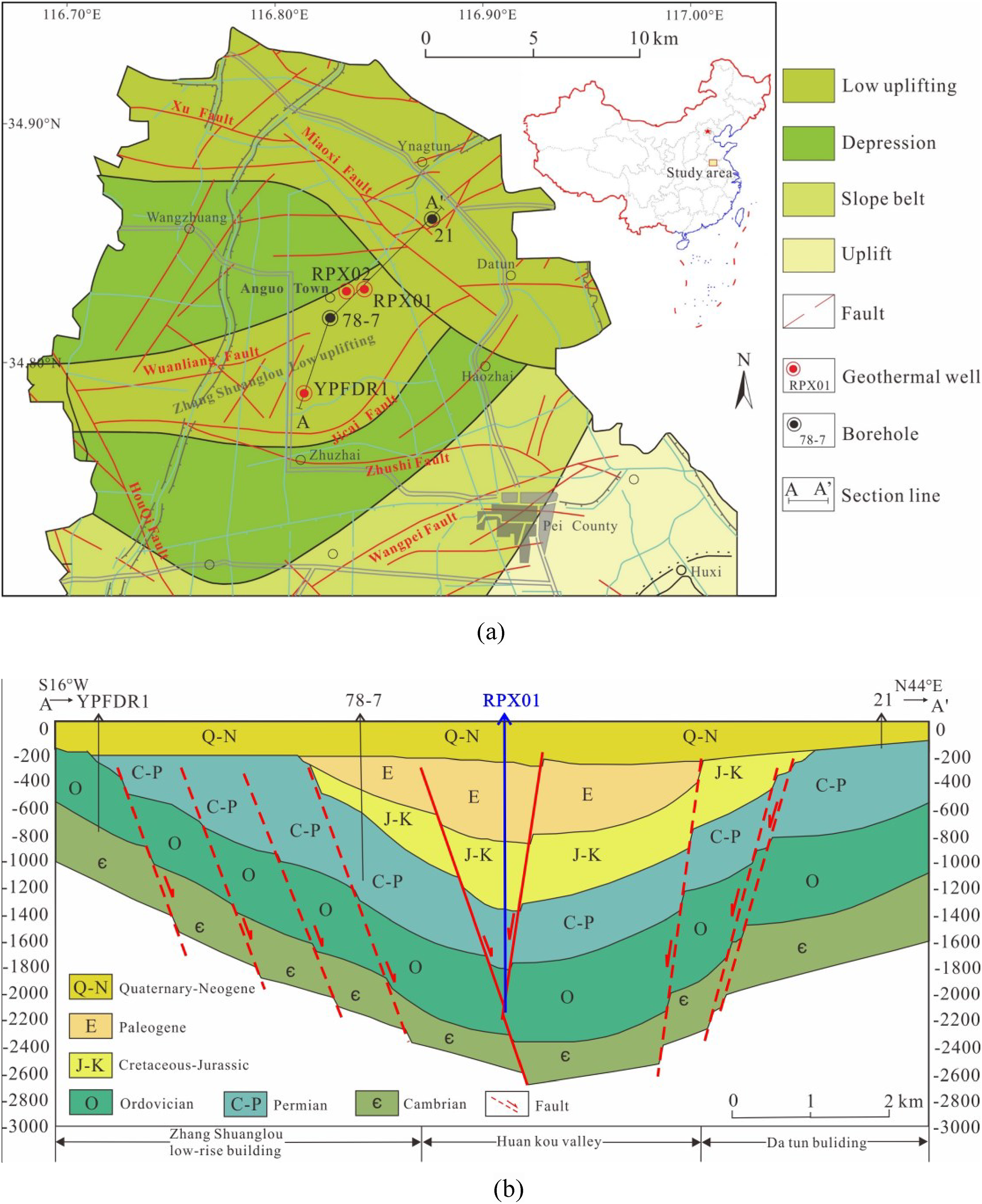
Location (a) and structural profile (b) of Anguo Town geothermal field in Pei County (Pengfei Zou et al., 2023).
Stratigraphic characteristics
The drilling data reveals the stratigraphy of the target site as shown in Figure 2. The strata successively exposed by drilling are Quaternary (Q), Neogene (N), Paleogene (E), Cretaceous (K), Jurassic (J), Permian (P), Carboniferous (C), and Ordovician (O). The Ordovician stratum is a set of marine sedimentary formation mainly composed of carbonate rocks, buried at depths varying from 1000 to 2500 m, which constitutes a good carrier of geothermal energy. The strata above the Ordovician are mainly composed of mudstone, sandy mudstone, shale, etc., with a thickness exceeding 1000 m and a low thermal conductivity, forming cap rocks to the geothermal reservoir.
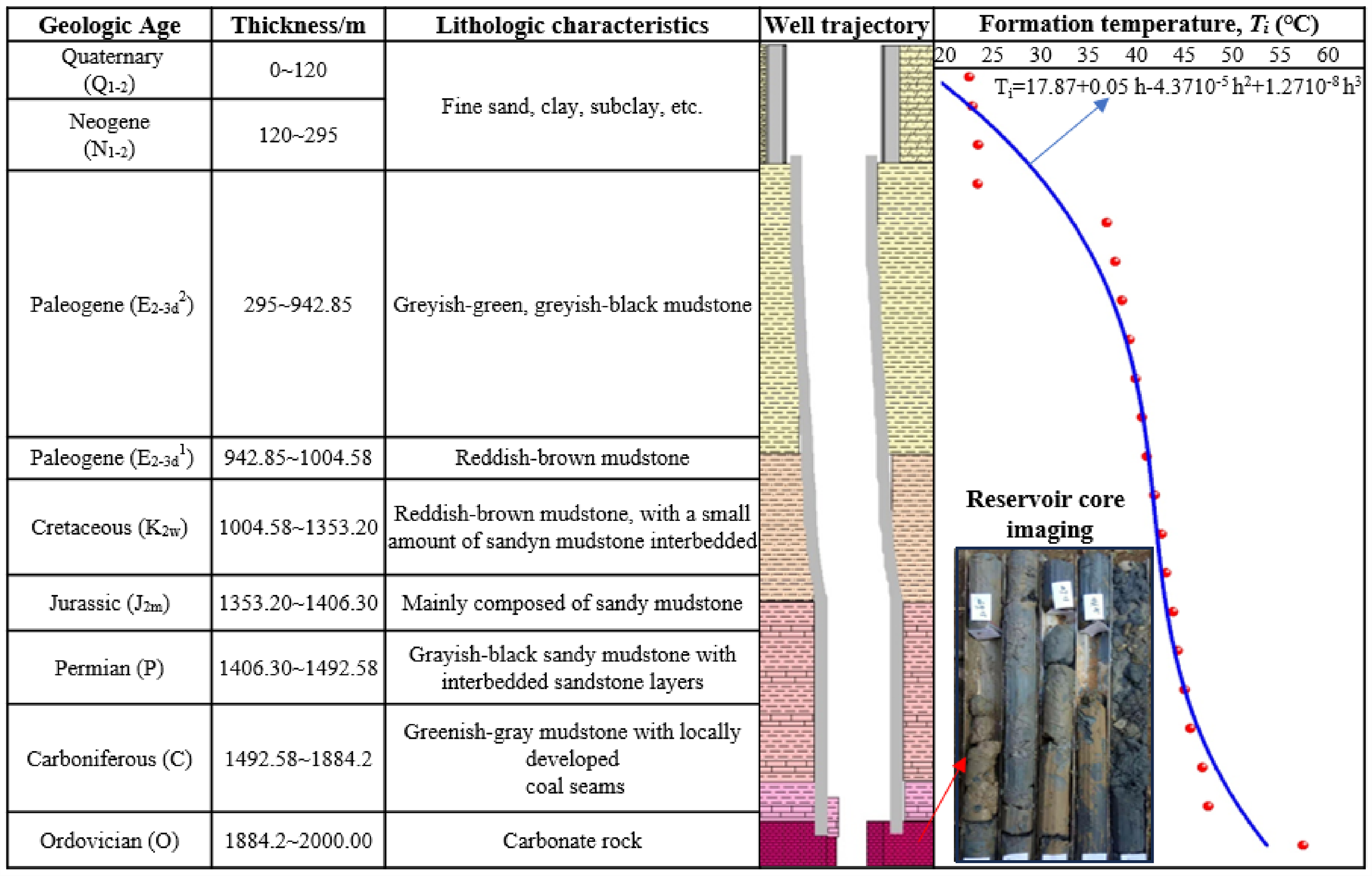
Stratigraphic information and temperature of Anguo Town geothermal field in Pei County.
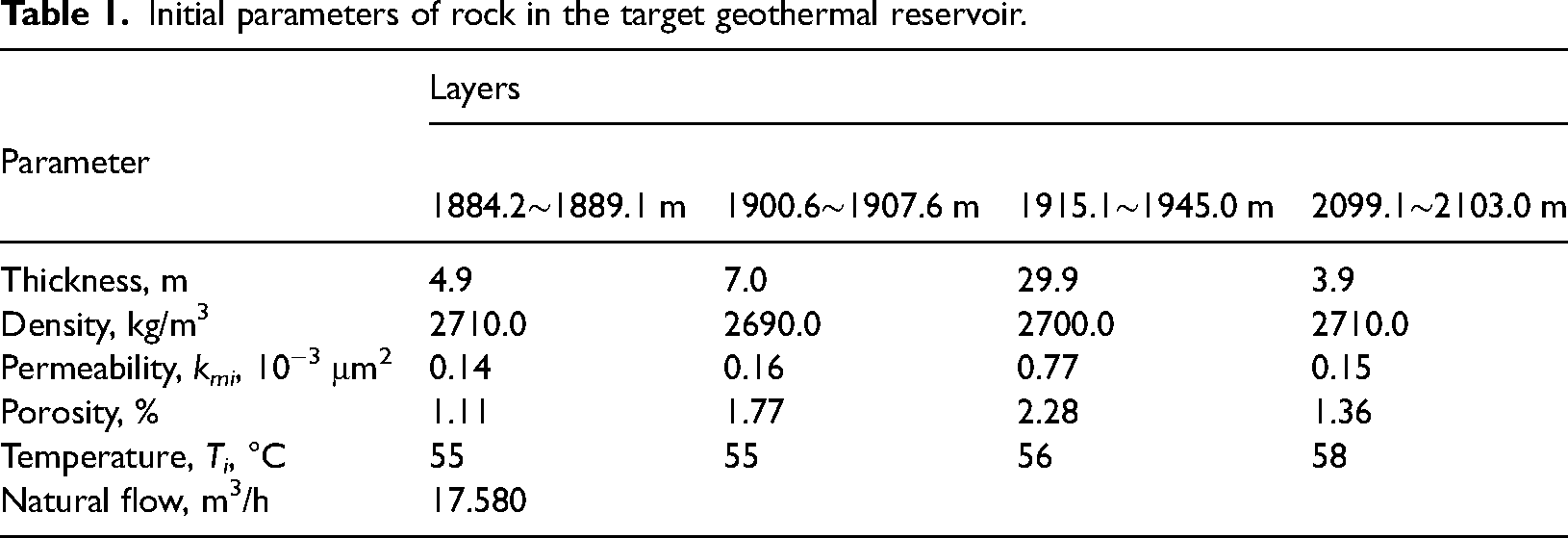
The geothermal wells in the research area have nearly vertical trajectories, and temperature logs were acquired to track the temperature variation with depth at the site. Figure 2 also illustrates the PX01 geothermal well at the target site, accompanying its temperature log curve. In well PX01, the Ordovician formation starts from a depth of 1884.2 m, and drilling core images confirm that the lithology is grayish-black limestone. The Ordovician carbonate strata in the study area typically exhibit high permeability and storage capacity, which facilitate the accumulation and flow of geothermal water underground. In July 2021, the on-site injection and extraction test was conducted at a depth of 1884.2∼2103.0 m in the PX01 well, with the test experiencing a maximum output water temperature of 52 °C. In addition, temperature logging also reveals a formation temperature ranging from 52°C to 60 °C at the depth of 1884.2∼2103.0 m, indicating a viable target segment for heat extraction. Therefore, in this study, the Ordovician carbonate strata at depths of 1884.2∼2103.0 m (with a total thickness of 218.8 m) were selected as the geothermal extraction layer. The initial formation temperature Ti at this geothermal site conforms well to the following pattern with depth h:

Initial parameters of rock in the target geothermal reservoir.
Numerical models and simulation approach
Principles of exploitation of middle to deep layer geothermal resources
In the geothermal field of Anguo Town, Pei County, the natural flow within the target reservoir is inadequate to satisfy the demands of geothermal exploitation. Consequently, artificial injection becomes an essential method for ensuring the effective utilization of thermal energy. This technology can significantly enhance the thermal responsiveness of the reservoir, leading to higher energy extraction efficiency. The approach utilizes deep well submersible pumps to extract geothermal water from production wells. The geothermal water is then transported through geothermal pipelines to the primary direct heat exchanger, where heat exchange occurs to transfer heat to the heating circulation water. The cooled geothermal water is sent back to the injection well through water supply pipelines, thus forming a continuous water circulation system. After being heated in the primary heat exchanger, the temperature of the heating circulation water increases and is delivered to residential users for heat supply through the heating pipeline. The schematic diagram is presented in Figure 3.
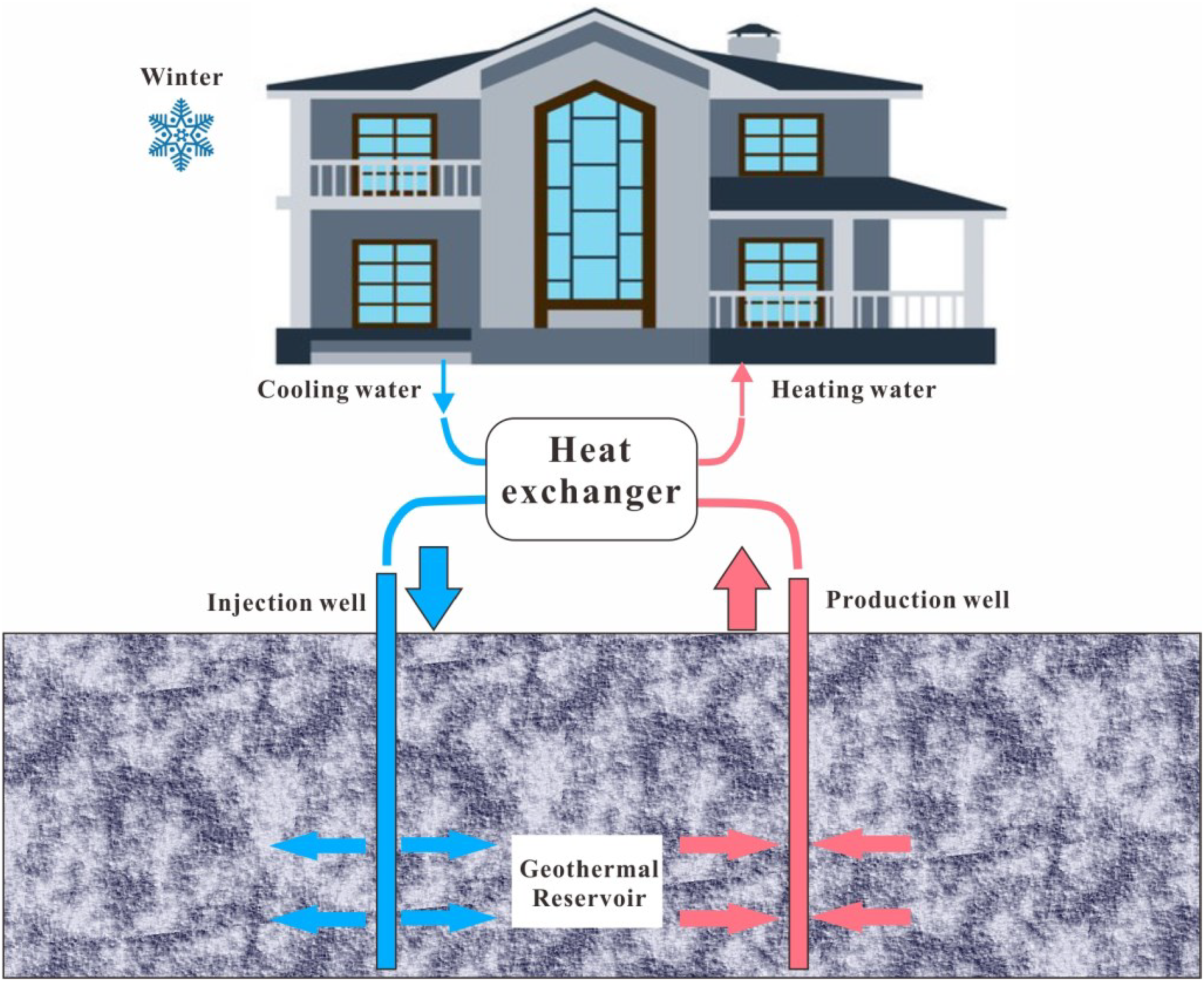
Dual-vertical-well geothermal system consisting of a production well and an injection well used for residential heating.
The geometric arrangement of wells plays a crucial role in the success of reservoir exploitation. Key considerations in well planning include the spacing between wells, which affects thermal and hydraulic breakthrough, as well as the orientation of well deviations in alignment with the prevailing stress field and fracture zones (Yuan et al., 2021; Zimmermann et al., 2010). In this study, a conventional double-vertical-well system, consisting of one injection well and one production well, was utilized to assess the supply heating potential of the middle to deep geothermal layers in Pei County. The thickness of the Ordovician carbonate reservoir in the target site is approximately 218.8 m (at a depth of 1884.2∼2103.0 m), and the reservoir is suitable for use as a thermal extraction section after acid fracturing modification. The placement of wells on the site is designed in a northeast direction because this layout intersects potential production zones.
Hydrothermal simulator
In this work, we used the TOUGH2-EOS1 code for geothermal extraction simulation. TOUGH2 is a powerful code developed by Lawrence Berkeley National Laboratory for simulating the flow of multicomponent, multiphase fluids in porous and fractured media. It uses advanced numerical techniques to solve the conservation equations of mass, momentum, and energy. The EOS1 module within TOUGH2 is particularly useful for simulating the subsurface flow of pure water with great accuracy. Water is used as the working fluid in this project thereby the EOS1 module is selected in the present work. Through the TOUGH2-EOS1 code, we can study fluid migration, heat transfer, and interactions in the exploitation process of low-temperature geothermal resources. All water properties (density, specific enthalpy, viscosity, saturated vapor pressure) are calculated from the steam table equations as given by the International Formulation Committee (1967) (Lei and Zhang, 2021; Pruess et al., 1999; Xu et al., 2018; Zhang et al., 2015). Zhang et al. (2015), Yuan et al. (2021), and Xu et al. (2018) performed hydrothermal coupling simulations of the geothermal extraction process using TOUGH2-EOS1, thereby validating the applicability of this program in the field of geothermal extraction. The basic mass and energy balance equations solved by TOUGH2 can be written in the general form as follows:
The mass accumulation term is:




Model domain and discretization
As illustrated in Figure 4, a 3D model measuring 800 m × 1200 m × 700 m has been developed. The thickness of the reservoir is 218.8 m (240.6 m ≤ z ≤ 459.4 m), while both the cap rock and the underlying baserock are set to a thickness of 240.6 m, in order to visually demonstrate the evolution of fluid and temperature during the simulation process. In this model, the injection well (blue dot) is located at the coordinate point (400, 450) in the top view (XY-plane), while the production well (red dot) is situated at the coordinate point (400, 750). The front view and side view display the stratification settings of the model in the Z-direction. The reservoir domain is divided into seven layers with varying permeabilities based on actual logging data. The modeling domain is discretized into 86,246 polygonal mesh blocks, with the block size in the vicinity of the wells refined by a factor of 60. The maximum mesh area near the wells is limited to 10 m2, with a minimum refinement angle of 30°. The minimum refinement angle controls how quickly the area near wells disperses. The smaller this value is, the more quickly the cells will return to the maximum cell area extending radially out from the well.
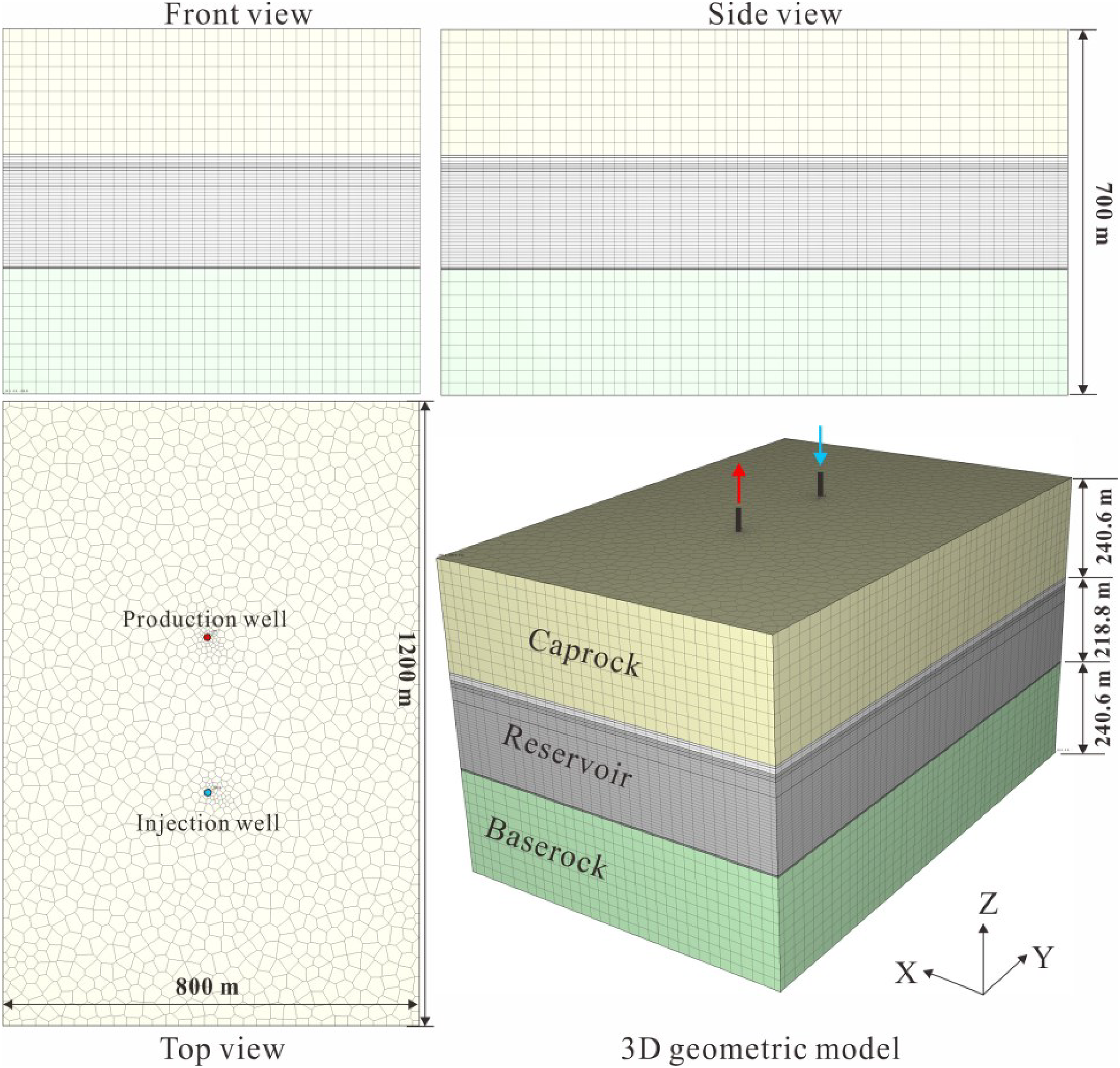
Schematic diagram of target geothermal field modeling, including three-dimension model, three views, and mesh subdivision.
According to the geothermal extraction principles described earlier for Anguo Town, the structural design of the reservoir area is shown in Figure 5. The permeability of the cap rock (greenish-gray mudstone) and the baserock (muddy limestone) at the top and bottom of the reservoir is assumed to be km = 10−16 m2, which indicates an extremely low permeability that effectively prevents the leakage of the working fluid. The reservoir domain is planned to utilize acid fracturing technology to enhance permeability for the purpose of increasing fluid injection capacity. This design aims to efficiently seal the reservoir, preventing the loss of hot water, thereby maintaining the pressure and temperature within the reservoir and ensuring the long-term availability of geothermal resources. The injection well increases the pressure and fluid saturation in the formation by injecting fluid into the reservoir, whereas the production well extracts fluid from the formation. The distance d between the two wells, the height difference Δh of the perforated interval, and the injection mass flow rate qinj are crucial for optimizing resource development and management. The injection flow rate significantly impacts heat exchange efficiency. A flow rate that is too low may result in inadequate heat output, while one that is too high can lead to rapid reservoir cooling. The height difference in the perforated section affects fluid flow paths and temperature distribution, while well spacing influences the hydraulic connection between the production and injection wells, impacting fluid circulation efficiency. Therefore, properly configuring these geothermal system parameters is crucial for sustainable production, as they directly influence heat transfer, fluid dynamics, and overall production performance.
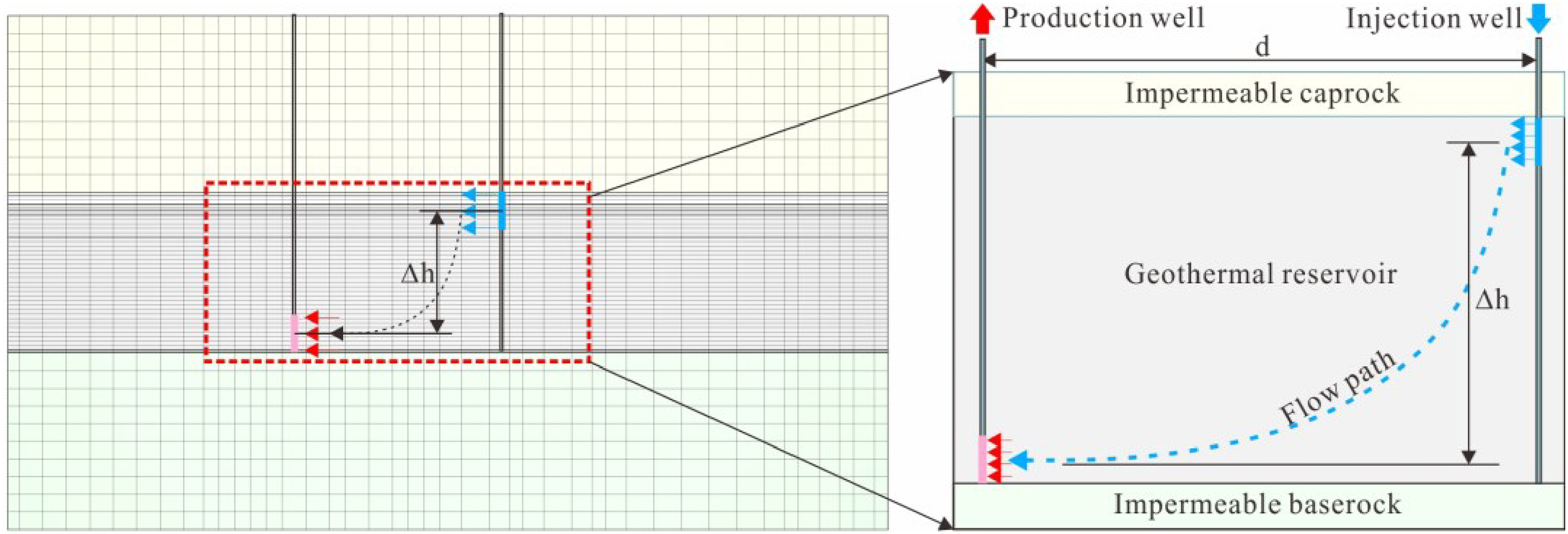
Schematic diagram of reservoir design for dual vertical well geothermal system.
Initial and boundary conditions
Table 2 presents the key hydraulic and thermal properties of the target geothermal reservoir in Anguo Town, along with the operational parameters. The cap rock and baserock are composed of greenish-gray mudstone and limestone mudstone, respectively, both exhibiting low permeability and thermal characteristics. Concerning the reservoir domain, we assume that the permeability of the reservoir rocks has increased by a factor of 100 following acid fracturing. In the layered hydraulic model of reservoir rocks, each layer exhibits isotropic permeability in the XY-plane, but there are differences in permeability between different layers. Based on the climatic conditions in Pei County, winter typically lasts for about 100 days. Considering the lag in reservoir response, to ensure a stable supply of heat for 90 days annually to local residents, we have set a continuous injection and production period of 100 days each year (one cycle) in our model. Consequently, in the simulation process, we will extract heat for 100 days each year, with the remaining time dedicated to the natural recovery of temperature and pressure fields, thereby forming a complete geothermal extraction cycle. The productivity index PI is 5.0 × 10⁻¹² m3 in our model.
Model parameters and initial conditions setup.
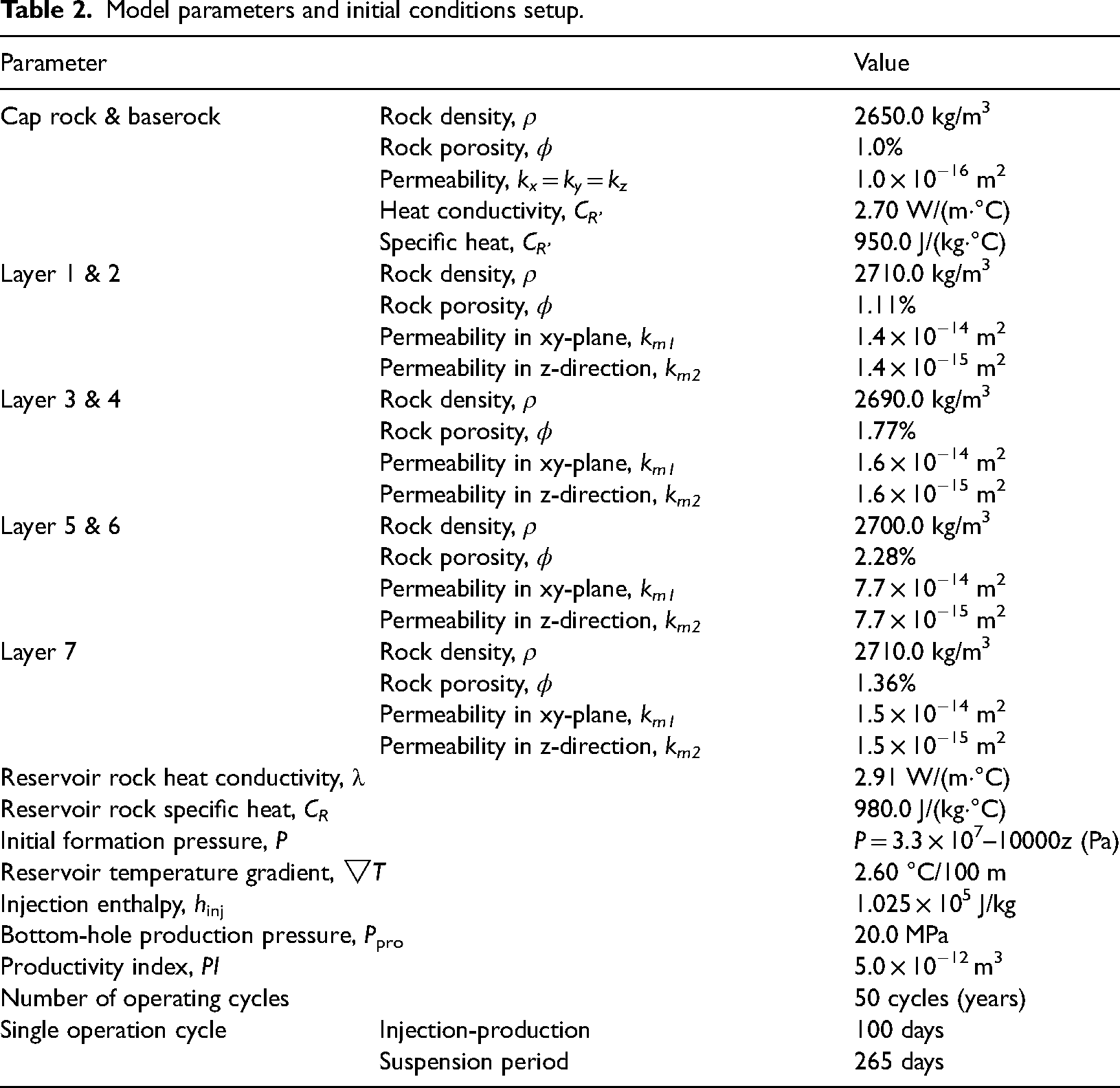
Based on the temperature measurement curve fitting analysis derived from data collected at well PX01, the geothermal gradient in Anguo town at depths ranging from 1643.6 to 2343.6 m is approximately 2.60 °C/100 m. Consequently, the upper section of the model corresponds to a depth of 1643.6 m, with a temperature of 44 °C, whereas the lower section reflects an actual depth of 2343.6 m, where the temperature reaches 61.2 °C. This variation in temperature aligns with the calculated geothermal gradient, indicating a gradual increase in temperature with increasing depth.
The initial pore-water pressure P in the reservoir is given by the equation P = 3.3 × 10⁷–10,000z (Pa). Due to the extremely low permeability of the cap rock and bedrock, the loss of fluid working into the surrounding rock layers outside the boundaries of the fractured reservoir is considered negligible. Additionally, all boundaries of the reservoir domain are treated as quasi-no-flow boundaries for mass and heat transfer; therefore, the minimal conductive heat transfer between the low-permeability surrounding rocks and the reservoir is also disregarded (Lei and Zhang, 2021; Xu et al., 2018; Yuan et al., 2021). For each scenario, the inlet boundary condition consists of a fixed injection mass flow rate (qinj) and a fixed enthalpy (hinj), while the outflow boundary condition is regulated by a fixed fluid pressure (Ppro). In all cases, the enthalpy of the injected fluid is set to 1.025 × 10⁵ J/kg, and the bottom-hole production pressure is maintained at 20.0 MPa. Optimizing geothermal energy extraction design is a complex and important task. By studying the differences in well spacing, injection rate, and perforation section height, we will gain a deeper understanding of how these factors affect the reservoir performance, thus developing more efficient geothermal energy extraction plans for Anguo town.
Performance criteria for geothermal heating systems
Generally, geothermal heating systems require a high and stable thermal output power as well as fluid temperature and long lifetime (Lei and Zhang, 2021; Yuan et al., 2021; Zhang et al., 2015) ; Guo et al.). These are very beneficial to the improvement of the space heating capacity of geothermal systems. Therefore, it is inaccurate to evaluate the production performance of geothermal systems using a single assessment index. In this study, the performance of the proposed geothermal heating system, designed for long-term operation over 50 years (50 space heating cycles), was comprehensively investigated, including output water temperature (Tpro), temperature fluctuations (ΔT) within a single heat extraction cycle, and output thermal power (Wh).
To ensure a stable thermal supply for up to 50 years at the Anguo geothermal field, the temperature fluctuation of the production water within a single extraction cycle is controlled to be below 0.5 °C, while the total temperature decrease throughout the system's operational period does not exceed 2.0 °C. This can be expressed mathematically as follows:
For the proposed geothermal production system, the net heat output power can be calculated by equation (9) (Lei et al., 2020; Xu et al., 2018; Zeng et al., 2016):
Simulation results analysis
Evolution of temperature and fluid pressure in reservoir
In the optimization study of geothermal extraction in Anguo Town, the base case is defined with the injection well perforated interval positioned at 240.6 m ≤ z ≤ 290.6 m, an injection rate of qinj =40 kg/s, and a well spacing of d = 300 m. Using the geothermal extraction performance from the baseline case as a reference, a series of simulation experiments can be conducted by varying parameters such as the injection rate, perforated interval depth, and well spacing, in order to identify the optimal geothermal extraction strategy.
The spatial evolution of the formation temperature field over a 50-year production period in the base case model is illustrated in Figure 6. During the first thermal extraction cycle, the cooling area surrounding the injection well gradually expands over time. Following the cessation of heat extraction, although the temperature field begins to naturally recover over the remaining 265 days, the recovery of the temperature field in the reservoir appears to be not significant based on the distribution of the cooling area at the end of the first year, indicating that the recovery process may be relatively slow. Due to the slow natural recovery process of the reservoir temperature field, the cooling area gradually spreads toward the production well as the extraction cycles continue to repeat. By the 50th year, the forefront of the cooling zone finally reaches the production well, resulting in a phenomenon known as thermal breakthrough.
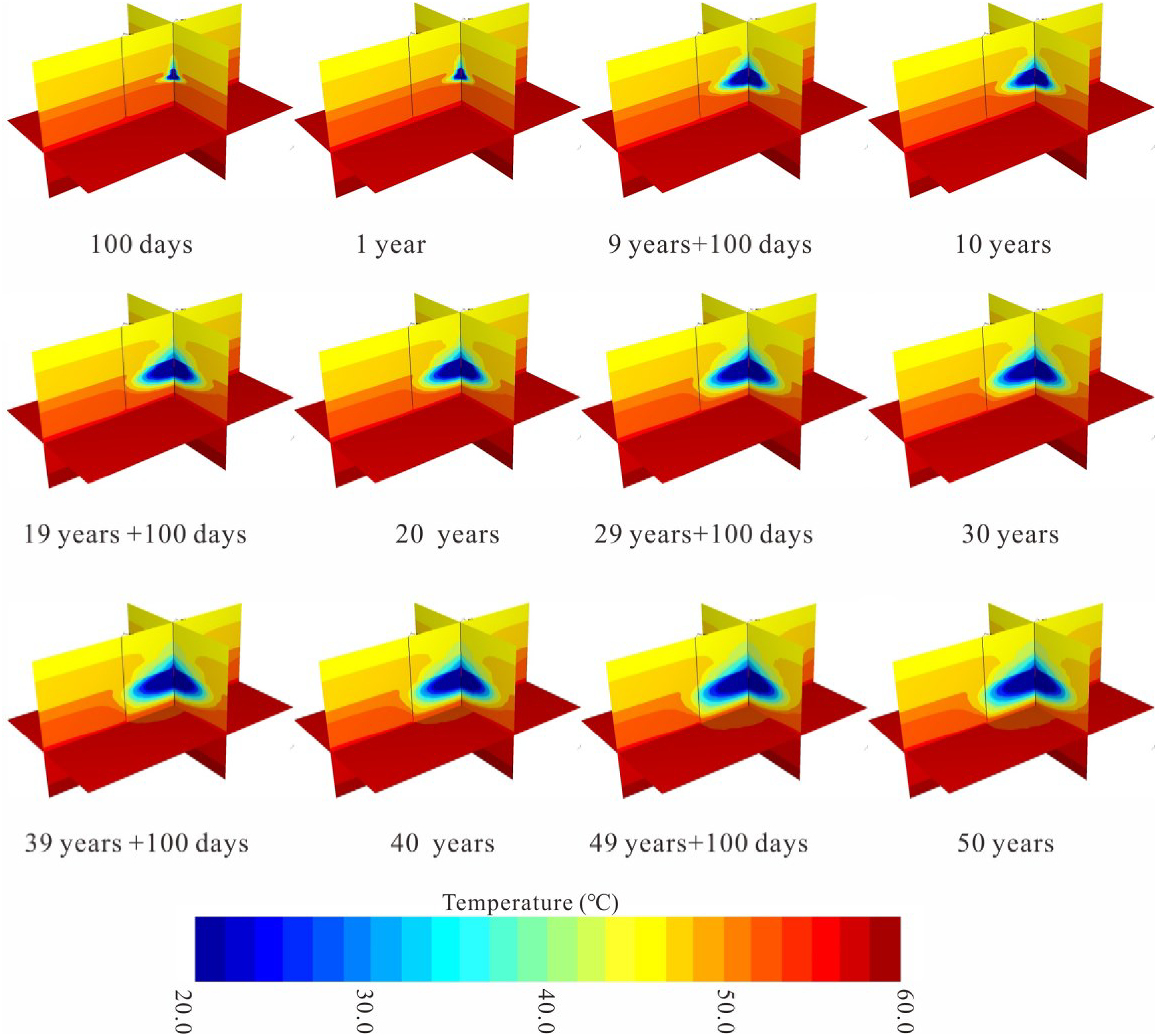
Spatiotemporal evolution of reservoir temperature field under intermittent injection production conditions within 50 years.
Figure 7 presents the temporal and spatial evolution of the pressure field. When fluid begins to be injected into the reservoir rock, the initial pressure equilibrium of the reservoir is disrupted. Particularly around the injection well, the fluid pressure is significantly higher than in the surrounding areas, creating a high-pressure zone. This pressure gradually decreases with increasing distance from the injection well, resulting in the formation of a pressure gradient. The changes in this pressure field provide the driving force for the smooth extraction of hot water from the production well. These changes in the pressure field suggest that the combined effects of extraction and injection enhance the forced convection of groundwater, thereby overshadowing the influence of the natural flow field. However, after the cessation of forced fluid injection, the pressure field of the reservoir gradually begins to recover. Over time, the high-pressure state induced during injection will gradually dissipate, and the fluids within the reservoir will redistribute to balance the internal pressure differences. At the end of each cycle, the pressure field of the reservoir can fully recover to its initial pressure level. This characteristic reflects the reservoir's self-regulating ability after undergoing injection and production operations. In comparison to the evolution of the temperature field, the fluctuations and recovery process of the pressure field appear to be more sensitive. If the in situ stress state of the reservoir is thoroughly understood, the variations in the calculated temperature and pressure fields can be leveraged to investigate the formation deformation resulting from geothermal extraction in the region (Guo et al., 2018).
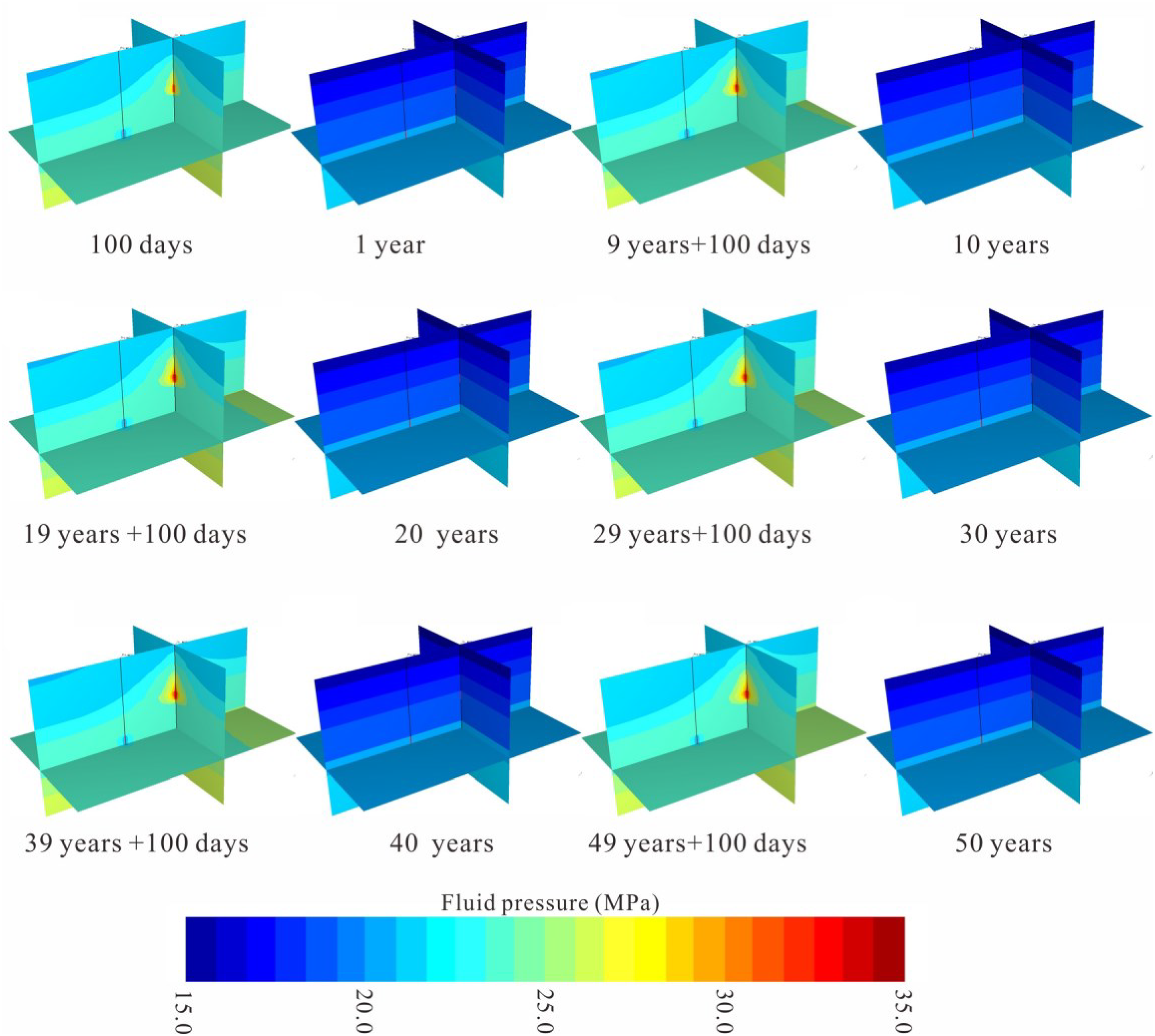
Spatiotemporal evolution of reservoir pressure field under intermittent injection production conditions within 50 years.
The evolution of the temperature and pressure fields in a reservoir is a complex and interrelated process that influences several key factors, including fluid migration, heat transfer, injection pressure, and output water temperature within the reservoir. Figure 8(a) shows the curves of output water temperature (Tpro) over a period of 50 years. The intermittent geothermal injection and extraction processes lead to a fluctuating downward trend in the output water temperature over time, characterized by distinct peaks and troughs. The interval between one peak and the subsequent peak represents a complete thermal supply cycle. During the 50-year operational period, the temperature difference between the peaks and troughs consistently remains stable at approximately ΔT = 0.4 °C. Nevertheless, the temperature curve can be roughly classified into two distinct stages based on variations in the slope of the peak (or trough) profile: (Ⅰ) stable stage (0–30 years): during this period, the slope remains relatively gentle, indicating that the output water temperature slightly decreases over time; (Ⅱ) rapid decline stage (30–50 years): in this stage, the slope becomes steeper, indicating a rapid decrease in the output water temperature over time, which suggests an increased susceptibility of the reservoir to thermal breakthrough phenomena.
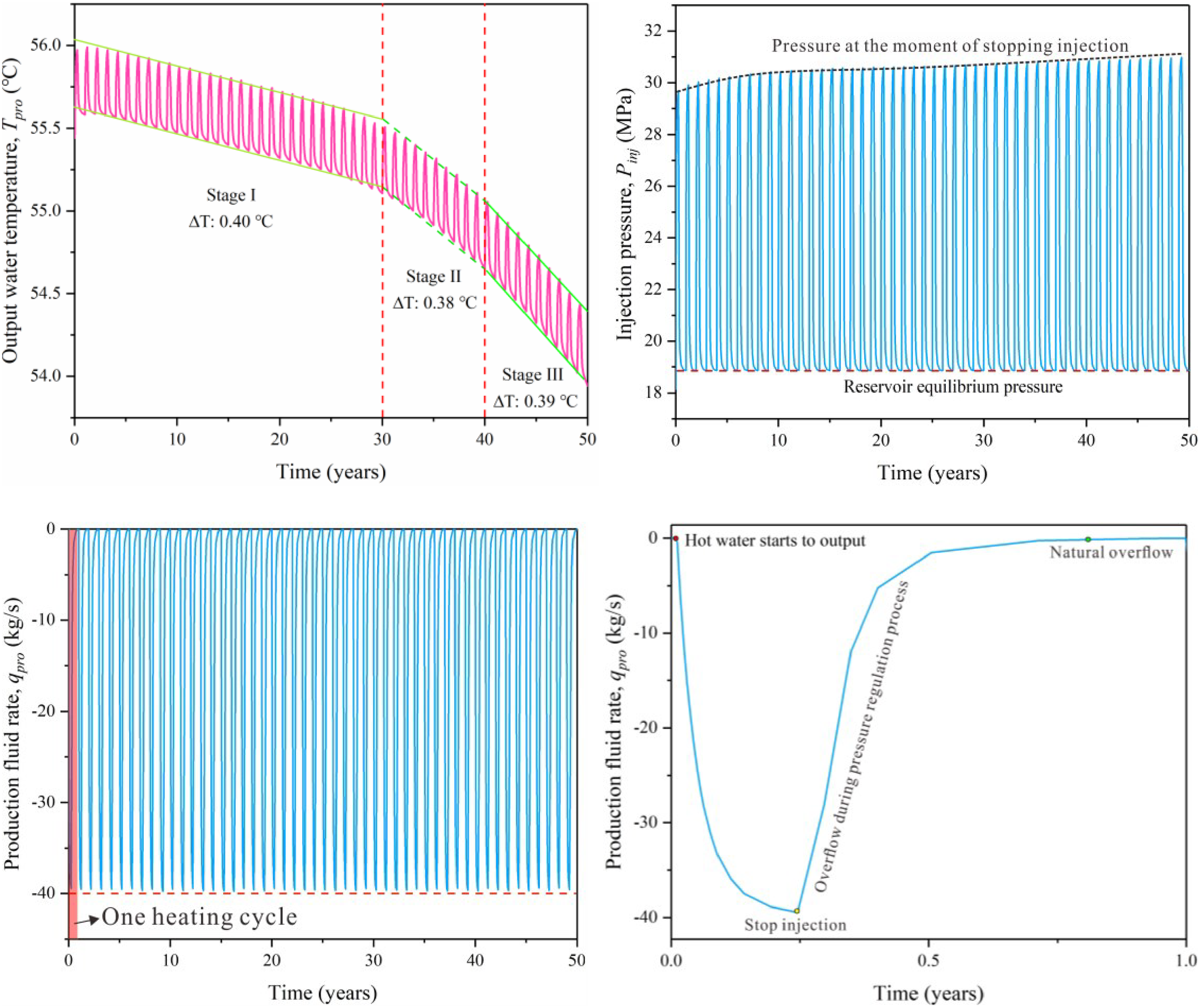
Changes in (a) production temperature, (b) injection pressure, (c) production fluid rate over time within 50 cycles (years), and (d) production fluid rate within a single cycle.
Figure 8(b) shows the fluctuating changes in injection pressure over time. Within a single injection-production cycle, the injection pressure reaches its maximum value at the moment injection is halted. However, at the conclusion of each cycle, the pressure field returns to the reservoir's initial equilibrium state. This phenomenon occurs due to the reservoir's high permeability and the low viscosity of the working fluid (water), which facilitate the rapid dissipation of the high-pressure fluid generated by the injection throughout the reservoir. In different cycles, the maximum injection pressure gradually increases over time. The increase of the injection pressure is mainly caused by the increase of water viscosity, which increases with declining reservoir temperature. Throughout the 50-year operation period, the maximum injection pressure increased from 29 to 30 MPa.
Figure 8(c) presents the fluctuating changes in production mass flow rate over time. The maximum production mass flow rate is qpro =39.9 kg/s, which is approximately equal to the injection mass flow rate qinj. The minimum injection flow rate is about 0.09 kg/s, corresponding to the natural self-flow mass rate of production well under natural overflow conditions. During the forced injection and production process, the production flow rate gradually increases from the self-flowing rate at the onset to the maximum production mass flow rate at the moment of stopping injection. Figure 8(d) illustrates the variation of production mass flow rate within a single thermal supply cycle, serving as an enlarged view of the first cycle shown in Figure 8(c). It can be observed from Figure 8(d) that during the injection and production process, the production mass flow rate increases gradually to qinj, rather than experiencing an instantaneous rise to this value. This behavior suggests the inevitable presence of fluid losses within the formation. Within one cycle, the loss rate of the fluid working in the formation is approximately 50%.
Parameter sensitivity analysis
Effects of the height difference in perforation intervals
To determine the optimal well layout, four different well configurations were designed to study their impact on thermal production performance. For each case, the perforated intervals of both the injection well and production well were set at 50 m. Aside from the differences in the positions of the perforated intervals, other parameters were exactly same for each other as given in Table 2.
Figure 9 shows the impact of perforation interval location of the injection well on production temperature. As the height difference between the perforation sections of the injection and production wells decreases, the decline in output water temperature increases. As the height difference of the perforation section decreases from an initial value of Δh = 168.8 m to Δh = 0 m, the output water temperature is observed to decrease from 53°C to 44°C by the 50th year. Base case (Δh = 168.8 m) exhibited the best production performance because its well layout can significantly prolong the flow path of the injection water, as shown by the dashed blue arrow in Figure 5. In addition, the temperature difference ΔT between the peaks and troughs of the production temperature curve within a cycle of injection and production is also an important indicator for assessing the stability of reservoir production performance. The zoomed-in view (Figure 9(b)) presented in Figure 9(a) illustrates that the temperature differences (ΔT) across various perforation interval height conditions remain approximately constant at 0.47 °C. This indicates that the influence of perforation interval height on ΔT within a single cycle can be neglected. Therefore, to ensure that the project consistently maintains good thermal extraction performance, the height difference of the perforated intervals between the injection well and the production well should be maximized. In this study, since the length of the perforated interval is fixed at 50 m and the perforated interval of the production well is located at the bottom of the reservoir, it is recommended that the top of the perforated interval of the injection well is level with the top of the reservoir. This will result in a maximum height difference of Δhmax = 168.8 m between the injection and production wells, thereby enhancing thermal extraction efficiency.
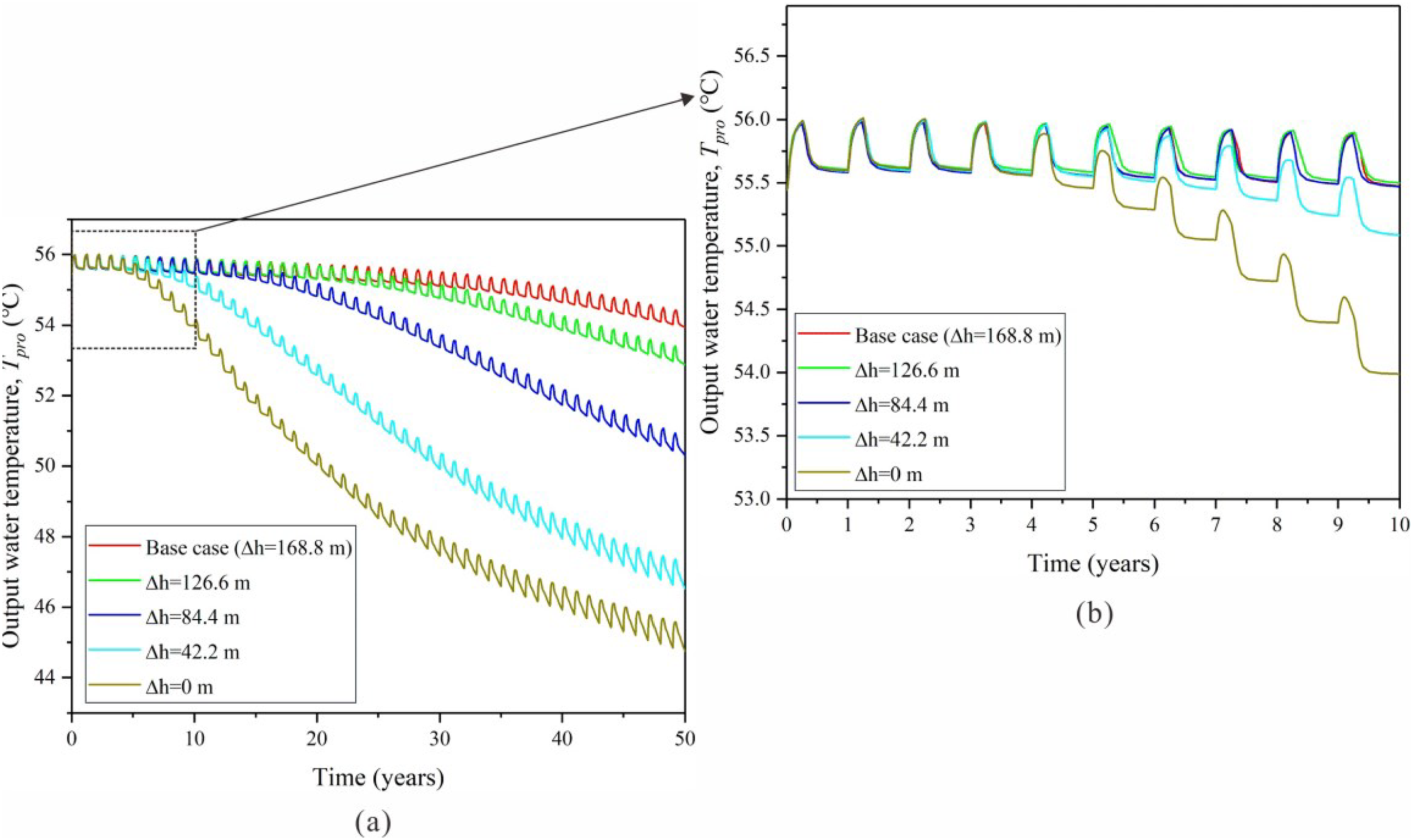
(a) Variation of production water temperature over time under the influence of perforation section height difference within 50 years and (b) the zoomed-in view.
Effects of injection flow rates on heat extraction
Figure 10 depicts the effects of three different injection mass rates on production temperature over a 50-year period. As the injection rate increases, the duration of the stable stage of the production temperature becomes shorter. This means that a high injection rate leads to a more rapid decrease in the output water temperature, especially during the rapid decline stage. This phenomenon can be attributed to the cooling effect of a large volume of injected water, which causes heat in the reservoir to be swept away more quickly without timely compensation, resulting in a rapid decrease in production temperature. The injection mass flow rate (qinj) increases from 40 to 80 kg/s, the output water temperature at the end of the 50th year decreases from 54.5 °C to 51°C. In addition, it can also be observed that a high injection rate leads to increased fluctuations in production temperature during a single extraction cycle. The temperature differences (ΔT) between the peaks and troughs within a single cycle for injection rates of 40, 60, and 80 kg/s are 0.47 °C, 0.51 °C, and 0.80 °C, respectively. The rapid decrease in production temperature and the large temperature differential within a single cycle can lead to a series of adverse effects on the system's stability and the continuity of heating supply. For example, significant temperature fluctuations may deteriorate the user experience, failing to provide a comfortable environment. However, high injection rates can effectively deliver heating services to a larger number of users, thereby improving the overall efficiency of the system and reducing costs for developers. Consequently, the injection mass rate, as a critical design parameter, warrants further optimization and investigation.
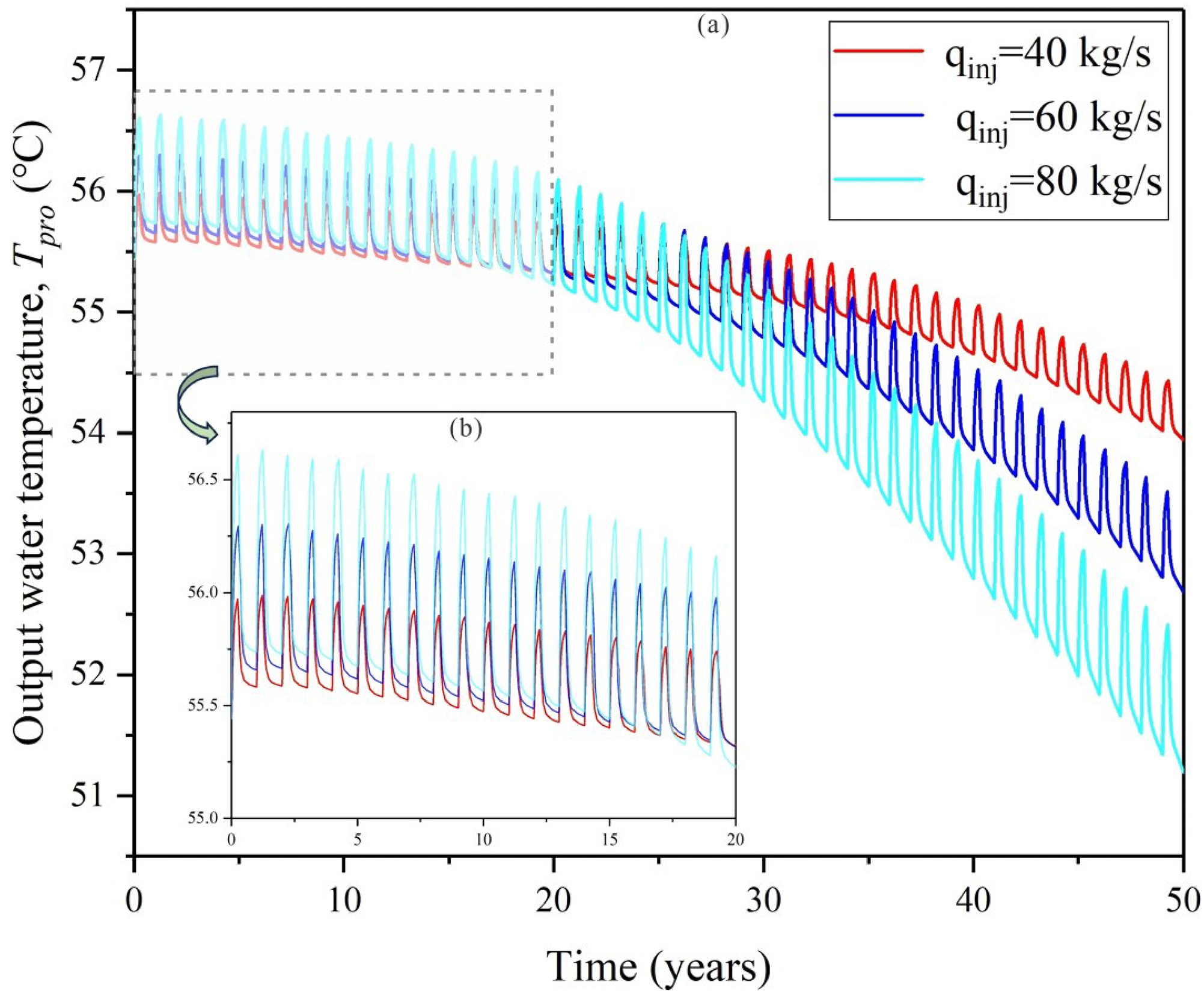
Temperature variation of production water over time under the influence of different injection flow rates.
Effects of well spacing on heat extraction
Figure 11 presents the impact of well spacing on production temperature during 50 years. It can be observed that with the increase in well spacing, the production temperature improves, and the duration of the stable stage is longer. This phenomenon occurs because greater well spacing allows for a more uniform distribution of geothermal fluid temperature, thereby mitigating the cooling effects that arise when wells are situated too closely together. Consequently, this suggests that the geothermal system can achieve a more stable state at certain spacing intervals. Additionally, it can be observed from the local magnified view that the temperature difference ΔT between the peak and trough within a single cycle does not exhibit significant changes with the increase in well spacing. This observation suggests that an increase in well spacing does not significantly affect temperature fluctuations during a single injection and production cycle. Therefore, in the design and optimization of geothermal systems, the selection of well spacing should be primarily guided by its impact on the long-term stability of the system, rather than by the temperature fluctuations that occur during a heating supply cycle. This will offer critical insights for the management and operation of geothermal systems.
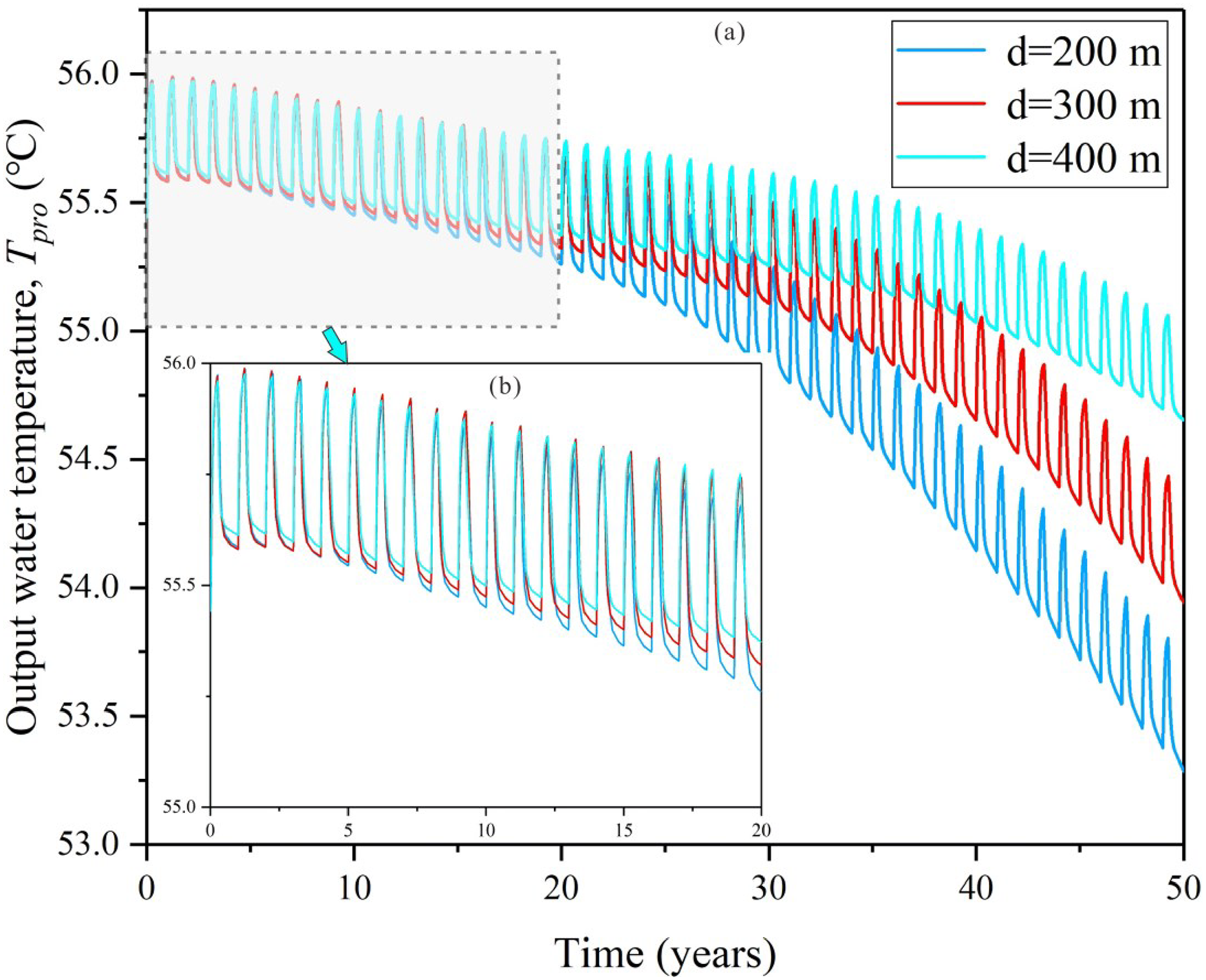
Variations in extracted water temperature over time under different well spacing conditions.
Parameter optimization for extraction scheme
Based on the analysis in Parameter sensitivity analysis section, we can draw the following two conclusions: (1) The injection flow rate is the decisive factor affecting the fluctuation of production temperature within a single extraction cycle. (2) During the operational lifespan of the geothermal system design, the rate of decline in production temperature is jointly influenced by the injection mass rate, well spacing, and perforation height difference in wells. The injection flow rate directly impacts thermal transfer efficiency in the reservoir. An excessively high injection rate can cause rapid heat loss, impacting production temperature stability. Conversely, a reasonable injection rate helps minimize temperature fluctuations during the injection and extraction cycles and slows down the decline in output water temperature, ensuring long-term stable geothermal energy output. Well spacing and the height difference between the perforation intervals of the injection and production wells influence fluid flow path and efficiency. Adjusting well spacing can create a more uniform temperature field distribution and reduce the decline rates of output water temperature. A longer flow path improves heat exchange efficiency between the injected low-temperature fluid and geothermal rock, enhancing the geothermal system's overall production performance. Therefore, in the dual vertical well geothermal system in Pei County, a height difference of Δhmax=168.8 m between the perforation intervals of the injection well and the production well can be considered an optimal configuration. However, further discussion is needed regarding the optimization of the combination of injection rate and well spacing.
Table 3 presents the design parameters for different combinations of injection flow rates and well spacing. In these schemes, the height difference between the perforation intervals of the injection well and the production well is fixed at the optimal condition (Δhmax =168.8 m), while the other system parameters are consistent with those in Table 2. We investigated the thermal production performance under various combinations of injection flow rates (40–80 kg/s) and well spacing (200–400 m) to further evaluate the optimal scheme for geothermal extraction in Anguo Town, Pei County.
Simulation scheme design.
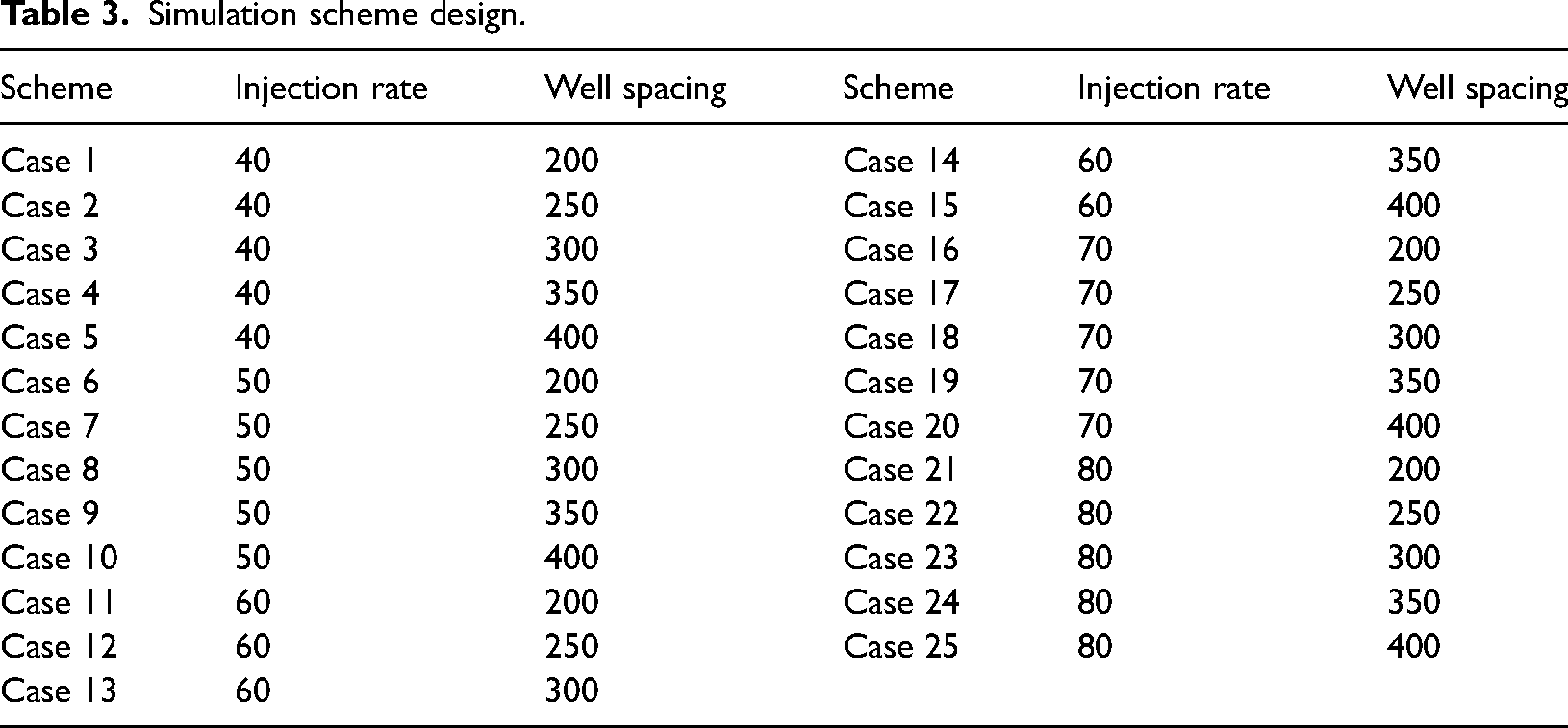
Figure 12 illustrates the temperature differences (ΔT) among various schemes within a single injection-production cycle. It can be observed that when the well spacing is fixed, the temperature difference ΔT increases with the rising injection rate. An excessive temperature difference indicates unreasonable design of the geothermal system and should be avoided as much as possible. In this study, we stipulate that the temperature difference within a single injection-extraction cycle should not exceed 0.5°C (red dashed line). According to the results shown in Figure 12, when the mass flow rate of the injected fluid is qinj = 40 kg/s, this requirement is met under different well spacing conditions. However, when the mass flow rate is increased to qinj = 50 kg/s, the temperature difference limitation is only satisfied when the well spacing reaches 400 m.
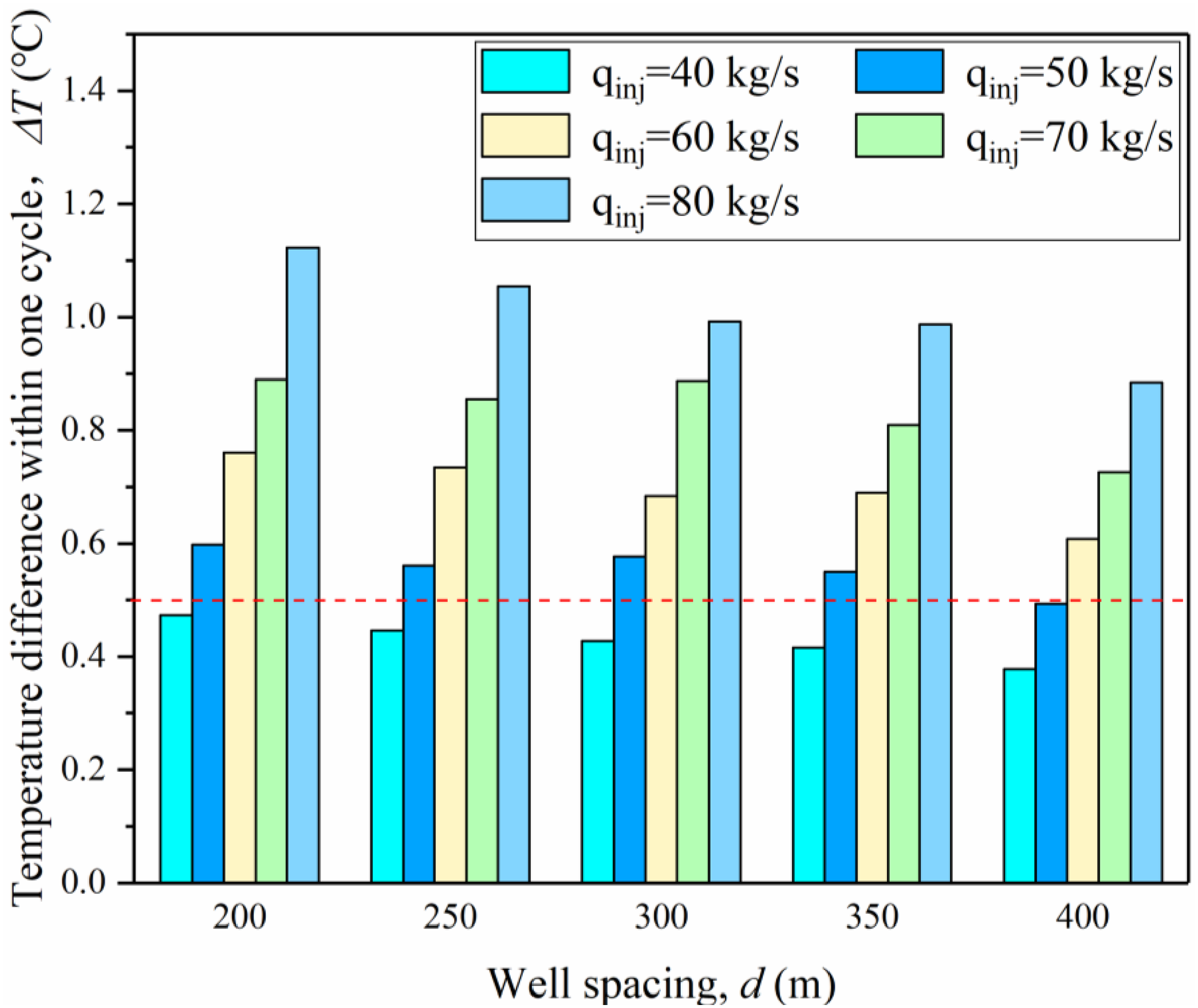
Comparison of maximum temperature difference ΔT of production water within a single injection-production cycle under different injection fluid rates and well spacings.
Figure 13 presents the relationship between production temperature at the end of a 50-year operating period as a function of injection flow rate and well spacing. Under a constant injection fluid flow rate, the production temperature at the end of the operating period improves as the well spacing increases. This effect is particularly pronounced at higher injection rates, demonstrated by a significant increase in the slope of the temperature curve. The initial average temperature of the geothermal reservoir in Anguo Town is 55.4°C. To ensure that the production temperature does not decrease by more than 2°C during the entire operational period, the production water temperature should always remain above 53.4°C (gray dashed) throughout the 50-year injection and production cycle. Therefore, when the injection flow rate is 40 kg/s, a well spacing between 250 and 400 m can all meet the requirements; when the injection flow rate is 50 kg/s, the well spacing needs to reach 300 m to satisfy the requirements; at injection flow rates of 60 and 70 kg/s, the well spacing must reach 400 m to be adequate. Furthermore, when the injection flow rate increases to 80 kg/s, the required well spacing becomes longer (> 400 m), which may pose significant challenges in actual operations, particularly regarding geological conditions and economic costs.
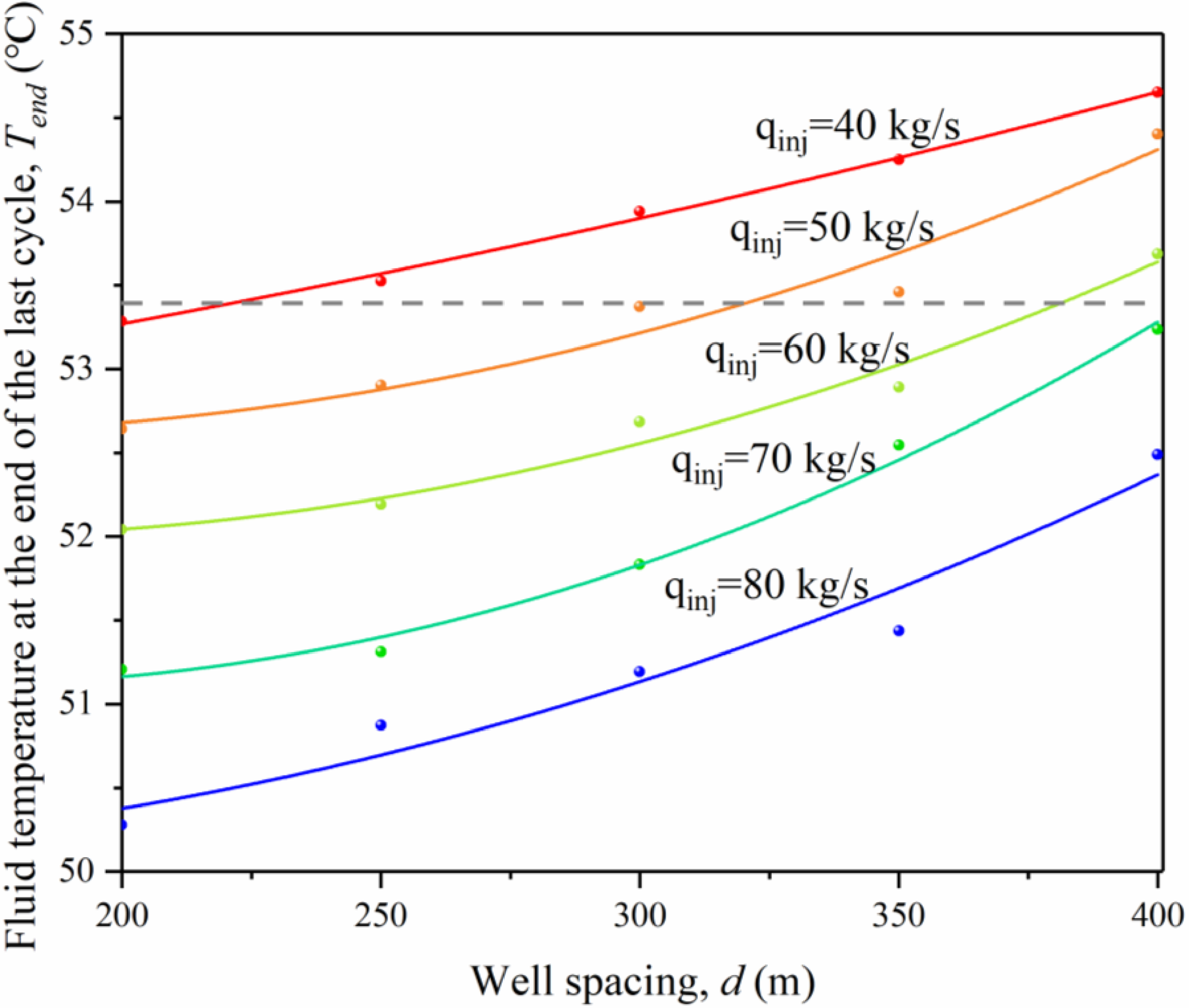
Production water temperature in the 50th year under different well spacing and injection fluid rate conditions.
To maximize economic benefits, it is essential to select the minimum well spacing while ensuring that both the temperature difference and production temperature meet the required conditions, given a fixed injection flow rate. Thus, during the development of geothermal resources in Anguo Town, a combination of an injection flow rate of qinj = 40 kg/s and a well spacing of d = 250 m can effectively meet the geothermal energy extraction requirements. Additionally, when the injection rate is increased to qinj = 50 kg/s, it is also a reasonable adjustment to expand the well spacing to d = 400 m. The production performance of the optimized schemes is summarized in Table 4. Since we mentioned in the previous study that there are inevitably fluid losses in the reservoir, when providing thermal supply to users, it is advisable to select periods with higher heat output power. Figure 14 presents the variation of heat output power Wh over time for the first and last thermal supply periods of the two optimization schemes. Wherein, the light blue line represents the actual heat production from geothermal system, while the red line illustrates the variation in heat output power during the 90-day heat supply period each year. It can be observed that the heat power during the first heat supply period of case I ranges from 3692.1 to 6005.2 kW, while the heat power during the last heat supply period ranges from 2887.7 to 5648.4 kW. Over the entire 50-year operational period, the thermal output power has decreased by 5.6% to 21.8%. In case Ⅱ, the heat output power during the first and last heating periods ranges from 4567.5 to 7492.2 kW and from 4764.7 to 7203.6 kW, respectively. Throughout the entire 50-year operational period, the heat power has varied by 3.9% to 4.3%, indicating a very stable heat supply. Therefore, in Anguo Town, Pei County, we prioritize the recommendation of case Ⅱ for residential heating supply, as it demonstrates stable heat output potential. This stability not only helps to ensure user comfort during the winter months but also effectively reduces energy costs and maintenance expenses, thereby enhancing the overall economy and reliability of the system.
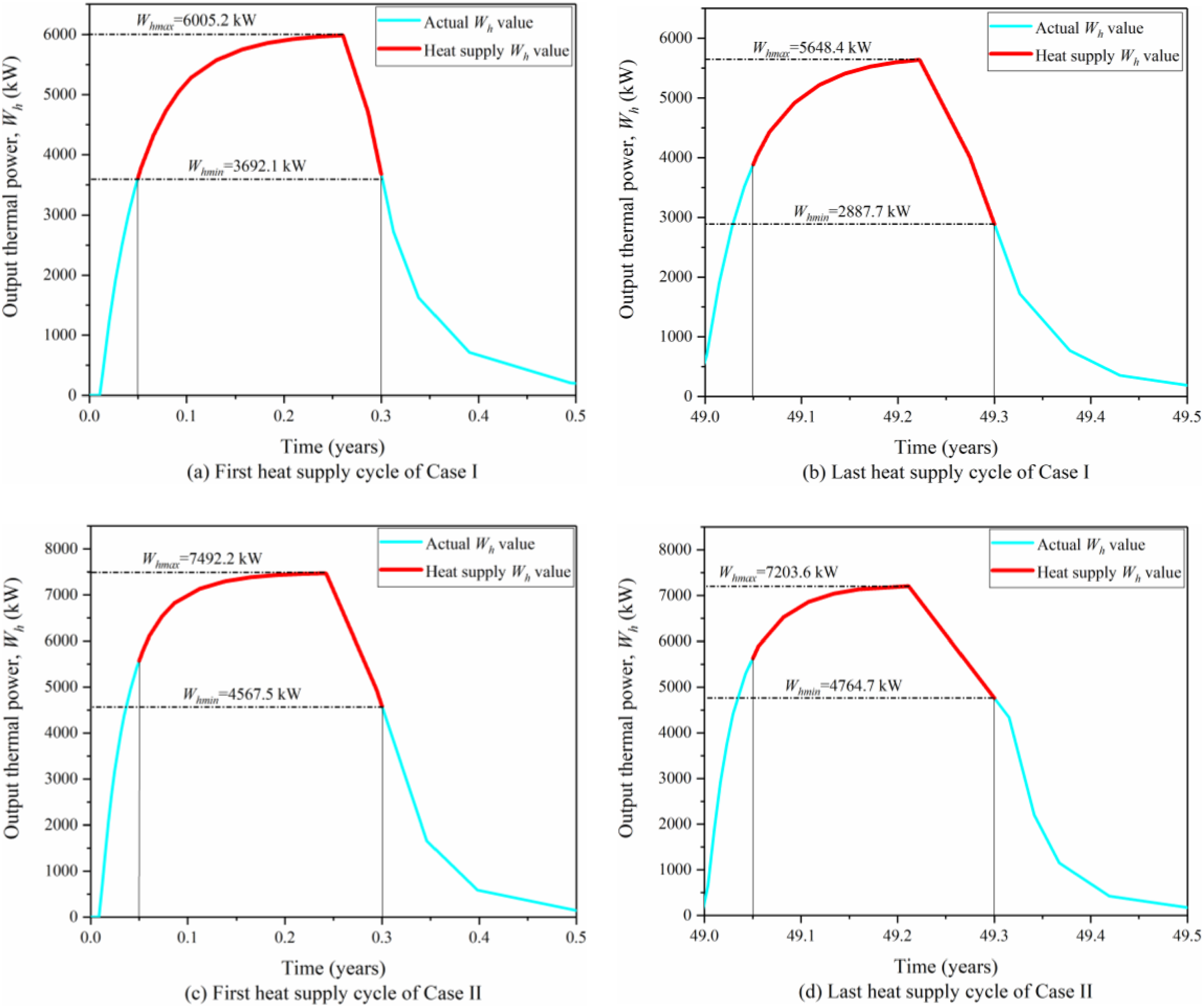
Thermal output power of the first and last cycles in optimization schemes I (a, b) and II (c, d).
Design schemes that meet the requirements.

Highlights
Optimal scheme of a double vertical well geothermal heating supply system is simulated.
Variations in temperature and pressure fields resulting from periodic injection and production are analyzed.
Uncertain parameters influencing thermal supply performance are evaluated.
Conclusion
Many cities in southern China experience significant heating market demand during the winter. Medium-deep geothermal heating projects have the potential to become an important force in driving China's energy transition and achieving environmentally friendly development. In this study, we utilized data from the geothermal field in Anguo Town, Pei County, Jiangsu Province, located in southern China. The target reservoir in this site is located at depths of 1894 to 2023 m, with a thickness of approximately 203.4 m, and the lithology of the reservoir is hard limestone, with an average temperature of 55.4°C. We plan to design a double vertical well geothermal heating system for Anguo Town, with an annual injection and extraction activity lasting 100 days and a total operational lifespan of 50 years. Therefore, we employed TOUGH2 software for numerical modeling to explore the optimal production mode of the double vertical well geothermal system at the site, and to predict the thermal output potential of the actual reservoir using this model. In the numerical model, we considered nonequilibrium thermal exchanges between the fluid and the rock matrix to enhance the accuracy of the simulation. The results of this study can provide guidance for the development of medium-deep geothermal heating projects in southern China. The integration of the modeling results and analyses lead to the following conclusions:
The temperature and pressure fields within the reservoir exhibit varying responses to periodic injection and production activities. When low-temperature fluids are injected, a noticeable decline in reservoir temperature occurs, particularly concentrated around the injection well. Over successive cycles of injection and production, these temperature changes can accumulate, potentially leading to a thermal breakthrough characterized by a marked decrease in the temperature of the produced water. In contrast, the pressure field exhibits more rapid and adaptable dynamics. Following each injection and production event, the pressure field swiftly recovers to a state that approximates its initial equilibrium. The height difference (Δh) between the injection and production well perforation sections plays a crucial role in the long-term production water temperature (Tpro) but has a minor effect on temperature fluctuations (ΔT) during single injection-production cycles. Increasing the perforation height difference helps to reduce the long-term decline in production water temperature, which is essential for maintaining a stable thermal supply in geothermal systems. For the geothermal reservoir in Anguo Town, the optimal perforation height difference is Δh = 168.8 m, ensuring the top of the injection well perforation aligns with the reservoir's top and the bottom of the production well perforation matches the reservoir's bottom. A higher injection flow rate causes a rapid decline in production water temperature, leading to premature thermal breakthrough and increased temperature fluctuations during extraction cycles. This instability threatens the long-term thermal supply in geothermal systems. However, increasing well spacing can alleviate these issues. For the dual vertical well geothermal system in Anguo Town, an optimal injection flow rate of 50 kg/s and well spacing of 400 m can sustain a stable thermal supply for up to 50 years, keeping temperature fluctuations within 0.5°C per cycle and total temperature drop under 2.0°C. This setup is projected to generate a stable annual geothermal output of 4567.5 to 7492.2 kW.
Footnotes
Notation
Data availability
The datasets used and/or analyzed during the current study available from the corresponding author on reasonable request.
Declaration of conflicting interests
The authors declared no potential conflicts of interest with respect to the research, authorship, and/or publication of this article.
Funding
The authors disclosed receipt of the following financial support for the research, authorship, and/or publication of this article: This study was supported by the Open Project Program of Key Laboratory of Groundwater Resources and Environment (Jilin University), Ministry of Education (No. 202406ZDKF14), Project of National Science and Technology Major (No. 2022YFC3705001), and China Geological Survey Fund Project (No. DD20221732, DD20230116).
