




Abstract
The global energy system is continuously changing, driven by increasing power demands and the urgent need to address environmental challenges. This highlights the necessity of integrating renewable energy sources with existing thermal power plants into deregulated power systems. This paper explores how the incorporation of renewable energy can enhance economic sustainability, focusing on the vital roles of smart grids (SGs) and microgrids. By leveraging these advanced grid technologies, more effective integration of renewable energy can be achieved, leading to reduced transmission losses, improved grid stability, and better peak demand management. The paper also emphasizes the current need for energy storage solutions to manage the variability of renewable energy, ensuring a reliable power supply. Furthermore, it discusses the economic benefits of deregulated power markets, where competition drives down energy costs and encourages innovation in grid technologies. The importance of this study lies in its comprehensive analysis of the challenges and opportunities associated with renewable energy integration, along with practical recommendations for adopting SG and microgrid technologies to enhance both economic performance and environmental sustainability. Combined, the findings stress the urgent need for policy frameworks and advanced grid management strategies to support the transition to a more resilient and sustainable energy system in today's power market.
Introduction
The upgrading of electrical equipment is producing a dramatic increase in energy consumption in the present power system. Despite its immense technical advances, the modern world is experiencing an urgent energy crisis as energy consumption rises to meet society’s modest lifestyle. The overuse of traditional energy sources has harmed the environment by emitting carbon with each ounce of generation. Because the raw materials used in conventional energy sources degrade quickly, the world is obliged to rely on renewable energy sources for electricity. However, the issue with these energy sources is their intermittent nature. Despite their many shortcomings, the benefits exceed the drawbacks. So, rather than replacing them, new strategies are developed to address their weaknesses. In a competitive power system, renewable energy is used to fulfill rapidly expanding electricity demand while reducing system risks. Wind and solar energy are the most popular renewable energy sources because they are widely available, clean, abundant, need little maintenance, and generate no greenhouse emissions. The energy industry is critical in emphasizing the serious consequences of climate change, which is often recognized as one of humanity’s most pressing concerns. Currently, this sector accounts for around 75% of greenhouse gas emissions. The world’s average temperature must rise no more than 1.5°C, and worldwide carbon dioxide (CO2) emissions must end by 2050. As a consequence, even while renewable energy sources have drawbacks of their own, such as sporadic power generation, dependence on weather, and high initial prices, they are nonetheless becoming increasingly popular worldwide. Thus, investigating alternate technologies is critical. Meanwhile, power plant workers confront several hurdles in constructing new thermal power plants, which are exacerbated by the declining supply of fossil fuels. Maintaining a continuous power supply for customers has become a major concern.
The competitive climate in the deregulated system has delivered major monetary welfare to the electricity customers. The rising need for energy, fuelled by new electronic technology, has its own set of issues. Building new power plants is hampered by social, environmental, political, and economic constraints. As a result, the competitive energy market confronts several threats like power system breakdowns, high loads, and financial harm for market players. The gap between energy supply and electricity generation heightens the dangers. To address these concerns, renewable energy sources can increase electricity supply, but limits on building new power lines need the development of better ways for maximizing electrical flow through existing infrastructure. Flexible AC transmission systems (FACTS) are commonly recognized as the supreme adaptive option for energy transmission in power lines, maintaining voltage stability in normal as well as abnormal situations. Consumers gain from a deregulated electricity market because it is dependable, consistent, and less expensive. Renewable energy integration into the deregulated electrical market is problematic due to the unpredictable nature of the power supply. An independent system operator must adopt measures to guarantee that consumers receive dependable and high-quality electricity while reducing costs and adhering to system security constraints. Breaking these boundaries puts the entire system in danger. Researchers have so attempted to overcome possible threats in a deregulated power system by using renewable energy and storage technology. Assessing power network vulnerabilities is critical for ensuring the security and safety of a renewable-dominated power grid. Risk evaluation methods are widely utilized in this context.
The global production of electricity from renewable energy sources has consistently shown an upward trend, mainly due to the significant growth in solar and wind energy. Nuclear energy was surpassed by renewable energy in 2022, which accounted for about 13% of power generation. Although there was a slight increase in coal’s share in the power sector in 2022, it remained below the level observed in the previous year of 2021. In this position, this paper outlines the current state of renewable sources and recommends the adoption of renewable energy to reduce system risk while simultaneously exploiting the monetary stability of the power network.
This paper aims to conduct a comprehensive examination that deeply explores the implications of deregulated power systems on the stability and dependability of energy grids, along with the subsequent progress of technological innovation that arises from the deregulation of power systems. Moreover, it delves into the integration of microgrids and smart grids (SGs) in these deregulated power systems to enhance the usefulness of the power network by optimizing the process of the electricity grid. It is crucial to recognize that microgrids and SGs hold significant potential to drive sustainable development in the upcoming era. Nevertheless, it is of utmost importance to consider the economic and environmental consequences linked to the deployment of these grid systems. This paper presents practical suggestions for effectively incorporating microgrids or SGs into deregulated energy systems. The ultimate goal is to enhance power generation, distribution, and profitability for power generation companies by strategically implementing microgrids or SGs.
Societal Aspect:
As modern society’s energy needs continue to rise, there is a pressing demand for a dependable, sustainable, and cost-effective energy supply. By incorporating renewable sources into deregulated power systems, a consistent electricity supply can be ensured while giving an advantage to consumers of competitive pricing and improved energy access. This domain of the study highlights the importance of distributed generation (DG) and microgrids, which foster local energy independence. It allows communities to produce and manage their energy more effectively, enhancing energy autonomy, particularly in remote or underserved areas.
Environmental Aspects:
The global transition to renewable energy is essential for decreasing greenhouse gas emissions and combating climate change. This paper underscores how the integration of renewable energy can significantly reduce carbon footprints, contributing to a cleaner and more sustainable planet. Conventional power generation heavily depends on finite fossil fuels. By integrating renewable sources like solar and wind, non-renewable resources can be conserved and promote environmental responsibility for future generations.
Economic Perspective:
Deregulated energy markets promote competition, leading to lower prices for consumers. The paper emphasizes how integrating renewable sources with SGs and energy storage can further decrease operational and generation expenses, benefiting both consumers and energy providers. Transitioning to renewable energy and SG technologies stimulates economic development by generating new employment opportunities in the renewable sector, grid management, and advanced tech innovation. The paper depicts how these advancements can create market prospects in a deregulated setting.
Technological Perspective:
This paper highlights the importance of SGs and microgrids in enhancing electricity distribution and managing renewable sources. Advancements in grid technology are vital for boosting system efficiency, reliability, and adaptability to contemporary energy challenges. Energy storage technologies are essential for addressing the variability of renewable energy. This study discusses the necessity of developing affordable and scalable energy storage options to improve grid reliability and overall system performance.
Policy and Regulatory Perspective:
This study highlights the importance of establishing supportive policy frameworks that enable the seamless incorporation of renewable energy into deregulated systems. By promoting policies that promote both deregulation and renewable integration, energy transition can be expedited. The combination of deregulated markets with renewable sources and SGs significantly boosts the resilience and adaptability of power systems. The paper emphasizes the necessity of regulatory frameworks to manage market risks, maintain system reliability, and protection consumer interests.
Global Impact Perspective:
Embracing renewable energy is vital for meeting global climate goals. This paper supports international initiatives aimed at decarbonizing energy systems, contributing to the worldwide push for a more sustainable and equitable energy future.
The importance of this comprehensive study in the present power sector is as follows:
In conclusion, this study addresses essential societal, environmental, and economic issues. By investigating the integration of renewable energy within deregulated power systems, the paper seeks to advance the development of sustainable, resilient, and cost-effective energy solutions that benefit everyone in society.
The originality of this study is found in its thorough investigation of the incorporation of renewable sources into deregulated power systems. It emphasizes the potential of technologies such as SGs, microgrids, and energy storage to improve economic sustainability. The work tackles the specific challenges posed by the intermittency of renewable energy, examines how advanced grid technologies can minimize transmission losses and enhance peak demand management, and offers actionable recommendations for policy frameworks and grid management strategies. This blend of technical insights and policy analysis distinguishes it by delivering a comprehensive approach to optimizing both economic and environmental outcomes in deregulated power markets.
Renewable resources position in India
The use of electricity has increased significantly over the last several years globally, mostly due to the use of non-renewable resources. Roughly 75% of the electricity generated globally comes from thermal power plants. Unfortunately, as Figure 1 illustrates, the extreme reliance on gas and coal plants has resulted in alarmingly high CO2 emissions. This has made the problem of global warming worse and put the environment of Earth in danger. As Figure 2 illustrates, India has also witnessed a sharp increase in the usage of fossil fuels, particularly coal, which has led to the emission of CO2.
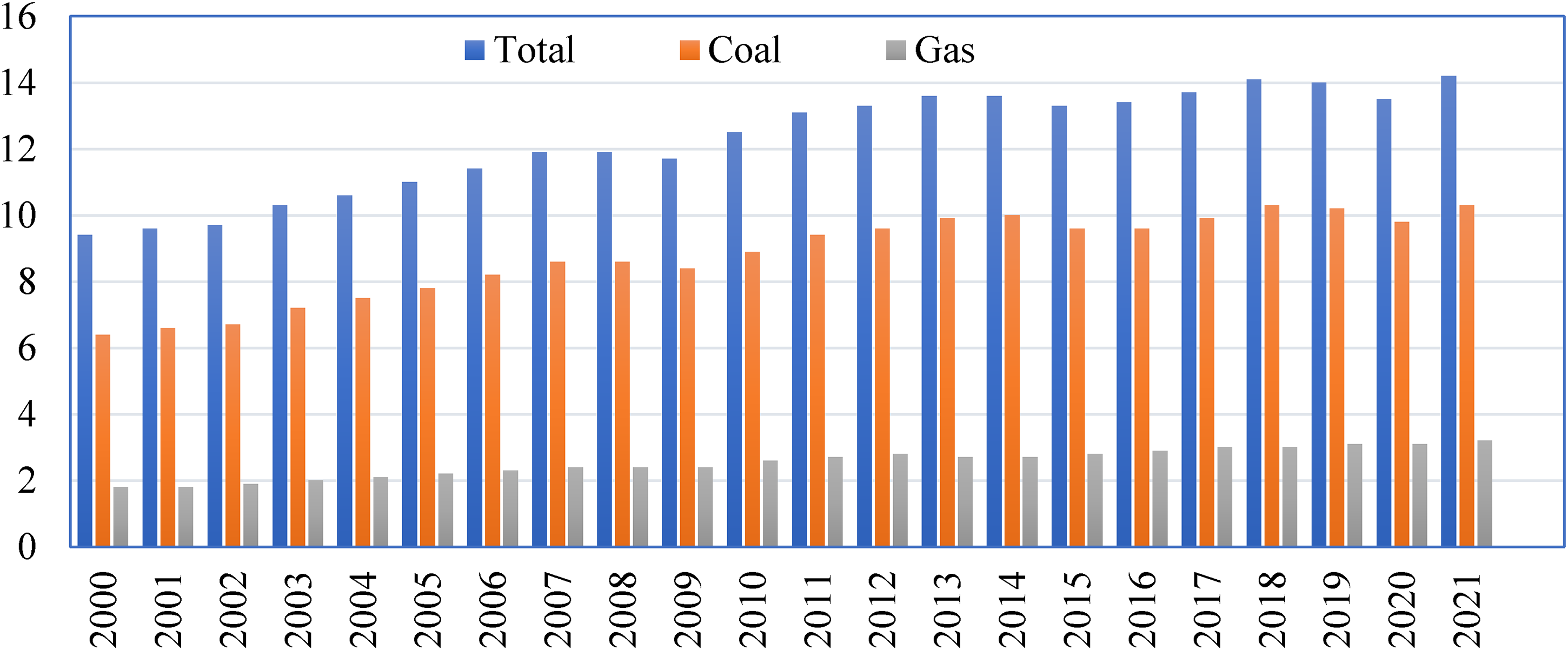
Global CO2 emissions from (in metric tons).
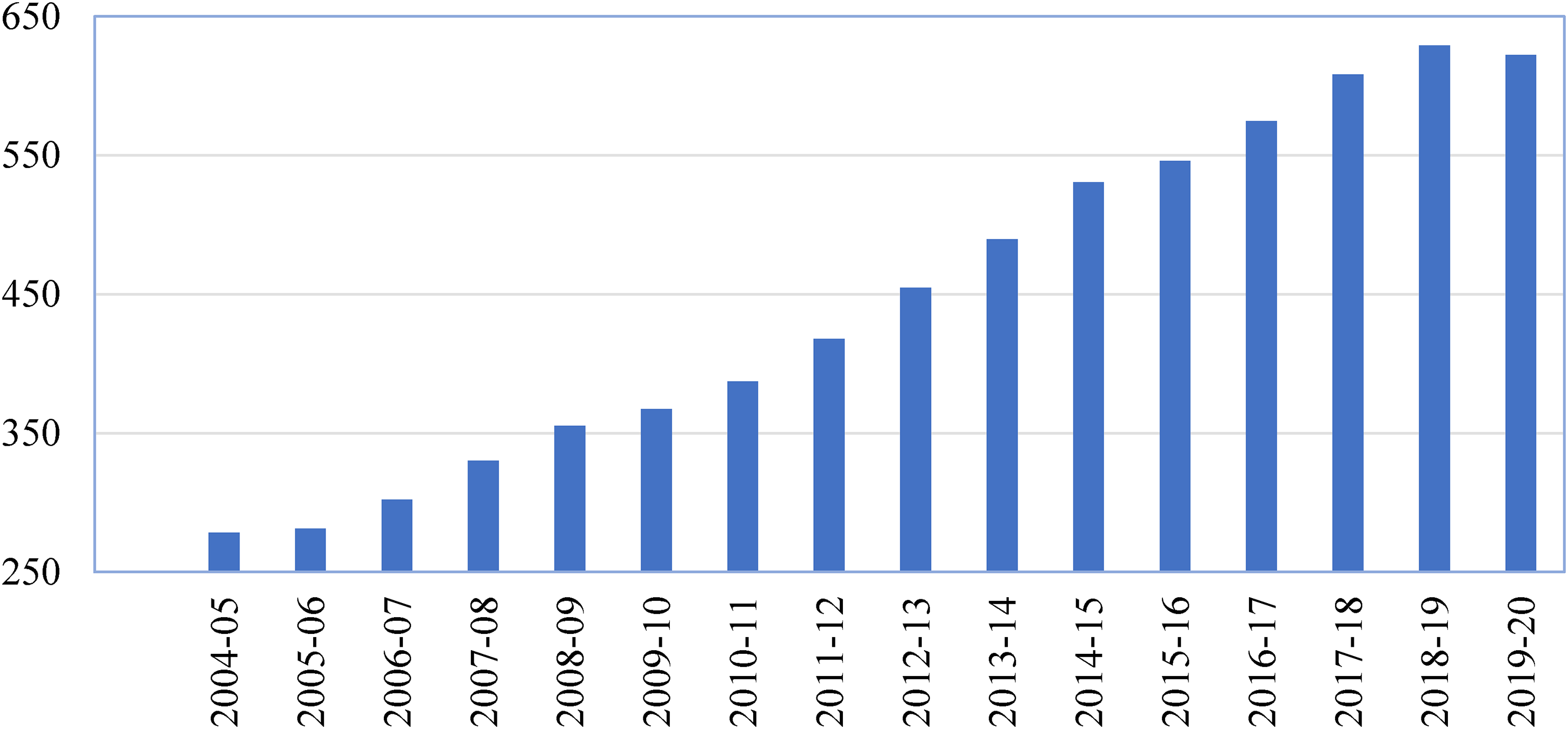
Coal consumption in India (in metric tons).
To reduce carbon dioxide emissions, a shift to renewable energy sources is essential (Thanganadar et al., 2022). India presently generates power from a variety of energy sources, as shown in Figure 3, but increasing the use of renewable energy is urgently needed. As a result, several renewable energy sources are gaining popularity and are being quickly adopted by the public and commercial sectors. Among these, solar energy stands out because it improves grid security, emits no carbon, and is easy to install. Furthermore, as long as there is sunshine, solar energy may be captured from any location on the earth.
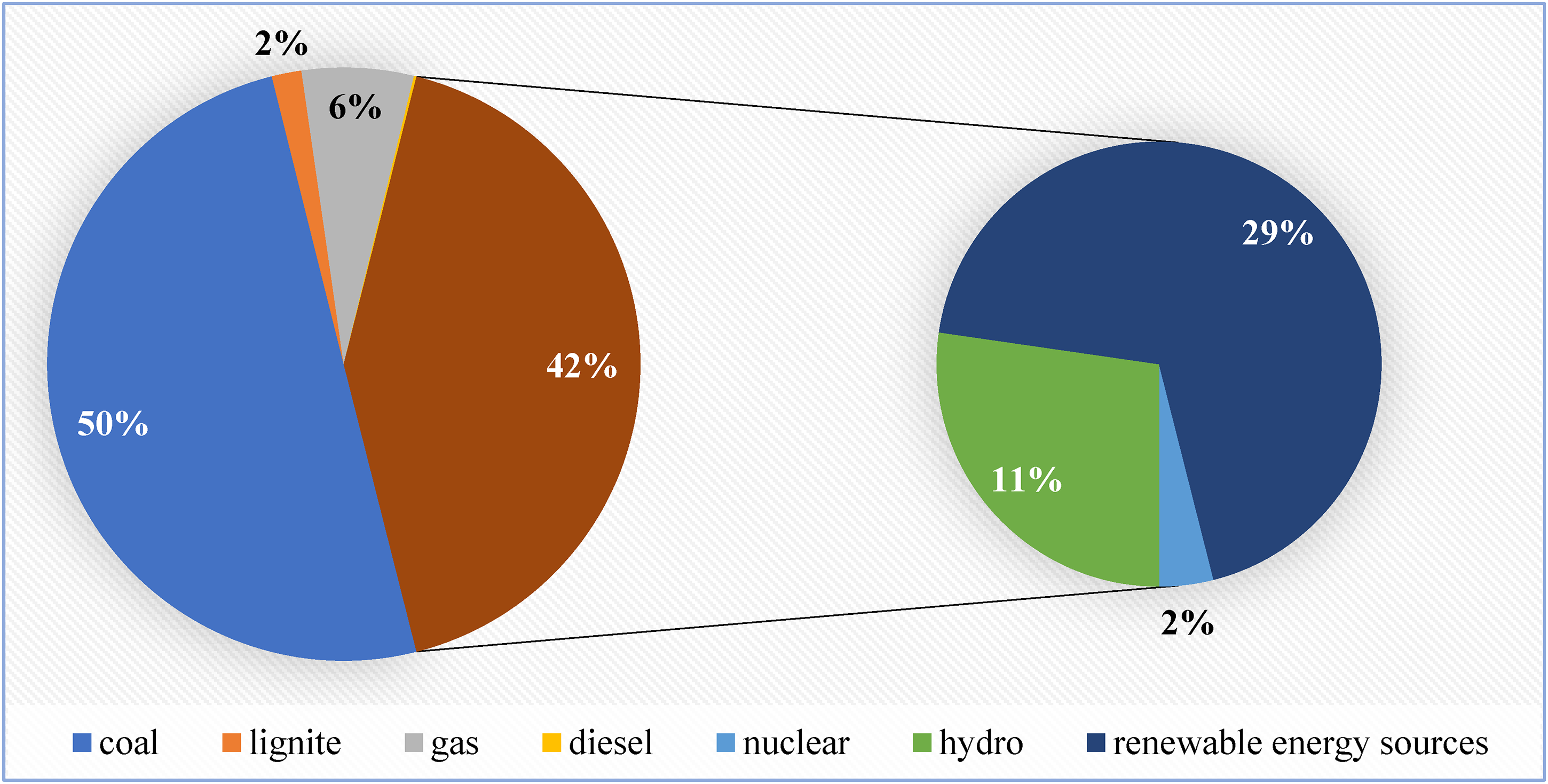
Several energy sources in India (as of December 2021).
From 2021 to 2022, energy demand has continued to rise, yet the energy supplied by various sources has not been able to meet this demand, as illustrated in Figure 4. Therefore, it is essential to enhance the use of sustainable sources like solar and wind energy. There are several drawbacks to photovoltaic (PV) systems, namely the fact that they can only produce power in the daytime and that they are quite expensive initially. Because of its great efficiency and adaptability, concentrated solar power (CSP) offers a more practical solution to these restrictions. Despite the higher cost of CSP power generation compared to PV, these disadvantages can be lessened by using effective and affordable thermal energy storage (TES) systems. Energy supply and demand balancing are made possible by these technologies. Like other nations, the Government of India (GoI) wants to become a major hub for renewable energy (Touati et al., 2017; Ministry of Power, Government of India, n.d.b).
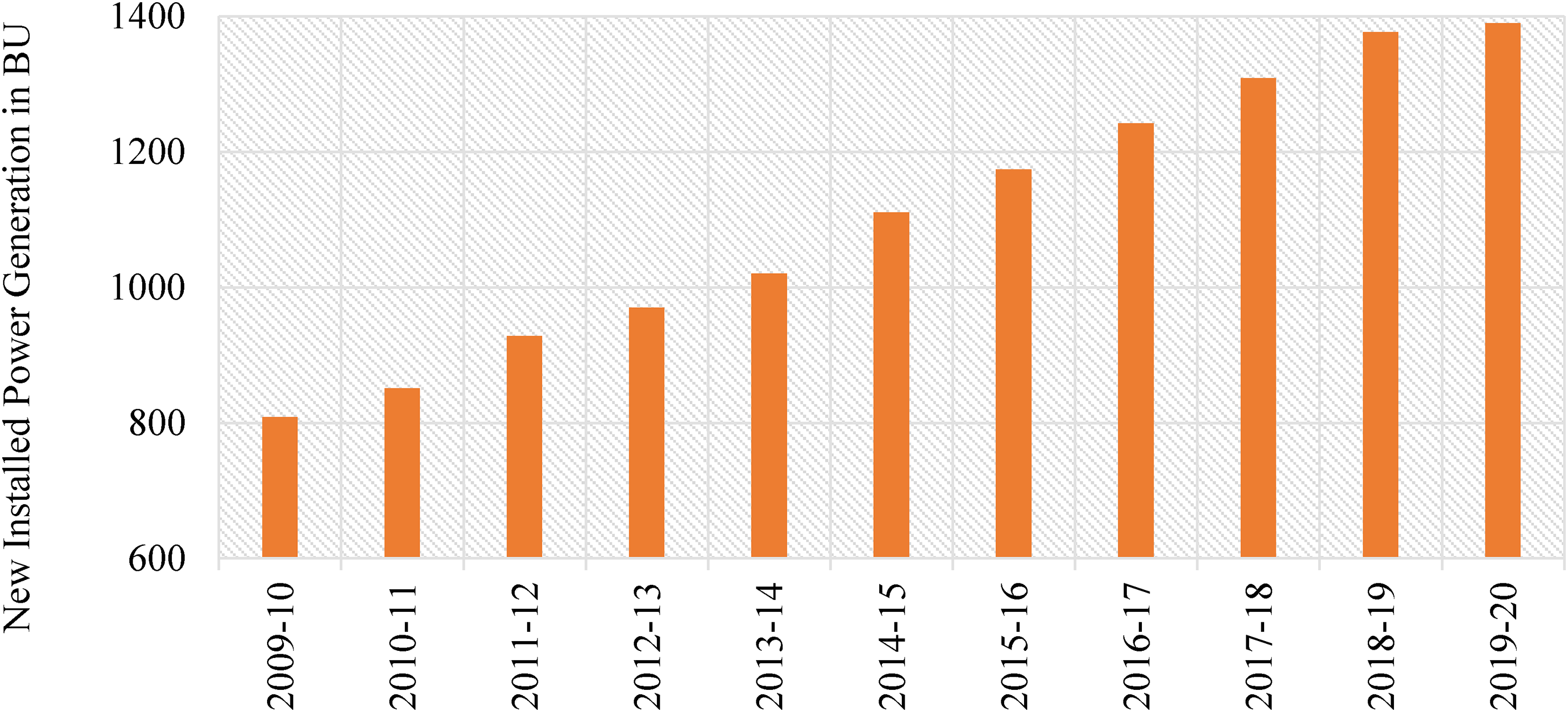
The Indian power sector’s growth rate for power generation from the previous year.
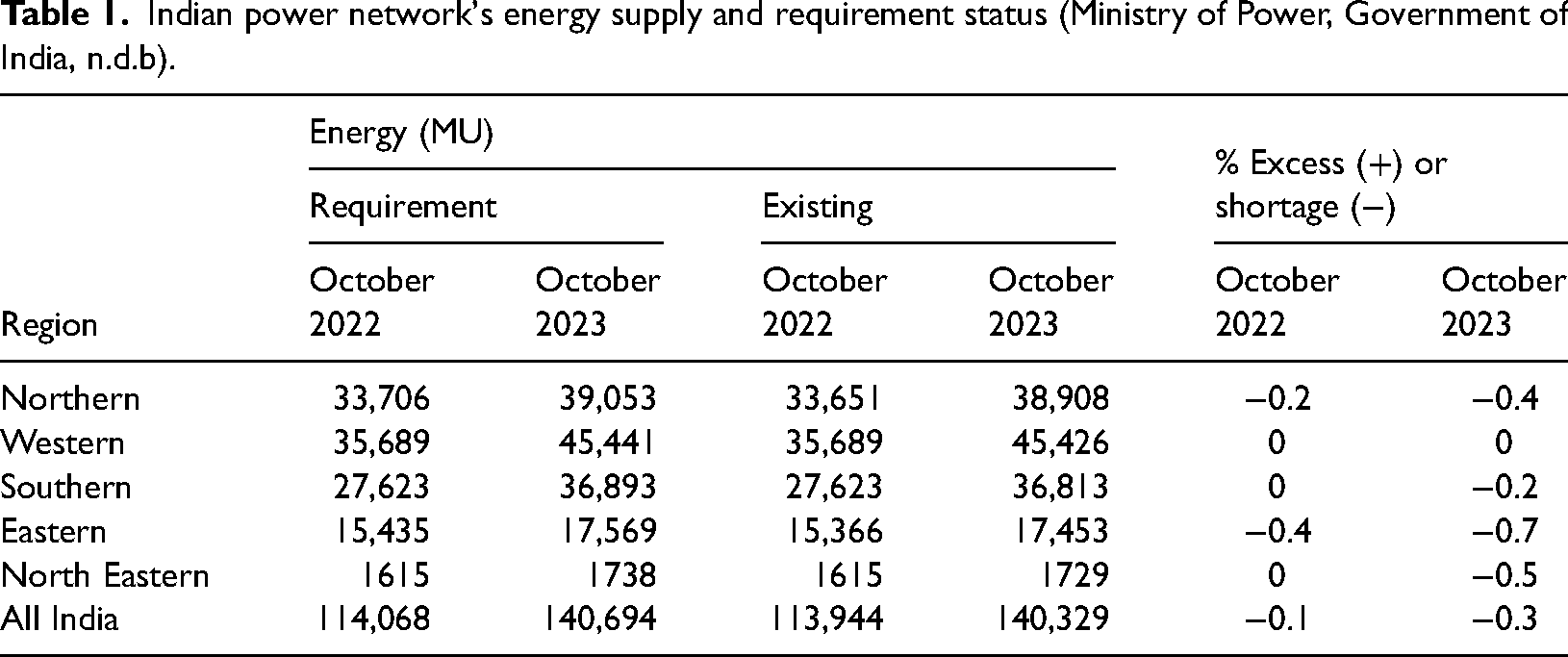
The total installed power capacity of India at the end of October 2023 was 425,535.52 MW, with contributions from the state sector, private sector, and central sector. The state sector contributed 105,532.93 MW, the private sector contributed 217,787.66 MW, and the central sector contributed 102,214.93 MW As of October 2023, thermal power plants generated 239,072.91 MW of electricity, nuclear power plants generated 7480 MW, hydro-power plants generated 46,850.17 MW, and renewable energy sources generated 132,132.44 MW (Ministry of Power, Government of India, n.d.b). The area of renewable energy has been given priority by the Indian government. Among all the renewable energy sources available in India, wind power has the most promise. Notably, India’s northernmost area uses the most energy per person. For October 2022 and October 2023, Tables 1 and 2 present the comprehensive energy and power scenarios for every area in India. These data, when carefully examined, show that there is a greater demand for energy and electricity than there is available generation.
Indian power network's energy supply and requirement status (Ministry of Power, Government of India, n.d.b).
Indian power network's power supply and requirement status (Ministry of Power, Government of India, n.d.b).
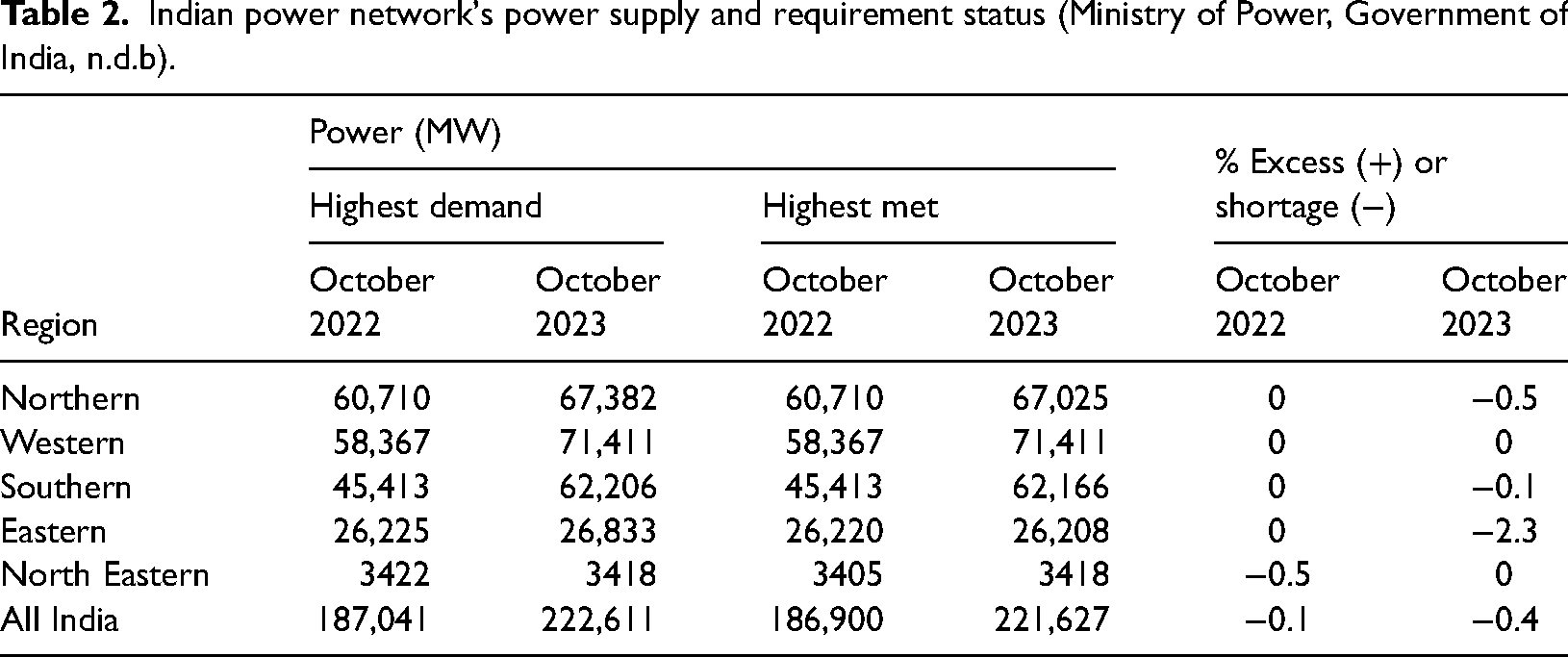
According to data from the Ministry of Power (MoP), the energy demand in October 2022 was 114,068 MU, with availability at 113,944 MU, resulting in a deficit rate of 0.1%. By October 2023, the energy demand increased to 140,694 MU, while availability was 140,329 MU, leading to a shortfall rate of 0.3%. These figures show that the Indian power industry is experiencing a power shortfall. The Indian government has started several initiatives to lower the shortfall rate and boost renewable sources to solve this issue (Ministry of Power, Government of India, n.d.b). The energy and electricity industries have comparable problems. With availability at 186,900 MW and a peak power need of 187,041 MW in October 2022, there was a 0.1% shortfall rate. Peak power demand was 222,611 MW by October 2023, while available electricity was 221,627 MW, resulting in a 0.4% shortfall rate.
The increase in power generation in the Indian power industry from 2009 and June 2020 is seen in Figure 4. The main causes of the rising electricity demand are population expansion and economic development. Power consumption is a good indicator of a country’s degree of development, and India is seeing a sharp increase in power consumption in all areas. As a result, electricity generation is rising gradually to keep up with this expanding demand, with different energy sources resulting in different yearly growth rates.
In response to the significant power deficit facing the Indian electricity sector, the government has launched several programs aimed at quickly establishing renewable power plants, guaranteeing system stability, and improving grid security. Several state governments support this endeavor by offering financial incentives and streamlining the NOC application procedure for investors in renewable energy facilities. The current state of renewable energy generation in India is depicted in Figure 5, with hydropower, solar power, and wind power driving the country’s rise to prominence in this field. The data displayed demonstrates how the capacity for renewable energy is increasing each (Ministry of Power, Government of India, n.d.a).
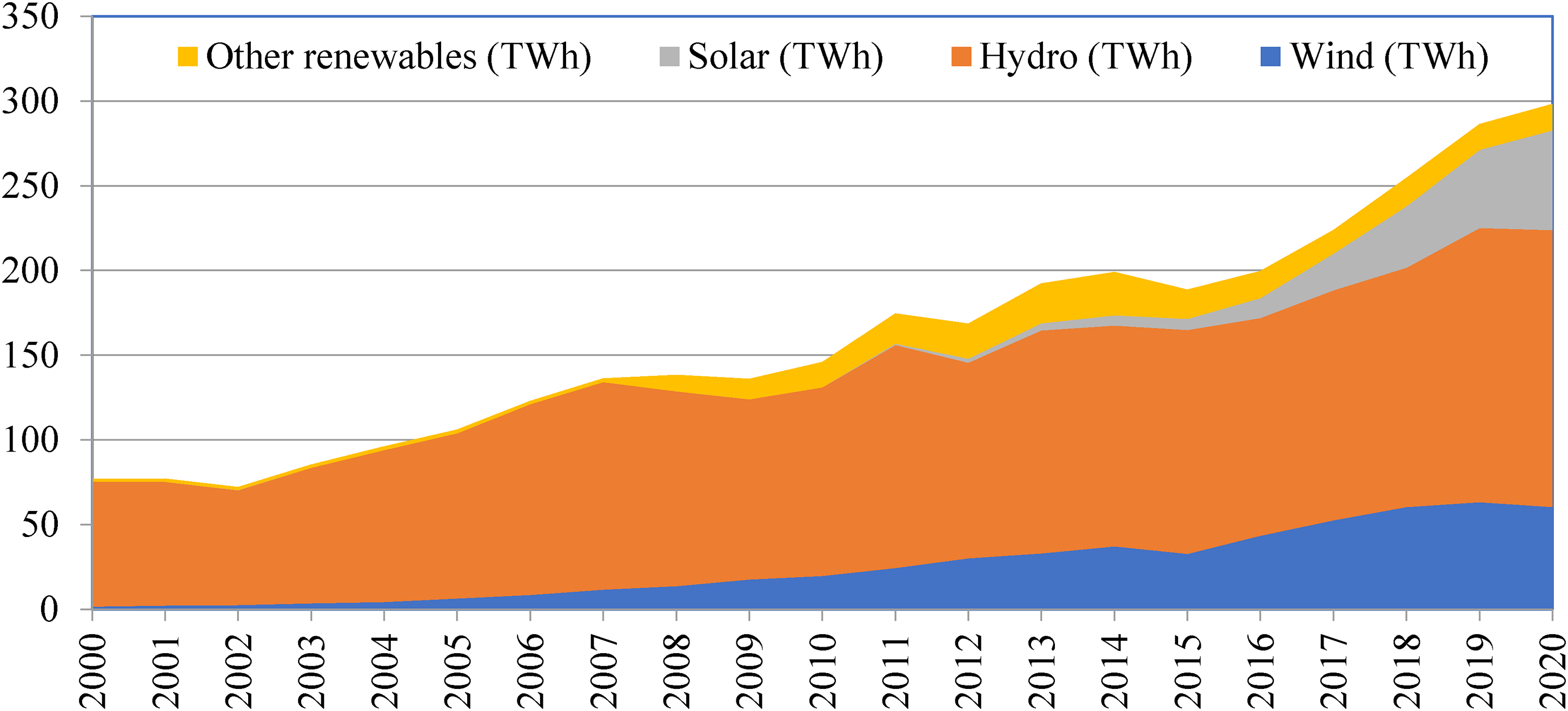
Source-wise renewable energy generation in India (Ministry of Power, Government of India, n.d.a).
Deregulated power sector
Recent years have seen a dramatic change in the power sector, moving from a regulated to a deregulated environment. A monopolistic system was previously established by regional groups controlling both production and distribution. Agreements between governments and industry participants kept this system in place, with states getting paid for maintaining the status quo. However, this system had inherent flaws, as it allowed the potential for state policymakers to be influenced. Regulated markets posed challenges for integrating new technologies such as renewable energy, multi-asset systems, microgrids, and energy storage. Transparency in power flow, financial transactions, and information exchange was limited in regulated markets, favoring generation and transmission companies at the expense of customers.
The process of restructuring the power supply business is intricate and involves consideration of several factors such as national energy legislation and goals, macroeconomic development, and unique national situations. How these modifications are implemented differs throughout nations. It is crucial to remember that there is not a solution that works for everyone. Privatization, deregulation, and liberalization are all part of the broader concept of “market reform,” which aims to create a more favorable regulatory environment for electricity businesses. With new regulations in place and regulatory bodies established to protect consumer interests, some argue that “reregulation” may be a more suitable term than “deregulation.” A fully liberalized energy market would ideally function inside a regulated framework under the supervision of a regulator, free from outside political pressures on decisions about fuel selection or plant size. One component of reform is privatization, which is the transfer of public assets to the private sector; nevertheless, privatization by itself is inadequate to provide competition to a reformed industry. To save costs and improve efficiency, competition is often the first step in market changes.
There are wide variations in the introduced degree of competition. The producer’s attention is redirected toward profitability when ownership changes from public to private. Prioritizing profitability in a competitive context offers a powerful financial incentive to raise and maintain the standard of customer service, keep costs under control, and make investments in technology that increases efficiency. Ownership by the state reduces these incentives (Lai, 2002).
The tipping point in this scenario was the implementation of the Energy Policy Act in 1992, which effectively eroded the dominance of monopolies in the industry. This act garnered significant support as it promised to provide consumers with the same level of electricity in terms of quality and quantity but at more affordable prices. Deregulated energy markets have successfully overcome the challenges posed by regulated markets. Deregulation involves the elimination of government regulations and restrictions in a specific industry, aiming to foster competition and offer consumers a wider range of choices in terms of services and products. Additionally, competition helps drive down prices. The structures of regulated and deregulated electricity systems are depicted in Figures 6 and 7.
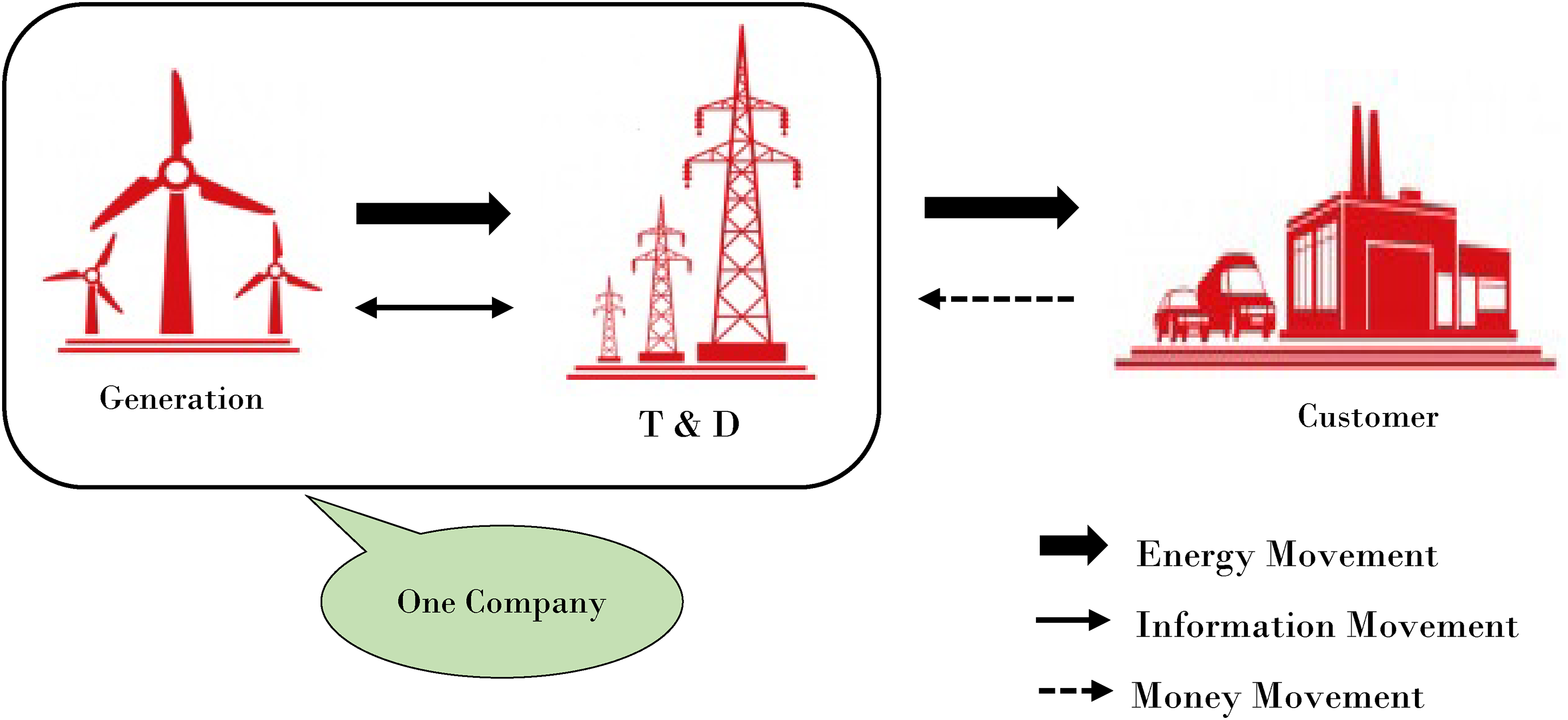
Arrangement of regulated power sector.
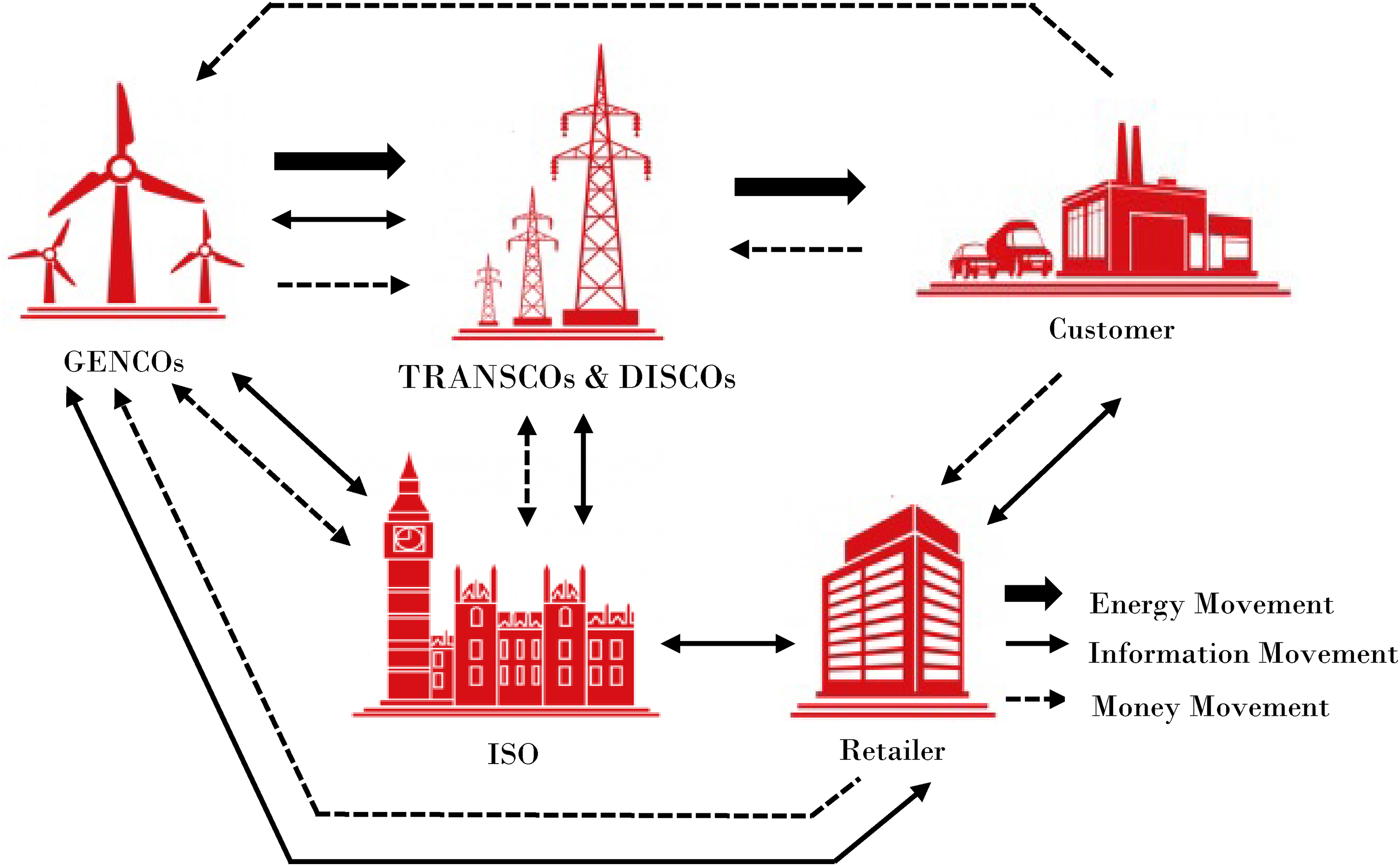
Arrangement of deregulated power sector.
Existing power industry’s operation
The kind of power plants that are being created will determine how quickly changes are put into place. There has been opposition to reorganizing the electrical sector, which frequently contains a sizable portion of coal-fired capacity, in nations where coal has historically been the predominant industry. Coal no longer has a guaranteed market due to the deregulation of the electricity sector; instead, it must now struggle to keep its market share.
In 1990, nuclear electricity was the main source of power generation. In general, the majority of the capital is collected through the Levy of Fossil Fuel. Subsidies for the nuclear power industry were phased out in 1996 with the establishment of British Energy. As competition increased, prices decreased, benefiting renewable energy projects. It is expected that prices will continue to drop significantly over time. In 1995, almost 40% of the power produced worldwide came from solid fuels, primarily coal. This share is expected to be maintained through 2023. In 1995, power generation made up 60% of the world’s consumption; by 2023, that percentage is predicted to rise to 65%.
Asia will be the main source of coal demand for the power sector; the region’s share of world consumption is expected to increase from 25% in 1995 to 43% in 2023. Many factors, some with unpredictable consequences, may impact coal usage in the future.
Power grids were established to deliver electricity at lower voltages to small users and transmit large power at high voltages. This model allowed the construction of larger coal-fueled power plants for efficiency. A national grid with centralized management ensured a reliable power supply. Today, centralized control is no longer favored in the privatized energy sector. Instead, a decentralized approach is recommended for utilizing renewable energy sources. The current energy system supplies energy to various areas but will evolve with renewable energy. The new system will be less centralized, focusing on energy storage and network stability. The International Energy Agency predicts a 3% annual growth in global electricity production. Coal and gas continue to play significant roles in electricity generation, with gas-fired plants being cost-effective in regions with abundant gas. Deregulation has enabled gas to compete with other fuel sources.
Importance of renewable energy integration for economic profit enhancement
The continuous decrease in the availability of fossil fuels necessitates society to consider alternative sources. Integrating renewable sources into a deregulated environment is a complex task, but it is necessary to meet customer demand in an economically sustainable manner while securing the future of energy. The addition of more power supply through existing transmission lines can lead to congestion in the electrical system, increasing the risk of failures in buses, transmission lines, generators, or a combination of these. Therefore, it is essential to calculate the system’s risk and determine its safety condition, enabling the system operator to take appropriate actions to prevent power network failures. For a renewable integrated power network to be secure and safe, risk analysis and mitigation are essential. Because renewable energy is uncertain, connecting renewable units with the electrical system presents the biggest obstacle. In addition to renewable power generating units, energy storage systems (ESS) and FACTS devices are being used to address this problem. Greenhouse gas emissions can be decreased by reducing the usage of fossil fuels by combining electric vehicles (EVs) with renewable energy-generating units. Therefore, to ensure that distributed production effectively competes in the electricity market, it is imperative to create an appropriate control strategy for the allocation and size of renewable generation units and electrical storage systems. The literature study also sheds light on several other facets of power system problems. Its concentration on lesser capacity and narrow coverage of units limited its applicability. However, to evaluate the impact of a significant number of RDG units on grid functioning at the market level, the pertinent elements have been examined in this study. The main topic of the literature study is ESS, specifically EV storage systems, with an emphasis on EV technologies and the best locations for EV charging stations within the grid. The majority of the literature, however, ignores the cost-effective and efficient use of the EV system for a longer lifespan.
Comprehensive assessment of renewable energy integration for economic profit enhancement in a deregulated system
As a result of the implementation of deregulation in the power system, the regulated power sector has witnessed the emergence of new technology and a new identity. This has allowed for more efficient management of the demand and supply, leading to greater economic benefits. The introduction of SG has played a crucial role in this transformation, as it is an intelligent and modern power grid that can effectively handle unpredictable load variations. Furthermore, SG ensures that customers receive a high-quality and reliable power supply in any situation. All utilities are impacted by SG, especially when it comes to integrating new generation sources like DG. With its modest producing units situated near the load centers, DG is predicted to be a major player in the competitive network. Furthermore, because of their ecologically benign generation capabilities, power system designers are paying more attention to the incorporation of renewable distributed generation (RDG) units. In the past, electricity was exclusively controlled by regional powers who had complete authority over its production and distribution. These entities maintained their dominance by offering a portion of the service’s cost to the states, which, in turn, chose to uphold this monopoly despite its ability to sway state policymakers. Nevertheless, deregulation was ultimately implemented to dismantle this monopolistic setting. The process entailed dismantling monopolies at the state level and transferring or selling them to external entities. Electric utility companies had monopolistic control over the production and distribution of electricity, which allowed them to extend their influence to the wholesale market. Through deregulation, this monopoly was effectively dismantled, paving the way for a competitive market.
The government unintentionally introduced deregulation, which began in the 1970s through the enactment of Public Utility Regulatory Policy Act (PURPA). Originally intended to promote alternative energy sources, PURPA inadvertently set the stage for deregulation (U.S. Department of Energy). Due to the ongoing depletion of conventional fuels worldwide, power stations are considering alternative energy sources. The primary challenge in implementing renewable energy lies in its unpredictable nature within the integrated power system. Significant advancements in the fields of competitive power systems and non-conventional energy have led to the intricate integration of renewable energy sources with already-existing thermal power plants. In the end, the consumers gain from this connection.
According to Kravets et al. (2017), the best location for solar and wind energy sources may be reached by considering the general climate as well as other alternative installations. For certain regions, the writers take into account both environmental and economic aspects. To prepare for future energy demands, Svendsen et al. (2016) investigated the integration of renewable energy into the conventional power industry. The power needs of a nation in 2030 are covered in detail in this article, along with generation and demand scenarios from the viewpoints of conventional and renewable energy sources. The optimal deployment of solar PV systems within the real local distribution network is investigated by Sadeghian et al. (2017). The very sophisticated system allocation is described in depth in the study using a simulation model. PV and wind hybrid energy systems are compared with other renewable energy-producing systems by J.S. Chandok (Chandok and Dutta, 2017). System stability and the quality of power generation may be improved by designing renewable energy sources optimally. An in-depth discussion of the optimal placement and size of solar and wind energy systems is provided in this research.
Using the power world simulator program, Mufti et al. (2018) compared the H-11 grid system’s operating outcomes. They examined the creation and demand concerning the present and prospective future states of a particular place. They found through modeling that distributed renewable energy generation (DREG) raises the system’s voltage profile, lowers feeder losses, and increases the system dependability. Paul et al. (2017) investigated the active power profile in the deregulated electricity market in a different research. Important factors for active power bidding were found to be locational marginal pricing (LMP) and locational load shedding marginal pricing. The most modern and economical arrangement for both customers and the electricity industry is the deregulated power market system. While Lekshmi and Balamurugan (2017) provided the multi-area competitive power system of GENCOs and their economic involvement (Deepika and Somasundaram, 2017) outlined the overall system strategy. They took into account the economic and environmental factors while expressing the two-area models linked to GENCOs and DISCOs in the deregulated system quantitatively. Using harmonic and voltage dip factors, Wu et al. (2018) presented a pricing strategy for power quality (PQ) in the deregulated power market architecture. Additionally, they implemented quality risk management and determined the system’s null point for increased power generation and stability by comparing the results with the PQ result. Cunningham and Prater (2003) analyzed the rising energy expenses in several American industry sectors. To reduce energy prices and fulfill demand, they suggested an integrated power-producing sector that blends conventional and renewable sources. To balance energy generation and demand while taking socioeconomic and environmental implications into account, they also incorporated significant elements.
Palmer-Huggins (2001) delves into the risk associated with pricing in the deregulated market. This research paper outlines the conditions under which the per unit energy price may soar or plummet, shedding light on crucial factors that impact pricing in the deregulated power market. The integration of the power generation system heavily relies on the ESS, emphasizing its significance. Zhang et al. (2017) discuss a technique for suppressing wind power fluctuations using an ESS. They introduce a two-stage ESS-based optimal wind power dispatch scheme aimed at enhancing power fluctuation management and financial benefits. Value at risk (Var) is used in risk analysis to evaluate the wind capacity that can be relied upon. The use of a battery energy storage system (BESS) in a microgrid system to enable the local use of renewable intermediate energy without interfering with the main electrical grid is explained in detail by Zhuo (2018). The technique and mathematical modeling of the renewable ESS with the BESS are explained in depth in the study paper.
Galloway et al. (2010) have introduced a method to identify the best location for FACTS controllers, taking into account fluctuations in demand and renewable energy generation. They employ a differential evolution algorithm as the primary optimization technique to minimize generation costs. Monte Carlo simulations are also utilized to pinpoint the specific area where the implementation of FACTS devices provides the most significant benefits by reducing customary production costs. To reduce network congestion, Rahimzadeh and Bina (2011) have proposed an ideal arrangement for parallel and series FACTS devices (STATCOM and SSSC, respectively). For a particular algorithm, they present an objective function perspective that helps identify the ideal number of each FACTS device. The ideal location of solar PV sources utilizing stress test techniques is covered by Kadam et al. (2017). Distinct methods are used to store distinct data points in memory for analysis and placement determination. To attain optimal efficiency, Orenge et al. (2018) show how solar PV-based DGs are placed in the IEEE 9-bus system utilizing optimization approaches. Their suggested approach is used to determine the optimal solar PV system placement and size.
The distribution system serves as the ultimate stage of delivering power within a power system. It plays a crucial role in converting high-voltage power to lower-voltage power through the use of power transformers. This transformed power is then directly supplied to various customers and consumers. The DGs have become increasingly widespread in recent years due to their efficient energy utilization and their contribution to addressing the global energy crisis (Thornton and Monroy, 2011). Investment in RDG units is rapidly expanding due to its contribution to the lessening of greenhouse gas emissions. Several advantages may be gained by deploying DG, including enhanced voltage stability, dependability, power quality, and system efficiency. Furthermore, as compared to traditional power system operation, DG may dramatically reduce peak power needs, transmission line losses, and operating costs (Adefarati and Bansal, 2017; Colmenar Santos et al., 2016). To maximize the benefits of DG, it is essential to precisely determine the suitable location and ideal capacity of the DG unit in the distribution system. Neglecting this aspect could lead to negative outcomes for the system. Numerous studies have investigated this issue through different analytical and optimization methods. For instance, Wang and Nehrir (2004) utilized an analytical method to pinpoint the best position for DG in radial and meshed networks, focusing on reducing power loss in the system. The optimization of system power loss necessitates the appropriate sizing and placement of DG, which can be determined through the utilization of an analytical method proposed in a previous study (Hung et al., 2010). In Abu-Mouti and El-Hawary (2011), the DG size and placement problem is addressed with the application of the ABC (artificial bee colony) algorithm, with an emphasis on minimizing active power loss. Furthermore, Gomez-Gonzalez et al. (2012) discuss the combined application of OPF and discrete particle swarm optimization (PSO) to ascertain the ideal location and dimensions of DG units.
The MTLBO approach is applied in a distributed system to find the ideal location and capacity of DG (Martin Garcia and Gil Mena, 2013). To minimize network power losses, operating costs, and improve voltage stability, the most effective locations and sizes of DG units are determined by combining the loss sensitivity factor and bacterial foraging optimization (BFO) method from Devi and Geethanjali (2014). The cuckoo search (CS) approach (Kumari and Shukla, 2015) is utilized to assess the appropriate placement and ability of DG to reduce losses. Distribution lines also use the Krill herd algorithm to reduce energy loss and active power loss. By using this method, the placement of DG is guaranteed to keep the voltage stability index and bus voltage within the system’s predetermined bounds (Sultana and Roy, 2016). The ant lion optimization (ALO) approach, on the other hand, is described in the paper (Ali et al., 2017) and provides an ideal solution for the positioning and expansion of renewable DG in various distribution networks. System designers face additional hurdles when integrating renewable DG because of its unpredictability and uncertainty. Adding an ESS is a well-acknowledged way to mitigate the volatility and swings of renewable energy sources (Aneke and Wang, 2016; Suberu et al., 2014). ESS allocation, size, and scheduling are crucial to handling the increasing penetration of wind energy sources (Zheng et al., 2015). Appropriately scaled ESS are connected with solar PV systems to store solar energy for later use, hence optimizing the performance of PV systems (Lai and McCulloch, 2017; Xu and Zhang, 2017). ESSs offer a range of grid functions, including resource adequacy, energy balancing, frequency management, and voltage support, which greatly enhance the effectiveness and functionality of the SG (Zame et al., 2017). Reducing overall day-ahead system running expenses requires careful planning of distributed renewable generation units and ESSs within a SG architecture (Zhang et al., 2016). An effective energy management system is essential to a SG’s operation. To guarantee optimal energy use, an online algorithm is described in Rahbar et al. (2017) that takes into account energy collaboration tactics, real-time energy management, and total energy expenditures.
Based on the grid operating circumstances, the SG interacts with generation and load to provide optimal energy distribution. A SG that combines power plants, DG, wind turbines, PV panels, and electric cars serving as power storage units has been proposed by the authors in Rahbari et al. (2017). A nonlinear multi-objective problem was developed and solved utilizing the Non-dominated Sorting Genetic Algorithm-II, the forward-backward substitution method, and the Newton-Raphson power flow method to efficiently manage this grid. To move away from fossil fuels, slow down global warming, and satisfy the world’s expanding energy and economic growth needs, several nations have made use of effective and strategic management of renewable energy. The function of distributed renewable generation in energy management and SG systems is examined in the paper (Hossain et al., 2016). One potential solution to the intermittent nature of renewable energy sources is to employ EVs as energy storage or backups (Fazelpour et al., 2014). The control strategy for distributed wind generation and energy storage relies on forecasted wind speeds for the upcoming hour (Guo et al., 2016), enabling real-time energy management. To ensure a consistent power supply and effectively manage energy distribution, a microgrid system employs a decentralized bi-level algorithm (Wang et al., 2016) to coordinate the operations of all entities involved. This approach facilitates seamless coordination and maintenance of the distribution system, ensuring reliable power supply to customers. Growing environmental consciousness worldwide will drive the expected rise in PHEV usage. Plug-in parallel hybrid electric cars and rule-based fuzzy control techniques are used in Ming et al. (2017) for energy management to reduce fuel consumption in electric cars. To reduce daily energy expenses, a SG uses bidirectional vehicle-to-grid conversion and dynamic programming to handle energy management issues (Wang and Liang, 2017). With the implementation of a bidirectional vehicle-to-grid converter, the grid can efficiently handle the integration of EV power and ensure a stable power supply. Power injection may be intentionally carried out during peak hours, and charging can take place during off-peak hours, when prices are cheaper, to increase profitability. Selling power during times of high demand is the best way to maximize earnings in energy markets that promote power transactions. It is crucial to remember that vendors could only be able to provide a fraction of the peak power in addition to the base load power (Shafie-khah et al., 2016).
During periods of low prices, wind energy can be stored and later supplied to the grid when prices are high. This approach not only leads to increased profits but also reduces peak load (Shu and Jirutitijaroen, 2014). By integrating wind and storage systems into the electricity bidding strategy, consumer payments can be minimized while maximizing seller profits (Ding et al., 2016). In the deregulated electricity market, the combination of EVs and wind power has been utilized to address the challenges posed by the unpredictable and variable nature of wind energy sources (Mirmoradi and Ghasemi, 2016). Managing the charging stations for plug-in hybrid electric vehicles (PHEVs) becomes more complex to optimize profitability for charging service providers. To increase their profitability, the authors of Kim et al. (2017) suggest an energy management system for commercial PHEV charging systems that includes dynamic pricing, lowering, and scheduling algorithms. In the day-ahead energy market, a robust optimization technique that works well is used to reduce payment losses through the use of demand response and energy storage devices, all while taking the volatility of power prices into account (Soroudi et al., 2016). Using power transformers to convert high-voltage electricity to lower-voltage power, the distribution system is essential to the delivery of power within a power system. This transformed power is then directly supplied to various customers and consumers. Previously, distribution substations were responsible for receiving power from the power grid’s transmission network. However, DG is gaining popularity due to its efficient energy consumption and significant contribution to addressing the global energy challenge (IRENA, 2020). Reductions in gas emissions directly translate into higher financing for RDG units (Ustun et al., 2019; Winternheimer et al., 2015). Efficiency, power quality, dependability, and voltage stability are all improved by DG. In contrast to traditional power system operation, it also leads to significant decreases in peak power requirements, operational expenses, and transmission losses.
Soon, the RDG units are expected to have a major influence on the supply of economical, sustainable, and safe energy (Adefarati and Bansal, 2017). Additionally, they provide a workable option for places without access to power (Hubble and Ustun, 2016). To reduce power loss, Wang and Nehrir (2004) used an analytical approach to find the best location for DG in radial and mesh networked systems. Both kinds of systems may be assessed using the methods described in Hung et al. (2010) and are essential in reducing power outages. Moreover, improving energy security requires optimizing storage systems (Hussain et al., 2020a). The sizing and positioning of DG have been successfully determined recently by applying meta-heuristic approaches. In Abu-Mouti and El-Hawary (2011), the artificial bee colony (ABC) approach was utilized to determine the dimensions, power factor, and placement of DG units in a network to minimize real power loss. The discrete PSO method was applied in Gomez-Gonzalez et al. (2012) to solve the DG unit sizing and placement issues. Several optimization techniques have been used to determine where and how big DG to put in a distributed system. A modified teaching–learning-based optimization (MTLBO) approach was used in Martin Garcia and Gil Mena (2013), whereas the loss sensitivity factor and the BFO algorithm were used in Devi and Geethanjali (2014). These algorithms were used to improve voltage stability, reduce operating expenses, and eliminate network power losses.
The CS method (Kumari and Shukla, 2015) was used to organize the debate on the best location and capacity for DG units to minimize loss. In the meanwhile, the Krill herd algorithm was used for the placement of DGs to minimize active power loss and energy loss in distribution lines and guarantee that bus voltage and voltage stability index stayed within predetermined bounds (Sultana and Roy, 2016). The ALO algorithm was first presented in Paper (Ali et al., 2017) as a way to figure out where and how big renewable DG units should be placed for different distribution networks. Wu et al. (2021) came up with the best way to run an integrated wind, solar, and biogas system. Furthermore, optimization methodologies for a solid oxide fuel cell that provides power to a gas-integrated renewable system were suggested in Ref. Ding et al. (2020). The benefits of incorporating renewable energy into the deregulated electrical market, such as fewer construction disruptions and volume swings, are illustrated by the simulation in Paper (Arango et al., 2021). The importance of variable renewable energy (VRE) in worldwide decarbonization efforts has been highlighted by Yao et al. (2020). The author of the research looks at how the economic dispatch model affects integration costs for wind and solar energy while taking supply and demand into account. Hou et al. (2021) highlight how the overuse of renewable energy in daily life is causing renewable resources to decline. A multistage stochastic programming model is constructed and a modified scenario tree technique is used to illustrate VRE. As noted in Kumar and Bag (2017), in the deregulated electricity market, having a solid grasp of available transfer capability is essential since, when understood ahead of time, it allows for more effective use of the transmission network. An ideal hybrid system layout that combines solar, wind, and thermal energy sources with storage devices is shown in Reddy (2017). This system’s primary objectives are to estimate demand for electricity consumption and assess the effects of uncertainty in the production of renewable energy. An efficient way to integrate renewable energy systems into the day-ahead market is demonstrated by Reddy and Bijwe (2016). This approach’s main goals are to increase system security and optimize financial gains. To lower the costs associated with transmission congestion in a hybrid system that uses compressed air energy storage (CAES), a classical power system is examined in Gope et al. (2017).
By incorporating CAESs into a planned system that has an ejector refrigeration subsystem, Ref Xu et al. (2022) demonstrated a creative method. The energy and economic aspects of the system were thoroughly examined. The main goals of Sun et al. (2022) were to create a model for the MCP, separate concentrated solar energy generation through CAESs, and provide approaches for problem-solving. The effect of wind turbine generators on the system performance was examined by Chang et al. (2014). The author solved the optimal power flow problem by applying the evolutionary PSO technique. As described in Xu et al. (2017), the resource aggregator employed a risk-averse bidding approach on behalf of the customer that was based on CVaR. To resolve price disparities in the short-term deregulated power market with wind energy integration, Matevosyan and Soder (2006) developed a bidding technique. A method for assessing the impact of unforeseen wind speeds in a deregulated electrical system with wind integration is provided by the author of Dawn et al. (2017). Systems of all sizes, including small, big, and deregulated systems, can use this technique. Refer Wu et al. (2019) offers a novel optimization strategy for the predictive power market that incorporates load response and manages the ideal generator plan, lowering the possibility of transmission overload. An equilibrium modeling technique is introduced by Rubin and Babcock (2013) to examine the effects of incorporating wind power into the day-ahead market. A DC-insulated nano grid with a combination of renewable energy sources, battery storage, electric cars, and demand response needs is demonstrated in the paper (Habeeb et al., 2021).
An effective microgrid scheduling model that considers the use of green hydrogen in demand response is presented by Tostado-Véliz et al. (2022). Through maximizing the performance of solar PV and battery storage systems, Das et al. (2022b) have proposed strategies to control hazards in combined renewable day-ahead systems. Patil et al. (2022) highlight how crucial it is to incorporate wind power into the deregulated market economy. A method for maximizing power flow in a wind-powered electrical system to reduce fuel costs is described by Khamees et al. (2021). Document (Xu et al., 2019) describes a scheduling strategy for improving capacity sharing in a hybrid system made up of solar PV, wind farms, and pumped storage. Dawn et al. (2018; Singh et al., 2021b) provide a risk-reduction method for a wind-integrated day-ahead system that makes simultaneous use of a pumped storage hydro plant and FACTS devices. Studies conducted recently have demonstrated the efficiency of UVC light in eradicating bacteria and germs, especially in medical environments like operating rooms and hospital wards. UVC radiation kills these dangerous bacteria because of its capacity to destroy molecules. However, integrating renewable energy sources into power systems is challenging because of their unpredictability (Karanja et al., 2020).
The global power system currently boasts a capacity of 125 GW, equivalent to around 3% of the total power capacity, and is capable of being utilized for energy storage purposes (Lawder et al., 2014). The majority of this capacity is provided by pumped hydro plants. Battery-based energy storage transportation (BEST) can help with load shifting and maximize the use of VRE. In addition to managing transmission bottlenecks, BEST entails the transfer of modular battery storage units via trucks or rail carriages. A coordinated long-term transmission-planning approach that incorporates both fixed and mobile storage facilities should be implemented, according to a recent study (Pulazza et al., 2021). Auxiliary services are becoming more and more necessary as wind and solar energy sources become more prevalent to efficiently handle the increased unpredictability and variability in the power supply (Bhatnagar et al., 2013). Aiming to address the growing demand for power and bolster economic growth, developing nations are investigating affordable, grid-connected renewable energy options (Lee et al., 2019). In research, an optimization strategy for a deregulated power system context is put forth to place wind generators while optimizing the use of the unified power flow controller (UPFC) and thyristor-controlled series compensator (TCSC) (Dawn and Tiwari, 2016). Another paper delves into the expectations of various stakeholders regarding the advancement of new battery technologies for power grid operations. The research (Markard and Hoffmann, 2016) underscores the escalating requirement for energy storage alternatives in the power system, driven by the evolution of new battery technologies. Additionally, a model for multi-year transmission expansion planning is presented to reduce overall system costs. This model encompasses four potential network payment mechanisms and the integration of solar and wind energy generation, factoring in their variability (Versteeg et al., 2017). The paper (Bravo et al., 2016) introduces ESSs that utilize lithium batteries for regulating grid frequency, offering a sustainable alternative to traditional generating units. The cost-effectiveness of lithium-ion batteries in comparison to alternative storage systems or traditional frequency control techniques, however, continues to be a significant barrier to their widespread use in these applications.
Renewable integration, microgrids, and SGs in deregulated power systems
Renewable Energy Integration: With the increasing focus on sustainability and reducing carbon footprints, integrating renewable energy sources like solar, wind, and hydroelectric power into the grid is vital (Abdolrasol et al., 2021; Abdolrasol et al., 2022; Das et al., 2022a; Farooq et al., 2022; Singh et al., 2021a). They offer cleaner energy generation, reduce dependency on fossil fuels, and contribute to environmental preservation and climate change mitigation (Basu et al., 2022; Chander et al., 2023; Dey et al., 2023; Hamoudi et al., 2023; Kikusato et al., 2019).
Microgrids: Microgrids are localized energy systems that can operate independently or in conjunction with the main grid (Hussain et al., 2020b). In deregulated systems, microgrids offer resilience and reliability by providing backup power during grid outages or disruptions (Barik et al., 2021; Ulutas et al., 2020). They also facilitate the integration of distributed energy resources such as rooftop solar panels and battery storage, promoting energy independence and local energy optimization (Chauhan et al., 2021; Latif et al., 2021; Ustun and Hussain, 2019).
Smart Grids: SGs leverage advanced technology, including digital communication and automation, to optimize the generation, distribution, and consumption of electricity. In deregulated environments, SGs enhance the grid management efficiency, enable real-time monitoring and control, support demand-side management programs, and facilitate the integration of intermittent renewable energy sources (Chappa et al., 2022; Sahoo et al., 2023; Ustun and Aoto, 2018). They also improve grid resilience, reduce operational costs, and enhance overall system reliability (Pattanaik et al., 2024; Ranjan et al., 2021).
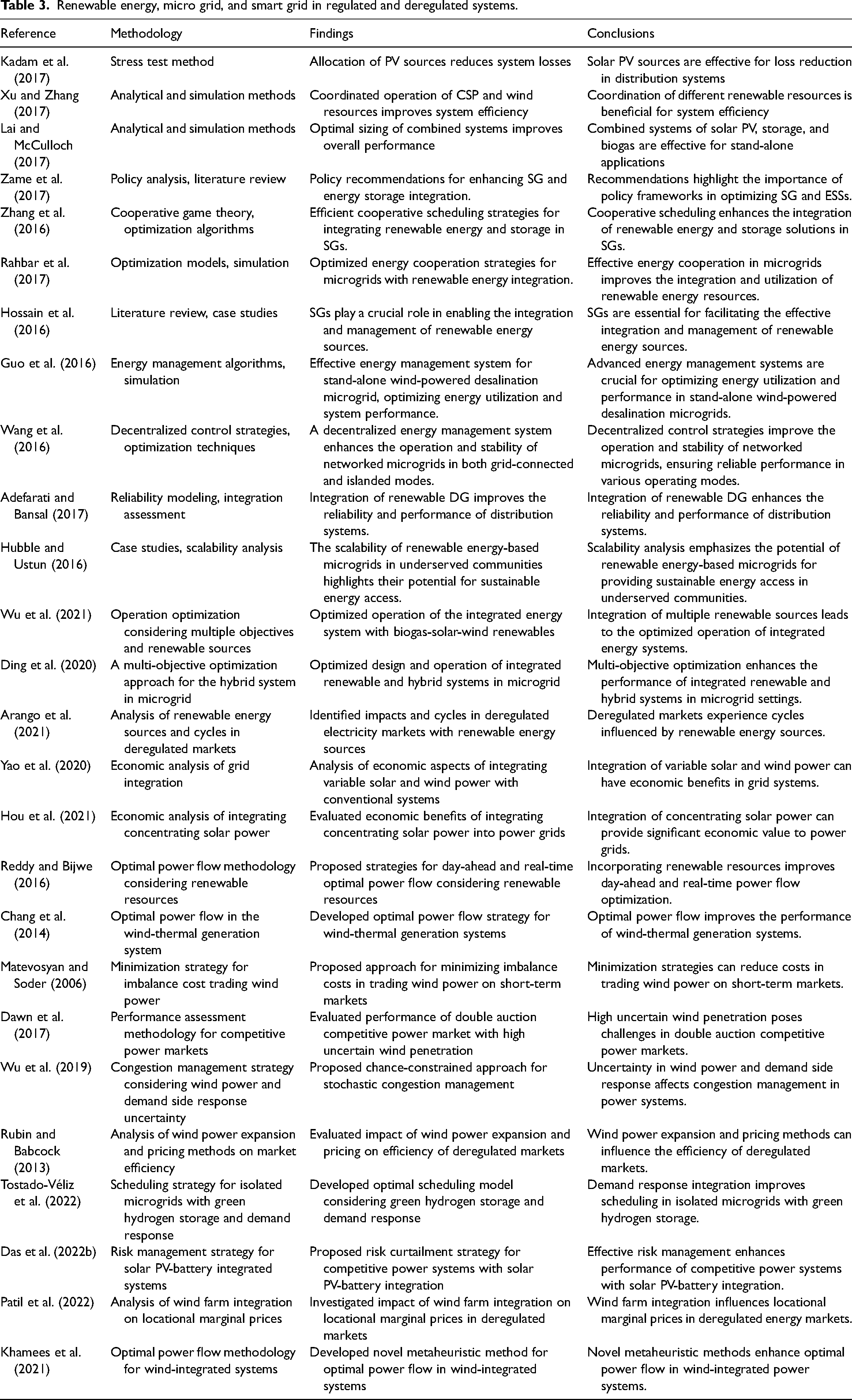
In deregulated power systems, these elements work together to promote a more efficient, sustainable, and resilient energy infrastructure. They enable greater flexibility, promote energy diversity, and empower consumers to actively participate in energy management, ultimately contributing to a more dynamic and responsive energy ecosystem. A detailed study of the renewable energy integration, microgrid, and SG in regulated and deregulated systems is displayed in Table 3.
Renewable energy, micro grid, and smart grid in regulated and deregulated systems.
Importance of energy storage in renewable integrated power system
Energy storage plays a crucial role in both regulated and deregulated power systems, especially when integrating renewable energy sources. Here are the key reasons for its importance:
Integration of Intermittent Renewable: Renewable energy sources like solar and wind are intermittent, meaning their generation fluctuates based on weather conditions. ESS help smooth out these fluctuations by storing excess energy when generation is high and supplying it when generation is low. This improves grid stability and reliability in both regulated and deregulated systems. Grid Flexibility and Peak Shaving: Energy storage provides grid operators with flexibility in managing energy demand and supply. In regulated systems, it can be used for peak shaving, where the stored energy is discharged during periods of high demand, reducing the need for expensive peaker plants. In deregulated systems, energy storage can participate in electricity markets by selling stored energy during peak demand periods, contributing to grid balancing and cost optimization. Enhanced Resilience and Reliability: Energy storage enhances the resilience and reliability of power systems by providing backup power during outages or emergencies. This is especially critical in areas prone to extreme weather events or grid disturbances. Both regulated and deregulated systems benefit from improved grid stability and reduced downtime with the deployment of energy storage solutions. Facilitating Renewable Energy Dispatch: In deregulated systems, energy storage can facilitate the effective dispatch of renewable energy by storing surplus generation during periods of low demand or low market prices and releasing it during times of high demand or high prices. This maximizes the value of renewable energy assets and optimizes their economic contribution to the grid. Grid Congestion Management: ESSs can help manage grid congestion by storing excess energy in areas with limited transmission capacity and releasing it when congestion eases. This improves overall grid efficiency and reduces the need for costly grid upgrades or expansions.
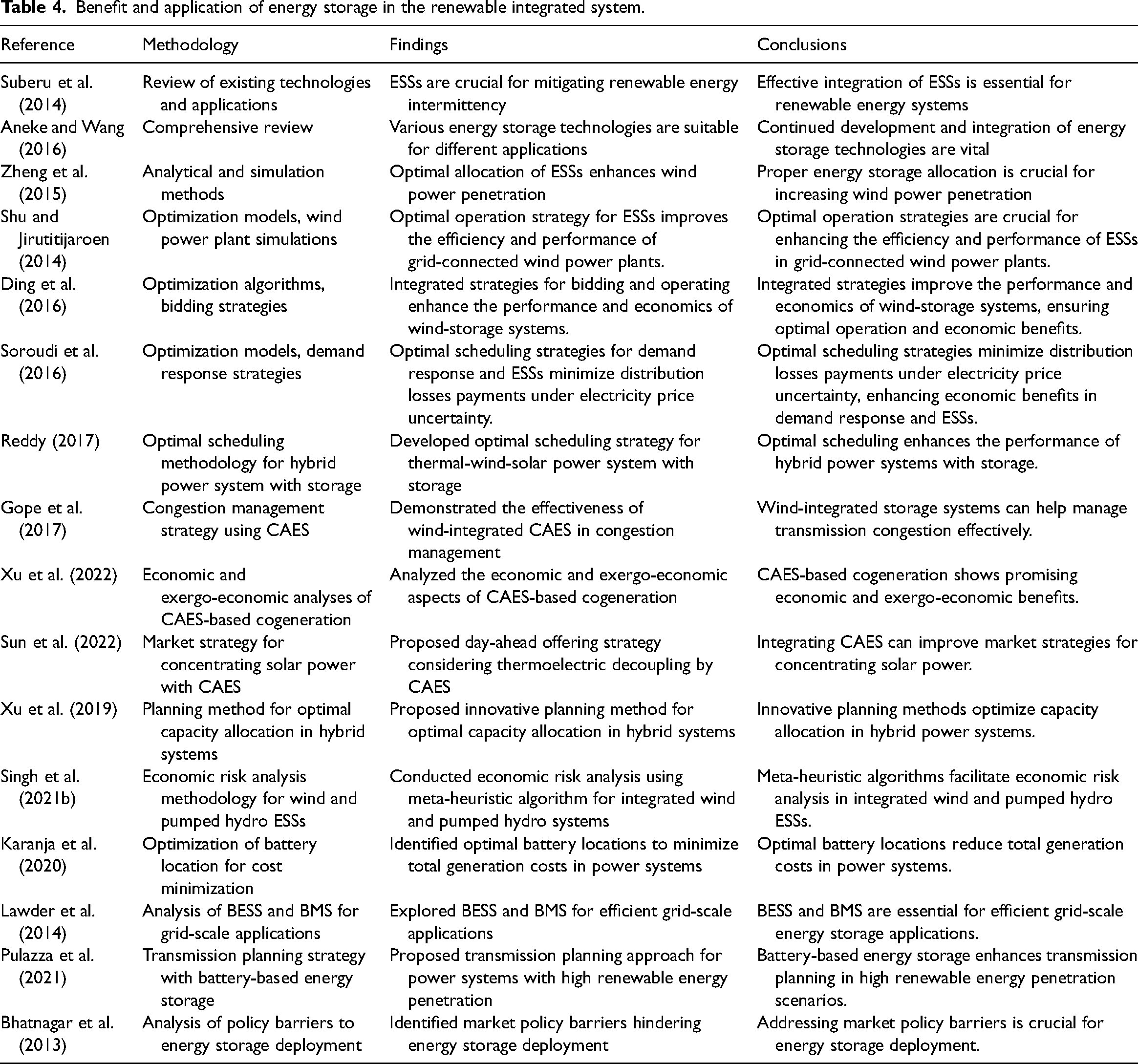
Overall, energy storage is a key enabler for the effective integration of renewable energy into both regulated and deregulated power systems. It provides operational flexibility, enhances grid resilience, and contributes to a more efficient and sustainable energy infrastructure. A detailed study of the benefit and application of energy storage in the renewable integrated system is displayed in Table 4.
Benefit and application of energy storage in the renewable integrated system.
Importance of distribution generator in renewable integrated power system
DG refers to the decentralized production of electricity by small-scale units located close to the point of consumption. DG systems, often powered by renewable energy sources, play a significant role in both regulated and deregulated power systems, especially when integrated with renewable energy. Here are the key reasons for their importance:
Enhanced Grid Resilience and Reliability:
Regulated Systems: DGs improve grid resilience by providing localized power generation that can continue to operate independently during central grid outages. This is particularly beneficial in remote or rural areas where grid reliability may be lower. Deregulated Systems: In deregulated markets, DGs can offer ancillary services such as voltage support and frequency regulation, enhancing overall grid reliability and resilience.
Reduction in Transmission and Distribution Losses:
Regulated Systems: By generating power close to where it is consumed, DGs reduce the need for long-distance transmission, thereby decreasing energy losses and improving overall system efficiency. Deregulated Systems: DGs can reduce congestion on transmission and distribution networks, lowering the costs associated with grid upgrades and maintenance.
Support for Renewable Energy Integration:
Regulated Systems: DGs, particularly those using renewable energy sources like solar and wind, contribute to the diversification of the energy mix and reduce dependence on centralized fossil fuel power plants. Deregulated Systems: In competitive markets, DGs provide additional capacity and flexibility, supporting the integration of intermittent renewable energy sources and enhancing market dynamics.
Economic Benefits and Consumer Empowerment:
Regulated Systems: DGs can lower energy costs for consumers by reducing the need for large-scale infrastructure investments and by providing opportunities for net metering, where consumers can sell excess power back to the grid. Deregulated Systems: DGs empower consumers to become prosumers (producers and consumers), enabling them to participate in the energy market, generate revenue, and benefit from dynamic pricing and demand response programs.
Environmental and Sustainability Advantages:
Regulated Systems: DGs contribute to environmental sustainability by promoting the use of clean, renewable energy sources, reducing greenhouse gas emissions, and supporting local environmental goals. Deregulated Systems: Deregulated markets can incentivize the deployment of DGs through market mechanisms, such as renewable energy credits and carbon pricing, encouraging further investment in sustainable energy solutions.
Increased Energy Security and Independence:
Regulated Systems: DGs enhance energy security by reducing dependence on centralized power plants and vulnerable transmission lines, providing a more robust and decentralized energy supply. Deregulated Systems: In deregulated markets, DGs increase energy independence by allowing consumers and businesses to generate their power, reducing exposure to market volatility and price fluctuations.
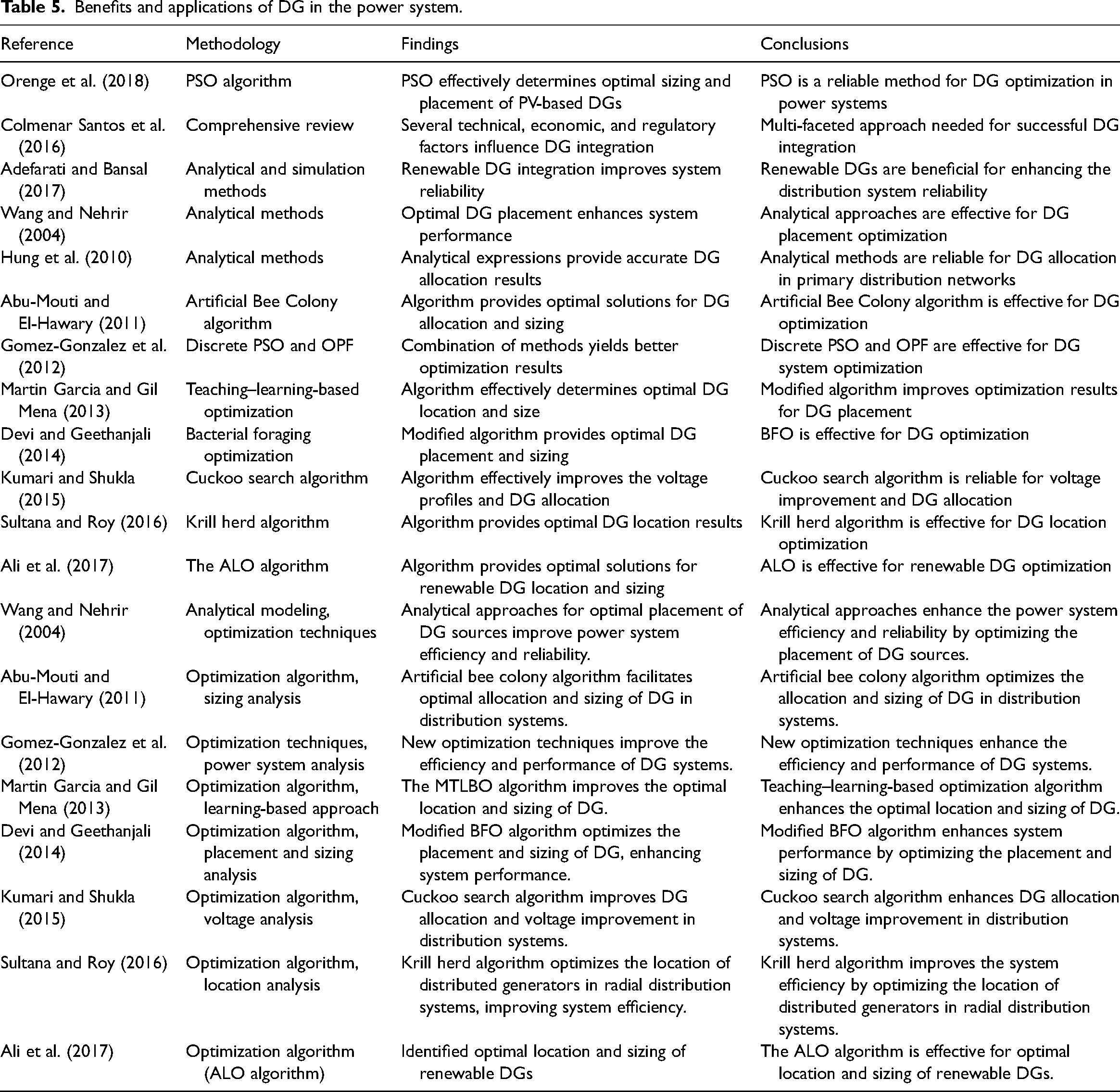
Overall, DG is a critical component in the transition to a more sustainable, resilient, and efficient energy system. Its role in supporting renewable energy integration, reducing energy losses, and empowering consumers is vital in both regulated and deregulated power systems. The thorough study of the benefit and application of DG in the renewable integrated system is displayed in Table 5.
Benefits and applications of DG in the power system.
Importance of EVs in power systems
EVs play a significant role in modern power systems, contributing to various aspects of grid management, sustainability, and energy efficiency. Here are the key reasons for their importance:
Grid Balancing and Energy Storage:
Vehicle-to-Grid (V2G) Technology: EVs can act as mobile energy storage units, providing electricity back to the grid during peak demand periods. This helps balance supply and demand, improves grid stability, and reduces the need for additional peaking power plants. Load Shifting: EVs can charge during off-peak hours when electricity demand is low and discharge during peak hours, helping to flatten demand curves and optimize grid operations.
Renewable Energy Integration:
Smoothing Intermittency: By storing excess renewable energy generated during periods of high production (e.g. midday solar power), EVs can release this energy when renewable generation is low (e.g. during the night or cloudy days). This enhances the overall integration of renewable energy sources into the grid. Distributed Storage: EVs distributed across the grid provide a vast and flexible storage network, enabling better utilization of renewable energy and reducing the need for stationary energy storage investments.
Reduction of Greenhouse Gas Emissions:
Decarbonizing Transport: EVs produce zero tailpipe emissions, significantly reducing greenhouse gas emissions compared to conventional internal combustion engine vehicles. When powered by renewable energy, EVs contribute to substantial reductions in overall carbon footprints. Supporting Climate Goals: The adoption of EVs aligns with global efforts to combat climate change, supporting national and international climate targets and policies aimed at reducing emissions from the transportation sector.
Enhanced Energy Security and Independence:
Reducing Oil Dependence: By shifting from gasoline and diesel to electricity, EVs reduce dependence on imported oil, enhancing energy security and economic stability. Local Energy Utilization: EVs promote the use of locally generated electricity, whether from renewable or conventional sources, fostering energy independence and local economic benefits.
Economic and Social Benefits:
Cost Savings: EVs have lower operating and maintenance costs compared to traditional vehicles, providing economic benefits to consumers and businesses. Job Creation: The growth of the EV industry creates jobs in manufacturing, infrastructure development, and related services, contributing to economic development and technological innovation.
Infrastructure and Technological Advancements:
Smart Charging Infrastructure: The deployment of EVs drives the development of smart charging infrastructure, which includes dynamic pricing, load management, and integration with SGs. This infrastructure enhances the overall efficiency and reliability of the power system. Advancements in Battery Technology: The demand for EVs accelerates advancements in battery technology, which not only benefits the automotive sector but also improves energy storage solutions for the grid.
Demand Response and Grid Services:
Flexible Demand Response: EVs can participate in demand response programs, adjusting their charging patterns based on grid needs and price signals. This flexibility helps manage grid congestion, reduces peak loads, and enhances grid resilience. Ancillary Services: EVs can provide ancillary services such as frequency regulation and voltage support, contributing to the overall stability and reliability of the power system.
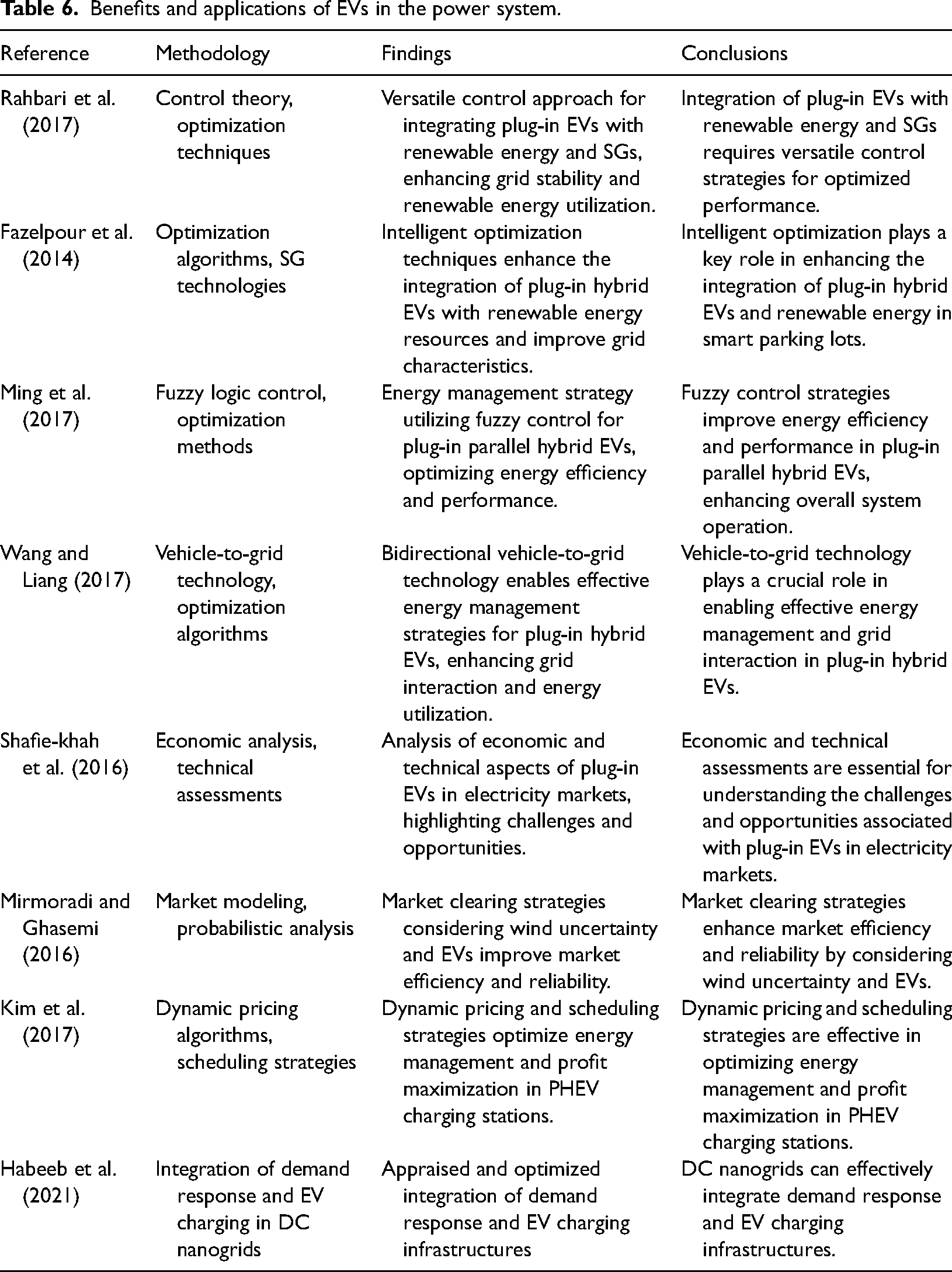
Overall, EVs are integral to the modernization and decarbonization of power systems. Their ability to store and manage energy, support renewable integration, reduce emissions, and drive economic growth makes them a key component of future sustainable energy infrastructures. A thorough study of the benefits and application of EVs in the power system is displayed in Table 6.
Benefits and applications of EVs in the power system.
Research findings and gaps from the literature
The paper precisely examines a variety of research consequences while simultaneously depicting significant deficiencies that exist in the incorporation of renewable energy resources within the framework of deregulated power systems. The following is a comprehensive overview that encapsulates the key findings (shown in Figure 8) as well as the identified gaps (shown in Figure 9).
The process of incorporating renewable sources into deregulated power systems has the potential to significantly enhance system efficiency, noticeably reduce transmission losses that occur during energy transfer, and significantly improve the overall grid stability; all of which collectively give not only to robust economic growth but also to the dynamic preservation of the natural environment. The implementation of SGs and microgrids is of supreme importance for the effective management of electricity distribution within deregulated systems, as these advanced skills provide an increased level of elasticity when it comes to integrating renewable sources and simultaneously offer innovative solutions that facilitate improved demand management. The adoption of energy storage technologies is crucial for effectively managing the intermittent nature of renewable sources; that ensures not only grid stability but also plays a significant role in the decrease of greenhouse gas emissions. The competitive landscape of power markets produces substantial economic advantages, including the provision of lower energy costs for consumers; these markets stand to gain immensely from the integration of renewable sources alongside energy storage technologies, which collectively enhance the overall consistency and sustainability of the power network. The incorporation of intermittent renewable sources brings forth a series of technical challenges that must be addressed, particularly concerning grid reliability and the inherent volatility associated with the renewable power supply.
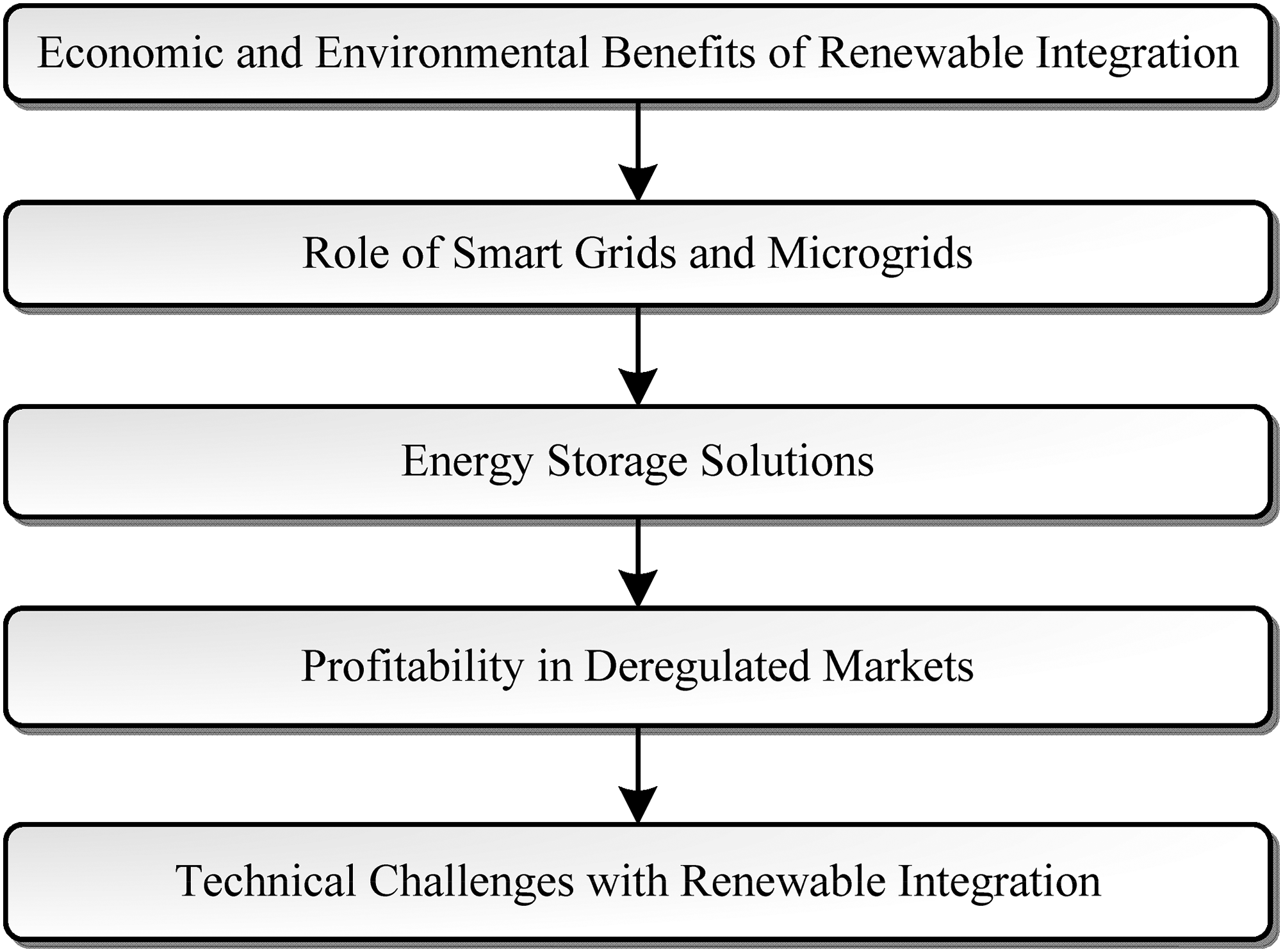
Research findings from the study.
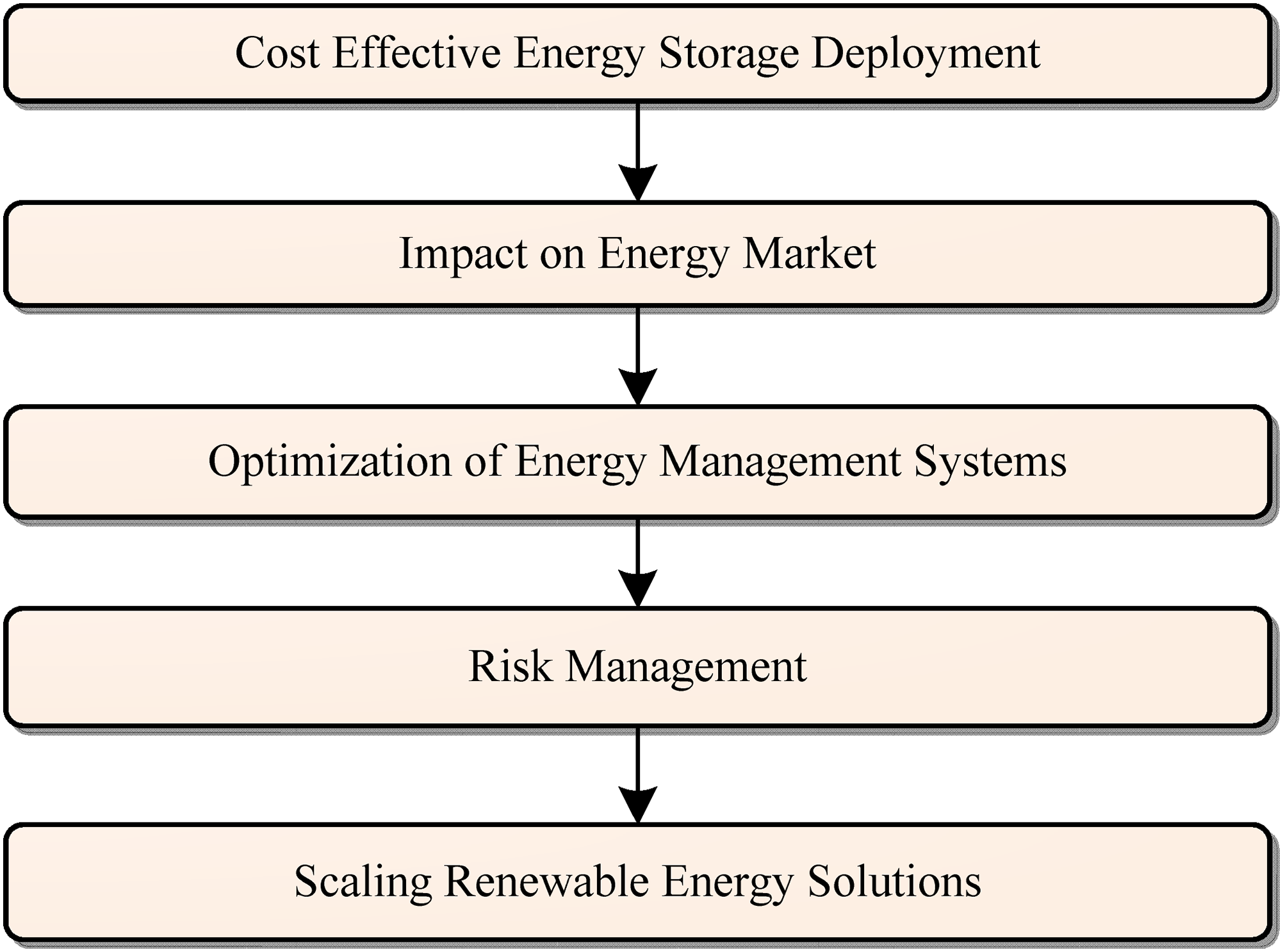
Research gaps from the study.
The research gaps found from the study are depicted as follows:
Although the previous research works do a commendable job of outlining the various advantages associated with ESSs, which unfortunately, fall short of providing a comprehensive discussion regarding the cost-effective and efficient utilization of these energy storage solutions, particularly when considering their long-term operational viability, a significant hurdle that continues to impede the broader adoption and implementation of such systems across various sectors. There exists a crucial necessity for a more in-depth investigation into the intricate ways in which the integration of renewable sources influences pricing structures, market stability, and overarching regulatory frameworks, especially when this analysis is contextualized within the dynamics of deregulated energy markets. There is a requirement for additional research focused on the optimization of energy management systems, aimed specifically at enhancing the seamless integration of DG units alongside renewable sources within the frameworks of microgrids and SGs. The study recognizes the pressing need for the advancement of risk management methodologies in the context of addressing and mitigating the inherent unpredictability associated with renewable energy generation, as well as its consequential effects on the overall reliability of energy systems operating in deregulated environments. There is an imperative for further research directed toward tackling the critical issue of scaling renewable energy solutions effectively across a variety of geographic regions, considering the diverse market conditions that can significantly influence the feasibility and success of these initiatives.
These identified gaps serve to depict the considerable potential for future investigations aimed at optimizing the integration of renewable sources, enhancing the performance of ESSs, and boosting regulatory support within deregulated power systems, which could yield substantial benefits for the energy sector as a whole.
Potential for the sustainable growth of a renewable energy integrated system
The work delves into the substantial and remarkable potential that lies in the sustainable advancement of renewable systems, with a focus on the smooth integration of renewable energy sources with modern grid technologies to enhance the system efficiency and functionality.
Economic and environmental implications
The implementation of renewable systems significantly reduces the reliance on fossil fuel sources, which in turn leads to a substantial decrease in greenhouse gas emissions that are primarily responsible for worsening climate change, thereby contributing positively to global climate change mitigation efforts. Investigative of the situation from an economic view, the incorporation of renewable resources within deregulated markets serves to lower operational costs, inspire a superior diversity of energy sources, and ultimately lead to a drop in consumer prices.
Sustainable growth of renewable systems
The advanced technologies of microgrids and SGs are crucial and play an influential role in optimizing the distribution of electricity and effectively managing DG systems. In achieving this, these technologies improve the overall resilience, efficiency, and flexibility of the electrical grid, which aids in significantly reducing transmission losses and ensures a stable and reliable energy supply.
Global sustainable growth of renewable energy integrated systems
On a global scale, the transition and shift toward utilizing renewable sources have been significantly driven by the critical need to curtail greenhouse gas emissions and achieve various climate-related goals. Notably, regions such as Europe, North America, and specific parts of Asia, particularly India and China, have arisen as leaders in directing this transition toward renewable energy adoption. The extensive utilization of SGs and microgrids across the globe facilitates enhanced energy distribution and effective demand management, thereby ensuring a more efficient and optimized use of renewable energy resources. Countries around the world are increasingly embracing and adopting advanced grid technologies to boost the effectiveness of DG systems.
On a global level, the application of energy storage solutions is vital for addressing the erratic nature of renewable sources. The rapid distribution of battery storage technologies is being observed as a key strategy to balance the supply and demand dynamics. Within deregulated markets, renewable energy incorporation in combination with smart technologies results in a substantial reduction in operational costs, enabling energy providers to offer more competitively priced energy to consumers. This trend has been particularly noticeable in countries that have liberalized their power markets, such as the United States and various nations across Europe.
The manuscript emphasizes that the global scenarios surrounding the adoption of renewable energy not only highlight the environmental advantages but also highlight the thoughtful economic implications, particularly within deregulated energy markets. Furthermore, it suggests that energy storage solutions and advanced grid technologies are essential for facilitating the future of sustainable development and implementation.
Global Status of economic sustainability enhancement for renewable and EV integration
The incorporation of renewable sources and EVs into power systems is essential for promoting global economic sustainability. Nations are actively working to harmonize economic development with environmental conservation by embracing green technologies. The following is a summary of how various countries and regions are progressing in terms of economic sustainability through the integration of renewable energy and EVs into their power systems.
The United States
Renewable Energy: The United States is increasing its renewable energy capacity, particularly in solar and wind energy. States such as California and Texas are at the forefront of wind energy production, while Arizona and Nevada excel in solar energy generation. EV Integration: The United States is rapidly developing EV infrastructure through both public and private investments. The policies of the govt. administration is aimed at boosting EV adoption, which includes tax incentives and funding for a comprehensive nationwide charging network. Challenges: Key challenges include the modernization of the grid, managing the variability of renewable energy sources, and addressing the charging requirements in rural areas.
The European Union (EU)
Renewable Energy: The EU stands as a global frontrunner in the adoption of renewable energy. Countries like Germany, Spain, and Denmark have established ambitious goals for achieving 100% renewable energy. Offshore wind and solar power are pivotal technologies in this transition. EV Integration: The EU has implemented robust policies to encourage EV adoption, particularly through stringent vehicle emissions standards and financial incentives for EV purchases. The European Green Deal aims to achieve climate neutrality for the EU by 2050. Challenges: The challenges faced include grid congestion, the necessity for extensive energy storage solutions, and regional disparities in renewable energy capabilities.
China
Renewable Energy: China stands as the foremost producer of renewable energy globally, excelling in both solar and wind power generation capacities. The nation has established an objective to attain carbon neutrality by the year 2060. EV Integration: China boasts the largest EV market in the world. The government provides substantial subsidies for EV purchases and has developed a comprehensive charging infrastructure, particularly in metropolitan regions. Challenges: Key challenges include dependence on coal as a backup for variable renewable energy sources, regional inequalities, and the energy requirements of a swiftly expanding population.
India
Renewable Energy: India is swiftly augmenting its renewable energy capabilities, particularly in solar energy, exemplified by significant projects like the Rewa Solar Park. The nation aims to reach 175 GW of renewable energy by 2022 and 4500 GW by 2030. EV Integration: India is progressing in the adoption of EVs, although it encounters challenges related to infrastructure. The government has initiated programs such as FAME (Faster Adoption and Manufacturing of Hybrid and Electric Vehicles) to facilitate this transition. Challenges: Challenges include inadequate EV charging infrastructure, the need to balance renewable energy with grid stability, and limitations in energy storage capacity.
Japan
Renewable Energy: Japan is channeling investments into solar and offshore wind energy, along with hydrogen technologies, to enhance its energy portfolio. Following the Fukushima disaster, the country has pivoted toward cleaner energy solutions. EV Integration: Japan, home to prominent automotive manufacturers like Toyota and Nissan, is at the forefront of hybrid and EV development. The government provides incentives for EV adoption and is advancing hydrogen fuel cell technology as a supplementary option to battery EVs. Challenges: The nation faces limitations in natural resources for large-scale renewable energy production and the necessity to move away from reliance on nuclear and coal energy sources.
Australia
Renewable Energy: Australia is witnessing significant advancements in solar and wind energy, largely due to its rich natural resources. The nation is also investigating battery storage options, such as the Tesla Big Battery located in South Australia. EV Integration: The adoption of EVs in Australia is progressing at a slower pace than in other developed nations; however, governmental policies are becoming increasingly favorable toward this transition. Challenges: Key challenges include the integration of renewable energy sources into a grid that is often fragmented and isolated, as well as the need to enhance energy storage capabilities to manage the variability of energy production.
Africa
Renewable Energy: African countries are making substantial investments in renewable energy to satisfy rising demand and decrease dependence on imported fossil fuels. Nations such as Morocco, South Africa, and Kenya are at the forefront of solar and wind energy initiatives. EV Integration: The uptake of EVs in Africa remains in the early stages, hindered by infrastructure challenges and the high initial costs of vehicles. Nevertheless, certain urban regions are starting to implement electric buses and motorcycles. Challenges: Significant obstacles include securing financing for renewable energy projects, enhancing grid infrastructure, and ensuring electricity access in rural communities.
Global initiatives aimed at achieving economic sustainability through the adoption of renewable energy (depicted in Figure 10) and the integration of EVs (shown in Figure 11) are witnessing notable advancements. Nevertheless, the speed of this transition and the associated challenges differ from one region to another, influenced by variations in resources, infrastructure, regulatory frameworks, and economic circumstances. Developed economies such as the European Union, the United States, and China are at the forefront of these efforts, while emerging markets in Africa, Latin America, and Asia are progressing, though at a more gradual rate. Effective integration will necessitate not only technological innovations but also the establishment of supportive policies and enhanced international collaboration.
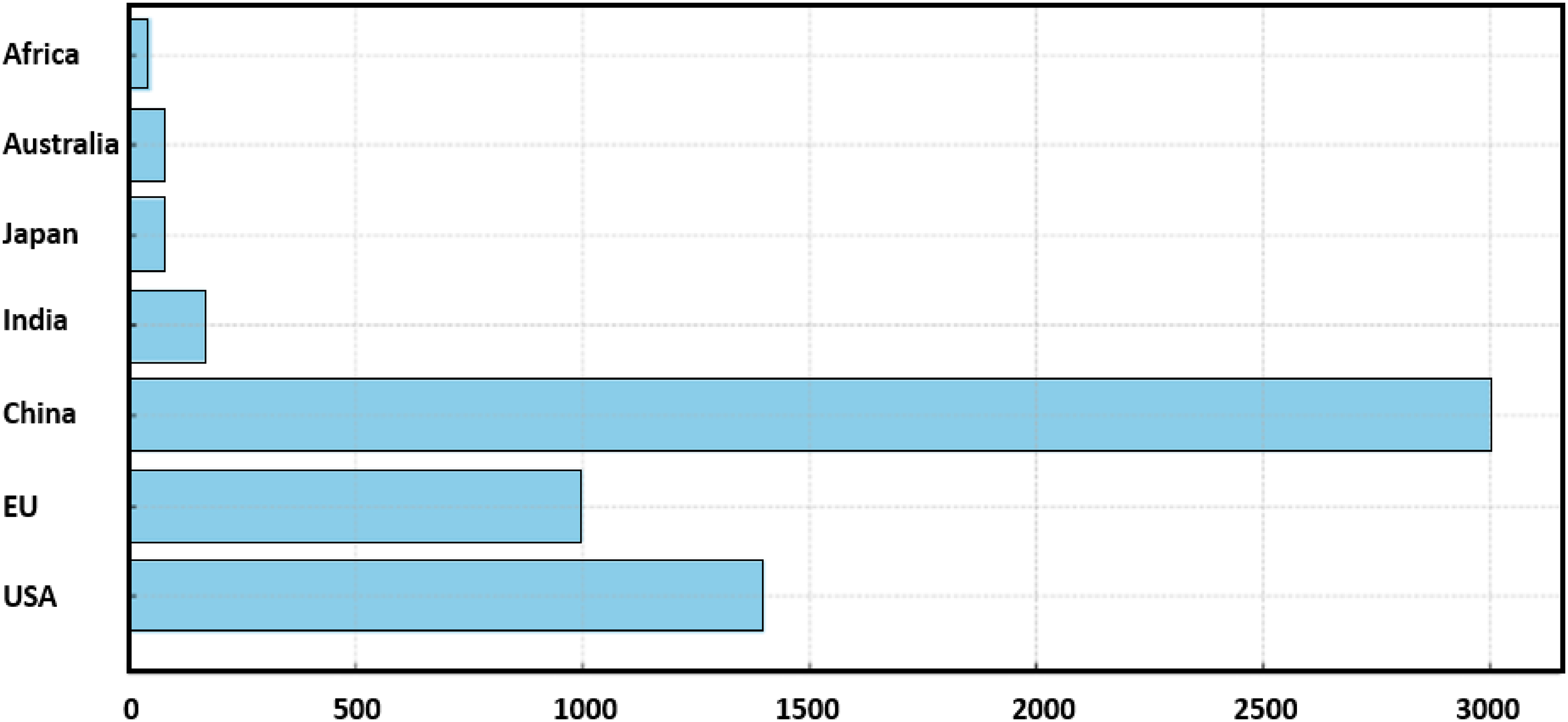
Renewable energy capacity (GW) by region.
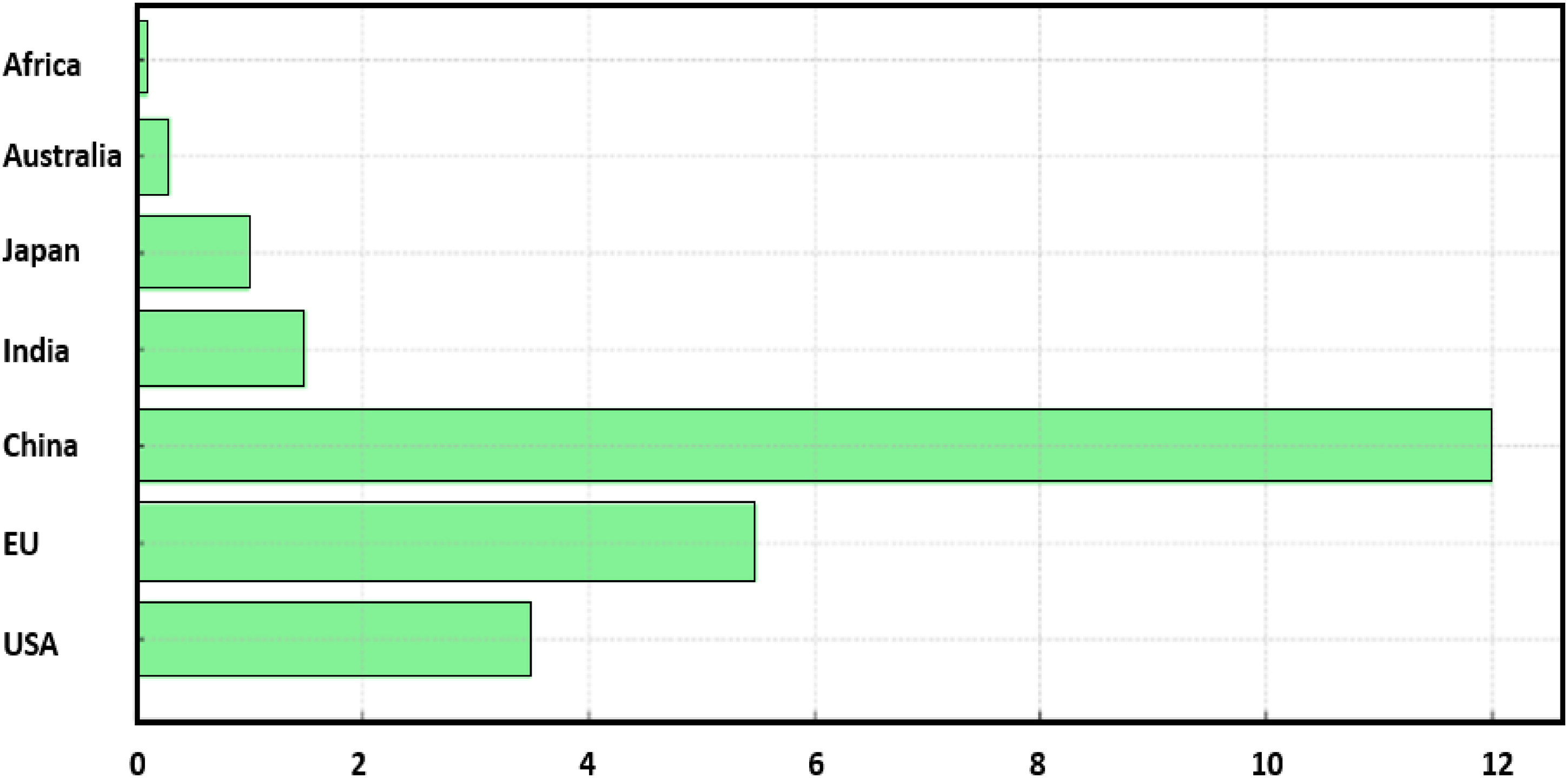
Worldwide EV adoption (in million).
Conclusions
This study investigates the intricacies of energy systems, including diverse technologies and their benefits and drawbacks. The following parts provide the findings, suggest topics for additional research, and explore the consequences for policymakers and corporate leaders. Comprehensive energy system research has revealed fascinating insights into the current situation and future trajectory of the energy business. These insights include trends, developments, and tactics that may shape the market in the next years. The major emphasis on technical breakthroughs is a noticeable trend, with researchers utilizing cutting-edge ways to improve energy system efficiency and dependability. Renewable energy integration, particularly solar and wind power, is a priority, with lithium-ion batteries and smart inverters playing critical roles in energy storage and grid stability. To maximize energy efficiency while reducing costs, demand-side management solutions such as EVs and flexible asset scheduling are required. SGs are critical for increasing efficiency and sustainability, and blockchain technology provides safe and rapid transactions, making it an important tool for energy management. Future studies should focus on infrastructure development and customer acceptability of SG technology. It is also critical to optimize wind farm architecture and transform demand response systems.
Footnotes
Authors’ contributions
VRC, SG, SD, MMI, and TSU contributed to conceptualization, investigation, writing–original draft preparation, and writing–review and editing.
Data availability
The data that support the findings of this study are available within the article.
Declaration of conflicting interests
The authors declared no potential conflicts of interest with respect to the research, authorship, and/or publication of this article.
Funding
The authors received no financial support for the research, authorship, and/or publication of this article.
