




Abstract
Amidst the sweeping changes in the global electricity and automotive sectors, we observe a rapid surge in the proliferation of distributed generation (DG) and electric vehicles (EVs), primarily driven by the widespread deployment of photovoltaic systems. The widespread embrace of EVs necessitates a dual approach of financial incentives and infrastructure development to enhance the appeal of these vehicles. The findings presented in this paper hold significant importance for policymakers, underscoring the urgency of transitioning toward sustainable decentralized power systems and promoting EV adoption. While this transition offers promising opportunities, it also presents formidable challenges. Successful integration of DG and EVs demands careful attention to policy and regulatory frameworks. Some experts advocate for simultaneous adjustments in design, addressing mobility limitations and offering incentives for DG and EVs. Given the multitude of uncertainties, the authors suggest employing a system dynamics model to analyze the impact of photovoltaic technology and EV diffusion. The paper concludes that, within the Colombian context, the potential exists, under specific conditions, to increase the adoption of solar panels and EVs in households. This, in turn, contributes to a reduction in CO2 emissions and a transformative shift in the composition of the automotive fleet toward EVs.
Introduction
Electric vehicles (EVs) represent an important component in the global transition to a sustainable and low-carbon future (Santibanez-Gonzalez et al., 2016). Their significance cannot be overstated, encompassing economic, environmental, and societal dimensions that collectively address some of the most pressing challenges of our time. First and foremost, EVs make major contributions to decreasing greenhouse gas emissions and combating climate change (Lima et al., 2020). On the one hand, traditional gasoline-powered vehicles emit significant amounts of CO2 and other pollutants, contributing to air pollution and climate change. EVs, on the other hand, generate zero tailpipe emissions, so limiting air pollution and cutting the overall carbon footprint (eia, 2021). Furthermore, the value of EVs extends to lowering our reliance on fossil fuels and improving energy security. By using electricity that can be sourced from numerous renewable energy choices such as solar, wind, and hydroelectric power, EVs help diversify the energy mix and minimize the reliance on finite and often geopolitically unpredictable fossil fuel stocks (Gudmunds et al., 2020). This diversification enhances energy security and stabilizes energy prices, benefiting both individuals and nations.
Regarding EVs market share, Norway leads with a 56% of EVs as of 2019. This is a unique case, as the second-highest market share goes to Iceland with 24.5%, followed by the Netherlands in third place with 15%. All three countries boast generous subsidy programs, impose significant restrictions on traditional vehicles, and demonstrate notable social awareness, coupled with a high per capita income (Schulz and Rode, 2022).
In pursuit of having 250,000 EVs on the roads by 2025, the Dutch government has introduced financial incentives, tax exemptions, and invested in recharge infrastructure, making the country attractive for EVs manufacturers (Noppers et al., 2019).
Regarding incentives: in China, the promotion of EVs is possible to be observed in two aspects: government procurement, those EVs are used in tourism sector (Wang et al., 2023), regarding to private purchase, the efforts have been made to limit the purchase of conventional vehicles and implement traffic restrictions for conventional vehicles (He and Jiang, 2021). On the one hand EU nations have proposed, financial incentives, credits and traffic control exemptions have been proposed to attract consumers (Tan et al., 2023). On the other hand, Norway has not only proposed credits and subsidies, also provided free parking and access to special bus lanes (Hardman, 2019). China has implemented carbon markets to minimize carbon emissions, lowering coal use, and focusing the reduction of carbon emissions by establishing the emissions trading system (Lei et al., 2023).
The paper is structured as follows: The following section summarizes the literature on renewable energy adoption in electrical markets and EVs, with a focus on their integration, which is the topic of our research. Following that, we will discuss the Colombian electrical industry. The results section describes a system dynamics (SD) model created to analyze the dynamics of both current and anticipated markets. The penultimate section discusses simulation results and policy analysis, with conclusions offered in the last section.
EV challenges and opportunities
There is a main dilemma of policy selection between subsidies for charging infrastructure and subsidies for EVs. The researchers aim to investigate and analyze the most effective approach in promoting the adoption of EVs and the development of charging infrastructure (Chen et al., 2018). One perspective lies in its utilization of game theory, a mathematical framework that models strategic interactions between rational decision-makers, to compare and evaluate different policy interventions (Shao et al., 2023). By employing different analytical tools, the studies aim to provide insights into the optimal allocation of resources between subsidizing EV adoption and supporting the development of charging infrastructure (Sun, 2021).
The main problem addressed in EV's centers around achieving a net-zero carbon emissions. Some researchers focus on two critical aspects: promoting the adoption of EVs and expanding the use of green energy sources (Li et al., 2018). They seek to identify fiscal policies that can effectively drive this transition toward sustainability. The contribution of their studies is primarily in its examination of bold fiscal policies as instruments to propel the world toward a net-zero carbon emissions future. By proposing and analyzing fiscal measures aimed at incentivizing the uptake of EVs and the utilization of green energy sources, their work provides practical insights for policymakers (Lee, 2023). The fiscal strategies discussed encompass subsidies, tax incentives, grants, and other financial mechanisms, which are essential tools for steering behavior in the desired direction, reducing carbon emissions, and accelerating the energy transition. Additionally, their research contributes to the ongoing dialog about achieving sustainable energy goals at a regional level, thereby aiding in the development of comprehensive and effective policies that align with broader global sustainability targets (Liu et al., 2023).
Given the foregoing, the primary goal of this research is to analyze the EV diffusion in Colombia and the effect of photovoltaic (PV) panels in reduction of electricity demand, on the one hand, PV panels in households reduce electricity demand and present a risk for utilities and electricity system (Castaneda et al., 2017). And on the other hand, EVs diffusion increase electricity and reduce the risk for utilities (Rahimi and Davoudi, 2018). These concerns have not been addressed in the literature. This study focuses on how to overcome these obstacles in the Colombian scenario.
Another important researching area lies in the integration of renewable energy with electrical vehicles. In Liu et al. (2022), the main problem addressed revolves around the integration of rooftop PV with EVs in urban areas. The researchers focus on evaluating the multifaceted impacts of this integration, considering energy production, environmental implications, and economic outcomes at a city-wide scale. The contribution of this study lies in presenting a comprehensive framework for evaluating the potential integration of rooftop PV systems with EVs within urban settings. While in Zhao and Baker (2022), the objective lies in providing a comprehensive case study that examines the relationship between EVs and their environmental impact, considering the energy source used for charging. By analyzing various energy sources, such as coal, natural gas, renewables, and the associated emissions, the study offers insights into how different electricity generation methods influence the overall environmental performance of EVs. This information is crucial for policymakers, consumers, and stakeholders in making informed decisions about promoting sustainable energy sources and guiding the transition to electric mobility to mitigate environmental consequences.
On the other hand, market is centered on optimizing the design and functionality of connected EVs to enhance energy management strategies through vehicle-environment cooperation. The researchers aim to devise strategies that improve the efficiency, sustainability, and overall performance of EVs by incorporating a cooperative approach between the vehicle and its environment (Fretzen et al., 2021). The contribution around this topic is in presenting a novel approach that involves integrating vehicles with their surrounding environment for effective energy management. This includes considering factors such as real-time traffic conditions, weather patterns, and infrastructure availability to develop energy management solutions that enhance EV performance and efficiency. The findings contribute to advancing the field of EVs technology by proposing innovative methods to maximize the benefits of connectivity and cooperation between EVs and their surroundings, ultimately aiding in the broader adoption and sustainable use of EV.
Related to the technical aspects, interest focuses on the thermal management challenges associated with battery EVs (BEVs). The researchers aim to review and analyze existing thermal management systems to address issues related to battery temperature control and overall thermal performance in BEVs. They examine various aspects such as heat generation, dissipation, and thermal stability within the battery systems of EVs (Leoncini et al., 2024). By evaluating existing technologies and approaches, their work identifies the strengths and weaknesses of different thermal management systems and, present potential solutions and innovations to improve the efficiency and effectiveness of thermal management, ensuring optimal battery performance, longevity, and safety in EVs (He et al., 2023). In Ye et al. (2023), the main problem addressed is centered on developing an effective energy management strategy for EVs that considers battery aging. The researchers aim to tackle the challenge of optimizing the energy usage of an EV while considering the long-term impact of battery degradation on performance and efficiency. By leveraging imitation learning, the study aims to improve energy management decisions based on real-world scenarios and experiences, allowing for adaptive and intelligent control that accounts for battery health and degradation. This innovative approach contributes to the advancement of EV technology by enhancing the overall efficiency, durability, and sustainability of EVs while extending the longevity and performance of the battery systems.
In this context, and as previously indicated in the EV challenges and opportunities section, the primary goal of this article is to assess EV and Sola PV adoption in households and analyze the impact on both electricity demand and CO2 emissions. This article employed a model-based approach to better understand EV and PV uptake.
Regarding Dynamic Thermal Rating (DTR). The integration of the DTR system into current grid infrastructure gives huge opportunities for attracting the reliability and efficiency of electrical distribution networks. And addresses the transformation of distribution networks into multioperator AC/DC hybrid distribution systems, evolving into a cyber-physical-social system due to the inclusion of social behaviors from renewable distributed generations and EVs (Su et al., 2024). Lai et al. (2023) introduce the DTR system and network topology optimization (NTO) as methods to enhance the capacity of existing networks and improve power system reliability, in this research is concluded that the combination of DTR and NTO significantly improves system reliability. In addition, Song and Teh (2024) investigate the cooptimization of generation unit commitment (UC) and NTO within the context of DTR systems to meet N-1 reliability standards. The study incorporates multiarea weather data to assess the impacts of DTR on system reliability.
The paper directly answers the following questions: What are the conditions for increasing EV adoption? What are the medium- to long-term implications of PV and EV adoption in terms of power demand and CO2 emissions? What role does policy and regulation play in increasing the adoption of solar and electric vehicles? To answer these questions, a model-based simulation approach is used under various scenarios.
Colombian electricity market and EVs adoption in Colombia
The preceding sections addressed some global experiences with alternate approaches to managing supply adequacy when the power system includes a significant contribution from renewables and a growth in EVs. Colombia is chosen for this research due to its abundant renewable resources, low renewable installed capacity, and delayed EVs adoption.
Colombia is utilized as a case study. Located in South America's equatorial zone, the country has abundant sunlight and average solar radiation of 4.5 kWh/m2/day, making it excellent for PV deployment (UPME, 2016). This article focuses on rooftop PV panels and EVs in the residential sector, which has the potential to account for nearly 40% of total electricity demand (SUI, 2018).
Furthermore, PV diffusion is not only favored by Law 1715 (Congreso Colombia, 2014) but also due to the technology has gained grid parity in a large percentage of the country's urban centers (Jiménez et al., 2014). In addition, EVs is favored by Law 1964 (Congreso de la República de Colombia, 2019). The law aims to establish promotion schemes for the use of electric and zero-emission vehicles to contribute to sustainable mobility and reduce polluting emissions and greenhouse gases. However, Colombia has experienced slow diffusion of both EVs and PV technology due to high costs and a limited understanding of the regulations and benefits associated with these technologies (Calderon-Tellez et al., 2023).
Colombia has implemented several policies to encourage the adoption of EVs. These include tax exemptions and reductions for EV purchases, such as the exemption from import duties and a reduction in the value added tax from 19% to 5%. Additionally, there are incentives for EV owners, like exemptions from vehicle restrictions (pico y placa) and lower registration fees (Congreso de la República de Colombia, 2019). The country's commitment to lowering greenhouse gas emissions through international accords such as the Paris Agreement is driving EV regulations. The government sees EVs as a vital component in meeting its environmental aims, which include a 20% reduction in emissions by 2030 (Franceschi et al., 2018).
While the policies are promising, challenges remain, such as the high upfront cost of EVs and the need for extensive charging infrastructure. However, these obstacles create opportunities for innovation and investment, paving the path for Colombia's sustainable transportation future.
Overall, Colombia's policies reflect a comprehensive approach to promoting EVs, aligning with broader environmental and economic goals, and positioning the country as a leader in sustainable transportation in Latin America.
In conclusion, Colombia was chosen for analysis because to its favorable conditions for solar PV development, such as high solar radiation and delayed EV diffusion, as well as its renewable energy and EV regulations and the availability of quality data. This study tries to meet this desire.
Modeling for policy assessment
This section provides an SD model for the Colombian EV market that takes into account some of the system's main elements, such as the evolution of charging stations, electricity demand growth, self-generation, and regulations to promote EV adoption. These variables are essential since the aim of the paper is to analyze if EV adoption can avoid power demand reductions caused by PV panel adoption (Castaneda et al., 2017). The model is capable of accomplishing the following aims: (i) CO2 emissions reduction, (ii) EV charging infrastructure, and (iii) policies to encourage the growth of EVs in Colombia. SD is particularly well-suited to capturing SD and feedbacks, such as investments in power generation capacity and transmission expansion. In conclusion, this technique provides an appealing way of understanding how markets may evolve (Ponzo et al., 2011).
To address the research issue given in the Colombian electricity market and EVs adoption in Colombia section, a three-step SD technique approach was used. First, an SD-based simulation model was created to replicate the diffusion of PV and EVs in Colombia. Second, scenarios were developed to assess alternative futures for the deployment of EVs and PV. Finally, simulation runs for various scenarios were shown and analyzed in the next section. To summarize, the methodology approach utilized here offers a dynamic hypothesis, creates a simulation model, validates it, and evaluates four scenarios.
Figure 1 depicts key components of the SD model, which was developed to investigate how various systemic actions may influence EV penetration. A stocks and flows graphic depicts the dynamics of EV adoption, the EVs learning curve, and rate setting. The term “EVs” refers to the total number of EVs. Household customers are considering the use of EVs. The fraction of EVs to adopt is calculated using a logit model, as the adoption rate is determined by EV costs, mobility restrictions, EV charging stations, and awareness of the technology.
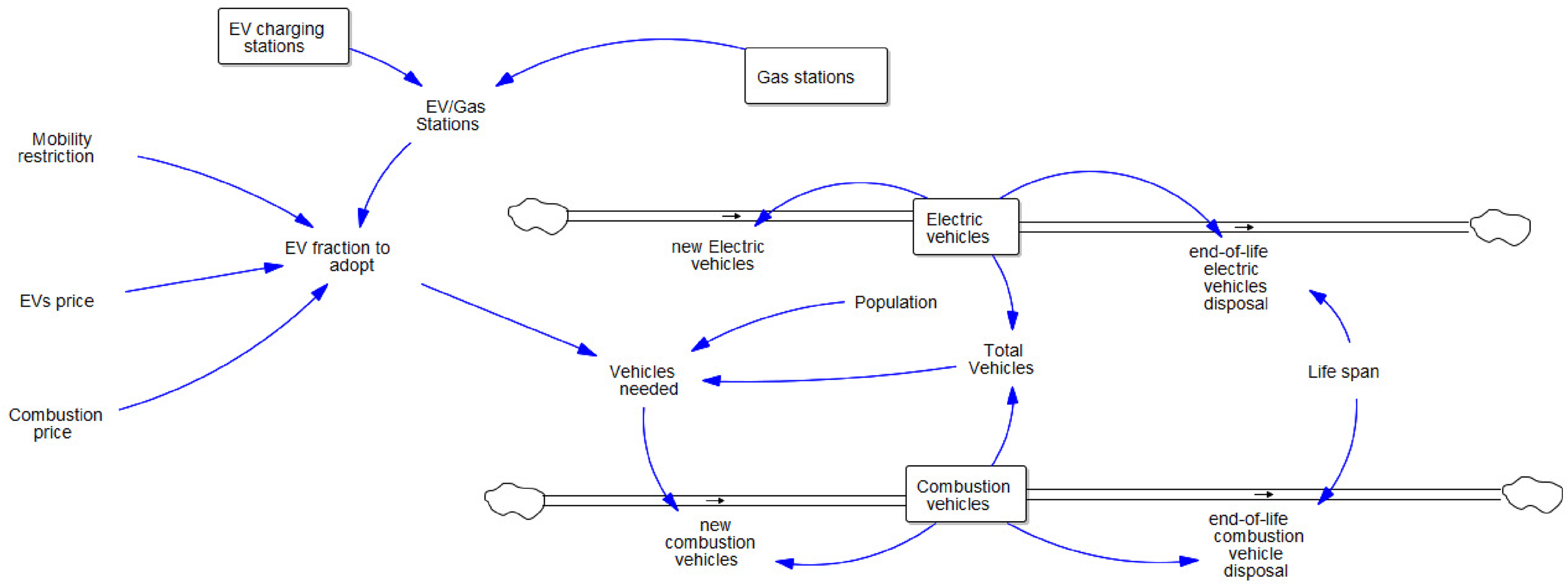
EVs adoption.
Figure 2 depicts the dynamics of PV adoption, including the PV learning curve and rate setting, using a stocks and flows diagram. “Households” are the units of study used to assess the potential of PV adopters. Household customers that have exclusive rooftop rights are considering PV adoption. Potential adopters become PV adopters using a Bass model, as the adoption rate depends on both social contagiousness and knowledge about the PV technology, this model is taken and altered from Castaneda et al. (2017).
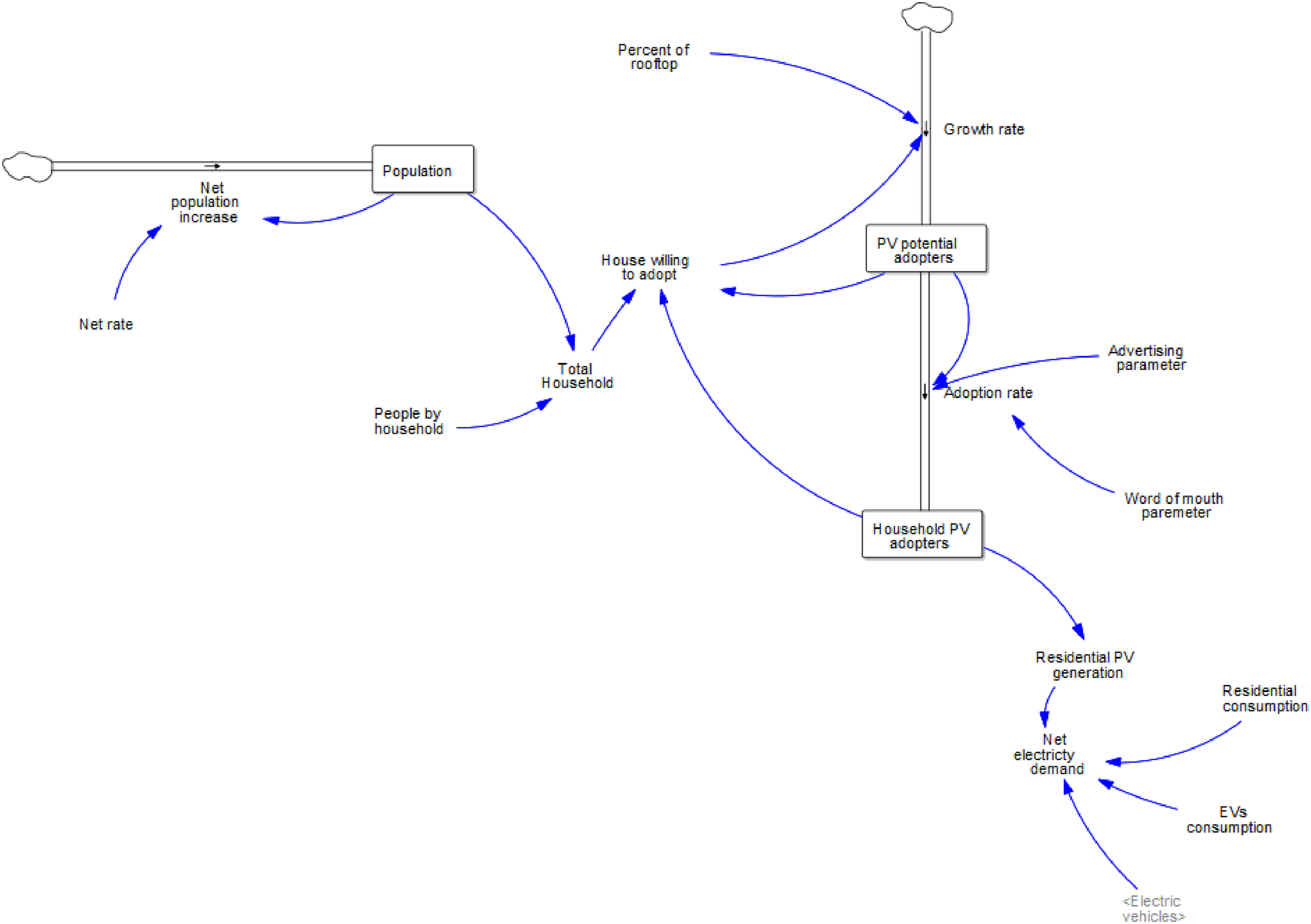
PV adoption for residential sector and net electricity demand.
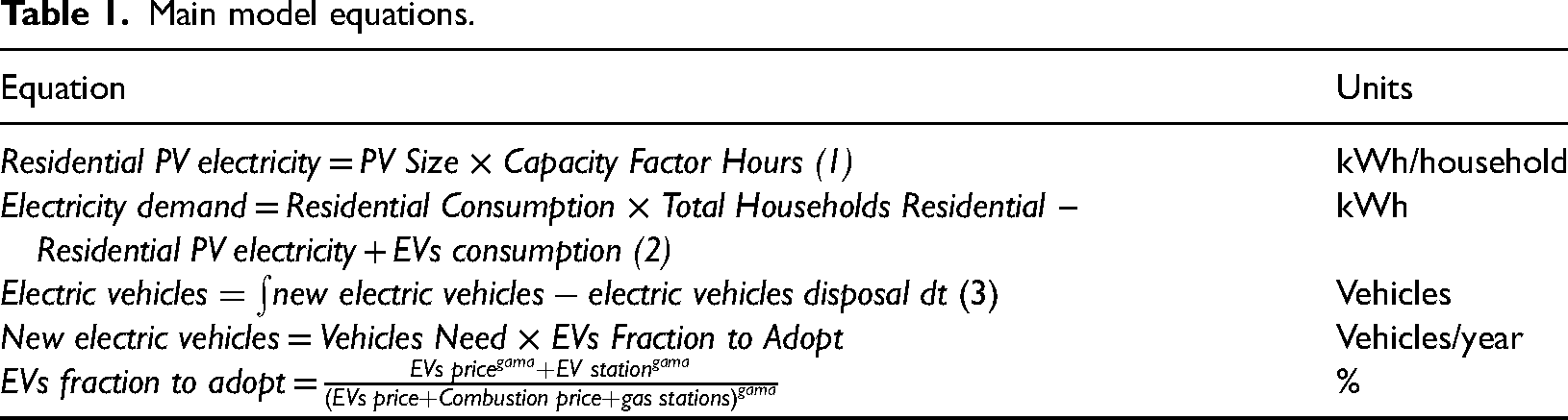
Table 1 outlines the main model equations and their corresponding units. These equations represent the dynamics of PV adoption as illustrated in Figures 1 and 2, reflecting the conditions that may lead to the adoption of both EVs and PV technologies.
Main model equations.
The simulation model is based on the following assumptions:
PV diffusion is currently limited to the residential sector, which represents 40% of the total electricity consumption. A rapid increase in the adoption of solar PV within this sector has significant implications for the entire electricity market (XM, 2018). As more households install solar panels, it not only reduces the demand on the central grid but also promotes a shift toward decentralized energy generation, potentially transforming the overall dynamics and efficiency of the national electricity sector (Zapata et al., 2023). This is supposed to be remunerated through a net metering scheme. The model or scenario under discussion presupposes that customers will receive payment through net metering for producing their own electricity and sending excess energy back to the grid. Usually, the consumer receives compensation in the form of credits that lower their overall electricity price. A key tool that encourages the use of renewable energy, gives prosumers financial advantages, and builds a more robust and sustainable energy system is net metering. Throughout simulation, the PV system size households choose to employ stay constant. This methodology diminishes variability in the information, minimizes the possibility of misunderstandings, and guarantees consistent and comprehensible outcomes. The simulation may more successfully concentrate on the influence of external factors by removing the variable of fluctuating PV system sizes. This allows for deeper insights and more precise conclusions on the efficacy and performance of solar systems in various scenarios. Since altering consumer behavior is not the primary goal of this study, the customer consumption pattern is not changed during simulation runs. Remains consumption patterns constant guarantees regular and dependable outcomes, offering a strong basis for evaluating the influence of the relevant variables. Although consumer behavior has a significant role in the larger context of energy systems, it is not the subject of this study and holding it constant makes it easier to analyze other critical variables. For this analysis, the monthly temporal scale was chosen as a calculated move to minimize volatility, improve the validity of the results, and support the study goals. The study gains from improved stability, more discernible trend identification, all of which support stronger and more insightful findings. This strategy is especially useful when figuring out long-term trends and making choices based on trustworthy and consistent facts. The PV model was validated in Morcillo et al. (2022) in the paper structure and behavior test was conducted. EV prices and charging stations availability were taken from UPME (2022). The average inflation over the previous five years was deducted from a risk-free rate of 4.6% to arrive at the levelized cost of energy for solar photovoltaic systems, which was determined using a discount rate of 1.72% (DNP, 2024). EV diffusion is restricted to the residential sector only, as the primary objective is to determine if the adoption of EVs can offset the reduced demand on the central grid caused by the increasing diffusion of PV systems. By focusing on the residential sector, which is a significant consumer of electricity, this study aims to assess whether the rise in EV usage can balance the electricity sector's dynamics altered by the widespread implementation of residential PV. Average solar radiation was considered in this analysis, with the understanding that the seasonality and intermittency of solar energy were not factored in. This decision is justified by the fact that Colombia's tropical climate results in low solar intermittency (Carvajal-Romo et al., 2019). Due to its location near the equator, Colombia experiences relatively consistent solar radiation throughout the year, minimizing the impact of seasonal variations and ensuring a more stable and predictable solar energy supply. Charging stations growth is driven by both policy and EVs growth. The Bass model, which dynamically analyzes the PV levelized cost and the grid's electricity cost, determines the growth rate, which is not constant, also in EVs and combustion vehicles, and km levelized cost. The simulation model utilizes data provided by various Colombian governmental institutions, e.g., electricity demand projections and information on new power projects were sourced from UPME (2019). A 2 kW PV panel was chosen, which is sufficient to cover the monthly electricity demand of a household. This demand is approximately 200 kWh, considering the PV system's capacity factor of 15%, PV production is around 216 kWh (XM, 2018). This capacity factor reflects the average efficiency and energy production of the PV panel, ensuring that it generates enough electricity to meet the typical consumption needs of a household over a month. One sensible and efficient approach to guarantee that a household's electricity needs are satisfied is to install a 2 kW PV panel system. The size of this system was chosen with care to correspond to the usual energy consumption of a typical household. Incorporating a net metering scheme also enables homes to maximize the benefits of their PV system by effectively balancing their electricity generation and consumption.
Model validation
To validate the model, a validation proposed by Barlas (1996) was performed in the model, structure validation was conducted, in order to increase credibility of the model. Behavior validation was to compare the behavior to other countries due to lack of data availability. To improve the robustness of the findings, future research should aim to incorporate more extensive and varied datasets, including real-time data and more granular information on consumer behavior and market dynamics. The fixed values of the Bass parameters that align with the trends in the observed and simulated structures are p = .01 and q = 0.01, these values were taken from Rúa et al. (2020).
Results
This paper employs scenario analysis to evaluate future pathways for Colombia's EV adoption. These scenarios consider possible mobility restrictions, EV price reductions, and combustion price increases as a result of CO2 emission charges. The simulation time horizon is 20 years, starting from the beginning of 2020 and ending at the end of 2040.
Table 2 shows the different scenarios used for running the simulation model. Results capture realistic transitions and their long-term sustainability effects. Scenario 1 is the business as usual (e1) scenario.
Summary of scenarios.
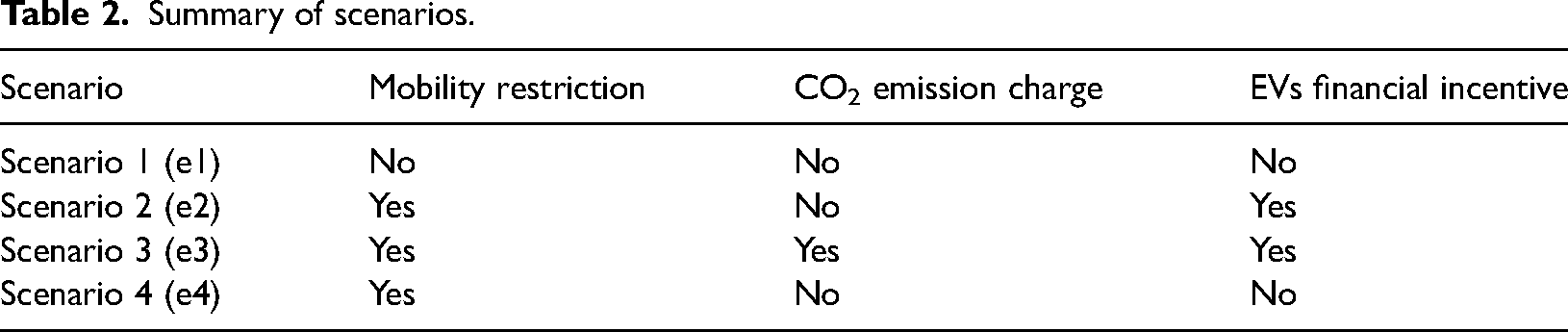
Scenario 1 (e1): restrictions on combustion vehicle movement are not considered. People can use their vehicles without any limitations related to mobility. This means no policies are in place to limit the number of vehicles on the road. There is no financial charge or penalty for vehicles that emit CO2. This implies that there are no disincentives for driving high-emission vehicles, and no efforts are made to internalize the environmental costs of CO2 emissions. There are no financial incentives, such as subsidies, tax rebates, or grants, provided to encourage the purchase and use of EVs.
Scenario 2 (e2): There are restrictions on vehicle movement. This could include measures like congestion charges, limited access zones for high-emission vehicles, or restrictions based on license plate numbers to reduce traffic and emissions in urban areas. Notwithstanding the mobility restrictions, there is no additional financial charge imposed on vehicles based on their CO2 emissions. Vehicles are not penalized for emitting CO2 beyond any mobility restrictions. Financial incentives are provided to promote the adoption of EVs. These incentives could include subsidies for purchasing EVs, in this scenario EV infrastructure like charging stations are supported in order to increase EVs diffusion.
Scenario 3 (e3): Similar to Scenario 2, there are restrictions on vehicle movement aimed at reducing traffic congestion and pollution. In addition to mobility restrictions, vehicles are also subject to a financial charge based on their CO2 emissions. This could be a carbon tax or emission trading scheme where higher-emission vehicles that implies higher costs, thereby incentivizing lower emissions. This scenario includes financial incentives for EVs, making it the most comprehensive approach. By combining mobility restrictions, CO2 emission charges, and financial incentives, this scenario aims to maximize the reduction of emissions and promote EV adoption.
Scenario 4 (e4): Mobility restrictions are implemented to control vehicle usage and reduce traffic-related emissions. These restrictions could be similar to those described in Scenarios 2 and 3. There are no charges based on CO2 emissions despite the mobility restrictions. Vehicles are not financially penalized specifically for their CO2 emissions, which means there is no direct financial disincentive for driving high-emission vehicles. No financial incentives are provided for EVs. Without these incentives, there is less encouragement for consumers to switch from traditional vehicles to EVs, relying solely on mobility restrictions to influence behavior.
In this paper is analyzed total of EVs vehicles, CO2 emissions and Net electricity demand for residential sector.
The results in this section considers all of the assumptions made in the results section, including the fact that only the residential sector can employ PV systems and EVs. A 20-year simulation time horizon (2020–2040) was used to explore the mid- to long-term implications of DG development and EV uptake on electricity demand and CO2 emissions. The feedback between EVs and combustion vehicles is displayed in Figure 3. The increase of EVs leads to charging stations that increase the attractiveness of EVs instead of conventional vehicles. EVs financial incentive lead to a greater diffusion. In fact, to offset 100% of the average energy consumption for a household, a 1 kW system is sufficient. The simulation model tested PV panel sizes of 2 kW installed per household.
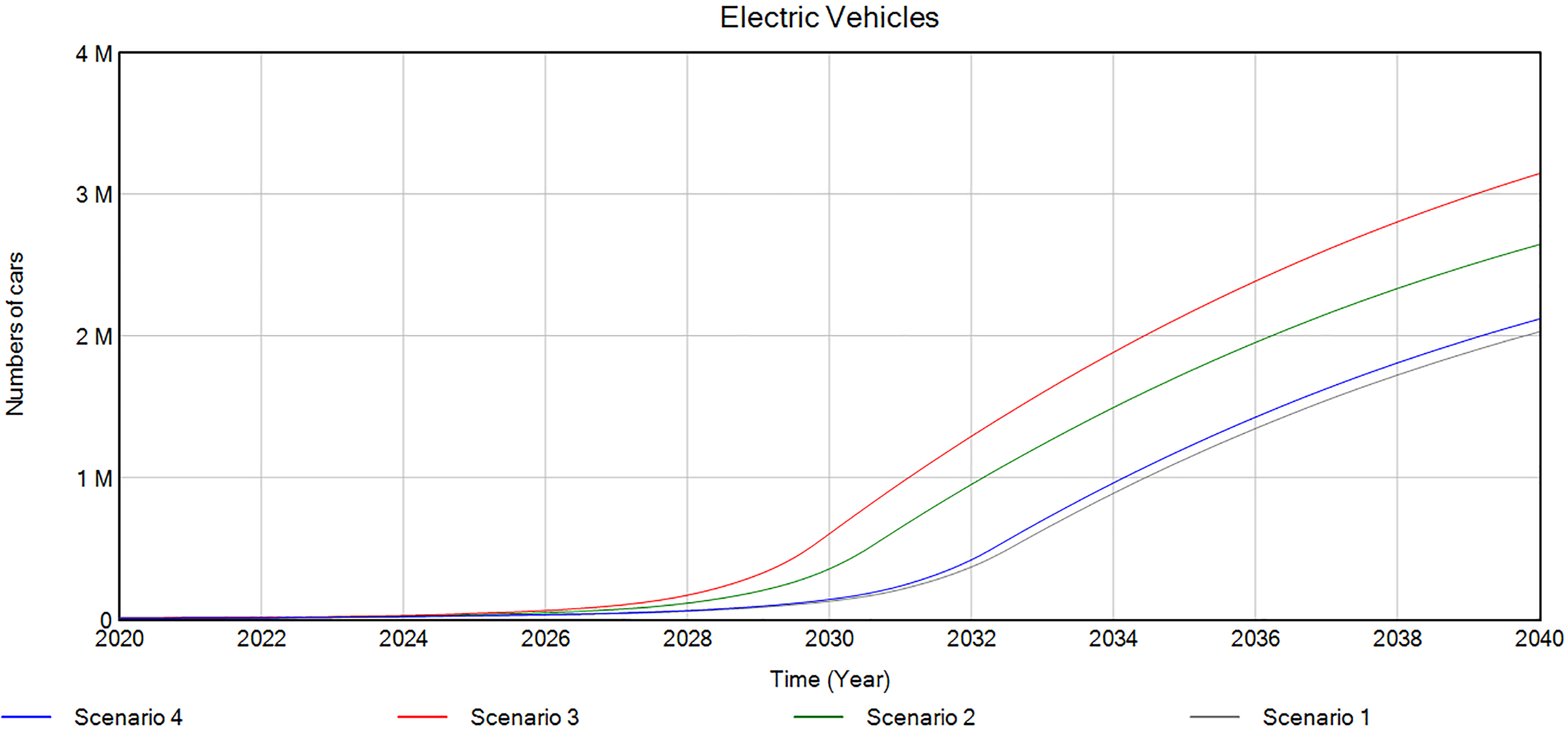
Total EVs during simulation time.
Figure 4 shows Household PV adopters from 2020 to 2040 under four different scenarios. Scenario 4 (blue line) projects the lowest adoption rate, while Scenario 3 (red line) projects the highest. The adoption rates for Scenario 2 (green line) and Scenario 1 (gray line) fall in between these extremes. All scenarios show a steady increase in PV adoption over time, with Scenario 3 showing the most significant growth.
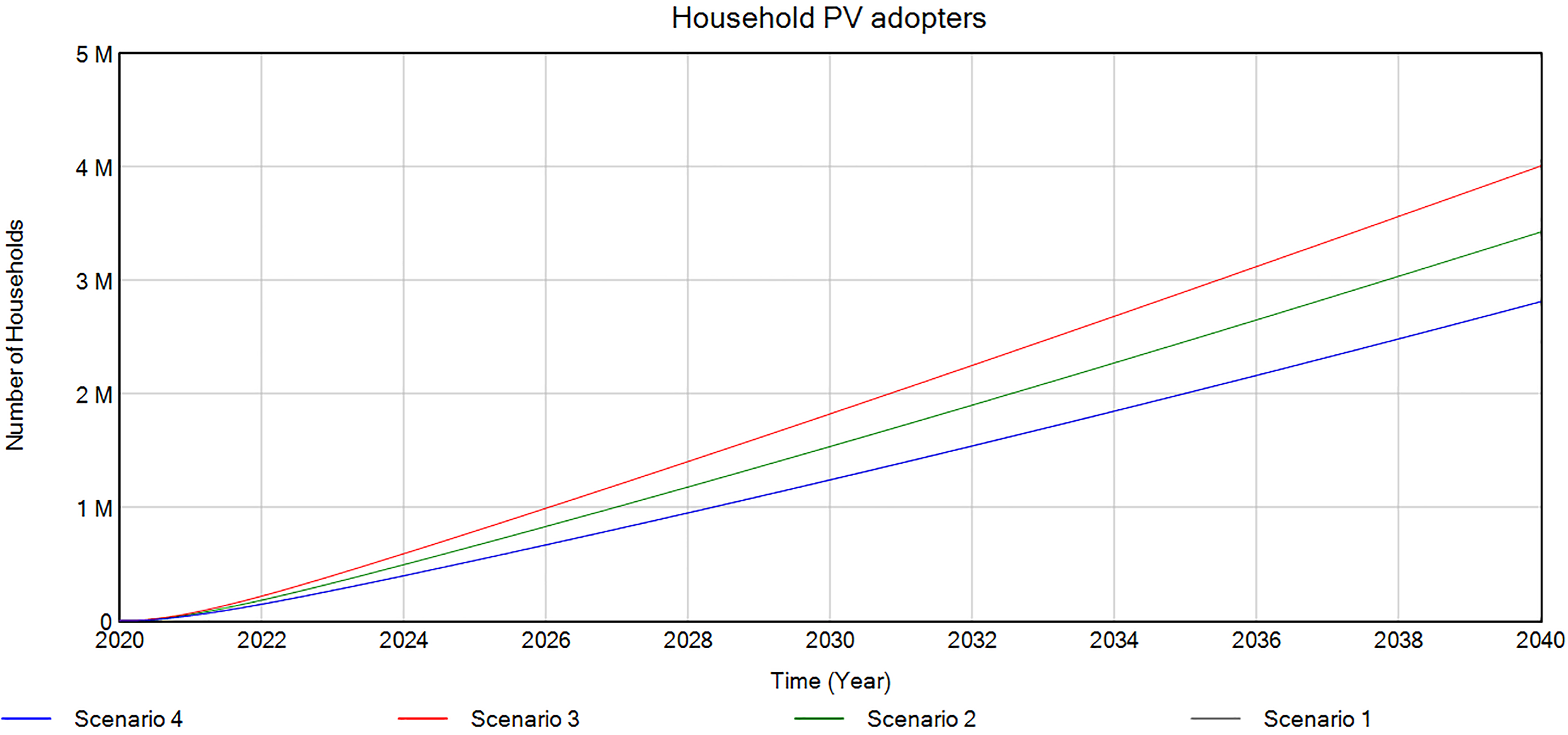
Total households PV adopters.
Figure 5 depicts the net electricity demand in residential sector. It is shown that despite EVs growth electricity demand decrease due to high PV penetration in Colombian electricity market. With current policies and prices decrease for PV leads to high PV diffusion.
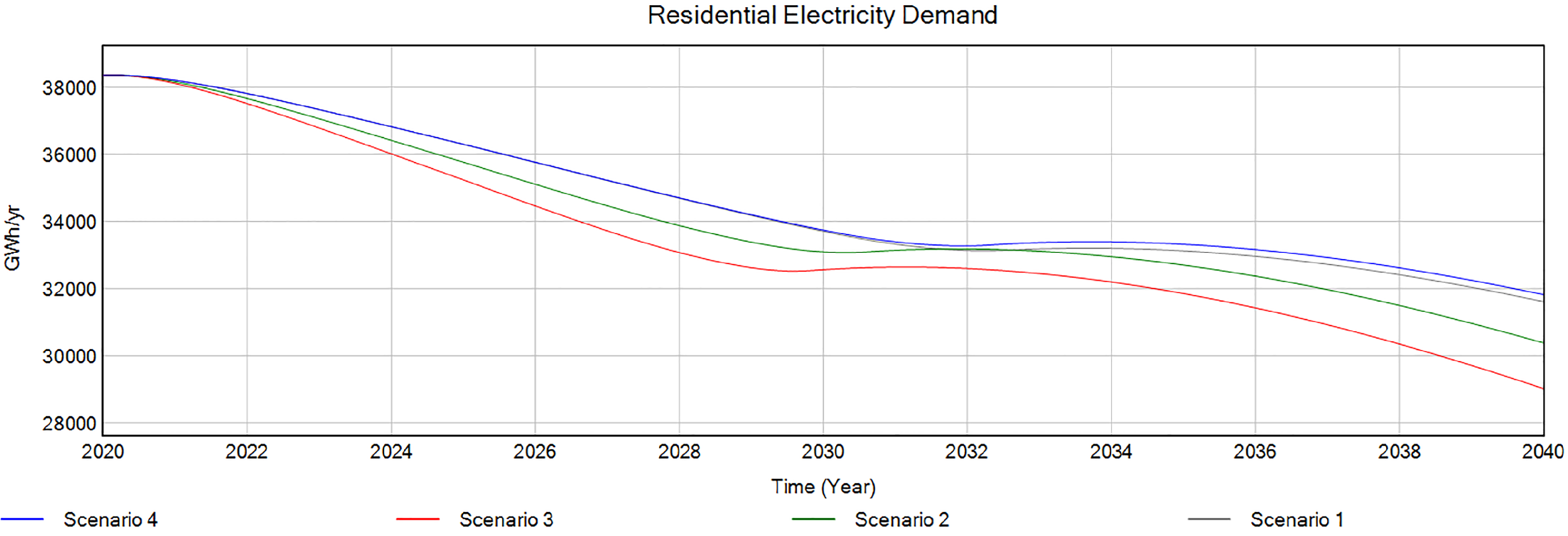
Net electricity demand in residential sector GWh/year.
As is shown in Figure 6, Scenario 4 discovered that increasing EV dispersion greatly contributes to lower pool pricing and CO2 emissions, leveraging the benefits of a large-hydro base system and widespread PV adoption. In this context, we look into whether a more favorable policy for EV and PV dispersion would result in additional benefits.
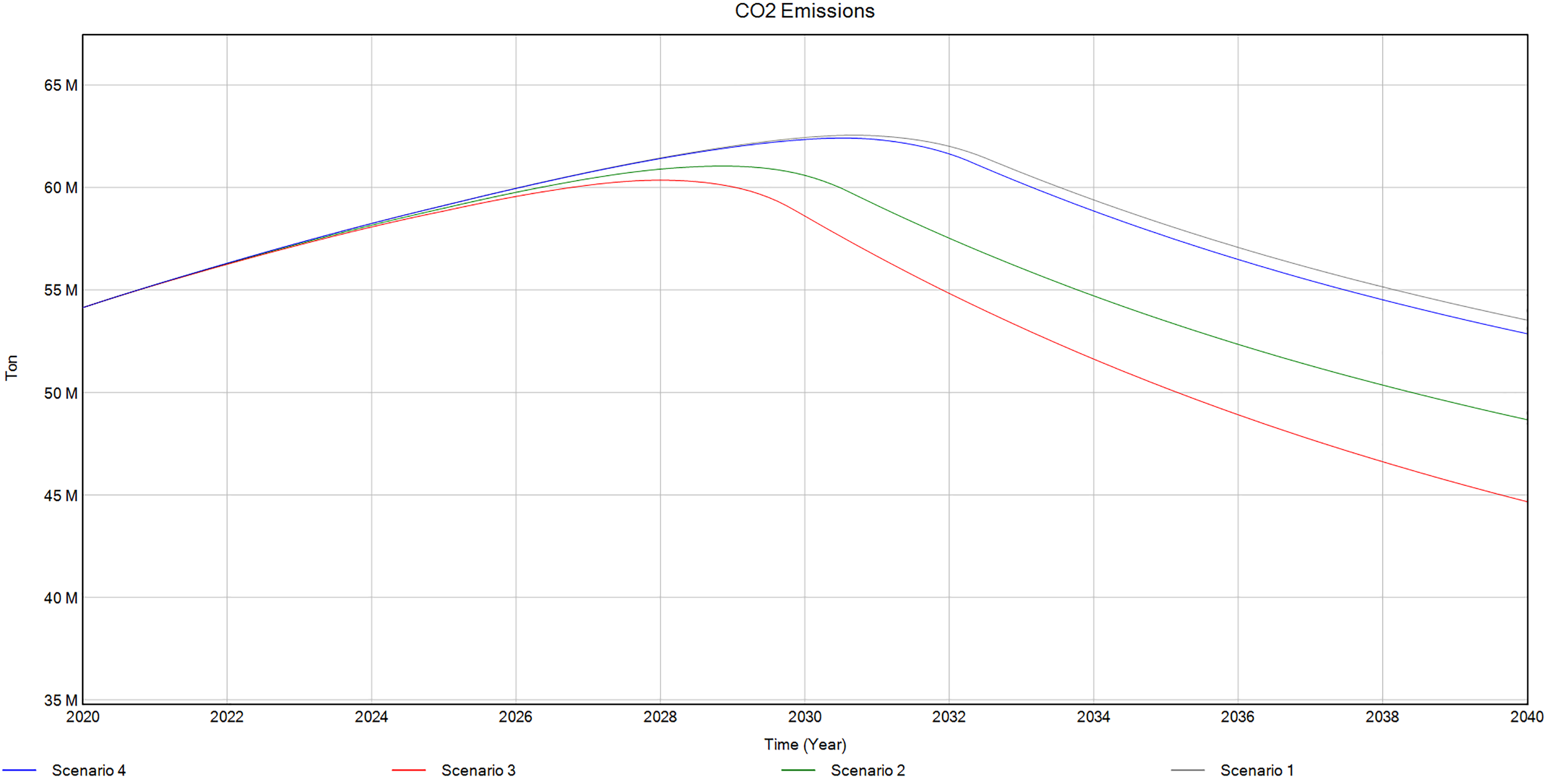
CO2 emissions by scenario.
Figures 3, 4, 5, and 6 illustrate projections for residential electricity demand, CO2 emissions, and the adoption of EVs from 2020 to 2040 across four scenarios. A general decline in residential electricity demand is evident in all scenarios, with Scenario 1 demonstrating the most significant reduction. This suggests effective measures in energy efficiency or alternative energy sources. CO2 emissions initially rise until around 2028, then decrease significantly across all scenarios, with Scenario 3 showing the steepest decline, indicating robust policies for emission reduction.
A notable increase in EV adoption is observed, with Scenario 3 leading, reaching nearly 4 million EVs by 2040. This indicates a strong shift toward cleaner transportation. Scenario 2 and Scenario 4 also show substantial increases, while Scenario 1, despite the lowest EV adoption, still reflects significant growth.
The trends suggest a strong correlation between reduced CO2 emissions and increased EV usage, highlighting the effectiveness of promoting EVs and sustainable practices. Scenario 3 appears to be the most aggressive and effective in reducing emissions and increasing EV adoption, while Scenario 1 focuses on substantial reductions in electricity demand. Overall, the projections emphasize the critical role of energy efficiency, renewable energy, and EVs in achieving significant reductions in CO2 emissions and promoting environmental sustainability.
Discussion
This section covers policy suggestions and actions that decision-makers can take in light of the model's findings. To further elaborate on the policy recommendations, it is essential to develop a comprehensive strategy that outlines specific measures policymakers can implement. This approach should address the introduction of financial incentives, the enhancement of infrastructure, and the enactment of essential regulatory changes.
Financial incentives
In order to promote the uptake of EVs and sustainable energy solutions, a comprehensive plan with detailed instructions is essential. This comprises:
Easy access to low-interest loans and grants: Make it easier for people to obtain low-cost financing choices for solar energy systems and EVs. This can lower cost obstacles and promote widespread adoption. In order to implement these incentive plans are shown in the following paragraph.
Low-rate loans:
Definition: The cost of borrowing money is reduced since these loans are provided at a lower interest rate than conventional loans. Implementation: Financial institutions might provide these loans especially for the purchase of EVs, solar panels, or associated infrastructure like home EV chargers, perhaps in collaboration with the government. Benefit: Because borrowers will pay less over the course of the loan due to lower interest rates, the total cost of investing in these technologies will be more affordable. A low-interest loan, for instance, would enable someone who wants to install solar panels on their house to stretch out the expense over time without paying exorbitant interest rates, making the monthly payments bearable. Definition: Grants are unrepaid financial contributions made by the government or other organizations. Implementation: These could be given to people, companies, or communities, who satisfy particular requirements, including having a certain income level or being dedicated to green initiatives. For example, a home may be eligible for a grant to help with a portion of the cost of installing solar panels. Benefit: By immediately lowering the overall cost, grants further facilitate people's ability to purchase these technologies. For instance, if a grant pays for $3000 of the $10,000 cost of installing solar panels, the individual only needs to provide the remaining $7000, greatly increasing the investment's accessibility. Reduced cost barriers: The high upfront cost of solar energy systems and EVs is less of a deterrent with these finance solutions. These technologies will become more widely used as more people can afford them. Green technology promotion: As more people take advantage of these subsidies and loans, the market for EVs and solar energy will expand, spurring further innovation and eventually bringing down prices through economies of scale. Environmental benefits: As more people adopt solar energy and EVs, greenhouse gas emissions will decrease since fewer vehicles will run on fossil fuels and more energy will be produced from renewable sources.
Grants
Impacts:
In addition, provide tax benefits for individuals and businesses installing solar panels and EV charging stations, and streamline access to affordable loans or grants for acquiring EVs and solar energy systems.
Infrastructure improvements:
The goal of the EV charging network expansion is to bring EV charging stations up to par with conventional gas stations in terms of accessibility and convenience. This will lessen “range anxiety,” which is a typical issue among prospective EV purchasers who fear running out of fuel in the absence of a charging point. Making sure that infrastructure for charging EVs is readily accessible would encourage more people to convert to EVs.
Highways: Rest stops, service stations, and other places where drivers are expected to take breaks during lengthy travels are good places to put charging stations along major roads and interstates. As a result, EV owners won't have to worry about running out of places to charge when traveling great distances. Urban Areas: Public spaces with easy access, like parking lots, retail malls, office buildings, and apartment complexes, are ideal places to install charging stations. This would give owners of urban EVs a variety of options for charging their cars while they live, work, or shop. Fast charging stations: Also referred to as DC fast chargers or Level 3 chargers, these stations can recharge an EV's battery very quickly—typically in 30 to 60 min. Fast turnaround times are crucial, hence fast chargers are especially crucial near highways and in crowded urban areas. Standard charging stations: Also referred to as Level 2 chargers, these are appropriate for settings like homes or workplaces where cars will be parked for extended periods of time. They are less expensive and simpler to install than fast chargers, but they offer a slower charge—typically taking several hours. Increased EV adoption: Prospective EV purchasers are more inclined to buy EVs when there is a robust charging network in place since they will know they can easily access infrastructure for charging whenever and wherever they go. Support for long-distance travel: EV owners will be able to travel long distances with confidence thanks to the installation of charging stations along important highways, which will further lessen their dependency on conventional gasoline-powered vehicles. Urban Sustainability: By facilitating the switch to greener modes of transportation, more charging infrastructure in urban areas will contribute to the reduction of air pollution and greenhouse gas emissions in urban regions. Emission standards: To encourage the switch to greener alternatives like EVs, more strict emissions regulations should be applied to gasoline and diesel vehicles. This can involve introducing penalties for noncompliance, encouraging automakers to create low-emission cars, and gradually lowering emission standards over time. The principal aim of establishing ambitious yet feasible targets is to expedite the integration of sustainable energy sources in the electrical sector. By doing this, decision-makers can influence the sector to become less dependent on fossil fuels, emit less greenhouse gases, and support long-term environmental sustainability. Placing a strong emphasis on solar and other renewable energy sources guarantees that the energy transition is in line with current technologies that have substantial positive effects on the environment.
In order to improve infrastructure are needed different types of charging stations:
The possible impacts of infrastructure improvements:
Regulatory reforms:
Colombia may considerably decrease their dependency on fossil fuels and raise the proportion of clean energy in their renewable generation and EVs adoption by establishing ambitious targets for renewable energy and implementing policies that facilitate this transition. Reducing pollutants in the environment and slowing down climate change require this shift.
The forecasts highlight how important renewable energy, energy efficiency, and EVs are to reducing CO2 emissions significantly and fostering environmental sustainability. Colombia may move closer to a cleaner and more sustainable future by putting the suggested policies and actions into practice. A synergistic effect is produced that speeds up the shift to a low-carbon economy by combining measures to increase energy efficiency, increase the generation of renewable energy, and encourage the adoption of EVs. In order to maintain momentum and meet long-term sustainability objectives, policymakers will need to keep adjusting and improving their approaches in light of new technological developments and shifting market dynamics.
Colombia has the potential to successfully shift toward a sustainable and renewable energy future by embracing a comprehensive and unified policy strategy. This approach will allow the country to capitalize on the combined strengths of EVs and PV technologies, leading to substantial environmental and economic advantages. By integrating these two technologies, Colombia can reduce its reliance on nonrenewable energy sources and make significant progress toward achieving a more sustainable and environmentally friendly energy landscape.
Conclusions
This paper has explored scenarios for the transition to EVs in Colombia. The results reveal several lessons for understanding the long-term effects of EV and PV diffusion in developing countries.
Several key lessons gleaned from this analysis may be beneficial in guiding discussions between regulators and the car sector about their responses to the power transformation toward a high market share of renewable energy. The goal of this study has been accomplished: SD was utilized to comprehend the dynamic complexity of solar and electric car adoption.
First, merely subsidizing the purchase of EVs is insufficient to reduce CO2 emissions. Subsidies are only useful in the early stages of market introduction and should include infrastructure for these clean technologies. Furthermore, GHG mitigation in the case study should entail a rearrangement of the transportation network. As a result, it is critical to act to minimize the usage of gasoline and diesel engines in the private automobile industry.
Investment and policy support are critical for growth in EVs: The stark contrasts between the scenarios suggest that significant relation between CO2 emissions and EVs growth. Scenario 3, which shows the highest growth across all metrics—high EVs diffusions, as well as low CO2 emissions—illustrates the potential impact of a favorable environment that includes robust government support and advanced technological developments. This scenario underscores the importance of a comprehensive approach that integrates policy, investment, and innovation to drive substantial progress in renewable energy sectors.
Mid- to long-term consequences of the EVs and PVs adoption include of electricity demand owing to PV panels adoption and EVs adoption and their increase in electricity demand is not enough to avoid the decreases.
This paper concludes that Colombia may achieve substantial EV diffusion by 2040, which can help to avoid a significant fall in energy demand. The research findings could be valuable for other countries similar to Colombia, including those with significant hydropower potential and transmission congestion difficulties. Furthermore, as discussed in previous section, the simulation model approach may be beneficial in other nations for energy planning and EV incentives.
The use of DTR systems has proven useful in a wide of applications of current grids. This improvement is critical for supporting the increasing use of EVs and RES, which place additional demand on the grid (Yang et al., 2024). The DTR system allows for more accurate and higher capacity utilization of existing infrastructure by dynamically modifying the thermal ratings of transmission lines in response to real-time environmental conditions and load demands (Su et al., 2024). Future research should include the integration of DTR systems into the simulation model in order to optimize both economic and security dispatching. This will be a valuable next step. Additionally, exploring the impact of DTR on long-term grid planning and development can provide insights into its potential for large-scale deployment. Furthermore, investigating DTR's long-term effects on grid development and planning can offer important new perspectives on the technology's potential for widespread application. This entails determining how DTR can impact the planning of maintenance schedules, the placement of new transmission lines strategically, and the design and building of future grid infrastructure. Comprehending these effects can aid in devising investment plans and policies that encourage the broad use of DTR technology. Policymakers and grid operators can make better informed decisions that improve the electrical grid's resilience, dependability, and efficiency by implementing DTR systems into grid management procedures. For DTR to be used widely, it is essential to comprehend how it can affect the scheduling of maintenance, the location of new transmission lines strategically, and the design of future grid infrastructure. DTR, for example, might make it possible to schedule maintenance tasks more precisely, reducing interruptions and prolonging the life of current assets.
Furthermore, DTR can help with the placement of new infrastructure by offering real-time data on line capabilities, ensuring that investments are made where they will have the biggest impact and be most needed. Making sure the grid can accommodate this shift without sacrificing performance or reliability will be crucial as the world moves toward a more sustainable and renewable energy future. Supporting the growing usage of EVs and RES is made possible in particular by the integration of DTR systems. These two technologies increase the demand on the grid and bring in unpredictability. For example, EVs may result in demand surges during peak charging hours, while weather-related variations in power generation may arise from renewable energy sources like solar and wind. By enabling the grid to adapt dynamically to these changes, DTR can assist reduce these difficulties by guaranteeing that the infrastructure can withstand the unpredictability without sacrificing reliability. Understanding these impacts is crucial to creating investment strategies and regulations that promote the widespread application of DTR technology. With greater knowledge, decision-makers and grid operators will be able to improve the resilience, dependability, and efficiency of the grid. The grid must be able to support this transformation without compromising performance or dependability as the world's energy sources become increasingly sustainable and renewable. The grid will be better equipped to handle upcoming difficulties by incorporating DTR devices into grid management protocols, eventually assisting in the transition to a more sustainable energy future.
In addition, as a further research would be interested to included PV and EVs diffusion not only in residential sector, but also in commercial and public sector in order to provide a more detailed knowledge of the dynamics involved. A study about EVs in public sector in Colombia was conducted by Ospina et al. (2018), this research concluded that incentives in public sector to increase EVs leads to low CO2 emissions and increase the quality of life of people in Bogota.
Comparing the study with other studies was found that in Brazil (de Assis et al., 2023) hat subsidies and incentives should target not only the acquisition of EVs but also the development of necessary infrastructure and financial factors, particularly acquisition and maintenance costs, have the highest impact on adoption rates. In the United Kingdom, Sun et al. (2024) found that the need for targeted policy designs to maximize the expansion and efficacy of EVs and charging infrastructure, subsidies have a positive correlation with the proportion of charging stations and EVs studies; however, markets are more sensitive to these subsidies in complex interactions. In Mexico, Bonilla et al. (2022) concluded that EVs adoption presents significant environmental benefits, it also poses substantial fiscal challenges for Mexico. Effective policy design and implementation are critical to manage the transition, support infrastructure development, and recoup lost tax revenues from declining gasoline consumption. In papers mentioned above have the same conclusion, that is posed in this paper, to increase EVs diffusion is necessary not only financial incentives, but also an increase in infrastructure in order to support EVs and increase electricity demand.
As previously stated, this study is not without limitations. The article does not explore operational issues such as peak electricity demand, different vehicle types, and how to employ EVs as battery storage and adjust consumption patterns.
The paper achieves its goal on at least two counts: (a) it demonstrates the likely effects of solar PV in the residential sector, (b) it demonstrates how favorable policies increase the adoption of EVs and reduce CO2 emissions, and (c) it employs simulations to demonstrate the long-term effects of various strategies to increase EV and PV adoption. Future study could involve simulations of several types of automobiles as well as the public sector's adoption of EVs.
Footnotes
Declaration of conflicting interests
The authors declared no potential conflicts of interest with respect to the research, authorship, and/or publication of this article.
Funding
The authors received no financial support for the research, authorship, and/or publication of this article.
