




Abstract
The use of renewable energy is increasing all over the world. These resources provide clean energy without giving rise to pollution. Current study discussed the feasibility of providing electricity by using hybrid power system (photovoltaic/wind/diesel) to a distant hypothetical village, population of 100 households with an average of five family members per household. The study area, Nooriabad, lies in Sind, Pakistan (latitude = 25.17°N, longitude = 67.8°E and site elevation = 180 m above the mean sea level). Current study showed that the proposed hybrid system could be a viable solution for off-grid supply of electric power to remote areas in Pakistan. In the present case, a daily energy consumption of 205 kWh and a peak power demand of 47 kW were considered. The implementation of this project will result in the reduction of 69% in greenhouse gases addition in the local atmosphere of the chosen site. The photovoltaic/wind/diesel/battery hybrid system is found to be an attractive option with levelized cost of energy of 0.45 $/kWh and with renewable energy penetration of 84%. The sensitivity analysis showed that photovoltaic/wind/diesel/battery hybrid configuration is the only feasible system under given variations of different parameters.
Introduction
Energy is the backbone for the economic and social stability of a country. The current demand of energy is increasing gradually due to growing population, the aspiration for improved living standards and industrialization. Pakistan is meeting its energy needs through conventional sources of energy (Hydrocarbon Development Institute of Pakistan, Ministry of Petroleum and Natural Resources, 2012). It is worldwide accepted that renewable energy technologies (such as wind, solar thermal, solar photovoltaic (PV), geothermal, tidal, biomass, waste to energy, etc.) have to play a tactical role in the accomplishment of the goals of sustainable and economic development and environmental protection (Kaygusuz, 2001; Wrixon et al., 1993). Of these renewable sources of energy, wind and solar are being widely used due to their commercial acceptance; ease of installation, maintenance, and operation; and competitive capital and maintenance costs (Shaahid and Elhadidy, 2007). People living in remote areas have no or little access to the grid-connected electricity both in developed and developing countries. Most of these areas are supplied electricity by diesel generation sets which are both cost and labor intensive and also pollute the local environment. Hybrid power systems provide an excellent solution to this problem, which comprises renewable energy, fossil fuel generators and energy storage system. A hybrid energy system operates with a combination of renewable sources of energy and is a solution for remote area power generation (Dutton et al., 2000).
Several studies have been done to maximize the performance while minimizing the cost of solar–wind–diesel hybrid system. A wind–PV–diesel hybrid power system was investigated for a village in Saudi Arabia which was powered by a diesel power plant. The study found a wind–PV–diesel hybrid power system with 35% renewable energy penetration (26% wind and 9% solar PV) to be the feasible system. The proposed hybrid power system resulted in avoiding greenhouse gases (GHG) and conservation of 10,824 barrels of fossil fuel annually (Rehman et al., 2012). Adaramola et al. (2012) reported that the wind–PV–diesel–battery hybrid system was most suitable option as standalone electricity generating system in Ibadan, Nigeria. The results indicated that the cost of energy (COE) for the above hybrid power system varied between $0.437/kWh and $0.606/kWh depending on the diesel price. These costs are significantly lower than the cost of using diesel generator only system without battery which varied between $0.607 and $0.940 per kWh. Performance analysis and optimization of sizing of solar–wind–diesel hybrid system have been carried out for Kuakata, Bangladesh using HOMER. Detailed economic analysis and comparison with solar-based and diesel-based energy system clearly revealed that hybrid power system was found a cost-effective solution for coastal areas of Bangladesh (Ahmed et al., 2012).
Paul et al. (2012) assessed the wind energy potential, the economic viability of the water pumping and the performance of small to medium size commercial wind turbines of various rated powers ranging from 5.2 kW to 250 kW. The cost of water delivered varied from $3.33 to $54.96 per cubic meter. Studies have shown that hybrid energy systems are also feasible for water pumping systems especially for remote localities (Rehman and El-Amin, 2015; Rehman and Sahin, 2012). Numerous studies were conducted on the subject to analyze feasibility of a wind–PV–diesel hybrid power system (Ajao et al., 2011; Al-Abbadi and Rehman, 2009; Bassyouni et al., 2015; Elhadidy, 2002; Juhari et al., 2007; Rehman and Al-Abbadi, 2007, 2008, 2010; Rehman and Al-Hadhrami, 2010; Rehman and El-Amin, 2015; Rehman and Sahin, 2015; Shaahid et al., 2004, 2007).
This paper presents a design process, for the selection of hybrid energy system components, and economic analysis for providing electricity for a remote area, Nooriabad, Pakistan. HOMER (HOMER 2.14, National Renewable Energy Laboratory, 2014) software was used to select best possible hybrid energy system. During the optimization process, HOMER simulates all system arrangements and displays the viable solutions in a table, arranged by net present cost (NPC). It finds the least cost arrangement of components that meet the specified electrical loads.
Study area
The present study is carried out for Nooriabad, Pakistan which is situated in Thatta district of Sindh province in Pakistan. It is located on the south shore of Sindh province with latitude = 25.17°N, longitude = 67.8°E and site elevation = 180 m above the mean sea level. The actual location of the chosen site is shown in Figure 1.
Location of study region in Sindh, Pakistan.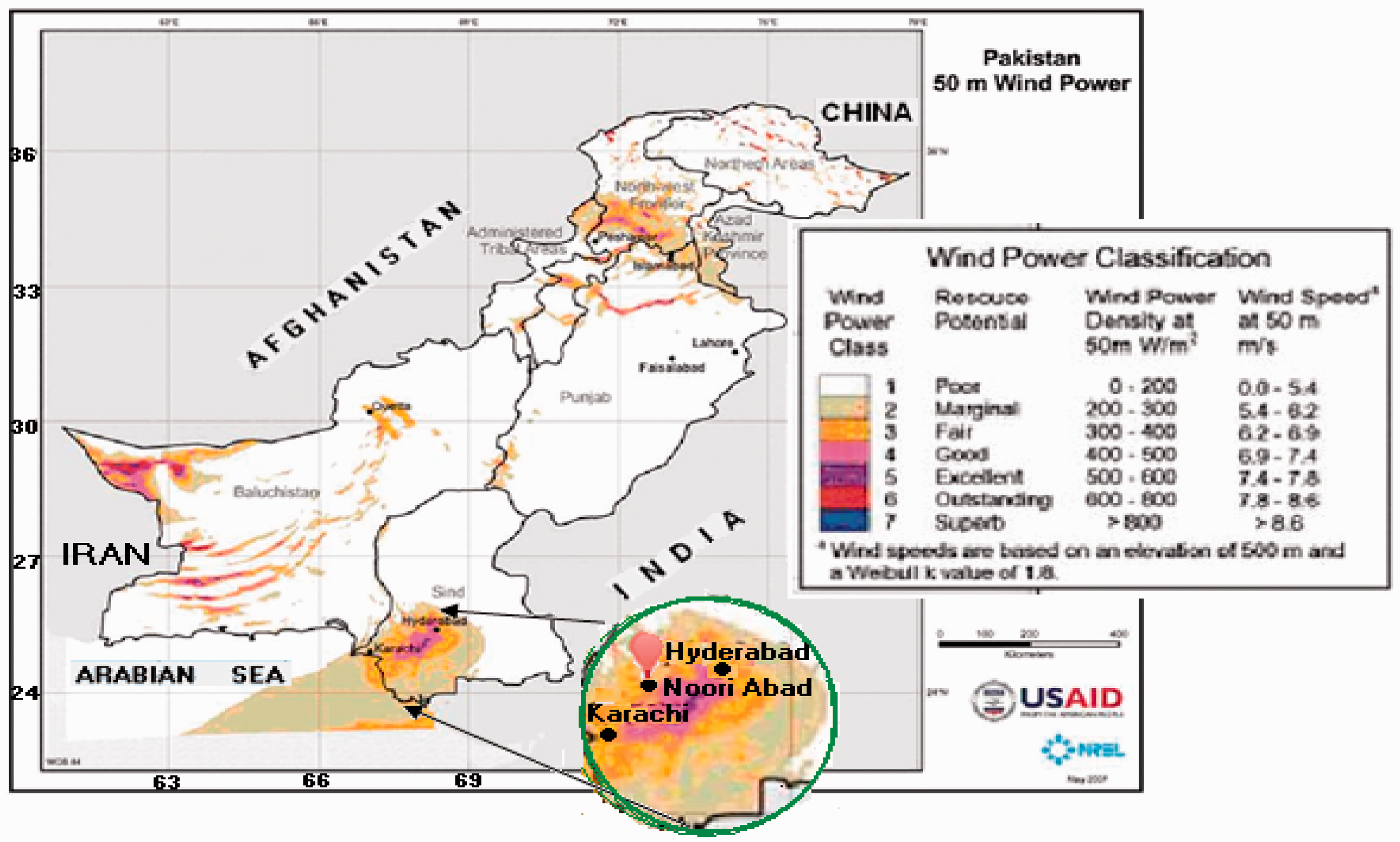
Renewable energy sources
The study site has adequate sunshine and moderate wind speeds in abundance as described in detail in the following subsections.
Wind energy potential
Pakistan Meteorological Department has conducted a detailed Wind Power Potential Survey of Coastal Areas of Pakistan. Wind data with average speed and direction and 10-min minimum and maximum wind speeds at 10 m and 30 m heights were collected for three years (2002–2005). Two wind speed cup anemometers were installed at each height. Wind vane for recording wind direction was installed at 30 m. Figure 2(a) and (b) shows the monthly average wind speeds and probability distribution of wind speed data for the entire data collection period (Pakistan Meteorological Department, 2007). Since hourly wind speed data were not accessible, HOMER was used to generate hourly data from the monthly averages and is used in this study, as shown in Figure 3. HOMER requires values of four parameters for synthesizing the hourly wind speed data such as Weibull shape parameter “k” (2.06), autocorrelation factor (0.85), diurnal pattern strength (0.25) and hour of peak wind speed (17:00 h).
(a) Monthly average wind speed and (b) probability distribution at the investigated location.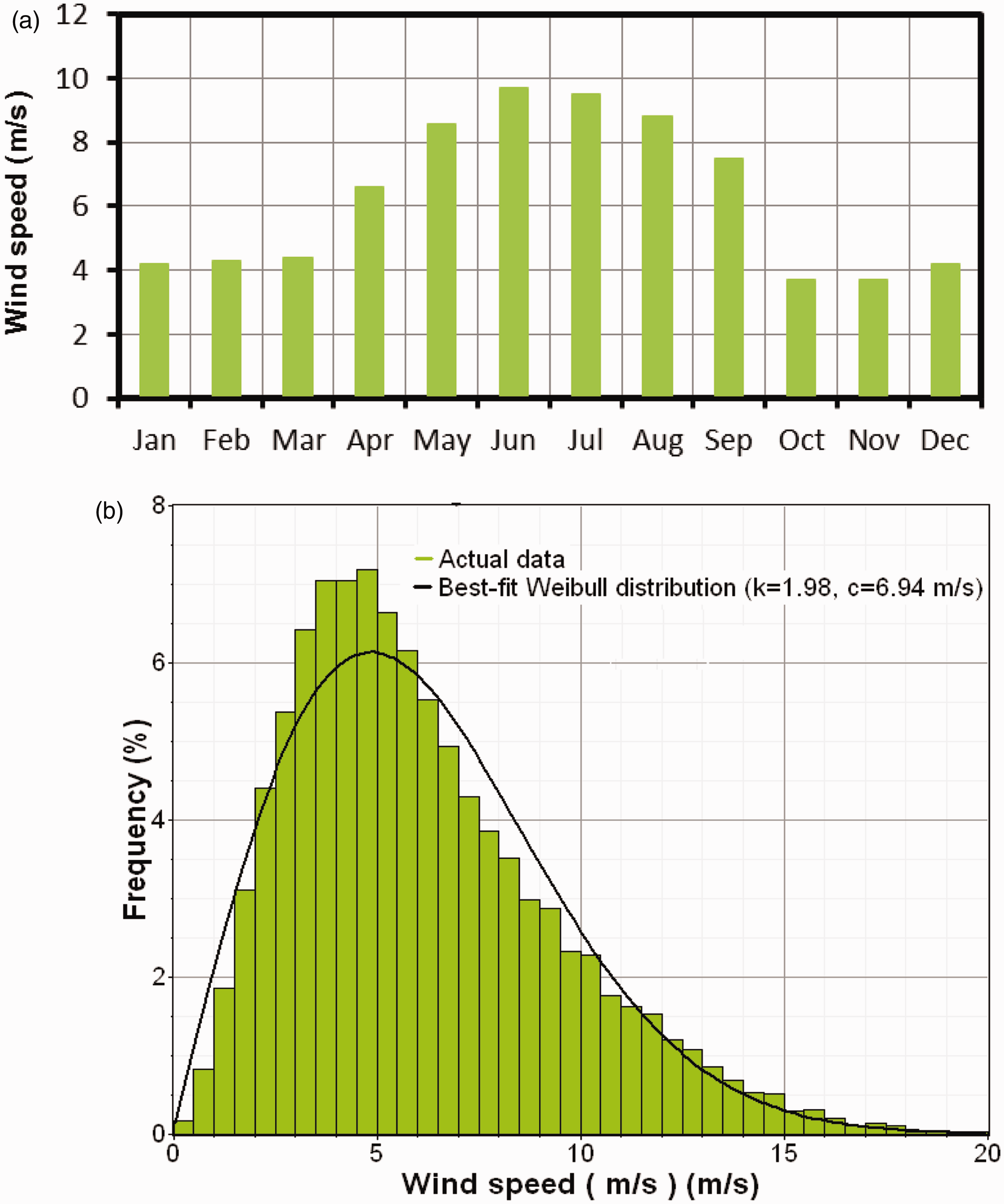
Solar radiation
Monthly averaged global solar radiation data can be generated using HOMER software by entering the longitude and latitude of any specific location. These data have been loaded from National Aeronautics and Space Administration website (NASA, released 5.1) (NASA, 2015). Figure 4 shows the monthly mean variations of the solar radiation and the clearness index. It is quite evident that the solar radiation intensity is high during March to June period and relatively lower during rest of the months with the exception of another high appearance in the month of September and October. The yearly average clearness index and global solar radiation intensity values are 0.591 and 5.4 kWh/m2/d, respectively.
Diurnal variation of wind speed (m/s) during three years. Monthly mean variation of solar radiation intensity.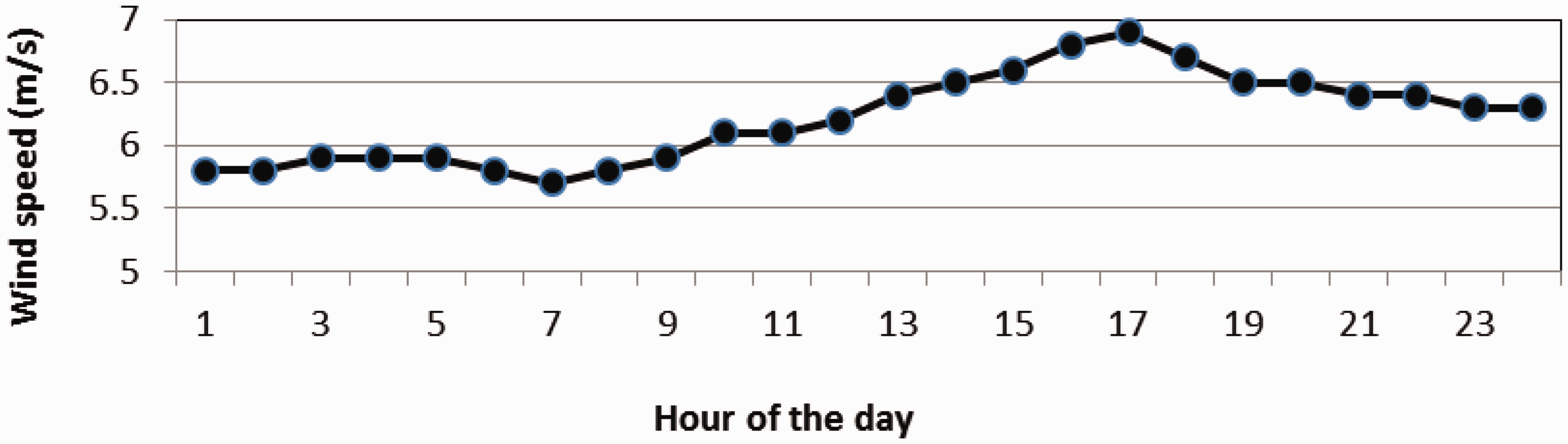
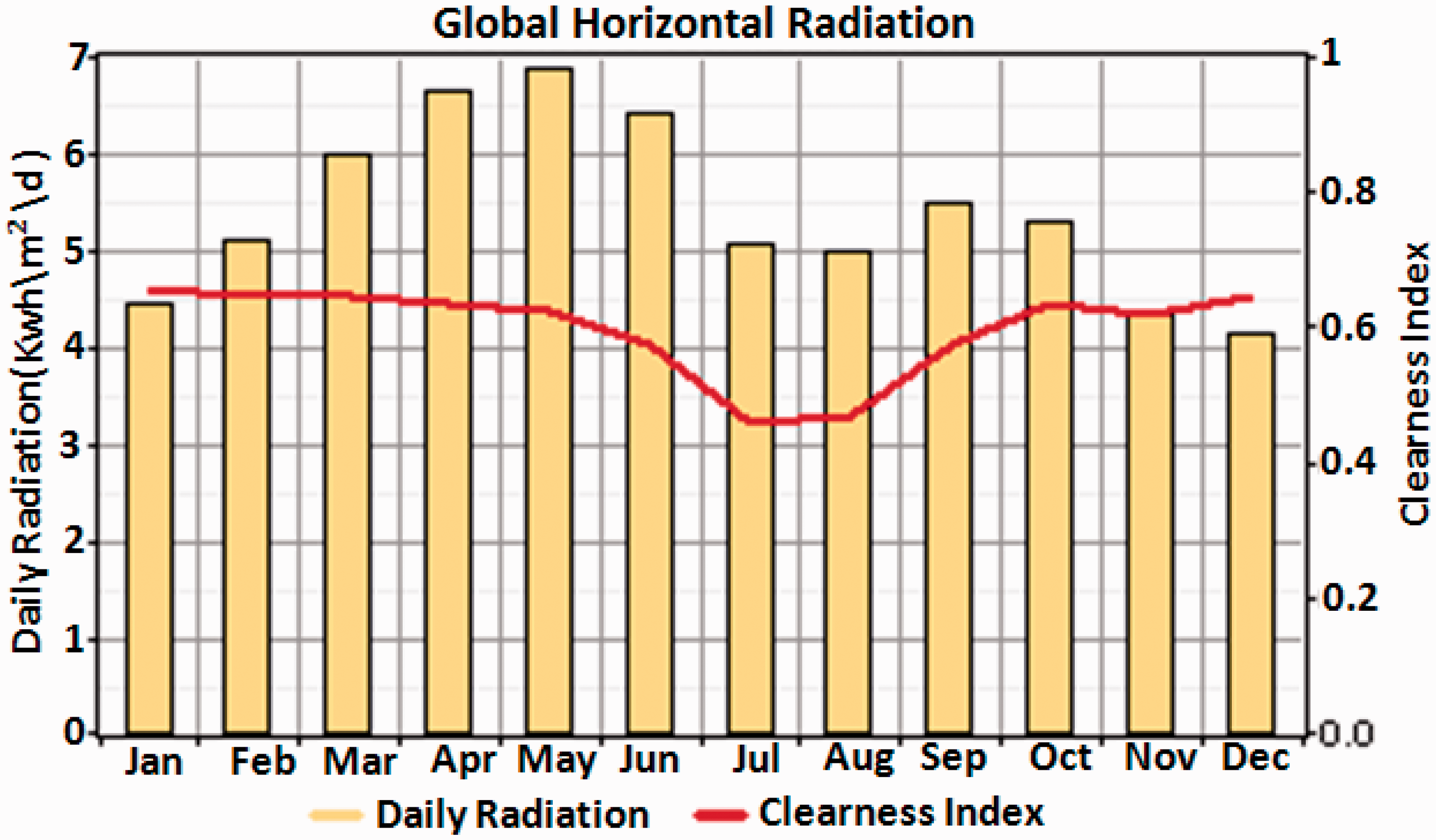
Electrical load variation of the village
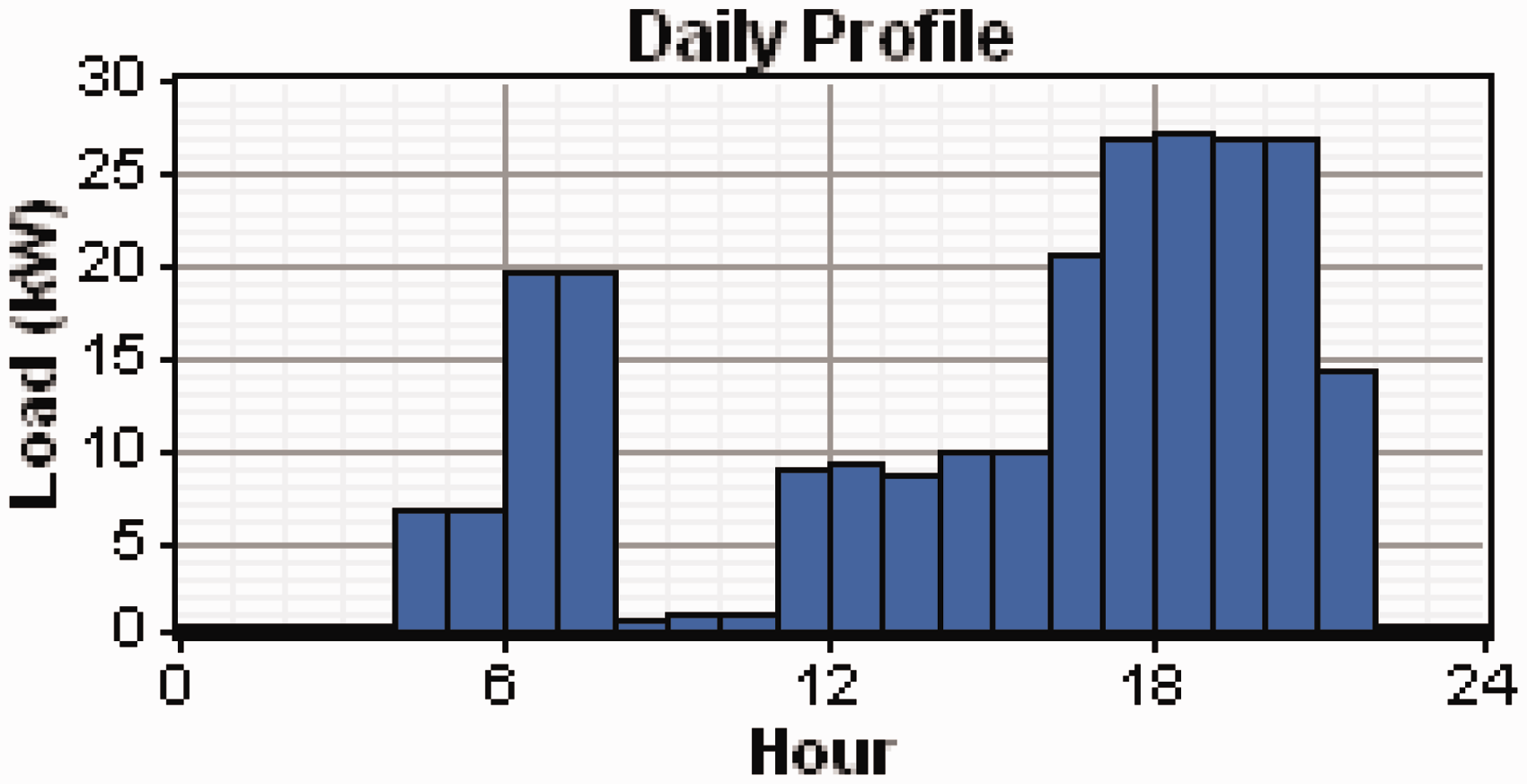
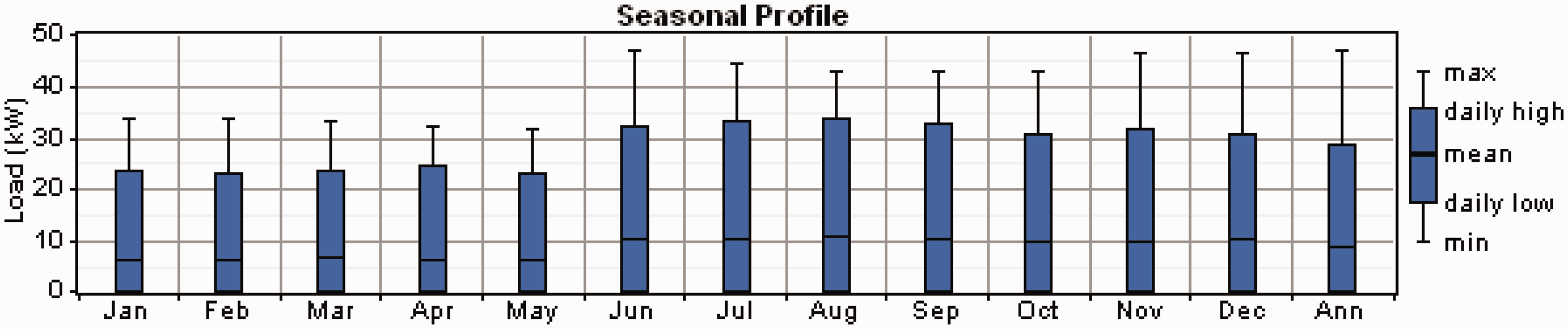
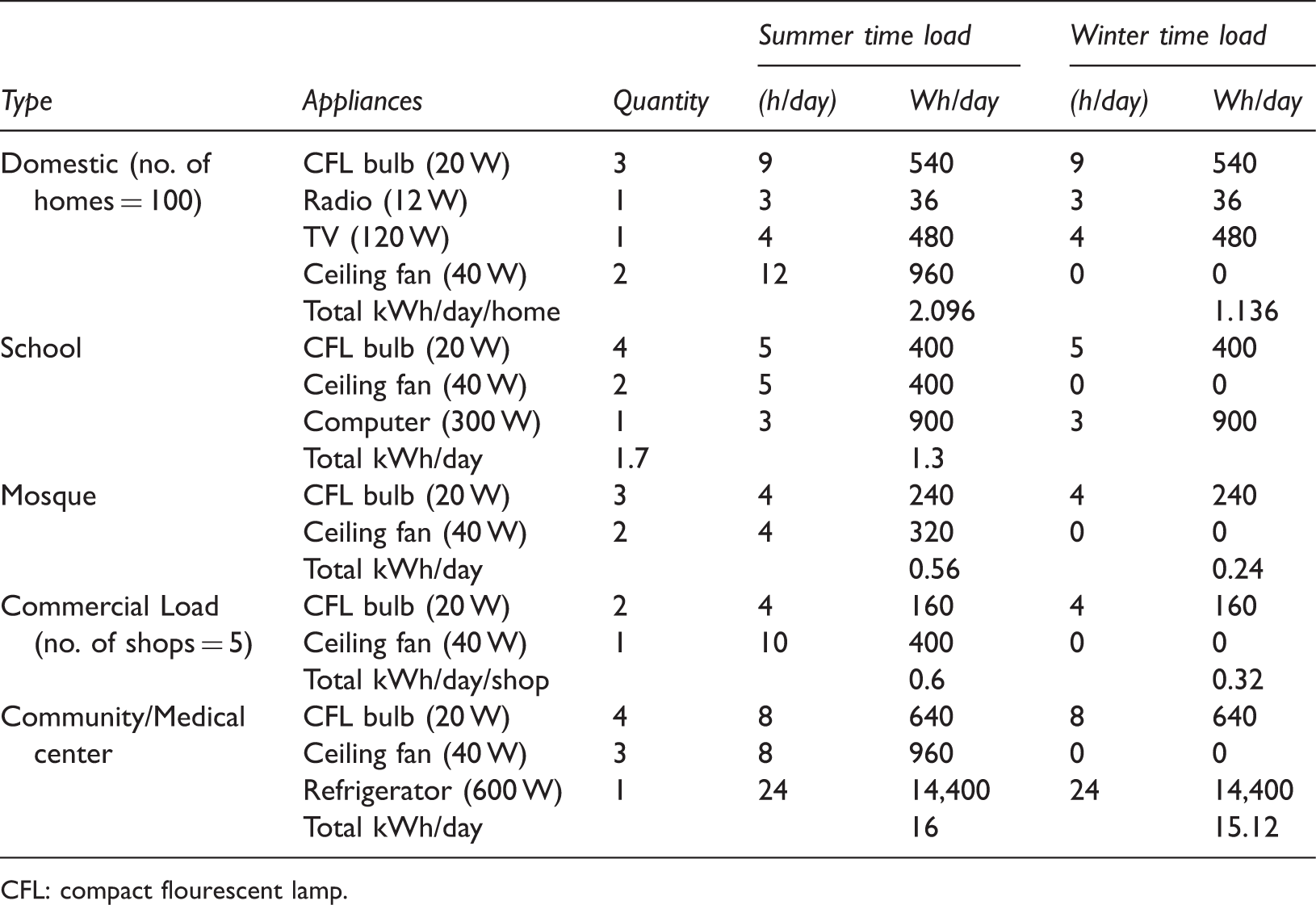
The load demand is divided into household, commercial and community sectors. For modeling the household load, 100 family houses are considered. Five to six family members are considered in each family. Table 1 shows the AC load used for domestic, commercial and community purposes. Distinctively, two seasons are considered for the energy requirements of the village, that is summer (April to November) and winter (December to February). The synthesis of hourly load data was carried out by identifying daily load summary and then adding a little randomness of daily 12% and hourly noise of 10%. These conditions generated the peak load of 47 kW and primary energy requirements of 205 kWh/day. Figures 5 and 6 show the load summaries on a particular day of winter and summer seasons, respectively. The monthly load demand of this village is shown in Figure 7. The detailed daily load profile data is given in Table 1.
Winter season load profile. Summer season load profile. Monthly load profile of the study area. Nooriabad categorized load data. CFL: compact flourescent lamp.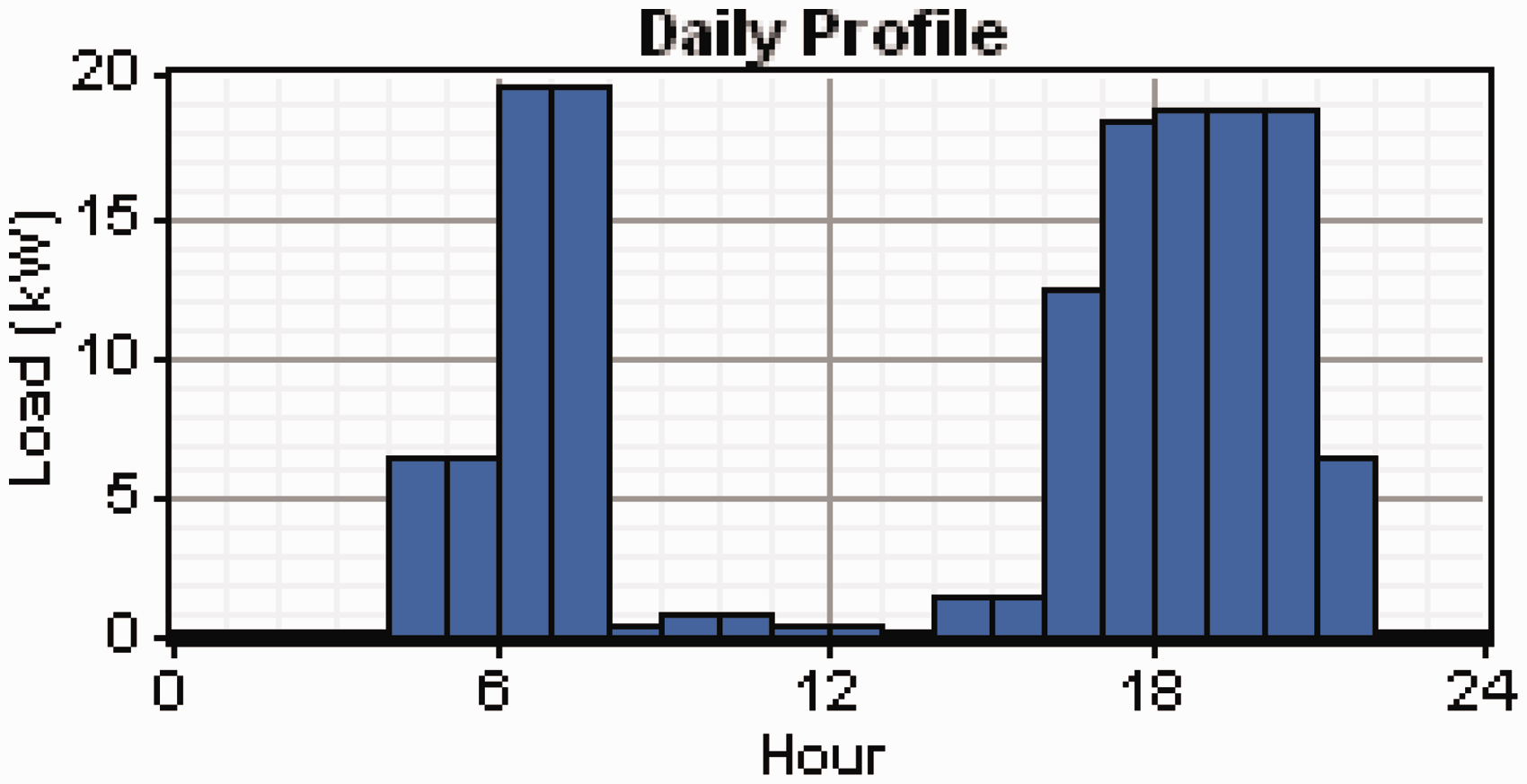
Proposed wind–PV–diesel hybrid system with battery backup
This study considered three different types of system components of hybrid energy based upon the availability of local resources in the area that is solar PV panels, wind turbines and diesel power generation unit. Beside these components, the batteries for energy storage, the converter and other essential hardware parts for the hybrid system are also considered. The schematic diagram of the proposed hybrid power system is shown in Figure 8.The technical specifications and other relevant information related to various components of the proposed hybrid power system for the chosen site are described in the following subsections.
The proposed hybrid power system (wind/PV/diesel) for the study area.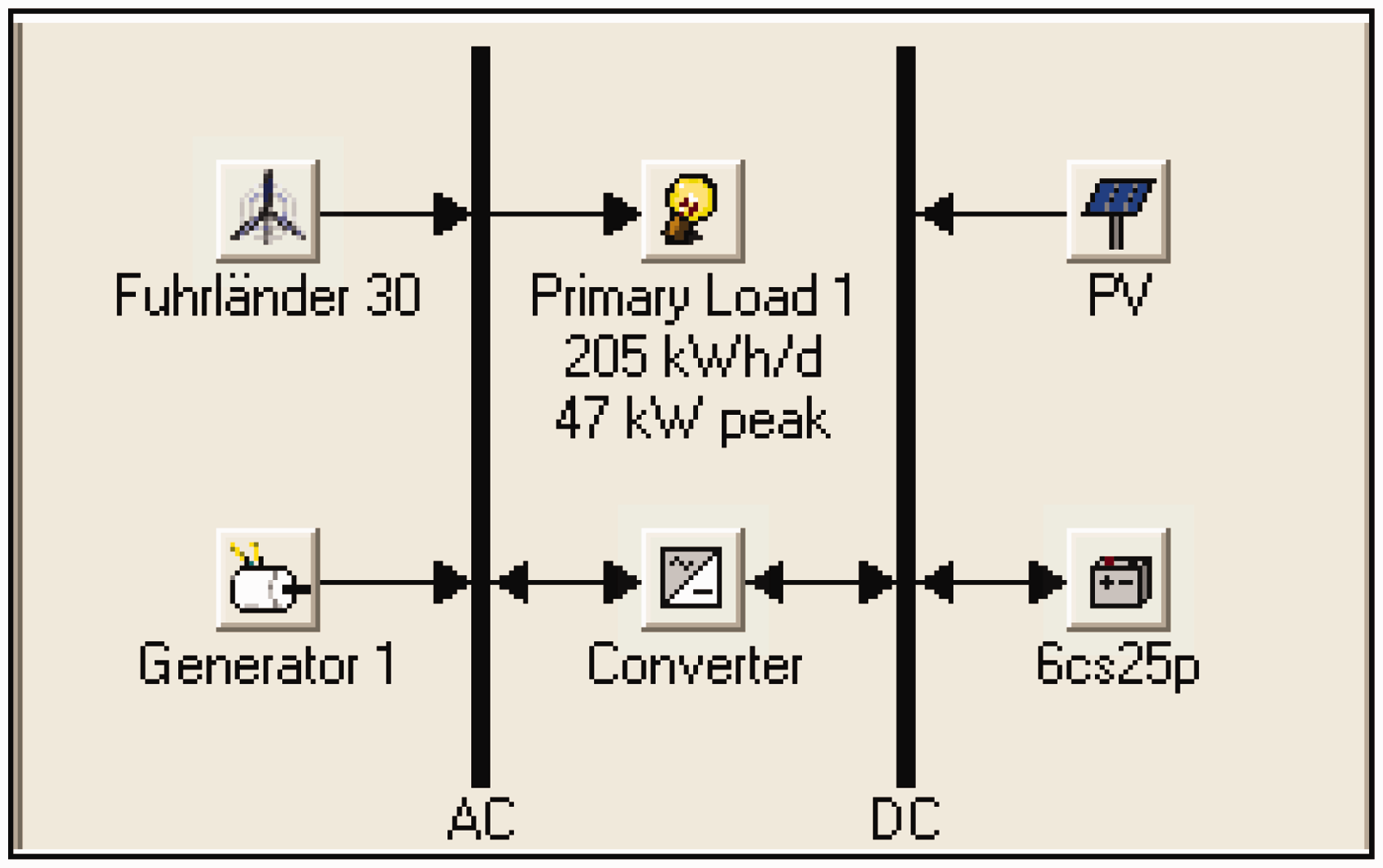
Solar PV system
The cost per watt peak of the Sharp NU-U245P1 PV module has been considered as3.0$/Wp which includes the cost of installation. The replacement cost of PV module has been considered as 3.0 $/Wp and the lifetime as 20 years.
Diesel generator
The capital cost of the diesel generator is taken as $ 250 per KW. For diesel generators, with power range of 15 kW to 45 kW, the values of slope and the intercept are taken as 0.25 L/h/kW and 0.08 L/h/kW, respectively. For the optimization of the diesel generator capacity, different capacities are considered in the simulation of the hybrid power system. The lifetime operating hours are considered as 15,000 h.
Wind turbine
For the current study site, a turbine from Fuhrlander AG (model FL30) has been considered at the cost of $110,000 including tower and installation costs, whereas the cost considered for replacing the generator is $90,000 and for maintenance it is $900/year. Wind turbine power curve is shown in Figure 9. Lifetime of this wind turbine is 25 years.
Power curve of the 10 KW (FL30) wind turbine.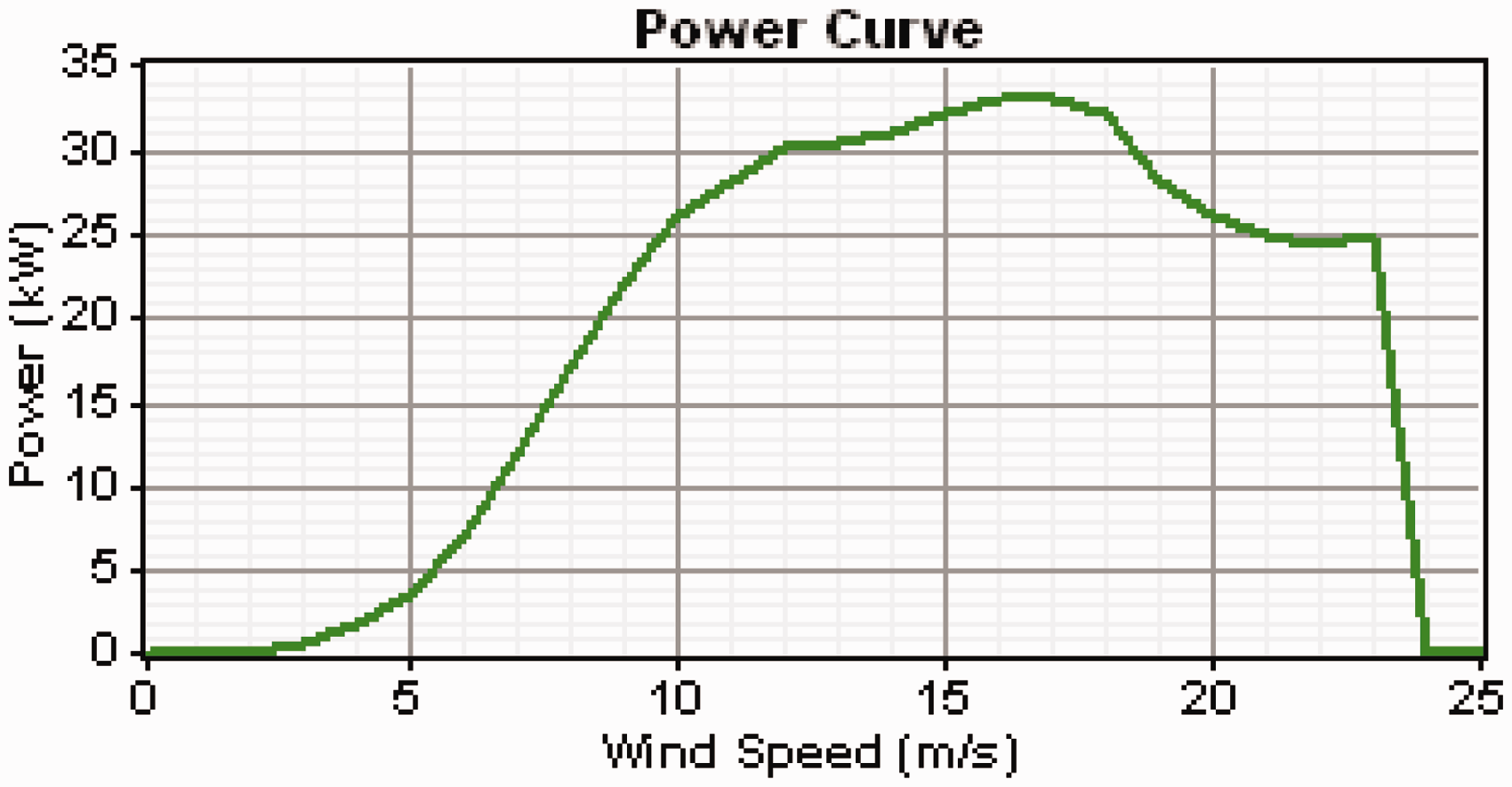
Battery
The proposed system requires battery storage for regular power supply to the village. The battery bank is expected to store energy during the period of surplus generation and supply the energy when required. Surrette6CS25P batteries are chosen for this study. It is rated at 6 V and has a nominal capacity of 1156 Ah with expected lifetime throughput of 9645 kWh and life of 12 years. The capital cost for the battery is considered to be $1000 whereas the replacement and operation and maintenance costs are taken as $800 and $50/year for one unit.
Power converter
A converter is included in order to link the AC and the DC bus. The normal load is AC type, but the power produced from solar PV and supplied from the battery is DC type. Different sizes of converters are used in current system to search for an optimal size. The capital cost per kW is considered as $700 whereas the replacement and the operation and maintenance costs are $500 and $7, respectively.
Economics inputs
A real annual interest rate of 8% is assumed. HOMER converts the capital cost of each component to an annualized cost by amortizing it over its lifetime using the real discount rate.
Results and discussion
For optimum hybrid system design, HOMER carries out thousands of simulations repeatedly. HOMER simulation tool is used to assess the performance of various combinations of hybrid power system components and for the sensitivity analysis.
Optimization results
Optimization results, in a categorized form, ordered according to the NPC of each system category.
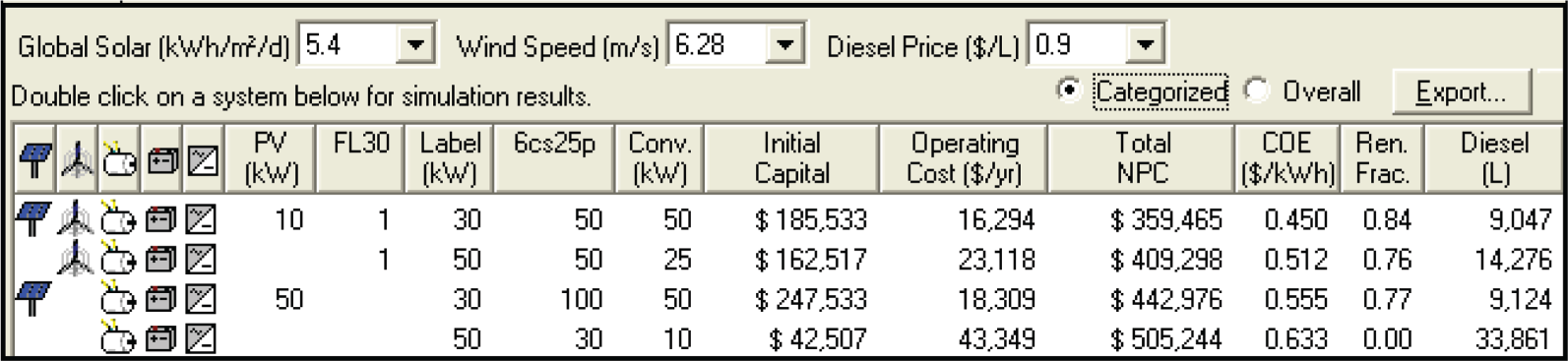
According to the simulation results, the optimum system type is wind/PV/diesel/battery system. The most viable hybrid system consist of 10 kW PV modules, one wind turbine of 20 kW, 30 kW diesel generator and 50 storage batteries and a 50 kW converter. The overall optimization results are shown at wind speed of 6.28 m/s, solar irradiation of 5.4 kWh/m2/d and the diesel price of 0.9 $/l. In this case, 84% of renewable fraction was achieved with a COE of 0.450 $/kWh as given in Table 2. The project under investigation requires an initial capital investment of approximately $185,533 with a total NPC of $359,465. The results in Table 2 showed that the diesel only power system consumed 33,861 l of diesel annually while the proposed hybrid power system consumed only 9047 l of diesel fuel, a reduction of 70%in fuel consumption. Therefore, from both the economic and the environmental perspectives the standalone proposed hybrid power system is considerably more cost effective than the system which uses diesel generators only.
Optimization results when using only renewable resources utilization.


Electricity production
Details related to the power produced by wind turbine, solar PV and diesel generator for the purposed system are shown in Figure 10. Here it is evident that the highest power is generated by the wind turbine. Of the total primary energy requirement of the village, the wind turbine produced 98,123 kWh/yr (72% of the total energy served), PV array produced 11,916 kwh/yr (9%) while the diesel generator produced almost 19% of the energy that is 26,387 kWh/yr. However, the optimal selected sizes of different components of the hybrid system produced 23% excess energy.
Electrical production of integrated renewable energy system.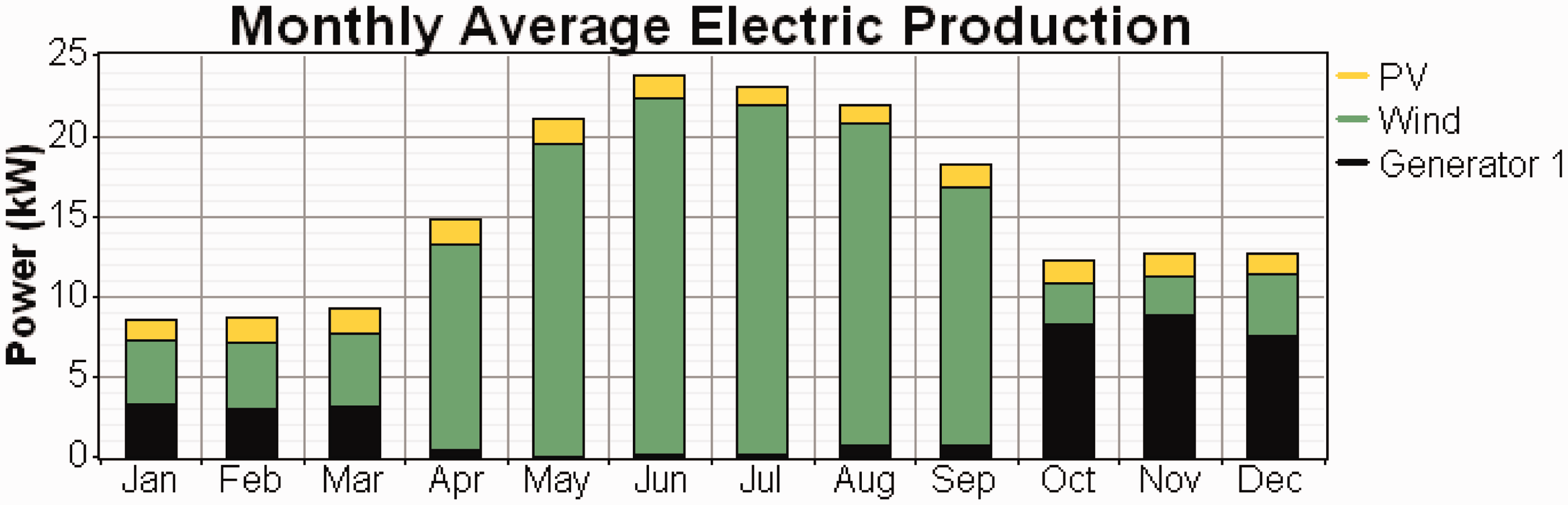
GHG reduction
Comparison of GHG emissions between a standalone diesel system and the proposed hybrid power system.
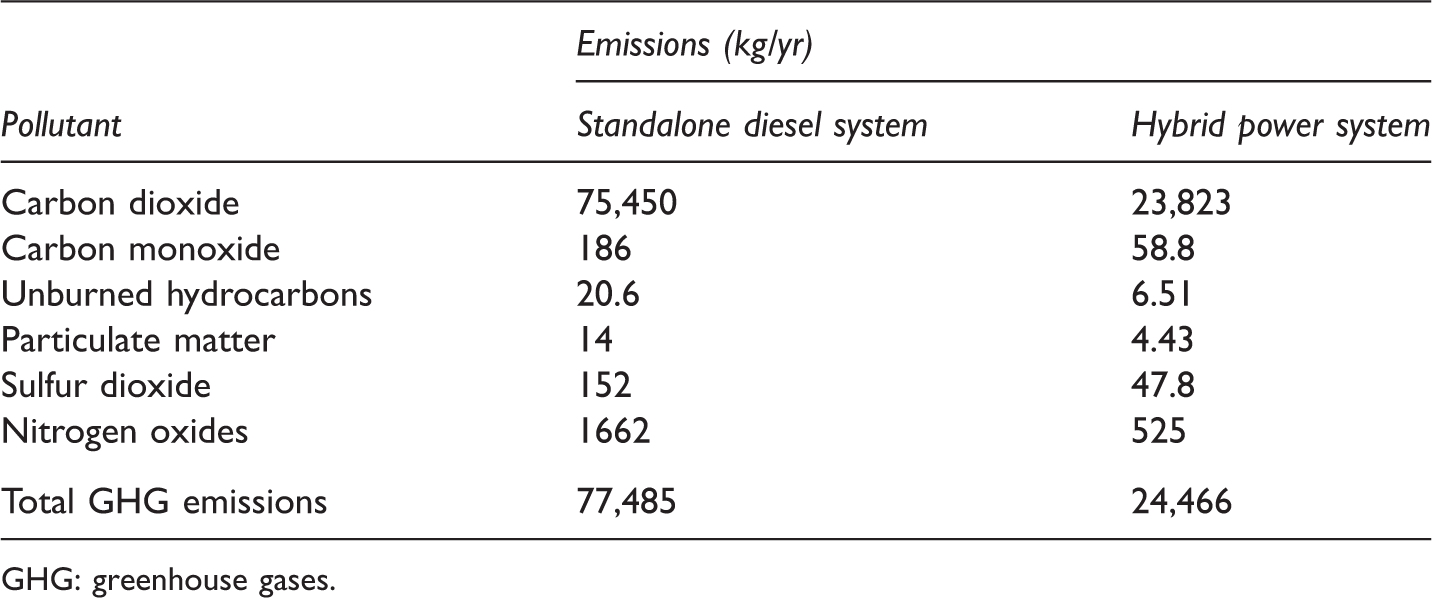
GHG: greenhouse gases.
Cash flow summary
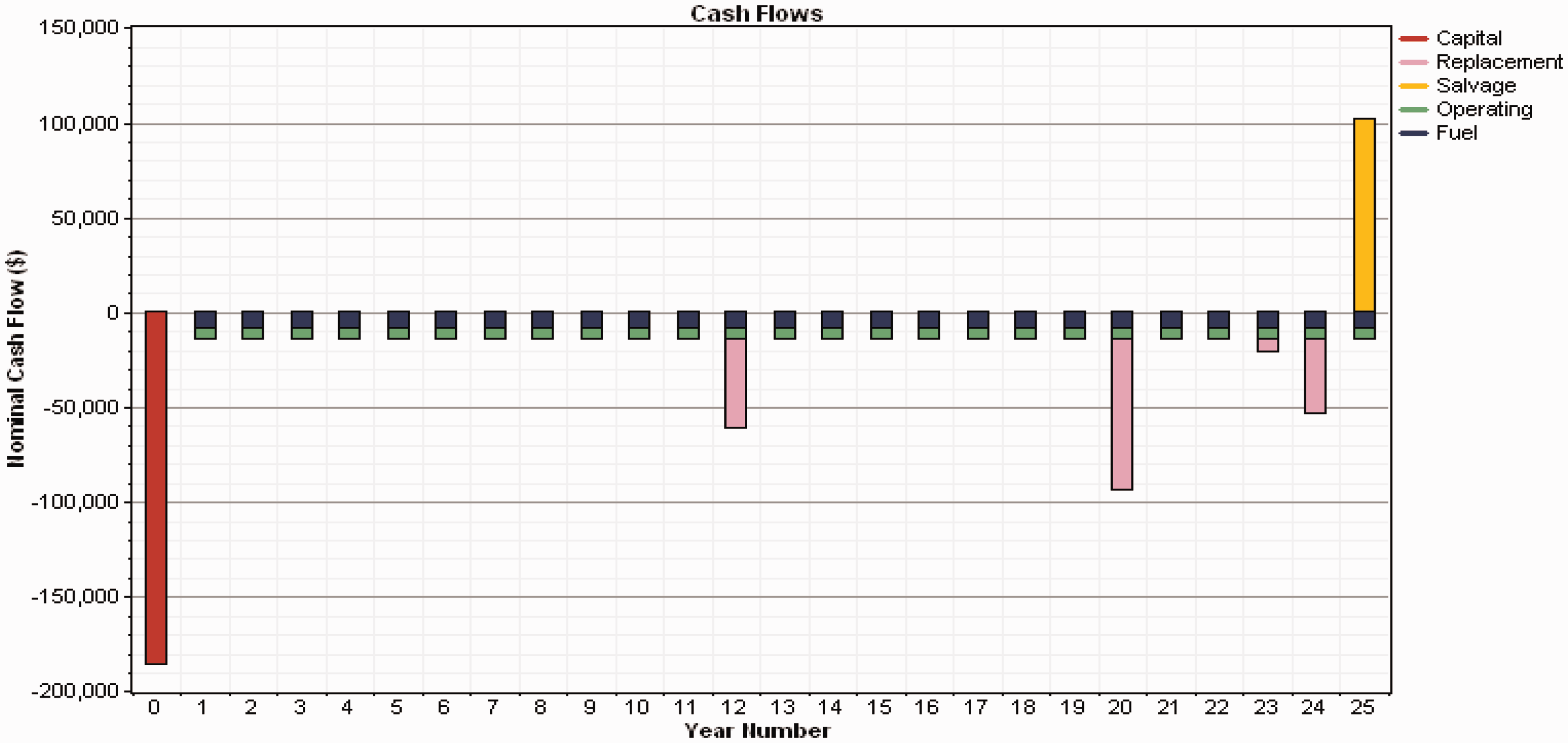
The NPC summary of the optimal system is shown in Figure 11. Most of the capital cost is shared by the wind turbine and batteries while the least cost is for the diesel generator. The converter has an insignificant impact on the capital and operation and maintenance costs. The operation and maintenance cost of the diesel generator is the maximum, and it is the only component which uses diesel fuel, as depicted in Figure 11. The annual cash flow throughout the system’s lifetime is shown in Figure 12. Replacements take place mainly in the 12th, 20th and 24th year, by and large for changing batteries. Towards the end of plant life, the salvage cost of the system is around $105,000.
Cash flow of proposed configuration. Yearly cash flow of the system in its lifetime.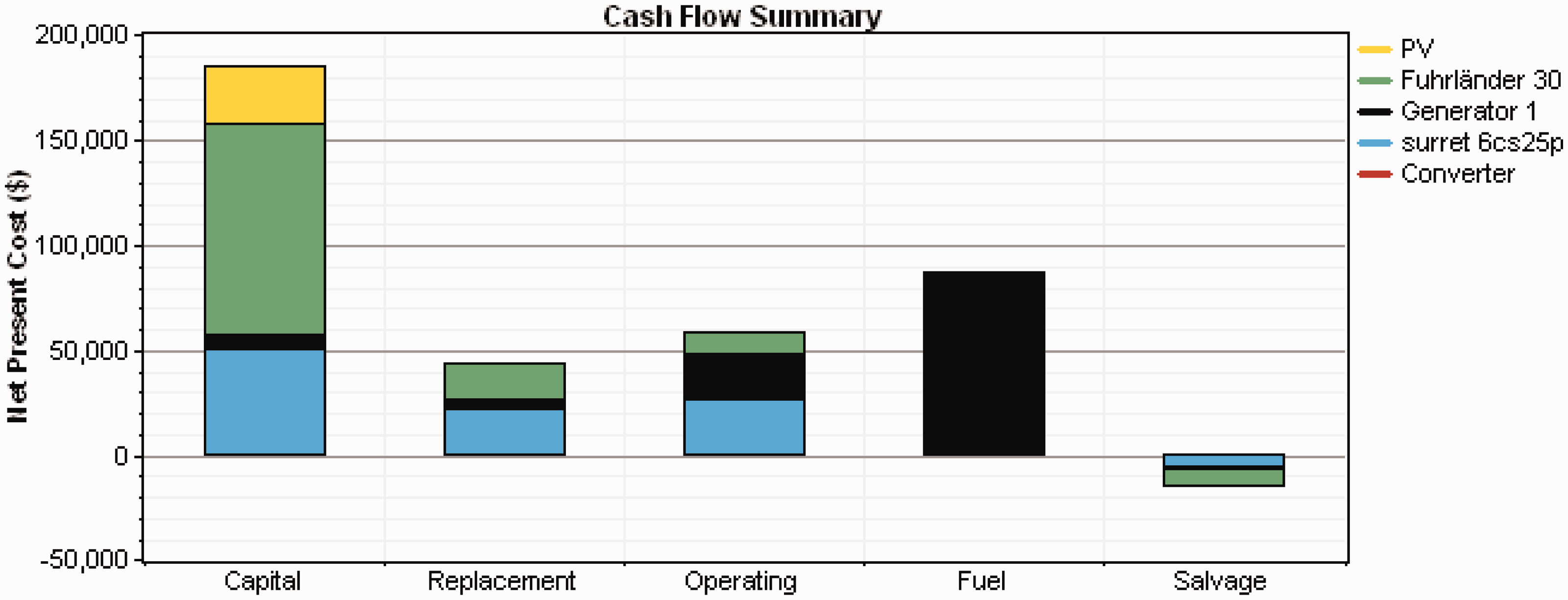
Sensitivity results
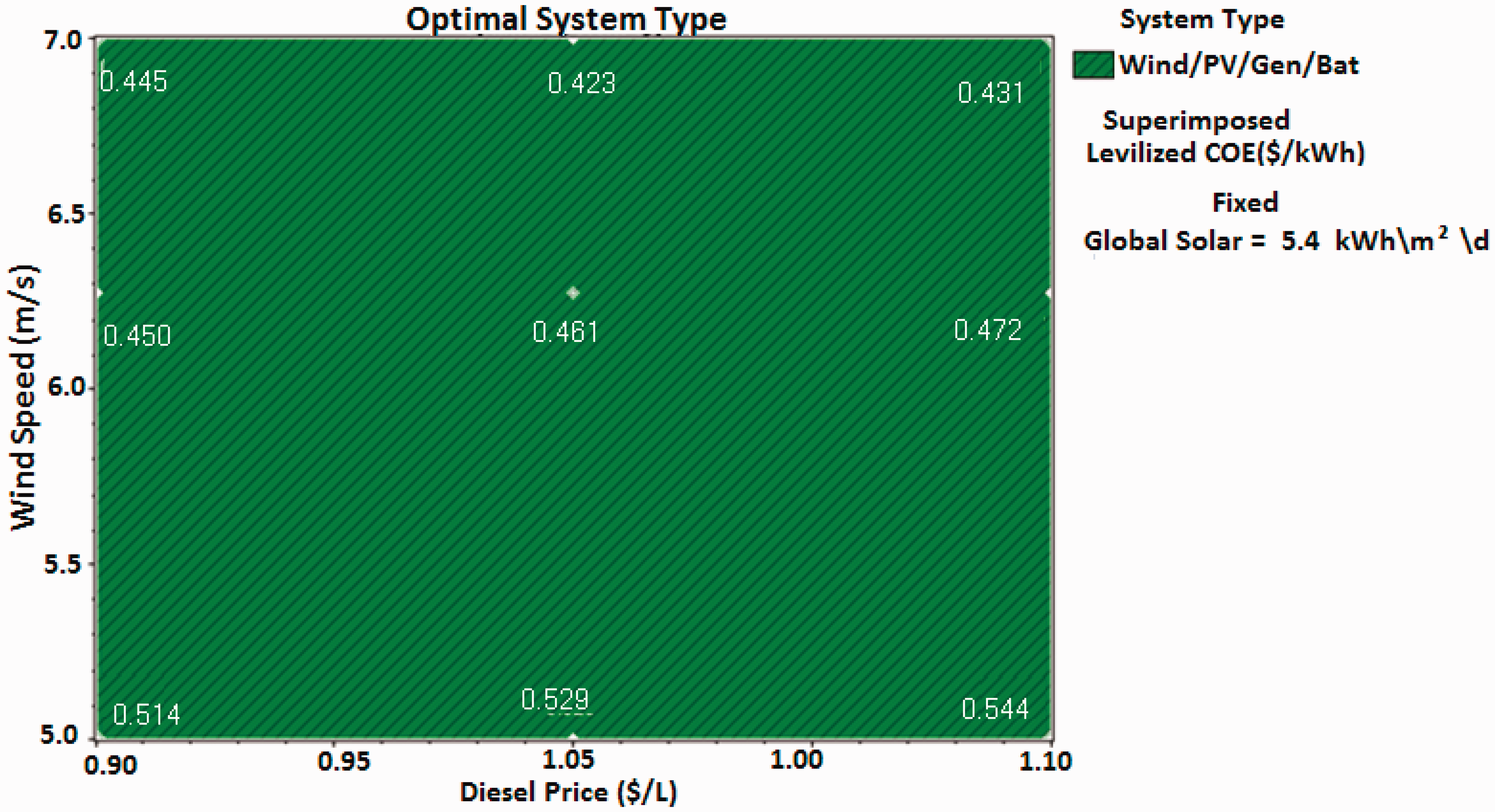
Sensitivity analysis has been commenced to study the effect of variation in solar radiation intensity, wind speed and diesel prices on the COE of the hybrid power system. Figure 13 shows that for a constant wind speed of 6.28 m/s, the proposed hybrid system is economically feasible over entire range of diesel price and the solar radiation intensity. Furthermore, for constant radiation intensity, the COE increases with increase in diesel price while for a constant diesel price and increasing radiation intensity, the COE decreases, as can be seen from Figure 13. For a constant solar radiation intensity of 5.4 kWh/m2/d, the combined effect of the changes in the diesel price and wind speed values is shown in Figure 14. Like in the previous case, the COE increases with increasing diesel price and decreases with increasing wind speed values. For entire ranges of diesel process and the wind speed values, the proposed hybrid system seems to be feasible economically.
Optimal system for diesel price versus global solar radiation intensity for a constant wind speed of 6.28 m/s. Optimal system for diesel price versus wind speed for a constant value of global solar radiation of 5.4 kWh/m2/d.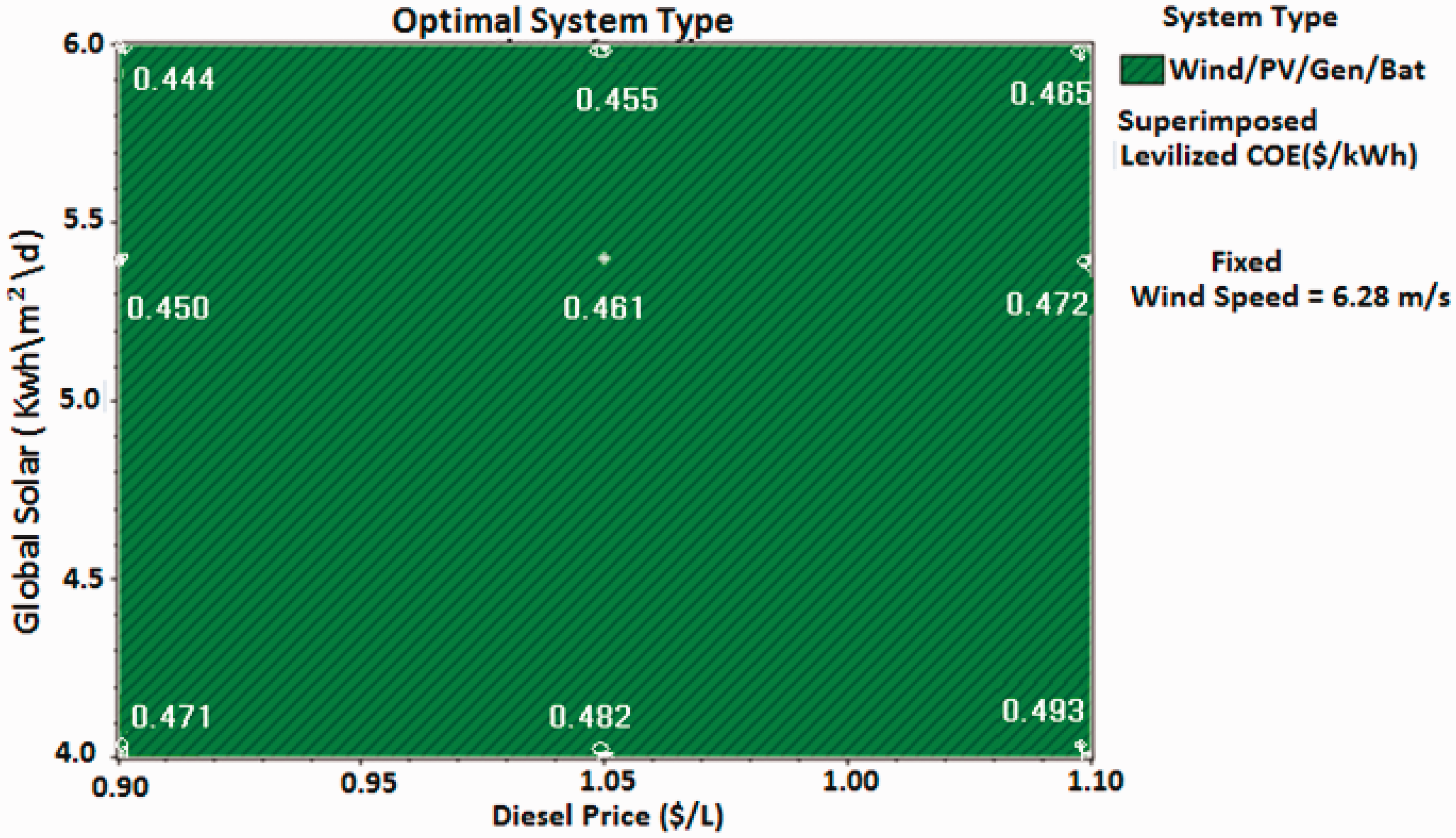
Conclusion
In this study, a combination of conventional and nonconventional energy sources was considered. The hybrid power system sizing and optimization tool HOMER of National Renewable Energy Laboratory was used in categorizing the probable hybrid configurations and their explicabilities. Under current scenario, it is found that only one renewable energy-based system cannot supply entire load and also financially not viable. Hence, a hybrid power system with wind, solar, diesel generation and battery backup (wind/PV/diesel/battery) was studied and found to be the most viable option. With this configuration, the energy demand of considered community was met comfortably. The proposed hybrid power system was consisted of a wind turbine of 20 kW, PV panels of 10 kW, one diesel generator of 30 kW, a battery bank of 50 batteries and a converter of 50 kW rated capacity. The NPC was found to be $359,465 and the COE was 0.450 $/kWh. The diesel generator of the proposed hybrid system consumed only 9047 l of diesel fuel. The proposed hybrid system was able to achieve a renewable energy fraction of 0.84. In addition to all of these benefits, the proposed system, if implemented, will result in the reduction of greenhouse gases by 53,019 kg (69%) per year in to the local atmosphere.
A hybrid system consisting of wind, PV and battery backup without diesel generator was also studied using the HOMER tool. The proposed renewable energy based hybrid power system consisted of a wind turbine of 20 kW, PV panels of 100 kW, a battery bank of 100 batteries and a converter of 50 kW rated power. The total NPC and initial capital of this system were $585,105 and $480,033, respectively. The COE was worked out to be 0.733$/kWh, and renewable energy fraction was 100%.
So, these suggested systems seem to be more environmental friendly than the conventional diesel only system because the greenhouse gases emission much less than the diesel only system. The proposed hybrid system for Nooriabad can be used in any off grid area of Pakistan for electrification. As a trend of continuous increment in oil prices and reduction in the capital and operation and maintenance costs of renewable systems, it is recommended to use renewable-based energy systems to partially meet the load requirements. The utilization of renewable sources of energy will reduce the addition of greenhouse gases in the local atmosphere and also reduce the dependency on the fossil fuel imports and consumption.
Footnotes
Acknowledgements
The authors thank the National Renewable Energy Laboratory for providing the HOMER software for free.
Declaration of conflicting interests
The author(s) declared no potential conflicts of interest with respect to the research, authorship, and/or publication of this article.
Funding
S Rehman wishes to acknowledge the support of the Research Institute of King Fahd University of Petroleum and Minerals, Dhahran, Saudi Arabia. Aref Lashin extends appreciation to the Deanship of Scientific Research at King Saud University (Saudi Arabia) for funding part of the work through the international research group project number IRG14-36.