




Abstract
As human demand for energy continues to grow, energy security has become an important research topic for national economic and social development. As the country with the highest energy demand and import in the world, China needs to ensure its energy import security in a personal way. Against this research background, this paper investigates the causal relationship between bilateral political relations and China's energy import security. This research selected HS 6-digit percentile trade data from 47 energy-exporting countries engaged in energy trade with China from 2000 to 2020. A trade gravity model was constructed to examine the impact of bilateral political relations on China's energy import security. Multiple empirical analyses were conducted using the PPMLHDFE method to investigate various aspects of the relationship. The research shows that: (1) Bilateral political relations can significantly affect China's energy trade imports. (2) The regional security situation of exporting countries and the signing of free trade agreements with China play a moderating role between bilateral political relations and energy imports. (3) In the heterogeneity analysis, the influence of bilateral political relations on China's energy trade has obvious stage characteristics, and the influence of bilateral political relations on China's energy trade is stronger in countries and regions along the Belt and Road Initiative, and there is a certain path-dependent type of China's energy imports.
Introduction
As the demand for energy continues to grow in human society, energy security has become a significant research topic for national economic and social development (Shahzad et al., 2021; Zhang et al., 2017). As the world's largest energy consumer and importer, China's energy import security is not to be underestimated (Galkin et al., 2018). Due to political risks and geopolitical threats being crucial factors affecting energy security (Hao et al., 2020), the escalating Russia–Ukraine conflict in recent years has not only caused great uncertainty and risks for European energy supplies but also indirectly impacted China's energy security. Furthermore, China's energy trade has a notably long-term dependence on foreign markets with irreplaceable characteristics, making it essential to ensure energy security, improve energy utilization efficiency, promote energy structure adjustments and achieve sustainable national development. These aspects pose significant challenges for China during its rapid development process (Lee and Wang, 2022; Wang et al., 2021).
In April 2023, the Chinese government released the ‘Guidelines for Energy Work in 2023’, with the theme of promoting high-quality development and advancing the energy revolution. Scholars generally believe that this document provides many important suggestions for actively addressing availability risks, expanding energy resource imports and ensuring that the Chinese people's food security is firmly in their own hands (Pereira et al., 2022b). These suggestions include establishing and improving energy security risk monitoring and early warning systems to predict energy supply-demand imbalances and regional supply tensions, ensuring the stable operation of national energy security (Wei et al., 2020); actively participating in multilateral energy mechanisms and international organization exchanges and cooperation, promoting global energy market stability and supply security, green and low-carbon energy transition, energy efficiency improvement and energy accessibility initiatives’ formulation and implementation (Saud et al., 2020).
To what extent do bilateral political relations affect China's energy import security? Does deep participation in multilateral energy mechanisms and international organization cooperation contribute to the stability of China's energy import trade? What are the differences in the effects of bilateral political relations on China's energy imports under different stages of economic and political development, different geographic regions and different import sources? Based on existing research, this paper establishes a trade gravity model from the perspective of bilateral political relations, focusing on the impact of bilateral political relations on the security of China's energy imports. Considering the characteristics of empirical research data, it uses the implements Poisson pseudo-maximum likelihood regressions (PPML) with multi-way fixed effects (PPMLHDFE) method to estimate the coefficients of influencing factors. A series of empirical studies on China's energy import security issues are conducted, with a focus on analyzing the differences in the impact of bilateral political relations on China's energy imports at different stages of economic and political development, different geographic regions and different import sources. This aims to provide useful references for improving the security and stability of China's energy imports.
The main contributions of this paper are as follows. Firstly, the impact of bilateral political relations on China's energy import security is analyzed in detail using various regression methods. Secondly, the PPMLHDFE method is used for such trade econometric models to further explain that the regional security situation and with free trade agreements play a moderating role between bilateral political relations and energy import security. Last, while three different perspectives of time, region and export size are further analyzed in the heterogeneity analysis.
Literature review
Since 2014, Russia and Ukraine have been in a long-term armed standoff, and in February 2022, the military conflict between the two countries escalated into a full-scale war, eventually becoming the largest armed conflict in Europe since World War II. Meanwhile, with the continuous advancement of trade globalization and economic integration, the interdependence among countries and regions around the world has been deepening. The Russo-Ukrainian war has also affected the global energy trade market: Russia is the world's largest natural gas producer and exporter and the second-largest crude oil producer and exporter, while European countries have long been dependent on Russian oil and gas. Following this large-scale military conflict, numerous Western countries imposed multiple rounds of sanctions on Russia, with the most significant being the restriction of Russian energy commodity exports. Bilateral political relations have gradually become more tense, and the short-term energy import restrictions have not only affected the economic and social development of European countries but also the political relations between both sides, leading to a global geopolitical crisis (Kuzemko et al., 2022; Pereira et al., 2022a; Richter and Holz, 2015; Umbach, 2010).
Interstate political relations
Lu et al. (2021) used the number of summit meetings between two countries to measure bilateral political relations and explored the positive role of the ‘Belt and Road Initiative’ on China's political relations with other partner countries, focusing on the impact of regional cooperation on trade. Yi and Sun (2022) used the ideal point distance based on the United Nations General Assembly voting data to measure bilateral political relations and examined the spatial spillover of political relations between China and potential trade partner countries on the expansion of bulk commodity import trade. Su et al. (2022) used the Political Relations Index, which focuses on diplomacy and military, to measure the political relations between China and Japan, and analyzed the causal relationship between bilateral political relations and tourism demand in both countries. Agarwal and Golley (2022) chose to collect relevant data from the Global Database of Events, Location and Tone to recalculate the political relations between four countries (Australia, India, Japan and the United States) and China on a monthly basis, and provided a detailed introduction to the long-term and short-term impacts of political relations on trade between the four countries and China.
The quantification of political relations between countries has yielded abundant achievements in academia, with United Nations General Assembly voting data being the most common data source for bilateral political relations research and widely accepted by scholars from various countries (Bailey et al., 2017; Potrafke, 2009; Smith, 2016). Therefore, in the subsequent empirical research, this paper will use the United Nations General Assembly voting data as an indicator to measure bilateral political relations.
Political risks and energy trade security
Europe has a vast energy market potential, and Russia possesses abundant energy resources. Siddi (2018) provides a detailed account of the impact of energy trade and geopolitical relations issues arising from this on the power roles of both sides in their international positions, as well as how energy trade is safely conducted in the presence of political risks. Simultaneous superpowers: U.S. geopolitical risks have implications for the energy security transition of European countries (Brauers et al., 2021). Bricout et al. (2022) discuss the evolving role of international large-scale energy trading companies in the context of the 2022 Russo–Ukrainian war, examining the influence of fossil fuel and renewable energy geopolitics on energy structure transitions. Various studies indicate that, in the context of war, the global energy trade market will become fragmented, and ensuring energy supply and transportation security cannot be underestimated.
As non-renewable energy resources become increasingly depleted and global geopolitical risks continue to intensify, the European energy security crisis is worsening. Renewable energy use proven to reduce energy import security risks, Countries increased the deployment of renewable energy and reducing dependence on fossil fuels are issues that European energy security needs to consider (Hamed and Bressler, 2019; Valdes Lucas et al., 2016). Hogselius and Kaijser (2019) argue that global energy trade is almost monopolized by powerful countries, and political risks continue to rise in the context of war and great power competition, leading to frequent energy import security issues for various nations, Asia-Pacific countries’ oil and energy imports are subject to risk spillover effects caused by shocks related to political risk events that are smaller than those of North American and European countries (Zhu et al., 2021). Therefore, countries need to pay attention to the energy trade of smaller nations and break away from the path of strong energy import dependence. With the continuous increase in China's crude oil imports, energy transportation and supply security issues have become particularly important. Sun et al. (2014) analyze and assess the impact of China's energy import security on the stability of the national economy under multiple risks (political risk, piracy risk and geopolitical influence).
Theoretical analysis
Bilateral political relations not only involve exchanges in diplomacy, culture and other fields between countries but also directly related to cooperation and competition in the trade sector. In the context of severe geopolitical issues, energy trade inevitably feels the impact of bilateral political relations (Escribano, 2019). When bilateral political relations between countries are poor, a series of trade barriers may emerge, including trade restrictions, sanctions and embargoes. These trade barriers not only limit the scale and quality of energy trade but may also lead to imbalances in energy supply and demand and price fluctuations. Since the escalation of the Russo–Ukrainian armed conflict in 2022, the United States and many Western countries have imposed comprehensive economic and energy sanctions on Russia. These sanctions have caused damage to Russia and other energy-importing countries and regions, and at the same time, they have had a severe impact on global energy, food and financial markets. Western European countries, highly dependent on Russian energy imports, have been at the forefront of the various pressures brought about by the deterioration of bilateral political relations. Therefore, the impact of bilateral political relations on energy trade cannot be ignored (Mon et al., 2019).
The stability of bilateral political relations has a certain impact on energy supply stability and demand, as well as trade scale. When bilateral political relations are stable, energy supply stability and demand tend to be relatively balanced, and energy prices and trade volume are likely to be more stable. However, when bilateral political relations are unstable, energy supply and demand often experience significant fluctuations, and prices may undergo dramatic changes, which in turn affect trade volume. In studying the impact of bilateral political relations on energy trade, it is necessary to consider the stability and changes in political relations, as well as their effects on trade value (Song et al., 2022). Based on the discussion above, we can derive Hypothesis 1. Hypothesis 1: Bilateral political relations can influence the energy supply stability and trade scale, as well as affecting the energy trade value of importing, thereby influencing the security of energy imports.
Against the backdrop of rising geopolitical risks leading to energy security issues, governments around the world are increasing their military spending to ensure the integrity of national sovereignty as well as energy security. Countries with relatively stable regimes are conducive to promoting the signing of energy trade agreements between countries, while also effectively avoiding economic and military threats in energy trade and enhancing energy export security. The increase in military spending, whether for the purpose of enhancing national security or due to the impact of conflict, can create uncertainty in bilateral political relations, thereby affecting the stability of international energy trade. The establishment of peaceful trade agreements between countries can strengthen bilateral political relations, which in turn, is beneficial to the development of international energy trade. In addition, reaching cooperative agreements for peaceful development among countries and regions worldwide can help promote international trade development, thereby having a positive impact on energy trade. Based on the discussion above, we can derive Hypothesis 2. Hypothesis 2: As the regional security situation stabilizes, improved bilateral political relations can reduce the risk to energy trade security.
To promote economic development, China is continuously seeking to sign various trade agreements with global partner countries. From the perspective of national politics, the signing of trade agreements can increase trust between partner countries, reduce the impact of political risks and uncertainties and stabilize bilateral political relations between China and its partners. Trade agreements can reduce tariffs and non-tariff barriers, thereby lowering the cost of goods, promoting the circulation of goods between China and its partner countries, fostering trade and investment cooperation, increasing the channels and pathways for China's energy imports, reducing the risks and uncertainties of China's energy imports and having a positive impact on China's energy imports.
Energy import trade is not only a reflection of economic factors but also a means of political diplomacy between countries. Taking oil as an example, in the 1970s, small oil-producing countries with limited power relied on oil to maintain their national interests in negotiations with European and American countries. Since then, the political value of oil has been recognized by various countries. Therefore, the signing of oil trade agreements cannot be separated from the support of government diplomatic strategies, which is also the reason why major energy-consuming countries attach great importance to energy diplomacy. The improvement of bilateral political relations between China and its partner countries can be facilitated by intergovernmental agreements, promoting China's energy imports from these countries. Based on the discussion above, we can derive Hypothesis 3. Hypothesis 3: Bilateral political relations continue to improve as trade agreements are reached between countries, contributing to the increasing security of energy trade.
Model setup and data description
Econometric model construction
Based on the theoretical analysis in the previous section, this study focuses on the impact of bilateral political relations on China's energy commodity imports, taking 47 major energy commodity importing countries and regions in China from 2000 to 2020 as research subjects. Firstly, a baseline regression analysis was conducted on all countries during the selected sample period, followed by a mechanism analysis (moderating effect). The study then focused on the characteristics of different time periods, differences in import amounts, and whether the samples were affected by China's trade policies. Finally, the robustness of the model results was tested.
Benchmark model
This paper will use the gravity model to analyze the impact of bilateral political relations on China's trade imports of energy commodities through empirical research. Gravitational models are often used to explore issues related to international trade, and the current trade gravitational models frequently used by scholars have gone through a long research process. Firstly, the early theory of computable general equilibrium model (Anderson, 1979; Bergstrand, 1985), followed by the traditional theory of international trade and the theory of heterogeneous firms, which has developed rapidly into the 21st century (Bergstrand, 1989; Chaney, 2008; Eaton and Kortum, 2002; Melitz and Ottaviano, 2008). And in empirical studies, the trade gravity model proposed by Tinbergen (1962) and Pöyhönen (1963) is usually taken logarithmically and transformed into a general log-linear model form for analytical purposes. With the deep development of econometrics, the gravity model has been widely applied and expanded. Many scholars have applied this model to the study of international energy trade issues (Sun and Shi, 2022; Taghizadeh-Hesary et al., 2021). In this paper, we have reviewed the existing literature and constructed a trade gravity model (Arkolakis et al., 2012; Fally, 2015). The model is analyzed from the perspectives of China's total energy commodity imports with trading countries and bilateral political relations, as shown below:

Moderating effect model
To further explore the moderating effects of regional security situations and the degree of foreign trade openness in bilateral political relations and China's energy imports. As shown in equations (2) and (3), this study adds two moderating variables,


Variable selection
Core explained variable
Energy import security refers to the risk of energy supply stability faced by a country or region in energy trade. In this paper, the value of energy imports between China and 47 countries around the world is selected as a quantitative indicator to measure China's energy import security. There is a strong link between energy import value and energy import security, the higher energy import value means that China's energy supply is relatively stable, and when energy supply is unstable and vulnerable to the disturbance of bilateral political relations, economic or natural weather factors, energy import value decreases, then the probability that China's energy import security will be threatened increases (Radovanovic et al., 2017; Zhang, 2011).
This study utilizes data on the total import value of 40 HS 6-digit energy products in China from 2000 to 2020, focusing on 47 countries or regions worldwide. The data is sourced from the CEPII-BACI database (Gaulier and Zignago, 2010).
First, the collected HS 6-digit bilateral trade data is filtered to identify energy commodity trade. In 2000, China imported energy goods from 83 countries worldwide, and by 2020, the number of energy importing countries had reached 118. The detailed changes in the number of importing countries during this period are shown in Figure 1. However, there is a considerable disparity in import values, with China importing relatively low amounts from most countries. To prevent large data discrepancies from causing bias in subsequent model estimation results, this study further refines the selection, ultimately focusing on the total import value (
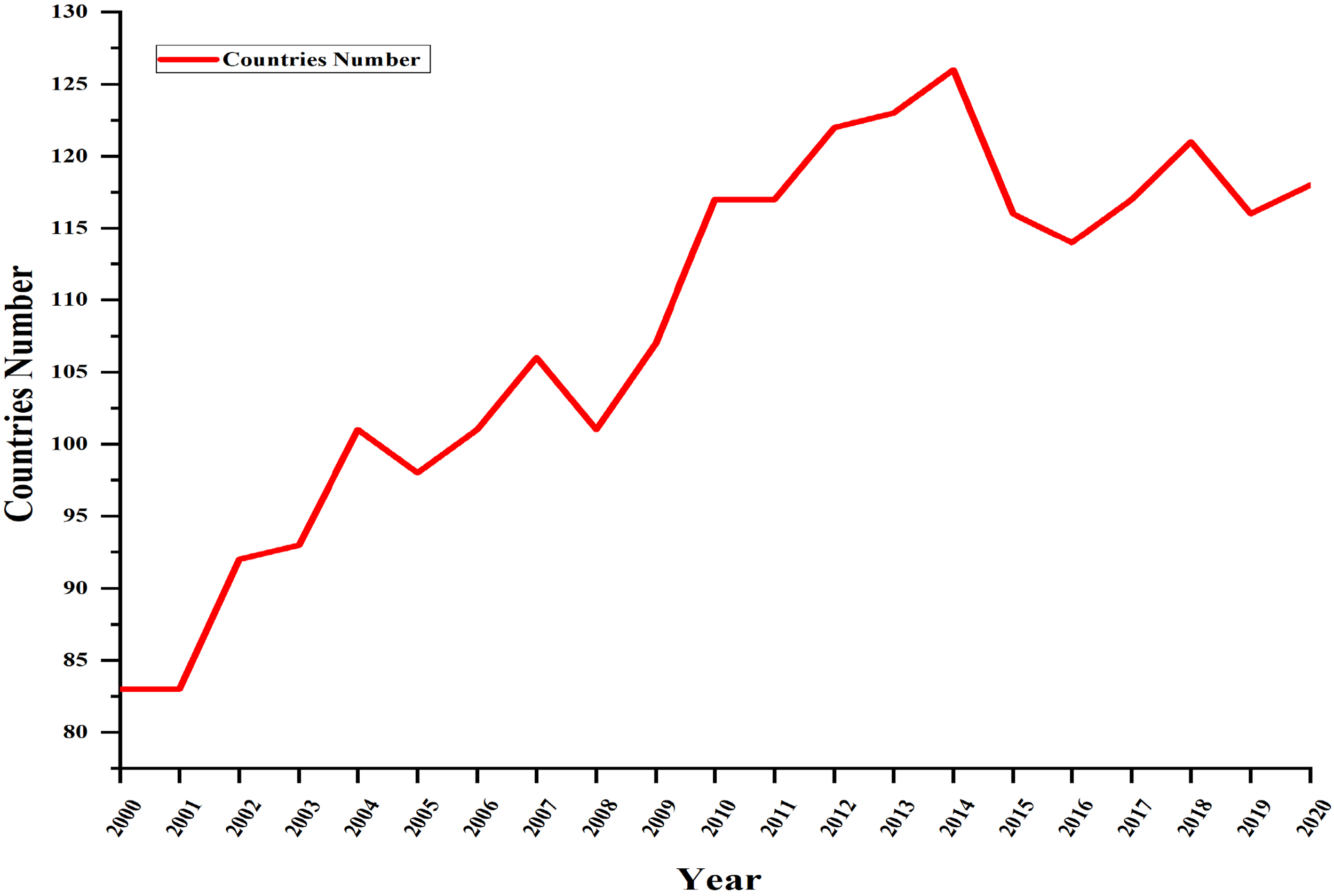
Change in the number of energy importing countries in China, 2000–2020. (Source: CEPII BACI Database).
Table 1 presents the energy import values of China from the 47 sample countries between 2000 and 2020, as well as their respective shares in the global total import value. The relevant statistical data indicate that before 2010, the energy import value from the 47 sample countries accounted for approximately 95% of China's total imports. After 2011, despite a slight decrease in the energy import value from these 47 sample countries due to reasons such as an increase in trading partners, the overall share remained around 90%. This demonstrates that the sample countries selected in this study are representative.
Share of energy commodity import values from 47 countries in China's total import value.
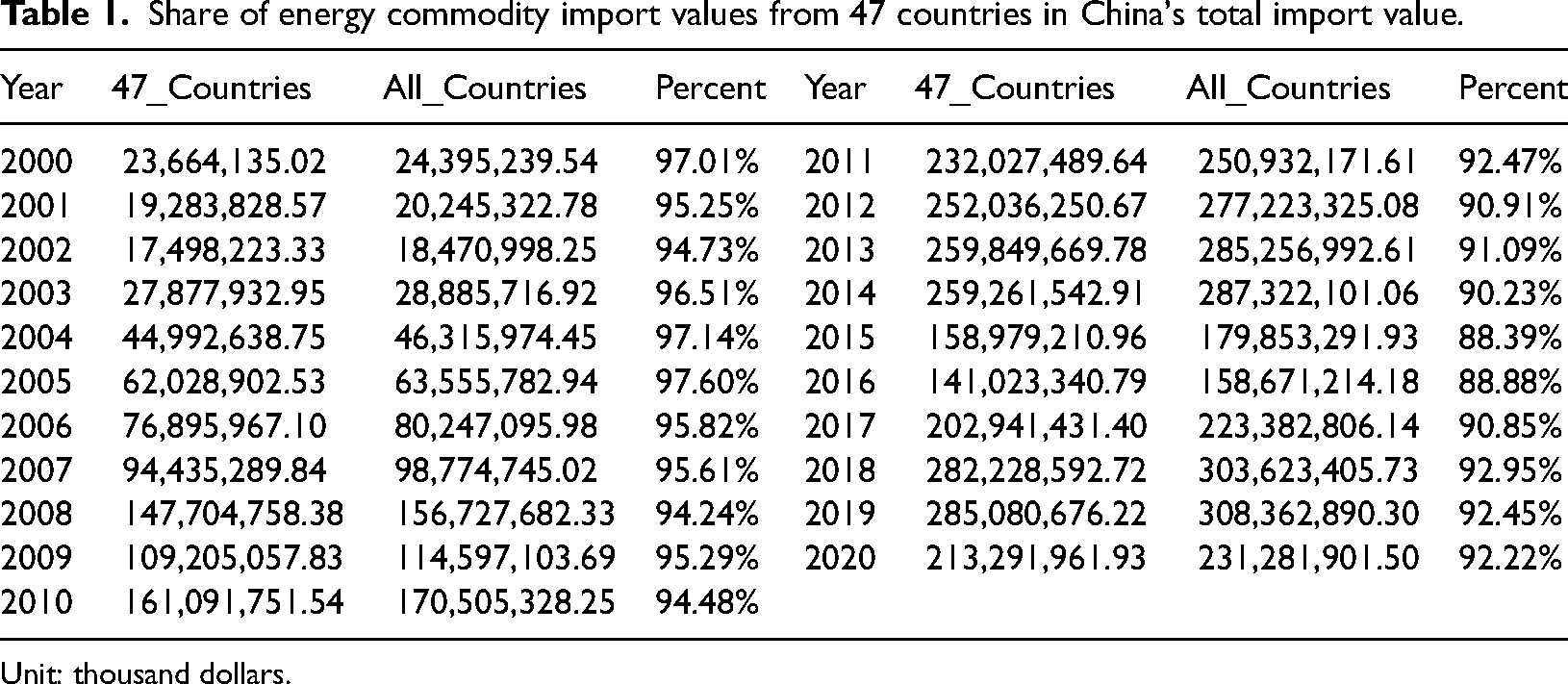
Unit: thousand dollars.
Core explanatory variables
The core explanatory variable in this study is bilateral political relations. Currently, scholars from various countries use different data and processing methods to quantify bilateral political relations variables, while academia often approaches the quantification of bilateral political relations from multiple perspectives. This paper uses the preference correlation calculation data of China and other participating countries’ voting choices at the United Nations General Assembly from 2000 to 2020 to analyze the impact of bilateral political relations on China's import trade. Unlike the traditional yes-or-no voting method, the United Nations General Assembly voting method adopts a three-choice model with explicit information, namely, yes, no and abstain. Abstention is an important preference choice in the United Nations General Assembly voting. The choice to abstain is not only a strong opposition to a particular issue by a country but may also be due to the country being in a state of turmoil or war (Rosas et al., 2015).
Moreover, quantifying the United Nations General Assembly voting data through certain mathematical methods can better reflect the bilateral political relations between countries to a certain extent. Therefore, this study chooses the more scientifically quantifiable United Nations ideal point distance as a proxy variable for bilateral political relations. The data is sourced from the Harvard Dataverse's open-source United Nations member states’ ideal point distance dataset (Voeten and Merdzanovic, 2009). The specific calculation steps are as follows.
Bailey et al. (2017) employed the Item Response Theory statistical model (IRT model), combined with voting preference situations among countries and used the Bayesian estimation method to quantify the ideal point distances in political relations between member countries. In this model, each country i has a latent ideal point distance, denoted as 
Each vote has three alternatives: {yea 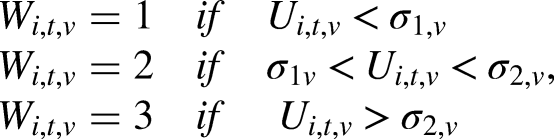



The calculated probabilities of the three voting choices in the United Nations General Assembly are combined with the Markov chain Monte Carlo method based on Metropolis–Hastings or Gibbs sampling to further estimate the model parameters, ultimately obtaining the ideal point distances between countries for different years after each General Assembly vote. A smaller ideal point distance value between two countries indicates a closer political relationship and more similar policy stances in that year.
Conversely, if the value is larger, it suggests a relatively distant political relationship between the two countries with many different political stances in that year. Taking the five permanent members of the United Nations as examples, as shown in Figure 2, this article plots the ideal point distance between the other four permanent members and China. By analyzing the bilateral political relations among countries based on the Voting behaviour of the United Nations, the bilateral political relations between China and Russia are better, and the relations with the United States are the tensest.
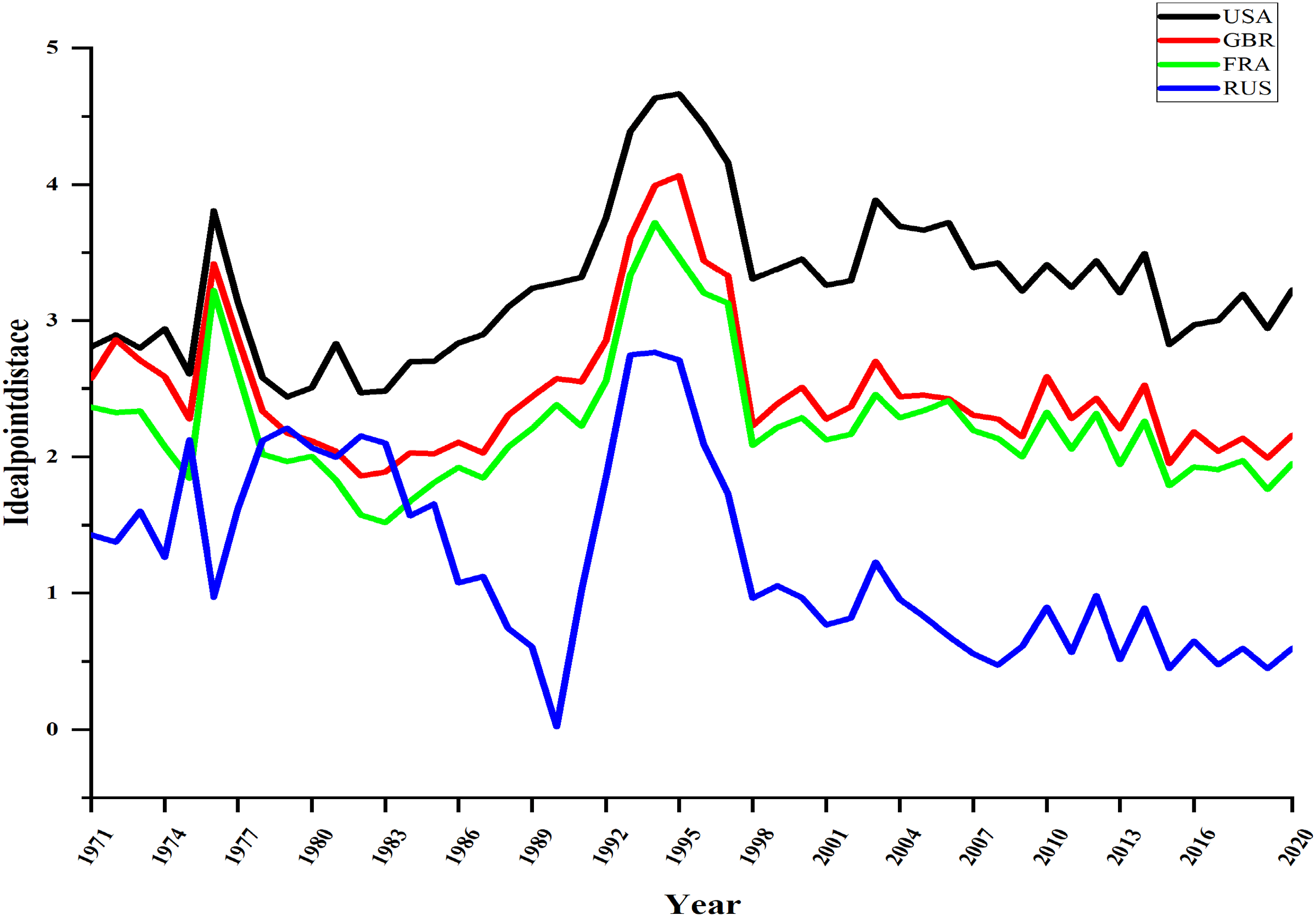
Ideal point distance between China and the other four permanent UN members, 1971–2020. (Source: Harvard Dataverse United Nations General Assembly Voting Data).
To facilitate the interpretation and analysis of the research question, we multiplied the original data by −1; the smaller the processed value, the closer the political relationship between the energy-exporting country and China.
Moderating variables
To further explore the impact mechanism of bilateral political relations on China's energy imports, this study selects two moderating variables: the percentage of military expenditure in the central government's total expenditure
Control variables
Firstly, following the variable selection in trade gravity models constructed by various scholars, this study selects the geographic distance (
The energy-exporting countries selected in this study include: Algeria, Angola, Azerbaijan, Brunei, France, Indonesia, Iran, Iraq, Kazakhstan, Kuwait, Malaysia, Mongolia, Oman, the Netherlands, the Philippines, Qatar, Russia, Saudi Arabia, India, Singapore, Vietnam, Thailand, the United Arab Emirates, Egypt, Yemen, Argentina, Australia, Brazil, Cameroon, Canada, Chad, Colombia, Congo, Ecuador, Equatorial Guinea, Gabon, Japan, South Korea, Libya, New Zealand, Nigeria, Peru, South Africa, Spain, Sudan, the United Kingdom and the United States, totalling 47 countries. The data range is from 2000 to 2020, and the descriptive statistics of the main variable's raw data are shown in Table 2.
Descriptive statistics of variables.
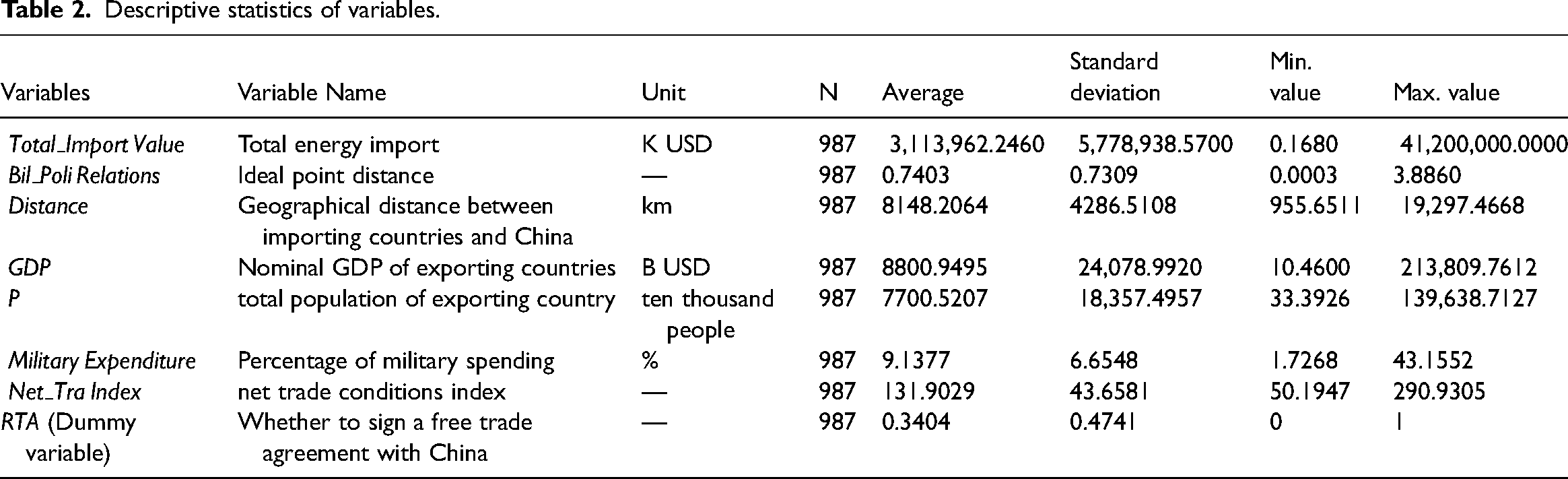
It should be noted that in the subsequent empirical analysis, to prevent the impact of data dimensions, reduce the absolute differences between variable data and facilitate the interpretation of estimation results, this study applies logarithmic transformation to the
Empirical analysis
In this study, we focus on 47 countries and regions that export energy products to China and investigate the impact of bilateral political relations on China's energy imports. In the empirical analysis section, we first perform a baseline regression analysis on the overall data. Based on the baseline analysis, we explore two possible mechanisms through which bilateral political relations may affect China's energy imports. We also conduct heterogeneity analysis on all countries within the sample period according to different development stages, geographical regions and import source locations and engage in in-depth discussions. Finally, we test the robustness of the regression models established in this study from two different perspectives.
Benchmark regression
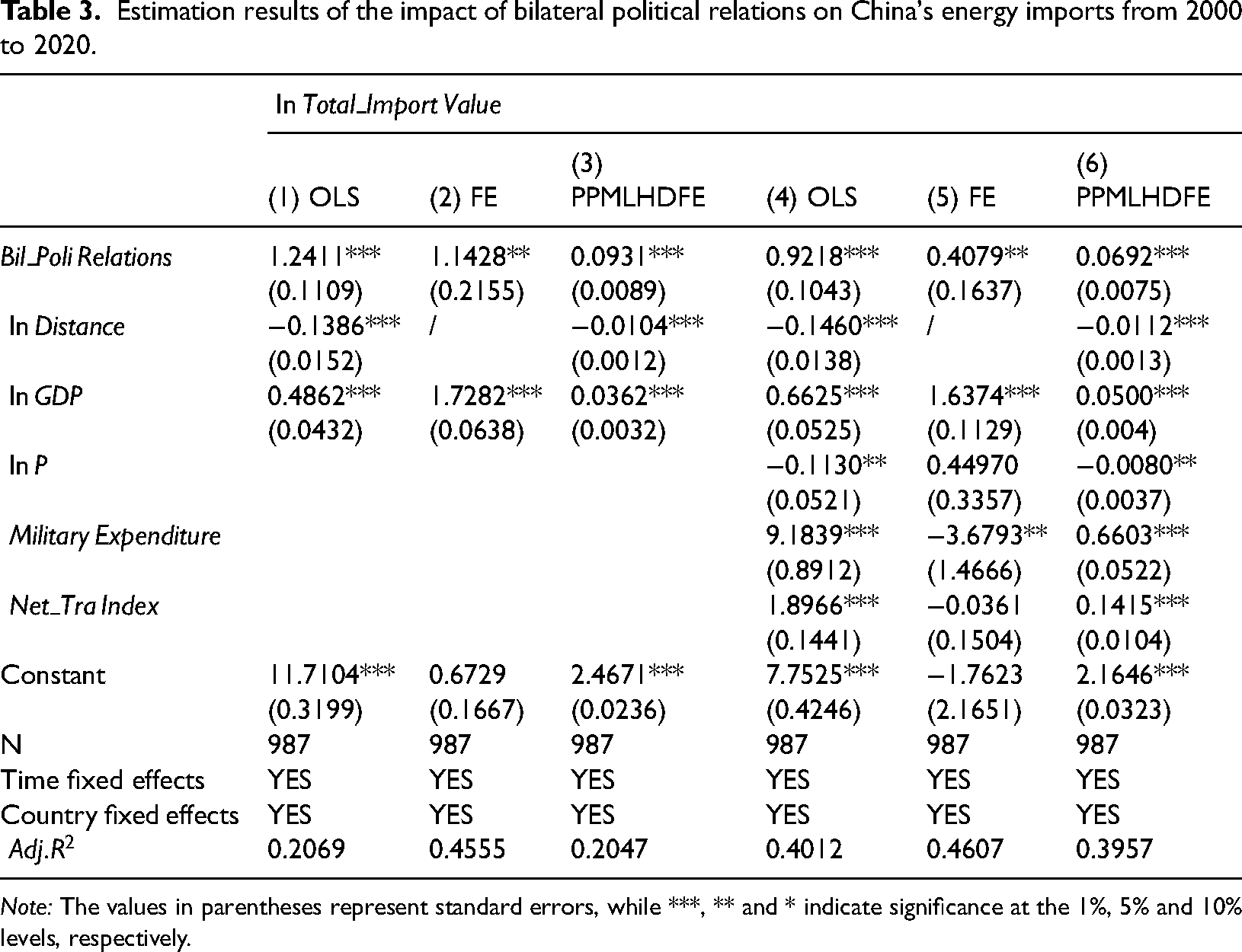
Utilizing mixed least squares method, panel fixed effects method and PPMLHDFE method, in the baseline regression section, this study employs data from 47 energy-exporting countries from 2000 to 2020 to perform regression analysis on equation (1) constructed in the previous section. The relevant regression results are shown in Table 3.
Estimation results of the impact of bilateral political relations on China's energy imports from 2000 to 2020.
Note: The values in parentheses represent standard errors, while ***, ** and * indicate significance at the 1%, 5% and 10% levels, respectively.
First, columns (1)–(3) in Table 3 of the regression results only included the key explanatory variable bilateral political relations (
In the regression results, the traditional panel fixed-effects (FE) method incorporates the distance variable as an intercept term in the analysis, considering it as a constant factor that does not change over time. Therefore, in the FE results, the estimation of the distance variable is not displayed. The OLS model does not take into account the individual fixed effects between different countries in panel data; it simply performs a regression analysis on a set of variables. Additionally, China's energy commodity import trade volume is a non-negative variable. This study chose the PPMLHDFE method to explain the trade issue investigated in this paper, as the PPMLHDFE method can effectively avoid the problems of heteroskedasticity, zero values and variable logarithmic transformation affecting estimation conclusions that may occur when handling non-negative dependent variables with OLS and panel data models. Therefore, the subsequent research in this paper will use the PPMLHDFE method for analysis.
As shown in the PPMLHDFE regression results in column (6) of Table 3, the improvement of bilateral political relations positively and effectively promotes the increase of China's energy commodity import volume. Specifically, for every standard deviation increase in bilateral political relations, China's energy imports will increase by 6.92%, and the test statistic P-value result is statistically significant at the 1% significance level. Looking at the estimation results of other important control variables in the gravity model of trade, the greater the geographical distance between the energy-exporting country and China, the more unfavourable it is for the increase of China's energy trade volume. That is, for every 1% increase in geographical distance (
In summary, the empirical analysis shows that the relationship between the bilateral political relations variable and China's energy import volume is positively significant in different model estimations, which supports Hypothesis 1 proposed in this study. That is, the improvement of bilateral political relations between China and energy-exporting countries is indeed beneficial for China to expand its energy import trade.
Mechanism analysis
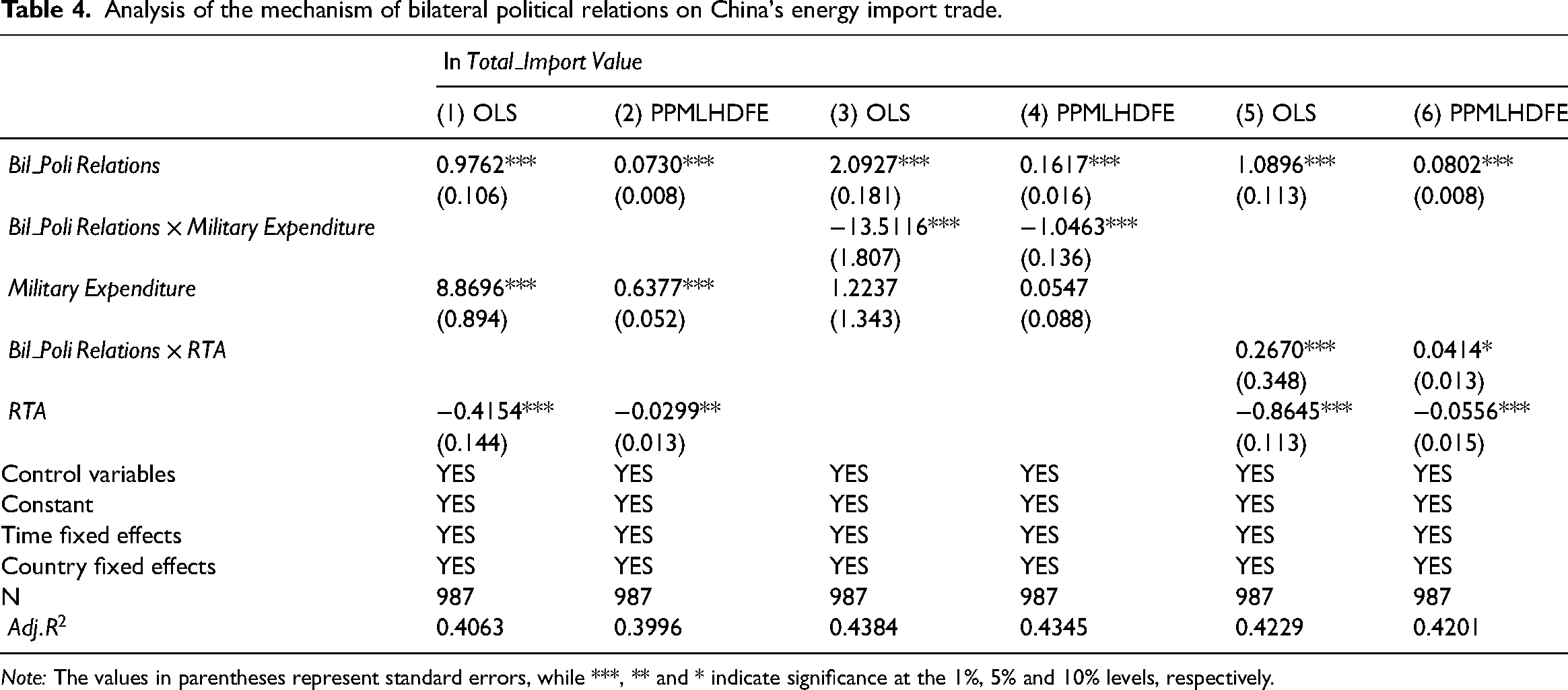
In the previous section, this study preliminarily discussed the relationship between bilateral political relations and China's energy import value. To further analyze the causal mechanism between bilateral political relations and China's energy import value under the influence of other factors, this study added interaction terms for the moderating mechanism based on the baseline regression, thus exploring whether there is a more complex interaction mechanism between the related variables.
First, this study selected the percentage of military expenditure in central government expenditure ( To verify the impact of the security situation of exporting countries on bilateral political relations, column (4) in Table 4 shows the regression results with the interaction term added. The estimated coefficient of the main effect variable To verify the impact of exporting countries’ openness to foreign trade on bilateral political relations, column (6) in Table 4 shows the regression results with the interaction term added. The estimated coefficient of the main effect variable
Analysis of the mechanism of bilateral political relations on China's energy import trade.
Note: The values in parentheses represent standard errors, while ***, ** and * indicate significance at the 1%, 5% and 10% levels, respectively.
Heterogeneity analysis
Considering the long observation period (2000–2020) and the large number of sample countries (47 countries or regions worldwide) in this study, merely conducting regression analysis on the overall sample may overlook the time-phased features and the country and trade structure effects in China's energy import trade. Therefore, this section on heterogeneity analysis will re-conduct regression analysis from three different angles to examine the phased features of China's energy imports and the impact of country and trade structure effects. In addition, we will analyze the reasons for the changes in important research variables at different time stages, regional organizations and trade situations, in conjunction with the actual development status.
Phased analysis
In this study, based on the phased changes in China's economic growth, we divide the original data period into three stages for heterogeneity analysis, namely 2000–2007, 2008–2013 and 2014–2020.
From 2000 to 2007, as the first time interval, it marks the first development stage after China's accession to the World Trade Organization (WTO). During this period, China's economic growth was relatively stable, and the impact of political risks on China's total energy imports might be relatively small, as the growth in China's demand for energy and the supply of the energy market were relatively balanced. Therefore, the impact of political risks on the total energy imports might be relatively small.
The second time period, 2008–2013, was marked by the global financial crisis, which brought sustained pressure to China's economic growth and had a profound impact on the economy, society and political relations of countries around the world. The financial crisis also affected the energy trade of most energy-exporting countries and the stability of global energy supply. As a major energy importer, China faced significant challenges. Therefore, during this stage, the stability of bilateral political relations was very important for China's energy imports.
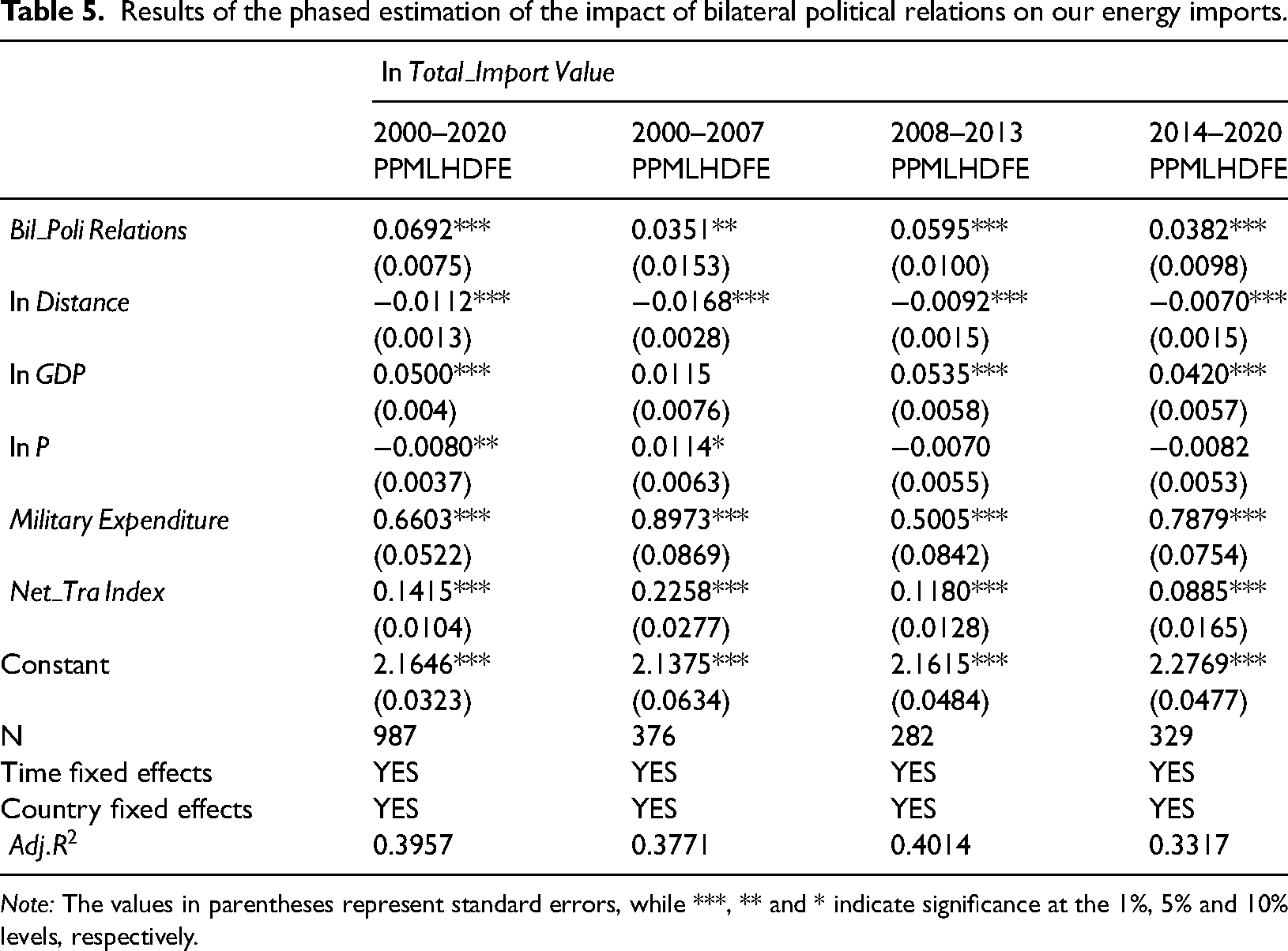
From 2014 to 2020, China made several policy adjustments, such as the release of the ‘Energy Development Strategic Action Plan (2014–2020)’ and President Xi Jinping's proposal of the ‘New Normal’ at the Central Economic Work Conference in late 2013. The introduction of these policies and development guidelines indicates that, during this stage, China must move towards a new development stage in terms of economic cooperation, energy development paths and international trade. Table 5 shows the impact of relevant variables on China's energy imports during the three different stages.
Results of the phased estimation of the impact of bilateral political relations on our energy imports.
Note: The values in parentheses represent standard errors, while ***, ** and * indicate significance at the 1%, 5% and 10% levels, respectively.
From 2000 to 2007, during this stage, the impact coefficient of bilateral political relations (
From 2008 to 2013, during this stage, the impact coefficient of bilateral political relations (
From 2014 to 2020, during this stage, the impact coefficient of bilateral political relations (
In summary, the impact of bilateral political relations on China's total energy import value is significantly positive overall and in different time periods, but the strength of the impact may fluctuate slightly with changes in the international political or economic environment. Therefore, we can conclude that improving and enhancing bilateral political relations is of great significance for maintaining the stability of China's energy imports. At the same time, in the future development process, China needs to pay more attention to bilateral political relations with other countries, actively participate in international energy cooperation institutions and organizations, promote multilateral cooperation and reduce the risks that single political relations may bring to energy imports. For example, since the Russo–Ukrainian war, bilateral political relations between Russia and European countries have become tense, leading to a significant reduction in Europe's energy imports and causing enormous pressure on the economy and people's livelihoods.
Analysis by country and region
The ‘Belt and Road Initiative’ is a significant strategic cooperation initiative proposed by the Chinese government in 2013, aimed at strengthening cooperation between China and countries in Asia, Europe and Africa, and promoting multilateral cooperation in areas such as economic development, infrastructure construction and international trade. From the perspective of energy imports, the ‘Belt and Road Initiative’ can have a positive impact on China's energy imports and is more conducive to ensuring China's energy security and promoting the economic development of countries along the ‘Belt and Road Initiative’.
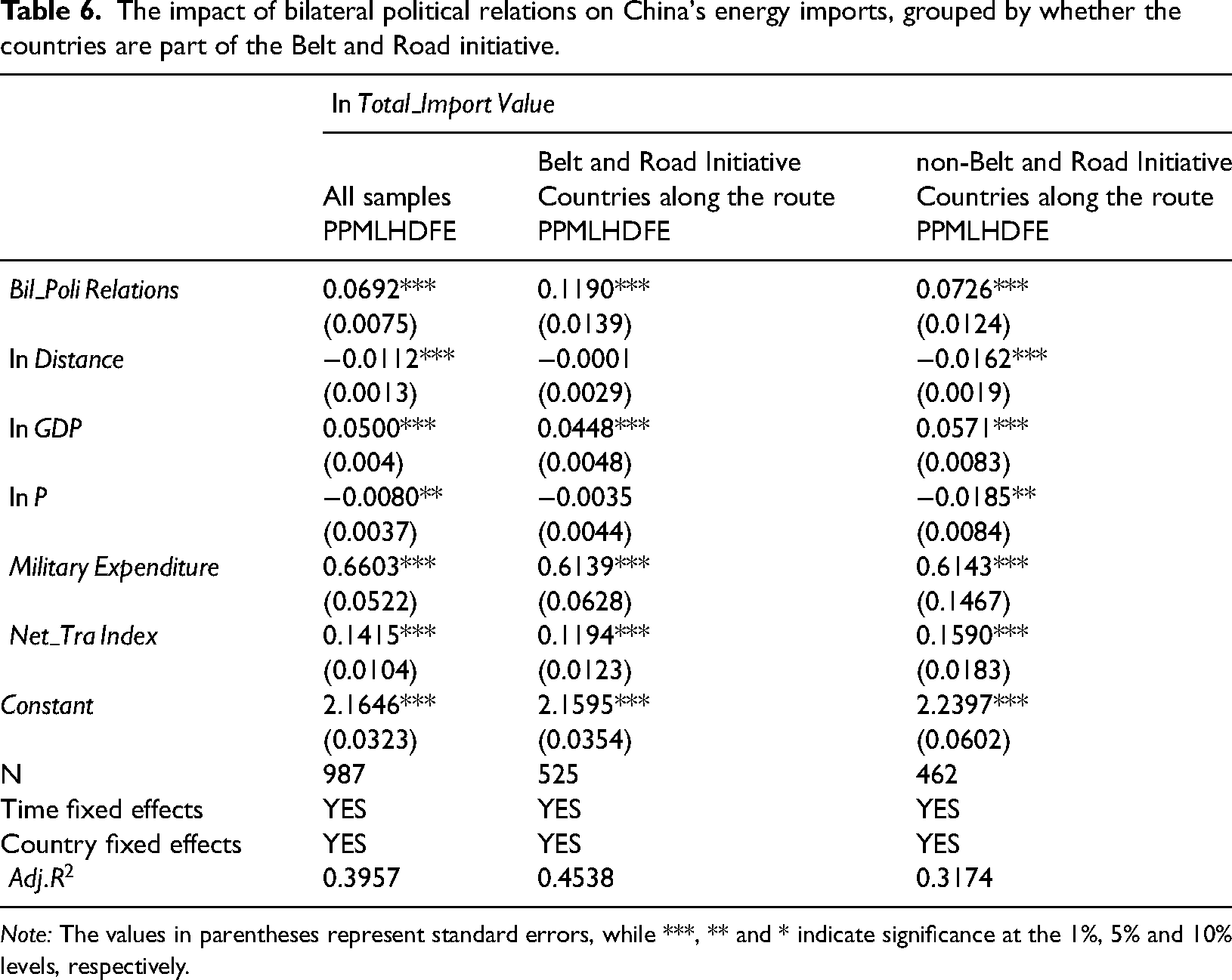
In this study, the sample countries were grouped according to whether they are part of the ‘Belt and Road Initiative’. The sample was divided into a ‘Belt and Road Initiative’ sample group of 25 countries, including Algeria, Angola, Azerbaijan, Brunei, France, Indonesia, Iran, Iraq, Kazakhstan, Kuwait, Malaysia, Mongolia, Oman, the Netherlands, the Philippines, Qatar, Russia, Saudi Arabia, India, Singapore, Vietnam, Thailand, the United Arab Emirates, Egypt and Yemen. The non-‘Belt and Road Initiative’ sample group consists of 22 countries, including Argentina, Australia, Brazil, Cameroon, Canada, Chad, Colombia, Congo, Ecuador, Equatorial Guinea, Gabon, Japan, South Korea, Libya, New Zealand, Nigeria, Peru, South Africa, Spain, Sudan, the United Kingdom and the United States. The regression results of the related heterogeneity analysis are shown in Table 6.
The impact of bilateral political relations on China's energy imports, grouped by whether the countries are part of the Belt and Road initiative.
Note: The values in parentheses represent standard errors, while ***, ** and * indicate significance at the 1%, 5% and 10% levels, respectively.
In the ‘Belt and Road Initiative’ country group, the impact of bilateral political relations (
In the non-‘Belt and Road Initiative’ country group, the impact of bilateral political relations (
Analyzing the trade model from other perspectives, there are some differences in the impact of population and distance variables under the two groupings. For example, in the ‘Belt and Road Initiative’ countries group, the impact of the exporting country's total population (
In summary, countries that establish good cooperation with China can significantly improve their energy export trade levels to China by continuously improving bilateral political relations.
Analyzing the importance of import source countries
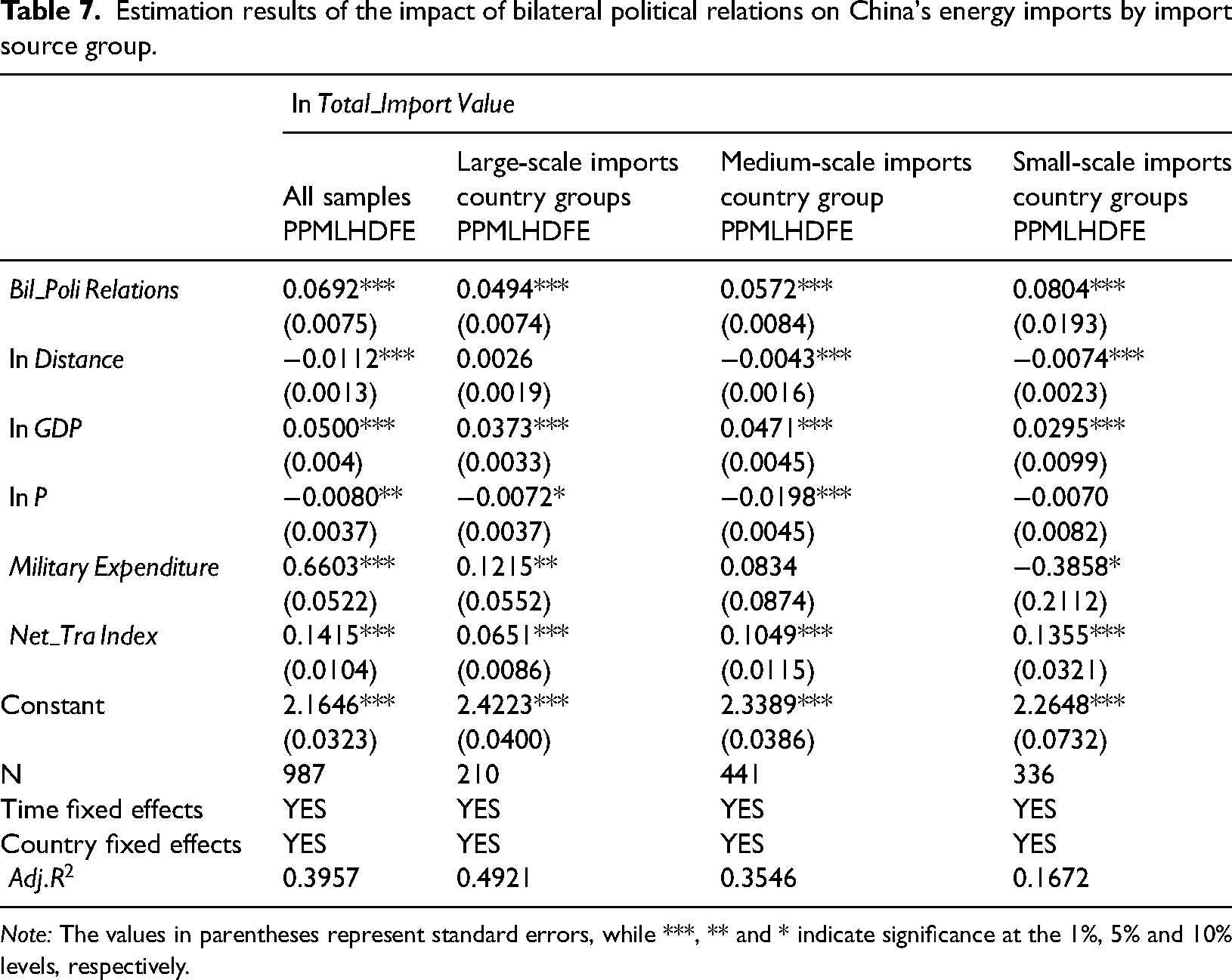
In order to further examine the importance of bilateral political relations on China's energy imports, this paper calculates the average value of China's energy imports from 47 countries between 2000 and 2020 and compares them, dividing the sample countries into three sample groups: The first group consists of 10 countries from which China imports large amounts of energy, including Angola, Australia, Indonesia, Iran, South Korea, Oman, Russia, Saudi Arabia, Singapore and Sudan. The second group consists of 21 countries with medium energy import volumes to China, including Algeria, Brazil, Colombia, Congo, Equatorial Guinea, Iraq, Japan, Kazakhstan, Kuwait, Libya, Malaysia, Mongolia, Nigeria, the Philippines, Qatar, Vietnam, Thailand, United Arab Emirates, United Kingdom, the United States and Yemen. The third group consists of 16 countries with small energy import volumes to China, including Azerbaijan, Argentina, Brunei, Cameroon, Canada, Chad, Ecuador, France, Gabon, the Netherlands, New Zealand, Peru, India, South Africa, Spain and Egypt. The regression results of the heterogeneity analysis are shown in Table 7.
Estimation results of the impact of bilateral political relations on China's energy imports by import source group.
Note: The values in parentheses represent standard errors, while ***, ** and * indicate significance at the 1%, 5% and 10% levels, respectively.
Comparing the regression results of the three groups, the following conclusions can be drawn: In different import volume country groups, the impact of bilateral political relations on China's energy imports is positive and significant. This indicates that whether the country's import volume is large, medium or small, the improvement of bilateral political relations helps to increase China's energy imports. However, it is worth noting that the impact of bilateral political relations on the group with the smallest import volume is the most significant. This shows that China's energy imports have a strong path dependence, which limits the impact of bilateral political relations on energy imports. Improving China's bilateral political relations with these countries provides a stronger source of security for China's energy supply, thus helping to achieve energy trade diversification and reduce reliance on a single energy source.
Meanwhile, in the large import volume country group, the impact of geographical distance (
Robustness check
To ensure the robustness of the estimation results and the reliability of the conclusions, this section conducts robustness tests on the model by using lagged variable regression and replacing key explanatory variables. At the same time, in the baseline regression analysis, this study also estimates the parameters of the relevant variables using different methods. The coefficient of the key explanatory variable, bilateral political relations, does not have significant changes in terms of sign and magnitude. The heterogeneity analysis also includes three different types of analysis, all of which ensure the reliability of the research results.
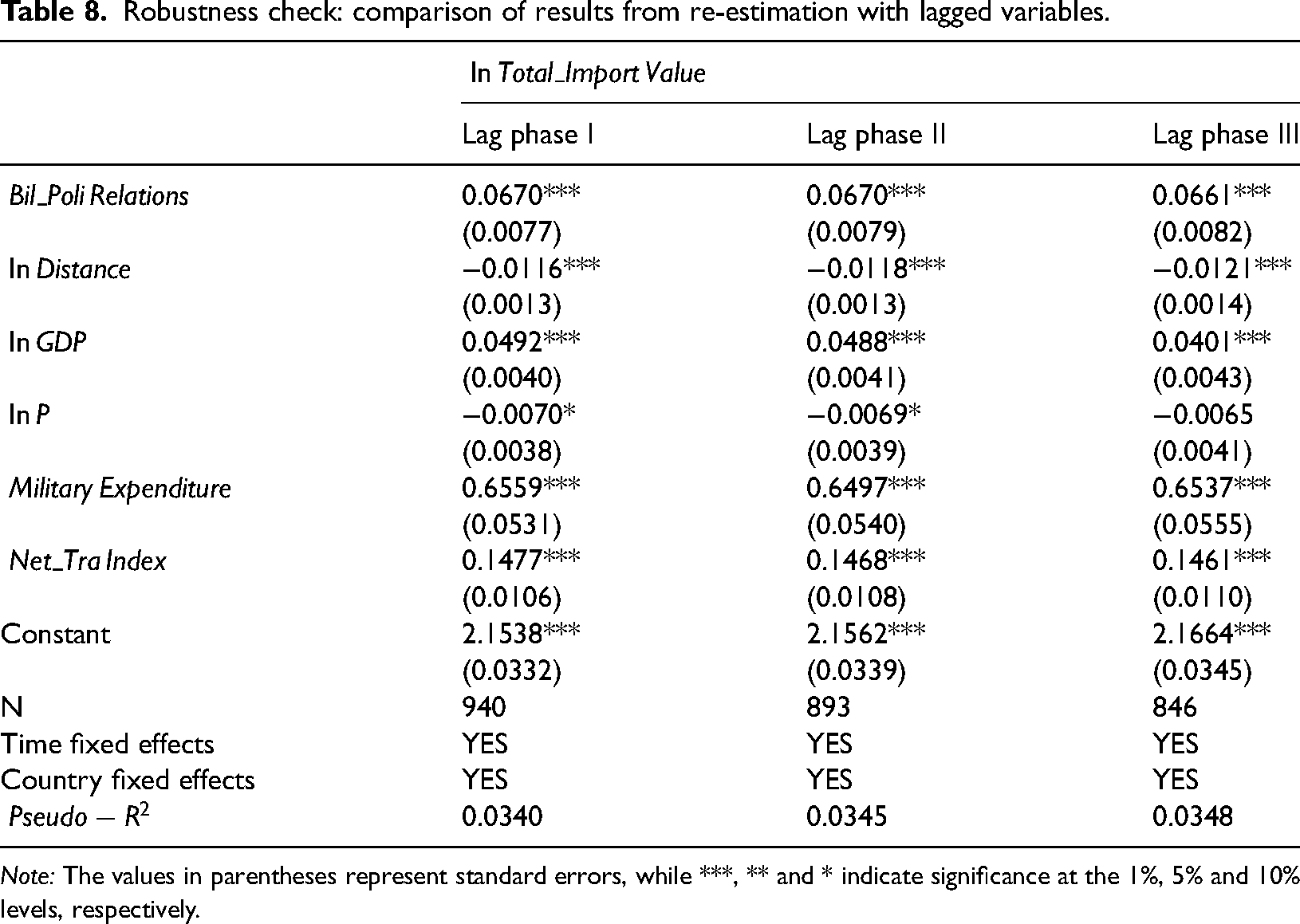
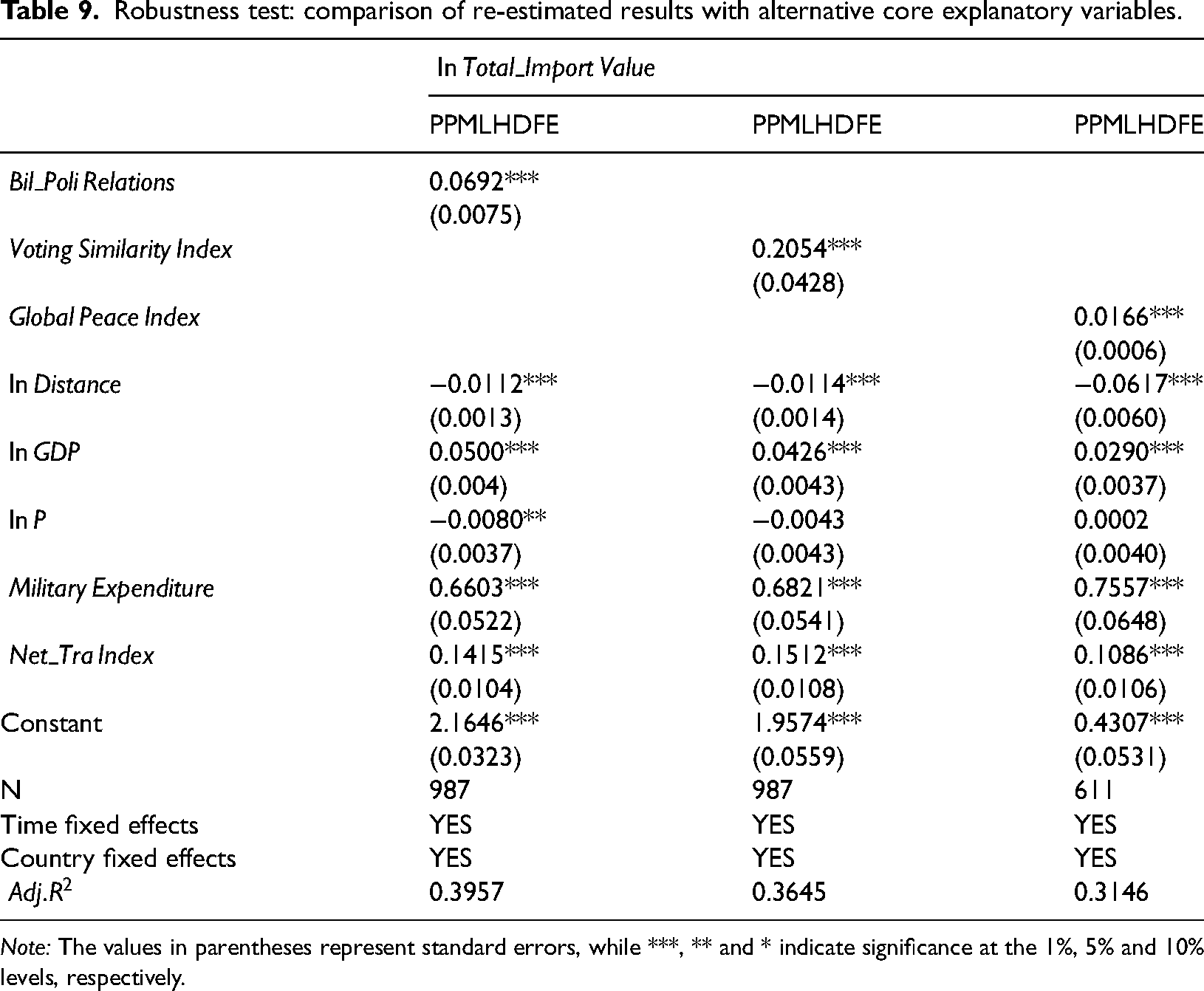
Endogeneity is a problem that most econometric studies need to consider. We are required not only to control for the bias caused by endogeneity of the core explanatory variables but also to overcome the potential endogeneity problems of the control variables. This study performs lagged treatment of the research variables and re-estimates them, with the relevant results shown in Table 8. The estimation results show that the sign and coefficient magnitude of the core explanatory variable, bilateral political relations ( Bilateral political relations, as a broad research concept, can be measured from various angles. This study examines the impact of bilateral political relations on China's energy imports from two new quantitative perspectives. (1) The United Nations Voting Similarity Index, which differs from the calculation method of the United Nations ideal point distance used in the benchmark regression, retains only two types of national preferences, yes and no, and counts abstentions as half in agreement. A series of calculations are then performed to obtain the index, which can also be used to quantify bilateral political relations. (2) Global Peace Index, which was first introduced in May 2007 by a panel of experts from the Economist Intelligence Unit and has been calculated and ranked for countries worldwide every year since then (McConaghy, 2012). Due to the limitations of actual data availability, this variable, as a proxy for bilateral political relations, is only available for the sample period from 2008 to 2020.
Robustness check: comparison of results from re-estimation with lagged variables.
Note: The values in parentheses represent standard errors, while ***, ** and * indicate significance at the 1%, 5% and 10% levels, respectively.
The results of the robustness checks with the two alternative variables are shown in Table 9. The estimated coefficients’ signs and significance for the two replacement variables did not change, further confirming that the improvement of bilateral political relations has a significant positive impact on China's energy import value.
Robustness test: comparison of re-estimated results with alternative core explanatory variables.
Note: The values in parentheses represent standard errors, while ***, ** and * indicate significance at the 1%, 5% and 10% levels, respectively.
Conclusion
With the rapid growth of China's economy and the continuous improvement of people's living standards, energy import security has become an important issue in national strategy. This paper uses panel data from 47 global energy-exporting countries for the period of 2000–2020 and conducts a series of empirical analyses based on PPMLHDFE to study the impact of bilateral political relations on China's energy imports, as well as to explore the influence of different stages, regions and import source countries.
Bilateral political relations significantly affect China's energy import volumes. The research results of this paper show: First, the impact of bilateral political relations on China's energy imports exhibits obvious phase characteristics. Specifically, the outbreak of the global financial crisis in 2008 led to a slowdown in China's economic growth, and the direct political relations between countries had a significantly increased impact on energy trade. Subsequently, the Chinese government adopted a series of policies to stimulate domestic demand and expand openness to the outside world, promoting rapid economic growth in China from 2015 to 2020. Therefore, the impact of bilateral political relations on energy imports was more significant in the 2008–2014 phase. Second, the effect of bilateral political relations is more pronounced for countries and regions along the ‘Belt and Road Initiative’, which is consistent with the practical experience of the initiative. The ‘Belt and Road Initiative’ has to some extent improved China's political relations with countries along the route, thereby safeguarding energy import security. Third, the importance of the source of imports also affects the manifestation of the bilateral political relationship effect. China's over-reliance on major energy import sources to some extent limits the effectiveness of energy diplomacy.
This research has significant implications for the study of China's energy import security. As China's international influence and status continue to rise, the question of how to improve bilateral political relations while stabilizing energy imports in order to achieve better international energy cooperation has become an urgent issue to address. Based on the findings of this paper, the following suggestions can be made: When implementing energy import trade, China needs to pay more attention to maintaining good bilateral political relations, especially improving bilateral political relations with countries and regions along the ‘Belt and Road Initiative’ to achieve better energy import outcomes. At the same time, efforts should be made to diversify import sources, optimize and upgrade domestic energy resource acquisition, enhance technological innovation to reduce energy demand, and other measures to reduce over-dependence on major energy import sources, in order to improve the security and stability of energy imports.
The research conclusions of this paper are not only of great reference value for China's energy diplomacy but also provide valuable insights for the energy import trade of other countries and regions. In today's highly interconnected global economy, the impact of political relations between countries on trade has become an indispensable factor. Therefore, based on the empirical results of this paper, it can be concluded that China needs to fully consider the level of bilateral political relations with each exporting country when conducting energy import trade, while the influence of the national security situation, the improvement of bilateral political relations can further ensure the security of energy imports, therefore, countries need to improve their foreign policies and actively develop new clean energy sources, and for the large energy importing countries, reducing the directional dependence on energy imports can further ensure the stability and security of energy imports.
Footnotes
Author contributions
Wenguang Tang designed the research. Jiacheng Wang and Jian Hu analyzed the model and drafted the manuscript. Xiaohui Yuan issued the idea and revised the manuscript along with other authors. Siqi Wang and Qihui Shao revised the manuscript.
Research data policy and data availability statements
The datasets generated during and analyzed during the current study are available from the corresponding author on reasonable request.
Declaration of conflict of interests
The author(s) declared the following potential conflicts of interest with respect to the research, authorship and/or publication of this article: Xiaohui Yuan is employed by Beijing FibrLink Communications Co., Ltd. The remaining authors declare that the research was conducted in the absence of any commercial or financial relationships that could be construed as a potential conflict of interest.
Funding
The author(s) disclosed receipt of the following financial support for the research, authorship and/or publication of this article: This work was supported by the Tianjin Social Science Planning Project, The National Science Fund for Distinguished Young Scholars, (grant number TJGL22-017, 22CJL019).
