




Abstract
In this paper, we utilize a systematic review to assess opportunities and challenges in wind energy development in Uganda. Apart from being an environmentally friendly and renewable energy resource, development of wind energy could boosts economic growth and creates jobs. For Uganda, rising energy demand, need to reduce greenhouse gas emissions, and increasing electricity access to rural areas, emerge as rational opportunities to invest in wind energy. The main obstacles to wind energy development in Uganda are insufficient wind resource data, high initial investment cost, inadequate research and development, weak infrastructure, and unsupportive policies. For policy, comprehensive wind resource assessment, energy infrastructure investment, financial de-risking, capacity building, and deliberate wind power policy incentives could accelerate wind energy development and consequently contribute to the country’s energy security.
Keywords
Introduction
Background
Economic transformation—moving labor from low to higher productive activities—is increasingly being adopted as a policy driver for sustained economic growth. This transformation depends, among other factors, on the diversity and reliability of a nation’s energy resources. Wind power inclusive, expanding the share of renewable energy in an economy’s energy mix propels economic growth (Adeyemi and Asere, 2014; Ateba and Prinsloo, 2018; IRENA, 2014; Ortega-Izquierdo and del Río, 2020; Zafar et al., 2020; Zhang et al., 2016), creates jobs (Bos et al., 2018; GWEC, 2017; Ortega-Izquierdo and del Río, 2020; World Bank, 2020), and enhances environmental quality (Adaramola, 2017; Chaurasiya et al., 2019; Njoh et al., 2019; Zafar et al., 2020). Empirical evidence demonstrates that wind energy forms part of clean energy and promises a huge potential toward the world’s energy security (Adaramola, 2017; GWEC, 2017; IEA, 2017; Ortega-Izquierdo and del Río, 2020; Peidong et al., 2009; Van Kooten and Timilsina, 2008).
Due to national and international commitments, as well as technical improvements in harnessing wind resource, as shown in Figure 1, the global cumulative installed capacity (onshore and offshore installations) of wind power has increased from about 16.93 GW in 2000 to 622.41 GW by the end of 2019. Within the same period, the proportion of offshore wind power has changed from about 0.4% in 2000 to about 5.2% in 2019, owing to better wind resources in offshore locations, reduced noise and visual impact, and the possibility of using bigger rotor sizes.
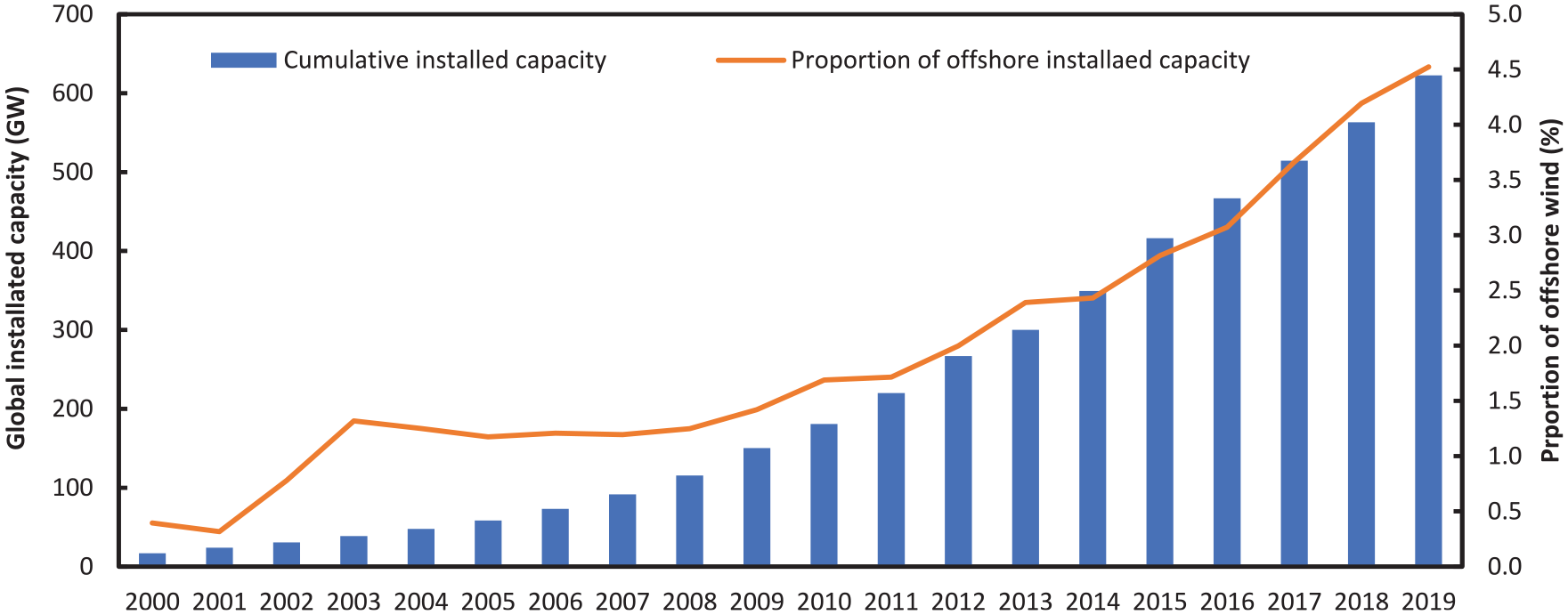
Historical trend of global wind power installed capacity (Data from IRENA, 2020).
In Africa region, unlike in Asia, Europe, and North America regions, development of wind power has not been impressive. This is partly due to relatively low wind resources in most Africa countries when compared with most countries in these regions, and a lack of financial ability to develop available wind resources. Notwithstanding these challenges, as shown in Figure 2, cumulative installed capacity in this region has increased from around 133 MW in 2000 to about 5770 MW in 2019, and at the end of 2019, African region accounted for 0.93% of the global cumulative installed wind power capacity.
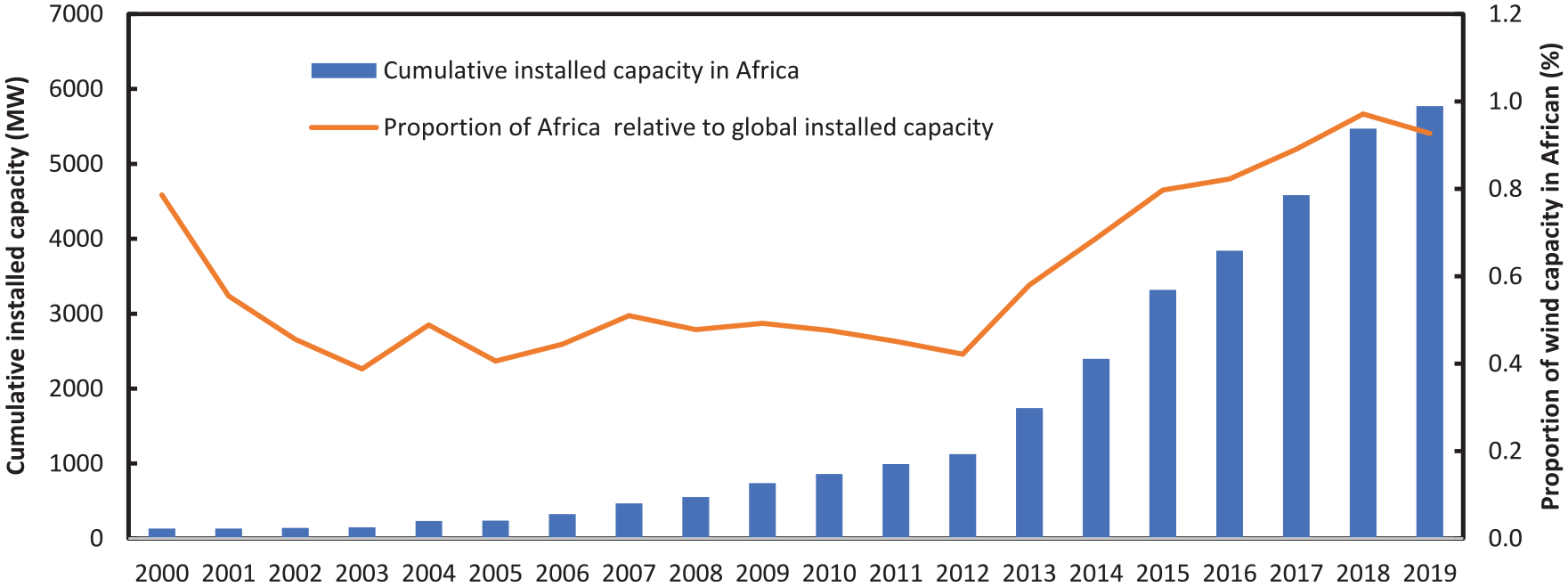
Historical trend in wind power cumulative installed capacity in Africa (Data from IRENA, 2020).
From a technical side, due to direct proportionality of wind power output to rotor area and cubic of wind speed, increment in wind turbine hub height and rotor diameter over the three decades have contributed to improved capacity factor for wind power plants and hence, improved their economic viability. For instance, wind turbine rotor diameter varied from 15 m (with a capacity of 50 kW) in early 1980s to 164 m (8 MW) in late 2010s (RAE, 2014). Similarly, wind turbine hub height has significantly increased over the same period (as shown in Figure 3).
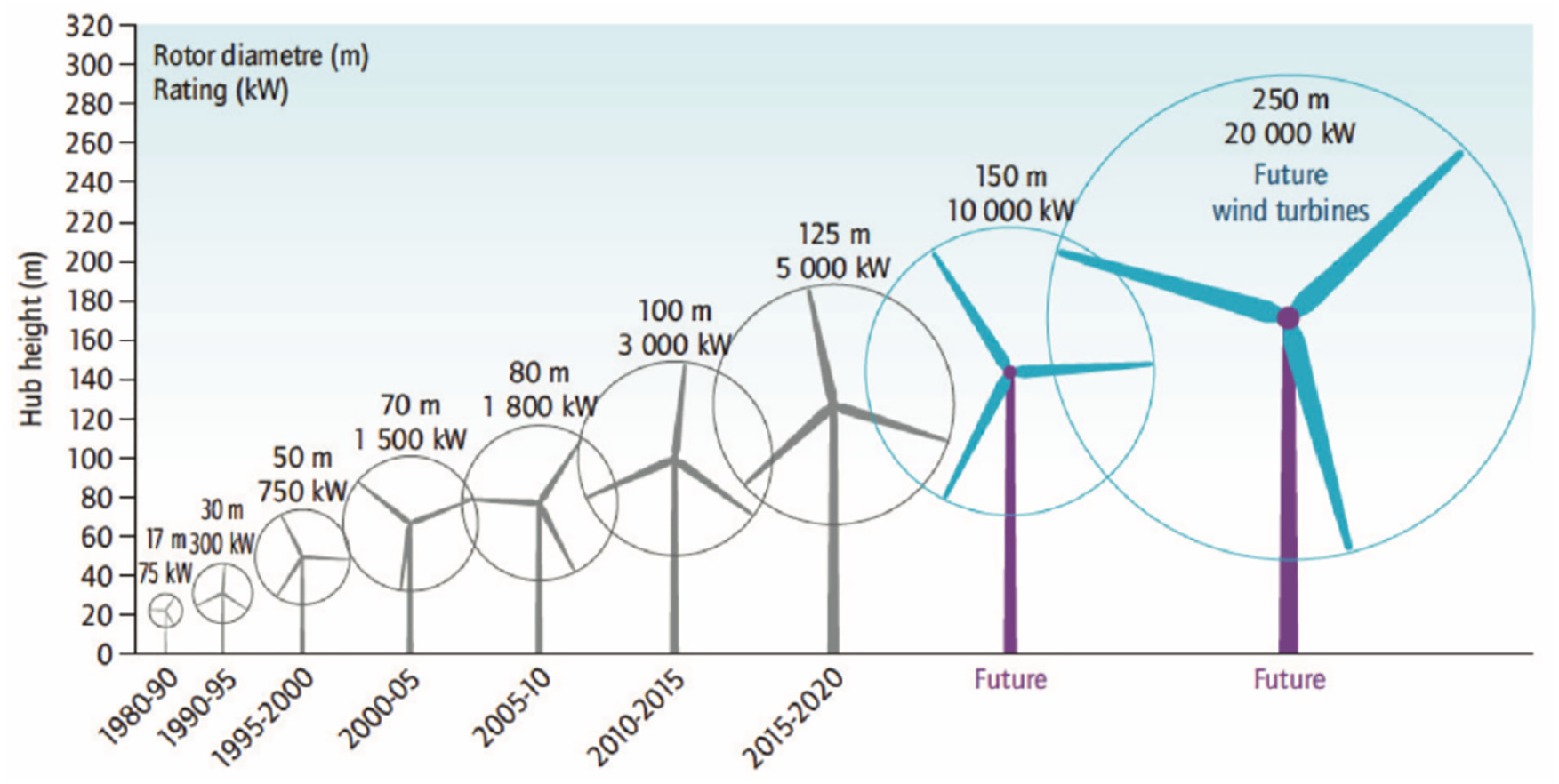
Historical evolution of wind turbine size (IEA, 2013).
Present power sector in Uganda
Owing to 1987/1988 Structural Adjustment Programs, Uganda’s power sector was liberalized in 1997. The unbundling of the Uganda Electricity Board (UEB) was decreed by the Electricity Act 1999 and created three (3) electricity supply entities: Generation, Transmission, and Distribution. Generation entity consists of government-owned power plants, Independent Power Producers, and Public-Private Partnerships. Transmission is entirely owned by the government, while the Distribution entity constitutes of both private companies and the government agency.
Governed by the Electricity Act of 1999, Uganda has 24 power plants that generate and supply electricity to the national grid: 4 large hydropower plants, 11 small hydropower plants, 2 thermal or Heavy Fuel Oil power plants, 5 bagasse-based cogeneration power plants, and 2 Solar PV power plants (ERA, 2020). Total Installed Generation Capacity has grown from 60 MW in 1954, 400 MW in 2000, and to currently 1247 MW. The current installed capacity is derived from four (4) Energy Sources: Hydro (1023.59 MW); Thermal (100 MW); Cogeneration (63.9 MW); and Grid-connected Solar (60 MW). This summary reveals that there is no wind power share to the total national installed capacity. The Uganda Electricity Transmission Company Limited (UETCL) is the national License holder for the operation of the High Voltage Transmission Grid, System Operator, Export and Import of Electricity, and the Bulk Supply. Distribution of electricity in Uganda has expanded, with legally grid-connected customers rising from 180,000 in 2001 to 1,643,288 in 2020, including Off-Grid clients (ERA, 2020). In a double pursuit of increasing access to clean energy, and as well, accelerate electricity access to the unserved rural population in Uganda, the government has licenced nine (9) Electricity Distribution Companies and include; Uganda Electricity Distribution Company (UEDCL), Umeme Uganda Limited, West Nile Rural Electrification Company (WENRECo), Kyegegwa Rural Energy Cooperative Society(KRECS), Bundibugyo Electricity Cooperative Society(BECS), Kilembe Investments Limited (KIL), Hydromax, Pader-Abim Community Multi-Purpose Electric Cooperative Society (PACMECS), and Kalangala Infrastructure Services Limited (KIS).
Wind power potential in Uganda
For wind energy, though not adequately estimated, available wind measurements reveal that prospects, in Uganda, are “low” for large-scale electricity generation from wind energy resources. Howbeit, preliminary investigations indicate that potential exists along the shores of Lake Victoria and in North-Eastern Uganda (see Figure 4). The average speed of wind in Uganda is about 3.7 m/s, rising to 6 m/s around Lake Victoria, the Karamoja region, and mountainous areas (GTZ, 2007). This wind pattern can support wind technology applications in the country. Besides, these wind speeds were taken at locations less than 10 m for weather prediction, rather than wind energy assessment and development. Notwithstanding, empirical evidence demonstrates that these levels of wind speeds are potentially suitable for specialized wind power applications like water pumping in remote areas (Ohunakin et al., 2013; Paul et al., 2012), irrigation schemes for agricultural production (Pallabazzer and Sebbit, 1998), and for small-scale electricity generation (Adaramola and Oyewola, 2011; Ohunakin et al., 2011; The Renewable Energy Policy 2007 for Uganda). Per Uganda Vision 2040, the country’s total renewable energy power potential is estimated at 12,700 MW; 4500 MW (hydropower), 1500 MW (geothermal), 1700 MW (biomass), and 5000 MW (solar PV) (Republic of Uganda, 2013).
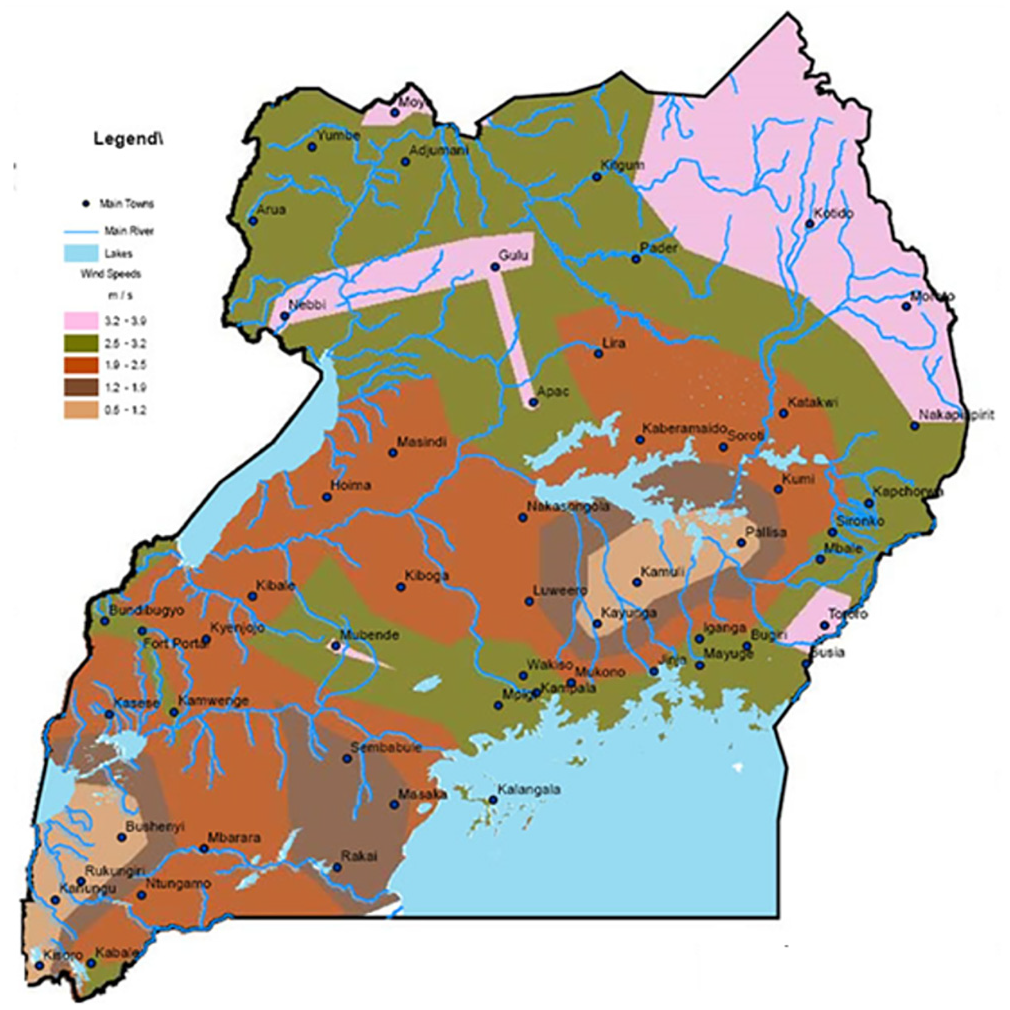
Wind resource map of Uganda (Fashina et al., 2019).
Purpose of the study
We note two compelling gaps in wind energy development in Uganda: First, uncalibrated studies show that available wind data is insufficient to estimate the potential power production from wind. In addition to the discontinuous data collected on wind speed and direction, no wind measurements have been made at heights of over 10 m—a requisite for wind turbine design. Second, besides the absence of government direction toward wind energy development, hydropower dominates Uganda’s power sector but is very sensitive to water fluctuations from climatic change effects. This behavior has routinely caused power supply shortages and adversely affected national electricity access targets—gaps that could potentially be closed through wind power development. So, what are the opportunities and challenges of wind power development in Uganda? We focus on opportunities and challenges to wind energy development in Uganda for four reasons. First, there is sparse evidence regarding the dynamics of wind energy development in Uganda. Second, existing reports are limited to either assessing wind speeds or a territorial mapping of wind energy potential in Uganda (Pallabazzer and Sebbit, 1998), with no assessment of the critical factors to harness wind power. Third, wind power development could augment electricity production and access, and minimize load pressures on the national electricity grid, reduce the prevalent electricity outages, and contribute to the country’s energy security. Finally, for policy, our assessment could accelerate government attention to invest in alternative electricity production through wind power development.
The paper is structured as follows: section “Introduction” presents the justification for wind power development in Uganda. Our approach to the study is presented in section “Approach.” In section “Wind energy development in Uganda,” the status of wind energy in Uganda is presented, and section “Review of related studies” summarizes the relevant empirical studies. Section “Opportunities in the wind energy sector in Uganda” discusses the opportunities, while challenges to wind energy development in Uganda are presented in section “Challenges for wind energy development in Uganda” and concluding remarks is provided in section “Conclusion and recommendations.”
Approach
We adopted a systematic literature review. The study identified, evaluated, and summarized existing studies regarding wind energy development. Empirical studies that assess wind power production were assembled and analyzed to provide a list of options, including technical and policy requirements for wind energy development. To answer our research questions, we reviewed government energy reports, energy policy documents, and existing empirical studies to synthesize the possibilities and obstacles to wind energy development in Uganda. Our recommendations are informed by; (a) the potentiality of wind energy in Uganda’s energy mix, and (b) identified gaps in wind energy development in Uganda. Using the exclusion criteria for a systematic literature review, Figure 5 summarizes the relevant articles that were analyzed, in addition to the other renewable energy publications and reports.
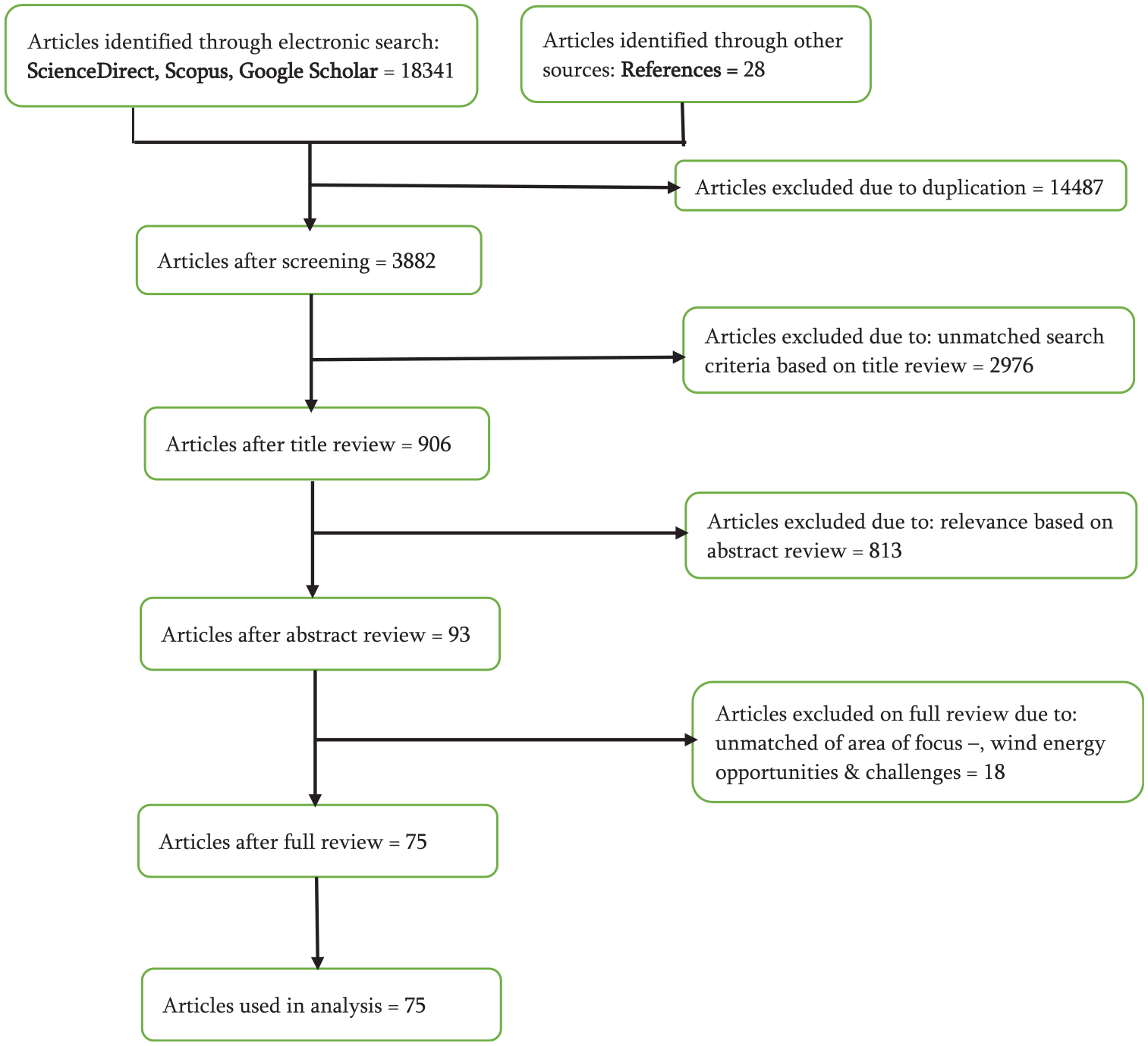
Flowchart for the systematic literature review. (Authors’ construction)
Wind energy development in Uganda
Government of Uganda priority in the renewable energy agenda covers four connected areas; (i) increase access and utilization of electricity, (ii) increase generation capacity of electricity, (iii) increase adoption and use of clean energy, and (iv) promote utilization of energy-efficient practices and technologies (National Development Plan III, 2020/21–2024/25). In all these areas, wind energy, if developed, offers a multi-dimensional contribution to the energy sector because it is clean (Ortega-Izquierdo and del Río, 2020; Paul et al., 2012; Van Kooten and Timilsina, 2008), could add to the national grid (Balat, 2005; Van Kooten and Timilsina, 2008), and consequently increase electricity access in Uganda.
Support programs for wind energy development in Uganda are generally lacking. Existing efforts to develop wind energy could be described as “trials” by agencies to extend electricity to off-grid rural communities. We note a few isolated cases. As a response to the water crisis in Karamoja sub-region, North Eastern Uganda, the Government of Uganda, in partnership with the Oxford Committee for Famine Relief (OXFAM) and the United Nations Development Program (UNDP), installed 43 water pumping windmills by 2015. However, lack of maintenance and vandalism have restricted the functionality of these windmills to about 18% (MoFPED, 2017). Tororo Wind Power Station in Eastern Uganda that promised to potentially produce 20 MW of wind power was unable to take-off in 2016 because the proprietors—Mss Xsabo Power Limited—could not honour a government-issued licence for failing to raise US$150,000 in performance bonds (Daily Monitor, 2017). Other efforts are uncategorized stand-alone trials by individuals who utilize local materials to generate wind power for lighting and water-pumping activities for rural communities. A case in point is the Uganda Veteran Wind Power Initiative that supplies between 1000 and 15,000 W of wind power systems to clients at a cost (New Vision, 2010). However, the uptake of these energy systems is low due to cost and affordability restraints.
In assessing wind energy potential in Uganda, data for wind energy development is generally deficient. Available wind data, collected by the Uganda National Meteorological Authority, is for weather-related purposes. There is scanty mention in government reports on the possibility of power generation through wind resources. Except for the mention of wind as one of the renewable energy sources, there is no emphasis on wind development in the Uganda Vision 2040. While the National Energy Policy 2002, and the Renewable Energy Policy 2007, indicate tapping power from wind resources, the Draft National Energy Policy 2019 is completely silent about wind power generation possibilities (MEMD, 2019). As shown Figure 6, the Uganda Renewable Energy Policy (MEMD, 2007) mainly focuses on power generation from hydro, solar, biomass, and geothermal resources, with no plan on the exploitation of wind energy production. Pallabazzer and Sebbit (1998), the only empirical study on wind resources in Uganda, provides an output on wind energy potential and a territorial wind map for Uganda. However, the study was exclusively based on wind data from only 11 sites. The absence of a comprehensive wind energy assessment and the policy inadequacies highlighted above could partially explain the government’s non-investment in the wind energy sub-sector—and, collectively, form a basis for this paper.
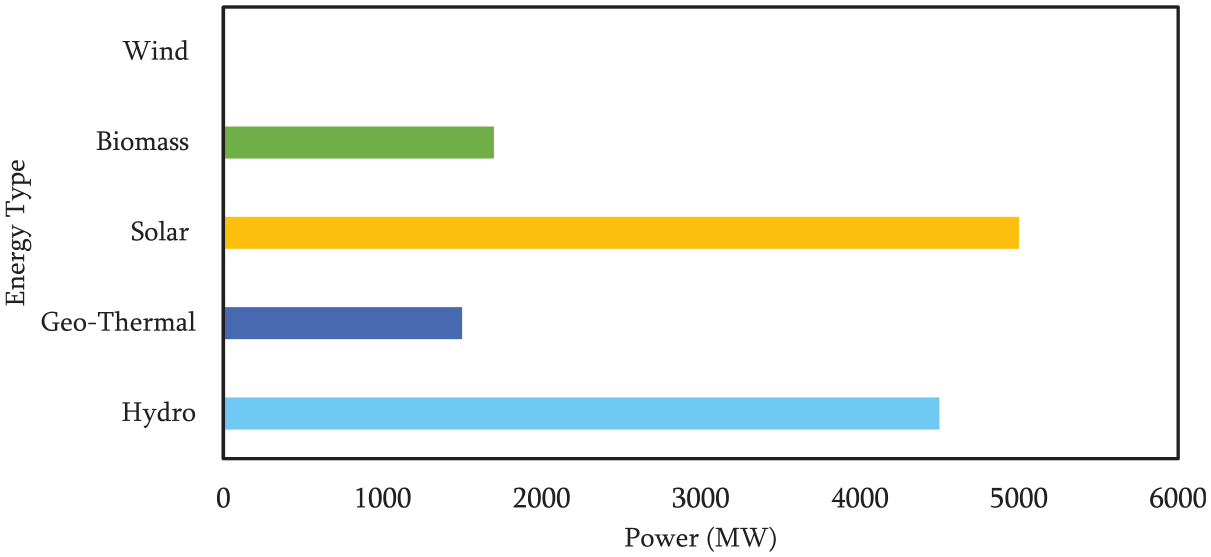
Renewable energy potential in Uganda (Source: Uganda Vision 2040, Republic of Uganda, 2013).
Review of related studies
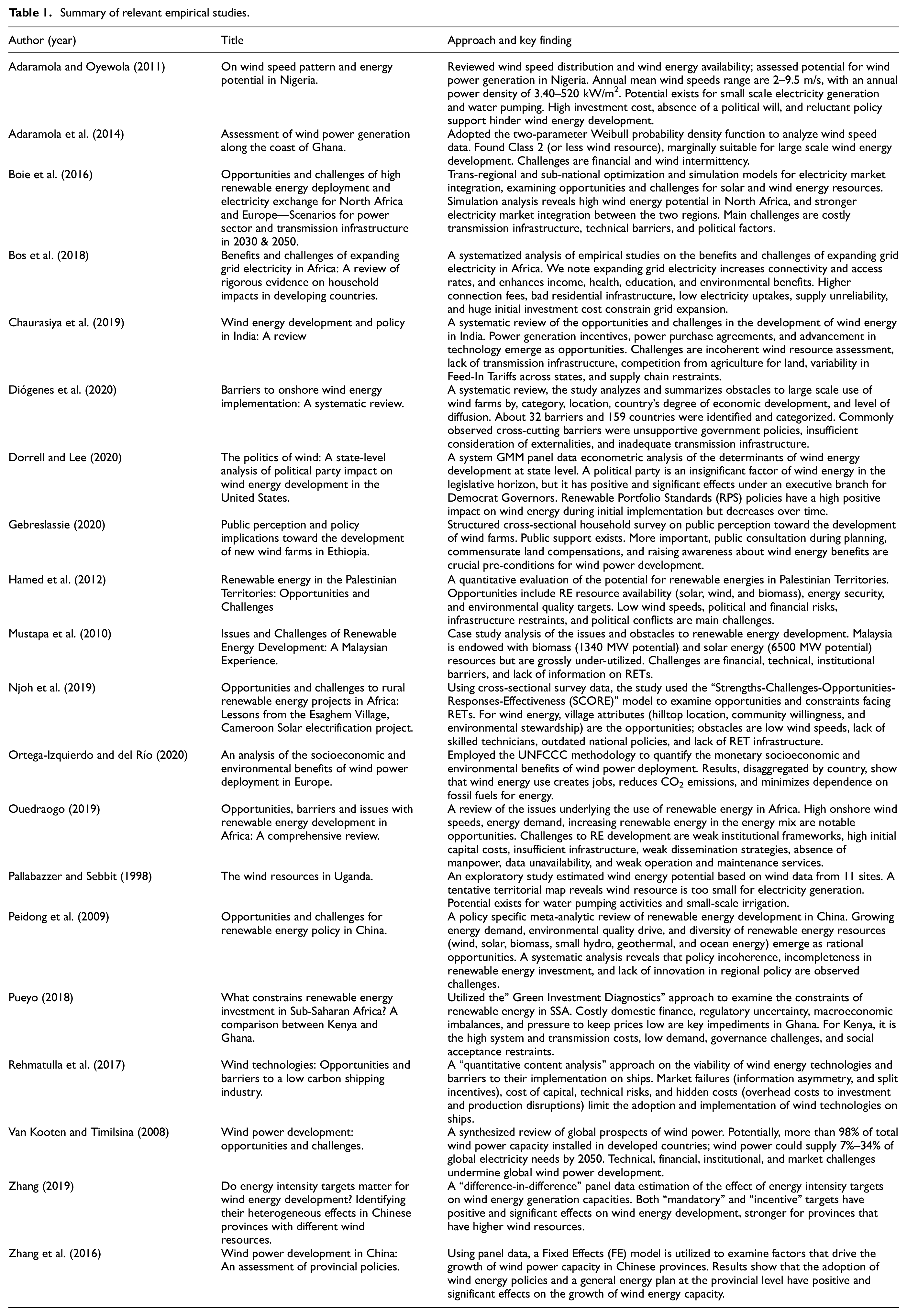
Empirical studies have demonstrated the potential contribution of wind energy to economic growth and development (Adaramola et al. 2011; Boie et al., 2016; Bos et al., 2018; Gebreslassie, 2020; Ortega-Izquierdo and del Río, 2020; Van Kooten and Timilsina; 2008; Zhang et al., 2016). Globally, extensive opportunities exist for the development of wind energy. In literature, growing energy demand (Adaramola, 2017; Ouedraogo, 2019; Oyedepo et al., 2012; Peidong et al., 2009; Zafar, 2020), energy security (Balat, 2005; Hamed et al., 2012; Peidong et al., 2009; Van Kooten and Timilsina, 2008), energy sector reforms (Dorrell and Lee, 2020; Chaurasiya et al., 2019; Zhang, 2019; Zhang et al., 2016), and environmental quality (Adaramola, 2017; Chaurasiya et al., 2019; Hamed et al., 2012; Njoh et al., 2019; Ortega-Izquierdo and del Río, 2020; Zafar, 2020) are the cross-cutting opportunities. We note that the main challenges to wind energy development relate to technical limitations (Adaramola, et al. 2014; Berrezzek et al., 2019; Mustapa et al., 2010; Paul et al., 2012), finance and cost (Bos et al., 2018; Mustapa et al.,2010; Ouedraogo, 2019; Ohunakin et al., 2013; Pueyo; 2018; Rehmatulla et al., 2017), infrastructure (Bos et al., 2018; Diógenes et al., 2020; Chaurasiya et al., 2019; Hamed et al., 2012; Ouedraogo, 2019), and unsupportive policies (Boie et al., 2016; Diógenes et al., 2020; Pueyo, 2018). Table 1 summarizes the review of related studies that broadly evaluate opportunities and synthesize challenges to wind energy development.
Summary of relevant empirical studies.
Opportunities in the wind energy sector in Uganda
Rising energy demand
Countries are not only increasingly integrating wind energy in their energy mix as a source of electricity supply, but more importantly, as an option to bridge the gap of the growing energy demand. Wind energy promises huge potential and is easy to manage (Chaurasiya et al., 2019). Uganda’s current population is 44.27 million people, projected to increase to 61.93 million by 2030 (World Bank, 2020). This population growth trend depicts an equally rising trend in demand for social services like health, education, and energy. To match this burgeoning population and associated energy demand growth, promoting investments in wind energy projects could provide an avenue to increase the country’s energy supply capabilities. In analyzing the electricity supply-demand balance, Uganda’s total installed capacity has increased from 895 MW in 2015 to 1252.3 MW in 2019, while the number of customers on the national grid has grown from 801,667 to 1,454,219 over the same period. Put differently, growth in electricity demand is approximately 2.5 times higher than growth in electricity supply. Current statistics, as presented in Figure 7, indicate that the system peak demand for electricity in Uganda (exports inclusive) in 2019 was 723.76 MW, a 12% increase compared to a 3% growth in 2018 (ERA, 2019). This upsurge in energy demand is largely due to growth in domestic energy consumption.
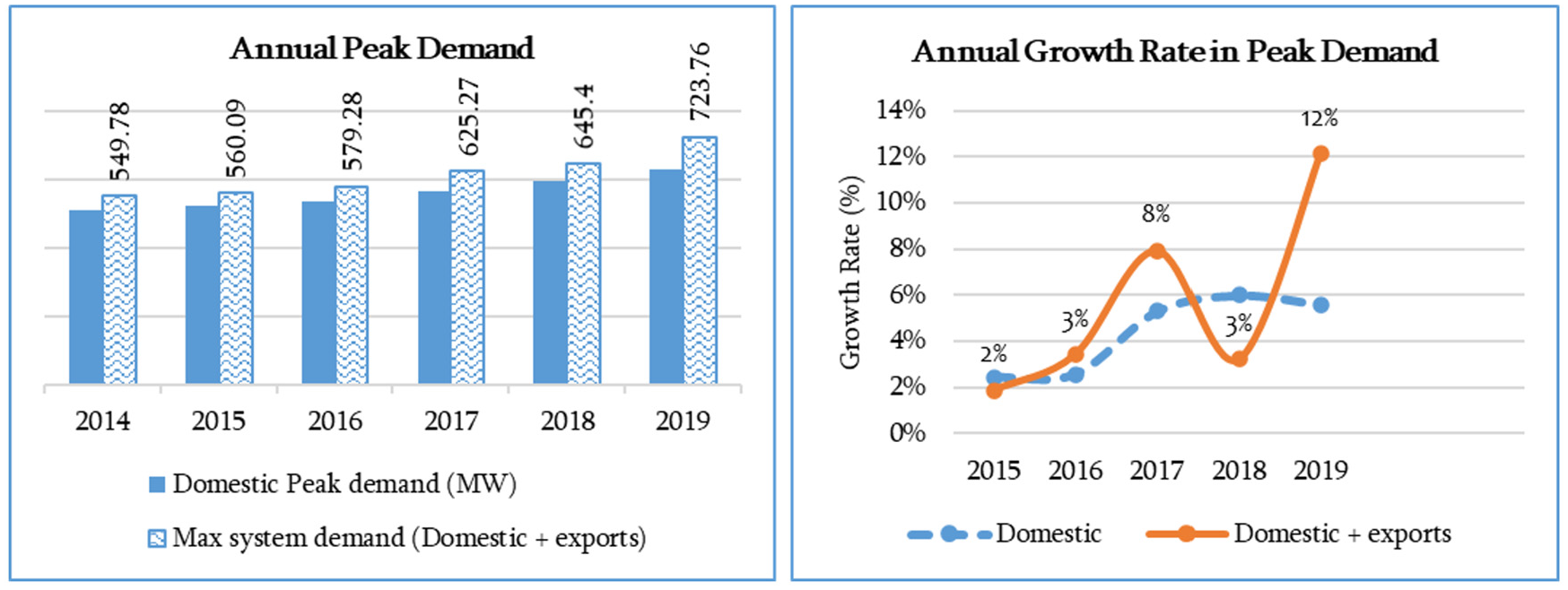
Uganda’s electricity system peak demand (Source: Electricity Regulatory Authority (ERA), Uganda (2019)).
We observe that the rising energy demand in Uganda is attributable to two simultaneous factors: First, a growing population requires energy for socio-economic transformation. Households, for instance, demand energy for lighting, cooking, and for economic empowerment through micro and small-scale businesses. Second, the current government pursuit of industrialization to enhance local manufacturing and value addition implies added demand for energy to run machinery for production, processing, and storage of goods and services. These forces, combined, form reasonable arguments and rational opportunities to invest in wind energy in Uganda.
Reduction of CO2 emissions/footprint
Pursuant to climate change effects (Adaramola, 2017; Adaramola and Oyewola, 2011; Chaurasiya et al., 2019; Njoh et al., 2019; Zafar, 2020), countries are progressively mainstreaming clean energy technologies into their national energy policies because CO2, once released into the atmosphere, persists for an estimated 100 years. Thus, the gains of reducing CO2 discharges now are expected to span over a century into the future. Evidence shows that biomass dominates Uganda’s energy balance, in which firewood, charcoal, and crop residues, collectively, account for nearly 88% of the total primary energy consumption. The share of electricity consumption to the national energy balance is 2% while fossil fuels, utilized for powering vehicles and thermal power plants, accounts for 10% (MEMD, 2019). Charcoal production, inefficiently produced at 10%–12% on a weight-out to weigh-in approach, has vastly depleted natural forests (MEMD, 2015). The prevalent usage of these low-grade energy forms is associated with limitless emissions of CO2 and environmental degradation.
As shown in Figure 8, over the past 15 years, land-use change and forestry activities, agriculture, and energy use have dominated GHG emissions in Uganda. Energy sector activities relate to increased use of biomass, fossil fuels, and inefficient conversion technologies. As a strategic commitment to the United Nations Framework Convention on Climate Change (UNFCCC) climate goal(s), Uganda’s target is a 22% reduction in carbon by 2040 (African et al., 2019). In Uganda, the opportunity for wind power lies in the quest to reduce carbon emissions and achieve carbon footprint targets. Particularly, wind energy development offers the potential to argument energy supply, but crucially, an opportunity to slow down deforestation, and contribute to energy transition from impure biomass use to clean energy for household consumption, water pumping systems, and irrigation systems for agriculture in rural areas.
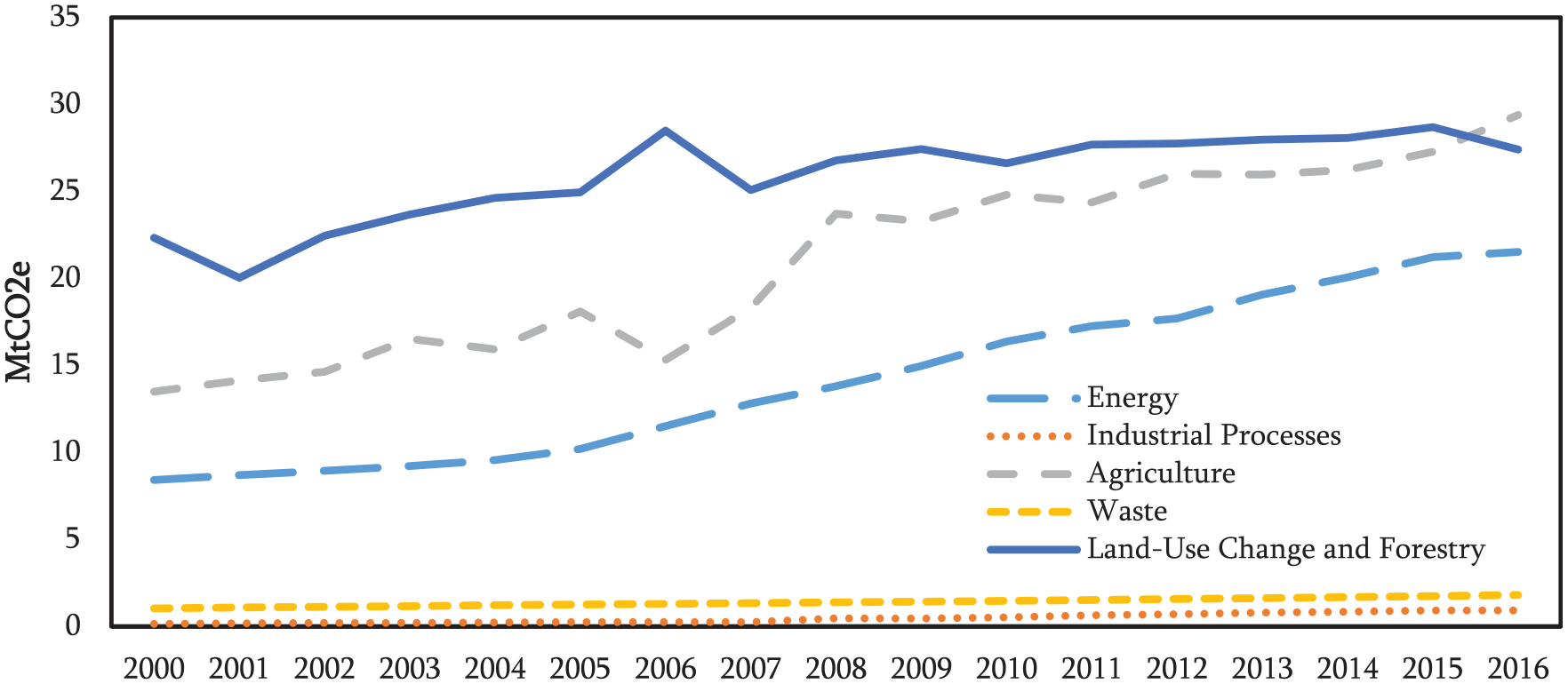
Uganda’s greenhouse gas (GHG) emissions by sector (Data from Climate Analysis Indicators Tool (CAIT) 2.0, World Resources Institute, 2017).
Energy sector reforms
Supportive energy policies, strategic energy sector plans, and energy infrastructure investments are an integral part of any economic development frameworks (Chaurasiya et al., 2019; Diógenes et al., 2020; Dorrell and Lee, 2020; Okello et al., 2013; Peidong et al., 2009; Zhang, 2019). Reforms in Uganda’s energy sector can be traced in the early 2000s when the Energy policy for Uganda 2002 was developed to “meet the energy needs of the population for social and economic development in an environmentally sustainable manner.” Since then, the energy sector has been, and is, guided by; The Renewable Energy Policy 2007; the National Oil and Gas Policy 2008; the Electricity Connections Policy 2018; and the Draft National Energy Policy 2019. Each of these policies aspires to increase energy supply to meet the country’s growing energy demand. Gazetted by the 1995 national constitution, the regulatory framework of the energy sector comprises of: the Electricity Act 1999, the Petroleum Act 2003, the Atomic Energy Act 2008, the Petroleum Act 2013, and the Biofuels Act 2018. The energy policies and regulatory frameworks target the increase of renewable energy use in Uganda’s energy mix.
Our analysis reveals mixed but promising opportunities for wind energy development. Particularly, while the National Energy Policy 2002 and the Renewable Energy Policy 2007, provide for and promote the development of wind power technologies, the Draft National Energy Policy 2019 is completely mute about wind energy resources exploitation. This, we think, could be due to the lack of comprehensive data for assessing wind energy potential in the country. Overall, and though generic, energy priorities in the Uganda Vision 2040 mention the need to consider wind energy adoption because it is renewable, clean, and promises tangible contribution to the slowdown of the effects of climate change. We establish that Uganda’s energy policies and the regulatory frameworks define the energy sector as liberalized, as they are supportive to the development and operation of Independent Power Producers (IPPs) projects under preferential arrangements with government grid networks. Specifically, the Renewable Energy Policy 2007 enlists a Standard Power Purchase Agreement and Feed-in Tariffs for mini-hydropower schemes, wind, solar, biomass, and geothermal development and utilization. For wind energy, the GET FiT Uganda program, formally launched in 2013, and currently in its fourth phase of implementation, targets boosting existing and potential investments in small renewable energy projects (0.5–20 MW) in Uganda. Barriers to the energy sector withstanding, these policy reforms provide avenues and opportunities to develop wind energy, and directly contribute to Uganda’s sustainable development.
Energy security and rural electrification
Wind is plenteous, unlimited, widely distributed, affordable, and carries renewable energy attributes as a clean and environmentally friendly energy resource (Adaramola et al., 2011; Balat, 2005; Ortega-Izquierdo and del Río, 2020; Zafar, 2020). These wind resource qualities constitute the primary dimensions of energy security (Cherp and Jewell, 2014; Sovacool and Mukherjee, 2011; Winzer, 2012)—an integrant of energy policy and economic development. Wind energy reduces geopolitical security risks through energy diversification, commands lower risks compared to fossil fuels, carries less variability of generation costs (Gustavsson and Broad, 2015), and is primed as a vessel for increasing electricity access to rural communities (D’Isidoro et al., 2020; Peidong et al., 2009; Van Kooten and Timilsina, 2008). Uganda has adopted a deliberate and strategic model of extending power to the rural areas to increase electricity access. This stimulus policy, in a way, is a response to the fact that electricity access in Uganda remains low, standing at a national average of 28%, and only 9% in rural areas.
Wind power development promises to potentially enhance Uganda’s energy security and increase rural electrification on two horizons: First, the huge cost and burden of extending the national grid to all rural communities is reduced. Building electricity lines, increasing capacity, and connecting households constitute a substantial proportion of grid electrification costs in Africa (Bos et al., 2018). Chaplin et al. (2017) estimate that the cost per household of constructing new electricity lines in Tanzania was roughly $6694 because rural communities are sparsely populated. In comparison, a survey in Kenya reveals that a 1000-W generator for wind energy, sufficient to light a home, operate appliances, power a small pump, and produce power surplus for battery storage is roughly $1500 (Davis and Shirtliff, 2020). Second, it is relatively easier to install energy conversion systems for wind power generation. Thus, the generated wind power could be converted to electricity for household use and other specialized activities like irrigation and water pumping in rural areas, where 80% of the population lives. These illustrations, in relative terms, emerges as opportunities for wind power in developing economies like Uganda.
Need for employment generation
Uganda, like many African economies, has a huge youth unemployment dilemma owing to her growing young population. The youth constitute 19.4% of the total population with an unemployment rate of 13.3%. Private sector employment is 77% in terms of formal employment (UBOS, 2019). The estimation of jobs associated with renewable energy by the International Renewable Energy Agency (IRENA) projects show a marked increase of up to 16.7 million by 2030. Evidence from energy projects in energy-poor communities reveals that renewable energy technologies create employment opportunities and improves livelihoods (Eberhard et al., 2017). The Government of Uganda’s priority is, among others, the creation of decent and sustainable jobs for socio-economic transformation. Achieving this goal necessitates the adoption and usage of efficient production methods and technologies. Wind energy development in Uganda is a promising avenue to contribute to decent job creation along the value chain, including jobs for developers of wind energy systems, energy audit, installation, infrastructure and system maintenance, business and sales, as well as linkages to other sectors of the economy (Akella et al., 2009; Bos et al., 2018; Ohunakin et al., 2011; Ortega-Izquierdo and del Río, 2020; Ouedraogo, 2019; Zhang et al., 2016). Accelerated deployment of wind energy could harness Uganda’s population dividends by profiting the youths with jobs and wind energy soft skills, and consequently improve socio-economic welfare. These job gaps in the country, coupled with a growing population, we think, provide cogent opportunities for wind energy development in Uganda.
Challenges for wind energy development in Uganda
Insufficient wind resource data
Wind energy projects require consistent and reliable data from different locations within the country (Adaramola and Oyewola, 2011; Adaramola and Paul, 2012; Akpinar and Akpinar, 2005; Chaurasiya et al., 2019; Diógenes et al., 2020; Ohunakin et al., 2011; Oyedepo et al., 2012). The main wind parameters usually collected for wind power assessment are wind speed, wind direction, and desired wind turbine hub-height (and standard height of 10 m), while data on topographical nature of the site (wind shear), atmospheric pressure and ambient temperature are essential for an accurate assessment. A spatial report on these parameters is equally vital in establishing the geographical distribution of wind resources in the country. This implies that comprehensive surveys and studies are essential because they inform the wind resource distribution for the country. Assessing wind resource potential is critical for three reasons: (a) it is a necessary condition for determination of optimal locations and choice of suitable wind technologies (turbine design, installation, and energy conversion); (b) cost estimation; and (c) allows prospective investors to analyze the returns to their investments. More importantly, wind speed distribution facilitates economic analysis of competing land use values such as wind farms generation of power, agricultural applications, and environmental protection (Ortega-Izquierdo and del Río, 2020). However, data for wind energy assessment is not readily available for Uganda. Existent data are insufficient, sparse, discontinuous, and have been collected at heights less than 10 m, primarily for weather-related purposes. This data inadequacy could, reasonably, be the justification for the endemic conclusion that wind energy resource in Uganda is insufficient for economic wind power investments.
Variability, intermittency, and speed of wind
Critical to note is that challenges regarding wind variability and intermittency are not a Uganda specific issue; it is a common natural occurrence in any geographical location across the world. Wind energy is significantly variable and intermittent (Ren et al., 2020). This challenge affects power generated, may cause turbine faults, and can compound inaccuracies in load forecasting. Studies show that oscillation of energy from wind is directly proportional to wind speed variations (Adaramola et al., 2014; Diógenes et al., 2020; Ohunakin et al., 2010; Oyedepo et al., 2012; Rehmatulla et al., 2017), and could be spatial and temporal variability. Spatial variation in wind speed depends on climatic zones and is determined by; the altitude and solar insulation of a place, sizes of land and sea, presence of mountains, vegetation, and topography (Ackermann, 2005; Ren et al., 2020). For Uganda, sparse and scanty empirical assessment reveals low wind speeds not exceeding 10 m/s (Pallabazzer and Sebbit, 1998). It is, thus, incomplete to conclude that Uganda’s wind energy potential is not commercially viable, with no comprehensive wind data assessment. Even then, Yuan et al. (2020) contend that standalone power systems can generate electricity from intermittent power sources. In addition, though costly, the effects of wind intermittency can be mitigated by battery banks and storage to manage load demands.
Inadequate skilled manpower
Development of wind power farms requires a skilled workforce for wind resource assessment, infrastructure installation, operation, and maintenance especially in the implementation of large wind projects (Ouedraogo, 2019). Like any renewable energy resource, wind energy calls for a spectrum of expertise in areas of economics, physics, material science, chemical, electrical and mechanical engineering, zoology, and business management (Wilkins, 2010). Availability of such personnel has been scarce even in countries with highly active and advanced wind energy plants (Friebe et al., 2014; Xie et al., 2013). Specialists in wind power systems are required for R &D wind technology and project development (Luong, 2015; Trypolska, 2012), project implementation (Hamed et al., 2012; Martinot, 2010), wind project operation and management (Luthra et al., 2015; Zhao et al., 2009), and wind farm maintenance (Anthony, 2008; Nalan et al., 2009; Trypolska, 2012). Our review demonstrates two factors: First, there are insufficient education and training efforts in wind energy and other renewable energy resources in Uganda (Fashina et al., 2019). Second, most renewable technologies in Uganda are imported as consummate articles, with no window for technology transfer to the local population. While others may argue that importing these finished technologies is a comparative advantage issue, a more direct and, possibly, convincing certitude is that Uganda does not have competitive skilled manpower and capacity to manufacture and assemble them, including wind energy. These skills gaps extend along the whole value chain in the renewable energy industry in Uganda.
High cost of investment, operation, and maintenance
Technologies used for wind power generation and supply are very expensive. An initial cost of investing in wind power is approximately 80% of the total project costs (Akella et al., 2009). Additional costs are operation, maintenance, and insurance (Gonzalez et al., 2017), normally expensive for developing countries that have to source operation and maintenance expertise from outside the country (Jagadeesh, 2000; Li, 2014; Mizuno, 2014). On average, a residential wind turbine, rated in the range 5–15 kW, costs between $65,000 and $95,000, including installation. Furthermore, the returns to wind energy investments range between 5 and 10 years before electricity producers can virtually be free (Bergey Wind Power, 2019). In New Zealand, for example, electricity consumption is approximately 8 kWh per household per day, implying that an average household requires between 3 and 13 kW ($30,000–$195,000) equivalent of installed capacity to supply own electricity (ECCA, 2019). In Uganda, this 8 kWh per household per day electricity consumption could be feasible, and it represents high energy-consuming households in urban areas.
Experience is that even with a significant amount of improvement, and depending on the household size, a small wind turbine is not only costly to acquire; it is, without a storage facility, unlikely to generate enough electricity to run a residential house in urban and or semi-urban areas. In Uganda, financial and cost reasons failed the commencement of a potential 20 MW wind power station in 2016 by Mss Xsabo Power Limited (Daily Monitor, 2017). To avert the water crisis in Karamoja sub-region, an arid area in North Eastern Uganda, the Government of Uganda, in partnership with the Oxford Committee for Famine Relief (OXFAM) and the United Nations Development Program (UNDP) had installed 43 water pumping windmills by 2015. However, lack of maintenance (due to financial restraints and skilled labor/experts) and vandalism have restricted the functionality of these windmills to about 18% (MoFPED, 2017). Unlimited to wind energy projects, financial and cost outlays have continuously curtailed the adoption and uptake of renewable energy technologies (Mukasa et al., 2015) in Uganda, and subsequently undermined the country’s energy transition efforts.
Inadequate research and development
Advancement of wind energy and the cost reduction in energy generation is anchored on research and development (R&D; Diógenes et al., 2020; Laleman and Albrecht, 2014; Wu et al., 2019). Several studies have highlighted that inadequate R&D inhibits the development of local wind farms (Baba and Garba, 2014; Diógenes et al., 2020; Luong, 2015). Furthermore, weak R&D priorities impede the continuous development of wind energy technology (Lam et al., 2017), and particularly more pronounced on the production of wind power by large wind turbines, as well as compliance to specific climatic conditions (Wallenius and Lehtomäki, 2016) and isolated areas. In Uganda, government investment in (R&D) exists but it is very low. In the financial year 2019/2020, budget allocation to Science, Technology and Innovation, a sector that drives Uganda’s research and development capacities, was 186 billion Uganda Shillings, translating into 0.6% of the national budget. For 2020/2021, 163.3 billion Ugandan Shillings (0.5%) has been earmarked for the sector (MoFPED, 2020). Even then, the budget allocation prioritises investment in agro-based industrialization, patents and innovations. This funding bias demonstrates that wind energy (and other non-hydro power-based renewable energy technologies) development in Uganda could (and remains) be undermined by the slow public investments in R&D.
Weak infrastructure
The volatility of wind energy interferes with the system’s capability to control electricity supply (Keles et al., 2017; Lehmann et al., 2012; Wang et al., 2013). The control of wind energy intermittency is even more complex with weak grid infrastructure (Katusiime, 2017), due to inexistent or sufficient high-power voltage transmission (Xiong et al., 2016; Zhao et al., 2012). This has been observed as a hindrance to wind energy integration and in the implementation of new wind projects. In addition, an unstable and old electricity grid is a threat to energy security due to high transmission losses (Zomers, 2014). Wind energy generation is categorized as non-synchronous and is associated with instability effects on an electricity system due to low inertia levels. Johnson et al. (2020), for instance, establish that crucial inertia hours are more for frequency responses from inverter-connected resources (wind and solar), and caution, strongly, that changing to a non-synchronous energy generation grid requires extra attention and care. The Government of Uganda targets achieving 99% electricity access rate and more than 90% of renewable energy production (Uganda Vision 2040) by 2030. However, grid coverage in Uganda is 73% in the urban regions and only 18% in rural communities. Against the above factors, we note that countries with a weak energy infrastructure are not only unattractive to potential investors in renewable energy production; they are economies with low electricity access rates.
Unsupportive policies
Empirical evidence shows that deliberate wind energy policies are necessary conditions for the exploitation of wind resources. Deliberate generation incentives such as Feed-in Tariffs (Mendonça and Jacobs, 2009), Quota Obligations, Feed-in Premiums, and power purchase agreements (Abdmouleh et al., 2015; Chaurasiya et al., 2019; Zhang et al., 2014), renewable portfolio standards (Dorrell and Lee, 2020), and “incentivized” wind energy targets (Zhang, 2019) impel wind energy investment and development. Further empirical works show that unsupportive government policies (Diógenes et al., 2020), incoherent policies (Peidong et al., 2009), outdated national policies (Njoh et al., 2019), regulatory uncertainty (Barradale, 2010; Pueyo, 2018), and weak institutional frameworks (Ouedraogo, 2019), have, in these independent studies, undermined either wind and or renewable energy development. Unsupportive and inconsistent policies might discourage private-sector investment.
We observe several gaps in Uganda’s policy landscape that we characterize as unsupportive. First, the Uganda National Development Plan III for 2020/2021-2024/2025 (NPA, 2020), a 5-year medium-term framework, does not provide any plan of developing wind energy. Second, except for the mention of wind as a renewable energy source, there is no emphasis on wind development in the Uganda Vision 2040. A larger focus is on maximizing hydropower and harnessing fossil fuel extraction and development. Third, while the National Energy Policy 2002, and the Renewable Energy Policy 2007, indicate tapping power from wind resources, the Draft (Revised) National Energy Policy 2019 is completely silent about wind power generation possibilities. Fourth, although Standard Power Purchase Agreements and Feed-in Tariffs are enlisted in the Renewable Energy Policy 2007, these incentives are generalized for the entire renewable energy spectrum. Promotion of wind power generation would, at the minimum, advise for enumeration of specialized incentives for wind resources exploitation. These support mechanisms, and the identified gaps, raise mixed expectations, underscore wind resource potential, discourage or bias investments in wind power, and thus, constitute a proportion of obstacles to wind energy development.
Conclusion and recommendations
Wind energy can boost economic growth, creates jobs, and enhances environmental quality. Empirical evidence demonstrates that wind energy is potentially desirable for specialized applications like water pumping in remote areas, irrigation schemes for agricultural production, and small-scale electricity generation. A growing population and pace of urbanization are translating into higher energy demand in Uganda. In addition, the need to reduce CO2 emissions, the evolvement of reforms in the energy sector to increase electricity production as well as increasing electricity access to rural areas provide rational opportunities to invest in wind energy.
We, however, established that available data for wind energy assessment is deficient—discontinuous data, mainly for weather purposes. Our assessment reveals that obstacles to wind energy development in Uganda relate to; insufficient wind resource data, inadequate skilled workforce, high initial investment cost, inadequate research and development, weak infrastructure, and unsupportive policies. On this basis, our recommendations are;
(i) Wind energy data center: Development of wind energy starts with a comprehensive wind resource assessment in terms of potential wind power generation for informed economic and businesses investments. A primary requirement, in this regard, is wind data availability, which, for Uganda, is deficient, discontinuous, and or is mainly for weather prediction purposes. Per our analysis, the initial step for Uganda is the development of a wind energy data center to collect and analyze wind data parameters across the country.
(ii) Deliberate policy support: Domestic and foreign investors evaluate risky energy projects by the strengths of existing national policy and regulatory frameworks that govern the energy sector. For Uganda, the Draft National Energy Policy 2019 should articulate wind energy-specific roadmaps, support, incentives, and market safety nets for potential investors in the wind energy sub-sector.
(iii) Financial risk transfer: This constitutes of instruments that transfer a proportion of the risk to public sector agencies, and include Feed-in Tariffs (FiTs), subsidies, Feed-in Premiums (FiPs), auctions, green bonds, equity financing, and or hard loans. While Uganda has fiscal programs, notably, Feed-in Tariffs and auctions, they are generalized for renewable energy technologies. Preferential wind energy-specific financing instruments and options are recommended for Uganda.
(iv) Capacity building: We note that wind energy technologies demand skills development throughout the value chain, which in themselves, are deficient in Uganda’s energy sector. Thus, the country could propel wind energy development by deliberately advancing long term capacity and technical know-how in wind power technologies through training, research and development.
(v) Energy infrastructure: Like most energy technologies, wind power requires transmission and distribution infrastructure to add excess power produced to the grid system. Expanding grid infrastructure could ease connectivity to the grid by independent wind energy producers, attract private investors, and broadly, increase efficiency in the generation and distribution of electricity.
Footnotes
Declaration of conflicting interests
The author(s) declared no potential conflicts of interest with respect to the research, authorship, and/or publication of this article.
Funding
The author(s) received no financial support for the research, authorship, and/or publication of this article.
