




Abstract
Renewable energy serves as an effective alternative to traditional fossil fuels, reducing reliance on energy imports from specific countries, thereby alleviating geopolitical risks and ensuring national energy security. The development and utilization of renewable energy have profound implications for the global energy consumption structure and geopolitical landscape. This paper utilizes time-series and panel data from 1990 to 2020 to examine the causal relationship between renewable energy consumption and geopolitical risks. Focusing primarily on the United States and the United Kingdom, a multivariate regression model was developed for empirical analysis, with a comparative analysis conducted against other Group of Seven (G7) member countries. Subsequent robustness checks were performed to further validate the model's robustness. Additionally, this study explores the role of military strength as a moderating variable in the relationship between renewable energy and geopolitics. Lastly, a vector autoregression model was constructed to analyze the dynamic relationships between renewable energy and related variables. The findings reveal that (1) consumption of clean renewable energies, such as solar, wind, and tidal energy, significantly reduces geopolitical risks in the United States and the United Kingdom, with differing empirical results for France, Canada, and Japan, interpreted according to their developmental contexts and (2) increased defense expenditure in the US and the UK significantly enhances the positive impact of renewable energy consumption on mitigating geopolitical risks. Utilizing renewable energy not only diversifies national energy options but also reduces reliance on fossil fuels and fosters international cooperation, thereby easing geopolitical tensions. This research enriches the literature on the relationship between renewable energy consumption and national energy security in key global nations and offers theoretical insights for the formulation and implementation of national energy development strategies in the new world development paradigm.
Introduction
Energy, as a crucial and scarce resource pivotal for national economic development and public welfare, has become a core element in the context of contemporary international competition, also serving as a vital safeguard for national progress (Khan et al., 2023a; Su et al., 2021). In recent years, the global economic and political landscape has undergone profound transformations, with energy issues emerging as significant catalysts for geopolitical instability in regions like Russia and the Middle East, as well as globally. Notable examples include the Syrian War, the Gulf War, and the Russo-Ukrainian conflict, which have heightened the uncertainty surrounding global development and underscored the growing prominence of energy issues (Cai and Wu, 2021; Ding et al., 2023). The United States, as the world's largest producer of oil and natural gas, and the second-largest energy consumer globally, remains dependent on energy imports despite its dominance in the international energy market. The integrated nature of the global energy market implies that geopolitical factors leading to disruptions in energy supply and monopolistic pricing practices not only exacerbate nations’ reliance on energy but also amplify the risks associated with energy supply interruptions (Cheikh and Zaied, 2023; Flouros et al., 2022; Khan et al., 2023a; Vakulchuk et al., 2020). Geopolitical risks, encompassing the interplay of geographic positioning, economic interests, and political strategies in international relations, represent a multifaceted factor contributing to uncertainties and potential threats in both international and domestic spheres. The presence and fluctuation of such risks profoundly influence the energy market, compelling nations to incorporate geopolitical considerations in their energy strategies and policies to ensure the stability and security of energy supplies (Caldara and Iacoviello, 2022; Cheng and Chiu, 2018; Overland, 2019). The energy issue is multifaceted, encompassing not only production and consumption but also national security, politics, environment, and technological advancements. Thus, examining the interplay between geopolitical risks and energy is both essential and meaningful. Geopolitical risks can adversely affect the stability of the energy supply, while energy issues may trigger or exacerbate geopolitical tensions. A thorough analysis of the mutual relationship between geopolitical risks and energy consumption is imperative. Such an understanding is crucial for formulating effective energy strategies and policies that safeguard national energy security and ensure long-term development. This comprehensive approach highlights the need for an integrated perspective in addressing energy concerns, recognizing their broader implications beyond the immediate economic factors.
Renewable energy sources are energy sources that are rapidly and continuously self-recovery from natural processes in a continuous cycle. This category includes solar energy, wind energy, geothermal energy, hydropower, ocean energy, and bioenergy (Alrikabi, 2014; Herzog et al., 2001). The common characteristic of renewable energy sources is that they can be replenished through natural processes in a relatively short period of time, providing continuous energy support for humankind (Dincer, 2000; Twidell, 2021). As the geopolitical risks associated with the global reliance on traditional fossil fuels become increasingly evident, the intersection of energy issues and geopolitics is garnering heightened attention from scholars across various fields (Hille, 2023). This interdependence not only introduces uncertainties in energy supply but may also lead to political and economic fluctuations, thereby posing threats to both national security and global stability. Against this backdrop, the significance of renewable energy, as a clean, low-carbon, and sustainable alternative, is progressively being recognized. Renewable energy resources not only aid in reducing dependence on geopolitically sensitive and finite fossil fuels but also promote environmental sustainability, catalyzing a shift in energy consumption patterns. Consequently, an increasing number of countries are focusing on the development and utilization of renewable energy, viewing it as a pivotal approach to achieving energy security, economic growth, and environmental conservation.
Driven by the global energy crisis and net-zero emission initiatives, renewable energy has increasingly strengthened its position in the global energy mix, especially within the power generation sector (Ang et al., 2022). In 2020, propelled by the global shift towards a renewable-centric energy structure, renewable power accounted for 28.2% of the global electricity generation, with an installed capacity reaching 314.5 gigawatts, marking respective increases of 9.7% and 10.3% from 2019. Renewable energy emerged as the only energy type experiencing a net growth in power generation. In recent years, major countries and regions, including China, the United States, and the European Union, have actively promoted the development of renewable energy, ushering in a new phase of growth for the global clean energy industry. Concurrently, global demand for fossil fuels has gradually declined, influenced by the Russo-Ukrainian conflict and the COVID-19 pandemic. In stark contrast, the renewable energy sector has shown a trend of consistent growth (Farhan Bashir et al., 2022). This phenomenon indicates that renewable energy is poised to gradually replace traditional fossil fuels in the future, becoming the leading force in the global energy transition. This shift not only challenges the reliance on traditional energy sources but also represents a fundamental transformation in the global energy supply model, heralding a cleaner and more sustainable energy future (Sweidan, 2021a, 2021b).
Our research aims to delve into the correlation between renewable energy consumption and geopolitical risks, and to verify the varying roles of renewable energy as the dominant force in the global energy structure in mitigating geopolitical risks across nations. The research primarily focuses on the United States and the United Kingdom, two established developed capitalist powers, while also extending its analysis to a comparative study among the Group of Seven (G7) member countries, a group of developed nations. This investigation not only reveals the pivotal role of renewable energy in the geopolitical landscape but also offers valuable insights on how to effectively harness renewable energy to enhance global security and stability. Through examining different scenarios and impacts, the study contributes to a deeper understanding of renewable energy's influence in the geopolitical sphere and provides strategic guidance for global energy policy formulation and sustainable development. The innovation points of this article are as follows:
We quantitatively analyzed the impact of renewable energy consumption on geopolitical risks in the UK and the US, and further analyzed the differences in impact between the two countries and other G7 member countries. The global geopolitical tension is becoming increasingly severe, and this article emphasizes the moderating role of military power in the consumption of renewable resources and geopolitical risks.
This article will unfold as follows: In the “Literature review and research hypotheses” section, we reviewed relevant research in recent years and presented our hypotheses. In the “Basic model settings and variables description” section, we introduced the models and data used in our analysis. In the “Empirical analysis” section, we conducted empirical analysis. In the “Further analysis” section, we performed supplementary tests on our empirical results. In the “Conclusion and policy recommendation” section, we summarized the main conclusions of this article and provided policy recommendations.
Literature review and research hypotheses
Literature review
Energy security has been a central topic of international concern since the first world energy crisis in 1973 (Deese, 1979; Glaser, 2013). This topic remains important in the current international political and economic context, especially in light of the recent military standoff between Russia and Ukraine, whose energy supply is particularly important for Europe as the world's largest exporter of natural gas. However, rising geopolitical risks arising from the Russia-Ukraine conflict have led to frequent energy supply disruptions, which have had a significant negative impact on global energy markets (Anghel and Jones, 2023; Johannesson and Clowes, 2022; Ngoc et al., 2022).
Promote renewable energy
In the context of geopolitical issues triggered by global fossil fuel dependency, the promotion of renewable energy has become a consensus within the international community (Kaygusuz, 2007). The development of renewable energy is crucial not only for environmental protection but also plays a key role in ensuring energy security, economic sustainability, and social welfare (Liu et al., 2022). This transition, which entails reducing reliance on traditional energy sources and increasing investments in clean energy technologies, signifies a fundamental shift in the energy supply model (Qazi et al., 2019). Therefore, the promotion of renewable energy is not only an effective strategy to address environmental challenges but also a vital means to ensure energy security, foster economic stability, and enhance social welfare. This transformation in energy structure aids in reducing dependence on geopolitically sensitive regions while bringing long-term environmental and socio-economic benefits. Amidst increasing uncertainties in global fossil fuel supply, the importance of renewable energy is more apparent than ever, with its contribution to global energy security and sustainable development becoming increasingly prominent (Liu and Feng, 2023; York and Bell, 2019).
Various governments have implemented a range of policies and measures to promote renewable energy. The European Union has set binding renewable energy targets, mandating that renewable energy should account for over 20% of total energy consumption by 2020 (Bürgin, 2015). The United States has introduced a series of tax incentives and subsidies to encourage the development and utilization of renewable energy (Borenstein and Davis, 2016). China, through its Renewable Energy Law and the 14th Five-Year Plan, emphasizes the significance of clean energy and has established specific renewable energy development strategic goals (Sun, 2020).
The necessity of promoting renewable energy lies in several key aspects. Renewable energy enhances the diversity and security of energy supply, reducing dependence on fossil fuels and lowering the costs and risks associated with energy imports, thereby strengthening energy autonomy (Amin et al., 2022). It also decreases the carbon intensity of energy consumption, reduces the emissions of greenhouse gases and pollutants, improves air quality, protects the ecological environment, and elevates public health standards (Owusu and Asumadu-Sarkodie, 2016). The role of military activities has emerged as a focal point in recent research, with its environmental impact being a significant concern. Military operations contribute to substantial carbon dioxide emissions, exacerbating pollution and thus heightening the demand for clean and renewable energy sources (Chang et al., 2023). Particularly in regions abundant in fossil resources, complex geopolitical dynamics often compel nations to escalate defense expenditures. Against this backdrop, the development of renewable energy transcends environmental protection, becoming pivotal in enhancing national energy autonomy and reducing dependence on external fossil fuels. Consequently, renewable energy plays a crucial role in ensuring energy security and political stability (Kilinc-Ata et al., 2024). Renewable energy, with its clean and sustainable attributes, has become a critical element in the global energy transition. Its application not only spurs the robust development of the new energy industry but also significantly impacts economic growth and job creation, injecting new vigor into economic activities. Most importantly, the active promotion of renewable energy is leading the transformation of the traditional energy industry, which holds significant implications for the long-term goals of global political economy, environmental protection, and sustainable development.
The influencing factors of geopolitical risks
Geopolitical risk refers to national threats to regional security and economic development, among others, triggered by uncertainty in the international political environment and changes in political relations between countries (Caldara and Iacoviello, 2022). Currently, the main sources of geopolitical risks include competition for natural resources, territorial disputes, policy strategies, and regional cultural differences. In the context of globalization, countries around the world are more closely connected and the impact of geopolitical risks is more significant. For example, events such as the trade friction between the United States and China, the UK's exit from the European Union, and the Russia-Ukraine conflict have had a huge impact on the world's geopolitical risk environment (Dörry, 2017; Ignatyeva et al., 2021; Wang et al., 2020). Therefore, analyzing the factors influencing geopolitical risks is of great significance for maintaining world peace and development.
In the existing academic literature, research on the factors influencing geopolitical risk focuses on the key areas of economic factors, energy consumption, environmental pollution, and technological progress. Economic growth and population growth, as two key dimensions of economic factors, have a profound impact on geopolitical risk. Economic growth requires large amounts of natural resources to support, and population growth leads to increased demand for social services, while triggering geopolitical risk due to resource mismatch tensions in society (Li et al., 2022).
At the same time, as economic development and social progress continue to increase global energy demand, the strategic importance of energy resources such as fossil fuels have been further emphasized, while the trend of increasing energy consumption has not only intensified global competition for these resources, but also heightened geopolitical tensions and risk situations. Energy-rich countries usually have more significant influence in the international arena, while import-dependent countries are exposed to geopolitical risks due to energy supply disruptions and price volatility (Cheng et al., 2023; Magazzino, 2023). Environmental pollution triggered by fossil fuel consumption, especially greenhouse gas emissions such as carbon dioxide (CO2) and nitrous oxide (NOx), leads to a further decline in natural resources, thus increasing competition for resources and geopolitical risks (Zhao et al., 2021). In addition, geopolitical risks in turn affect pollution emissions, national energy supplies, and the implementation of environmental policies and international cooperation (Chu et al., 2023).
As we enter the 21st century, the rapid pace of technological progress in the world has further reshaped the landscape of geopolitical risk. On the one hand, technological advances offer promising solutions to global challenges, increase productivity, and boost economic growth. Innovations in renewable energy technologies, in particular, have the potential to reduce dependence on fossil fuels, thereby weakening the geopolitical influence of traditional energy-exporting countries. On the other hand, technological advances have triggered rivalries and technological races between great powers, leading to strategic confrontations between states and bringing the world into a new era of technological conflict, creating new challenges for geopolitical risk (Khan et al., 2022).
The influencing factors of geopolitical risk are diverse and complex, and are not only affected by economic factors and resource consumption, but are also closely related to a variety of factors such as environmental changes and technological innovations. Therefore, in the process of further in-depth study of geopolitical risks, it is important to consider these influencing factors from a holistic perspective and in a multifaceted manner. Ensure that effective strategies and decisions are developed to meet the challenges posed by these risks against the backdrop of a rapidly changing global environment. Effective management of geopolitical risks is not only a matter of national security and international stability, but also a key to international cooperation and common development in the era of globalization.
The correlation between consumption of renewable energy and geopolitical risks
“Global energy security and geopolitical risk” has become a hot topic of academic concern in the last century. Early studies focused on the political games and conflicts of major powers caused by the imbalance between the supply and demand of primary energy, while recent studies have paid more attention to the impacts of the utilization and development of renewable energy sources on the global energy landscape as well as the geopolitical landscape (Blondeel et al., 2021; Bradshaw, 2009; Criekemans, 2018). With the growing problem of fossil energy consumption, countries around the world are gradually transitioning to the use of renewable energy sources as an alternative to traditional disposable fossil energy sources. At the same time, the focus of academic research is shifting from the geopolitical risks posed by traditional fossil energy sources to the potential geopolitical impacts of renewable energy (Criekemans, 2011). Currently in the literature on the geopolitics of energy, these studies are beginning to focus increasingly on the role and impact of renewable energy in geopolitics.
Research from the last century emphasized the necessity of choosing renewable energy sources. From a geopolitical perspective, the Middle East and Russia are major suppliers of oil and natural gas. Over-reliance on fossil fuels could lead to higher geopolitical risks (Palz, 1990; Vakulchuk et al., 2020). Especially in the 21st century, the confrontation between energy forms, focusing on renewable and new energies, has become a crucial aspect of international geopolitics (Abbas et al., 2023; Sweidan, 2021a; Zhao et al., 2023b). Khan et al. (2023b) discussed how a nation's geopolitical risks affect energy security and renewable energy, revealing that integrating renewable energy into the energy mix can effectively reduce conflict risks and enhance energy security. In recent years, various uncertainties, such as economic fluctuations, public health crises, and wars, have posed new challenges and impacts on energy issues and geopolitical risks (Ha, 2023a; Khan et al., 2023a). Jiatong et al. (2023) and Zhao et al. (2023a) broadened the research perspective, discussing the interrelationships between economic policy uncertainty, renewable energy, and geopolitical risks. Ha (2023b) employed multivariate wavelet analysis to study the mutual relationship between geopolitical risks and renewable energy volatility indices, considering uncertainties such as the Russia-Ukraine conflict and the global spread of COVID-19. Adebayo et al. (2023) studied India, discussing whether controlling renewable energy consumption under conditions of rapid economic growth and trade openness would be affected by geopolitical risks leading to environmental degradation.
Renewable energy is not only a clean and low-carbon energy source, but also an effective energy buffer tool. Not only can it effectively mitigate the geopolitical risks posed by countries that utilize fossil energy as a geopolitical weapon, but it can also effectively mitigate the impact of energy supply cuts brought about by international emergencies, while further promoting international energy technology cooperation and advancing environmentally sustainable development (Smith Stegen, 2018; Sweidan, 2021b).
Research hypotheses
Due to the non-renewable nature of fossil fuels such as coal and petroleum, their limited global reserves and uneven geographical distribution have significant implications. Countries highly dependent on these resources are likely to engage in disputes over their acquisition, potentially leading to geopolitical conflicts (Liu et al., 2023). The scarcity of fossil fuels is intricately linked to national energy security, as well as to environmental sustainability and stable economic development (Steven et al., 2014). In the context of globalization, the increasing demand for fossil fuels positions countries with abundant energy mineral resources at the center of international political disputes. Concurrently, nations lacking such resources are more susceptible to geopolitical risks stemming from energy issues (Peters, 2003) In contrast, renewable energy sources such as solar, wind, geothermal, hydropower, ocean energy, and bioenergy offer diversified and sustainable solutions to issues caused by the uneven distribution and shortage of fossil fuels (Cantarero, 2020). The key advantage of renewable energy is that nearly every country can develop sources suited to its specific geographical and climatic conditions (Twidell, 2021). Therefore, from a long-term perspective, promoting renewable energy is a crucial strategy for alleviating geopolitical tensions, ensuring national energy security, and fostering environmental sustainability. Considering the diversity and widespread availability of renewable resources, it is vital for countries to actively explore sustainable energy solutions tailored to their national development needs.
As two of the most representative developed nations in the Western world over the past two centuries, the energy import situations of the United States and the United Kingdom reflect the complexities of the global energy market and the profound impact of geopolitical dynamics. Prior to 2020, despite significant progress in oil and gas production, the United States remained a net importer of energy. This substantial energy demand necessitated a degree of reliance on the international energy market. The United Kingdom faced similar challenges, with the gradual depletion of North Sea oil and gas reserves necessitating an increased dependence on external energy sources. Therefore, it is imperative for the United States and the United Kingdom to further promote the development of renewable energy sources to reduce reliance on external oil and gas resources (Doukas et al., 2006).
Consequently, for the majority of nations, the development of renewable energy sources is not only an economic and environmental strategy but also a geopolitical one. By reducing dependence on external energy resources, these countries can more effectively control their energy futures, thereby mitigating the impact of geopolitical risks (Cergibozan, 2022; Cheikh and Zaied, 2023; Yang et al., 2023). Based on this, this article proposed the following Hypothesis 1:
Military strength serves not only as a solid foundation for national security and international influence but also as a crucial driver for energy security (Caldwell, 2007; Correlje and Van der Linde, 2006). On one hand, increasing defense expenditure can stimulate research and development (R&D) and innovation in the renewable energy sector within military and national contexts. This investment enhances the technological advancement and competitiveness of renewable energy, promoting its development and utilization across both military and civilian spheres (Velandy, 2013). On the other hand, heightened military spending often correlates with a sharp increase in fossil fuel consumption, which typically results in substantial carbon dioxide emissions and associated environmental challenges. Thus, the integration of renewable energy within military operations is not only pivotal for mitigating environmental pollution but more importantly, it reduces the military's reliance on fossil fuels. This shift enhances the energy consumption security and efficiency of the armed forces, thereby alleviating geopolitical risks associated with energy dependence. The strategic application of renewable energy in military contexts underscores the dual benefits of environmental sustainability and energy resilience, contributing to a more balanced approach to national defense and energy policies (Isiksal, 2021). This shift in strategy is not only reflected in macro-policy adjustments at the national level, but is also emerging as a key consideration in military planning and operations. As the global consensus on climate change and sustainable development goals deepens, the military is actively exploring ways to achieve its strategic objectives while reducing its environmental footprint through the adoption of advanced renewable energy technologies and the promotion of energy efficiency. For example, by deploying solar photovoltaic systems and wind power generation facilities, military bases are able to secure their energy supply while reducing their dependence on external energy supplies and risks in the energy supply chain (Leila et al., 2018).
In summary, military forces play an important role in advancing energy security and promoting the development of renewable energy technologies (Ben Youssef, 2023). By integrating renewable energy, the military can not only increase its operational efficiency and strategic autonomy, but also play a leadership role in the global energy transition and in addressing environmental challenges. With continued technological advances and progressive policy improvements, the application of renewable energy in the military sector is expected to expand further, laying a solid foundation for a more sustainable energy future. Based on this, this article proposed the following Hypothesis 2:
Basic model settings and variables description
This paper focused on the United States and the United Kingdom as the main research subjects from 1990 to 2020, exploring the impact of renewable energy consumption on geopolitical risks and conducting comparative analyses with other G7 alliance countries. Furthermore, this study examined the moderating effect of military expenditure on the relationship between renewable energy consumption and geopolitical risks. Subsequently, the article established a VAR (vector autoregression) model to further demonstrate the causal relationship between renewable energy consumption and geopolitical risks.
Regression model settings
Benchmark models
In the face of an increasingly complex and dynamic global situation, the importance of energy resources is becoming more apparent. Research on geopolitical risks and the impact of renewable energy has become a hot topic and focus in academia. Some scholars’ viewpoints suggested a bidirectional causal relationship between geopolitical risks and renewable energy (Su et al., 2021). Renewable energy, acting as a buffer in the face of scarcity of non-renewable resources like oil, became an effective tool in reducing geopolitical risks (Cai and Wu, 2021). Supported by extensive research, there should be significant causal relationships between renewable energy consumption and geopolitical issues. However, it is crucial to conduct comparative studies considering the unique characteristics of different countries. Therefore, this article utilized seven time-series data from the G7 alliance and established a multiple regression model for comparative analysis. The study focused on analyzing the impact of renewable energy usage on geopolitical risks across various countries. For the analysis of the United States and the United Kingdom, this paper set up the following models (1) and (2), with similar models applied to the remaining five countries for comparative analysis.


Moderating effect models
To examine the relationship between geopolitical factors and energy consumption, this article introduced a relevant moderating variable


Variable settings
Core explained variable
The GPR index is an indicator compiled by two economists from the Federal Reserve, Dario Caldara and Matteo Iacoviello. It reflects the proportion of time discussed in international journals related to geopolitical threats (covering 11 top international journals published in six languages including English, French, German, etc.). The sources of geopolitical risk are then categorized into eight categories based on the definitional perspectives of geopolitical risk as described by various sectors, such as war, nuclear weapons, terrorism, assassinations, political revolutions, national insurrections, demonstrations, and international sanctions. Using a set of relevant professional keywords, articles mentioning these events or threats were searched for in the journals. In the variable description section, this paper initially selected the monthly data of the GPR index for member countries of the G7 alliance, namely the United States, the United Kingdom, Italy, Germany, France, Canada, and Japan. These data were then processed to obtain annual figures for each country. Line graphs were utilized to visually represent the trends in GPR for these nations, aiming to analyze the geopolitical dynamics over the past 30 years. However, in the subsequent empirical analysis, the study continued to employ the original monthly data for these countries.
Figure 1 shows the variation in GPR indices for G7 member countries from 1990 to 2020. It can be observed that, based on historical events, the GPR indices of G7 member countries showed significant increases around major wars, political events, and upheavals, such as the Gulf War in 1990, the 911 attacks in the United States in 2001, the Iraq War in 2003, the Crimea crisis in 2014, and the Paris terrorist attacks in 2015.
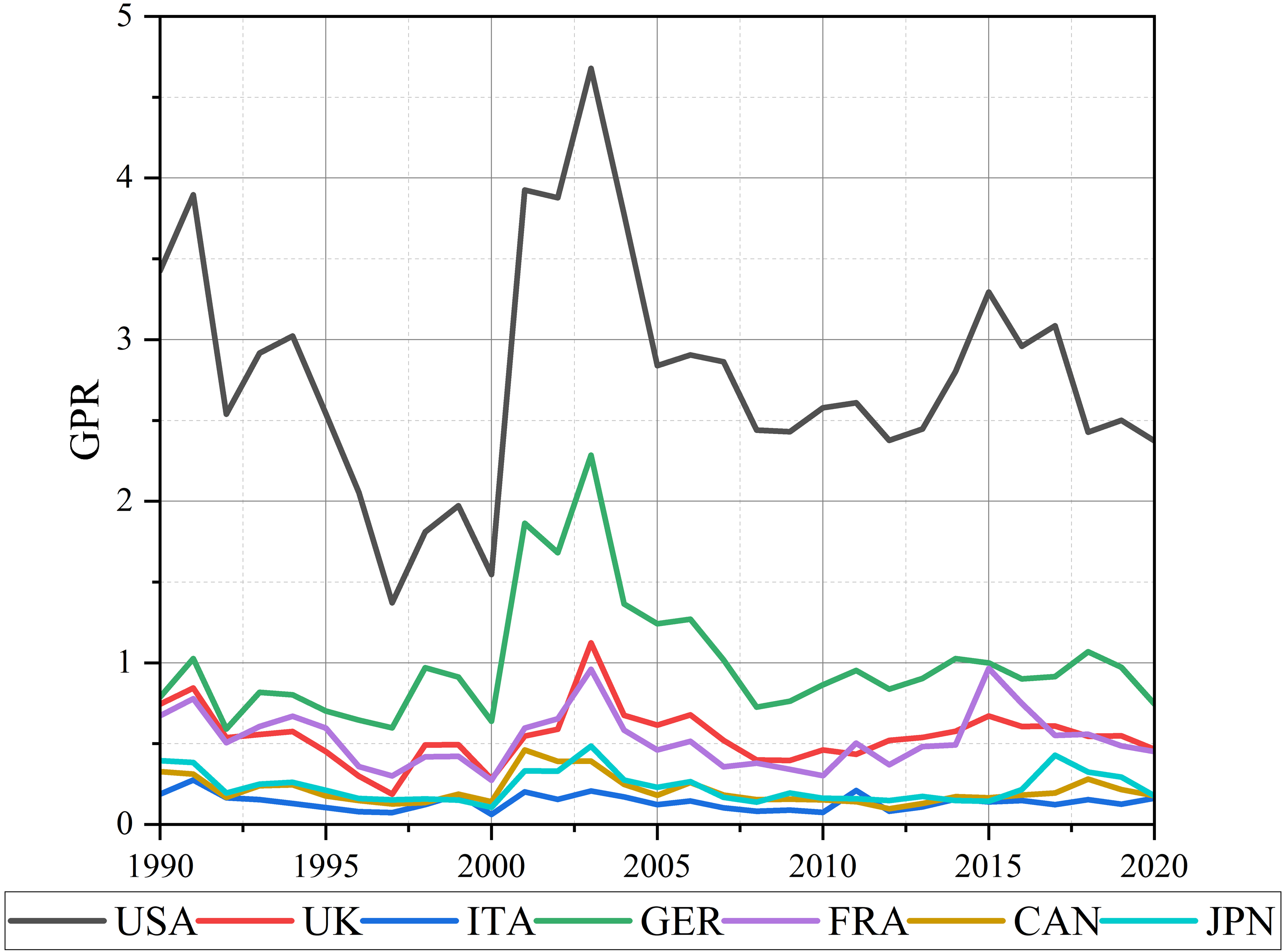
Trends in geopolitical risk index of Group of Seven (G7) member countries, 1990–2020. (Source: Caldara and Iacoviello, 2022).
The geopolitical risk index of the United States is notably higher than the other six member countries. As the only superpower in the G7, the United States has been involved in many international conflicts globally, leading to more terrorist attacks and violent incidents, ultimately facing more geopolitical threats and challenges. Several factors have increased the geopolitical risk and uncertainty faced by the United States. Meanwhile, the United Kingdom, as a core member of G7 and NATO, has played a crucial role in global and regional security affairs. However, due to various issues from politics, economy, society, and culture, The UK began leaving the European Union in 2016 and officially left the EU in 2020, making its geopolitical issues particularly prominent. Apart from the focus on the UK and the US in this study, Germany, as one of the strongest economies and militaries within the European Union, has also faced significant pressure from various directions. Additionally, Germany's Nord Stream gas pipeline project with Russia, which started in 2011, has been a subject of controversy, leading to geopolitical issues in Germany and the wider European region. Therefore, Germany's geopolitical risk index during the study period was significantly higher than other European countries and G7 member countries, except for the United States. The geopolitical risk indices of other countries were much lower than the aforementioned three nations. Moreover, apart from major global events, these countries did not experience significant fluctuations, remaining relatively stable overall.
Core explanatory variable
This article adopts the renewable energy consumption share (RE) indicator proposed by the International Energy Agency (IEA) to measure the level of renewable energy utilization in each country. This indicator refers to the share of six common renewable energy sources, namely solar energy, wind energy, geothermal energy, hydropower, ocean energy, and bioenergy, in the total energy consumption of each country. The IEA is an authoritative international energy organization, and the energy data and reports it publishes have wide influence and reference value.
Figure 2 shows the proportion of renewable energy consumption in the total energy consumption of G7 member countries from 1990 to 2020. From the graph, it is evident that during the study period, the proportion of renewable energy consumption in G7 countries showed an overall upward trend, with a more rapid development observed after 2010.
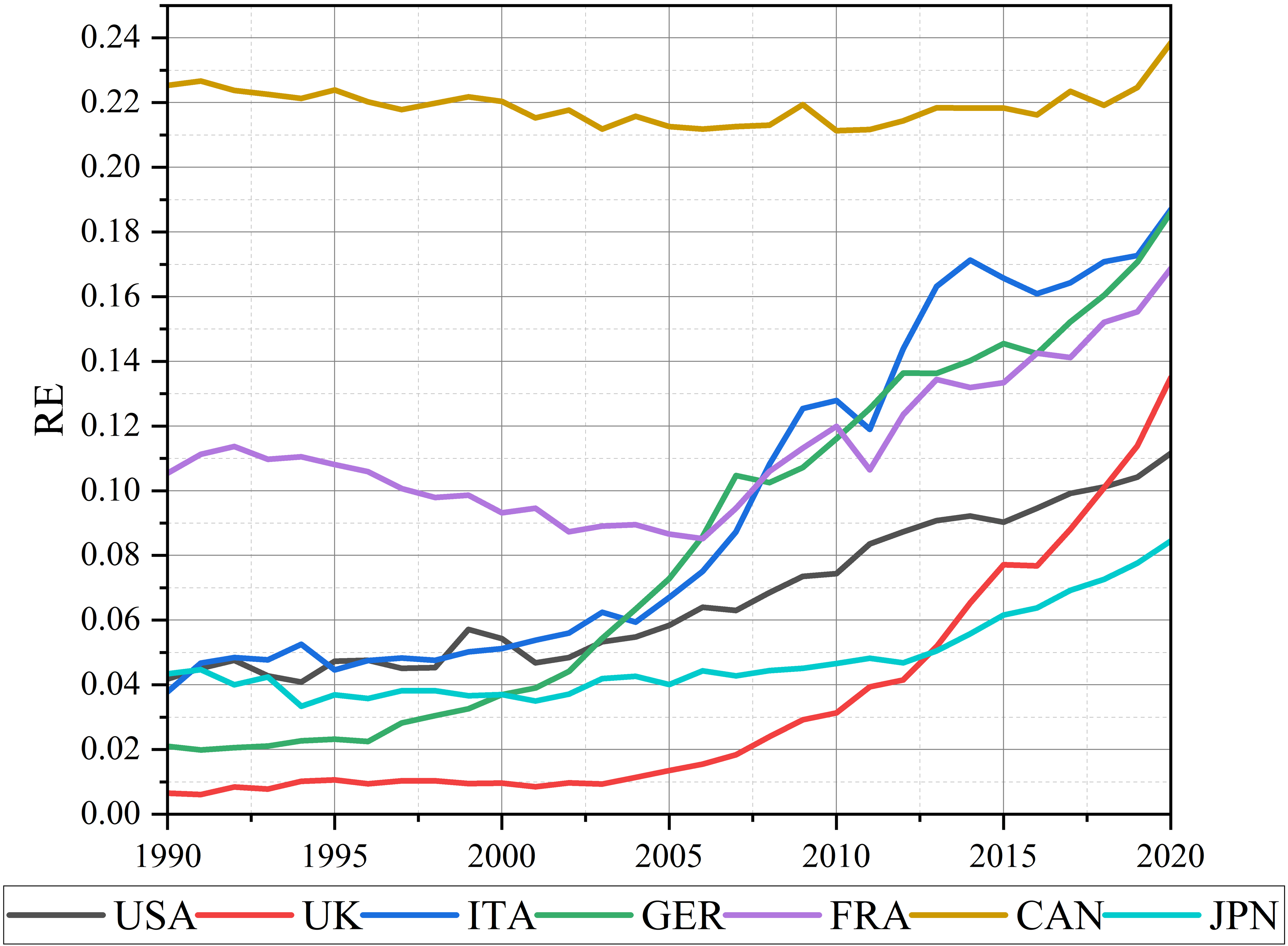
Trends in the share of renewable energy consumption in G7 member countries, 1990–2020. (Source: OECD/IEA and World Bank Database).
When comparing the G7 coalition, Canada shows a marked difference in the overall trend in the share of renewable energy consumption. The results of the study show that from 1990 to 2020, Canada's share of renewable energy consumption has been relatively stable, with limited fluctuations, basically remaining within the range of 20%–24%. In its overall energy consumption structure, the proportion of renewable energy has not shown any significant fluctuations, especially in the period from 2000 to 2015, the proportion of renewable energy consumption has even been below the average level of 22% until after 2015, when the proportion of renewable energy consumption began to show a slight upward trend. Overall, the fluctuation of the change in the share of renewable energy consumption in Canada from 1990 to 2020 is relatively limited. Canada's share of renewable energy consumption has been much higher than the rest of the G7 for more than 30 years, but the gap is narrowing. This is due to Canada's abundant water resources, with hydroelectric power accounting for over 60% of the country's total electricity generation. Additionally, Canada's vast geographical expanse and sparse population have facilitated the rapid development of wind and solar energy. Comparing the United Kingdom and the United States on the use of renewable energy, the development of the United States is more moderate. Perhaps because the United States, as the world's energy consumption superpower, is limited by the cost of energy use, cheap fossil fuels are currently the preferred choice for most application scenarios in the United States. The energy consumption in the UK is much smaller than that in the US. As a result, with continuous technological advancements and the trend toward low-carbon development, the proportion of renewable energy usage in the UK has been increasing year by year. Furthermore, changes in the proportion of renewable energy consumption in France, Germany, and Italy are also noteworthy. France, being the largest nuclear power producer in Europe, has nearly 70% of its total electricity generation coming from nuclear power. Consequently, nuclear power and renewable energy both have promising prospects as clean energy sources in France. Germany, a leader in renewable energy consumption in Europe, is one of the world's largest producers of photovoltaic electricity. As of 2019, renewable energy generation accounted for over 45% of Germany's total electricity generation. Additionally, Italy is among the world leaders in solar power generation.
There is a close link between geopolitical issues and energy resources. Military and political conflicts often revolve around the control of energy resources. Especially in the 21st century, with advancements in technology, energy consumption and use are intricately tied to complex geopolitical issues. The United Kingdom and the United States, as the world-wide geopolitical problems, are prominent as well as the large energy consumption and production countries, therefore, this article chosen the research object to be the United Kingdom and the United States, also compared them with the G7 member countries.
Moderating variable and control variables
This paper has chosen military expenditure (MG) as a moderating variable. Firstly, military spending is influenced by geopolitical risks stemming from international conflicts, regional instabilities, or global security threats, necessitating strategic increases in defense budgets by nations. Secondly, as military operations traditionally rely heavily on fossil fuel consumption, a gradual shift within defense sectors towards renewable energy usage aims to reduce dependency on fossil fuels.
Additionally, the article incorporates a set of control variables that include energy usage (electricity and fossil fuels), greenhouse gas emissions, and technological level, encompassing common control variables (M, ELEC, Q, CO2, NO, and TEC). The increase in greenhouse gas emissions can facilitate negotiations on environmental protection measures among hundreds of countries and regions globally. For instance, multilateral mechanisms like the United Nations Climate Change Conferences foster the formation of a community of shared destiny among countries facing similar environmental challenges, promoting collective global emission reduction efforts. This collaboration can mitigate geopolitical risks among homogeneous nations (Hashmi et al., 2022). Concurrently, climate change driven by greenhouse gas emissions may exacerbate competition for limited energy resources, thereby heightening tensions and increasing the likelihood of conflicts between nations (Borozan, 2024). Increased consumption of fossil fuels often escalates geopolitical risks for countries. Conversely, the use of clean energy sources like electricity may help in reducing these risks (Fosner et al., 2024). Furthermore, advancements in technology are expected to positively impact geopolitical risks by promoting energy efficiency and the development of clean energy technologies. However, such advancements could also potentially intensify risks arising from increased competition among major powers (Stergiou, 2023; Su et al., 2021).
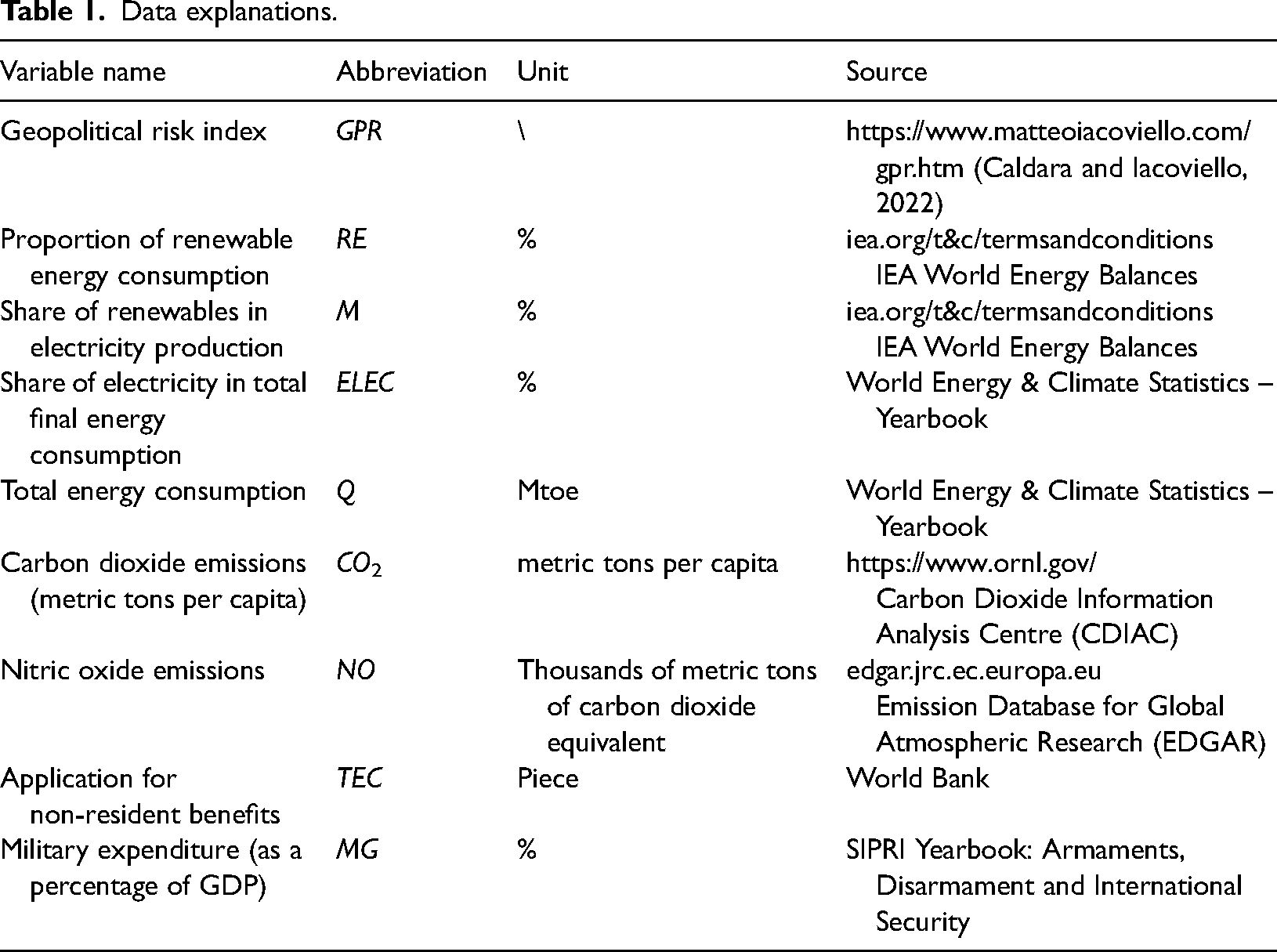
The data for this research spanned from 1990 to 2020, with a primary focus on the United Kingdom and the United States. Table 1 presents the specific details and sources of the various variables used in this article.
Data explanations.
Empirical analysis
Benchmark regression analysis
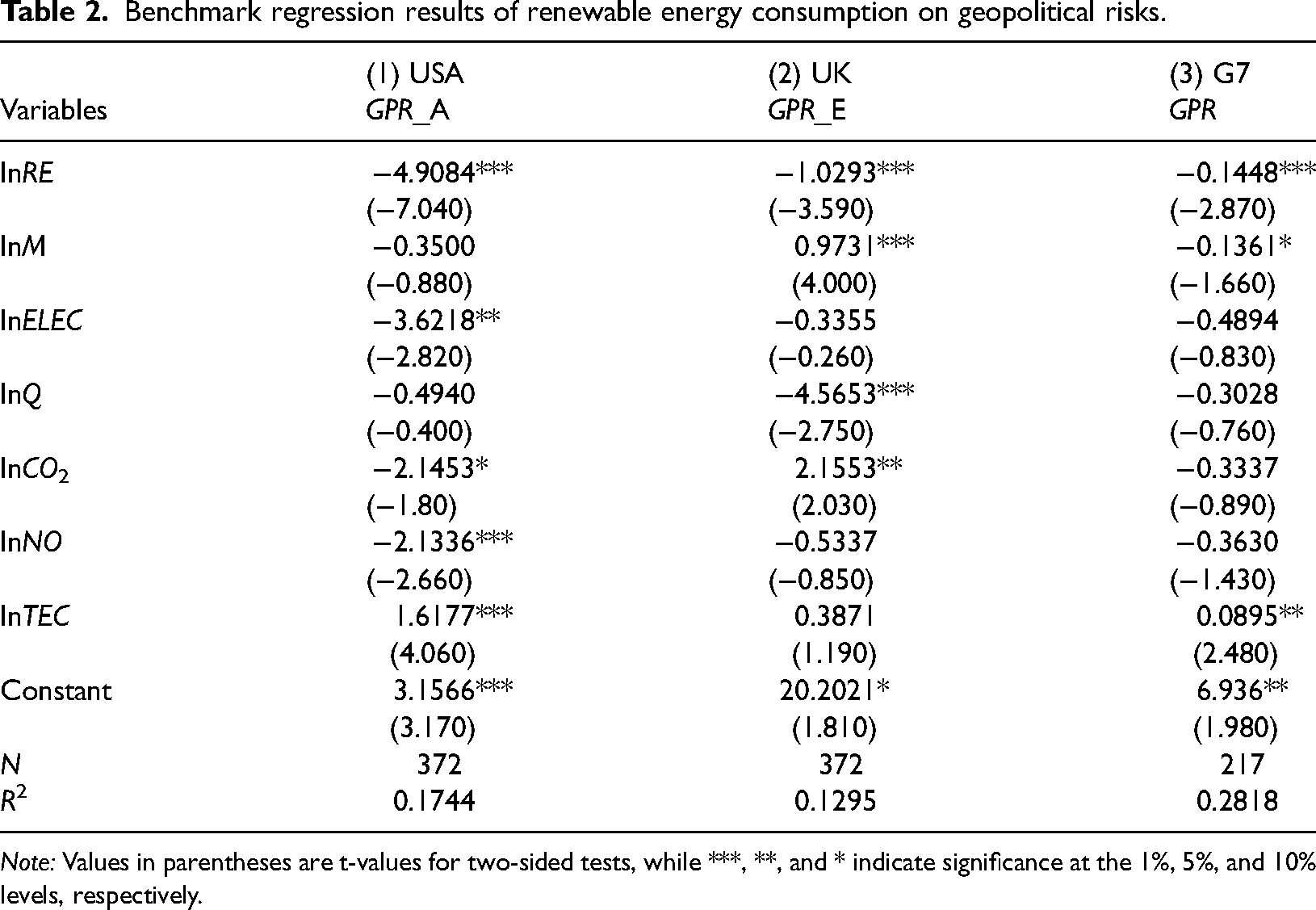
In the benchmark regression part, in order to test the hypotheses of this article, two different datasets are used for empirical research. Firstly, the monthly time-series data of the United States and the United Kingdom from 1990 to 2020 are used to build a model for regression analysis, and since the explanatory variables are all positive, and at the same time, there are ratio indicators in the variables, therefore, the estimation method is chosen to be Poisson pseudo-maximum likelihood method (PPML). Second, in order to verify the robustness of the results, the paper also selects annual panel data of the G7 Alliance and analyzes it using a fixed effects model. The regression results of both models are displayed in Table 2.
Benchmark regression results of renewable energy consumption on geopolitical risks.
Note: Values in parentheses are t-values for two-sided tests, while ***, **, and * indicate significance at the 1%, 5%, and 10% levels, respectively.
In the 19th century, the United Kingdom emerged as a global leader in political, economic, and cultural development. Entering the 20th century, the United States gradually assumed a leading role in global politics, economy, and culture. Consequently, this study did not solely focus on the impacts of fundamental sectors like agriculture and industry; instead, it delved into the influences of energy consumption, particularly renewable energy consumption, technological advancements, and atmospheric pollution on geopolitical risks.
Tables, columns (1) and (2) initially report the regression results of the proportion of renewable energy consumption against the GPR index for the United States and the United Kingdom. The key explanatory variable (RE) displayed a significantly negative coefficient at the 1% level, indicating a gradual weakening of geopolitical risks faced by the United States and the United Kingdom with increased renewable energy consumption. A possible reason is the significant shift in energy development strategies experienced by these main international powers amidst the changing global political and economic landscape from the 19th to the 20th century. Especially from the late 20th to the early 21st century, there was a marked global increase in the emphasis on renewable energy, particularly among developed countries, actively promoting the development and application of renewable sources. In this context, the United States and the United Kingdom progressively increased their reliance on renewable energy, thereby reducing dependence on traditional fossil fuels and, to some extent, mitigating the geopolitical risks associated with energy supply instability. From the perspective of natural conditions, the United Kingdom, due to its geographic location and climatic features, possesses abundant wind and marine energy resources. The United States, with its vast lands and varied climate, holds significant potential in solar, wind, geothermal, and bioenergy sectors. Hence, the progress made by the United States and the United Kingdom in the field of renewable energy not only represents a shift in energy policy but also an adaptation to global environmental responsibilities and new geopolitical realities. These factors collectively lead to a negative correlation between the proportion of renewable energy consumption and geopolitical risks, thereby supporting the validation of Hypothesis H1.
The G7 nations and their members displayed similar development trajectories at certain stages of the 21st century, all being developed countries. To further validate Hypothesis H1, this article constructed a panel regression model. As shown in Table 2, column (3), the key explanatory variable (lnRE) also showed a significantly negative coefficient at the 1% level, further supporting the notion that an increase in the proportion of renewable energy consumption reduces the geopolitical risks faced by the United States and the United Kingdom. This finding suggests that G7 countries have a significant impact on mitigating geopolitical risks arising from energy dependency, especially in the context of increasing the proportion of renewable energy consumption in their energy transition.
Robustness testing
To further ensure the reliability of the empirical research results in this article. This article conducted a robustness test after benchmark regression, using the first common method of endogeneity test and the second routine test method of truncated and adjusted data sample intervals.
Endogeneity testing
Contemporary research highlights that geopolitical risks adversely impact the consumption of renewable energy sources. This impact manifests in multiple aspects: Primarily, an escalation in geopolitical risks directly correlates with an increase in the operational costs of utilizing renewable energy. Additionally, geopolitical instability can disrupt the supply chain of critical materials or equipment, thereby impeding the progress of renewable energy projects, often resulting in delays or cancellations. Furthermore, geopolitical conflicts pose a threat to the safety and stability of renewable energy projects, consequently elevating the construction costs associated with these initiatives (Cergibozan, 2022; Su et al., 2021).
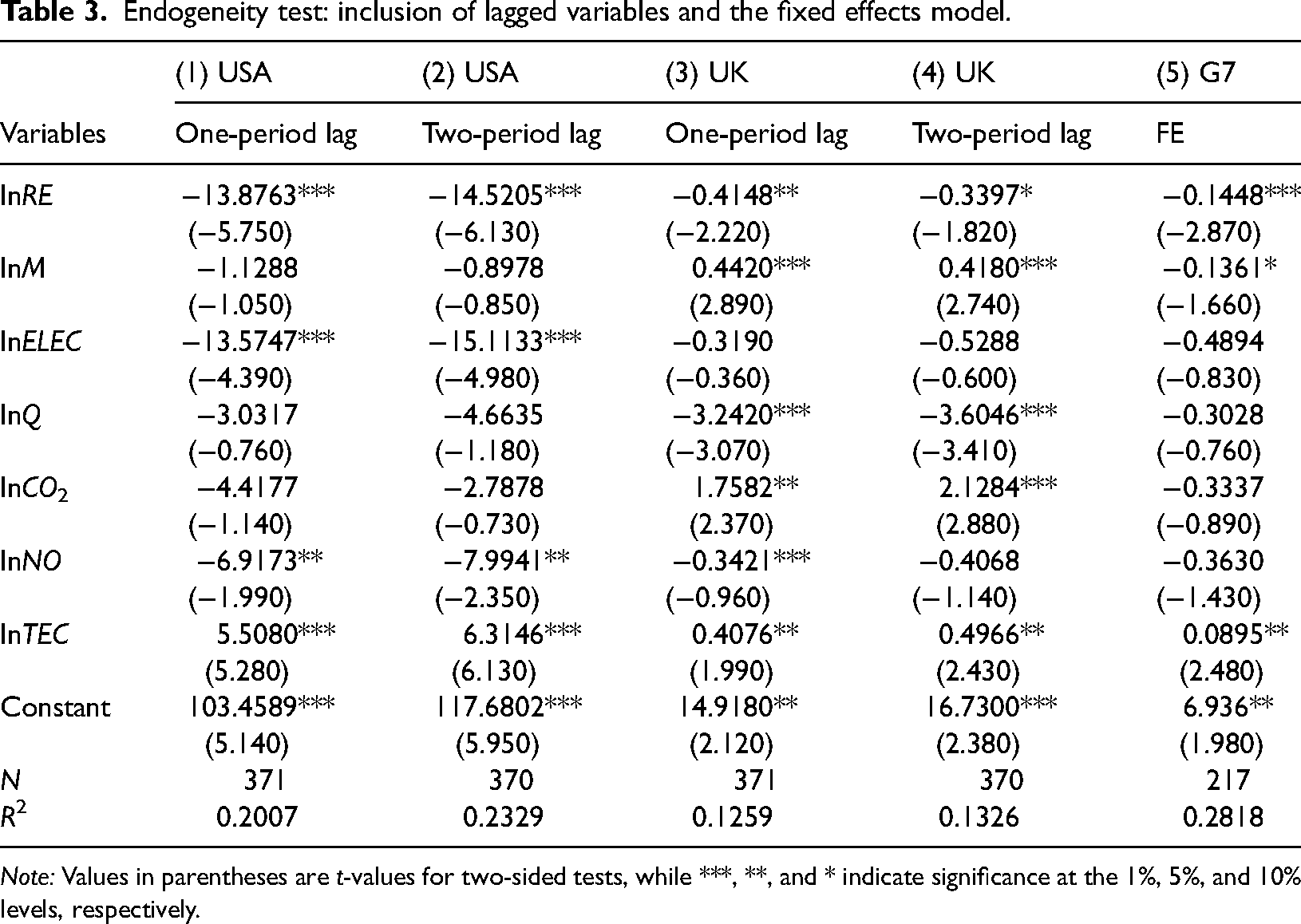
The issue of endogeneity represents a pivotal concern within the field of econometrics, necessitating careful consideration in the majority of studies to ensure the validity and reliability of the estimated results. We have previously delineated the potential bidirectional causality between explanatory and dependent variables, indicative of endogeneity. This section of the paper employs three methodologies to address this issue including lagged explanatory variables, a fixed effect model, and a two-stage least squares regression model. Firstly, the regression model incorporates lagged explanatory variables from the first and second periods and is re-estimated. The regression results for the United States and the United Kingdom, presented in Table 3 columns (1) to (4), demonstrate that the sign and significance of the core explanatory variable, the proportion of renewable energy consumption (RE), remain largely unchanged, affirming the reliability of the estimates. Concurrently, the application of a fixed-effects model effectively addresses the endogeneity arising from bidirectional causality. Column (5) of Table 3 re-estimates using panel data composed of relevant annual data from G7 member countries and a fixed-effects model. The regression results confirm the reliability of the outcomes.
Endogeneity test: inclusion of lagged variables and the fixed effects model.
Note: Values in parentheses are t-values for two-sided tests, while ***, **, and * indicate significance at the 1%, 5%, and 10% levels, respectively.
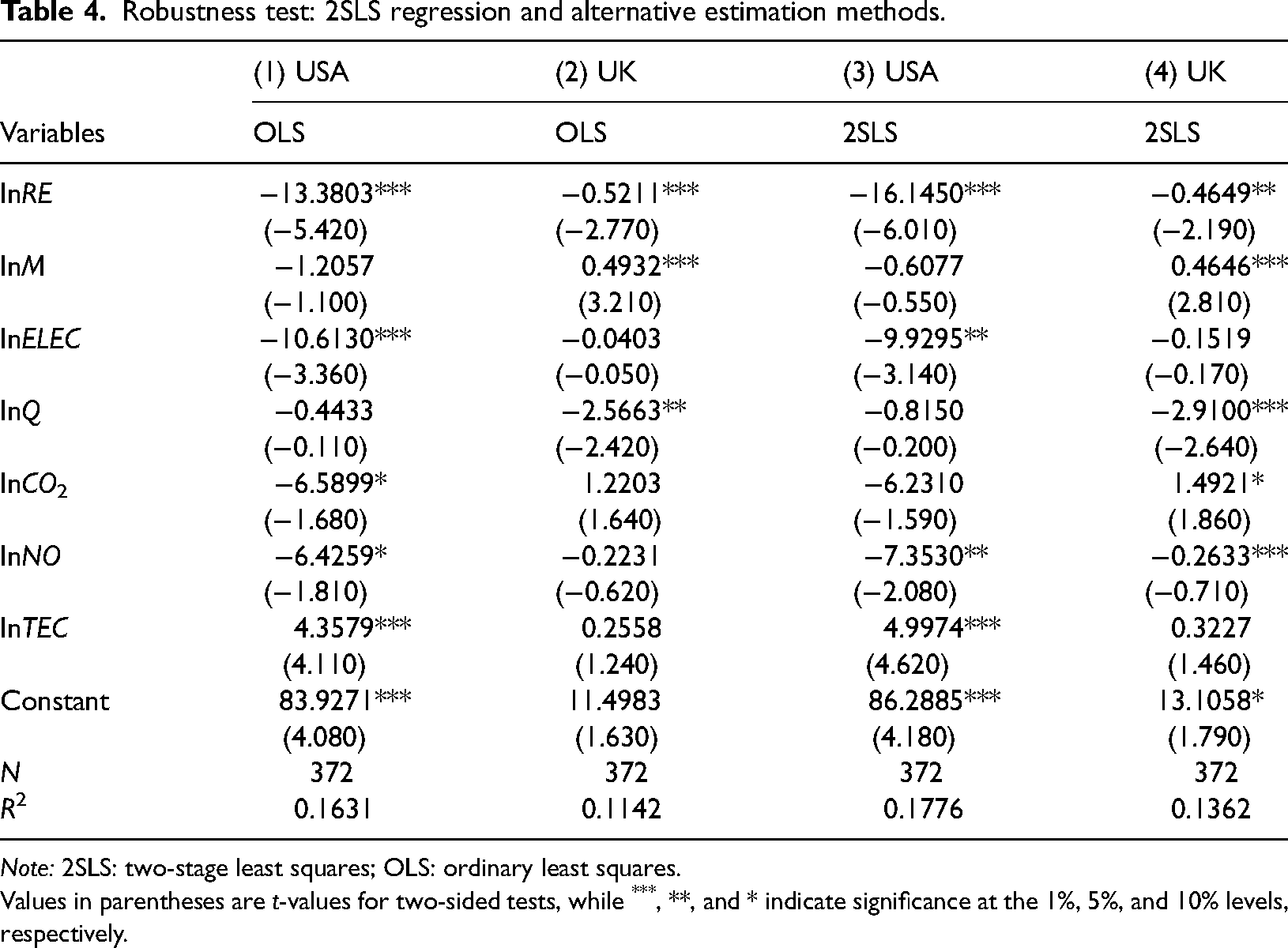
The third methodology employed in this study involves the application of the two-stage least squares (2SLS) method for testing. In selecting instrumental variables, this study follows the approach of other research by using the lagged values of the endogenous variable (RE) as instruments, thereby re-estimating the regression model. Table 4 presents the results estimated through the 2SLS method. Additionally, the study recalculates the model using ordinary least squares (OLS) regression, and all the results further demonstrate the robustness of the estimations.
Robustness test: 2SLS regression and alternative estimation methods.
Note: 2SLS: two-stage least squares; OLS: ordinary least squares.
Values in parentheses are t-values for two-sided tests, while ***, **, and * indicate significance at the 1%, 5%, and 10% levels, respectively.
Winsorization and adjusting sample time intervals
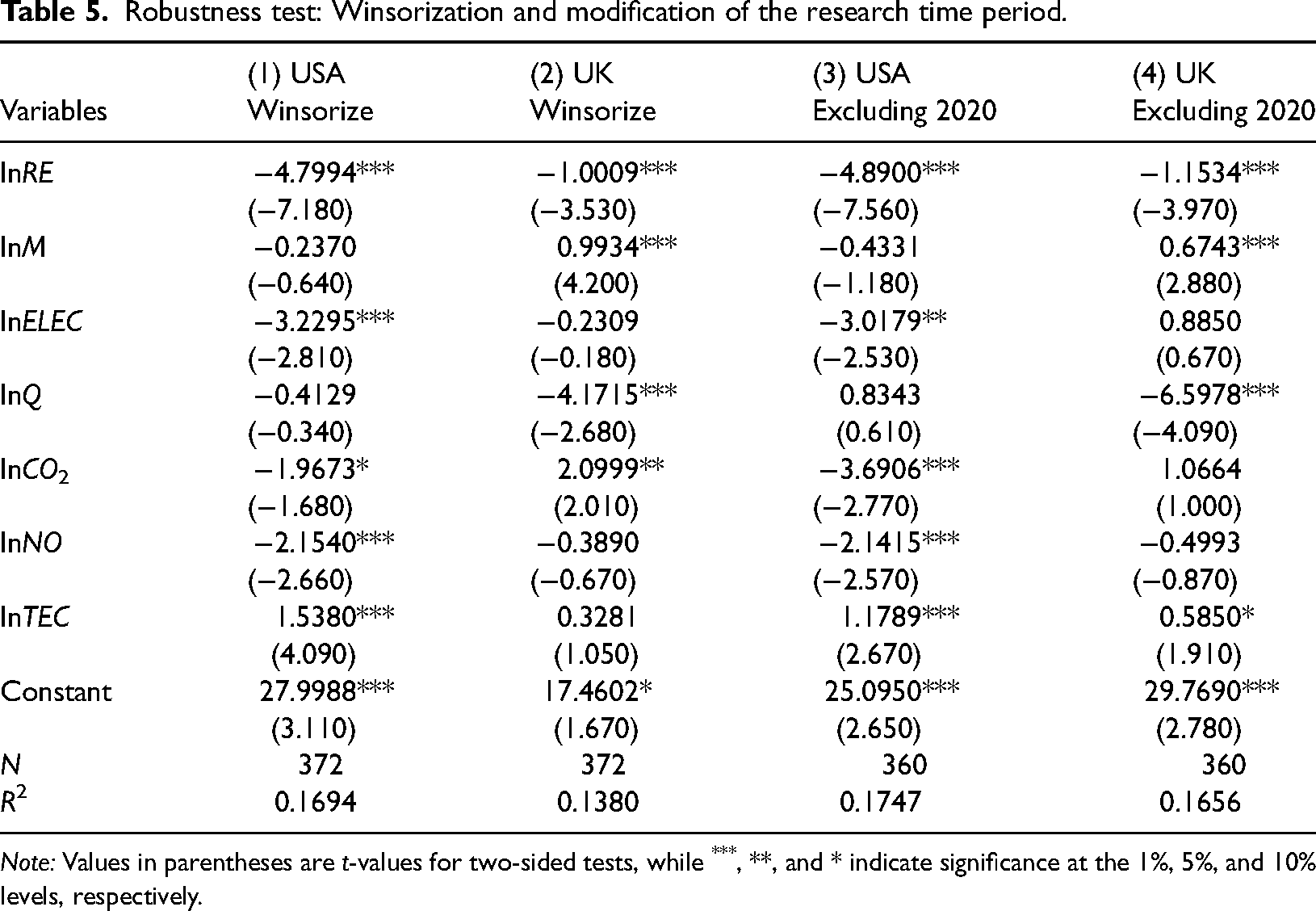
Winsorization is a commonly employed robustness check in econometric analysis, primarily aimed at addressing outliers to mitigate the influence of extreme values. In this study, winsorizing at 1% and 99% is applied to each continuous variable. The specific robustness test regression results are presented in columns (1) and (2) of Table 5. The findings indicate that the sign and significance of the core explanatory variable (RE) remain largely consistent, affirming the reliability of the estimations.
Robustness test: Winsorization and modification of the research time period.
Note: Values in parentheses are t-values for two-sided tests, while ***, **, and * indicate significance at the 1%, 5%, and 10% levels, respectively.
Since 2020, the COVID-19 pandemic has proliferated globally, significantly impacting the energy market due to trade blockades implemented by various countries. To ensure the reliability of the empirical results, this study excludes the data from 2020 and re-estimates the model. The outcomes, displayed in columns (3) and (4) of Table 5, reveal that the key research variable (RE) maintains a similar sign and significance as the original regression model estimates, suggesting that the conclusions withstand robustness checks.
Further analysis
Moderating effect analysis
The geopolitical risks of a nation do not solely arise from external threats like territorial disputes, wars, and political unrest, but are also closely linked to the country's internal political, economic, and military capabilities. Government military expenditure, as a variable that spans multiple domains such as politics, economy, and national status, reflects both national security needs and levels, and also portrays the nation's financial condition. Therefore, this paper considers the proportion of government military expenditure (MG) as a moderating variable. It examines its interaction with renewable energy consumption to explore the impact mechanisms on geopolitical risk. This analysis delves into the moderating role of military expenditure among the key variables.
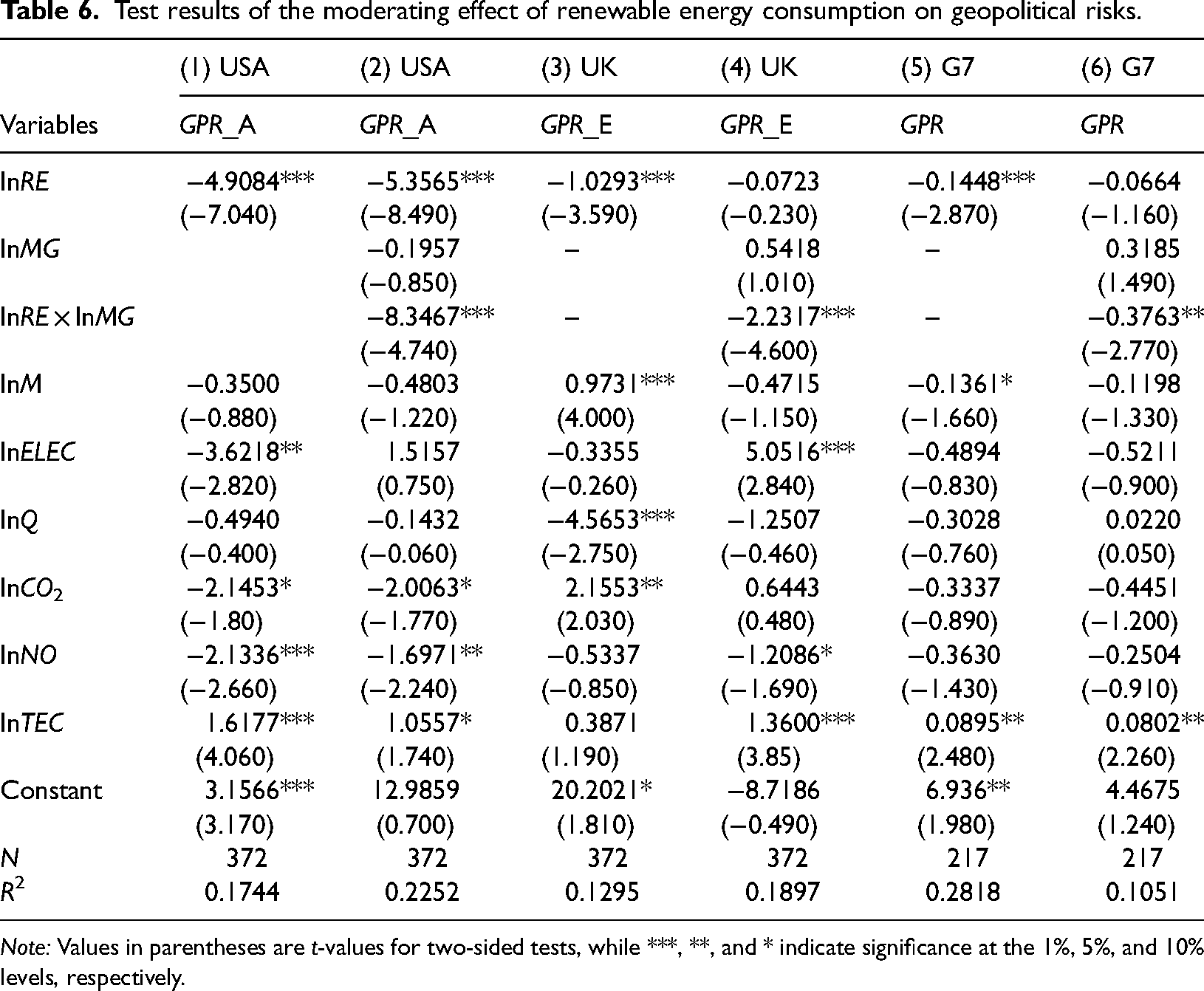
From the test results in columns (1) to (4) of Table 6, it can be observed that, given the negative significant main effects in columns (1) and (3), the coefficients of the moderating interaction terms in columns (2) and (4) are also significantly negative. It is shown that in the United States, the United Kingdom, and G7, the increase in the share of the moderating variable government military expenditure significantly enhances the positive impact of renewable energy consumption on geopolitical risk, and can effectively reduce national geopolitical risk. The United States and the United Kingdom have increased their consumption of renewable energy, effectively reducing their dependence on fossil fuels. Increasing the proportion of military expenditure can help the country improve energy security and national strength, and promote the development and application of renewable energy, thereby reducing geopolitical risks. This conclusion supports Hypothesis H2 proposed in this study.
Test results of the moderating effect of renewable energy consumption on geopolitical risks.
Note: Values in parentheses are t-values for two-sided tests, while ***, **, and * indicate significance at the 1%, 5%, and 10% levels, respectively.
Comparative analysis
As a representative group of developed nations in the 21st century, this section of the article conducts a comparative analysis of the impact of renewable energy consumption (RE) on geopolitical risks (GPR) among G7 member countries. By integrating the developmental realities of these countries, the study provides a comprehensive analysis of renewable energy development and the geopolitical dynamics within the G7. Additionally, it offers insights into how the progress in renewable energy can influence global political stability in developed nations.
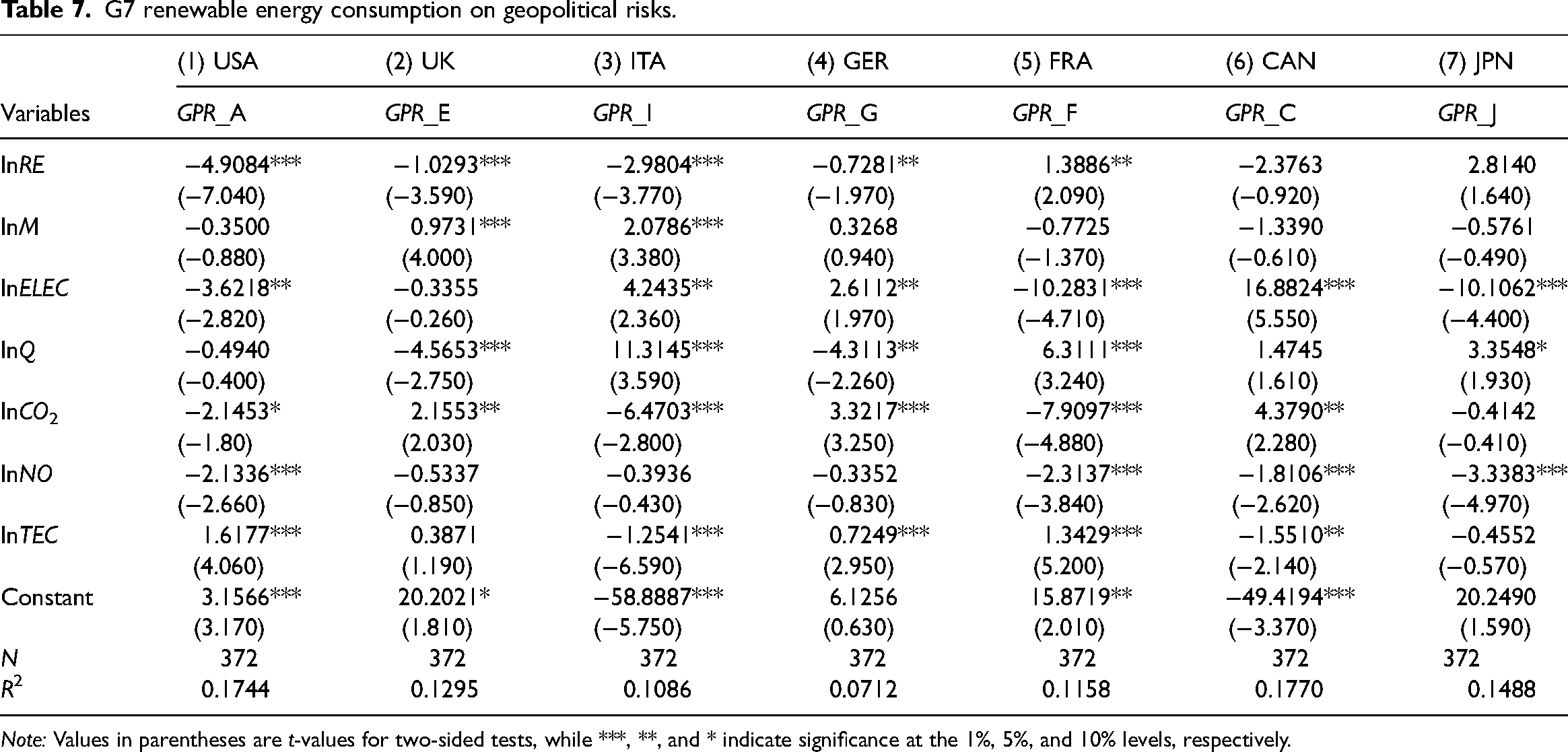
Columns (1) to (7) in Table 7 report the impact of renewable energy consumption on the GPR index for G7 countries. From the regression results, it can be observed that there is a significant negative relationship between the proportion of renewable energy consumption in the total energy consumption and the GPR index for the United States, the United Kingdom, Italy, and Germany. The increase in the proportion of renewable energy consumption in total energy consumption reduces geopolitical risk. Concurrently, the results for France indicate that an increase in the proportion of renewable energy consumption is associated with a rise in geopolitical risk. The analyses for Canada and Japan, however, reveal no significant correlation between the proportion of renewable energy consumption and their GPR indices. The article will next focus on analyzing the reasons behind these differing outcomes.
G7 renewable energy consumption on geopolitical risks.
Note: Values in parentheses are t-values for two-sided tests, while ***, **, and * indicate significance at the 1%, 5%, and 10% levels, respectively.
The United States, the United Kingdom, Italy, and Germany, as established industrialized capitalist nations, have traditionally depended heavily on fossil fuel consumption, which has often led to international disputes. As these countries shift towards increasing their renewable energy consumption, replacing traditional primary energy sources like coal, oil, and natural gas, they experience a reduction in various conflicts. Moreover, in the global context of low-carbon, clean production and consumption, transitioning from fossil fuels to renewable energy sources is becoming increasingly prevalent. This shift not only effectively alleviates geopolitical tensions for many countries but also promotes comprehensive development in political, environmental, and other domains. Consequently, for most nations, the augmented use of renewable energy is instrumental in significantly reducing geopolitical risks and fostering multi-dimensional progress.
For the different outcomes observed in France, Canada, and Japan, this article offers explanations based on the current realities. France's energy structure is uniquely characterized by a high dependency on nuclear power. In 2020, nuclear energy accounted for 65% of France's total electricity production, significantly higher than in other countries. However, this study focuses on clean renewable sources like solar and wind energy, which convert natural energy into electricity and provide a more environmentally friendly alternative. Nuclear energy, being an advanced energy source, faces high operational and developmental challenges, as well as safety concerns. Therefore, France's traditional nuclear-dominated energy structure is considerably impacted when confronted with competition and challenges from cleaner, safer renewable energy sources. In this context, as shown in Figure 2, France has been gradually increasing the proportion of renewable energy in its energy mix since 2005 and has started promoting the use of renewable energy. The structure of a country's energy sector is closely related to its geopolitical risks. Consequently, for France, investing in new renewable energy technologies and restructuring the national energy department to balance and integrate with the existing nuclear infrastructure will impact the country's geopolitical risk profile. Such strategic adjustments are expected to increase France's geopolitical risks, as it navigates complex trade-offs between maintaining its traditional nuclear advantage and transitioning towards more sustainable energy sources.
In light of Canada's current energy development status and the proportion of renewable energy consumption previously mentioned (as shown in Figure 2), Canada has historically been a nation with a significant share of renewable energy consumption. As one of the world's leading countries in hydropower generation, hydroelectricity accounted for 58.5% of Canada's total electricity generation in 2020. Consequently, over the past three decades, there has been no significant development in the renewable energy sector in Canada, indicating that its long-term stable renewable energy consumption structure has had a minimal impact on the country's overall geopolitical risks. Furthermore, as a key global producer and exporter of oil and natural gas, Canada faces relatively lower geopolitical risks associated with fossil fuel reliance. Despite the global trend of significant development in renewable energy in recent years, Canada's energy policy has tended to balance traditional energy exports with the development of renewable energy, without substantially changing its status as a major exporter of fossil fuels. This balanced strategy helps maintain the nation's stable position in the global energy market and mitigates geopolitical risks caused by fluctuations in the energy market. Therefore, changes in renewable energy consumption have not significantly impacted Canada's geopolitical risks.
For Japan, the development in the renewable energy sector has been relatively slow. As depicted in Figure 2, Japan has the lowest proportion of renewable energy consumption among the G7 countries, with ∼ 23% of its total electricity generation coming from renewable sources, according to data from the IEA. Given its geographical positioning as an island nation and frequent exposure to natural disasters, Japan faces significant challenges in advancing renewable energy technologies. Following the Fukushima nuclear disaster in 2011, Japan began exploring alternative energy sources, including renewables, yet the overall transformation of its energy structure remains a lengthy and complex process. Additionally, as the sole Asian member of the G7, Japan has demonstrated a strong initiative in addressing geopolitical issues. Japan has not only established alliances with Western developed countries but also actively participates in the Quadrilateral Security Dialogue (QUAD) involving Australia, India, and the United States, and has been instrumental in the signing and implementation of the Regional Comprehensive Economic Partnership (RCEP), striving to maintain peace and stability in Asia. Consequently, Japan has experienced relatively low and stable geopolitical risks over the past few decades, with changes in renewable energy consumption having a negligible impact on its geopolitical risks.
VAR model
n this section, the article constructs a VAR model to further analyze the dynamic relationships between renewable energy and geopolitical risks in the United States and the United Kingdom, along with other related variables. Moreover, within this section, energy intensity (EI, Data sources: iea.org/t&c/termsandconditions. IEA World Energy Balances) replaces greenhouse gas emissions as a control variable, allowing for an extended discussion on the direct impact of energy factors on geopolitical risks.
Granger causality test
Prior to constructing the VAR model, this study conducted augmented Dickey-Fuller (ADF) unit root tests and Johansen cointegration tests on the time series data of both countries. The results of these tests indicated that the variables were stable, and there existed a long-term stable relationship among them. Additionally, this study identified the optimal lag (three lags) order for the model and successfully passed the unit root stability test.
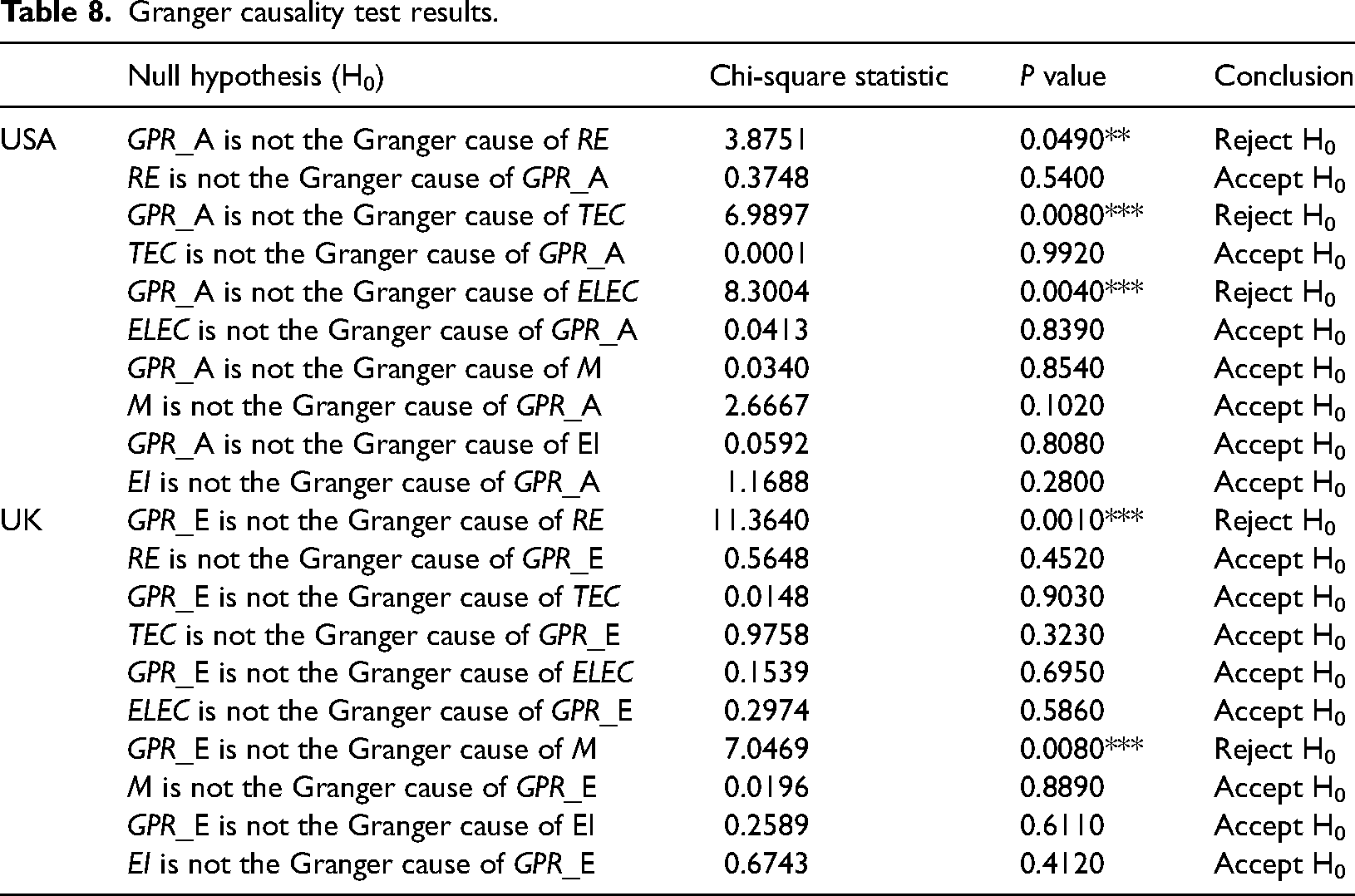
The Granger causality test is commonly used to examine whether a set of time series causes another set of time series. Therefore, in this section, this study investigated whether there is bidirectional Granger causality or unidirectional Granger causality between geopolitical risk and other variables. Granger causality between the other variables is not the focus of this study and thus is not presented in the main text.
The results of the Granger causality test for the United States in Table 8 indicate unidirectional causality between the key explanatory variable renewable energy consumption (RE) and the GPA index (GPR_A) of the United States. However, unidirectional causality exists between the control variables electricity consumption ratio (ELEC) and application for non-resident benefits (TEC) with the geopolitical risk index (GPR_A) of the United States. The results of the Granger causality test for the United Kingdom in Table 8 reveal unidirectional causality between the key explanatory variable renewable energy consumption (RE) and the GPA index (GPR_E) of the United Kingdom. Unidirectional causality exists between the control variables share of renewables in electricity production (M) with the geopolitical risk index (GPR_A) of the United Kingdom.
Granger causality test results.
Impulse response analysis
Impulse response analysis is primarily employed to estimate the dynamic adjustment process of various variables within a system under a given external shock. It aids in understanding the interplay among variables over time; however, it is important to note that such influences are generally based on correlation rather than strict causality.
The impulse response analysis for the United States and the United Kingdom indicates that over time, the GPR eventually assimilates the influences from other variables, converging to a stable value of zero. The impact of renewable energy consumption (RE) on geopolitical risk (GPR_1) is negative except for the weak positive impact in the first phase, with a negative impact coefficient of 0.09 in the ninth phase. The impact gradually decreases thereafter and eventually disappears. In contrast, in the United Kingdom, the influence of renewable energy consumption (RE) on geopolitical risk (GPR_E) exhibits smaller fluctuations. Similarly, except for a positive effect observed in the initial period, the subsequent impacts are consistently negative, albeit minor. The largest negative impact coefficient is merely 0.005, and the impulse response dissipates rapidly thereafter. Detailed results of the impulse response analysis can be found in Figure A1 in the Appendix.
Variance decomposition
Variance decomposition is primarily utilized to study the extent of mutual influences among variables. Building on the Granger causality test and impulse response analysis, this article employs variance decomposition to further analyze the magnitude of the impact of shock renewable energy consumption on variable geopolitical risk. The findings indicate that the geopolitical risk in the United States is more significantly influenced by renewable energy consumption.
The consumption of renewable energy exerts a more pronounced impact on geopolitical risk in the United States. The impact on geopolitical risk in the United States was relatively small in the first 10 periods, but gradually escalated thereafter, reaching its maximum contribution rate of 5.3894% in the 36th period. Consumption of renewable energy in the United Kingdom is much less vulnerable to geopolitical risk than in the United States, while the growth trend is slow, finally peaking in period 28. Detailed results of the variance decomposition can be found in Table A1 in the Appendix.
Conclusion and policy recommendation
Conclusion
This article, utilizing time series data from 1990 to 2020, focuses on the United States and the United Kingdom as primary research subjects, employing a multivariate regression model to investigate the impact of renewable energy consumption on geopolitical risks and its underlying mechanisms. Moreover, the study contrasts the situations in the US and the UK with those of the other five member countries of the G7 alliance. To further validate the credibility and robustness of the research findings, a series of endogeneity and robustness tests were conducted. Additionally, a VAR model was applied to extensively analyze the dynamic interactions between renewable energy consumption and geopolitical risks.
The empirical results revealed significant causal relationships between renewable energy consumption and geopolitical risk in the United States, the United Kingdom, Italy, and Germany within the G7 alliance. France, with its unique nuclear-centric energy structure, exhibits an increase in geopolitical risks as the proportion of renewable energy consumption rises. This phenomenon reflects the specific challenges France faces in transitioning to a more diversified and cleaner energy mix, particularly in balancing the role of nuclear power with emerging renewable energy sources. However, the causality between these variables in Canada, and Japan was not significant, likely due to the specific characteristics of these countries. Moreover, this study utilized government military expenditure as a moderating variable, and the potential impact mechanism was found to be present between renewable energy consumption and geopolitical risk in the United States, the United Kingdom, and G7.
Policy recommendation
In the context of the research on renewable energy consumption and geopolitical risk, this study focused on the development situations in the United States and the United Kingdom. The research results not only provided valuable insights into the development of renewable energy in these two countries but also offered useful references for other nations in adjusting their energy use and energy development strategies. Currently, countries worldwide are actively developing renewable energy sources. This development helps reduce their reliance on fossil fuels such as oil, coal, and natural gas, thereby lowering their sensitivity to geopolitical risks concerning energy issues. The continuous increase in the proportion of renewable energy consumption also helps alleviate the problem of energy dependency caused by unbalanced energy and resource reserves globally, thereby reducing the risk of energy supply interruptions resulting from geopolitical conflicts. The development and utilization of renewable energy require high technological thresholds and financial support, driving international cooperation and exchanges. This is conducive to improving diplomatic relations between countries and reducing geopolitical risks.
Given the frequent occurrence of international emergencies, effectively addressing geopolitical risks arising from energy issues is a significant topic. Countries worldwide should accelerate the construction of renewable energy infrastructure, increase the utilization rate of renewable energy, further reduce their reliance on traditional fossil fuels, mitigate various risks caused by energy supply interruptions, and promote national energy security. Establishing an effective international technical cooperation and trade operation system, sharing renewable energy technologies and markets in-depth, promoting regional cooperation in renewable energy, and facilitating global transformation will enhance cooperation and trust among nations, thereby reducing geopolitical conflicts. Moreover, countries worldwide should increase their consumption of renewable energy to mitigate global climate change, promote energy transition, and support low-carbon development, making positive contributions to climate change mitigation.
This article has explored renewable energy consumption and geopolitical risk. Future research could expand the scope to study other important organizational countries. Additionally, considering the close relationship between energy, geopolitical risk, and environmental issues, exploring the role of environmental pollution and other factors in this context could be a potential direction for future research. We look forward to a series of studies in these directions in the future.
Footnotes
Author contributions
Zhuo Yang designed the research. Wenguang Tang and Dong Liu analyzed the model and drafted the manuscript. Xiaohui Yuan and Jian Hu issued the idea and revised the manuscript along with other authors.
Declaration of conflicting interests
The author(s) declared the following potential conflicts of interest with respect to the research, authorship, and/or publication of this article: Author Xiaohui Yuan is employed by Beijing FibrLink Communications Co., Ltd. The remaining authors declare that the research was conducted in the absence of any commercial or financial relationships that could be construed as a potential conflict of interest.
Funding
The author(s) declared the following potential conflicts of interest with respect to the research, authorship, and/or publication of this article: The Key Projects of the Ministry of Education (Project No: DCA190325).
Research data policy and data availability statements
The datasets generated during and analyzed during the current study are available from the corresponding author upon reasonable request.

Appendix
The results of the impulse response analysis are illustrated in two diagrams: the left graph represents the United States, while the right graph depicts the United Kingdom.
The results of the variance decomposition analysis are presented, focusing on the initial 10 periods, as well as periods 30–40 for the United States and periods 25–35 for the United Kingdom.