




Abstract
Storage systems are needed to boost the reliability of intermittent solar and wind resources in power networks. Rather than focus on one storage system or one hybrid energy storage system (HESS), this work models the operation of six HESS configurations in a Renewable Energy (RE) based grid-tied network. The objective is to minimise the daily operational costs of the microgrid while prolonging the storage lifetime by considering storage degradation costs. The influence of fixed tariffs and time-of-use (TOU) tariffs on the optimal operational of the HESS configurations have also been investigated; as well as deferrable demand satisfaction, charge-discharge pattern of different HESS and availability of the power-dense storage system within the microgrid. Results show that the lead-acid battery and hydrogen fuel cell (HFC) HESS incurs the highest operational costs, while the supercapacitor-lead-acid battery HESS incurs the lowest operational costs. The supercapacitor-lead acid battery and the supercapacitor-HFC HESS incur the highest annual storage degradation costs. The grid expenses were seen to be the same for all HESS under each tariff scheme. Lastly, decreasing the minimum storage level further by 10% from the 30% in the base case, led to an increase in the number of hours of availability of the power-dense storage system of five of the six HESS. These results have given a deeper understanding to the operation of HESS systems and can inform better decision making of the suitable HESS to be deployed in different operating scenarios.
Introduction
Modern power systems are evolving from the conventional centralised, fossil-fired, power plants to decentralised systems promoting the inclusion of solar and wind resources in the energy mix. This is due to depleting fossil reserves, increasing energy demand and a growing global call for cleaner energy production (Fathima and Palanisamy, 2015; Lorente et al., 2018). However, the inclusion of renewable sources in the existing energy mix comes with its own technical challenges due to its intermittent nature. Thus, it is crucial for modern power systems to be more flexible and adaptable to unexpected variations in demand (Nwulu and Fahrioglu, 2011), weather conditions or excess electricity generation which could be associated with operating RE-inclusive power plants (Fedjaev et al., 2016; International Renewable Energy Agency, 2017).
Energy storage systems have been identified as key enablers for renewables and grid optimisation, while boosting generation efficiency, reducing operation of line voltage regulators, regulating frequency, reducing peak voltages and delaying the need for expansion of transmission and distribution networks (Brandon et al., n.d.; International Renewable Energy Agency, 2017; Weitzel and Glock, 2018). Recently, their inclusion has been increasing considerably across in-front-of-meter (wholesale, transmission and distribution) and behind-the-meter use cases (Abdon et al., 2017; Kambule et al., 2018). Storage options incorporated in modern power systems include batteries, fuel cell systems, supercapacitors, flywheels, compressed air energy storage systems (CAES), pumped hydro storage, superconducting magnetic energy storage (SMES) or a hybrid of two or more of these technologies (see Figure 1).
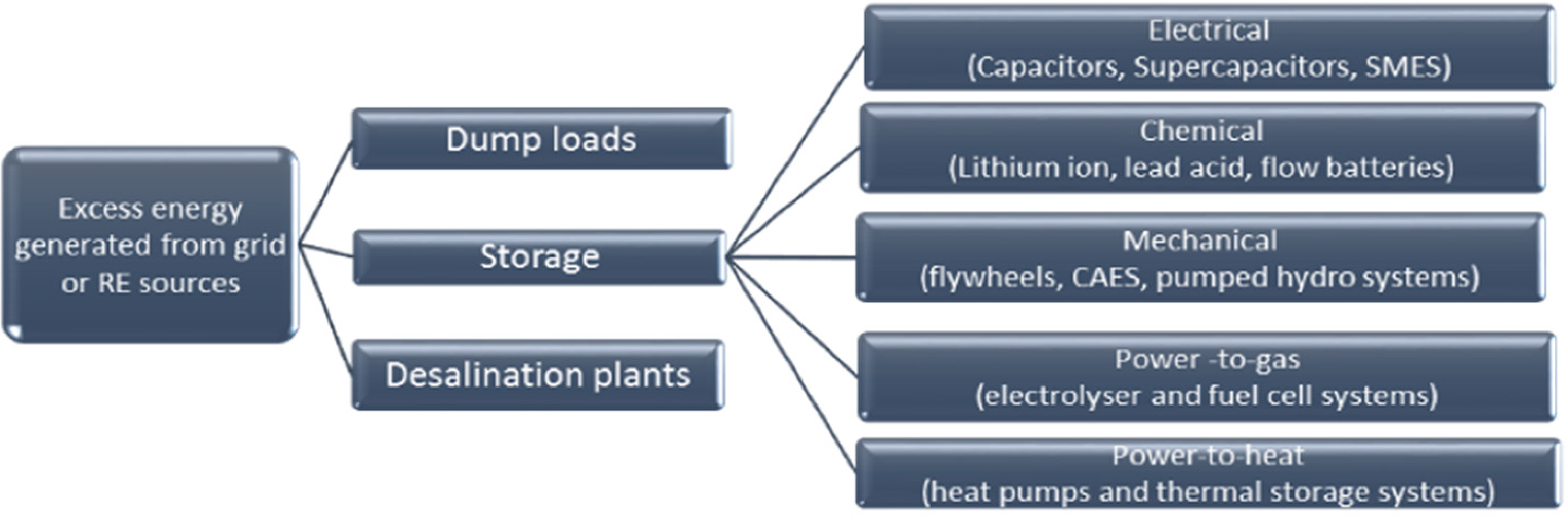
Different use cases of excess energy generation (Das et al., 2018).
Several research works have considered the deployment of energy storage systems in different scenarios. These include in offgrid and grid-tied systems (Fedjaev et al., 2016; Gbadegesin et al., 2019; Hassan et al., 2017; Sofimieari et al., 2019; Weitzel and Glock, 2018), with or without renewable energy sources, on large scales for generation and transmission networks (Das et al., 2018; Lorente et al., 2018), or on small scales for residential use (Ruiz-Cortes et al., 2017; Weitzel and Glock, 2018). For whatever purpose or type selected, sizing and operation of storage systems must consider both technical and economic concerns for optimal benefits. Technical concerns include uncertainty in RE supply, voltage or frequency deviations, loss minimisation and power quality improvement. These are ideally balanced with economic concerns such as the influence of storage size and operation on overall power system costs (Das et al., 2018), or under grid pricing schemes (Hassan et al., 2017).
Technical characteristics vary for different storage systems. Storages like supercapacitors have the ability to charge and discharge at a high rate and are termed as high power-dense storages (Aktas et al., 2018; Bocklisch, 2015). Others charge and discharge at a lower rate but are capable of providing power for a longer duration, like hydrogen fuel cells, pumped hydro storage systems, etc. (Bocklisch, 2015). Systems have also been developed to take advantage of the attributes of each individual storage system to form a combined storage system generally referred to as hybrid energy storage systems (HESS).
Hybrid energy storage systems are combined from different storages which complement each other technically and financially for short- and long-term uses. Technical criteria considered in combining storages include power densities, energy densities, charging and discharge rates and system efficiencies, while the economic criteria include total installation costs, lifetimes, operational and degradation costs (Gbadegesin et al., 2019). When a HESS is optimally planned and managed, both technical and economic performance metrics are usually improved (Bocklisch, 2015; Weitzel and Glock, 2018). These improvements are shown in a battery-supercapacitor HESS which can provide energy buffering, peak power smoothening as well as reduced storage costs and improved performance in high wind fluctuation conditions (Babazadeh et al., 2012; Ma et al., 2015). A similar HESS's performance is confirmed via experimentation and simulation with MATLAB and shows a 30% cost reduction in lifecycle cost of the batteries when supercapacitors (SC) are included (Conte et al., 2014). In a battery-SMES HESS in a microgrid, the battery keeps the SMES current in the desired range and the SMES protects the battery from large peak-to-peak currents. This leads to a battery lifetime extension from 6.3 years when operating alone, to 9.2 years when operating as part of a HESS (Li et al., 2018). However, these references on energy management of storage systems do not simultaneously compare cost and performance metrics of various HESS configurations.
From available literature, the different methods of energy management of storage systems are broadly classified as either rule-based or optimisation-based [18]. Deterministic and Fuzzy approaches are considered as rule-based, while linear programming, evolutionary methods and model predictive control (MPC) feature as part of optimisation-based approaches. Linear programming was utilised by (Bordin et al., 2017) to develop a methodology to integrate battery degradation in optimisation models, considering the number of cycles and state of charge as variables rather than fixed parameters. Similarly, (Fedjaev et al., 2016) also used linear programming in optimising storage operation for maximal profit from electricity trading, while (Eshraghi et al., 2019) applied it in a combined cooling, heating and power storage system to minimise the costs of energy supply.
A critical review of these works shows that although degradation and optimal operation of single storage systems have been studied, the effect of degradation on hybrid storage systems and their operational cycling and lifetime have not been addressed (Babazadeh et al., 2012; Bordin et al., 2017; Ma et al., 2015; Perez et al., 2016). Also, many works focus on the battery-SC HESS only, often neglecting other HESS combinations that could also be deployed for stationary applications in grid-tied networks (Babazadeh et al., 2012; Conte et al., 2014; Das, 2017; Ju et al., 2017; Ma et al., 2015; Ruiz-Cortes et al., 2017). However (Khosravi et al., 2021), utilises a Mixed integer linear programming after data reduction via clustering to maximise the net present value (NPV) and obtain the most profitable HESS configuration. This literature also considers the health of the hybrid energy storage system by including storage replacement costs in the system model. It concludes with a case study for a 3MW wind power supply. However, geographical constraints, storage medium availability were not included in the final criteria for HESS selection. The novelty in this work comes in the development of a mathematical model for the operation of hybrid energy storage systems, ensuring the incorporation of the technical features of the individual storages in the operation strategy. These features include their high or low charging rates, efficiencies, power and energy densities and storage degradation costs. The impact of these technical characteristics is modelled in this work for a more accurate evaluation of the most promising HESS option that can be deployed. Six HESS topologies are further used as a case study to demonstrate the effect of tariff rates, storage availability constraints, deferrable loads and diesel generator constraints on a microgrid's operation.
The following sections System design and Numerical modelling of system present the details of the microgrid system design and its numerical model. The sections Simulation results and Conclusion and policy recommendations delve into the results of operational optimisation of the selected HESS topologies, sensitivity analysis and conclusion of the work.
System design
Access to reliable power supply from a microgrid is critical for consumers, especially commercial and industrial ones, as the benefits of owning a dedicated microgrid leads to substantial savings in operational costs. They can benefit from time-of-use pricing schemes to shift peak loads and reduce energy costs (Sulaima et al., 2019), reduce dependence on diesel generators and take advantage of incorporating renewable energy sources in their energy mix.
As shown in Figure 2, power supply in this microgrid, at every time interval, comes from one or all of - solar PV panels (PPV), diesel generator (PDG), grid supply (PG) or discharged hybrid storage power (PHSD). The power is consumed by the loads and the charging of the storage system. In this system, ESS1 is the higher power-dense energy storage system capable of fast responses to sudden surpluses or deficits in power required to satisfy loads, while ESS2 is the storage system with higher energy density and capable of providing smaller amounts of power over a longer duration. The control of the entire system is handled by the microgrid system manager (MGSM).
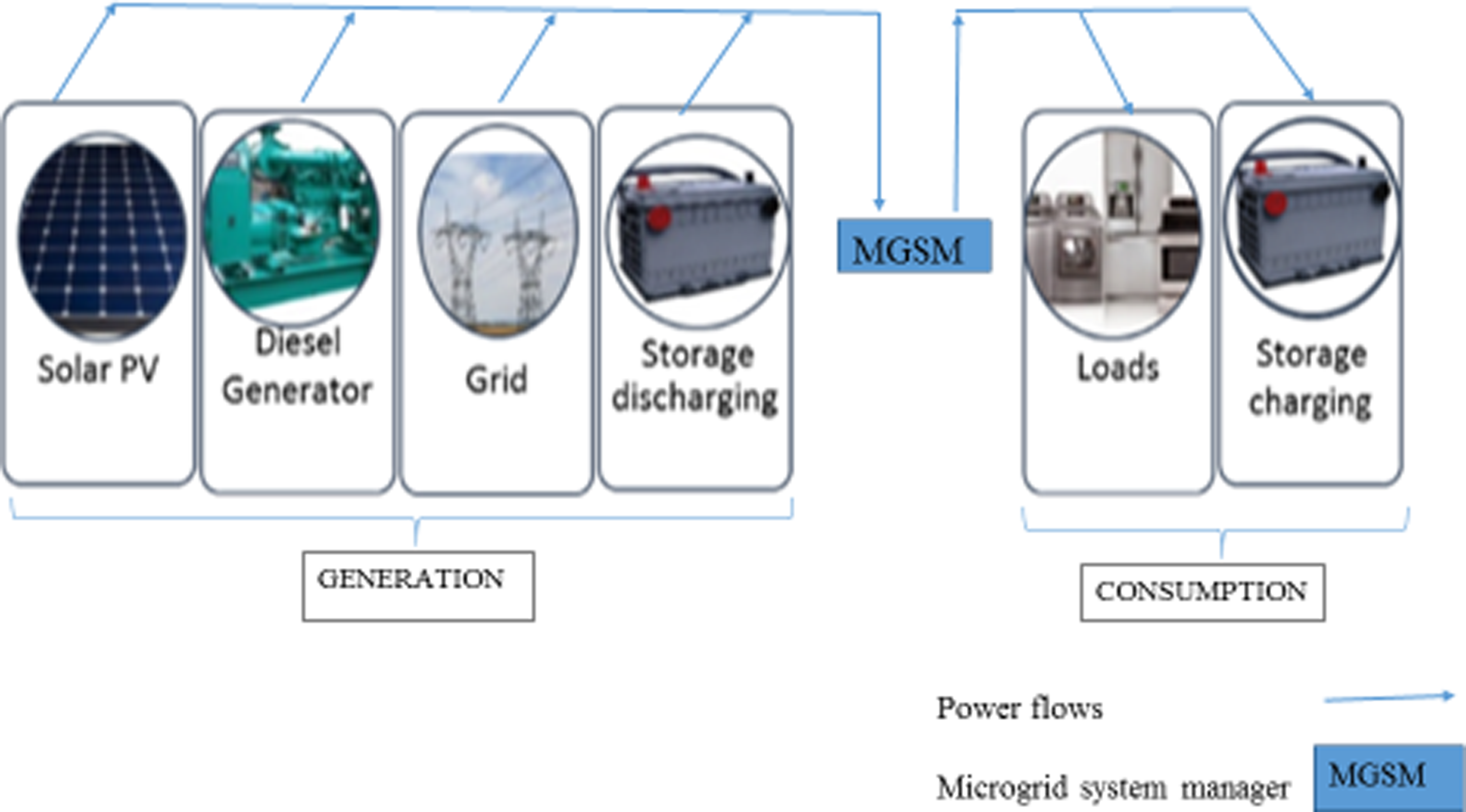
Schematic diagram for system components of RE-based micro-grid.
Numerical modelling of system
AIMMS stands for Advanced Interactive Multidimensional Modelling System, and is an algebraic modelling language designed for modelling and solving optimisation problems (Gbadamosi et al., 2018; Nwulu and Xia, 2015) . It is employed in modelling the system described in the section System design above, using CONOPT 3.14V and CPLEX 12.7 on a computer with Intel core i3 processor. The mathematically-based optimisation approach is used in this study rather than heuristic approaches as the latter produces many subcases, increases complexity and might not guarantee an optimal solution (Garcia-Torres et al., 2016).
Objective function
In the system connected to a grid supply utilising Time-Of Use (ToU) rates, the aim is to satisfy demand at minimal cost to the system owner. The consideration is, therefore, to minimise operational costs by minimising the diesel generator use, storage use considering degradation costs and the use of the grid supply considering time-of-use tariffs. A sampling time of one hour over a 24-h horizon is considered. This is represented mathematically in (1):

Here, a, b, and c are the diesel generator constants (with values stated in the section Model parameters and variables, PDG(t) is power supplied by the diesel generator and PS1D(t) and PS2D(t) are the powers discharged by storage system 1 (ESS1) and storage system 2 (ESS2) every hour, respectively. SDC1 and SDC2 are the storage degradation costs of ESS1 and ESS2, CG(t) is the fixed or ToU-based tariffs of the grid supply, and PG(t) is the power delivered by the grid.
System constraints
Power balance constraints
The power balance equation matching all generation with consumption is presented in (2) below. Generated power is from the diesel generator - PDG, the grid- PG, solar PV panels -PPV, and the discharged power from the HESS, PHSD. These are consumed by the non-deferable loads– PL, the deferrable residential loads -PDL and the HESS charging – PHSC. An inverter with efficiency given as ŋIV is included for the DC-AC conversion of power.

Load constraints
The loads considered in this study comprise fixed non-deferrable loads and deferrable loads which may be powered at any time of the day. Deferrable loads are also referred to as dispatchable loads and may include smart appliances which are programmed to come on at certain times of the day. The total deferrable loads, PDL(t), are limited to 1000 kWh daily (Damisa et al., 2018).

Storage system dynamics
PS1C(t) and PS2C(t) represent the power used in charging ESS1 and ESS2, PS1D(t) and PS2D(t) are discharged from ESS1 and ESS2 of the hybrid storage system. The power discharged from the hybrid energy storage system, PHSD(t) comprises from ESS1 and ESS2. The same goes for the power needed to charge the hybrid energy storage system (PHSC(t)) and shown in (4), are also shown in (5) below:


The variation in the state of charge of the storage systems (SOCS1, SOCS2) is also shown in (6), (7), where ŋS1 and ŋS2 are the efficiencies of ESS1 and ESS2, respectively,


State of charge limitations: The states of charge (SOC) of the ESS is maintained between the highest and lowest SOCs, to avoid possible overcharge or over-discharge.


Simultaneous charging constraint: The system needs to meet the conditions stated in (10) and (11) to ensure that none of the storage systems charge and discharge within the same interval.


ESS1 state of availability: The first storage system of the HESS, ESS1, has high charge and discharge rates which makes it suitable for immediate responses to change in power demand or supply. In order to ensure its availability to absorb or provide power, it is required that its state of charge (SOC) should be between 30% and 70% of the maximum state of charge (SOCS1MAX) (Garcia-Torres et al., 2016; Ruiz-Cortes et al., 2017) as in (12):

The considerations for the difference in the charge-discharge rates of ESS1 and ESS2 are modelled in (13a,b) where ESS1 is able to charge and discharge a larger amount of power. The high energy ESS (ESS2), is constrained from charging or discharging as much power within one interval, due to its functioning as a high-energy ESS in (14a,b):




Diesel generator constraints
The standard generator fuel cost model given in (15) is assumed to be a quadratic function of the active power output of the generator, PDG. The values of the coefficients a, b, c are presented in the section Model parameters and variables below:

SDG(t) is a binary variable which represents the status of the diesel generator, with value of 1 when on and 0 when off. The diesel generator operates optimally when it is supplying at least 30% of its full load and operating under contrary situations affects its operational lifetime (Zhang et al., 2012). This is modelled in (16) to ensure that the diesel generator is either off, or only providing power above 30% of its rated capacity.

Grid limits
The grid power supply is limited to a maximum of 100 kW per hour and a maximum of 2400 kWh daily, under both the fixed prices and ToU tariff schemes.

Model parameters and variables
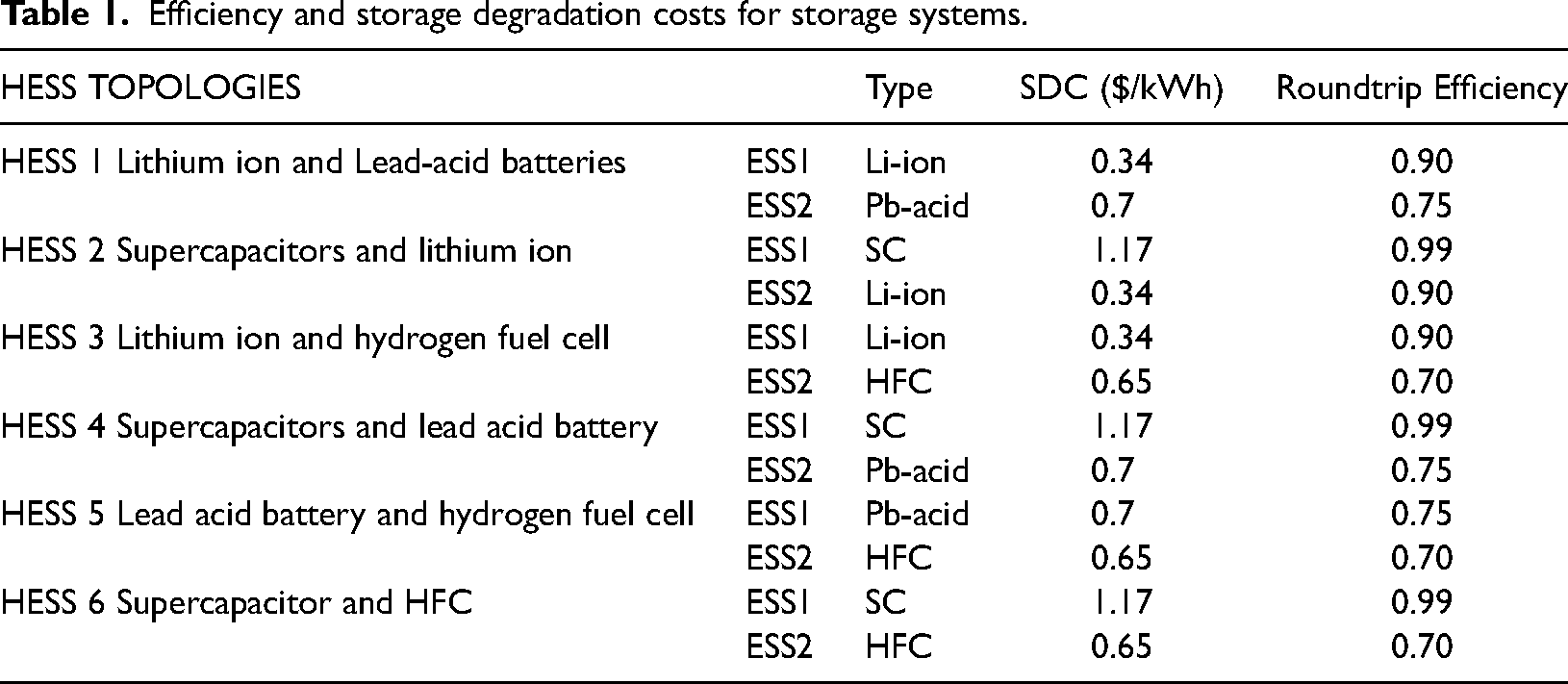
The HESS topologies considered in this study are selected due to their suitability for the size of loads being considered. The storage degradation costs (SDCs) are obtained from the work of (Bordin et al., 2017). The efficiency of the storage systems from (Ghiassi-Farrokhfal et al., 2016; Hemmati and Saboori, 2016) are used, and their charging and discharging efficiencies are assumed to have the same value (Fedjaev et al., 2016; Zhang et al., 2017). The selected HESS configurations and parameters considered in this study are shown in Table 1 below.
Efficiency and storage degradation costs for storage systems.
Solar power profile of (Nwulu and Xia, 2017) is scaled to suit the load as shown in Figure 3. Electricity prices under the ToU pricing from (Ju et al., 2017) (shown in Table 2) and fixed tariff of 0.19 $/kWh (Hassan et al., 2017) are used. The diesel generator constants a, b, and c are 0.246, 0.0815 and 0.433 (Bokabo and Kusakana, 2016). A representative load profile of non-deferrable loads (PL) of a commercial building as shown in Figure 3 (Luo et al., 2017) and deferrable residential loads (PDL) up to 1000 kWh daily are also included. The inverter efficiency is 0.9.
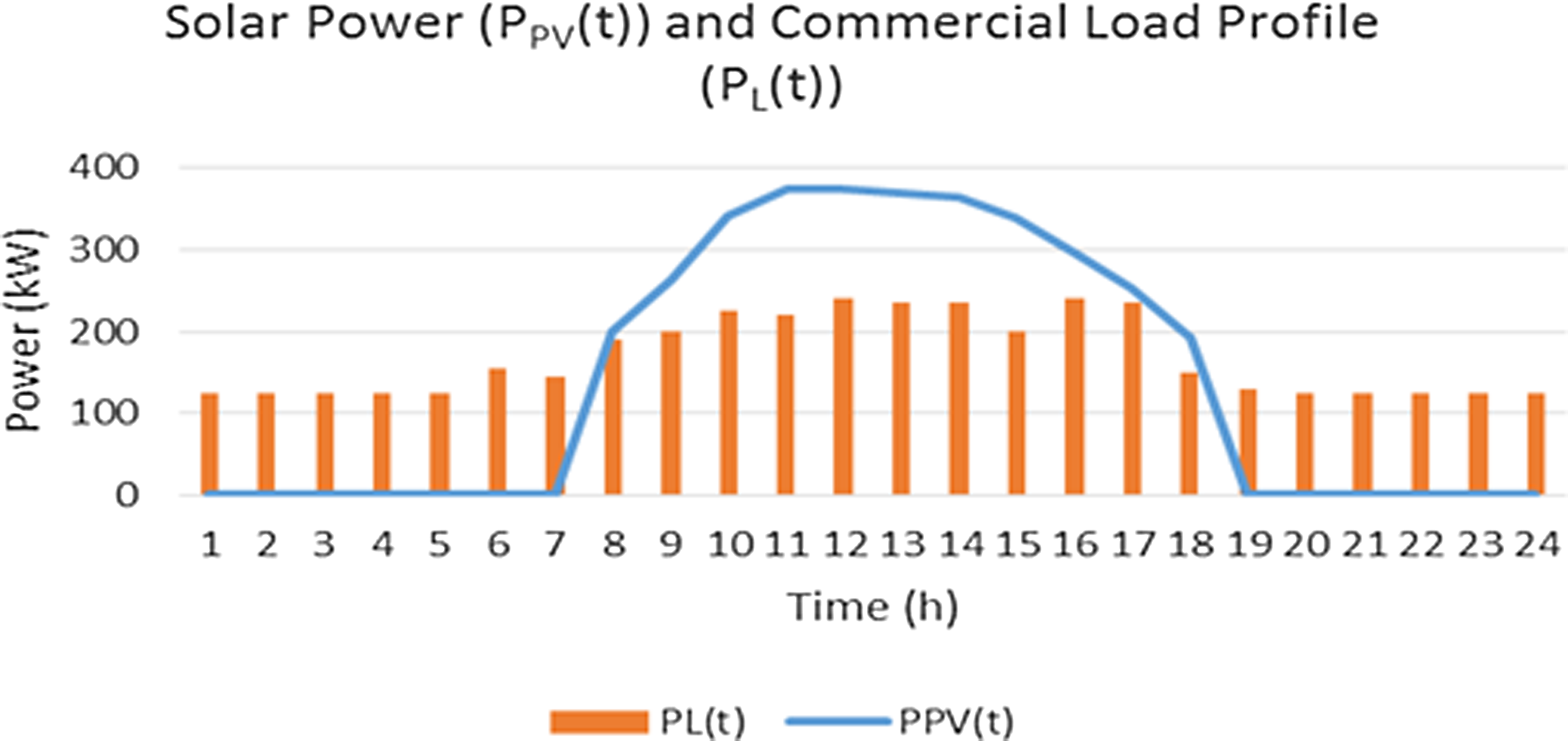
Hourly solar power output and non-deferable load profile.
Grid electricity prices (time of use).

A summary of the methodology including the parameters, variables and constraints of the mathematical model is presented in Figure 4 below.
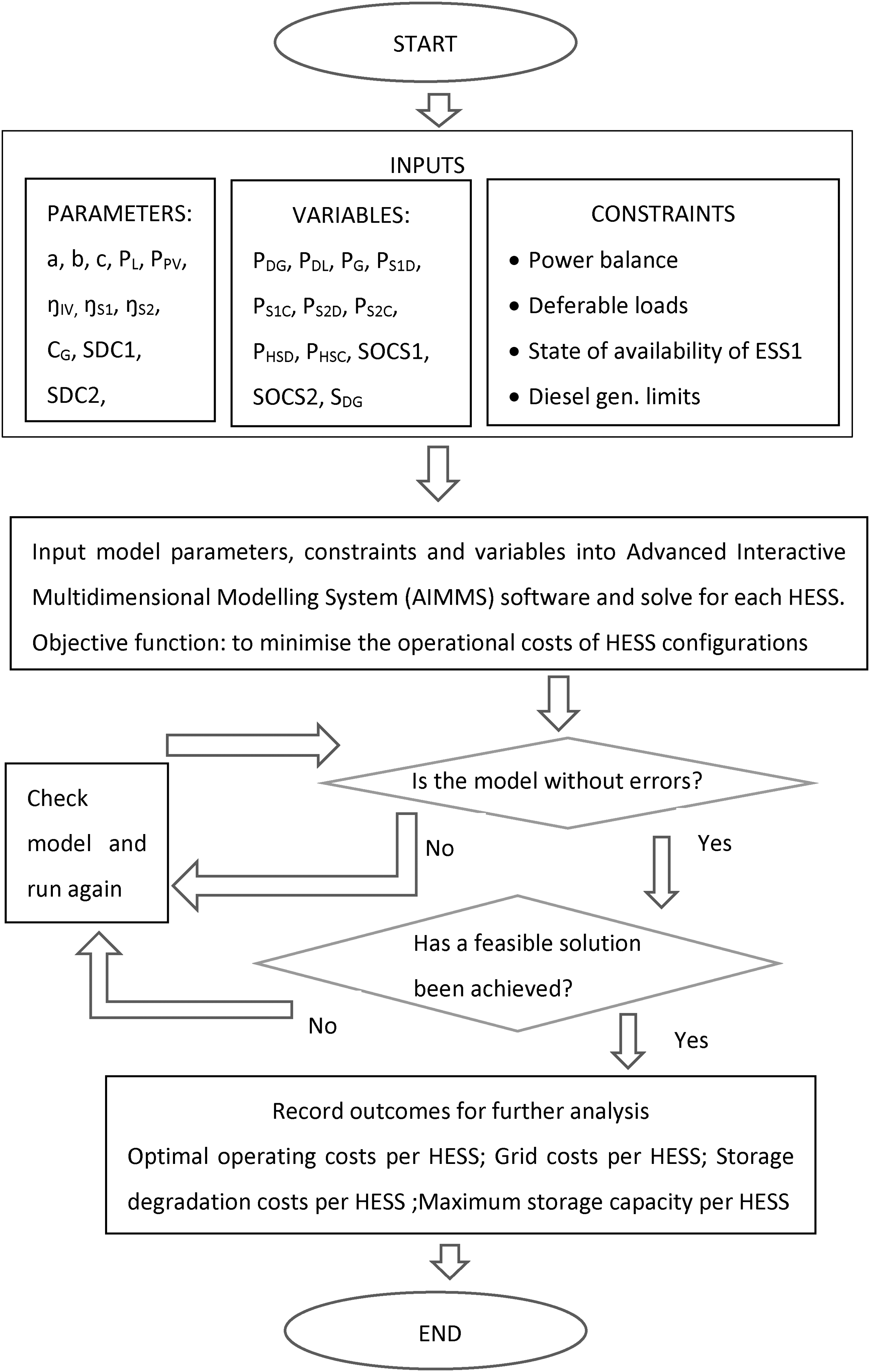
Summary of methodology of optimal operation.
Simulation results
A qualitative comparison of the values of the objective function for six HESS configurations under different tariff schemes and degradation costs in the system described in previous sections is presented. The similar values of the SDCs and efficiencies of the lead acid batteries and hydrogen fuel cells, however, lead to similar results for HESS 1 and HESS 3, as well as for HESS 4 and HESS 6, when they are combined with lithium-ion batteries and supercapacitors respectively. Thus, Figure 5 presents the objective function, grid expenses, diesel generator expenses and storage degradation costs of four HESS configurations – HESS 1 (and 3), 2, 4 (and 6) and 5 under TOU and FT.
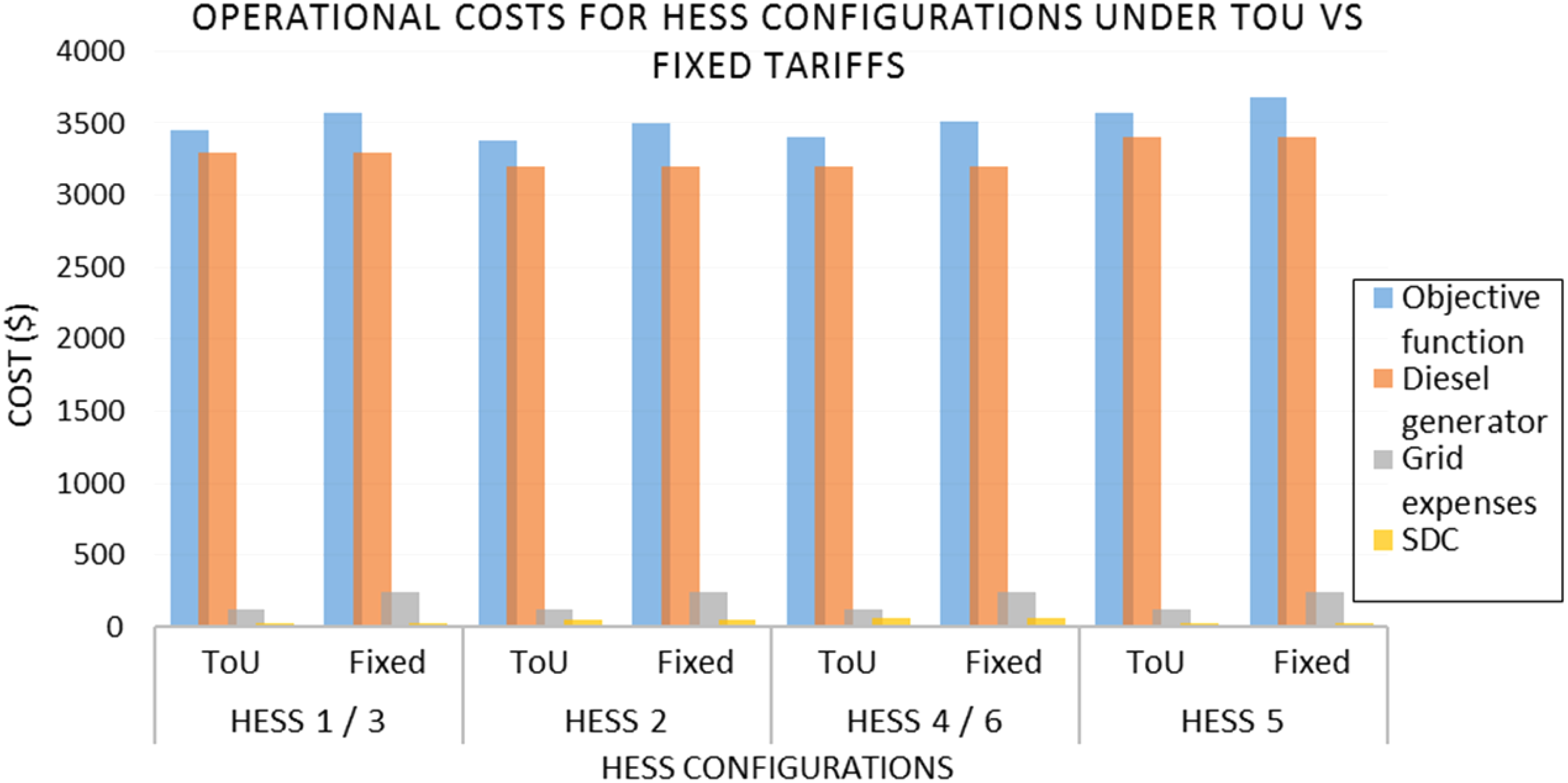
Operational costs of HESS under ToU vs fixed tariff schemes.
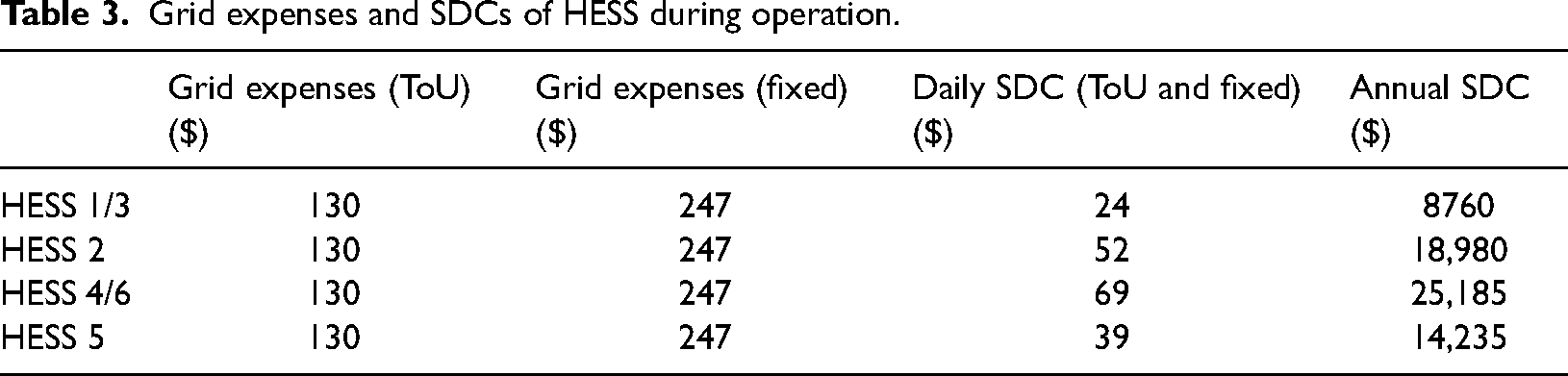
From Figure 5, it is seen that most of the power supply comes from the diesel generators, under both time-of-use (ToU) and fixed tariff scenarios. HESS 5 (the Lead-acid battery-HFC HESS) is the most expensive HESS to operate. HESS 4/6 (Supercapacitor-Lead acid battery or Supercapacitor-Hydrogen fuel cell) incur the highest storage degradation costs. In contrast, HESS 2 (Supercapacitor-Lithium-ion battery) is the most economic hybrid storage system. HESS 1/3 (the Lithium-ion and Lead-acid battery HESS or the Lithium-ion and Hydrogen fuel cell HESS) incur the lowest storage degradation costs. Results show that all grid expenses under the ToU regime for all the HESS were identical, and all lower than the corresponding costs incurred under the fixed tariff regime. In addition, the kind of tariff-based regime in operation has no significant effect on the daily storage degradation costs incurred by the HESS, as they were the same in both cases for each HESS, as shown in Table 3.
Grid expenses and SDCs of HESS during operation.
The charging and discharging pattern for each of the HESS configurations is shown in Figure 6. The upward slope denotes charging periods whereas the downward slope denotes periods of discharge, with all the HESS charging and discharging at different rates. The highest state of charge for all the HESS configurations occurs at 18.00 and gives an indication to the required sizes of each HESS that is suitable for this microgrid.
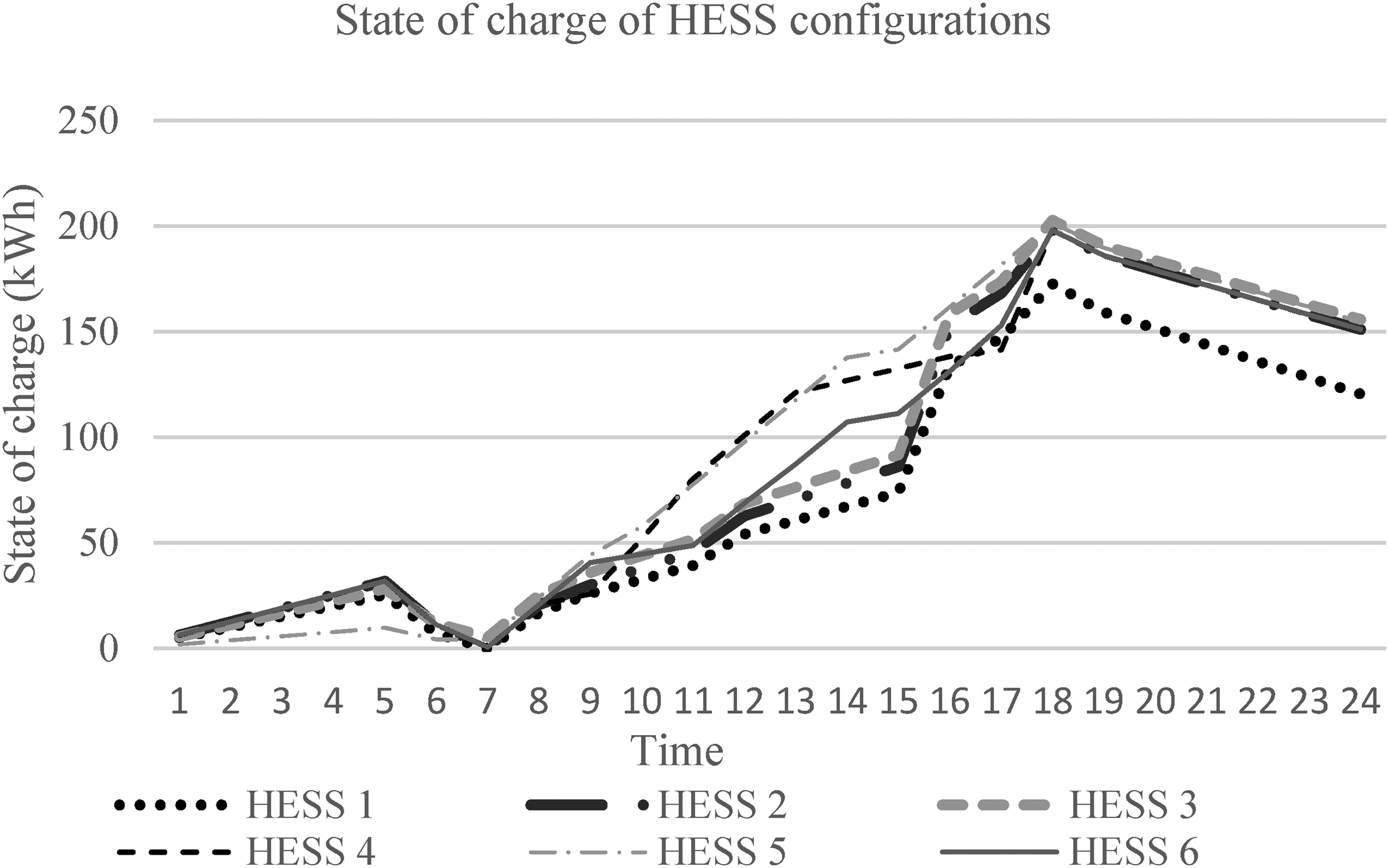
State of charge of different HESS configurations in the microgrid.
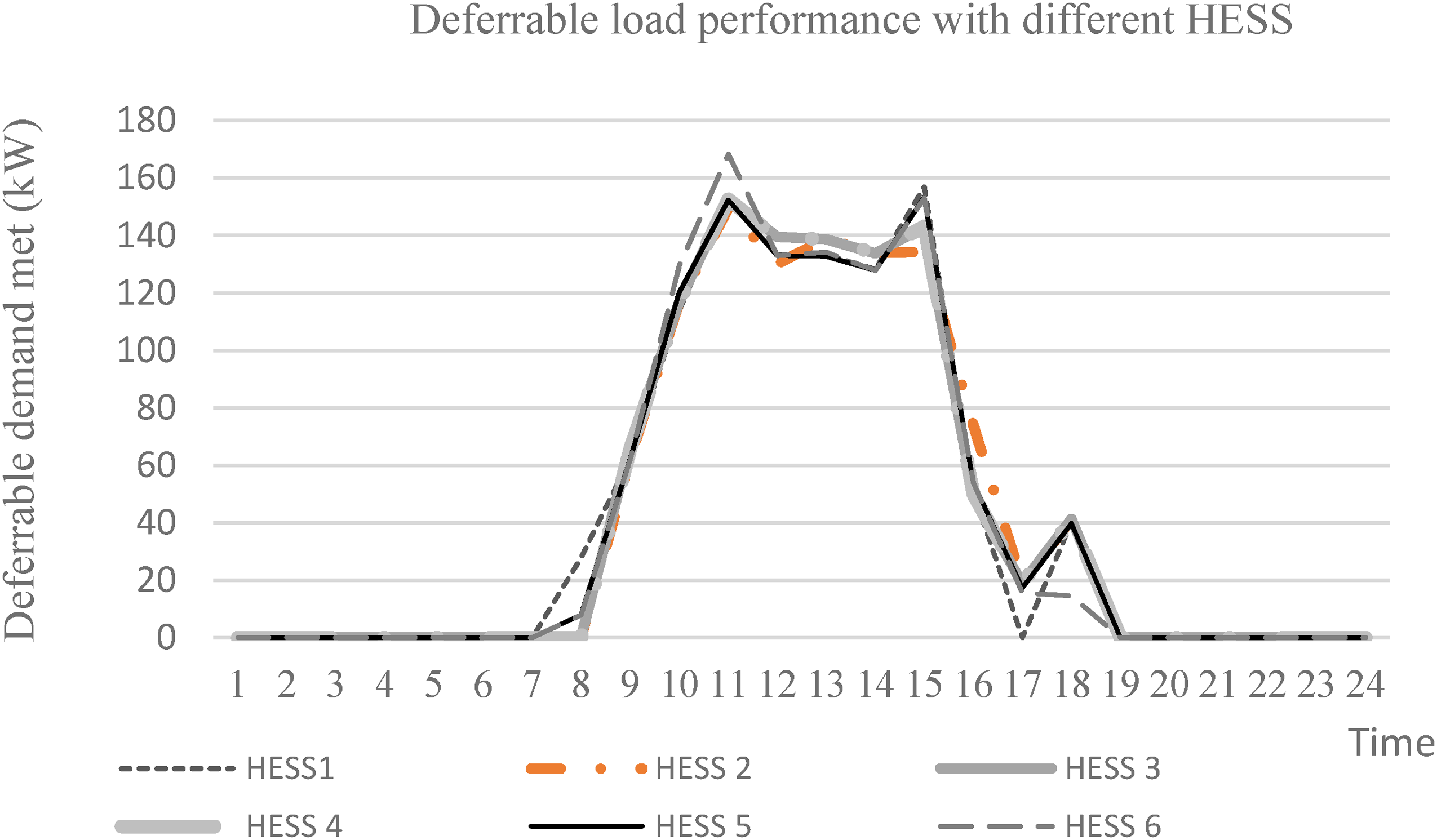
The periods when the deferrable loads, which may include programmable appliances like washing machines, dishwashers, etc. are powered during the day for each of the HESS are shown below in Figure 7. It is seen that the common trend is that deferrable demands are met between 7.00 till 19.00 to satisfy the daily 1000 kWh demand.
Satisfaction of deferrable loads with each HESS in the microgrid.
Sensitivity analysis: varying the capacity range for ESS1 availability
The base-case analysis of the ESS availability constraint (see (12)) considered the storage with higher power density in the HESS, ESS1 being available between the levels of 30% to 70% of its maximum capacity, so as to handle any surges or dips in power demand or supply, as mentioned in the section System design. From the results, ESS1 of HESS 1 and HESS 3 was available for 9 h daily, while other ESS1s of all other HESS were available for 14 h daily, under both ToU and fixed tariff schemes.
A variation of the limits of the constraint (in Equation 16) capturing the availability of ESS1 to charge and discharge in response to sudden dips or surges in power is analysed in further detail here. Different ranges of available storage capacity considered include 20% to 70%, 30% to 80% and 20% to 80% of the maximum storage capacity, and the resulting hours of availability for each HESS are presented in Table 4 below:
Variation in daily range of ESS1 availability.
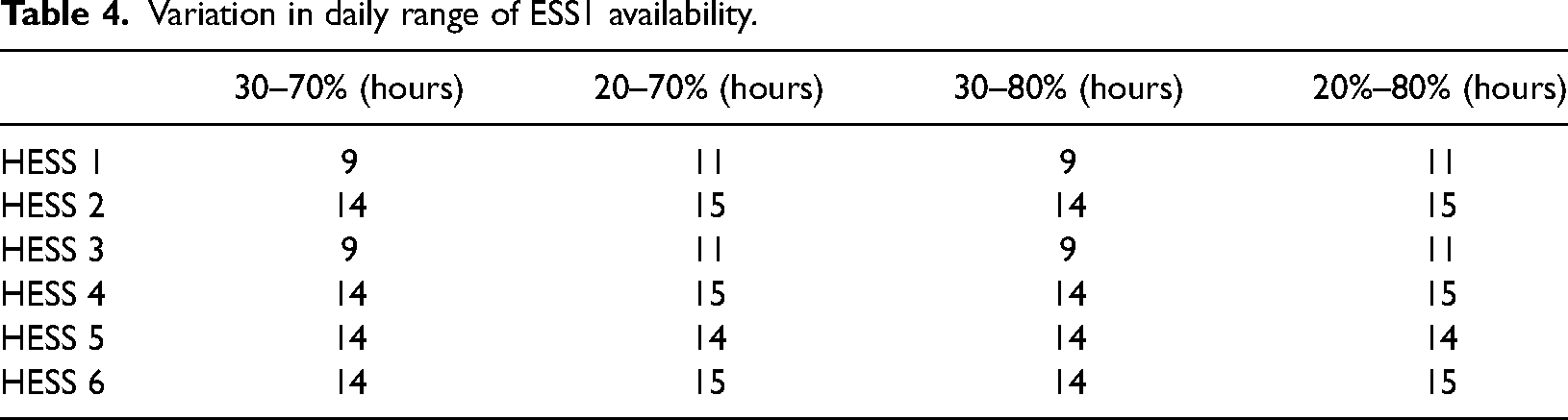
From the table, it is seen that increasing the maximum limit of available storage capacity from 70% in the base case to 80% in the third case shows no difference in the number of hours ESS1 is available. However, decreasing the minimum limit of 30% in the base case further to 20% in the second case raised the number of hours of ESS1's availability by one or two hours in all HESS configurations, except HESS 5. Technically, this implies that these HESS configurations would be in a better position to handle uncertainty and surges in power supply and demand from the microgrid system.
Conclusion and policy recommendations
The HESS is an efficient storage option which satisfies more techno-economic considerations than a single ESS would. One of the commonest HESS configurations studied is the battery-supercapacitor HESS, but in this paper, the mathematical modelling and optimisation of the operation of other HESS configurations in a microgrid have been presented. The results show how electricity production from systems incorporating renewables and storage systems behave in grid scenarios involving fixed tariffs and time-of-use tariffs, and that the HESS 5 (the lead-acid battery- HFC HESS) incurs highest costs during operation. The power consumption of deferrable loads of the microgrid when different HESS are involved have been modelled and analysed in this study. The optimal energy capacity for different HESS configurations was also determined and this is useful in HESS sizing. The operational costs obtained can also inform the selection of which HESS configuration is most suitable when considering the financial viability of a storage project. All these are useful for energy planners and stakeholders as they give a more holistic approach to the techno-economic considerations to be made in evaluating the most promising storage systems for renewable-energy-based microgrids.
Future research in this area would investigate the modelling of uncertainties in loads and power supply from renewable energy sources and their impacts on the costs, lifetime, and charge-discharge profiles of hybrid energy storage systems.
Footnotes
Declaration of conflicting interests
The author(s) declared no potential conflicts of interest with respect to the research, authorship, and/or publication of this article.
Funding
The author(s) received no financial support for the research, authorship, and/or publication of this article.
