




Abstract
The fracture behavior of coal-seam roof rock in coal mining is a key and controlling factor for the mode optimization of the artificial roof caving. However, the fracture mechanism of roof rock under loading is not clear. In the work, the split Hopkinson pressure bar (SHPB) experiment was carried out using semicircular bending samples from the sandstone of coal-seam roof rock in the Junger mining area of Inner Mongolia at the loading rate of 0.35–3.78 GPa·m0.5·s−1, and the dynamic fracture behavior and energy dissipation mechanism of samples under different loading rates were investigated. The result shows that the dynamic stress–strain process of the hard roof rock includes four stages: linear instantaneous compaction, linear elastic compression, failure, and fracture extension, in which the failure forms changes from brittle fracture to ductile fracture with the increase of loading rate. The mode I fracture toughness increases linearly under confining pressure. In addition, the propagation orientation of induced fractures is parallel to the loading direction, and the gravel in the samples can inhibit fracture extension, resulting in changing the fracture extension path. Further, the energy absorption efficiency of the samples during the fracture process decreases with the increase in the loading rate.
Introduction
Coal provides resource guarantee for the economic development of China and the world (Lv et al., 2019; Zhang et al., 2020). For the mining of thick coal seams, efficient roof caving is very necessary to ensure the safety of coal mining. The coal seam roof rock in deep coal mines has strong mechanical properties with high fracture toughness, strong rock fracture resistance, and bearing capacity. Thus, it is difficult for the roof to collapse naturally during coal seam mining, which decreases top coal caving efficiency (Lu et al., 2021; Wang et al., 2021; Yang et al., 2019). In addition, there are a series of problems such as gas accumulation in the upper corner, high roof caving height, and abnormal mine pressure (Chen et al., 2020; Zhao et al., 2021). In view of the roof problem, many mining areas in China have adopted blasting (Feng et al., 2022; Zhang et al., 2022a) and hydraulic fracturing methods (Fan et al., 2012; Huang et al., 2015; Lin et al., 2016) to pre-cut the hard roof of the coal seam and reduce the caving distance of the hard roof, which has shown good control effect at present. However, the blasting method is more and more limited in applicability in mines due to potential safety hazards, pollution of the underground environment, and small rock-breaking area.
In recent years, a large number of coal mines use surface hydraulic fracturing technology to cut the hard roof of coal seams, and researchers have carried out a lot of studies on the fracturing mechanism, fracture extension law, and fracturing effect monitoring methods. Yu et al. (2019) proposed an innovative solution to fracture high-level hard strata by ground hydraulic fracturing. Taking a 20-m thick coal seam in the Tashan coal mine of Datong mine area as an example, in situ, ground hydraulic action experiments on the high-level hard rock strata were performed. Xia et al. (2018) established a two-dimensional model for hydraulic fracture of the roof in the stope based on the stress arch theory and the fracture mechanics, to investigate the propagation laws of hydraulic fracture. Liu et al. (2020) proposed a novel method in that hydraulic fracturing was used to generate vertical fractures in hard-hanging roofs for roof fracturing and stress relief. According to the theoretical analysis of fracture mechanics, one of the controlling factors of the difference between blasting and hydraulic fracturing during rock-breaking is the different loading rates (Jiang et al., 2019; Ning et al., 2017). To accurately evaluate the danger from rock bursts during coal mining, Huang et al. (2018) carried out uniaxial compression tests of composed coal rock at different loading rates.
The strain rates of blasting can reach 104∼105 s−1 or more, while the strain rates of hydraulic fracturing are all below 10 s−1. It is urgent to provide a theoretical basis for the application of advanced rock-breaking processes such as hydraulic fracturing in the view of energy. Moreover, the mechanism of rock fracture efficiency affected by the loading rate for the hard roof, needs to be carried out the related experimental study, especially from the perspective of energy to explain the energy dissipation law of the two rock fracture methods under different loading rate (Xu et al., 2017; Zhang et al., 2022b). The differential fracture characteristics and failure mechanism of hard roof rock under different loading rate are important for technique optimization and efficiency improvement of the rock-breaking process.
The recent related research mainly focuses on the caving mechanical mechanism of coal seam roofs (Bai et al., 2021; Lu et al., 2019), the failure mechanism of hard roof rock, and the rock-breaking technology (Lu et al., 2016; Shen et al., 2016). However, less attention has been paid to the effect of loading rate on the fracture behavior of coal-seam roof rock. In this work, the impact dynamic fracture test using the hard roof sandstone semicircular bending (SCB) sample from the Jungar coal mining area of Inner Mongolia was conducted based on the split Hopkinson pressure bar (SHPB) at the loading rates of 0.35–3.78 GPa·m0.5·s−1. The fracture behavior of hard roof rock in coal mines under different loading rates is systematically revealed. The dynamic loading stress-strain relationship of the hard sandstone was obtained which can evaluate the brittleness of the rock. In addition, the dynamic fracture load, fracture toughness parameters, as well as the dynamic loading displacement-load relationship under high-speed loading were analyzed. The effect of loading rate on the fracture performance of hard sandstone in the study area was determined. According to fracture mechanics and energy dissipation theory, the fracture mechanism of hard roof sandstone under high-speed impact was proposed. The work provides a scientific reference for deepening the theory of the rock fracture mechanism of hard roofs in coal mines and improving the hard roof-cutting technology.
Materials and experiments
Sample preparation
The hard roof sandstone sample in the test was taken from the Jungar mining area in Ordos, Inner Mongolia. The Junge mining area is located on the northeastern margin of the Ordos Basin. The coal-bearing strata are late Paleozoic strata, and the thickness of the No. 6 coal seam is up to 20 m. The overlying strata are thick coarse-grained sandstone, gravel-bearing coarse sand, and gravel-bearing medium-coarse sandstone, and the rock’s mechanical properties are tough. The samples used in this study were collected from sandstone with a particle size of greater than 1 mm. Macroscopically, the particles have good sorting ability and grinding performance with high roundness and structural maturity. Also, the X-ray diffraction analysis result shows that the main mineral composition of this sandstone is quartz (58% wt.), and the rest is potassium feldspar with a content of 42%. Thus, the whole is feldspar-quartz sandstone which is consistent with the minerals are shown in the scanning electron microscope (SEM) photos (Figure 1(a) and 1(b)), and the composition has a high maturity. The true density of rock is 2.06–3.23 g/cm3, rock porosity is 0.08–20.72%, water absorption is 0.32–5.74%, and the natural compressive strength of rock is 1.60 −51.50 MPa.
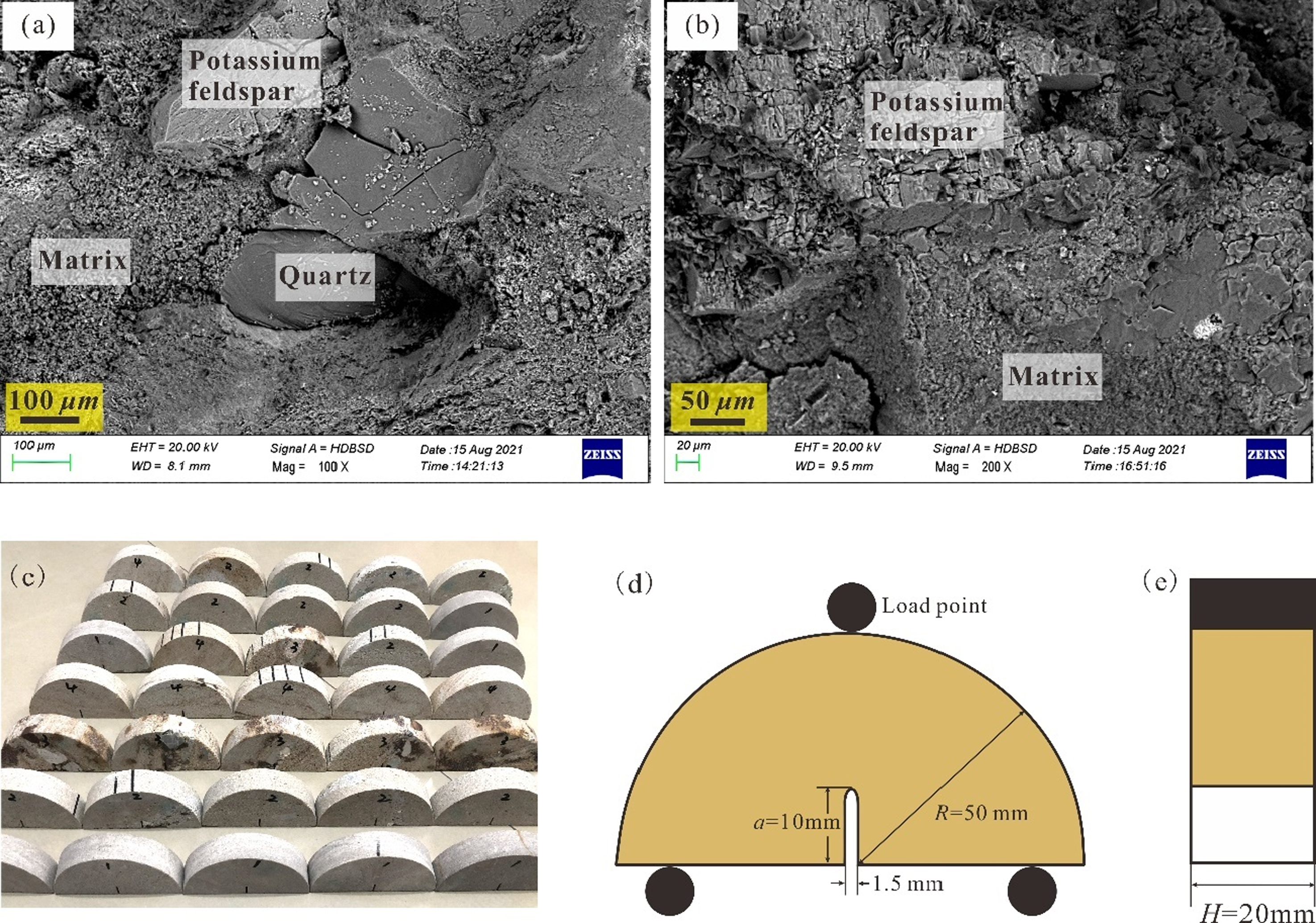
SEM photos of the hard roof sandstone (a and b), SCB samples prepared for the study (c), and front (d) and side (e) views of the sample. SCB: semicircular bending.
As shown in Figure 1(c), SCB samples were prepared in this test according to the standards of the International Society of Rock Mechanics (Carpinteri et al., 2017; Kuruppu and Chong, 2012; Sedighi et al., 2020). The samples’ radius (R) is 50 mm, the thickness (H) is 20 mm, and the height (a) of the incision at the end of the sample was 10 mm, in the form of a straight incision (Figure 1(d) and 1(e)).
Impact three-point bending fracture test
The experiment was conducted based on an SHPB test device with a rod diameter of Ф50 mm at Central South University. As shown in Figure 2, the test system consists of an SHPB test device and a high-speed camera. The test device collects signals in real-time through ultradynamic strain gauges and strain gauges on the incident rod and transmitted rod (Bui and Saleh, 2021; Gong et al., 2018). According to the stress pulse signals collected by the strain gauges on the incident rod and transmitted rod, parameters such as stress and strain are calculated by the three-wave method (Zhou et al., 2011). In this test, the impact air pressure values were 0.2, 0.3, and 0.4 MPa. The rock samples were subjected to impact loading with a loading rate of 0.35∼3.78 GPa·m0.5·s−1 by adjusting the length of the rod. A total of three groups of 12 samples were tested in this work. The SCB sample was loaded, and then the stress–strain curves were obtained.
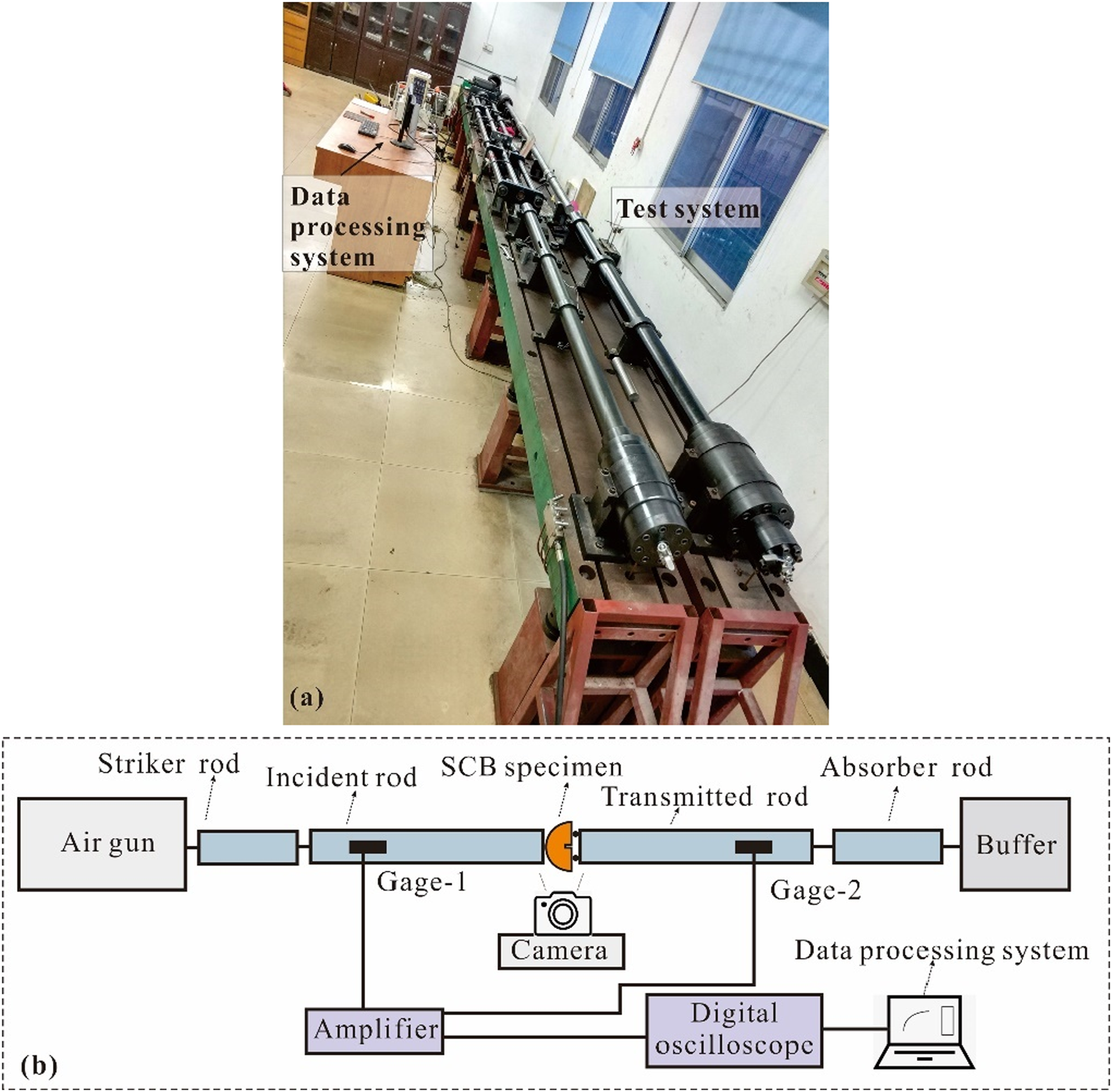
SHPB test device (a) and its structure diagram (b). SHPB: split Hopkinson pressure bar.
Based on the one-dimensional stress wave theory and the energy conservation law (Gong et al., 2018; Zhou et al., 2011), the incident energy, reflected energy, and transmitted energy in the shock can be calculated from the incident wave, reflected wave, and transmitted wave obtained by the SHPB test.




Calculation method of dynamic fracture toughness
The force of the three-point bending test under impact loading is shown in Figure 3. When the incident rod applies a load P1 to the sample, the sample rollers each apply a reaction force P2/2 to the sample. The loading displacement increases with the load.
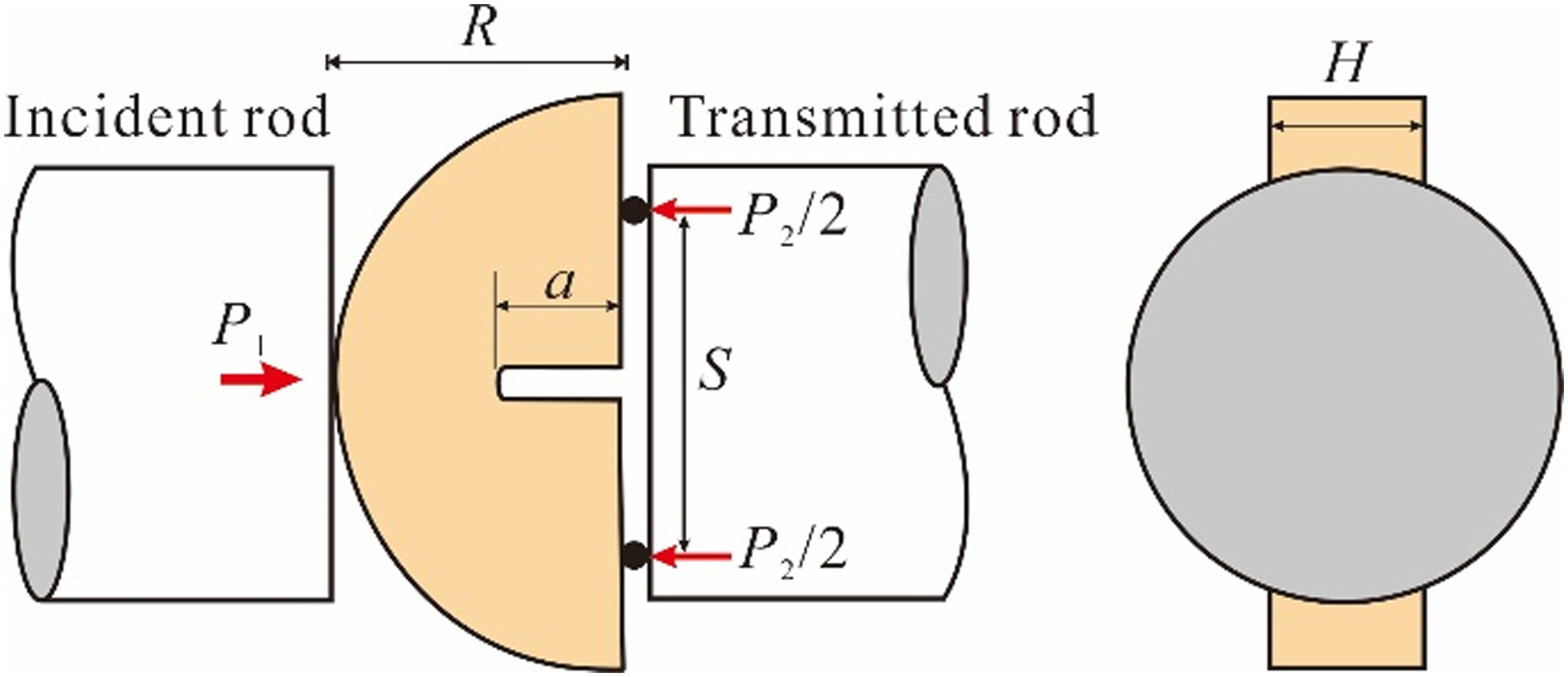
Calculation principle of fracture toughness under dynamic loading of semicircle bending.
The load will increase at a constant loading rate until the ultimate load is reached. The dynamic fracture toughness KI of the sample can be calculated by the following formula (Funatsu et al., 2015; Yao, 2012; Yue et al., 2020):


Results
Dynamic stress–strain characteristics
Figure 4 shows the stress–strain relationship of the hard roof sandstone under various shock gas pressure conditions. On the whole, the dynamic stress–strain curves under different loading rates are generally similar in shape.
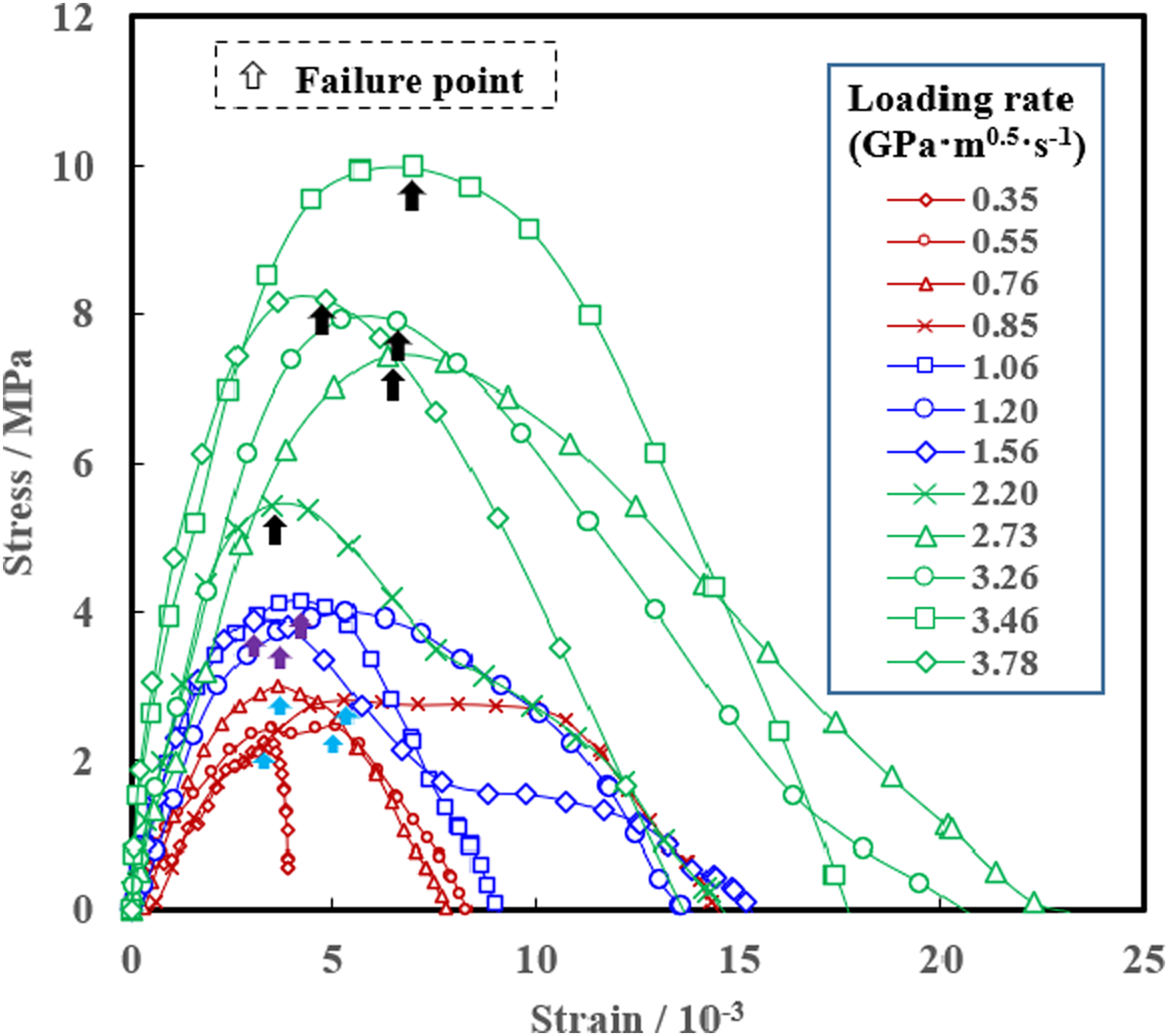
Dynamic stress–strain curve of hard roof sandstone samples.
The deformation process can be divided into four stages. The first stage is instantaneous compaction. At this stage, due to the presence of a large number of pores, micro-fractures and other defects in the hard roof sandstone sample, when the high-speed impact pressure is applied, the sample structure will be rearranged. Specifically, the sample volume is rapidly compressed, and the defects such as pores in the hard roof sandstone are continuously compressed, and natural microfractures are closed. Therefore, the sample is continuously squeezed and compacted. On the stress–strain curve (Figure 4), the larger slope of this section indicates the rapid compaction deformation. The second stage is linear elastic deformation. The stress–strain curve at this stage is similar to a straight line, in which the slope of the curve remains unchanged, and both stress and strain increase linearly. Thus, the slope can be regarded as the linear elastic modulus. Due to the iso-compacting of the sandstone pores in the previous stage, the strain of the samples increases with the increase of stress in this stage. However, the curve slope decreases compared with the previous stage, indicating that the hard roof sandstone is under continuous impact load. A large number of new fractures are formed with the increase in stress. The strain of the samples increases rapidly, showing the characteristics of material yielding, which is the early fracture nucleation stage of subsequent rock failure. The third stage is rock fracture. In the early stage, under the continuous action of impact load, the internal pores and microfractures in the sample have been formed. The stress concentration has been created in the part with large curvature of the defect. When the stress intensity factor of each part is greater than the fracture toughness of the hard roof sandstone, the fractures communicated with each other, leading to the failure of the whole sample. As a result, the bearing capacity of the sample is lost, and the stress decreases from the peak point. The fourth stage is post-fracture. After the sample is fractured, the internal fractures in the sample continue to expand under the continuous action of the impact load. The reaction force of the sample to the impact load continued to decrease. The stress curve segment gradually decreased to zero with the increase of the strain.
To summarize, the stress–strain unloading section curve of the sample under the condition of a low loading rate is steep, indicating that the unloaded sample quickly fails to brittle failure. Then, the curve after unloading under medium and high loading rates is gentle, which is presumed to be related to the number of fractures in the sample. It plays a toughening role.
Fracture toughness characteristics of roof-hard sandstone
The dynamic fracture toughness of the hard roof sandstone samples shown in Figure 5 is 0.76–3.36 MPa·m0.5. With the increase of the loading rate, the dynamic fracture toughness increases linearly. There is a significant loading rate effect on the fracture properties of hard roof sandstone in the Jungar mining area. The main reasons for this law are as follows:
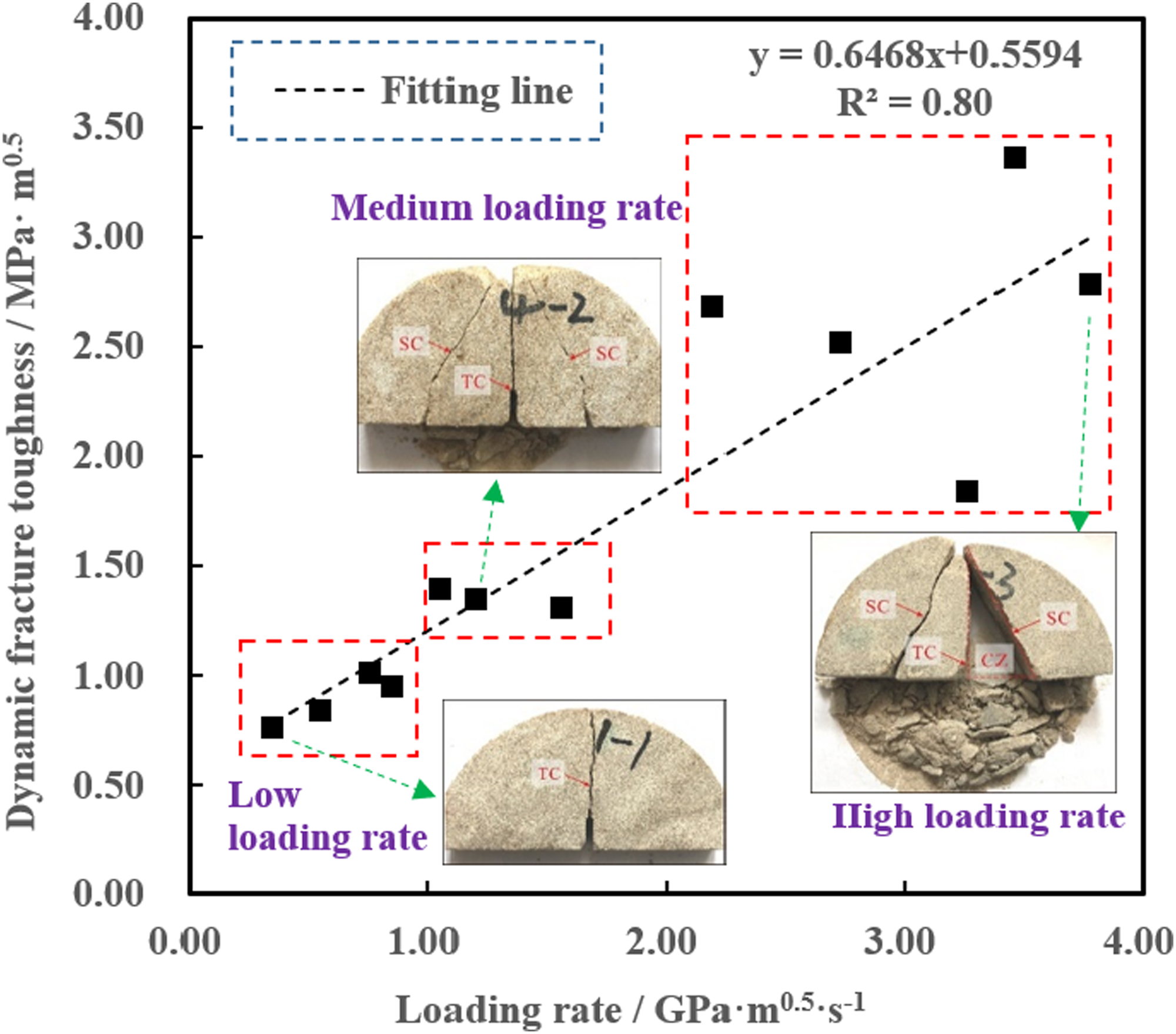
The change of fracture toughness of hard roof rock with the loading rate.
On the one hand, under the condition of high-speed impact loading, the hard roof sandstone is subjected to instantaneous stress and generates a larger reaction force, which leads to the improvement of rock strength, toughness and other mechanical properties. It is unfavorable to the roof fracturing efficiency.
On the other hand, with the increase of the loading rate, it is difficult for the pores and micro-fractures in the sandstone to form the stress concentration effect in the parts with large curvature under the condition of relatively low loading rate under instantaneous conditions, which indirectly leads to the difficulty of rock damage (Dehestani et al., 2020; Kramarov et al., 2020; Krishnan et al., 1998; Shang et al., 2018). Therefore, when the loading rate is higher, the fracture difficulty of the rock is higher, that is, the fracture toughness is higher, and the ability of the rock to resist damage is stronger.
Fracture characteristics and failure modes of the hard roof sandstone
Figure 6 shows the fracture characteristics and failure modes of the hard roof sandstone under different loading rates. It can be seen that with the increase of the loading rate, the fracture form of the sandstone evolves from a single tensile crack (TC) to a combination of tensile and shear cracks (SC), and to TCs, SCs and impact crushing (Aliha and Ayatollahi, 2011; Ayatollahi et al., 2006; Lyu et al., 2021; Zhang et al., 2022a). The propagation direction of TC is parallel to the loading direction, and the crack width is large. The SC surface is often oblique to the loading direction, and the relative opening of the fracture surface is small. On the whole, the breakage degree of the samples tends to be serious, and the size of produced fragments decreases significantly. The failure modes of the hard roof sandstone in the study area at different loading rate stages are significantly different.
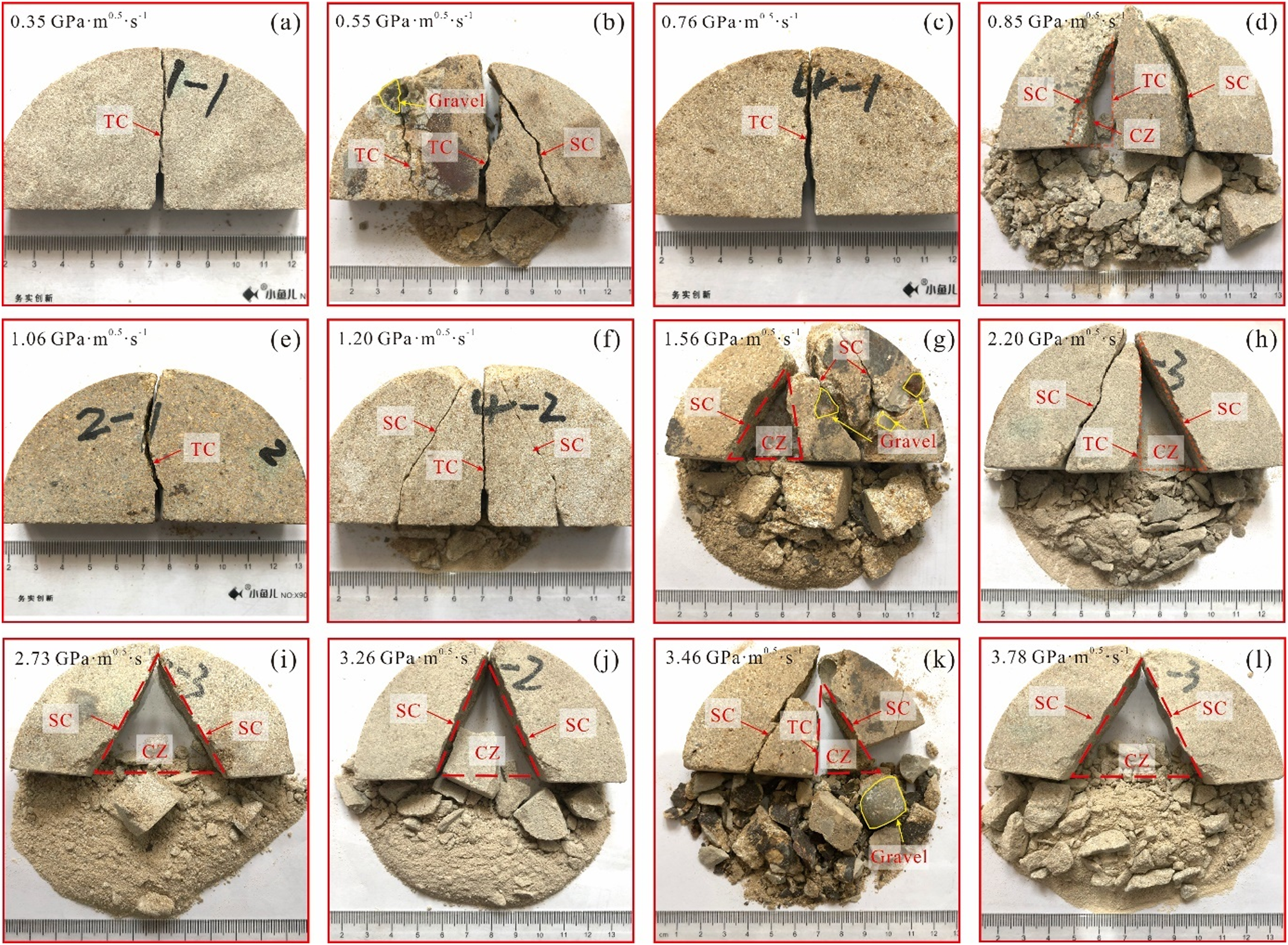
The photos of hard roof sandstones after failure under different loading rates (TC: tensile crack; SC: shear crack; CZ: crush zone).
At the stage of low loading rate (less than 1.0 GPa·m0.5·s−1, Figure 6(a)–(d)), the hard roof sandstone forms single TCs. The fracture propagation direction is basically similar to the impact loading direction. When the sandstone contains gravel, the crack bypasses the gravel to change the path, mainly in the form of an intergranular crack (Figure 6(a)). The existence of gravel increases the complexity of the fracture, and the number of cracks increases from a single TC to an SC. Based on the slope of the stress–strain curve, it is judged that the hard roof sandstone in the study area is a brittle fracture under dynamic compression. The results are consistent with that of static loading.
When the loading rate is medium (more than 1.0 GPa·m0.5·s−1, less than 2.0 GPa·m0.5·s−1, Figure 6(e)–(g)), the hard roof sandstone forms a TC in the initial stage under shock compression, and two SCs are initiated at the roller position in the later stage. Finally, the SCs and the central TCs form two sets of triangular blocks. One group of blocks is usually crushed by impact to form fragments, and the other group is intact. Typically, a large amount of energy is consumed during the crushing of the pieces, resulting in a less efficient fracture.
Under a high loading rate (greater than 2.0 GPa·m0.5·s−1, Figure 6(h)–(l)), the hard roof sandstone forms a group of TCs parallel to the loading azimuth and oblique SCs under the impact. Because of the high-speed impact, the pressed triangular block is completely punched and crushed, forming a large number of fine-grained debris and powders, and finally changing into a triangular failure zone.
Characteristics of fracture energy dissipation
Based on equations (1)–(4), the incident energy and absorption energy during the hard roof sandstone impact process in the test are calculated, and the results are shown in Figure 7. It can be seen that as the loading rate increases, the incident energy and absorbed energy increase linearly, and the rate of incident energy increases faster.
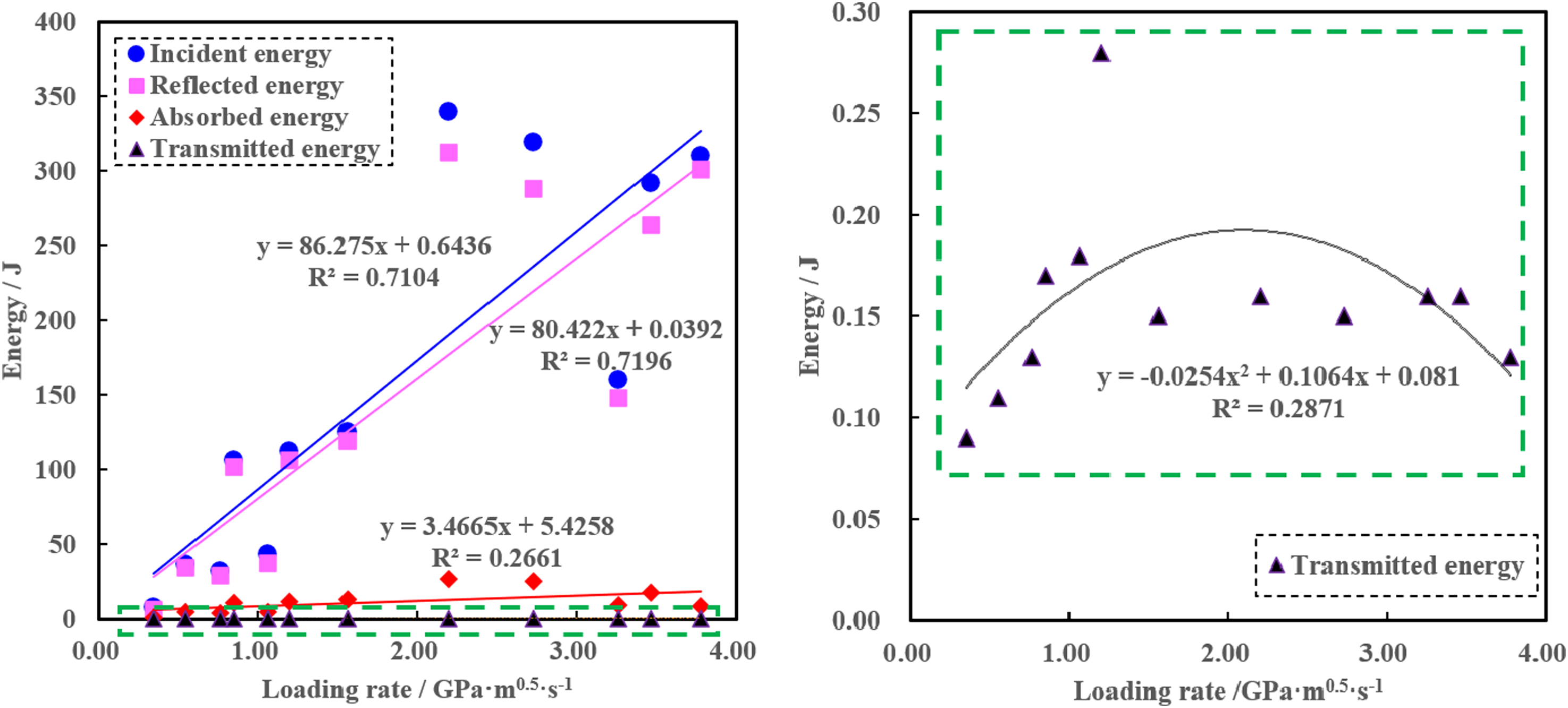
Variation of sample impact energy with loading rate.
The energy absorption ratio is the ratio of absorbed energy to incident energy. In Figure 8, the energy absorption ratio decreases gradually with the loading rate. At a low loading rate, the ratio is between 4% and 14%. The absorption efficiency of the sample to the impact energy is weakened. Most of the incident energy is dissipated in the form of reflected energy. For example, in the explosion operation, under the operating conditions of a high loading rate, most of the energy does not break the rock effectively. The actual proportion of the absorbed energy used for rock breaking only is a small part or even lower. Since the test material is compacted instantaneously at a faster loading rate, the reaction force to the external impact force increases, causing most of the energy to be dissipated in the form of reflected energy. The loading rate in the process of hydraulic fracturing is relatively low, so the energy utilization efficiency in rock-breaking is high, and most of the energy acts on the fractured rock in which energy converts into fracture surface energy and acoustic energy.
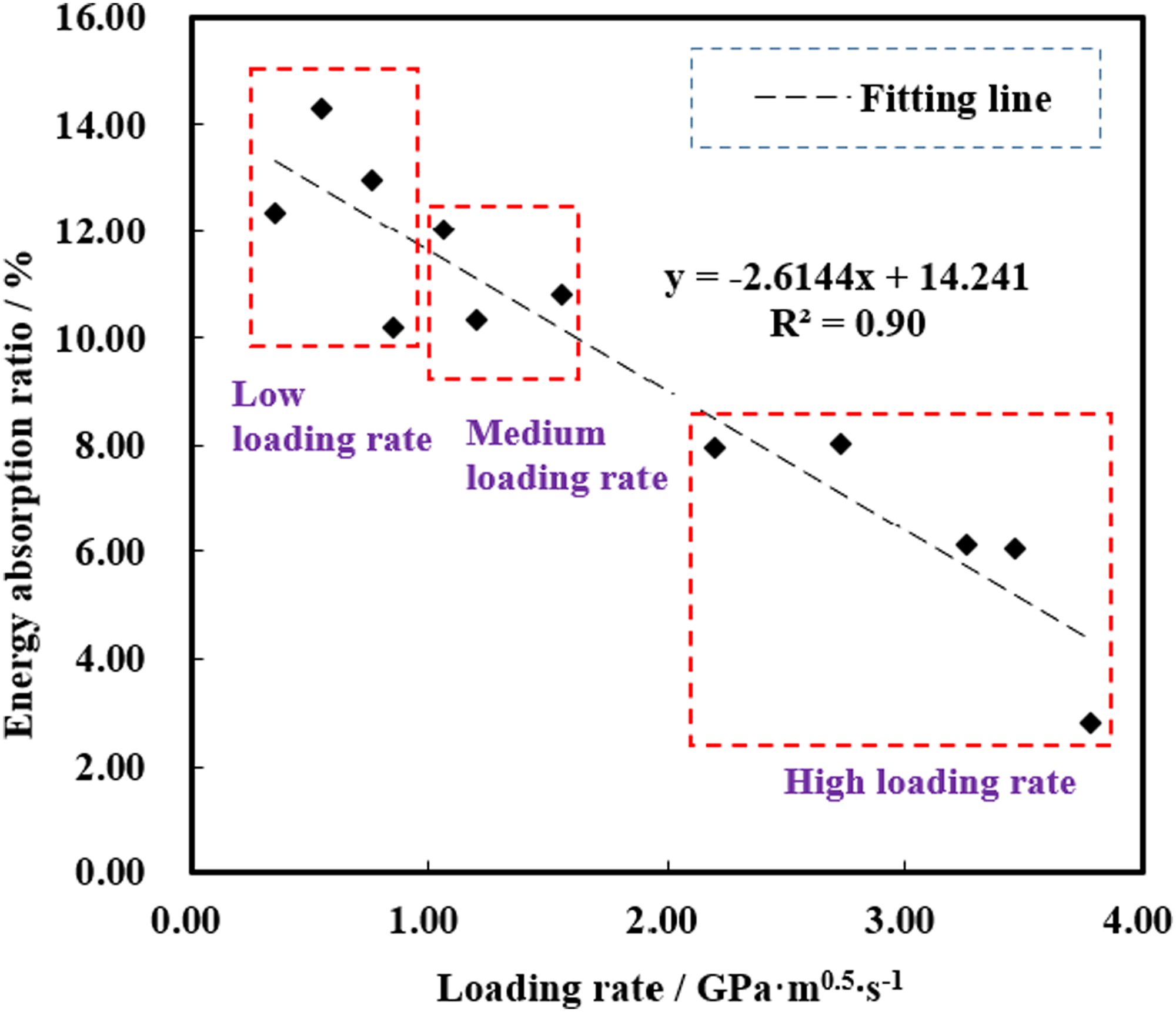
Variation of energy absorption ratio with loading rate.
Discussion
Influence of loading rate on rock fracture efficiency
Figure 9(a) shows the rock fracture modes under different loading rates. When the loading rate is low, the rock forms two-wing symmetrical fractures under external loading (Elghazel et al., 2016; Niu et al., 2020), and the fracture propagation orientation is consistent with the maximum stress. Under this loading rate, the rock fracture efficiency is the highest, because the length of the fractures is the largest, which is most favorable for hard roof fracturing in coal mines. Under the same energy dissipation conditions, the hard roof can be cut with the largest scale. It is the most practical and effective method for hard roof fracturing in coal mines.
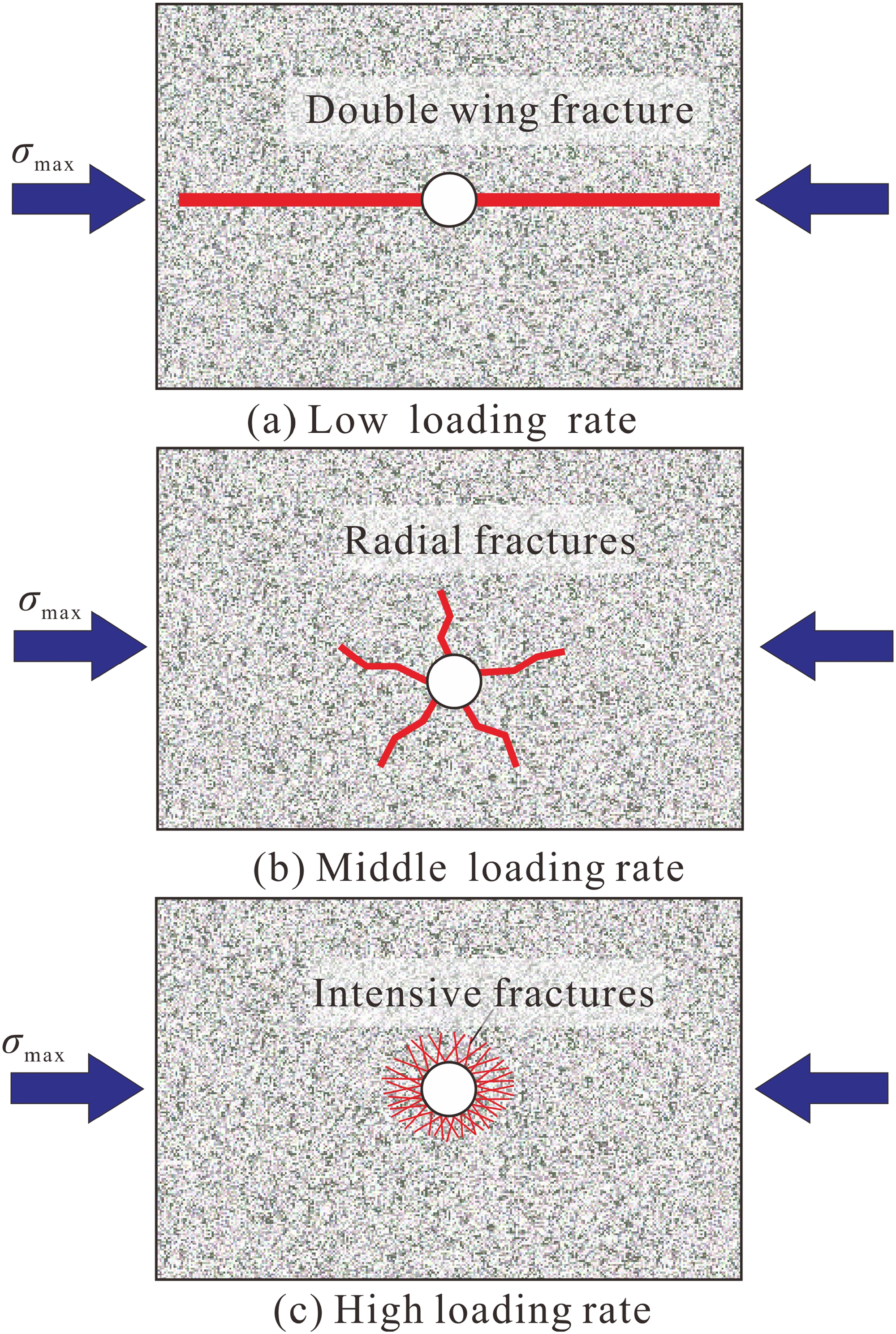
Rock failure modes and fracture shapes under low (a), middle (b), and high (c) loading rates (σmax: maximum stress).
When the loading rate is increased, as shown in Figure 9(b), due to the rapid increase of the pressure in the wellbore, the rock around the wellbore forms a strong reaction force and resistance mode (Meng et al., 2021; Wu et al., 2022). At the same time, the rock fracture toughness increases, and the rock is difficult to fail. In addition, it is difficult for the rock on the side of the wellbore to form a stress concentration with a relatively uniform circumferential stress distribution. Fractures are formed around the wellbore with the natural fractures developed, which are extended in various directions that are not strictly parallel to the maximum principal stress. However, the length and width of the fractures are difficult to compare with that produced by hydraulic fracturing.
As shown in Figure 9(c), due to the instantaneous increase of air pressure in the wellbore, a strong impact is acted on the rock on the wellbore. A pressing and crushing zone with a certain depth is formed near the wellbore, where fragments and powders are created (Niu et al., 2022). The outside of the crushing zone is the shearing fracture zone, where there are intensive shear fractures and cut triangular blocks. On the whole, when the loading rate is high, the stratum is seriously broken near the wellbore. Though the style consumes too much energy, the damage radius and radiation range are limited, which is unfavorable for efficient roof fracturing.
Engineering significance of loading rate effect on fracture behavior of coal-seam roof rock
Figure 10 is a comparison of two technical models of hard roof fracturing in coal mines. Figure 10(a) shows the hard roof fracturing by hydraulic fracturing. The hydraulic fracturing process acts on the rock similar to the condition under a low loading rate (Lyu et al., 2020, 2022). The results show that the hard roof sandstone of the coal mine forms a simple two-wing symmetrical hydraulic fracture, and the fracture length is large, so it can play a good cutting effect on the hard roof (Lu et al., 2016; Tang et al., 2021). Consistently, due to the large half-length of the hydraulic fracture, the number of fracturing wells deployed in the coal mine working face is less, which is beneficial to saving engineering costs. It is usually estimated that when the half-length of the hydraulic fracture is 100 m, the working face with a length of 2000 m needs to deploy 10 fracturing wells on the ground to perform prefracturing for the hard roof.
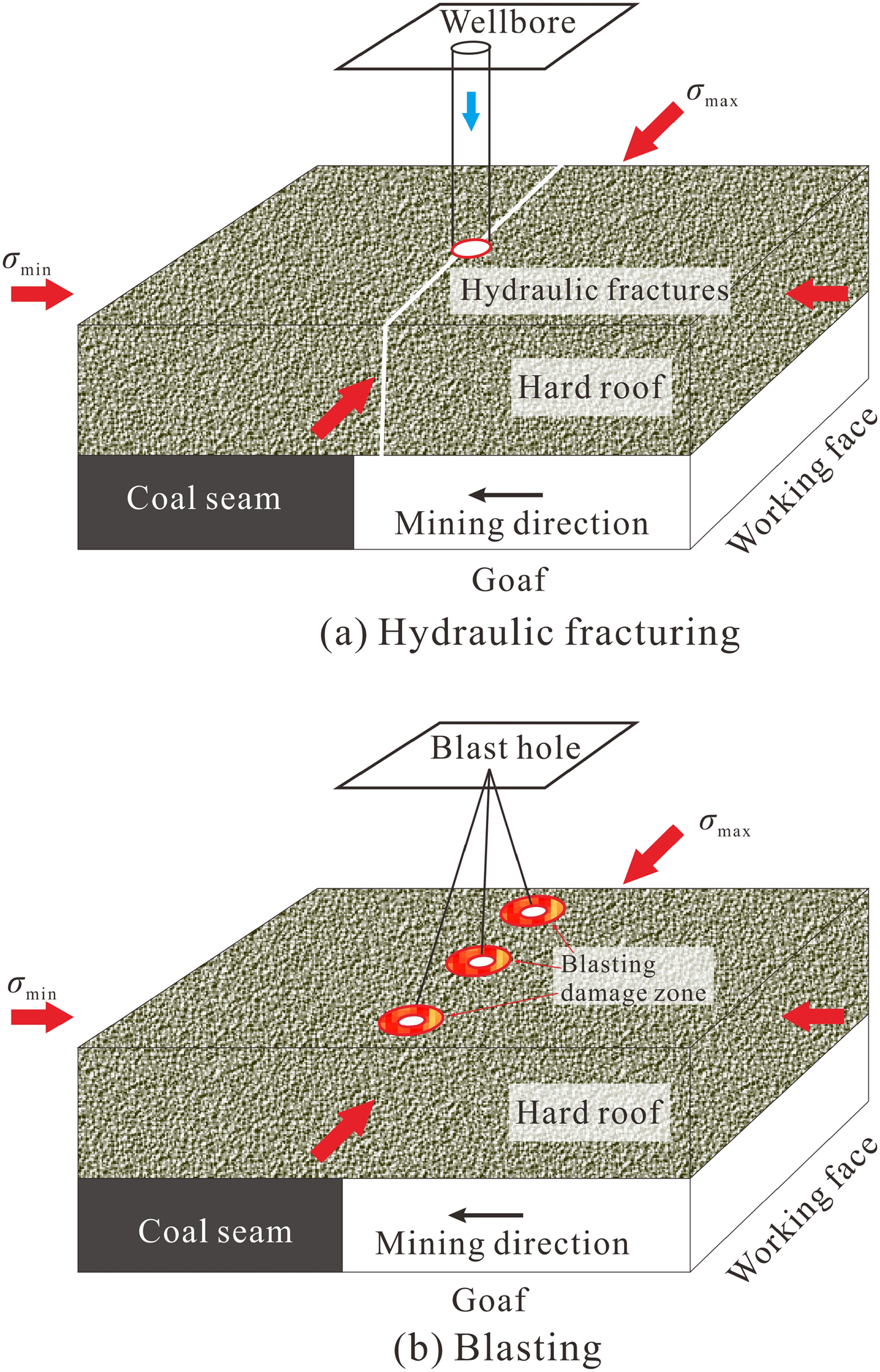
Comparison of technical modes for hard roof fracturing in coal mines (σmax: maximum stress; σmin: minimum stress).
Figure 10(b) shows that the coal-seam hard roof is broken by the traditional blasting method. The blasting method belongs to the effect with a high loading rate. Based on the previous study (Feng et al., 2022; Zhang et al., 2022a), the impact fracture of rock under a high loading rate is significantly different from that under a low loading rate. In the coal-seam roof fracturing project, several blast radiation areas with limited crushing range are formed in the hard roof. The damaged area of the blast radiation area is mainly related to the loading rate, but is not greatly affected by the stress orientation. Therefore, the blast damage area has no dominant orientation and the range is very small. The overall roof fracturing effect is average, because of low energy absorption efficiency at a high loading rate. If the crushing radius of each blasting hole is 5 m, it is estimated that at least 200 drilling holes are required in the coal mine working face with a 2000 m length, which will increase engineering costs.
In general, based on the fracture behavior of hard roof rocks under different loading rates in the Jungar mining area, adopting hydraulic fracturing technology to cut the roof can create longer main fractures with the same energy consumption and realize regional pressure relief of hard roof, which has important guiding value for the prevention and control of the dynamic disaster of the hard roof in coal mines in the study area.
Conclusions
In this work, the dynamic fracture behavior and energy dissipation mechanism of hard roof rock at different loading rates were studied through the SHPB test. Additionally, the engineering measures of hydraulic fracturing and blasting were compared. Some conclusions can be drawn as follows:
The fracture toughness of the hard roof rock in the study area is between 0.76 and 3.36 MPa·m0.5, which is sensitive to the loading rate. The fracture load and fracture toughness of the sandstone samples under three-point bending loading increase linearly with the loading rate rise. The failure modes of the hard roof rock under the low loading rate are dominated by simple extensional fractures. Under medium loading rates, the hard roof sandstone forms central extensional fractures and oblique fractures. Under a high loading rate, the triangular block between the tensile fracture and shear fracture is crushed to form a broken area, thus the overall sandstone sample is seriously damaged near the impact part. The ratio of absorption energy to incident energy decreases with the increase in loading rate, indicating that the fracture energy absorption efficiency of the sample is reduced under a high loading rate. Hydraulic fracturing with a low loading rate can form a simple two-wing symmetrical artificial fracture in the hard roof. Moreover, a small number of well-deployed is conducive to saving engineering costs. However, several limited explosive radiation areas are formed by blasting with a high loading rate, and the fracturing effect for the hard roof rock is weak and the cost is high to meet the roof fracturing requirements.
Footnotes
Acknowledgments
This work was funded by the National Science and Technology Major Project (No. 2016ZX05067001-007), Inner Mongolia Science and Technology Project (No. 2020GG0317), Coalbed Methane Joint Research Fund of Shanxi Province (No.2016012007) and Key Research and Development Plan Project of Jincheng City (No. 20210210). These supports are gratefully acknowledged.
Declaration of conflicting interests
The author(s) declared no potential conflicts of interest with respect to the research, authorship, and/or publication of this article.
Funding
The author(s) disclosed receipt of the following financial support for the research, authorship, and/or publication of this article: This work was funded by the National Science and Technology Major Project (No. 2016ZX05067001-007), Inner Mongolia Science and Technology Project (No. 2020GG0317), Coalbed Methane Joint Research Fund of Shanxi Province (No.2016012007) and Key Research and Development Plan Project of Jincheng City (No. 20210210).
