




Abstract
The lacustrine shale in the Da’anzhai member of Jurassic in the central Sichuan Basin is a key exploration target for shale oil and gas resources in China in the future. This paper presents a detailed study of shale rock types and component characteristics, shale pore types and structural characteristics, and shale pore evolution characteristics under thermal simulation conditions through experimental analyses such as rock thin section and field emission scanning electron microscopy (FE-SEM) observation, conventional physical property test, X-ray diffraction (XRD) analysis, TOC test, liquid nitrogen adsorption (LNA) test, and thermal simulation (pore) experiment. The results show that minerals in the Da’anzhai shale are mainly clay minerals, quartz, and calcite, with a small amount of feldspar, dolomite, and pyrite. In the shale oil reservoirs, there are dominantly inorganic pores (e.g. clay intergranular pores), and relatively few organic pores. The specific surface area ranges from 1.064 m2/g to 9.227 m2/g, with an average of 4.949 m2/g. The pore volume is 0.003–0.016 cm3/g, with an average of 0.010 cm3/g. Mesopores contribute the most to the total pore volume and total specific surface area. With the increase of thermal simulation temperature, the degree of shale thermal evolution increases, and the shale porosity increases, predominantly, owing to the contribution of organic pores. It is concluded that inorganic pores, especially clay intergranular pores, are the dominant pore type in the Da’anzhai shale oil reservoirs, and the evolution degree, burial time and depth of organic matter can obviously improve the organic pores.
Introduction
Shale oil is an important type of unconventional resources. The shale oil and gas exploration in the Sichuan Basin, China, has gradually attracted worldwide attention in recent years. Many international energy majors such as CNPC, Sinopec, and Shell have successively probed into the oil and gas exploration in lacustrine shale of Jurassic Da’anzhai member in the Sichuan Basin and achieved certain results (EIA, 2015; Xiao et al., 2018; Zou et al., 2019). The Da’anzhai lacustrine shale in the Sichuan Basin has the characteristics of good lithologic association, high organic carbon content, good organic matter type, moderate thermal evolution, strong hydrocarbon generation ability, and good reservoir conditions, and the shale oil and gas are characterized by shallow burial depth, good preservation conditions, and high formation pressure coefficient (Yang and Huang, 2019; Yang et al., 2019). Nonetheless, the Da’anzhai lacustrine shale as a whole is inadequately understood due to late initiation of research, especially with respect to deposition–accumulation mechanism, resources and enrichment, evaluation and prediction, and mobility. The main reason is that the matrix pores of the Da’anzhai shale are basically nanopores, which restrict the occurrence and flow of shale oil. Therefore, characterization of shale reservoir space and clarification of pore distribution, formation and evolution are critical for the exploration and development of the Da’anzhai lacustrine shale oil in the Sichuan Basin.
Characterization of shale reservoir space is complex. This is attributed to two aspects, according to Wang et al. (2014) and Yu (2013). First, the shale pore size is small, and shale oil is mainly enriched in micro-nano pores and fractures. The micro-nano pore structure plays an important role in controlling the storage and migration of shale oil and gas. Second, shale has a storage space consisting of various pore types, such as mineral intergranular pores, dissolution pores, intercrystalline pores, intra-fossil pores, clay mineral pores, pyrite pores, and organic-hosted pores. The pore structure is mainly characterized by pore type, size, morphology, volume, specific surface area, and connectivity (Wang et al., 2014; Yu, 2013). The reservoir space of Da’anzhai shale in the Sichuan Basin is mainly composed of organic pores, intercrystalline pores, intergranular pores in clay minerals, intragranular pores, and micro-fractures (Wang et al., 2014; Yu, 2013; Zhou et al., 2018). The pore size distribution is complex, indicating the coexistence of macropores, mesopores and micropores. Such a complex pore structure with a wide range of pore size is difficult to be comprehensively and quantitatively described using a single characterization method. This paper presents a detailed analysis on the pore characteristics of shale in the study area depending on the mineral composition and through macro-micro pore observations and pore tests under different conditions, and reveals a regular distribution of shale pores in the study area.
The formation and evolution of pores in shale are controlled by many factors, including the thermal evolution maturity of organic matter, mineral composition, and organic carbon content of shale (Bernard et al., 2012; Cardott et al., 2015; Connell-Madore and Katsube, 2008; Kuila et al., 2014; Zargai et al., 2015). The mineral composition has an obvious influence on pore type and size. Connell-Madore and Katsube (2008), Ross and Bustin (2009) and other scholars found that the pore size varies significantly with the ratio of quartz minerals to clay minerals in shale (Connell-Madore and Katsube, 2008; Reed et al., 2008; Ross and Bustin, 2009). The thermal evolution maturity influences the development and evolution characteristics of organic pores in shale. Most scholars believe that thermal evolution maturity affects the development of pores. There are two main viewpoints: (i) Jarvie et al. (2007) indicated that the higher the maturity of shale organic matter, the more developed the organic pores (Jarvie et al., 2007); (ii) Wang et al. (2013) and Cander (2012) reported that the organic matter porosity of shale varies in different gas generation stages, and the organic carbon content also affects the porosity evolution (Cander, 2012; Slatt and O'Brien, 2011; Wang et al., 2013).
With the in-depth study of shale oil and gas in recent years, it is gradually realized that pores in shale are mainly nano-scale pores. The formation and evolution of nano-scale pores are controlled by the diagenesis of inorganic minerals and the thermal evolution of organic matter (Loucks et al., 2009, 2012). Therefore, thermal simulation experiment is becoming popular in relevant researches, that is, the evolution processes of organic matter, minerals, pore structure and fluid under formation conditions are simulated under high temperature and pressure conditions (Tang et al., 2013). There are many classification schemes of thermal simulation experiments. As the most widely used scheme, the experimental systems are classified by closeness into: open system, semi-open system, and closed system (Cramer et al., 2001; Peng et al., 2018; Wang et al., 2011), which have different characteristics. Usually, the experimental system is selected according to the experimental purpose (Dong et al., 2015). Zheng et al. (2009) compared thermal simulation experiments in semi-closed and closed systems. They found that fluid pressure, hydrocarbon generation space, and water phase state with temperature and time affect the hydrocarbon generation and evolution of organic matters all the time, and concluded that the semi-closed thermal simulation system is more approximate to the actual geological conditions (Zheng et al., 2009). Fu et al. (2017) conducted thermal simulation experiments with different types of organic matter respectively in closed and semi-closed systems, and they concluded that, in a semi-closed system, high lithostatic pressure and fluid pressure delay the generation of crude oil in the mature stage of source rocks and the conversion of crude oil to hydrocarbon gas in the high evolution stage (Fu et al., 2017). Song et al. (2019) made semi-closed thermal simulation experiments on low-mature shale to evaluate the hydrocarbon generation potential of shale, and they considered that the lithostatic pressure and fluid pressure in the semi-closed system agree more with the actual geological conditions (Song et al., 2019). In this paper, semi-closed thermal simulation experiments are performed on the samples from the study area to analyze their pore characteristics, and then the influence of thermal evolution of organic matter on the pore characteristics in the whole area is discussed. The study results are expected to provide a reference for the prediction and evaluation of favorable reservoirs in the shales of the Da’anzhai member of the Lower Jurassic in the Sichuan Basin.
Geological setting
The Sichuan Basin entered the stage of continental deposition from the Late Triassic. At that time, the basin was surrounded by Longmenshan, Dabashan and Kangdian ancient lands (Zhu et al., 2021), and generally steep in the north and gentle in the south (Liang et al., 2014). The study area, geographically in the central part of the Sichuan Basin and structurally in the gentle structural belt of the central Sichuan uplift and the low and gentle belt of the Guzhong Depression in northern Sichuan Basin, is a gentle short-axis anticline spreading from east to west, wide in the west and narrow in the east, with a dip angle ranging from 2° to 5° (Figure 1) (Du et al., 2015; Zhu et al., 2016). In the Late Triassic, the depositional environment of the Sichuan Basin changed from marine to continental setting due to the Indosinian movement (Lai et al., 2019; Wang and Xu, 2001). In the Jurassic, the basin inherited the lacustrine depositional setting in the Late Triassic, with the formation thickness between 500 m and 4500 m (Wen et al., 2016). The Ziliujing Formation in the basin is divided into four members (Zhenzhuchong, Dongyuemiao, Ma’anshan, and Da’anzhai) from the bottom up. The largest transgression during the deposition of the Ziliui Formation deposited the Da’anzhai member, which mainly developed as a set of deposits of inland freshwater lake facies. In period of Da’anzhai member, the study area received semi-deep and shallow lake deposits. The semi-deep lake deposition area is mainly composed of dark-gray to gray-black shale, conchoidal shale, and thin-layered, laminated and lenticular muddy coquina. The shallow lake deposition area with relatively strong hydrodynamics and low shale content contains shales and medium to thin-layered coquina which is intensively recrystallized in local areas into crystal grain limestone comprising widespread shell beaches. The organisms are mainly freshwater bivalves, followed by ostracods and gastropods, as well as charophytes and fish fossils in local areas (Shi et al., 2015). From bottom to top, the Da’anzhai member can be divided into three sub-members: Da1, Da2 and Da3. Da1 and Da3 are mainly composed of limestone, with medium to thin-layered shale and conchoidal shale, generally small in formation thickness. Da2 is made up of dark-gray to gray-black shale and conchoidal shale sandwiched with thin-layered and lenticular muddy coquina, generally large in formation thickness, which stays as the major interval of shale in the Da’anzhai member. Moreover, Da2 acts as the main source rock in the Da’anzhai member in the Sichuan Basin, which has a good exploration prospect.
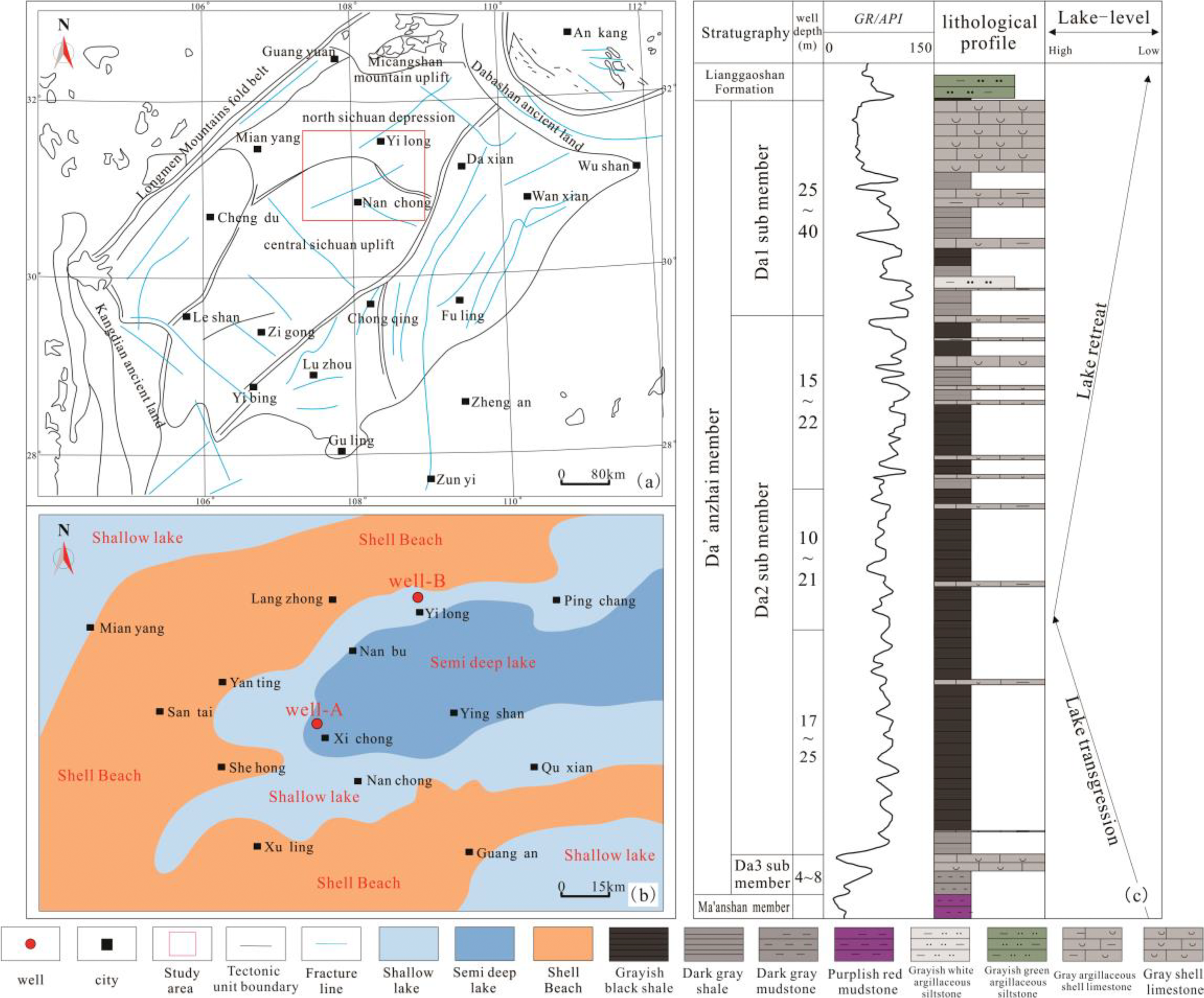
Study area location and lithologic synthetical histogram.
Samples and methods
In this study, 12 shale samples from Da2 in two exploration wells in central Sichuan Basin were selected to successively conduct field emission scanning electron microscope (FE-SEM) observation, X-ray diffraction (XRD) analysis, total organic carbon (TOC) analysis, conventional physical property test, liquid nitrogen adsorption (LNA) test, and thermal simulation (pore) experiment of shale..
FE-SEM observation
The samples were prepared as regular block samples of 2 cm × 2 cm. The sample surfaces were roughly polished using sandpaper, and then polished and gold-sprayed using an argon ion polisher. Finally, the sample was adhered to the sample stage of a FEI Quanta250 FEG field emission scanning electron microscope for observation, with a scanning voltage of 10 KV and a working distance of about 9 mm.
XRD analysis
The samples were crushed to 200 mesh and then dried at 110°C until the weight did not change. After cooling, the sample powder was smeared on a glass slide for XRD analysis using a PANalytical X"pert PRO X-ray diffractometer.
TOC
The samples were treated with 50% hydrochloric acid to remove the inorganic carbon, and then measured using a Leco CS-400 carbon and sulfur analyzer at >800°C. The organic carbon in the sample burned in high-temperature oxygen flow, and the analyzer detected the amount of carbon dioxide. Finally, the total organic carbon (TOC) of the samples was calculated by the external standard method.
Conventional physical property experiment
As per GB/T 2917-2012, the cylindrical samples were tested for porosity by using the helium porosity method and for permeability by using the pulse decay method. All the tests were carried out in Sichuan Coalfield Geology Bureau on the PHI220 porosity automatic tester and the YSC coal and rock permeability tester, respectively.
LNA
The rock samples were crushed, screened, dried at 110°C overnight, and then degassed under vacuum. Next, the samples were tested by using a Micromeritics ASAP2020 specific surface area analyzer. The treated samples were vacuum-adsorbed in liquid nitrogen. Based on the capillary condensation phenomenon and volume substitution principle, the pores of the tested samples were filled with liquid nitrogen, and the adsorption-desorption isothermal curve could be plotted according to the relationship between the relative pressure and the amount of liquid nitrogen adsorbed. During the test, as the relative pressure changed, liquid nitrogen filled the pores with different sizes, the relative pressure became higher, and the sizes of pores where capillary condensation could occur increased. Finally, the specific surface area and pore volume were obtained by the BET method and BJH algorithm (Rouquerol et al., 2007; Song et al., 2013).
Thermal simulation and pore test of shale
Considering the relationship between the temperature change of source rocks and the vitrinite reflectance (Ro), as well as the existence of primary cracking of organic matter and secondary cracking of liquid hydrocarbon, the closed system can best simulate the pore change of source rocks after hydrocarbon generation and expulsion (Lopatin et al., 2003; Waples, 1980). Two shale samples were selected. Each sample was prepared into three regular block samples of 1 cm × 1 cm × 1 cm, which were then put into a DK-III formation pore hot-pressing hydrocarbon generation and expulsion simulator developed by Wuxi Institute of Petroleum Geology, Sinopec Petroleum Exploration and Production Research Institute, for high-temperature calcination test During the test, six block samples were put into the sample chamber separately and wrapped with quartz sand as a buffer. Then, the heating control device was started to heat up to 400°C, 425°C, and 450°C at 1°C/min. After being calcined at high temperature, each block sample was measured for porosity by using QK-98 gas porosity tester.
Experimental results
Lithological characteristics
According to the physical property test and TOC test results of 12 shale samples (Figure 2(a), (b)), the Da’anzhai shale has the porosity of 1.84%–8.16% (avg. 5.41%), the permeability of 0.008– 0.647 mD (avg. 0.251 mD), the TOC of 0.51%–2.40% (avg. 1.42%), and the Ro of 1.25% (Table 1), indicating a mature to overmature state as a whole. The XRD analysis shows that the minerals in shale are mainly quartz, calcite, and clay minerals, with a small amount of pyrite, feldspar, and dolomite. Quartz accounts for 21.0%–41.1%, with an average of 32.5%. It is dominated by detrital quartz, which distributes in clay minerals in laminar or dispersed form (Figure 2(c), (d)), followed by authigenic quartz, which is mostly metasomatic at the edge of shell or symbiotic with organic matter (Figure 2(e)). Calcite accounts for 4.2%–42.6%, with an average of 19.9%, and it is mostly shell organism (debris) (Figure 2(g)) or authigenic calcite cement (Figure 2(h)). Marginal fractures are developed between calcite (shell organism) and surrounding clay minerals (Figure 2(g)). Feldspar and pyrite exhibit a low average content – 3.1% and 1.8%, respectively. Clay minerals account for 22.4%–50.0%, with an average of 38.9%. Clay minerals are mainly flaky illite, and contain intergranular pores (Figure 2(i)).
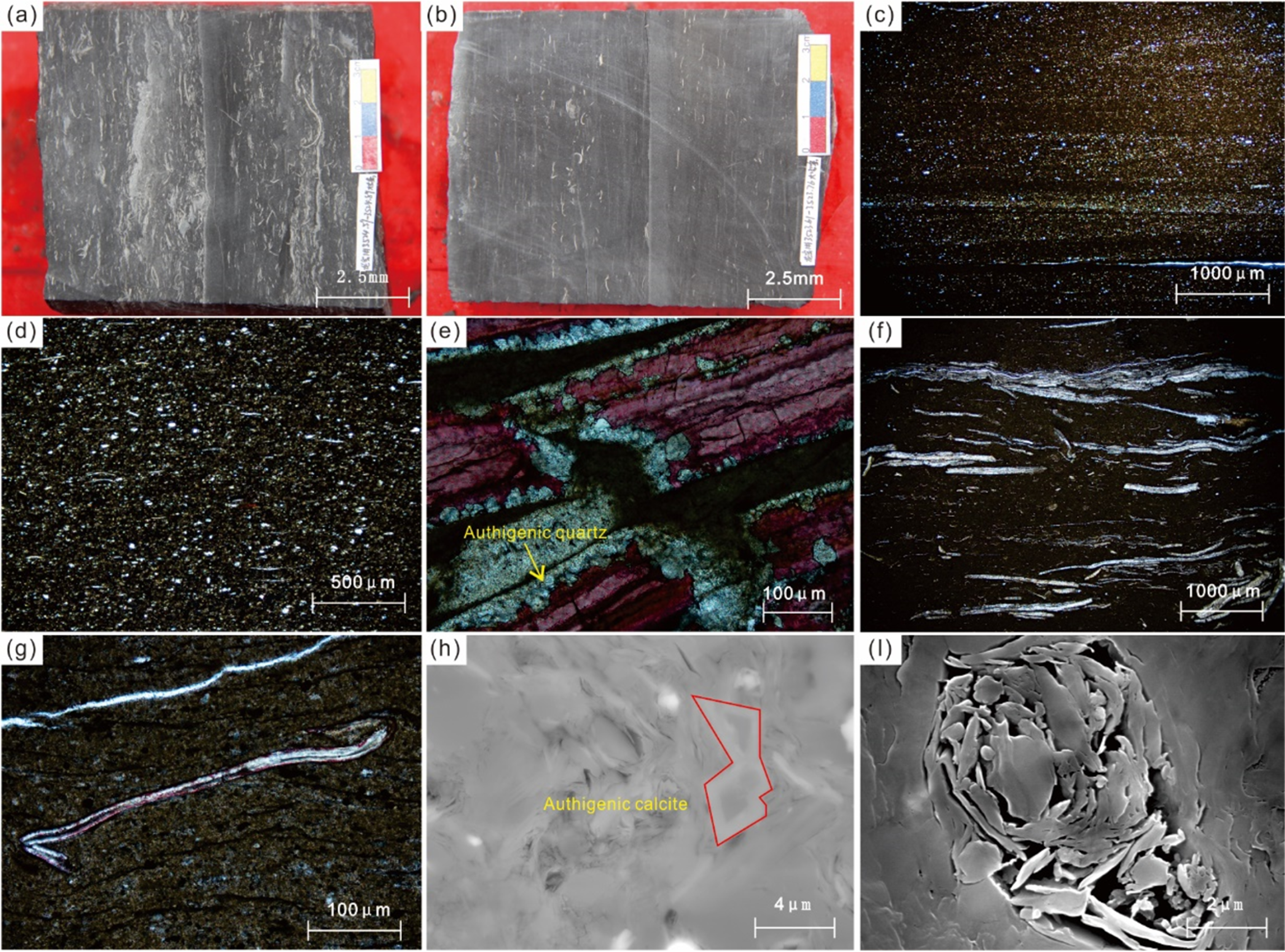
Characteristics of shale rocks in Da ‘anzhai member. (a) Silty calcareous shale (II4), Well-B, 3524.59-3524.89 m; (b) Silty clay shale (II1), Well-B, 3523.61–3523.76 m; (c) Silty clay shale (II1), high organic matter content, quartz clasts are laminately distributed, Well-B, 3496.15 m; (d) Silty shale, organic matter and quartz chips are dispersed, Well-A, 2455.58 m; (e) Biological shale, scattered terrigenous clastic quartz, Well-A, 2446.53 m; (f) Biological shale, horizontally arranged biological shells, laminar clastic rock grains, Well-A, 2483.42 m; (g) Clayey shale, a small amount of biological debris exists, Well-A, 2463.00 m; (h) Authigenic calcite, Well-B, 3528.55 m; (i) Intercrystalline pores of clay minerals, Well-B, 3528.55 m.
Sample pore structure parameters, rock mineral composition and physical parameters table.
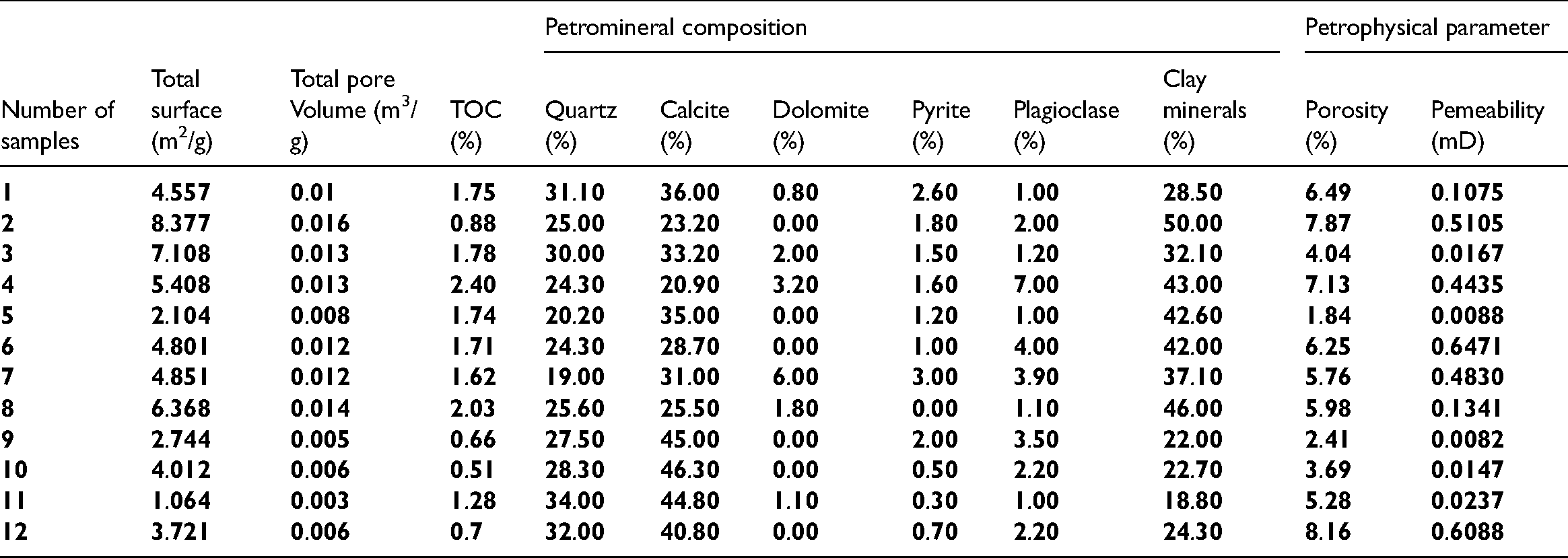
Based on the characteristics of lithology and the differences in mineral composition, the lithofacies of Da’anzhai shale were classified by the scheme of Liu et al. (2019) (Liu et al., 2019). According to the mineralogy triangle of Da'anzhai shale (Figure 3), the Da2 shale is mainly hybrid shale. By the difference in mineral composition, the hybrid shale can be further divided into 6 types, and the Da2 shale includes 4 types. Cluster analysis was carried out according to relative differences in mineral contents. The shale can be divided into two categories, namely, calcite (shell)-rich shale (represented by silty shell calcareous shale (II4) and clayey shell calcareous shale (II5)), and clay mineral-rich shale (represented by silty clayey shale (II1) and shell calcareous clayey shale (II6)). For calcite (shell)-rich shale (II4 and II5), the porosity ranges from 2.41% to 8.16%, with an average of 5.02%, and the permeability ranges from 0.0082 mD to 0.6088 mD, with an average of 0.1299 mD. For clay minearls-rich shale (II4, II5), the porosity ranges from 1.84% to 7.87%, with an average of 5.80%, and the permeability ranges from 0.0088 mD to 0.6471 mD, with an average of 0.3712 mD.
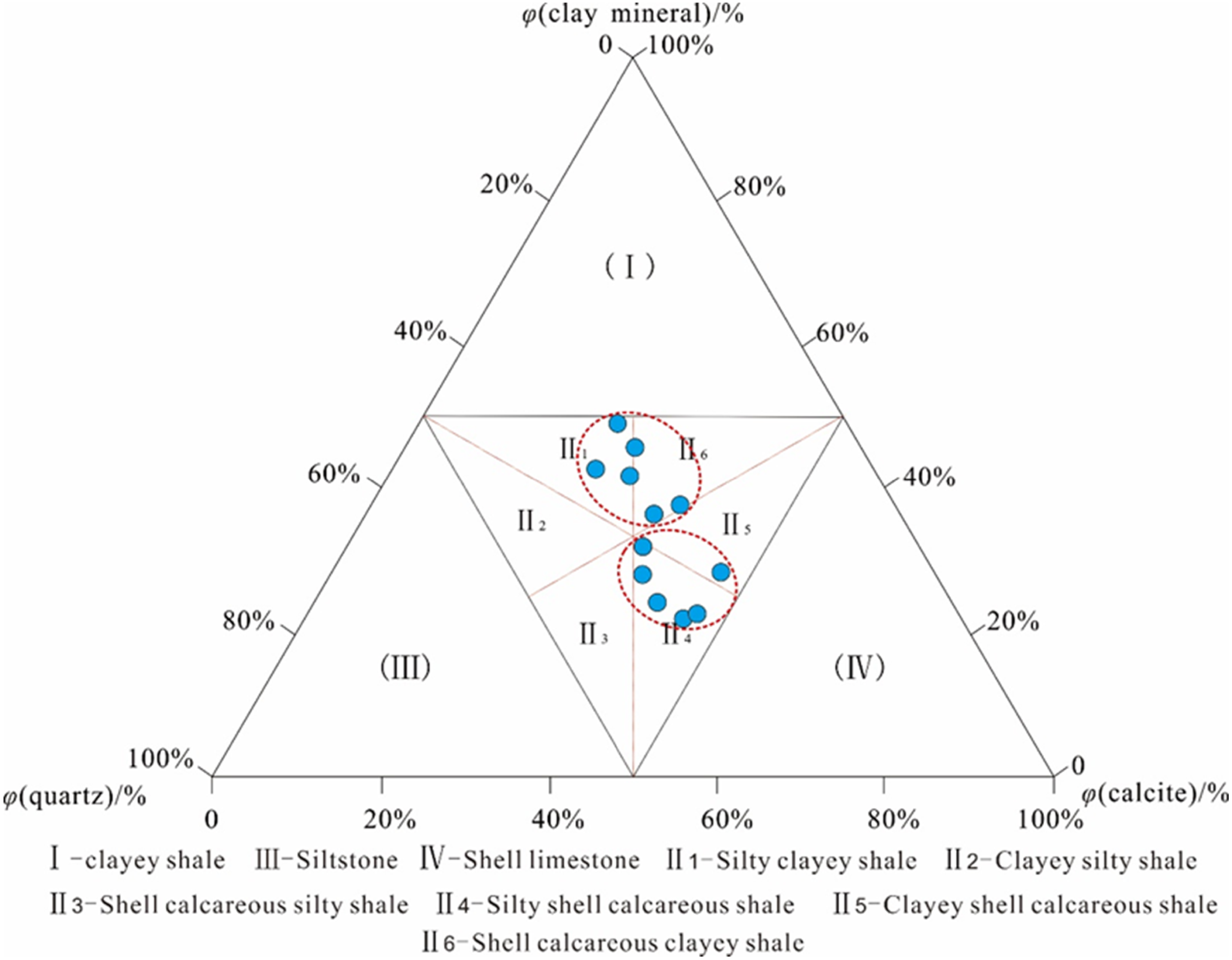
Mineralogy triangle diagram of the Da'anzhai member shale.
Pore types and characteristics
Loucks et al. (2012) divided shale pores into organic pores, mineral intragranular pores, and intergranular pores, based on morphology, genesis, and location. Common pore types of the Da’anzhai shale include organic pores, clay intercrystalline pores, calcite intracrystalline pores, quartz intercrystalline pores and pyrite framboid pores (Figure 4(a)) (Loucks et al., 2009, 2012). Organic pores are mainly distributed in asphalt (Figure 4(b)), and rare pores can be seen in kerogen (Figure 4(c)). Organic pores are subrounded or irregular. Clay intercrystalline pores are the most developed, mainly in flaky illite, mostly being flaky or irregular, with large aspect ratios (Figure 4(d)). They are readily compacted, and may be well preserved with the support of rigid particles (Figure 4(e)). Quartz intercrystalline pores (Figure 4(f), G) are distributed between authigenic quartz crystals, mostly at the edge of silica metasomatism in the shell, and with oil film commonly on the pore wall. Calcite intracrystalline pores are distributed in the shell calcite (Figure 4(h), I), with shell crystals generally larger than 80 um, and they are elliptical or irregularly polygonal, with small elongations.
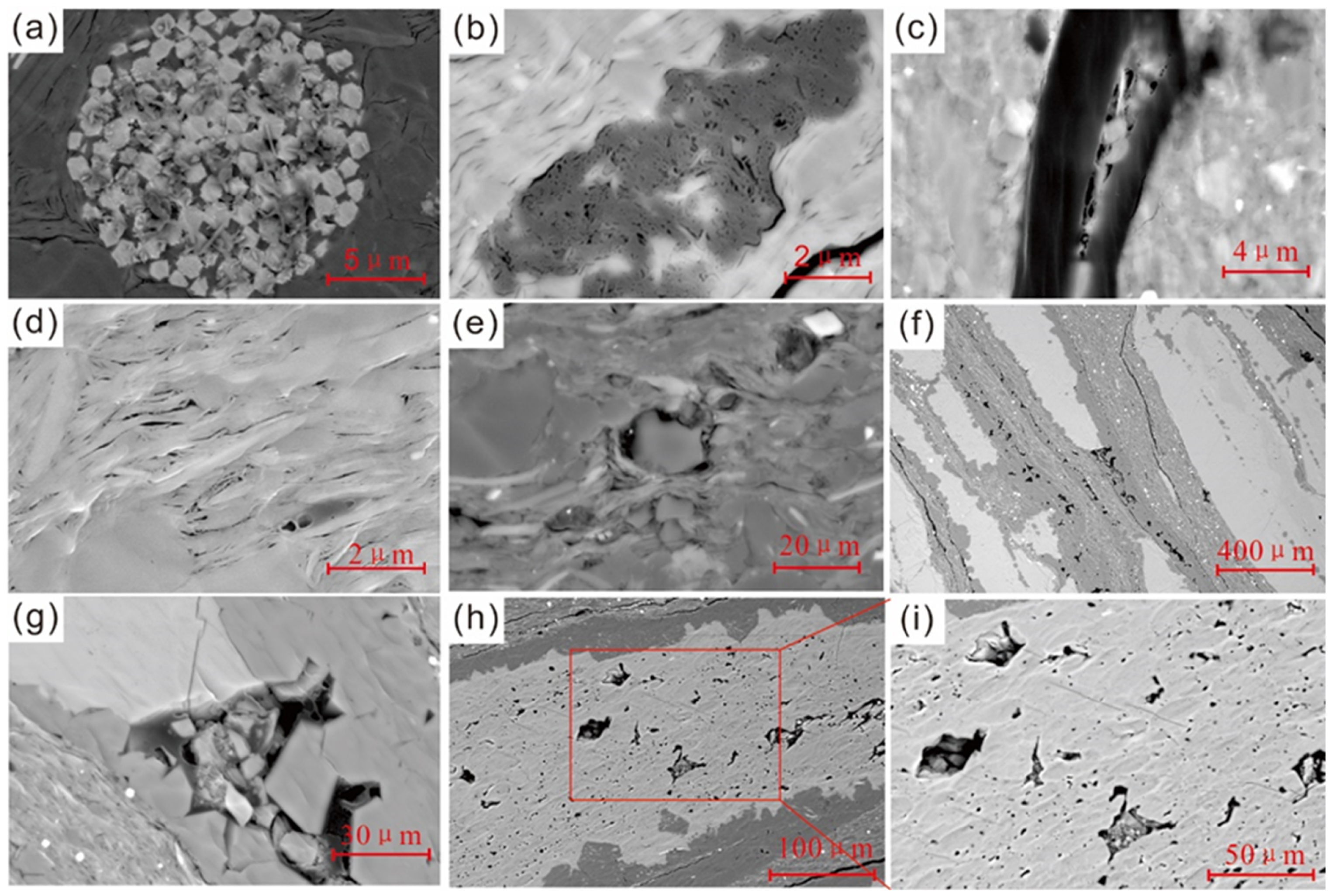
SEM images from the study well. (a) Framboidal pyrite, intercrystal pore, Sample 5; (b) Irregular honeycomb organic pores, Sample 5; (c) Kerogen with few pores, Sample 10; (d) Intercrystalline pores of lamellar clay minerals, Sample 8; (e) Intergranular pores between quartz grains and clay minerals, Sample 10; (f) Biological calcite metasomatized by quartz, intergranular pores of quartz particles, Sample 11; (g) Authigenic calcite metasomatized by silica, intergranular pores of quartz particles, Sample 1; (h) Edges of biological shells are metaso matized by quartz, calcite dissolution pores in biological shells, Sample 1; (i) Local magnification of the dissolved pores in (h), Sample 1.
Liquid nitrogen adsorption experiments
A scanning electron microscope can be used to directly observe the pore types and characteristics, but cannot be used to quantitatively analyze the pore structure (Chalmers et al., 2012; Loucks et al., 2009; Sun et al., 2021; Wen et al., 2016). In contrast, liquid nitrogen adsorption (LNA) can be adopted to quantitatively analyze the characteristics of mesopores and macropores in shale. The N2 adsorption-desorption curves of 12 samples are similar to the type IV isothermal curve proposed by IUPAC (International Union of Applied Chemistry). No obvious platform segment was seen at the highest point of relative pressure, which indicates that larger macropores exist in the samples and are not filled with nitrogen. At the section with moderate relative pressure (P/P0), the presence of mesopores leads to a hysteresis loop between adsorption-desorption curves. According to the industry standard GBT21650.2-2008 (General Administration of Quality Supervision Inspection and Quarantine of the People's Republic of China, 2012), the morphology of hysteresis loop is between H3 and H4, which indicates that the pores in the sample are mainly slitlike pores composed of flaky clay and rigid particles.
Based on the tested data of relative pressure and adsorption volume, and as calculated by the BET method and BJH algorithm, the specific surface area of test samples ranges from 1.064 cm2/g to 9.227 cm2/g, with an average of 4.949 cm2/g, and the pore volume ranges from 0.003 cm3/g to 0.016 cm3/g, with an average of 0.010 cm3/g. According to the pore size of IUPAC, pores in shale can be divided into three categories, namely, micropores (<2 nm), mesopores (2–50 nm), and macropores (>50 nm). LNA is mainly used to characterize mesopores and macropores with pore sizes larger than 2 nm. The pore sizes of the all samples are unimodal with peak diameters ranging from 18 nm to 25 nm. The macropore volume of the 12 samples ranges from 0.001 cm3/g to 0.008 cm3/g, with an average of 0.004 cm3/g; and the specific surface area ranges from 0.361 cm2/g to 4.775 cm2/g, with an average of 2.211 cm2/g (Figure 5).The mesoporous volume ranges from 0.006 cm3/g to 0.008 cm3/g, with an average of 0.006 cm3/g; and the specific surface area of mesopores ranges from 0.698 cm2/g to 4.452 cm2/g, with an average of 2.739 cm2/g.
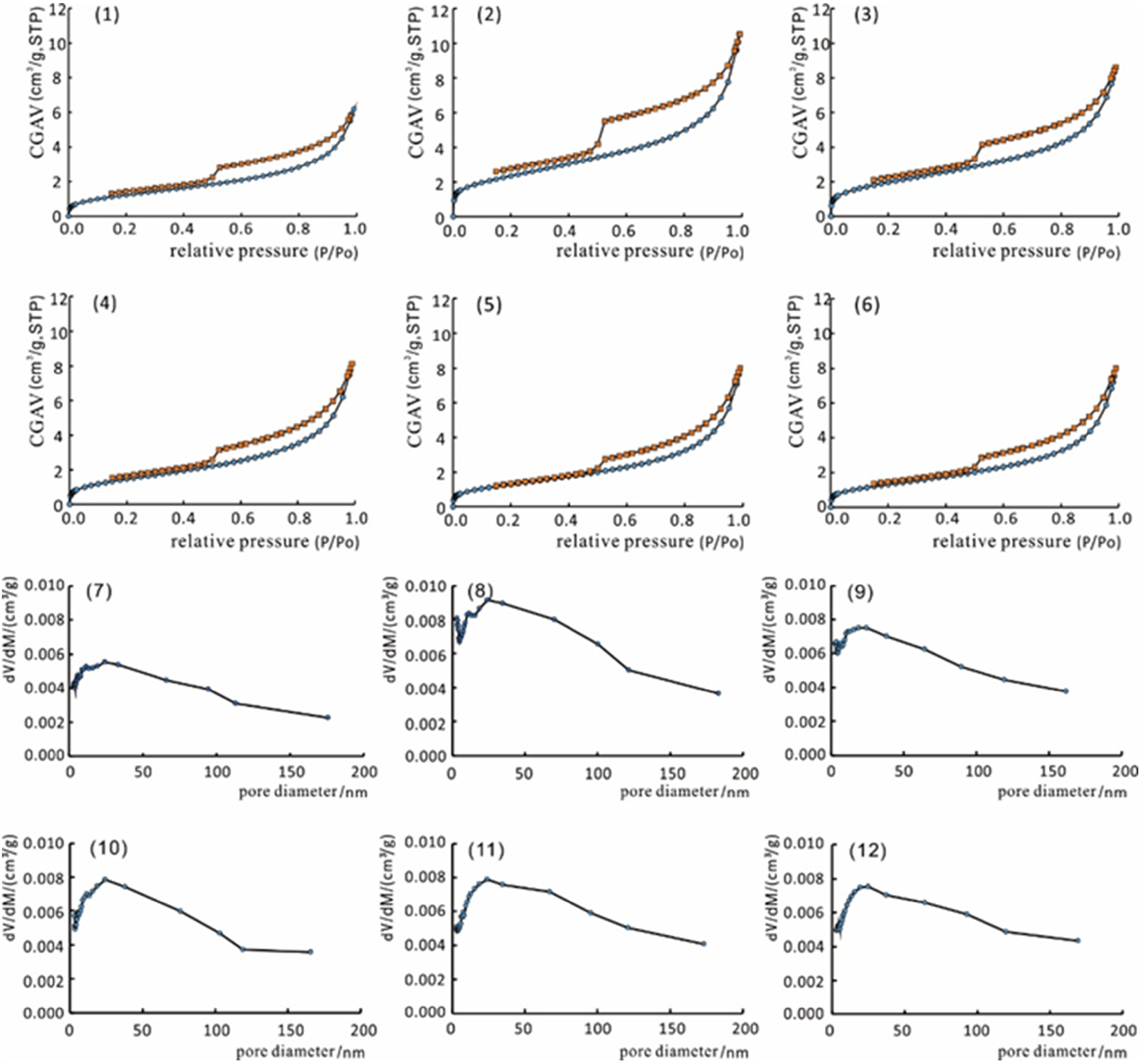
Liquid N2 adsorption-desorption isotherms and pore size distribution of 6 typical samples(Sample1–4, 6,7).
Pore evolution with shale thermal simulation
In shale thermal simulation and pore investigation experiments, large differences exist in pores, degradation of solid organic matter and bitumen within the samples at different temperatures. The morphological characteristics of pore space and organic matter can be observed by SEM. Further, the pore evolution and organic matter degradation can be quantitatively characterized by combining the experimental test results, such as porosity, apparent density, S1, S2, TOC, etc., of calcareous shale and mixed shale at different temperatures.
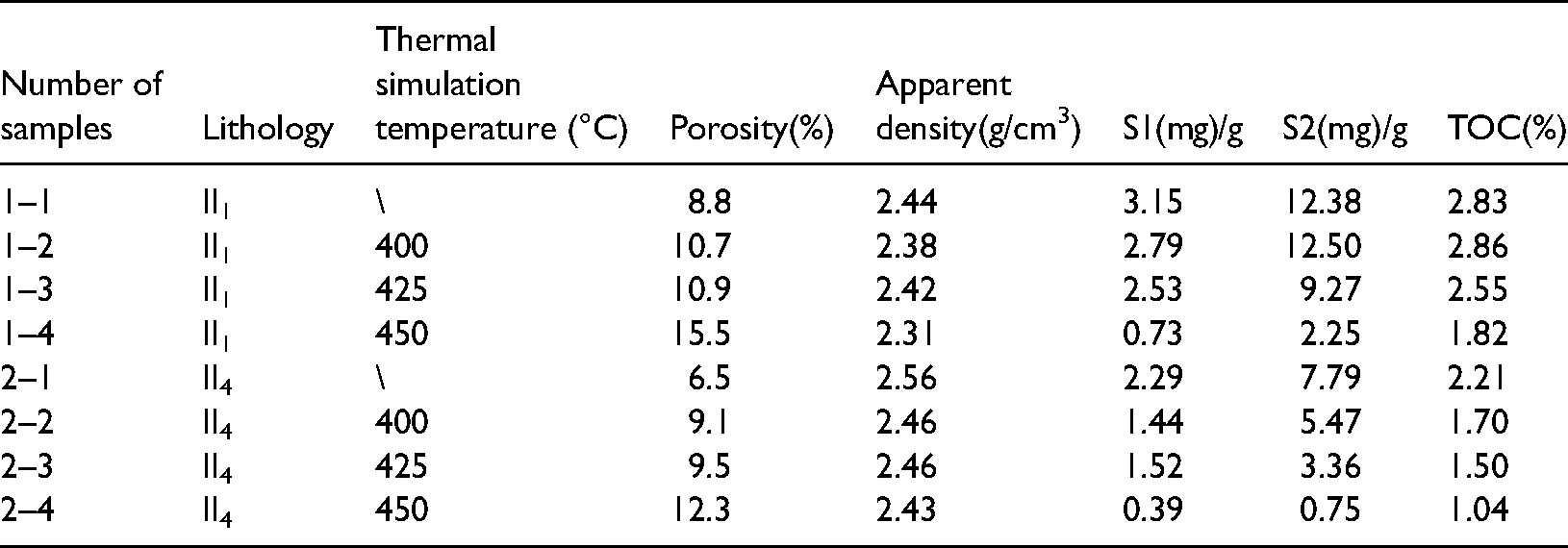
When the original sample was heated to 450°C, the hybrid shale, the measured porosity increased from 8.8% to 15.5%, S1 decreased from 3.15 mg/g to 0.73 mg/g, S2 decreased from 12.38 mg/g to 2.25 mg/g, and TOC decreased from 2.83% to 1.82%. For biogenic shale, the measured porosity increased from 6.5% to 12.3%, S1 decreased from 2.29 mg/g to 0.39 mg/g, S2 decreased from 7.79 mg/g to 0.75 mg/g, and TOC decreased from 2.21% to 1.04% (Table 2). In this process, the bitumen in clay intergranular pores and microfractures was degraded, and a large number of organic pores were developed in the bitumen after degradation (Figure 6(a)-(c), Figure 6(g)-(i)). A large number of irregular-shaped organic pores were observed locally within the solid organic matter (Figure 6(d)). Feldspar particles show flaky pores due to alteration, and pore space expands as the alteration intensifies with temperature (Figure 6(e), (f)). In addition, bitumen is found filling the pores inside the shells of the bio-containing shale, and it is completely degraded as the thermal simulation temperature rises to 450°C (Figure 6(j)-(l)).
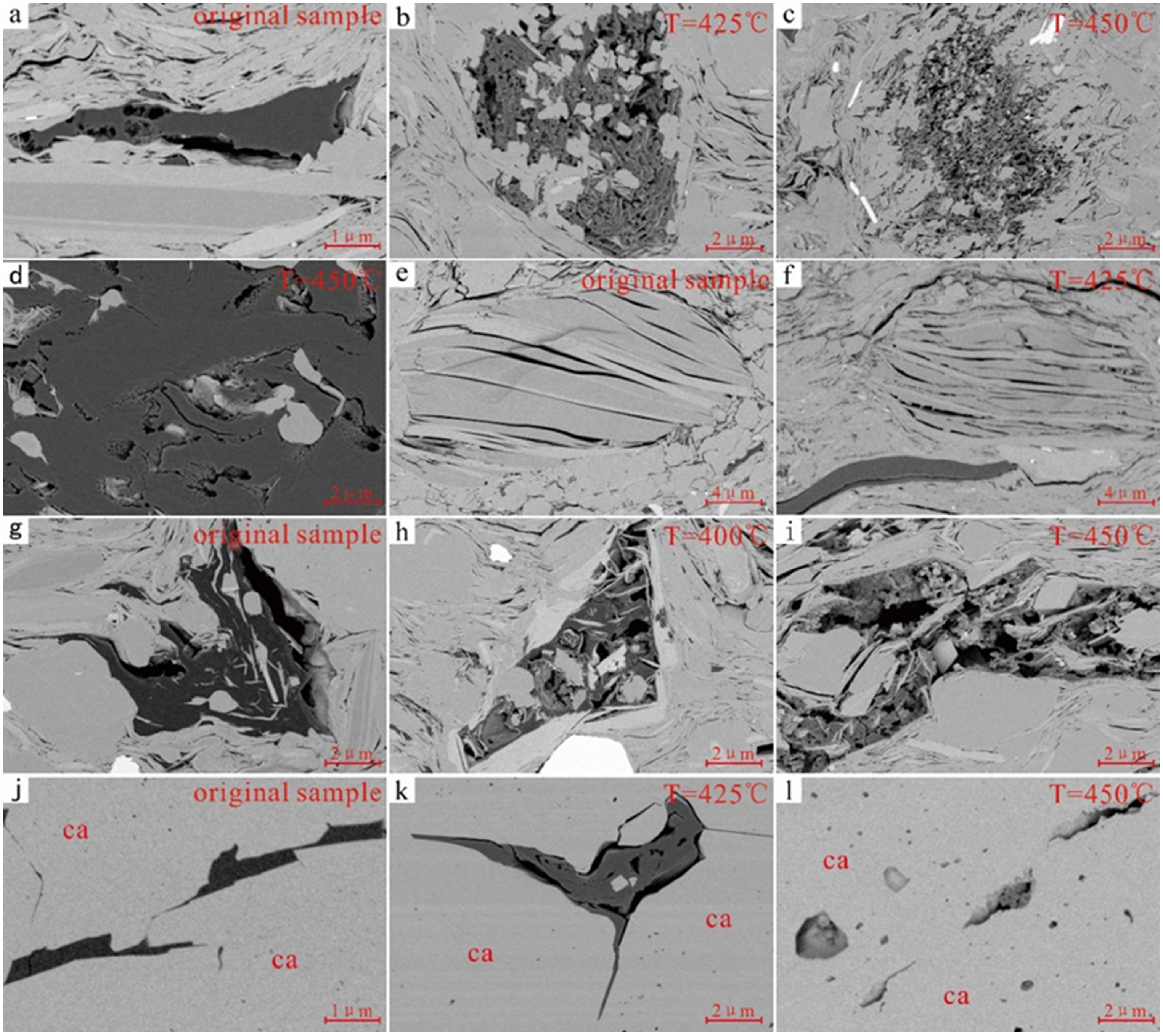
Evolution of organic pores at different temperatures. (a)–(d) variation of organic matter in clay mineral-rich hybrid shale at different temperatures; (e)–(f) variation of feldspar minerals in clay mineral-rich hybrid shale at different temperatures; (g)–(i) variation of organic matter in calcite mineral-rich hybrid shale at different temperatures; (j)–(l) variation of organic matter in shell organisms at different temperatures Limestone.
Statistical table of thermal simulation sample test data.
Discussion
Pore characteristics of shale in the Da’anzhai member
There is a good positive correlation between porosity and permeability of black shale in the Da’anzhai member (Figure 7(a)), suggesting that pores in shale play a leading role in fluid flowing within the shale, that is, the pores comprise the main storage space of the black shale in the Da’anzhai member. SEM observation reveals the presence of pores in the mineral composition (e.g. clay minerals, quartz, shell-calcite and organic matter) of the Da’anzhai shale. Here, the pore characteristics of the Da’anzhai shale are discussed in terms of lithology, mineral composition, and pore structure..
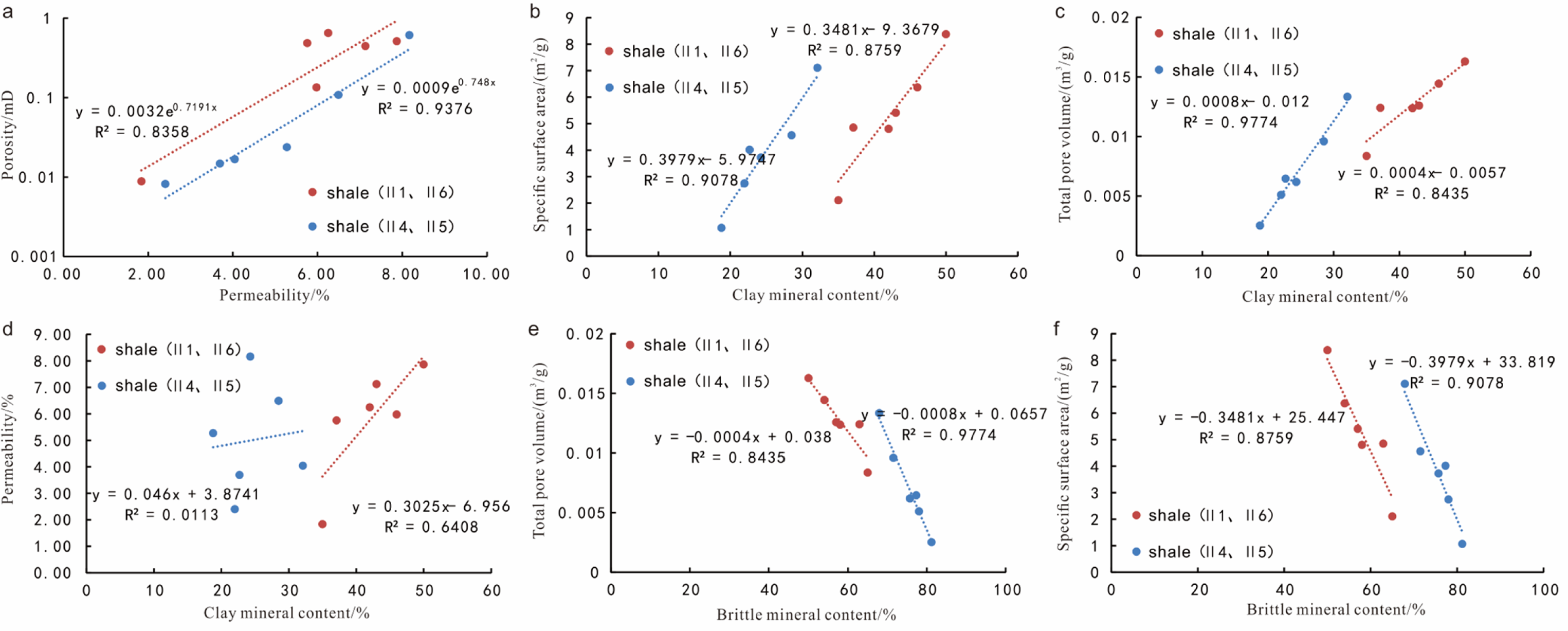
Correlation diagram between mineral content and pore parameters of da ‘anzhai Black shale
Effect of inorganic mineral components on pores
There are three types of components in the shale of the Da’anzhai member. However, in the exploration and development of shale oil and gas, they are usually reclassified into two main types: brittle minerals (quartz, feldspar + calcite) and clay minerals. Therefore, in this paper, correlation analysis was conducted between brittle mineral content, clay mineral content, and pore characteristic parameters. The results demonstrate that clay mineral content has a good positive correlation with specific surface area and total pore volume (Figure 7(b), (c)), and the overall brittle mineral content has a strong negative correlation with specific surface area and total pore volume (Figure 7(e), (f)). It suggests that there are obvious differences in the influence of different mineral composition in the shale on the pore space, and the intergranular pore space of clay minerals within the shale is a major contributor to the pore volume of the reservoir.
Among them, the clay mineral content of shale (II1, II6) has a strong positive correlation with porosity (R2 = 0.6408) (Figure 7(d)), indicating that intergranular pores and micro-fractures of clay minerals contribute significantly to porosity in shales rich in clay minerals. In contrast, the positive relationship between the clay mineral content and porosity of shale (II4, II5) is weaker (R2 = 0.0113), indicating that pores in calcite (shell)-rich shales (II4 and II5) are less related to clay minerals. In shell (calcite)-rich shales, the contact edges between shell particles and clay minerals are mechanically weak parts, microfractures are easy to be developed. In addition, dissolution pores and other pores formed within biological structures of shell particles can also provide enough storage space for porosity.
Effect of organic matter on pores
A large number of studies have shown that organic matter has an important influence on the pore structure of shale gas reservoirs, and TOC often shows a significant positive correlation with pore volume and specific surface area (Chen et al., 2012; Luo et al., 2014; Medek and Weishauptová, 2000). However, for shale oil reservoirs, organic pores are not developed due to the adsorption and swelling of solid organic matter (Song et al., 2013). SEM observation reveals that only a small amount of organic pores are distributed in bitumen in the Da’anzhai member. The correlation analysis demonstrates that the TOC content of shale (II4 and II5) is weakly negatively correlated with specific surface area and total pore volume (R2 = 0.1777; R2 = 0.1530), and the TOC content of shale (II1 and II6) is weakly positively correlated with specific surface area and total pore volume (R2 = 0.2098; R2 = 0.3842) (Figure 8(a), (b)). Generally, TOC is weakly correlated with pore volume and specific surface area, indicating that organic matter has little influence on the pore structure of shale. The main reason is that the black shale in the study area was deposited in a small- to medium-sized terrestrial freshwater lake basin with low organic matter content, resulting in a small proportion of organic pores in the total pores. In addition, the maturity of organic matter indicates the stage of oil generation, and organic pore development is inhibited by adsorption and swelling, etc.
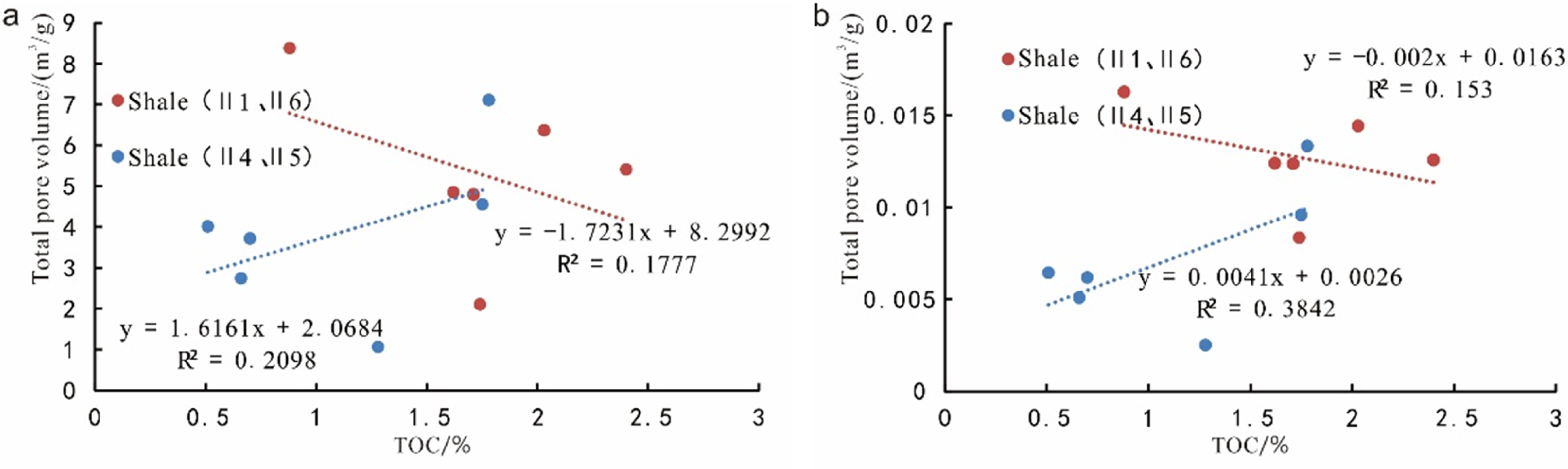
Correlation diagram between mineral content and pore parameters of da ‘anzhai Black shale.
Effect of shale maturity on pore development
Since organic pores dominate the pore space in the Da’anzhai shale which exhibits a moderate evolution degree, the organic pores can be further modified by experimental or engineering means to investigate the hydrocarbon potential of shale. Such modification is expected to be a breakthrough point for future shale oil and gas development. The evolution process of organic matter and organic pores in shale can be accomplished by the thermal simulation experiment. Previous studies have shown that in the process of thermal simulation (pore) experiment of shale, the thermal evolution degree of organic matter in shale increases with temperature (Zheng et al., 2009). According to the histogram graphs of thermal simulation temperature and porosity of samples (Figure 9(a)), the porosity of shale samples increases with the thermal simulation temperature. Combined with the SEM observation results (Figure 6(a), (b), (c)), it is inferred that the increase in the thermal evolution degree of organic matter in shale is favorable to the development of organic pores, which makes the shale porosity increase. In addition, the strong negative correlation between shale porosity and TOC (Figure 9(b)) further illustrates that organic pores are the main contributor to the porosity increment.
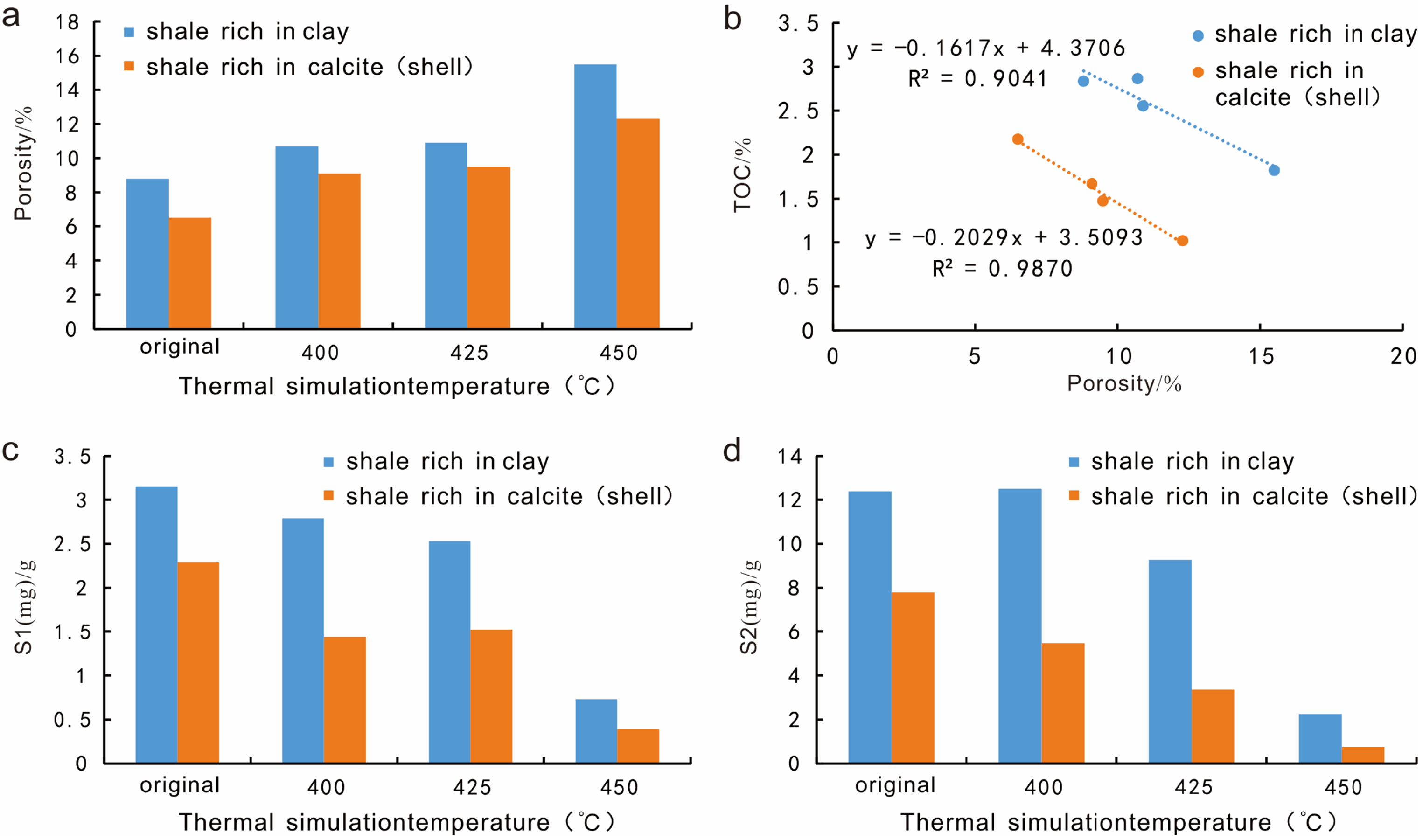
Histogram and correlation diagram of sample thermal simulation temperature and re-lated parameters.
In the same thermal simulation environment, the pore variations are different depending on lithology. The hybrid shale, with high original TOC (2.83%), has a greater positive correlation between porosity and TOC (R2 = 0.9041) than the bio-containing shale (R2 = 0.8908) as the thermal simulation temperature changes (Figure 9(b)), and the former contains more developed organic pores. The comparison of S1 and S2 (Figure 9(c), (d)) shows that the bio-containing shale has much lower original S1 and S2 values than the hybrid shale. As the thermal simulation temperature rises, the bitumen and solid organic matter in the bio-containing shale are rapidly cracked to low-carbon hydrocarbons. In contrast, the hybrid shale with higher original S1 and S2 values has essentially no conversion of solid organic matter at lower temperatures (<400°C) (Figure 9(d)). This indicates that higher TOC, S1 and S2 values of shale inhibit the hydrocarbon cracking process to some extent. Therefore, the bio-containing shale with lower TOC content has better pore evolution conditions.
Petroleum geological significance
As described above, inorganic pores, especially clay intergranular pores, represent the dominant pore type of shale oil reservoir in the Da’anzhai member, which is different from shale gas reservoirs. For shale gas reservoirs, TOC is one of the key factors to determine the reservoir storage capacity, and high-quality reservoir intervals often coincide with high-TOC shale intervals, that is, shale with higher TOC has better reservoir storage capacity and higher gas potential. For shale oil reservoirs, kerogen is still the basis of oil and gas generation. However, oil generation only occurs after adsorption by organic matter. Only the excess oil after adsorption is in free state. It is generally believed that 1 g of organic matter can adsorb 100 mg of oil. In this case, the oil in shale cannot flow freely when the S1/TOC ratio is less than 100 mg/g. Therefore, the content of movable oil or free oil is more critical for reservoir quality evaluation. Pore size is one of the important parameters affecting oil movability. Theoretically, bitumen particle with molecular diameter of 10 nm can only pass through the pore throat when the critical pore throat diameter is at least 100 nm. Such pores are mainly inorganic pores (Song et al., 2013). However, the pore evolution experiments of source rocks show that shales with different evolution degrees are obviously different in primary porosity. Rock composition and diagenesis (especially compaction) of shale are the main factors affecting inorganic pores, while the evolution degree of organic matter and burial time have more obvious effects on improving organic pores.
Shale oil reservoirs, even with similar thermal maturity at present, may be different in shale pore evolution, storage capacity, and seepage property due to different burial processes. Therefore, the research on development of inorganic pores in shale oil reservoirs should also consider the conditions influencing organic pore evolution, especially for shale oil reservoirs with relatively low maturity.
Conclusions
Minerals in the Da’anzhai shale are mainly clay minerals, quartz, and calcite, with a small amount of feldspar, dolomite, and pyrite. Based on the difference in mineral composition, the D2 shale can be divided into two categories, namely, calcite (shell)-rich shale represented by silty shell calcareous shale (II4) and clayey shell calcareous shale (II5), and clay mineral-rich shale represented by silty clayey shale (II1) and shell calcareous clayey shale (II6).
Pores in the reservoir include clay intergranular pores, calcite intracrystalline pores, organic pores, quartz intergranular pores and pyrite intergranular pores. Specifically, inorganic pores such as clay intergranular pores are dominant, while organic pores are relatively small in content.
LNA test results show that the specific surface area of the Da’anzhai shale is 1.064–9.227 m2/g, with an average of 4.949 m2/g, and the pore volume is 0.003–0.016 cm3/g, with the average of 0.010 cm3/g. Most of the samples exhibit a unimodal distribution of pore size, with the peak diameter in the range of 21–34 nm.
Difference in mineral composition plays a leading role in controlling the pore characteristics of shale. For clay mineral-rich hybrid shale (II1, II6), the clay intergranular pores are a major contributor to the pore volume of the reservoir, but the permeability is poor. For calcite-rich hybrid shale (II4, II5), fractures at the edge of shell and dissolved pores in shell may readily form a cavity-fracture system to provide a larger storage space, and they are strong support for effective pores.
Development of pores in shale is little affected by the organic matter content. The Da2 shale contains a low content of organic matter, determining a small proportion of organic pores in the total pore space. However, organic pores are the main contributor to the increment of shale porosity under the thermal simulation (pore) experimental conditions. Higher TOC, S1 and S2 values inhibit the hydrocarbon cracking process to some extent, while shales with lower TOC content (II4 and II5) have better pore evolution conditions.
Footnotes
Acknowledgments
This research was supported by Open Foundation of State Key Laboratory of Shale Oil and Gas (G5800-20-ZS-KFGY010). We thank experts for constructive suggestions, we also thank Haihua Zhu, Lin Xie of Southwest Petroleum University for their guidance and help in use the instrumentations, and Dr Zikun Zhou, Master Yangyang Zhang, Yangming Ma of Southwest Petroleum University for data collation and part of the drawing.
Author contributions
For research articles with several authors, a short paragraph specifying their individual contributions must be provided. The following statements should be used “Conceptualization, Shengyang Xie and Xiyan Yang; methodology, Xingzhi Wang; software, Fei Huo; validation,Zhongliang Ma, Caiming Zhang and Xiyan Yang; formal analysis, Jiahao Kang; investigation, Shengyang Xie, Mengyao Jia, Yang Li and Rong Yang; resources, Zisang Huang and Qinfan Yi; data curation, Shengyang Xie; writing—original draft preparation, Shengyang Xie; writing—review and editing, Shengyang Xie; visualization,Shengyang Xie; supervision, Xingzhi Wang; project administration, Xiyan Yang; funding acquisition, Xiyan Yang All authors have read and agreed to the published version of the manuscript.”
Funding
This research was funded by Open Foundation of State Key Laboratory of Shale Oil and Gas, grant number G5800-20-ZS-KFGY010”.
Declaration of conflicting interests
The author(s) declared no potential conflicts of interest with respect to the research, authorship, and/or publication of this article.
Funding
The author(s) disclosed receipt of the following financial support for the research, authorship, and/or publication of this article: This work was supported by the Open Foundation of State Key Laboratory of Shale Oil and Gas, (grant number G5800-20-ZS-KFGY010).
