




Abstract
The sandstone reservoirs in the Upper Paleozoic He 8 Member in the northern Tianhuan depression of the Ordos Basin are vastly different and feature particularly complex gas–water distributions. Scanning electron microscopy, fluorescence, Raman spectroscopy inclusions, relative permeability analysis, and nuclear magnetic resonance were utilized in this study based on core data, identification statistics, and various thin-section microscope measurements. Samples from the Upper Paleozoic He 8 Member in the northern Tianhuan depression were collected to study the characteristics of reservoir heterogeneity and gas–water distribution, which were controlled by differential diagenesis. The results indicate that compaction and dissolution are the two most important factors controlling reservoir heterogeneity. Large differences in diagenesis–accumulation sequences and pore structure characteristics affect reservoir wettability, irreducible water saturation, and gas displacement efficiency, thereby controlling the gas–water distribution. The He 8 Member is a gas reservoir that is densified because of accumulation. Reservoirs can be divided into three types based on the relationship between diagenetic facies and gas–water distribution. Type I is characterized by weak compaction, precipitate or altered kaolinite cementation, strong dissolution of diagenetic facies, and high porosity and permeability. This type is dominated by grain-mold pores and intergranular dissolution pores and produces gas reservoirs with high gas yield. Type II is characterized by medium-strength compaction, altered kaolinite or chlorite cementation, weak dissolution of diagenetic facies, and medium porosity and permeability. This type is dominated by residual intergranular pores, a few residual intergranular pores, and dispersed dissolution pores, producing gas reservoirs with low gas yield. Type III is characterized by medium-strength compaction, altered kaolinite cementation, and medium-strength dissolution of diagenetic facies. This type is dominated by kaolinite intercrystal pores and dispersed dissolution pores, producing gas reservoirs with high water yield.
Keywords
Introduction
The Ordos Basin is rich in hydrocarbons and includes potentially undiscovered resources. The development of hydrocarbon exploration in the foreland basin has recently made the Upper Paleozoic strata the focus of Ordos Basin exploration, owing to its rich resource potential and the relative lack of exploration. Sulige, Yulin, Jingbian, Wushenqi, Daniudi, Zizhou, and other large gas fields with proven reserves of more than 100 billion m3 have been successively discovered in the Upper Paleozoic strata (Dai et al., 2012; Ni et al., 2018; Zhao et al., 2000), demonstrating potential for further exploration. Previous studies generally considered the natural gas in these strata to be formed from coal and source rocks that were transitional coal-bearing strata from marine to continental facies (Li et al., 2012; Yang and Liu, 2014). Hydrocarbon reserve exploration in the Ordos Basin has peaked. The natural gas resources of the Upper Paleozoic coal-bearing strata have been explored in the Sulige (Wu et al., 2020; Xi et al., 2015), and two potential areas have been identified in the eastern Ordos Basin and Longdong area (Sun et al., 2015; Yang and Liu, 2014). The natural gas resources in the basin are continuously being explored and developed; thus, finding new exploration areas in the Upper Paleozoic strata is crucial. The focus of recent exploration efforts has shifted to the Tianhuan depression.
Several exploration wells achieving industrial productivity in different formations in the Upper Paleozoic in the Tianhuan depression demonstrated the superior exploration potential of the area. Well L4 measured an open flow potential of 20.24 × 10³ m3/d in the He 8 Member, and well S399 measured a potential of 4.35 × 10³ m3/d in the Shan 1 Member (Wu et al., 2020). However, drilling wells in certain areas could yield water—rather than gas—from different formations. Moreover, the trends of gas–water distribution are complex. The yield data show that water and gas production from the same formation differs significantly within the area. These differences increase the complexity of exploration and are a key aspect affecting the direction of future exploration. Diagenesis controls the degree and duration of reservoir densification. The physical and gas-bearing properties of reservoirs are affected by the diagenesis–accumulation sequence. The pore structure characteristics controlled by differential diagenesis affect reservoir wettability, irreducible water saturation, and gas displacement efficiency, thereby controlling the gas–water distribution. The initial clastic composition controlled by sedimentary facies is an important factor that affects diagenetic evolution (Bjørlykke, 2014; Rossi et al., 2002; Zhou et al., 2016). Alluvial plain facies, braided river delta facies, and braided river delta front sedimentary subfacies are developed in the northern Tianhuan depression. The composition of clastic materials is relatively different from north to south, coupled with significant differences in diagenesis and pore types that affect the gas–water distribution (Guo et al., 2020; Wang et al., 2018). The northern Tianhuan depression is the study area investigated herein, with Tiekesu Temple to the north, Gengwan to the south, Hui’an Fort to the west, and Dingbian to the east, and an area of approximately 7000 km2 (Figure 1). The He 8 Member in the northern Tianhuan depression is the target layer. The objectives of this study are to study the diagenesis, to finely dissect the reservoir densification sequence, to analyze the reservoir genesis of the different gas–water distributions in the same well area, and to confirm that the differential diagenesis of the He 8 Member controls the heterogeneity and gas–water distribution. The results can greatly benefit the efficient exploration of the Upper Paleozoic gas reservoirs in the Tianhuan depression.
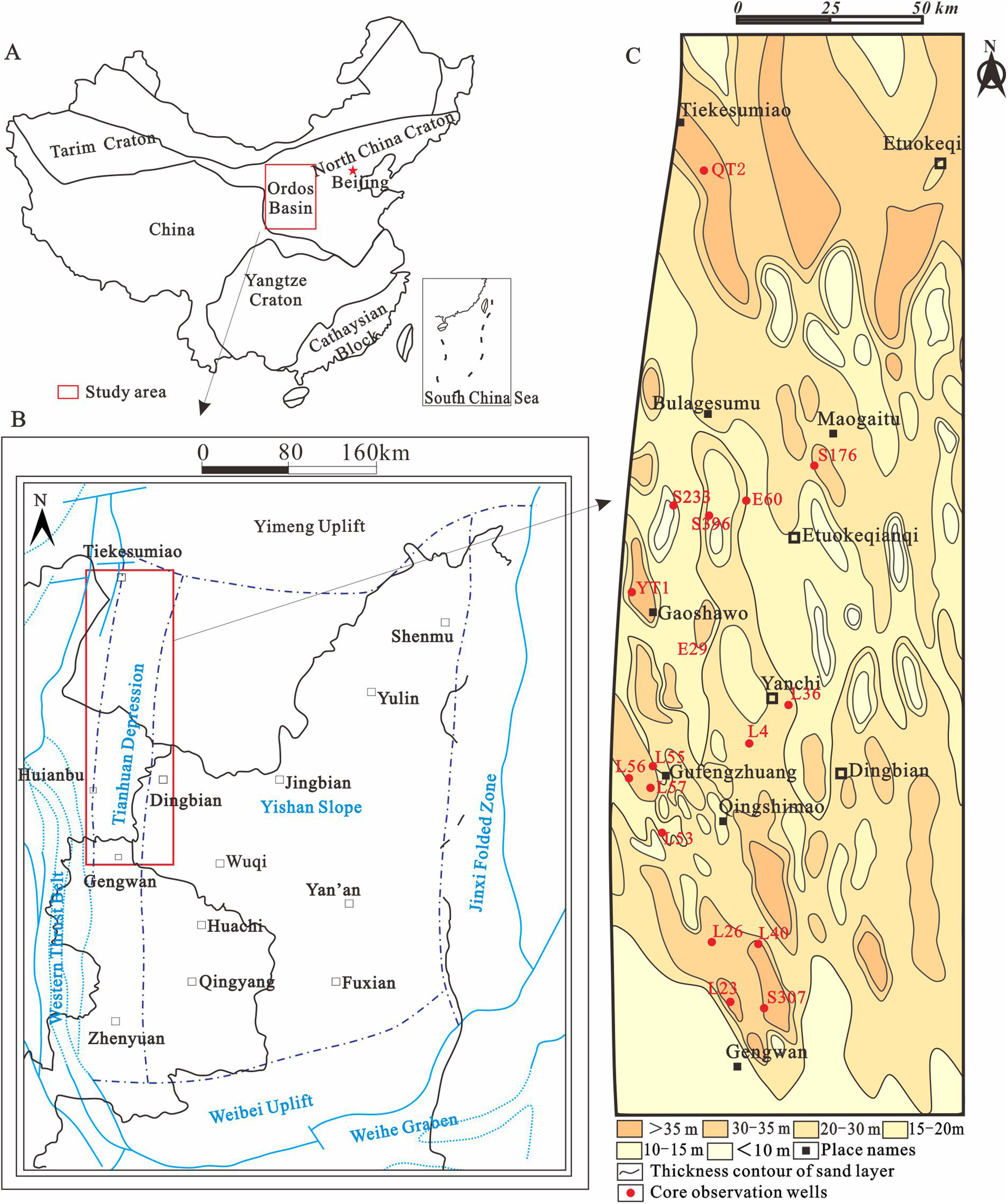
(a) and (b) Map showing the locations of the investigated sections in the Tianhuan depression, Ordos Basin, North China; (c) thickness of sand layers and locations of core observation wells in the study area.
Regional geologic background
The Tianhuan depression is located in the western Ordos Basin. The terrain has a gentle slope to the east, becoming steeper toward the west. The east–west trending asymmetric depression connects the western marginal thrust belt and the Yishan slope, which forms the tectonic framework of the basin. The Tianhuan depression contained a marine–terrestrial transitional facies clastic depositional system during the Late Paleozoic. Benxi, Taiyuan, Shanxi, Shihezi, and Shiqianfeng formations are developed from bottom to top (Jia et al., 2007; Wang et al., 2018; Zhou et al., 2014). Of these, the Shanxi and Lower Shihezi formations are the primary gas-bearing strata. The dark shales from the Taiyuan Formation and the Shan 2 Member from the Shanxi Formation are the principal source rocks, with thicknesses varying from approximately 20–100 m, thinning from west to east. The hydrocarbon generation intensity is 16–20 × 108 m3/km2, representing a medium hydrocarbon-generation intensity zone (Wang et al., 2018). The erosion source area in the northern part of the study area featured intense uplift and supplied a substantial amount of terrigenous debris during the depositional period of He 8. Therefore, the braided river delta alluvial plain subfacies are developed in the north, braided river-controlled delta plain subfacies in the central area, and delta front subfacies in the south. Rock types include high-grade metamorphic, middle- to low-grade metamorphic, and various intrusive, extrusive, and sedimentary rocks. The Khoundzite belt of the Late Paleoproterozoic in the northern and northwestern margins of the basin was the principal source of sediments during the deposition of the Upper Paleozoic strata. The Trondhjemite, Tonalite, and Granodiorite (TTG) gneiss in the early Paleoproterozoic of the Yinshan Block and the ancient granitic intrusions were also the important sources of sediments (Luo et al., 2010, 2014). The compositional and textural maturities of the reservoirs are higher, and the compressional resistance and physical properties of the reservoirs are better toward the south than in the north. The study area is divided into three areas from south to north, namely, Tiekesumiao, Gaoshawo, and Gengwan (Figure 1), according to the substantial heterogeneity of reservoir physical properties.
Samples and methods
A total of 65 samples were obtained from 17 wells by drilling cores in the Upper Paleozoic He 8 Member in the northern Tianhuan depression of the Ordos Basin. We selected samples based on variations in lithological characteristics, grain size, and other sedimentary characteristics. Reservoir characteristics and diagenesis were studied via core observations, thin-section observations, cathodoluminescence, scanning electron microscopy (SEM), phase permeability, and nuclear magnetism. The hydrocarbon charging period was investigated based on a diagenesis study by combining fluorescence and Raman spectroscopy data to establish a diagenesis–accumulation sequence. The differential diagenesis of tight sandstone reservoirs and their effect on the gas–water distribution were discussed by combining and integrating the sequence with the gas–water distribution trends.
The thin section and SEM observations were performed at the State Key Laboratory of Continental Dynamics of the Northwestern University (Xi’an, China). ZEIZZ Axio Scope A1 polarizing microscope was used for thin-section observations, a NiKon-LV100-Pol polarizing microscope and a CLF-1 cathodoluminescence analysis instrument were used for cathodoluminescence observations, a ZEIZZ Axio Scope A1 polarizing microscope and a CIAS-2004 color image analysis system were used for microscopic quantitative analysis, and FEI Quanta 450FEG was used for SEM. Relative permeability and nuclear magnetic resonance (NMR) experiments were performed in the Development Center of Practical New Technology at the University of Petroleum (Eastern China). The experimental data of the relative permeability were derived from formation water data. GeoSpec_2 was used for NMR.
Results
Petrological characteristics of the reservoirs
The study area contains alluvial plains, delta plains, and delta front sedimentary subfacies from south to north. The representative areas from south to north are Tiekesumiao, Gaoshawo, and Gengwan. The primary reservoirs are defined as the reservoirs deposited in distributary channels, braided channels, and underwater distributary channel microfacies. The lithology is defined based on SY/T 5368-2016 Rock Thin Section Identification (2016) and Folk (1980). The thin-section results of 65 samples from the study area show that the three lithology types are not considerably different. Among the three types of rock, quartz sandstone is the most abundant, followed by feldspar sandstone and lithic sandstone. Detrital compositions differ slightly. The feldspar content of the northern Tikesumiao area (up to 12%) is relatively high. Most of the feldspar was kaolinized; however, it maintained its clastic form and was considered as feldspar (Liu et al., 2017). The clastic components of the central Gaoshawo area are dominated by quartz sandstones and minimal lithic quartz sandstones. The clastic components of the southern Gengwan area are mostly quartz sandstone, except for three samples distributed between feldspathic quartz sandstone and lithic quartz sandstone (Figure 2). The compositional maturity is generally relatively high in the Gengwan area. Other sources may exist outside the northern Gaoshawo area.
Properties and types of the reservoirs
The sandstone reservoir porosity of the He 8 Member in the northern Tianhuan depression has a range of 0.5–14%, with most areas having values from 5% to 10%. The permeability is >10 μm2 (primarily between 0.08 × 10⁻³ μm2 and 1.00 × 10⁻³ μm2), representing an extra-low-porosity to ultra-low-permeability reservoir (SY/T 6285-2011, 2011, 5 < φ < 10, K < 1 × 10⁻³ μm2). The core and thin slice observations reveal reservoirs with a permeability >1 × 10⁻³ μm2, which were restructured by cracks. Porosity and permeability in the Tiekesumiao, Gaoshawo, and Gengwan areas exhibit a gradually increasing trend (Figure 3). The reservoirs within the He 8 Member from the Gengwan and Gaoshawo areas have better properties, with peak porosities and permeabilities ranging from 6% to 8% and from 0.25 × 10⁻³ to 1 × 10⁻³ μm2, respectively.
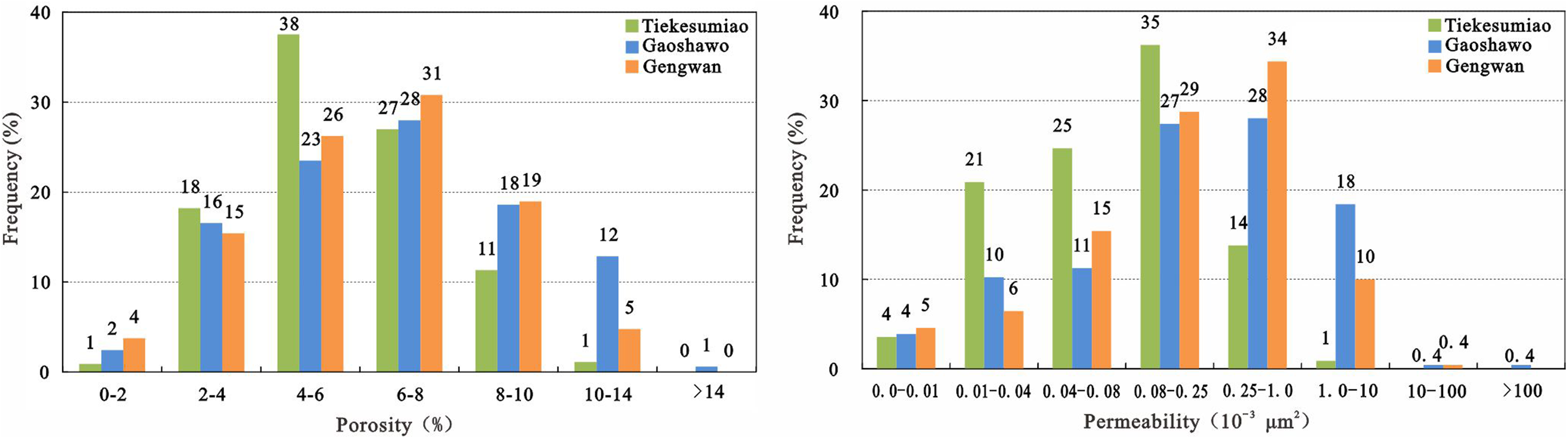
Frequency distribution histograms of the porosity and permeability of the sandstone reservoirs within the He 8 Member of the northern Tianhuan depression.
The observations of 65 thin sections revealed that the pore types in the sandstone reservoirs are primarily grain-mold holes (Figure 4(b)), intergranular dissolution pores (Figure 4(c)), kaolinite intercrystalline pores (Figure 4(d)), and residual intergranular pores (Figure 4(e) and (f)). The intergranular dissolution pores are the most developed type with a wide pore size range. The porosity reaches more than 2% in the Tieksumiao and Gaoshawo areas. Grain-mold holes with a diameter of up to 2 mm are the second most developed type. In the Gaoshawo area, most residual intergranular pores were modified by dissolution and count as intergranular dissolution pores (Figure 4(a)).
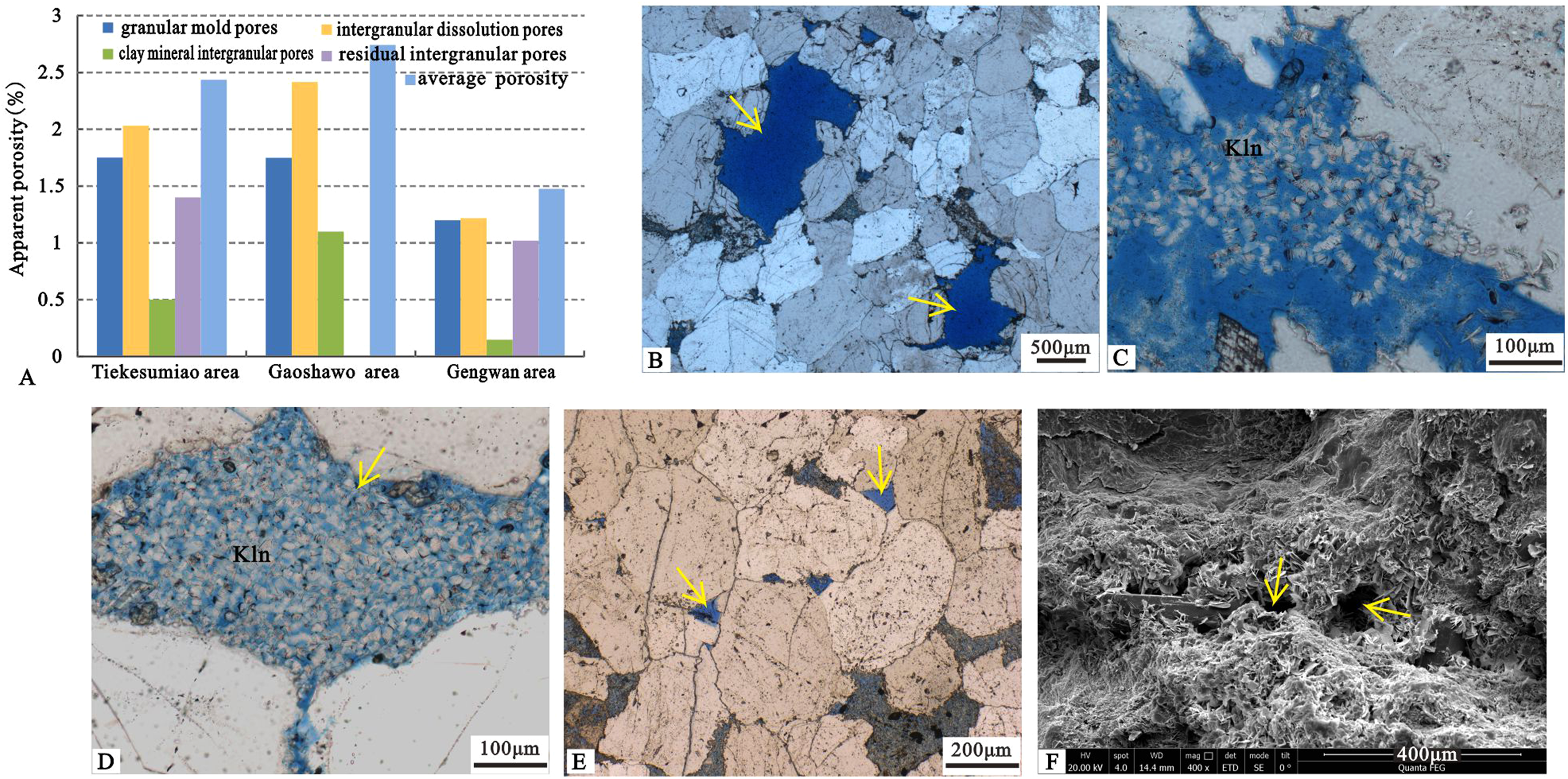
Pore-type distribution of the sandstone reservoirs of the He 8 Member in the northern Tianhuan depression. (a) Composition of pore types in different areas based on thin-section microscopy; (b) well S307, 4477.48 m, quartz arenite, grain-mold holes; (c) well L23, 4489 m, quartz arenite, intergranular dissolution pores; (d) well S307, 4474.6 m, quartz arenite, kaolinite intercrystalline pores; (e) well L4, 3896.88 m, medium-grained quartz sandstone, residual intergranular pores; (f) well L36, 3687.28 m, medium-grained quartz sandstone, residual intergranular pores.
Diagenesis types and diagenetic stages
The thin-section microscope and SEM observations revealed four types of diagenesis (compaction, cementation, dissolution, and metasomatism) that developed in the sandstone reservoirs within the He 8 Member of the northern Tianhuan depression.
The Upper Paleozoic He 8 Member of the Tianhuan depression is a typical coal-bearing stratum. Therefore, the water conditions in the quasi-contemporaneous–early burial period were primarily acidic. Cementation was not distinctive at this stage, and a small amount of montmorillonite and dolomite was developed. Compaction was the primary diagenesis type during this period and was closely related to the plastic particle and clay mineral contents influenced by sedimentary microfacies. Compressive strength was high, and compaction was weak on the channel microfacies due to the high proportion of rigid minerals (e.g. quartz). Sedimentary debris on the channel margins and the overbank produced small grain sizes, multiple argillaceous matrices and clastic particles, weak compressive strength, and strong compaction (Worden et al., 1997, 2000). Many pores disappeared during shallow burial, deteriorating the physical properties. The minerals were oriented in a unified direction, and the grain contact changed from point to line and concavo–convex contact. Simultaneously, plastic particles (e.g. debris and mica) began to deform and were squeezed into the intergranular pores to form pseudo-hybrid bases. Consequently, the primary remnant intergranular pores greatly reduced in number and even disappeared completely (Figure 5(a)).
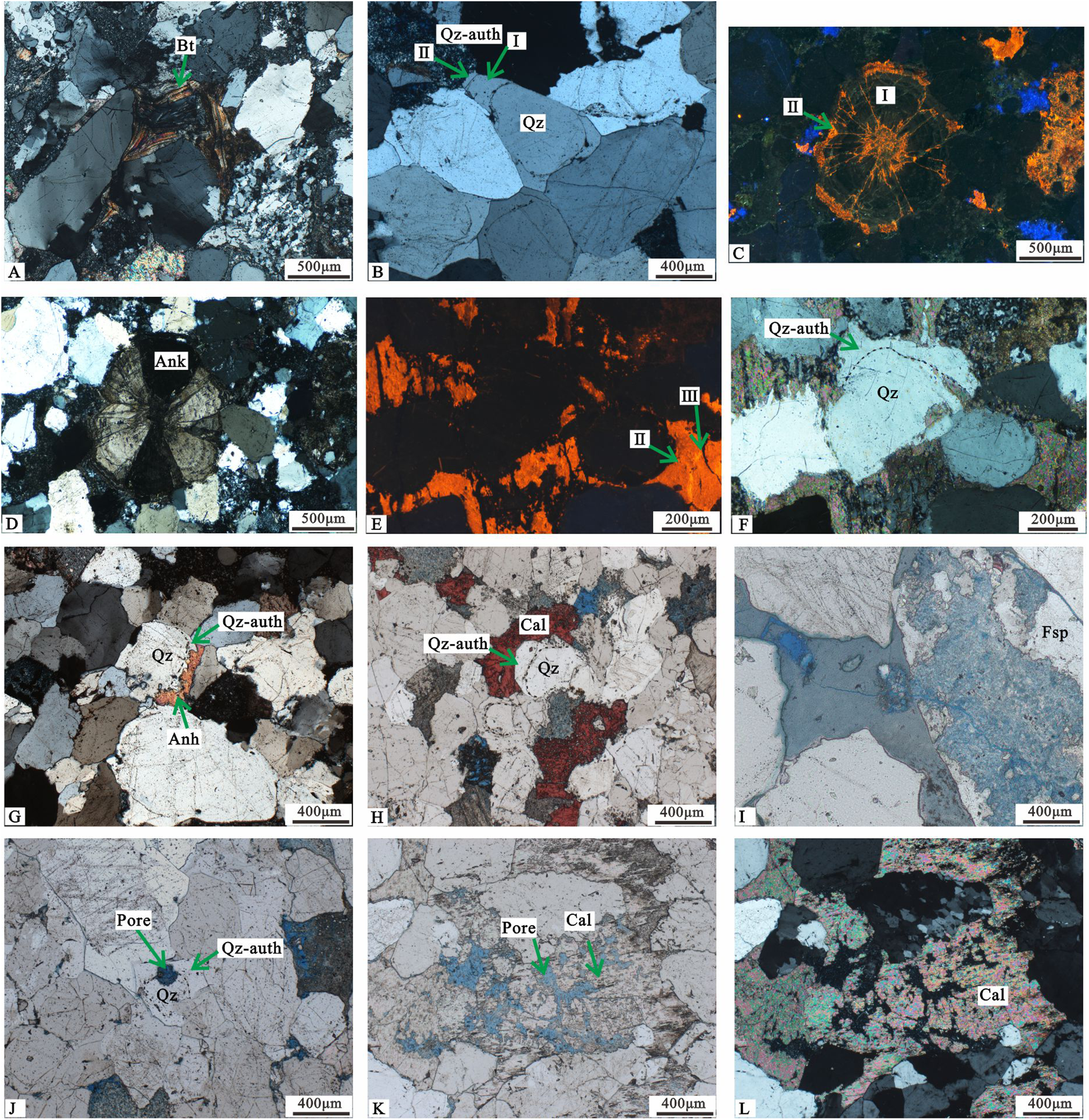
Micrograph of the sandstone reservoir diagenesis of the He 8 Member of the northern Tianhuan depression. (c) and (e) are cathodoluminescence micrographs. The rest are the polarized light micrographs of thin sections. The blue color is cast, which represents pores. (a) Well L23, 4468.04 m, lithic quartz sandstone, biotite (Bt) pseudo-hybrid base blocks pores, orthogonal polarization; (b) well L26, 4298.6 m, coarse-grained quartz arenite, II grade secondary enlargement of quartz and two-phase enlargement edge of quartz, orthogonal polarization. Qz represents quartz, and Qz-auth represents authigenic quartz. (c) Well L26, 4276.21 m, lithic quartz sandstone, three-phase carbonate cement. Phase I spherical non-luminescent iron dolomite (Ank), phase II orange calcite, metasomatism along the dolomite cleavage. (d) Orthogonal polarization of (c). (e) Well L26, 4298.6 m, quartz arenite, phase II orange and phase III saffron yellow calcite cementation at the enlarged edge of quartz; (f) orthogonal polarization of (e); (g) well L26, 4283.34 m, feldspar quartz sandstone, anhydrite (Anh) replaced authigenic quartz, orthogonal polarization; (h) Well L4, 3964.94 m, feldspar quartz sandstone, thin section stained by alizarin red. The red zone denotes calcite. Calcite (Cal) replaces the authigenic quartz, plane polarization; (i) well S176, 3646.93 m, feldspar quartz sandstone, feldspar (Fsp) remnant after dissolution, plane polarization; (j) well S307, 4474.6 m, quartz arenite, in-grain dissolution pores, enlarged edges and particles dissolved at the same time, plane polarization; (k) well L36, 3649.05 m, quartz arenite, dissolution of calcite, plane polarization; (l) orthogonal polarization of (k).
Several common cementations occurred in the sandstone reservoirs, including calcite cementation, anhydrite cementation, and quartz and feldspar enlargement. The two phases of acid fluids developed in the study area during the diagenesis were particularly manifested by feldspar dissolution, authigenic quartz precipitation, and authigenic kaolinite precipitation. A few samples exhibited the two stages of the secondary enlargement of quartz, indicating two phases of acid fluid intrusions (Figure 5(b)). The three phases of alkaline fluids were phase I spherical non-luminescent iron dolomite and dark red dolomite (Figure 5(c) and (d)), phase II orange calcite with partial basal cementation (Figure 5(e) and (f)), and phase III saffron yellow calcite with local anhydrite cementation (Figure 5(f)). The authigenic quartz was generally developed before calcite and anhydrite cementation and was the primary acidic fluid of the coal-bearing stratum.
The metasomatism involved anhydrite and calcite substituted with quartz (Figure 5(g) and (h)). The metasomatism of alkaline fluids developed after quartz overgrowth.
Extensive dissolution development was an important factor in the pore formation and heterogeneity of the reservoirs in the study area. There were three dissolution phases. Matrix, debris, and feldspar dissolved in phase I acidic fluids, with feldspar corrosion residues and numerous kaolinite (Figure 5(i)). Quartz dissolved in phase II alkaline fluid, with the dissolution and enlargement of quartz (Figure 5(j)). The dissolution of calcite occurred in phase III acid fluid (Figure 5(k) and (l)).
With the evolution of the diagenesis, the authigenic quartz continued developing until the stage II secondary enlargement of quartz occurred during the middle of diagenesis. The secondary enlargement occurred mostly for quartz and partly for feldspar. The quartz was enlarged with small quartz crystals (Figure 6(a) and (b)). SEM analysis indicated that most quartz particles were wrapped by relatively complete authigenic crystal planes on the surface; however, some authigenic quartz crystals grew into the pore space, interlacing and blocking the pores (Figure 6(c)). Excessive albitization occurred, and plate-shaped authigenic albite developed from the precipitation of saturated sodium ions following feldspar grain dissolution (Yang et al., 2003) (Figure 6(d)). These phenomena indicate that the diagenetic stage reached the middle diagenetic stage B, during which orderly authigenic illite formed with hair-like crystals that developed and blocked the pores (Figure 6(e) and (f)).
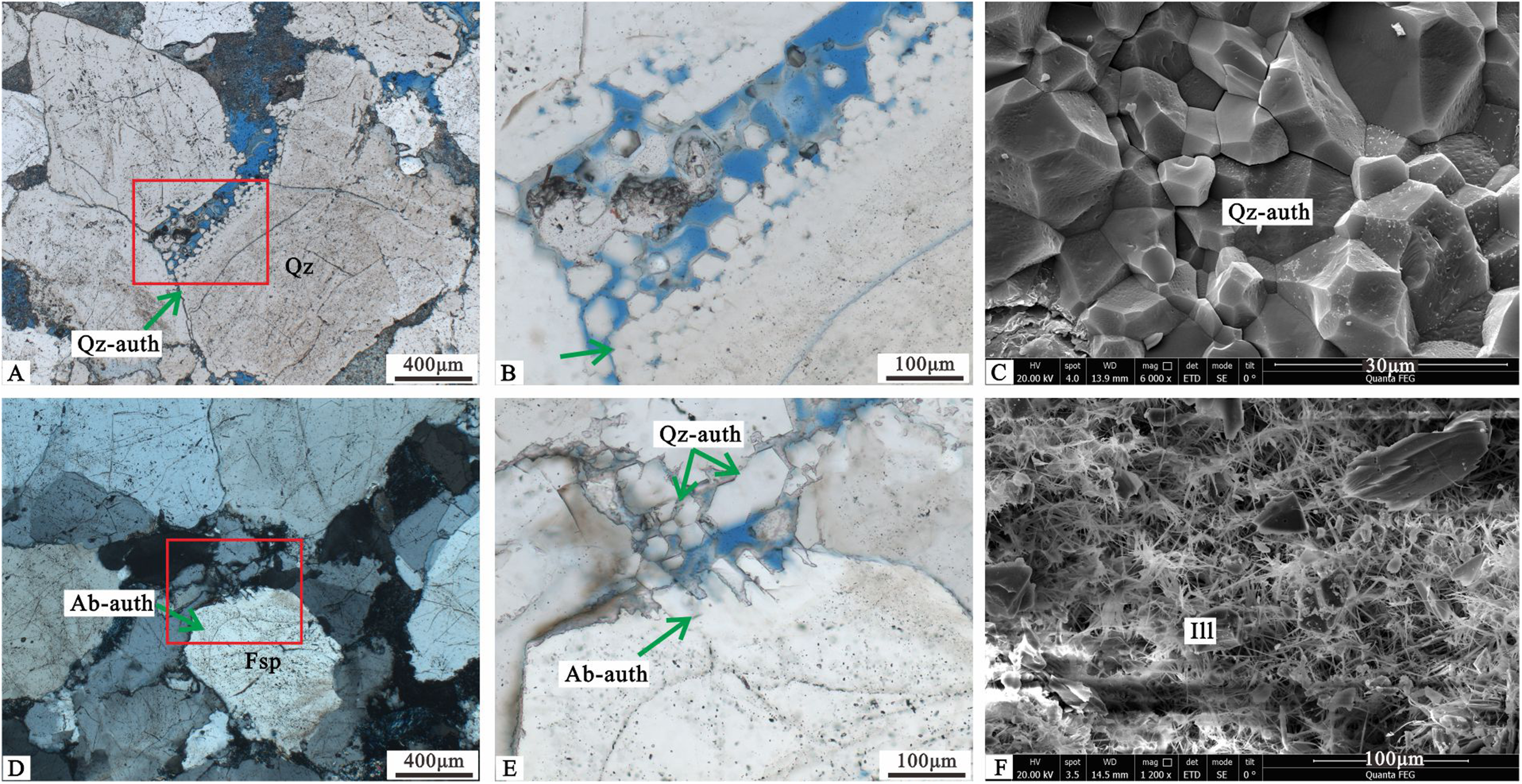
Micrograph of authigenic minerals in the sandstone reservoirs of the He 8 Member in the northern Tianhuan depression. (a) Well S176, 3658.25 m, feldspar quartz sandstone, quartz overgrowth and spontaneous quartz crystal, plane polarization; (b) magnification of (a), biconical authigenic quartz crystal, plane polarization; (c) well S176, 3658.25 m, feldspar quartz sandstone, autogenous quartz, scanning electron microscopy (SEM); (d) well S176, 3658.25 m, feldspar quartz sandstone, enlargement of feldspar, orthogonal polarization; (e) magnification of (d), authigenic plate albite crystals, authigenic quartz crystals; (f) well S307, 4477.48 m, quartz arenite, highly evolved hair-like illite (Ill). Ab-auth represents authigenic albite.
Features of inclusions and hydrocarbon charging
The inclusions were studied by selecting 27 reservoir samples from different depths of the He 8 Member of the northern Tianhuan depression. The components of 75 inclusions were analyzed, and the homogeneous temperature and humidity of 139 inclusions were measured. The types and characteristics of the fluid inclusions were observed using a ZEISS dual-channel microscope with fluorescence and transmitted light. The Raman spectroscopy of the inclusions was obtained using Via Reflex (Renshaw, UK). Furthermore, homogeneous temperatures were measured using Linkam THMS 600G.
The inclusions within the layer of interest in the study area are primarily represented as scatter-, cluster-, and bead-shaped distributions. The two primary types (interior crack quartz and authigenic quartz) depend on inclusion characteristics. The inclusions are partly distributed inside the quartz granules and less distributed inside the calcite cement. The inclusions in the calcite cement are not considered in this study, as their content is negligible. Additionally, the inclusions are typically <3 μm in diameter and cannot be measured by homogenization temperature. The types of inclusions that can be measured via microscope are hydrocarbon-bearing and brine-bearing gas and liquid inclusions.
The content of the hydrocarbon-bearing liquid inclusions is considerably low. The inclusions are typically 3–10 μm in diameter and black or gray-black in color. The gas–liquid ratio is primarily between 5% and 10%. The shapes vary and are mostly circles, ellipses, and strips, with occasional irregular shapes. The distribution is mostly cluster-shaped and banded; a few inclusions are isolated. Most hydrocarbon-bearing liquid inclusions are inside the healing cracks of the quartz granules and characterized by a faintly visible blue fluorescence (Figure 7(e) and (f)).
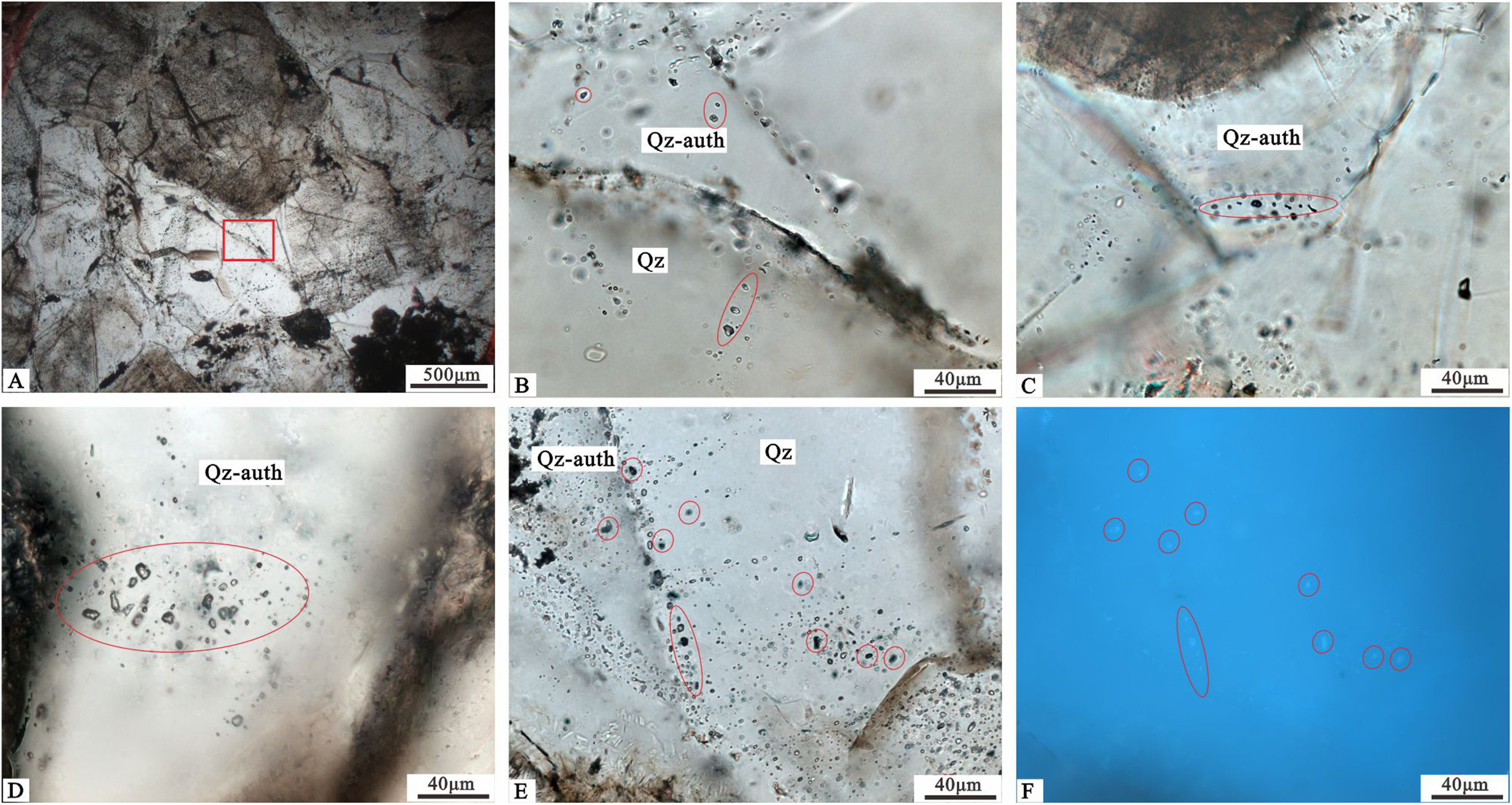
Petrographic features of the inclusions in the sandstone reservoirs of the He 8 Member in the northern Tianhuan depression. (f) is the fluorescence micrograph of the hydrocarbon inclusions. (a)–(e) are the single-polarized light micrographs of the inclusions. (a) S307, 4477.68 m, coarse-grained quartz sandstone; (b) a magnification of the red box in (a), with scatter-shaped and bead-shaped inclusions in native quartz and authigenic quartz; (c) S307, 4474.6 m, bead-shaped inclusions in authigenic quartz; (d) L23, 4470.52 m, cluster-shaped inclusions in authigenic quartz; (e) E60, 3746.09 m, bead-shaped and scatter-shaped inclusions in native quartz and authigenic quartz; (f) the fluorescence micrograph of the inclusions shown in (e).
Brine-bearing gas–liquid inclusions are common in reservoirs and are transparent under transmitted light. Inclusions occur in all sizes; inclusions with diameters of 3–10 μm are the most common, followed by those with diameters of 10–20 μm. The gas–liquid ratio is primarily between 5% and 15%, with common shapes include circles, ellipses, and strips. The inclusions are primarily developed in the microcracks of native and authigenic quartz and are located slightly inside quartz granules.
The Raman spectroscopy analysis revealed that the components of 75 hydrocarbon-bearing inclusions were observed in the healing cracks of native and authigenic quartz (Figure 8(a)). In authigenic quartz, the contents of CH4 inclusions, brine-bearing CH4 inclusions, and composite saturated-hydrocarbon-bearing inclusions are 59%, 24%, and 18%, respectively. There are no pure saturated-hydrocarbon-bearing inclusions. The amounts of saturated-hydrocarbon-bearing CH4, CH4 inclusions, and composite saturated-hydrocarbon-bearing inclusions in the healing cracks of quartz granules are 36%, 26%, and 18%, respectively. The proportion of brine-bearing CH4 and saturated-hydrocarbon inclusions is the lowest (9%). The component statistics obtained via Raman spectroscopy reveal that the content of CH4-bearing inclusions is the highest in authigenic quartz. The hydrocarbon maturity was higher in the growing period of authigenic quartz, and the younger inclusions are charged with hydrocarbons.
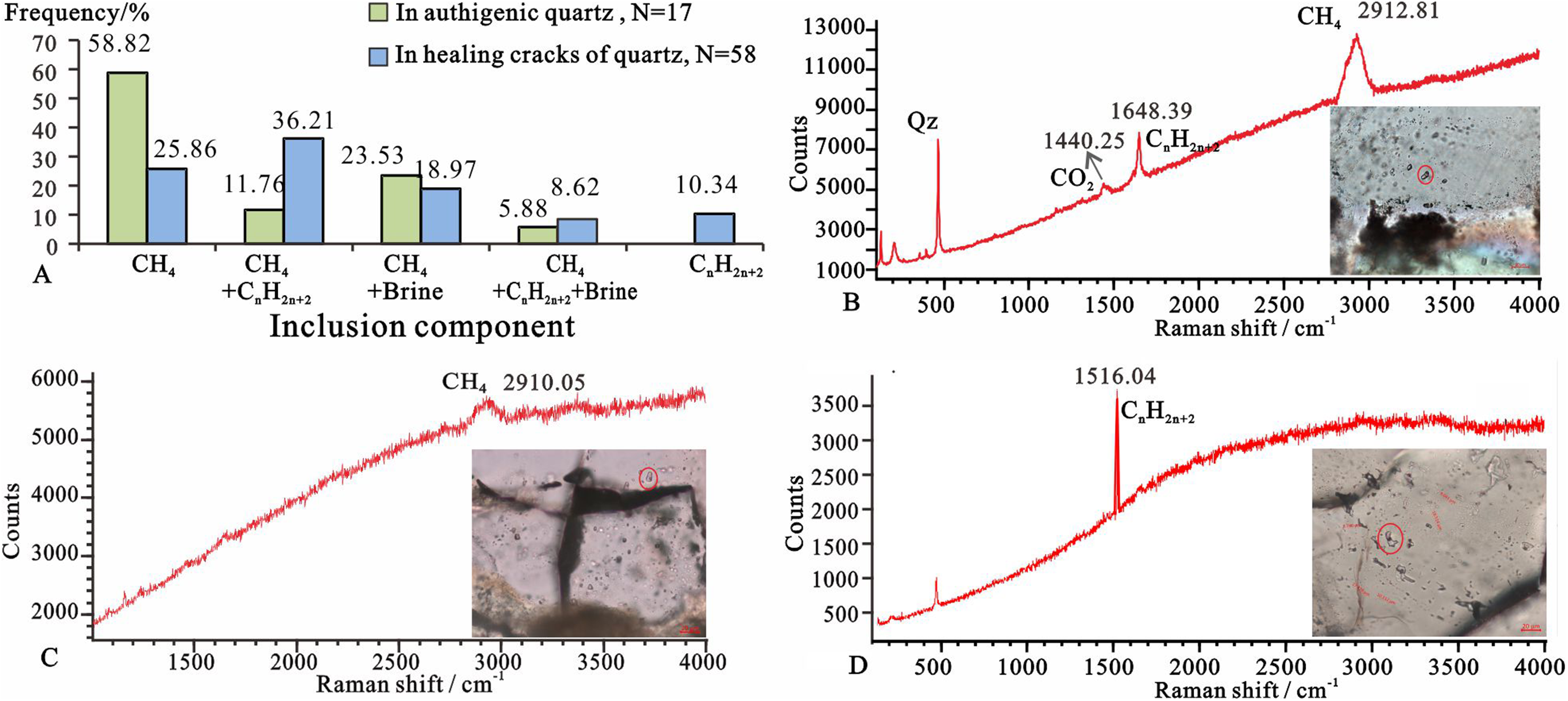
Composition of inclusions in the sandstone reservoirs of the He 8 Member in the north Tianhuan depression and the Raman spectroscopy of these inclusions. The photos given in the lower right-hand corner are inclusion micrographs; the red circle is the location of the measured inclusions. (a) Histogram of hydrocarbon-bearing inclusions; (b) well L40, 4102.69 m, CO2-hydrocarbon-bearing inclusions; (c) well L55, 3816.06 m, CH4-bearing inclusions; (d) well L4, 3896.88 m, saturated-hydrocarbon inclusions.
Discussion
Differential diagenesis and types of diagenetic facies
The differences in sedimentation and diagenetic fluid are the principal reasons for differential reservoir diagenesis, and they lead to variable physical properties and pore types between the northern and southern regions of the study area. Different sedimentary microfacies and reservoir heterogeneity are developed in the same area; thus, the study of diagenesis based on anatomical area is complicated. The clastic composition during the initial deposition seriously affected the differential diagenesis (Pan et al., 2019). Therefore, the differential diagenesis is discussed by combining lithology and sedimentary microfacies. The differences in sedimentary microfacies are primarily manifested in lithology, grain size, rigid clastic content, and sorting. Thus, these aspects were primarily observed and compared.
The difference in diagenetic fluids is another important factor for differential reservoir diagenesis. The fluid within the coal-bearing strata during early diagenesis was primarily acidic. Between the later stage of early diagenesis and the middle diagenetic stage B, the paleogeothermal temperature ranged between 80 °C and 120 °C. The kerogen reached its peak maturity, forming an enormous amount of organic acidic fluid that dissolved the rock cuttings, feldspar, and even early carbonate cement. Dissolved pores and aluminosilicate fluids were formed during this period. The larger particle size generally led to a better degree of rounding and sorting. High rigid clastic contents indicate strong reservoir compaction ability and improved the original porosity and pore-throat connectivity of the reservoirs. This type of reservoir is conducive to the entry and discharge of diagenetic fluids, resulting in a more evident transformation of the reservoir by diagenesis. The aluminosilicate fluid formed from the later stages of early diagenesis to the middle diagenetic stage B rapidly discharged to prevent pore blocking through secondary precipitation. Consequently, the porosity and reservoir conditions significantly improved. However, for reservoirs with small particle size, poor sorting, and abundant plastic debris and matrices, original porosity and pore-throat connectivity are poor. Compaction in these reservoirs is strong, thereby reducing the porosity. Acid diagenetic fluid entry in the middle diagenetic stage B was difficult; therefore, the development of dissolution pores was limited. Moreover, the aluminosilicate fluid produced by minor dissolution may not have been discharged in time due to its high concentration and viscosity. Consequently, secondary precipitation blocked the pores, thereby limiting the development of constructive diagenesis. This is the primary reason for the development of differential diagenesis in coal-bearing stratum.
During the early–middle diagenetic stage B, the paleotemperature exceeded 140 °C, organic matter evolved into the wet gas stage, and carboxylic acid groups lost their ability to produce water-soluble organic acids. With the dissolution during middle diagenetic stage A, numerous H+ ions are consumed, and the pH of diagenetic fluid gradually changes to neutral and then alkaline (Fu, 2004). The cement during the period is primarily composed of late iron-bearing calcite, with minor quartz dissolution. The pore fluid acidity gradually increases with the precipitation of alkaline minerals such as ferric calcite. In addition, a small amount of calcite, debris, and matrices is dissolved. Differential diagenesis is constituted by different types and degrees of diagenesis.
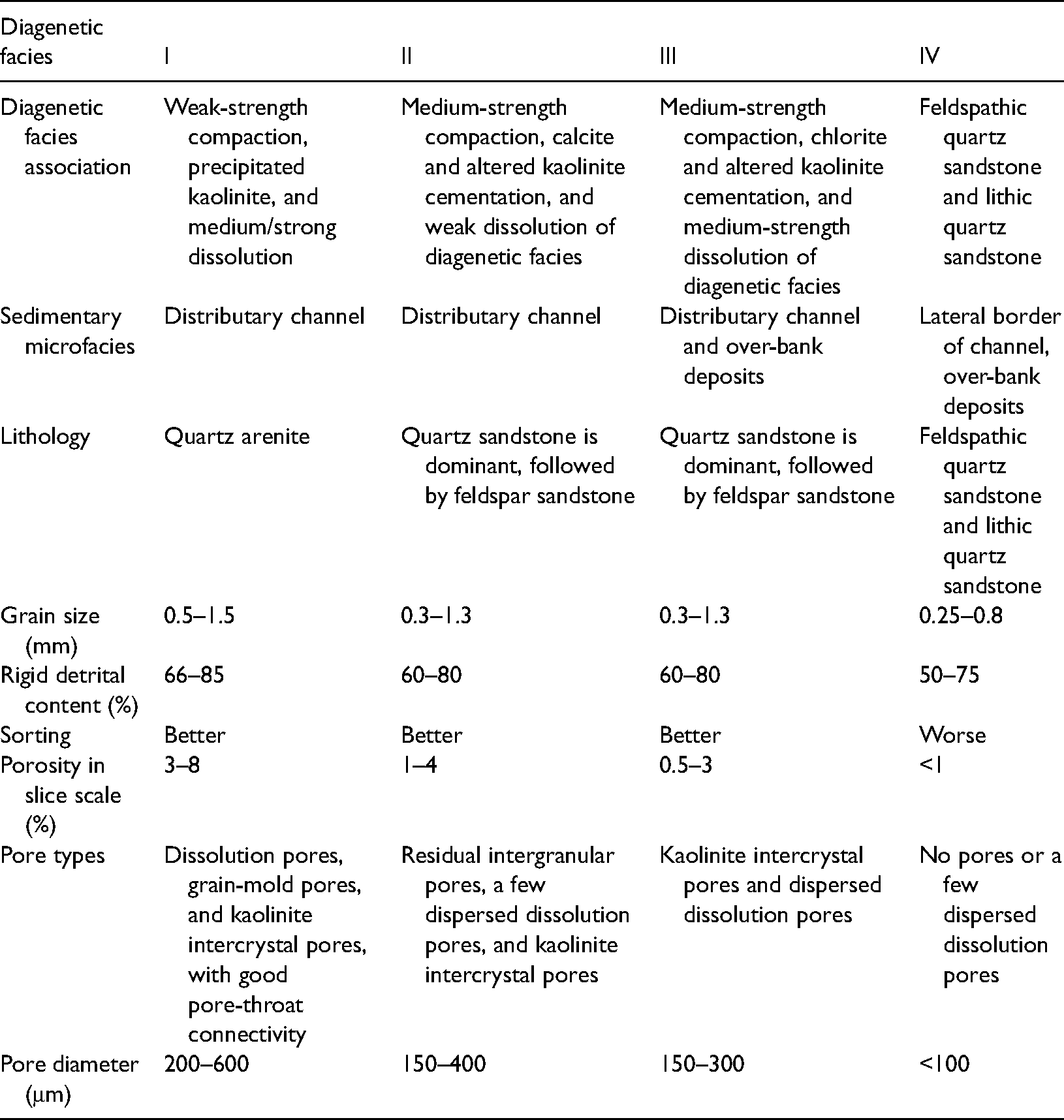
The observation of 65 thin sections and SEM analyses revealed conspicuous diagenesis differences. Correspondingly, the grain size, porosity, permeability, pore structure, and other parameters of the reservoir controlled by sedimentary microfacies differ significantly. Consequently, the heterogeneity of the reservoir and its origin are discussed. Overall, the strength of dissolution can be considered to be an important factor for reservoir heterogeneity. Differential diagenesis and its control over reservoir heterogeneity revealed four diagenetic facies categories. (a) Type I diagenetic facies are characterized by weak-strength compaction, precipitated kaolinite, and medium/strong dissolution of diagenetic facies. Physical properties are strong and dominated by dissolution pores, grain-mold pores, and kaolinite intercrystal pores, with good pore-throat connectivity. (b) Type II diagenetic facies are characterized by medium-strength compaction, calcite cementation, altered kaolinite, and weak dissolution diagenetic facies. The pore types are dominated by residual intergranular pores, a few dispersed dissolution pores, and kaolinite intercrystal pores. (c) Type III diagenetic facies are characterized by medium-strength compaction, chlorite and altered kaolinite, and medium-strength dissolution of diagenetic facies. The pore types are dominated by kaolinite intercrystal pores and dispersed dissolution pores. (d) Type IV diagenetic facies are characterized by strong/medium-strength compaction and altered kaolinite facies with no pores or a few dispersed dissolution pores. Table 1 provides the details of the sedimentary characteristics, porosity, and pore types corresponding to differential diagenetic facies.
Comparison of diagenetic facies and the corresponding sedimentary and pore characteristics of the He 8 Member in the northern Tianhuan depression.
The lithology of the reservoirs developed in type I diagenetic facies primarily includes quartz sandstones, with high rigid clastic content (6%–85%) and good sorting. The size of the clastic material is relatively large (0.5 mm–1.5 mm), and the original porosity is high (55%) (calculated by empirical formula from Beard) (Beard and Weyl, 1973). The contents of quartz and other rigid clastics are high. The two stages of secondary quartz enlargement increased the compressive strength of the rock, with weak compaction and the point-line contact of the particles. Owing to the large size and good connectivity of original pores, acidic fluid easily flowed into the reservoirs, resulting in dissolution. In addition, the silica and calcium-rich fluids formed by the dissolution of the matrix, feldspar, and calcite were rapidly discharged. Secondary precipitation did not block the pores, forming numerous relatively clean grain-mold holes and intergranular dissolution pores (Figures 4(b), 2(d), and 9(a) and (b)). The Al- and Si-rich fluid formed by feldspar dissolution precipitated high-porosity kaolinite. Thus, the crystal shapes are regular, and intergranular pores are developed in the precipitated kaolinite (Figure 4(c)). The acicular morphology of the illite crystal formed in the mid-diagenesis period was good. The intergranular pores and intergranular dissolution pores of clay minerals had good connectivity (Figure 9(b)). The porosity varied from 3% to 8%, with an average pore diameter between 200 μm and 600 μm. The types of pores were primarily grain-mold, intergranular dissolution, and kaolinite intergranular.
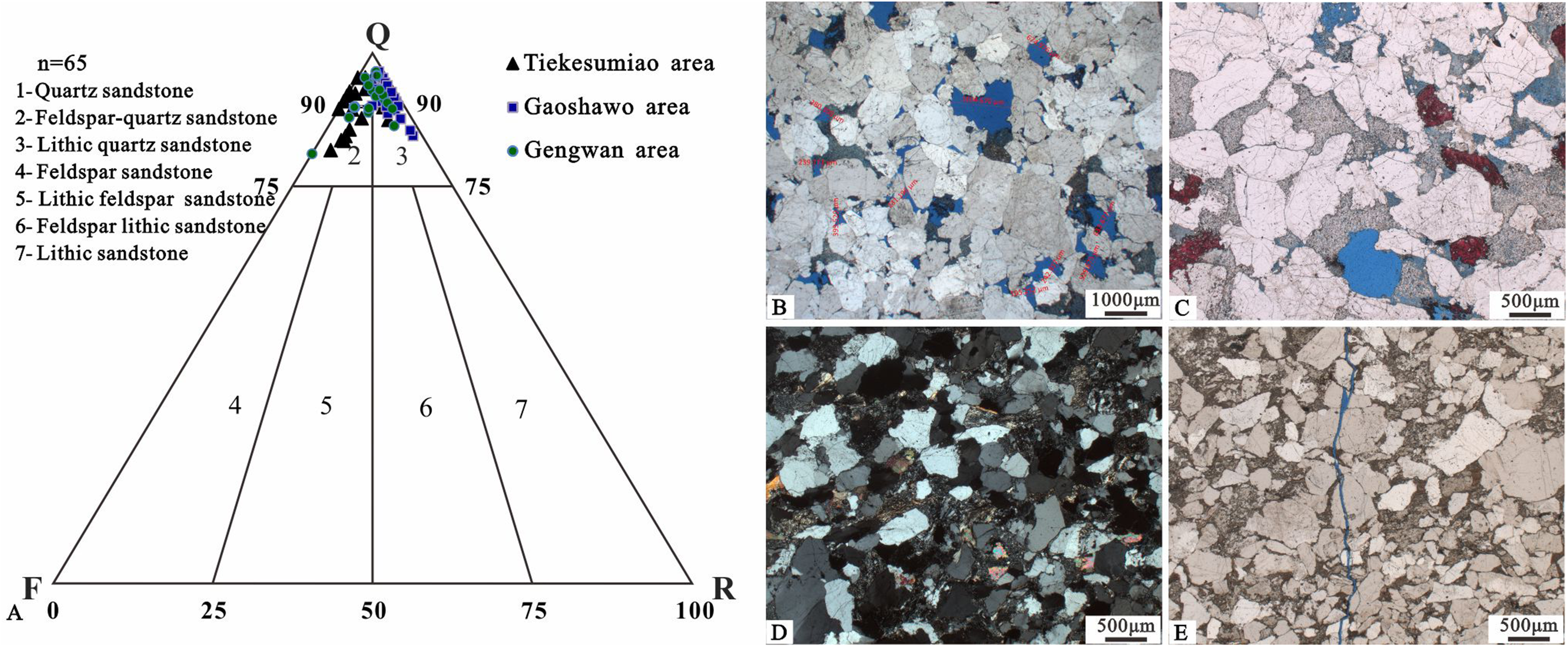
Reservoir sandstone types and photomicrographs of the Upper Paleozoic He 8 Member in the northern Tianhuan depression (Q-quartz, F-feldspar, R-rock debris). (a) Lithology triangulation map; (b) Gaoshawo area, well L57, 3788.84 m, calcite cemented quartz coarse sandstone; (c) Tiekesumiao area, well S396, 3786.94 m, fine–coarse feldspathic quartz sandstone; (d) Tiekesumiao area, well QT2, 4278.38 m, medium-grained lithic quartz sandstone; (e) Tiekesumiao area, well S233, 3752.06 m, medium-grained lithic quartz sandstone.
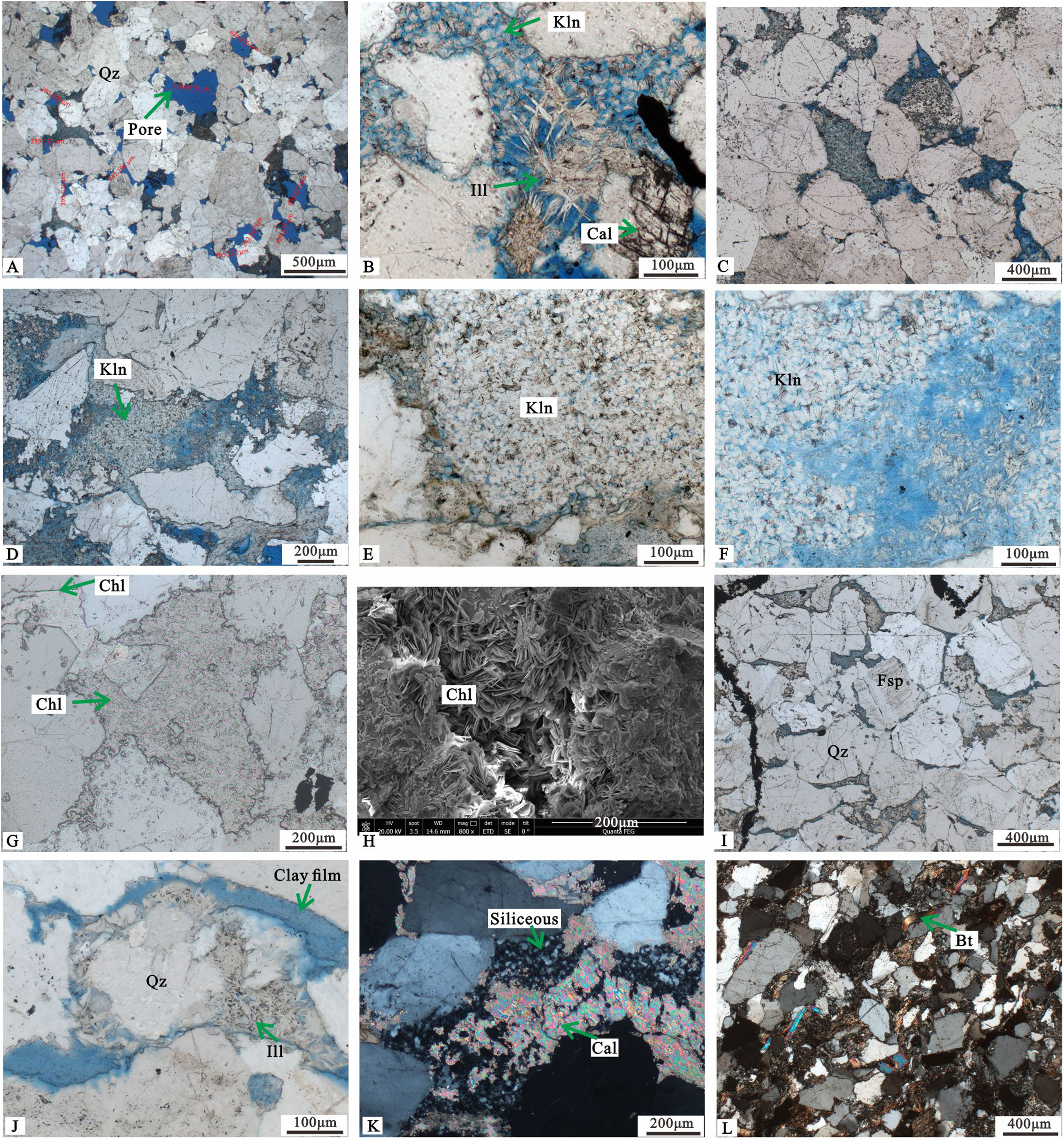
Micrographs of different diagenetic facies of the sandstone reservoirs of the He 8 Member in the northern Tianhuan depression. The cast was blue, representing the pores. (g) Micrograph from scanning electron microscopy (SEM), and the rest of the images are from polarized microscopy. (a) and (b) Type I diagenetic microphotographs; (c)–(e) type II diagenetic microphotographs; (f)–(j) type III diagenetic microphotographs; (k)–(l) type IV diagenetic microphotographs. (a) L57, 3788.84 m, quartz arenite, strong dissolution, grain mode pores and intergranular dissolution pores, good pore connectivity. (b) S307, 4477.48 m, quartz arenite, intergranular pores of kaolinite and illite, intergranular dissolution pores. (c) L23, 4489 m, quartz arenite, residual intergranular pores, a few kaolinite intergranular pores, dispersed dissolution pores. (d) L23, 4489 m, feldspar sandstone, residual intergranular pores. Kln stands for kaolinite. (e) L23, 4286.6 m, quartz arenite, altered kaolinite with no intergranular pores. (f) L57, 3790.38 m, quartz arenite, sliced chlorite in intergranular and chlorite films on the surface of particles. (g) L57, 3790.38 m, quartz arenite, tea-sliced chlorite (Chl) in intergranular pores. (h) L40, 4102.69 m, a few kaolinite intergranular pores and dispersed dissolution pores. (i) L40, 4102.69 m, quartz arenite, dispersed dissolution pores. (j) L40, 4102.69 m, quartz arenite, clay film, and dispersed dissolution pores. (k) L26, 4298.6 m, lithic quartz sandstone, calcite, and fine silica cementation. (l) L23, 4484.78 m, lithic quartz sandstone, undeveloped pores.
The lithology and clastic composition of type II and III diagenetic facies were similar and primarily composed of quartz sandstones, followed by feldspathic quartz sandstones, with low rigid clastic content (60%–80%), high feldspar content (12%), and good sorting. The size of the clastic material was large (approximately 0.3 mm–1.3 mm), with high original porosity (50%). The rigid debris content was slightly lower in type I diagenetic facies. Consequently, the compaction in two diagenetic facies was moderate, indicating the point-line contact of particles (Figure 9(c) and (d)). The kaolinization of feldspar in type II diagenetic facies was high and maintained the shape of the clastic particles. The crystallization of kaolinite was slightly poor, and intergranular pores did not develop (Figure 9(e)). Due to the weakened compressive strength after kaolinization, the pores were blocked by plastic debris deformation under compaction. Furthermore, the calcite cementation content was approximately 7%–20%, enhancing the compressive strength of the rock and distinguishing it from type III diagenetic facies. Due to the low original porosity and the poor clastic composition, the dissolution was weak. In addition, residual intergranular pores were dominant, with a few kaolinite intergranular pores and dispersed dissolution pores. The porosity varied from 1% to 4%.
Chlorite cementation was dominant in type III diagenetic facies (up to 6%). The two types of chlorite included chlorite films on the surface of particles and schistose crystals distributed within the intergranular pores. The chlorite films prevented the growth of authigenic quartz, thereby maintaining the early reservoir porosity (Bloch et al., 2002; Fu et al., 2020; Ma et al., 2018; Zhou et al., 2020). Dissolution pores dispersed after the discharge of silicon-alumina fluid formed by the dissolution of phase I acid fluid. The kaolinite intercrystalline pores developed after feldspar kaolinization (Figure 9(f)). The intergrain tea leaf-like chlorites in intergranular pores and other clay minerals blocked the pores, resulting in poor pore-throat connectivity (Figure 9(g) to (j)) (Zhou et al., 2020). Due to the preservation of the original pores by chlorite film, organic acid fluids entered the reservoir and caused dissolution. Therefore, the dissolution of type III diagenetic facies was of medium strength, with a porosity of 0.5%–3% and an average pore diameter of 150 μm–300 μm.
The lithology of the type IV diagenetic facies included primarily feldspathic quartz sandstones and lithic quartz sandstones, with minor quartz sandstones. The rigid clastic content was relatively low (50%–75%), whereas the matrix content was high (up to 30%). The sorting was poor, with small particle sizes between 0.25 mm and 0.8 mm and an original porosity of approximately 45%. The relatively strong compaction of the rock was due to the poor structural maturity during deposition. The plastic deformation was caused by debris, mica, and feldspathic kaolinite. The intergranular filling of fine-grained silica and poorly crystalline clay minerals blocked the pores, causing the underdevelopment of porosity (Figure 9(k) and (l)). Weak dissolution produced a few kaolinite intercrystalline pores and dispersed dissolution pores in the reservoirs. The intergranular pores were dispersed with poor pore connectivity, causing strong compaction. The porosity was below 1%.
The differential diagenetic observation results reveal that strong heterogeneity and poor physical properties developed within the reservoirs in the Tiekesumiao area. Type II and IV diagenetic facies were primarily developed with diverse physical properties and small pores. Type II and III (and some type I) diagenetic facies were the primary diagenetic facies in the Gaoshawo area. Type I was the most common type in the Gengwan area, followed by type II, characterized by remarkable physical properties and grain-mold pore development.
Diagenesis–accumulation process
Hydrocarbon-bearing inclusions in reservoirs reflect important information on the oil–gas accumulation process. The study of inclusions is important to reveal the history of hydrocarbon charging, the pathway of hydrocarbon migration, and the homogeneous temperature and salinity of reservoirs. The status of hydrocarbon fluids during the hydrocarbon charging period at any stage can be relatively determined via a composition test of the inclusions and can be applied to research the primitive characteristics and causes of unique hydrocarbons and adjusted hydrocarbon reservoirs (Li et al., 2006; Qin et al., 2005; Zhang et al., 2006a, 2006b). Diagenesis sequence research can clarify the periods and temperature of hydrocarbon charging using inclusion fluorescence, laser Raman spectroscopy, and the microscopic temperature measurements of the inclusions. According to the position of the host mineral containing hydrocarbon inclusions in the diagenesis sequence, the process of diagenesis–accumulation can be recovered via a combination of the burial history of the strata and the thermal history.
The natural gas lithologic reservoirs of the Upper Paleozoic are primarily developed in the northern Tianhuan depression. Diagenesis plays a crucial role in natural gas accumulation. Capacity variance and gas–water distribution trends were revealed via a further investigation of the diagenesis–accumulation process. According to the results (Section 3), the diagenesis of the reservoir in the study area reached stage B of the middle diagenesis phase. The natural gas charging temperature was between 100 °C and 150 °C. The natural gas was distributed throughout the middle diagenesis phase (Wang et al., 2020), which was the primary stage of reservoir densification. The He 8 Member is a gas reservoir that is densified during the accumulation phase (Figure 10). Numerous hydrocarbon-bearing inclusions are observed in authigenic quartz, which is significant evidence for densification during reservoir accumulation.
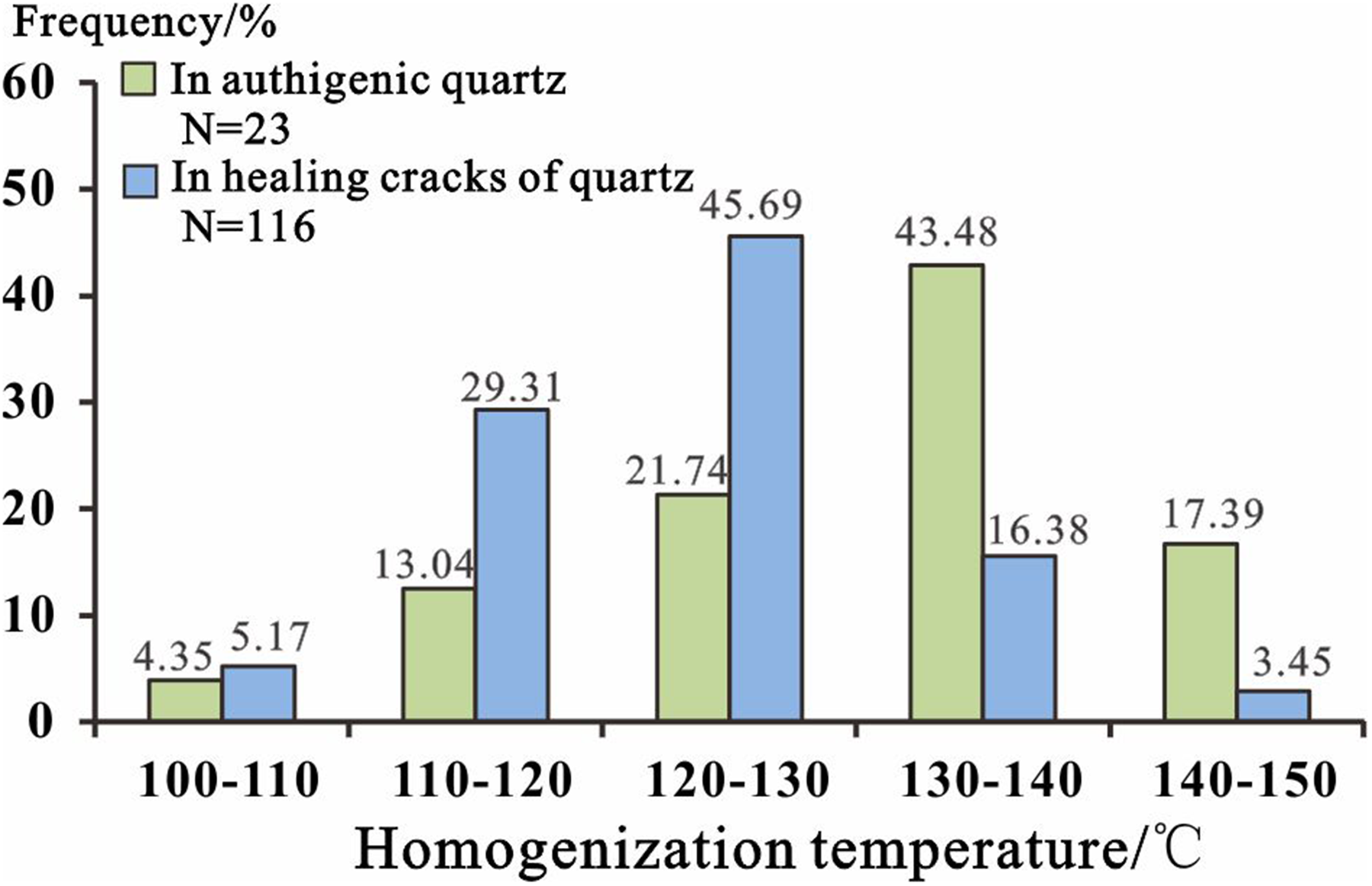
Histogram of homogenization temperatures of different types of brine-bearing liquid inclusions in the sandstone reservoirs of the He 8 Member in the northern Tianhuan depression.
The process of diagenesis–accumulation was studied by taking well S307 as an example (Figure 11). The lithogenous phase of type I was developed in the He 8 Member of well S307, and the porosity and permeability of the reservoirs were ideal. The sandstone exhibited good textural and compositional maturity, which was established through petrographic observations. In addition, the initial porosity was 55%, which was calculated according to the empirical equation of Beard and Weyl (1973). The rigid debris content was considerably high (85%), with strong compression resistance and weak compaction. The dissolution of the matrix, feldspar, debris, and calcite under two-stage acidic fluid greatly contributed to reservoir properties. Consequently, the storage space and the pore-throat connectivity of the reservoir were improved. Figure 11 shows the detailed diagenetic sequence. In the early diagenesis stage, the porosity decreased under compaction, whereas little dolomite and first-order authigenic quartz cementation developed. However, some pore connectivity was maintained for the introduction and evacuation of diagenetic fluids. In stage A of the middle diagenesis phase, high concentration organic acids formed by the thermal evolution of organic matter from coal and shale entered the reservoirs. The strong dissolution of carbonate, feldspar, debris, and matrix occurred, producing numerous dissolved pores with good connectivity. The part of the aluminum–silicon fluid was not removed from the reservoir. Consequently, kaolinite and authigenic quartz precipitated, and intercrystalline kaolinite pores developed. The authigenic quartz is characterized by second-phase enlargement rims around quartz particles. With the consumption of the acidic fluid, diagenetic fluid in stage B of the middle diagenesis phase transformed into an alkaline fluid, thereby forming minor quantities of authigenic feldspar as enlargement rims and undergoing phase II carbonate cementation. Simultaneously, gypsum and carbonate were slightly metasomatized. At the late stage of the middle diagenesis phase, diagenetic fluid was acidic, causing the light dissolution of calcite and matrix. This was the last stage of the densification of the reservoir. Based on the study of the inclusions, the natural gas charging temperature of well S307 was between 117 °C and 138 °C. This range corresponds to that in the period accompanied by extensive dissolution under the influence of phase I acid fluid, extensively increasing the porosity and authigenic quartz precipitation and leading to some kaolinite cementation. The hydrocarbon charging featured good porosity and permeability. Consequently, S307 is a high production well. Although the reservoir continued to be buried deep and underwent a relatively high thermal evolution after natural gas accumulation, the porosity of the reservoir did not change considerably after the supercharging of the gas.
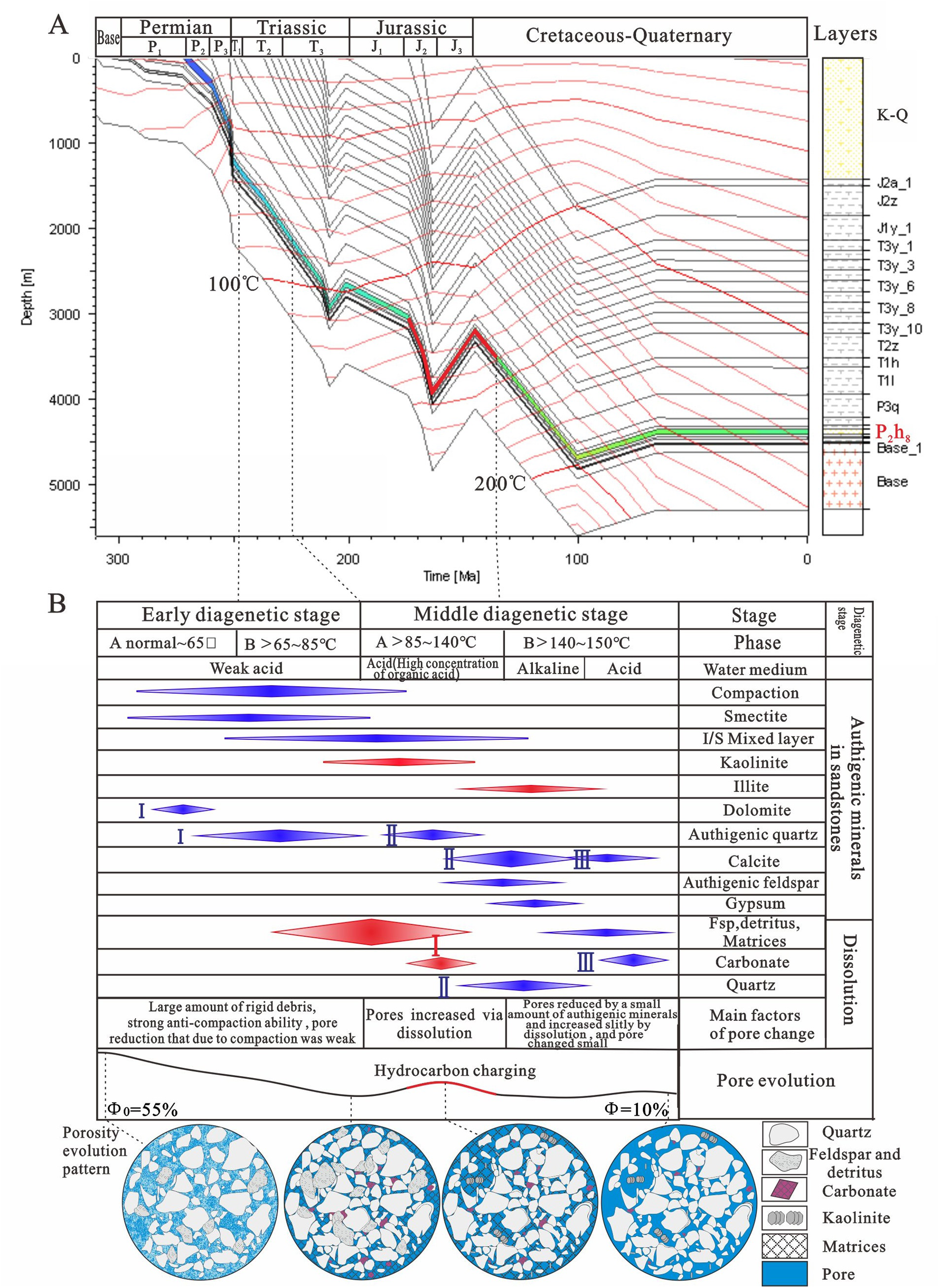
Process of diagenesis–accumulation in the sandstone reservoirs of the He 8 Member (P2h8) in the northern Tianhuan depression. (a) Burial history and temperature evolution of strata of S307. (b) Diagenesis–accumulation sequence and pore evolution of the type I diagenetic facies. The initial porosity of pore evolution was calculated by the Beard empirical equation. The porosity reduction by compaction is equal to the initial porosity minus the current intergranular volume. The measurements of current apparent porosity, cementation, and dissolution were obtained by the digital color image analysis system.
Effect of differential diagenesis on gas–water distribution
Differential diagenesis controls reservoir densification and affects (with reservoir-forming) the gas–water distribution of the reservoir, which can be complicated even in the same well area. High-yield well S307 (10.24 × 10⁴ m3/d natural gas), low-yield well L23 (10.24 × 10⁴ m3/d natural gas), and the water well L40 (14.4 m3/d water) in the S307 region were selected for this research. A comprehensive analysis revealed the effect of differential diagenesis on gas–water distribution based on the study of reservoir heterogeneity and hydrocarbon charging under diagenesis.
The principal diagenetic facies of well S307 is type I, and it is characterized by weak compaction, precipitation of kaolinite/altered kaolinite, and strong dissolution. The pore types are primarily grain-mold, intergranular dissolution, and kaolinite intercrystalline. The intercrystalline pores and intergranular dissolution pores of the clay minerals have good connectivity (Figure 12(d) and (e)). The pore-throat radius is large (up to 2.62 μm), with a continuous curve. The radius corresponding to the frequency peak is 1.61 μm, accounting for 18.0%. The mercury removal efficiency is high (up to 40%) (Figure 12(a)). The relative permeability of the gas–water curve shows that the starting saturations of water and gas were low. The large two-phase co-permeation zone indicates that the early edge and bottom water began to flow continuously under a low saturation state. In addition, the gas displacement efficiency is high. The permeability can reach 0.97, which easily produces gas (Figure 12(b)). The results of the NMR analysis show that the movable fluid saturation is up to 69%, the lower irreducible water saturation is 31.2%, and the porosity of the movable fluid is 3.3%. Gas production is easy, and the well has high gas displacement efficiency (Figure 12(e)).
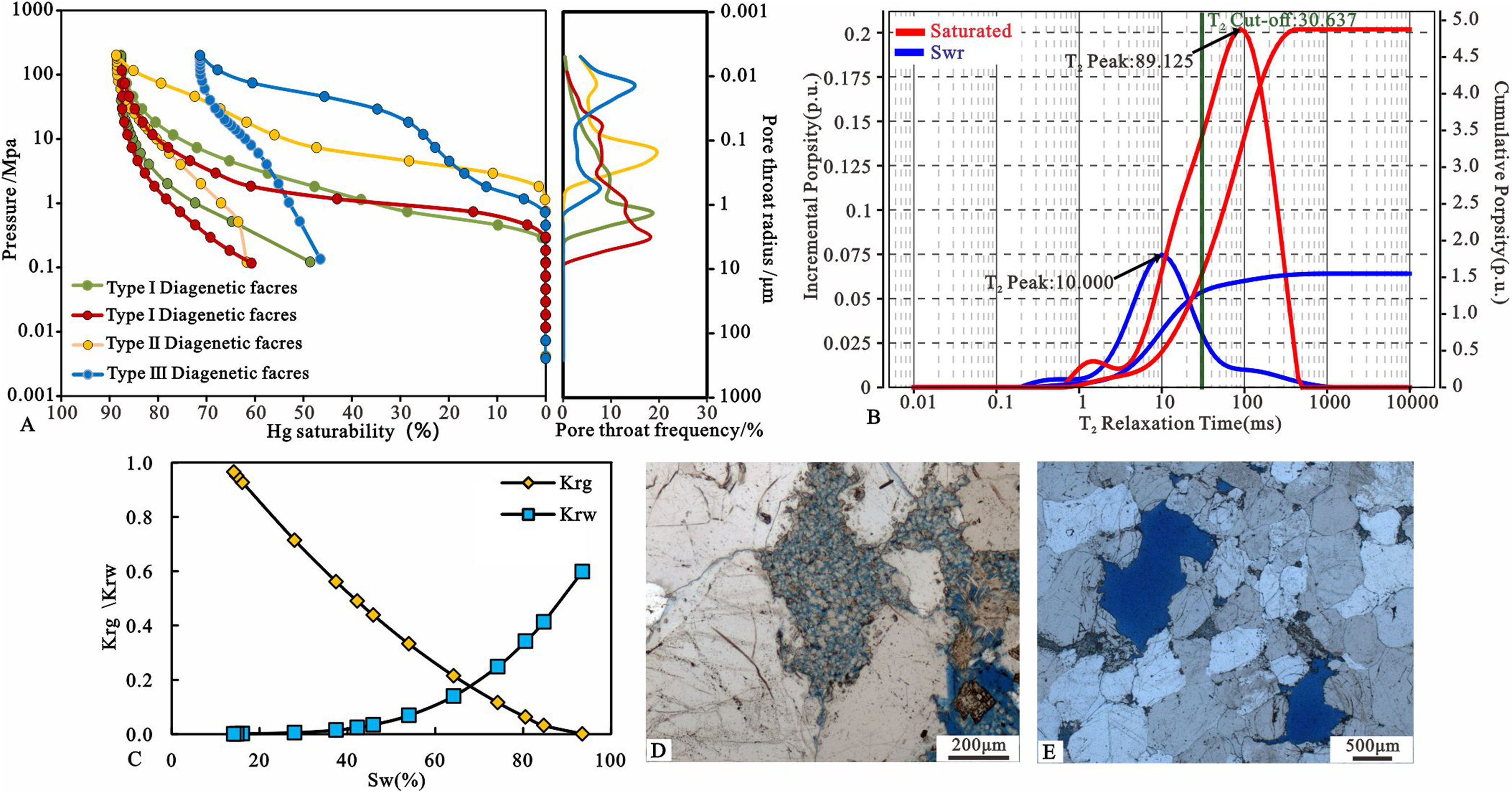
Pore, nuclear magnetic, and relative permeability characteristics of sandstones with type I diagenetic facies from well S307 of the He 8 Member in the northern Tianhuan depression. (a) Graph showing mercury injection curves and pore-throat radius characteristics in different diagenetic facies; (b) graph showing a sample with a depth of 4476.48 m and gas porosity of 5.7%; (c) graph showing the relative permeability curve of the sample at a depth of 4476.48 m in the lower He 8 Member; (d) and (e) graphs showing a sample with a depth of 4477.48 m, characterized by altered kaolinite and strong dissolution, with intergranular dissolution and grain-mold pores.
The principal diagenetic facies of Well L23 are type II. The diagenetic characteristics are medium compaction, altered kaolinite, and weakly corroded diagenetic facies. The pore types are primarily residual intergranular pores, a few kaolinite intercrystalline pores, and dispersed dissolved pores with small diameters (Figure 13(b) and (c)). The pore-throat radius curve has a bimodal distribution, with dominantly small pore throats. The peak pore-throat radii are 0.01 μm and 0.41 μm, accounting for 14.9% and 7.7% of all pores, respectively. Microscopic observations reveal that the pores with a pore-throat radius of 0.01 μm are mostly residual intergranular; pores with a pore-throat radius of 0.41 μm are mostly kaolinite intercrystalline and dispersed dissolution related. The mercury removal efficiency is low (25%). The gas–water relative permeability results show that the starting saturation of water was 48.7%; additionally, the starting saturation of gas was low (2.05%), indicating easy gas charging and migration in the reservoir. The edge-bottom water saturation does not begin to flow continuously until reaching 48.7%. The gas displacement efficiency is low, and the relative permeability of the gas phase is 0.53 (Figure 13(e)). NMR analysis results show that the movable fluid saturation is low (41.9%), irreducible water saturation is high (58.1%), and movable fluid saturation is 1.8%. The gas displacement efficiency and the well production volume are low.
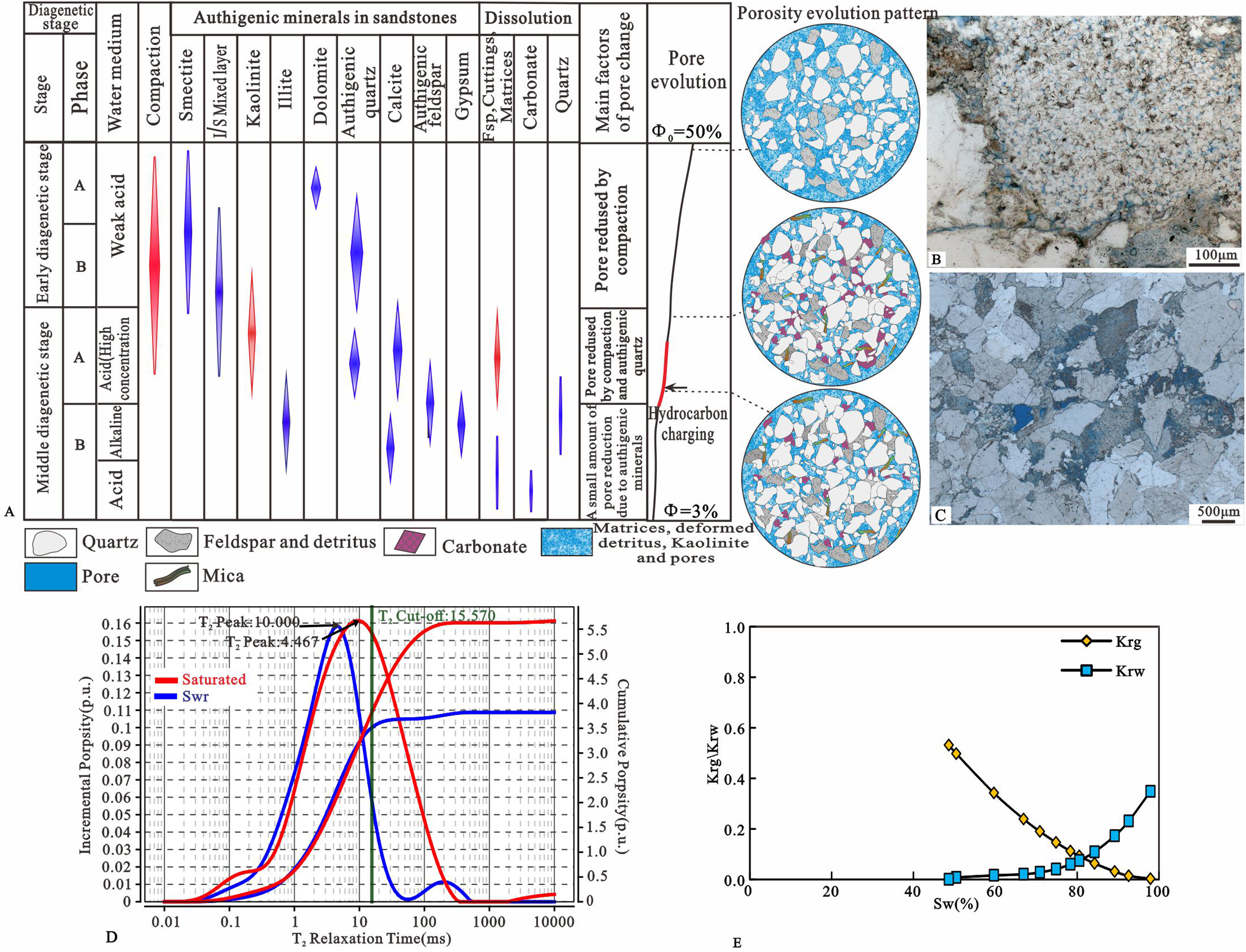
Diagenesis and reservoir-forming sequence, pore, nuclear magnetic, and relative permeability characteristics of the sandstones with type II diagenetic facies from well L23 of the He 8 Member in the northern Tianhuan depression. (a) Graph showing the diagenesis, pore evolution, and reservoir-forming sequence of the type II diagenetic facies; (b) and (c) graphs showing a sample with a depth of 4489 m, characterized by altered kaolinite and weak or medium dissolution, with intergranular dissolution pores; (d) graph showing the nuclear magnetic resonance (NMR) T2 spectrum curve of a sample with a depth of 4486.6 m and a gas porosity of 5.3%; (e) graph showing the relative permeability curve of the sample at a depth of 4476.48 m in the lower He 8 Member.
The principal diagenetic facies of Well L40 are type III, primarily characterized by medium compaction, altered kaolinite, and medium dissolution diagenetic facies. The pore types are primarily kaolinite intercrystalline and dispersed dissolution, with poor connectivity (Figure 14(b) and (c)). The pores mainly have small pore throats, and the pore throats are relatively concentrated, with a peak radius of 0.10 μm that accounts for 19.1%. The mercury removal efficiency is relatively low (28%) (Figure 12(a)). The gas–water relative permeability results show that the starting saturation of water is up to 65.6%, indicating that the edge and bottom water saturation reaches 65.6% before continuous flow starts. The gas displacement efficiency is also low. The co-permeation zone of gas and water is small, and the relative permeability of the gas phase zone is 0.27. The relative permeability curve shows that Krwmax = 19% when completely flooded, indicating that the rock shows hydrophilicity (<30%) (Figure 13(e)). The NMR analysis results show that the movable fluid has a low saturation of 34.7% and a high irreducible water content of 65.3%. Water is easily produced with fracturing (Figure 14(d)).
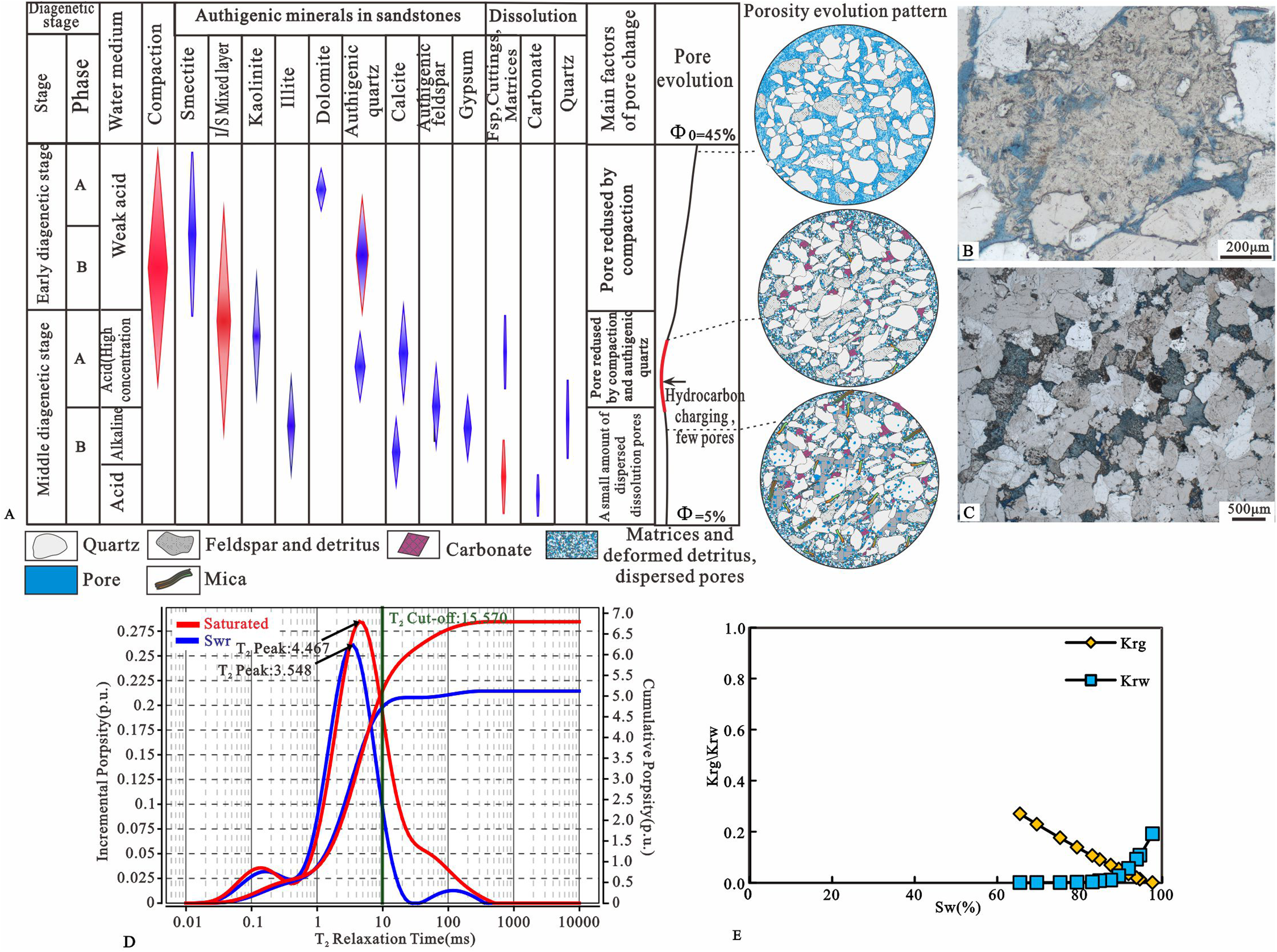
Diagenesis and reservoir-forming sequence, pore, nuclear magnetic, and relative permeability characteristics of the sandstones with type III diagenetic facies from well L40 of the He 8 Member in the northern Tianhuan depression. (a) Graph showing the diagenesis pore evolution and reservoir-forming sequence of the type III diagenetic facies; (b) and (c) images of a sample from a depth of 4081.99 m, characterized by altered kaolinite + medium dissolution, with dispersed intergranular dissolution microporous kaolinite intercrystalline pores; (d) graph showing the nuclear magnetic resonance
A strong/medium-strength compaction and altered kaolinite facies were developed in the type IV diagenetic facies, which contained no pores or a few dispersed dissolution pores with a slice scale porosity below 1%. Reservoirs with type IV diagenetic facies are basically invalid and were largely densified before hydrocarbon charging. The diagenesis–accumulation process of the type IV diagenetic facies and its influence on gas–water production are not discussed due to the lack of hydrocarbons in reservoirs with type IV diagenetic facies (Figure 15).
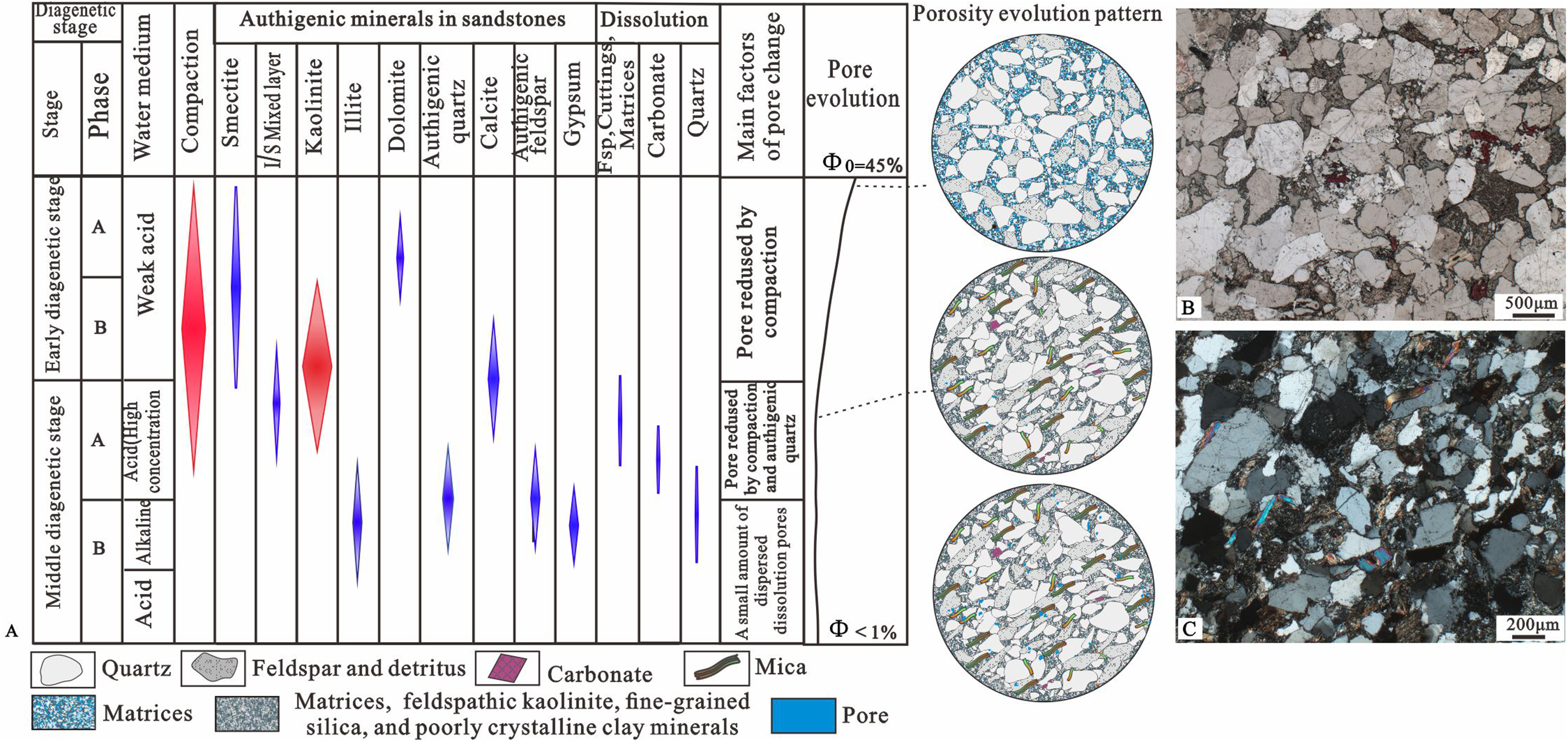
Diagenetic sequence and pore evolution of the sandstones with type IV diagenetic facies from well L23 of the He 8 Member in the northern Tianhuan depression. (a) Graph showing the diagenesis pore evolution and reservoir-forming sequence of type IV diagenetic facies; (b) and (c) pictures of a sample from a depth of 4484.78 m, characterized by strong compaction and altered kaolinite, with almost no pores.
Large differences in diagenesis, reservoir-forming sequence, and pore structure characteristics affect reservoir wettability, irreducible water saturation, and gas displacement efficiency, thereby controlling the distribution of gas and water. Integrated analysis implies that weak compaction, precipitated or altered kaolinite, and strong dissolution of diagenetic facies with high physical properties are likely to result in a high gas yield (type I diagenetic facies). Medium-strength compaction, altered kaolinite or chlorite, and weak dissolution of diagenetic facies with poor physical properties are likely to result in a low gas yield (type II diagenetic facies). Medium-strength compaction, altered kaolinite, and medium-strength dissolution of diagenetic facies with medium physical properties are more likely to result in a high water yield (type III diagenetic facies). Strong/medium-strength compaction and altered kaolinite facies with no developed pores or dispersed and small dissolution pores mostly result in the formation of dry beds or a few low production wells (type IV diagenetic facies).
The planar distribution of diagenetic facies in the study area can be inferred based on the research of differential diagenesis controlled by deposition and diagenetic fluids (Figure 16). The production results show that high-yield gas wells are primarily distributed in type I diagenetic facies; a few are distributed in type II and type III diagenetic facies. Low-yield wells, gas–water co-producing wells, and water-producing wells are primarily distributed in type II and type III diagenetic facies; a few are distributed in type I and type IV diagenetic facies. In addition to the heterogeneity of the reservoirs under the control of differential diagenesis conditions, the gas–water distribution is extremely complex due to several influencing factors (e.g. gas source, pressure gradient of the resource–reservoir, distribution of the transport system, and sealing capacity of cap rocks). Therefore, establishing an accurate correspondence between the distribution of diagenetic facies and the gas–water distribution trend at a macro level is difficult and requires a comprehensive study of the gas accumulation trends with respect to the above-mentioned aspects. However, this study considered the differential diagenesis, pore structure, and other aspects of the microscopic core scale and revealed the influence of differential diagenesis on the gas–water distribution. Therefore, the present results provide a significant scientific basis for further studies on gas accumulation and the gas–water distribution trends on a macro scale.
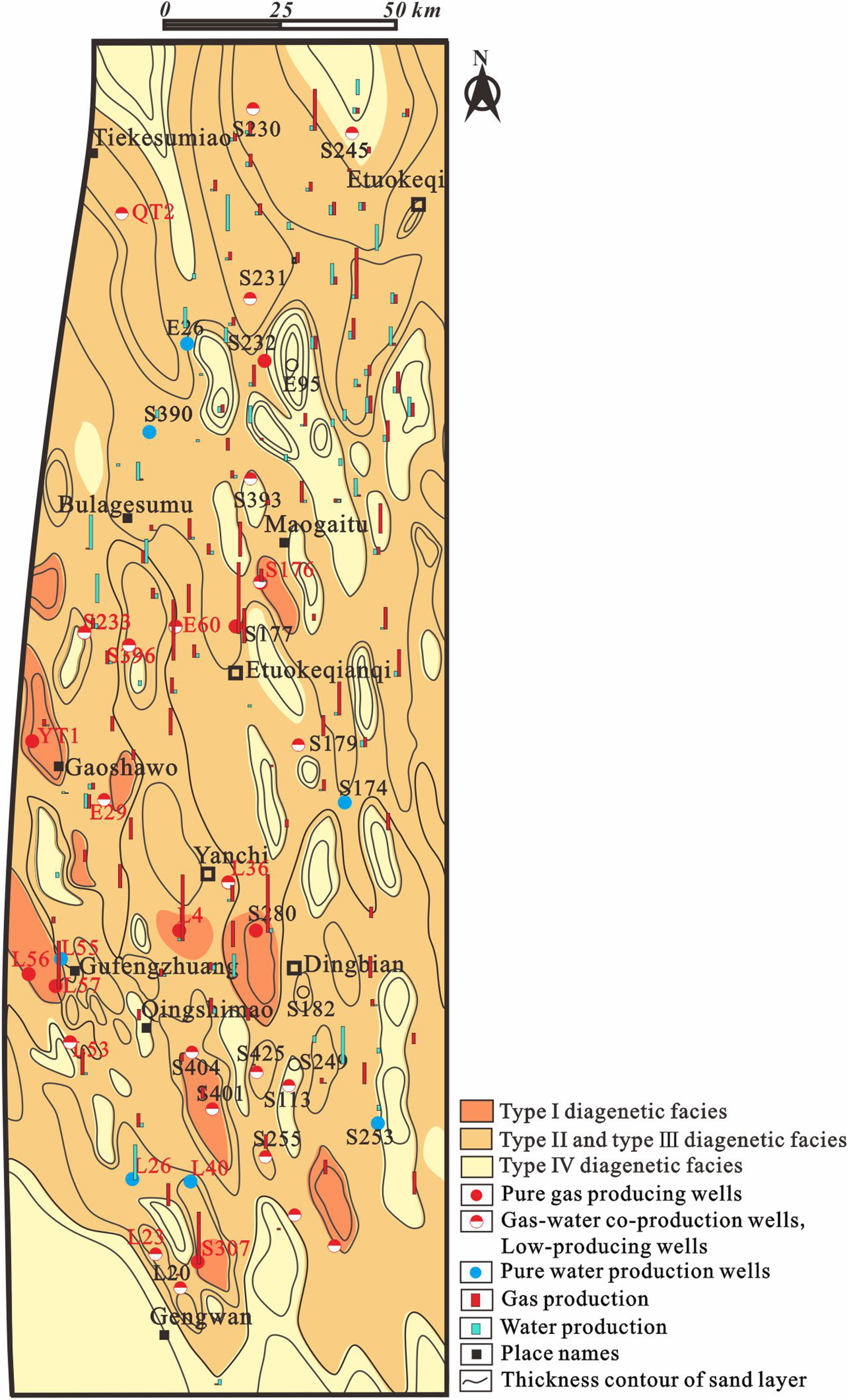
Distribution of diagenetic facies and the production of the He 8 Member in the northern Tianhuan depression.
Conclusions
The Upper Paleozoic He 8 Member in the northern Tianhuan depression is a gas reservoir that was compacted during accumulation. The differences in the sedimentary facies and the clastic composition of reservoirs affect the strength of compaction and dissolution, which are important factors affecting reservoir heterogeneity. Differential diagenesis controls reservoir densification, whereas the differential diagenesis–accumulation sequence affects the gas–water distribution. Differences in the diagenesis–accumulation sequence and pore structure characteristics affect reservoir wettability, irreducible water saturation, and gas displacement efficiency, thereby controlling the gas–water distribution.
Differential diagenetic and pore type combinations and four types of diagenetic facies regarding gas–water distributions were categorized based on lithology.
The type I diagenetic combination was characterized by coarse-grained quartz arenite, weak compaction, precipitated kaolinite, and medium/strong dissolution of diagenetic facies with good physical properties. This type was dominated by grain-mold pores and intergranular dissolution pores, with good pore-throat connectivity and was likely to produce a high gas yield. The lithologic assemblage of type II diagenetic facies was primarily composed of medium–coarse-grained quartz sandstone, followed by feldspar sandstone, and was characterized by medium-strength compaction, calcite and altered kaolinite cementation, and weak diagenetic facies dissolution. This type was dominated by residual intergranular pores and a small number of dispersed dissolution pores and kaolinite intercrystal pores and was likely to produce a low gas yield. The lithologic assemblage of type III diagenetic facies is the same as that of type II. The diagenetic characteristics were medium-strength compaction, chlorite and altered kaolinite cementation, and medium-strength dissolution of diagenetic facies. This type was dominated by kaolinite intercrystal pores and dispersed dissolution pores and was likely to produce a high water yield. The lithologic assemblage of type IV diagenetic facies is primarily composed of fine–medium-grained feldspar quartz sandstone and lithic quartz sandstone and characterized by strong/medium-strength compaction and altered kaolinite facies, with no developed pores or with dispersed and small dissolution pores. This type mostly formed dry beds or low production wells. The study on the diagenesis–accumulation sequence of tight sandstone reservoirs and their control on gas–water distribution in the He 8 Member provides a foundation for analyzing the complicated gas–water distribution.
Footnotes
We acknowledge the support of the State Key Laboratory for Continental Dynamics, Northwest University. We also appreciate Changqing Oilfield Company, PetroChina, for providing the porosity and permeability data of the Upper Paleozoic He 8 Member and the permission to publish it.
The author(s) declared no potential conflicts of interest with respect to the research, authorship, and/or publication of this article.
The author(s) disclosed receipt of the following financial support for the research, authorship, and/or publication of this article: This work was supported by the National Key R&D Program of China (Grant No. 2017YFC0603101).
