




Abstract
The reservoir in the Wuerhe Formation in the Mahu Sag, northwestern Junggar Basin, China, exhibits complex dissolution and cementation related to zeolite. The source and mechanism of diagenetic fluids are crucial in studying the reservoir genesis. Thus we investigated the key reservoirs fluids related to the zeolite and discussed their significance in the zeolite-rich reservoir of the Permian Wuerhe Formation in the Mahu Sag. Based on thin sections and electron microscope observations of rock samples and analyses of physical properties, C-O isotopes, and major elements, it is found that the reservoir underwent mainly two stages of fluid-related dissolution and cementation processes, in which the hydrocarbon-bearing fluid played the primary role in forming the high-quality reservoir. Dissolution pores are the most important storage space, and zeolite cement is the most important dissolution mineral. The geochemical characteristics of zeolite and calcite cement indicate the presence of two diagenetic fluids. The iron-rich calcite and orange-red heulandite is related to early diagenetic fluids with high iron content and higher carbon isotope values, whereas the calcites, with high manganese content and lower carbon isotope values, are formed by late acidic organic diagenetic fluids related to oil and gas activities. The hydrocarbon-bearing fluids form different spatial diagenetic zones, including the dissolution zone, buffer zone, and cementation zone, and the dissolution zone near the oil source fault is the main site of zeolite dissolution. The late fluid has the characteristics of multi-stage activity, which makes the spatial zoning expand gradually, resulting in multiple superpositions of dissolution and cementation and increasing the complexity and heterogeneity of the reservoir diagenesis. This study expands the understandings of the dissolution activities of different fluids in zeolite-rich reservoirs and also has reference significance for dissolution activity of hydrocarbon fluid in other types of reservoirs.
Introduction
Zeolite widely occurs in sedimentary basins during different geologic periods and is of great significance in the exploration of oil and gas (Bish and Ming, 2011; Hay, 1966; Hay and Sheppard, 2001). Owing to the extensive exploration of oil and gas, an increasing number of zeolite-rich reservoirs are being reported (Iijima, 2001; Zhu et al., 2020). Zeolite cementation significantly affects the quality of these reservoirs, such as destroying their primary pores and physical properties or dissolving in reservoir fluids to form considerable secondary pores; Zeolite cementation is an important research object particularly in saline lake basins and basins rich in volcanic material (Zhu et al., 2020).
Zeolite-rich reservoirs are widely developed in the Permian strata in the Junggar Basin in northwestern China and are characterized by multiple types of zeolite cementation, showing different cementation and dissolution characteristics within siliceous or calcite-cemented reservoirs. Many zeolite-rich reservoirs have been studied from different perspectives resulting in multi-faceted conclusions; these studies mainly focused on the types and distribution of zeolite minerals in petroliferous basins (Gan et al., 2009; Guo et al., 2016), the formation and evolution of different zeolite minerals (Hay, 1966; Karakaya et al., 2013; Ling, 2017; Rabelo et al., 2019; Zhu et al., 2020), and their impact on the physical properties of reservoirs (Iijima, 2001; Li et al., 2014; Weibei et al., 2019).
However, compared with conventional clastic rock and carbonate reservoirs, the dissolution of zeolite-rich reservoirs has not been studied in detail, particularly the dissolution process and mode under actual geological conditions, despite these being widely recognized in acidic environments (Hartman and Fogler, 2006; Zhu et al., 2020; Weibel et al., 2019). In conventional clastic rock or carbonate reservoirs, feldspar, calcite, and other self-minerals or secondary cements are the main dissolution objects, and their related mechanisms and modes of dissolution have been extensively studied (Baruch et al., 2015; Gya et al.,2019; Wilkinson et al., 2014; Yuan et al., 2019). In the zeolite-rich reservoirs of the Junggar Basin, the main dissolved minerals are zeolite cements, which can form in many ways during different periods and diagenetic environments. Thus, the dissolution process of zeolite is complex and varies in space and time. However, these zeolite dissolution phenomena and mechanisms lack specialized discussion even though they are arguably more important than cementation in reservoir prediction, because they are closely related to the development of secondary dissolution pores.
In this study, we investigated the key diagenetic fluids related to the cementation and dissolution of zeolite and discussed their significance in the zeolite-rich reservoir of the Permian Wuerhe Formation in the Mahu Sag, Junggar Basin. Based on the traditional and scanning electron microscopy (SEM) imaging of rock thin sections and analyses of the isotopes and major elements, the physical properties of the reservoir and the development of dissolution pores were characterized. Two types of dissolution fluids were revealed depending on different cements of varying geochemical characteristics. Finally, the diagenesis sequences related to the different fluids were discussed, and the zoning and periodic dissolution modes of late hydrocarbon-bearing fluids were established.
Geological setting
The Junggar Basin, an upper Paleozoic, Mesozoic, and Cenozoic superimposed basin, is located in the northern part of the Xinjiang Uygur Autonomous Region at the junction of the Kazakhstan, Siberia, and Tarim blocks (Figure 1). The basin can be subdivided into six structural units based on the differences in its (geo)tectonic evolution: the Wulungu Depression, Central Depression, Southern Depression, Luliang Uplift, Western Uplift, and Eastern Uplift (Figure 1; Li, 1993). The Mahu Sag is located on the northwestern edge of the Junggar Basin; it is a secondary structural unit in the northern part of the Central Depression, which is a primary structural unit of the Junggar Basin. The Mahu Sag is close to the Zaire Mountain and Haraalat Mountain to the northwest and is bound by the Wuxia Fault Zone and Kebai Fault Zone to the northeast, Zhongguai Uplift to the southwest, Dabasong Uplift to the southeast, and Shiying Sands Uplift to the north (Chen et al., 2002; He et al., 2004).
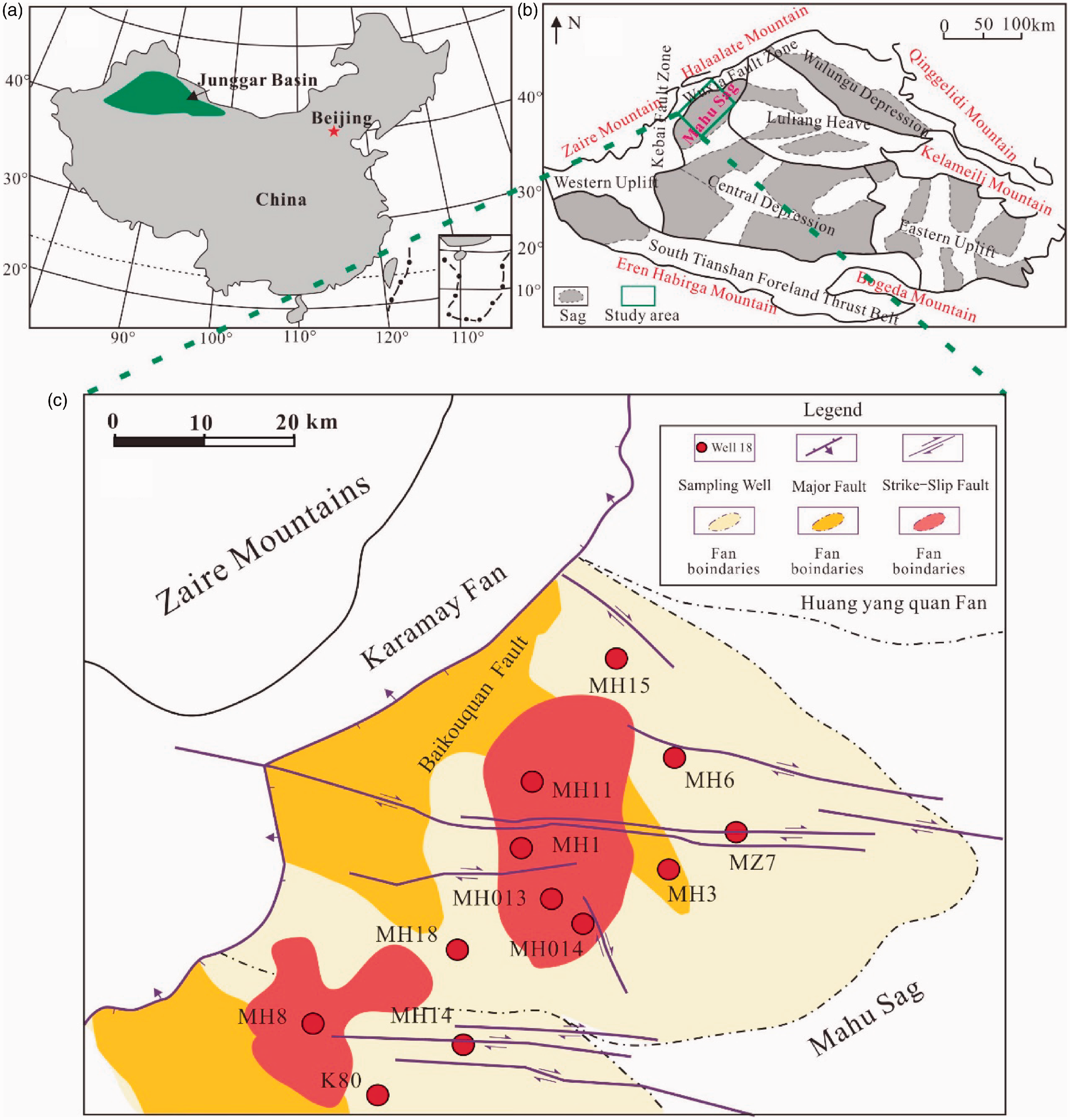
Location of the study area and the distribution of sample well in the Mahu Sag.
Recent studies have reported that the Mahu Sag shows the structural attributes of a rift basin in the Early-Middle Permian (Cai et al., 2000; Rao et al., 2018); it has experienced the Hercynian, Indosinian, Yanshan, Himalayan, and other multi-phase tectonic movements and has formed multiple source regions such as the Zaire Mountains and Hala Alat Mountains, as well as many deposition centers. The Permian strata in the study area experienced a small-scale uplift during the Triassic period and then maintained subsidence until now. In addition, the Baikouquan, Huangyangquan, and Xiazijie strike-slip faults and other nearly vertical fault systems appeared during these tectonic movements, restricting the formation of sand bodies and providing good channels for the migration of oil and gas.
Drilling data revealed that the layers of the Mahu Sag from the bottom to top are as follows: Carboniferous; Permian (Jiamuhe Formation (P1j), Fengcheng Formation (P1f), Xiazijie Formation (P2x), Xiawuer He Formation (P2w), and Shangwuerhe Formation (P3w)); Triassic (Baikouquan Formation (T1b), Karamay Formation (T2k), and Baijiantan Formation (T3b); Figure 2); Jurassic, and Cretaceous. Many formations have yielded good oil-and-gas-exploration results in the Mahu Field, particularly in the Lower Wuerhe, Upper Wuerhe, and Baikouquan Formations.
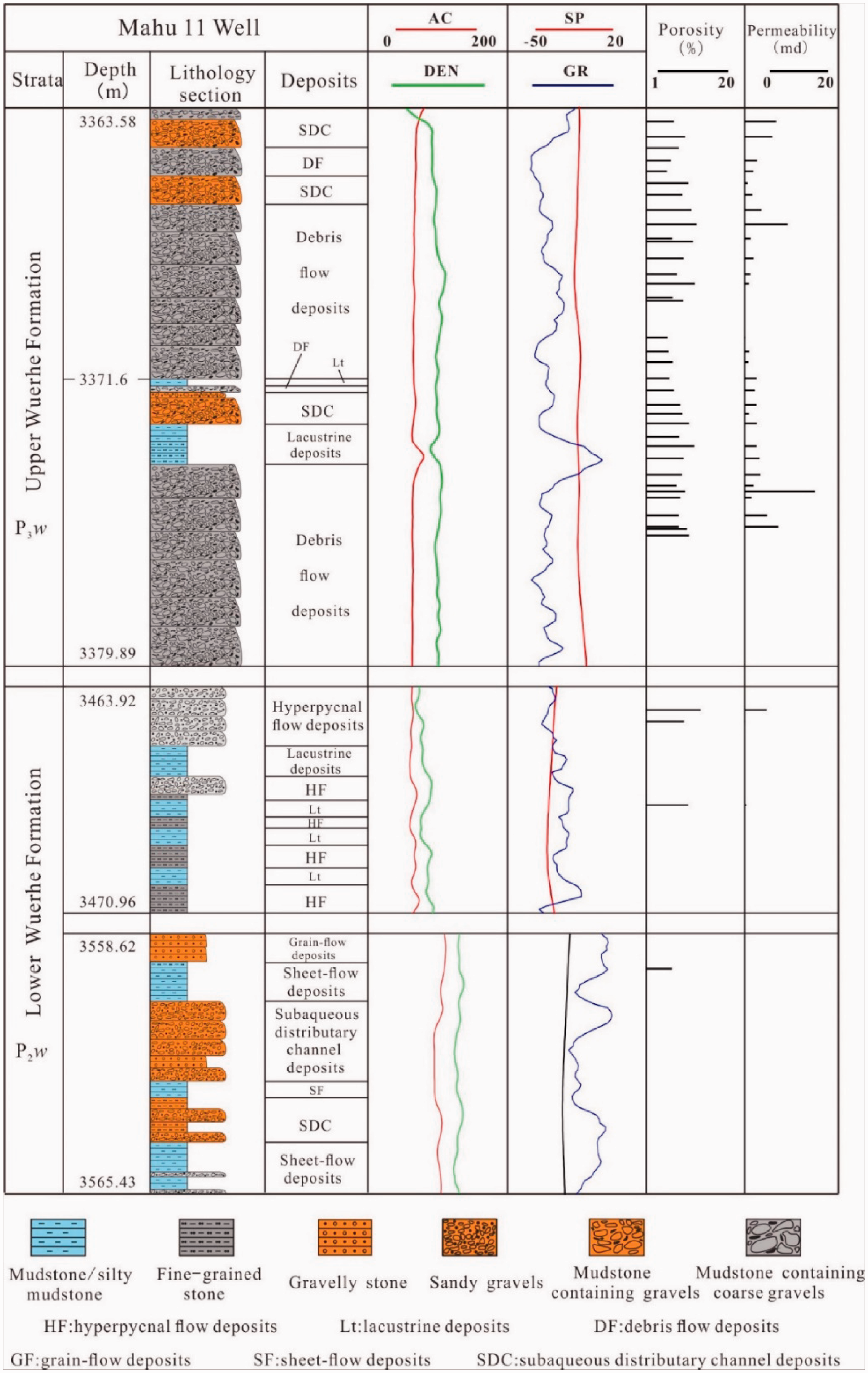
Generalized stratigraphic column of the study area in Early-Middle Permian.
During the P2w-P3w period, the Mahu Sag was mainly in a warm and humid environment, abundant with material sources. The main sedimentary facies are near-source fan-delta facies (Cao et al., 2020), and there are six main fans from the north to the south, including the Xiazijie–Huangyangquan and the Madong–Xiayan fans (Meng et al., 2015; Tang et al., 2014; Zou et al., 2017). During the Permian and Triassic sedimentary periods, the study area mainly developed distributary channel, lacustrine, debris flow, grain flow, and sheet-flow deposits. The main lithologies were glutenite and gravelly sandstone. The source rock mainly developed in the Carboniferous, Jiamuhe Formation, Fengcheng Formation, and Lower Wuerhe Formation, forming multiple superimposed petroliferous systems (Zhang et al., 2015).
Samples and methods
A total of 68 core samples from 14 wells were collected for thin sections analysis, and 24 of them were analyzed by using field-emission scanning electron microscopy (FE-SEM). Fourteen were analyzed by applying backscattering electron (BSE) imaging and in situ element content, and 40 were analyzed to determine the δ13C and δ18O values of calcite cements. In addition, 231 porosity and permeability data were collected for analyses of storage capacity.
A Nikon ECLIPSE LV100N POL polarizing microscope connected to a Nikon C-HGF1 Intensilight was used in the thin sections analysis, and a ZEISS Sigma 500 microscope was used in the FE-SEM analysis. Both analyses were conducted at the State Key Laboratory for Mineral Deposits of Nanjing University, Nanjing, China.
The BSE imaging and in situ element analyses were conducted by using a Japan Electron Optics Laboratory (JEOL; JXA 8230), operated at an acceleration voltage of 15 kV. The calcite and zeolite cements were analyzed for their major elemental composition using a 2-μm beam diameter and 10-s counting time.
The calcite cements were crushed into a fine powder with the host rock of the reservoir rock sample to analyze the δ13C and δ18O values. Aliquots of ∼0.5 mg of each were reacted with 100% H3PO4 acid at 72 °C for 3 h in a Kiel IV carbonate device coupled with a MAT 253 isotope ratio mass spectrometer. The δ13C and δ18O values were calibrated using the NBS19 standard (δ18O VPDB = −2:3‰, δ13C VPDB = 1:95‰). All analyses were performed at the Nanjing Institute of Geology and Palaeontology, Chinese Academy of Sciences. The results are reported in units of per mil relative to the Pee Dee Belemnite (PDB), reaching an analytical precision of ±0.03‰ for δ13C and ±0.08‰ for δ18O.
The porosities and permeabilities of 68 samples collected from the Geological Scientific Research Institute of the PetroChina Xinjiang Oilfield Company were measured from 25-mm diameter core plugs using standard industry methods. The helium porosity and permeability were detected with a CMS-300 measuring instrument using the steady-state method under nitrogen axial flow and a confining pressure of 6 MPa, following the standard GB/T 29172–2012.
Results and discussion
Dissolved pores and reservoir properties
Characteristics of dissolved pores
Various dissolution reservoir spaces, including dissolved pores of zeolite cement, dissolved pores of feldspar particles, dissolved pores of debris, and dissolved pores of calcite cement, are the main reservoir spaces in the Wuerhe Formation in the Mahu Sag. Based on the quantitative statistics of different types of dissolved pores from 74 rock thin sections under the microscope, the secondary dissolved pores accounted for as much as 88.36% of the overall reservoir space; among them, the dissolved pores of zeolite cements (mainly laumontite) were the most significant, accounting for 44.55% of the space (Figures 3(a), (b), (g), (h) and 4), followed by the dissolved feldspar and debris pores, accounting for 22.51% and 13.21%, respectively. The dissolved feldspar was mainly potassium feldspar, which developed along a certain orientation (Figures 3(e), (i) and 4). The dissolved debris was mainly tuffaceous debris, and grid-like secondary pores remained after the dissolution (Figures 3(f) and 4). Calcite cement was dominated by tiny dissolution pores, accounting for 8.03% of the space. In addition, there was a small amount of residual porosity from incomplete cementation of the dissolved pores (6.27%) and micro-cracks (5.37%), which had a limited influence on the physical properties of the reservoir.
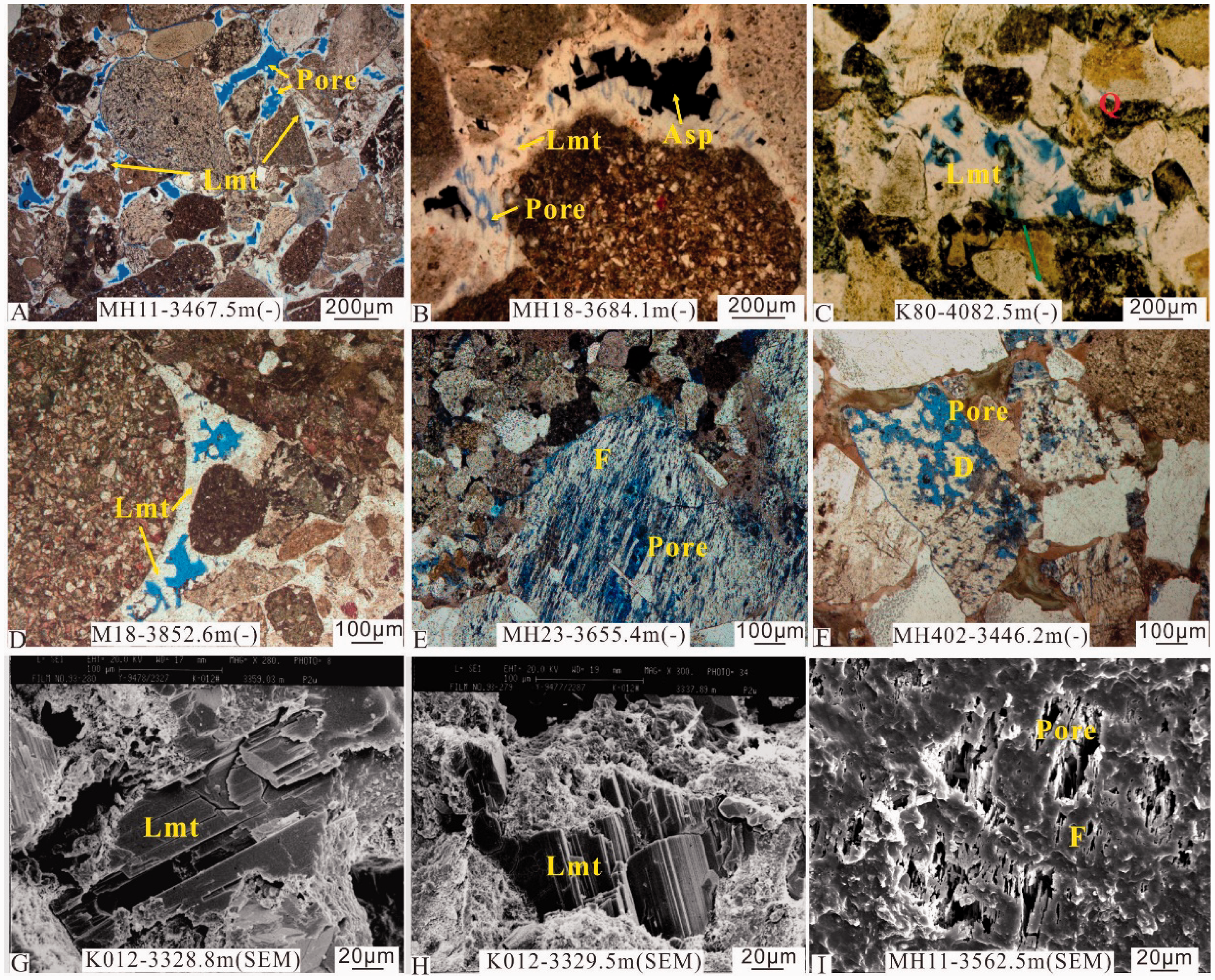
Dissolution characteristics of main minerals under traditional microscopy and SEM in the Permian reservoirs in the Mahu Sag: (a–d) dissolution pores of laumontite and residual porosity originating from incomplete cementation of laumontite; (e) dissolution pores of igneous rock detritus; (f) directional dissolution pores of potassium feldspar; (g, h) dissolution characteristics of laumontite (SEM); (i): directional dissolution pores of potassium feldspar (SEM); Lmt: laumontite; Asp: asphalt; F: feldspar; D: detritus.
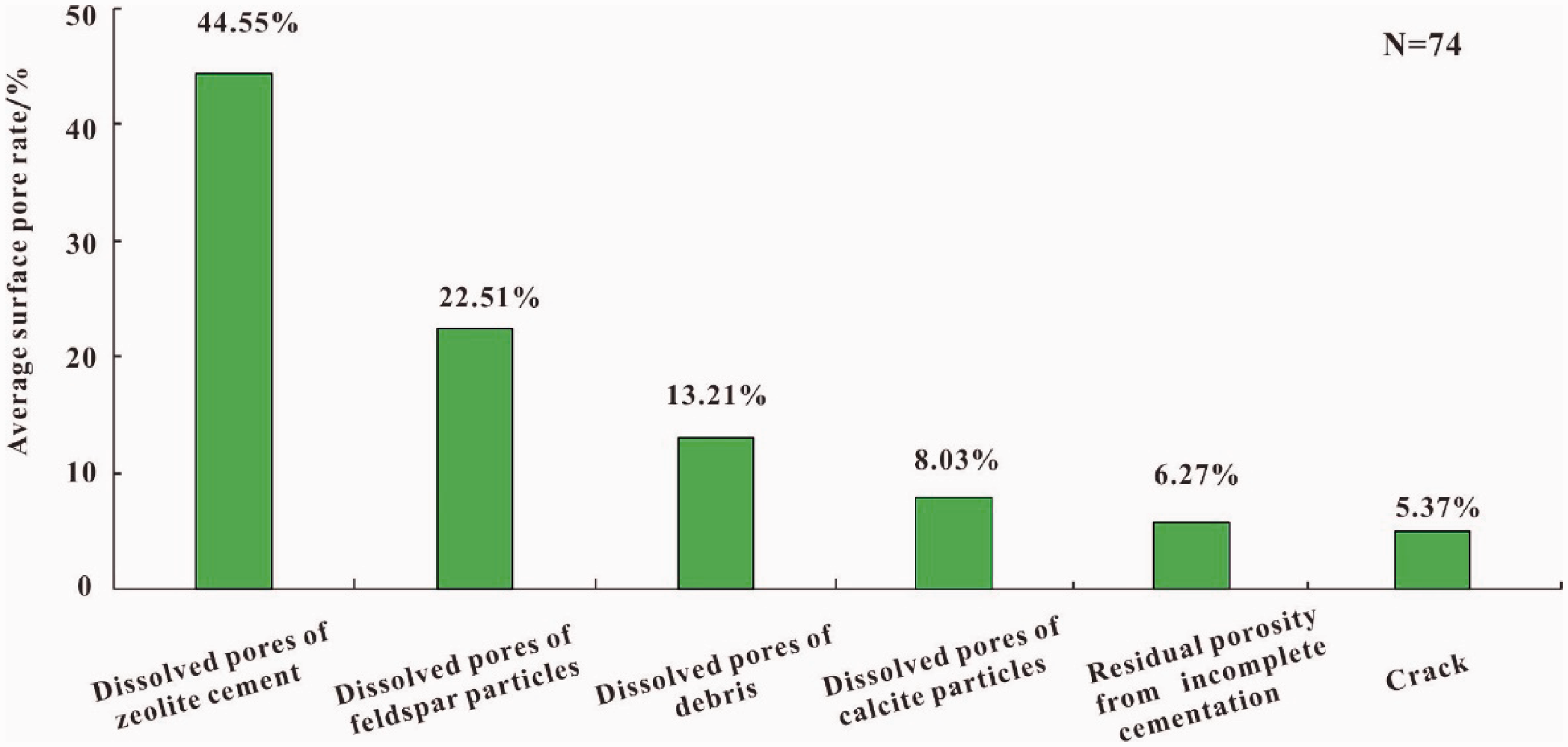
Average surface pore rate of different types of storage spaces, quantitatively analyzed using Pores and Cracks Analysis System (PCAS) software, from 80 fields of view of 40 thin sections.
The dissolution of minerals had clear selectivity in the study area. The selectivity is related to the mineral itself. In an acidic fluid environment, silicate minerals are often easier to dissolve than carbonate minerals (Surdam, 1984). The selectivity is also related to the formation of minerals and activity time of the reservoir fluids. Most of the secondary dissolution pores that can be observed now were formed by the latest dissolution, because the secondary dissolution pores caused by early dissolution were mostly re-cemented or filled. Therefore, to discuss the impact of reservoir fluids on high-quality reservoirs, it is necessary to identify the sources and characteristics of fluids in different periods, particularly focusing on the influence of late fluids.
Porosity and permeability of reservoirs
The two main lithologies (gravelly sandstone and sandy mudstone containing conglomerates) had large porosity and permeability ranges in the study area, and the physical properties of the different deposits varied more broadly, as shown in Figure 3. In general, the porosity and permeability ranges of the Wuerhe Formation glutenite reservoirs in the Mahu area were 0.42%–16.11% (average = 6.15%) and 0.000151–784 md (average = 2.45 mD), respectively. The correlation between reservoir porosity and permeability was not obvious. As for different deposits, the most notable feature was that each deposit had a large range of porosity and permeability. The grain flows and debris flow deposits had a larger porosity range, with a distribution of 0–13.4% and 0–16.5%, respectively; the grain flows deposits and subaqueous channel deposits maintained the highest permeability, with average values reaching 9.2 mD and 1.8 mD, respectively, which were significantly better than other deposits (Figure 5).
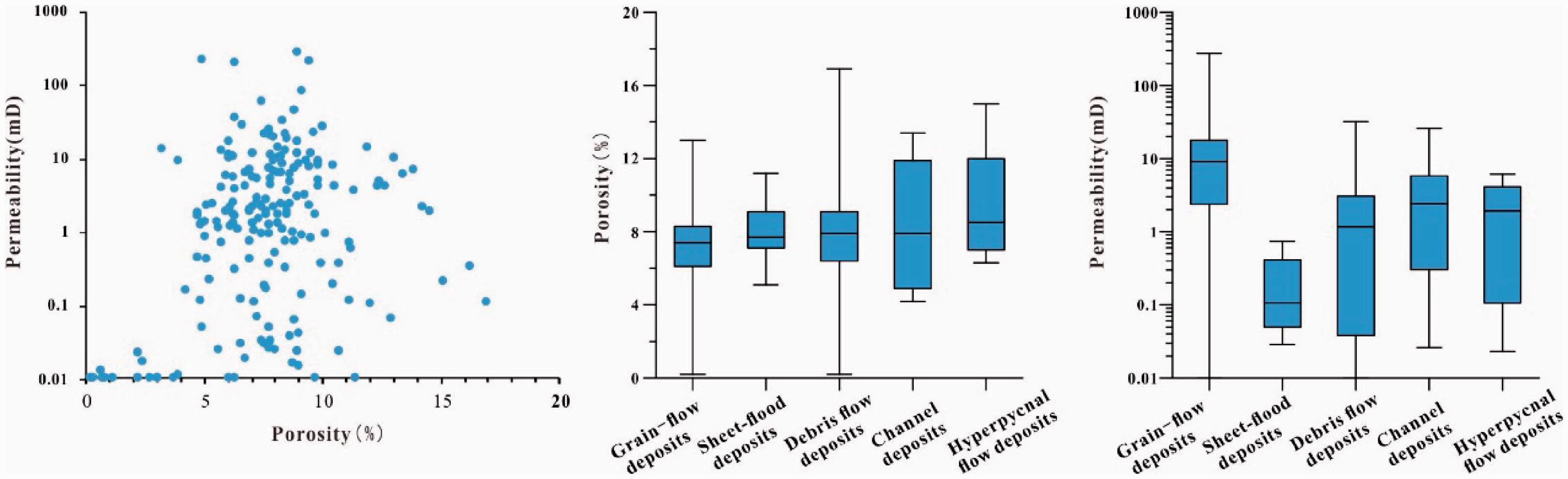
Porosity and permeability of the overall reservoir and of the difference in porosity and permeability of between main deposits in the Permian reservoirs of the Mahu Sag.
In general, the porosity and permeability of the grain flow and subaqueous channel deposits should be relatively good because of their large particle size, good sorting, and low mud content. However, the statistical results of the study area did not show this, indicating that the physical properties of the reservoirs were not only affected by the original sedimentary characteristics. Considering the widely developed dissolution pores and the difference of porosity and permeability between the similar lithologies or sedimentary facies, we propose that other late-stage geological factors such as reservoir fluids or tectonic activity may have influenced the results.
Dissolution fluids
The features and source of the dissolution fluid are key factors in analyzing the reservoir dissolution mechanism. Sedimentary basins include both inorganic and organic dissolution fluids, with the former including either meteoric freshwater (Emery et al., 1990; França et al., 2003) or deep hot fluids (Taylor and Land, 1996), and the latter including mainly acid fluids produced in the process of hydrocarbon generation and expulsion from source rocks. These fluids are rich in CO2 and organic acids originating from kerogen maturation and hydrocarbon degradation, and always migrate along faults, unconformity, or sand bodies, finally to the reservoir, causing large-scale dissolution (Carothers and Kharaka, 1978; Seewald, 2003; Surdam et al., 1984; van Berk et al., 2013; Yuan et al., 2015, 2017). However, the dissolution pore itself cannot adequately preserve the characteristics of the dissolution fluid. Thus, cements were the main research objects that affected the characteristics of reservoir fluids.
Zeolite cements and related fluids
Zeolite minerals were mainly divided into two types in the study area according to the crystal form and element characteristics: laumontite and heulandite. Microscope observations showed that the heulandite usually grew vertically along the edge of the debris, most of which having high crystallinity, and was usually orange-red under single-polarized and orthogonal light. Laumontite, often produced in the form of semi-filled or fully filled cements in dissolved pores, was colorless and transparent under single-polarized light, and first-level light gray or dark gray under orthogonal light.
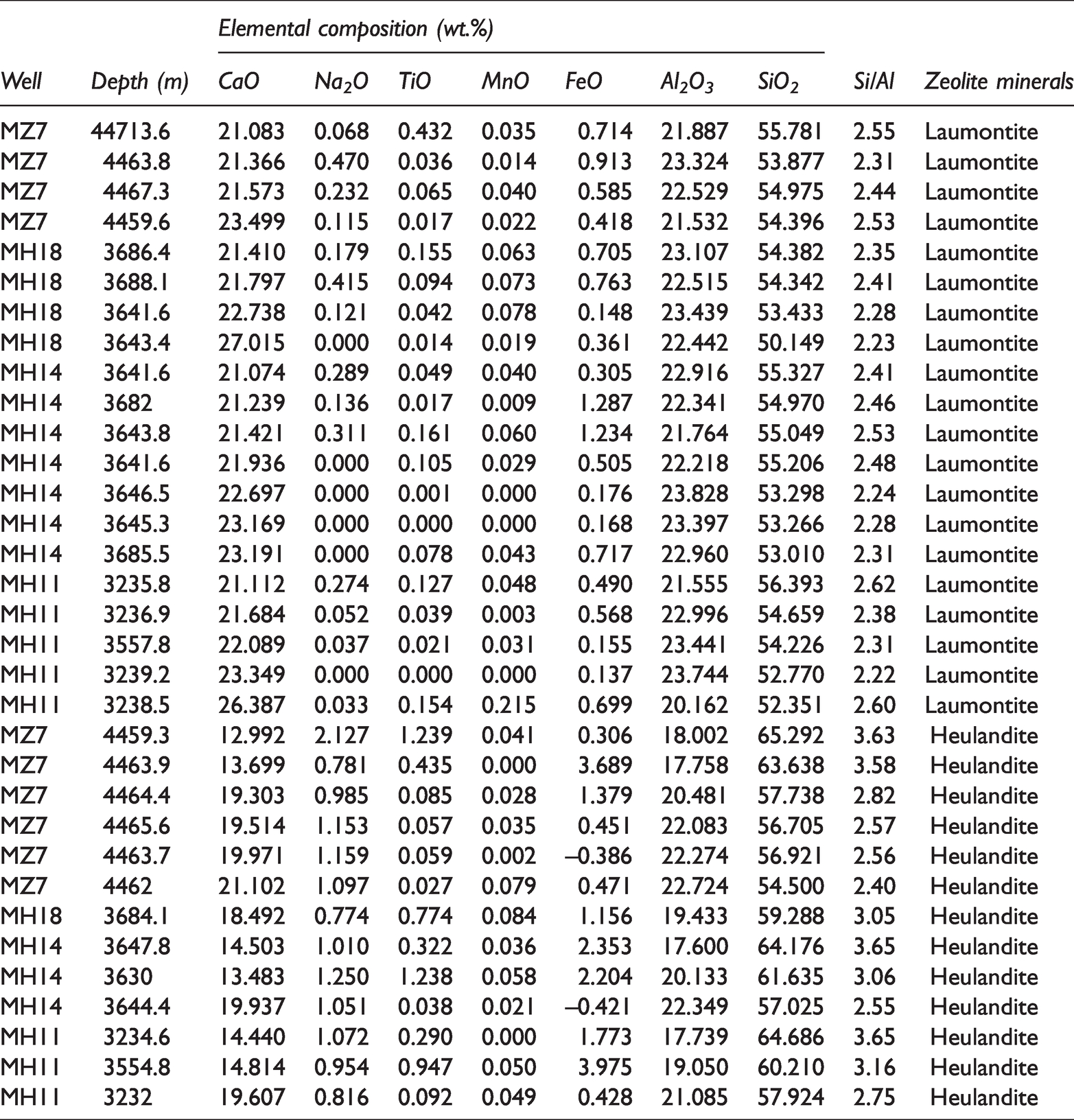
The zeolite composition was analyzed in situ by electron probes. The element characteristics of the two zeolites were different (Table 1). The heulandite (Ca4 [Al8Si28O72]•24H2O) contained an appreciable degree of sodium (more than 1%), and the Si/Al value was relatively high (approximately 2.4–3.6). In contrast, laumontite (Ca8 [Al8 Si16O48]·H2O) contained little sodium (less than 1%), and the Si/Al value was relatively low (approximately 2.2–2.6). The actual Si/Al values for the different zeolites in the Mahu area are 2.41–3.63, deviating from the theoretical value of 2.0 to 3.0 (Armbruster and Gunter, 2001; Coombs and Whetten, 1967; Hay, 1966; Hay and Sheppard, 2001), which may be due to the existence of different zeolite transition states. In addition, the zeolite cementation showed an obvious difference in the formation period of the study area. The heulandite cemented earlier than the laumontite, as the former tends to be closer to the crystals around the particles than the latter when they coexist, as seen in microscopy (Figure 6).
EPMA dates and Si/Al ratio of zeolite in the Permian reservoirs in the Mahu Sag.
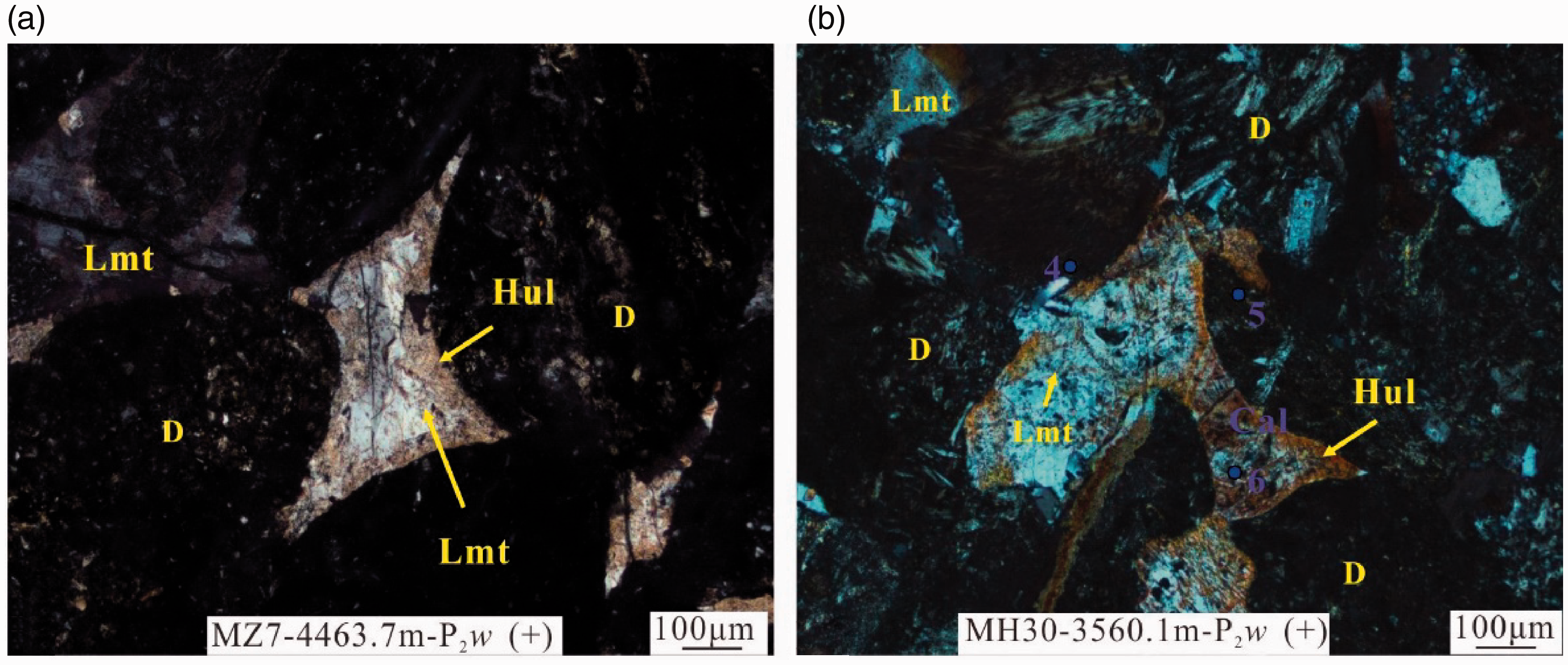
Zeolite types and their formation sequence of Permian Wuerhe Formation Reservoir in Mahu Sag, Junggar Basin.
Zeolite cements can be formed in many ways, but generally it can be divided into the alteration from precursor minerals and precipitation from diagenetic fluids; the former includes volcanic glass, clays, or detrital clays and perhaps other silicate minerals with poor thermal stability in salt and alkaline lakes (Coombs and Whetten, 1967; Zhu et al., 2020). No obvious semi-transformation characteristics of zeolite precursors, such as volcanic glass and clay, were observed in the study area, so the manner of zeolite formation by alteration cannot be determined. Considering that the sedimentary background of the study area is alkaline lake and rich volcanic debris in the study area, we propose that zeolite cement mainly precipitated from the pore water—rich in Ca, Na, and Al elements—in the alkaline environment during the sedimentation or diagenesis period. Considering the amount of iron in heulandite and the laumontite formed after heulandite, we believe that the heulandite is formed in the depositional environment of the syn-sedimentary or shallow-buried alkaline lake, whereas laumontite is formed in the later diagenesis stage.
Zeolite cements provide little information of their related fluids, and we can only deduce that the early orange-yellow heulandite formed in oxidative diagenetic fluids, as Fe3+ only exists in oxidative fluids and makes the heulanditet become orange or red. One possible explanation is as follows: Iron is the easiest to migrate when it is divalent, but only shows red when third. The formation water was rich in Fe2+ due to the dissolving of the igneous detritus by acid fluids in the early shallow burial stage. Then the reservoir could receive oxygen-enriched meteoric freshwater water and kept in oxidizing environment for a long time in early burial process. In this environment, the Fe2+ change to Fe3+ and involved in the formation of early zeolite, leading to their color of orange and red (Ma et al., 2021). The formation and dissolution of lautonite can only indicate that the late fluid underwent a change from alkaline to acidic conditions.
Carbonate cements and related fluids
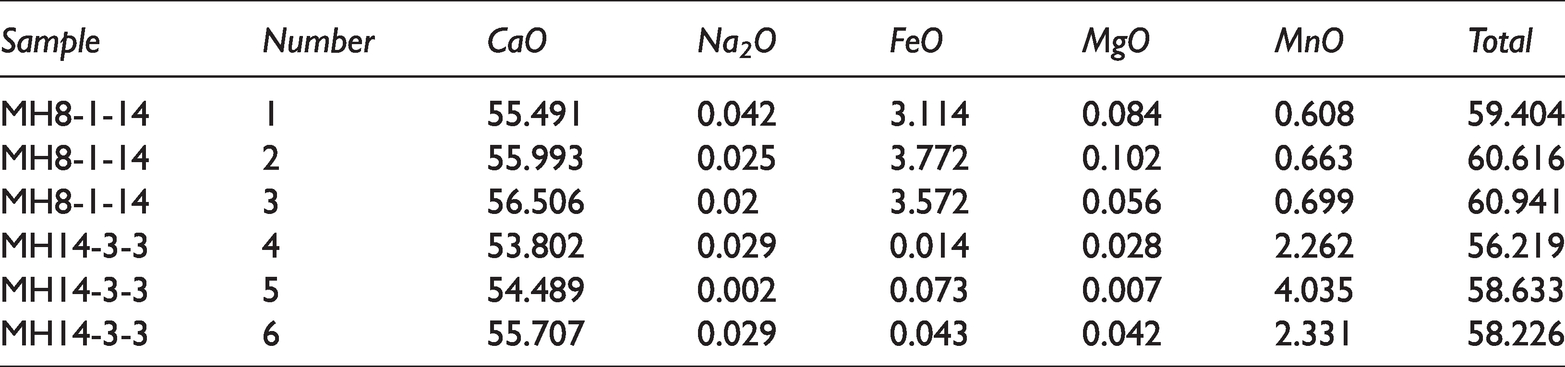
Carbonate cement is mainly calcite. According to the thin section characterization and in situ elemental determination using an electron probe, two types of calcite cement were identified. One had a high iron contentand generally formed near the edge of the mineral and debris (Figure 7(a), Table 2); the other has a high manganese content (Figure 7(b), Table 2) and mostly forms after the formation of zeolite cements. The content of iron and manganese in 75 points of calcite cements in 14 samples was analyzed and measured by using an electron probe, which showed that the iron content had two main intervals of 0–1% and 2.5%–5%, whereas the manganese content had two main intervals of 0–0.2% and 1.0%–1.4% (Figure 8), representative of the two different fluid environments present during calcite cement formation.
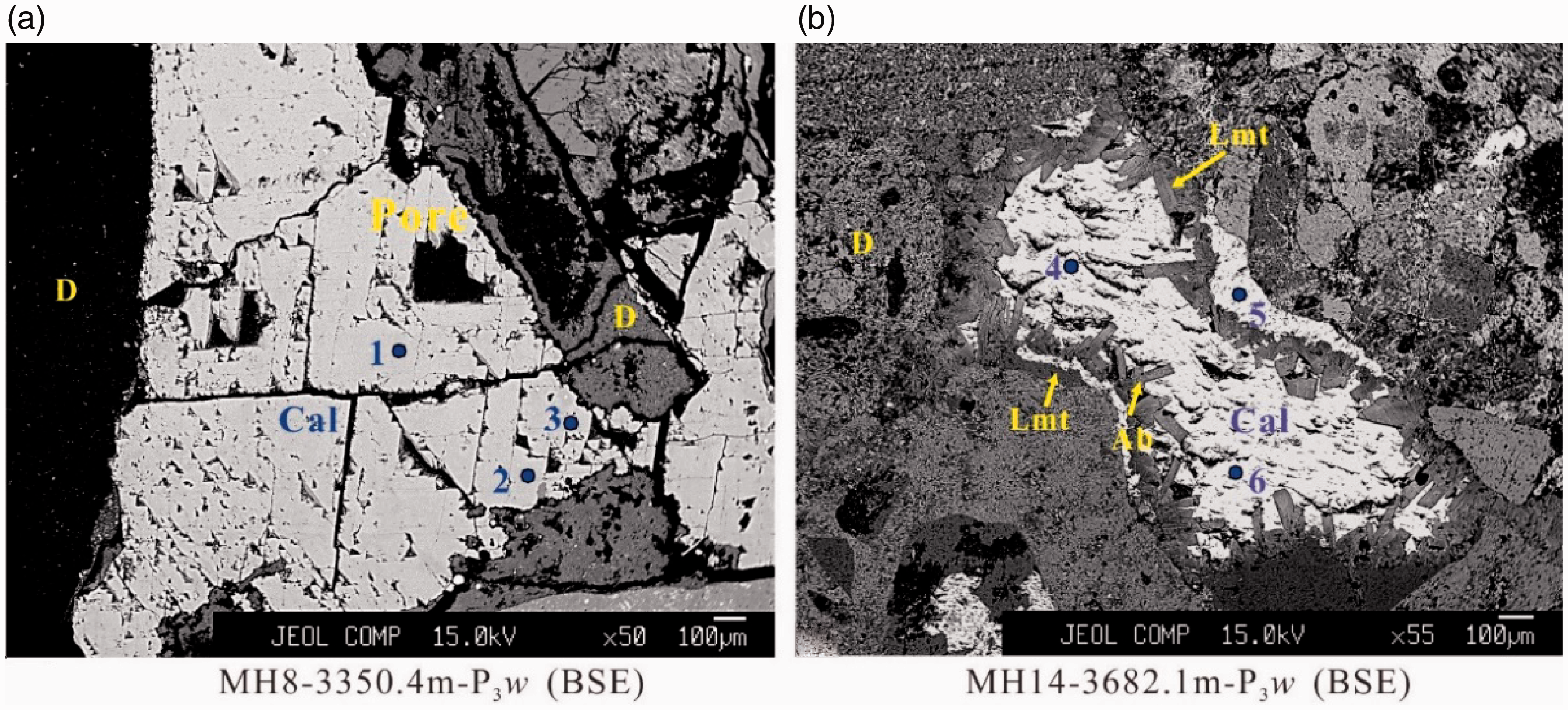
Microscopic characteristics and EPMA spots of calcite in different stages in the Permian Wuerhe Formation in Mahu Sag, Junggar Basin; Cal: calcite, D: detritus, Lmt: Laumontite, Ab: albite.
EPMA dates of calcite in the Permian Formation in Mahu Sag, Junggar Basin.
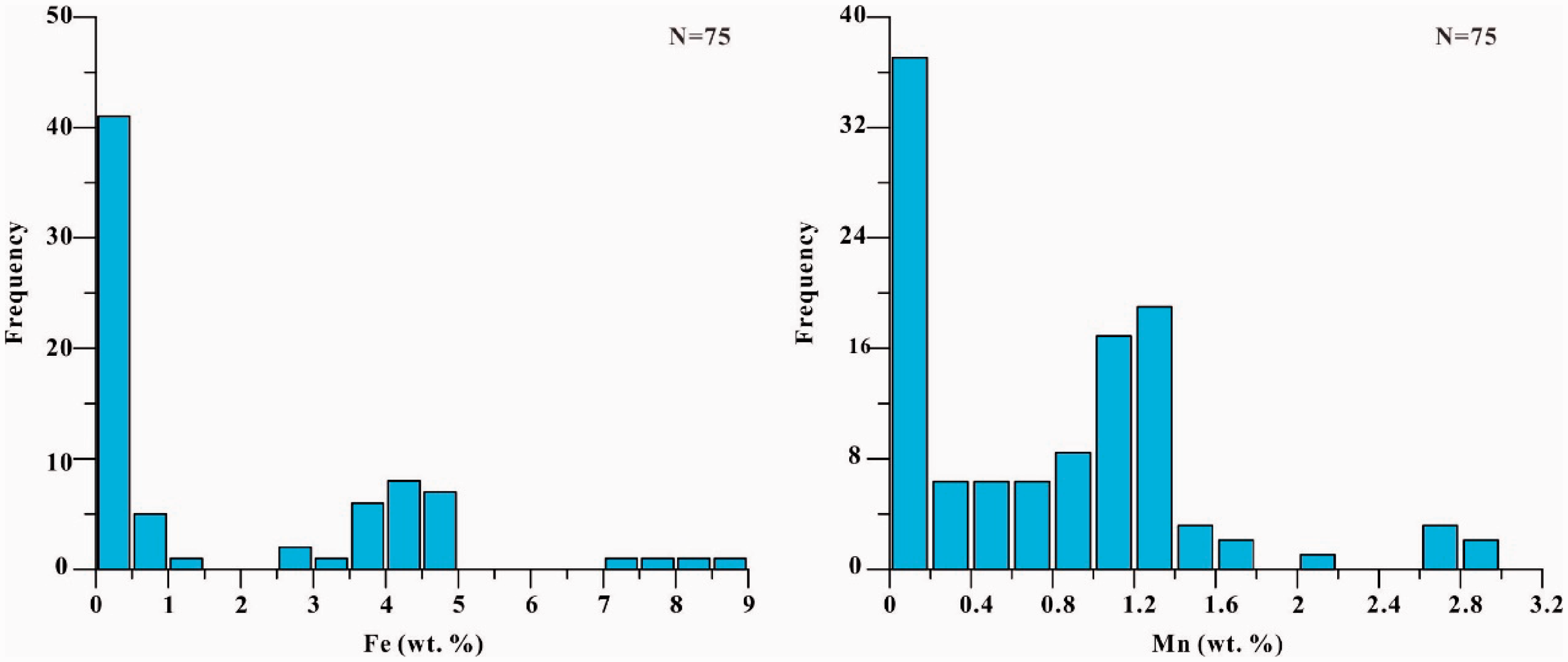
Fe and Mn content of calcite cements in the Permian Wuerhe Formation in Mahu Sag, Junggar Basin.
Similarly, the ranges of C–O isotopes within calcite cement also reflected the characteristics of diagenetic fluid. The calcite C–O isotope data of 40 whole rock samples in the study area were divided into two groups. One group had δ13C ranging from −6.7‰ to −2.1‰ and δ18O ranging from –18.5‰ to −11.3‰(averaged δ13C and δ18O values were −19.6‰ and −14.9‰, respectively). The other group had δ13C ranging from −30.7‰ to −8.2‰ and δ18O ranging from –18.5‰ to −11.3‰(averaged δ13C and δ18O values were −18.9‰ and −17.6‰, respectively) (Figure 9, Table 3).
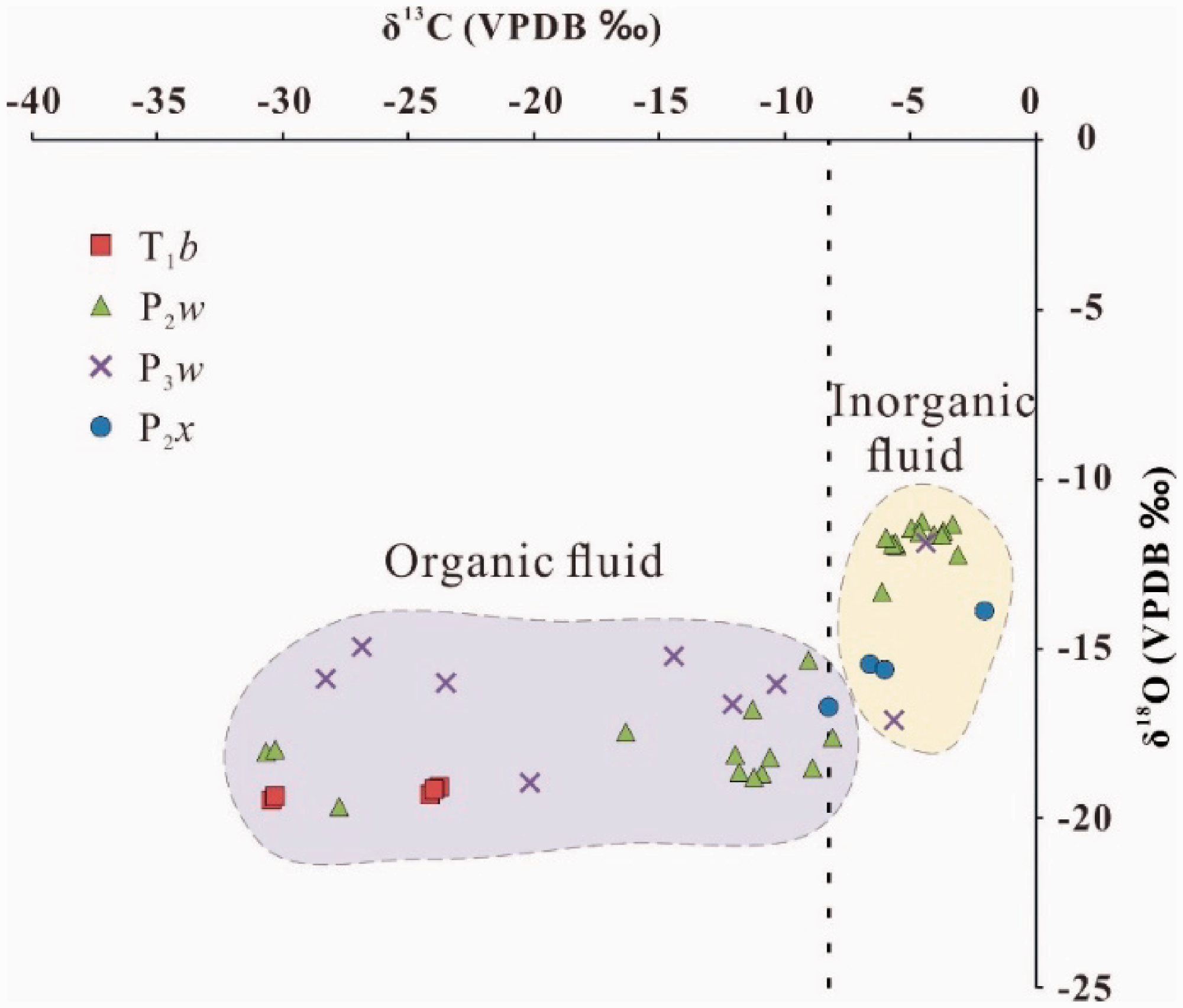
Distribution characteristics of calcite C-O isotope value in the Permian Wuerhe Formation in Mahu Sag, Junggar Basin.
δ13C and δ18O values of calcite in the Permian Formation in Mahu Sag, Junggar Basin.
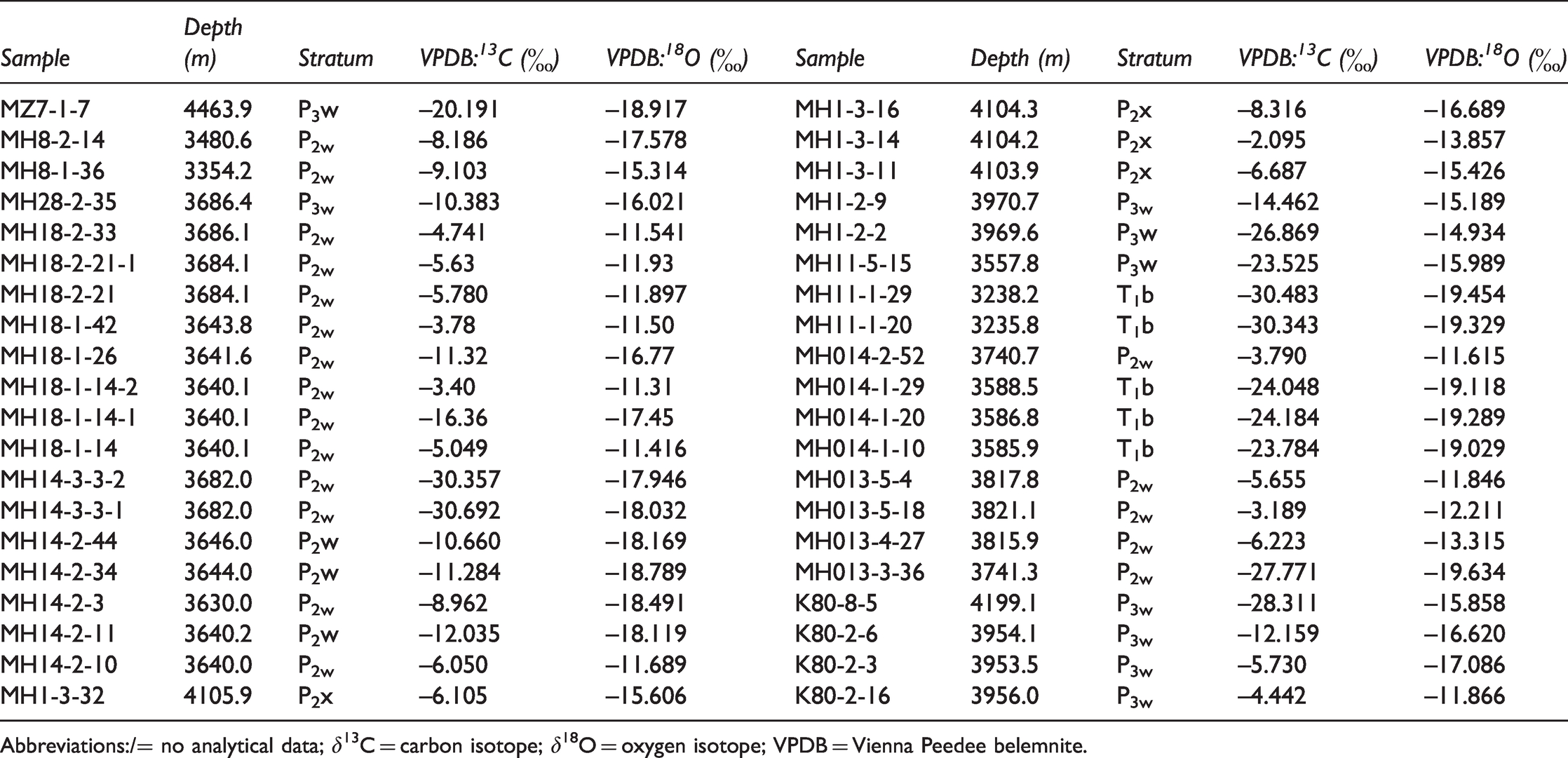
Abbreviations:/= no analytical data; δ13C = carbon isotope; δ18O = oxygen isotope; VPDB = Vienna Peedee belemnite.
The cementation of secondary calcite often occurs in alkaline diagenetic environments saturated with Ca2+ and CO32-. The source of Ca2+ in clastic rock reservoirs is mainly either the dissolution of terrigenous carbonate debris particles or anorthite (Mcbride and Milliken, 2006), and the source of CO2 is mainly releases from the thermal evolution of carbonate minerals or organic matter in adjacent mudstone (Dutton, 2008). The different characteristics of calcite cements in the study area revealed that calcite was formed not only from early iron-rich inorganic fluids, but also from late manganese-rich organic fluids with lower δ13C values, which is possibly consistent with the early and late genesis of zeolite.
The formation of early calcite was related to early, inorganic, diagenetic fluids, which are also related to heulandite. According to the previous analysis, the early calcite cementation was abundant in iron and had relatively higher δ13C and δ18O values. The abundance of iron indicated an oxidizing environment, the higher δ13C value indicated the inorganic characteristics of fluids, and the higher δ18O value meant a shallower burial depth. Therefore, the early dissolution fluids were classified as inorganic acidic fluids such as meteoric freshwater during the shallow burial period or acidic water discharged from mudstone during the compaction stage of the reservoir. These fluids all maintained oxidative ability to a certain degree, which means that early calcite and early zeolite were formed in the same fluid. When the reservoirs were uplifted and exposed or sunk deeply and encountered these inorganic fluids, silicate and carbonate minerals underwent significant dissolution (Bjørlykke and Jahren, 2012; Emery et al., 1990; França et al., 2003; Giles, 1986). It is worth mentioning that there were large-scale unconformities between the Permian and Triassic strata in the Mahu Sag, and some areas even lacked the Triassic stratum. The distance from the reservoir of the Wuerhe Formation to unconformity was in the range of 10–200 m, which was conducive to meteoric freshwater leaching into the reservoir (Bird and Chivas, 1988; Purvis, 1995; Yuan et al., 2017).
In contrast, the late calcite was more related to organic corrosion fluid. According to the analysis of late calcite cement, we propose that late dissolution fluids are characterized by high manganese content, low δ13C and δ18O value. C-O isotope values indicated the possibility of organic fluids in greater burial depths, and higher manganese elements are also considered to be the main characteristics of hydrocarbons fluids in the Junggar Basin, because they always interact fully with the manganese-rich igneous surrounding rocks in the processes of generation and migration and obtained enough manganese (Cao et al., 2007). Considering the burial history of the reservoir, we propose that the late fluid originated from acidic organic water discharged by the source rock under the Wuerhe reservoirs during the early stages of thermal evolution and hydrocarbon generation.
In general, zeolite and calcite cements together reflect the presence of early oxidizing inorganic fluids and late organic fluids. The late organic fluids related to the hydrocarbon generation of the source rock were more significant to the dissolution mechanism of the reservoir.
Fluids evolution and dissolution mechanism
The influence of different geological fluids on the reservoir was manifested in a series of diagenetic processes. Therefore, we analyzed the diagenetic evolution sequence related to the two types of fluid in the study area, and discuss their impacts on the physical properties of the reservoir, focusing on the dissolution process of the late hydrocarbon-bearing fluid to discuss the formation mechanism of the resulting pores.
Diagenetic sequences related to different fluids
The early oxidizing inorganic fluid in the Wuerhe reservoir in the Mahu area affected the reservoir, starting from the compaction and ending with the cementation of heulandite and initial calcite (Figure 10). Specifically, the compaction in the early diagenetic stage significantly reduced the pores of the reservoir, increasing the pore water ion concentration. When the meteoric freshwater and discharge water from mudstone leach into the reservoir, igneous rock debris were dissolved, and a large amount of calcium, sodium, and aluminum ions entered the pore water. With the strengthening of compaction, the pores of the reservoir were significantly reduced, and the concentration of pore water ions increased. When the pH value (potential of hydrogen) of pore water shifted to alkaline, the heulandite and iron-rich calcite began to precipitate. Generally, the early inorganic fluids only slightly dissolute and cement considerably, causing the first densification process of the reservoir, which is another key process for the reduction of reservoir pores after compaction (Figure 10).
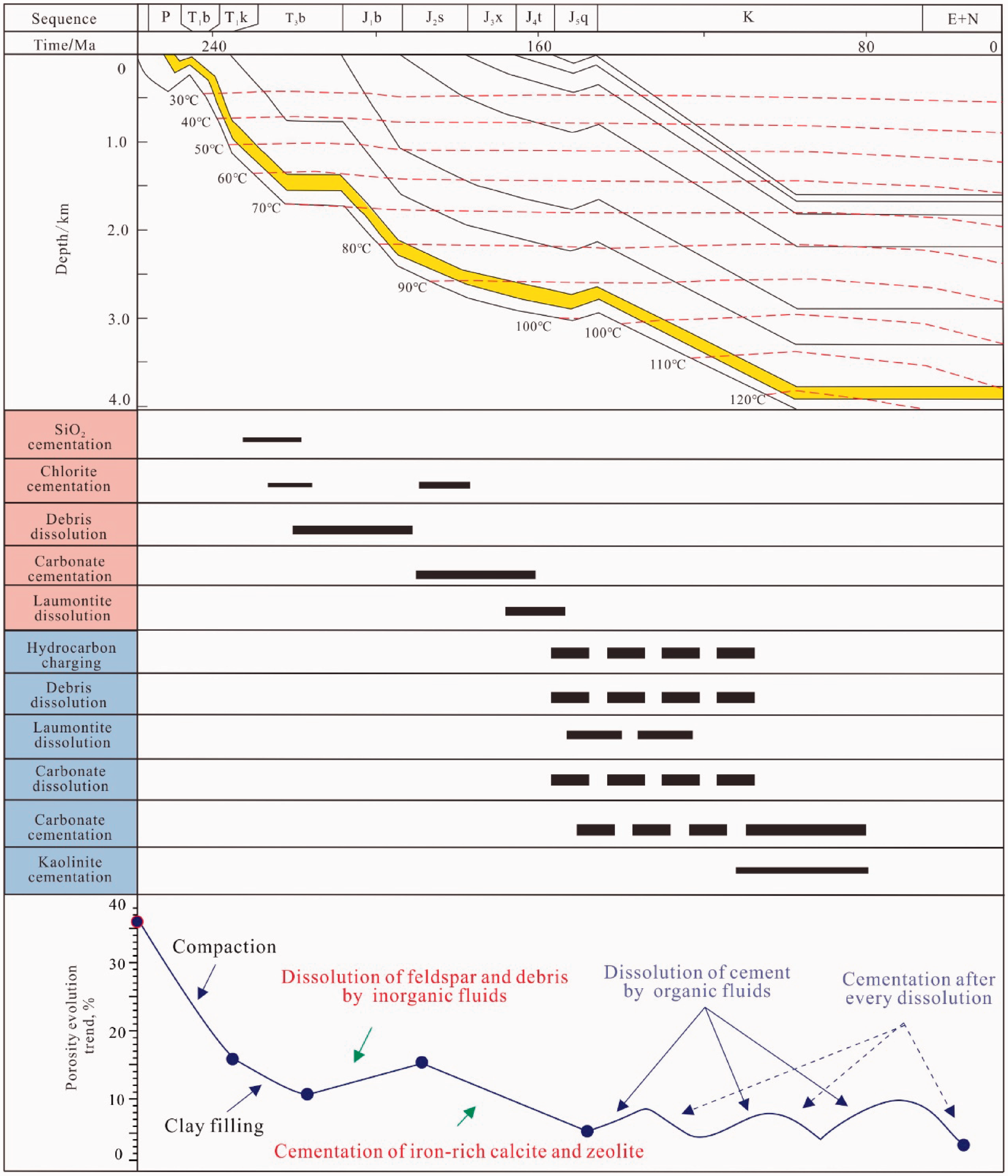
Diagenetic sequence and physical properties response in the Permian Wuerhe Formation in Mahu Sag, Junggar Basin. The buried history modified from Li et al. (2016). The primary porosities were obtained from the normal compaction curve using the method described by Wang et al. (2013).
The late inorganic fluid activity began in the Late Jurassic, 160 million years ago, because at this time the underlying source rocks in the Jiamuhe Formation and Fengcheng Formation started entering the main hydrocarbon generation period, along with the generation and expulsion of hydrocarbon. The acidic organic fluids migrated to the reservoir along large faults and unconformities. This process continued until the early Cretaceous period (Chipera and Bish, 2010; Hartman and Fogler, 2006; Zhu et al., 2012).
The fluid in this period began with large-scale dissolution and ended with the cementation of laumontite and manganese-rich calcite. It is worth mentioning that the influence of organic acidic fluids was multi-phased, and the related acid-dissolution and alkalescent precipitation process constantly alternated. The early zeolite and calcite cements will be dissolved again, and the cement residues can be observed under the microscope. The porosity of the reservoir increased and then decreased many times in this period. However, the process of dissolution-cementation transformation in different parts of the reservoir was different, and this content is discussed in the following section.
Dissolution mechanism of organic fluids
The diagenesis modification on reservoirs from organic acidic fluid was zoning in space and periodic in time. When the organic fluid leached along the fault and then diffused into the surrounding sand bodies, the fluid close to the fault maintained the strongest dissolution ability. The debris and early cements displayed obvious dissolution characteristics in corresponding samples (Figure 11(a)). When the fluid migrated away from the fault, acidic ions such as H- and HCO3- were consumed, and their corrosion ability gradually weakened. The laumontite and late calcite began to precipitate at this time. At the end of the fluid migration, the acid anions had been lost and the dissolution could no longer proceed—cementation was the mainstay. The debris and the early calcite cements in these types of samples did not dissolve, and the new calcite and laumontite cemented along the original pore edge (Figure 11(b)). In general, the zoning features of the dissolution zone, transition zone, and cementation zone were formed in the reservoir with a period of fluid injection (Figure 11(a)). With the progress of hydrocarbon generation and expulsion from source rocks into the reservoirs, the space formed by the previous dissolution allowed the fluid to travel farther, and the previous buffer zone and cementation zone were dissolved (Figure 11(b)). These types of samples show obvious dissolved residues of lautonite and calcite cement (Figure 11(c)). Correspondingly, the scope of the new buffer zone and the cementation zone was also greater, and samples in these zones showed the phenomenon of multiple stages of cementation in sequence without dissolution (Figure 11(d)). This superimposed modification of organic fluids occurred repeatedly many times.
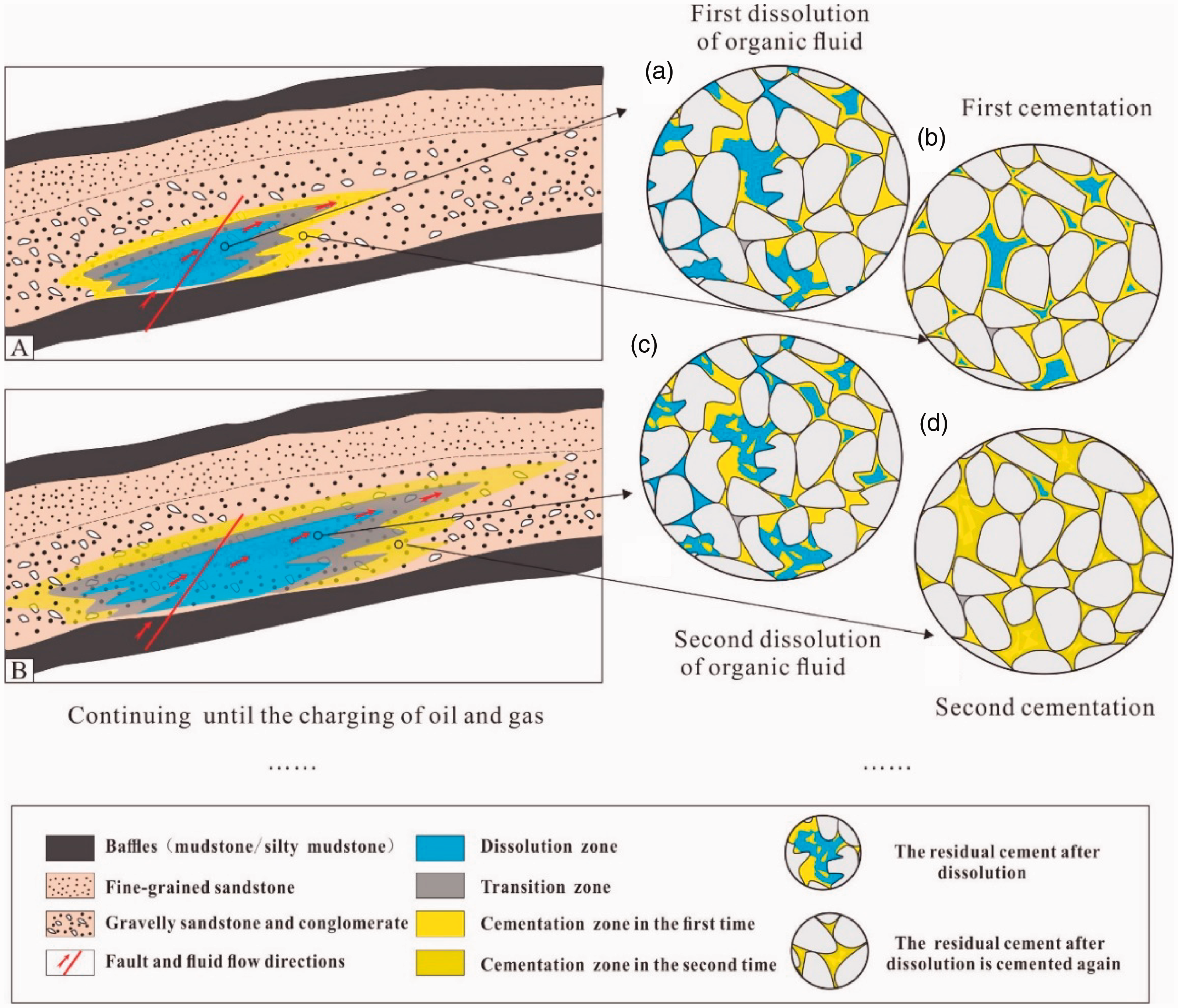
Periodic and zoning action mode of hydrocarbon-bearing fluids and their typical microscopic characteristics: (a) first action model of organic fluid. The left diagram shows the zonality of diagenesis, and the right diagram shows the typical microscopic phenomena of different zoning; (b) superimposed action mode of organic fluid. The left diagram shows the expansion of diagenetic zoning, and the right diagram shows the superimposition of the new diagenetic zoning and the previous diagenetic zoning; (a–c) micro diagenesis characteristics of different diagenetic zones during different period.
This model conforms to two recognized viewpoints. One is that dissolved substances will undergo a certain transfer and precipitate again under suitable conditions, especially when the diagenetic system is not completely closed (Hellmann and Tisserand, 2006; Zhu et al., 2020). The second is that the hydrocarbon generation and expulsion of source rocks is episodic, and the related organic acidic fluids also act episodically on the reservoir and can be recorded by special diagenesis (Hu et al., 2006). This model is proposed for zeolite cemented reservoirs, but it has more general applicability and can provide a more reasonable explanation for the dissolution and cementation heterogeneity of most clastic reservoirs.
Conclusions
A comprehensive analysis of the physical properties of the reservoir and the petrochemical characteristics of the cements allowed us to determine the key reservoir fluids and their impact:
Dissolution pores are the most significant storage space, and zeolite cement is the most important dissolution mineral. Detritus and calcite cement also dissolve to a certain extent, but they do not contribute much to the physical properties of the reservoir. Different types and stages of cementation indicate two types of dissolution fluids during different periods. The early diagenetic fluids are characterized by high contents of iron and high δ13C values, as evidenced by the early iron-rich calcite and dyed heulandite; the late diagenetic fluids are characterized by high contents of manganese and low δ13C values, indicated by manganese–rich and low-δ13C calcite, accompanied with the charge of oil and gas. The two types of fluids have different diagenesis sequences and dissolution-consolidation modes: the early fluid’s dissolution-cementation process involved discharge water from the adjacent compacted mudstone and the meteoric freshwater from the surface dissolving the reservoir during shallow burial. These inorganic fluids dissolute detritus and feldspar particles, but the compaction and cementation after the dissolution was more intense, causing the first reducing process of the porosity and permeability of reservoir; the late hydrocarbon-bearing fluid migrates vertically from the underlying source rock along the fault and then diffuses into the coarse-grained sand bodies, forming three spatial diagenetic zones: the dissolution zone, transition zone, and cementation zone. Dissolution is dominant near the fault, and cementation is dominant at the end of fluid movement. In addition, the activity of the hydrocarbon-bearing fluid is periodic, and the range of dissolution expands continuously. Corresponding dissolution-cementation processes are also continuously superimposed, ultimately resulting in the complexity and strong heterogeneity of reservoir diagenesis. Multiple dissolution modification of acid fluid can make reservoirs with poor original reservoir performance have higher pores. This is very important for the prediction of favorable reservoirs.
Footnotes
Declaration of conflicting interests
The author(s) declared no potential conflicts of interest with respect to the research, authorship, and/or publication of this article.
Funding
The author(s) received no financial support for the research, authorship, and/or publication of this article.
