




Abstract
Predicting the permeability of coalbed methane (CBM) reservoirs is significant for coalbed methane exploration and coalbed methane development. In this work, a new fracture permeability model of coalbed methane reservoir with high-dip angle in the southern Junggar Basin, NW China is established based on the Poiseuille and Darcy laws. The fracture porosity in coalbed methane reservoir is calculated by applying 3D finite element method. The formation cementing index m was calculated by combining fractal theory and the data of acoustic logging, compensated neutron logging, and density logging with the space method. Based on Poiseuille and Darcy laws, the curvature τ is introduced to derive this new method for obtaining the permeability of the original fractures in coalbed methane reservoirs. Moreover, this newly established permeability model is compared with the permeability from the well testing, which shows a very good correlation between them. This model comprehensively includes the effects of fracture porosity, reservoir pore structure, and development conditions on fracture permeability. Finally, the permeability prediction of coalbed methane reservoir with high-dip angle in the southern Junggar Basin, NW China is conducted, which correlates very well with the well test permeability (R2 = 0.83). Therefore, this model can be used to accurately predict the coalbed methane reservoir permeability of low rank coals in the southern Junggar Basin. The permeability of the No.43 coalbed methane reservoir for the coalbed methane wells without well testing data is evaluated, which ranges from 0.000251 to 0.379632 mD. This significant change in permeability may indicate a complex coalbed methane reservoir structure in the southern Junggar Basin, NW China.
Introduction
Coalbed methane (CBM) is favorable for energy support, environmental protection, and mining safety (Cai et al., 2011; Karacan et al., 2008, 2011). The SJB covers an area of 230 × 50 km2, which located at the northern Xinjiang Uygur Autonomous Region, NW China. The major coal-bearing intervals are the Badaowan Formation (J1b) and the Xishanyao Formation (J2x). The vitrinitre reflectance is of 0.38%–0.7% Ro,m, which belongs to the low-rank coal. The CBM reservoir properties are relatively poor, with permeability of 0.002–1.220 mD and porosity of 0.56%–9.73% (Chen et al., 2006, 2017; Fu et al., 2016; Li et al., 2017; Yin, 2009). Petrophysical properties including permeability, cementation factor, and porosity of CBM reservoirs have crucial impacts on CBM exploration and development (Li, 2016; Clarkson et al., 2011). Permeability of CBM reservoir is one of the key factors for evaluating CBM productivity. Many literatures related to permeability mainly emphasize the primary CBM reservoir permeability (Espinoza et al., 2014; Shovkun and Espinoza, 2017), dynamic permeability (Connell et al., 2016; Espinoza et al., 2015; Gentzis et al., 2009) and the relative gas/water permeability during gas production (Clarkson et al., 2011; Connell, 2016; Gensterblum et al., 2014).
Laboratory measurements, numerical simulation by production data, well injection/falloff tests, and geophysical logging methods can be used to evaluate the CBM reservoir permeability (Chatterjee and Paul, 2013; Mitra et al., 2012). The well logging may provide an economic and convenient way to acquire the CBM reservoir permeability (Saboorian et al., 2015; Zhou and Ya, 2014). However, a reliable permeability estimation model is firstly required to accurately evaluate the CBM reservoir permeability by the geophysical logging data. Multiple models of CBM reservoir permeability were established by using the well logging data of resistivity, density, gamma, and acoustic time (Chatterjee and Pal, 2010; Chatterjee and Paul, 2013; Saboorian et al., 2015; Yang et al., 2006; Zhou and Ya, 2014). However, these models have limitations for the specific high-dip CBM reservoir in the Hedong area of the SJB. Coal, as a typical dual porous material, includes matrix pores and fractures (Cai et al., 2013). Fracture performance determines the initial CBM reservoir permeability (Connell et al., 2016). Fracture permeability correlates with compensated density logging, shallow lateral resistivity logging (LLS), deep lateral resistivity logging (LLD), microsphere focusing logging data (MSFL), and the conductivity difference values of MSFL-LLD, MSFL-LLS, and LLS-LLD with the use of cluster and correlation analysis. The dual laterolog resistivity logging (LLS and LLD) is the well-established method to evaluate fracture permeability (Saboorian et al., 2015).
Many fracture permeability models were established with different fracture performance (Li et al., 2011), for instance, the three ideal fracture models of sheet, matchstick, and cube shape. A 3D finite element method to establish a fracture porosity calculation model has been discussed by many scholars (Cai et al., 2014; Martin and Malone, 2017). However, the general model to accurately describe the fracture complexity is difficult. Additionally, the fractures in the high rank coals (Ro,m > 2.5%) may be compacted by the overlying compressive stress. The fracture width can effectively constrain the CBM reservoir permeability (Levine, 1996). Recently, the fractal theory was applied to evaluate the fracture complexity through the analysis of well logging data (Kundu et al., 2016; Masoumi et al., 2017; Ruspini et al., 2017; Yan et al., 2017; Zheng and Li, 2015).
In this paper, a new model for fracture permeability in a CBM reservoir will be established with the combination of the m value (formation cementation index) and the fracture porosity and the total porosity of the coal reservoir through the 3D finite element method. Then, the cementation index m value of CBM reservoir was detailed evaluated by the fractal dimensions from the well logging of acoustic logging (AC), compensated neutron logging (CNL), and density logging (DEN). Finally, the predicted permeability will calculated with the established fracture permeability model, which compares with the permeability results from the actual well test.
Geological background
The study area is located in the eastern part of the SJB. The southern Junggar Basin (SJB) covers an area of ∼30,000 km2, which belongs to the foothills of the northern Tianshan Mountains and the eastern uplift. Due to the Himalayan movement, a series of large-scale thrust faults and a large number of pressure-torsional geological structures were developed. With the formation of large-scale fault structures, many secondary faults have been developed in the study area. Along the margin of the SJB, the anticline belts are developed from north to south, namely the Hutubi-Anji-West lake anticlines, the Huo-Ma-Tep backslope, and the piedmont belt. The anticline structures are closely associated with CBM exploration in the SJB, which include the Fukang, Toutun River, Changji, Karaza, Qigu, and Nankangkang anticlines. The structure of coal-bearing strata in the east is more complex than in the west (Chen et al., 2017). The high-dip anticline and fault structures developed in the Hedong area of the SJB, which provides favorable conditions for the CBM accumulation locally. This study is mainly aimed at the coal seams of No.43 and No.45 of Xishanyao Formation in SJB, and explores the original fracture permeability model of the main coal seam (Figure 1).
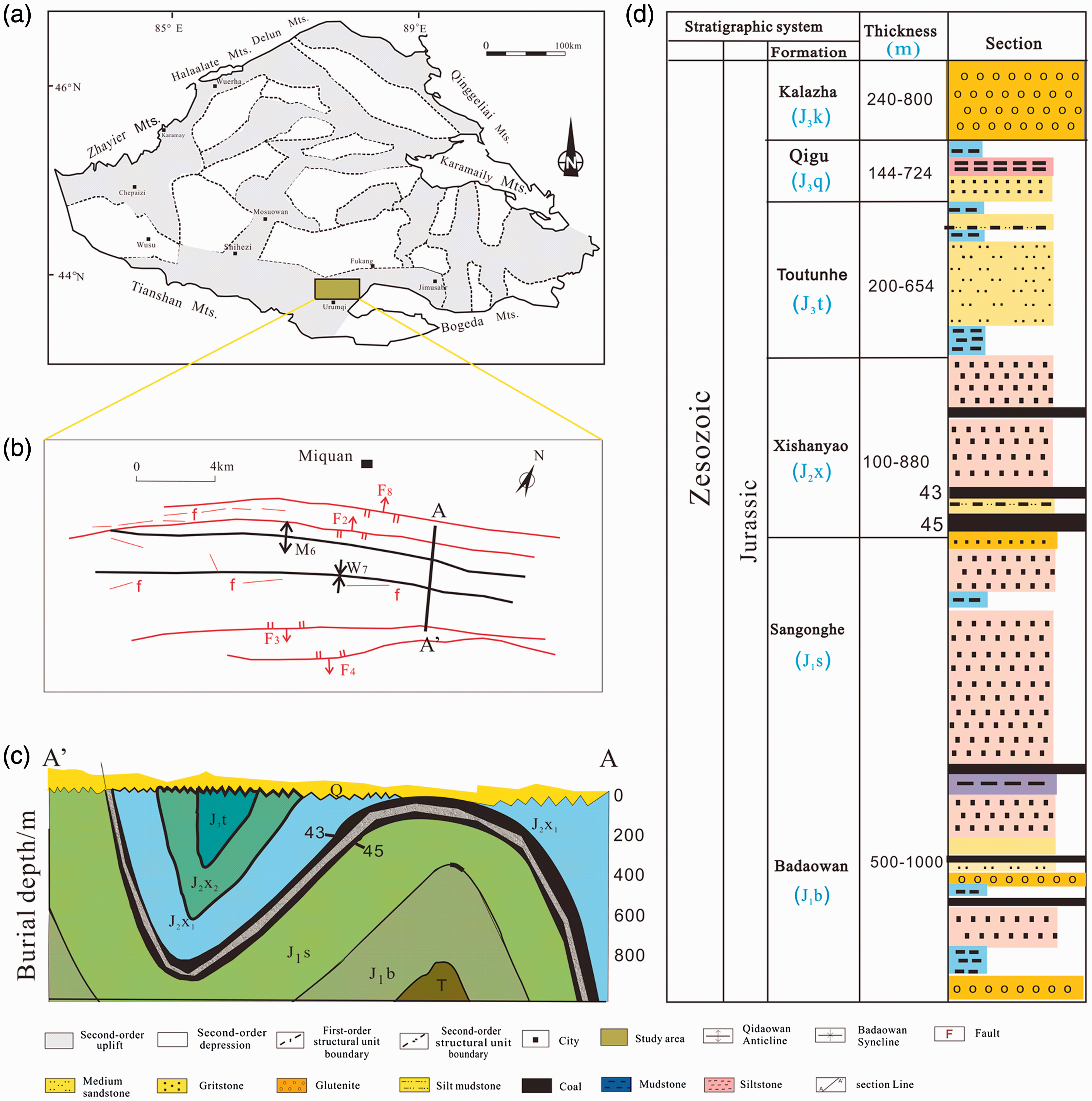
(a) Location map of study areas in the Junggar Basin, (b) structure outline map of Urumqi Hedong, stratigraphic distribution characteristics, (c) distribution of main coal seam, (d) column of a Jurassic stratigraphic section in the southern Junggar Basin; the target strata of CBM in the Xishanyao Formation strata are presented. CBM: coalbed methane.
Establishment of high-dip fracture permeability model
Model derivation
In this work, fluid flow in a complex fracture in real CBM reservoir is assumed to be equivalent to fluid flow in a single fracture (Figure 2). The CBM reservoir is set to be a cube with side length L = 1, the fracture length La and the fracture aperture b. The inlet pressure of the fluid through the fracture is p1, and the outlet pressure is p2.
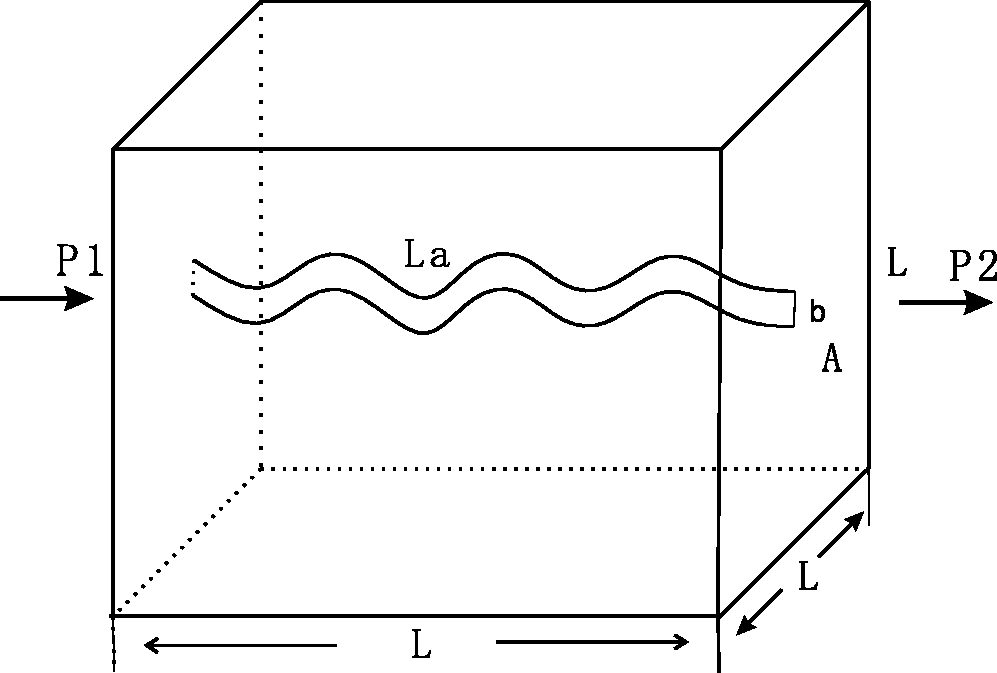
Schematic diagram of fracture system of coal reservoir.
Generally, the fluid flow in the fractures of CBM reservoirs satisfies the Darcy’s law

According to Poiseuille’s law, the flow of fluid through a single fracture is

Substituting equation (2) into equation (1), the fracture permeability can be rewritten as

When the flow path becomes tortuous, the flow through will be reduced. Therefore, the influence of the fracture buckling on the flow process needs to be considered. The equation (3) can be substituted as


Substituting equation (5) into equation (4), the fracture permeability can be replaced by

Winsauer and Shearin (1952) established the relationship between τ and formation factor F

The formation factor F in CBM reservoirs can be described by Archie formula

Substituting equations (7) and (8) into equation (4), La can be written as

Assume that the fracture area of coal per unit volume is S

The fracture porosity can be expressed as

Substituting equation (10) into equation (11), the fracture aperture can be written as

Substituting equations (9) and (12) into equation (6), the fracture permeability can be rewritten as

Here, the fracture model is presented in a cubic unit. Where the length and lithology index values are constant, the fracture permeability expression can be simplified as

This model firstly introduced the cementation index (m value) and fracture porosity into the fracture permeability, which can finely describe the controlling factors of fracture permeability.
Fracture porosity
The fracture porosity is very important to verify the accuracy of the model. This paper uses 3D finite element method combined with logging data to obtain fracture porosity of the regional CBM reservoirs.
Fracture performance
The fracture dip states can be divided into low-dip fractures, medium inclined fractures, and high-dip fractures using the deep lateral and shallow lateral logging data. The angle ranges are [0°, 50°], [50°, 74°], and [74°, 90°], respectively.

With reference to Figure 2 and equation (15), the relationship between Y and the angle of inclination of the fracture can be determined (Table 1).
Fracture state and assignment of fracture state coefficient.

The effect of fracture dip on dual lateral log response through extensive data (Li et al., 1996) has been summarized as shown in Figure 3. Ra is the apparent resistivity, A is the fracture dip, and Por is the fracture porosity. For the CBM reservoirs in the SJB, the dual lateral logging response is a positive difference in the high-angle fracture state.
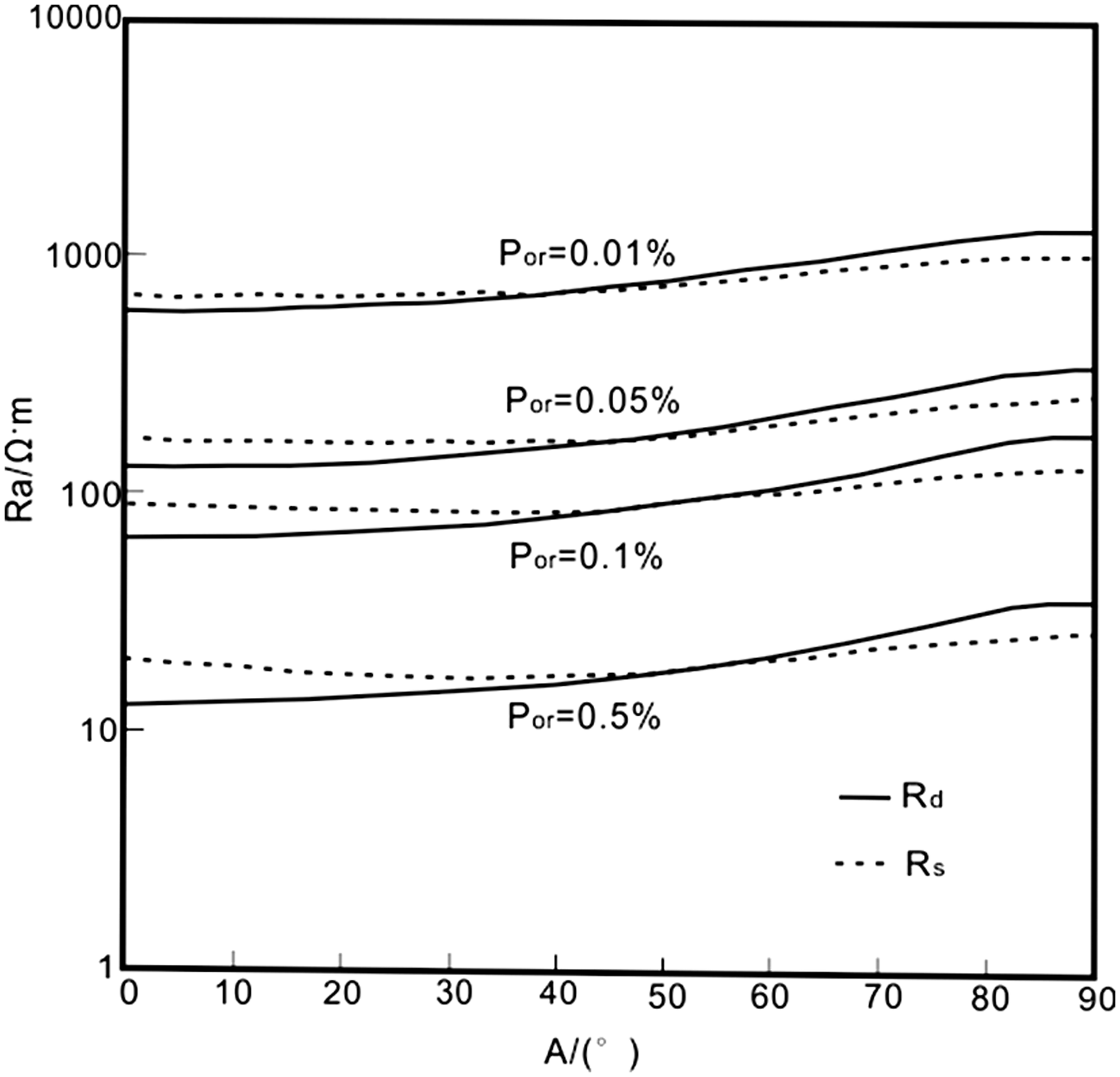
Effect of fracture inclination on dual laterolog.
Calculation of fracture porosity
When determining the dip angle belongs to a certain fracture state, the approximate inversion formula of the dual lateral logging response is




Based on the 3D finite element method, the values for different dip angles A1, A2, and A3 are presented as shown in Table 1.
First, we need to correct the mud resistivity in the formation. As the burial depth of the coal seam increases, the temperature rises and the resistivity of the drilling fluid decreases. Take Well-7 as an example, the resistivity of drilling fluid configured at 25°C is 1.96, which corresponds to the resistivity of drilling fluid at 18°C

The bottom temperature of the target coal seam is 21.96°C, and the resistivity of the target coal seam drilling fluid is

The fracture-related parameters of coal reservoirs in the Fukang area of the southern margin of the Junggar Basin are shown in Table 2. From Table 2, it can be seen that the regional development is inclined and high-angle coal seams, the fracture porosity is between 1‰ and 25‰.
Well logging data and fracture porosity of coalbed methane reservoir in the southern Junggar Basin.
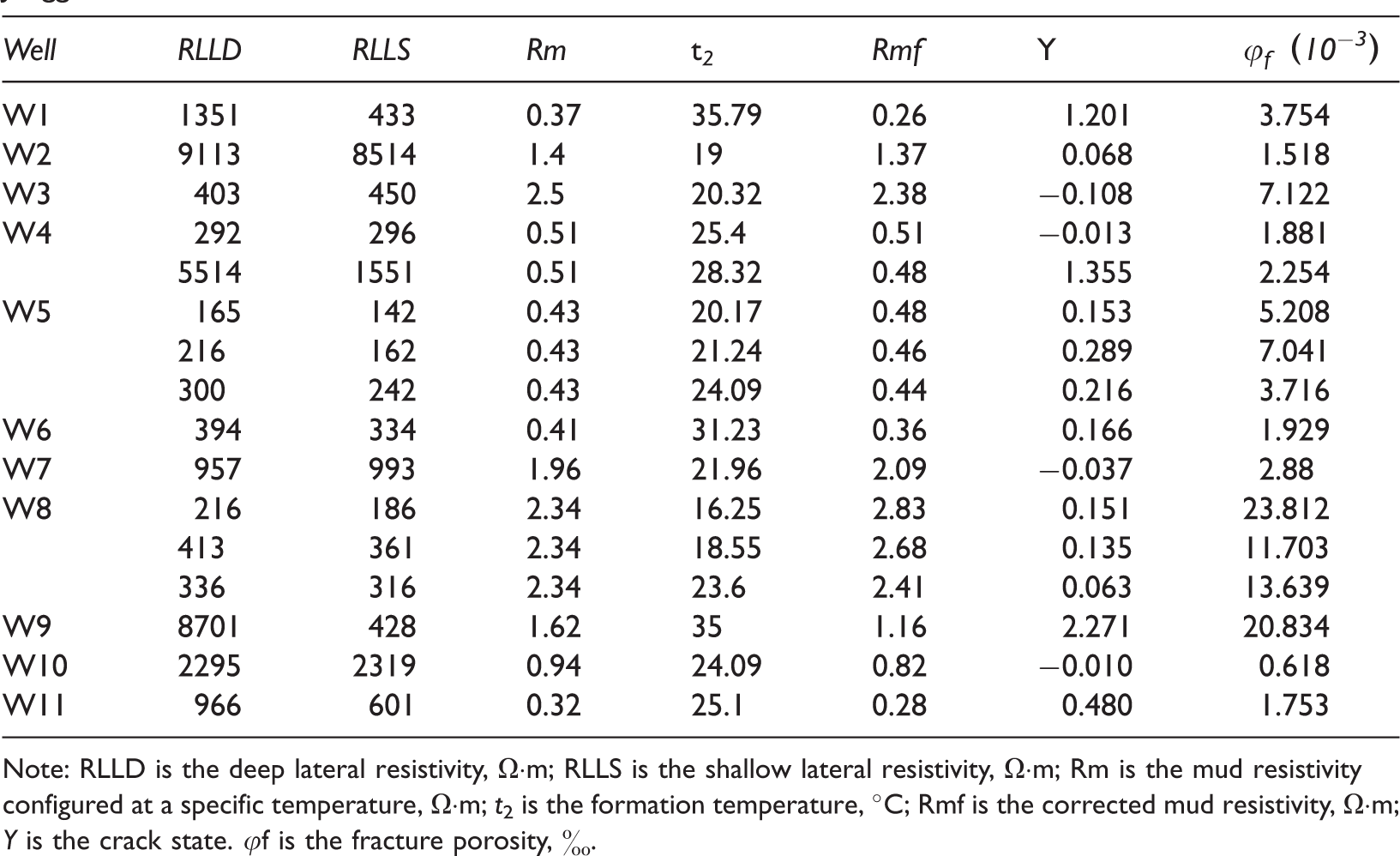
Note: RLLD is the deep lateral resistivity, Ω·m; RLLS is the shallow lateral resistivity, Ω·m; Rm is the mud resistivity configured at a specific temperature, Ω·m; t2 is the formation temperature, °C; Rmf is the corrected mud resistivity, Ω·m; Y is the crack state. φf is the fracture porosity, ‰.
Formation cementation index (m value) by fractal methods
Fractal characteristics of well logging curves
The formation (fracture) cementation index (m value) can reflect the difficulty of fluid flow through a fracture or reservoir. Generally, the m value increases as the fracture curvature increases. When the fluid flows through long and curved fractures, that is, densely populated fracture areas, the m value is large (typically 1.8–2.2). When the fluid flows through a short and straight fracture, the value of m could take the minimum (ideally 1.0) as shown in Figure 4. To accurately determine the reservoir resistivity, a high accuracy of formation cementation index m is required. Logging curves can continuously record the petrophysical parameters with ongoing drilling. The fractures can be reflected by the logging curves. The permeability of the formations at different scales has a similar distribution when they have the same complexity due to the self-similar structures in these complex formations. The logging curve is an indirect reflection of the physical property of the formation including the fracture features. The fractal dimension of the logging curve can be calculated using the embedded space method (Shi and Pan, 2000; Wang et al., 1998; Yang et al., 2006). The specific steps are as follows:
(1) Establishing phase space. If there are n data points, the data sequence of a logging curve are (x1, x2, …, xn). The establishment of vector space into N groups of data
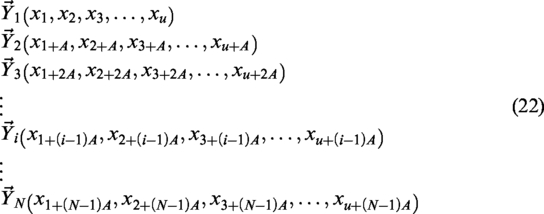
where i = 1, 2, … , N. The one-dimensional space of the time series is presented to the u-dimensional phase space.
(2) Calculating the Euclidean distance between points in phase space. For any two vectors in the embedding space, such as

where i ≠ j.
(3) Statistical Rij at different scales. For a given scale ε, the number of distances satisfying the condition of Rij < ε(i ≠ j) is S(ε). The total number is N2 for any two vector combinations. The ratio of the number of distances satisfying the conditions under this scale to the total number of distances is
(4) Calculating the fractal dimension D. The fractal dimension can be expressed as


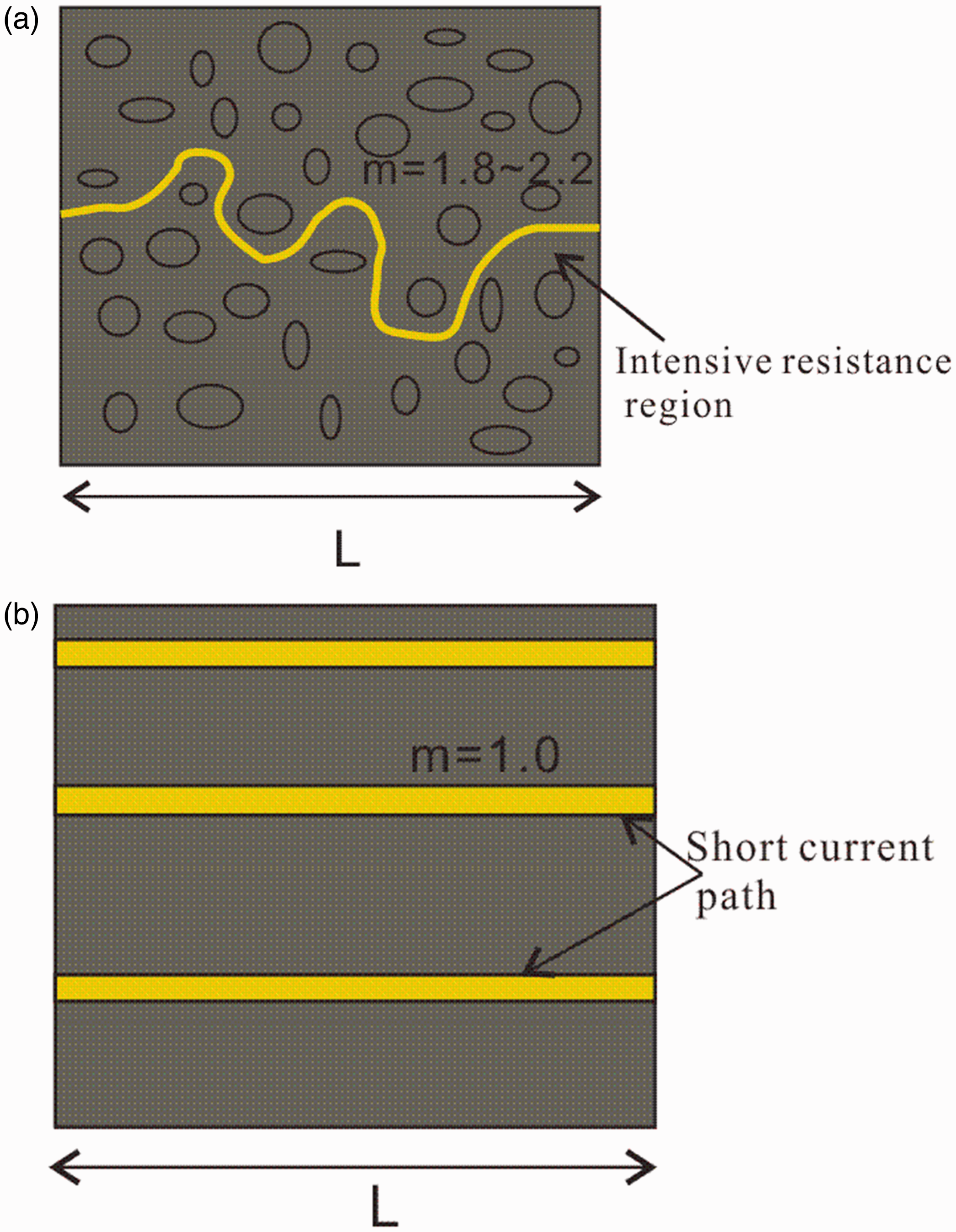
Core currents with different cementation levels.
When the vector dimension u takes a value of 6 or more, the calculated correlation dimension is very stable. Therefore, for taking the length, according to the sampling rate of 8 sampling points per meter of the current logging curve, the length cannot be less than 1 m. Otherwise, the fractal dimension cannot be calculated.
Determination of the m value
In this work, the formation cementation index (m value) will be calculated by using the vector dimension U = 10. To make the scale ε have the ability to automatically select value, ε1= 1.1 × ε0 (ε0 is the value of controlling C(ε0) ≈ 0.06) is used to generate the sequence ε. The sequence C(ε) value is obtained. If choosing the appropriate sequence ε, there are


Line segments can be expressed as

AC, CNL, and DEN can reflect the pore structure of the formation. If the fractal dimensions for AC, CNL, and DEN are DAC, DCNL, and DDEN, respectively, the fractal dimension of the formation cementation index (m value) is named Dm. According to the fractal dimension of the three logging curves, the scholars used the factor analysis method to obtain the coefficient relationship, and compared with the experimental values, the results are more consistent and meet the basic requirements of the analysis. In this area, the fractal dimension of the well log is obtained. Using the same method, the ratio of the coefficients is approximately 2:1:1. Therefore, this method can be used for analysis. The Dm has a strong linear correlation with the formation cementation index (m value) (Li et al., 1996)

For instances, the AC, CNL, and DEN data of the corresponding A5 coal seam are selected from the Well W1. Using above equation (28), the fractal dimensions can be calculated. There are 65 logging data points in the coal seam. To improve the accuracy of the results, the step length is set to be 1 to establish the vector space. Then the relationship between logC(ε) and logε can be established.
As shown in Figure 5(a), the fractal dimension of AC is 1.4936. Similarly, the CNL and DEN fractal dimensions are 1.9873 and 1.5808, respectively (Figure 5(b) and (c)). The fractal dimension of the formation cementation index of the A5 coal seam in well W1 is 1.638825. Compared with the formation cementation index obtained by rock electricity experimental test, the value using the fractal method through the geophysical logging includes the CBM reservoir heterogeneity, which can provide a more accurate value closer to the real CBM reservoir. Therefore, the fractal dimension of the formation cementation index of the other coal seams is normally distributed between 1.2 and 1.9.
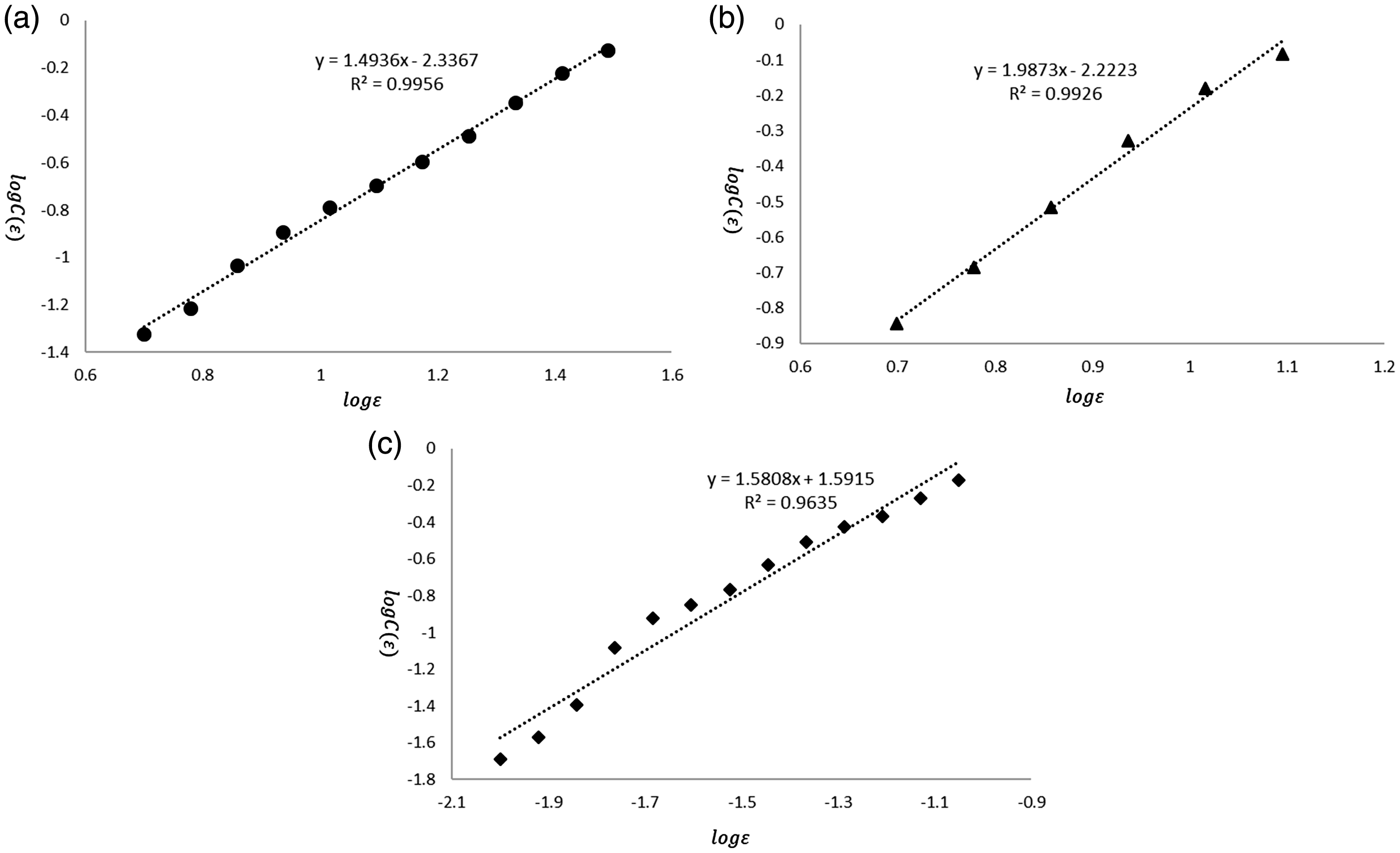
Fractal dimension fitting lines of different well logging curves. (a) Acoustic logging fractal dimension fitting line, (b) compensated neutron logging fractal dimension fitting line, and (c) density logging fractal dimension fitting line.
Model validation and high-dip fracture permeability prediction
In Figure 6(a), a fitted relationship is established by using the fracture porosity and the well test permeability. Currently, the fracture permeability is proportional to the cubic of fracture porosity. Figure 6(b) shows that the fracture permeability and the fracture cubic porosity show a good correlation in the CBM reservoir of the SJB. To perform the logarithm of equation (14), the CBM reservoir permeability of the coal is expressed as

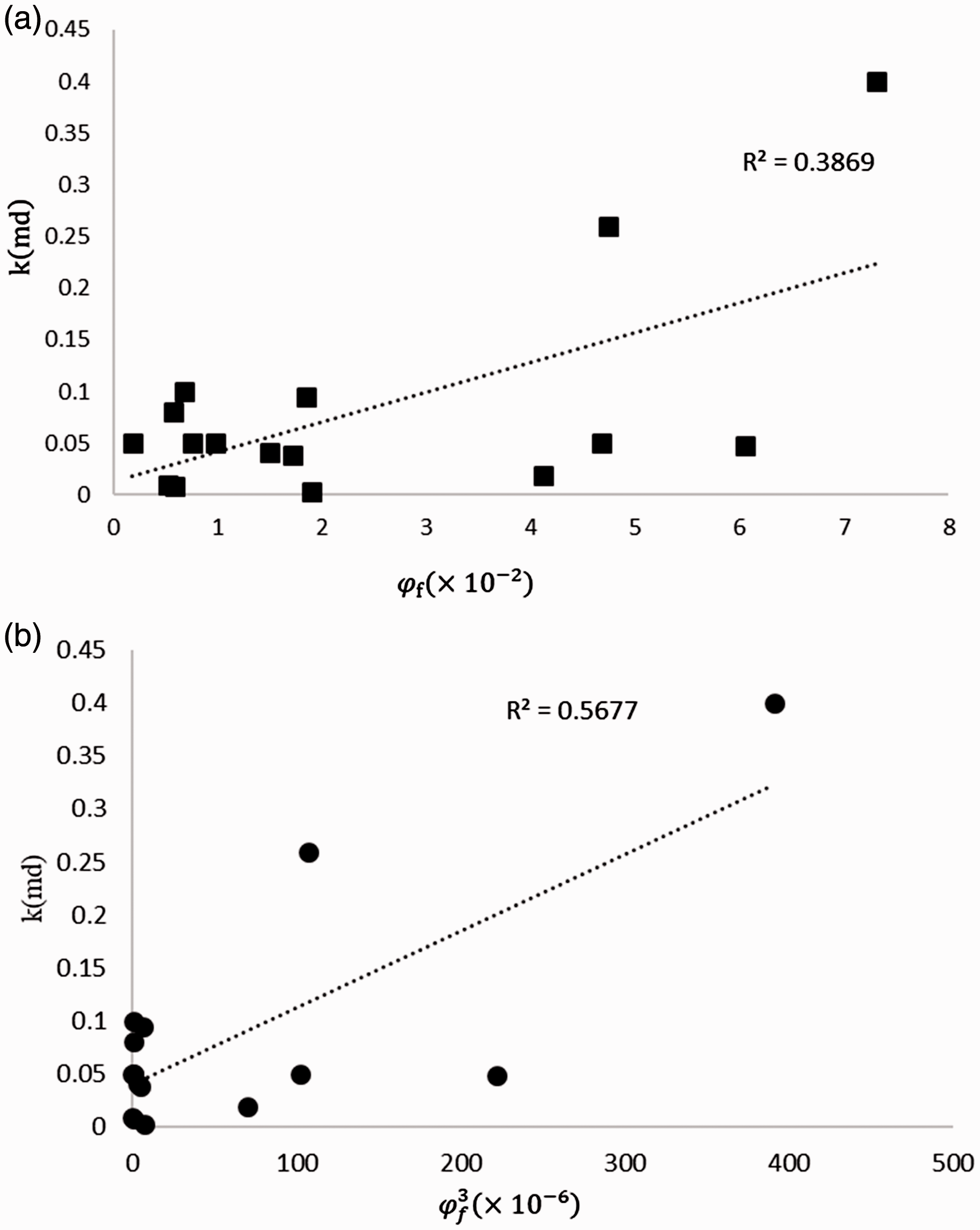
The relationships between fracture porosity,
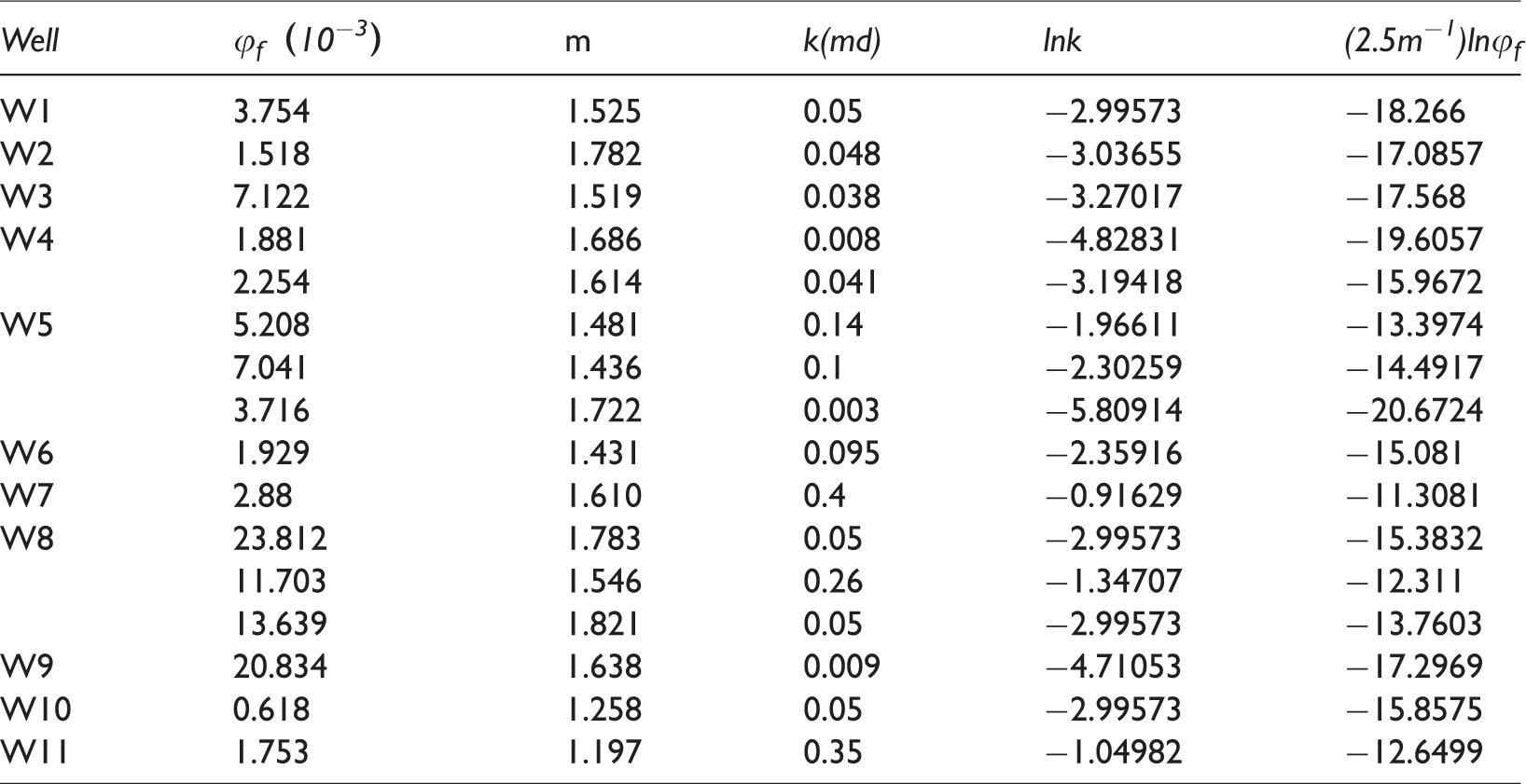
According to equation (30), the correlation line between them can be established as shown in Figure 7. For CBM reservoirs in the SJB, the original permeability is measured by the well testing, which can reflect the comprehensive permeability of the CBM reservoir. The calculated permeability of this model and the measured permeability by well testing are shown in Table 3. In Table 3, the derived fracture porosity and formation cementation index values are brought into equation (30) to obtain the value of (2.5m-1)lnφf. lnk is the logarithmic value of actual well test permeability. From Table 3, the fracture porosity and formation cementation index of the CBM reservoir in the study area vary greatly, and the plane heterogeneity is relatively strong, which indicates variable fracture permeability.
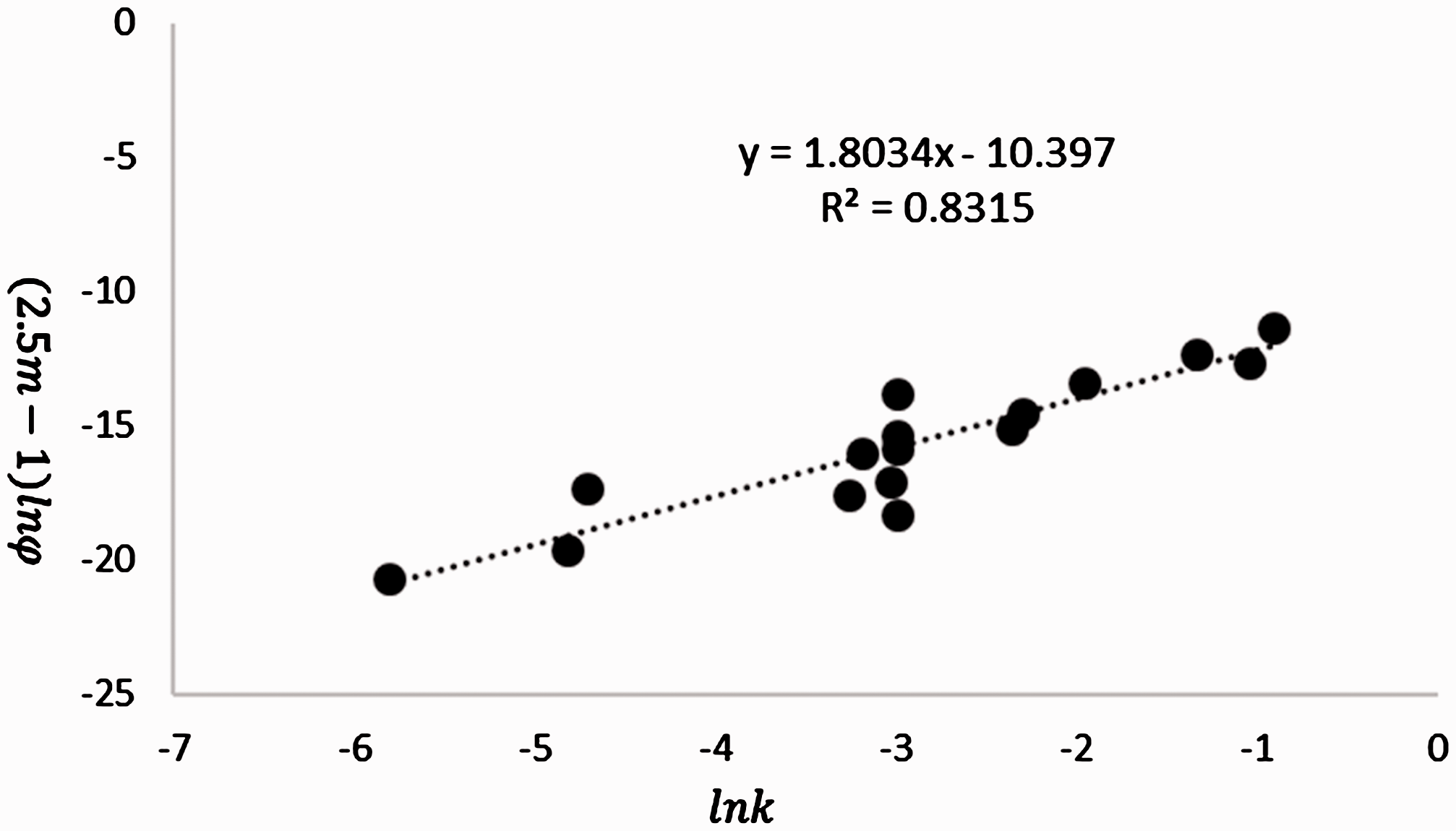
The relationship between the permeability of the model and the permeability of test well.
Original parameters of coal reservoir in the southern Junggar basin.
As shown in Figure 7, the calculated permeability fitted well with results from the well testing (R2 = 0.8315), which indicates that the model can be used to accurately predict the original formation permeability of coal reservoirs in the southern margin of the Junggar Basin. The mathematical fracture permeability is proportional to the cube of the fracture porosity. Here, the formation cementation index introduced in this model shows strong superiority and accuracy. The equation (30) can be rewritten as

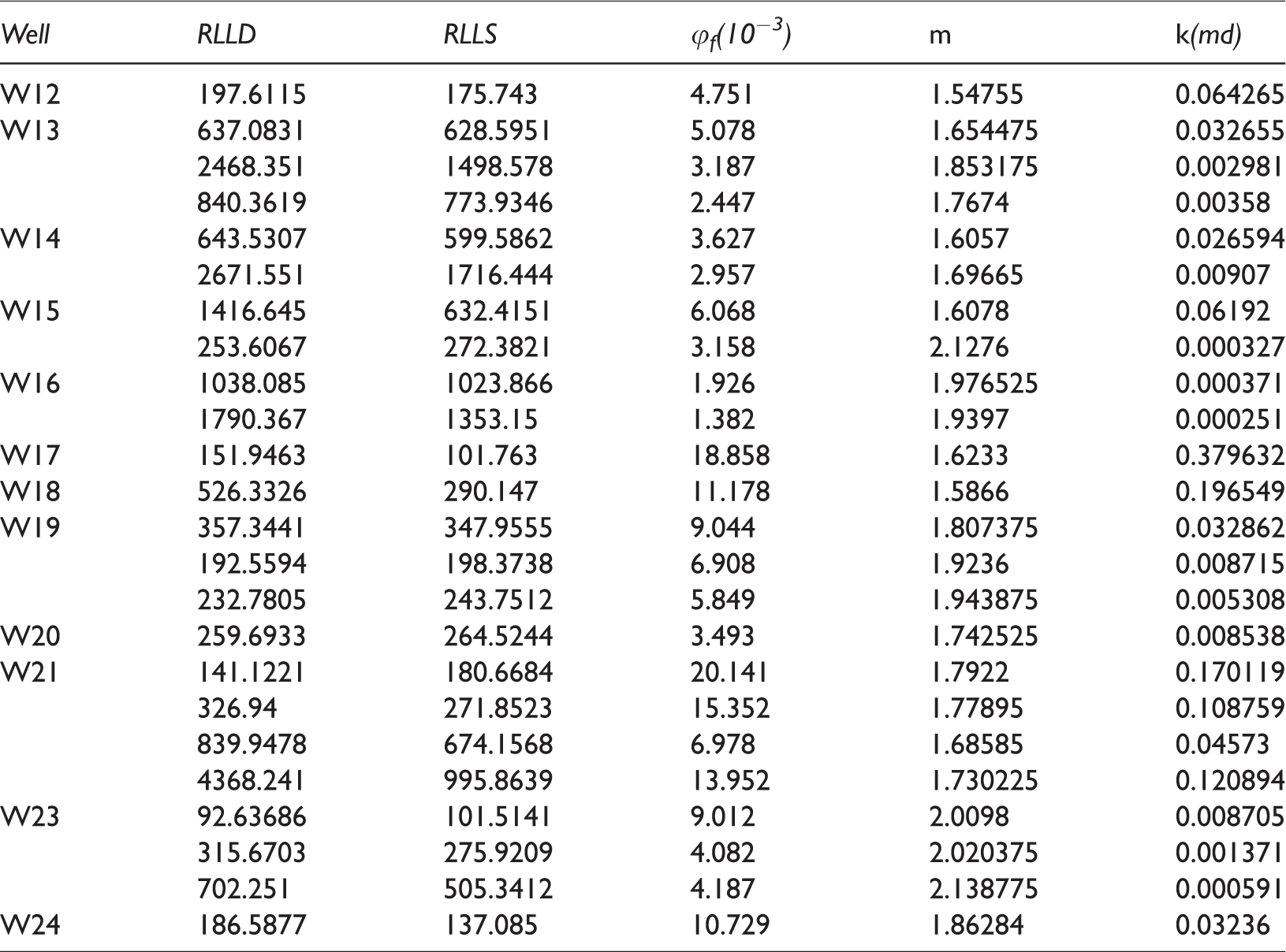
Due to the limited well testing permeability in the SJB, the established permeability model was used to evaluate the CBM reservoir permeability in Hedong mining area of the SJB. The equation (31) is obtained by using the well testing permeability of the CBM reservoir in the study area. Therefore, the fracture permeability can be rewritten as

The final application of equation (32) yields the corresponding fracture permeability of the CBM reservoir (Table 4). In the Table 4, the fracture permeability of coal reservoirs in the SJB is generally low. The relationship between the fracture porosity, the original permeability and the dip angle are established as shown in Figure 8. When the fracture develops at a low angle, the fracture porosity and the original permeability of the CBM reservoir should decrease as the angle increases. When the fractures develop in an inclined state, the fracture porosity and permeability values are disorganized and no obvious change trend due to the scarce data points. When fractures develop at high angles, fracture porosity and permeability of coal reservoirs decrease with increasing dip angle, which may need more works. The reservoir permeability of the No. 43 coal seam in the SJB is predicted as shown in Figure 9. Horizontally, the permeability of the No. 43 coal seam changed drastically. The permeability change of the No. 43 coal seam showed a downward trend first and then increased from the south to the north part in the SJB. In the study area, the permeability of the CBM reservoir is 0.005–5 mD. In general, the area near the Hongshanzui-Bayangbeigou fault is the high-permeability zone of the No. 43 coal seam, whereas the center of the Yadaowan syncline is the low-permeability zone, which indicates that the local geological structure could be the main factor that causing the permeability variation in the plane.
Predicted original high-dip fracture permeability of the coalbed methane reservoir.
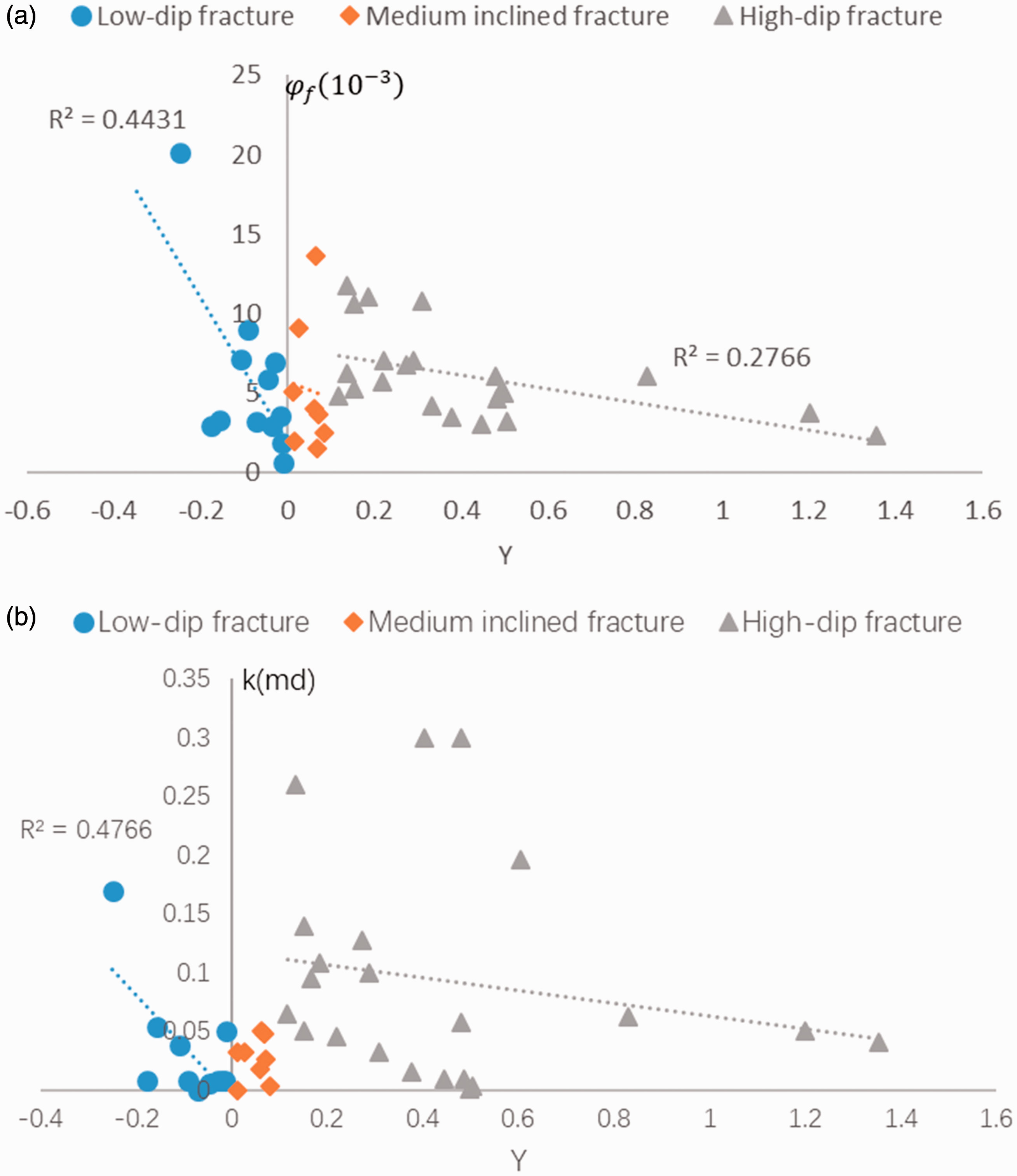
The relationships between coal reservoir permeability, fracture porosity, and dip angle. (a) Relationship between dip angle and fracture porosity; (b) relationship between dip angle and coal reservoir permeability.
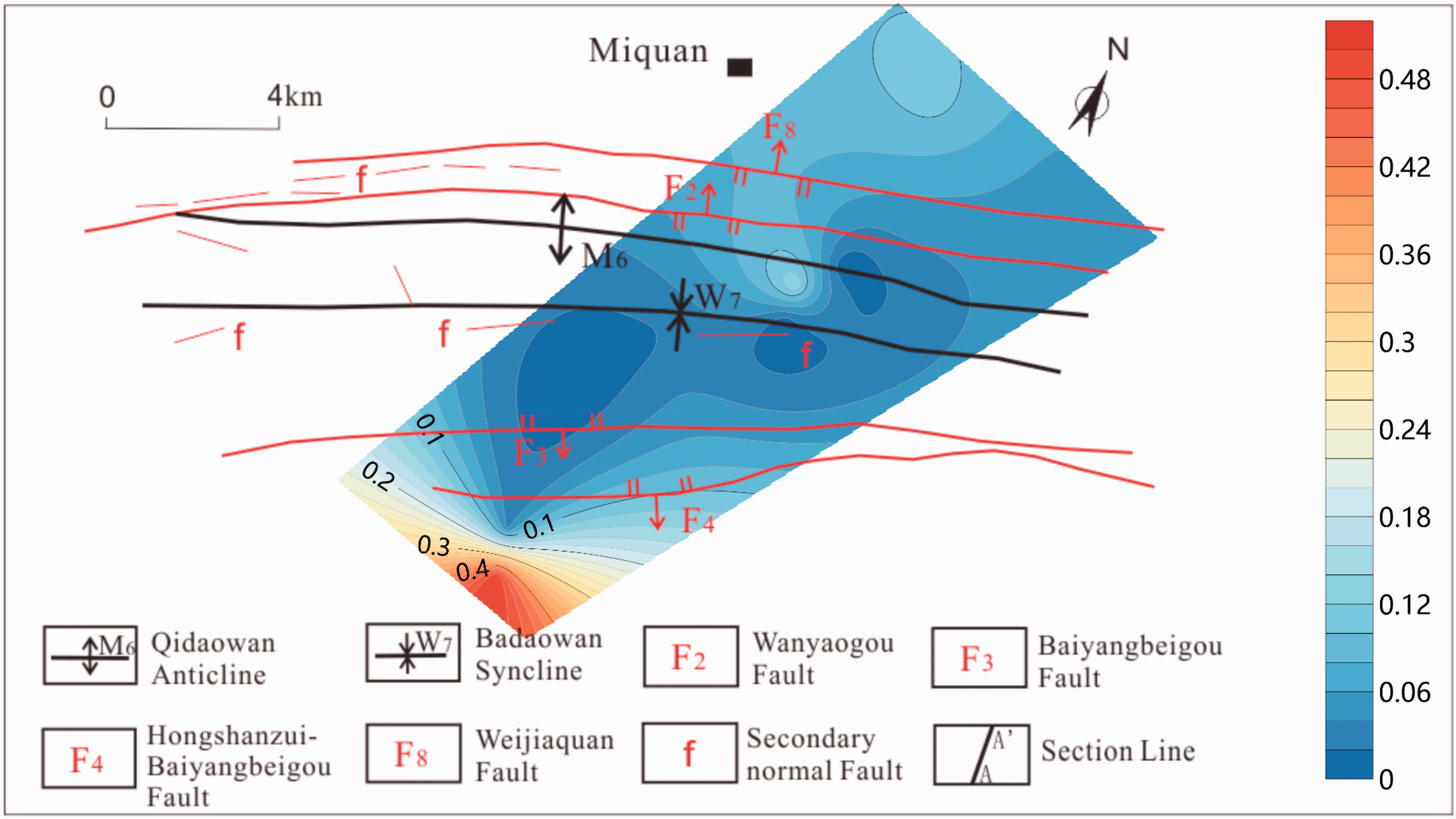
The no. 43 seam permeability distribution by the established high-dip fracture permeability model.
Conclusions
In this work, a new model for fracture permeability in a CBM reservoir is established with the combination of the m value (formation cementation index), the fracture porosity and the total porosity of the coal reservoir through the 3D finite element method. Then, the cementation index m value of CBM reservoir is detailed evaluated by the fractal dimensions from the well logging of AC, CNL, and DEN. Finally, the predicted permeability is calculated with the established fracture permeability model, which may indicate the complex geological structure for the CBM reservoir in the southern Junggar Basin, NW China. The main conclusions can be made:
The high-dip fracture porosity of CBM reservoirs was obtained by 3D finite element method, which ranges from 0.618% to 20.834%. The reservoir temperature can affect the accuracy of fracture porosity. AC, CNL, and DEN can effectively reflect the pore structure of CBM reservoirs. The formation cementation index m is calculated based on the logging data of AC, CNL, and DEN combining with fractal method. Comparing the permeability from established model and well test, there is a perfectly linear correlation between them (correlation coefficients is 0.83). Therefore, the original permeability of the CBM reservoir obtained by the established model can accurately reflect the original permeability of the high-dip angle CBM reservoir in the southern Junggar Basin, NW China. The reservoir permeability of the No. 43 high-dip angle CBM reservoir in the SJB changes drastically (0.005–5 mD). The permeability change of the No. 43 coal seam showed a downward trend first and then increased from the south to the north part in the SJB. The area near the Hongshanzui-Bayangbeigou fault is the high permeability zone, whereas the center of the Yadaowan syncline has low permeability, which indicates that the geological structure could be the main factor for causing the regional permeability variation.
Footnotes
Declaration of conflicting interests
The author(s) declared no potential conflicts of interest with respect to the research, authorship, and/or publication of this article.
Funding
The author(s) disclosed receipt of the following financial support for the research, authorship, and/or publication of this article: This research was funded by the National Major Research Program for Science and Technology of China (2016ZX05043-001), the National Natural Science Fund of China (grant nos. 41602170 and 41772160), the Royal Society International Exchanges-China NSFC Joint Project (grant nos. 4161101405 and RG13991-10), and Key Research and Development Projects of the Xinjiang Uygur Autonomous Region (2017B03019-01).