




Abstract
Authigenic albites occur widely in clastic reservoirs with important implications for diagenesis and reservoir formation. The middle Permian Lucaogou Formation in the Jimusaer Sag (Junggar Basin, NW China), where major exploration breakthroughs in shale oil have been achieved, reveals a new phenomenon that authigenic albites are abundant in unique mixed carbonate–volcanic–clastic sequences. This has not been reported in the literatures. To fill the knowledge gap, the origin of these authigenic albites and their relationship with dissolution pores (i.e. diagenesis implications) were investigated. Results show that two types (I and II) of authigenic albite were identified within the shale oil reservoirs. Euhedral Type I authigenic albites with 3–10 μm only occur in dolarenite intraclasts and are symbiotic with amorphous dolomite minerals with a pure chemical composition of >99% albite-end-member content. Larger Type II authigenic albites with 10–50 μm are widely distributed in reservoirs, primarily in dissolution pores, and coexist with authigenic dolomite minerals or dolomite overgrowths. Their chemical composition is less pure with anorthite-end-member contents that range from undetectable to 9.77%, with an average of 1.34%. A symbiotic relationship, pure chemical composition, size, and euhedral morphology indicate that Type I authigenic albites precipitated during syngenetic hydrothermal action. However, the morphology of dissolution pores, residual symbiotic “orthoclase”, impure chemical composition and carbon–oxygen isotope indicate that Type II were the products of the dissolution and reprecipitation of “perthite” crystal pyroclasts influenced by acid organic fluids in latter diagenesis. The differential dissolution of “orthoclase” and “albite” components in “perthite” crystal pyroclasts formed enormous intergranular secondary pores in the presence of dolomite minerals in the shale oil reservoirs.
Keywords
Introduction
Authigenic albites are common diagenetic minerals in sedimentary rocks. In clastic and volcaniclastic rocks, they are generally formed through albitization (e.g. Boles and Coombs, 1977; Boles and Ramseyer, 1988; Kang et al., 2016; Zhu et al., 2016), which is an important alumino-silicate reaction in the shallow crust of the Earth (Perez and Boles, 2005). It generally refers to the transformation of plagioclase or orthoclase into albite (Boles, 1982; González-Acebrón et al., 2012; Morad et al., 1990, 2000). Albitization is considered to a coupled process of dissolution and reprecipitation (González-Acebrón et al., 2012; Morad et al., 1990; Perez and Boles, 2005). The formation temperature of authigenic albites is primarily distributed between 65 °C and 160 °C (Boles, 1982; Morad et al., 1990; Saigal et al., 1988; Salem et al., 2000; Surdam et al., 1989). Extensive albitization means consuming a mass of Na+ in formation water. This process changes chemical composition of pore water (Perez and Boles, 2005) and reflects mass transfer (Aagaard et al., 1990; Bjørlykke and Jahren, 2012; Boles, 1982; Morad et al., 1990). As a response, albitization influences the porosity and permeability of fluid reservoirs, especially when CO2 supply is constant (Perez and Boles, 2005). Thus, albitization most likely alters the quality of clastic or volcaniclastic reservoir rocks, which is a considerable factor in reservoir prediction. In certain carbonate strata, the formation of authigenic albites is usually considered to be related to hydrothermal fluids which can maintain high sodium concentration and suitable temperature (Rais et al., 2008; Spötl et al., 1996, 1999). However, few reports address the genesis of authigenic albites in mixed depositional sequences.
In recent years, the Permian shale oil exploration in the Junggar Basin has made major breakthroughs (e.g. Cao et al., 2020; Li et al., 2021; Wang et al., 2020a; Wu et al., 2016, 2017). Among them, the organic-rich Lucaogou Formation, a unique lacustrine mixed depositional sequence composed of terrigenous clastic, carbonate minerals, and volcaniclastic sediments (e.g. Cao et al., 2016; Jiang et al., 2015; Wu et al., 2016; Zhu et al., 2017a), is one of the most important shale oil formations (Wang et al., 2020b). Similar mixed depositional sequences are also important reservoirs in other petroliferous basins, such as the A’ershan Formation and Tenggeer Formation in the Er’Lian Basin (Zhu et al., 2017b, 2019), showing great research significance. In addition, previous studies have shown that the shale oil within Lucaogou Formation mainly occurs in the thin dolomite, siltstone or tuff rocks interbedded with shale rocks (Wu et al., 2016, 2017). Thus, the structure of Lucaogou oil appears to be a stack of “sandwiches”, which can be classified as interlayer shale oil (Jiao et al., 2020). In this complex sedimentary system, authigenic albite can be observed in almost all samples, revealing a new phenomenon that has rarely been reported. Preliminary research has found that authigenic albites often occur in intergranular dissolution pores, which implies that albitization may be closely related to the formation of shale oil reservoirs. However, this process (i.e. the origin of authigenic albite) remains unclear.
This study aimed to clarify the origin of authigenic albites and to determine the diagenesis implications, that is, the genetic mechanism of the secondary dissolution pores in the unique carbonate–volcanic–clastic shale oil reservoirs in the Jimusaer Sag. Detailed core observations, mineralogical identification via optical microscopy, and microscopic mineral and pore observations using scanning electron microscopy were combined with geochemical analysis, including stable carbon and oxygen isotopic analysis, and in situ element analysis. This study provides a genetic interpretation of albitization in multi-sourced mixed rocks of sedimentary basins and also contributes to shale oil exploration in the Jimusaer Sag.
Geological setting
The Junggar Basin, one of the largest petroliferous basins in China, is located at northern Xinjiang Uygur Autonomous Region in northwestern China and covers an area of ∼1.3 × 10⁵ km2 (Figure 1(a) and (b)). The Basin lies at the intersection of the Tarim, Siberian, and Kazakhstan plates. The Jimusaer Sag is an important hydrocarbon-rich sag in the southeastern Junggar Basin and covers over 1500 km2 (Figure 1(b) and (c)). The northern, western, and southern boundaries are the Laozhuangwan Fault–Jimusaer Fault, the Xidi Fault, and the Santai Fault–Houbaozi Fault, respectively; the sag pinches out to the east (Figure 1(c)). The sag basement is composed of weakly metamorphic Paleozoic units and Precambrian crystalline rocks, upon which a series of clastic and lacustrine mixed sediments were deposited (Chen and Zhang, 1993; Zhang et al., 1999). However, because of the sedimentation hiatus caused by multiple tectonic uplifts, only a part of the Jingjingzigou Formation (P2j), the Lucaogou Formation (P2l), and the Wutonggou Formation (P3wt), remain within the Permian strata (e.g. Han et al., 1997; Jahn et al., 2000, 2004; Fang et al., 2007; Figure 2). The Middle Permian Jingjingzigou Formation is generally composed of tuff and sandstones with a thickness of ∼1.5 km. The Upper Permian Wutonggou Formation is 220–330 m thick and primarily contains conglomerate and sandstone with mudstone interlayers.
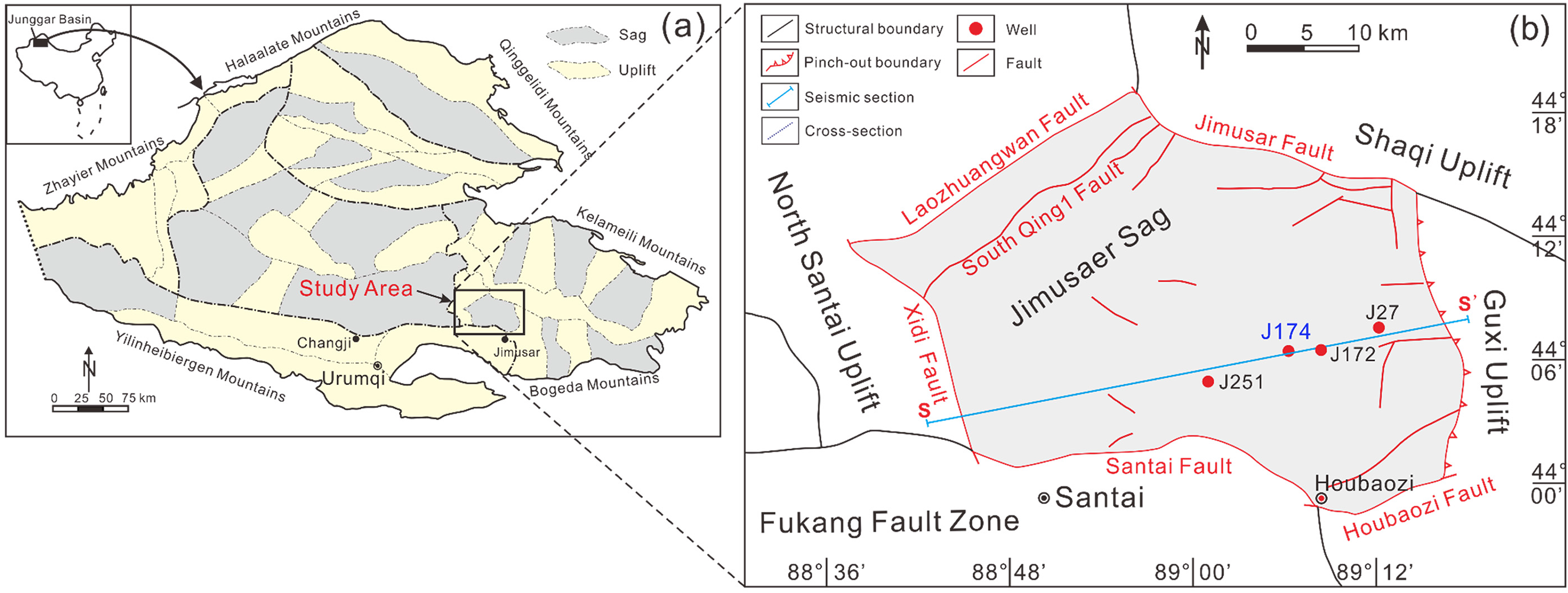
Location and structural framework of the Jimusaer Sag. (a) The Jimusaer Sag is located in the southeastern Junggar Basin, NW China. (b) The Jimusaer Sag is primarily controlled by the Laozhuangwan, Jimusaer, Xidi, Santai, and Houbaozi faults and pinches out to the east; modified after Wu et al. (2017).
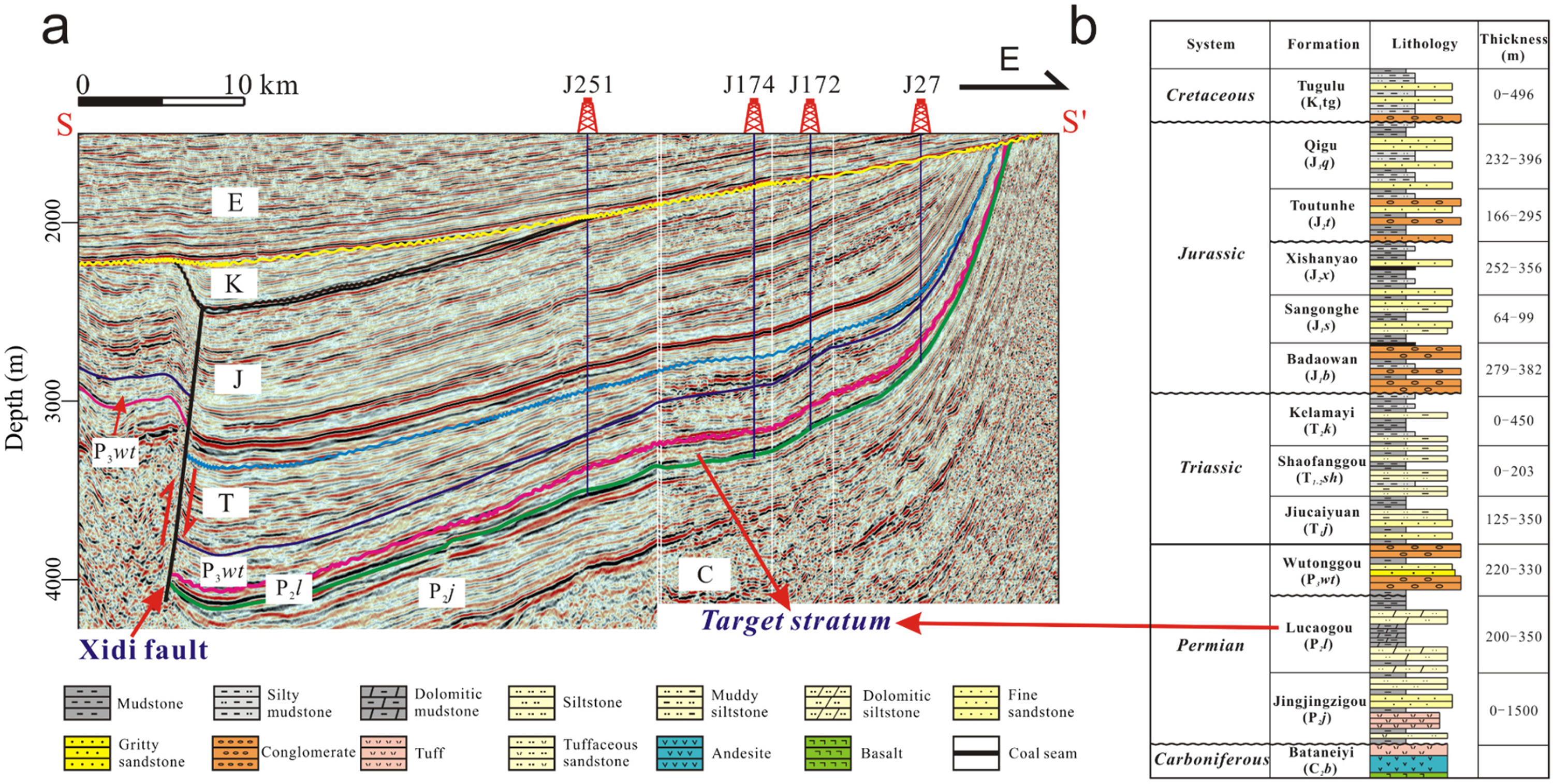
(a) East–west seismic profile showing the stratigraphic framework of the Jimusaer Sag. The location of this profile is marked in Figure 1. (b) Generalized stratigraphy of the Jimusaer Sag; modified after Wu et al. (2016).
The Middle Permian Lucaogou Formation conformably overlies the P2j Formation and unconformably underlies the P3wt Formation. The P2l Formation is a lacustrine mixed sequence containing dolomite, tuff, siltstone, mudstone, and multiple types of transition rocks (Figure 3), which are primarily composed of dolomite minerals, volcanic clasts, and terrigenous clasts (Wu et al., 2016, 2017). The strata comprise two large sedimentary cycles and four lithological members: the P2l11 and P2l12 lithological members in the lower cycle and the P2l21 and P2l22 lithological members in the upper cycle (Figure 3). The upper members of each cycle (P2l11 and P2l21) are primarily composed of mudstone, whereas the lower members of each cycle (P2l12 and P2l22) contain multiple layers of tuff, dolomite, and siltstone (Figure 3). The primary oil-bearing sections (the lower and upper “sweet spots”) are distributed in the P2l12 and P2l22 members, respectively (e.g. Cao et al., 2016, 2017; Wu et al., 2016).
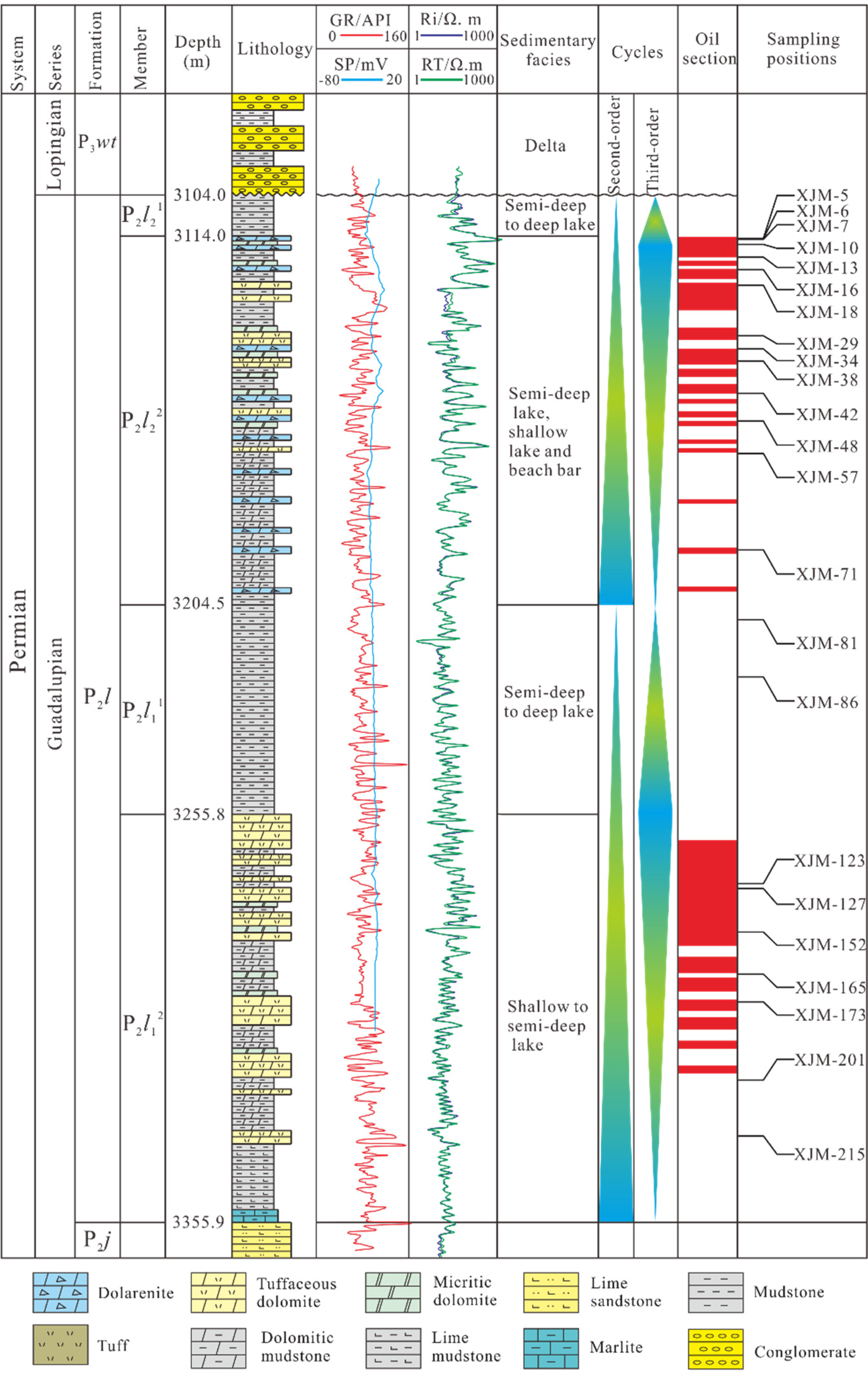
Composite section of Well J174 showing lithology and key sampling positions; the location of the well is shown in Figure 1; modified after Wu et al. (2016).
Currently, there have been >10 wells drilled in the Jimusaer Sag, including a complete coring well (Well J174). The wells were drilled into the Lucaogou Formation and cored. Detailed observations suggest that cores obtained from different drilling wells have similar characteristics. The cores obtained from Well J174 cover the geological characteristics of the other drilling cores. Thus, the samples used in this study were acquired from a core obtained from Well J174, which is located in the middle of the Jimusaer Sag (Figures 1 and 3) and has a total core depth of over 260 m. Two hundred and twenty-eight shale oil reservoir samples were collected based on systematic core observations and descriptions.
The lithological characteristics of all the samples were first investigated using optical microscopy. The microstructures of 24 representative samples from sweet spots were characterized using scanning electron microscopy (SEM; JSM-6490) and field-emission scanning electron microscopy (FE-SEM; Carl Zeiss Supra55). In situ major element analysis and backscattered electron (BSE) imaging of representative samples were performed using an electron probe microanalyzer (EPMA, JEOL JXA 8100). The operating voltage and current were 15 kV and 20 nA, respectively. Furthermore, the stable carbon and oxygen isotopic compositions of the 28 reservoir samples were obtained using a continuous-flow mass spectrometer (MAT 253). All the samples and standards were prepared using the H3PO4 method, following Wu et al. (2017). The isotopic values were reported as the PEE Dee Belemnite (V-PDB) standard. The analysis precisions were ±0.08‰ for δ18O and ±0.03‰ for δ13C. All the analyses were performed at the State Key Laboratory of Mineral Deposits Research, Nanjing University.
Results
Reservoir petrology
Based on microscopic observations, it is found that feldspar and dolomite minerals are the primary components, which is consistent with previous understanding (e.g. Jiang et al., 2015; Wu et al., 2016; Xi et al., 2015; Zhang et al., 2019). However, this study suggests that these small and angular feldspars are primarily pyroclastic rather than terrigenous, because they show no signs of being transported (Figures 4 and 5). Consequently, the principal reservoir rock types in the Lucaogou Formation are dolarenite, dolomicrite, tuff, and tuffaceous dolomite (Figures 4 and 5).
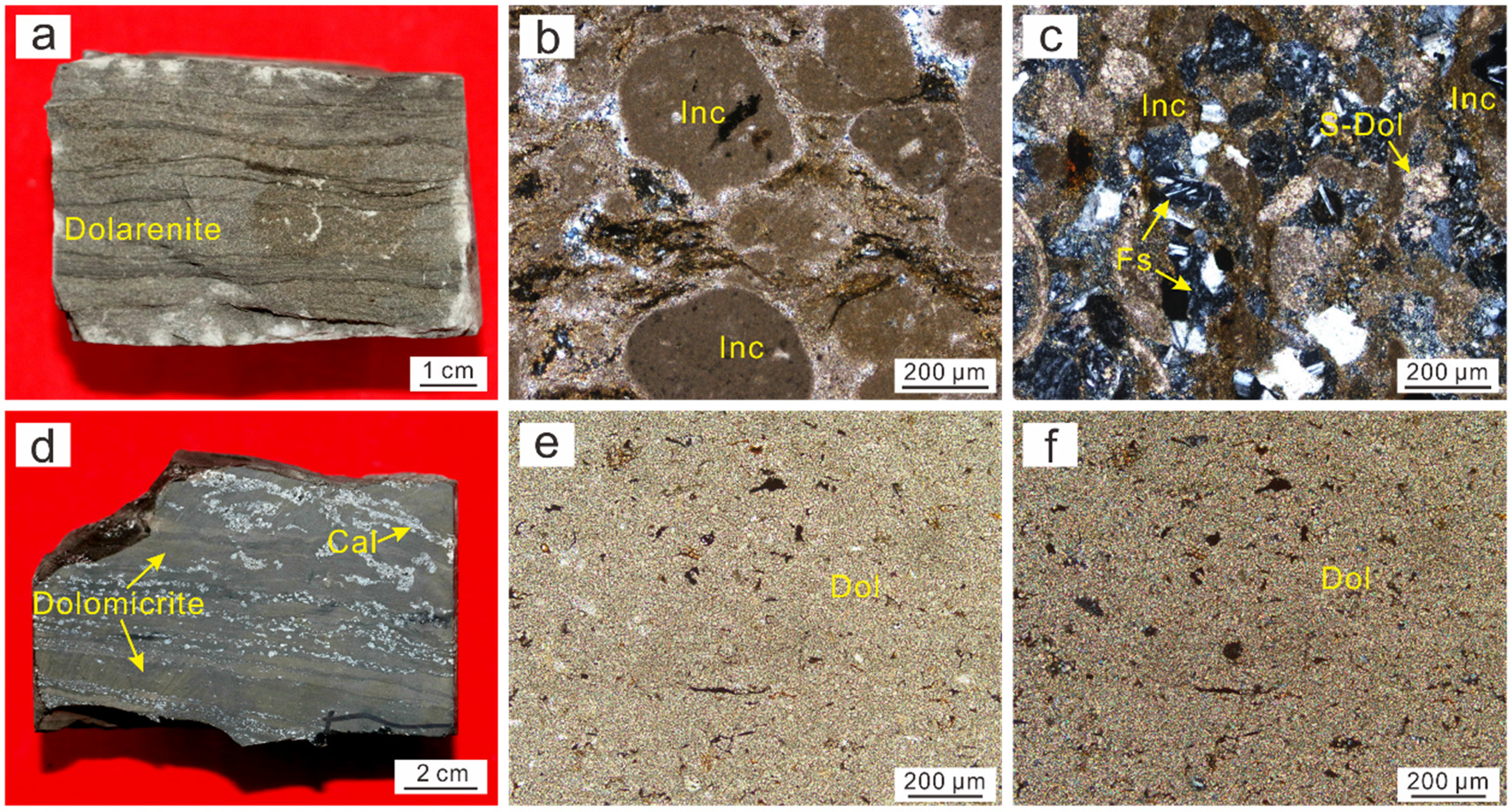
Lithological characteristics of the dolarenite and dolomicrite. (a) Photograph of core showing grayish-yellow laminated dolarenite, sample No. XJM-48, 3159.4 m. (b) Photomicrograph showing elliptical or round intraclasts and only a few feldspars (cross-polarized light), sample No. XJM-42, 3152.6 m. (c) Photomicrograph showing amorphous feldspars, elliptical intraclasts, and authigenic feldspars (cross-polarized light), same sample as in (a). (d) Photograph of core showing gray laminated (or lentoid) dolomicrite and interbedded mudstone with sparry calcite aggregates; sample No. XJM-152, 3284.7 m. (e) Photomicrograph showing microcrystalline dolomite within dolomicrite (plane-polarized light), sample No. XJM-57, 3167.4 m. (f) Photomicrograph of the same sample as in (e) (cross-polarized light). Abbreviations are as in Table 1, with Fs: feldspar; Cal: calcite.
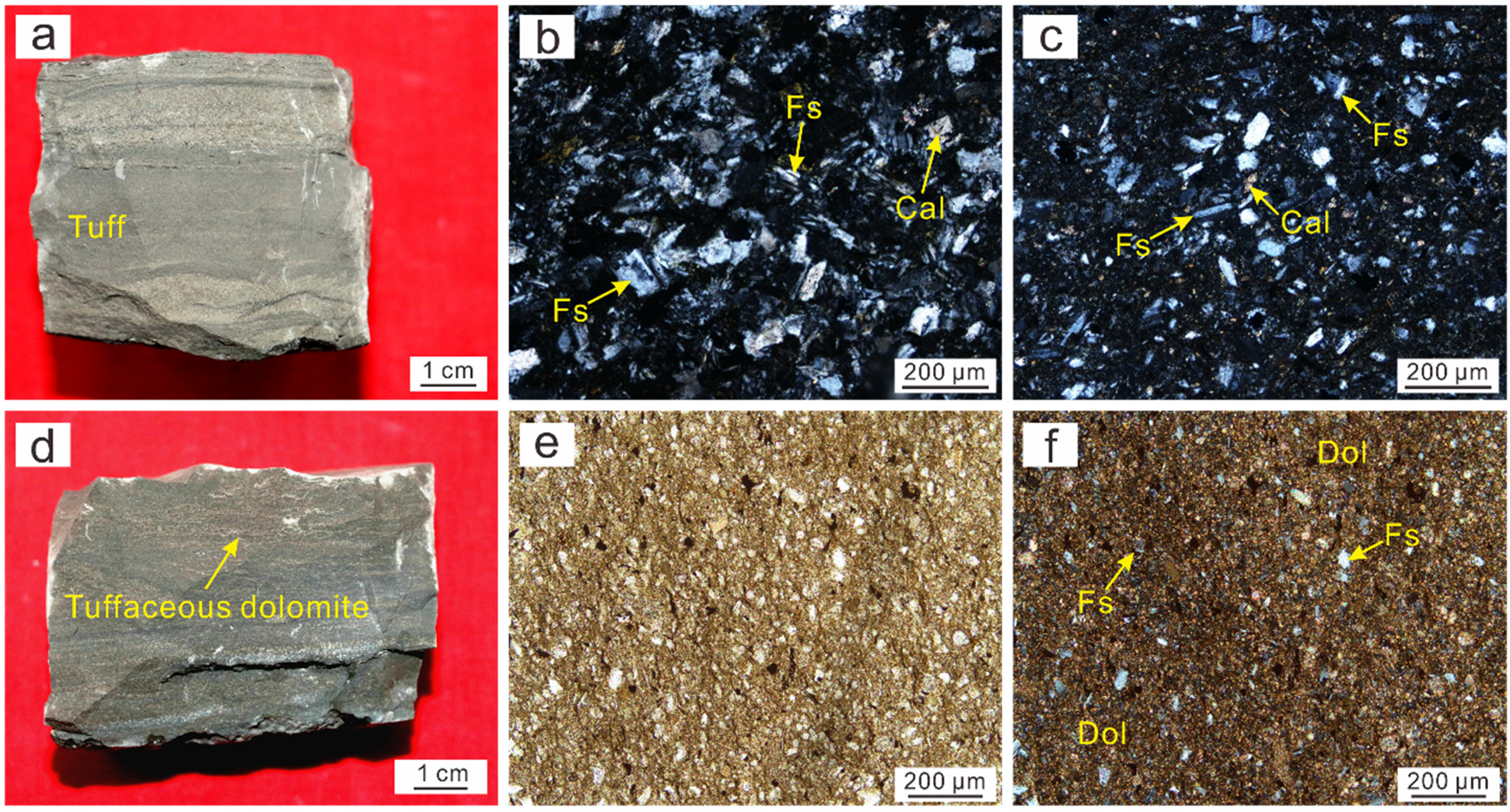
Lithological characteristics of tuff and tuffaceous dolomite. (a) Core showing grayish laminated tuff, sample No. XJM-18, 3126.1 m. (b) Photomicrograph showing amorphous feldspars within tuff (cross-polarized light), same sample as in (a). (c) Photomicrograph showing amorphous feldspars within tuff (cross-polarized light), sample No. XJM-201, 3321.0 m. (d) Core showing grayish laminated tuffaceous dolomite, sample No. XJM-86, 3222.1 m. (e) Photomicrograph showing fine-grained dolomite and amorphous feldspars within tuffaceous dolomite (plane-polarized light), same sample as in (d). (f) Photomicrograph of the same sample as in (e) (cross-polarized light). Abbreviations are as in Table 1 and Figure 4.
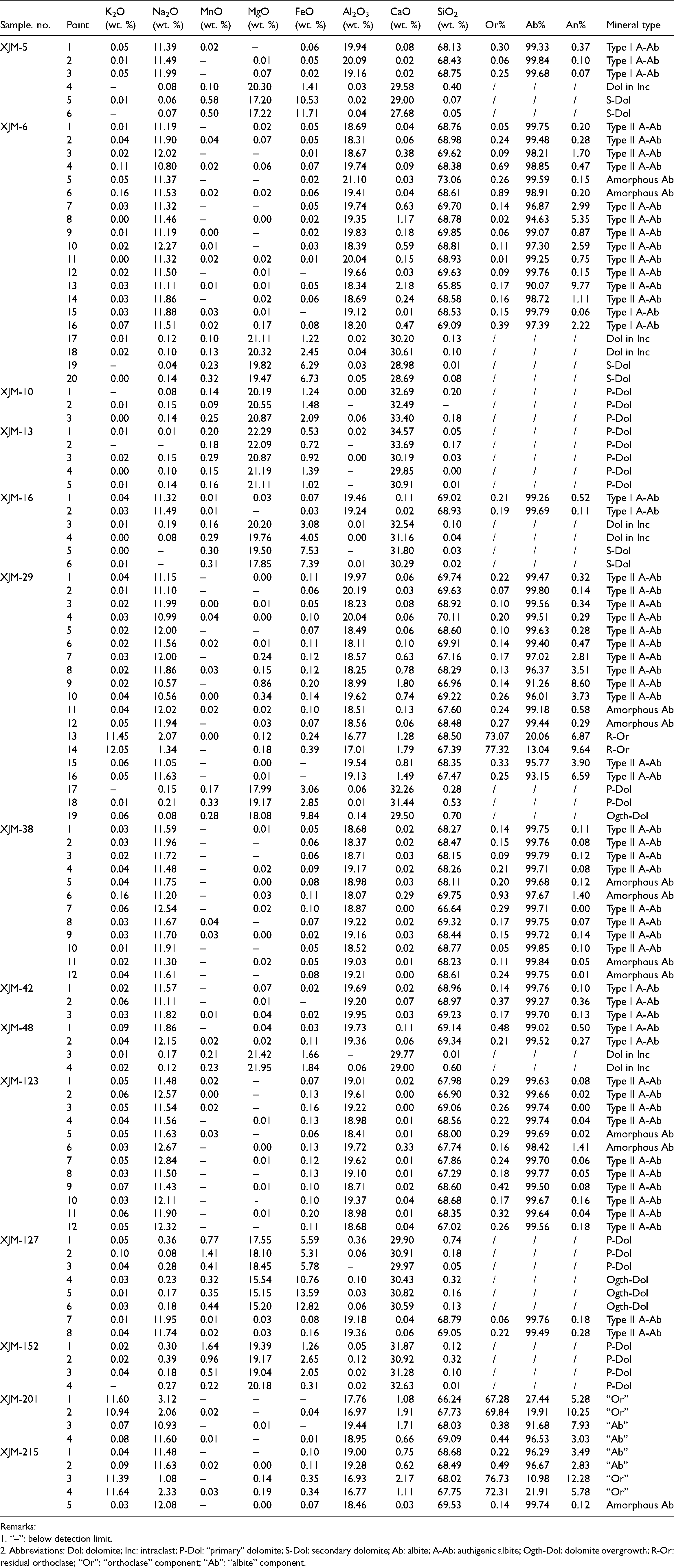
Chemical composition of different types of minerals in shale oil reservoirs from the Lucaogou Formation.
Remarks:
1. “–”: below detection limit.
2. Abbreviations: Dol: dolomite; Inc: intraclast; P-Dol: “primary” dolomite; S-Dol: secondary dolomite; Ab: albite; A-Ab: authigenic albite; Ogth-Dol: dolomite overgrowth; R-Or: residual orthoclase; “Or”: “orthoclase” component; “Ab”: “albite” component.
Dolarenite is an important reservoir rock that is present only in the P2l12 member (Figure 3) and is dominated by intraclasts and feldspars with laminar or massive structures (Figure 4(a) to (c)). The intraclast and feldspar contents of dolarenite are generally >70% and <20%, respectively (Figure 4(b) and (c)). The intraclasts are commonly rounded or elliptical, with a size of 50–500 μm (Figure 4(a) to (c)). Dolomicrites, widely distributed in the Lucaogou Formation, are generally light gray and exist as small lenses or laminae (Figure 4(d)). The primary dolomicrite composition is euhedral or subhedral micritic dolomite minerals (>90%); the contents of other components (such as feldspar) are low (generally < 10%) (Figure 4(e) and (f)).
Tuff, which is also widely distributed in the Lucaogou Formation, is generally gray or light gray and exists as small lenses or laminae (Figure 5(a)). Tuff is generally dominated by irregular feldspars and clay minerals with small amounts of calcite (Figure 5(b) and (c)). Tuffaceous dolomite, the most common and important shale oil reservoir of the Lucaogou Formation (Wu et al., 2016, 2017), is commonly grayish-yellow in color with a laminar structure (Figure 5(d)) and is dominated by euhedral or subhedral micritic dolomite minerals and irregular feldspars (Figure 5(e) and (f)).
Morphology, symbiotic relationship, and distribution of authigenic albites
Detailed petrologic observations of thin sections and BSE images indicate that most authigenic albites in the shale reservoirs of the Lucaogou Formation are independent. Small crystals (∼50 μm) are different from albite overgrowths or albite replacements of “orthoclase” or plagioclase with distinctive textures in sandstones and relatively large crystals (>100 μm) in carbonates (e.g. González-Acebrón et al., 2010; Mu et al., 2016; Rais et al., 2008; Spötl et al., 1999). Furthermore, two types (I and II) of authigenic albite were identified from the shale reservoirs of the Lucaogou Formation based on differences in form and symbiotic minerals. Type I authigenic albite, distributed only in dolarenite intraclasts, is commonly euhedral with a size of 3–10 μm and is usually symbiotic with amorphous dolomite minerals (Figure 6(a) and (b)). Type II authigenic albite generally occurs in intergranular pores within the tuffaceous dolomite (Figure 6(c)) and dolarenite (Figure 6(d)) and is the most widely distributed type. Type II is euhedral, with a size ranging from 10 to 50 μm (Figure 6(c) and (d)).
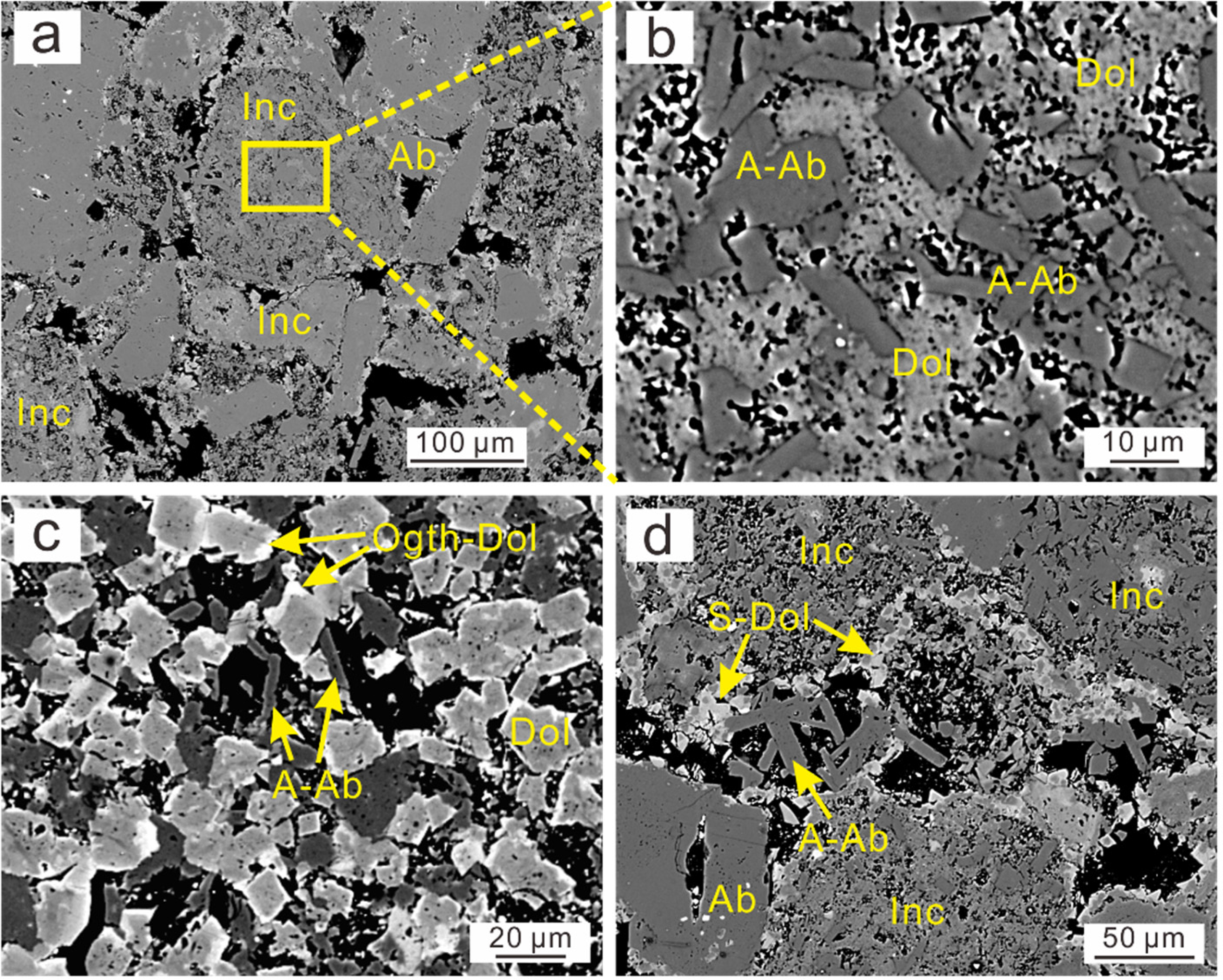
Characteristics and types of authigenic albites in the shale oil reservoirs of the lucaogou formation. (a) BSE image showing elliptic intraclasts and irregular albites within dolarenite, sample No. XJM-6, 3114.7 m. (b) BSE image showing amorphous dolomite and authigenic albites (Type I) within intraclasts, the same sample as in (a), modified after Wu et al. (2016). (c) BSE image showing amorphous albites, authigenic albites (Type II), and subhedral dolomites with overgrowths within tuffaceous dolomite, sample No. XJM-127, 3274.0 m. (d) BSE image showing intraclasts, amorphous albites, authigenic albites (Type II), and secondary dolomites within dolarenite, sample No. XJM-5, 3114.6 m. Abbreviations are as in Table 1.
Based on the BSE observations, the chemical compositions of authigenic albite and symbiotic minerals were further measured using EPMA; the results are listed in Table 1. Overall, both types of authigenic albites are relatively pure in chemical composition, with Ab (albite-end-member) content of over 90% (Figure 7; Table 1). In particular, Type I albites have higher chemical purity and Ab contents of over 99% at almost all testing points (Figure 7). The Ca, K, and Fe contents are mostly <0.10%. The symbiotic amorphous dolomite mineral is composed of Ca, Mg, and a small amount of Fe (FeO 1.22–4.05%; Table 1). In the Type II albites, the An (anorthite-end-member) content varies from undetectable to 9.77% (average of 1.34%), and the Or (orthoclase end-member) content ranges from undetectable to 0.69%. Approximately 80% of the testing points have a high-purity (>99% Ab) chemical composition (Figure 7; Table 1).
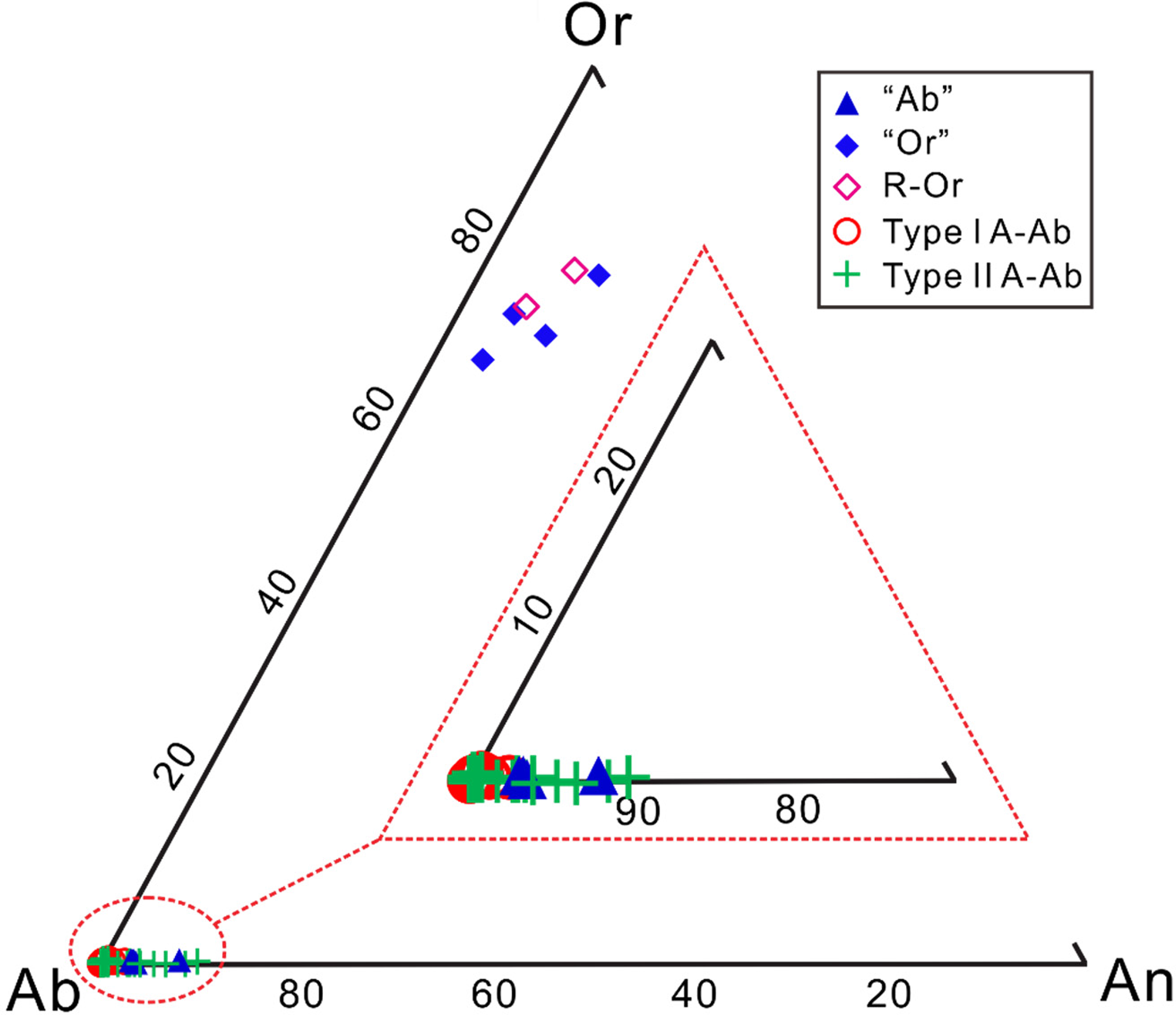
Chemical compositions of different types of feldspars in the shale oil reservoirs of the lucaogou formation. Abbreviations are as in Table 1.
The whole-rock carbonate carbon and oxygen isotopic values of 28 shale oil reservoir samples from the Lucaogou Formation were shown in Table 2. These samples have δ13C values between 5.83‰ and 12.3‰ (V-PDB) and δ18O values between −9.73‰ and −3.16‰ (V-PDB). It is worth noting that the δ13C values of samples consisting only of “primary” dolomite are significantly higher than those consisting of both “primary” and secondary dolomite (Table 2).
Carbon and oxygen isotopic values of shale oil reservoirs from the Lucaogou Formation.
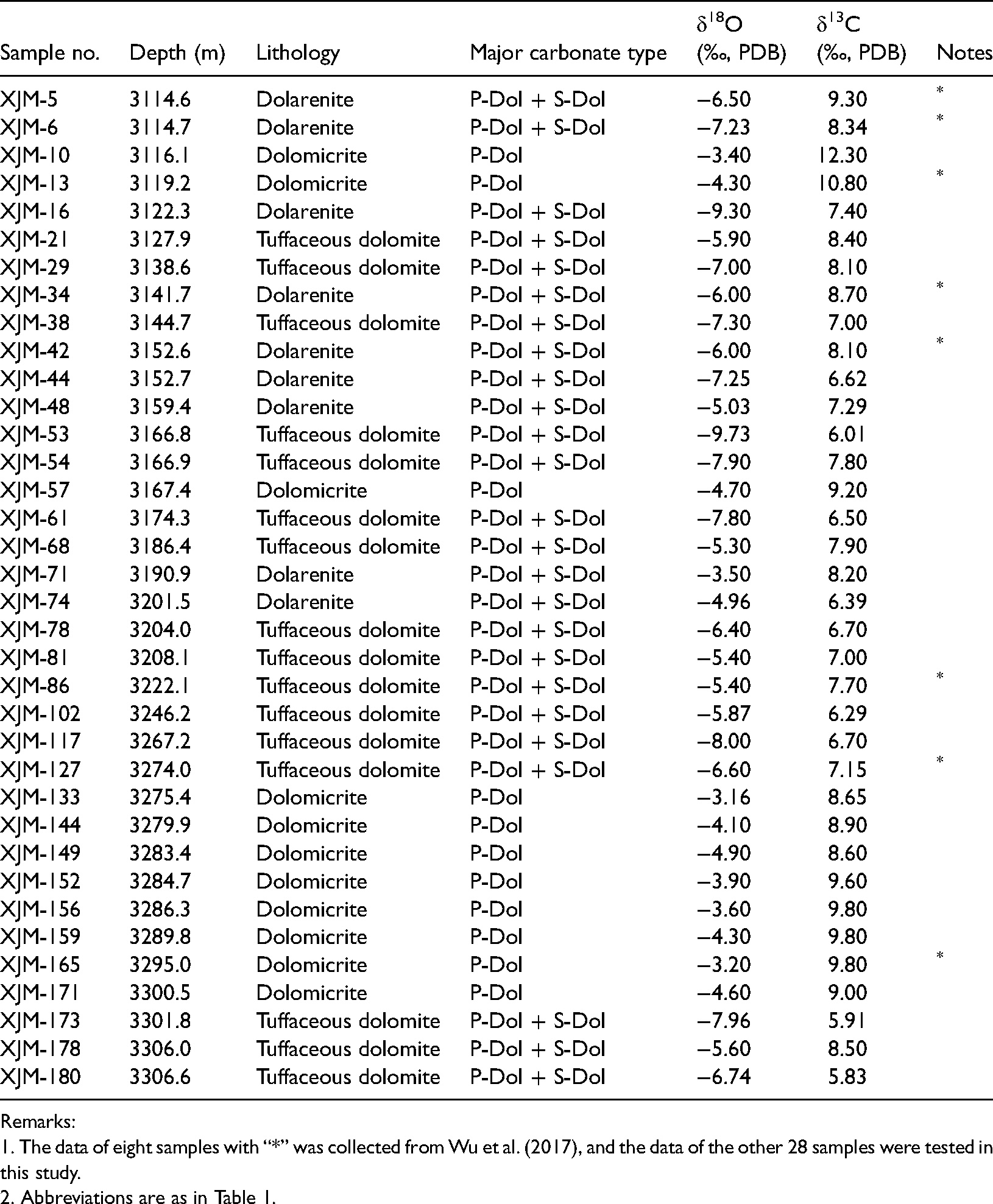
Carbon and oxygen isotopic values of shale oil reservoirs from the Lucaogou Formation.
Remarks:
1. The data of eight samples with “*” was collected from Wu et al. (2017), and the data of the other 28 samples were tested in this study.
2. Abbreviations are as in Table 1.
Genesis of authigenic albites
Genesis of Type I authigenic albites
Type I authigenic albite occurs in the intraclasts of dolarenite and coexists with amorphous dolomite minerals. The intraclasts were formed before sedimentation, and many have medium to high psephicity (Figures 6(a), 8(a) and (b)). Previous studies on widely developed secondary minerals, such as dolomite, show that the Lucaogou Formation has experienced strong diagenesis (Wu et al., 2016, 2017; Figures 6(a), 8(a) and (b)). The secondary dolomite minerals in dolarenite are commonly subhedral or euhedral and occur as rims or mantles surrounding the intraclasts. They are much brighter than the intraclasts because of their high Fe content (see samples XJM-5, XJM-6, and XJM-16 in Table 1; Figure 8(a) and (b)). However, the dolomite minerals coexisting with Type I albite are essentially amorphous, and their Fe content (FeO 1.22–4.05%) is significantly lower than that of the secondary dolomite minerals (FeO 6.29–11.71%; see samples XJM-5, XJM-6, XJM-16, and XJM-48 in Table 1). Thus, the intraclasts were not affected by diagenesis during burial, and Type I authigenic albites were formed in the syngenetic or penecontemporaneous stage before the deep burial of the Lucaogou Formation. Moreover, the intraclasts are not surrounded by authigenic albites similar to those of Type I (Figures 6(a), 8(a) and (b)), suggesting that Type I albites should have formed in the syngenetic stage prior to intraclast formation.
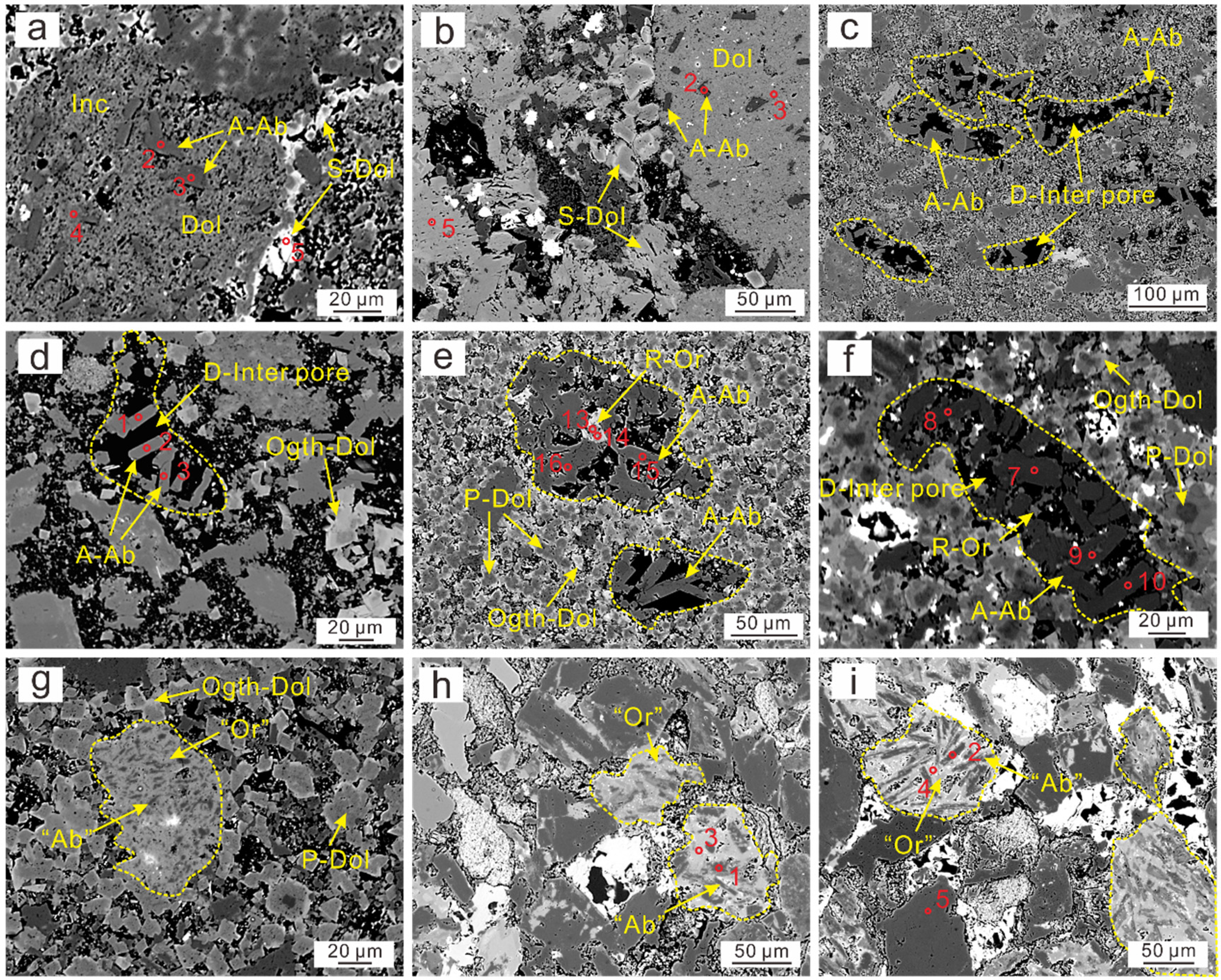
Images showing the genesis of authigenic albites. (a) BSE image showing intraclasts—composed of Type I authigenic albites and amorphous dolomites—coated with secondary dolomites within dolarenite, sample No. XJM-5, 3114.6 m. (b) BSE image showing the same geological features as in (a), sample No. XJM-16, 3122.3 m. (c) BSE image showing intergranular dissolution pores containing Type II authigenic albites have distinct grain shapes, sample No. XJM-123, 3272.8 m. (d) BSE image showing dolomite with overgrowths, amorphous albites, and authigenic albites in an intergranular dissolution pore (which has a distinct grain shape) in tuffaceous dolomite, sample No. XJM-38, 3144.7 m. (e) and (f) BSE image showing intergranular dissolution pores containing Type II authigenic albites and residual orthoclase, sample No. XJM-29, 3138.6 m. (g) BSE image showing “perthite” crystal pyroclasts containing “orthoclase” components and subhedral–euhedral “albites”, which are very similar to Type II authigenic albites in tuffaceous dolomite, sample No. XJM-127, 3274.0 m. (h) and (i) BSE image showing “perthite” crystal pyroclasts containing “orthoclase” components and subhedral–euhedral “albites” in tuff, sample No. XJM-215, 3334.7 m. Abbreviations are as in Table 1, with D-inter pore: intergranular dissolution pore.
Authigenic albite formation at low temperatures is difficult (Bjørlykke and Jahren, 2012), as the precipitation temperature of authigenic albites is usually >60 °C or 100 °C (Aagaard et al., 1990; Milliken et al., 1981; Morad et al., 1990; Surdam et al., 1989). Notably, the small crystal size (<10 μm), highly euhedral morphology, the pure chemical composition of the Type I authigenic albites and their symbiosis with syngenetic or penecontemporaneous carbonate minerals are consistent with those of typical hydrothermal albite (Rais et al., 2008; Spötl et al., 1996, 1999). Specifically, these Type I authigenic albites in the Lucaogou Formation are very similar to those in the limestone succession undergoing hydrothermal fluid activities of the Helvetic Domain, eastern Switzerland (Rais et al., 2008). In addition, the original dolomite minerals in the Lucaogou Formation are also suggested to be related to hydrothermal fluids (Liu et al., 2010; Yang et al., 2019; Zhang et al., 2018a). Therefore, despite the lack of strong evidence, Type I authigenic albites are inferred to have a hydrothermal origin. Syngenetic hydrothermal processes within the paleolake likely formed sediments composed of autogenous albite and dolomite mineral, which were broken and polished into intraclasts by lacustrine waves and redeposited to form dolarenite.
Type II authigenic albites were observed in most pores and coexisted with authigenic dolomite mineral or dolomite overgrowth (Figure 6(c) and (d)). The euhedral albite crystals may have formed via direct precipitation. Detailed observations revealed that almost all the intergranular dissolution pores containing Type II authigenic albite have distinct grain shapes (Figure 8(c) to (f)), suggesting that the authigenic albites might have been formed by the transformation of already existing particles. This inference is also evidenced by the multiple albites (exactly similar to Type II) coexisting with residual and irregular orthoclase in individual intergranular pores (Figure 8(e) and (f)). For example, in many intergranular pores of sample XJM-29, the residual orthoclase which can only satisfy the requirements of EPMA testing—is composed of 6.87–9.64% An, 13.04–20.06% Ab, and 73.07–77.32% Or (Figure 8(e); Table 1). The albites in the aforementioned pores are not chemically pure and composed of 3.90–6.59% An, 93.15–95.77% Ab, and 0.25–0.33% Or (Figure 8(e); Table 1). Some residual orthoclases were too small to determine the elemental composition because of intense dissolution but can be generally recognized from BSE images, owing to their brightness (which is higher than that of authigenic albites) (Figure 8(f)). The albites in the intergranular pores were not chemically pure and were composed of 2.81–8.60% An, 90.07–98.85% Ab, and 0.02–0.69% Or (Figure 8(f); see samples XJM-6 and XJM-29 Table 1). Therefore, these secondary pores and authigenic albites were most likely formed via the selective dissolution of the “orthoclase” components of perthite-like particles.
Fortunately, such particles which exist as crystal pyroclasts (predominantly 50–100 μm in size) with a composition similar to that of perthite were observed in several samples (Figure 8(g)). Although the crystal pyroclasts experienced minor dissolution, many “orthoclase” components remained (Figure 8(g)). Moreover, subhedral–euhedral “albites,” which are very similar to Type II authigenic albites, were included in these crystal pyroclasts (Figure 8(g)). Furthermore, additional evidence of these perthite-like particles being “perthite” crystal pyroclasts was obtained from many relatively pure tuff samples (lacking carbonate minerals). Relatively complete “perthite” crystal pyroclasts (50–100 μm in size), containing “orthoclase” and subhedral–euhedral “albite,” which are nearly identical in size and shape to the Type II authigenic albites were commonly observed in these tuff samples (Figure 8(h) and (i)). The results of EPMA analysis suggest that the “orthoclase” component in the “perthite” crystal pyroclasts is composed of 5.28–12.28% An, 10.98–27.44% Ab, and 67.28–76.73% Or and that the subhedral–euhedral “albite” component is composed of 2.83–7.93% An, 91.68–96.67% Ab, and 0.22–0.49% Or (see samples XJM-201 and XJM-215 in Table 1; Figure 8(h) and (i)). The similar chemical composition between the “orthoclase” in the “perthite” pyroclasts and the residual “orthoclase” in the dissolution pores, indicates identical origins (Table 1).
Previous studies have suggested that organic fluids (organic acids and carbon dioxide) formed during the maturation and evolution of source rocks are likely the primary factors causing the generation of intergranular dissolution pores in the Lucaogou Formation (Jiang et al., 2015; Liu et al., 2019; Wu et al., 2017). However, in the thoroughly dissolved pores without residual “orthoclase”, the authigenic albites are almost pure; in the pores with residual “orthoclase”, the authigenic albites contain a small amount of Ca and K (Figure 8; Table 1). Burial history studies show that the organic-rich shale rocks in the Lucaogou Formation entered their mature stage in the Late Jurassic and that the geothermal temperature has ranged from 70 °C to 100 °C ever since (Liu et al., 2019; Wu et al., 2015). Moreover, the increase in temperature from a typical value to 100 °C became increasingly conducive to the stable existence of albite (Johnson et al., 1992). Thus, the burial process of the Lucaogou Formation provided favorable conditions for the stable existence and gradual adjustment of unpurified albites. Thus, it is considered that Type II authigenic albites were formed through the dissolution of “perthite” crystal pyroclasts by organic fluids, whereas the residual “albite” was gradually transformed to pure albite over time.
Implications for the formation of shale oil reservoirs
Multiple types of pores (e.g. secondary intergranular, intergranular, and intragranular) occur in the shale oil reservoirs of the Lucaogou Formation, (e.g. Jiang et al., 2015; Su et al., 2018; Wu et al., 2016). However, the major storage spaces were secondary intergranular pores. Thus, the widely distributed Type II authigenic albites in the secondary pores directly influence the reservoir space in the shale oil reservoirs (Figures 6(c), (d) and 8(c) to (f)). These secondary pores are closely related to organic fluids (organic acids and carbon dioxide) derived from the thermal evolution of organic matter in source rocks (e.g. Jiang et al., 2015; Liu et al., 2019; Seewald, 2003; Wu et al., 2017). The interactions between organic fluids and different components in the mixed rocks were determined. The results suggest that the pore development of reservoirs varies substantially with different mineral compositions.
In the dolomite-dominated section (major dolomicrite and dolomite minerals account for >90%) (Figure 9(a)), dissolution pores are not observed; only fine and triangular-shaped intracrystalline pores were seen (Figure 9(b)). The euhedral dolomite minerals in these samples are typically small and complete (Figure 9(a) and (b)), have an essentially uniform composition (without overgrowths) (Figure 9(a)), and are low in Fe content (0.31–2.65 wt.% FeO; Table 1). Thus, the relatively pure dolomite samples were not significantly affected by organic fluids during the burial process, as proven by their positive δ13C values (up to 12.3‰, V-PDB) (Figure 10(a); Table 2). However, microcracks were common in these samples and were filled with late calcite cement (Figure 9(c)), indicating that the organic fluids did not significantly dissolve the nearby dolomite minerals while passing through the microfractures but instead precipitated the secondary carbonate minerals in the late stage. Among the relatively pure tuff samples (>90% tuffaceous components), the intergranular dissolution pores were essentially undeveloped (Figure 9(d)). Only a series of minute intercrystalline pores (<5 μm) developed between the relatively isolated clay minerals (Figure 9(d)). Thus, the formation of an effective connectivity network in relatively pure tuff was difficult. The degree of dissolution of the crystal pyroclasts in tuff was also weak (Figure 8(h) and (i)).
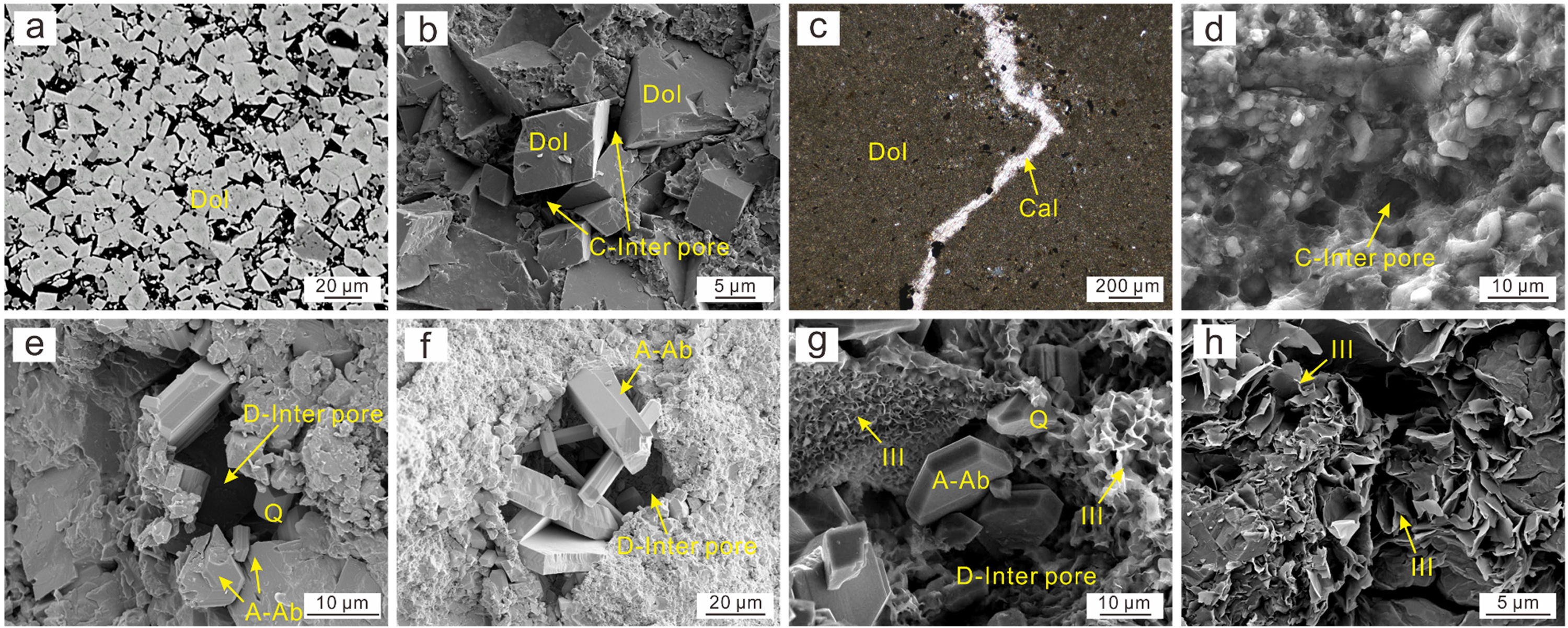
Images showing the relationship between authigenic albites and shale oil reservoirs. (a) BSE image showing subhedral–euhedral “primary” dolomites in dolomicrite, sample No. XJM-152, 3284.7 m. (b) FE-SEM photomicrograph showing tiny intercrystalline pores (<5 μm) between fine euhedral dolomite in dolomicrite, the same sample as in (a). (c) Photomicrograph showing microcracks filled with calcite cement in dolomicrite (cross-polarized light), sample No. XJM-165, 3295.0 m. (d) SEM image showing minute intercrystalline pores in relatively pure tuff, sample No. XJM-201, 3321.0 m. (e) FE-SEM image showing intergranular dissolution pores with Type II authigenic albites in tuffaceous dolomite, sample No. XJM-127, 3274.0 m. (f) FE-SEM image showing intergranular dissolution pores with Type II authigenic albites in dolarenite, sample No. XJM-7, 3114.8 m. (g) SEM image showing flocculent authigenic illite and Type II authigenic albites in intergranular dissolution pores in dolarenite, sample No. XJM-34, 3141.7.0 m. (h) FE-SEM image showing flocculent authigenic illite in dolarenite, sample No. XJM-48, 3159.4 m. Abbreviations are as in Table 1 and Figure 8, with C-inter pore: intercrystalline pore; Ill: illite.
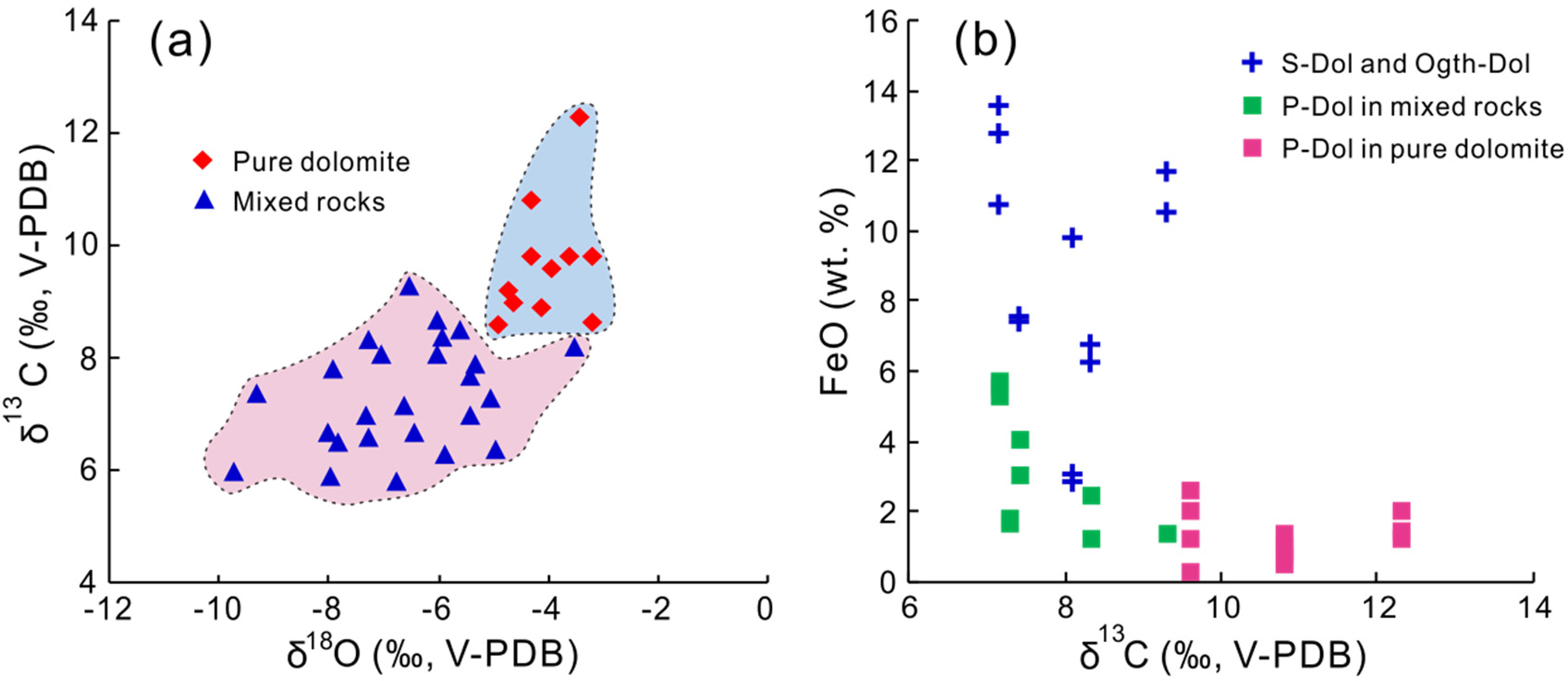
(A) Cross-plots of δ13C and δ18O of whole-rock carbonates within shale oil reservoirs in the lucaogou formation. (b) Cross-plots of δ13C of whole-rock carbonates and FeO content of “primary” dolomite and dolomite overgrowth/secondary dolomite of each sample. Abbreviations are as in Table 1.
In sections with high tuff and dolomite mineral contents, intergranular pores with authigenic albites (Type II) formed by the dissolution of “perthite” crystal pyroclasts were well-developed (Figures 6(c), (d), 8(c) to (f), 9(e) and (f)). In addition, secondary dolomite minerals (or dolomite overgrowths) were well-developed in these samples (Figures 6(c), (d), 8(c) to (f), 9(e) and (f)) and were generally characterized by higher Fe contents (6.29–13.59 wt.% FeO) than those of the “primary” dolomite minerals (0.31–5.78 wt.% FeO) (Figure 10(b); Table 1). Accordingly, the δ13C values of these samples (5.83–9.30 ‰, average 7.35‰, V-PDB) are generally lower than those of the adjacent pure dolomite samples (8.60–12.30‰, average 9.68‰, V-PDB) (Figure 10(a); Table 2), indicating a source of organic fluids (Wu et al., 2017). Small amounts of flocculent authigenic illite were observed in these samples (Figure 9(g) and (h)), indicating that authigenic albite formation is linked to illite formation (Aagaard et al., 1990). Thus, calcium primarily entered secondary carbonate minerals (primarily dolomites), and potassium primarily entered the illite during the dissolution of K- and Ca-rich components to form secondary pores in the “perthite” crystal pyroclasts. Thus, although some studies conclude through simulation that the sequence of carbonate mineral reactions takes precedence over feldspars in the interaction between later fluids and mixed rocks under burial conditions (Meng et al., 2014), carbonate minerals (in this case) almost do not exhibit dissolution. As in marine carbonate strata, the interaction of organic fluids with carbonate minerals to form secondary pores does not occur in the mixed rock system under burial conditions (Ehrenberg et al., 2012). Furthermore, the increasing partial CO2 pressure in this system instead results in the precipitation of carbonate cement instead of dissolution (Seewald, 2003).
Feldspar dissolution usually produces large quantities of clay minerals and quartz (Bjørlykke and Jahren, 2012), but was not observed in samples with enormous dissolution pores. This implies that significant material migration may have occurred during the dissolution of feldspar clasts, such as “perthite” pyroclasts, by organic fluids. A suitable fluid network is necessary for material migration. Core and microscope observations suggest that bedding fractures are well-developed in all types of rocks in the Lucaogou Formation (Figure 11(a) and (b)). The bedding fractures usually have suitable lateral continuity and can form adequate fluid networks with highly angular fractures (Figure 11(c) and (d)) that are widely developed in dolomite or tuffaceous dolomite (Zhang et al., 2018b).
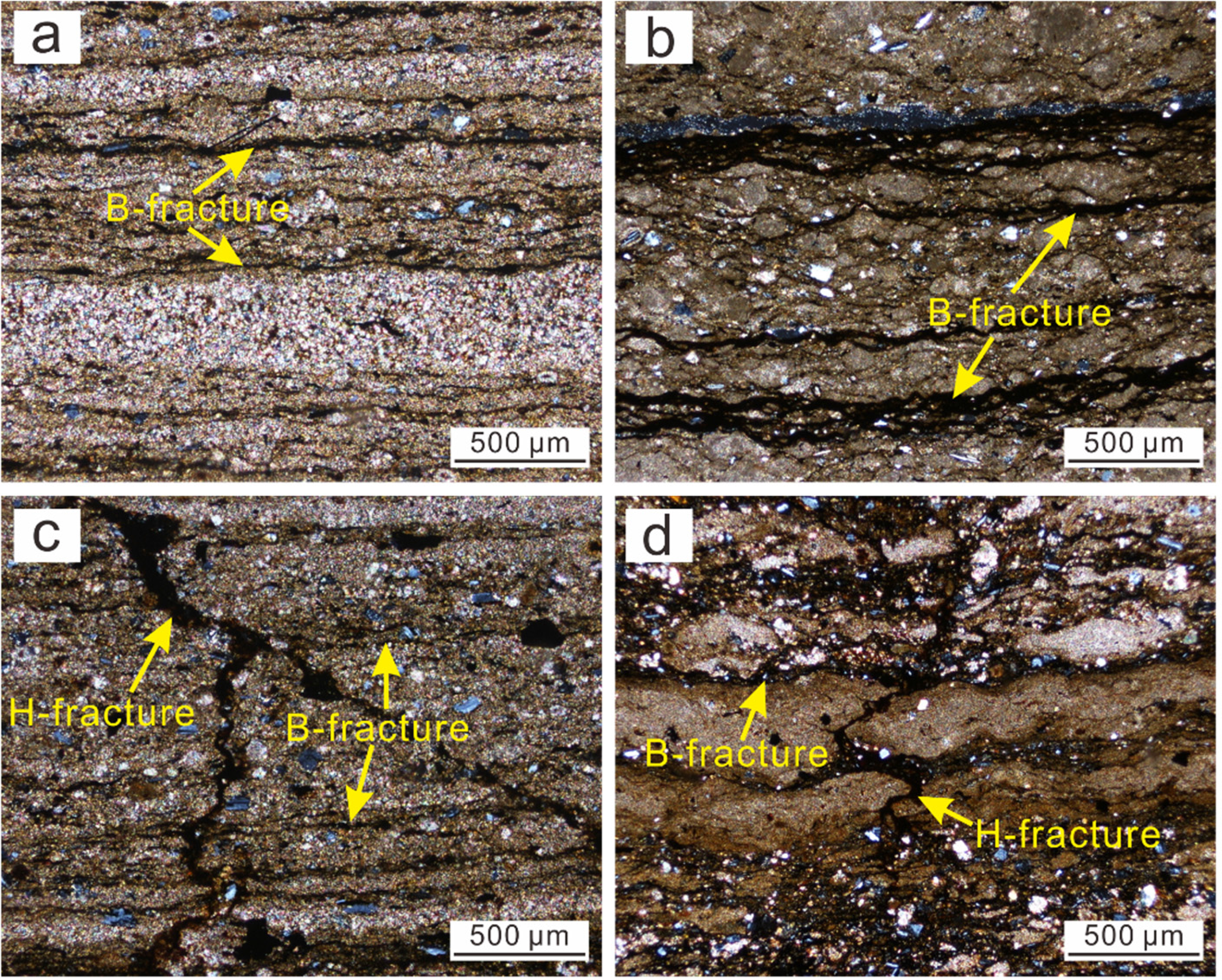
Bedding fractures and highly angular fractures in the shale oil reservoirs of the lucaogou formation. (a) Photomicrograph showing bedding fractures in tuffaceous dolomite (cross-polarized light), sample No. XJM-173, 3301.8.0 m. (b) Photomicrograph showing bedding fractures in dolarenite (cross-polarized light), sample No. XJM-71, 3190.9 m. (c) Photomicrograph showing bedding fractures and highly angular fractures in tuffaceous dolomite (cross-polarized light), the same sample as in (a). (d) Photomicrograph showing bedding fractures and highly angular fractures in tuffaceous dolomite (cross-polarized light), sample No. XJM-81, 3208.1 m. Abbreviations are as follows: B-fracture: bedding fracture, H-fracture: highly angular fracture.
Thus, the diagenetic evolution and secondary pore formation patterns of various shale oil reservoirs in the Lucaogou Formation were summarized. The diagenetic evolution processes of shale oil reservoirs with different compositions are differential. Dolomite minerals are more prone to fractures than tuff because of its greater brittleness (Zhang et al., 2018b). Therefore, relatively pure dolomite commonly exhibits microfractures, which can act as temporary migration channels for fluid, oil, and gas. In addition, dolomite is more resistant to compaction than pyroclastics (or continental feldspar debris), which facilitates primary pore preservation. However, secondary pores are difficult to form in relatively pure dolomite, because carbonate minerals are more likely to precipitate rather than dissolve under closed burial conditions (Figures 6(c), (d), 8(a) to (f) and 9(c)) (Ehrenberg et al., 2012; Seewald, 2003). Pure tuff has sufficient soluble components (“perthite” crystal pyroclasts); however, owing to its weak compressive resistance, it becomes denser during burial. Moreover, as tuff is less prone to fractures, the conditions for reservoir reconstruction are unfavorable in the presence of organic fluids, and secondary minerals (major clay) are more likely to accumulate in situ. These factors make the formation of adequate secondary pores in relatively pure tuffs difficult. Comparatively, tuffaceous dolomites have the characteristics of both dolomite and tuff, that is, strong compaction resistance, high brittleness, and abundance of soluble components (“perthite” crystal pyroclasts), which enable the formation of a large number of secondary pores. In particular, the combination of highly developed bedding fractures and high-angle fractures in the Lucaogou Formation is conducive to the migration of dissolved materials. Under these favorable conditions, the relatively high-quality shale oil reservoirs of the Lucaogou Formation were formed through the differential dissolution of K- and Na-rich components derived from organic fluids (Wu et al., 2016, 2017). Secondary enlargement in the dolomite minerals may have occurred during this process.
Two types (I and II) of authigenic albites were identified in the mixed dolomitic–volcanic–clastic shale reservoirs in the Lucaogou Formation. Type I authigenic albites are only developed in dolarenite intraclasts, whereas Type II authigenic albites (the most widely distributed) are primarily developed in secondary dissolution pores. Type I authigenic albites may be formed via syngenetic hydrothermal action, whereas the authigenic albites of Type II typically formed through the dissolution of “perthite” crystal pyroclasts by latter organic fluids.
Under buried conditions, organic fluids do not dissolve carbonate minerals, instead dissolve abundant volcanic materials and form secondary pores in the mixed rock systems. The differential dissolution of volcanic materials (major “perthite” crystal pyroclasts) in the presence of dolomite minerals is the key to the formation of secondary pores in the mixed shale oil reservoirs of the Lucaogou Formation. Furthermore, multi-source mixed rocks are more suitable for the formation of high-quality reservoirs than relatively pure dolomites and tuff (or siltstone). The rocks are valuable exploration targets for shale oil in other lacustrine mixed strata, such as the Permian Fengcheng Formation in the NW Junggar Basin.
Footnotes
Acknowledgements
This work was financially supported by the National Natural Science Foundation of China (Grant No. 42002151), Cultivation Fund of Northeast Petroleum University (Grant No. 2018GPQZ-11), Research Start-up Fund Project of Northeast Petroleum University (2019KQ08).
Declaration of Conflicting Interests
The author(s) declared no potential conflicts of interest with respect to the research, authorship, and/or publication of this article.
Funding
The author(s) disclosed receipt of the following financial support for the research, authorship, and/or publication of this article: This work was financially supported by National Natural Science Foundation of China (Grant No. 42002151), Cultivation Fund of Northeast Petroleum University (Grant No. 2018GPQZ-11), and Research Start-up Fund Project of Northeast Petroleum University (2019KQ08).
