




Abstract
Marine–continental transitional strata were widely developed in the Ordos Basin in Upper Carboniferous - Lower Permian. The Taiyuan - Shanxi Formation possesses promising shale gas exploration layers. Shale samples from two drilling wells of Shanxi-Taiyuan Formation in Shilou and Xixian, Ordos Basin, were investigated to study their carbon–sulfur contents and distribution characteristics of organic components using carbon/sulfur analyzer and gas chromatography–mass spectroscopy. Using results of total organic carbon analyses, Rock-Eval pyrolysis, X-ray diffraction analysis, shale gas desorption experiments, and other relevant experimental data, the shale samples were comprehensively analyzed. The exploitability of the shale in the study area was evaluated. The Shanxi-Taiyuan Shale in the Shilou and Xixian areas was characterized by high total organic carbon contents of 7.1% and 2.1% and high Tmax values of 499 and 505 °C, respectively. The organic matter of the shale is types II2 and III. Moreover, biomarker parameters including n-alkanes, Paq, Pwax, average carbon chain length, and the ternary diagram of C27-C28-C29 steranes show the organic matter constituted terrestrial higher plants and aquatic low biological algae. Multiple n-alkane parameters show the organic matter input in the Shilou area is mainly derived from terrestrial higher plants. The Pr/Ph value and trace element indicators show the deposition environment is dominated by weak oxidation–reduction conditions. A shale gas desorption experiment shows the average desorbed gas contents of the shale samples in the Shilou and Xixian areas were 1.79 and 0.37 m3/t, respectively. The organic matter content determined the differences in shale gas properties between the two areas in Ordos Basin. The composition and content of inorganic minerals affect the reservoir physical properties. According to the analyses, the shale in the Shilou area has good shale gas reservoir characteristics in terms of desorbed gas content and the above-mentioned geochemical parameters. Furthermore, the Shanxi shale has good potential for shale gas industrial exploitation.
Keywords
Introduction
Shale gas is generated and stored in dark mud shale, which acts as both source rock and reservoir rock (Dong et al., 2015; Hamblin, 2006; Law and Curtis, 2002). China’s external dependence on oil exceeds 70%, that on natural gas exceeds 40%, and the total energy external dependence exceeds 20% (Xu, 2020). Thus, shale gas can be used as an effective supplementary energy source, alleviate the shortage of natural gas resources, and ensure national energy security of China.
Currently, marine shale formations in southern China are targets of exploration for shale gas. Marine black shale formations, consisting of Lower Cambrian Qiongzhusi Formation, Upper Ordovician Wufeng Formation, and Lower Silurian Longmaxi Formation, have been commercially extracted in Sichuan Basin (Li et al., 2019a, 2020; Lu et al., 2017). Continental shales develop mainly in Jurassic and Upper Triassic in China (Li et al., 2019b; Lin et al., 2013; Su et al., 2018). Further, the marine–continental transitional shales are widely distributed in China. Shale gas resources in the marine–continental transitional shales amount to approximately 19.8 × 10¹² m3, 25% of the total shale gas resources of China (Zou et al., 2010). Despite its potential, the industrial shale gas flow has not been observed in transitional shale strata (Zou et al., 2010). The research work of marine-continental transitional shale needs further study.
Ordos Basin is the second largest sedimentary basin in China and important large-scale oil-rich basin. In basin, Permian Taiyuan and Shanxi Formation are the most promising shale gas exploration horizons (Du et al., 2013; Kuang et al., 2020; Wang et al., 2011). Previous studies focused on the geochemical indexes and shale gas properties (Lan et al., 2016; Yan et al., 2015; Yang et al., 2005). However, the main factors of shale gas bearing difference in Shanxi-Taiyuan shale need further study. In order to further explain the main controlling factors of gas bearing differences, organic-rich shale core samples were collected from adjacent two places (Shilou and Xixian araes), Shanxi-Taiyuan marine–continental transitional strata, southeastern margin of Ordos Basin. Multiple methods were employed to characterize the organic matter abundance, organic matter type, organic matter maturity, compound of biomarkers, and desorbed gas content of the marine–continental transitional shales. Moreover, the shale gas content of the study area was compared to that of the marine shale of Wufeng-Longmaxi Formation in Sichuan Basin, which has been commercially exploited. Based on the comprehensive evaluation of Shanxi-Taiyuan Formation shale in Ordos Basin, the main controlling factors and exploration potential of marine–continental transitional shale gas in this area is proposed.
Geological setting
Ordos Basin, covering an area of 37 × 104 km2, is a large multi-cycle craton basin. The basin can be divided to six sub-primary structural units (Figure 1), Yimeng Uplift, Weibei Uplift, Jinxi Folding Belt, Yishan Slope, Tianhuan Depression, and West Margin Thrust Belt (Feng et al., 2017; Xiao et al., 2005). During Permian, the Ordos region experienced two major sedimentary tectonic evolution stages, including the Early Permian epicontinental sea and Middle-Late Permian inland basin in North China. During the time, the marine reducing depositional environment led to dark gray–black shales frequently interbedded with sandy shales and coal seams, which rendered the Shanxi-Taiyuan Formation rich in oil, coal, natural gas, and other resources (Sun et al., 2017; Xiao et al., 2005).
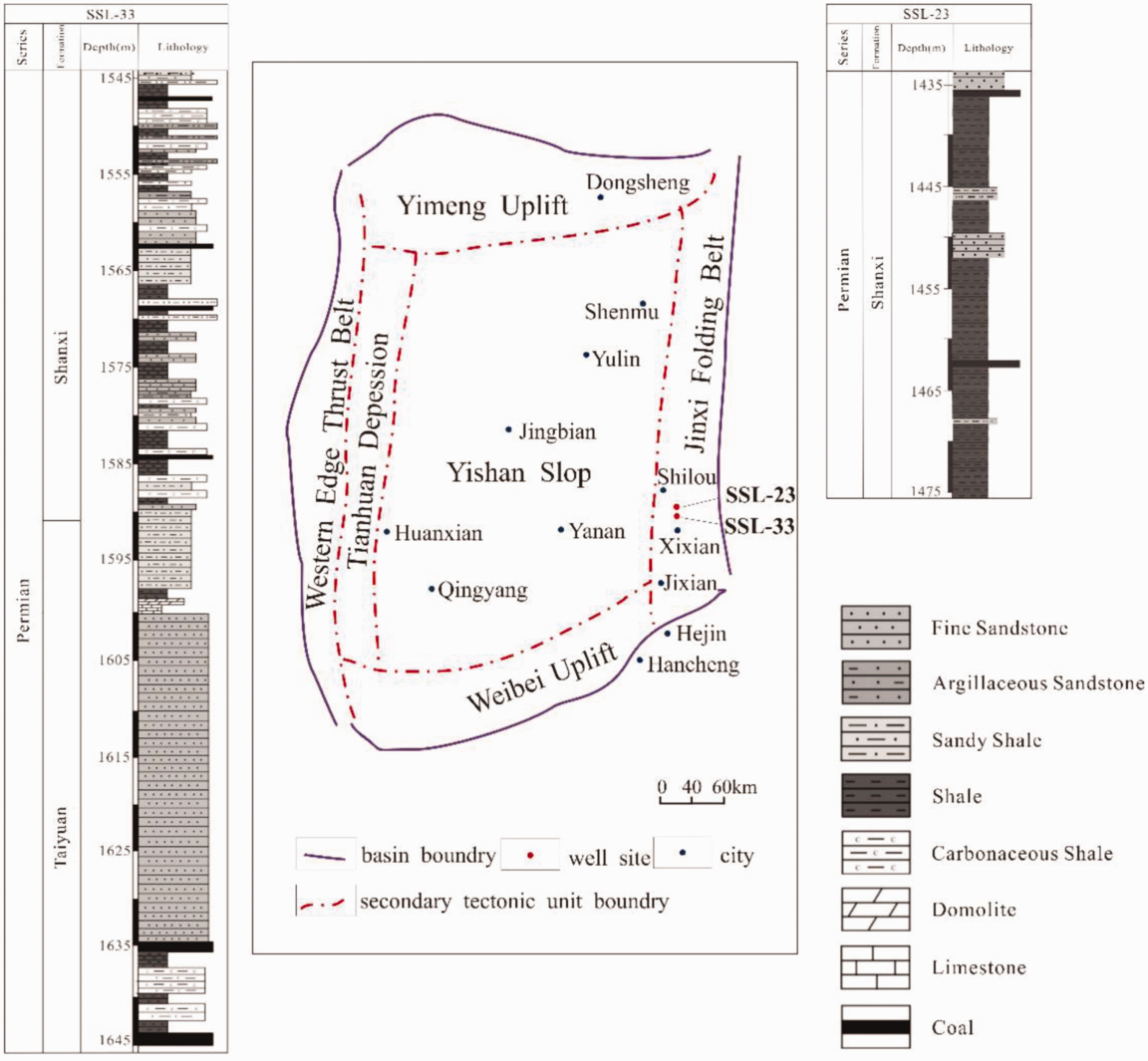
Location of wells and the substructure zones of the study area in Ordos Basin (modified from Sun et al., 2017).
In the eastern part of the basin, Taiyuan Formation consists of a large area of epicontinental sea deposits. The stratum is thick in the northeast and thin in the west. The lithology includes mainly limestone, mixed with grey–black/black mudstone, sandy mudstone, and thin coal seam. Authigenic pyrite is common, which indicates a strongly reductive sedimentary environment. Taiyuan Formation exhibits good coal-bearing properties and numerous coal seams (Du et al., 2013; Xiao et al., 2005).
In Shanxi Formation, the shale thickness of the first member of Shanxi Formation is 9.7–51.5 m (average 24.6 m), while that of the second member of Shanxi Formation is 21.4–92.3 m (average 41.2 m). The thickness of the second member of Shanxi Formation is large; however, the interlayers among the second member of Shanxi Formation are rare and thin. The maximum thickness of the single shale layer in the second member of Shanxi Formation can reach 50 m. Three major sedimentary centers exist: Yulin-Linxian, Shiloubei-Daning-Jixian, and Hancheng-Huangling. The shale in Shanxi Formation is composed mainly of a dark-grey carbonaceous shale and grey–black carbonaceous shale. Shanxi Formation is an important coal-bearing stratum in the eastern margin of Ordos Basin, which has industrial significance (Chen et al., 2017; Yang et al., 2016).
Samples and experimental methods
The study area is located in the Yonghe-Shilou anticline zone on Jinxi Fold Belt, southeastern margin of Ordos Basin (Figure 1). The core samples were derived from wells SSL23 and SSL33. The lithology of the samples included fine sandstone and shale, interbedded with carbonaceous shale and coal. For the shale section of the core, 41 samples were obtained with sampling intervals according to the lithology characteristics and gas content; 32 samples were collected from Shanxi Formation, while the other 9 samples were collected from Taiyuan Formation.
The freshly retrieved cores were immediately placed into a transparent sealed canister filled with saturated salt water. The gas was released gradually from the core samples to canisters at 25 °C, and then the sealed canisters were placed in a water bath to perform gas desorption. Temperatures of 40, 60, 80, and 100 °C were applied for 72 h to ensure that the adsorbed gas was completely released. Each temperature test was finished when the released gas content decreased below 5 mL within a 5-h window (Sun et al., 2017; Xu et al., 2017). After drying, the samples were crushed to obtain 200-mesh-size fractions. All samples were analyzed through total organic carbon (TOC), stable carbon isotope of kerogen (δ13Corg), Rock-Eval pyrolysis, and biomarker (normal and isoprenoid alkanes, steranes) tests. All analyses were carried out at Key Laboratory of Petroleum Resources Research, Chinese Academy of Science.
The TOC was measured using a CS-344 carbon/sulfur analyzer (LECO, USA). Before the test, the shale sample powder (approximately 10 mg) was placed into a crucible and soaked with 6% hydrochloric acid for 24 h. Subsequently, it was placed on a hot plate maintained at 60 °C for 2 h until the bubble generation in the sample solution stopped, indicating that the carbonate was completely removed. The hydrochloric-acid-treated sample was placed into a suction filter and washed with distilled water until neutral pH. Finally, the samples were placed in an oven at 50 °C for 12 h for drying (Yang et al., 2017). The processed samples were placed into a carbon/sulfur analyzer for testing according to Chinese National Standards GB/T18602-2001 and GB/T19145-2003.
The Rock-Eval pyrolysis was performed using a Rock-Eval 6 instrument (VINCI, France). The sample powder (30–50 mg) was placed into the crucible. The measurement was carried out in accordance with Chinese standard GB/T18602-2012.
The biomarker compositions were identified with Agilent HP 6890 N/5973N gas chromatography-quadrupole mass spectrometer (GC-MS). In order to obtain the soluble organic matter extract of all components, 50 g powder samples were extracted with dichloromethane using Soxhlet method for 72 h before the measurement. The extracts were concentrated on a rotary evaporator under reduced pressure and transferred to a small vial. After the extracts has evaporated to dry, it can be tested on the GC-MS. For routine GC analysis, the DB-5 capillary column (50 m × 0.25 mm × 0.25 μm) was used, and the oven was programmed from 80 to 300 °C at 3 °C/min, with a final hold time of 30 min, and the helium was used as carrier gas. The mass spectrometer was operated at an electron energy of 70 eV with an ion source temperature of 230 °C. The temperature of the GC-MS interface was 280 °C.
The desorption experimental setup and gas collection method used in this study followed Wang et al. (2015). A sealed transparent canister covered with cap was filled with saturated salt water. Placed the fresh collected core samples into the canister. Gas samples were gathered into the canister at temperatures of 20, 40, 60, 80, and 100 °C, respectively.
The chemical compositions and stable carbon isotopes of the gas samples were analyzed in MAT 271 mass spectrometer, and the concentration of gas was calculated according to the national standards (State Standard of China GB/T 6041–2002 and GB/T 10628–89). Stable carbon isotopes were measured on a Finnigan Mat Delta Plus mass spectrometer interfaced to an HP 5890 II gas chromatograph. Individual hydrocarbon gas components and CO2 were separated using a fused silica capillary column (PLOTQ 30 m × 0.32 mm) in the gas chromatograph. An analysis precision of ±0.5% was obtained using the V-PDB standard.
Results and discussion
Organic geochemical characteristics of the shale
The TOC reflects the abundance of organic matter in the sediment. A strong correlation between the TOC of the shale and gas-bearing capacity has been reported (Zhang et al., 2004). As shown in Table 1, the TOC values of the Shanxi-Taiyuan shale samples in Shilou area varied in the range of 2.2% to 24.4% with an average of 7.1% (Xu et al., 2017). The TOC values of the shale samples in Xixian were in the range of 1.2% to 2.6%, with an average of 2.1% (Sun et al., 2017). Generally, the lowest limit of TOC for commercial exploitation of shale gas is 2.0% (Zhang et al., 2004). The average TOC content of the shale samples in the study area exceeded the lowest limit, which indicates that the study area has is suitable for shale gas generation at a commercial scale.
Geochemical characteristics for the shale samples of Shilou and Xixian area in Ordos Basin (Sun et al., 2017; Xu et al., 2017).
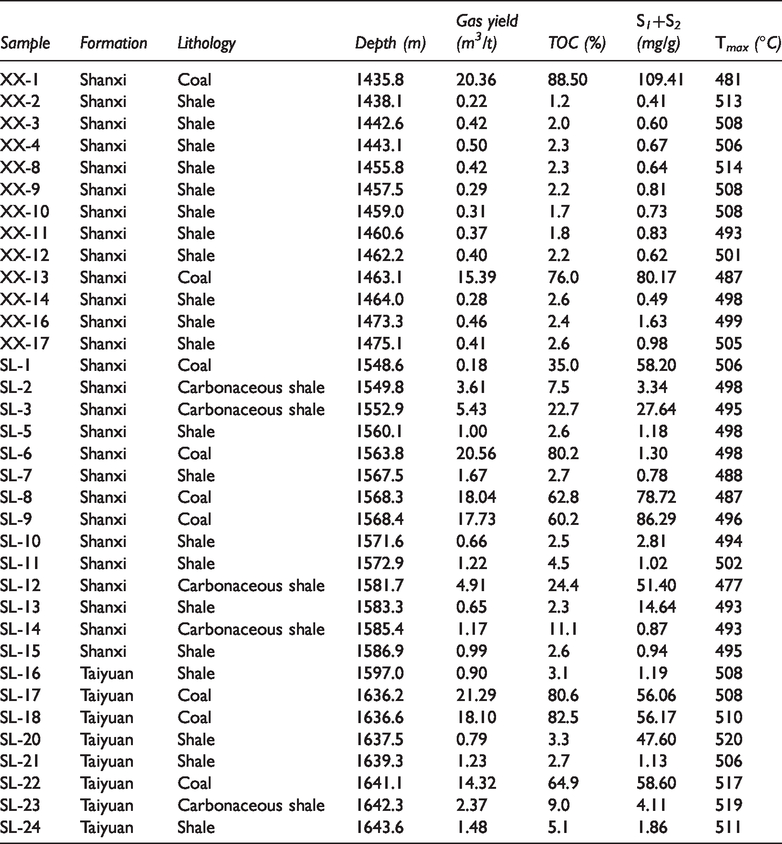
The volatile hydrocarbon content (S1) and remaining hydrocarbon generation potential (S2) were measured using a Rock-Eval 6 instrument. S1 and S2 represent the soluble organic matter or adsorbate in the rock below 300 °C and at 300–550°C, respectively. S1 + S2 represents the hydrocarbon generation potential of the source rock (Wu et al., 2016). The S1 + S2 values of the shale samples in Shilou varied in the range of 0.41 to 51.4 mg HC/g rock, with an average of 10.7 mg HC/g rock (Xu et al., 2017), which indicates that the shale in Shilou has a high hydrocarbon generation potential. In Table 1, the S1 + S2 values of the shale samples in Xixian varied in the range of 0.41 to 1.63 mg HC/g rock, with an average of 0.76 mg HC/g rock (Sun et al., 2017). According to the judgment criterion of hydrocarbon generation potential of source rocks (Huang et al., 1984), the shale in Shilou belongs to high-quality source rocks.
Sedimentary organic matter, as the inherited product of biological organic matter, can reflect the source and type of organic matter (Peters et al., 2005). As the shale samples in Ordos Basin are in a highly mature evolution stage, carbon isotope fractionation occurs during the diagenesis and thermal evolution. Therefore, the organic carbon isotopes of the shale samples are heavier than those in the sedimentary matter during the deposition. The carbon isotopes of light organic matter (algae, sapropel) are heavier than the original (the average added value can reach 1.0–2.0‰) in the high-evolution stage (Dai et al., 2014b). The δ13Corg values of the shale samples in the study area vary in the range of −25.6‰ to −23.1‰. According to the classification standard of Huang (Huang et al., 1984) and evolution stage of the samples, the organic matter produced in the study area was primarily derived from types II2 and III.
Oil and gas originate from organic matter. However, a series of processes are required to degrade organic matter to oil and gas. In these processes, the maturity of the evolution stage of organic matter is crucial for the gas content of the shale. The thermal maturity of organic matter is usually expressed by the vitrinite reflectance (Ro) and highest pyrolysis peak temperature (Tmax). As an important indicator of the organic matter maturity, Ro can be used to calibrate the thermal evolution stage of organic matter. Tmax is the maximum temperature at the S2 peak, which is directly proportional to the thermal maturity of organic matter (Huang et al., 1984; Peters et al., 2005). Ro of the shale in the study area was in the range of 2.2% to 2.4% (Wang et al., 2011). As the organic matter of the shales in the study area was dominated by type-II and -III kerogen, the shale generally tended to generate gaseous dry gas directly during the higher-maturity stage. As shown in Table 1, the Tmax values of Shilou and Xixian varied in the ranges of 477 to 520 and 481 to 514 °C, with averages of 499 and 505 °C, respectively, which indicates that the organic matter was in a high-maturity stage with a high gas generation capacity (Sun et al., 2017; Xu et al., 2017). The high TOC content, type of organic matter, and mature evolution stage are beneficial for the generation of shale gas in the study area.
Characteristics of biomarker compounds
n-Alkanes
Parameters of the n-alkanes for the shale samples are listed in Table 2. The n-alkanes of the shale samples in Shilou exhibit two peaks (Figure 2). The front peak is mainly focused on nC16 with a nonfixed back peak. Moreover, some samples are enriched with long-chain n-alkanes. These characteristics imply that the source of the organic matter in Shilou was primarily derived from mid-chain aquatic organisms and long-chain terrestrial higher plants. However, the distribution of n-alkanes of the shale samples in Xixian was bimodal, with the maximum at C15 or C23. These characteristics indicate that the source rock of Xixian has received algae and aquatic organism inputs, represented by the low and medium carbon numbers, while the terrestrial higher plants had a lower input.
Biomaker parameters for shale samples of Shilou and Xixian area in the Ordos Basin.
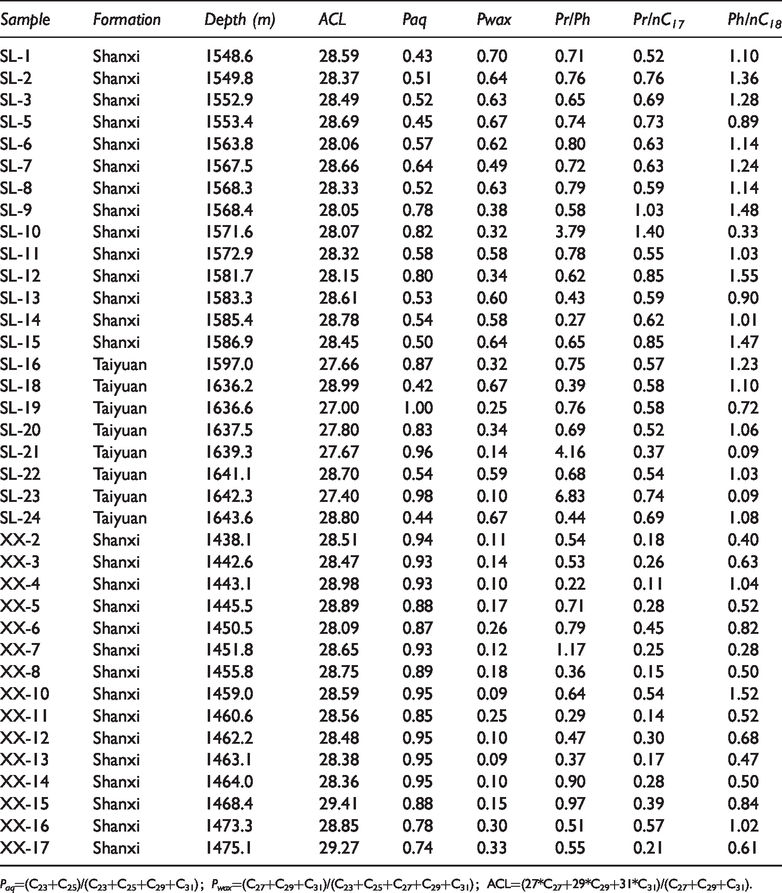
Paq=(C23+C25)/(C23+C25+C29+C31);Pwax=(C27+C29+C31)/(C23+C25+C27+C29+C31);ACL=(27*C27+29*C29+31*C31)/(C27+C29+C31).
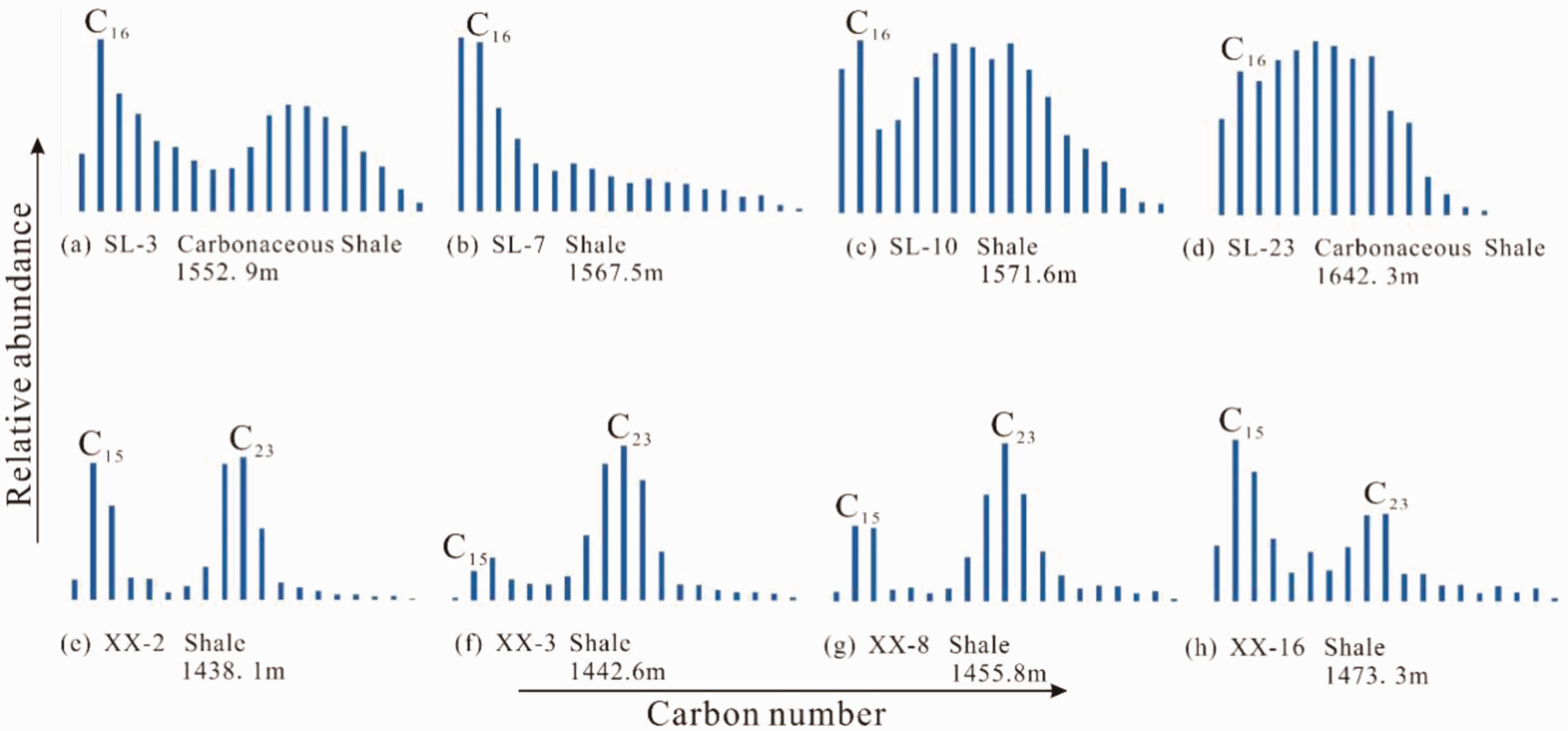
Representative mass chromatograms of n-alkane (m/z 85) for the shale samples of Shanxi-Taiyuan Formation in Ordos Basin.
The n-alkane parameters such as Paq and Pwax represent the amount of aquatic plant and terrestrial plant input in the sediment, which can be used to estimate the differences in organic matter sources between different places and change in precipitation in the environment in the geological history. Paq reflects the ratio of nonemergent aquatic macrophytes to emergent aquatic macrophytes and terrestrial plants. Pwax reflects the ratio of emergent plants and terrestrial plants to the total terrestrial plant input (Zheng et al., 2007). A lower Paq and higher Pwax can reflect an abundant input of terrestrial plant in the sediment, which usually indicates a low precipitation and arid environment (Ficken et al., 2000; Zheng et al., 2007). The average Paq in Shilou was 0.65, while that of Pwax was 0.49. The average Paq in Xixian was 0.89, while that of Pwax was 0.16. Compared to Xixian, the sedimentary environment in Shilou is likely to be drier, with a larger contribution of higher terrestrial plants in the sedimentary parent material, which indicates a larger inclination to generate gaseous hydrocarbons. In the core samples of Shilou, the average Paq (0.59) of Shanxi Formation was lower than that of Taiyuan Formation (0.75), while the average Pwax (0.38) of Taiyuan Formation was lower than that of Shanxi Formation (0.56). The Paq and Pwax data show that, during the transition from Taiyuan to Shanxi Formation, the proportion of terrestrial higher plants in the sedimentary parent material increased and the climate gradually became dry. Yang (Yang et al., 2016) analyzed the trace elements of Shanxi-Taiyuan Formation samples in Xixian and used Sr/Cu values larger than 5 to characterize the arid sedimentary environment. Shanxi-Taiyuan Formation was dominated by transitional to terrestrial facies formed in the arid period with short-term humid–hot conditions. The results reported by Yang (Yang et al., 2016) are consistent with the conclusions on n-alkane substitution proxies.
The n-alkane average carbon chain length (ACL) of sedimentary organic matter can reflect the paleoclimate and paleoenvironment characteristics and indicate the relative source of sedimentary organic matter (Pearson et al., 2007). The land plants biosynthesize longer-chain compounds with higher melting points for their waxy coatings in a warm environment. In contrast, shorter-chain n-alkanes are synthesized by lower bacteria and algae in a cold environment (Pearson et al., 2007; Sikes et al., 2009). Therefore, the ACL of n-alkanes formed by higher plants in a warm environment is larger than that in a cold environment. The average ACLs of the core samples in Shilou and Xixian were 28.3 and 28.7, respectively, which indicates that the deposition environments in these areas were relatively warm. In combination with the characteristics of the carbon number distribution curves of n-alkanes, Paq and Pwax in the two places are generally consistent with the overall dry sedimentary environment, which is evident in the paleotemperature and paleoprecipitation proxies.
Isoprenoids
Isoprenoids, common biomarkers in crude oil and sedimentary rocks, are important components of isoalkane. Owing to the different origins of the source material and sedimentary environment, the distribution characteristics of isoprenoids can be used to evaluate the oil–source correlation and distinguish the environment of hydrocarbon formation (Koopmans et al., 1996; Peters et al., 2005). The ratio of pristane/phytane (Pr/Ph) can be used to evaluate depositional redox conditions. However, it is also affected by several other factors such as the variable biomolecular sources, thermal maturity, lithofacies, and diagenetic effects (Koopmans et al., 1996), which need to be comprehensively considered. High Pr/Ph values (>3.0) indicate input of organic matter under fully oxic conditions, while low Pr/Ph values (<0.8) reflect anoxic depositional environments. Pr/Ph values between 0.8 and 3.0 indicate a transitional environment. The average Pr/Ph of the samples in the study area was 0.97. The samples with Pr/Ph smaller than 0.8 were 86% of all samples, which shows the predominance of phytane. According to the classification standard, low Pr/Ph values indicate a typical reduction environment, which is not consistent with the epicontinental deposition in the study area.
According to thermal simulation experiments on hydrocarbon generation and expulsion (Tang and Stauffer, 1995), various Pr/Ph values in organic matter in different maturity stages show that Pr/Ph decreases with the increase in maturity after the latter reaches the oil window (Ro > 0.6%). During the low-maturity stage, isoprenoids originate mainly from kerogen pyrolysis but large-scale conversion of phytol to phytane does not occur. With the increase in maturity, large amount of hydrocarbons is pyrolyzed from kerogen and phytol is largely converted into phytane, which leads to a reduced Pr/Ph. In this case, other indicators should be considered to analyze the redox of the sedimentary environment. In Liulin and Xixian, the sedimentary state of Shanxi-Taiyuan Formation can be reflected by V/Cr, Ni/Co, V/(V+Ni), and U/Th. In the Shanxi-Taiyuan period, the sedimentary environment changed from the transition state to the oxidation state, with frequent fluctuations of the sea level and paleoclimate (Yang et al., 2016).
The plot of Pr/n-C17 vs. Ph/n-C18 can be used to evaluate the oxicity and organic matter type of the depositional environment in the source rock (Peters et al., 1999). As shown in Figure 3, the source rock in the study area contained mixed terrigenous and marine organic matters of type II/III deposited under weakly oxic-reducing transitional conditions. This is consistent with the above experiment demonstrating that the organic carbon isotopes are affected by the maturity (Tang and Stauffer, 1995). The fractionation causes a loss of some light organic matter. Thus, the average δ13Corg cannot accurately indicate the type of organic matter.
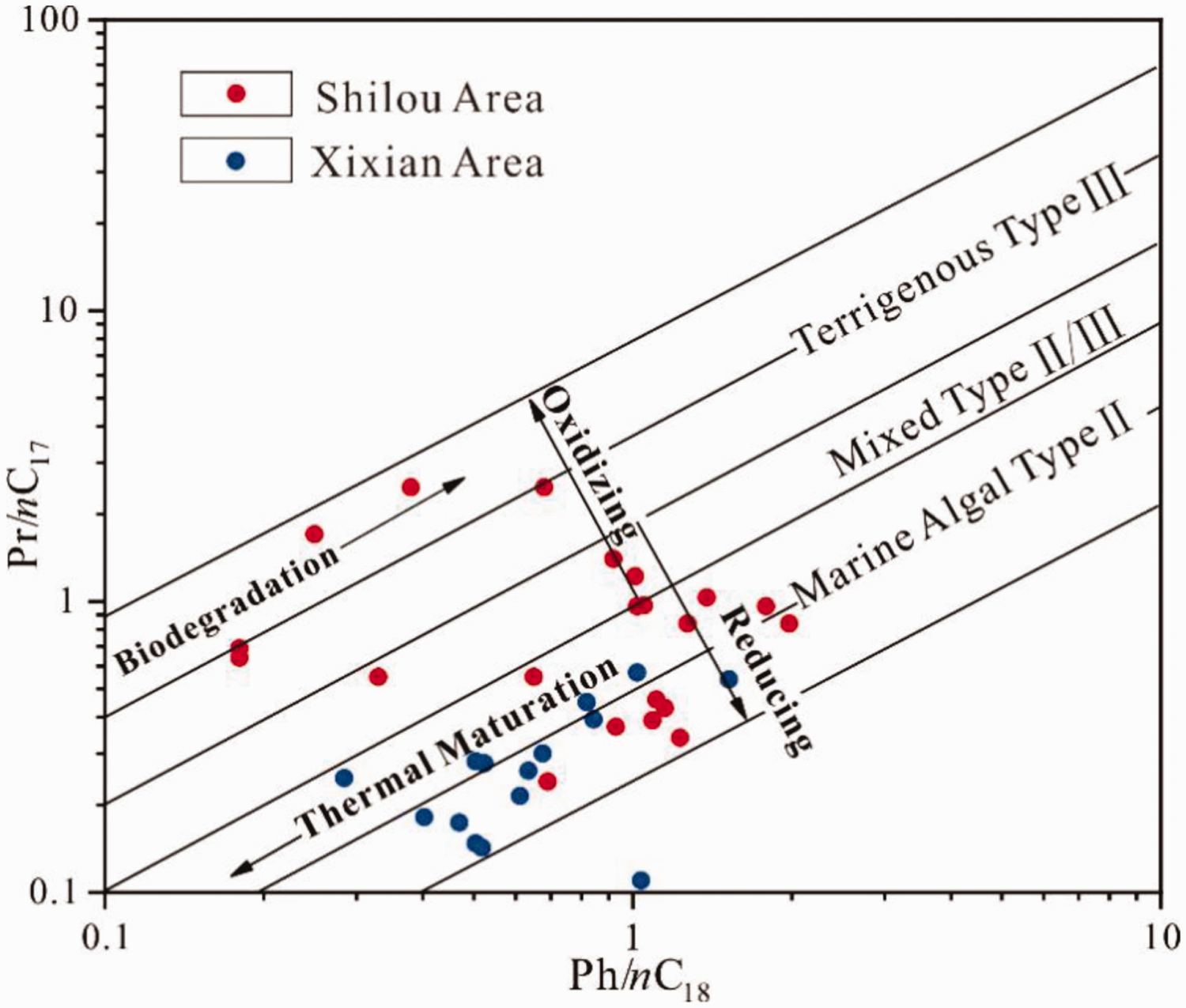
The plot of Pr/n-C17 vs. Ph/n-C18 of the shale samples from the Shilou and Xixian area in the Ordos Basin (modified from Peters et al., 1999).
Sterane
Steroids in sediments and crude oils are derived from complex sterol mixtures of plants, animals and other organisms. It is widely found in plankton, lower aquatic organisms, terrestrial plants, higher animals and even bacteria and other prokaryotic microbial organisms (Philp, 1985). The sterones in sedimentary matter are derived from sterols originating from eukaryotes (Peters et al., 2005). Regular steranes, rearranged steranes, and methylsteranes are three basic structures of steranes in sedimentary organic matter. Regular sterane is most commonly used, with a chain-length distribution in the range of C27–C29. Generally, aquatic organisms are rich in C27 sterols, while higher plants are rich in C29 sterols. The ternary diagram representing the C27, C28, and C29 sterane composition can be used to identify the sedimentary environment of crude oil and hydrocarbon source rock (Huang and Meinschein, 1979). Figure 4 shows that the source rock of the Shanxi-Taiyuan shales in Ordos Basin has a mixture of terrestrial higher plants and aquatic lower biological algae. In addition, some samples in Shilou suggest that their source rocks received larger higher-plant inputs. In Linxing, close to the study area, Guo (Guo et al., 2012) used the ratio of C29ααα20R/C27ααα20R to evaluate the source of organic matter. The shale of Shanxi-Taiyuan Formation possesses a mixed organic matter input of higher plants and aquatic lower biological algae. However, the sedimentary environment of Taiyuan Formation is more inclined to be characterized as marine than that of Shanxi Formation. The sedimentary environment of Shanxi formation gradually separated from the marine sedimentation, with an increasing input proportion of higher plants and decreasing proportion of lower aquatic organisms and algae.
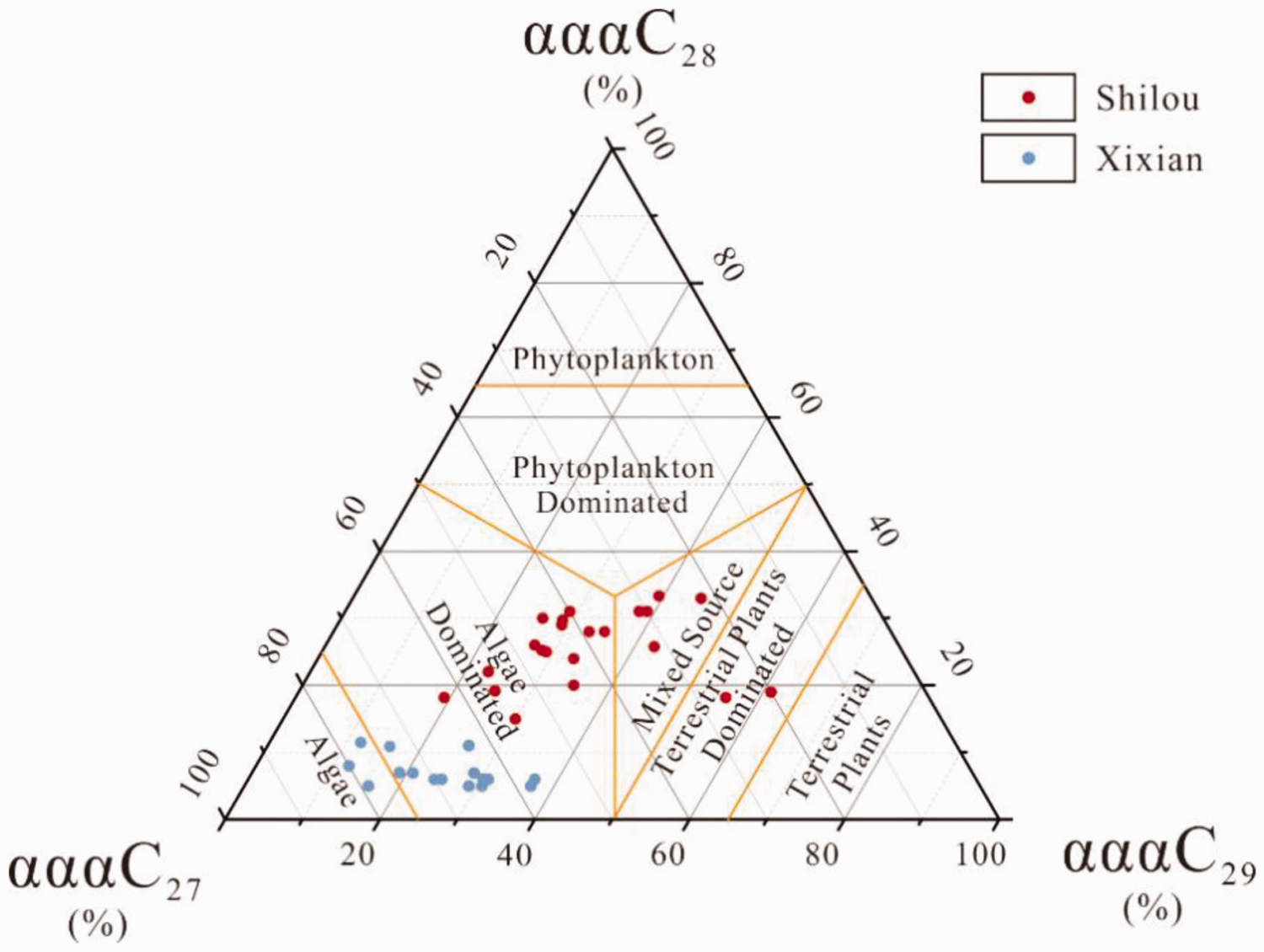
The ternary diagram of C27, C28, and C29 steranes of the shale samples from the Shilou and Xixian area in the Ordos Basin (modified from Peters et al., 1999).
Gas-bearing characteristics of the shale
Gas content is the total amount of natural gas per ton in rock under standard conditions (101.325 kPa, 0 °C). The shale gas content is an important parameter for shale gas resource potential evaluation and favorable area optimization. The desorption experimental setup and gas collection method used in this study are consistent with the procedure reported by Wang et al. (2015). To compare the geochemical parameters of the shale core samples, we used the tendency of the desorbed gas content to represent the tendency of the gas content of the whole shale formation in this study.
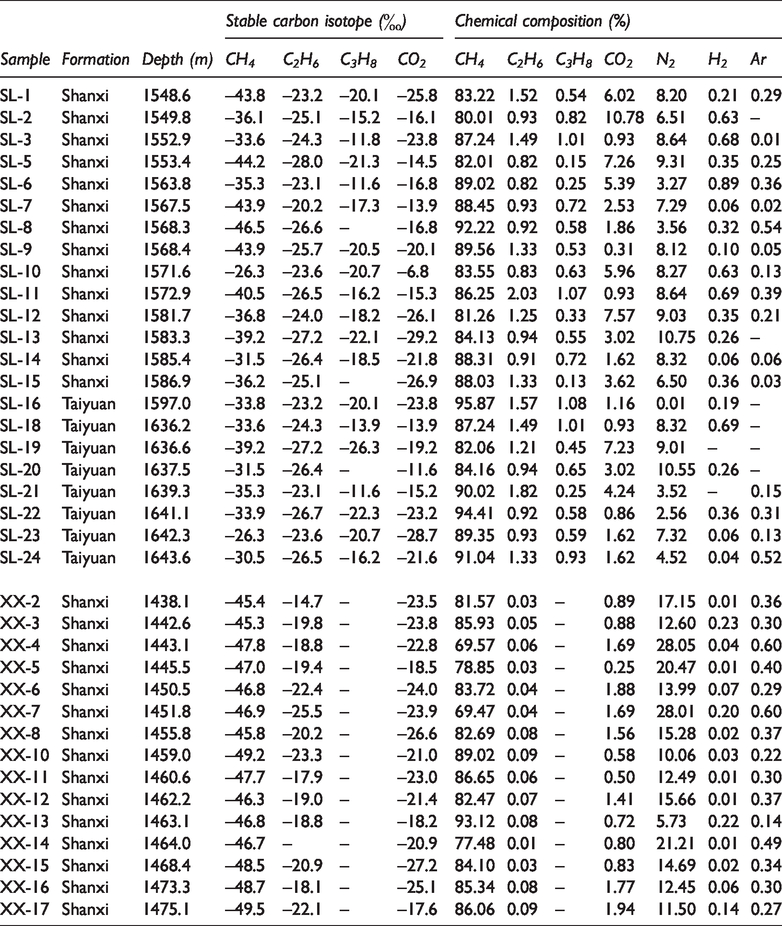
The desorbed gases for the shale samples in the Shilou and Xixian areas of Lower Permian Formation were composed mainly of hydrocarbons, the average contents being 88.9% and 83.2%, respectively. Methane was dominant in the hydrocarbon gas in the study area. The methane content in Shilou was between 80.0% and 95.9%, with an average of 87.1% (Xu et al., 2017). The methane content in Xixian was between 80.1% and 96.3%, with an average of 88.8% (Sun et al., 2017).
Carbon isotope characteristics of alkane gases can be used to reflect the genetic type of natural gas. Generally, the carbon isotope of methane in marine shale gas is heavier than that in continental shale gas, and the carbon isotope of methane in marine-continental transitional shales gas is between the two (Dai et al., 2014a). The carbon isotope distribution of methane in marine shale of Wufeng Longmaxi formation in Sichuan Basin is −26.7‰ to −37.3‰ (Niu et al., 2020); the carbon isotope of terrestrial shale gas in Yanchang Formation of Ordos Basin is mainly distributed in −47.4‰ to −51.2‰ (Chen et al., 2016); the carbon isotope distribution of methane in marine shale gas of Upper Carboniferous Kruke Formation in Qaidam Basin is −39.8‰ to −48.6‰ (Cao et al., 2016). In this study, the carbon isotope distribution of methane in shale gas mainly ranges from −6.3‰ to −49.5‰, with an average value of −40.8‰. The distribution range of most samples is consistent with the distribution characteristics of carbon isotope of methane in marine-continental transitional facies shale gas. Primary thermogenic gases often have a normal carbon isotopic distribution pattern where δ13C values increase with increasing carbon numbers among the C1–C4 alkanes. As shown in Table 3, the gaseous hydrocarbons δ13C1 < δ13C2 in the desorbed gas indicates that the gas in the study area may be of thermal origin, with normal carbon isotopic distribution pattern (Dai et al., 2014a).
Chemical composition and stable carbon isotope of desorbed gas of Shilou and Xixian area in the Ordos Basin (Sun et al., 2017; Xu et al., 2017).
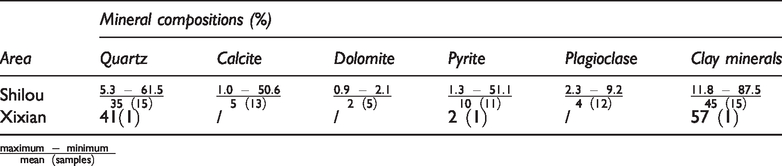
Mineral compositions of shale samples in Shilou and Xixian area in the Ordos Basin.
Pore structure parameters for the shale samples of Shilou and Xixian arae in the Ordos Basin.

In the process of hydrocarbon formation, carbon isotope value of the associated CO2 combined with the alkane gases can be used to identify the genetic type of natural gas (Kotarba and Rice, 2001). Most of the CO2 in China's petroliferous basins are of organic origin. The alkane gas with the characteristics of δ13C1<δ13C2<δ13C3<δ13C4 are associated with CO2 (Dai et al., 1992). Figure 5 shows the relationship between δ13C1 and δ13CCO2 in the study area. It shows that the carbon isotope value of methane in Xixian area is lower than that in Shilou area, but both belong to the scope of thermogenic gas. In Figure 6, the carbon isotope values of methane in Xixian area deviate from the thermogenic region, which is characterized by biogenic gas mixing, which may be affected by water leaching under strong hydrodynamic conditions in Liulin Nose Structure (Sun et al., 2017). In addition, the desorbed gas from Zizhou, Yulin and Daniudi gas fields in Ordos basin also shows the characteristics of thermogenic gas (Hu et al., 2010; Huang et al., 2015; Liu et al., 2015).
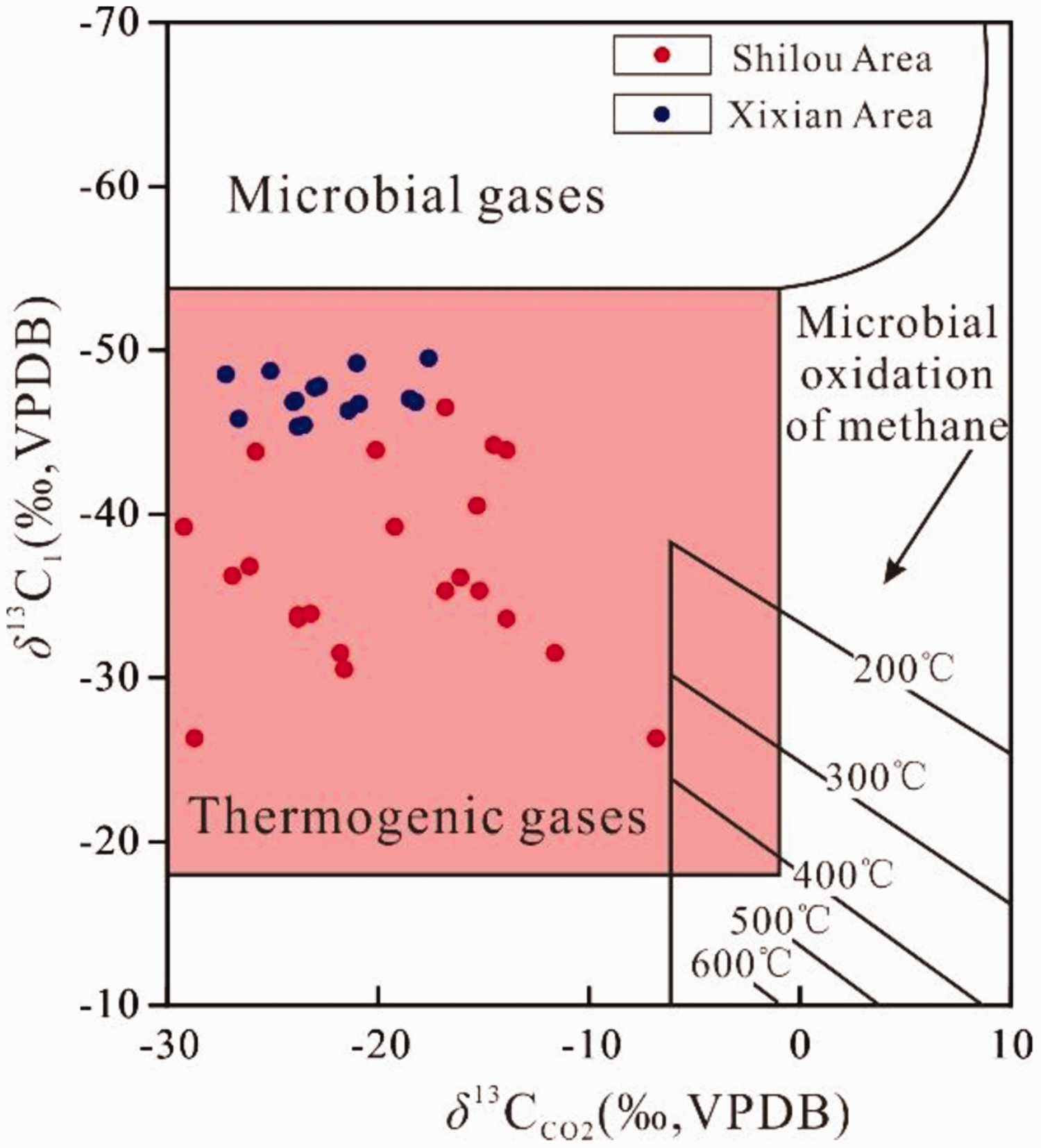
Genetic characterization of analyzed gases from the Shilou and Xixian area using δ13C1 versus δ13CCO2 (Shilou Area, Xu et al., 2017; Xixian area, Sun et al., 2017; modified from Kotarba and Rice, 2001).
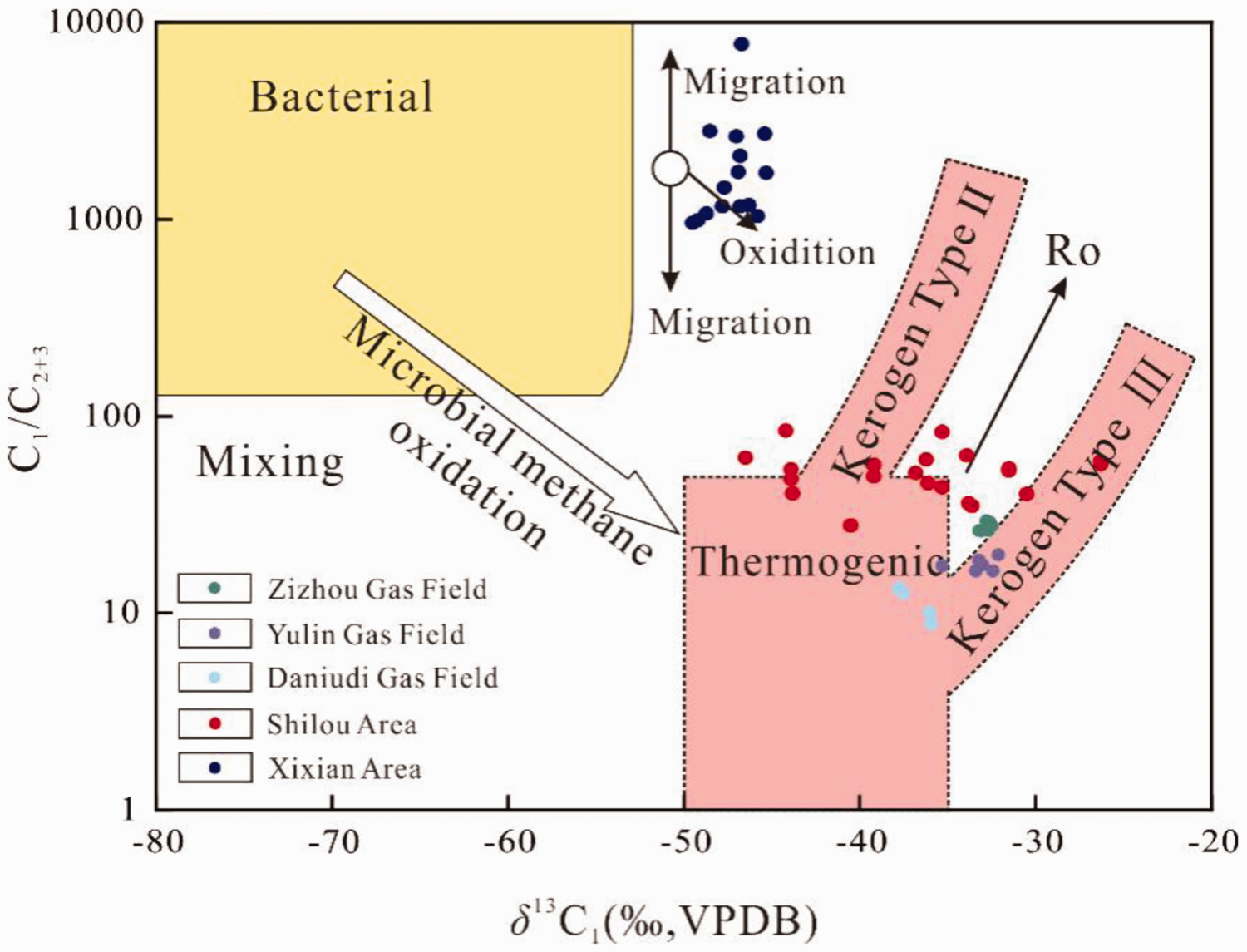
C1/C2 + 3 versus δ13C1 for gases from the Shanxi Formation core samples (Zizhou Gas Fields, Huang et al., 2015; Yulin Gas Fields, Hu et al., 2010; Daniudi Gas Fields, Liu et al., 2015; Shilou Area, Xu et al., 2017; Xixian area, Sun et al., 2017; modified from Whiticar, 1999).
To evaluate the shale gas development potential of the shale in the study area, the shale gas content in the study area was compared to that of the shale in Sichuan Basin (Figure 7). In China, large-scale shale gas fields were successively discovered and developed in the south of Sichuan Basin. According to Pu (2010), the average desorbed gas content of the Longmaxi shale in Sichuan Basin is 1.28 m3/t. In addition, the average desorbed gas content of the Wufeng-Longmaxi Shale Formation in Sichuan Basin is 1.85 m3/t (Zhou et al., 2014). The desorbed gas content in Shilou was between 0.63 and 5.43 m3/t, with an average of 1.79 m3/t (Xu et al., 2017). The desorbed gas content in Xixian was between 0.22 and 0.46 m3/t, with an average content of 0.37 m3/t (Sun et al., 2017). According to the requirement for the lowest commercial production limit of desorbed gas in China (1.0 m3/t, Zhang et al., 2004), the gas content in Shilou exceeds the limit and is comparable to that of the shale in Wufeng-Longmaxi Formation in Sichuan Basin. These results indicate that the Shilou area may be used for commercial shale gas production.
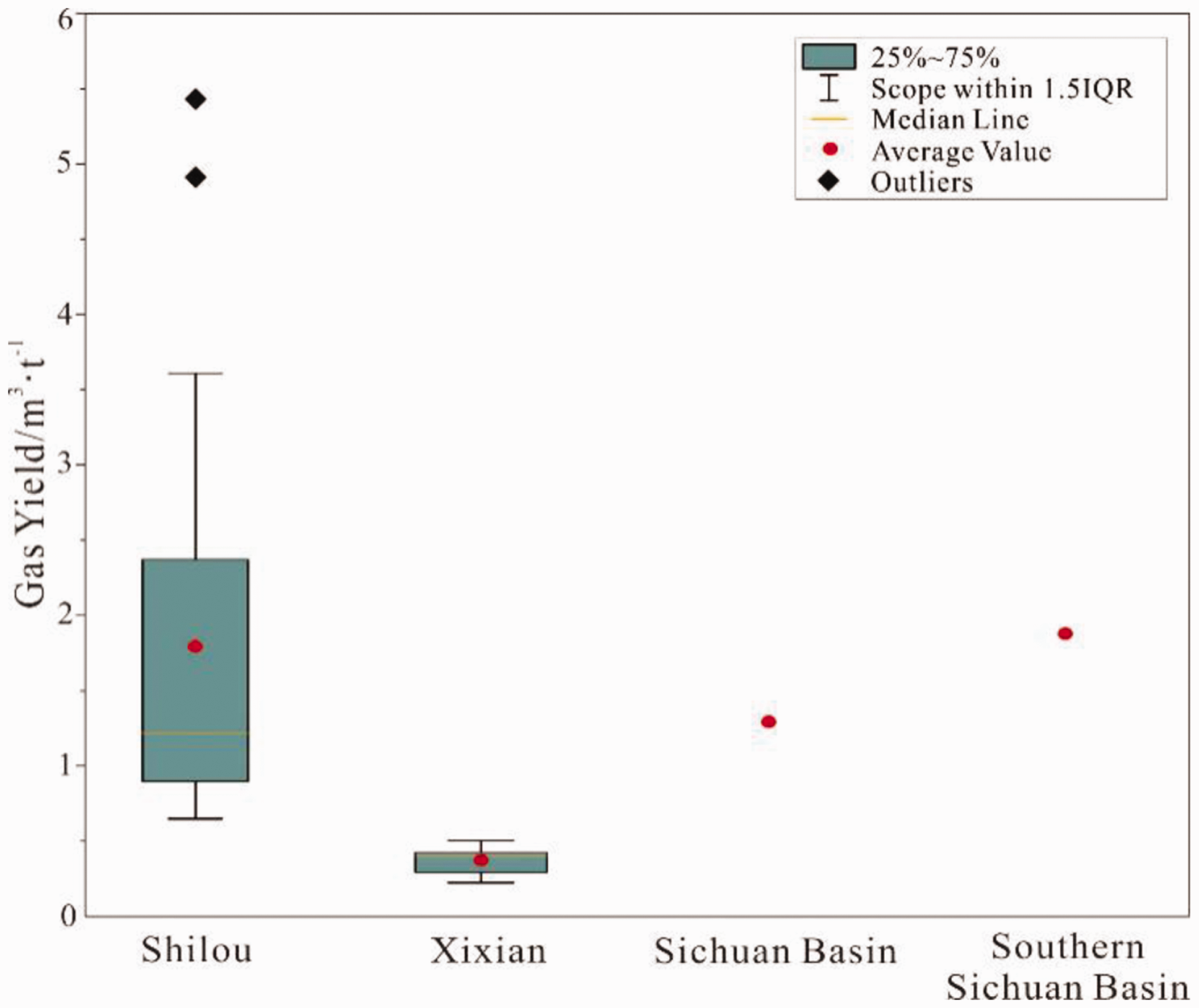
Comparison of desorbed gas content of shale from marine–continental transitional strata in the Ordos Basin and from marine strata in the Sichuan Basin(Sichuan Basin, Pu, 2010; Southern Sichuan Basin, Zhou et al., 2014; Xixian Area, Sun et al., 2017; Shilou Area, Xu et al., 2017).
Analysis of the gas bearing difference in the study areas
The distance between Shilou and Xixian is approximately 42 km. Both of them are located in Yonghe-Shilou Anticline on N-S Trending Jinxi Folding Belt in the eastern margin of Ordos Basin. The shale samples in the study areas were formed mainly in the transitional environment, experienced similar geological processes, and reached a high-maturity evolution stage (Xiao et al., 2005). However, the shale gas contents of the two places were considerably different. The average gas content of the shale in Shanxi-Taiyuan Formation in Shilou was 1.79 m3/t, while the average contents of desorbed gas of Shanxi and Taiyuan Formation were 2.13 and 1.23 m3/t, respectively. However, the average content of desorbed gas in Xixian was 0.37 m3/t. The organic content and physical properties of the reservoir were evaluated to analyze the gas bearing difference between the study areas.
Organic matter content
The strong correlation between the TOC of the shale and gas bearing property has been confirmed in the US Barnett shale, Yanchang shale in Ordos Basin, and Longmaxi shale in Sichuan Basin in China (Dong et al., 2015; Lin et al., 2013; Pu, 2010; Zhang et al., 2004). As shown in Figure 8 and 9, the TOC values of the shale samples in the study areas also exhibited strong correlations with the gas content. The average TOC values of the shale samples in Shilou and Xixian were 7.1% and 2.1%, respectively (Sun et al., 2017; Xu et al., 2017). The average TOC of the shale samples in Shilou was significantly higher than that in Xixian, which reflects the higher gas content in Shilou. The difference in organic matter content between the two places may be attributed to the large lateral change in the transitional environment. Thus, the organic matter was unevenly distributed in the plane and generated multiple sedimentary centers, which led to changes in thickness and organic carbon content of the organic rich shale in the adjacent area (Li et al., 2015). Paq and Pwax also indicate abundant terrestrial higher plants in the sediment source of the Shilou area. The terrestrial higher plants, typically type-III organic matter, largely contribute to gas generation, which partly explains the type of organic matter affecting the shale gas generation capacity in the two places (Guo et al., 2011; Nie et al., 2018; Tan et al., 2014).
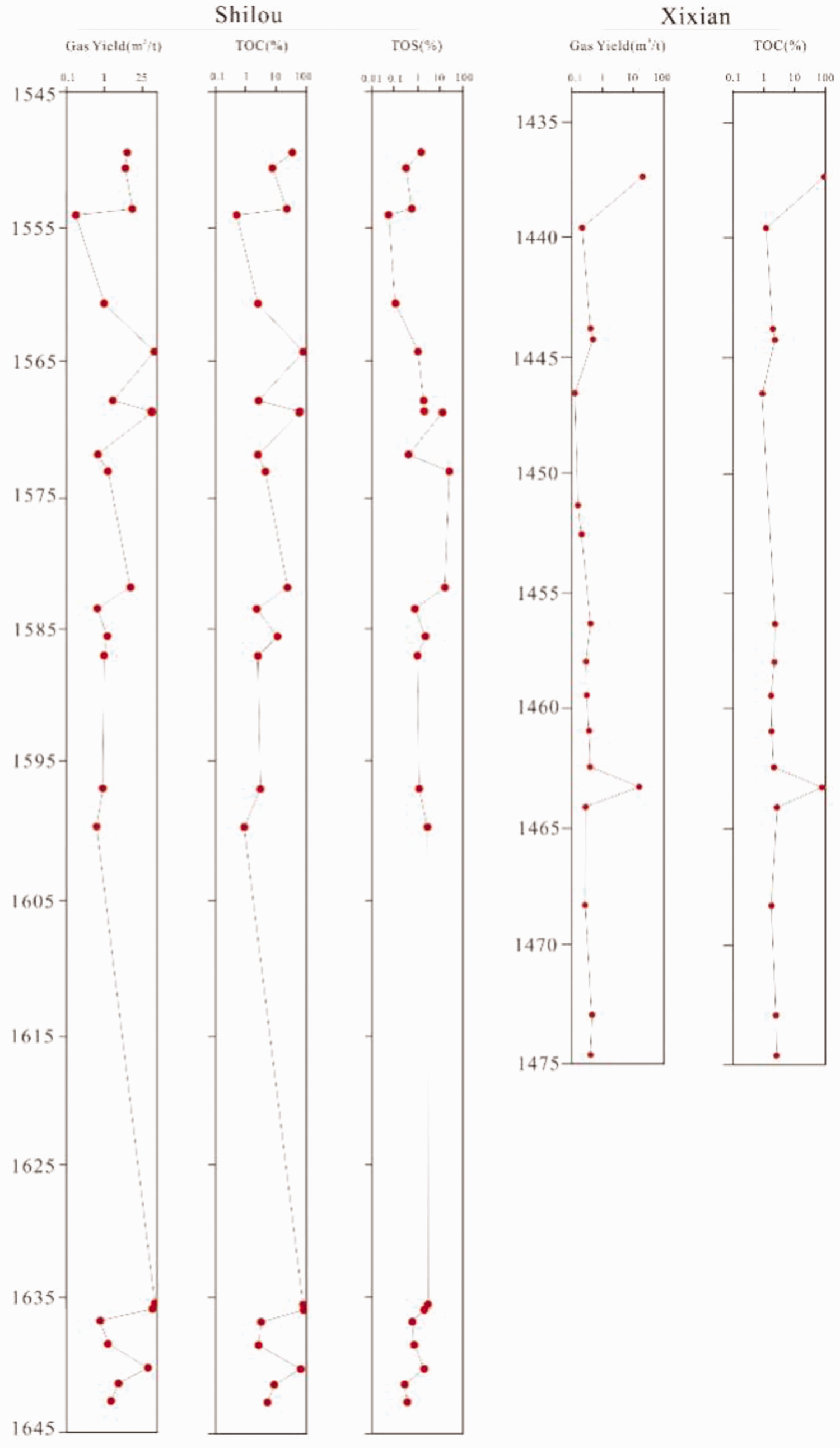
Geochemical characteristics of the drilled section of well SSL23 and SSL33(Sun et al., 2017; Xu et al., 2017).
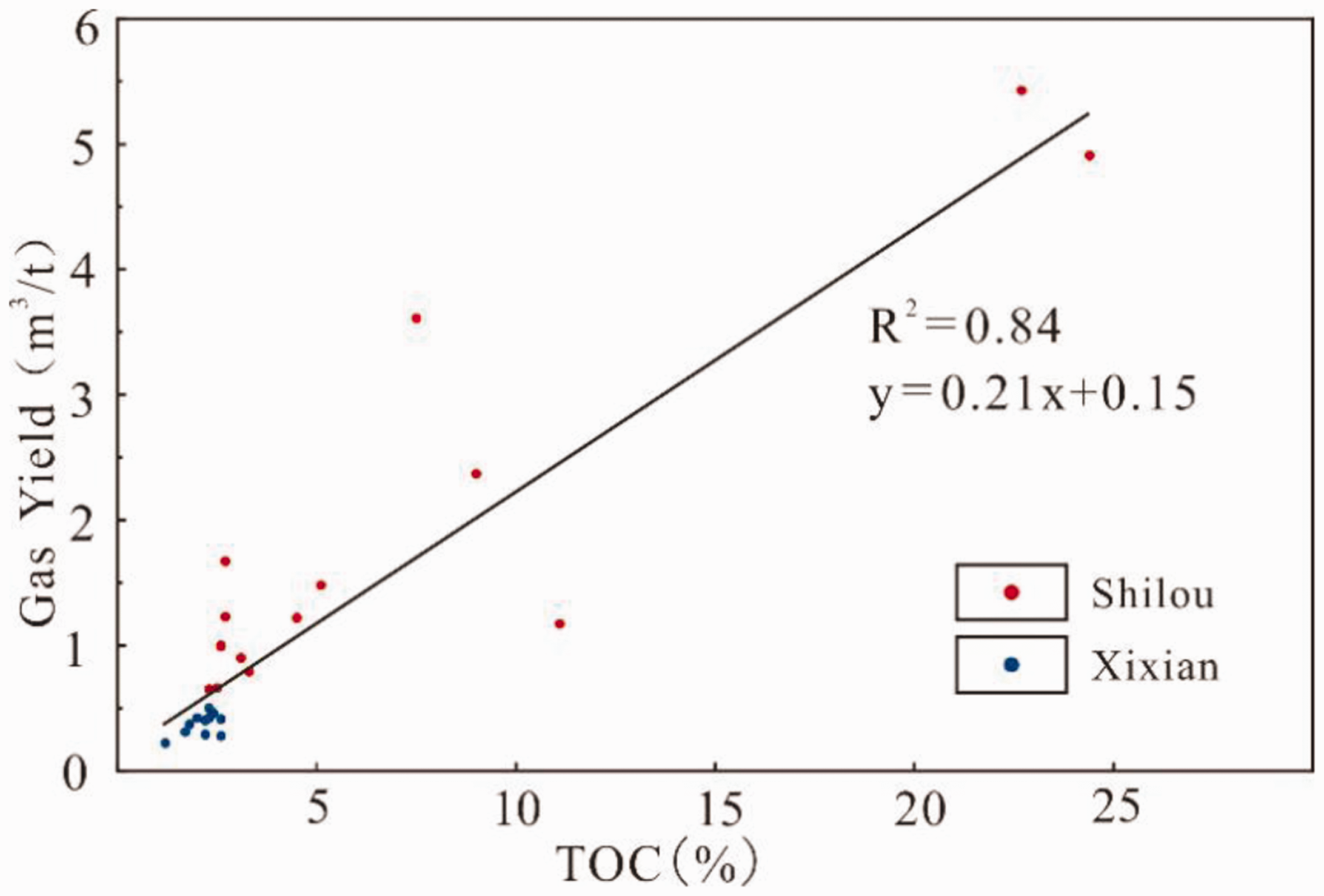
The relationship of desorbed gas content with TOC for shale samples of Shilou and Xixian arae in the Ordos Basin (Shilou Area, Xu et al., 2017; Xixian area, Sun et al., 2017).
Physical properties of the reservoir
Material composition
Pores are the main reservoir spaces of shale gas. The fracture system is the main channel of gas migration. Various factors affect the porosity development in shale reservoir rocks including the organic carbon content, evolution stage, organic matter type, and mineral composition (Ross and Marc Bustin, 2009; Zhou et al., 2014). Organic carbon content, evolution stage, and type of organic matter are the major factors that affect the development of organic pores in shale. In general, the porosity of the shale increases with the organic carbon content and maturity (Nie et al., 2018; Tan et al., 2014). The minerals in the shale are composed mainly of quartz, carbonate, and clay. The different mineral compositions in shale reservoir rocks have different effects on porosity. Quartz is a brittle mineral, which easily forms microcracks and improves the permeability of the shale. Micropores are formed in clay minerals and between particles, which can increase the pore space of the shale (Chalmers et al., 2012).
Based on X-ray diffraction results, quartz and clay minerals are the major components of the shale samples in the study area (Table 4). Feldspar, calcite, dolomite, and pyrite are minor constituents of the shale, with average contents below 10%. The average contents of quartz and clay minerals in the Shilou area were 40% and 47%, respectively. In the Xixian area, the average content of quartz was 41%, while that of clay was 57%. A small difference in main mineral composition existed between the two places.
Pore structure characteristics
In the shale reservoir, the gas is mainly stored as adsorbed gas on the surfaces of minerals and organic matter and as free gas in fractures and pores. The pore structure characteristics of shale reservoir rocks have significant effects on the adsorbed gas (Chalmers et al., 2012; Ross and Marc Bustin, 2009). As shown in Table 5, the total pore volumes of the shale samples in Shilou and Xixian were similar. However, the average pore diameter and specific surface area were considerably different, which may be related to the different pore structures in the two places. Previous studies showed that the organic pores of the shale increased upon hydrocarbon generation. A higher content of organic matter led to a higher porosity increase (Guo et al., 2011; Zhang et al., 2004). However, the average total pore volume of the shale samples in the Shilou area was smaller than that in the Xixian area. The content of organic matter in the Shilou area was high. With the increase in maturity, the generated macromolecular residual hydrocarbons block the micropores, which leads to an increasing content of larger pores among the effective pores. As discussed above, this reduced the specific surface area and total pore volume and increased the average pore diameter of the shale in the Shilou area.
Compared to the Xixian area, the samples in Shilou had higher contents of organic matter and generated larger numbers of hydrocarbons at the high maturity. Although the residual hydrocarbons may block the micropores and affect the pore structures of the shale reservoirs, the organic matter content is still the material base for shale gas generation. Thus, a high organic matter content implies a high shale gas production, which is the main factor affecting the gas content of the marine–continental transitional shales in the study area.
Optimization of favorable layer in the Shilou area
In Late Carboniferous to the end of Permian, dominated by the Hercynian movement, multiple transgressions and retreats formed in the Shanxi-Taiyuan strata in the transitional environment. The average desorbed shale gas contents of Shanxi and Taiyuan Formation in the Shilou area were 2.13 and 1.23 m3/t, respectively. The average desorbed shale gas content of Shanxi Formation was higher than that of Taiyuan Formation. The average TOC values of the shale samples of Shanxi and Taiyuan Formation were 8.3% and 4.0%, respectively (Sun et al., 2017; Xu et al., 2017). During the period of Taiyuan to Shanxi Formation, the sedimentary environment changed from epicontinental sea facies to marine–continental transitional facies, which repeatedly changed between weak reduction and oxidation environments. In addition, the changes in average Paq and Pwax indicate that the proportion of terrestrial higher plants increased and that the climate gradually became dry. Figure 9 shows that the total organic and sulfur contents are consistent. The high sulfur content implies a reduction environment during transgression, which is conducive to the preservation of organic matter (Gautier, 1986; Zhang et al., 2004).
The contents of clay minerals in the two formations were significantly different. In Shanxi Formation, the average quartz content was 45%, while the average clay mineral content was 36%. However, the average quartz content of Taiyuan Formation was 33%, while the average clay mineral content was 61%. In Shanxi Formation, the quartz mineral content was high, which is beneficial for formation of fractures. The low clay mineral content prevents pore throat blocking, which improves the connectivity and permeability of the shale (Chen et al., 2017).
From Taiyuan to Shanxi Formation, the pore specific surface area and total pore volume of the shale sample decreased, while the average pore diameter increased with the quartz content (Table 6). However, the increase in quartz content does not improve the adsorption capacity of the shale. On the contrary, owing to the increase in quartz content and relative decrease in clay mineral content, the specific surface area and total pore volume of the shale decreased (Tan et al., 2014).
Pore structure parameters for the shale samples of Shanxi-Taiyuan Formation in Ordos Basin.

Based on the above analyses, the organic carbon content and clay minerals are the main factors affecting the shale gas properties in the study area. In the reduction environment formed by multi-stage transgression, abundant parent material accumulated for hydrocarbon generation during the Shanxi period. Thus, the TOC content of Shanxi Formation was higher than that of Taiyuan formation, which implies a better material basis for shale gas generation. The content of quartz was high, while that of clay minerals was low in the shale of Shanxi Formation. Therefore, the pores and fractures formed by quartz are favorable for hydrocarbon expulsion and fracturing.
The comparison of gas properties in Shilou and Xixian (Shanxi and Taiyuan Formations) shows that the shale gas production is controlled mainly by the organic matter content and type and content of inorganic minerals. The organic matter is the material basis for hydrocarbon generation. During the hydrocarbon expulsion, organic pores formed and the porosity of the reservoir increased. The pore system development was affected mainly by inorganic minerals. Large numbers of micropores and mesopores formed inside the clay minerals and particles, which increased the reservoir space for shale gas. Moreover, the quartz formed large fractures and improved the reservoir permeability. In conclusion, the organic matter content of the Lower Permian Shanxi-Taiyuan Formation in the Shilou area was relatively high. The reservoir conditions of Shanxi Formation are better than those of Taiyuan Formation, which suggests better gas generation conditions.
Conclusion
The Lower Permian Shanxi-Taiyuan Formation in the eastern margin of Ordos Basin is a set of organic shales with high TOC content and maturity. The organic matter includes types II2 and III, which originate from terrestrial higher plants and lower aquatic algae. Dominated by the weak reduction to oxidation environments in the Shanxi-Taiyuan period, the geological conditions in the study area are conducive to accumulation of shale gas. Permian shale is a set of marine–continental transitional strata, which has not been commercially exploited in China. In Ordos Basin, the marine–continental transitional organic-rich Permian shale is widely distributed. The average desorbed gas contents of the shales in the Shilou and Xixian areas were 1.79 and 0.37 m3/t, respectively. The gas content in the Shilou area exceeds the lowest limit of commercial production of shale gas and is comparable to that of the shale in Wufeng-Longmaxi Formation in Sichuan Basin. In the eastern margin of Ordos Basin, the lower Permian marine–continental transitional shales in the Shilou and Xixian areas (Shanxi and Taiyuan Formations) had different gas bearing characteristics. The content of organic matter was the main controlling factor affecting the shale gas properties in the study area. The composition and content of inorganic minerals affected the pore spaces in the reservoirs. The Shilou area is better than the Xixian area in terms of geochemical characteristics and gas bearing properties. Therefore, Shanxi Formation has a larger shale gas generation potential, which makes it the key stratum for exploration and development in the future.
Footnotes
Declaration of conflicting interests
The author(s) declared no potential conflicts of interest with respect to the research, authorship, and/or publication of this article.
Funding
The author(s) disclosed receipt of the following financial support for the research, authorship, and/or publication of this article: This work was financially supported by the National Natural Science Foundation of China (Grant Nos. 41831176, 41902028 and 41972030), the National Key R&D Program of China (Grant No. 2017YFA0604803), the Chinese Academy of Sciences Key Project (Grant No. XDB26020302), the Second Tibetan Plateau Scientific Expedition and Research (STEP) Program (Grant No. 2019QZKK0707), and the CAS “Light of West China” Program.