




Abstract
The Lower Permian Shanxi Formation marine–continental transitional organic-rich shale is one of the most important potential shale gas plays in the Ordos Basin, China. However, the content and origin of desorbed gas from the Shanxi Formation are poorly documented, limiting the understanding of gas generation and potential play elements. Geochemical characteristics of desorbed gas, including content and origin, are analyzed from 17 core samples of the Shanxi Formation from well SL-1. The results show that the Shanxi Formation shales in the study area are characterized by high total organic carbon content of 1.17–2.63%, type III organic matter, and high Tmax between 493 and 513℃. The desorbed gas content of the shale samples varies from 0.22 to 0.50 m3/t, with an average of 0.37 m3/t, and shows a positive correlation with total organic carbon. The gases are dominated by methane (69.57–89.02%), with small amounts of ethane (0.01–0.09%). The carbon isotopic signature δ13C1 ranges from −49.5 to −45.3‰, and the δ13C2 ranges from −23.3 to −14.7‰. In addition, gases released from the Shanxi Formation core samples are thermogenic in origin and possibly coal derived, as the Whiticar chart and the diagram of ethane versus δ13C2 suggest.
Introduction
Organic-rich shales are potentially significant unconventional hydrocarbon resources and have received remarkable attention in the past few years (Hill et al., 2007; Strapoc et al., 2010; Wang et al., 2015; Zhang et al., 2012). Shale gas is derived from the biodegradation and/or the thermal maturation of retained organic matter, and stored in shale reservoirs mainly as free gas in fractures and pores, adsorbed gas on the surface of inorganic minerals and in organic matter, and slightly dissolved gas in oil and water (Jarvie et al., 2007; Strapoc et al., 2010; Zhang et al., 2012). Unlike conventional natural gas resources, which are buoyancy-driven discrete accumulations in stratigraphic or structural traps (Law and Curtis, 2002), the shale gas is generated and stored in a low-porosity and low-permeability shale, which acts as both the source rock and reservoir rock (Hill et al., 2007). With the development of horizontal drilling and hydraulic fracturing, shale gas exploration has achieved remarkable success in the United States, which fueled high enthusiasm for investigation into the potential of shale gas worldwide (Jarvie et al., 2007).
In contrast to the United States, where shales were deposited in foreland marine settings, China has organic-rich shales from various depositional environments, including marine, marine–continental transitional, and lacustrine (Zou et al., 2010). After nearly 10 years of exploration, gas has been discovered in multiple shale units across China, including the Paleozoic marine shale in the southern Sichuan Basin and the Mesozoic lacustrine shale in the Ganquan Xiasiwan area of the Ordos Basin (Dai et al., 2016). The widely distributed Paleozoic shale in the southern Sichuan Basin was mainly deposited in a deep marine shelf depositional environment and has a thickness of 40–500 m; these Paleozoic marine shales are characterized by high total organic carbon (TOC) (1–8%) and vitrinite reflectance (Ro) (1.3–5%) as well as type I and/or II1 kerogen (Dai et al., 2016; Jiang et al., 2016). The Chang 7 shale in the Ordos Basin was deposited in a deep to semideep lacustrine environment and has a thickness ranging from 40 to 100 m; Chang 7 lacustrine shale has extremely high TOC (6–14%) and low Ro (mostly less than 1.2%), and the kerogen is type II1 and/or II2 (Dai et al., 2016; Wang et al., 2015). Moreover, multiple marine–continental transitional organic-rich shales were deposited from the Carboniferous to Permian, in northern and northwestern China and on the Yangtze Platform, that possess great potentials for shale gas exploration (Jiang et al., 2016). However, the marine–continental transitional black shale is frequently interbedded with coal seams, argillaceous shales, and sandy shales, evidence of the complexity of geological conditions at the time of deposition. Commercial success has not been achieved in the Lower Permian Shanxi Formation (Dang et al., 2016).
The southeastern margin of the Ordos Basin is one of the most important coalbed methane exploration targets in China, and many wells exist in the field (Li et al., 2014). The Lower Permian Shanxi Formation contains organic-rich shale that was deposited in a marine–continental transitional environment. This shale, which is generally interlayered with coalbeds (Li et al., 2016), provides an ideal formation to investigate the properties of shale gas. A series of studies have been carried out on the gas generation, resource potential, and reservoir characterization of marine–continental transitional shale in the southeastern Ordos Basin (Tang et al., 2016; Yan et al., 2015). However, the geochemical characteristics, as well as the origin of the gases in this field, have received little attention and are more poorly understood. Here, we present the geochemical observations (TOC, Tmax, chemical composition, and stable carbon isotopes) to describe the content of desorbed gas of the Upper Paleozoic Shanxi Formation shale from core samples of well SL-1 in the Ordos Basin and to provide a more comprehensive understanding of its origin.
Geological setting
The Ordos Basin is located in northern-central China (Figure 1(a)) and is the second largest sedimentary basin in China, with an area of approximately 37 × 104 km2. The Ordos Basin contains up to 10 × 108 metric ton of oil in its Mesozoic reservoirs (Duan et al., 2008), and natural gas reserves up to 1789.3 × 109 m3 (Feng et al., 2016). The basin has six major substructures: the Jinxi Fold Belt in the east, the Tianhuan Depression and Western Edge Thrust Belt in the west, the Weibei Uplift in the south, the Yimeng Uplift in the north, and the central Yishan Slope (Figure 1(a)) (Duan et al., 2008).
(a) Location of the study area and the substructure zones of the Ordos Basin (modified from Duan et al., 2008). (b) Stratigraphic columns and depositional environments of the Ordos Basin (modified from Wang et al., 2015).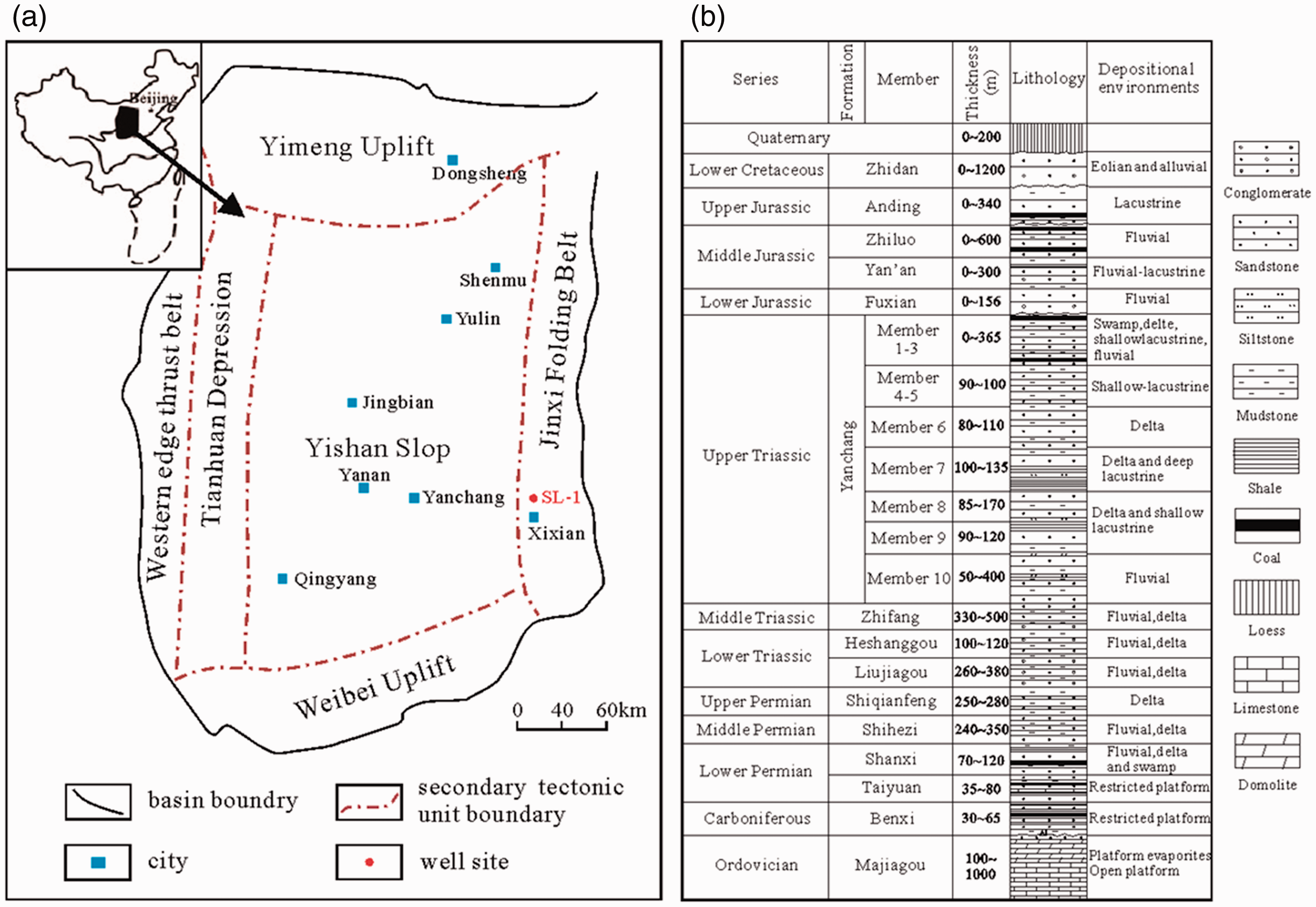
The long-lived polycyclic Ordos Basin formed from the middle Proterozoic to the Tertiary; Paleozoic, Mesozoic, and Cenozoic sedimentary strata were developed and preserved in the basin (Figure 1(b)) (Yang et al., 2005, 2016). During the late Early Ordovician, the basin experienced a marine transgression that resulted in the deposition of the Majiagou Formation in the interior of the basin (Yang et al., 2005). The depositional environment was characterized by tidal flats during the Benxi deposition and evolved from the tidal-flat and shallow-marine Taiyuan environments to a fluvial-deltaic environment during the Early Permian Shanxi deposition. The Xiashihezi Formation was deposited onto the Shanxi Formation along with the fluvial sandstones (Gao and Wang, 2017; Guo and Liu, 1999; Li et al., 2016; Yang et al., 2005). The polycyclic fluvial-lacustrine clastic rocks deposited from the late Triassic to Cretaceous in the Ordos Basin formed the Triassic, Jurassic, and Cretaceous Formations (Wang et al., 2015).
The study area is located in the Jinxi Fold Belt (Figure 1(a)) along the southeastern margin of the Ordos Basin. This area experienced multiple tectonic events since the Mesozoic and experienced more tectonic deformation than the internal areas of the Ordos Basin (Wang et al., 2010). In the study area, the main coal-bearing sequences are in the Taiyuan Formation and Shanxi Formation, and the net coal seam thicknesses are 4.49 and 5.73 m, respectively (Ding et al., 2012). The No. 4 and No. 5 coal seams in the Shanxi Formation are the primary sources for coalbed gas development, with a total thickness ranging from 0.5 to 30 m (Chen et al., 2015). Previous work has been performed to determine the geochemical characteristics and origin mechanism of the coalbed methane in this area (Li and Zhang, 2013; Li et al., 2014). In contrast, little attention has been paid to the geochemical characteristics of gases from the lower Permian marine–continental transitional shale associated with these coals. Shales from the Shanxi Formation are widely distributed and have a thickness ranging from 10 to 50 m (Li et al., 2016). The shale lithology includes dark gray and black shale, interbedded with coal and tight sandstone (Yan et al., 2015). Due to its extent and high TOC of 2–7%, the Shanxi Formation shale is one of the main shale gas exploration targets in the Ordos Basin (Jiang et al., 2016; Li et al., 2016).
Sampling and experiments
Sampling
This study used 17 Shanxi Formation core samples from a depth of 1435 to 1476 m from well SL-1 (Figure 1(a)). The lithology of the core samples included gray thinly bedded fine sandstone, coal, and thick black shale (Figure 2). Freshly retrieved cores were immediately placed into a transparent sealed canister filled with saturated salt water and then immersed upside down in water for transportation.
Petrological characterization and geochemical log of the drilled section of SL-1 well that corresponds to the cored section samples in this study.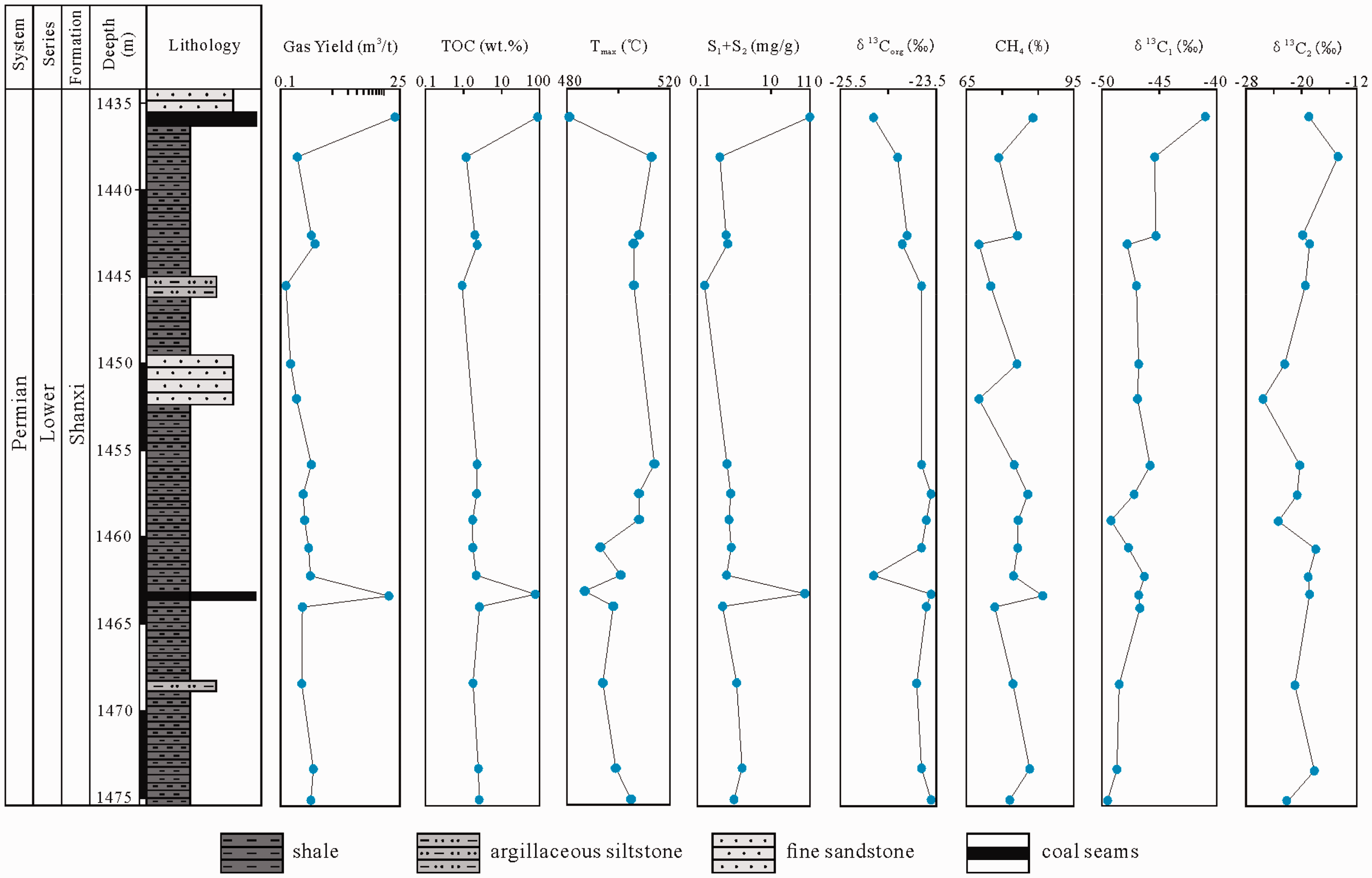
Desorption experiments
The desorption experimental setup and gas collection method used in this study follows the procedure described in Wang et al. (2015). Gas samples were collected at temperatures of 20, 60, 80, 90, and 100℃, and then the desorbed gas content was measured. The ambient temperature (20℃) was used to measure the free gas quantity, and 60℃ was the estimated in situ reservoir temperature (assuming that the surface temperature was 20℃ and the geothermal gradient was 30℃/km) used to measure the geochemical character of gases at reservoir conditions. The temperatures of 80, 90, and 100℃ were tested to ensure that the adsorbed gas was completely released. Each temperature test was finished when the released gas fell below 5 ml within a 5 h window.
Gas geochemical analysis
The chemical compositions and stable carbon isotopes of the gas samples were analyzed in the Key Laboratory of Petroleum Resources Research, Institute of Geology and Geophysics, Chinese Academy of Sciences, Lanzhou, China. Chemical compositions were determined using the MAT 271 mass spectrometer, and the concentration of gas was calculated according to the national standards (State Standard of China GB/T 6041-2002 and GB/T 10628-89). Stable carbon isotopes were measured on a Finnigan Mat Delta Plus mass spectrometer interfaced to an HP 5890 II gas chromatograph. Individual hydrocarbon gas components and CO2 were separated using a fused silica capillary column (PLOTQ 30 m × 0.32 mm) in the gas chromatograph. Stable isotope ratios for carbon are reported in δ-notation in parts per mil (‰) relative to Vienna Pee Dee Belemnite. The measurement precision was estimated to be ±0.5‰ for δ13C.
Results and discussion
Geochemical characteristics
Geochemical characteristics of the core samples and the chemical composition and stable carbon isotope of desorbed gas.
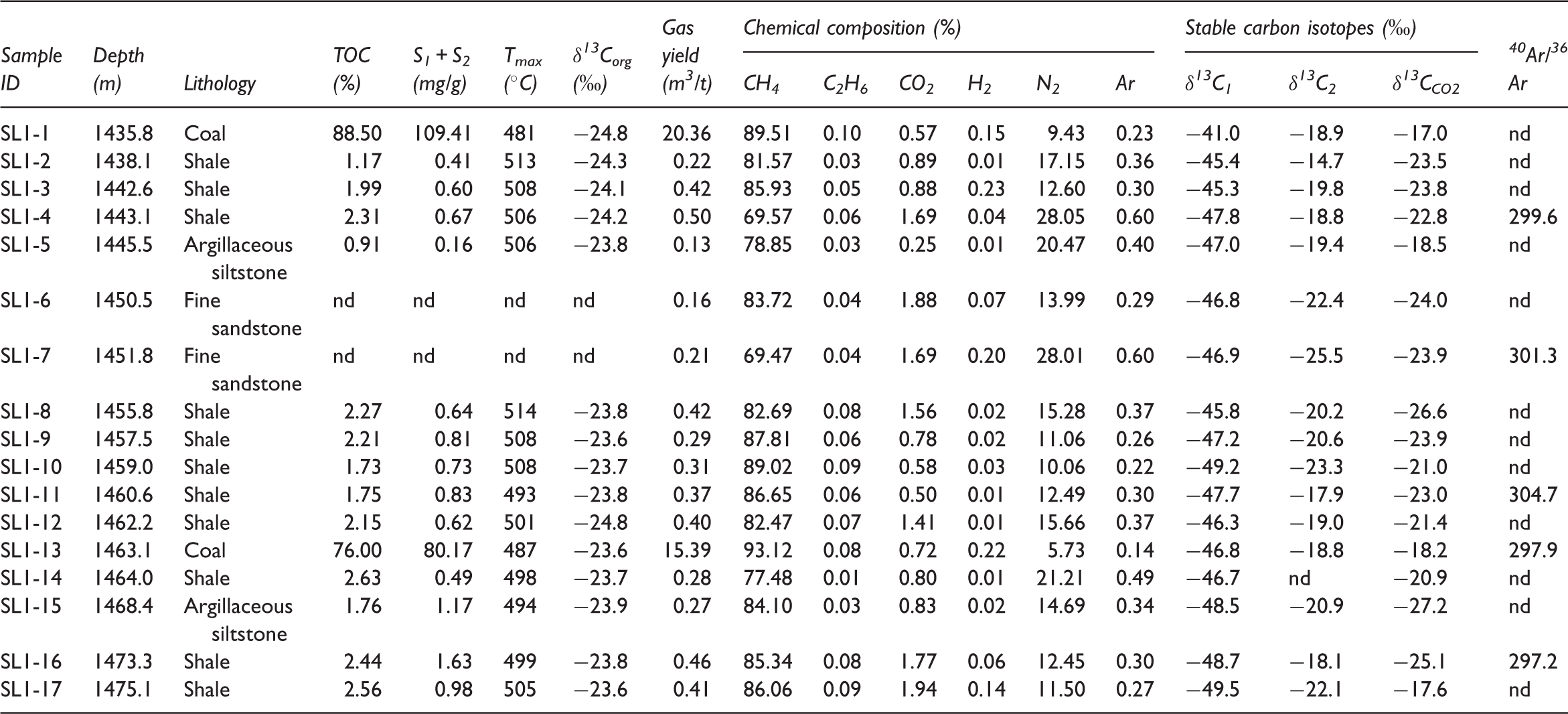
nd: no data; TOC: total organic carbon.
The maximum temperature at the S2 peak, Tmax, ranges from 481 to 513℃. Thus, all samples are above 470℃ and fall in the gas window according to Peters (1986). Previous studies have shown that the average Ro of the Shanxi Formation shale in the eastern Ordos Basin is 1.89% (Lan et al., 2016), indicating a highly matured organic matter. Moreover, all Shanxi Formation shale samples have organic carbon isotopic compositions (δ13Corg) ranging from −24.8 to −23.6‰, indicating that they contain type III organic matter according to the evaluation standard presented by Hu and Huang (1991) (Figure 3).
The organic carbon isotopic compositions (δ13Corg) of the core samples.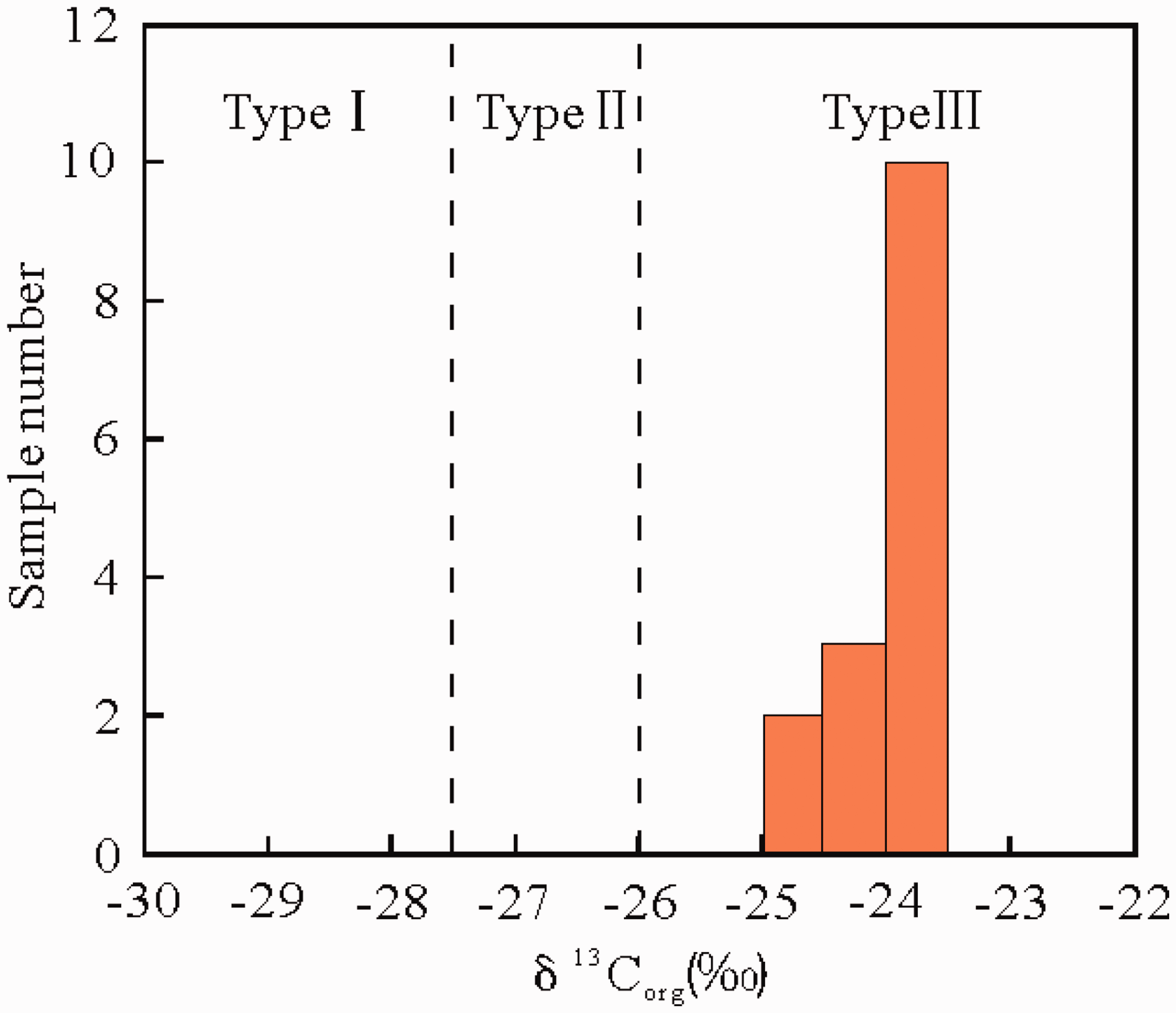
The content and constraints of desorbed gas
The evaluation of shale gas content is very important for resource potential evaluation and productivity prediction (Strapoc et al., 2010). The desorbed gas content of samples at different temperatures is shown in Figure 4. At ambient temperature (20℃) the amount of gas released was relatively low, except for the coal samples which reached up to 12.91 m3/t; however, the amount of gas released at the reservoir temperature (60℃) was significantly greater. At high desorption temperatures (80, 90, 100℃), the amount of released gas was in equilibrium. The desorbed gas contents of shale samples varied from 0.22 to 0.50 m3/t with an average value of 0.37 m3/t. The average desorbed gas content of coal, fine sandstone, and argillaceous siltstone was 17.88, 0.19, and 0.20 m3/t, respectively.
Plot of desorbed gas content of fine sandstone, argillaceous siltstone, shale, and coal samples at different desorption temperatures (arrows correspond to the ordinate).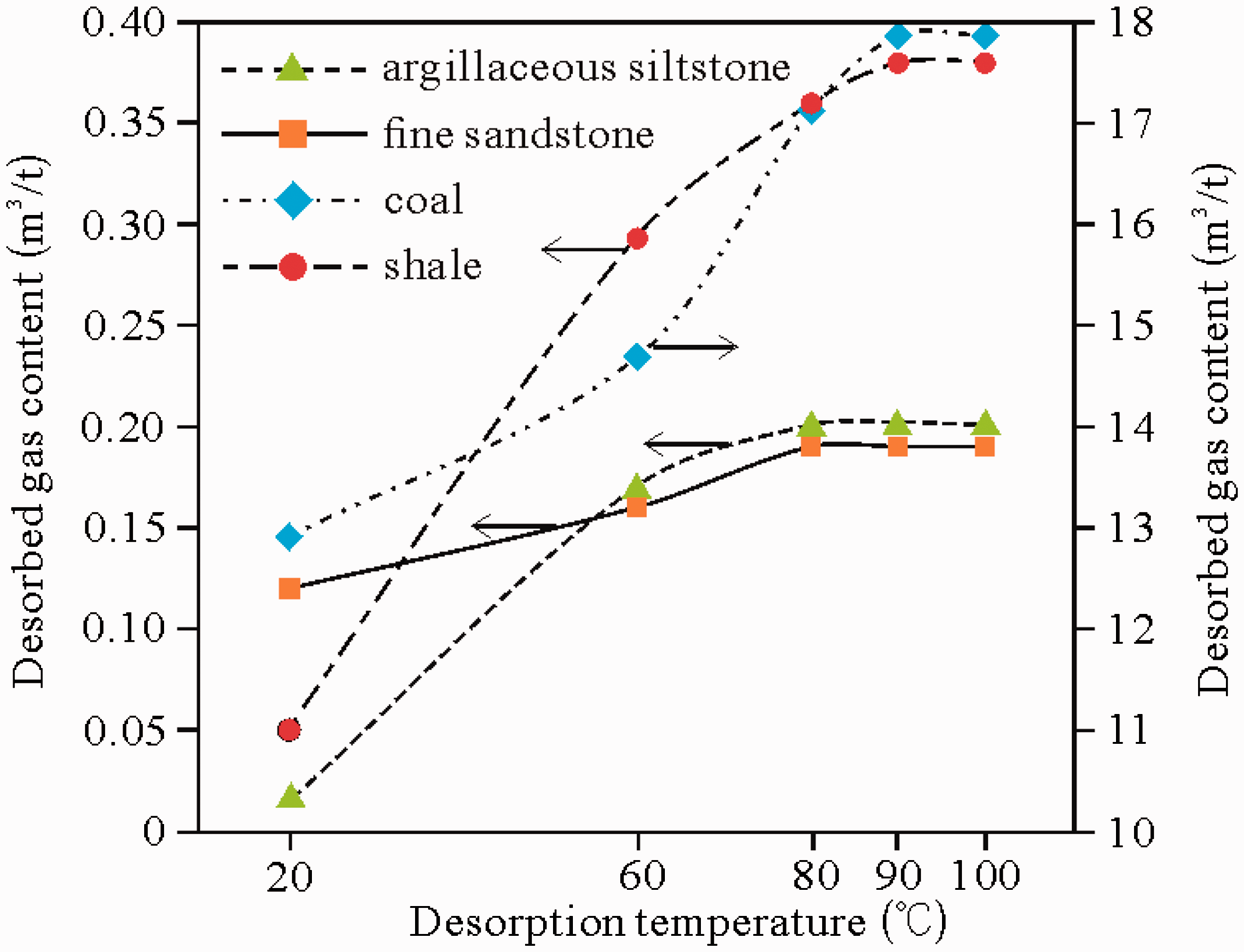
Following previous studies of the Longmaxi Formation marine shale in the Jiaoshiba area (Zhang et al., 2015) and Chang 7 lacustrine shale in the Xiasiwan area (Fan et al., 2017), the desorbed gas content of shales from various depositional environments was compared (Figure 5). As shown in Figure 5, the mean desorbed gas content of the marine–continental transitional shale (0.37 m3/t) is lower than both the marine (0.79 m3/t) and terrestrial (1.29 m3/t) shale, but the desorbed gas content of the Shanxi Formation shale falls in a similar range as the Longmaxi Formation. This indicated that the marine–continental transitional shale of the Shanxi Formation in the Ordos Basin has a potential for shale gas exploration.
Comparison of desorbed gas content of shales in different depositional environments (marine, Zhang et al., 2015; terrestrial, Fan et al., 2017).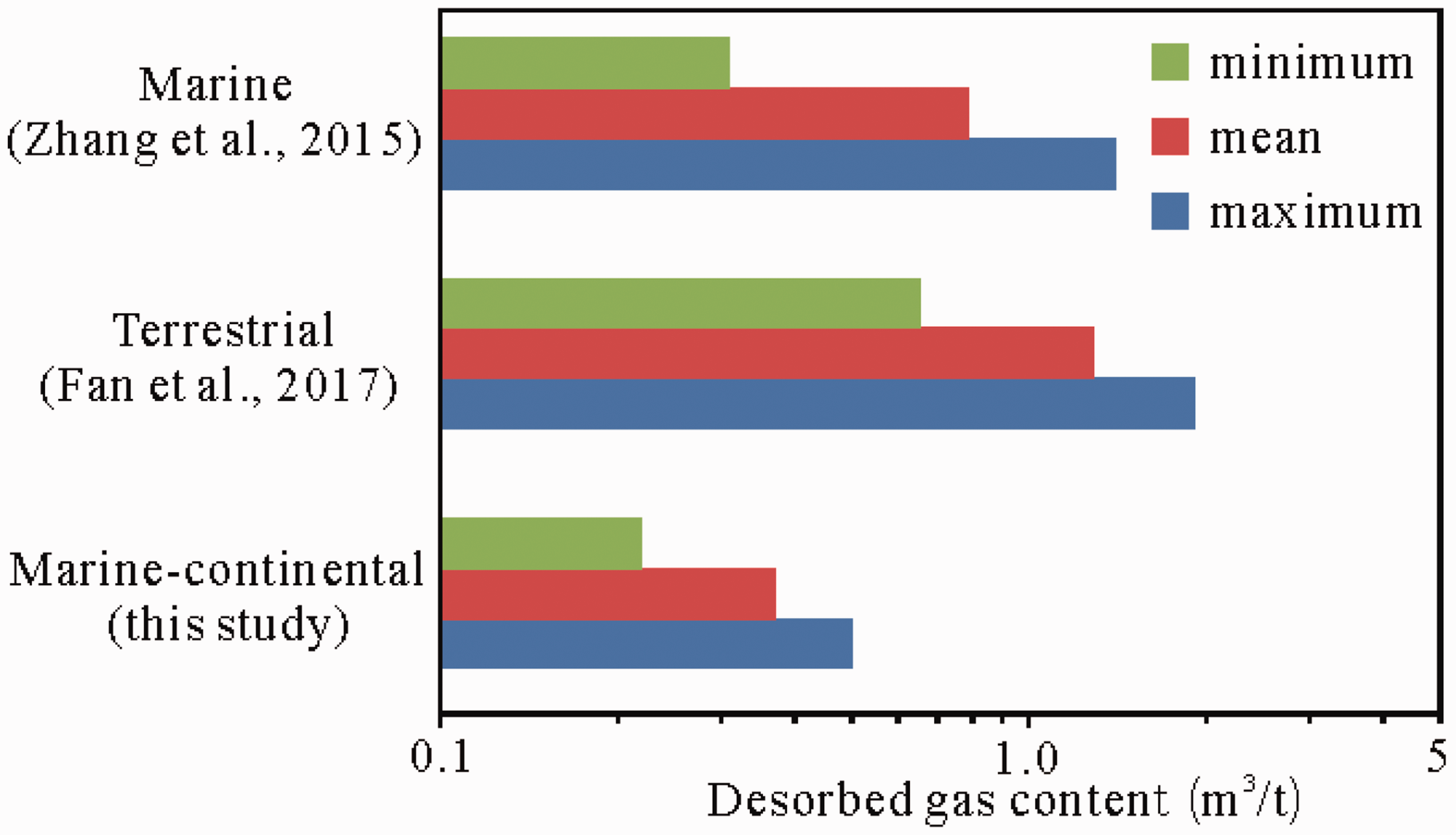
The amount of desorbed gas shows a positive correlation with TOC (Figure 6). Strong correlations between total gas and TOC (R2 of approximately 0.7–0.9) were also found from canister desorption of fresh cores from the Devonian–Mississippian New Albany Shale in the Illinois Basin, United States (Strapoc et al., 2010), indicating that the organic matter content is primarily responsible for total gas content in these shale samples. Based on the experiments of high-pressure methane adsorption of the Longmaxi shale samples, Pan et al. (2016) found that the adsorbed gas capacity of the samples positively correlated to TOC. The quantity of organic matter in shales not only determines hydrocarbon generation potential but also creates abundant organic nanopores, which provide more internal surface area and promote shale gas adsorption (Sun et al., 2015).
Relationship of desorbed gas content with TOC. TOC: total organic carbon.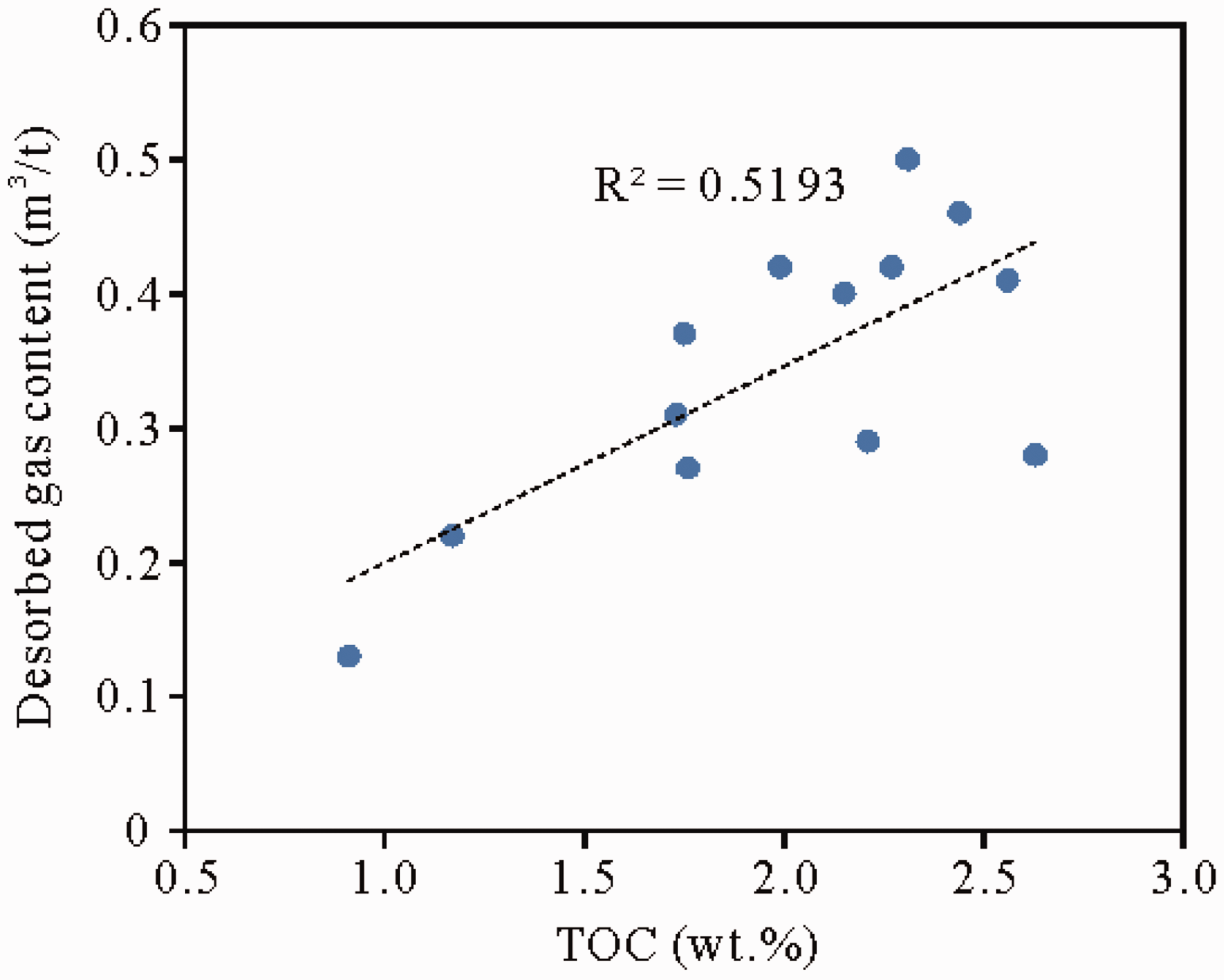
Origin of nonhydrocarbon gases
Table 1 presents the chemical and stable carbon isotope composition of desorbed gas from the desorption experiments at reservoir temperature (60℃). Gas released from the core samples contained many nonhydrocarbon gases, mainly CO2 and N2.
Origin of CO2
The CO2 concentration varies from 0.25 to 1.94%, and the δ13C of CO2 ranges from −27.2 to −17.6‰ with an average of −22.9‰ (Table 1). The sources of CO2 in coals and shales depend on several biogenic and abiogenic processes: oxidation of sedimentary organic matter, microbial and thermogenic alteration of organic matter, thermal decomposition of carbonates, and magmatic or mantle degassing (Imbus et al., 1998; Wycherley et al., 1999). Various studies have been used to evaluate the origin of CO2 (Kotarba and Rice, 2001).
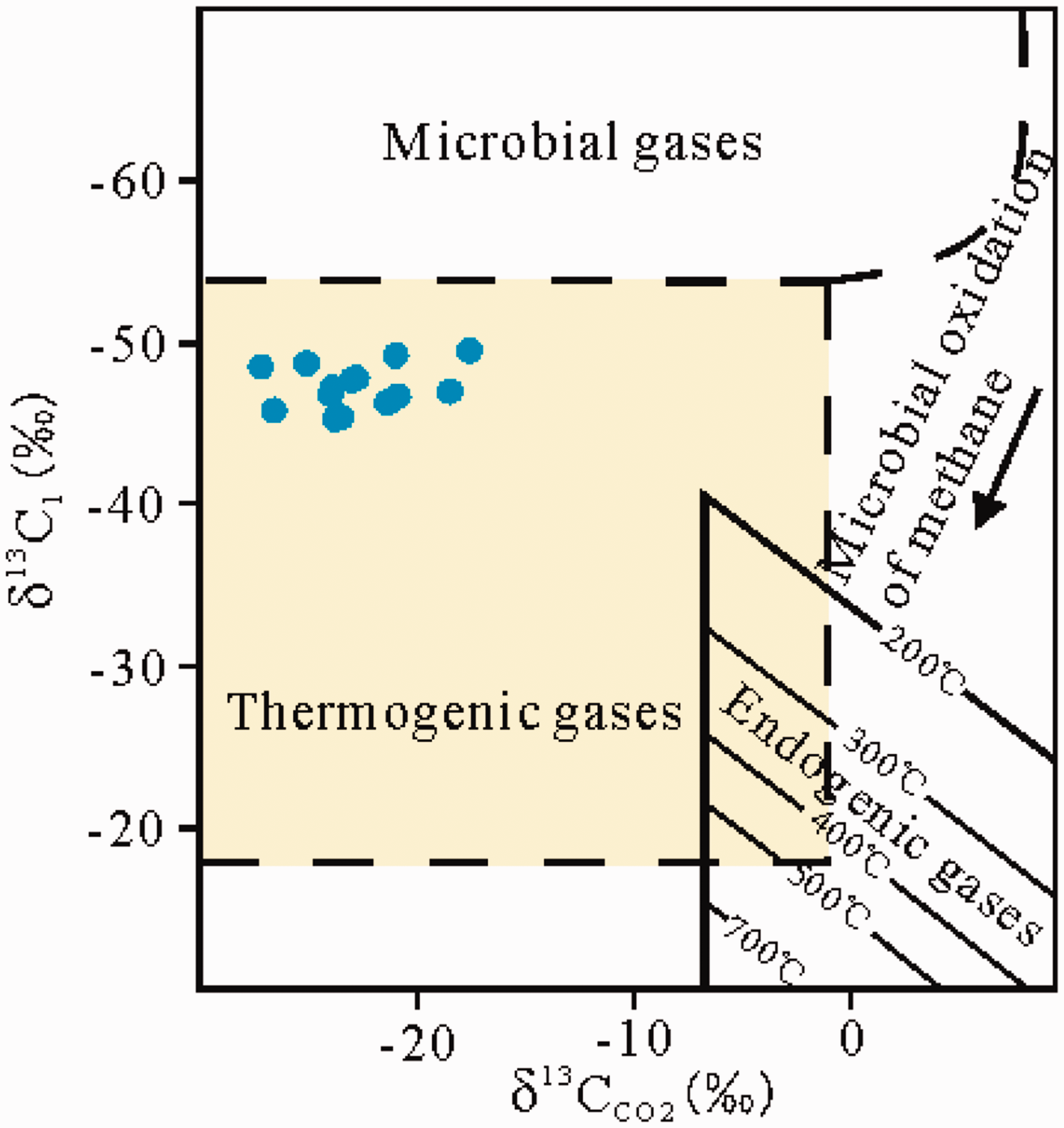
The correlation of δ13C1 and δ13CCO2 (Figure 7) indicated that CO2 of desorbed gas was generated mainly during the thermal transformation of organic matter. According to the analysis above, the core samples contain type III organic matter; thus, it is suggested that the CO2 was produced through catagenesis and metagenesis of the humic or coaly of type III kerogen source rocks.
Origin of N2 Genetic characterization of analyzed gases from the Shanxi Formation using δ13C1 versus δ13CCO2. Compositional fields modified after Kotarba and Rice (2001).
N2 is one of the most common nonhydrocarbon gases found in coalbed methane and shale gas (Burruss and Laughrey, 2010; Flores et al., 2008). Sources of N2 in natural gas include thermal decomposition of organic matter and high ammonium clays, as well as the deep crust and mantle (Wang, 1990). It can also be derived from the atmosphere or trapped during sedimentation (Krooss et al., 1995).
As shown in Table 1, the N2 concentration varies from 10.06 to 28.05% with an average of 16.31%, exhibiting a negative correlation with methane (Figure 8). The ratio of N2/Ar in desorbed gases ranged from 41.3 to 51.2, with an average of 44.4. Furthermore, the 40Ar/36Ar ratios of some desorbed gas were also measured (Table 1), which are similar to the atmosphere (295.5) (Allegre et al., 1987) and indicate that the Ar is of atmospheric origin. In addition, previous studies have shown that the atmospheric ratio of N2/Ar was 83.3, and the ratio of N2/Ar in gas dissolved in water was 38 (Wang et al., 1994). The ratio of N2/Ar in desorbed gas is less than the atmospheric ratio (83.3) but higher than the ratio of gases dissolved in water (38); the high N2 content of the samples suggested the infiltration of surface water and atmospheric-derived N2 into the strata. In addition, previous studies suggested that the study area underwent complex tectonic deformation from the Mesozoic to Cenozoic (Li and Zhang, 2013; Li et al., 2014), which provided strong hydrodynamic subsurface conditions and led to the high N2 concentration measured in the core samples.
N2 versus methane concentrations of desorbed gas from the Shanxi Formation core samples.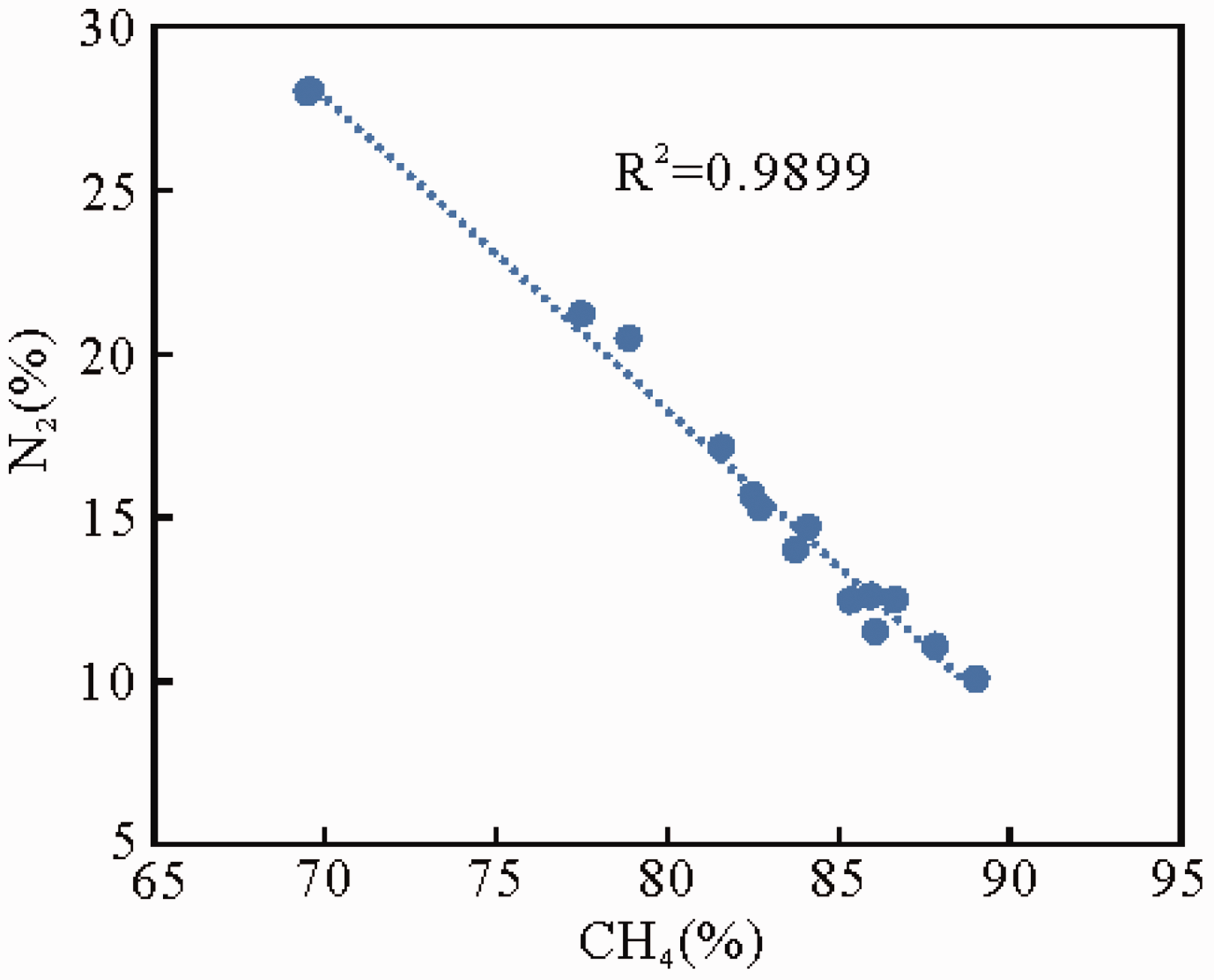
Origin of hydrocarbon gases
The carbon isotope composition of methane and associated gases, in combination with molecular composition, can be used to infer the origin of natural gas (Whiticar, 1999). Biogenic methane has δ13C less than −60‰ and thermogenic methane has δ13C greater than −55‰ (Whiticar, 1999). As shown in Table 1, the content of methane and ethane varies from 69.47 to 89.02% and from 0.01 to 0.09%, respectively, with respective averages of 82.05 and 0.05%. In this study, methane is the dominant constituent of the desorbed gases. The δ13C1 ranges from −49.5 to −45.3‰ (average −47.3‰), while the δ13C2 ranges from −25.5 to −14.7‰ (average −20.2‰). Due to the relatively dry desorbed gases in this study (C1/C1–5 =1.00), the diagram of the hydrocarbon gas component ratio C1/C2+3 versus δ13C1 is used to better distinguish between biogenic and thermogenic gases (Golding et al., 2013; Whiticar, 1999). Both molecular and isotope compositions (Figure 9) show that the desorbed gases generally relate to a combination of bacterial and thermogenic processes.
C1/C2+3 versus δ13C1 for gases from the Shanxi Formation core samples (after Whiticar, 1999).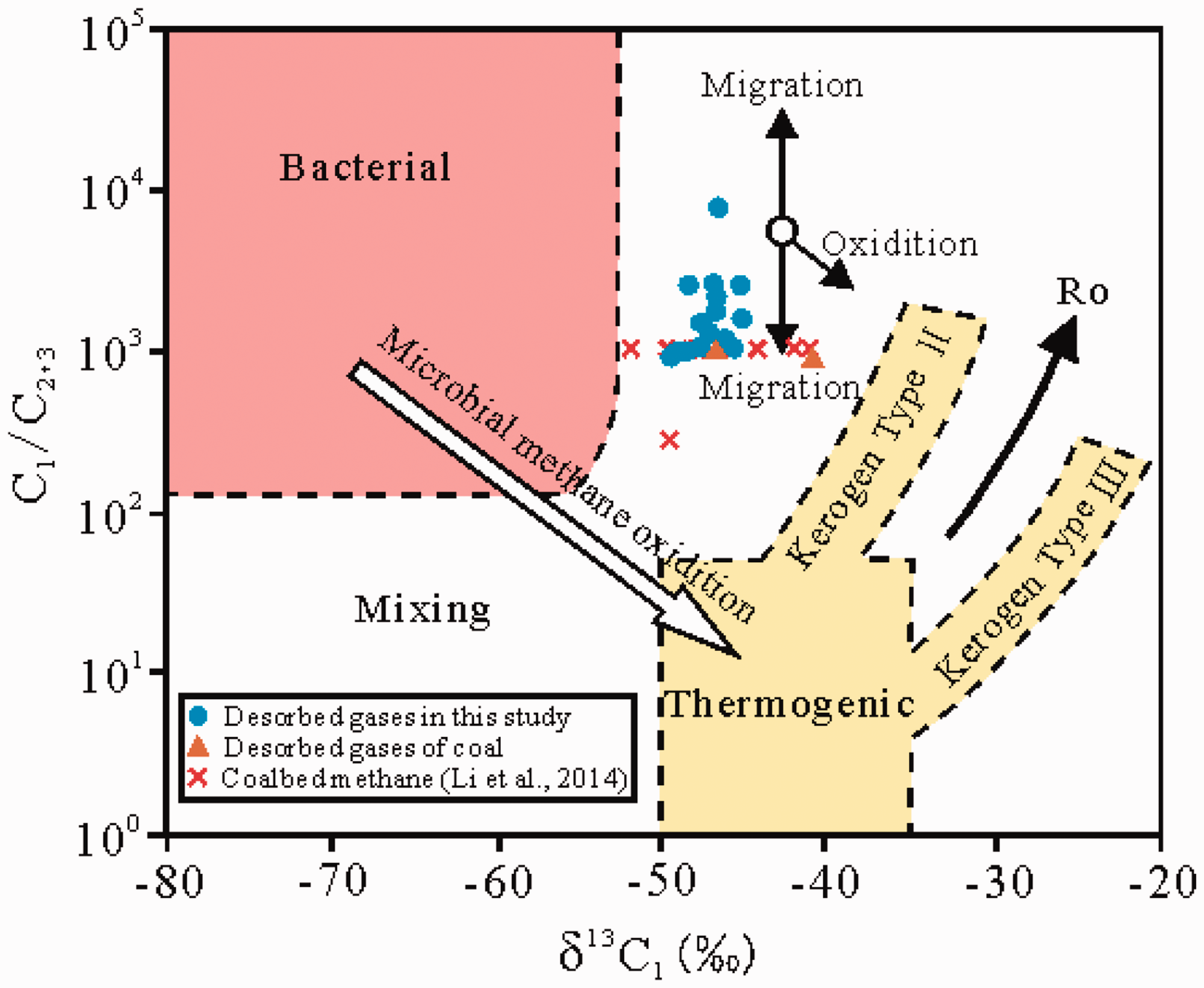
The desorbed gases from the Shanxi Formation core samples shows relatively light carbon isotopic composition of δ13C1 which is similar to the coalbed methane in the southeastern margin of the Ordos Basin (Figure 9) (Li et al., 2014). Previous studies have shown that the meteoric and surface water might flow into the deeper strata of the Shanxi Formation, influenced by the Liulin Nose Structure (Li et al., 2014). Since 13CH4 is much more easily transported away by water, the strong hydrodynamic conditions could cause the carbon isotopes of coalbed methane to become lighter (Li et al., 2014; Qin et al., 2005, 2006). Thus, the light carbon isotopes of methane and high N2 content measured in this study might also be related to past complex tectonic movements that created strong hydrodynamic conditions. Therefore, it is believed that the origin of the desorbed gases in the study area is thermogenic and that the strong hydrodynamic conditions depleted the methane of 13C.
Thermogenic gases can be classified into oil gases, derived mainly from marine sapropelic organic matter (Type I kerogen), and coal gases derived from humic organic matter (Type III kerogen) (Ni et al., 2013). Previous studies have suggested using the δ13C of ethane for distinguishing the origin of thermogenic gases (Dai et al., 2005; Ni et al., 2013). Based on a comprehensive study on the geochemical characteristics of natural gases in the main Chinese basins, a δ13C2 of natural gas less than −28‰ is oil-derived gas, and a δ13C2 greater than −28‰ is coal-derived gas (Wang et al., 2015). As shown in Figure 10, gases in this study are coal-derived gases.
Plot of δ13C2 versus C2H6 of desorbed gases from the Shanxi Formation.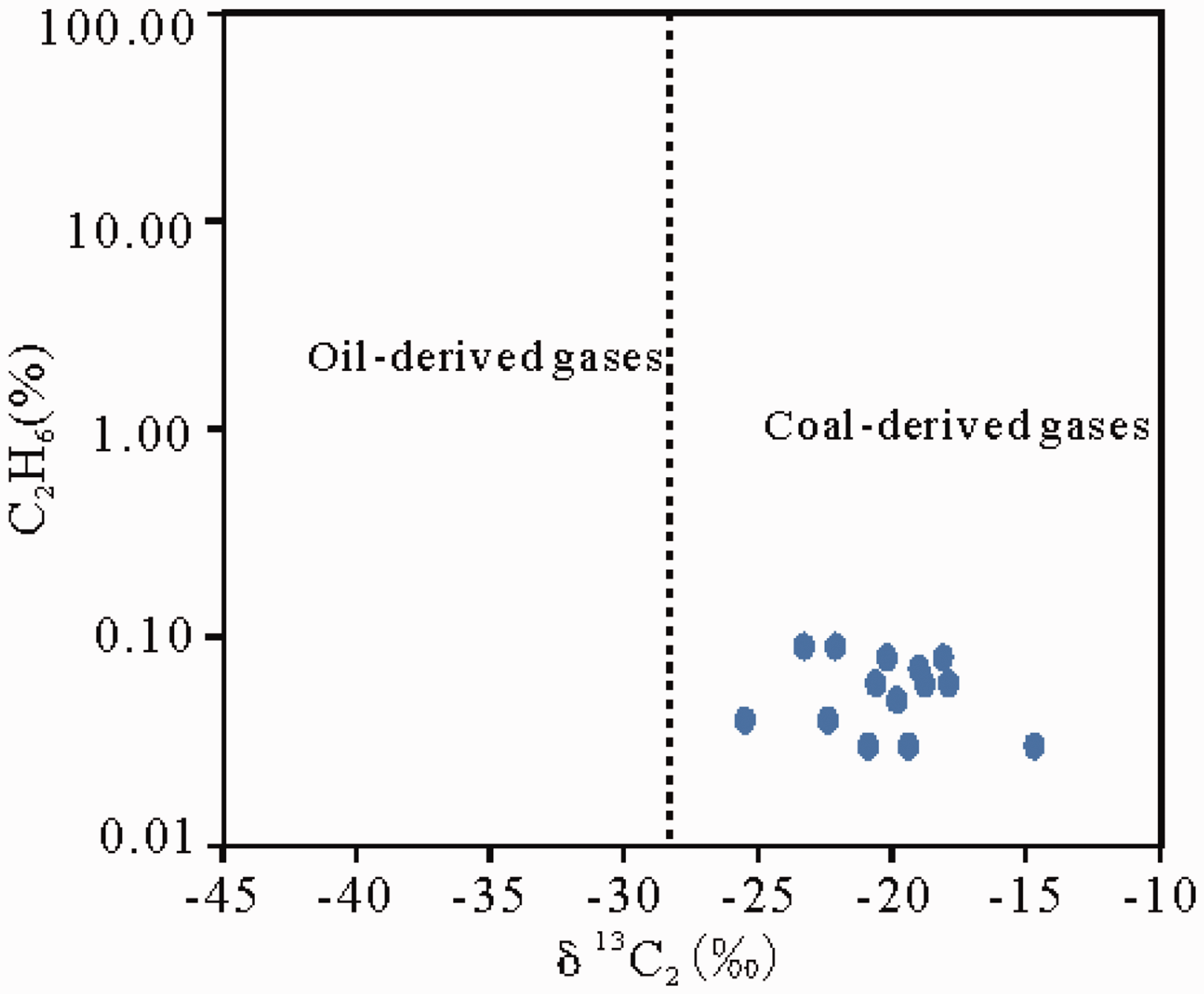
Conclusions
The characteristics and origin of desorbed gas of the Shanxi Formation were analyzed in this paper, and the following conclusions can be drawn:
The desorbed gas content of the Shanxi Formation shale varies from 0.22 to 0.50 m3/t with an average value of 0.37 m3/t, which is lower than the Longmaxi Formation shale (0.79 m3/t) and Chang 7 shale (1.29 m3/t). The marine–continental transitional shale of the Shanxi Formation in the Ordos Basin has gas exploration potential. Stable carbon isotopic data and molecular composition of the desorbed gas show that it is thermogenic in origin. Based on the δ13C of ethane, the desorbed gas derives from Type III (humic) kerogen sources. However, the strong hydrodynamic conditions in the study area depleted the methane of 13C. δ13CCO2 and organic matter type of the core samples suggest that the CO2 was produced through catagenesis and metagenesis of humic or coaly type III kerogen. The ratios of N2/Ar and 40Ar/36Ar indicate that the high N2 content of the core samples may originate from the atmosphere, by infiltration of surface water into the strata.
Footnotes
Acknowledgments
We would like to acknowledge Professor Xianbin Wang and Professor Liwu Li from Analytical Service Center, Research Center for Oil and Gas Resources, Northwest Institute of Eco-Environment and Resources, Chinese Academy of Sciences for the assistance of the chemical composition analysis of the gas samples.
Declaration of conflicting interests
The author(s) declared no potential conflicts of interest with respect to the research, authorship, and/or publication of this article.
Funding
The author(s) disclosed receipt of the following financial support for the research, authorship and/or publication of this article: This work was financially supported by the Chinese Academy of Sciences Key Project (Grant No. XDB10030404), the National Key Research and Development Program of China (Grant No. 2017YFA0604803), the National Natural Science Foundation of China (Grant Nos. 41572350 and 41503049), Western Light Project and the Key Laboratory Project of Gansu (Grant No. 1309RTSA041).