




Abstract
The formation environment and preservation conditions of sedimentary organic matter (OM) play an important role in the accumulation of shale gas. In the present study, inorganic and organic geochemical data were analyzed to determine the origin and preservation environment of sedimentary OM in the Wc-1 well of the Wufeng–Longmaxi (WF–LMX) Formation in northeastern Chongqing, China. In a biomarkers analysis, the numerical characteristics of n-alkanes (n-C17/n-C31>4.0), tricyclic terpenes (C23TT/C30H>1.0), and steranes (C27/C29St>1.0) suggested that the main origin of OM in the black shale was planktonic algae. High values of P/Ti and BaXS in the paleoproductivity indices suggested that primary productivity in the WF–LMX Formation was relatively high, peaking in the lower LMX Formation. Relative enrichment in U, V, and Mo, and the changing trends in V/(V+Ni) and Ni/Co suggested that the redox conditions for the bottom water, which changed from the WF Formation to the lower and upper LMX Formation, were oxic/dysoxic to anoxic and dysoxic, respectively. The relationship between total organic carbon and the above indexes indicates that different key factors controlled OM enrichment in the WF–LMX Formation. In the WF Formation, oxic bottom water was not conducive to the preservation of sedimentary OM. In the lower LMX Formation, the highest paleoproductivity and anoxic bottom water conditions promoted the enrichment and preservation of sedimentary OM. In the upper LMX Formation, excessive terrigenous inputs and relatively low paleoproductivity limited the enrichment of sedimentary OM.
Introduction
As one of the largest shale gas basins in China, the Sichuan Basin has undergone substantial exploration and development in recent years (Bao et al., 2020; Chen, 2016; Chen et al., 2014; Gao et al., 2012; Guo and Zeng, 2015; Liu et al., 2019). Northeastern Chongqing lies within the Dabashan fault zone at the northeastern margin of the Sichuan Basin, where the geological structure is complicated by a multistage geological history (Li et al., 2007). Some exploratory wells in this area have produced shale gas, such as the Wuxi-2 well in the Ordovician–Silurian Wufeng–Longmaxi (WF–LMX) Formation and the Chatang-1 well in the lower Cambrian Shuijingtuo Formation. These formations have shale field desorption gas contents of ∼8 m³/t, which indicate considerable shale gas exploration potential in this area (Liang et al., 2016; Wang et al., 2015). At present, research on the black shale of the WF-LMX Formation in northeastern Chongqing has focused on determining its sedimentary structure, pore structure characteristics, and shale gas resource (Chen et al., 2016; Dong et al., 2011; Wang et al., 2015). Therefore, the origin of sedimentary organic matter (OM), controlling factors, and the characteristics of the sedimentary environment in this area require further study.
The enrichment and preservation of sedimentary OM is a complex physical and chemical process, which is influenced by the primary productivity, redox state of the water column, OM deposition rate, and other sedimentary processes (Chen et al., 2016; Demaison and Moore, 1980; Hatch and Leventhal, 1992; Lash and Blood, 2014; Murphy et al., 2000). Given that these conditions cannot be explained by a single factor, we must consider multiple factors to reproduce the sedimentary environment and key controlling factors (Rimmer, 2004; Tribovillard et al., 2006).
In the present study, the geochemical and biomarker characteristics of the WF–LMX Formation samples obtained from the Wc-1 well were comprehensively analyzed and used, along with data on tectonic development, to determine the origin and controlling factors of sedimentary OM. The findings of this study will provide guidance for subsequent shale gas exploration.
Geological setting
The study area is located in Chengkou County, Chongqing City, which borders Sichuan, Shaanxi and Hubei provinces in China. The geotectonic setting is the junction of the Sichuan Mesozoic Foreland basin and the southern passive margin fold-thrust belt of the upper Yangtze plate. The main area is located to the north of the Shashi buried fault and south of the Chengba fault, including the Dabashan platform margin depression and part of the Dabashan fold area, as shown in Figure 1.
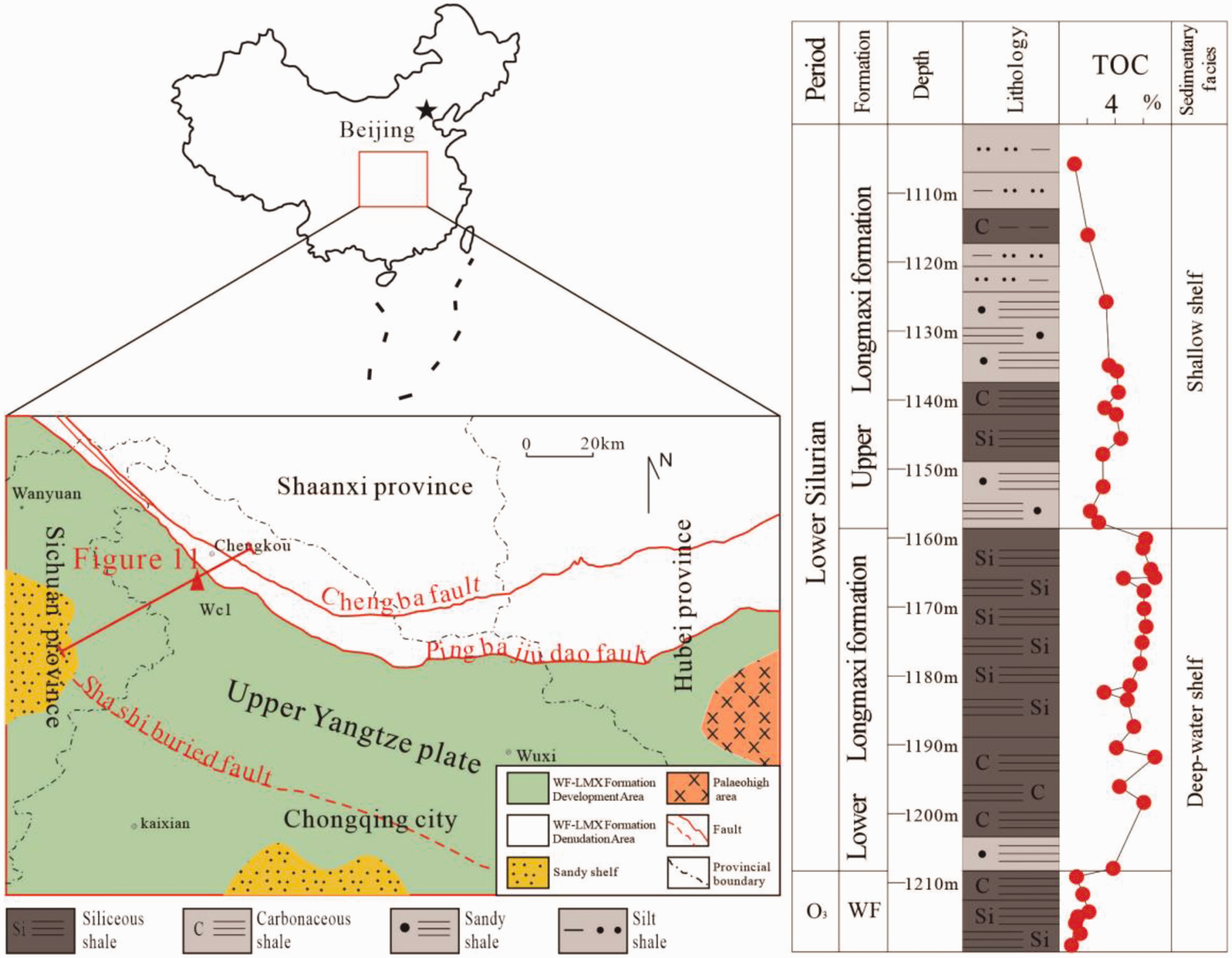
Geodetic location and stratigraphic column of the Wc-1 well.
The Wc-1 well is located in the western part of the study area. The well experienced a series of considerable environmental and biological disturbances during the transition from the Ordovician to Silurian, including the long-term cooling trend in the Katian stage, the glaciation of the Hirnantian, and a biological extinction event (Algeo et al., 2016; Brenchley et al., 2003; Fan et al., 2009; Finnegan et al., 2011; Harper et al., 2014). According to field investigations and total organic matter (TOC) content, this transition period can be divided into three units. During the Upper Ordovician period, black shale and siliceous rock of the WF Formation were deposited, with a thickness of ∼10 m. As the climate warmed, biological recovery, and uplift of ancient land occurred in the Early Silurian period. The sedimentary environment of the LMX Formation was characterized by gentle continental shelf facies deposition (Chen et al., 2014), in which shale and sandstone with a thickness of ∼100 m were deposited according to the different organic carbon contents and lithologies. The lower unit in the LMX Formation is black graphite shale with developed horizontal bedding, which has a high organic carbon content and thickness of ∼ 45 m and is characterized as deep-water shelf deposition. The upper unit in the LMX Formation is a light–yellow–green shale, gray silty mudstone and argillaceous siltstone with a thickness of ∼55 m, which is characterized as shallow–water shelf deposition (Figure 1).
Samples and methods
Samples
Forty samples were selected from the WF–LMX Formation from the Wc-1 well for analysis of TOC and major and trace elements. Among the 40 samples, 13 were from the upper LMX Formation, 20 were from the lower LMX Formation, and 7 were from the WF Formation. Furthermore, 18 of the 40 samples were tested for biomarkers: 6 from the upper LMX Formation, 10 from the lower LMX Formation, and 2 from the WF Formation. Before testing, all samples were washed, dried, stored separately in paper bags, and wrapped in polythene bags to ensure minimal contamination.
Analytical methods
The TOC contents of the 40 samples, which were ground to 200 mesh, were analyzed using a CS-330 Carbon-Sulfur Analyzer (LECO Corporation, USA) at the Jiangsu Geological and Mineral Resources Design and Research Institute, with an accuracy of 95%. Major elements (e.g., SiO2, Al2O3, and MgO) were analyzed by BRUKER S8 TIGER X-ray fluorescence spectrometry (XRF, AXS Corporation, Germany) at the China University of Mining and Technology Advanced Analysis and Computation Center. The analytical procedures for TOC and major elements were performed according to the Chinese national standards GB/T19145-2003(2003) and GB/T14506.28–2010, respectively.
Trace elements (e.g., U, V, and Mo) were analyzed using a PE Elan6000 standard inductively coupled plasma mass spectrometer (ICP-MS) at the Jiangsu Geological and Mineral Resources Design and Research Institute, with an accuracy of 95%. The analytical procedures for trace elements were performed according to the Chinese national standards GB/T 14506.30–2010.
The saturated hydrocarbons of the 18 samples, which were ground to 100 mesh, were analyzed by gas chromatography-mass spectrometry (GC-MS, Shimadzu, Japan) at the Key Laboratory of CBM Resources and Dynamic Accumulation Process, China University of Mining and Technology to identify biomarkers, including normal alkanes (n-alkanes), isoprenoids, terpanes, and steranes. The analytical procedure for the biomarkers was performed according to the Chinese national standard GB/T 18606–2017.
Data presentation
The degree of trace element enrichment in the sediments is controlled by the number of their authigenic components (Liu et al., 2019), and the enrichment factor (EF) is often used for evaluation (Tribovillard et al., 2006). The calculation formula is as follows:

Data for the average upper continental crust (AUCC) were proposed by McLennan (McLennan, 2001). When XEF > 1, X (trace element) is enriched relative to AUCC, and vice versa.
The chemical index of alteration (CIA) of the source region is widely used in the reconstruction of paleoclimatic changes for the quantitative characterization of the degree of chemical weathering (Nesbitt and Young, 1982). The calculation formula is as follows:

Barium (Ba) is often used as an indicator of paleoproductivity (Algeo and Maynard, 2004). To eliminate the errors caused by the input of terrigenous debris, Ba is modified to BaXS and BaXS, which is used to assess the paleoproductivity level (Algeo and Maynard, 2004). The calculation formula is as follows:

The source of siliceous matter can be divided into terrigenous clastic, hydrothermal, and biogenic origins (Bostrom et al., 1973; Liu et al., 2017). The excess siliceous mineral content (Siex) refers to siliceous minerals other than normal continental clastic deposits, and its calculation formula is as follows:

Results
TOC abundance
Among the Wc-1 well samples, shales from the WF Formation have low TOC content ranging from 0.94% to 2.18% (mean = 1.54%), shales from the lower LMX Formation have relatively high TOC contents ranging from 3.26% to 6.89% (mean = 5.54%), and shales from the upper LMX Formation have TOC contents ranging from 1.15% to 4.45% (mean = 3.24%). This change in TOC content is shown in Figure 1 and Table 1.
The major elements of Wc-1 well samples.
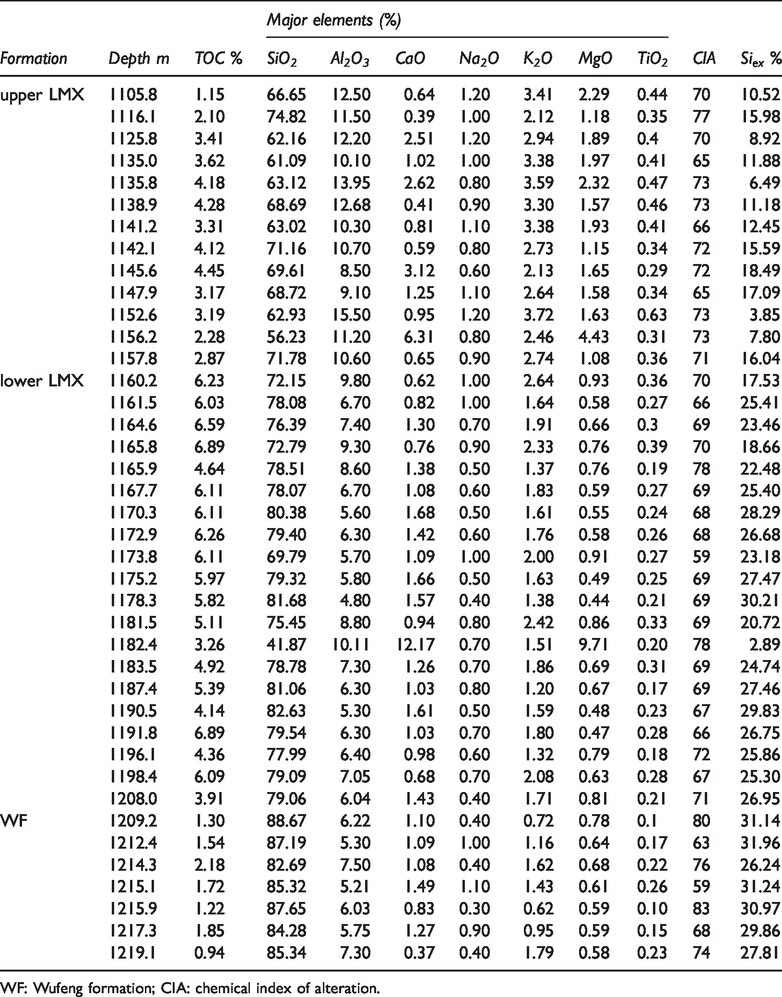
WF: Wufeng formation; CIA: chemical index of alteration.
Major and trace elements
In the present study, the ternary plot of the three endmembers of mudstone (SiO2-Al2O3-CaO) shows that all three units contain more SiO2 than Al2O3 and CaO (Figure 2(a)). The average SiO2 content in the WF, lower LMX, and upper LMX Formations is 85.88%, 76.10%, and 66.15%, respectively (Table 1). The contents of other major elements, such as K2O, P2O5, and MgO, increase gradually from the WF Formation to the upper LMX Formation (Table 1). The positive relationship of Al2O3 with K2O and TiO2 in the lower and upper LMX Formation suggests that these major elements have a terrigenous clastic source (r = 0.51, 0.49, and 0.65, 0.86, respectively, p < 0.05), as shown in Figure 2(b) and (c). However, this correlation is not significant in the WF Formation and may be influenced by tectonic movement and sea-level change (see ‘Terrestrial input flux and climate change’ section). The distributions of K/Al and Rb/Al in the study area exhibit similar characteristics (Figure 3). K/Al values are 0.16–0.43 (mean = 0.30) in the WF Formation, 0.23–0.55 (mean = 0.41) in the lower LMX Formation, and 0.29–0.52 (mean = 0.41) in the upper LMX Formation. Rb/Al values are 5.14–14.99 μg/(wt,%) (mean = 9.64 μg/(wt, %)) in the WF Formation, 6.41–21.52 μg/(wt, %) (mean = 16.46 μg/(wt, %)) in the lower LMX Formation, and 10.82–20.55 μg/(wt, %) (mean = 16.93 μg/(wt, %)) in the upper LMX Formation.
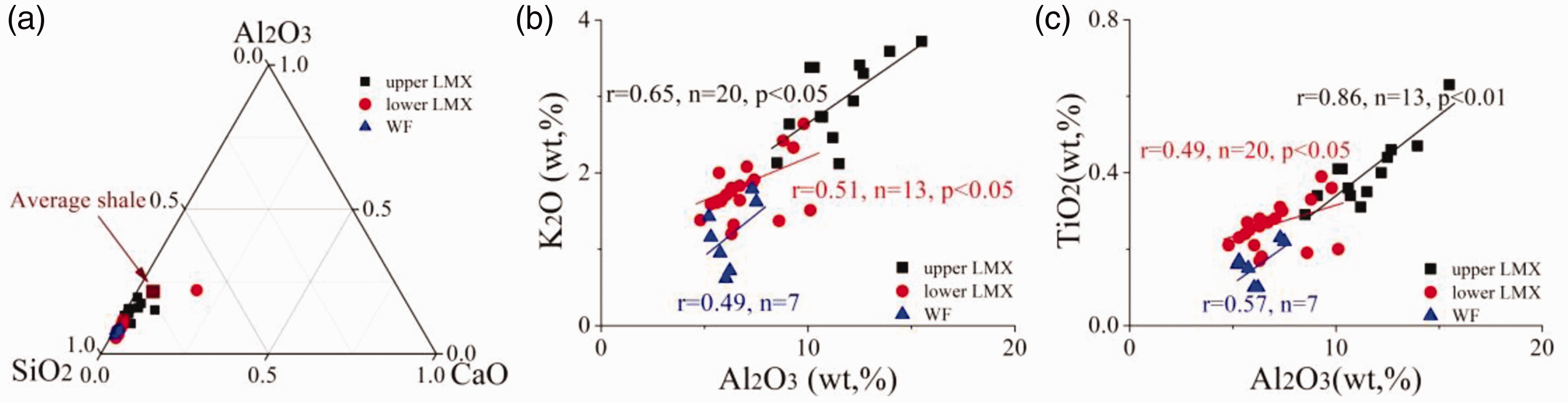
Major element characteristics for the Wc-1 well. (a) Ternary diagram of SiO2-Al2O3-CaO. The value for average shale was taken from Wedepohl (1971). (b) Covariance diagram of Al2O3 and K2O. (c) Covariance diagram of Al2O3 and TiO2.
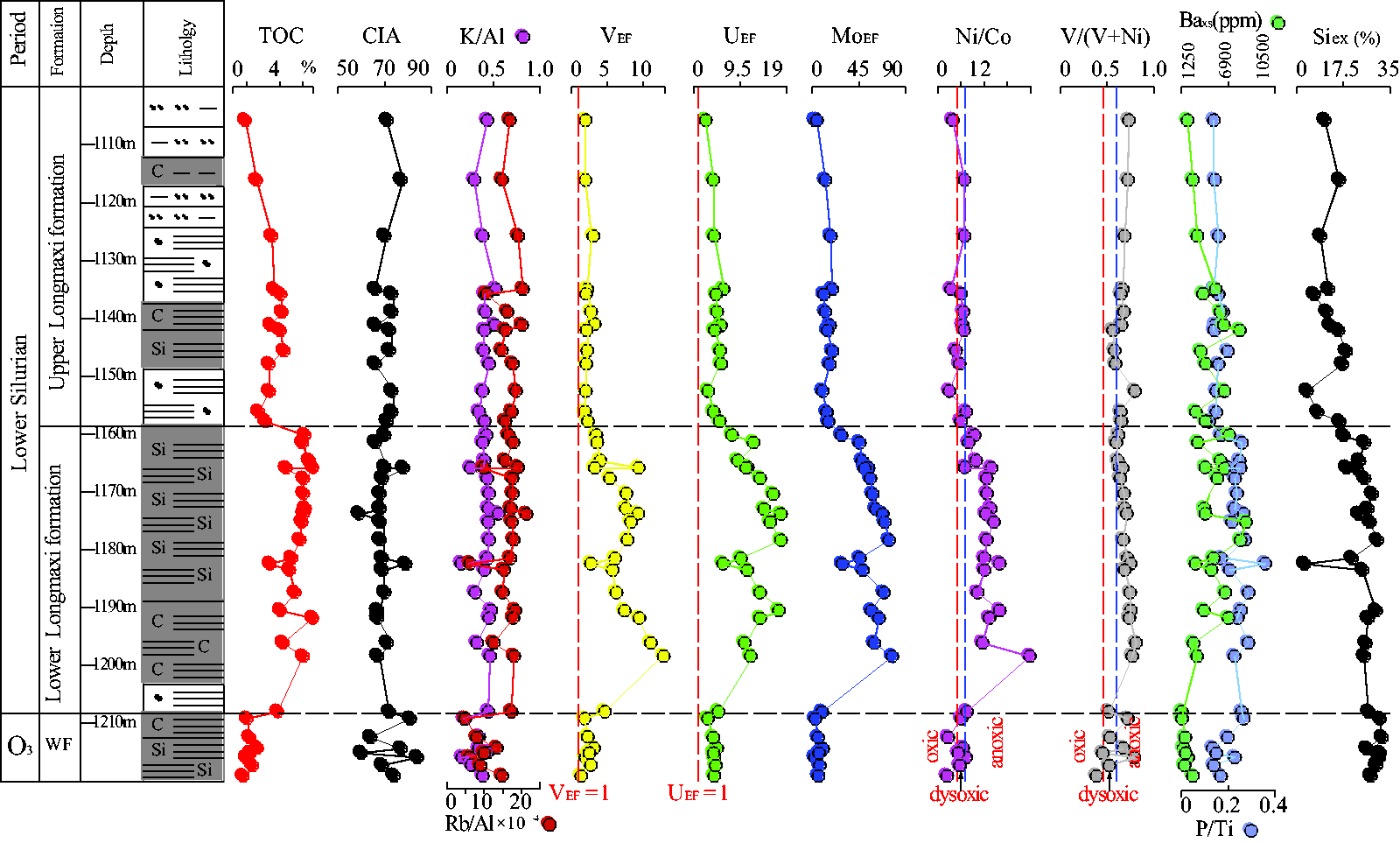
Stratigraphic profiles of the Wc-1 well for total organic carbon (TOC), the chemical index of alteration (CIA), and trace elements. The threshold values of V/(V+Ni) and Ni/Co were obtained from Jones and Manning (1994).
Moreover, the CIA values are 59–83 (mean = 72) in the WF Formation, 59–78 (mean =69) in the lower LMX Formation, and 65–77 (mean = 71) in the upper LMX Formation, Figure 3 and Table 1.
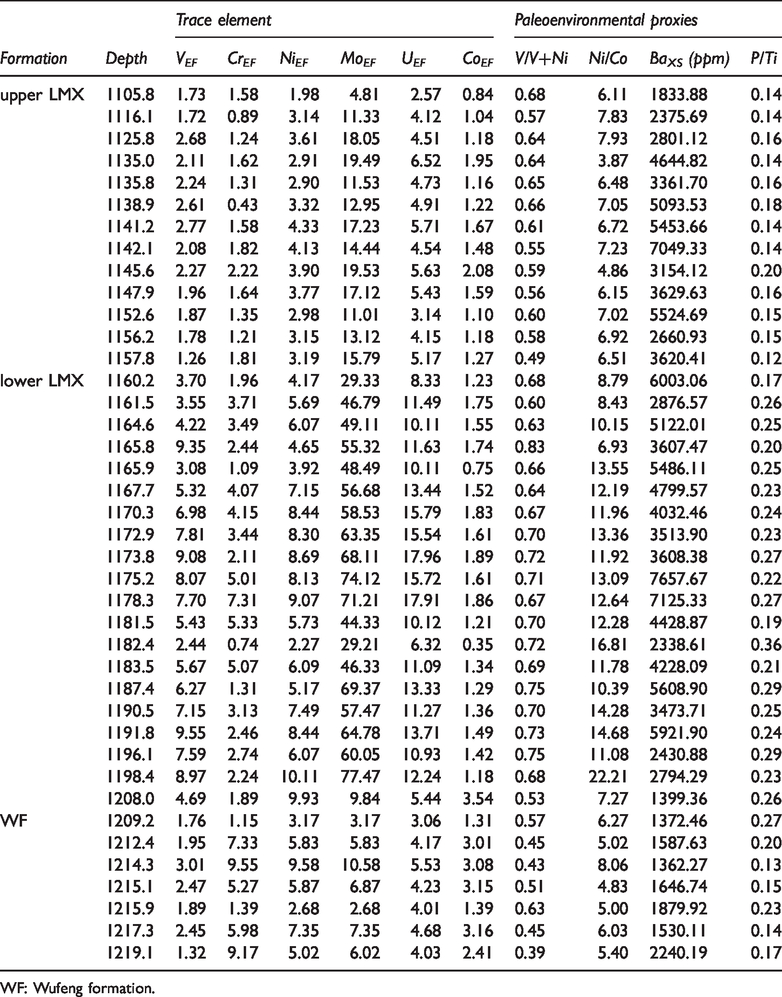
Trace elements, such as U, V, Ni, Mo, Cr, and Co, are all enriched in the three units (Figure 3 and Table 2). The values of Ni/Co, V/(V+Ni), P/Ti, and BaXS, which represent paleo-hydrographic proxies, are higher in the lower LMX Formation (mean = 12.19, 0.69, 0.25 and 4322.86 ppm, respectively), and lower in the WF and upper LMX Formations (mean = 5.80, 0.49, 0.18, and 1659.90 ppm, and 6.51, 0.60, 0.15, and 3938.73 ppm, respectively), as shown in Figure 3 and Table 2.
Trace elements and paleoenvironmental proxies of Wc-1 well.
WF: Wufeng formation.
The values of Siex are 26.24–31.96% (mean = 29.89%) in the WF Formation, 2.89–30.21% (mean = 23.96%) in the lower LMX Formation, and 3.85–18.49% (mean = 12.02%) in the upper LMX Formation (Table 1). To use Siex as a substitute for biological silica, it is necessary to prove that the non-clay silica in the sample may be biogenic rather than clastic. Although clastic SiO2 may be negatively correlated with clay content, these sedimentary components are more likely to be co-deposited. Therefore, there is a strong negative correlation between SiO2 and Al2O3 in the Wc-1 well (r = −0.54, p < 0.01, n = 40, not shown), suggesting the dominant biological properties of non-clastic SiO2 in the samples, which is consistent with the results of previous studies (Michalopoulos and Aller, 2004). In addition, the latest petrological study of the WF-LMX Formation records the existence of sponge and radiolarian fossils, which further supports this finding (Khan et al., 2019). Therefore, it is reasonable to use excess silica as a substitute index for biological silica in the present study.
Biomarkers
GC-MS traces of n-alkanes, isoprenoids, terpanes, and steranes are shown in Figure 4. Their distribution and content do not differ significantly among the three units.
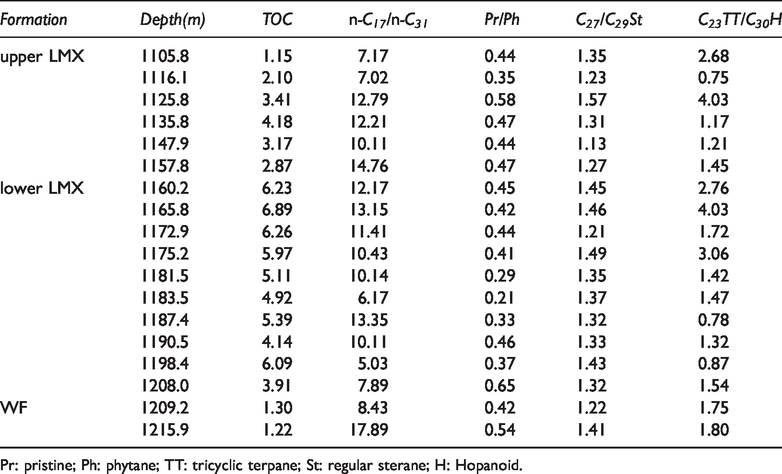
n-alkanes: the n-alkanes are mainly distributed in n-C16 to n-C31 in the Wc-1 well samples, with the highest values observed at n-C18 (Figure 4). The values of n-C17/n-C31 in all samples range from 5.03 to 17.89, with an average of 10.57, indicating that light hydrocarbons are dominant (Table 1). However, it should be noted that the light hydrocarbon content in the WF Formation is lower than that in the LMX Formation (Figure 4), suggesting that OM in these shales may be influenced by biodegradation.
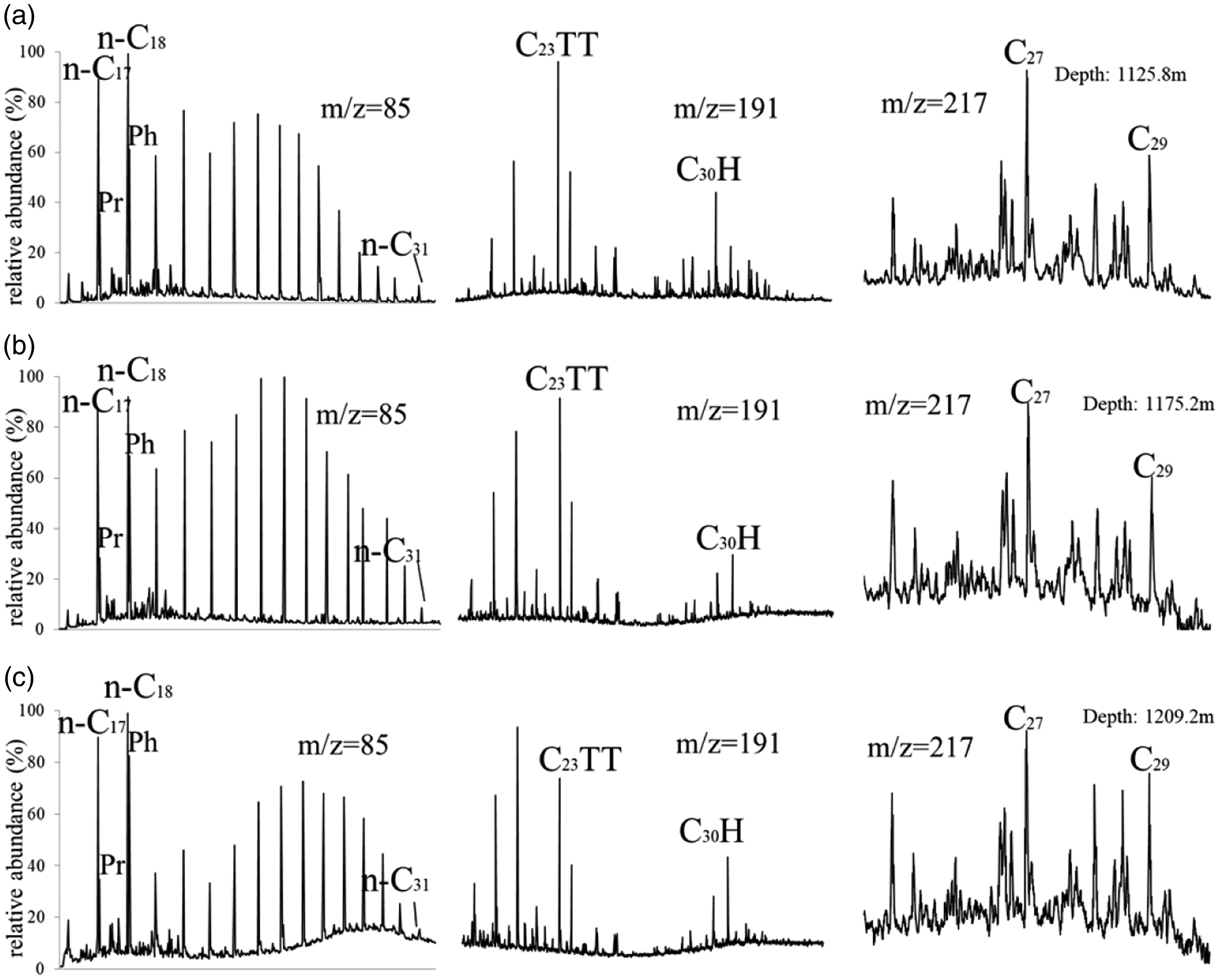
Saturated hydrocarbon mass chromatogram of the Wc-1 well samples from the (a) upper and (b) lower Longmaxi, and (c) Wufeng formations.
Isoprenoids: All samples contain relatively high concentrations of the isoprenoids pristane (Pr) and phytane (Ph), with Pr/Ph values of 0.21–0.65 (average 0.43) (Table 1).
Terpanes: Hopanoid (H) series, tricyclic terpene (TT) series, and a small amount of tetracyclic terpene (Te) compounds were detected in the samples by mass chromatography. The C23TT/C30H values are 0.75–4.03 (Table 1).
Steranes: The complete series of steranes were detected in the samples that are not biodegraded (Figure 4), with ααα(20 R)C27 sterane/ααα(20R)C29 sterane (C27/C29St) values of 1.13–1.57 (mean = 1.35) (Table 3).
Proxies of biomarker s in WF–LMX formation of Wc-1 well.
Pr: pristine; Ph: phytane; TT: tricyclic terpane; St: regular sterane; H: Hopanoid.
Discussion
Origin of sedimentary OM
A previous study on soluble OM and δ13C values in Lower Paleozoic marine shales in the Sichuan Basin confirmed that, due to the existence of mineral skeleton, OM formed from predominantly calcareous-walled phytoplankton (Chlorella and Dinoflagellates) in the Upper Ordovician–Lower Silurian deposition period, which would have been largely protected during pyrolysis (Tuo et al., 2016). In that study, biomarkers indicated the origin of OM relatively clearly. Thus, the content and distribution of specific components in biomarkers play an important role in identifying the OM origin (Clark and Blumer, 1967; Tang et al., 2019). In the present study, the n-alkanes of all samples were bimodal in distribution, the values of n-C17/n-C31 were all greater than 4.0, and the content of light hydrocarbons was relatively high (Table 1 and Figure 4). These results suggest that the OM in these black shales was predominantly derived from phytoplankton, with a small amount of OM input from terrestrial organic materials, which was also demonstrated by Clark and Blumer (1967) and Han and Calvin (1969).
Some studies have reported that tricyclic terpanes originate from lipids of bacteria or algae (Azevedo et al., 1992; Ourisson et al., 1982) and that hopanoid is mainly derived from prokaryotes such as bacteria (Ourisson et al., 1982). Tricyclic terpanes are more stable in the thermal maturity stage than hopanoid (Peters et al., 2005). In addition, based on an analysis of nine samples from the WF–LMX Formation, Li (2019) determined that the degree of OM thermal maturity in this area was in the early stage of high maturity (Ro = 1.31–1.47, mean 1.39), whereas the effect of pyrolysis on hopanoid was small (Peters et al., 2005). Therefore, the value of C23TT/C30H can reflect the relative contribution of lipids (tricyclic terpanes) from bacteria or algae and markers from different prokaryotes (hopanoid) in the shales of the WF–LMX Formation. The average value of C23TT/C30H in the black shale of the WF, upper LMX and lower LMX Formations was more than one in the Wc-1 well. In addition, there was a positive correlation with TOC (Figure 5 and Table 1), suggesting that planktonic algae were the main origin of OM in the WF–LMX Formation. Furthermore, ααα(20 R)C27 steranes are mainly derived from phytoplankton, whereas ααα(20 R)C29 steranes are mainly derived from higher plants (Peters et al., 2005). Therefore, the C27/C29St ratio of greater than 1.0 obtained for all samples (Table 1) suggests that OM in the WF–LMX Formation was mainly derived from lower marine plankton.
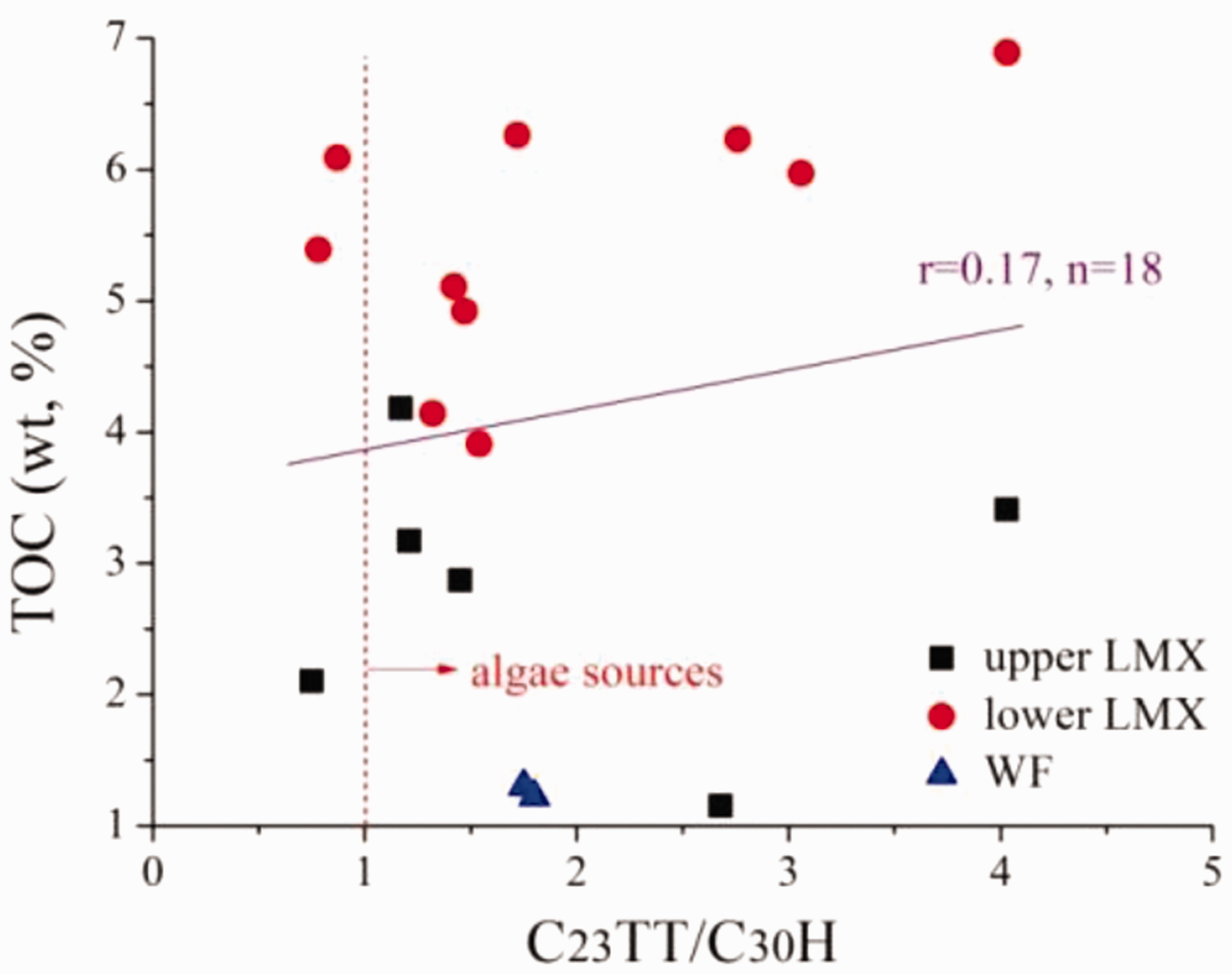
Relationship between C23TT/C30H and total organic carbon (TOC) in the Wc-1 well samples.
Paleoproductivity
The relative stability of the valence states of P and Ba and their characteristics in the process of biological growth and diagenesis are often used as indicators of paleoproductivity (Algeo et al., 2011; Dymond and Collier, 1996; Latimer and Filippelli, 2002). Furthermore, the redox conditions of the marine environment also control their recycling, i.e., oxic conditions conducive to the enrichment of P and Ba in sedimentary OM, whereas anoxic (or euxinic) conditions recycle P and Ba from OM into the overlying water columns. This relationship is conducive to maintaining high primary productivity in surface water (Algeo and Maynard, 2004; Latimer and Filippelli, 2002; Liu et al., 2019). To eliminate errors caused by the input of terrigenous debris, the ratios of P to Ti (P/Ti) and BaXS were selected to discuss the paleoproductivity level of the study area instead of the absolute P and Ba contents (Algeo and Maynard, 2004; Latimer and Filippelli, 2002). In the present study, the values of P/Ti and BaXS from all three units were greater than 0.13 (PASS) and 1000 ppm, indicating high productivity (Schoepfer et al., 2015). The paleoproductivity of the lower LMX Formation was the highest (P/Ti = 0.25, BaXS = 4322.86 ppm) (Figure 3 and Table 2).
However, the correlations between TOC and P/Ti and BaXS differed for the three units in the Wc-1 well (Figure 6). For the WF Formation, the correlation between TOC and BaXS was negative (r = −0.76, n = 7, p < 0.05); however, the negative correlation between TOC and P/Ti was not significant (r = −0.59, n = 7, p > 0.1) (Figure 6), which may be related to the redox conditions. For the upper LMX Formation, both relationships were positively correlated (r = 0.56 and 0.58, n = 13, p < 0.05, respectively). For the lower LMX Formation, the TOC content was negatively correlated with P/Ti (r = −0.55, n = 20, p < 0.05) but positively correlated with BaXS (r = 0.45, n = 20, p < 0.05). As mentioned above, this result may indicate that the paleoproductivity level and organic carbon content do not always correspond to each other, as this depends on the redox conditions of the water at that time. More OM can be preserved only when both high productivity and strong reduction water conditions occur. Higher preservation is driven by anoxic conditions in the water column and sediment (see ‘Main factors controlling OM enrichment’ section).
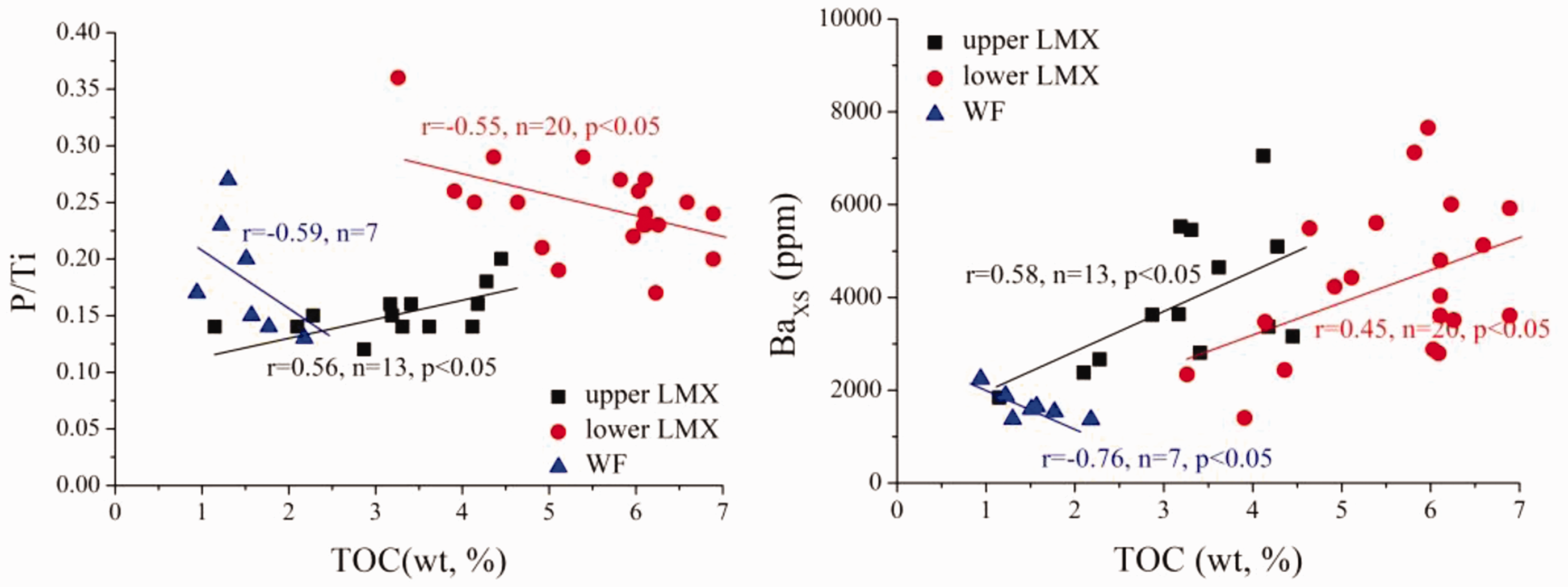
Relationship between total organic carbon (TOC) and P/Ti and BaXS in the Wc-1 well samples. LMX, Longmaxi Formation; WF, Wufeng Formation.
Basin restriction
Previous studies have shown that the degree of water closure, which is caused by basin restriction, often leads to changes in the redox environment and paleoproductivity (Algeo and Lyons, 2006). The degree of water closure is often evaluated by the correlation between Mo and TOC (Algeo and Lyons, 2006). This is because Mo typically exists in seawater as stable MoO42− under oxic conditions, where it is slowly removed from the water column by adsorption on ferromanganese crusts. However, in anoxic or even euxinic water columns, Mo can be reduced to particle-reactive MoOxS4-x2− or MoS42− and rapidly fixed in sediments through capture by pyrite or OM (Erickson and Helz, 2000; Helz et al., 1996; Tribovillard et al., 2004). It should be noted that the accumulation of authigenic Mo, which occurred in the TOC-poor OM formed under oxic conditions, may be affected by oxic conditions due to the lack of H2S required to convert MoO42− to MoOxS4-x2− or MoS42− (Helz et al., 1996; Algeo and Rowe, 2012). Under such conditions, the low Mo concentration and Mo/TOC ratio reflect the redox conditions, not the degree of water column restriction (Westermann et al., 2013). Therefore, the Mo/TOC ratio of the TOC-poor OM section cannot be used to evaluate the degree of basin restriction. In contrast, the changes in Mo/TOC in the TOC-rich OM accumulated under anoxic conditions may better reflect restriction of the water column.
The Mo/TOC values for the lower and upper LMX Formation samples fall within the high-basin-restriction area (Figure 7), suggesting that the sedimentary OM was deposited in a deep water shelf environment, which is restricted by ancient land and has poor connectivity with the outside ocean. For the WF Formation, the Mo/TOC values of the seven samples were relatively low (mean = 2.56), falling in the high-basin-restriction area. However, as mentioned above, owing to the low TOC and Mo values of this formation (mean = 1.50% and 4.0 ppm, respectively), these Mo/TOC values may reflect the redox conditions more than the degree of water column restriction. According to the geological structure evolution during this period, it is speculated that contact between the water column and the outside marine environment was limited but not completely closed. In addition, oxygen-rich and nutrient-rich upwelling from high-latitude seawater during the ice age not only promoted the paleoproductivity level, but also changed the redox conditions of the water column (Lüning et al., 2000). This interpretation is consistent with the relatively high Siex and low TOC content in the WF Formation. The latest petrological study of the WF–LMX Formation in the northern margin of the Upper Yangtze Platform further supports this conclusion (Xiao et al., 2020).
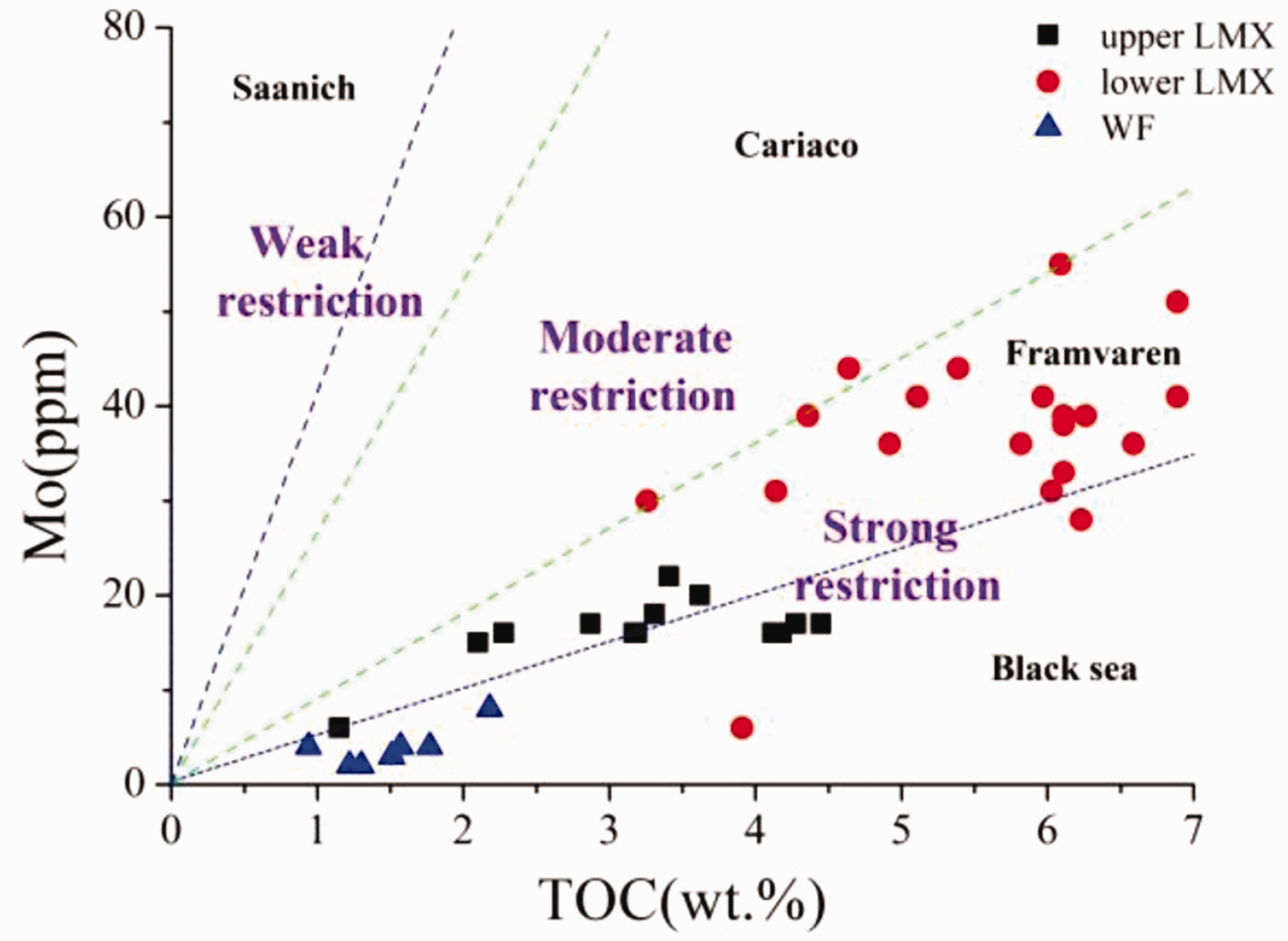
Relationship between Mo and total organic carbon (TOC) in the Wufeng (WF) and lower and upper Longmaxi (LMX) Formations. Modified from Algeo and Lyons (2006) and Li et al. (2017).
Redox conditions
The relative content and ratio of alkenes such as Pr/Ph are often used to measure the redox conditions and OM type of the sedimentary environment. For example, Pr/Ph < 0.8, 1.0 < Pr/Ph < 3.0, and Pr/Ph > 3.0, indicate strongly reducing (anoxic), dysoxic, and oxic depositional environments, respectively (Peters and Moldowan, 1991; Zhang et al., 2020). The Pr/Ph values from the samples were all less than 0.7 (Table 1), indicating a strongly anoxic marine sedimentary environment.
The enrichment of U, V, and Mo is often used in the analysis of redox conditions (Hatch and Leventhal, 1992; Jones and Manning, 1994; Ross and Bustin, 2009; Wilkin et al., 1997). This is because changes in the redox conditions of the sedimentary environment affect the abundance of these redox-sensitive trace elements that are abnormally enriched in a highly reducing sedimentary environment. UEF, VEF, and MoEF were all greater than one in the three units, indicating that these elements may have been deposited in anoxic or dysoxic bottom water (Lézin et al., 2013).
It should be noted that there were some differences in the relationship between TOC and UEF, VEF, and MoEF in the three units (Figure 8). Compared with the lower and upper LMX Formation, the TOC of the WF Formation has a stronger correlation with UEF, VEF, and MoEF (r = 0.78, 0.96, and 0.84, p < 0.05, respectively), suggesting that redox conditions were the main factors influencing the preservation of sedimentary OM during this period.
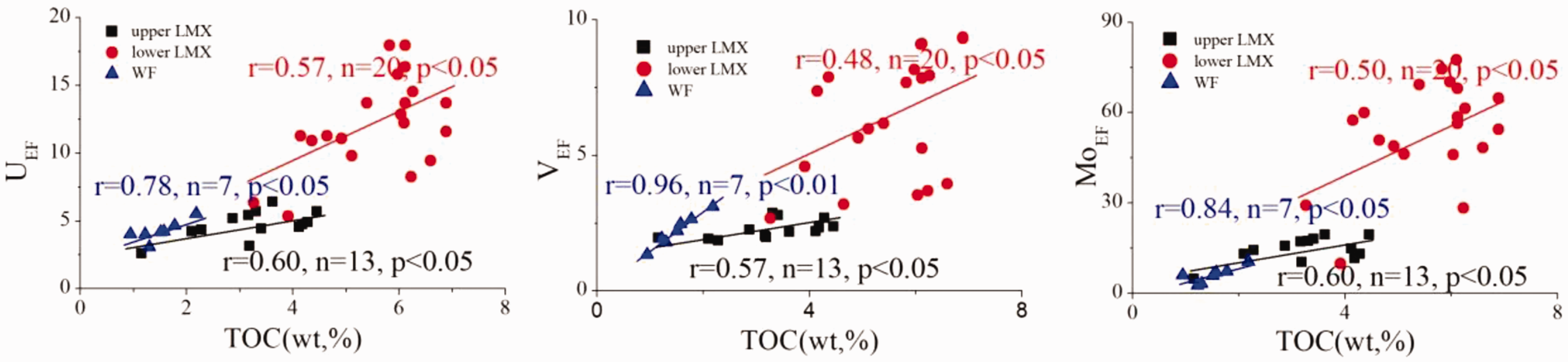
Relationship between total organic carbon (TOC) and UEF, VEF, and MoEF in the Wc-1 well samples.
Furthermore, the redox properties of the paleo-sedimentary environment can be further evaluated using V/(V+Ni) and Ni/Co abundance ratios (Jones and Manning, 1994). The average V/(V+Ni) and Ni/Co ratios for the WF and lower and upper LMX Formations were 0.58 and 5.19, 0.69 and 12.49, and 0.66 and 5.70, respectively (Table 2). These are located in the oxic/dysoxic, anoxic, and dysoxic regions, respectively, indicating that the formation environment of the study area changed from oxic/dysoxic to anoxic then dysoxic sedimentary environments (Hatch and Leventhal, 1992; Yan et al., 2009) (Figure 3).
Moreover, except under basin restriction conditions, a high TOC flux from the surface water leads to anoxia in the water column, which leads to enrichment of trace elements (McLennan, 2001; Ross and Bustin, 2009). Importantly, biomarker data, such as Pr/Ph, can distinguish the major factor controlling sedimentary OM formation (Peters and Moldowan, 1991). In the present study, the Pr/Ph values of < 0.7, combined with the positive relationship between TOC with UEF, VEF, and MoEF (Figure 8), demonstrate that the redox conditions caused by basin restriction and/or water stratification were the main factors controlling the accumulation of sedimentary OM in this area. Similar results were also reported in previous studies (Chen et al., 2016; Li et al., 2017; Yan et al., 2015).
Terrestrial input flux and climate change
The clay mineral content can reflect the terrestrial inputs. Alkali metals such as Ca, Na, and K can easily migrate from feldspar to form clay minerals, with the ratio of Al2O3 typically increasing with increased formation of weathering products (Nesbitt and Young, 1982).
Due to the different degrees of chemical weathering under different climatic conditions, CIA values fall into three ranges: 50–65, 65–85, and 85–100, which reflect weak weathering in cold and dry climates, moderate weathering in warm and humid climates and strong weathering in hot and humid climates, respectively (Fedo et al., 1995; Nesbitt and Young, 1982) (Figure 9). To avoid the influence of the chemical composition of the source rocks, the trend in CIA rather than the CIA value itself is used to discuss climate change via the absolute climatic conditions. The variation curve of CIA reveals substantial climatic fluctuation in the WF Formation but a relatively stable climate in the LMX Formation, except for local climatic fluctuations, which is consistent with climate change during the Ordovician–Silurian transition (Brenchley et al., 2003; Harper et al., 2014) (Figure 3). The variation trend between TOC and CIA indicates that stable climatic conditions are more conducive to the preservation of sedimentary OM.
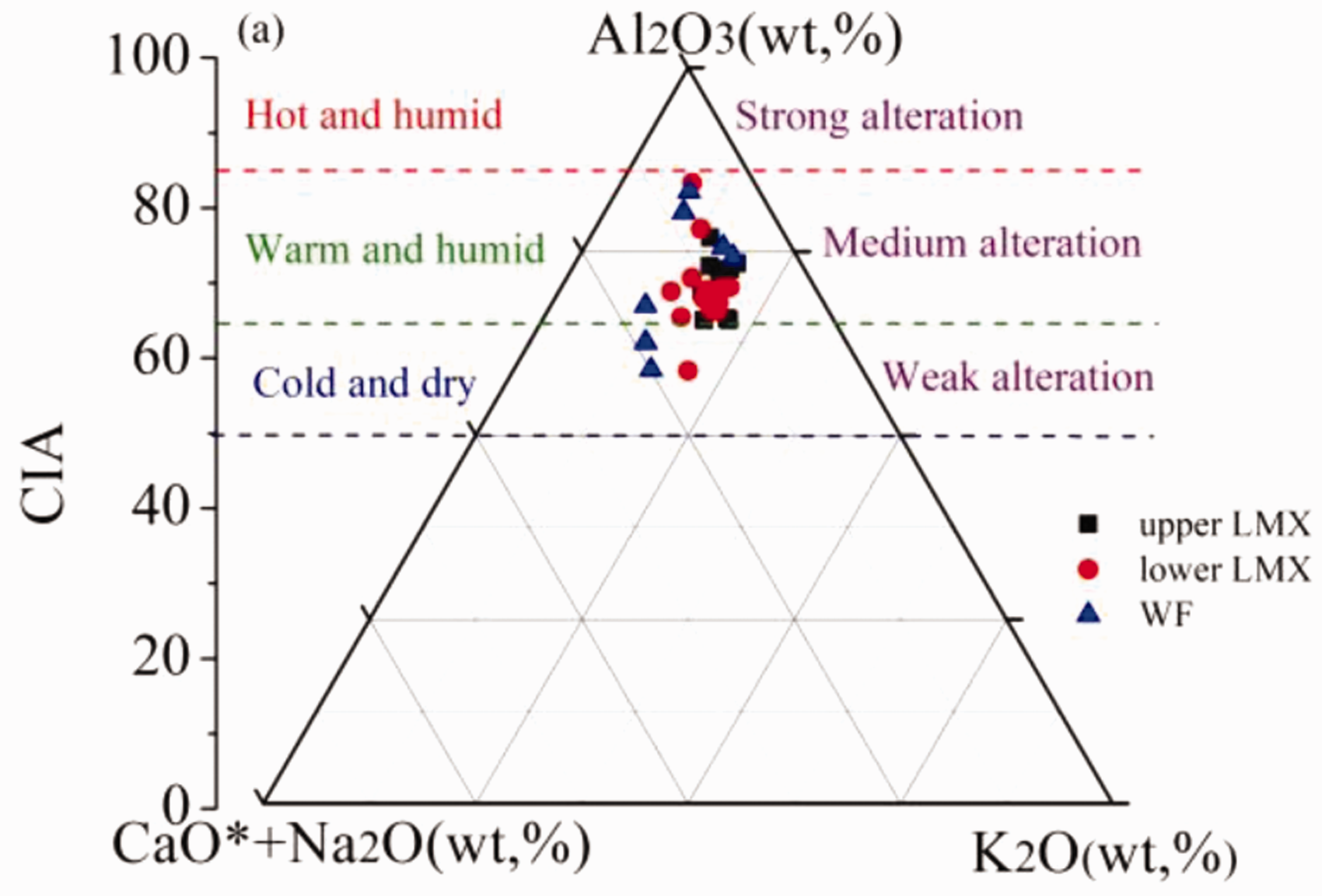
Paleo-climate discrimination diagrams of shale samples from the Wufeng (WF), and upper and lower Longmaxi (LMX) Formations. The base plot was taken from Li et al. (2017) and Yan et al. (2015).
Al, K, and Rb are typical chemical elements used to indicate the terrestrial inputs. These elements are transported to sedimentary basins by rivers or wind in the form of silicate minerals, and then widely used to reconstruct continental inputs (Murphy et al., 2000). In the upper and lower LMX Formation, the average values of K/Al and Rb/Al were 0.41 and 0.41, and 16.46 and 16.93, respectively, and did not change significantly (Figure 3), suggesting that the terrigenous input remained relatively stable and the climate did not fluctuate significantly during this period. However, in the WF Formation, the values of K/Al and Rb/Al were relatively low (mean = 0.30 and 9.64 × 10⁻⁴, respectively) with large fluctuations (Figure 3). Combined with the paleogeography and paleoclimate characteristics, it is speculated that the cause of this phenomenon may be related to intermittent upwelling at the bottom of the water column during this period (Xiao et al., 2020; Zhao et al., 2019). The existence of upwelling hinders the precipitation of terrigenous clastic sediments, such as K and Al, and reduces the deposition of terrigenous detritus.
In addition, the relationship between TOC with K/Al and Rb/Al for the black shale of the study area showed a significant positive correlation in the lower LMX Formation (r = 0.49 and 0.65, respectively, p < 0.05) (Figure 10(a) and (b)), suggesting that the input of terrigenous detritus did not dilute the sedimentary OM, which may be related to the fact that detrital minerals promote the burial and preservation of OM through adsorption (Kennedy et al., 2014). However, in the upper LMX Formation, this relationship exhibited a negative correlation (Figure 10(b)). The reason for this phenomenon may be related to the tectonic movement during this period, whereby continuous topographic uplift led to a gradual decrease in sea level and a gradual increase in the relative terrigenous input in the basin, which limited the enrichment of sedimentary OM.
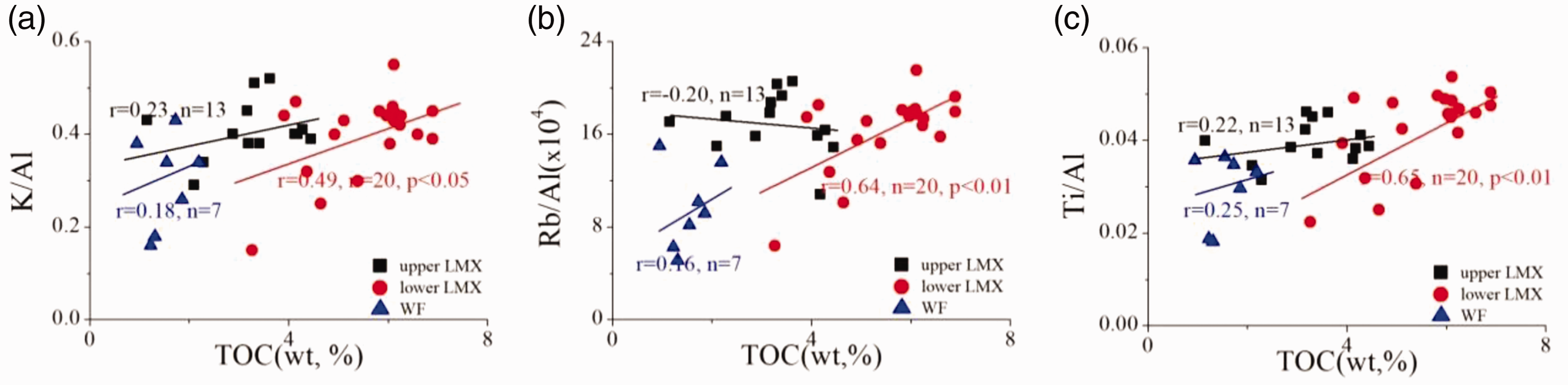
Relationship between total organic carbon (TOC) and K/Al and Rb/Al, and Ti/Al in the Wufeng (WF), lower and upper Longmaxi (LMX) Formations.
Furthermore, studies have shown that the content of sedimentary OM in black shale is related to the deposition rate, with the value of Ti/Al increasing with the sediment accumulation rate (Murphy et al., 2000; Yan et al., 2015). The positive correlations between TOC and Ti/Al in the lower LMX Formation (r = 0.65, p < 0.01, n = 20) (Figure 10(c)) suggest that higher sedimentation rates promote the burial of sedimentary OM and hinder the oxidation of OM.
Main factors controlling OM enrichment
As mentioned above, the complexity of the OM enrichment process requires the consideration of many factors, including productivity, oxygenation level, sedimentation rate, and geological events, as well as the interrelationships between these factors (Chen et al., 2016; Lash and Blood, 2014; Murphy et al., 2000).
During the sedimentary period of the WF Formation, several paleo-uplifts occurred in the Yangtze plate due to tectonic compression, which divided the plate into distinct undercompensated marine basins. The formation of the Gondwana Glacier led to a sharp drop in global temperature and the migration of nutrient-and oxygen-rich water at high latitudes to the equator, which led to rising ocean currents and an increase in surface biological productivity and water column oxidation (Chen et al., 2011; Mu et al., 2011; Pang et al., 2018; Yan et al., 2008) (Figure 11(a)). The negative correlation between TOC and P/Ti and BaXS in the WF Formation was due to the water redox conditions, not a decrease in primary productivity. This is because sedimentary OM is more easily oxidized and decomposed under an oxic environment with only a small part of insoluble OM deposited at the bottom of the water column, which leads to minimal P and Ba content in the OM. This is supported by the highest Siex values and the positive correlation between TOC and redox conditions (Figures 3 and 8).
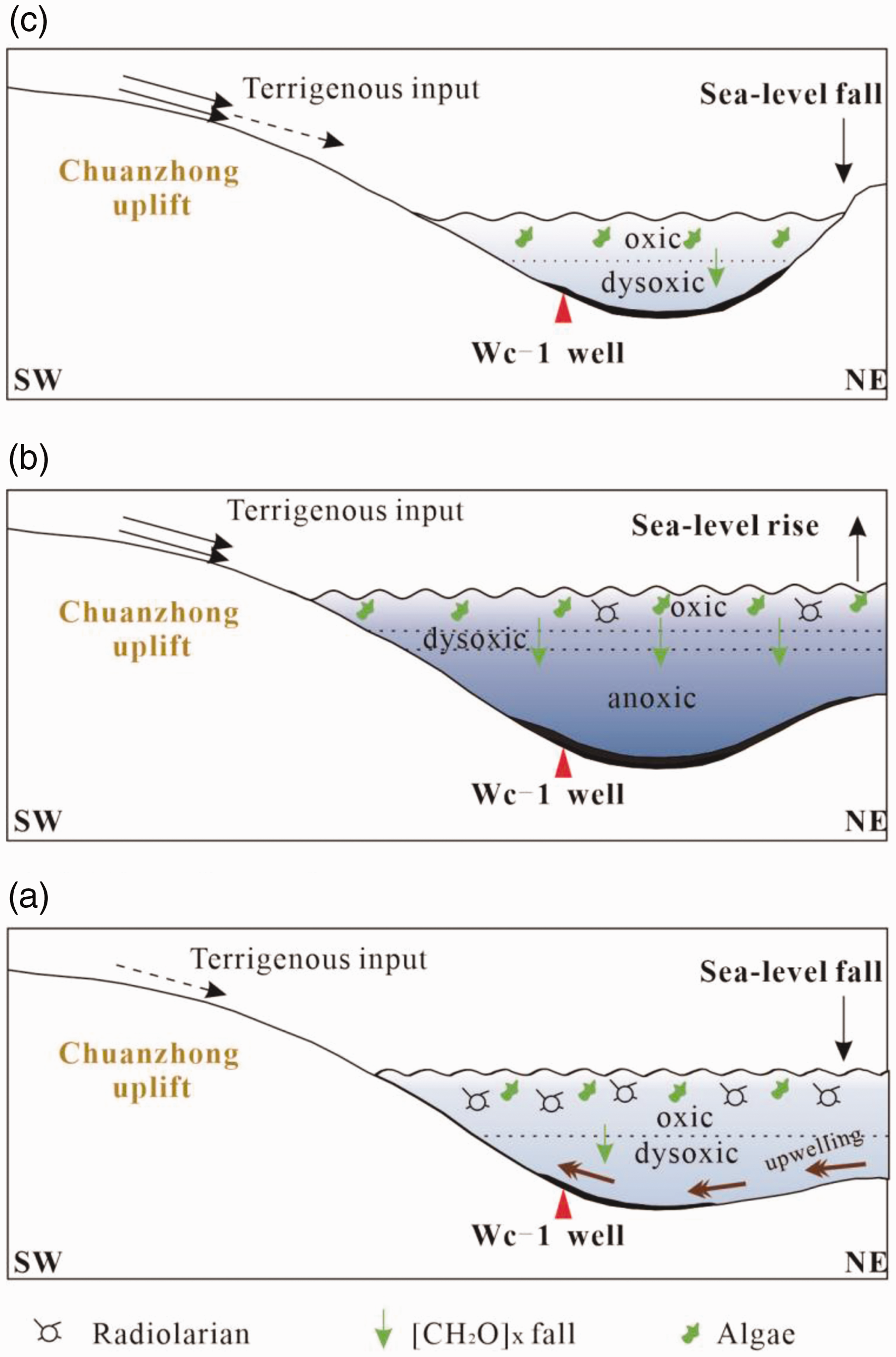
Model of the depositional processes for Wc-1 well samples from the (a) Wufeng, (b) lower and (c) upper Longmaxi formations.
By the time of the lower LMX Formation, the paleoclimate had warmed, and the ice sheet was rapidly melting. The rising sea level led to regional expansion of the ocean basin and deepening of the sea level. At this time, the ancient ocean was in a stratified state (Cheng et al., 2013), and the high level of nutrients resulting from terrestrial input promoted the growth of planktonic algae in the upper water, which was shown by the higher values of TOC, BaXS, and P/Ti (Kennedy and Wagner, 2011). The anoxic water environment in the lower water column promoted the preservation of OM, which led to substantial enrichment of redox-sensitive elements (Figure 11(b)). However, it should be noted that the correlations between TOC and BaXS and P/Ti were positive and negative, respectively (Figure 6). The negative relationship between TOC and P/Ti reflects the effect of the anoxic water column, which leads to P recycling from OM into the overlying water columns, rather than a decrease in primary productivity (Latimer and Filippelli, 2002). The positive correlation between TOC and BaXS, which was due to the faster accumulation rate of OM, meant that the sulfate-reducing bacteria did not reduce barite in time and kept it in the sediments (Loucks and Ruppel, 2007).
During the sedimentary period of the upper LMX Formation, tectonic uplift and the fall in sea level may have promoted oxygenation in the study area, which changed the anoxic environment of the water column to a dysoxic environment (Li et al., 2017) (Figure 11(c)). Otherwise, lower P/Ti and BaXS values indicated slightly lower primary productivity in the upper LMX Formation than those in the lower LMX Formation (Table 2). Combined with an increase in terrigenous detrital material input and the dysoxic environment, the TOC content of the upper LMX Formation continued to decrease, as shown in Figure 3.
Conclusions
Biomarkers in samples of the WF–LMX Formation obtained from the Wc-1 well in northeastern Chongqing suggest that the main origin of the sedimentary OM in the black shale was planktonic algae. Combined with regional tectonic evolution and changes in sea level, the geochemical analysis of P/Ti and BaXS as a paleoproductivity index indicates that the depositional period of the WF–LMX Formation was characterized by high paleoproductivity. The changing trends of Pr/Ph, UEF, VEF, and MoEF in the redox index indicate that the redox conditions of the water column in the study area were oxic/dysoxic, anoxic, and dysoxic in the WF, lower LMX, and upper LMX Formations, respectively. The main factors controlling OM enrichment differed for the three units. For the WF Formation, the redox condition was the main influencing factor. For the lower LMX Formation, high paleoproductivity and anoxic environment were the main factors. For the upper LMX Formation, the paleoproductivity and terrigenous detrital material inputs were the main influencing factors.
Footnotes
Declaration of conflicting interests
The author(s) declared no potential conflicts of interest with respect to the research, authorship, and/or publication of this article.
Funding
The author(s) disclosed the following financial support for the research, authorship, and publication of this article: Authors would like to thank the financial support from the National Natural Science Foundation of China (No. 41772129).
