




Abstract
Research on major controlling factors of the high-quality shale in Upper Ordovician Wufeng–Lower Silurian Longmaxi Formation is a major subject. Based on the information of outcrops and drilling data acquired from Southern Sichuan combined with geochemical elemental analysis and biostratigraphy, this paper analyzed the sedimentary characteristics of Wufeng–Longmaxi organic-rich shale in Sichuan Basin, including plate movements, fluctuation of sea level, paleoproductivity, deposition rates, and paleogeographic environment, and revealed the distribution and sedimentary controlling factors of high-quality shale. Four preliminary conclusions were drawn: (1) The collision and joint of Yangtze Plate and its periphery plates, as well as the intraplate deformation, were gentle in early stage, strong in late stage, gentle in northwest, while strong in southeast, thus forming the northwestward migration of sedimentation center in Sichuan Basin, and the evolution of southern Sichuan sea closeness from weak to strong. (2) Sea level changed following the cycle of deep→shallow→deep→shallow at the turn of Ordovician–Silurian. High sea level and stable ocean basin in early stage created extensive anoxic tectonic sedimentary space which was in favor of organic matter preservation. (3) Influenced by tectonic movements and sea closeness, paleoproductivity of Southern Sichuan marine presented the trend of high in early stage and low in late stage, while the deposition rate also changed from slow in the early stage to fast in the late stage. (4) Extensive deposition and distribution of organic-rich silicic shale was mainly controlled by stable sea basin of low deposition rate, relatively high sea level, semienclosed water, and low deposition rate. The research showed that the high-quality shale in Sichuan Basin is characterized by multiphase superimposition, horizontal extension, and northwest renewal of sedimentary age; Wufeng–Rhuddanian is the main depositional period of high-quality shale, Aeronian comes next; the main exploration layers are Wufeng–Rhuddanian in southern–eastern Sichuan depression, Rhuddanian–Aeronian in Weiyuan, and Wufeng–Telychian in central-northern Sichuan.
Keywords
Introduction
With the deepening of exploration and research work on the southern marine shale gas, an important progress has been made in the acknowledgment of biostratigraphy, sequence stratigraphy, lithofacies, depositional environment, and distribution regularities of black shale in Upper Ordovician Wufeng–Lower Silurian Longmaxi Formation, Sichuan Basin, and the relevant results can be found in the literatures (Chen et al., 2005, 2006, 2004; Fan et al., 2012; Li et al., 2008; Liang et al., 2009; Liu et al., 1993; Wang et al., 2008, 2015a, 2015b, 2016; Zou et al., 2015). It is generally believed that the graptolite shale strata of Wufeng Formation–Longmaxi Formation are widely distributed in the Sichuan Basin. A total of five stages and 13 graptolite zones can be classified from bottom to top, including Kaitian, Henantian, Rhuddanian, Aeronian, and Telychian; at the turn of Ordovician–Silurian, Sichuan Basin presented a paleogeographic structure of three uplifts with a depression. A total of eight sedimentary microfacies, namely calcareous deep water shelf, argillaceous deep water shelf, calcareous semideep water shelf, argillaceous semideep water shelf, calcareous shallow water shelf, (gravel) argillaceous shallow water shelf can be identified; black shale is widely deposited in Southern Sichuan–Eastern Sichuan deep water shelf and periphery areas, distributed in the lower part Wufeng Formation–Longmaxi Formation vertically; the deep water shelf is one of the main controlling factors of shale gas enrichment and high production. These results have great significance on the strategically favorable area selection and resource evaluation of shale gas. However, with the continuous progress of engineering construction in the demonstration areas for marine shale gas development in Sichuan Basin, the author found that as limited by means of studies and limited distribution of effective data points, currently the understanding on the major controlling factors of the formation of the organic-rich shale in Wufeng Formation–Longmaxi Formation and the distribution regularities of “sweet spot” is not clear yet. There is still major blindness in the evaluation of the high-quality reservoirs and “sweet spot” selection in this series of strata.
Therefore, the author analyzed sedimentary elements of the high-quality shale in Wufeng Formation–Longmaxi Formation (namely the organic-rich shale with TOC > 2% and quartz content > 40%, the same below) in Sichuan Basin based on data of outcrops and drilling information in Changning, Weiyuan, Qijiang, and other blocks in Southern Sichuan (Figure 1), combined with geochemical elements test and biostratigraphic data, from the aspects of plate movement, fluctuation of sea level, paleoproductivity, deposition rate, paleogeographic environment, etc. revealing the distribution regularities of high-quality shale and major controlling factors of its deposition and providing geological basis for marine shale gas exploration and development and “sweet spot layer” selection in Sichuan Basin.
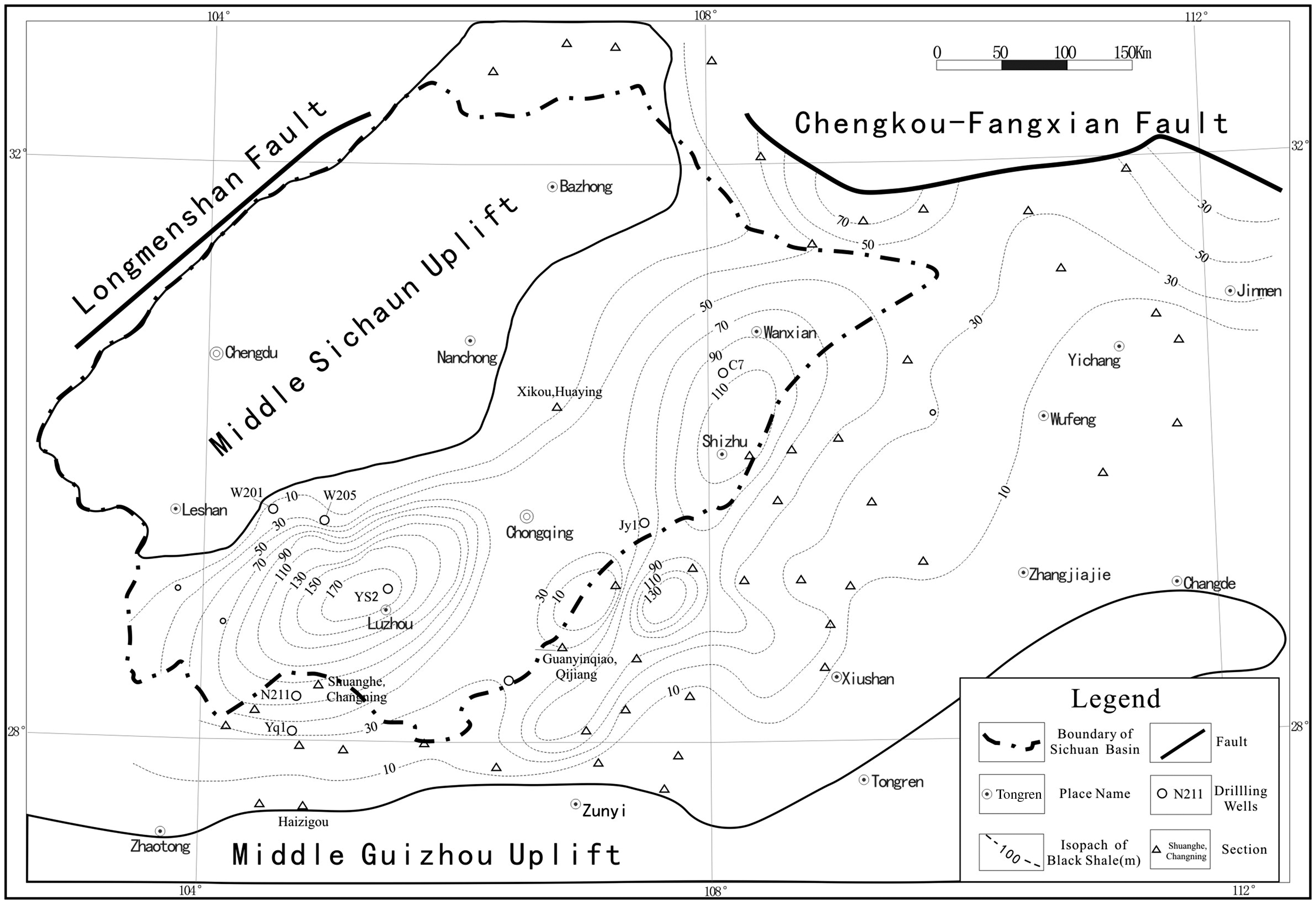
Distribution of black shale and important data points in Lower Member of Longmaxi Formation, Sichuan Basin (modified from Wang et al. (2015b)).
Sedimentation elements of high-quality shale
Collision and joint of Yangtze Plate and periphery plates
Yangtze Platform was located in the northwestern margin of Gondwana continent in early and middle Ordovician. It was neighboring Cathaysia Plate, North China Plate, and Yunnan-Burma Plate, which were located in the middle and low latitude regions (Liu et al., 1993; Malpas et al., 2004). As controlled by Guangxi movement in late Ordovician, Cathaysia Old Land was uplifted and expanded successively from the southeast coastal area to the northwest and jointed Yangtze Plate to form South China Plate. At the turn of Ordovician–Silurian, with continuous northward subduction as well as collision and joint of South China Plate with Yunnan–Burma, North China, and other plates, intraplate deformation occurred in Yangtze Platform—successive down sagging occurred from the southeast margin to the northwest to form a foreland basin, which created the deep water shelf paleogeographic environment in Sichuan Basin in Late Ordovician–Early Silurian, and a set of black shale in Wufeng–Longmaxi Formation was deposited (Li et al., 2008; Su et al., 2007; Wang et al., 2008). It is obvious that the continuous collision and joint of Yangtze Plate and periphery plates is undoubtedly the key controlling factor for the formation of the high-quality shale in Wufeng–Longmaxi Formation.
At present, as affected by the widely missing of material records for the margin of Yangtze Platform, geologists are not clear about the rules of variation in the strength of collision and joint between Yangtze Plate and periphery plates as well as the controlling action of black shale in Longmaxi Formation on the depositional environment.
Collision, joint, and intraplate deformation of Yangtze Plate and periphery plates
In view that highly frequent kalibentonite thin layers are developed in Wufeng–Longmaxi Formation, Sichuan Basin (Su et al., 2002, 2006, 2007), and the bentonite is generally claystone alterated from volcanic ash when encountering seawater. It often originated from volcanic eruption in continental margins or island arcs, and related to the processes of plate subduction and collision (Huff et al., 1992; Kolata et al., 1996). It is an important proof for the continuous collision and joint between Yangtze Plate and periphery plates. Therefore, the author carried out studies on the development stage and scale of bentonite in Wufeng–Longmaxi Formation in Guanyinqiao area, Qijiang in Southern Sichuan (Figures 2 and 3(a), Table 1) to explore and understand the rule of variation in the strength of collision and joint between Upper Yangtze Plate and periphery plates as well as its controlling action on the deposition of high-quality shale.
Composite columnar section of Wufeng–Longmaxi Formation in Guanyinqiao, Qijiang. Photos of bentonite of Aeronian Stage in Qijiang and Changning areas. (a) No. 24 layer bentonite in Qijiang section located in Demirastrites triangulatus zone of Aeronian Stage with a thickness of 8 cm and (b) No. 24 layer bentonite in Changning section located in Demirastrites triangulatus zone of Aeronian Stage with a thickness of 40 cm. Statistics of the bentonite development in Wufeng–Longmaxi Formation in Guanyinqiao, Qijiang and Shuanghe, Changning. BDF: bentonite development frequency; CA: chronological age; MBDS: one million year bentonite development scale. MLTB: monolayer thickness of bentonite. It is an average after a slash “/”; NBL: number of bentonite layers; ST: sedimentation time; TTB: total thickness of bentonite.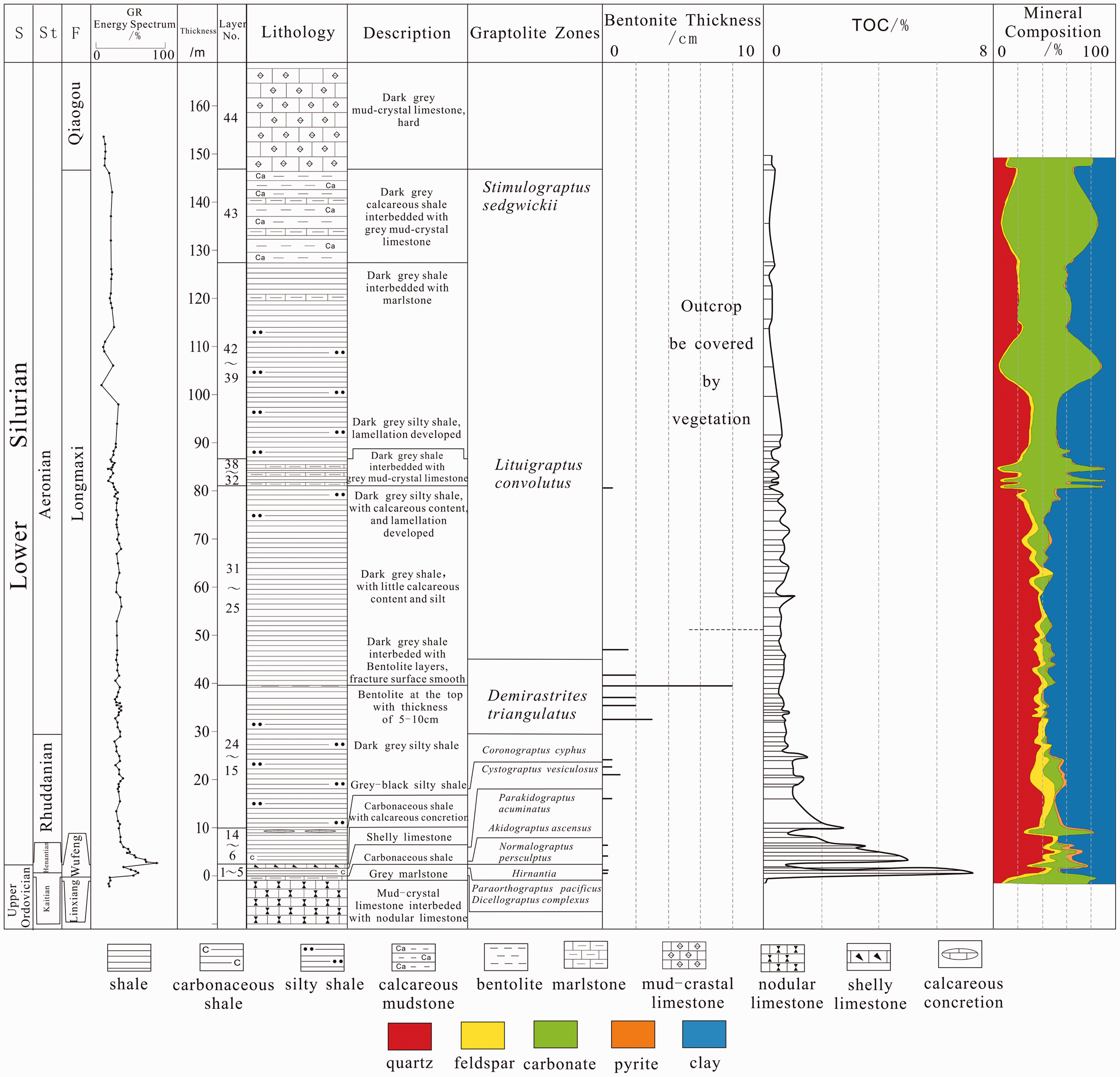
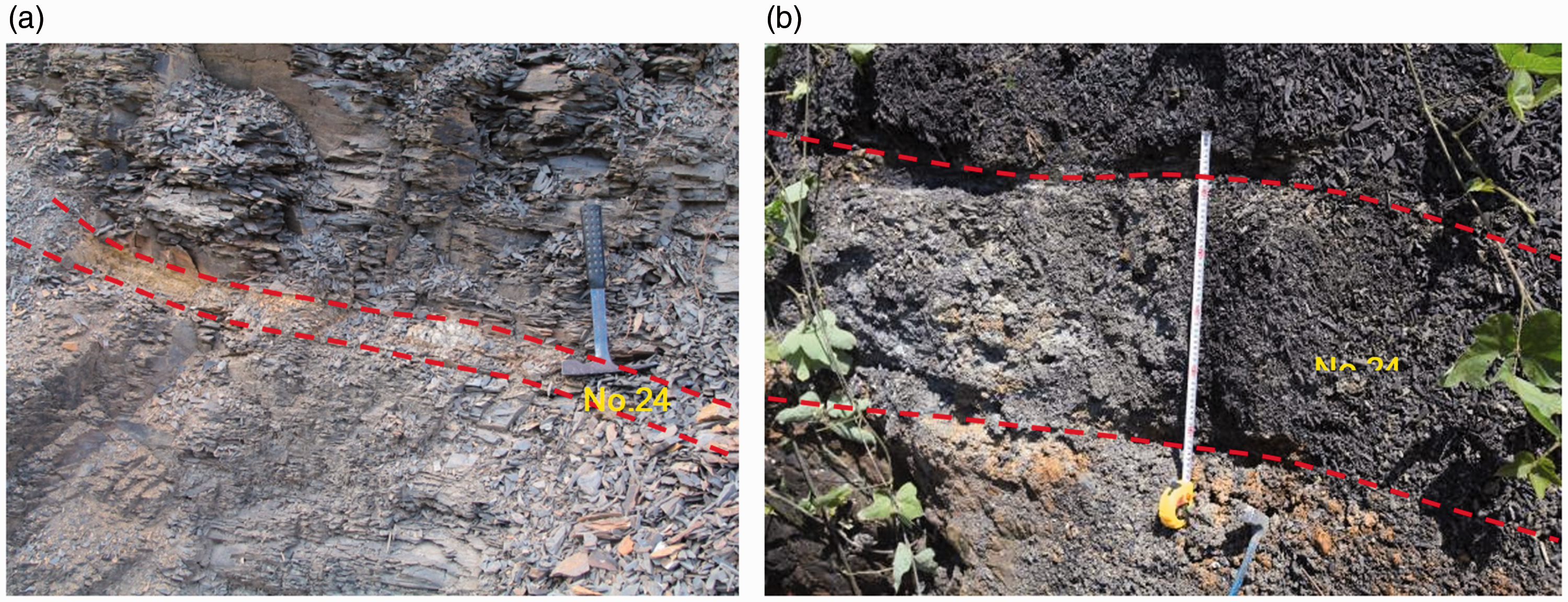
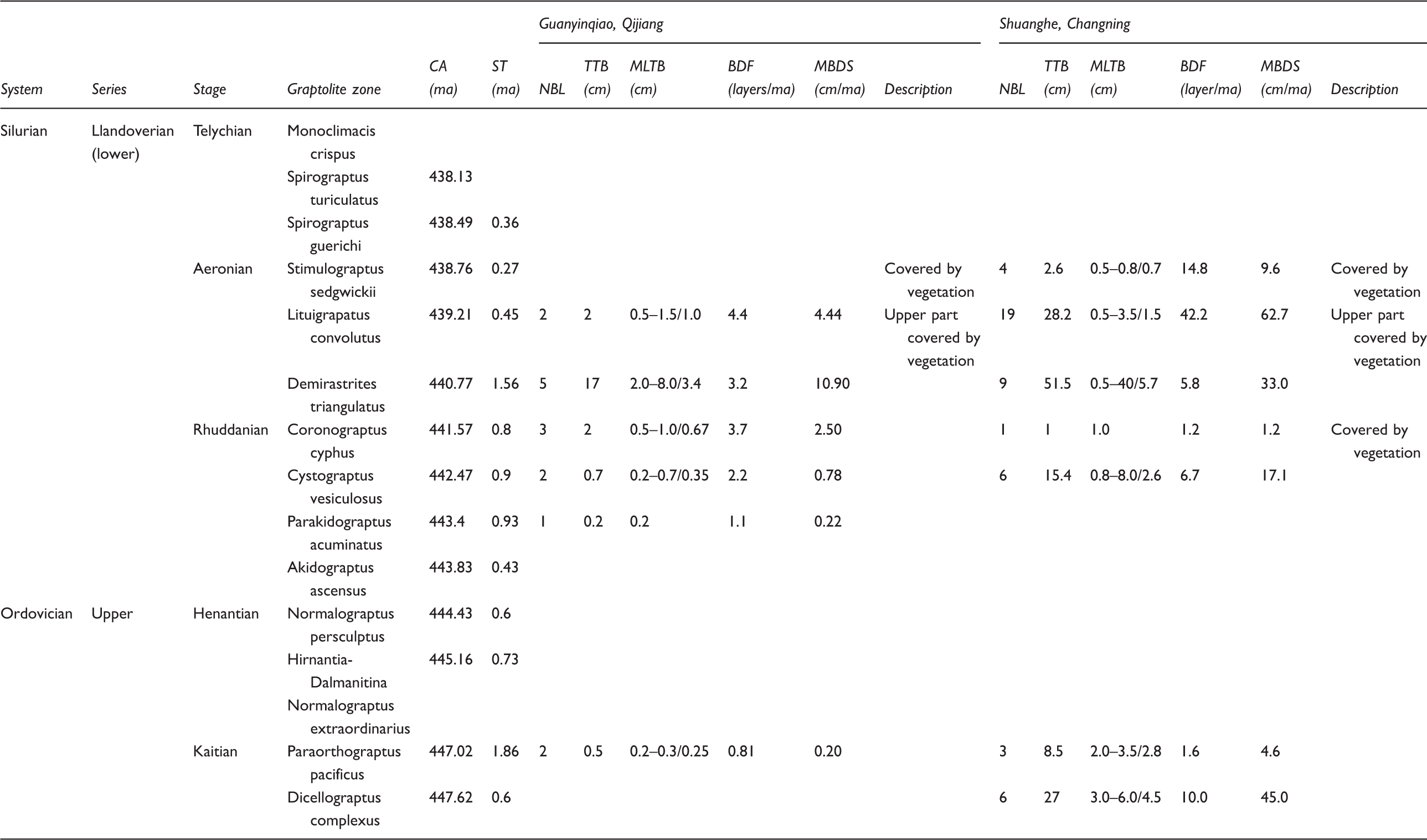
The thickness of middle Wufeng–Rhuddanian Stage in Guanyinqiao, Qijiang section (Dicellograptus complexus to Cystograptus vesiculosus graptolite zone) is 18 m. A total of five layers of bentonite can be found with a monolayer thickness ranging from 0.2 to 0.7 cm, and the development scale in one million year of bentonite is 0.2–0.8 cm/ma; the thickness of Upper Rhuddanian Stage (Coronograptus cyphus graptolite zone) is 12 m. A total of three layers of bentonite can be found with a monolayer thickness increased to 0.5–1.0 cm (average 0.67 cm), and the one million year bentonite development scale is 2.5 cm/ma; in the Aeronian Demirastrites triangulatus zone (Demirastrites triangulatus zone), a total of five layers of bentonite can be found with a monolayer thickness increased to the peak value of 2–8 cm. The bentonite development scale in one million year reaches the peak value of 10.9 cm/ma. The thickest bentonite horizon is in No. 24 layer with a thickness of 5–10 cm (average 8 cm) (Figure 3(a)); in the middle and upper members of Aeronian Stage (Lituigrapatus convolutus to Stimulograptus sedgwickii graptolite zone), for vegetation cover and severe outcrop weathering, only two layers of bentonite can be found with a monolayer thickness of 0.5–1.5 cm (Figure 2, Table 1). This suggests that the frequency and scale of bentonite development have a gradually increasing trend from Wufeng Formation to Longmaxi Formation.
In Shuanghe section of Changning, Wufeng-middle Rhuddanian Stage (Dicellograptus complexus to Cystograptus vesiculosus graptolite zone) has a thickness of 32 m. A total of 15 layers of bentonite can be found with a monolayer thickness of 0.5–8 cm. The bentonite development scale in one million year is 4.6–45 cm/ma (Table 1). The upper Rhuddanian Stage (Coronograptus cyphus graptolite zone) has a thickness of 26 m. As outcrops were severely weathered, only one layer of bentonite can be observed with a thickness of 1 cm; in Demirastrites triangulatus zone of Aeronian Stage (with a thickness of more than 60 m), more than 10 layers of bentonite were found with a monolayer thickness of 0.5–40 cm. The bentonite development scale in one million year is 33 cm/ma; the thickness of the middle and upper parts of Aeronian Stage is 190 m, which were severely covered by vegetation. At least a total of 23 layers of bentonite was found discontinuously with a monolayer thickness of 0.2–3.5 cm. The bentonite development scales in one million year of the middle (Lituigrapatus convolutus graptolite zone) and upper (Stimulograptus sedgwickii graptolite zone) parts of the formation are more than 62.7 cm/ma and 9.6 cm/ma, respectively. The thickest bentonite layer in the section is located in No. 24 layer of Demirastrites triangulatus zone of Aeronian Age (Figure 3(b)) with a thickness of 40 cm, which is the same layer as No. 24 layer of Qijiang Guanyinqiao Stage (Figure 3(a)), reflecting that volcanic eruption in early Aeronian Stage originated from the western margin of Upper Yangtze Plate. This suggests that the frequency and scale of bentonite development in Changning region in Southern Sichuan is higher than those in Southeast Sichuan, and the peak time is early and middle Aeronian Age followed by early Wufeng Age; the materials of bentonite in Southern Sichuan and periphery areas came from volcanic eruption of the western margin of Yangtze Plate.
According to the above analysis on the frequency and bentonite development scale in Changning and Qijiang regions, combined with research findings on stratigraphic distribution of Wufeng–Longmaxi Formation in Southern Sichuan–Middle Sichuan–Northern Sichuan regions (Wang et al., 2015b; Zou et al., 2015), the author suggests that the collision and joint between Yangtze Platform and periphery plates appeared to be gentle in the early stage and strong in the late stage as a whole in Wufeng–Longmaxi Stage; gentle in the northwest but strong in the southeast, or relatively gentle in the early Wufeng–Rhuddanian Stage but getting stronger starting from late Rhuddanian Stage, and then reached a strong collision period in early Aeronian Stage; under the continuous collision and joint, southeast margin of Yangtze Platform downsagged and a foreland basin was formed (Su et al., 2002, 2006, 2007). The amplitude of bending reached the maximum degree in the Aeronian Stage, followed by Rhuddanian Stage, and it was the smallest in Wufeng Stage. The bending degree in southeast of Yangtze Platform (such as Southern Sichuan and Eastern Sichuan regions) is larger than that in Northwestern regions (such as Middle Sichuan and Northern Sichuan regions), and the bending depression migrated from southeast to northwest in Wufeng–Longmaxi Stage.
Impact of tectonic activities on closeness of the sea area and content of nutrient substance in seawater in Sichuan Basin
As controlled by the structural factors of successive strengthening of plate collision and joint and northwestward migration of the foreland depression, in the depositional period of Wufeng–Longmaxi Formation, the positive structures of Middle Sichuan Uplift, Middle Guizhou Uplift, and Xuefeng Uplift were continuously enlarged, the closeness of the sea area in Sichuan Basin was gradually strengthened, the sedimentation center migrated northwestward continuously, and the deep water area was gradually contracted, resulting in multistage superposition and horizontal extension of black shale, continuously renewal of the deposition ages. The depression in southern–eastern Sichuan was the depression and sedimentation center in Wufeng–Aeronian Stage, and Middle Sichuan-Northern Sichuan region was the depression and sedimentation center in Telychian Stage (Wang et al., 2015b). Currently, research findings for the closeness of Wufeng–Longmaxi Stage in the sea area of Sichuan Basin are rarely reported. The author revealed the rules of the closeness and variations of paleoproductivity in Wufeng–Longmaxi depositional period in the gulf of Southern Sichuan.
It was pointed out by Berner and Raiswell (1983) that the quantities of reduced sulfur generated for the reduction of organic matters in fresh water, normal seawater, and saline seawater are different (Berner and Raiswell, 1983). Therefore, the ratio of s/c can be used to reflect salinity and closeness of water in the basin (Wang et al., 2008). The ratio of s/c for semienclosed bay and normal sea water is about 0.2–0.6. The water with a ratio larger than this has a higher salinity and stronger closeness, and the water with a ratio lower than this has a lower salinity and weaker closeness. The research shows that the ratio range of s/c in Wufeng Formation in Changning region is 0.09–0.12, reflecting that the water has low salinity and weak closeness; the ratio range of s/c of Lower Rhuddanian Stage is 0.08–0.51, reflecting that the water has a low-normal salinity and weak to semienclosed environment; the ratio range of s/c of upper Rhuddanian Stage is 0.37–0.57, reflecting that the water has a normal salinity and semienclosed environment; the ratio range of s/c of lower Aeronian Stage is 0.39–0.81, reflecting that the water has a normal-high salinity and semienclosed to strongly enclosed environment; the ratio range of s/c of upper Aeronian Stage is 0.65–1.99, reflecting that the water has a high salinity and strong closeness (Figure 4).
Composite columnar section for Wufeng–Longmaxi Formation in Well N211 in Changning, Sichuan Basin.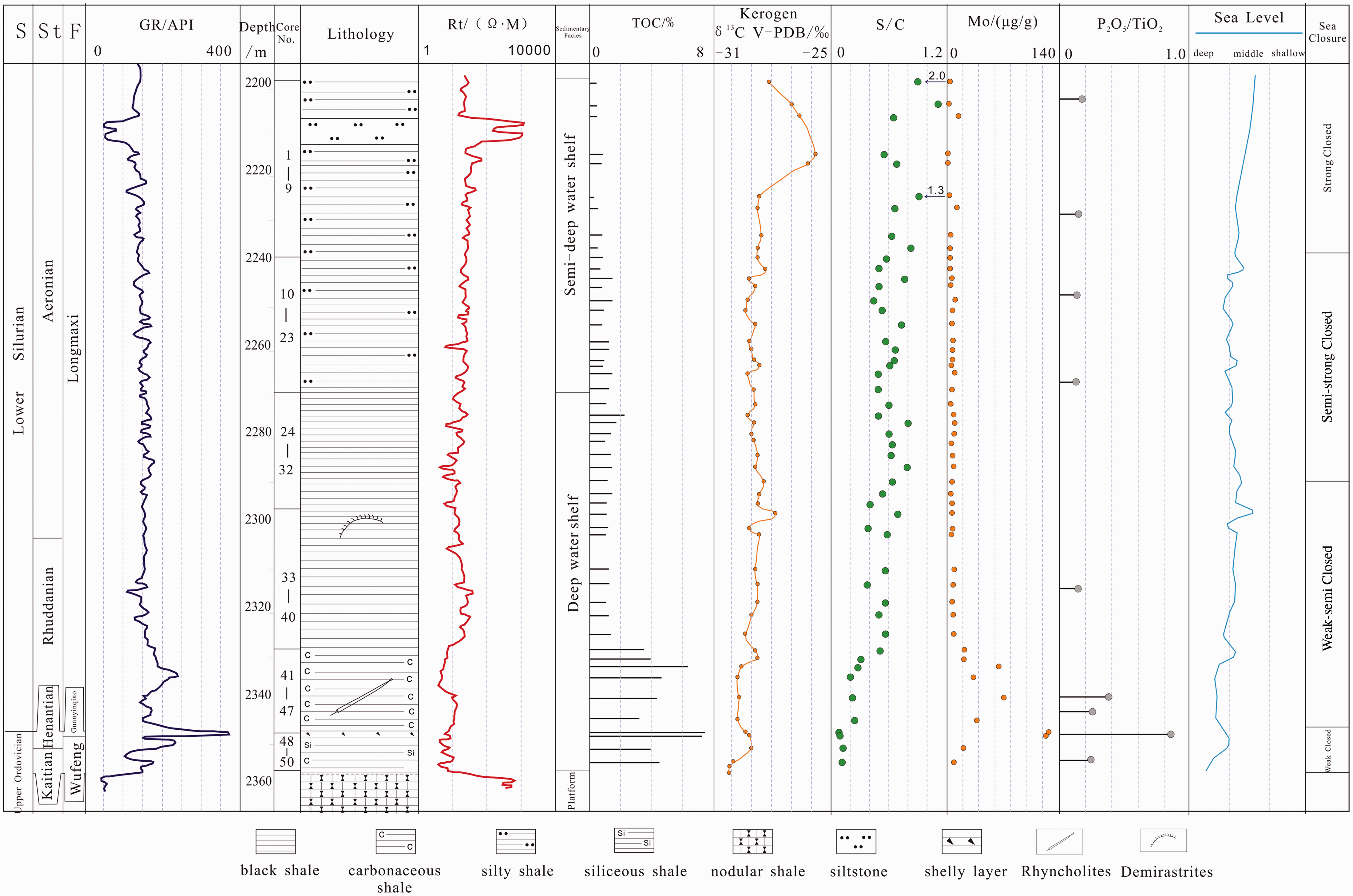
In addition, the Mo-TOC data of Well N211 and Well W205 (Figures 4 and 5) show that Southern Sichuan sea area in Wufeng–Rhuddanian Stage was in weak to semienclosed state, and it entered a semienclosed to strongly enclosed state in Aeronian Stage; Changning sea area was in a weak enclosed to semienclosed state in Wufeng–Rhuddanian Stage, and it was semienclosed to strongly enclosed bay in Aeronian Stage; Weiyuan sea area was in a semienclosed state in Rhuddanian–Aeronian Stage.
Graph for the relationship between Mo and TOC in Longmaxi Formation, Southern Sichuan.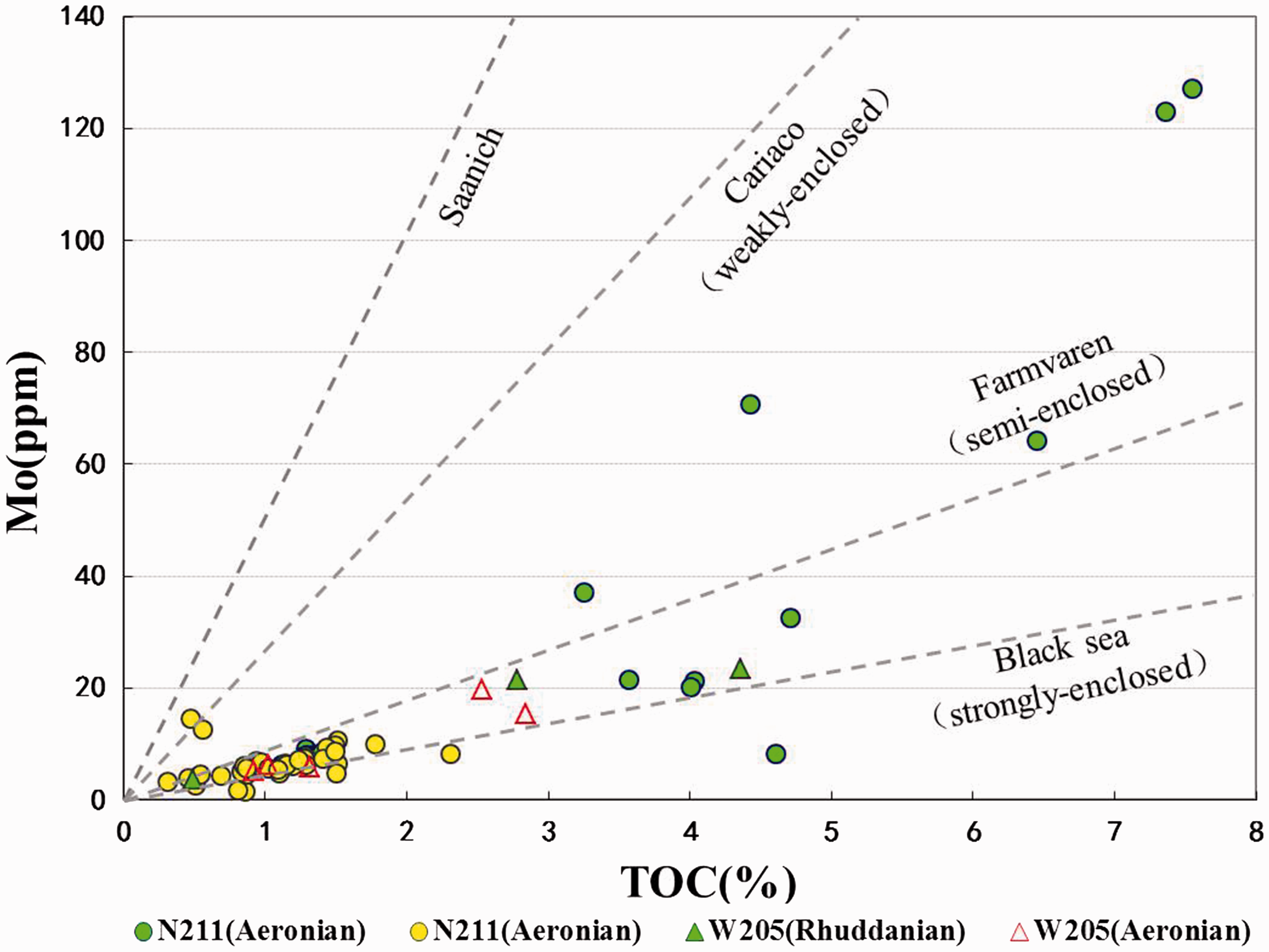
It is obvious that the closeness behavior of Southern Sichuan sea in Wufeng–Longmaxi Age is consistent with the variation in strength of joint between Yangtze Plate and periphery plates, which indicates that tectonic activities were the main controlling factors causing strengthening closeness, reduction of deep water area, and rising of salinity in the sea area of Sichuan Basin. Under the joint action between Yangtze Plate and periphery plates, the barrier effect resulting from periphery uplifts and submarine topography in the basin was gradually intensified, and the closeness of Southern Sichuan sea shows the characteristics of weak in the early stage but strong in the late stage, and weak in the northwest but strong in the southeast.
As affected by the variations in sea area closeness, the concentration of nutrient substance in Southern Sichuan sea had the salient features of high in the early stage and falling in the late stage, namely, P2O5/TiO2 ratio was generally larger than 0.2 and it reached the peak value in Guanyinqiao member; after the late Rhuddanian Stage, with the strengthening closeness in the sea area, P2O5/TiO2 ratio fell to below 0.2 (Figure 4). In addition, according to TOC contents and siliceous content of the three data points: Guanyinqiao, Qijiang section, N211 and W205 (Figures 2, 4 and 5), the organic-rich (TOC content > 2%) and siliceous-rich (quartz content > 40%) high-quality shale was mainly formed in Wufeng-middle Rhuddanian Stage (or in a weak to semienclosed bay environment), and the shale with a low organic matter abundance (TOC content < 2%) was mainly formed in late Rhuddanian Stage to Aeronian Stage (or in a semienclosed to strongly enclosed bay environment). This shows that the nutrient substance (such as SiO2 and P) in the sea area of Sichuan Basin was mainly from open oceans (such as Qinling Ocean in the north). The weak to semiclosed water was conducive to seawater exchange and sufficient supply of nutrient substance. It was an important guarantee for high production of surface planktons such as graptolite, radiolarian, calthrop, algae, and fungi, and also the material basis for forming organic- and biology-rich silicic shale.
Fluctuation of sea level
On the rules of fluctuation of sea level at the turn of Ordovician–Silurian, the author has the same understanding with which of many scholars and it has been discussed in the relevant literatures (Brenchley, 1998; Harper and Rong, 1995; Harper and Williams, 2002; Wang et al., 2008, 2015a; Zou et al., 2015). It is generally regarded that from Kaitian interglacial stage→Henantian glacial stage→Rhuddanian interglacial stage→Aeronian interglacial stage, the sea level experienced the cycle of variations from deep→shallow→deep→shallow (Figure 4), namely in Kaitian interglacial stage, the sea level was at a high level, when δ13C value drifted negatively; in Henantian glacial stage, the sea level began to fall rapidly (with an amplitude of 50–100 m), and the value of δ13C began to drift, reaching −29.0 (Changning) to −27.6 (Wangjiawan, Yichang) in the middle of Guanyinqiao member (Wang et al., 2015b; Zou et al., 2015); in early Rhuddanian Stage, as the climate warmed, the sea level rose drastically, and the value of δ13C experienced negative drift again; entering late Rhuddanian Stage–Aeronian stage, the sea level began to fall, and the value of δ13C remained a positive drift.
In the early stage of sedimentation of Wufeng–Longmaxi Formation, for the control of fluctuation of sea level, Sichuan Basin and periphery areas showed the diversified paleogeographic evolutionary characteristics (Wang et al., 2015b), mainly as follows: the deep depression areas such as southern Sichuan–eastern Sichuan–northeastern Sichuan were continuous deep water sedimentation centers. The west uplift of Hunan and Hubei (an area with Guanyinqiao member missing) experienced a sedimentary cycle of deep water shelf→missing (submarine uplift) →deep water shelf. The areas with Guanyinqiao member missing in Yinjiang-Sinan and Yanhe regions experienced an evolutionary process from missing (outcrops)→deep water shelf, while the marlstone facies areas in Eastern Yunnan–Northern Guizhou–Southeastern Chongqing and Western Middle Yangtze Region experienced a sedimentary cycle of deep water shelf→shallow water shelf→deep water shelf.
Paleoproductivity
At the turn of Ordovician–Silurian, the earth experienced temperature changes in the interglacial stage of Ordovician, glacial stage of Henantian, and interglacial stage at the beginning of Silurian, which resulted in the alternation procedure of biological extinction and revival and spreading. According to the studies of Chen et al. (2005, 2006, 2004), at the kataglacial stage in Ordovician, more than 80% of the types of graptolite became extinct, while in the interglacial stage at the end of Ordovician and early Silurian, various graptolitic facies revived and spread, showing the characteristics of diversified changes. However, whether the extinction, revival, and spreading of graptolite mean that plankton such as algae and fungi underwent synchronized extinction and revival and spreading? Whether the paleoproductivity for generating high-quality hydrocarbon source rocks experienced falling and rising correspondingly?
In view that P/Ti ratio (P2O5/TiO2 ratio) is a commonly used indicator characterizing nutritional status of the ancient ocean, Zou et al. (2015) carried out analysis on P, Ti, and other elements for Wufeng–Longmaxi Formation in Shuanghe section, Changning. It is considered that the paleoproductivity of southern Sichuan sea had the variation characteristics of high in the early stage but low in the late stage at the turn of Ordovician–Silurian, namely P2O5/TiO2 ratio was high from Wufeng-middle Rhuddanian Stage (Dicellograptus complexus to Cystograptus vesiculosus graptolite zone), or generally 0.24–0.84, and the maximum value was located in Guanyinqiao Member; however, it was low in upper Rhuddanian Stage–Aeronian Stage (above the Coronograptus cyphus graptolite zone), it was generally 0.12–0.17. The well surveying data in this paper also confirms this view (Figure 4).
This shows that in Wufeng-middle Rhuddanian Age, Changning sea area was in weak semienclosed state, when nutrient substances such as SiO2 and P were relatively rich and the paleoproductivity was in a high level. Planktons such as graptolite, algae, and radiolaria were in high production, and Guanyinqiao Period was the peak time of paleoproductivity. This is mainly for the rapid drawdown of sea level, when the concentration of nutrient substances in seawater leaped and reached a peak value; after Late Rhuddanian Period, Changning sea area was turned from a semienclosed sea area into a strongly enclosed sea area, when nutrient substances in seawater decreased and paleoproductivity fell. As Qinling ocean was the main source of nutrient substances in Southern Sichuan bay, the sea area near Qinling ocean had a high paleoproductivity. Accordingly, it is concluded that the nutrient substance abundance in seawater and paleoproductivity in Weiyuan area were higher than those in Changning area.
Deposition rate
Deposition rate is an important indicator reflecting the stability of the depositional environment and controlling the formation of organic-rich shale. Scholars such as Zou et al. (2015) analyzed the deposition rates of Shuanghe section, Changning and Wufeng–Longmaxi Formation in Well W202 in Middle Sichuan and found that the deposition rates and organic matter abundance in the main graptolite zones have significant differences in Southern Sichuan Depression and Middle Sichuan Uplift. For example, the deposition rate was low in middle Wufeng–Rhuddanian Period (namely Dicellograptus complexus–Cystograptus vesiculosus zone) in the center of Southern Sichuan Depression, or generally 2.33–9.29 m/ma, but it was faster in Late Rhuddanian Period–Aeronian stage (namely Coronograptus cyphus–Demirastrites triangulatus zone), or 31.41–33.75 m/ma. In middle Aeronian Stage, the deposition rate was very fast, reaching a high value of 103.70–384.4 m/ma (Zou et al., 2015); Well W202 area is located in the upper slope of Weiyuan Structure in Middle Sichuan, and its deposition rate was very low in Wufeng-middle Rhuddanian stage (namely Dicellograptus complexus–Cystograptus vesiculosus zone), or generally 1.5–2.67 m/ma. In Late Rhuddanian Stage–Early Aeronian Stage (namely Coronograptus cyphus–Stimulograptus sedgwickii zone), the deposition rate was slightly increased but still remained at a low level of 6.74–15.19 m/ma. In Telychian Stage (namely Spirograptus guerichi zone), the deposition rate was very fast, reaching more than 100 m/ma (Zou et al., 2015). As controlled by deposition rate, the member of Wufeng-middle Rhuddanian Stage in Changning region had high organic matter abundance, generally 2–8.36%. In upper Rhuddanian Stage–Aeronian Stage, the organic matter abundance was low, generally 0.4–1.86%. In Rhuddanian–Aeronian Stage in Weiyuan region, the organic matter abundance was high, generally 2.1–7.1%. The organic matter abundance in Telychian Stage was low, generally below 2.11% (Zou et al., 2015).
This shows that at the transition stage of Ordovician–Silurian, with the depression and sedimentation center drifting from southeast to northwest, closeness of the sea area was gradually increased and the area reduced. Since the southeast source area began to inject the sea area of Sichuan Basin, the content of terrigenous clay material was gradually increased, resulting in the deposition rate in Southern Sichuan and periphery sea areas with an outstanding feature of slow in the early stage, speeding up in the late stage, slower in the northwest, and faster in the southeast. In the period of Wufeng-middle Rhuddanian Stage in Changning region, deposition rate was slow, and it was the main stage for forming the organic-rich shale. In Aeronian Stage, though it was located in a deep water sedimentation center, for the deposition rate was too fast, and clay mineral dilution was strong, the organic matter abundance was not high. Middle Sichuan Paleo-uplift is a very stable positive structure. The tectonically active zones at southeast margin of Yangtze Region had small and late impact on the structure, and the distance from the source area was far. The deposition rate was slow for a long time. Wufeng–Aeronian stage was the main stage of forming organic-rich shale.
Lithofacies paleogeography at the transition stage of Ordovician–Silurian
On the lithofacies paleogeography of Wufeng–Longmaxi stage, they have been reported in the relevant literatures by Wang et al. (2015a) and Zou et al. (2015), and no more detail is given here. Comprehensive analysis is carried out only for sedimentation elements related to black shale in lithofacies paleogeography of various stages in Sichuan Basin, combined with studies on sedimentary evolutionary characteristics in Southern Sichuan depression (Figure 6) to discuss the diversity of the depositional setting of the high-quality shale in various depositional periods.
Section schematic diagram for the sedimentary evolution of Wufeng–Longmaxi Formation in Southern Sichuan Basin.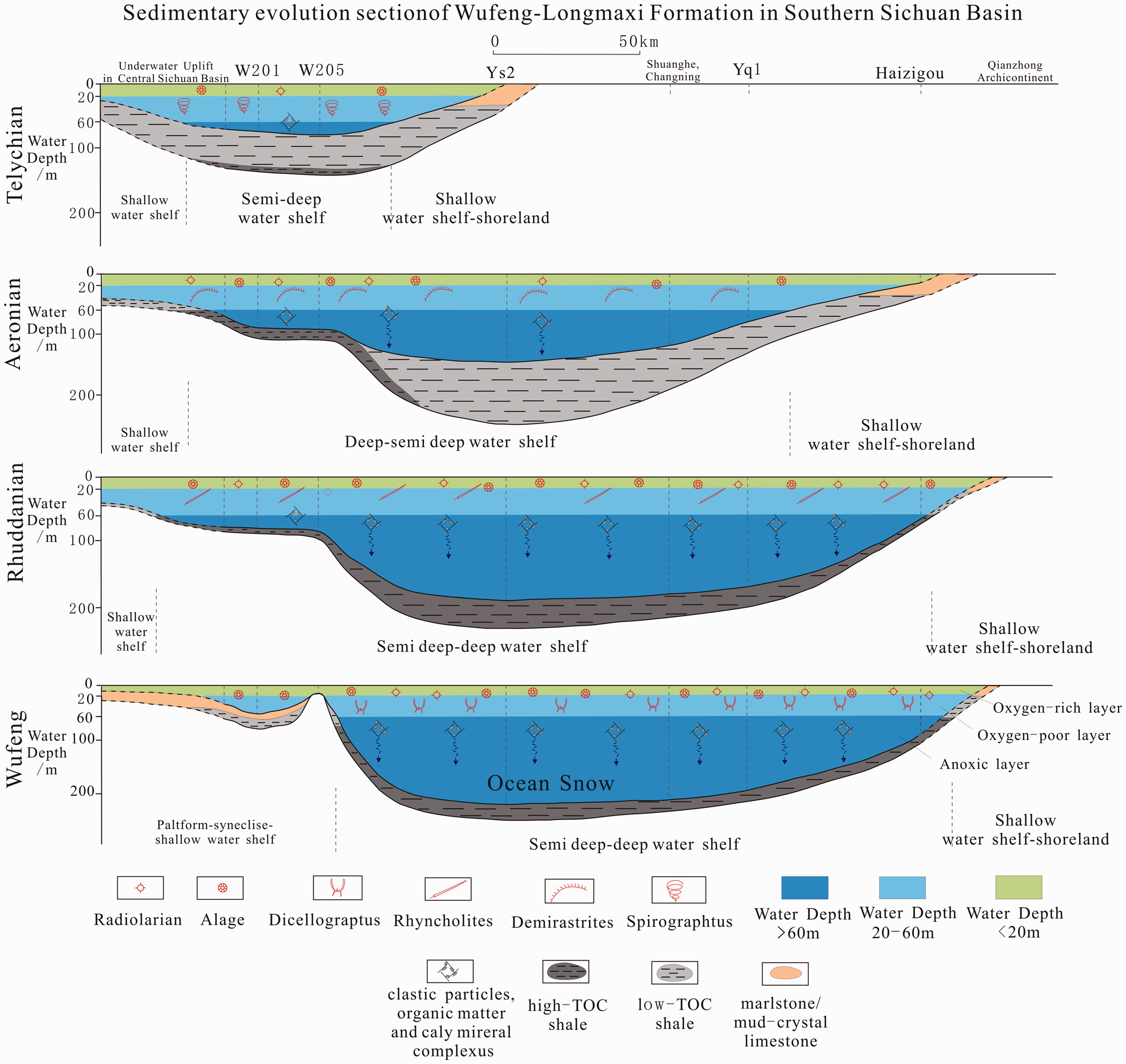
Wufeng Formation depositional stage (or Kaitian interglacial stage)
The regional tectonic movements were gentle. The main body of Sichuan Basin can be classified into three uplifts (namely, Middle Sichuan, Middle Guizhou, and Xuefeng paleo-uplifts) and one depression (namely, Southern Sichuan–Eastern Sichuan Depression). The “V” shaped deep water bay facing Qinling Ocean had a warm and wet climate. The sea level rose to a high position. The seabed topography was gentle and with weak closeness. Nutrient substances such as SiO2 and P were mainly from the direction of Qinling Ocean. The surface water had rich nutrient. Planktons such as algae, radiolaria, and graptolite had high production (Wang et al., 2015a; Zou et al., 2015). Biological debris particles, organic matters, clay minerals, and other compounds were deposited slowly in the form of “ocean snow” (Macquaker et al., 2010; Potter et al., 2005; Ursula et al., 2011), and the deposition rate was 2.3–3.2 m/ma (Zou et al., 2015). In the vast area of Southern Sichuan Depression was a deep water shelf with a water depth of 100–200+ m (Figure 6). There were three high-quality lithofacies of sedimentary siliceous shale, calcareous siliceous shale, and clay siliceous mixed shale (Wang et al., 2016) with TOC of 2.0–4.6%. The thickness of shale with TOC > 2% was 5–14 m (Zou et al., 2015). The semideep water shelf with a water depth of 60–100 m and shallow water shelf-shoreland facies with a water depth shallower than 60 m occurred in the north slope of Middle Guizhou Archicontinent. In Weiyuan, Middle Sichuan, it was a platform-syneclise facies with a water depth of shallower than 60 m. In both areas, the calcareous shale and marlite with TOC < 2.0% were deposited (Figure 6).
Middle and Late Deposition Stage of Wufeng Formation (or Henantian glacial stage)
The sea level fell rapidly (with an amplitude of 50–100 m) and ocean temperature drop was the theme of environmental changes. The deep water area shrank to Southern–Eastern Sichuan Depression (Wang et al., 2015a; Zou et al., 2015). The concentrations of nutrient substances such as SiO2 and P in sea water soared. Graptolite taking planktons as food became extinct massively and surface planktons grew explosively, making paleoproductivity reaching the peak (Wang et al., 2015a; Zou et al., 2015). During the stage, the deposition rate was 0.3–3.6 m/ma (Wang et al., 2015a; Zou et al., 2015). In Southern–Eastern Sichuan depression, there were two types of high-quality lithofacies, namely sedimentary siliceous shale and calcareous siliceous mixed shale with TOC of 2.7–11%. The thickness of shale with TOC > 2% was 0.2–1.2 m (Wang et al., 2015a; Zou et al., 2015). In shallow water areas such as Northern Guizhou, Eastern Chongqing, and Western Hunan and Hubei, calcareous shale and marlstone were deposited with TOC of generally lower than 1% (Wang et al., 2015a).
Rhuddanian depositional stage
The depositional pattern of Wufeng Stage basically remained, and an ancient landform characterized by alternating depressions and uplifts in the seabed began to form. Sea level fluctuation and sea area closeness variations were major controlling factors on environmental change in the stage (Zou et al., 2015). In early Rhuddanian Stage, the climate warmed up, sea level rose quickly and reached the high water level in early Wufeng Stage. Deep water shelves with a water depth of nearly 200 m appeared again in Southern Sichuan Depression, and semideep water shelves with a water depth of 60–100 m appeared in the ramp region of the depression (Figure 6). A large area anaerobic environment emerged on the seabed, and surface planktons suffered from heavy radiation again. The deposition rate was 3.98 m/ma (Changning). Three types of high-quality lithofacies, namely siliceous shale, calcareous siliceous mixed shale, and argillaceous siliceous shale, were developed in the vast deep water areas in Southern Sichuan with TOC of 2.1–8.4% (Wang et al., 2016); in Late Rhuddanian Stage, the sea level began to fall, and then the warping and depression began to drift westward, and the depression and sedimentation center migrated northwestward gradually. The eastern slope of Middle Sichuan Uplift settled gradually into a semideep water shelf (Figure 6). The closeness of Southern Sichuan Sea was enhanced. Clay content was increased and deposition rate speeded up. The deposition rate was 6.74 m/ma (Weiyuan) to 33.75 m/ma (Changning). TOC contents are 1.03–1.86% in Changning and 2.3–4.1% in Weiyuan. In Rhuddanian Stage (Wang et al., 2016; Zou et al., 2015), the thickness of black shale deposited was generally 10–80 m, and the thickness of the shale with TOC > 2% is generally 10–60 m (Wang et al., 2015a; Zou et al., 2015).
Aeronian depositional stage
Collision and joint activities between Yangtze Plate and periphery plates were intensified. The warping amplitude of Southern–Eastern Sichuan Depression was enlarged, and the depression and sedimentation center was migrated northwestward. The sea level fell greatly. The main body of Sichuan Basin and neighboring areas was turned into a semideep water shelf. Southern Sichuan Sea was gradually turned from a semienclosed area into a strongly enclosed area. The deep water area was shrunk and migrated. The deep water area in Southern Sichuan was turned into a closed semideep water shelf. The water depth at the eastern slope of Middle Sichuan Uplift was slightly increased, keeping a semienclosed deep water shelf (Figure 6). The deposition rate was speeded up noticeably, showing the characteristics of differentiation, namely low in the northwest but high in the southeast. The deposition rate in Weiyuan region was 9.5–15.2 m/ma, but in Changning region it was 103.7–384.4 m/ma (Zou et al., 2015). The types of sedimentary rock facies in most part of Southern Sichuan Depression were mainly argillaceous shale and calcareous argillaceous mixed shale with clay mineral content of 45–68% and TOC of 0.4–1.9% (Changning) (Wang et al., 2015a, 2016). But two types of high-quality lithofacies, namely argillaceous siliceous mixed shale and calcareous siliceous mixed shale, emerged in the eastern slope of Middle Sichuan Uplift with clay mineral content of lower than 45% and TOC of generally 2.1–2.7%. In Aeronian Stage in Southern Sichuan, the depression was the largest sedimentation center in Longmaxi Stage. The stratigraphic thickness of shale was generally 200–400 m (Wang et al., 2015a, 2016). But the thickness of the shale with TOC > 2% was only 15–20 m, mainly distributed in Middle–Northern Sichuan region (Wang et al., 2015a, 2015b, 2016; Zou et al., 2015).
Telychian depositional stage
The collision and joint between Yangtze Plate and periphery plates continued to be intensified, and the depression and sedimentation center drifted to Middle and Northern Sichuan regions. The sea level declined sharply. The main body of Sichuan Basin and neighboring areas was a semideep water-shallow water shelf (Figure 6) with a deposition rate of generally more than 100 m/ma and a stratigraphic thickness of more than 100 m (Zou et al., 2015). The deep water areas emerged in early Telychian Stage and only distributed locally in Middle–Northern Sichuan. Two types of high-quality lithofacies, namely argillaceous siliceous mixed shale and calcareous siliceous mixed shale in Weiyuan region with clay mineral content of lower than 50%, and TOC content of generally 1.0–2.7%. The thickness of shale with TOC > 2% was 5–15 m (Wang et al., 2015b; Zou et al., 2015).
It is obvious that at the transition stage of Ordovician–Silurian, with the continuous westward drifting of the depression and sedimentation center, the sea level declined gradually from a high position, and the deposition rate gradually speeded up. The depositional age of the intervals with organic-rich shale developed in Sichuan Basin was renewed. The depositional scale got smaller and organic matter abundance reduced. Southern–Eastern Sichuan Depression was a sedimentation center in Wufeng–Aeronian Stage, mainly of the deposition of Aeronian Stage; Middle–Northern Sichuan was the sedimentation center in Aeronian–Telychian Stage and it was mainly for the deposition of Telychian Stage (Figure 6). Wufeng–Rhuddanian Stage was a low deposition rate stage with organic-rich shale thickness of generally 30–80 m and a distribution area of more than 18 × 104 km2. The TOC content was generally 2.0–11% (Zou et al., 2015). Therefore, it was the dominant formation stage of high quality shale. As controlled by the factors such as sedimentation center westward drift, deposition rate differentiation, the high-quality shale was in Wufeng–Rhuddanian Stage in Southern–Eastern Sichuan Depression; it was mainly in Rhuddanian–Aeronian Stage in Middle–Northern Sichuan. In local areas, it may be at the bottom of Wufeng–Telychian Stage.
Results and discussion
Depositional elements comparison table of the high-quality shale in Wufeng Formation–Longmaxi Formation in key gas provinces of Sichuan Basin (quoted from Wang et al. (2015b) and Zou et al. (2015)).
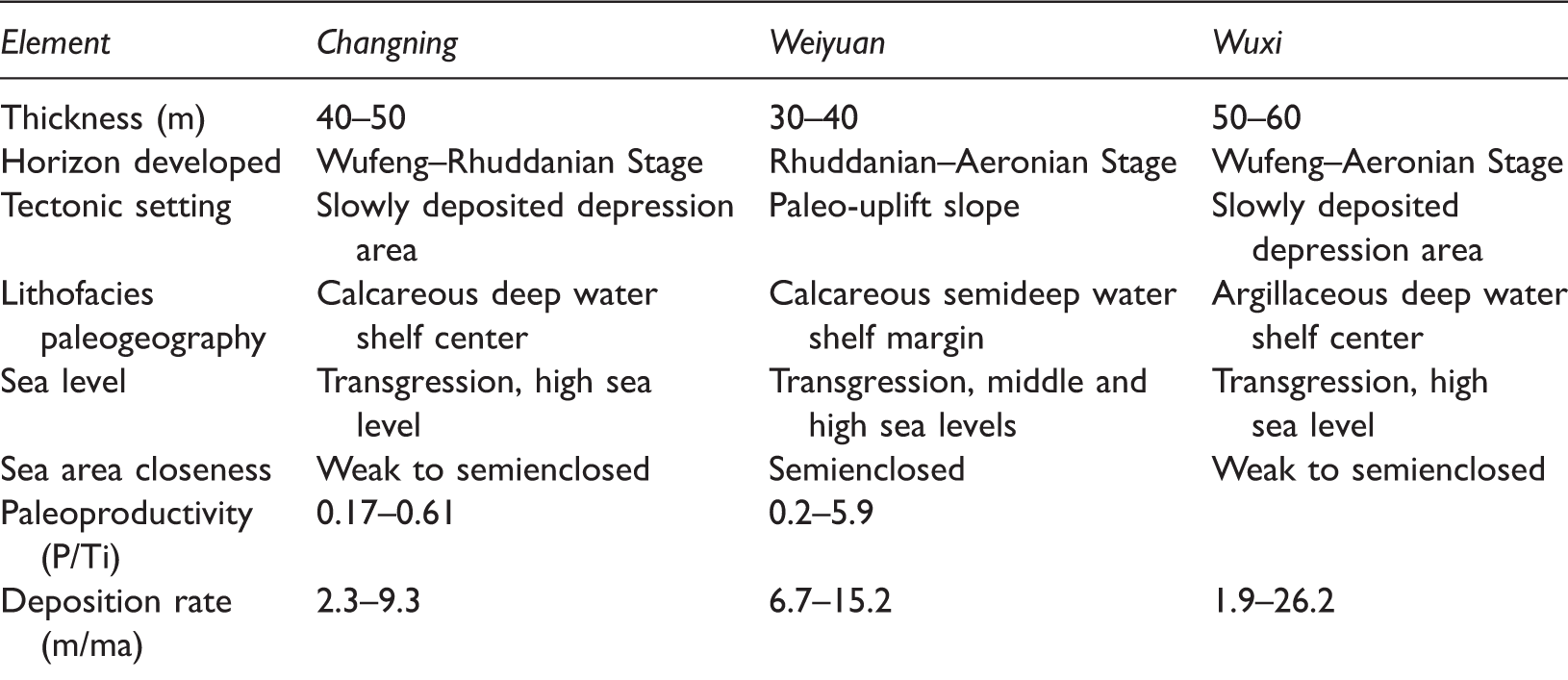
In Changning gas field and Wuxi gas play, all the high-quality reservoirs were formed in the deep water shelf center under continuous slow subsidence, where the sea level was in a high position. The weak to semienclosed environment guaranteed that the paleoproductivity maintained a high level. The deposition rate was slow and depositional thickness was great, generally more than 40 m. Comparing with the previous reservoirs, high-quality reservoirs in Weiyuan gas field were formed in a paleo-uplift slope where deposition was slow, and the sea level maintained middle to high levels, but the semienclosed environment guaranteed a high-level paleoproductivity. The deposition rate was slow and depositional thickness was great, generally 30–40 m. With the sedimentation center migrating from southeast to northwest, from Changning to Weiyuan and Wuxi, the depositional age of high-quality shale renewed continuously.
This shows that the formation of the organic and siliceous-rich shale in Wufeng–Longmaxi Stage was mainly controlled by four factors, namely the slow subsidence of the stable ocean basin, relatively high sea level, semiclosed water, and low deposition rate. The slow subsidence of stable ocean basin and relatively high sea level were basic depositional conditions for forming large area oxygen deficiency at the bottom of seawater and effective preservation of organic matters. The weak to semiclosed water was favorable to seawater exchanges and sufficient supply of nutrient substances, and it was an important guarantee for the high productivity of surface planktons. The low deposition rate was a favorable condition for high-efficiency accumulation of organic matters and biological siliceous materials. As controlled by the above four elements, the high-quality shale has multilayer superposition and widespread continuous distribution in semideep to deep water areas in Yangtze Sea Basin.
Hereby the following three revelations are presented:
Not all the deep water sedimentation center can form high-quality shale. The deep water sedimentation center with strong closeness and fast deposition rate generally cannot form organic-rich shale. For example, the Aeronian depositional stage depression in Southern Sichuan is a deep water sedimentation center with the largest depositional thickness with black shale thickness of generally 80–200 m; however, for the strong sea area closeness and too high deposition rate, no high-quality shale with TOC > 2% was formed. The high-quality shale was not only formed in the deep water sedimentation center, but also the slope zones with stable structure, weak closeness, and slow deposition rate. The slope zones are also favorable zones for the formation of the organic-rich shale. For example, the high-quality reservoirs of Weiyuan gas field were formed in the paleo-uplift slope zone with slow subsidence. The depositional setting was a calcareous semideep water shelf margin, and the sea level was in middle and high positions, which also indicates that the water for forming high-quality shale was not necessarily the deeper the better. With the sedimentation center of Wufeng Formation–Longmaxi Formation migrating from southeast to northwest, the depositional age of high-quality shale renewed continuously. There should be differences in the exploration directions for shale gas in the formation of Sichuan Basin. In Southern–Eastern Sichuan Depression, Wufeng–Rhuddanian Stage should be taken as the main series of strata for exploration. In Weiyuan region, Rhuddanian–Aeronian Stage should be taken as the main series of strata for exploration. In local areas in Middle–Northern Sichuan, Wufeng–Telychian Stage should be taken as the main series of strata for exploration.
Conclusions
At the transition stage of Ordovician–Silurian, large-scale deposition of organic and siliceous-rich high-quality shale and its distribution were mainly controlled by four factors, namely slow subsidence of stable ocean basin, relatively high sea level, semienclosed water, and low deposition rate.
The overall collision, joint, and intraplate deformation in Yangtze Plate and periphery plates presented a trend of gentle in the early stage, strong in the late stage, gentle in northwest, and strong in southeast, which coincides with the cycle of sea level deep→shallow→depth→shallow. This created a structural and deposition space with widespread oxygen deficiency and effective preservation of organic matters in Wufeng–early Longmaxi Stage, making the depression and sedimentation center migrating from southeast to northwest, multistage superposition and horizontal extension of high-quality shale, continuous renewal of depositional age.
The weak to semiclosed water was favorable to seawater exchange and sufficient supply of nutrient substances, which was an important guarantee for high productivity of surface planktons. Under the joint activities between Yangtze Plate and periphery plates, the fluctuation of periphery uplifts and submarine topography in Sichuan Basin resulted in gradual intensifying barrier effect, making the closeness of Southern Sichuan Sea with the characteristics of weak in the early stage, strong in the late stage, weak in northwest, and strong in southeast. As affected by the sea area closeness, the paleoproductivity in Southern Sichuan Sea presented salient features of strong in the early stage, weak in the late stage, strong in northwest, and weak in southeast.
Low deposition rate was a favorable condition for efficient accumulation of organic matters and biogenic siliceous substances. With the depression and sedimentation center migrating from southeast to northwest, the sea area closeness gradually increased and the area reduced. The terrigenous clay materials from the southeastern source area into the sea area of Sichuan Basin were gradually lifted up, resulting in the deposition rates of the sea areas in Southern Sichuan and periphery areas with outstanding features of slow in the early stage, speeding up in the late stage, slow in northwest, and speeding up in southeast.
As controlled by the four factors, Wufeng–Rhuddanian Stage was the main stage for forming the high-quality shale, followed by Aeronian Stage; the main series of strata for exploration in Southern–Eastern Sichuan depression is Wufeng–Rhuddanian Stage, and in Weiyuan region it is Rhuddanian–Aeronian Stage. In local areas in Middle–Northern Sichuan it is Wufeng–Telychian Stage.
Footnotes
Declaration of conflicting interests
The author(s) declared no potential conflicts of interest with respect to the research, authorship, and/or publication of this article.
Funding
The author(s) disclosed receipt of the following financial support for the research, authorship, and/or publication of this article: This research was funded by the National Key Basic Research and Development Program (973 Program), China (Grant 2013CB228001).