




Abstract
The chemical and physical capabilities of shale can be altered by the interactions between fracturing fluid and shale formation, affecting the long-term reservoir productivity. To obtain information regarding how fracturing fluids with different components impact the pore structure, porosity and mineral compositions of shale reservoir rocks over time, two different types of commercial fracturing fluids (slick water and crosslinked gel) were used to react with the shales from Longmaxi Formation of Lower Silurian in the Sichuan Basin of South China. Experiments were conducted with various time intervals (1, 4 and 10 days) in a reactor at 50 MPa and 100°C, and then analytical methods including X-ray diffraction, low pressure nitrogen adsorption, field emission scanning electron microscopy and porosity measurement were used to examine the changes of mineralogical compositions, pore structure and porosity. The results demonstrated that the mineral compositions of shale samples were significantly changed after treatment with two different fracturing fluids for 4 days. The analysis of field emission scanning electron microscopy revealed that the carbonate minerals were dissolved and developed many dissolution pores after slick water treatment, while the crosslinked gel mainly caused the precipitation of carbonate minerals. After exposure to different fracturing fluids, the total pore volume and specific surface area decreased over time. Moreover, the fractal dimensions (D1 and D2) of shale showed an apparent decrease trend after treatment with two different fracturing fluids, indicating that the pore surface and structure become smooth and regular. The porosity of shale significantly decreased by 15.9% and 17.8%, respectively, after 10 days of slick water and crosslinked gel treatment. These results indicated that the injection of the two different types of fracturing fluids may negatively impact the shale gas production through reducing the nanopore structure and porosity of shale reservoir rocks.
Introduction
Shale gas, a new kind of unconventional resources, has drawn great interest in many countries over the past decade (Davies et al., 2014; Jarvie et al., 2007; Zou et al., 2010). Nevertheless, shale reservoirs have ultralow permeability, which makes them difficult to develop using conventional methods (Binnion, 2012; Bowker, 2007; Liu et al., 2015). Horizontal drilling and hydraulic fracturing techniques provide artificial permeability in shale reservoirs, and their applications have changed the energy structure of the United States (Rahm, 2011). In recent years, shale gas exploration and development have been promoted in the Sichuan Basin of China and constructed the Jiaoshiba, Changning, Weiyuan and Zhaotong four marine shale gas fields (Chen et al., 2015; Tian et al., 2013; Zou et al., 2010). In addition, the shale gas field in the Jiaoshiba area of Chongqing is the first commercial zone of shale gas development in China, with a recoverable resource volume of nearly 2 × 10¹² m3 (Chen et al., 2015; Yang et al., 2016).
Fracturing fluid is one of the most important components of hydraulic stimulation and plays a key role in creating complex conductive fracture networks for gas to flow into the wellbore (Barati and Liang, 2014). Furthermore, in order to achieve an economically reasonable and continuous gas flow, some chemical additives are added to the fracturing fluid (Aminto and Olson, 2012; Song et al., 2015; Xu et al., 2016). Slick water hydraulic fracturing is the common form of well stimulation in shale reservoirs, which can create fractures with smaller widths and greater lengths, thereby increasing the complexity of the creature fracture (Palisch et al., 2010). Unfortunately, slick water fracturing fluid has a poor ability to transport proppant, while the crosslinked gel fracturing fluid with a high viscosity improves the transport capability of injected proppant and results in uniform distribution of proppant packs (Economides and Nolte, 2000; Wang and Elsworth, 2018). However, the crosslinked gel systems may reduce the desired fracture complexity of shale (Wang and Elsworth, 2018).
During hydraulic fracturing, a large amount of fracturing fluid is injected into the shale reservoir rocks at high pressure (Yarushina et al., 2013), but only 9–53% of the fracturing fluid returns from the wellbore as reflux water and nearly 47–91% remains in the subsurface of shale reservoir (Dieterich et al., 2016; Vidic et al., 2013). In addition, high pressure usually leads to the leaking of some gel or polymer from the fracturing fluid into the reservoir, which has greatly limited the production rate of gas and oil (Lin et al., 2015; Wang and Rahman, 2016; Xu et al., 2016). A previous study observed that a series of chemical and physical reactions occurred when shale was in an aqueous environment, and hydration destroyed the original shale structure (Zhou et al., 2016a). Moreover, black shales are composed of different components including clay minerals, quartz, carbonate, pyrite and organic matter (Chen et al., 2017). The adsorption property and permeability of shale can be influenced by the interactions occurred in these components of shale and injected fracturing fluid (Guo et al., 2018a; Zhang and Sheng, 2017; Zhou et al., 2016b). Therefore, knowledge of these reactions on time scales is important to further understand how the chemical evolution of shale reservoir affects the mineralogical compositions and physical characteristics (e.g. pore structure and porosity) of shale (Dustin et al., 2018; Marcon et al., 2017).
Slick water and crosslinked gel-fracturing fluids are the most commonly used water-based hydraulic fracturing fluids, and the response of water imbibition to the physical characteristics of shale has been examined by several studies. Yan et al. (2015) reported that water imbibition could induce permeability impairment of shale, which was mainly caused by the clay swelling and scale precipitations. Zhang et al. (2015) indicated that the water imbibition can promote the embedment of proppants, thereby reducing the conductivity of prop fractures. Moreover, the gas flow and gas adsorption capacity of shale could be reduced after reaction with slick water fracturing fluid (Sun et al., 2018). Guo et al. (2018a) also indicated that the adsorption of polymer in the slick water fracturing fluid could cause the reduction of pore throat radius of shale. Although, many studies have paid attention to the interactions between water and shale, few studies have focused on how fracturing fluids with different components impact the mineralogical compositions and physical porosities of shale. Due to the heterogeneous pore structures and the complex mineralogical compositions of shale reservoir rocks, the research of the interactions between shale and different types of fracturing fluids may help to optimize the composition of fracturing fluid and increase shale gas production (Ali and Hascakir, 2017; Li et al., 2018).
In this study, we examined the interactions between the shales of the Lower Silurian Longmaxi Formation and two different types of fracturing fluids. The experiments were conducted at the same pressure (50 MPa) and temperature (100°C) but with different reaction times (1, 4 and 10 days). The mineral composition, pore structure and porosity before and after reaction for different reaction periods were analysed. The purpose of this research is to compare the effects of different types of fracturing fluids on the physical porosities of shale at different time intervals. Results from this study may also help to optimize the additives of fracturing fluid for shale gas stimulation.
Materials and methods
Samples and fracturing fluids
Fresh outcrop shale samples of the Lower Silurian Longmaxi Formation were collected from Changning County, Sichuan Basin. The shale in this field is distributed continuously and presents relatively high brittle lithologic properties and organic matter contents, which is the main production block of the exploration and development of marine shale in China (Gai et al., 2016; Guan et al., 2016). The shale sample in this study was organic-rich and over-mature, with TOC of 3.61 wt.% and Ro of 2.13%, respectively.
To characterize shale samples before and after treatments of different fracturing fluids, part of the collected shale block was crushed into powder of 40–60 mesh for XRD and low pressure nitrogen adsorption measurements. Small shale cubes with a volume of 2–3 cm3 were cut from the block sample and used for FE–SEM studies. To measure the porosity, part of the block shale was cored as cylinders with 5 cm in length and 2.5 cm in diameter. The surface of the processed sample was cleaned with water and then dried at 50°C for 12 h in an oven to remove the moisture in the prepared shale samples.
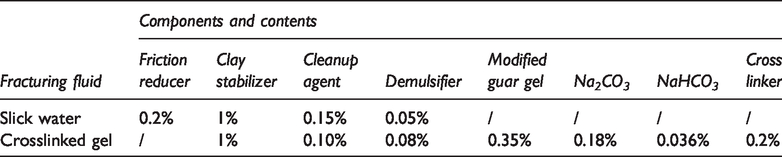
In this study, two types of fracturing fluids (slick water and crosslinked gel) commonly used in the process of shale gas exploitation were selected. The components of these fracturing fluids and their contents are shown in Table 1. The properties of the slick water fracturing fluid were described in detail previously (Sun et al., 2018).
Components and contents of the two different fracturing fluids.
Experimental procedure
A high pressure and temperature reactor device was used in the experiment (Figure 1). The system consists of a 500 ml corrosion-resistant steel reactor, a piston boosting device and a pump. The maximum working pressure and temperature of the reactor is 70 MPa and 400°C, respectively. The experiments used the same pressure and temperature. According to the pressure used during hydraulic fracturing, the reaction pressure was set to 50 MPa. The reaction temperature was set to 100°C, based on the developed depth (approximately 3–4 km) and the geothermal gradient (20–25°C/km) of the Longmaxi Formation shale in Sichuan Basin (Zou et al., 2016). To assess reaction-induced alterations of shale pore structure over time, the shale samples were reacted with different fracturing fluids for different time periods (1, 4 and 10 days).
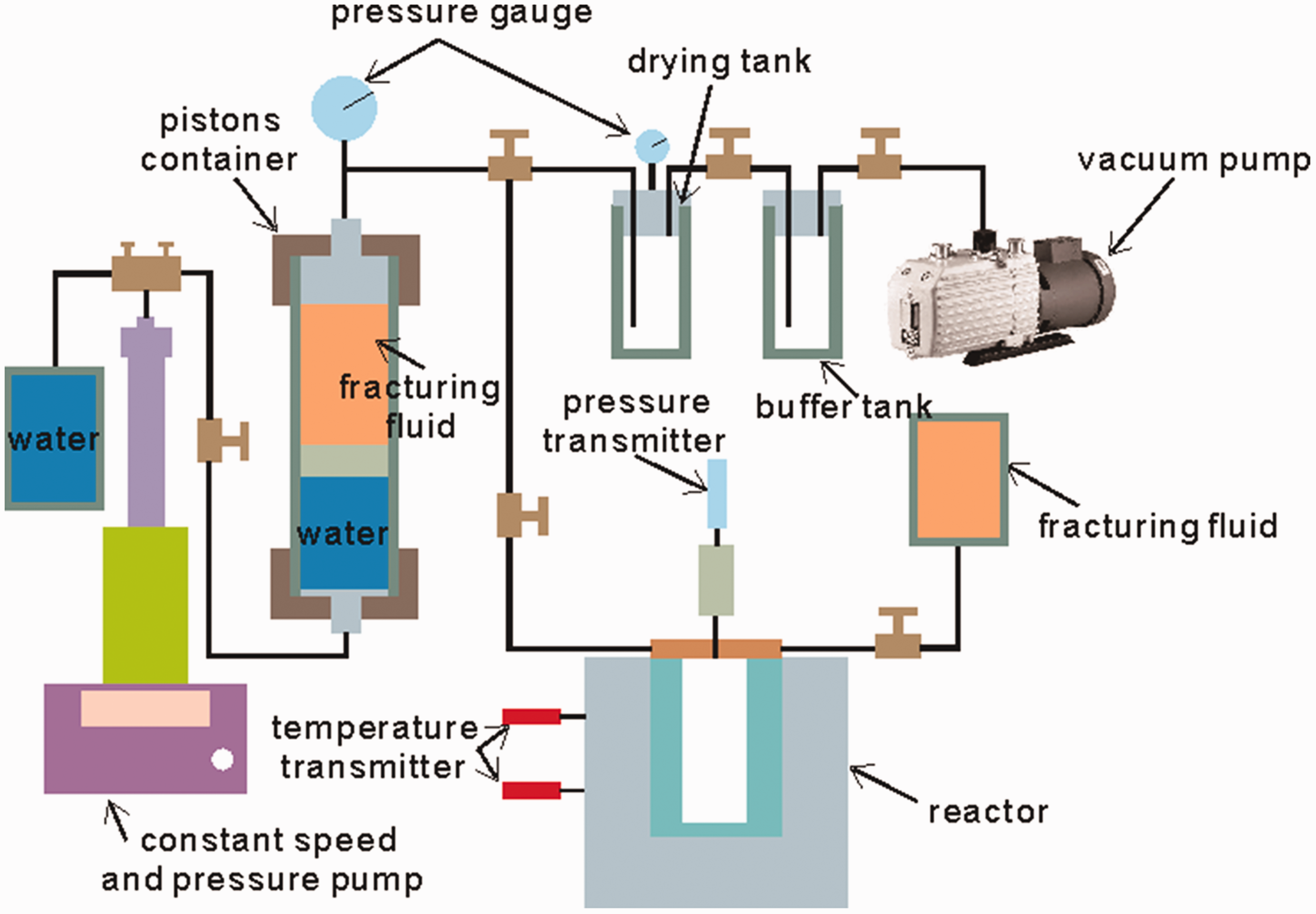
Schematic of the experimental apparatus (Sun et al., 2018).
At the beginning of each experiment, the initial pore structure and porosity of shale were measured. Approximately 100 g of the prepared shale samples (40–60 mesh, cylinder and cube) were put into the reaction device, and then the fracturing fluid was injected. The system was closed throughout the experiment. After treatment, 10 g of 40–60 mesh rock samples, the cylinder and small shale cube were removed from the reactor for characterization by different methods. After characterization, the cylinder and small cube were placed into the reactor to continue the reaction with the fracturing fluid under the experimental conditions. In addition, 50 ml of the fracturing fluid was collected from the reactor at 1, 4 and 10 days during the experiment. Prior to conducting each experimental run with different fracturing fluid, the reactor and lines were cleaned with water to minimize contamination.
Characterization methods
Analysis of mineral composition
Before and after the treatments with two fracturing fluids, the mineralogical compositions of the shale samples were analyzed on the X-ray diffractometer (Rigaku D/max-III B) at 40 mA and 40 kV with Cu Kα. Stepwise scanning analyses were taken at a rate of 2°/min in the range of 3–70° (2θ). For XRD analysis, the 40–60 mesh shale samples were crushed into powders finer than 200 mesh to measure the mineral composition of shale samples.
FE–SEM observation
To investigate the changes of microstructure, FE–SEM imaging analyses (Zeiss, Merlin Compact) were performed on the cube shale sample (2–3 cm3) before and after the treatment with fracturing fluid. To prepare a flat surface for FE–SEM imaging, the pretreatment shale surface was polished via Ar ion milling (GATAN, PECS II model 685). The energy-dispersive X-ray spectroscopy (EDS) was equipped in the FE–SEM, which is used for mineral identification.
Low pressure nitrogen adsorption measurement
To represent the pore structural changes of the shale samples before and after treatments with different fracturing fluids, an ASAP 2020 HD88 surface area analyser was used. The powder samples of 40–60 mesh were outgassed at 110°C for 20 h in vacuum to remove all gaseous impurities. The nitrogen adsorption/desorption isotherms of those degassed shale samples were obtained at –196°C with the relative equilibrium adsorption pressure (P/P0), where P is the actual gas pressure and P0 represents the saturation pressure, ranging from 0.001 to 0.998. Using the nitrogen desorption data, the specific surface area was calculated based on the equation of Brunauer–Emmett–Teller (BET) (Brunauer et al., 1938). Moreover, according to the Barrett–Joyner–Halenda (BJH) theory (Barrett et al., 1951), the pore size distributions and pore volume were acquired from the nitrogen adsorption curves with the pore size diameter < 383 nm and a P/P0 range of 0.06–0.99.
Porosity measurement
Before and after treatments with different fracturing fluids, the porosity of cylinder shale samples was measured using a PoroPDP-200 full-automatic instrument. To increase the measurement accuracy, core samples with size of 2.5 cm diameter and 5.0 cm length and without visible cracks were chosen. During the measurement, helium with 99.99% purity is selected as working medium, and according to the helium gas expansion principle and Boyle’s Law, the porosity (0.01–40%) was calculated by the porosimeter with the operation pressure range of 0–0.7 MPa (Guo et al., 2018b; Yang et al., 2015).
Results and discussion
Mineralogical changes during the experiment
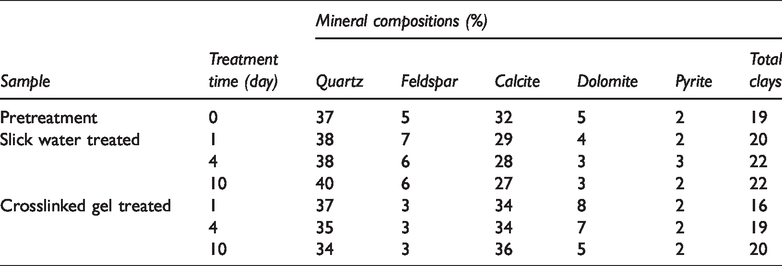
Before and after treatments with different fracturing fluids, the mineralogical compositions of shale samples are shown in Table 2 and Figure 2. As seen in Table 2, the pretreatment shale was dominated by quartz (37%), carbonate minerals (calcite + dolomite) (37%) and clay minerals (19%), with subordinate feldspar (5%) and pyrite (2%).
Mineral content of the Longmaxi shales before and after treatments with different fracturing fluids.
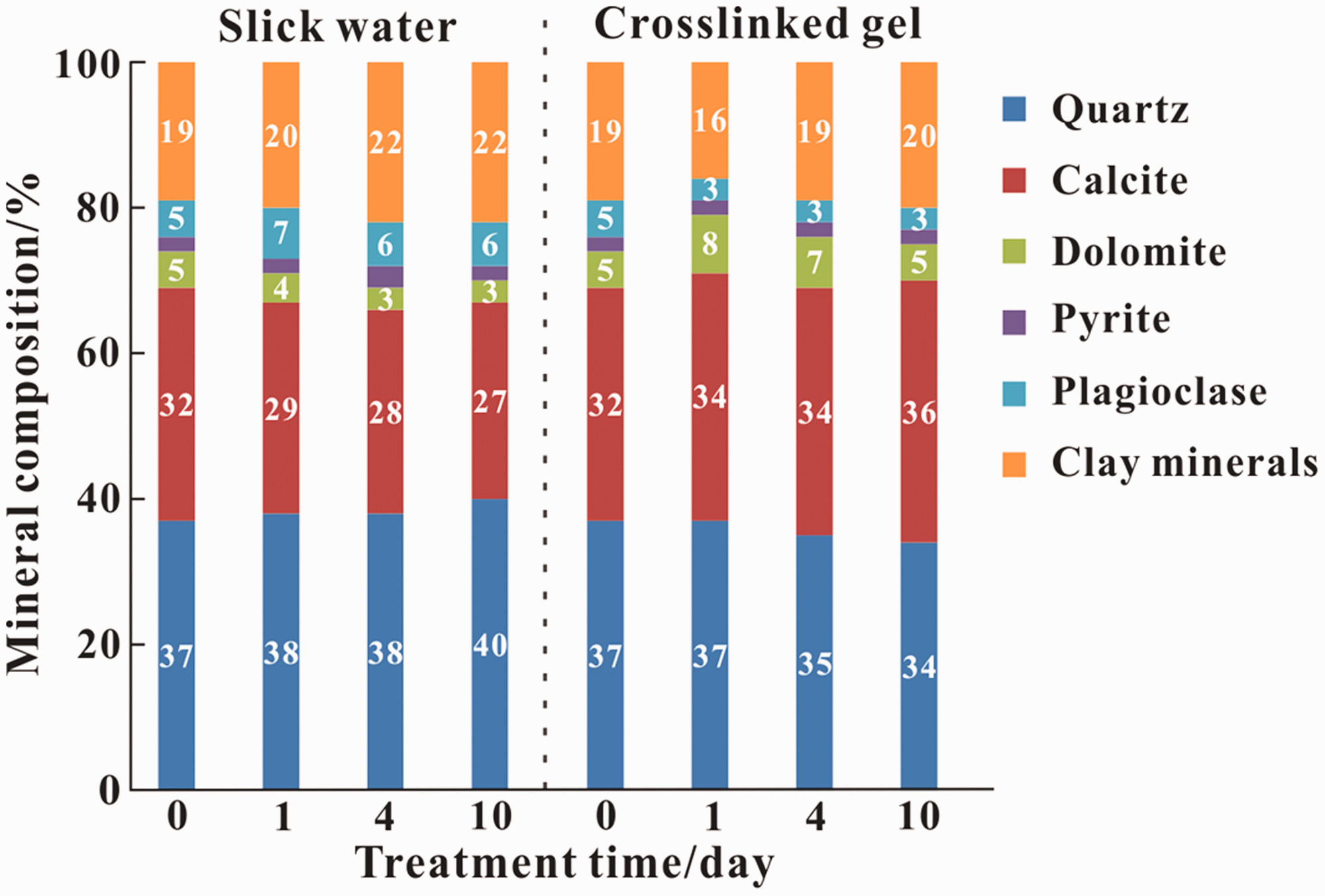
Changes in mineral compositions before and after treatments with different fracturing fluids.
The variation in mineral compositions after treatment with different fracturing fluids can be observed in Table 2. Notably, treatment with two different fracturing fluids caused different variations in carbonate minerals (calcite + dolomite). The carbonate minerals content of the shale sample treated with the slick water fracturing fluid gradually decreased from 37% to 30% over time. However, after treatment with the crosslinked gel fracturing fluid, the content of carbonate minerals in the shale sample showed a significant increase from 37% to 42% on 1 and gradually stabilized to 41% after 10 days of treatment. Compared to the rapid variations in carbonate minerals, the contents of pyrite, feldspar and quartz changed slightly after treatments with different fracturing fluids. In addition, the quartz, pyrite and feldspar were observed to behave in a nonreactive manner (Figures 4 and 5). Therefore, the slight changes in these minerals can be attributed to the sample heterogeneity and the renormalization of the remaining phases following the changes in carbonate minerals.
Previous studies reported that the clay minerals of the Longmaxi Formation shale were mainly illite, mixed layer illite/smectite (I/S) mineral and chlorite (Liang et al., 2014; Ma et al., 2016; Zheng et al., 2019). The I/S mineral in the shale has strong water imbibition capacity (Wen et al., 2015), and the clay swelling would occur after the shale reacted with the water-based different fracturing fluids. Owing to the adsorbed water could cause the expansion of double diffusive layer of clay minerals, and the adsorbed water could not disappear by drying at 100°C (Binazadeh et al., 2016). Therefore, the increase in clay mineral content in shale treated with different fracturing fluids may be related to the clay swelling.
Moreover, the pH of the fracturing fluid during the reaction process was measured. As shown in Figure 3, the pH of the slick water increased from 5.30 to 7.29 over time after reacted with shale samples. For the shale reacted with the crosslinked gel, the pH increased from 8.78 to 9.04 in the first 4 days of treatment and gradually stabilized to 8.91 after 10 days of treatment. For the shale reacted with slick water, the increased pH value was related to the carbonate minerals dissolution which was induced by the hydrolysis of AMPS, and the following reactions might have occurred (Sun et al., 2018)
 (1)
(1)


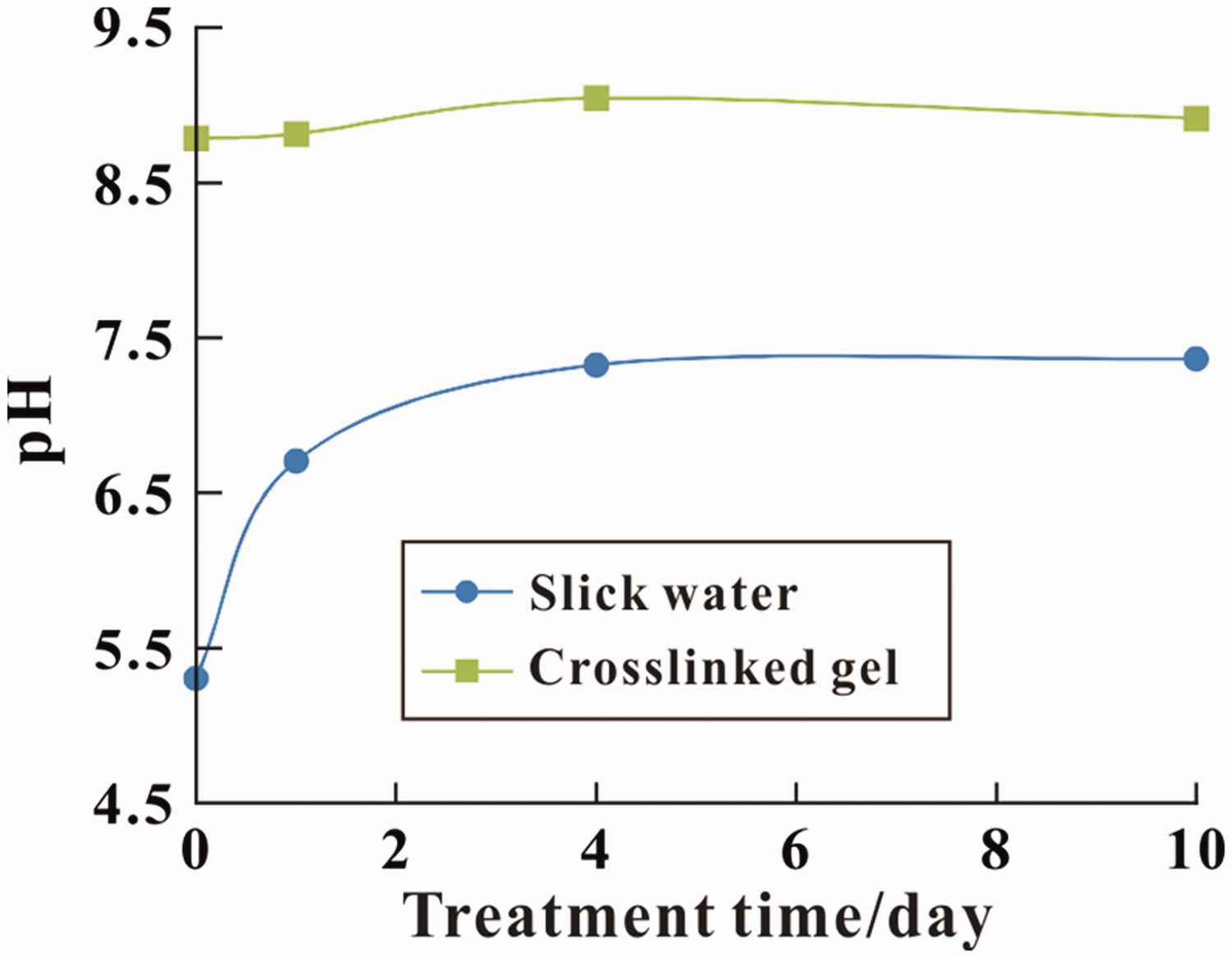
pH value versus reaction time in different fracturing fluids.
To maintain the effectiveness of other components in the process of fracturing, such as cross-linkers, sodium carbonate was added (McIlvaine and James, 2010). For this reason, sodium carbonate was also added to crosslinked gel fracturing fluid in the experiment. Therefore, the increased carbonate minerals and pH values of shale reacted with the crosslinked gel fracturing fluid might be related to the precipitation of carbonate minerals, which may occur by the following reactions


As indicated by the XRD and pH measurements, reactions between different types of fracturing fluids and the shale samples induced different variations of mineral compositions especially the carbonate minerals. The mineral compositions changed significantly within the first 4 days of reaction and then tended towards stability for the remainder of the experimental time.
Changes in pore structure during the experiment
FE–SEM analysis
The Longmaxi Formation shale contains many interparticle and intraparticle pores, with interparticle pores observed in carbonate and clay minerals and intraparticle pores mostly associated with carbonate minerals and pyrite framboids (Sun et al., 2018). Based on the relative coordinates and markers recorded during the imaging of the original shale samples, the changes in pore structure and mineral were shown in Figures 4 and 5 to illustrate the reactions between shale samples and different fracturing fluids.
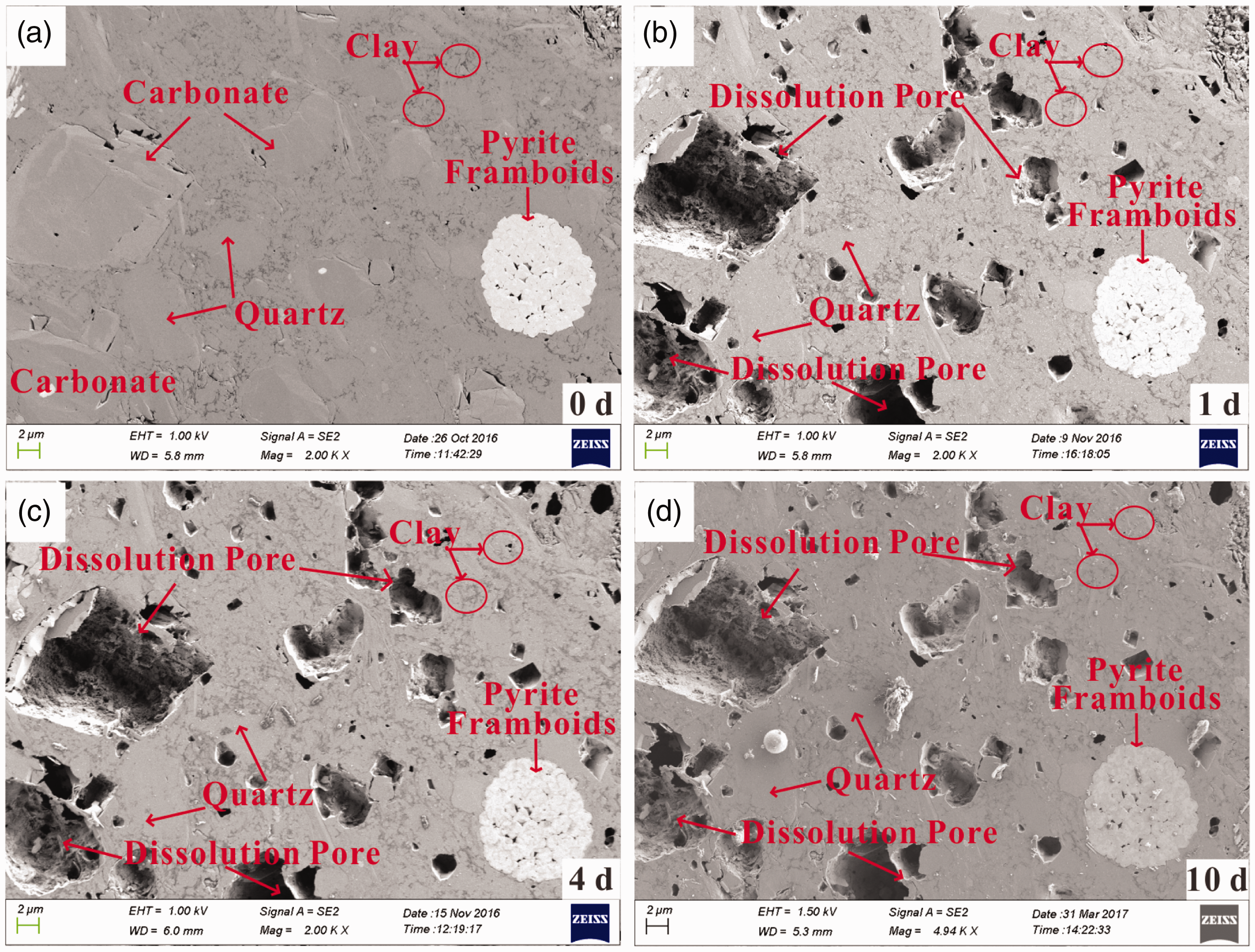
FE–SEM images of shale before (a) and after (b)–(d) treatment with the slick water fracturing fluid.
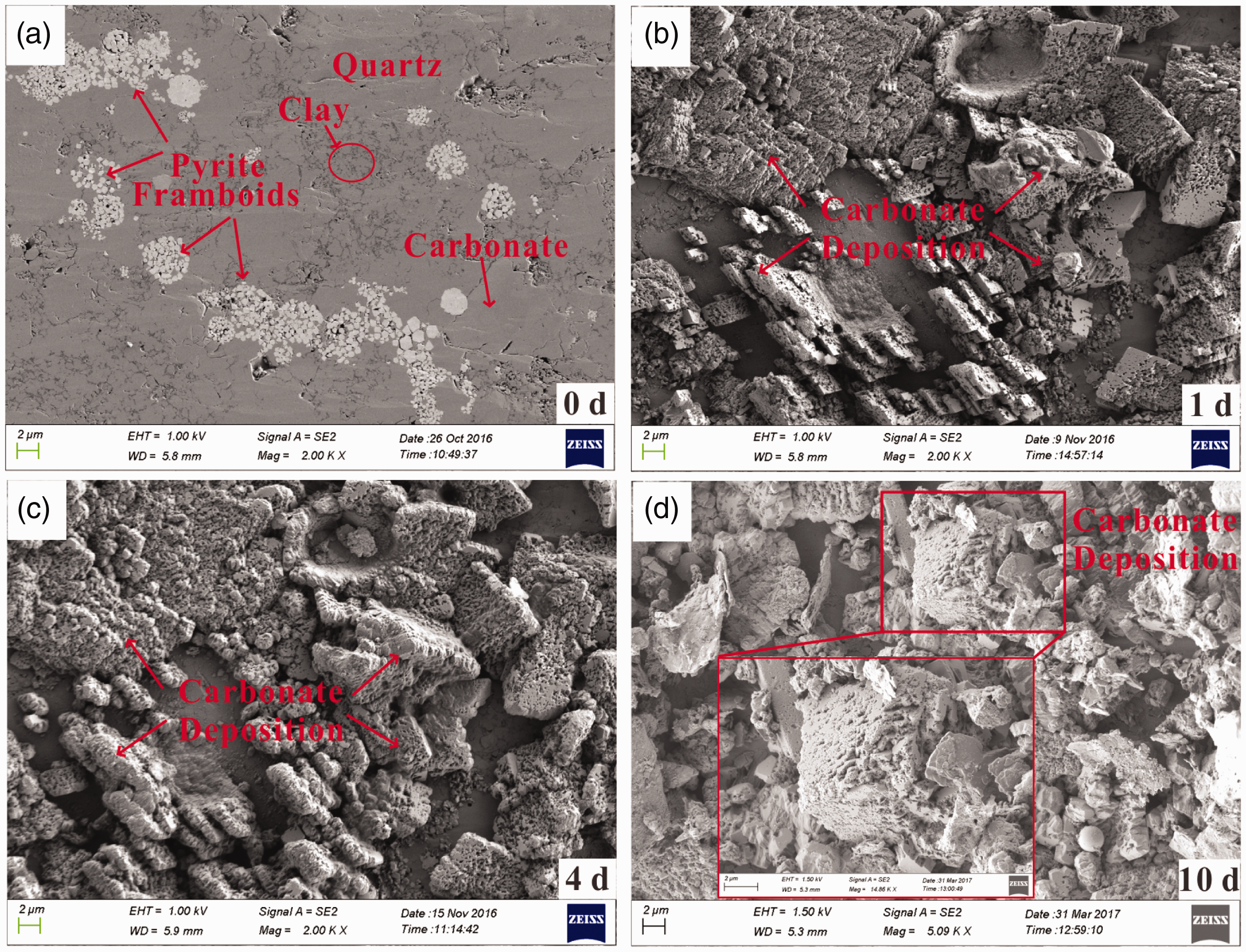
FE–SEM images of shale before (a) and after (b)–(d) treatment with the crosslinked gel fracturing fluid.
From Figures 4(a) and 5(a), it can be seen that the surface of shale was quite smooth, and quartz, pyrite, carbonate minerals and clay minerals were observed as determined by the EDS. The shale reacted with slick water showed that the originally dense structural surface (Figure 4(a)) was changed to a porous structure, and many dissolution pores and etching were observed during the first day of treatment (Figure 4(b)). Dissolution pores with a diameter of 2–5 µm primarily occurred at carbonate locations, and quartz, clay minerals and pyrite did not change as determined by the EDS. The carbonate minerals dissolution character was caused by the AMPS hydrolysis in the slick fracturing fluid (Sun et al., 2018). However, as the reaction continued, the shale surface and mineral changed to a relatively constant state (Figure 4(c) and (d)). The findings from FE–SEM revealed the different dissolution rates of carbonate minerals at different reaction time.
From Figure 5(b), we can observe that large-scale carbonate mineral deposits occurred on the shale surface after the treatment with crosslinked gel fracturing fluid for 1 day, whereas the deposition slightly increased over time (Figure 5(c) and (d)). Carbonate minerals were generated during the entire experimental process, which may have a detrimental effect on the rock permeability.
Low pressure nitrogen adsorption analysis
Before and after treatment with different fracturing fluids, the N2 adsorption/desorption isotherms of shale samples are presented in Figure 6. After exposure to slick water, the N2 adsorption quantity decreased significantly with increasing time (Figure 6(a) and (b)). Similarly, the adsorption quantity of shale treated with crosslinked gel fracturing fluid decreased with time (Figure 6(c) and (d)). Due to the changes of surface area and pore volume in nanopores, the adsorption caused by different fracturing fluids was different, which will be discussed later in this article.
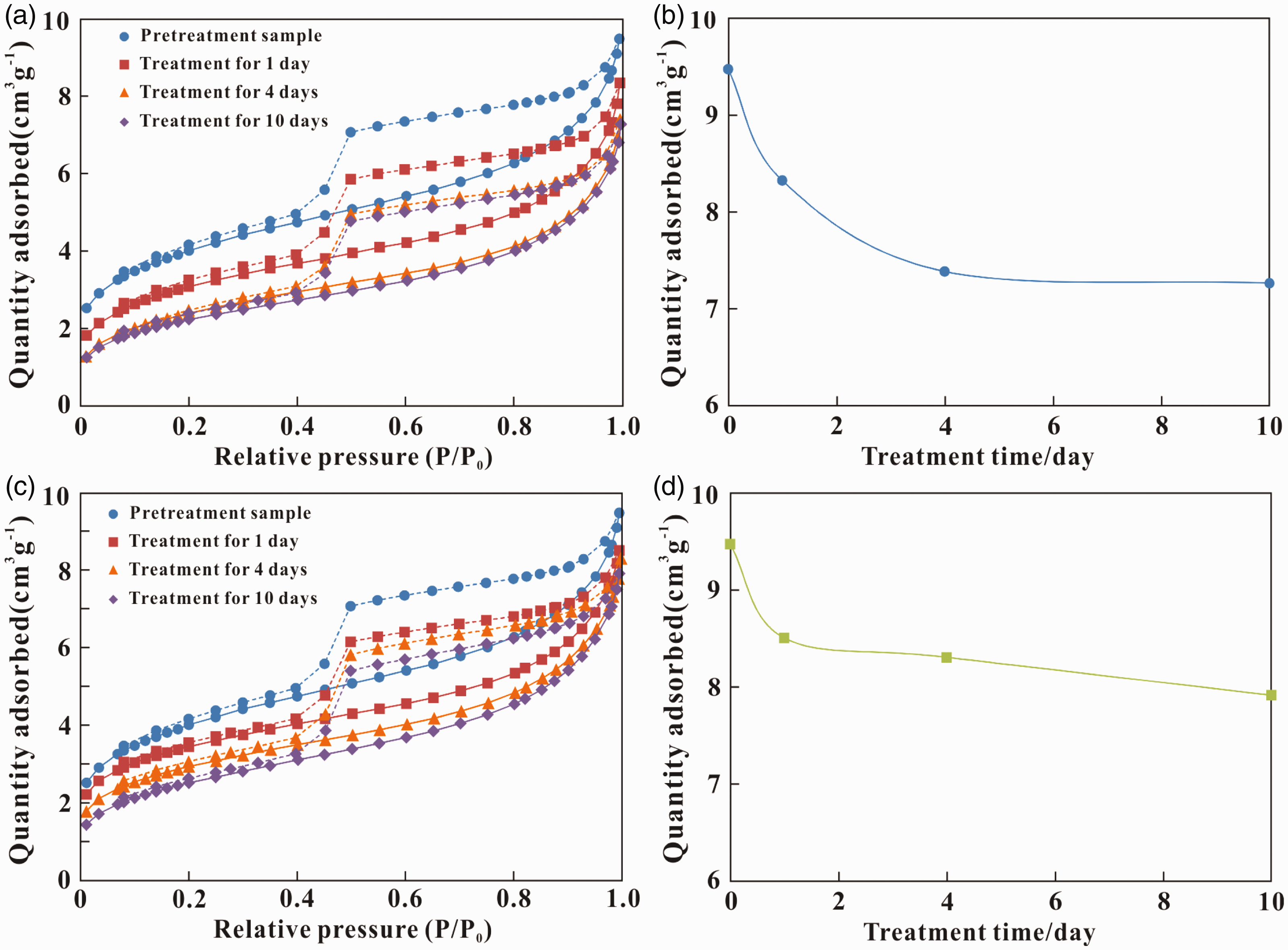
Nitrogen adsorption/desorption isotherms of shale samples treated with slick water (a)–(b) and crosslinked gel (c)–(d).
According to the definition of the International Union of Pure and Applied Chemistry (IUPAC) (Sing et al., 1985), the hysteresis loops can be classified into four different types (H1–H4), and the sorption isotherms can be divided into six different types (I–VI). The N2 adsorption isotherms of all shale samples belonged to type VI, which were related to the multilayer adsorption. Furthermore, the hysteresis loops of the adsorption/desorption isotherms occurred at P/P0 > 0.45 and belonged to type H2 for the pretreatment and treated shale samples, which indicating the existence of numerous slit-like or cylindrical pores (Yin et al., 2016).
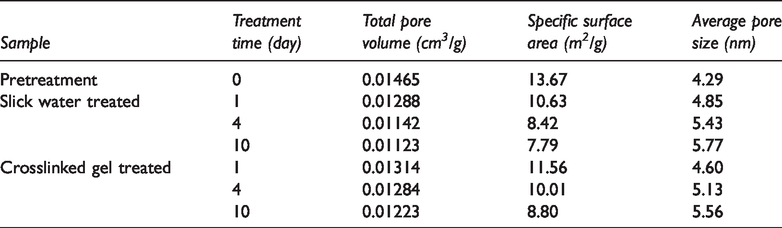
The pore characteristic data of shales before and after different fracturing fluids treatments are shown in Table 3. In contrast to the changes of mineral compositions, the total pore volume and specific surface area gradually decreased over time after treatment with different fracturing fluids (Table 3). This finding indicated that the slick water and crosslinked gel have long-term effects on nanopore structures of shale. After 10 days of treatment with slick water, the total pore volume and specific surface area were reduced by 23.3% and 43.0%, respectively, while the average pore size increased by 34.5%. Furthermore, the total pore volume and specific surface area were reduced by 16.5% and 35.6%, respectively, while the average pore size increased by 23.8% after 10 days of treatment with crosslinked gel fracturing fluid. According to the definition of IUPAC (Sing et al., 1985), the pores of materials are generally subdivided into macropore (d > 50 nm), mesopore (2–50 nm) and micropore (d < 2 nm). As smaller nanopore sizes play an important role in the pore volume and surface area of porous materials (Labani et al., 2013; Li et al., 2018), the changes in pore structure caused by slick water treatment could be related to the carbonate minerals dissolution, which would change some smaller mesopores and micropores of shale into macropores or larger mesopores. For crosslinked gel treatment, the deposition of carbonate minerals could block the nanopores on the shale surface.
Pore characteristic data of shale samples before and after different fracturing fluids treatments.
The distribution of pore volume in regard to pore size can be utilized to obtain information on the pore size distribution peak and dominant pore size (Clarkson et al., 2013; Sun et al., 2015). To more clearly illustrate the changes in nanopores, Figure 7 shows the pore size distribution of shale samples treated with different fracturing fluids. The pore size distribution of shale reacted with slick water fracturing fluid showed that micropores increased after 1 day of treatment and thereafter decreased with time, while the meso- and macropores showed a slight decrease over time (Figure 7(a)). However, the pore size distribution illustrated that the micropores and mesopores volumes of shale decreased significantly after the crosslinked gel treatment (Figure 7(b)).
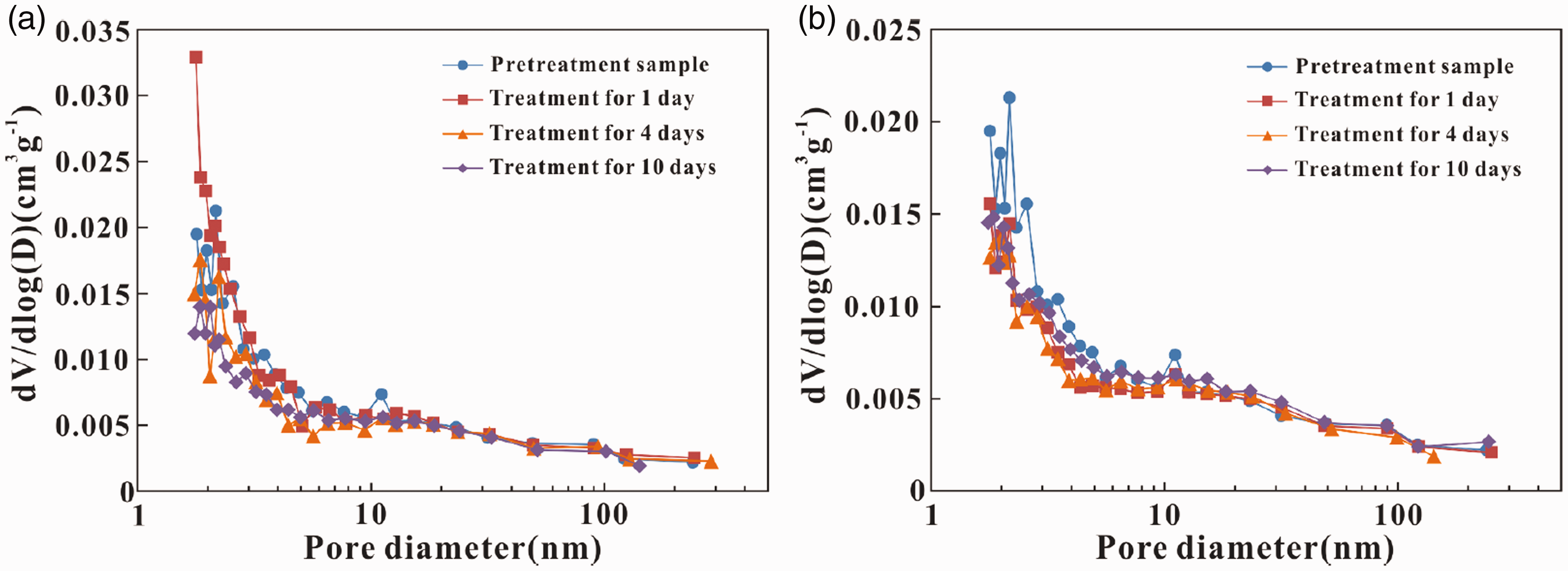
Pore size distributions of shale samples before and after slick water (a) and crosslinked gel (b) treatments.
According to combined results from low pressure N2 adsorption and FE–SEM analysis, the factors controlling the variations in pore structures caused by slick water and crosslinked gel fracturing fluid were different. The changes in pore structures induced by slick water may be related to two factors (Figure 8(b)): (1) the dissolution of carbonate minerals transformed the interparticle and intraparticle nanopores, which were associated with carbonate minerals, into dissolution pores with diameters of approximately 2 µm, and (2) water adsorption-induced clay swelling transformed macropores into mesopores or micropores. However, the changes in pore structures caused by crosslinked gel can be attributed to the phenomena of carbonate minerals deposition, which blocked the nanopores of shale surface and thus led to decrease in micropores, meso- and macropores structure parameters (Figure 8(c)). These findings demonstrated that the nanopore structure alteration of shale depended on the types of fracturing fluid as well as the reaction time during hydraulic fracturing.
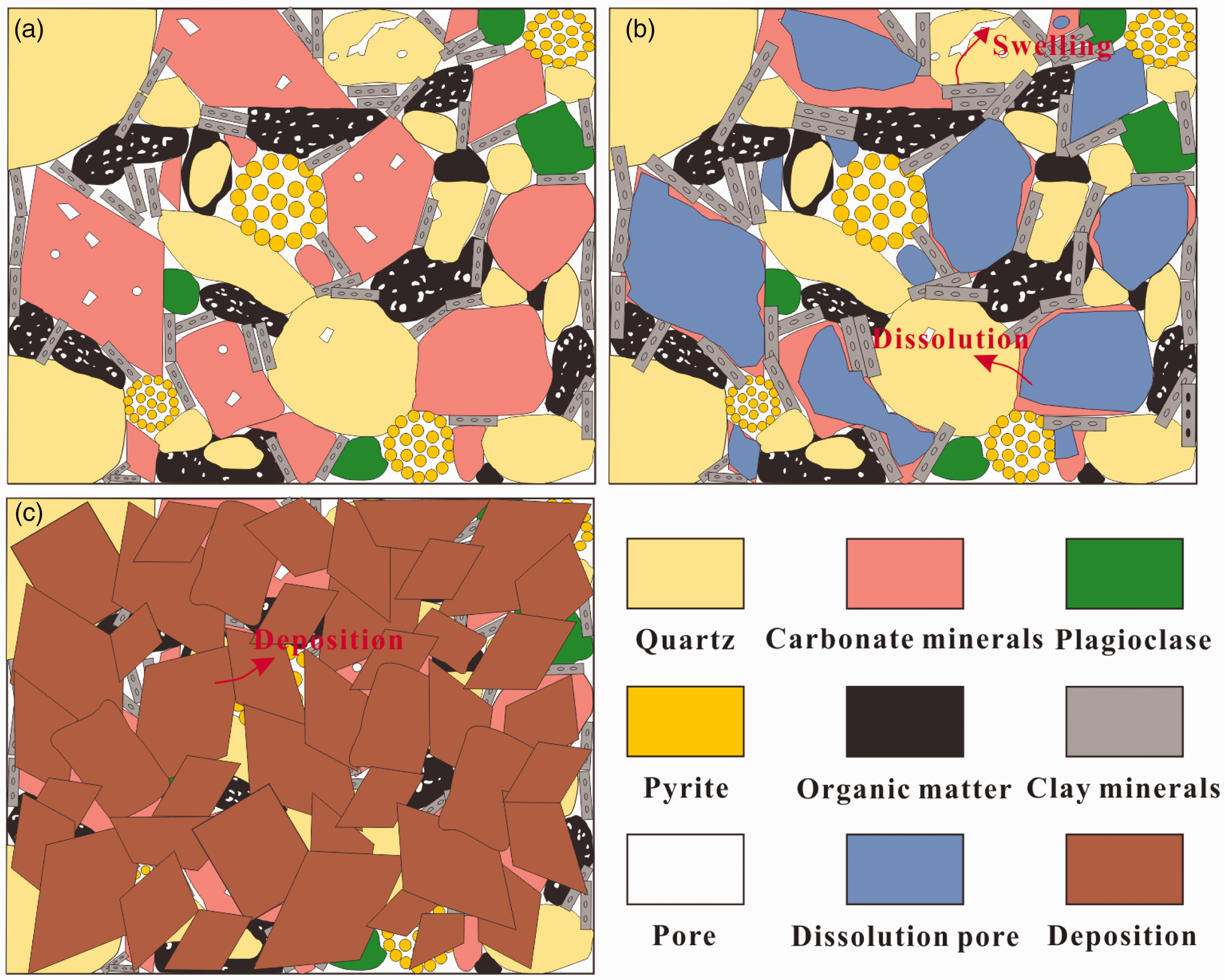
Schematic diagram illustration for the changes of pore networks of shale after reacted with different fracturing fluids: (a) pretreatment shale, (b) slick water-treated shale, and (c) crosslinked gel-treated shale.
Changes in fractal dimensions during the experiment
The geometries and structural properties of porous materials have been described by the fractal theory (Mandelbrot et al., 1984). Moreover, the surface irregularities and porous structure of shale can be characterized by the fractal geometry (Cao et al., 2016; Yang et al., 2017), and the fractal dimension D can be applied to characterize the surface roughness or the geometrical irregularity of the solid material (Schlueter et al., 1997). The fractal dimension D generally varies between 2 and 3. The lowest value 2 represents a perfectly smooth pore surface, while the upper value 3 represents a complex and rough pore surface (Jaroniec, 1995; Li et al., 2018; Shao et al., 2017). However, many models have been used to calculate the fractal dimension of porous materials based on the N2 adsorption isotherm data, among which the Frenkel–Halsey–Hill (FHH) model has wide applications (Avnir and Jaroniec, 1989; Hu et al., 2016; Li et al., 2016; Tatlıer and Erdem-Şenatalar, 1999). The FHH model applies the following equation (Avnir and Jaroniec, 1989; Qi et al., 2002)

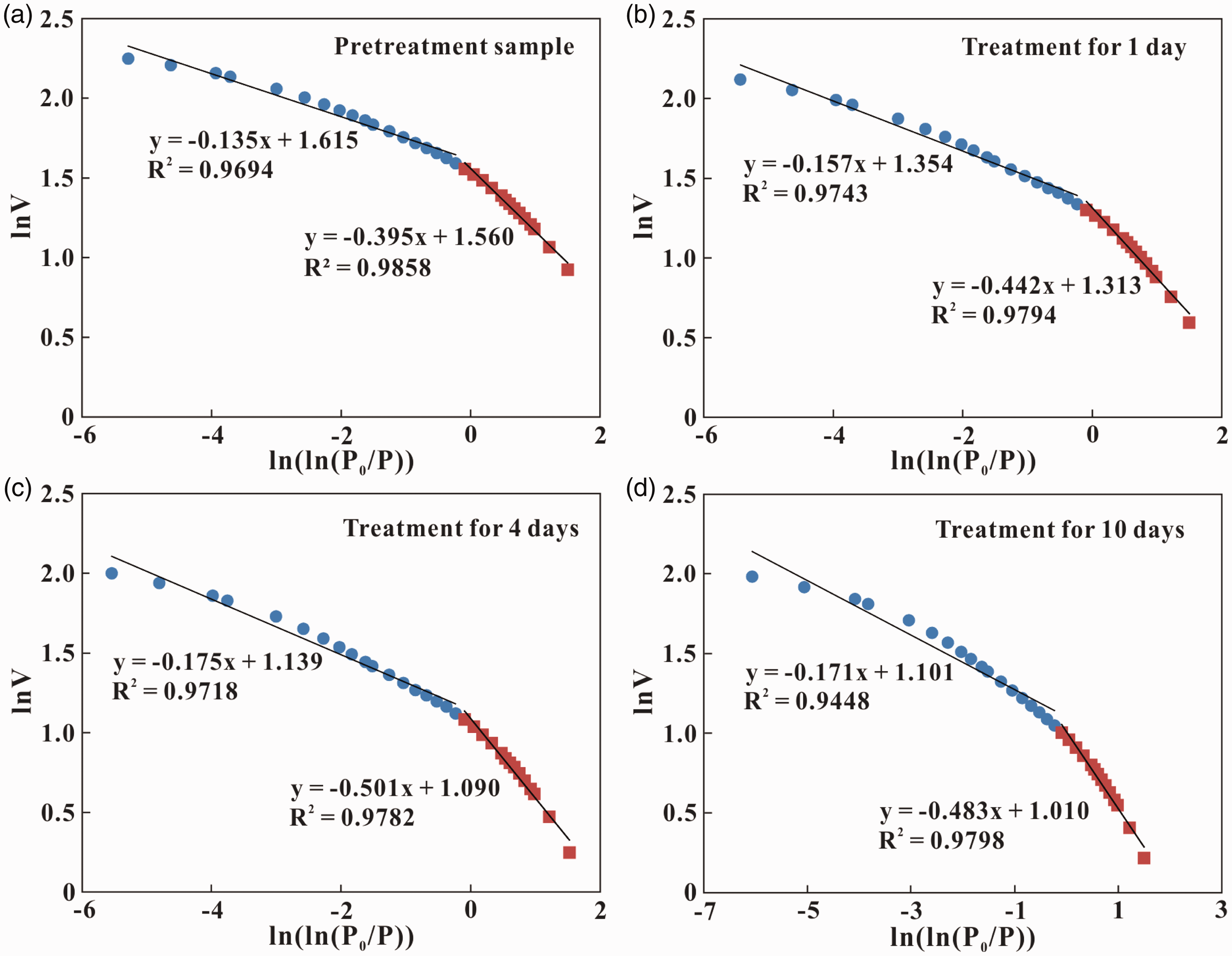
Plots of ln(V) versus ln(ln(P0/P)) based on the N2 adsorption isotherms of shale with slick water fracturing fluid treatment periods.
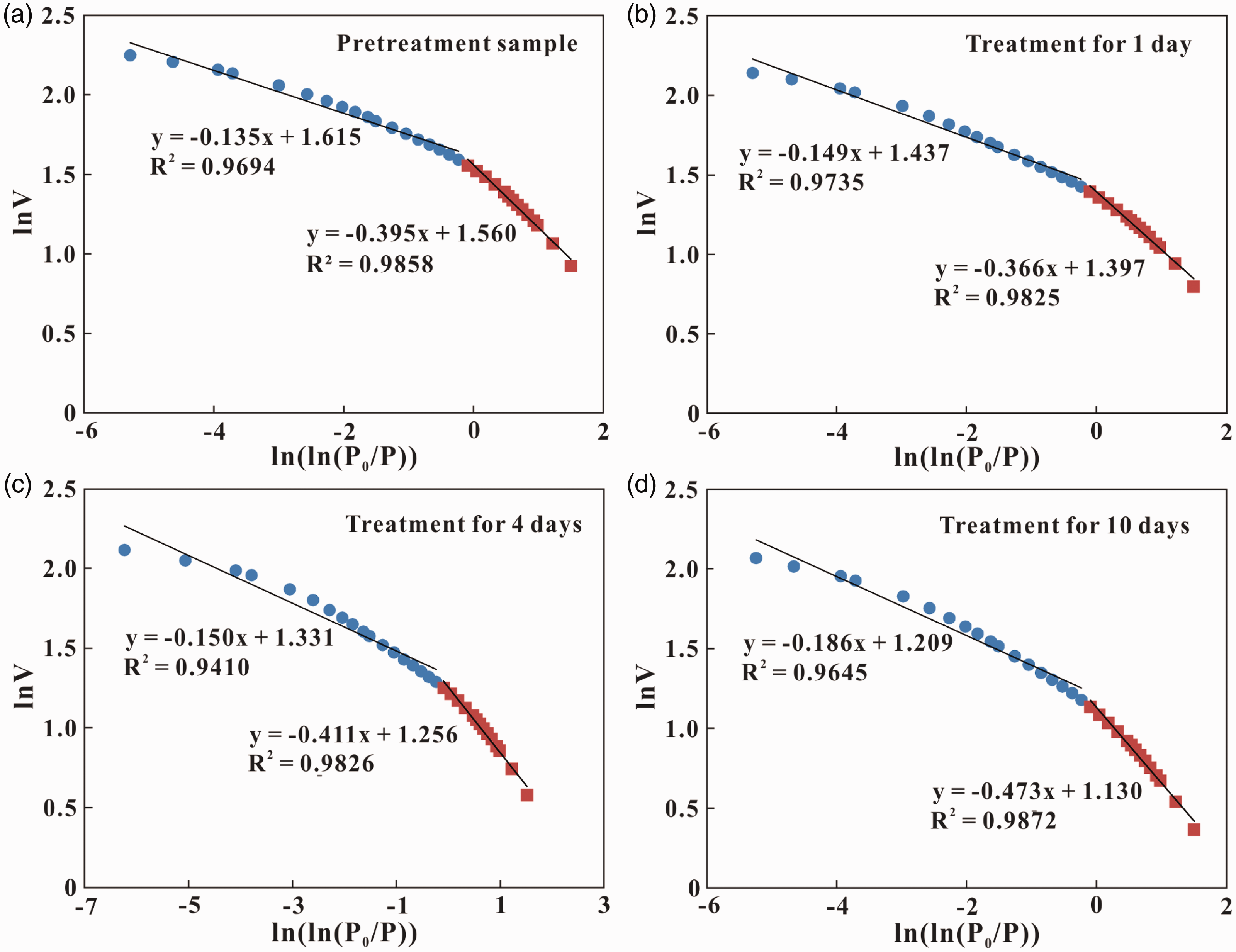
Plots of ln(V) versus ln(ln(P0/P)) based on the N2 adsorption isotherms of shale with crosslinked gel fracturing fluid treatment periods.
As shown in Figures 9 and 10, two different straight linear segments existed in these plots at the relative pressure of 0.45, indicating that the mechanism of gas adsorption in these two intervals is different (Yao et al., 2008). Therefore, two fractal dimensions were confirmed in this study: D1 obtained at the P/P0 ratio of 0–0.45 and D2 obtained at the P/P0 ratio of 0.45–1. Table 4 shows the calculated results of fractal dimensions.
Fractal dimensions calculated from the FHH model of shale samples before and after treatment with different fracturing fluids.
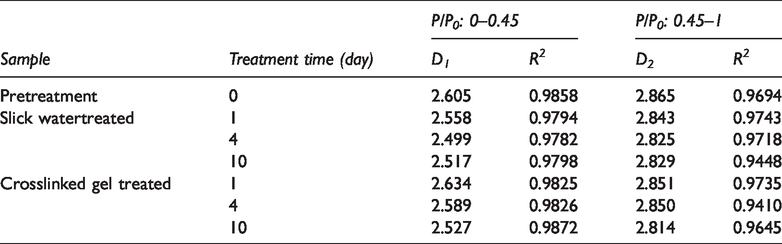
Previous studies suggested that D1 describes the surface fractal dimension and may better reflect the pore surface roughness, whereas D2 represents the pore structure fractal dimension and can better describe the pore structure complexity (Wang et al., 2016; Yao et al., 2008). The D1 and D2 gradually decreased after the slick water treatment (Table 4), suggesting that the pore surface and structure become smooth and regular. However, for the samples reacted with the crosslinked gel fracturing fluid, the fractal dimension D1 increased after 1 day and then decreased with increasing time, while the fractal dimension D2 gradually decreased with time (Table 4). These results showed that the interactions between the shale and crosslinked gel reduced the pore surface roughness and the pore structure complexity.
As previously discussed, the dissolution of carbonate minerals and clay swelling caused by the slick water changed the pore structure parameters of shale, while the deposition of carbonate minerals caused by the crosslinked gel blocked the nanopores of shale surface. These effects were also considered to explain the changes of fractal dimensions, which made the pore structure in shale less rough and complex. Furthermore, previous studies have concluded that the gas adsorption of shale can be reflected by the fractal dimension D1, and the flow capacity of shale can be illustrated by D2 (Jiang et al., 2016; Yao et al., 2008). Higher D1 in shale can provide more adsorption sites, while higher D2 can result in less flow capacity. Consequently, after reacted with the slick water and crosslinked gel, the shale adsorption capacity decreased, while the gas flow ability increased.
Changes in porosity during the experiment
The porosity of shale is an important parameter for reservoir property, which can help to determine the production behavior and gas storage (Pan and Connell, 2015). To assess the different types of fracturing fluids-induced alteration of shale porosity, the variation of porosity was analysed over time (Figure 11). It can be seen that the pretreatment shale sample showed the highest porosity, while after 1 day of treatment with slick water or crosslinked gel fracturing fluid, the porosity of shale significantly decreased by 8.7% (from 4.39% to 4.01%) or 16.1% (from 4.09% to 3.43%), respectively. Furthermore, the porosity of all shale samples decreased over time after exposure to slick water or crosslinked gel fracturing fluids. However, compared to shale samples treated by the slick water fracturing fluid, there was a slighter change in the porosity for the shales reacting with crosslinked gel fracturing fluid over time. Therefore, these results demonstrated that the initial stage (1–4 days) of slick water and crosslinked gel treatment had a negative impact on the porosity of shale samples, particularly the crosslinked gel fracturing fluid.
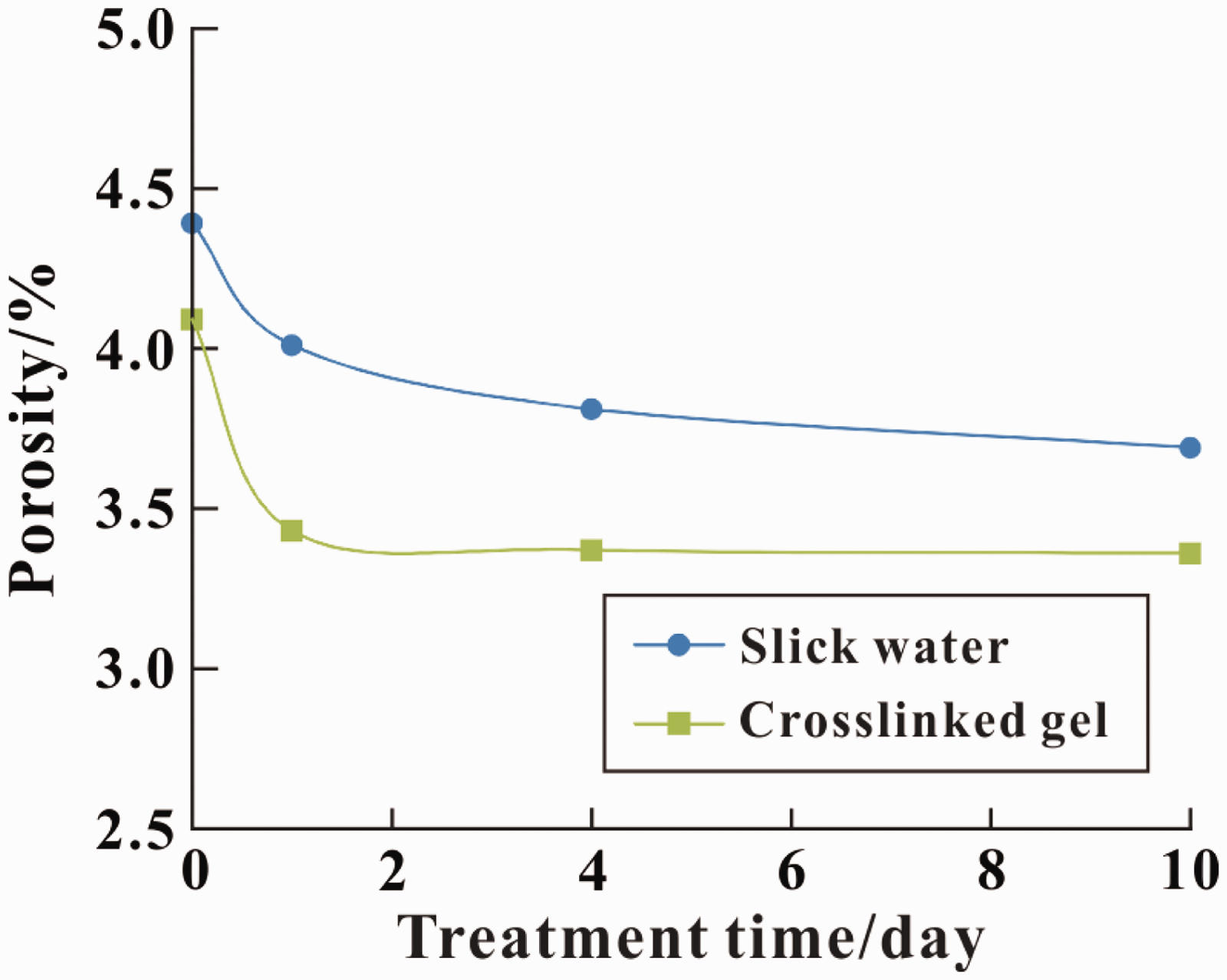
Changes in porosity of shale treated with different fracturing fluids during reaction.
In the study by Harrison et al. (2017), the isolated calcite grains appeared to develop some discrete pores after treatment with acidic fracturing fluid, while only homogeneous calcite distribution tended to produce universal secondary porosity network. Based on the FE–SEM results, although the interaction between slick water and shale generated some dissolution pores, the dissolution pores isolated were not connected (Figure 4). Moreover, because the porosity of shale was calculated according to the helium gas expansion principle, the isolated pores were not included. Therefore, the decrease in porosity of shale reacted with slick water fracturing fluid may have occurred because dissolution of carbonate minerals and clay swelling reduced the interparticle and intraparticle nanopores, which was consistent with the result from low pressure N2 adsorption analysis. As previously demonstrated, after the crosslinked gel fracturing fluid treatment, the precipitation of carbonate minerals caused the decrease in nanopore structures of shale and reduction in the porosity of shale.
Conclusions
In this paper, the evolution of pore structure parameters of shale treated with slick water and crosslinked gel fracturing fluid for different time periods were examined by considering shale mineral composition, pore structure and porosity. The following conclusions have been drawn from this study:
The XRD and FE–SEM results illustrated that the mineral components showed different changes after treatment with different fracturing fluids. The slick water mainly caused the dissolution of carbonate minerals and generated some dissolution pores, while the crosslinked gel mainly induced the precipitation of carbonate minerals. Moreover, the mineral composition changed significantly within the first 4 days of reaction and then tended towards stability for the remainder of the experimental time. Based on the results of low pressure N2 adsorption, the nanopore structure parameters of shale significantly changed after the interactions between different fracturing fluids and shale on a long timescale. With increasing time, the total pore volume and specific surface area both decreased, and the slick water had more negative impact of nanopore structure compared to the crosslinked gel. Moreover, the fractal dimensions (D1 and D2) of shale reacted with different fracturing fluids also showed a decreasing trend with time, indicating that the pore surface and structure become smooth and regular. According to porosity analysis, the fracturing fluid of slick water and crosslinked gel can also reduce the porosity of all shale samples with time. After 10 days of slick water and crosslinked gel treatments, the porosity of shale significantly decreased by 15.9% and 17.8%, respectively. These results illustrated that the injection of slick water and crosslinked gel during hydraulic fracturing may have a negative effect on shale gas production through reducing porosity of shale matrix. The reasons for the pore structure changes caused by slick water and crosslinked gel were different. The changes in pore structure induced by the slick water may connect with the carbonate minerals dissolution and clay swelling, which reduced the interparticle and intraparticle nanopores. However, the changes in pore structure caused by the crosslinked gel were connected with the precipitation of carbonate minerals, which blocked the nanopores of shale surface.
Footnotes
Authors' note
Yongli Wang is also affiliated with CAS Center for Excellence in Life and Paleoenvironment, Beijing, China.
Declaration of conflicting interests
The author(s) declared no potential conflicts of interest with respect to the research, authorship, and/or publication of this article.
Funding
The author(s) disclosed receipt of the following financial support for the research, authorship, and/or publication of this article: This study was supported by the National Natural Science Foundation of China (No. 41831176), the Excellent doctors come to Shanxi to reward scientific research projects (No. SXYBKY2018027), the Chinese Academy of Sciences Key Project (No. XDB26020302), and the Science and Technology Innovation Fund of Shanxi Agricultural University.
