




Abstract
Foam flooding is considered as one of the beneficial chemical enhanced oil recovery techniques to increase the value of gas viscosity and thereby, the efficiency of the produced oil would be improved dramatically rather than other methodologies. The objective of this extensive study is to determine a suitable injectivity model for one of the heterogeneous sandstone reservoir in which hydrolyzed polyacrylamide concentration in the solution foam has the most recovery factor. To do this, the results of laboratory investigation and simulation analysis are taken into consideration in different injectivity scenarios to obtain the more efficient scenario. Consequently, higher concentration of hydrolyzed polyacrylamide in the foaming agent, the high volume of oil has been produced after 10 years of producing. Furthermore, by selecting three cores from the three wells in this field, it is clarified that, owing to the increasing the volume of foam in the injectivity fluid, the pressure drop increased dramatically and subsequently has leaded to produced more oil volume.
Keywords
Introduction
The common methodologies of enhanced oil recovery entail chemical flooding, thermal recovery, gas flooding, or solvent flooding and in some occasions due to the reservoir characteristics, a combination of the mentioned techniques are administered to the oil recovery enhancement (Ahmed et al., 2017; Almaqbali et al., 2017; AlYousef et al., 2018; Davarpanah, 2018). Chemical methods are divided into mobility controlling materials (e.g., polymers and foams) and surfactant flooding. The former which is especially used to control the mobility by increasing the water density that enables the oil to mobilize more conveniently or the reduction of gas phase by the injection of foams, and the latter by injecting the surfactants or alkaline agents to reduce the surface adhesion which leads to the oil displacement and subsequently improve the microscopic displacement efficiency (Chen and Zhao, 2015; Fei-Peng et al., 2017; Fisher et al., 1990; Guo and Aryana, 2016; Rabbani et al., 2018; Mazarei et al.). The widespread application of foam in petroleum industries due to its high potential for sweep efficiency in the improved oil recovery techniques is considered as the preferable methodologies; in respect the way, it reduced the mobility of gas phase and subsequently neglecting the gas directional flow in the reservoirs. Moreover, foam has another advantages that might be had influential impact on the reservoir characteristics; this beneficial effects are improvement of acidizing stimulation by transferring the injected acid into the damaged areas or those layers that have lower permeabilities near the wellbore and, it is used in drilling and cementing operations regarding its lower amount of density, and its potential for solid transportation. In the other words, in the porous medium, foam is considered as the gas dispersion in the liquid phase, in which the liquid phase is the continuous phase and in some parts of the gas phase it appeared as the discontinuous phase in the forms of thin film layers (Hosseini-Nasab and Zitha, 2017; Hou et al., 2018; Jeong and Corapcioglu, 2003). There are two main mechanisms associated with the contiguity of foam; capillary adsorption and gas diffusion. The capillary absorption leads to a direct lamellar failure, which is the first mechanism for foam interconnecting. Although both mechanisms are within the mechanism of capillary pressure, capillary adsorption utterly depends on the surfactant formulation in comparison to the capillary snap-off. Two-dimensional presentation of foam system are being graphically depicted in Figure 1 (Jones et al., 2016a, 2016b; Kapetas et al., 2016, 2017; Khoshnevis et al., 2017; Li et al., 2006; Razmjoo et al., 2017).
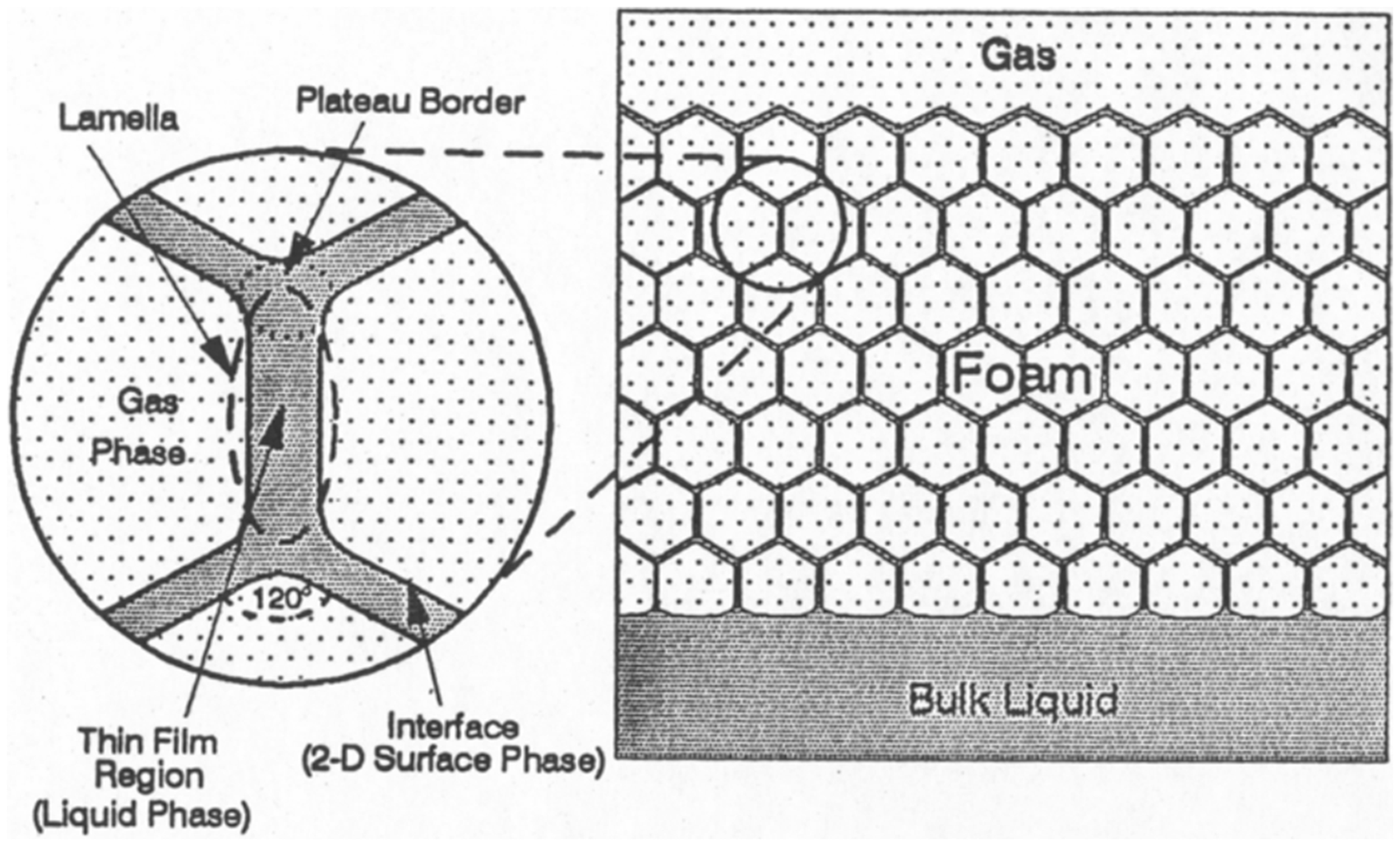
Two-dimensional presentation of foam system.
In the foam-flooding techniques, diversion is the common performance of foam fluid and it conceptually related to the blocking of those layers with higher permeability and subsequently transferred the foam flow through the low-permeability layer (Xu et al., 2015; Zang et al., 2015; Zhang et al., 2000). The following issues could be addressed by the injection of foams in the enhanced oil recovery techniques: in a gas injection process (steam,
Although, there are numerous experimental and numerical studies are being widely reported in literature to emphasize the importance of foam injectivity, in this comprehensive study, we tried to compare the experimental evaluation and simulation analysis on a heterogeneous sandstone oilfield with concentrating on the four different injectivity scenarios and how to optimize the efficiency of each technique. Furthermore, in this comprehensive study, we try to operate the experimental performances of HPAM concentration in the foam solution and simulate the injectivity of four different scenarios to estimate the pressure drop and oil recovery factor for each scenario simultaneously and how it is significantly influence the oil recovery factor.
Materials and methods
The presence of foam in the porous medium is considered as a dispersive system which the gas bubbles are dispersed in a liquid film called lamellae; in respect of the way, lamellae snap-off procedure is one of the principle mechanisms in the generation of foams. Thereby, foam is generated by the simultaneous injection of surfactant which are soluble in the liquid phase and gas. Surfactant maintains the stability of foam and makes a contribution to the reduction of oil/water interfacial tension (IFT) and the variation of reservoir wettability, hence improving oil displacement efficiency (Wei et al., 2018a, 2018b; Wu et al., 2016; Xu et al., 2016, 2017).
Field description
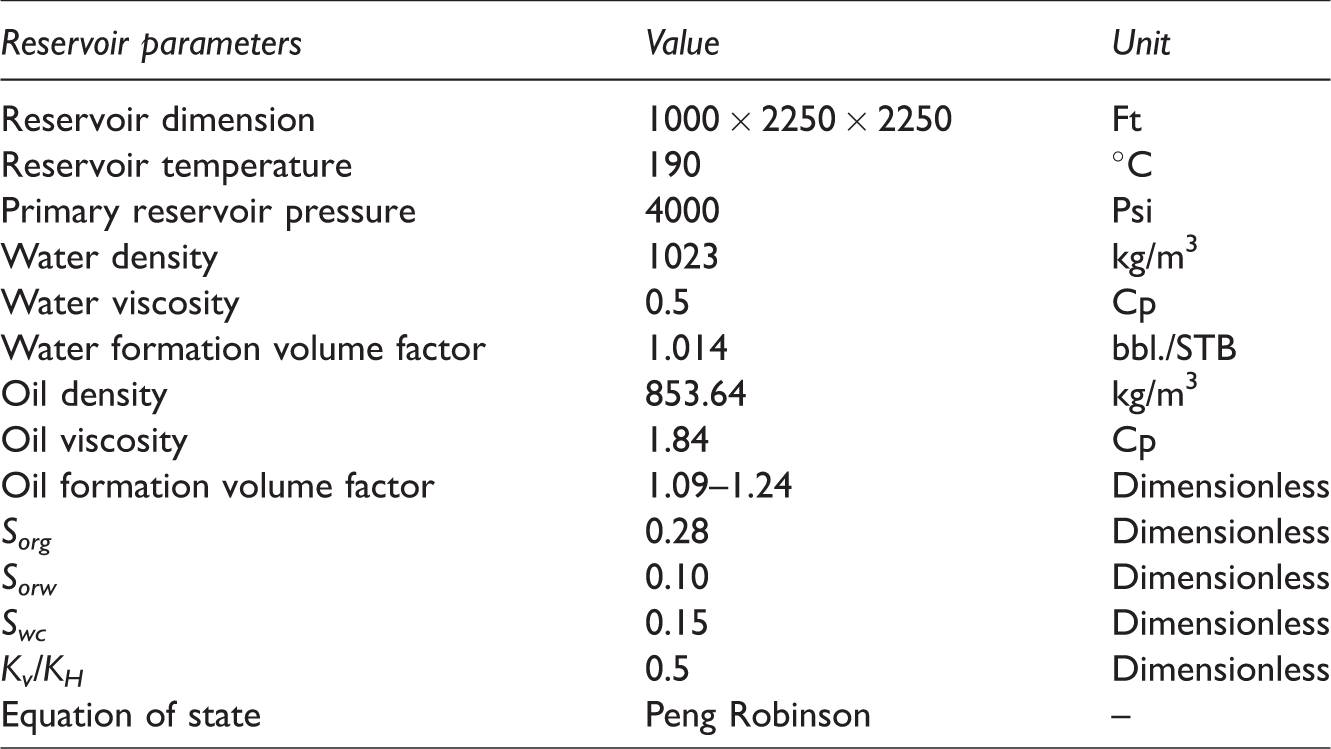
The studied reservoir is one of the heterogonous sandstone reservoirs which are located in the Pazanan oilfield in southwest of Iran which has two sandstone layers that are divided by an impermeable shale layer; in respect of the way, there is any potential flow between the layers. To estimate the most appropriate value for the porosity, there are some ways that are widely reported in literature which includes direct techniques and indirect techniques. The porosity of shale layer is estimated approximately 21.6–24.4%. Reservoir characteristics are being statistically explained in Table 1.
Reservoir characteristics.
Peng–Robinson equation of state was chosen for investigation of reservoir fluid phase behavior. To enhance flexibility of the equation of state, an exponential distribution function was utilized to decompose heavy component of
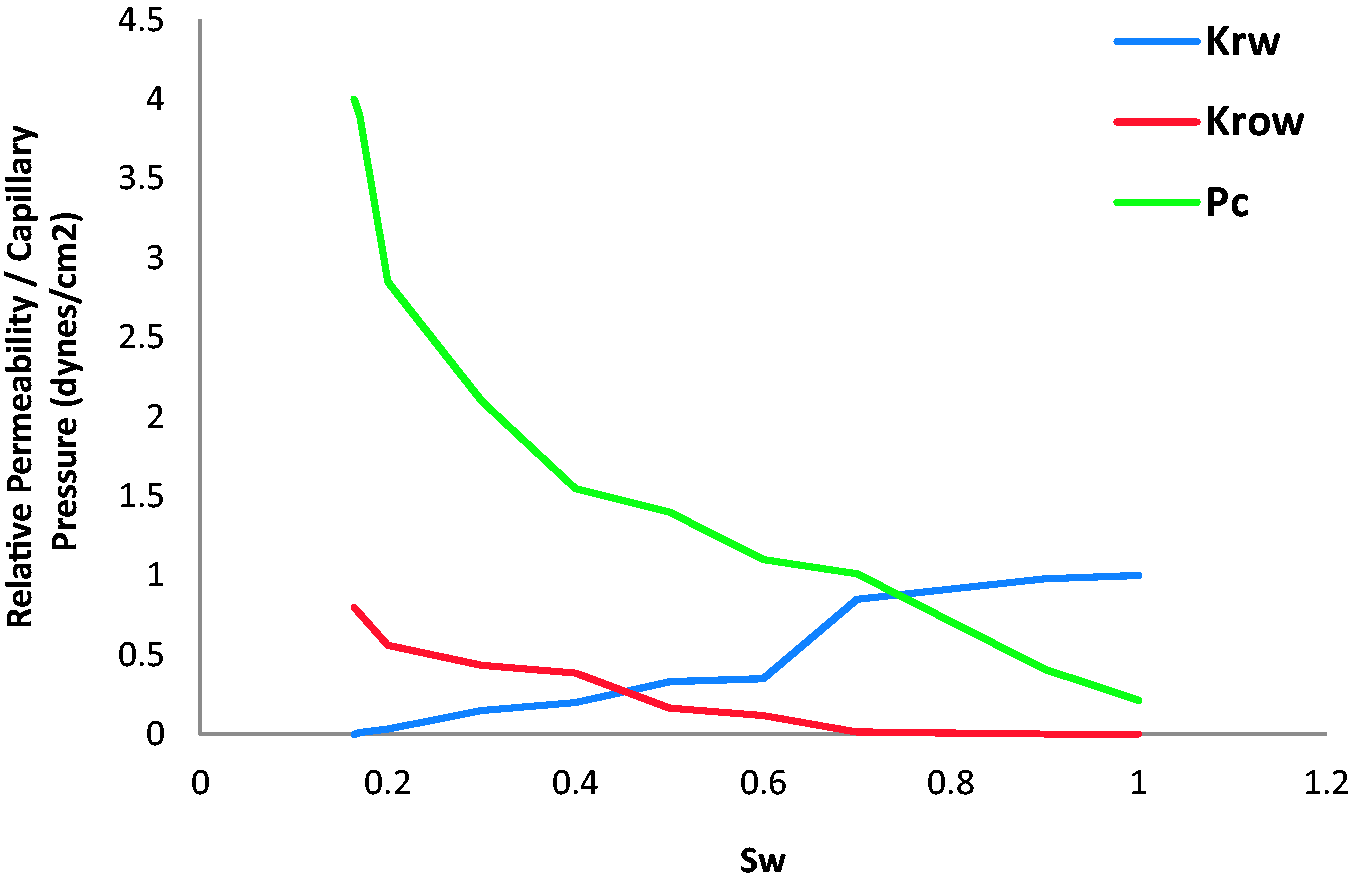
The amount of relative permeabilities and capillary pressure.
Viscosity measurement
It is a common belief in petroleum industries about the stability of foam which is approximately related with the bull viscosity of the foam solution. To thicken the foam agent, HPAM is usually administered and the base solution is 2000 ppm at the speed of 400 r/min for a time period of 1.5 h. Since then, the obtained solution is diluted into the specific concentrations.
Core flooding experiment
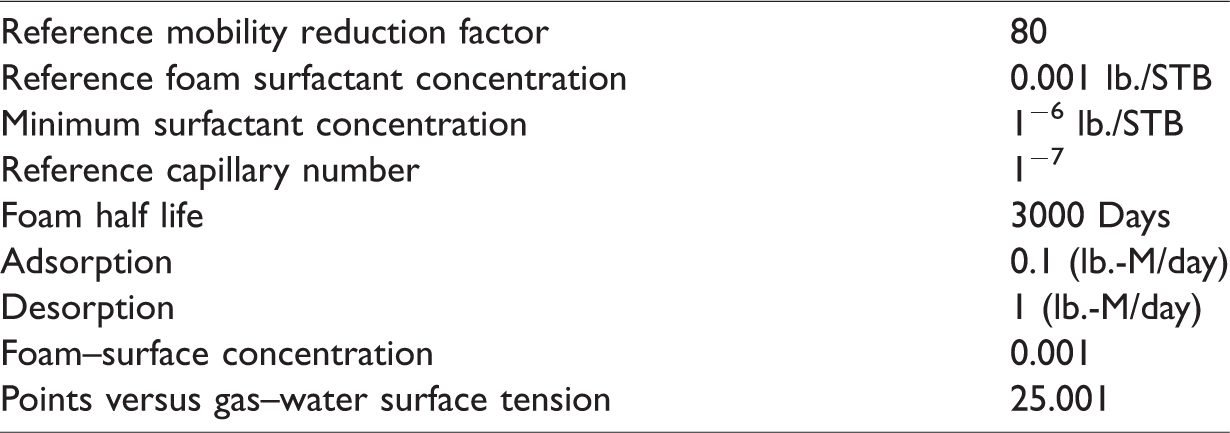
For a start, the core plug which was collected from the studied field, was put in the core holder after it has vacuumed for one day before the brine injection. In the next stage, the crude oil with the mentioned properties injected to the core before the water cut reached relatively about 1%. Next, after one day, water flooding and foam flooding was operated to the core sequentially to produce the residual oil and in the final stage, water flooding are administered to achieve ultimate oil recovery/the temperature and pressure of the obtained system are according to the field reservoir characteristics; 190°C and 4000 psi respectively. Moreover, the pressure was confined constant within the flooding procedure. In addition, the properties of foam are statistically described in Table 2.
The properties of utilized foam.
Results
Viscosity alterations during the flooding performances
One of the main purpose of adding HPAM is to thicken the foaming solution. 5000 ppm of base solution with the specific amount of polymer was determined and it was mixed with a stirrer at the speed rate of 400 r/min for 2 h. After diluting the polymer solution, Brookfield DV-IIþPro viscometer by the consideration of 7.34
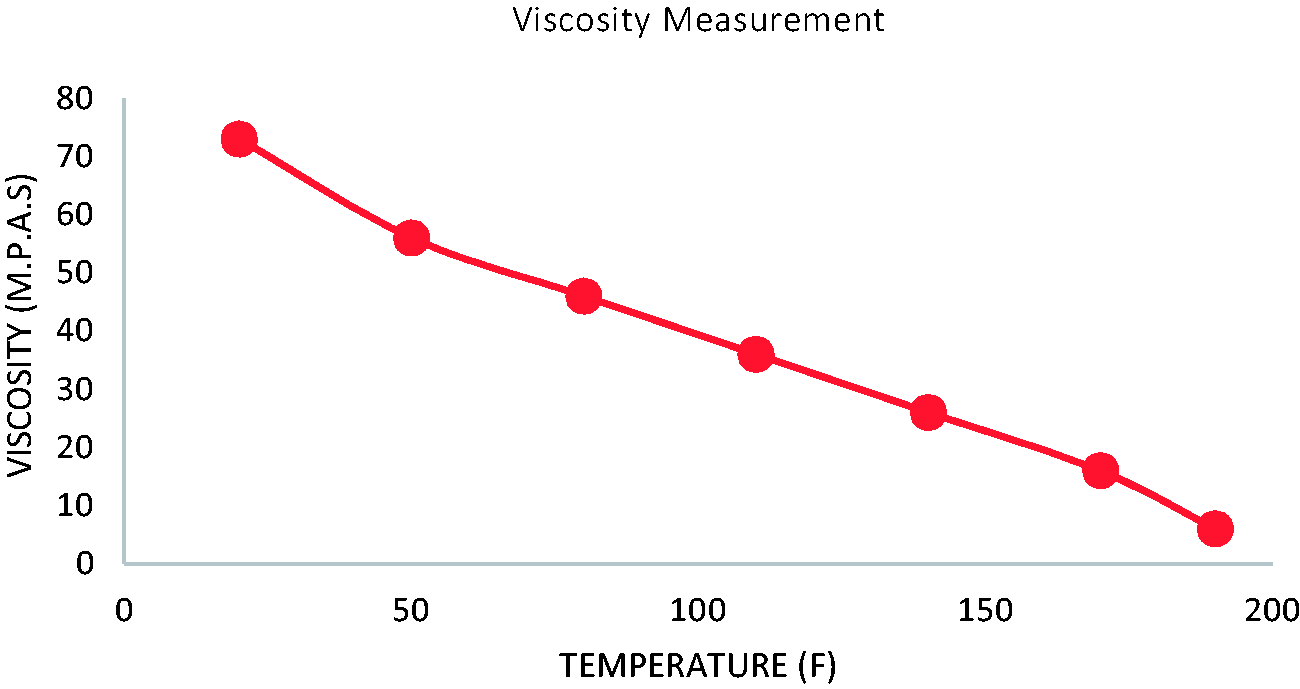
The amount of viscosity versus temperature.
Surface tension measurement
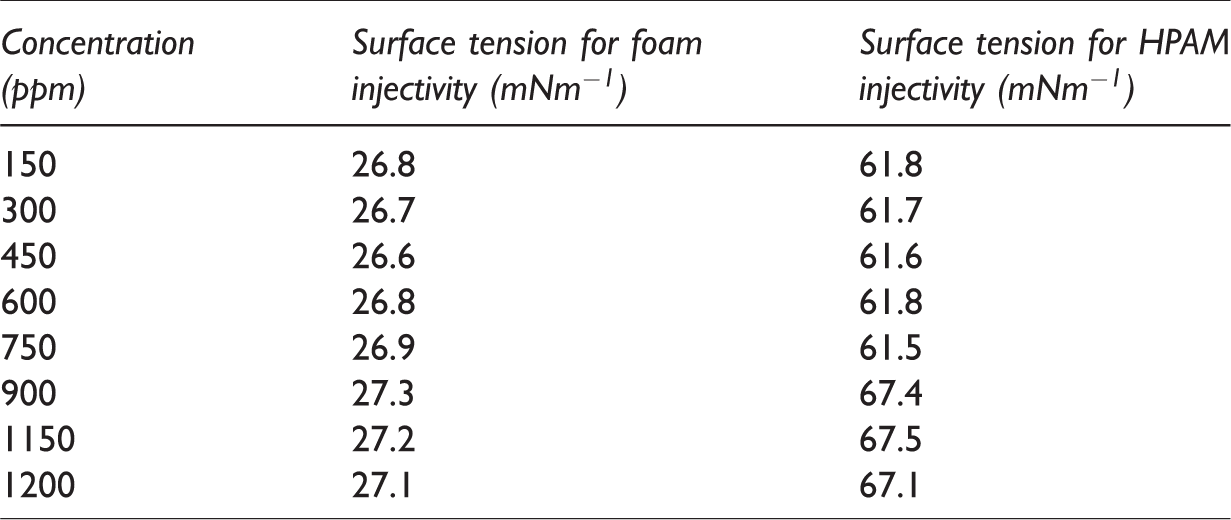
To measure the surface tension value, JZHY 180 tensiometer by the utilization of Du-Nouy-Ring method was administered in the laboratory measurements. To achieve this measurement, the tensiometer was being adequately calibrated and after that 20 mL of the provided substantial solution was inserted to set up the platinum ring of 9.55 mm radius for touching the solution. At this stage, the surface tension is clearly depicted on the screen dial. Furthermore, to check the validity and stability of these measurements, we have tried to record the surface tension value between 5 and 10 times in the input temperature of 20°C. In this part of study, we focused on the considerable influence of foaming agent and HPAM on the foamability and subsequently its impact on the surface tension. As can be seen in Table 3, by increasing the foam and HPAM concentration, the surface tension has an increasing pattern, thereby, it is evident that surface tension in HPAM is approximately twice than its value in the foam concentration (Xu et al., 2016).
Surface tension measurements for foam and HPAM injectivity.
Effect of injection scheme on the oil recovery enhancement
To investigate the profound impact of each injection scenario on the performance of oil displacement by adding HPAM to the injection foam or without the polymer adding are compared. To do this, three core floods which are extracted from the studied field (each of them are extracted from each well from well A-well C) are put in experimental evaluation to whether each injectivity scenario is more productive for the studied wells. For each core we have implemented two procedures to determine the validity of each scenario and subsequently obtain the matching results of experimental core floods and simulation analysis by eclipse software. The properties of each core are being statistically explained in Table 4.
Properties of each core.
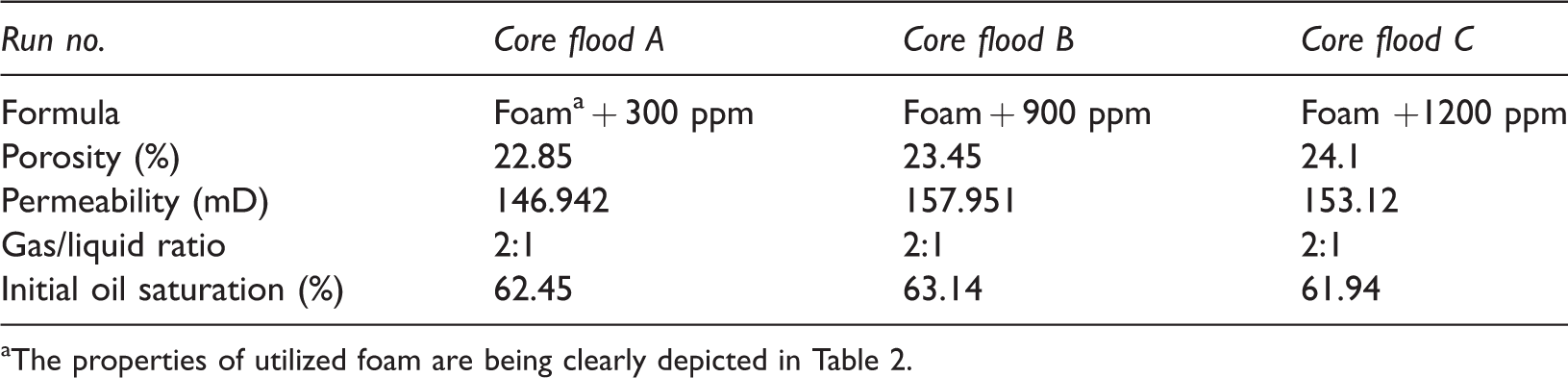
aThe properties of utilized foam are being clearly depicted in Table 2.
To achieve the appropriate amount of permeability, according to the Davarpanah et al. (2018) with Emeraude software (Davarpanah et al., 2018). For each core, natural depletion drive, water injection, gas injection, and foam injection are operated to difference between them properly. Moreover, the foam injectivity for each cores according to the addition of different HPAM concentration are being operated in the laboratory circumstances in the time duration of 36 days. Thereby, it is evident in Figure 4, regarding to the increasing of HPAM concentration in the foam solution, the recovery factor has increased gradually and in the HPAM concentration of 1200 ppm oil recovery factor are the highest value; it is approximately 300
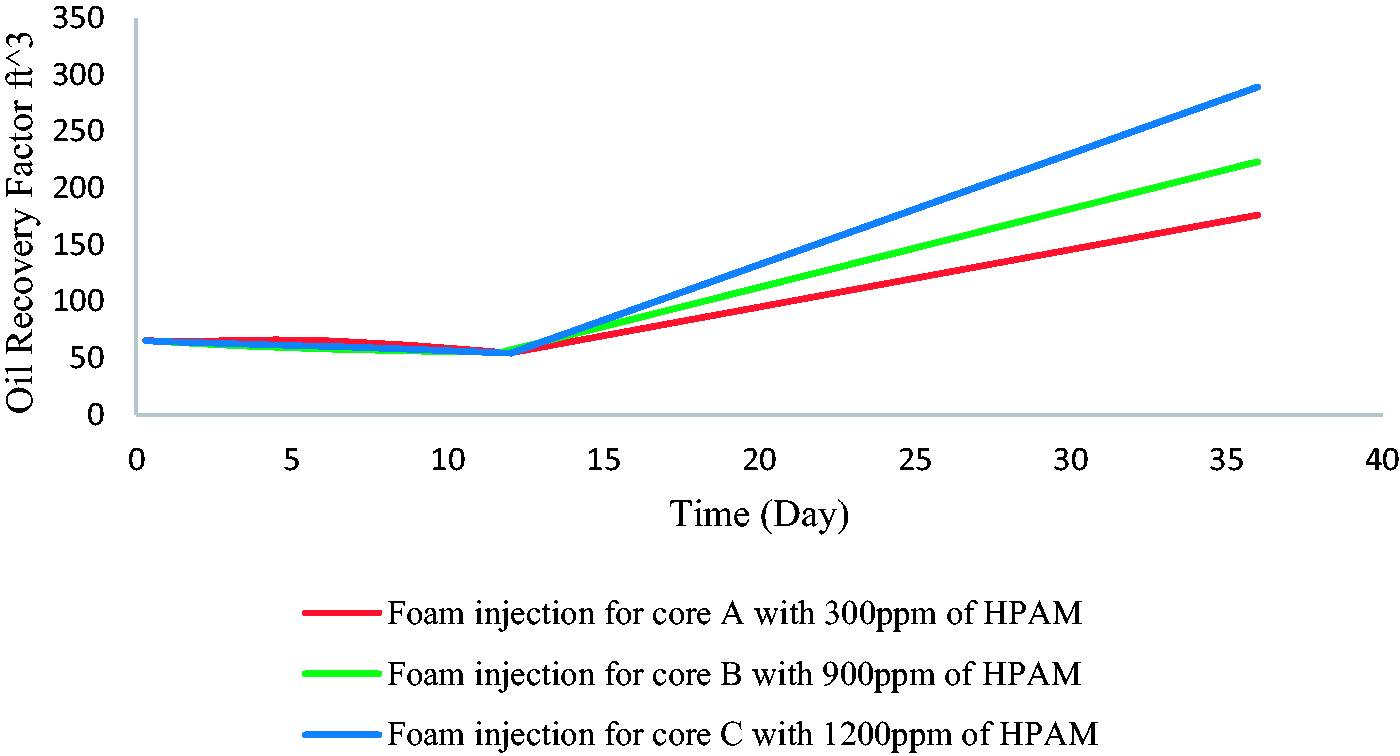
Comparison of different HPAM concentration.
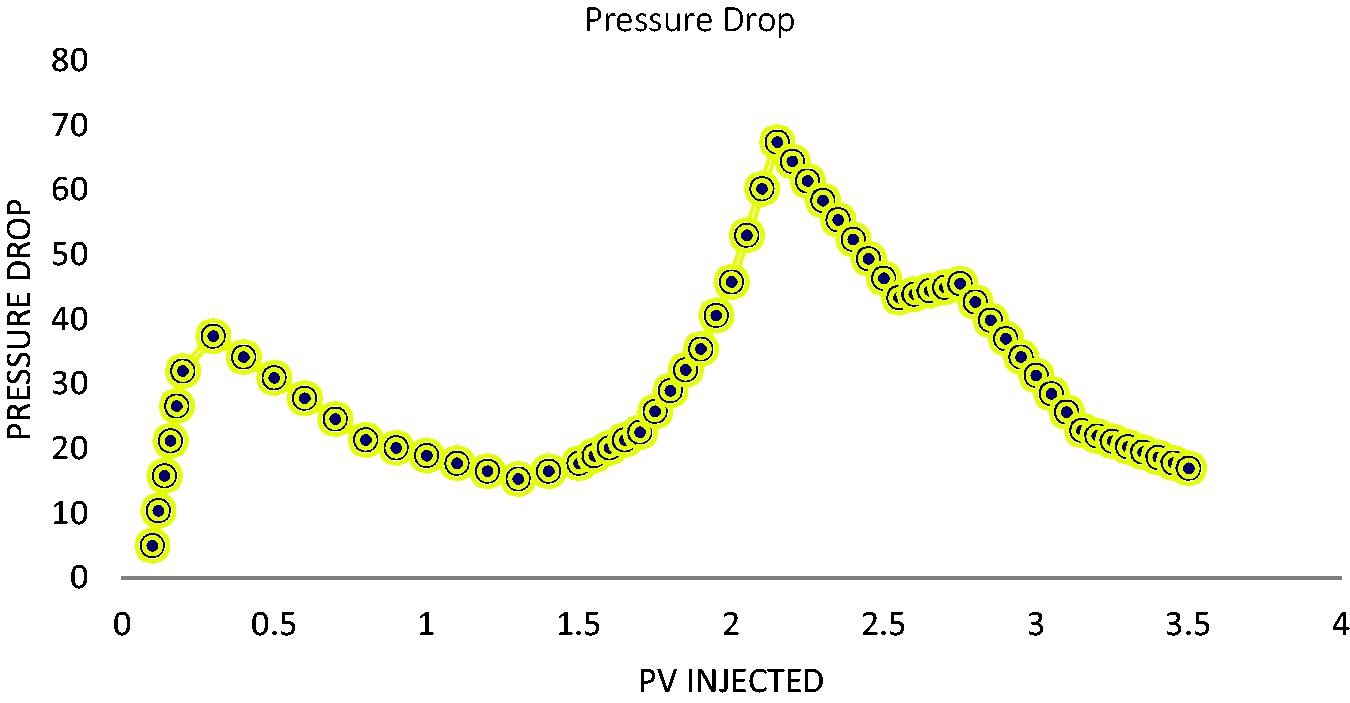
As can be seen in Figure 5, the pressure drop is increased gradually in the first initial of water injectivity, but it decreased slightly before the injection of foam in to the cores. in the 1.5 pore volume injection, foam is added to the injectivity fluid and it caused to increase the pressure drop dramatically in the pore volume injection of 1.5–2.2 pore volume; in respect of the way, it reached the maximum value about 70 psi. Since then, the pressure drop decreased again and due water injectivity to push the remained oil to the production equipment, it has increased for a short period and then it dropped to the minimum pressure in the last pore volume injection (it was relatively 17 psi).
Comparison of different HPAM concentration.
Simulation procedures for the studied field
In this part of study, three wells of the mentioned field as the three types of cores were selected from are included in the simulation by ECLIPSE software (by ECLIPSE 300 with the trial license 78843C358D12, 2015.1) was utilized to set up a specific equation of state for this reservoir. In addition, various injection scenarios such as natural depletion mechanisms, water injection, gas injection and, foam injection with the addition of three different concentrations of HPAM for each selected wells have been applied to improve the oil recovery factor. The time of simulation for this study is starts from the year 2015 for about 10 years of production. To achieve the best result for this simulation, we administered the “Fully Implicit” solution to investigate specific phenomena in oil recovery enhancement. Moreover, in this comprehensive study, we use compositional model in the simulation processes.
Scenario 1; well A with the addition of 300 ppm of HPAM
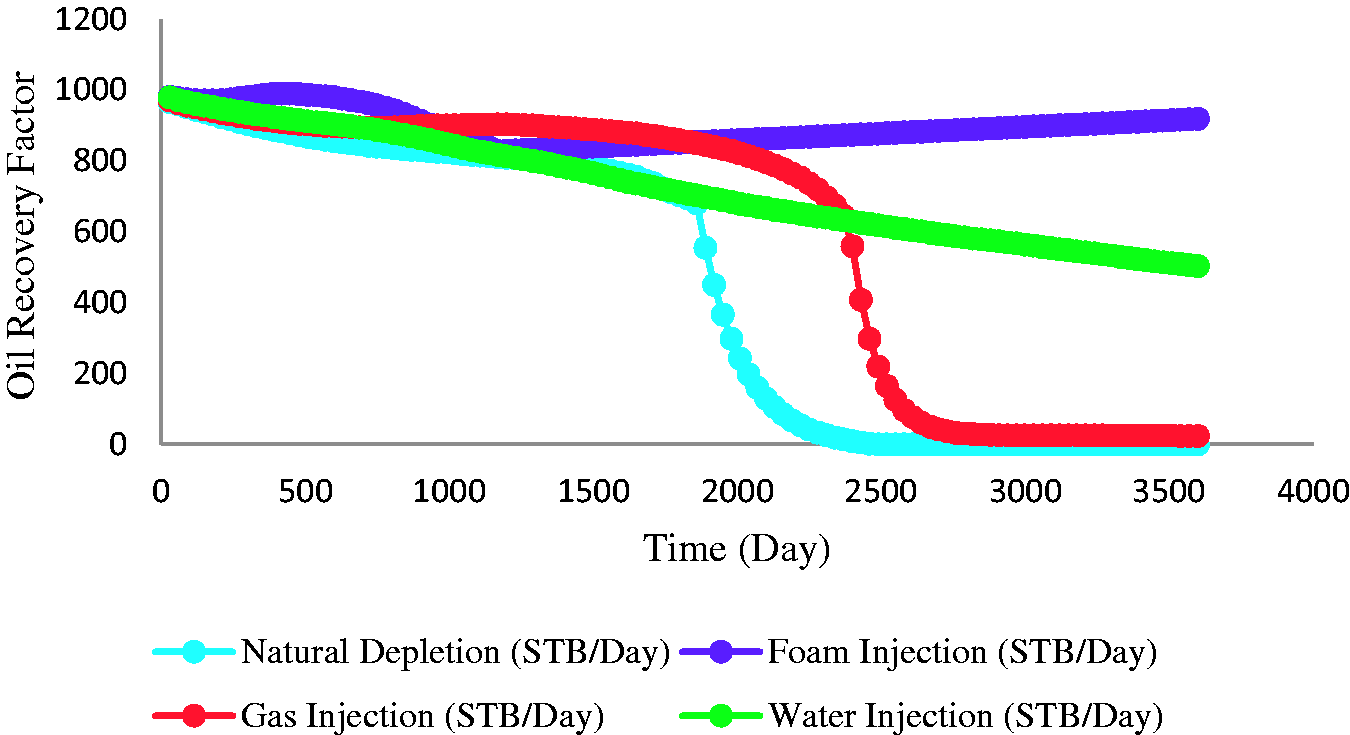
As can be seen in Figure 6, the comparison of four injectivity scenarios include the foam injection with addition of 300 ppm of HPAM are simulated. In this scenario, although, gas injection in the first days of injectivity will increase the oil production rate, at the end of simulation time periods, it would experience a dramatic decline in the oil production. By passing the time of simulation, foam flooding and water flooding are the maximum among other injectivity techniques; in respect of the way, in the last years, foam flooding has reached the dominant oil recovery factor (about 9500 STB/day in which STB stands for standard barrels).
Injectivity procedures for well A with the addition of 300 ppm of HPAM.
Scenario 2; well B with the addition of 900 ppm of HPAM
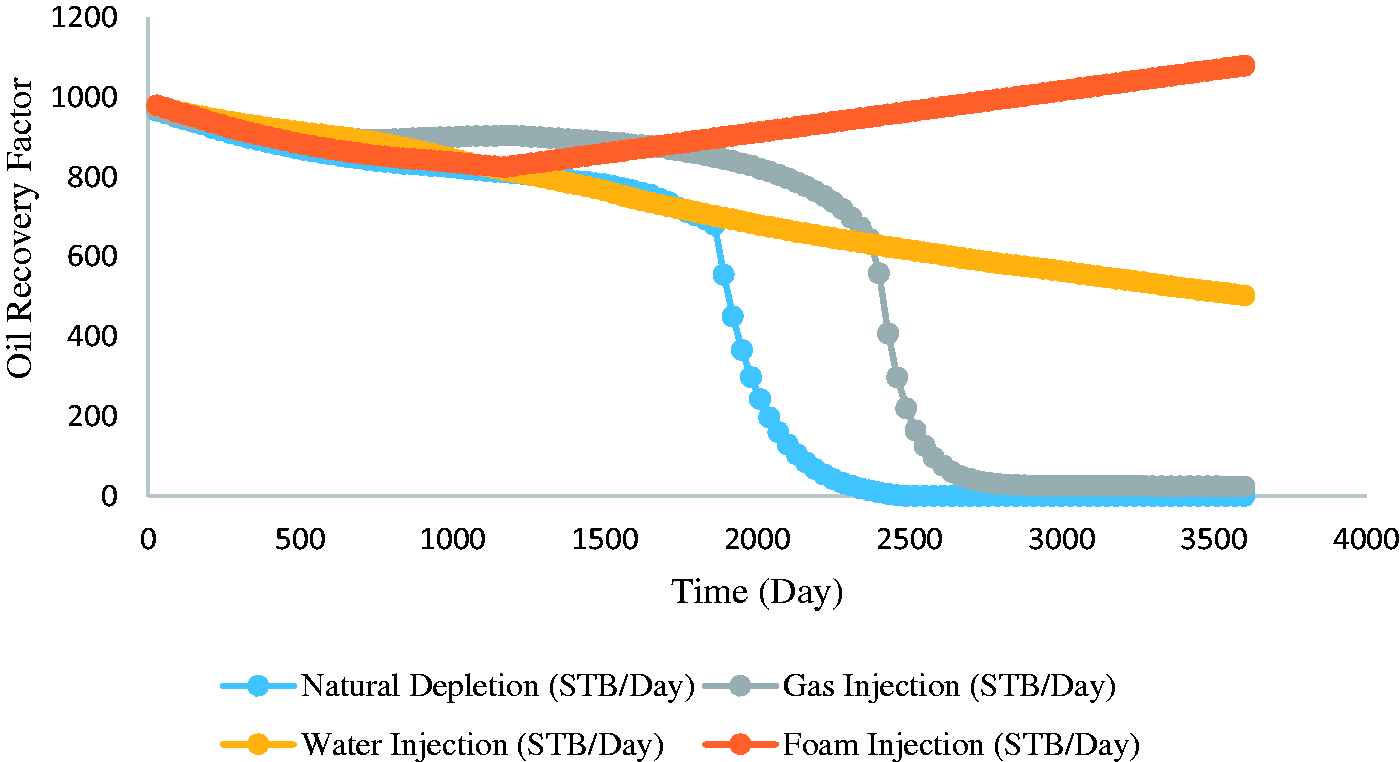
As can be seen in Figure 7, the comparison of four injectivity scenarios include the foam injection with addition of 900 ppm of HPAM are simulated. In this scenario, although, gas injection in the first days of injectivity will increase the oil production rate, at the end of simulation time periods, it would experience a dramatic decline in the oil production. By passing the time of simulation, foam flooding and water flooding are the maximum among other injectivity techniques; in respect of the way, in the last years, foam flooding has reached the dominant oil recovery factor (about 1100 STB/Day).
Injectivity procedures for well B with the addition of 900 ppm of HPAM.
Scenario 3; well C with the addition of 1200 ppm of HPAM
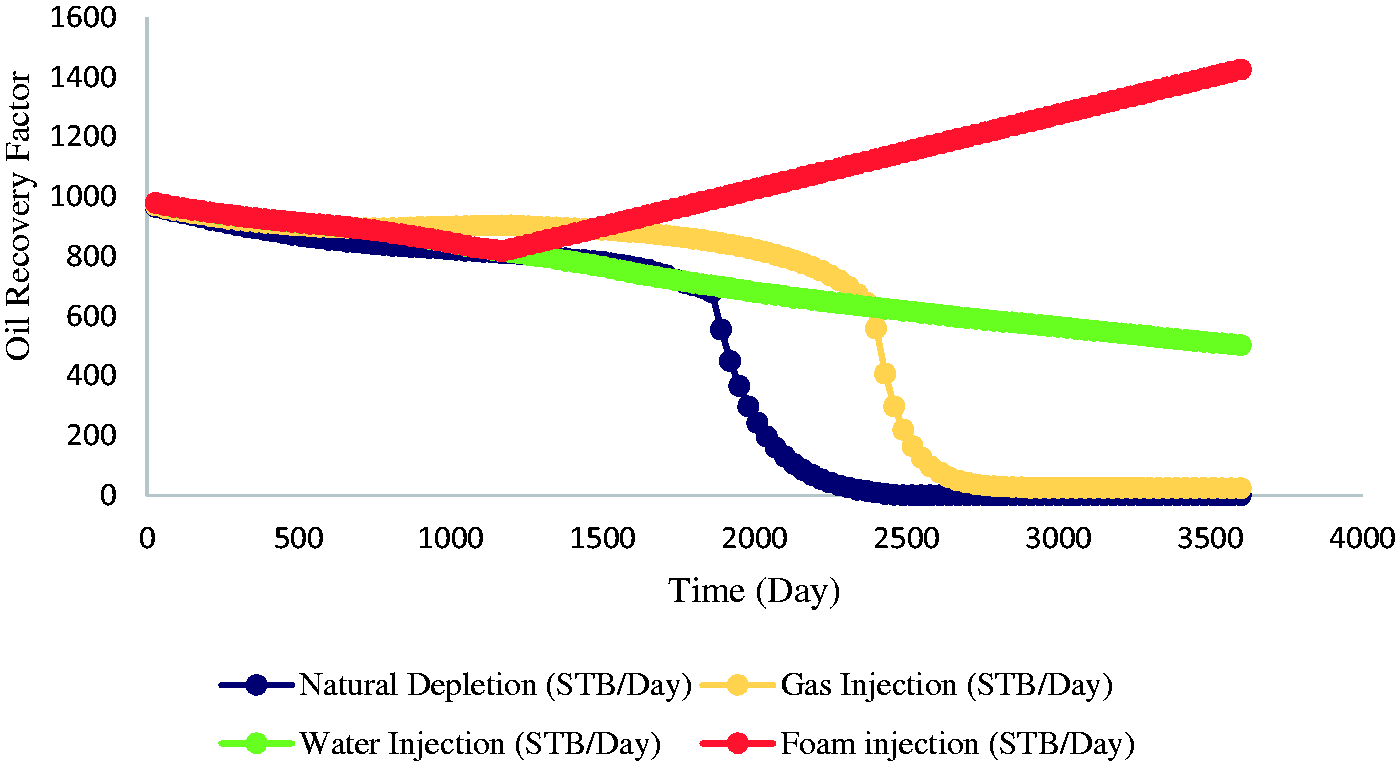
As can be seen in Figure 8, the comparison of four injectivity scenarios include the foam injection with addition of 1200 ppm of HPAM are simulated. In this scenario, although, gas injection in the first days of injectivity will increase the oil production rate, at the end of simulation time periods, it would experience a dramatic decline in the oil production. By passing the time of simulation, foam flooding and water flooding are the maximum among other injectivity techniques; in respect of the way, in the last years, foam flooding has reached the dominant oil recovery factor (about 1400 STB/Day).
Injectivity procedures for well C with the addition of 1200 ppm of HPAM.
As a result, the cumulative oil production rate for each scenario is being statistically explained in Table 5. It is evident that, foam flooding has the maximum Cumulative oil production and water injection is in the second step.
Cumulative oil production for each scenario.

Water production for each well in the injectivity scenarios
As can be seen in Figures 9–11, the water production for each well are simulated in the time period of 3600 days. It is clear that, water injection and foam injection have produced the maximum amount of water. This is due to the discharge of reservoir from natural depletion and gas injection techniques which are after 1900 and 2700 days, the reservoir is discharged and not produced any volume of oil.
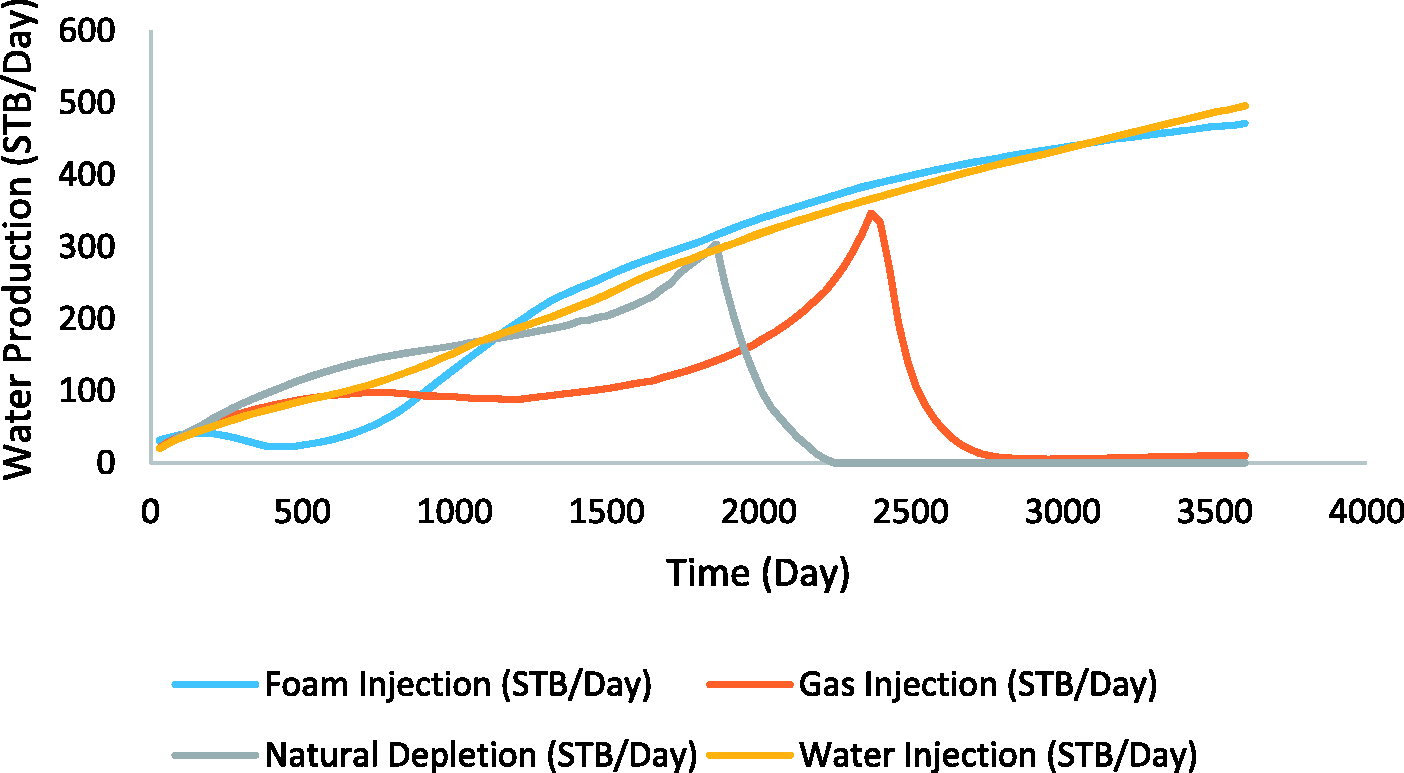
Water production from each injectivity scenarios for well A with the addition of 300 ppm of HPAM.
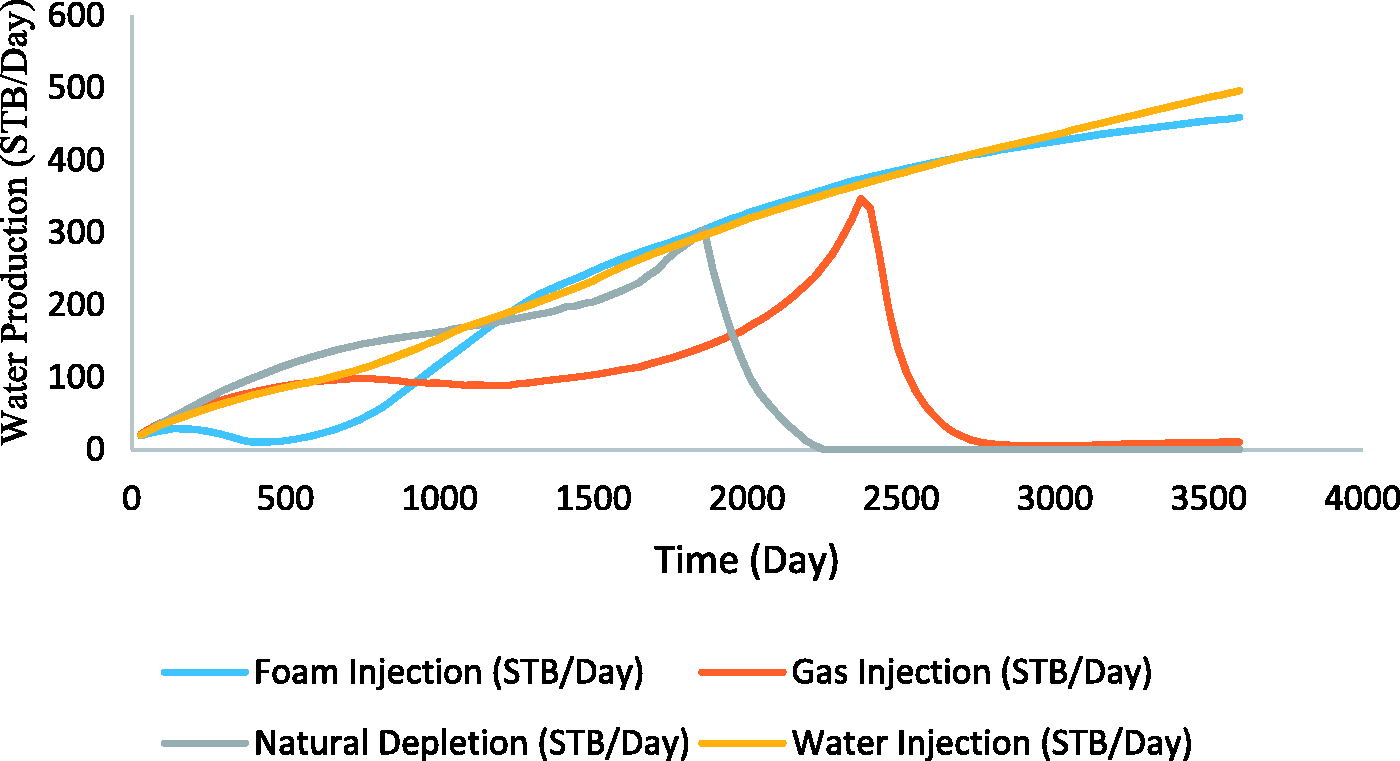
Water production from each injectivity scenarios for well B with the addition of 900 ppm of HPAM.
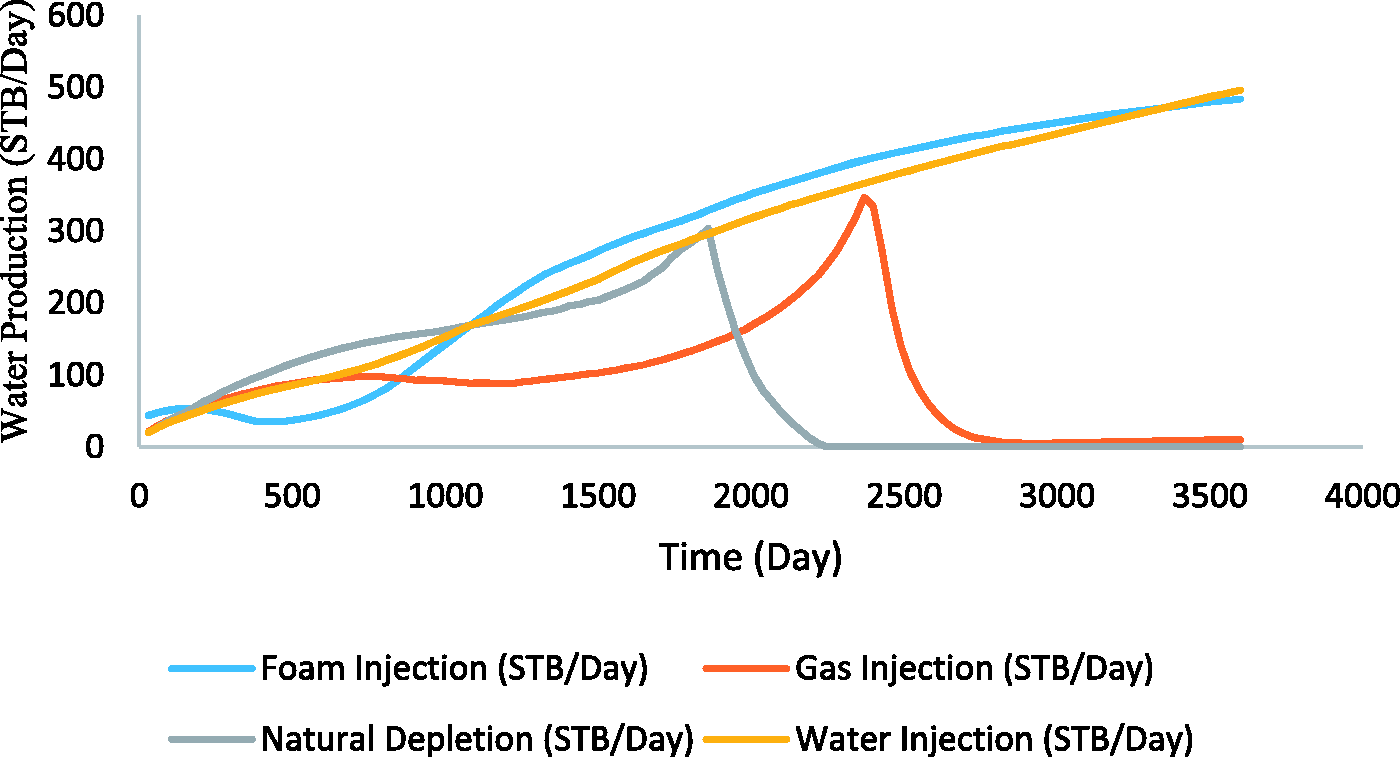
Water production from each injectivity scenarios for well C with the addition of 1200 ppm of HPAM.
Pressure drop for the injectivity scenarios
As can be seen in Figure 12, the pressure drop for each scenario in the studied field is schematically depicted; foam flooding due to its high potential for producing the maximum amount of oil has caused to have more pressure drop.
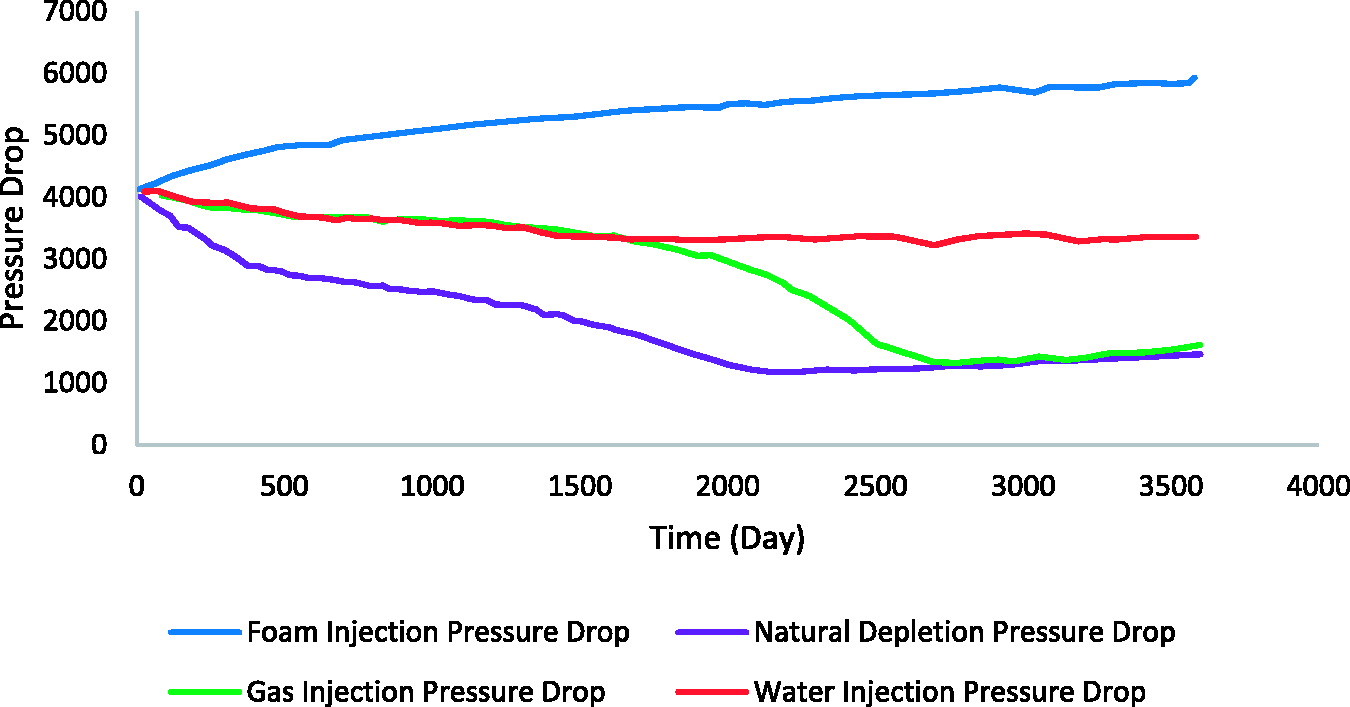
Pressure drop for each injectivity scenarios.
Discussion
Each well during the time period of production has experienced three productivity stages; natural depletion drive mechanisms, primary enhanced oil recovery, secondary and tertiary enhanced oil recovery. As it is clarified according to the simulation results after 2000 days of production, the natural depletion mechanism would not be able to provide sufficient energy to push the reserved oil to the surface. Hence, simulation procedures would enable engineers to estimate the accurate time of oil cumulative reduction in the production operations and subsequently how to perform enhanced recovery techniques to avoid this rapid reduction. Among the various kinds of primary enhanced recovery methods, gas injection and water injection are being compared with the natural depletion drive efficiency. Gas injection and water injection scenarios have a similar decreasing pattern as natural depletion drive techniques but in these two scenarios, it witnessed a slower reduction pattern. That is to say that, water injectivity pattern has a slight decrease pattern and would be an appropriate selective method of primary enhanced recovery technique rather than gas injectivity. As it is clarified in Figures 6–8, gas injection technique is reached to zero after a specific time period of injectivity and would not be considered as the proper solution for the recovery enhancement. Tertiary recovery techniques entail chemical and thermal techniques which has their own privileges in hydrocarbon reservoirs. In this comprehensive study, we try to investigate the considerable influence of foam flooding with the solution of polymer particles in three different concentrations. As can be seen in Figures 6–8, simultaneous injection of polymer solutions in the foaming agent would be a proper method to enhance the recovery factor on those wells that are concerned with the sever recovery reduction. In respect of the way, foam flooding leads to improve the recovery factor and by increasing the addition of polymer concentration from 300 ppm to 1200 ppm, the recovery factor has a similar rising pattern. Therefore, the dispersion issue is a key parameter to divert the fluid flow through the lower permeable layers and this is why foam flooding would be an adequate technique for recovery enhancement. The production of water in the reservoirs is one of the principal issues that might be considered in petroleum industries. As it is clear from Figures 9–11, water production in the natural depletion drive and gas injection scenarios has the similar trend. In respect of the way, in the first period of production, water productivity has increased slightly due to the simultaneous production of water within hydrocarbons and since then by the reaching the productivity rate to zero, the water production has decreased gradually to reach to zero. On the contrary, water injection and foam injection regarding to the presence of water in the injectivity fluid through the reservoir, water volume has increased dramatically and it depicted that after the time period of production, this volume has reached a same value for both techniques which is schematically explained in Figures 9–11. Producing by the utilization of natural depletion drive due to the administration of lower energy to the reservoir has caused to lower pressure drop to the well. The reason of this issue is that the difference of pressure between bottom hole pressure and surface pressure would be small enough that leads to lower pressure drop. Gas injection has witnessed a slight decrease pattern of pressure drop. Although, this pressure drop value has higher than its value in natural depletion drive; after the reduction of recovery factor by passing the production time, owing to the recovery reduction, pressure drop has experienced a same falling pattern as natural depletion drive. On the other hand, foam injectivity has witnessed a gradual increasing pattern due to the passing the tome of production. It is to be elaborated that, regarding the flowing the foam fluid through the reservoir, the bottom hole pressure has decreased slightly which is a reason of subsequent pressure drop increase. Since then, it has reached plateau after passing the specific time of production and the differences between bottom hole pressure and surface pressure has been stabilized. Furthermore, water injection scenario has an approximate plateau trend during the time of production which is schematically demonstrated in Figure 12. To validate the accuracy of simulation results with the experimental evaluations, we try to plot a comprehensive history matching graph to illustrate its comparison explicitly in Figure 13. As can be seen in Figure 13, experimental and simulation are in a good agreement for the simultaneous utilization of foam injection and polymer solution with the concentration of 900 ppm which is illustrated that simulation analysis has performed in an accurate way. Moreover, to ascertain the accuracy of the model and its reliability, we concentrated a set of experimental investigation to make sure the proposed model is appropriate or not. To do this, for the measurement of viscosity and surface tension, we have measured the average amount of each parameter to be more reliable because instantaneous measurement are not provided a good accuracy which might be concerned by different phenomena. Due to the fact that experimental investigations are more extravagant and time consuming, to ascertain the validity and accuracy of injectivity scenarios, according to the Xu et al. (2016) and previous studies which are widely reported in literature to investigate the simultaneous influence of foam and hydrolyzed polyacrylamide, the injectivity behavior is experienced an approximate similar pattern. In addition, the results of simulations which are clearly depicted that the proposed model has done properly as it is compared with the experimental evaluation in Figure 13.
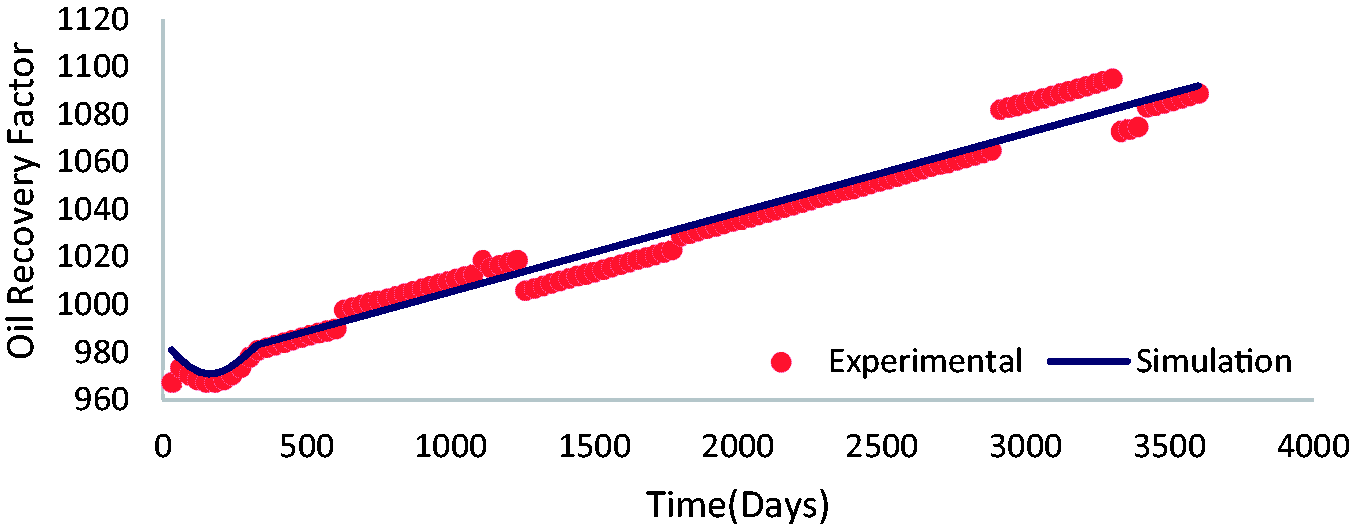
History matching for foam injectivity with 900 ppm HPAM concentration.
Conclusion
Foam flooding is considered as one of the preferable methodologies in those reservoirs that are the amount of recovery decreased after the years of production; that is to say that, it is a sense of urgency for petroleum industries to obtain the maximum oil volume. One of the chief aims of this study is to conduct an investigation into one of an Iranian’s heterogeneous reservoir by the simultaneous simulation procedures and experimental evaluation of HPAM concentration in the foam solution. Due to the increase of HPAM concentration in the foam solution, the oil recovery factor increased dramatically and subsequently cumulative oil production is the highest value for foam injectivity. After adding the specific volume of foam into the injectivity fluid, the pressure drop has increased drastically and thus it has caused to produced more oil volume.
Footnotes
Declaration of conflicting interests
The author(s) declared no potential conflicts of interest with respect to the research, authorship, and/or publication of this article.
Funding
The author(s) received no financial support for the research, authorship, and/or publication of this article.