




Abstract
A substantial amount of petroleum was recently discovered in the Carboniferous volcanic reservoir of the Chepaizi Uplift in the western Junggar Basin, yet the source is still indefinitive. Geochemical investigation indicates that the Carboniferous oils from the eastern and western Chepaizi Uplift are characterized by different source facies, although they are all typically of lacustrine origin. The eastern oils exhibit a restricted, clastic starved, highly reducing hypersaline condition during source rock deposition, which is distinct from the western oils. The Carboniferous oils were subjected to biodegradation ranging from rank 6 to rank 9, as indicated by the presence of 25-norhopane, evident depletion of hopanes and regular steranes, and even selective reduction of tricyclic terpanes. The maturities for the Carboniferous oils correspond to the onset of oil generation. The eastern oils contain lower (C19 + C20)TT/(C23 + C24)TT and C19TT/C21TT, and lighter stable carbon isotopes than the western ones, correlating well with the Middle Permian Wuerhe (P2w) source rocks and the Jurassic source rocks, respectively. The good correlation of tricyclic terpanes source-related parameters further implies less contribution to the eastern oils by the Carboniferous source rocks.
Keywords
Introduction
With increasing difficulties in prospecting conventional clastic and carbonate petroleum reservoirs, volcanic reservoirs gradually have become a new exploration target (Zou et al., 2011). Since the first discovery of a volcanic reservoir in the San Joaquin Basin in 1887, about 170 volcanic oil and gas reservoirs have been discovered in the world (Schutter, 2003; Zou et al., 2011), most of which are distributed in the undisturbed Mesozoic and Cenozoic volcanic rocks. Oil and gas reserves in volcanic provinces are found on all continents and many future petroleum exploration areas will be located in volcanic margins (Senger et al., 2017; Sydnes et al., 2018; Zou et al., 2011). In the last 10 years, China has successively discovered many volcanic reservoirs of different scales in the Songliao, Hailaer, Liaohe, and Bohai Bay Basins in eastern China and the Tuha, Junggar, Tarim, Sichuan, and Santanghu Basins in western China (Chang et al., 2011; Chen, 2015, 2016b, 2016c; Feng et al., 2014; Hou et al., 2014; Luo et al., 2017; Zhao et al., 2009; Zou et al., 2008, 2011).
The Chepaizi Uplift covers an area of about 10,500 km2 and is located in the western margin of the petroliferous Junggar Basin, NW China (Figure 1). From the 1960s to the 1990s, the PetroChina Company discovered the Hongshanzi, Chepaizi, and Xiaoguai oil fields in this area. Recently, commercial volumes of oil were obtained from Cretaceous, Jurassic, Palaeogene, and Neogene clastic reservoirs in the Chepaizi Uplift by the Sinopec Company (Zhang et al., 2014). Oil show was observed in the Carboniferous tuff in well P60 in 2010, and recoverable oil obtained in the Carboniferous tuff in well P61 in, 2011 (Dong, 2015), suggesting a great exploration perspective in the Carboniferous interval. Following deep exploration, many volcanic petroleum reservoirs were discovered in the Carboniferous intervals with andesite, tuff, volcanic breccia, and basalt (Meng et al., 2016). Until 12 December 2014, 11 of the 32 wells penetrated to the Carboniferous interval in the eastern Chepaizi Uplift obtained commercial volumes of oils with proven in-place reserves of up to 61.01 × 10⁶t (Dong, 2015).
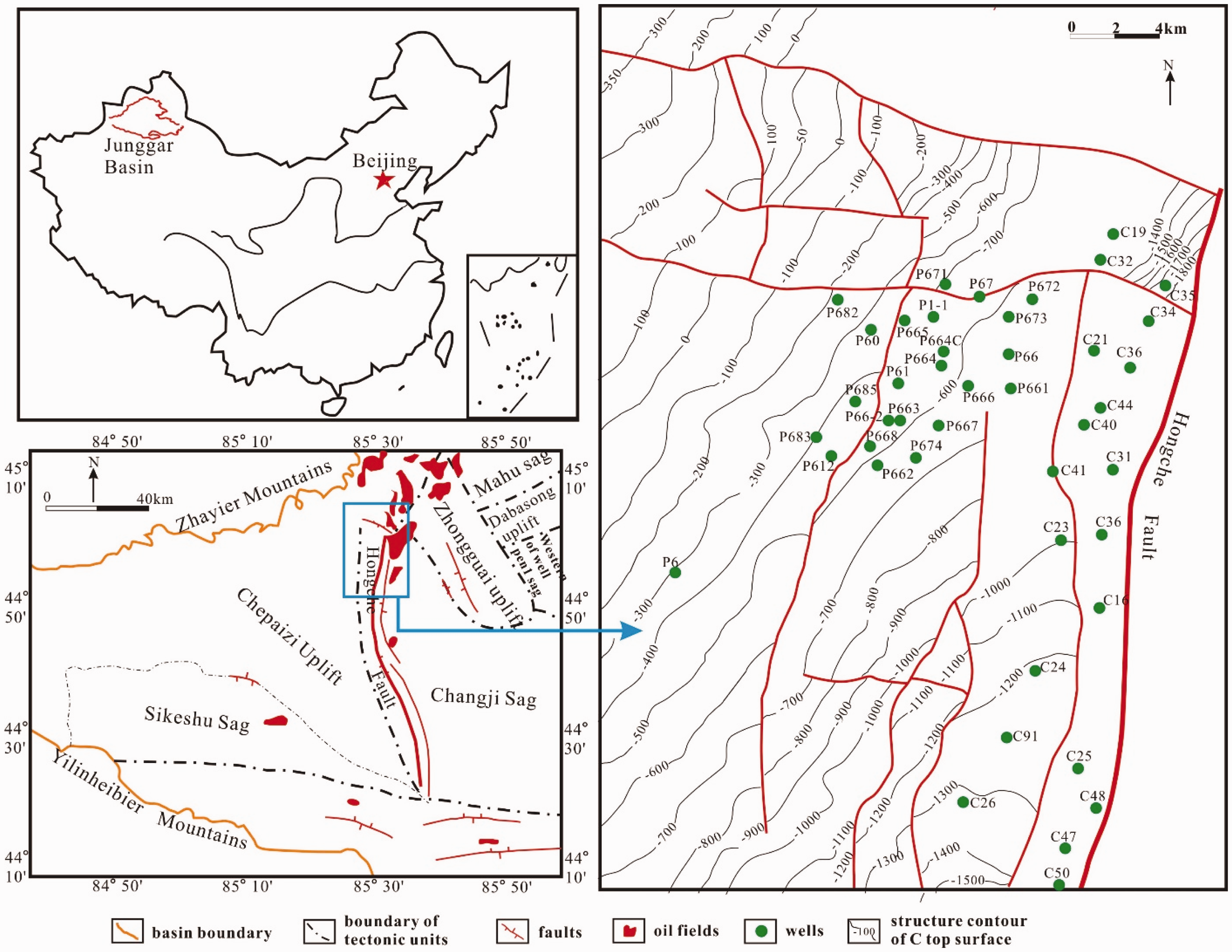
Map showing the locality of the study area with sample locations identified. Junggar Basin and Chepaizi Uplift are shown in (a) and (b), respectively.
The fluids occurring in Chepaizi area range from light condensates to normal black and heavy oils. The source of the petroleum, however, has always been a controversial issue due to the severe secondary alteration of the oils and the possible contribution of two surrounding generative source kitchens (the Changji Sag to the east and the Sikeshu Sag to the south). Based on the correlation of n-alkanes, isoprenoids, steranes, triterpanes, and stable carbon isotopes, the heavy oils discovered in the Jurassic, Cretaceous, and Neogene reservoirs in the western Chepaizi Uplift were proposed to be blends of an early severely biodegraded oil derived from the Permian source rocks in the Changji Sag, and a later charge of fresh oil from the Jurassic source rocks in the Changji Sag (Wang et al., 2010; Zhang et al., 2012, 2014), while those oils in corresponding intervals in the eastern Chepaizi Uplift were only from the Permian source rocks in the Changji Sag (Xiao et al., 2014a). However, the light oils in the western Chepaizi Uplift were considered as the mixture of oils originated from the Jurassic and Cretaceous source intervals in the Sikeshu Sag (Liu et al., 2011; Zhang et al., 2012, 2014), only from the Jurassic source rock (Li et al., 2011a), or mainly contributed by the highly mature Permian source rock mixed with trace amounts of Cretaceous bitumen during migration through the investigation of methyldiamantane and methylphenanthrene maturity parameters (Zhang et al., 2013). These origins are further supported by the investigation of the conflict sterane and aromatic maturity parameters in Neogene light oils in the Hongche Fault, eastern Chepaizi Uplift (Xiao et al., 2014b). The discovery of Carboniferous high-quality source rocks further complicated the source debate (Dong, 2015; Li et al., 2011b).
Presently, a hot debate regarding oil source is mainly focused on the Jurassic, Cretaceous, and Neogene oil-bearing intervals. With the increase in petroleum exploration, it is essential to improve our understanding of the potential Carboniferous oils in the eastern Chepaizi Uplift from that other intervals. We report here an investigation into the geochemistry of the Carboniferous oils through a systematic biomarker and isotope geochemical characterization of the 10 oils obtained from the well test, involving helpful and supplementary information from different perspectives.
Geological settings
Most of the Chepaizi Uplift lacks Permian, Triassic, and Jurassic deposits in stratigraphy, with Cretaceous, Paleogene, and Neogene sediments directly overlying Carboniferous bedrock (Xia and Jin, 2003). The Chepaizi Uplift in the northwest margin of Junggar Basin, an inherited palaeohigh formed in the early stage of late Hercynian tectonic movement (Xiao et al., 2014b), is bound by the Zhayier Mountain to the northwest, the Sikeshu Sag to the south, and the Hongche Fault to the east, which extends to the Changji Sag and Zhongguai Uplift eastwards (Figure 1).
The present-day structure of the Chepaizi Uplift is a consequence of Late Carboniferous deformation (Sui, 2015). In the late Carboniferous, the folding belt in the northwestern Junggar Basin was upthrown continuously and napped toward the southwest. Due to the obstruction of the north Tianshan Mountain range, the southwest part of the Chepaizi area strongly uplifted to form the Chepaizi Uplift. Meanwhile, the Hongche Fault developed under the intense eastward compression and thrusting. Subsequently, during the periods of late Hercynian, Indosinian and early–middle Yanshanian movements, the Chepaizi Uplift had been upthrown intensely and continuously, leading to the lack of Permian, Triassic, and Jurassic deposits. However, thin Triassic and Jurassic sediments were deposited in several small faulted sags developed during the Indosinian and Yanshanian movements in the Chepaizi Uplift. In the early Cretaceous, the Chepaizi Uplift subsided slowly and differentially, depositing thin lower–middle parts of lower Cretaceous sediments in the east and southeast areas but lacking these deposits in the northwest. After the Neogene period, the Chepaizi Uplift was yet again characterized by slow but prominent subsidence, with only the small-scale Neogene Ziniquanzi and Anjihaihe Formations depositing in the southeast. From the Neogene to the Quaternary period, the Chepaizi Uplift entered into a fast subsiding stage, depositing the thick Taxihe, Dushazi Formation, and Quaternary system (He et al., 2008;Song et al., 2016; Xia and Jin, 2003).
Petroleum occurs in the Carboniferous interval, which is composed mainly of basalt, andesite, tuff, and volcanic breccia. Multistage secondary reconstruction, such as weathering, leaching, dissolution, and fracturing processes, yielded good reservoir qualities for Carboniferous volcanic rocks (Meng et al., 2016). Prominent faults were developed in the Chepaizi Uplift, including three intersected reverse faults in the eastern, center, and northern parts, that is, the P61 fault, P61 south fault, and P1–1 fault, respectively, which control the oil–water contact and pressure system of the petroleum reservoirs (Zhao et al., 2015). The faults interconnected with the unconformities and carriers, and affected the migration orientation and pathway, constraining the distribution of petroleum here.
Samples and experimental
Sample preparation
Nine DST oil samples from the Carboniferous volcanic interval were collected from wells in the eastern Chepaizi Uplift for geochemical analysis. One additional sample was collected from the western Chepaizi Uplift. Four sets of potential source rocks were investigated to correlate with those Carboniferous oils.
Asphaltenes were removed from the oil samples and source rocks using n-hexane precipitation, and the deasphaltened oil was divided into two aliquots. The first of these underwent column chromatography using a routine silica gel and alumina column from which aliphatic and aromatic fractions were obtained using n-hexane and dichloromethane (DCM).
Gas chromatography–mass spectrometry
Gas chromatography–mass spectrometry (GC–MS) analysis of the aliphatic and aromatic fractions was performed with a Finnigan Model SSQ-710 quadrupole analytical system coupled to a DB-5 fused silica column (30 m × 0.32 mm i.d.) and linked to an IAIS data-processing system. GC temperature operating conditions for the aliphatic fraction were: 100°C (1 min) to 220°C at 4°C/min and, then to 300°C (held 5 min) at 2°C/min; for the aromatic fraction: 80°C (1 min) to 300°C (held 15 min) at 3°C/min; for the pyrrolic nitrogen compounds: 35–120°C (5 min) at 2°C/min and then to 310°C (held 15 min) at 3°C/min. MS conditions were: electron impact (EI) ionization mode; 70-eV electron energy; 300-µA emission current; and 50–550 amu/s scan range.
Carbon isotopic analysis of the bulk fractions
Carbon isotopic analysis of the bulk fractions and whole oils was carried out on a FLASH, 2000 EA-MAT 253 IRMS. The stable carbon isotopic compositions were calculated by the integration of the masses 44, 45, and 46 ion current counts of the CO2 peaks produced by the combustion (copper oxide reaction furnace at 980°C) of samples. A CO2 reference gas with a known δ13C value was pulsed into the mass spectrometer. The average values of at least two runs for each sample were recorded and only results with a standard deviation of less than 0.1‰ were reported.
Results
Oil bulk compositions
The Carboniferous oils from the eastern Chepaizi Uplift are characterized by high oil density (0.9285–0.9590g/cm3) and viscosity (154–8968 mPa·s), so they can be classified as heavy crude oils (Table 1). The sulfur and wax contents are relatively low with ranges of 0.06–0.20% and 0.65–8.09%, respectively (Table 1). The Carboniferous oils are predominantly aliphatic, as indicated by their saturate/aromatic (ST/AR) ratio (1.92–3.56) and saturate fraction abundance (44.45–64.38%). The oil density correlates exponentially with the viscosity, positively with the NSO (resin+asphaltene) fraction abundance, and negatively with the burial depth. The Carboniferous oil from well P70 in the western Chepaizi Uplift, by contrast, exhibited a lighter oil density (0.919 g/cm3) and viscosity (38.5 mPa·s), but similar saturate (59.94%) and NSO fractional abundances (27.78%). Progressive biodegradation of crude oils may be responsible, as it decreases the content of saturate and aromatic hydrocarbons and enriches the resins and asphaltenes, resulting in an increase of oil density (Chang et al., 2016, 2017; Larter et al., 2003; López et al., 2015; Wenger et al., 2002).
Bulk compositions of crude oils from Chepaizi Uplift.
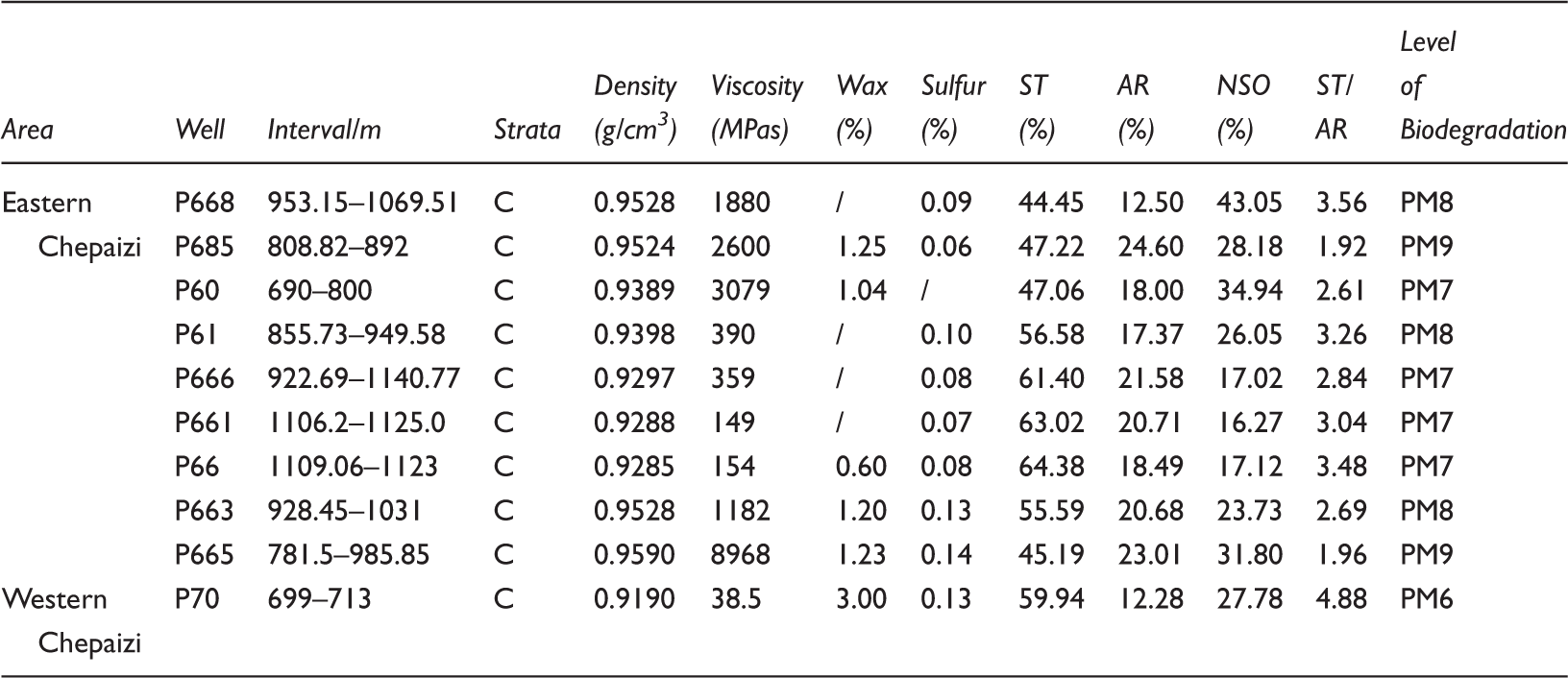
ST: saturate hydrocarbon; AR: aromatic hydrocarbon; NSO: resin + asphaltene; PM: biodegradation scale proposed by Peters and Moldowan (1993).
Molecular composition
n-alkane
The investigated Carboniferous oils from the eastern Chepaizi Uplift showed a dominant unsolved complex mixture (UCM) with a few detectable n-alkanes on the total ion chromatograms (TICs) chromatograms (Figure 2), suggesting a severe alteration by biodegradation. However, the Carboniferous oil obtained from the western well P70 featured intact n-alkanes with evident UCM on the chromatogram (Figure 2), possibly indicating episodic oil charges, where a reservoir was charged and biodegraded and then recharged with fresh oil (Chang et al., 2013a, 2013b; Peters et al., 2005; Volkman et al., 1983a).
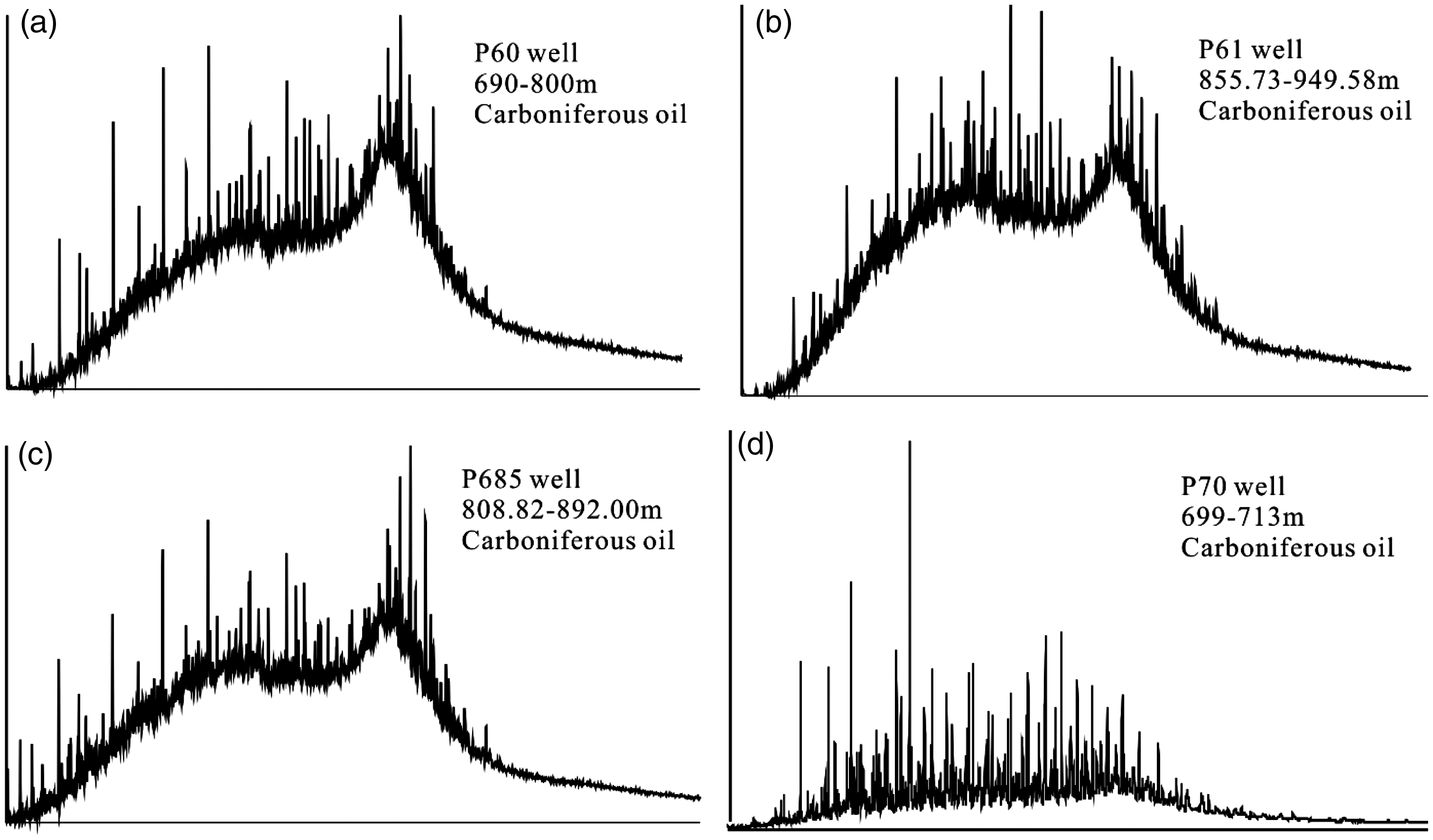
Representative saturated fraction total ion chromatograms (TIC) of Carboniferous oils from Chepaizi Uplift showing evident base line “humps” with a few detectable n-alkanes ((a)–(c)) and intact n-alkanes (d).
Terpanes
For most of the Carboniferous oils from the eastern Chepaizi Uplift, the m/z 191 mass chromatograms were dominated by tricyclic terpanes (TTs) and trace amounts of hopanes with the C21TT or C23TT as the peak compounds (Figure 3), suggesting a selective biodegradation or high thermal maturation (Cheng et al., 2016; Peters et al., 2005; Seifert and Moldowan, 1979). However, two exceptional oil samples (P665 and P685) contained trace amounts of both TTs and hopanes with 25-norhopane and gammacerane as the peak compounds (m/z 191). Here, not only were the hopanes heavily reduced but also the more biodegradation-resistant TTs were reduced (Figure 3), implying a biodegradation rank at least higher than PM8 (Peters et al., 2005). The oil from well P70 in the western Chepaizi Uplift, by contrast, showed a common terpane distribution, indicating a lighter alteration than the eastern oils.
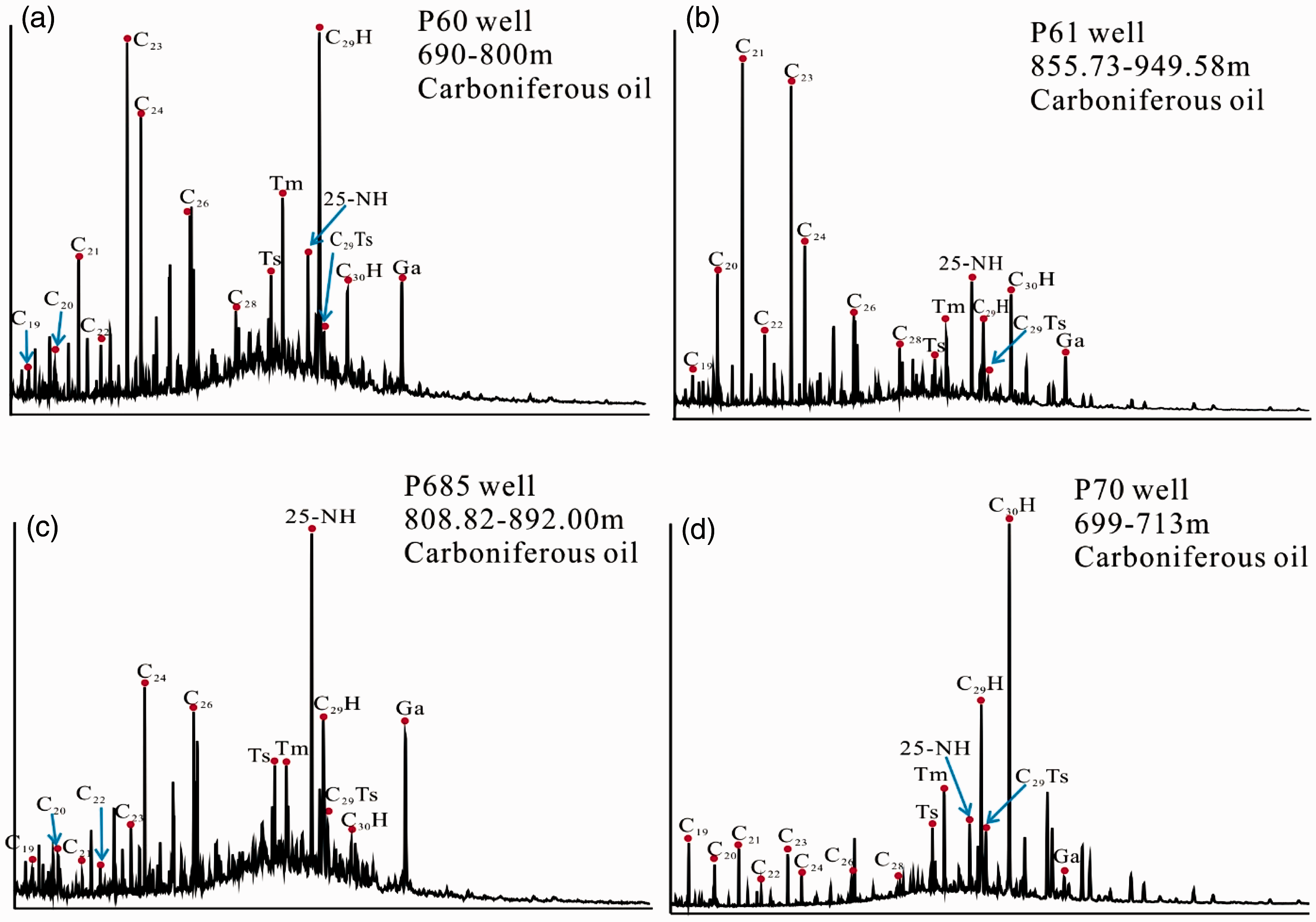
Representative saturated fraction mass chromatograms (m/z 191) of Carboniferous oils from Chepaizi Uplift showing terpanes distributions.
Ratios of various TTs by carbon number can be used to distinguish marine, carbonate, lacustrine, paralic, coal/resin, and evaporate oils (Peters et al., 2005). In the cross plot of C22TT/C21TT versus C24TT/C23TT, most oils are closely clustered in the range of a typical lacustrine environment (Table 2, Figure 4(a)), and well separated from carbonate and marl by high C22TT/C21TT (0.20–0.35) and C24TT/C23TT (0.43–0.76). Similarly, two exceptional P685 and P665 oils scattered beyond all the group ranges proposed by Peters et al. (2005) for their much higher C22TT/C21TT (0.52–0.56) and C24TT/C23TT (2.58–2.99), confirming a more severe biodegradation, which selectively depleted the TTs with different carbon numbers.
Molecular parameters and stable carbon isotope for crude oil of Chepaizi Uplift.
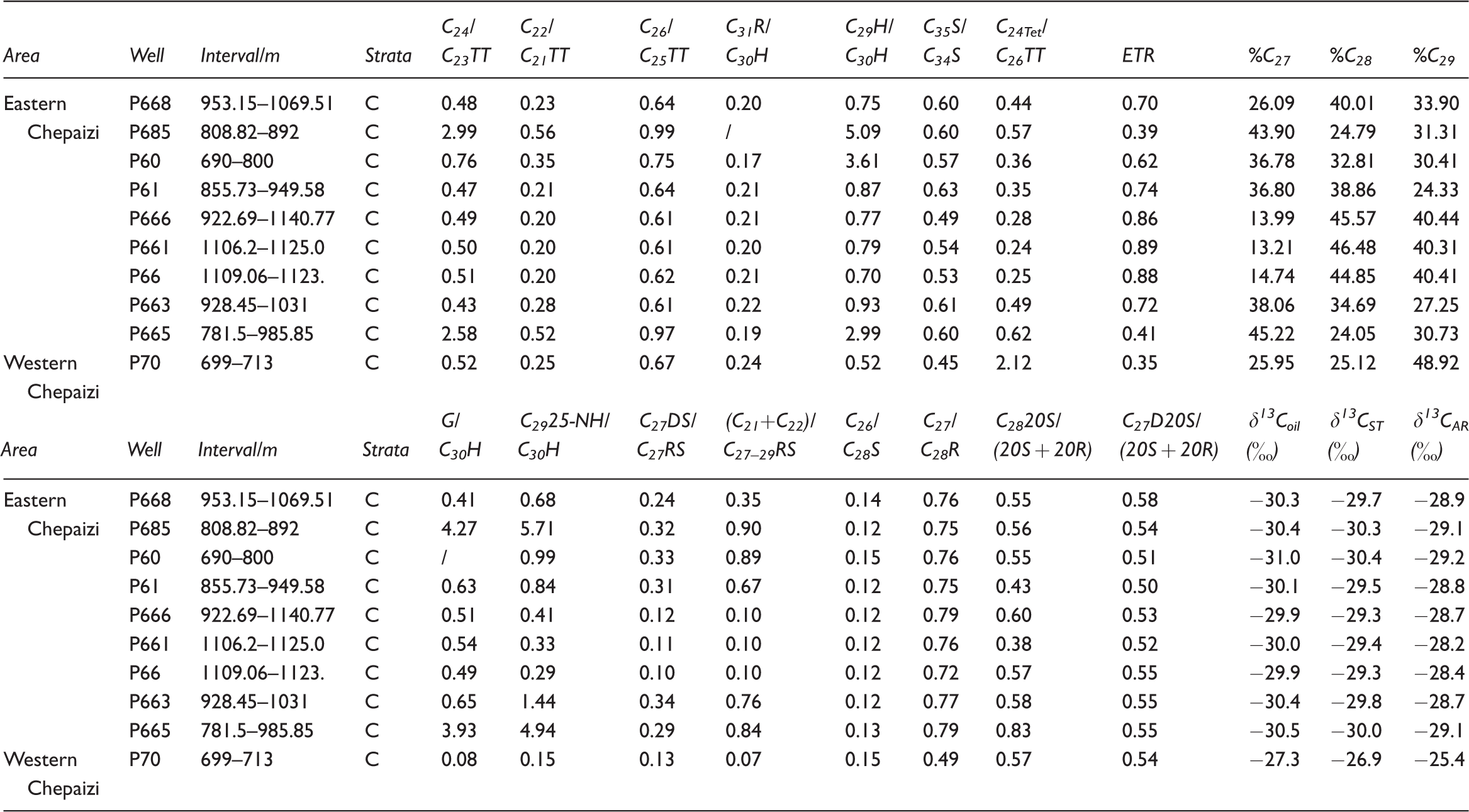
TT: tricyclic terpane; Tet: tetracyclic terpane; C31R/C30: C31 homohopane(20R)/C30 hopane; C29H/C30H: C29hopane/C30 hopane; C35S/C34S: C35 homohopane(22S)/C34 homohopane(22S); ETR: (C28 + C29)(C28 + C29 + Ts); Ts = C2718α(H)-22,29,30-trinorhopane; %C27, %C28, %C29: normalized relative abundance of C27, C28, and C29 regular steranes based on αββisomers, respectively; G/C30H: gammacerane/C30hopane; C2925-NH/C30H: C2925-norhopane/C30hopane; C27DS/C27RS: C27 diasterane/C27 regular sterane; (C21 + C22)/C27–29RS: (C21pregnane + C22 homopregnane)/(C27 + C28 + C29) regular sterane; C26/C28S: C26triaromatic steroid (20S)/C28 triaromatic steroid (20S); C27/C28R: C27 triaromatic steroid (20R)/C28 triaromatic steroid(20R); C2620S/(20S + 20R): C26 triaromatic steroid 20S/(20S + 20R); C27DS20S/(20S + 20R): C27 diasterane 20S/(20S + 20R); ST: saturate hydrocarbon; AR: aromatic hydrocarbon.
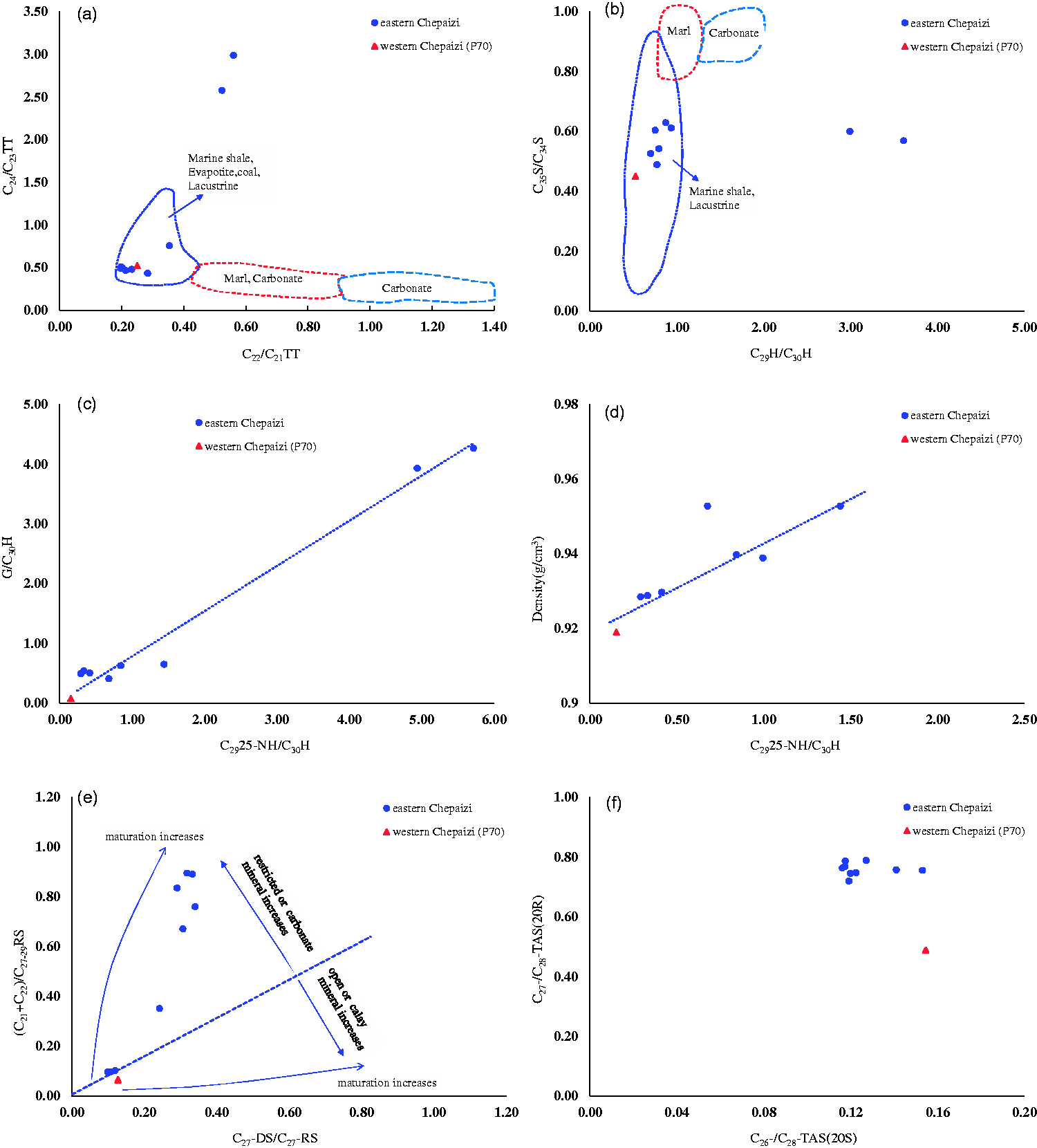
Cross plots of molecular parameters to diagnose the source facies ((a)–(d)), define the effect of biodegradation on oil density (f) and molecular composition (e) and distinguish depositional environment for the source rock ((g)–(h)).
The 17α(H)-norhopane/17α(H)-hopane (C29H/C30H) and C35 homohopane (22S)/C34 homohopane (22S) (C35S/C34S) ratios can be used in tandem to define the source facies of the oil (Peters et al., 2005). The former is relatively high in carbonate and evaporite sourced oils and lower for shale sourced oils (Clark and Philp, 1987; Connan et al., 1986; Fan et al., 1987; ten Haven et al., 1988), while the latter is high in anoxic conditions. Most Carboniferous oils in the Chepaizi Uplift are clustered in the lacustrine range, but the slightly higher C29H/C30H and C35S/C34S values were observed for the eastern oils (Table 2, Figure 4(b)), implying a stronger reduced anoxic facies. Due to the heavy depletion of C30H, the two exceptional Carboniferous oils (P685 and P665) exhibited abnormally high values of C29H/C30H (2.99–5.09).
High gammacerane is suggestive of a stratified water column in marine and nonmarine source rock depositional environments (Sinninghe Damste et al., 1995), commonly resulting from hypersalinity at depth. The ratios of gammacerane/C30 hopane (G/C30H) for most Carboniferous oils from the eastern Chepaizi Uplift were higher (0.41–0.65) than those of the western oil (0.08), suggesting a highly reducing, hypersaline condition during source rock deposition (Fu et al., 1986; Moldowan et al., 1985). Oils from well P685 and P665 were exceptional to the above and feature high abundances of gammacerane (Figures 3 and 4(c)) far exceeding the hopanes in the terpane distribution as indicated by the high value of G/C30H (3.93–4.27). As a non-hopanoid triterpane, gammacerane is highly bioresistant (Peters et al., 2005), which is stronger than the hopanes, even beyond the point where the TTs have been removed (Wenger and Isaksen, 2002). The enriched gammacerane further confirms the causative role of severe biodegradation for all these exceptions.
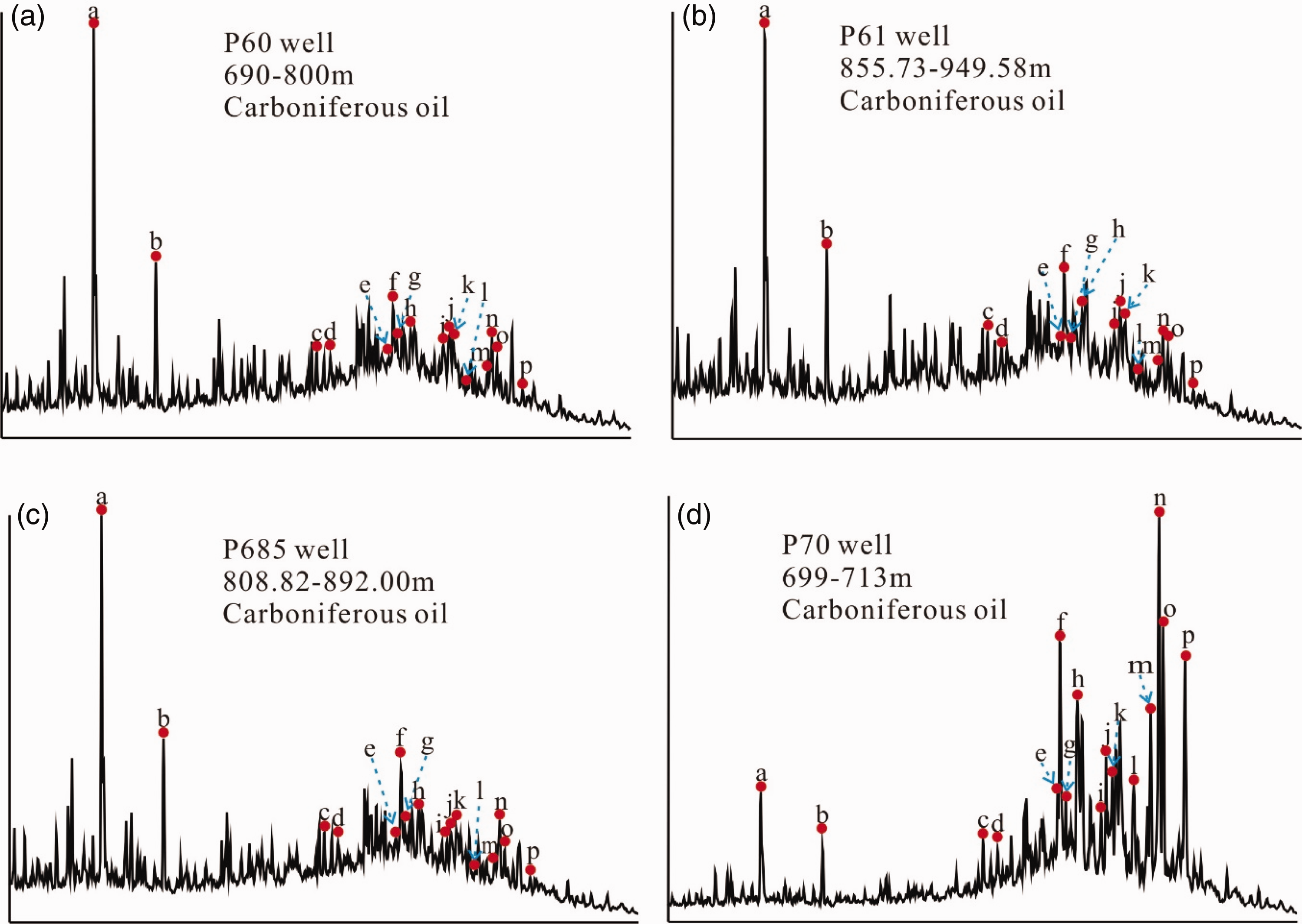
25-Norhopanes. Although the origin of 25-norhopanes is controversial (Peters et al., 1996, 2005; Seifert and Moldowan, 1979), the full C28–C34 pseudohomologous series is typically found in degraded oils (Bennett et al., 2006). The presence of 25-norhopanes at high levels compared to hopanes was observed in the Carboniferous oil from the Chepaizi Uplift, even as the peak compounds in P685 and P665 oils. The distribution of 25-norhopanes here consisted of a fully developed series of C29–C34 25-norhopanes with the 28,30-dinorhopane (Figure 5), which were consistent with many highly biodegraded oils (Alexander et al., 1983; Bennett et al., 2006; Chang et al., 2012; Chen et al., 2016; Peters and Moldowan, 1991; Peters et al., 1996; Seifert and Moldowan, 1979; Volkman et al., 1983a, 1983b; Wang et al., 2013). The C2925-norhopane/C30 hopane (C2925-NH/C30H) for the eastern Chepaizi Carboniferous oils was higher (0.29–5.71) than that for the western one (0.15), indicating a different degree of biodegradation.
Representative saturated fraction mass chromatograms (m/z 177) of Carboniferous oils from Chepaizi Uplift showing fully developed 25-norhopane series.
The C2925-NH/C30H values show positive correlations with the oil density (Figure 4(d)) and G/C30H (Figure 4(c)). The greater the C2925-NH/C30H values, the heavier the oil density and the greater the G/C30H values (Table 2), which further evidenced the influence of biodegradation on the oil bulk compositions and molecular distribution. It was the much higher biodegradation rank for the P685 and P665 oils, as indicated by the extremely high C2925-NH/C30H (4.94–5.71) and G/C30H (3.93–4.27) values, that was responsible for the scattering of these two oils in the above cross plots.
Steranes
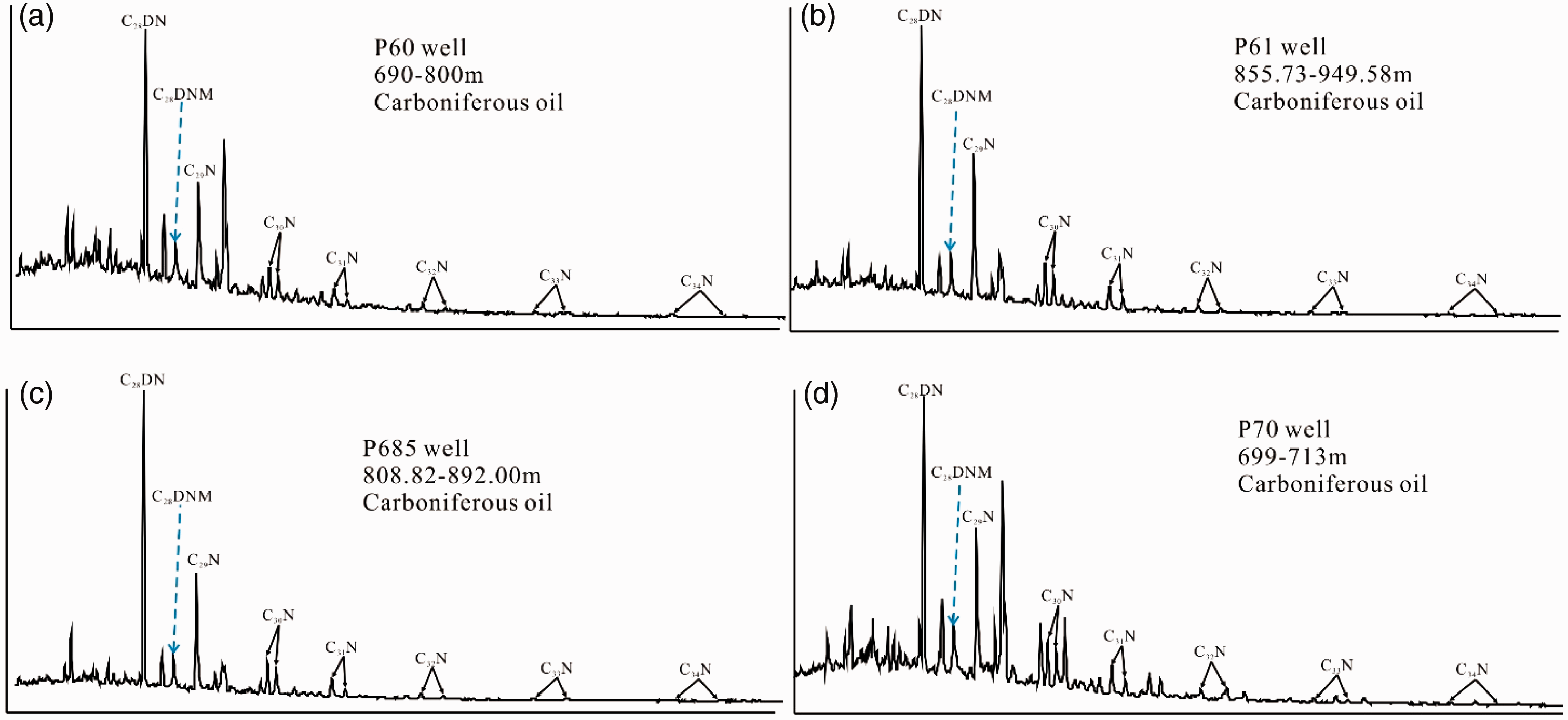
The distinctive characteristic of sterane distribution was the abnormal abundances of pregnane and homopregnane for the eastern Chepaizi oils (Table 2, Figure 6), with (C21 + C22)pregnane/C27–29 regular sterane ratios ((C21 + C22)/C27–29RS) ranging from 0.10 to 0.90, higher than that for the western Chepaizi oil (0.07). Although the short-chain steranes have been used for maturity assessment (Requejo et al., 1994; Wingert and Pomerantz, 1986), there was little correlation between the ratio (C21 + C22)/C27–29RS and other maturity indicators (Hughes et al., 1995), indicating that the relative enrichment of C21 and C22 pregnanes in these oils (Figure 4(g)) reflected variations in the source facies. High relative abundances of these compounds diagnosed a restricted, clastic-starved depositional setting for the eastern oils (Requejo et al., 1997; Wang et al., 2015). The pregnane and homopregnane had a high resistance to biodegradation, comparable to the diasteranes (Peters et al., 2005). Allowing for high levels of biodegradation, the relative high abundances of pregnane and homopregnane here indicated a strong source dependence besides severe alterations.
Representative saturated fraction mass chromatograms (m/z 217) of Carboniferous oils from Chepaizi Uplift showing abnormal abundant pregnane and homopregnane for eastern area ((a)–(c)) and regular steranes for western area.
Large amounts of diasteranes relative to regular steranes in oils have been used as evidence for petroleum generation from shale (Rubinstein et al., 1975; Sieskind et al., 1979), whereas low concentrations of diasteranes have been used to indicate a clay-poor source rock (Mello et al., 1988a, b). The C27-diasterane/C27-sterane ratio (C27DS/C27RS) for the western Chepaizi Carboniferous oil was 0.13 (Table 2) and clearly showed an anoxic clastic-starved depositional environment. The eastern Chepaizi Carboniferous oils, by contrast, featured slightly higher C27DS/C27RS values (Table 2), implying the elimination of regular steranes by severe biodegradation as evidenced by their positive correlation with biodegradation levels.
Triaromatic steroids and triaromatic dinosteroids
Aromatized steroidal hydrocarbons remain unaltered in all but the most severely biodegraded oils (PM10), and as such are particularly useful biomarkers for determining correlations and thermal maturation (Peters et al., 2005). The Carboniferous oils from the eastern Chepaizi Uplift showed similar distributions of triaromatic steroids (TAS, m/z 231, Figure 7) and triaromatic dinosteroids (m/z 245), including low abundances of C20- and C21-TAS isomers with the C27-TAS as the peak compound, and trace triaromatic dinosteroids (Figure 8). However, the western Chepaizi oil was clearly distinguished from the eastern ones by its high abundances of C20- and C21-TAS with the C28-TAS as the peak compound, and enriched triaromatic dinosteroids, indicating differential source- related characteristics. The C26-/C28-TAS(20S) and C27-/C28-TAS(20R) for the Carboniferous oils from the eastern Chepaizi Uplift were 0.12–0.154 and 0.72–0.79, respectively (Table 2, Figure 4(h)), which were clearly distinguished from the western oil (0.15 and 0.49, respectively), implying hypersaline conditions during source rock deposition (Peters et al., 2005) consistent with the high G/C30H values.
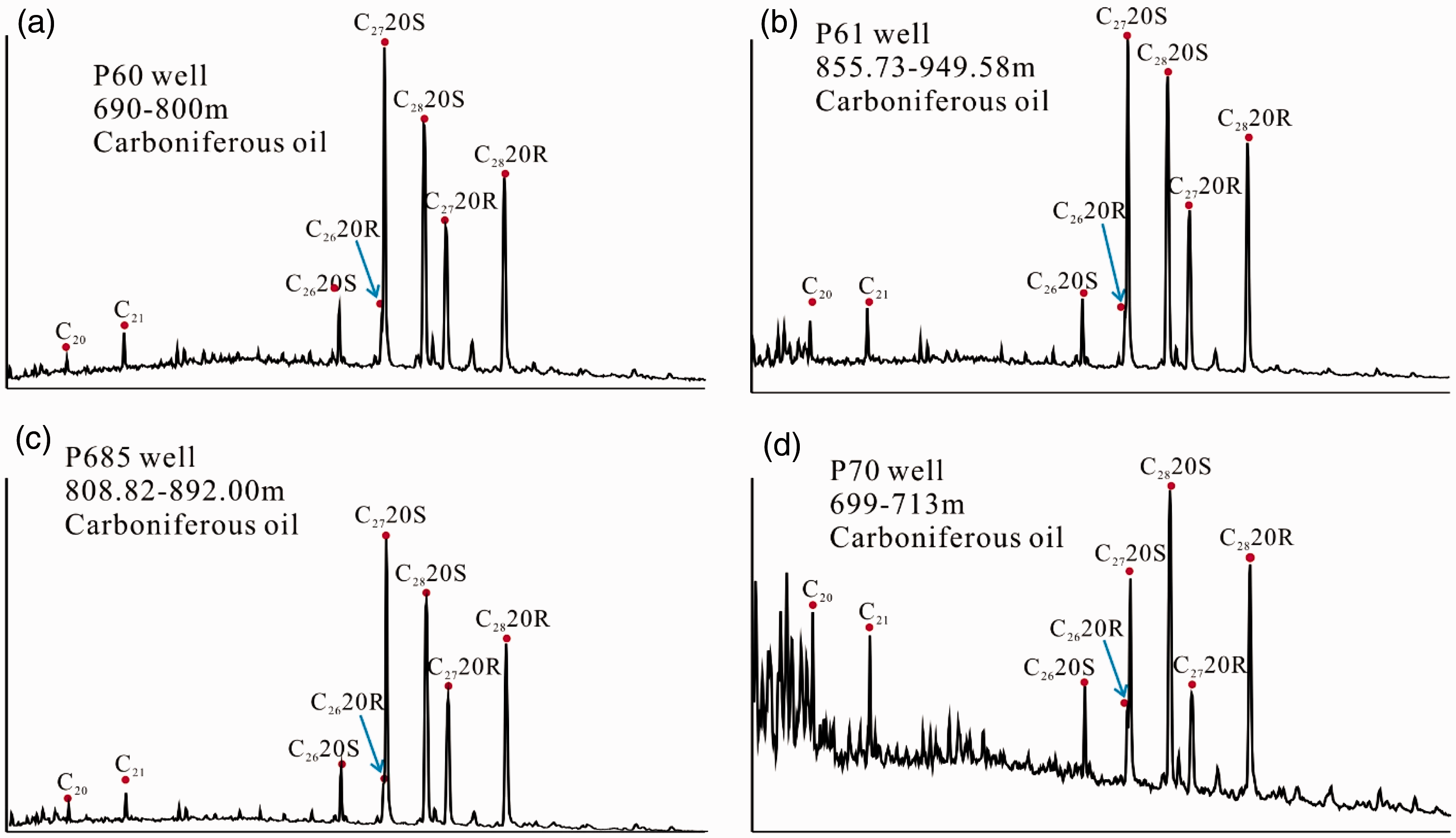
Representative saturated fraction mass chromatograms (m/z 231) of Carboniferous oils from Chepaizi Uplift showing the predominance of C27 triaromatic steroid (20S) for eastern area ((a)–(c)) and C28 triaromatic steroid (20S) for western area (d).
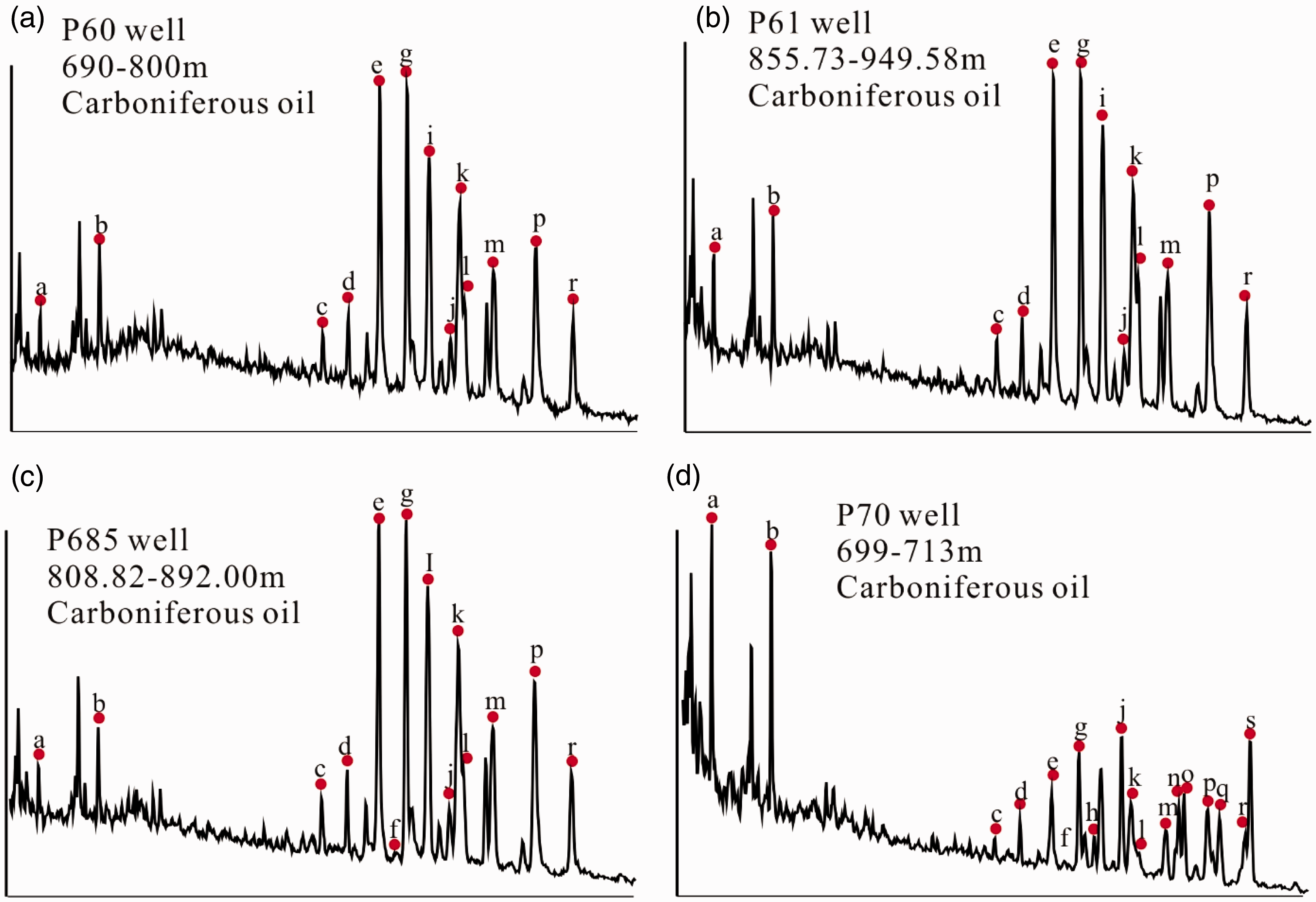
Representative saturated fraction mass chromatograms (m/z 245) of Carboniferous oils from Chepaizi Uplift showing substantial amounts of triaromatic dinosteroids (d) for western area and trace for eastern area ((a)–(c)).
Discussion
Oil family
An oil family is defined as a group of oils that originated from the same or very similar source rock, and is a term widely used in the studies of petroleum origins (Greene et al., 2004; Peters et al., 1994; Snowdon et al., 1998). Although the Carboniferous oils in the Chepaizi Uplift all exhibit the characteristics of lacustrine source facies, molecular parameters indicating the source input and redox potential of depositional environment were clearly different in the eastern and western parts, implying they belonged to two different oil families.
Level of biodegradation
Sufficient variations in oil composition allow the samples to be classified into four sequential levels of biodegradation (Table 1, Peters and Moldowan, 1993). Group 1 (P70) was biodegraded to the extent of having a significant UCM and fully developed 25-norhopanes (PM 6), while group 2 (P661, P66, P666, P60) showed predominant TTs far higher than hopanes besides the common occurrences of group 1(PM 7). Group 3 (P61, P663, P668) was further biodegraded with a peak compound of 25-norhopane in the terpanes distribution, with a high abundance of gammacerane far exceeding the C31 hopane, and pregnane and homopregnane far exceeding the regular steranes (PM8). In contrast, group 4 (P665, P685) showed the heaviest biodegradation of mostly depleted hopanes, TTs, pregnane, homopregnane, and regular steranes as indicated by the abnormally predominant diasteranes and gammacerane (PM 9).
Thermal maturity
Allowing for the biodegradation of higher than PM 6, the diasterane and TAS-related maturity parameters (C27-DS 20S/(20S + 20R), C28-TAS 20S/(20R + 20S)) can effectively define the petroleum thermal maturity here for their high bioresistance (Mackenzie et al., 1980, 1981; Peters et al., 2005; Yang et al., 2015). As for the eastern Chepaizi Carboniferous oils, the C27-DS 20S/(20S + 20R) value was 0.50–0.58, close to that of the western oil (0.51). This value nearly reaches its equilibrium of 0.6, suggesting a maturity of at least the onset of oil generation (Mackenzie et al., 1980), which is further supported by the C28-TAS 20S/(20R + 20S) values (0.38–0.60) (Table 2).
Oil-source correlation
It has been widely recognized that the two hydrocarbon generating sources, namely the Sikeshu Sag and the Changji Sag around the Chepaizi Uplift, are the main source contributors (Cao et al., 2005, 2006, 2012; Chen et al., 2016b, 2016c; Wang and Kang, 1999, 2001). The Jurassic Badaowang Formation (J1b) mudstone in the Sikeshu Sag, which was deposited in fairly fresh lacustrine environments, contains an average of 2.06% TOC and dominant type I and type II kerogen with a maturity of 0.5–0.8%Ro, showing high oil generating potential (Zhang et al., 2012). However, the Cretaceous and Paleogene mudstones show poor oil-generating potential for their lower thermal maturity, though they contain high TOC and excellent kerogen types (Zhang et al., 2012). The mudstones of the Lower Permian Jiamuhe Formation (P1j) in the Changji Sag show limited oil-generation potential for its low contents of TOC, “A,” “HC,” and PG (Chen et al., 2016; Wang and Kang, 1999, 2001). The dark shales of Lower Permian Fengcheng Formation (P1f) in the Changji Sag, which were deposited in a lagoon environment (Cao et al., 2010, 2012), feature an average of 1.5% TOC, type I and II kerogen as indicated by fungus and algae, and a high maturity of 0.8–1.60%Ro (Wang and Kang, 1999, 2001), showing high oil-generating potential. The Middle Permian Wuerhe (P2w) mudstones are characterized by relatively low TOC (0.7–2.2%), type II and type III kerogen and moderate–high maturity (0.8–1.5% Ro) (Wang et al., 2000, 2001) with medium–high oil-generating potential. The P1f and P2w source intervals were considered as the main source contributors for the oils discovered in the northwestern margin of the Junggar Basin (Cao et al., 2005, 2006, 2012; Chen et al., 2016a, 2016b, 2016c; Wang and Kang, 1999, 2001), which were indicative of relatively fresh-water and saline water lacustrine environments, respectively (Chen et al., 2016; Wang and Kang, 1999, 2001). In addition, Dong (2015) determined a medium oil-generating potential for the Carboniferous mudstone in the Chepaizi Uplift through pyrolysis evaluation, as indicated by 0.50–3.0%TOC, type II2 and III kerogen and a moderate maturity of 0.8–1.0%Ro.
The distribution of TTs is indicative of source facies (Peters et al., 2005). The P2w and Carboniferous source rock extracts contain lower (C19 + C20)TT/(C23 + C24)TT (0.53–1.01, 0.25–0.97) and C19TT/C21TT (0.07–0.27, 0.14–0.31) than those from the Jurassic source rock extracts (1.12–3.50, 0.59–2.33), indicating a smaller contribution of terrigenous organic matter. The Carboniferous oils from the eastern Chapaizi Uplift cluster in the P2w and Carboniferous source rock group, suggesting a similar source and close genetic relationships (Figure 9(a) and (b)). However, the western oil clusters together with the Jurassic source rock group and shows a good correlation (Figure 9(a) and (b)).
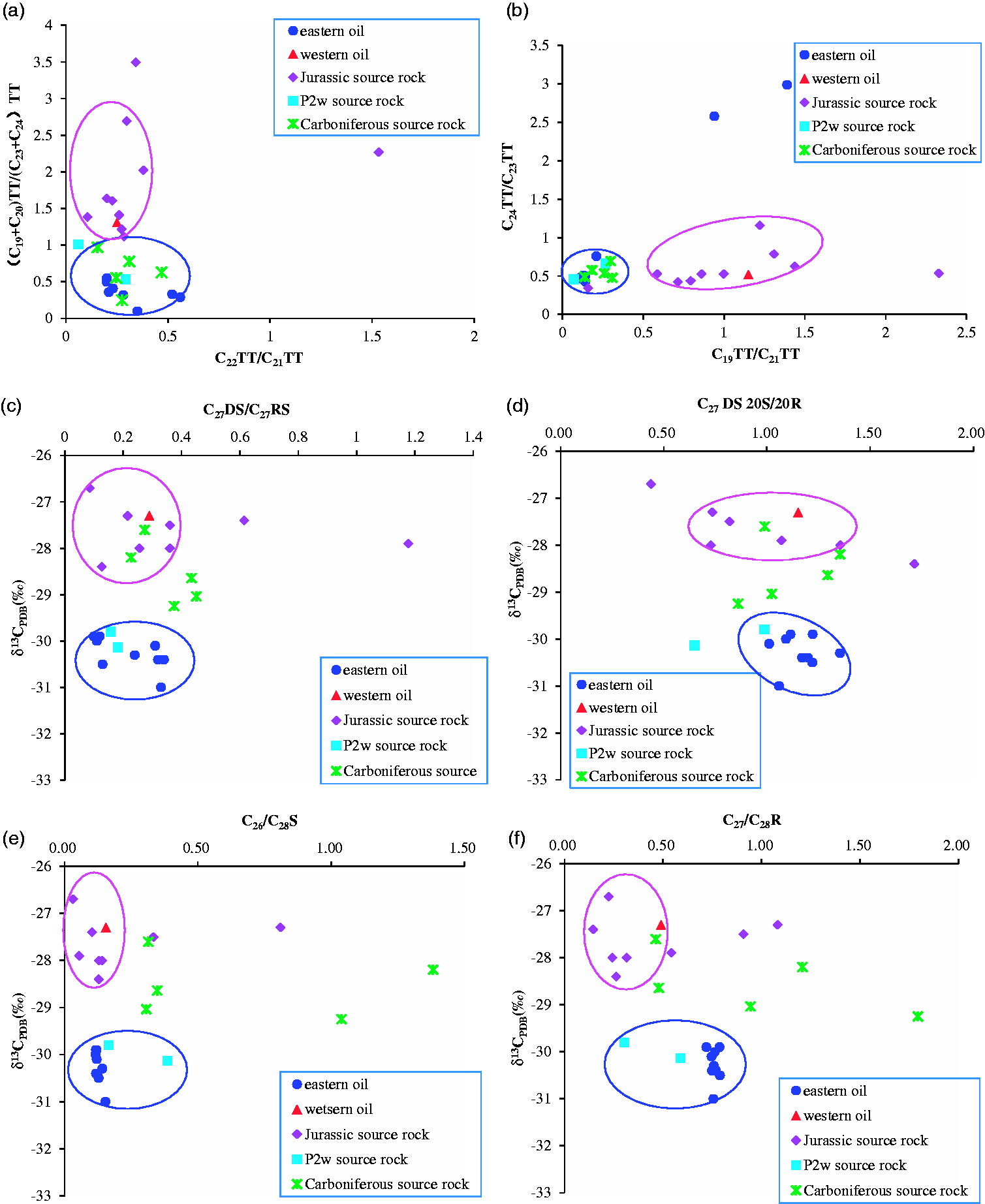
Cross plots of TTs source-related molecular parameters ((a) and (b)) and stable carbon isotope coupled with diasterane and triaromatic steroid ratios ((c)–(f)) to correlate oil-source.
The Jurassic source rocks are more 13C enriched compared to the P2w and Carboniferous ones. Stable carbon isotope values of the oil extracts for the Jurassic source rocks were heavier (−26.70 to −28.40‰) than those for the Carboniferous (−27.60 to −29.25‰), and P2w ones (−28.99 to −32.50‰) due to the different thermal evolution and source depositional environments. Coupled with the C27DS 20S/20R, C27DS/C27RS, C26-/C28-TAS(20S), and C27-/C28-TAS(20R), the stable carbon isotope distribution of the whole oil could clearly distinguish the lighter eastern oils (−29.30 to −30.4‰) from the heavier western one (−26.9‰), which cluster them closely with the P2w and Jurassic source rocks respectively (Figure 9(c) to (f)), implying a different genetic affinity.
Conclusions
The geochemical characteristics of the Carboniferous oils from the Chepaizi Uplift suggested generation from lacustrine source rocks. Both of the Carboniferous oils were generated by organic matter at the onset oil generation stage and severely biodegraded at least above rank 6. However, the eastern oils infer more saline and stronger reducing conditions of restricted clay starved source facies than is the case for the western one. The P2w potential source rocks are responsible for the eastern oils, possibly mixed with a smaller contribution from the locally occurred Carboniferous source rocks. In contrast, the western oil was discriminated from the eastern oils and originated from the Jurassic source rocks.
Footnotes
Acknowledgement
Associate Editor Dr. Cao Jian and two anonymous reviewers were greatly acknowledged for their constructive comments. We also thank the Shengli Oil Company of Sinopec for approving the publication.
Declaration of conflicting interests
The author(s) declared no potential conflicts of interest with respect to the research, authorship, and/or publication of this article.
Funding
The author(s) disclosed receipt of the following financial support for the research, authorship, and/or publication of this article: This study was co-funded by the National Natural Science Foundation of China (Grant No. 41772120) and Shandong Province Natural Science Fund for Distinguished Young Scholars (Grant No. JQ201311).