




Abstract
The enrichment and geochemical significance of elements associated with Late Permian coals in Southwest China have always gained widespread interest in the field of coal geology. The present study focuses on the geochemical characterization of Late Permian coal in the Zhongliangshan mine. Twenty-three samples were collected from the K1a coal seam of the Zhongliangshan mine, and the major and trace elements in the coal were analyzed by using X-ray fluorescence spectroscopy (XRF) and inductively coupled plasma mass spectrometry. The composition of minerals in the Zhongliangshan coal, and the modes of occurrence of coal-associated elements, especially those with elevated contents, were studied through a combination of microscopic analyses, X-ray powder diffraction, and scanning electron microscope – energy dispersive X-ray spectrometer. The minerals in coal mainly consist of kaolinite, pyrite, calcite, and quartz, as well as small amount of gypsum and anatase. Compared with the average elemental concentrations in world coal, the Zhongliangshan coal is enriched in Cr, and slightly enriched in Li, U, Sr, V and Ag. Combining the correlation analysis and sequential chemical extraction experiments, it can be inferred that many trace elements in the Zhongliangshan coal have both inorganic and organic affinities. The elements Cr, Li, and V mainly occur in clay minerals, and also are related to organic matter in the coal. Uranium presents firstly in the organic and then silicate states. Strontium shows multiple modes of occurrence including carbonate, silicate, and exchangeable ion states, and Ag primarily occurs in sulfides followed by silicates. The terrigenous debris input from the Emeishan basalt is the major reason for the enrichment of above elements in the Zhongliangshan coal.
Introduction
Presently, much of the work done on coal-associated environmental protection and resource exploration is focused on trace elements in coals. High concentrations of economically important elements, such as Li, Ga, and rare earth elements and yttrium (REY), have been reported in Carboniferous coals from North China (e.g. Lin et al., 2013; Qin et al., 2015a, 2015b; Sun et al., 2012, 2016; Zhao et al., 2017). Recently, Late Permian coals in southwestern China have also become a topic of interest in coal geology and ore deposit research due to extremely enrichments of critical elements. For example, enrichments of REY and other economically important elements such as Nb, Ta, and Zr have been reported in the Zhina, Liuzhi, Huayingshan and Nantong Coalfields from southwest China (Chen et al., 2015; Li et al., 2016, 2017; Zhuang et al., 2012), and U, Mo, V, and Co in the Guiding and Moxinpo Coalfields (Dai et al., 2015, 2017; Liu et al., 2015). Furthermore, the discharge of harmful elements, including As, Hg, F, and Cr during the combustion process causes serious pollution to the environment, and this has also aroused the attention of many scholars (Duan et al., 2017; Finkelman et al., 1999; Zhao and Luo, 2017; Zheng et al., 2008).
The studies above have also focused on the modes of occurrence and enrichment mechanisms of trace elements in coals, which is of great significance for the clean utilization of coal, and the possible extraction of beneficial elements from coal or coal combustion byproduct. Generally, anomalously elevated concentrations of elements in the Late Permian coals are caused by various geological factors including terrigenous material input, marine influence and the effect of hydrothermal solutions. However, the content and occurrence of associated elements may vary widely among the Late Permian coals in southwestern China. For instance, among four coal beds investigated in the Zhina Coalfield, Li is found enriched only in one coal bed (Li et al., 2017). Zirconium, Nb, Hf and U are inferred mainly occurring in kaolinite in the Nantong coal (Chen et al., 2015), while existing in heavy minerals such as zircon in the Huayingshan coal (Zhuang et al., 2012). In order to provide more comprehensive information regarding to elements in the Late Permian coals in southwestern region of China, this study was conducted to analyze major and trace elements in coal from the Zhongliangshan (ZLS) coalfield, Chongqing, focusing on their content, distribution, modes of occurrence, and enrichment mechanism, especially for enriched elements including Cr, Li, U, Sr, V and Ag.
Geological setting
The ZLS mine is located 18 km from the center of Chongqing city, southwestern China (Figure 1). There are five coalfields in Chongqing, i.e. ZLS, Tianfu, Nantong, Songzao, and Yongrong. Paleogeographically, ZLS coalfield was surrounded by the Kangdian Oldland, Jiangnan Oldland, Dabashan Oldland, Hannan Oldland, and Longmenshan Island (Figure 1(d), Chen et al., 2015). The coal-bearing strata belong to the Late Permian Longtan formation, which is conformably underlain by the Late Permian Changxin formation and unconformably overlies the early Permian Maolou formation. The depositional environment of this coal seam was a continental-marine transitional area (Li et al., 2018; Zou et al., 2016). The coal-bearing thickness of the ZLS Longtan Formation ranges from 56.19 m to 79.16 m, with an average of 71.76 m and is mainly composed of light gray, gray, dark gray mudstones, siltstone, fine sandstone, limestone, and 10 coal seams. The Longtan formation is enriched in fern, brachiopods, bivalves, trilobite, cephalopods, and other fossils. Coal seams in ZLS mine are numbered K1–K10 from the top to bottom (K1 to K3 are partially shown in Figure 1(b)), and contained five minable coal seams in full area (K1–3, K5, and K9). The K1 coal seam lies at the top of the second section of the Longtan Formation and is separated into three independent layers (K1a, K1b and K1c) by two thick partings.
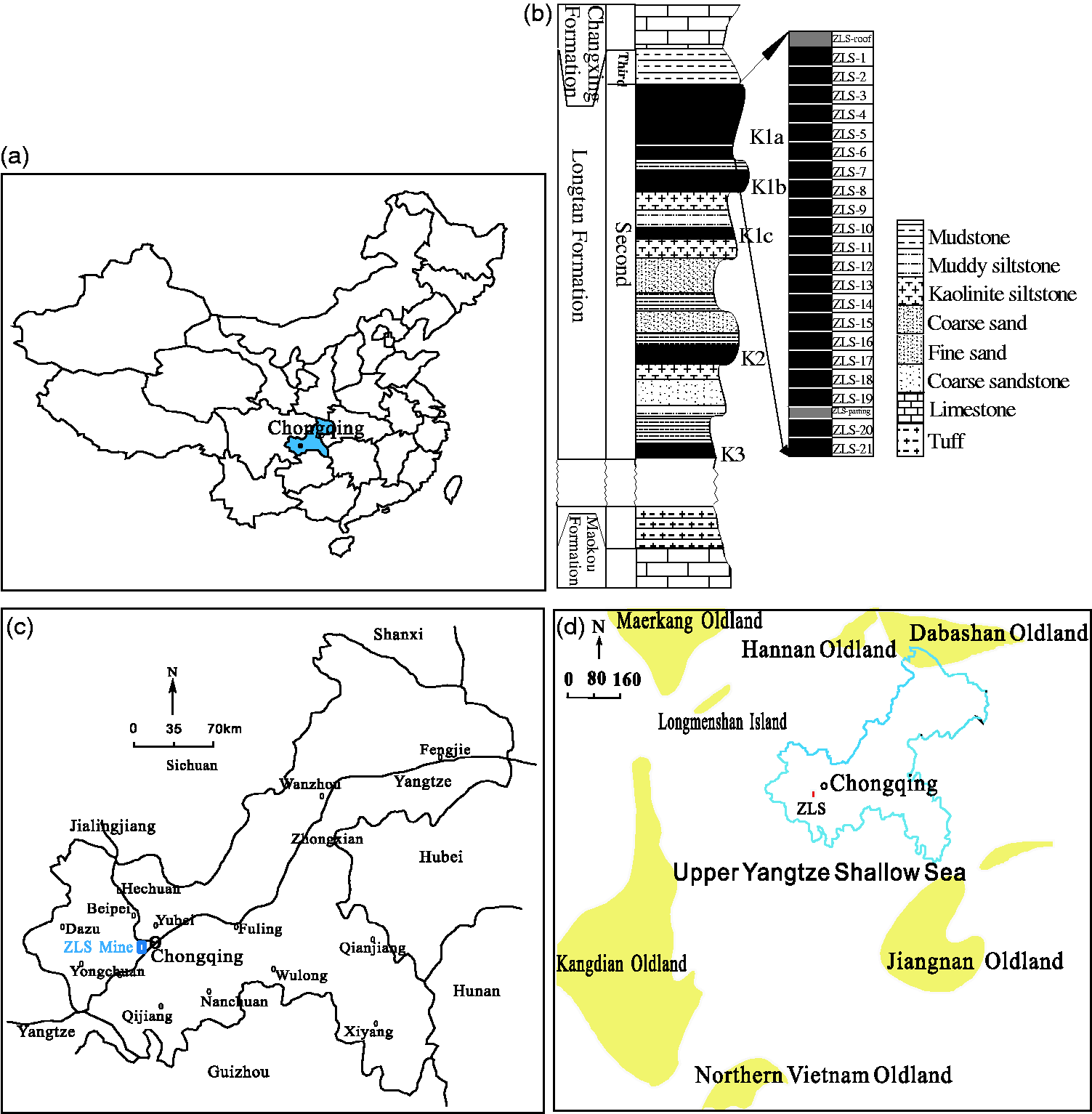
Locations of Chongqing (a), Stratigraphic column of part minable coal seam (b); ZLS mine location (c), and the paleogeography of ZLS coalfield (d). ZLS: Zhongliangshan.
Materials and analytical methods
Sample collection and preparation
A total of 23 samples, included 21 coal samples, 1 roof, and 1 parting, were collected from the K1a coal seam in the ZLS mine following the Chinese standard of coal and rock seam sampling method (GB482–2008), the position of the studied samples is shown in Figure 1(b). Samples were immediately sealed in clean plastic bags to prevent contamination and weathering. The coal, roof, and parting samples were named ZLS-1 to ZLS-21, ZLS-roof, and ZLS-parting, respectively. Samples were air dried under ventilation and pulverized to pass a 200-mesh screen (for digestion, XRD, XRF, and other experiments) and an 80-mesh screen (for petrographic analysis).
Analytical procedures
All analyses were performed in the Key Laboratory of Resource Exploration Research of Hebei Province.
The basic parameters of coal samples, including moisture, ash, volatile, fixed carbon, calorific value and total sulfur were determined.
The samples were ashed at 815°C for 8 h and then tableted. The oxides of 10 major elements were determined using the X-ray fluorescence spectrometer (XRF, Thermo Fisher Scientific ARL9800). The content of trace elements in each sample was determined by inductively coupled plasma mass spectrometry (ICP-MS, Thermo Elemental X-II), and as was determined by applying reaction cell technology to eliminate the influence of polyatomic ions.
Minerals in coal were detected and observed using a low-temperature oxygen plasma asher-X ray diffraction instrument (LTA-XRD, Quorum K1050X-D/Rigaku MAX2200PC), a polarizing microscope (Leica DM2500P), and a scanning electron microscopy-energy dispersive spectrum analysis (SEM-EDX, Hitachi SU8220). The powdered samples were ashed at low temperature of 120°C by LTA. XRD was carried out under the condition that recorded over a 2θ interval of 5–70°, with a step size of 0.02°. The working distance of the SEM-EDX was 8 mm, with a 20.0 kV accelerating voltage and a 5 μA beam current.
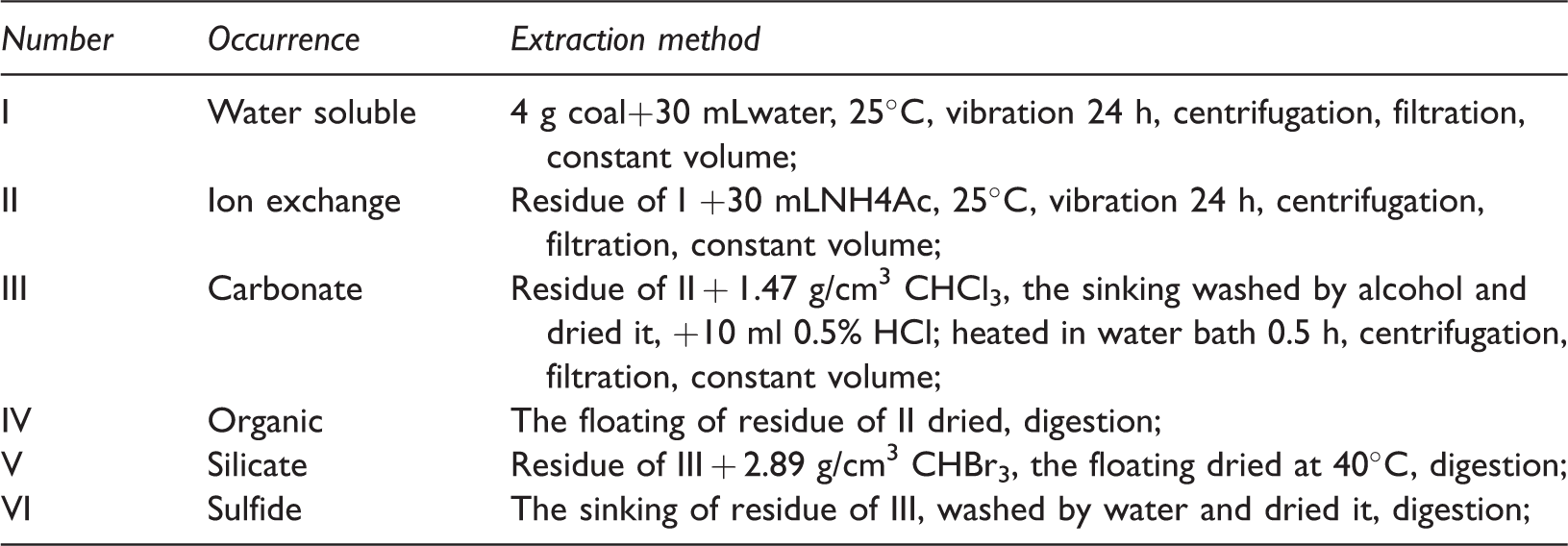
Sequential chemical extraction experiment (SCEE) was conducted to semi-quantitatively determine the occurrence of enriched elements. The detailed protocol is shown in Table 1, and six chemical occurrences were classified: water soluble, ion exchangeable, organic bonded, carbonate, silicate, and sulfide.
Sequential chemical extraction experiment for trace elements in the ZLS K1a coal.
ZLS: hongliangshan.
Results and discussion
Coal chemistry
The results of proximate analyses and sulfur and gross calorific value of K1a are shown in Table 2. According to MT/T 850, MT/T849, and GB/T 15224 (1, 2, 3), and MT/T 561, coal samples from ZLS mine have particularly low moisture content (0.88%, on average), a low volatile matter yield (19.74%, on average), low-medium ash on a dry basis (14.92%, on average), medium-high sulfur (2.61%, on average), with more inorganic than organic sulfur, medium fixed carbon (64.45%, on average), and high calorific value (29.62 kJ/kg, on average). The average content of total sulfur in ZLS K1a coal is 2.61%, which is close to that found in the adjacent Nantong and Songzao coalfields (Chen et al., 2015; Zhao et al., 2015). The sulfur content decreases gradually from the top to the mid layers, and gradually increases from the mid to the bottom layers.
Proximate and sulfur analyses for the ZLS K1a coal.
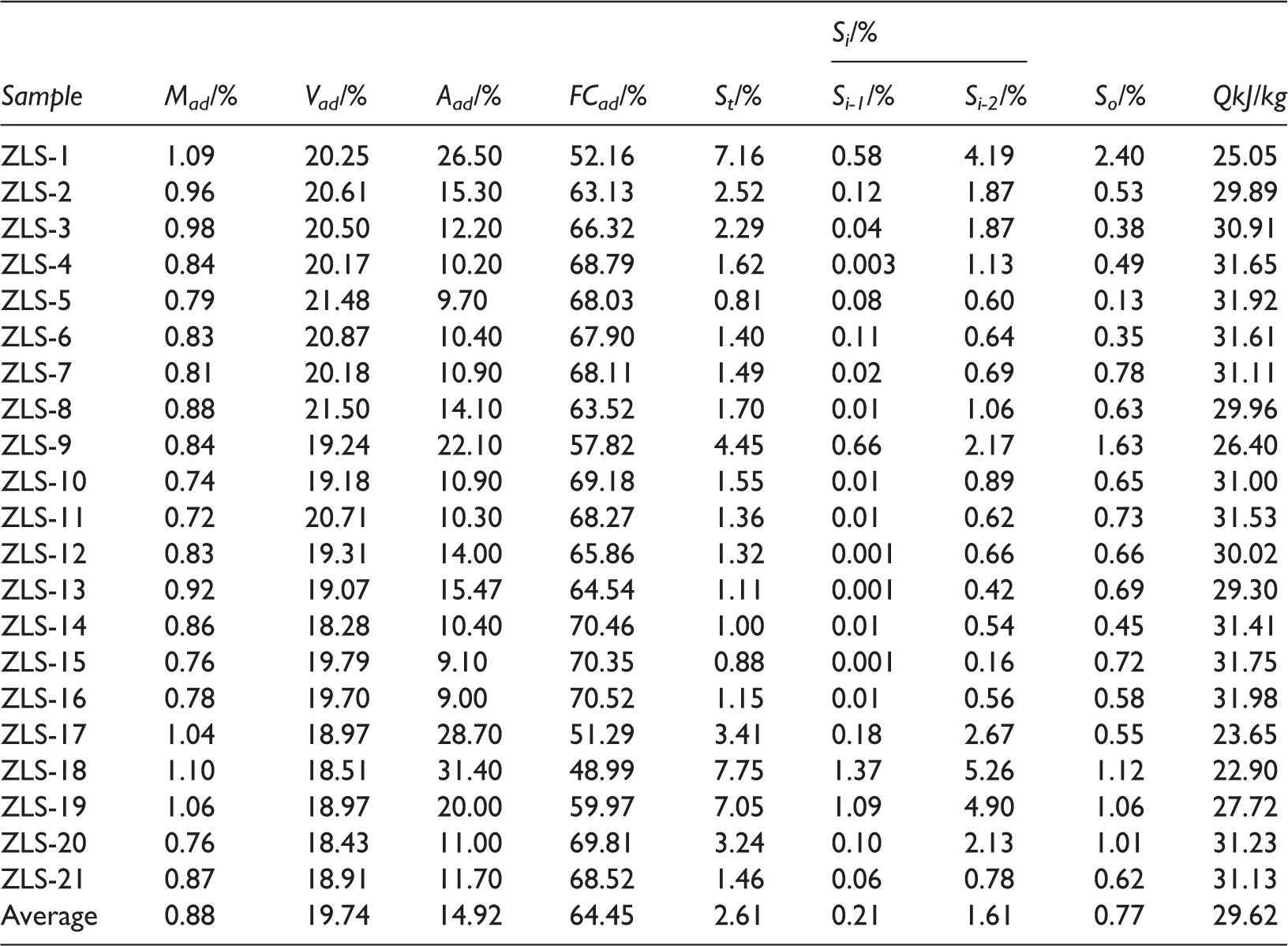
ad: air-dry-basis; M: moisture; V: volatile; A: ash yield; FC: fixed carbon; St: total sulfur; Si: inorganic sulfur; Si-1: sulfate sulfur; Si-2: pyrite sulfur; So: organic sulfur; Q: calorific value; ZLS: hongliangshan.
Abundance of associated elements
Major elements
The percentage of major elements (oxides) in coal ash from the ZLS K1a coal seam was measured by XRF, and converted into major elements (oxides) content in the coals (Table 3). SiO2 (7.06%) and Al2O3 (5.63%) are the dominant oxides, followed by Fe2O3 (1.78%), CaO (0.37%), TiO2 (0.34%), MgO (0.13%), K2O (0.13%), Na2O (0.06%), and P2O5 (0.012%), whereas the content of MnO (0.004%) is the lowest concentration oxide detected in the coal. The average content of TiO2 (0.34%) in ZLS K1a coal is equivalent to the average value for Chinese coals, and the abundance of other major elements is lower. However, they are not distributed evenly. The contents of SiO2, Al2O3, TiO2, K2O, and MgO are relatively enriched in coal samples ZLS-1, ZLS-9, ZLS-17, while ZLS-19. ZLS-1 and ZLS-18 have higher contents of Fe2O3 than Chinese coal. Overall, the content of major elements near the roof and parting layer coal is higher, suggesting possible leaching of elements from the clayey rocks into the surrounding coal.
Major element content (%) in the ZLS K1a coal seam.
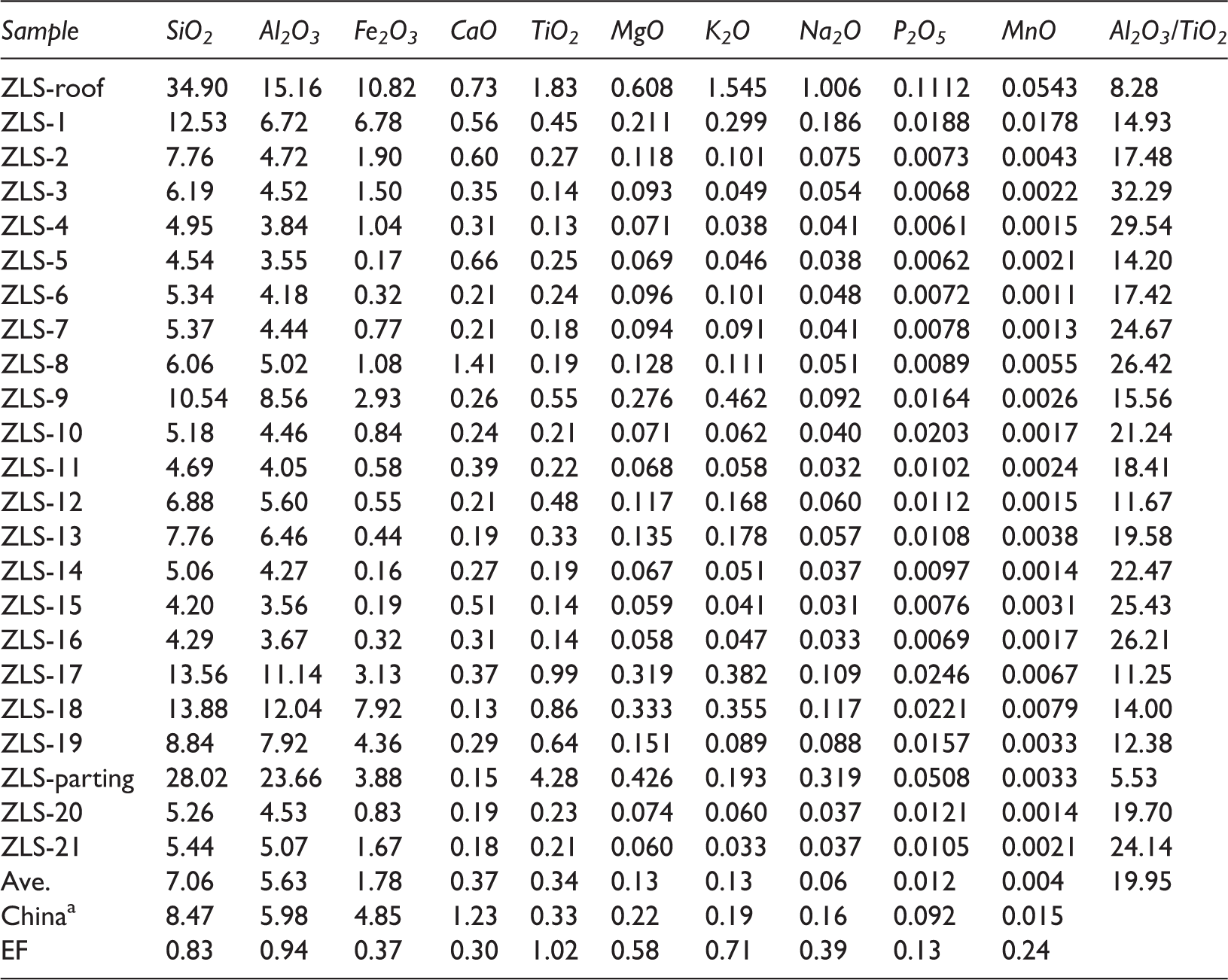
Ave: average of coal samples; ZLS: hongliangshan.
aAverage values of major-element oxides in Chinese coal. EF (enrichment factor) = Ave./China.
The value of Al2O3/TiO2 can be used as a provenance indicator for sedimentary rocks and for the sediment-source region of coal deposits. The value ranges of 3–8, 8–21, and 21–70 imply different sources of mafic, intermediate, and felsic igneous rocks, respectively (Hower et al., 2015). The ratios of Al2O3/TiO2 of ZLS K1a coal samples fall in the range of 11.25 to 32.29, indicating that the inorganic materials might originate dominantly from the felsic-intermediate terrigenous rocks at the top of the Emeishan basalt sequence. This conclusion argues for the relevant studies concerning the coalfields in Chongqing, which are near to ZLS mine (Dai et al., 2017; Qin et al., 2018a; Zou et al., 2016).
Trace elements
The average abundances of trace elements in the ZLS K1a coal seam compared with those of the world’s bituminous coals (Ketris and Yudovich, 2009) are presented in Table 4. It can be seen that most trace element concentrations in the ZLS coal are higher than their respective world averages, with the exception of Be, As, Rb, In, Ba, Tl, Pb and Bi.
Concentrations of trace elements in the ZLS K1a coal (μg/g).
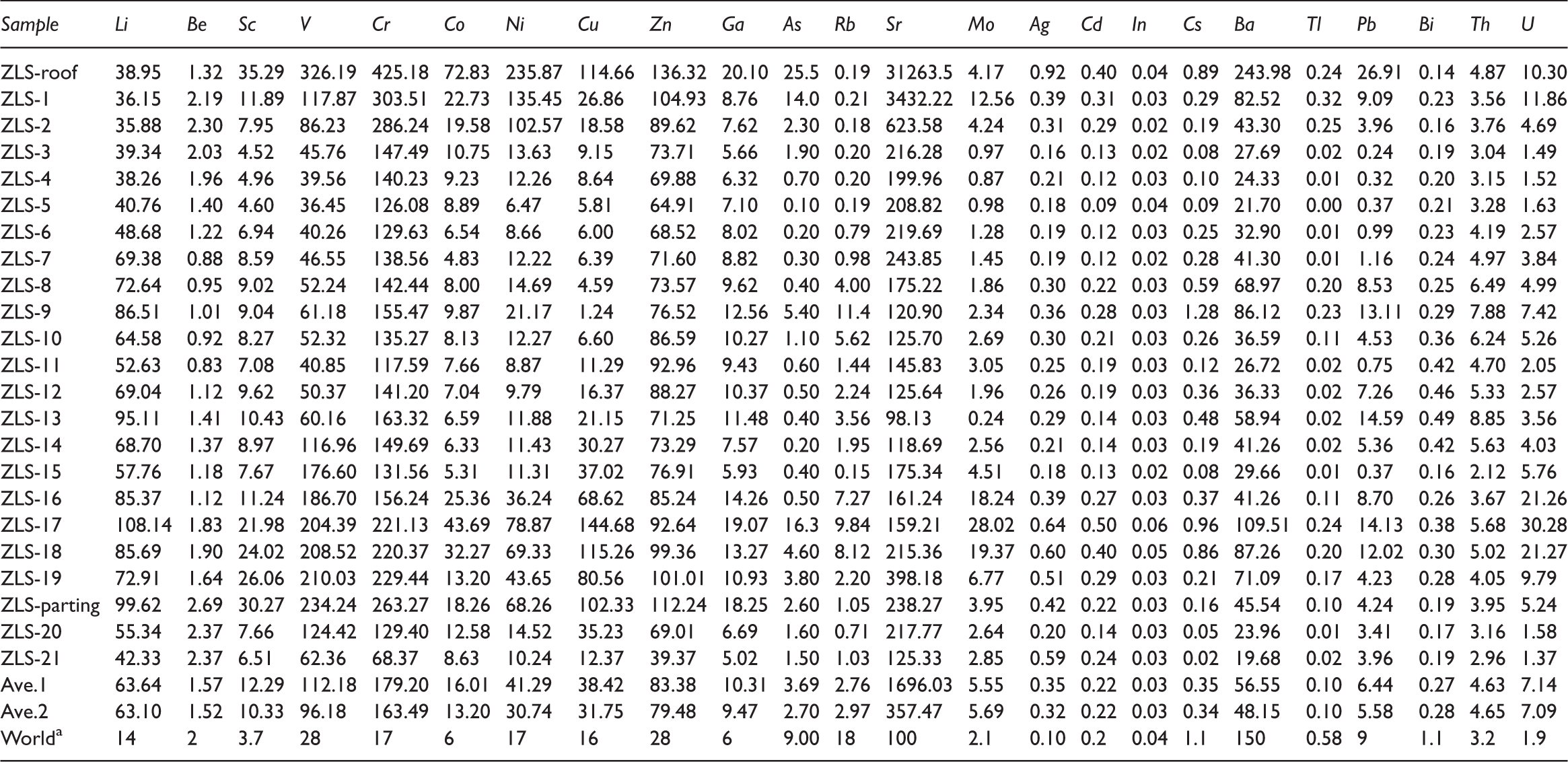
Min: minimum; Max: maximum; Ave. 1: average of samples; Ave. 2: average of coal samples; ZLS: hongliangshan.
aAverage concentrations of trace element for world coal.
Dai et al. (2015) proposed an indicator of trace element content in coal, the concentration coefficient (CC = trace element content in coal/trace element content in world coal), and divided the results into six categories: CC <0.5, loss; 0.5 ≤ CC ≤ 2, normal; 2 < CC ≤ 5, slight enrichment; 5 < CC ≤ 10, enrichment; 10 < CC ≤ 100, high enrichment; 100 < CC, anomalous enrichment. In the ZLS coal, Cr is enriched (CC = 9.62), the elements of Li, Sc, V, Co, Zn, Sr, Mo, Ag, and U are slightly enriched with 2 < CC < 5, As, Rb, Cs, Ba, Tl, and Bi are loss, and other elements have a normal content.
In the roof and parting, the content of Sr is 44.12 times higher than in the coal (Table 5); As is 5.20 times higher than in the coal; Sc, V, Cr, Co, Ni, Cu, Ga, Ag and Pb range from two to five times more than in the coal. This suggests that the roof and parting are important carriers and sources of the above trace elements in the coal seam (Duan et al., 2017).
Enrichment coefficient (CC) of trace elements in the ZLS K1a coal.
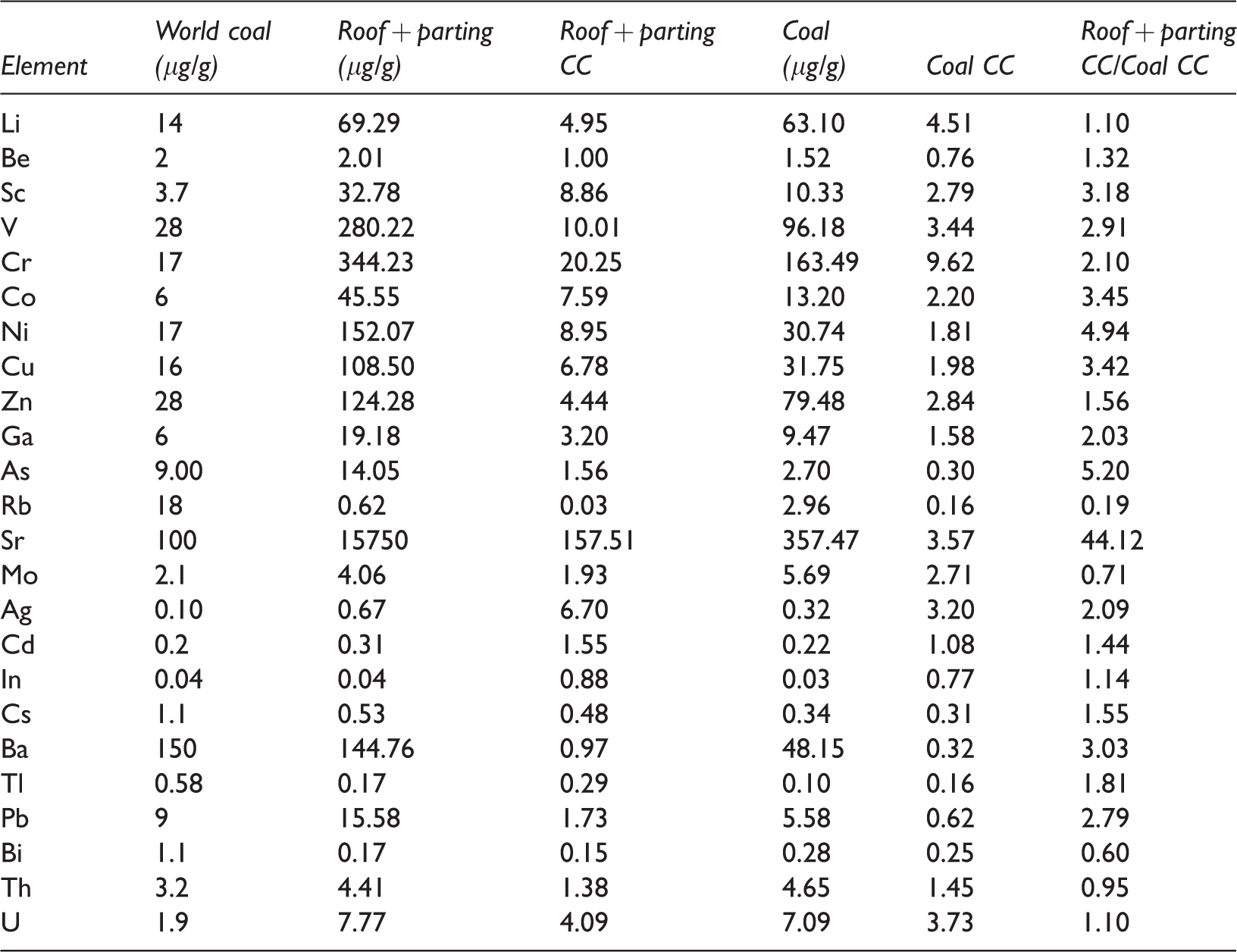
ZLS: hongliangshan.
Differences of elemental geochemical properties, combined with the diversities of depositional environment and hydrothermal alteration during coal-formation could cause the imbalanced distribution of trace elements. The vertical distributions of ash, total sulfur, trace elements and total contents in the ZLS K1a coal are presented in Figure 2. Generally, the trace elements can be divided into several groups which have similar trends, i.e. Li-Be-Ga, Sc-V-Cr, Co-Ni-Cu-Zn, Rb-Cs-Ba-Pb-Th-Bi-Tl-As-Ag-Cd-In, and Mo-U. Among them, Li-Be-Ga are lithophile elements and mainly associated with clay minerals in coal. Cobalt-Ni-Cu-Zn are consistent with peaks at ZLS-roof, ZLS-parting and ZLS-17 (except for Zn). This may be due to the presence of more pyrite in those layers, and their high chalcophile affinity. Scandium-V-Cr have two peaks at ZLS-roof and ZLS-parting, and Rb-Cs-Ba-Pb-Th-Bi-Tl-As-Ag-Cd-In show peaks at ZLS-9 (except In) and ZLS-17, probably indicating their common source and similar migration process, respectively. Though Sr is adjacent to Cs, Ba, and Rb on the periodic table, the distribution of Sr only exhibits a peak at ZLS-19, perhaps because of its special mixed modes of occurrence that can be detailed in the SCEE section. Molybdenum shows a vertical variation consistent to U, with highest concentration in ZLS-17. This probably results from their significant organic association in coals, which is also suggested by their low correlations with ash and inorganic components.
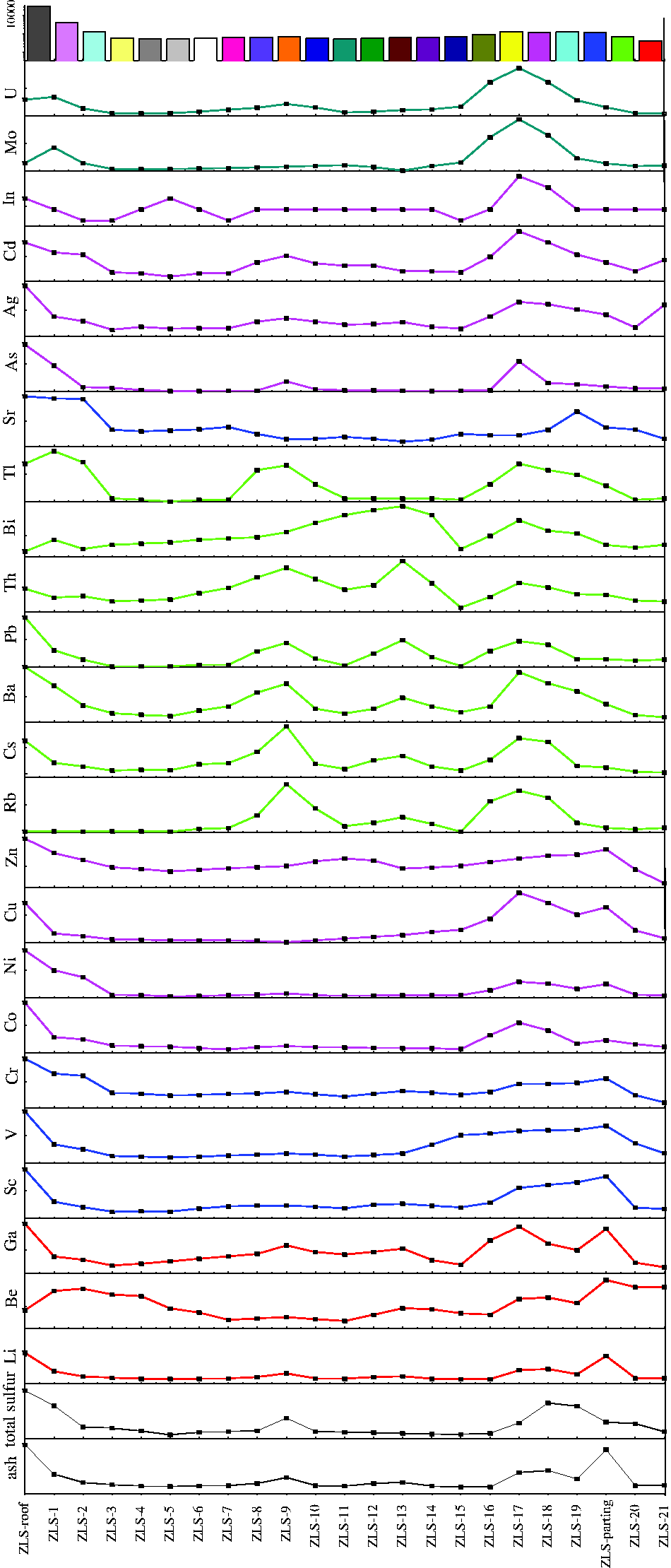
Vertical distribution of trace elements in the ZLS K1a coal. ZLS: Zhongliangshan.
Minerals
The mineral crystalline phases of the K1a coal identified by XRD analysis are given in Figure 3. The minerals in ZLS K1a coal mainly include kaolinite, calcite, pyrite, and quartz. Some small amount of minerals such as gypsum and anatase is observed under SEM-EDX.
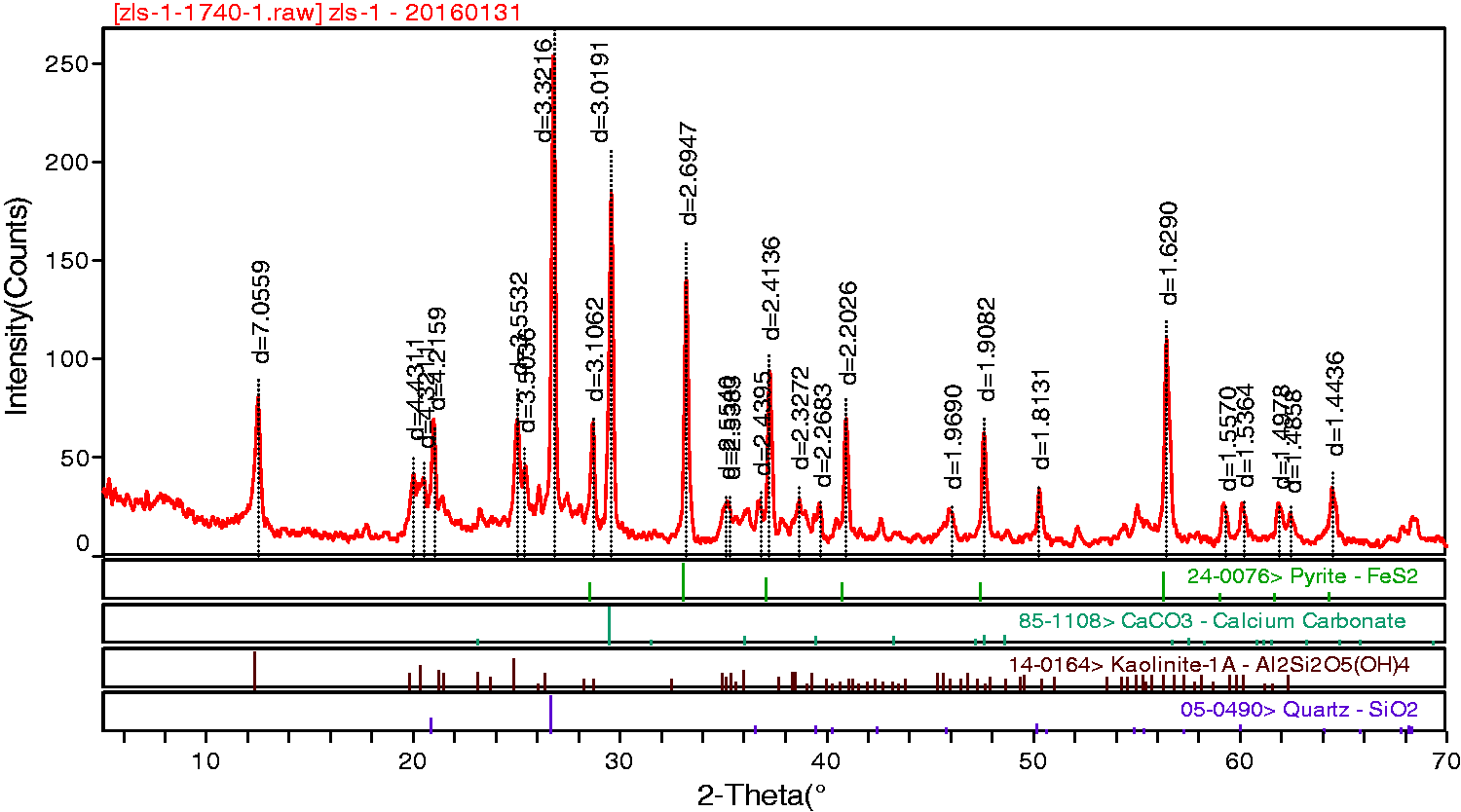
X-ray diffraction analysis of LTA ash of the ZLS K1a coal. ZLS: Zhongliangshan; LTA: low-temperature oxygen plasma asher.
Kaolinite
Kaolinite is the dominant mineral in the ZLS K1a coal. The average content of kaolinite is up to 43.88%, and all the samples are richer than 50% except for samples ZLS-1, ZLS-3, ZLS-17, and ZLS-20. Kaolinite occurs mainly as dispersed fine particles with a size of 5–10 µm (Figure 4(a)), cell-fillings (Figure 4(b)), zonal structure (Figure 4(c)), and along bedding planes (Figure 4(d) and (e)). Kaolinite is also impregnated and associated with collodetrinite or striped collotelinite. In this study, clay minerals occurring as zonal and discrete forms may indicate their derivation from syngenetic clastic sediments, and the cell-filling and massive forms manifest formation during authigenic processes.
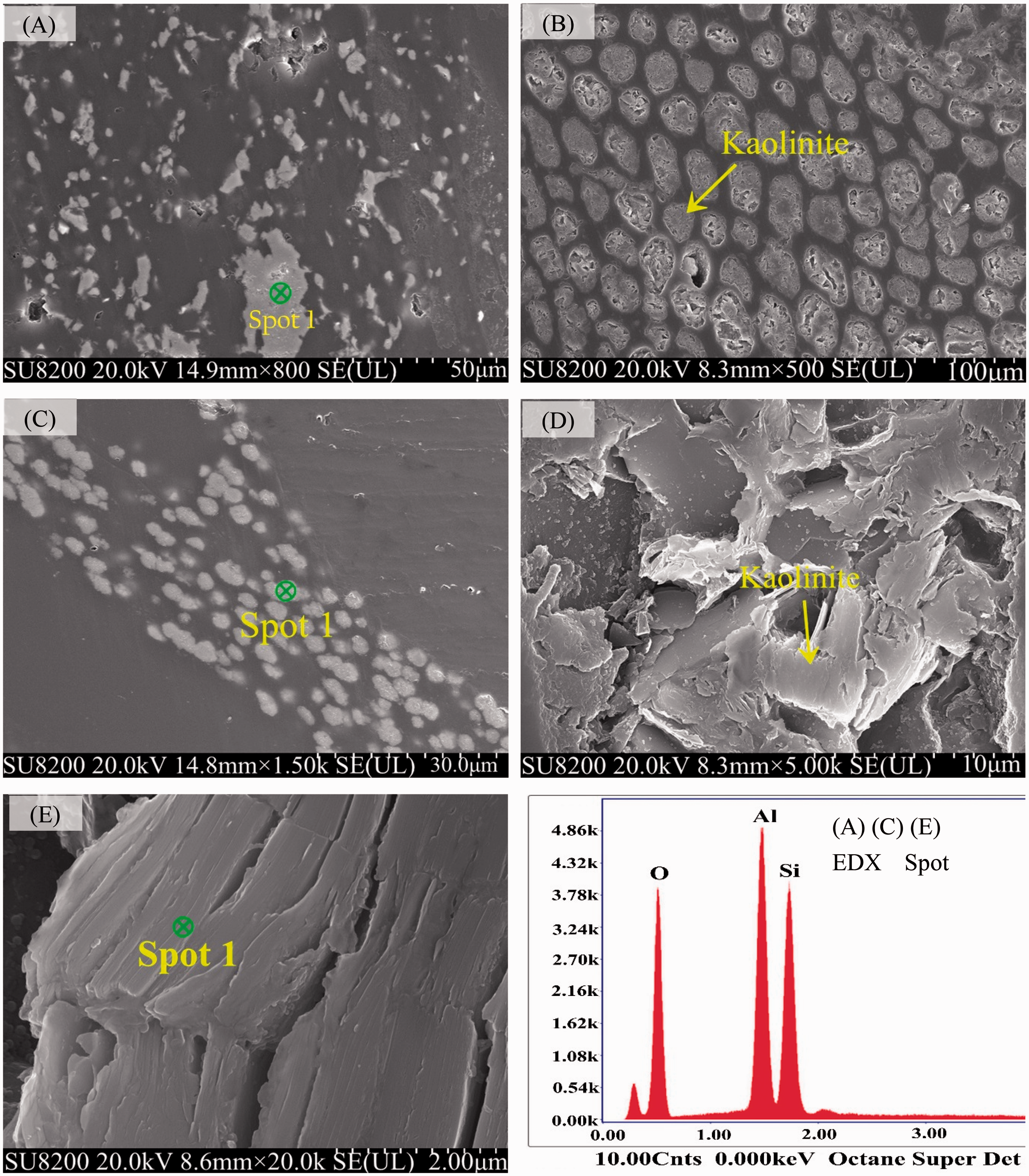
SEM back-scattered electron images and EDX of clay minerals in the ZLS K1a coal. ZLS: Zhongliangshan; EDX: energy dispersive X-ray.
Pyrite
Through optical microscopy and SEM-EDX, it is found that the sulfide minerals are mainly pyrite in the study area, and the occurrence modes and origin of pyrite are mainly non-biological structure type. There are five structures of pyrite existing in K1a coal, i.e. cell-filling (Figure 5(a), filled in the cell of telinite and fusinite, and also existed in cytoderm, which filled kaolinite inside), finely dispersed crystal and its assembly (Figure 5(b), mainly distributed in collinite, euhedral and subhedral crystal with a size of 1–5 µm, the size of its assembly can reached 100 µm), framboidal pyrite (Figure 5(c) and (d), the size are generally 10–30 µm), micro-granula pyrite (Figure 5(d), circular and with the size of 0.4–1 µm, and distributed in each coal sample), crumb pytite (Figure 5(e), it is formed from framboidal pyrite and framboidal granules by the hydrothermal, and abundant in K1a coal seam). The pyrite in this area mainly derived from the terrestrial sources especially Emeishan basalt and affected by the seawater intrusion. Pyrite is the main carrier of chalcophile elements.
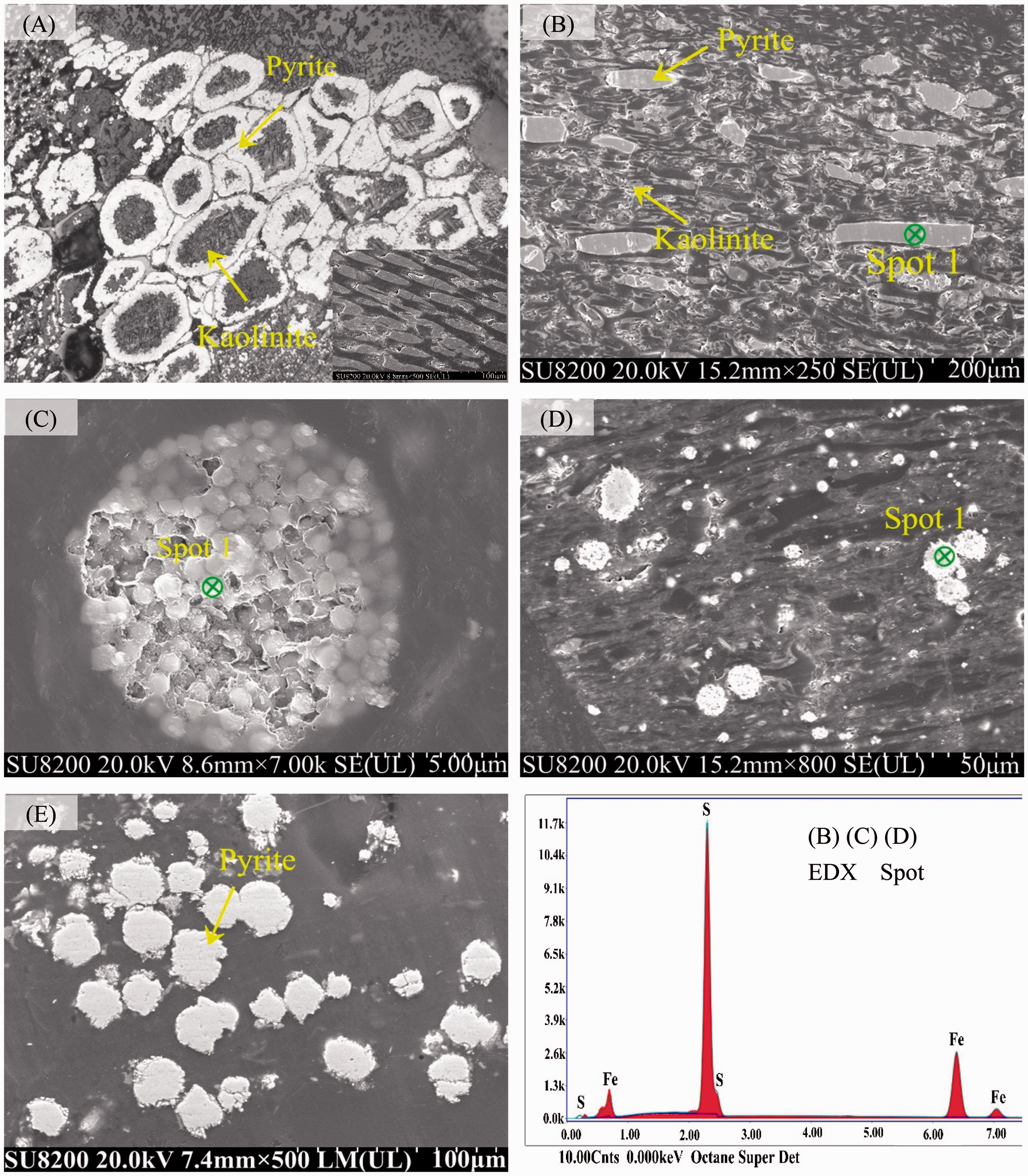
SEM back-scattered electron images and EDX of prite minerals in the ZLS K1a coal. ZLS: Zhongliangshan; EDX: energy dispersive X-ray.
Quartz and anatase
The K1a coal has a minor amount of quartz (SiO2), which are angular and equigranular, mostly 5–10 µm in size, and mainly occur as discrete particles in collotelinite (Figure 6(a), oil mirror), as well as in clay minerals and in collodetrinite (Figure 6(a)). However, previous studies showed that authigenic quzrtz is common in Late Permian coals from southwestern China (Ren et al., 1996). The modes of occurrence of quzrtz in ZLS K1a coal indicate its terrigenous origin. Anatase (TiO2) is present evenly in the coal samples with a scarcely distribution, occuring mainly as irregular fine particles (Figure 6(b)) or as colloidal (Figure 6(c)) in the kaolinite matrix.
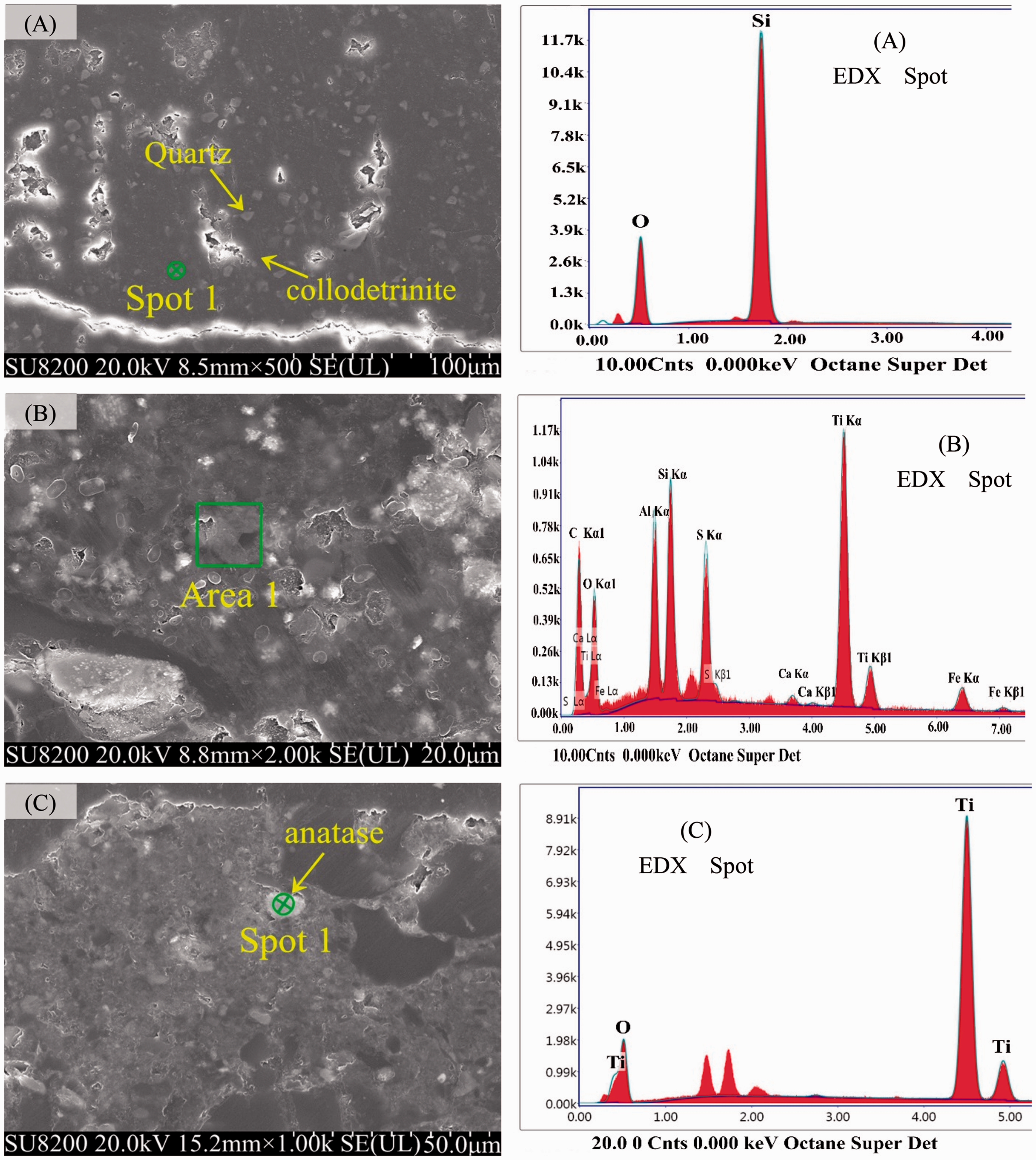
Optical micrographs, SEM back-scattered electron images and EDX of quartz and anatase minerals in the ZLS K1a coal. ZLS: Zhongliangshan; EDX: energy dispersive X-ray.
Calcite and gypsum
A minor amount of calcite was observed in the K1a coal in clustered crystal structures (Figure 7(a)), as well as cell-filling forms nearly associated with kaolinite (Figure 7(b)), suggesting that its distribution is largely influenced by detrital material input of sediment-source region and may be dominated by epigenetic process, because kaolinite tends to precipitate in relatively low PH condition (Rimmer and Davis, 1986), whereas in which calcite is unstable. Another possibility is that calcite progressively precipitated with increasing PH value after kaolinite and marcasite were formed.
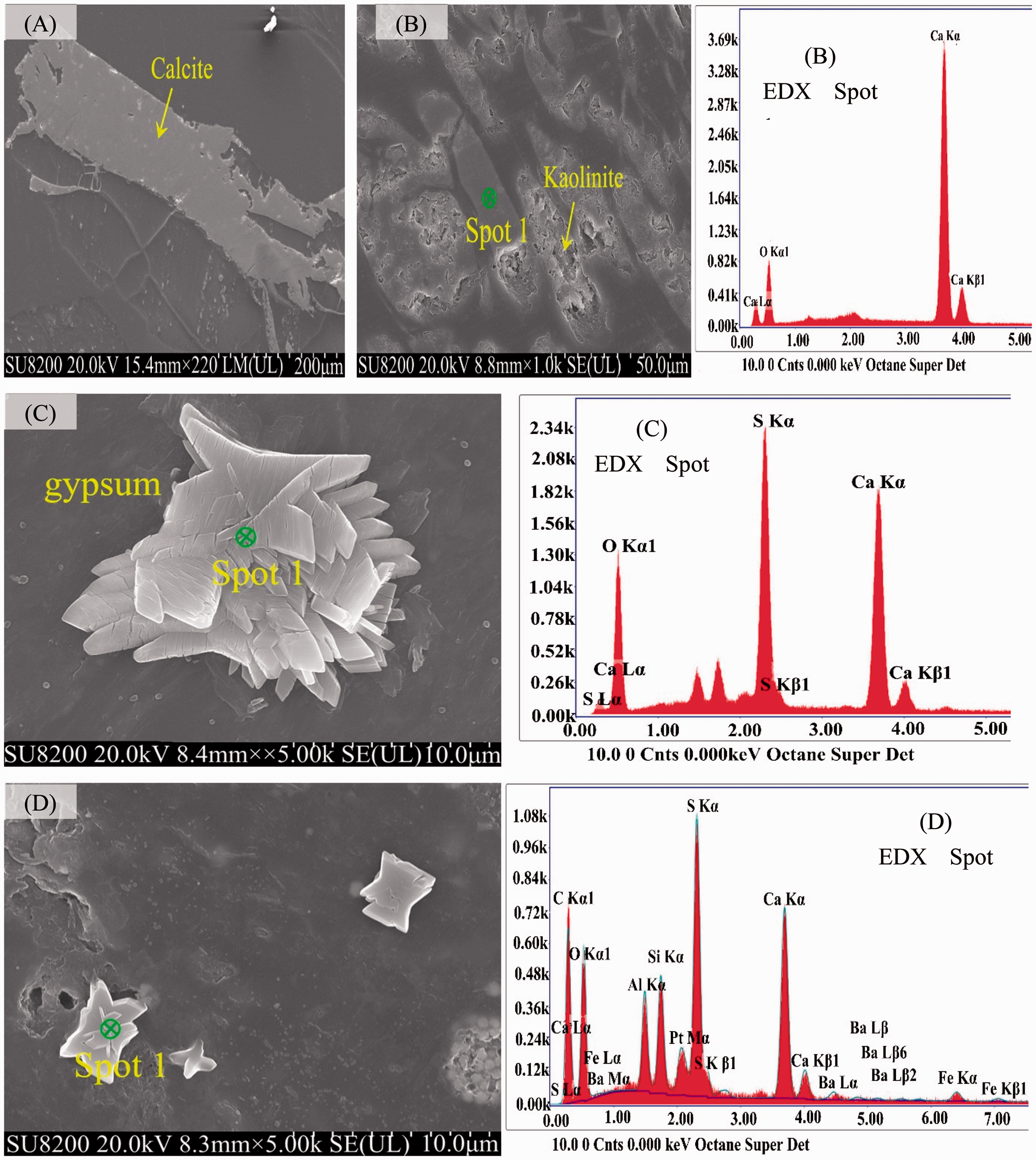
SEM back-scattered electron images and EDX of calcite and gypsum minerals in the ZLS K1a coal. ZLS: Zhongliangshan; EDX: energy dispersive X-ray.
Gypsum occurs as radiating forms in the coal and is present on the edge of fractures, indicating an epigenetic origin. Gypsum is detected by SEM-EDX, and occurs as needle (Figure 7(c)) or lath-like subhedral to euhedral (Figure 7(d)), indicating an authigenic origin. It is commonly formed by reaction between calcite and sulfuric acid being produced by oxidation of Fe sulfides (Ward and Dai, 2012) and may be formed by precipitation from pore waters containing dissolved Ca2+ and
Modes of occurrence of trace elements
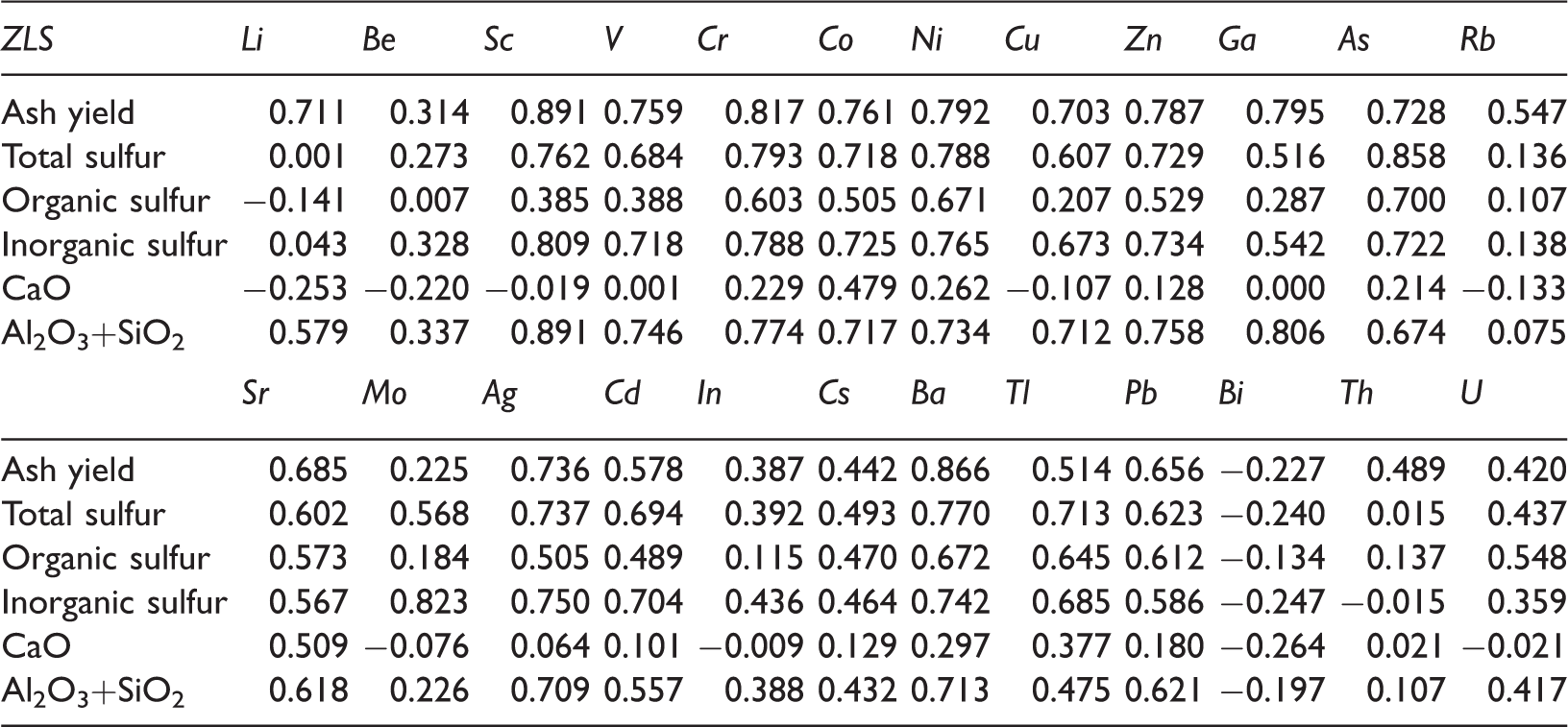
The correlations between trace elements and ash yield, total sulfur, inorganic sulfur (pyrite is the major component), organic sulfur, CaO and Al2O3+SiO2 were frequently used to infer modes of occurrence of trace elements in coal (Eskanazy et al., 2010; Saikia et al., 2015). As shown in Table 6, correlations between trace elements were analyzed using the SPSS software at the 95% confidence level (n = 24, critical value of correlation coefficient
Pearson correlation of trace elements with ash, sulfur, and major elements in the ZLS K1a coal.
ZLS: hongliangshan.
Except for Be, Rb, Mo, In, Cs, Tl, Bi, Th, and U, other elements in the ZLS coal have obvious correlations with ash yield (r = 0.578–0.891) and Al2O3+SiO2 (r = 0.557–0.891), especially for enriched Cr and slightly enriched Sc, V, Co, Zn, and Ag (r > 0.7), indicating that these elements are closely linked to inorganic matter, particularly in clay minerals. Because Cr is a both lithophile and siderophile element, it also has correlation with sulfur (r =0.793). However, only Sr shows moderate correlation with CaO (r = 0.509), implying that it may also occur in carbonates. The correlation coefficients of many elements with sulfur are higher, such as Co, Ni, Cu, Zn, As, Ag, Cd, Ba, Tl, and Pb. These elements in the ZLS coal may exist in the form of sulfide minerals or as impurities (Diehl et al., 2012; Finkelman, 1994; Saikia et al., 2016; Ward, 2016; Yudovich and Ketris, 2005). Relatively, Mo and U have lower correlations with ash, manifesting their apparent associations with organic matter in the ZLS coal.
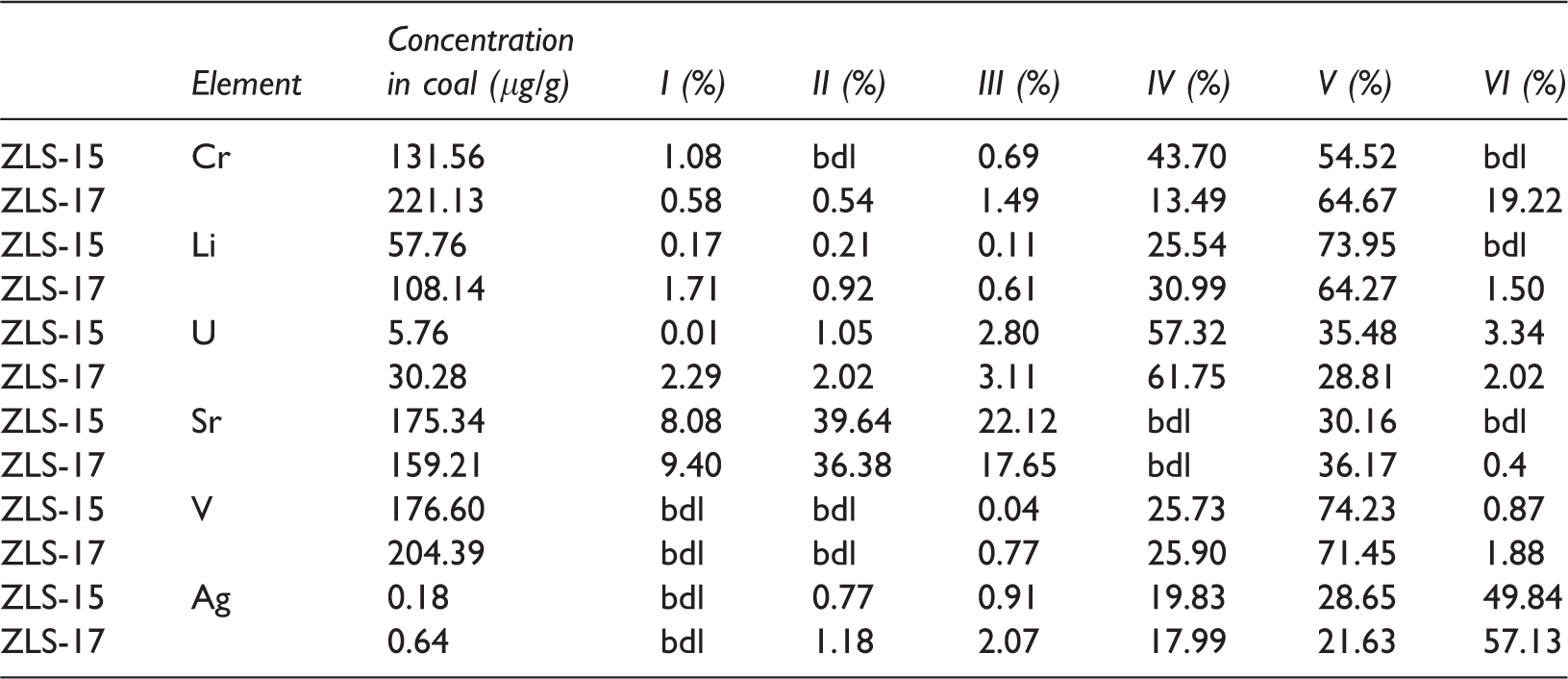
Sequential chemical extraction (SCEE), which can quantify proportions of trace elements in different stages depending on their solubility behavior in various reagents (Finkelman et al., 2017; Jones et al., 1995; Riley et al., 2012; Yang, 2006), has been used to investigate the occurrence mode of Cr, Li, U, Sr, V, and Ag with elevated concentrations in selected ZLS coal samples (Table 7) The results show that Cr mainly occurs in the silicates, followed by the organic and sulfide states. Li, V, and U primarily exist in both silicate and organic states, however, with the higher organic proportion for U. Silver presents predominantly in sulfides, and then silicates. Distinctively, Sr demonstrates significant existence in exchangeable ion, silicate, and carbonate states.
SCEE results for Cr, Li, U, Sr, V, Ag in the ZLS K1a coal.
ZLS: hongliangshan; SCEE: sequential chemical extraction experiments.
On the whole, according to the results from correlation analysis and SCEE, Cr, Li, and V occur in both inorganic and organic components in the ZLS coal. The inorganic associated Cr, Li, and V in silicate forms are mainly related to clay minerals, especially kaolinite in coal. As to Cr, it may also exist in the sulfide minerals. Uranium shows primarily affinity to organic matter, probably in the formation of uranyl organic complexes or adsorbed coal matrix, and inorganic U should be mainly related to clay minerals. Strontium presents multiple modes of occurrence including carbonates (such as calcite), silicates (such as kaolinite), and exchangeable ion state that can also be considered as organic associated (Qin et al., 2018b; Yang, 2006). At last, Ag mainly exists in sulfide and silicate states, i.e. in minerals of pyrite and kaolinite in the ZLS coal.
Conclusions
The basic chemical characteristics of the ZLS K1a coal are low moisture and volatile matter contents, low-medium ash yields, medium-high total sulfur content, and especially high calorific value.
Among the major-element oxides in the ZLS coal, the average content of TiO2 is equivalent to that of Chinese coals, while other oxide contents are lower than those of Chinese coals. The major minerals found in the coal are kaolinite, pyrite, calcite, and quartz. Meantime, small amount of gypsum and anatase are also identified.
Compared with the averages of world coal, Cr is enriched, and Li, Sc, U, Sr, V and Ag are slightly enriched in the ZLS coal. Chromium, Li, and V mainly occur in clay minerals, and also are related to organic matter in the coal, and sulfide minerals are possibly other carriers of Cr. Uranium shows primarily affinity to organic matter, and then is related to clay minerals in the coal. Strontium presents mixed forms including exchangeable ion, carbonate, and silicate states. Silver primarily occurs in sulfides followed by silicates. The ratio of Al2O3/TiO2 supports that the trace elements in the ZLS coal are derived from felsic-intermediate terrigenous rocks at the top of the Emeishan basalt sequence.
Footnotes
Declaration of conflicting interests
The author(s) declared no potential conflicts of interest with respect to the research, authorship, and/or publication of this article.
Funding
The author(s) disclosed receipt of the following financial support for the research, authorship, and/or publication of this article: We gratefully acknowledge financial support from the National Natural Science Foundation of China (No. 41472133), the Natural Science Foundation of Hebei (No. D2018402093), and the Program for One Hundred Innovative Talents in Universities of the Hebei Province (No. BR2–204).