




Abstract
Tight gas accumulations, commonly characterized by low permeability, low porosity, and complicated pore structure, are widely distributed in the Sichuan Basin. Recent exploration in the Chengdu Sag, Western Sichuan Basin has proven that Jurassic tight-sandstone reservoirs attach significant gas potential. However, long distance migration between source and reservoir intervals entangles understanding of the tight-gas accumulation mechanism. It is unclear whether producible gas in Jurassic intervals is either from “simple sweet-spots in a continuous accumulation” or “conventionally trapped accumulations in low-permeability reservoir rocks”. To identify the regionally active gas system and characterize the charging pattern, a geochemical study was performed by interpreting the gas molecular and carbon isotope compositions in Jurassic and conducting gas–source correlations as well as gas migration distance calculation with the relationship among δ13C1 vs. Ro vs. H (burial depth). Research results indicate that the Jurassic tight gases in Majing-Shifang areas are coal-derived dry gases generated by the primary cracking of kerogen. Gas/source correlation and gas migration distance calculation reveal that gases are mainly sourced from the Upper Triassic humic source rocks (T3x5, the fifth member of the Xujiahe Formation). Gas accumulations in the Jurassic Penglaizhen Formation were formed with an original vertical migration of about 2–3 km and then a long-distance lateral migration within tight sand layers, which is verified by the decreasing δ13C1 and the general increasing iC4/nC4 in the Penglaizhen Formation. The Jurassic tight-sandstone reservoirs in Majing-Shifang areas occur in low-porosity and low-permeability reservoir rocks in conventional lithological traps, which are not continuous-type gas accumulations or basin-centered gas systems. The faults in Majing area serve as dominant vertical conducting pathway and the relatively permeable intervals within Jurassic and microfractures play an important role in the development of the conventionally trapped natural gas accumulations.
Keywords
Introduction
Tight gas reservoirs were firstly discovered several decades ago and have been raising attention of geologists, since easily exploitable conventional reserves are to be exhausted (Dai et al., 2012; Jiang et al., 2006; Law, 2002; Law and Spencer, 1993; Masters, 1979; Rose et al., 1984; Schmoker, 2002). The tight sandstone gas refers to the gas trapped in reservoirs with porosity less than 10% and in-situ permeability less than 1 mD (Zou et al., 2012, 2013). “Basin-centered” or “deep-basin” gas accumulations in tight sandstone reservoirs have been questioned. Analysis and comparison of many “basin-centered” gas accumulations shows that their traps are essentially the same as those of “conventional” gas accumulations (Camp, 2008; Cant, 2011). Jurassic tight-sandstone reservoirs in the Western Sichuan Basin (WSB) have been emerging as a significant supply of natural gas in the last several years. These resources differ from the typical scenario of the reservoir and source intervals with close proximity, as observed from most tight gas intervals around the world (Zou et al., 2012). Jurassic tight gas reservoirs in the WSB are characterized by long-distance primary migration (Cai and Liao, 2000; Qin et al., 2007; Shen et al., 2008; Tang et al., 2013; Wu et al., 2001). A detailed study by Tang et al. (2013) focused on gas migration fractionation effects and various gas accumulation models between faults, especially the coupling of the source rock-rooted faults and reservoirs. Yang and Zhu (2013) considered Jurassic tight gas reservoirs as superposed tight sandstone gas-bearing zones. However, it is currently unclear whether producible gas in Jurassic intervals either represents “simple sweet-spots in a continuous accumulation” or “conventionally trapped accumulations in very low-permeable reservoir rocks”. Thus, it is necessary and meaningful to investigate the gas genesis, migration and accumulation for this atypical tight-sandstone gas, which will provide evidences for better understanding of accumulation mechanisms of tight-sandstone gas reservoirs as to the typical ones (e.g. continuous, basin-centered, or anticlinal ones).
Natural gas geochemistry analyses integrated with comprehensive geologic studies have been widely used to understand geological history, e.g. hydrocarbon generation history involving hydrocarbon generation in source rocks and accumulation in reservoirs (Chen et al., 2000; Harris et al., 2009; Huang et al., 2014; Prinzhofer et al., 2000; Rooney et al., 1995; Schoell, 1983; Tang et al., 2000; Yu et al., 2014; Zhang and Krooss, 2001). In this study, to identify gas types, sources, and possible migration patterns as well as to investigate the accumulation mechanism of the tight sandstone gas reservoirs in the study area, geochemical analyses were performed on natural gas samples from Jurassic in the Majing-Shifang areas of the Chengdu Sag to determine their molecular and carbon isotopic compositions.
Geological setting
Structural units
The Sichuan Basin is composed of (a) the WSB, (b) the central gentle fold region, (c) the northern thrust fold region, (d) the eastern steep structure region, (e) the southwestern uplift, and (f) the southern flat fold region (Figure 1A). WSB, located on the east of the Longmen Mountain thrust belt and west of the middle Sichuan uplift, is a foreland depression formed during the Late Triassic with an area of 40,000 km2. The Longmen Mountain and the WSB together compose the margin-plate basin–mountain system (Jia et al., 2006; Jiang et al., 2016; Liu et al., 2012). The present tectonic framework of the WSB was a result of multistage tectonic movements, primarily the Indosinian, the Yanshanian, and the Himalayan (Li et al., 2011). The central part of the WSB is divided into following six structural units: (I) the Longmen Mountain foreland thrust belt, (II) the Anxian–Yazihe–Dayi fault-fold belt, (III) the Zitong Sag, (IV) the Xiaoquan–Xinchang–Hexingchang–Fenggu structural belt, (V) the Chengdu Sag, and (VI) the Zhixinchang–Longbaoliang structural belt (Figure 1B and C) (Guo et al., 2013a). The study area in this paper is located in the northern part of the central Chengdu Sag, while Majing structure is a small uplift in the sag, and Shifang area is a gentle slope inclining towards the southwest (Figure 1D).
(A) Location of the study area showing the sub-tectonic units of the Sichuan Basin. (B) Distribution of structural units in the WSB, with the location of cross-section in Figs. 1C and 1D. (C) NE-SW cross-section of the WSB showing the thrust-faulted structural styles and key stratigraphic intervals. (D) Contour map of burial depth of top Penglaizhen Formation in meters with wells and sedimentary facies in Majing-Shifang areas.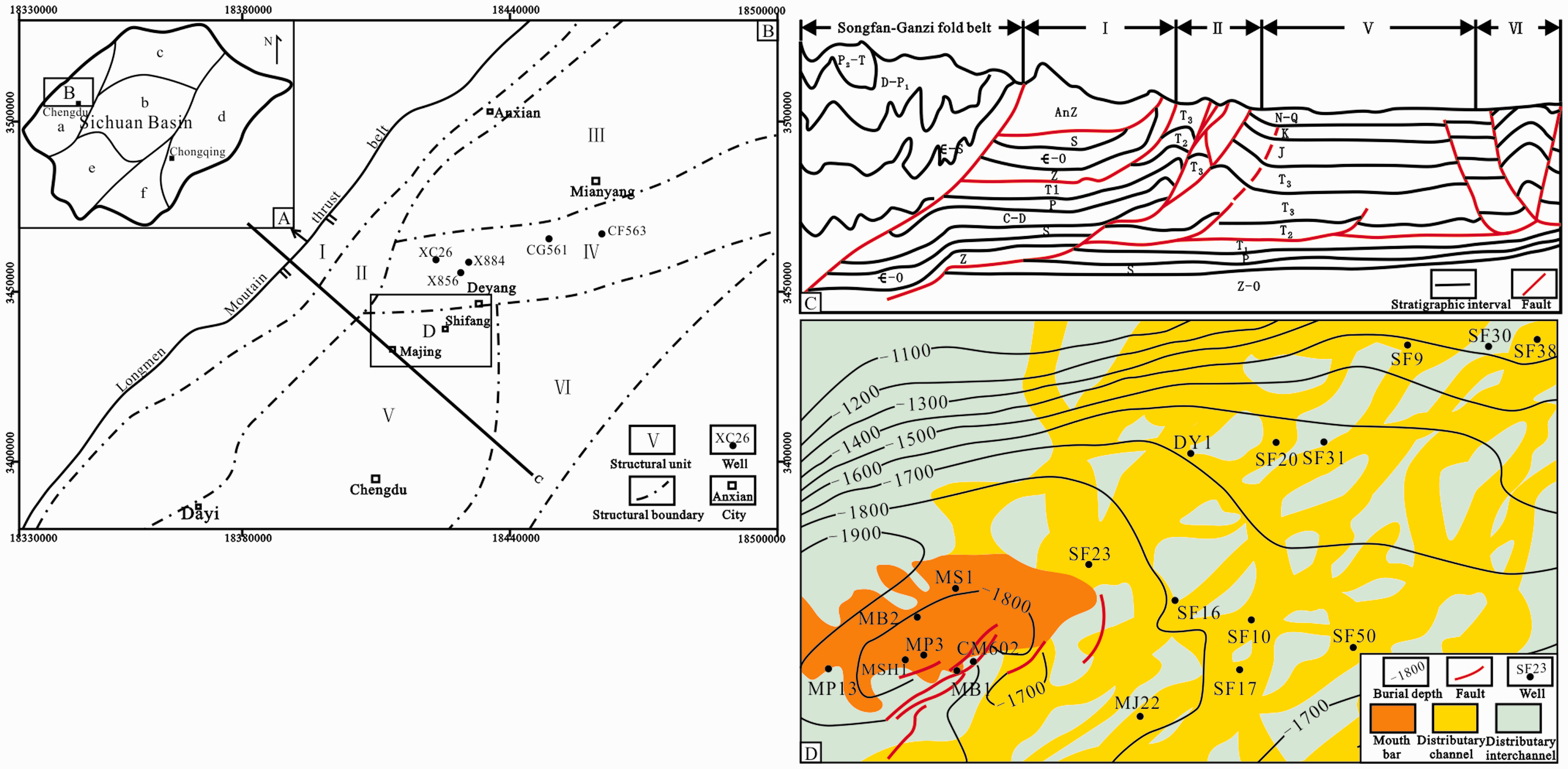
Sedimentology description
Thick Mesozoic terrigenous deposits in the WSD include the Upper Triassic Xujiahe Formation (T3x) and overlying Jurassic and Cretaceous units (Figure 2). Thick carbonaceous shales, dark mudstones, and coal with high organic matter contents were deposited in the fifth member of the Xujiahe Formation (T3x5) (Guo et al., 2013a). Lower and Middle Jurassic successions rest unconformably on deformed T3x. The Upper Jurassic Suining Formation (J3Sn) and Penglaizhen Formation (J3p) are unconformably overlain by the Lower Cretaceous Cangxi Formation (K1c). Jurassic successions have a high net/gross sand ratio. Moreover, the hot and dry climate during Jurassic, resulted in the deposition of oxidized “red beds” with no hydrocarbon generation potentials.
Synthetic stratum histogram of the Chengdu Sag, Western Sichuan Basin, compiled from published articles and proprietary information from recently drilled wells. The lithologic column as well as the depth is from well MSH1.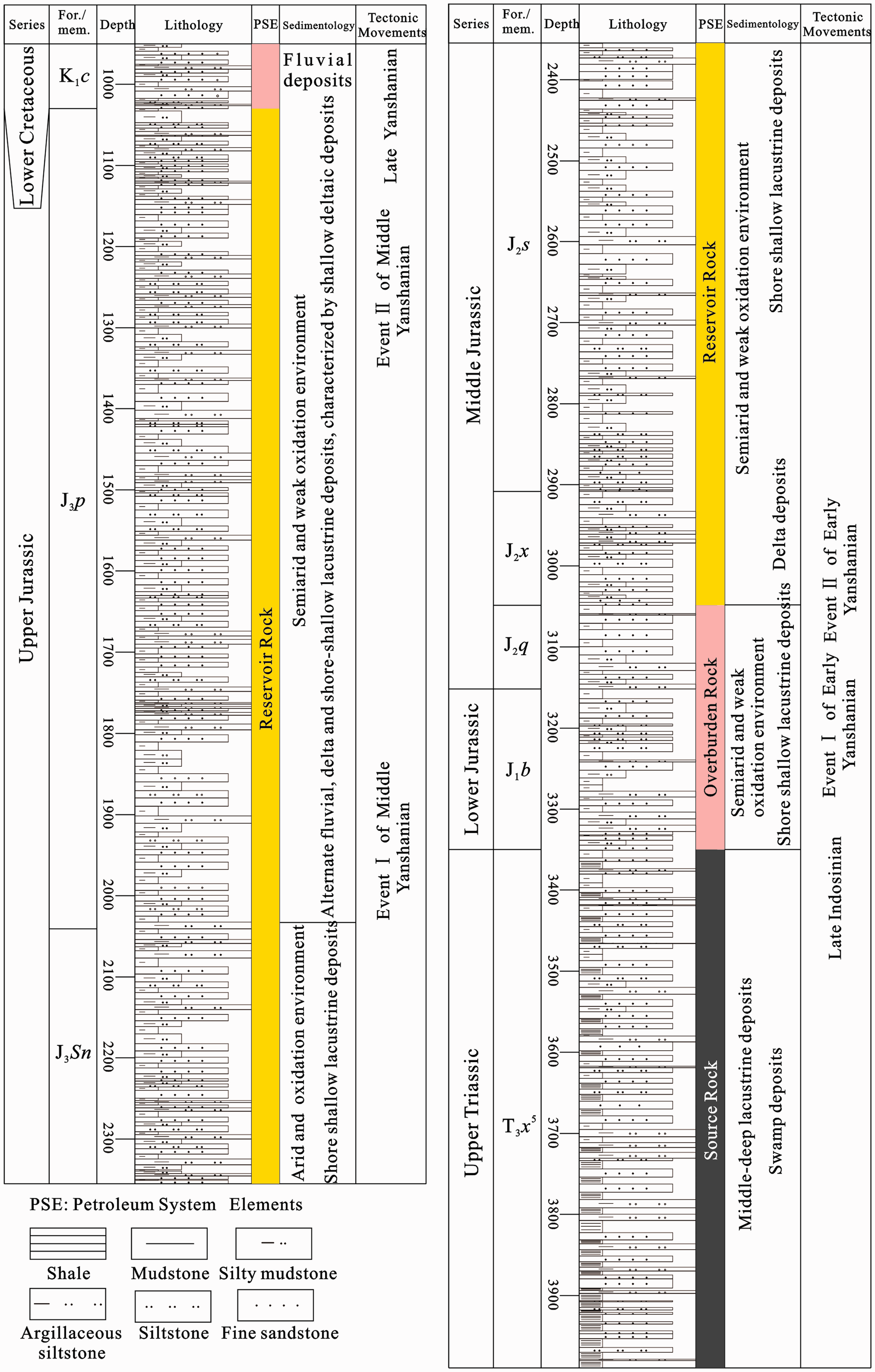
Jurassic sediments were derived from multiple provenances (Ye et al., 2014), with large-scale shallow deltaic deposits developed in the Chengdu Sag. The Jurassic represents fluvial, delta and shore-shallow lake depositional environments (Xie et al., 2014; Yang and Zhu, 2013; Ye et al., 2014). In Majing-Shifang areas, reservoirs are dominated by vertically superimposed delta plain to delta front sand bodies. Jurassic in Majing-Shifang areas is a set of ultralow-permeability and low-porosity tight sandstone reservoirs. The statistical results from Southwest Branch Company (Sinopec) show that porosity of the Penglaizhen Formation in the Majing area range from 1.13% to 19.4%, with an average value of 8.68%, and permeability ranges from 0.003 mD to 104.9 mD, with an average value of 0.18 mD. In the Shifang area, porosity of Penglaizhen Formation ranges from 1.2% to 19.3%, with an average value of 10.03%, and the permeability range from 0.009 mD to 239.7 mD, with an average of 0.36 mD. The heterogeneity is intensive with permeability increasing in magnitude due to the development of micro-fractures. The gas-bearing interval has relatively good reservoir properties (porosity > 8% and permeability > 0.3 mD), especially the reservoirs with tested flow rates > 1 × 10⁴ m3/d, which have porosity larger than 12% and permeability larger than 0.7 mD (Tang et al., 2013).
Samples and methods
A total of 19 gas samples from the WSB were provided by Southwest Branch Company, Sinopec, to analyze of molecular and carbon isotopic compositions as well as light hydrocarbons. These gas samples were collected using 300 mL high-pressure cylinders at the wellhead of gas producing wells, and were analyzed at the State Key Laboratory of Petroleum Resources and Prospecting in the China University of Petroleum (Beijing). Gas compositions were determined with an Agilent 6890 N gas chromatograph equipped with a thermal conductivity detector. Compound specific stable carbon isotope ratios were determined on a Delta S isotopic mass spectrometer. Light hydrocarbons in two gas samples were analyzed using an HP5890II gas chromatograph.
Results
Gas genetic type
Molecular compositions
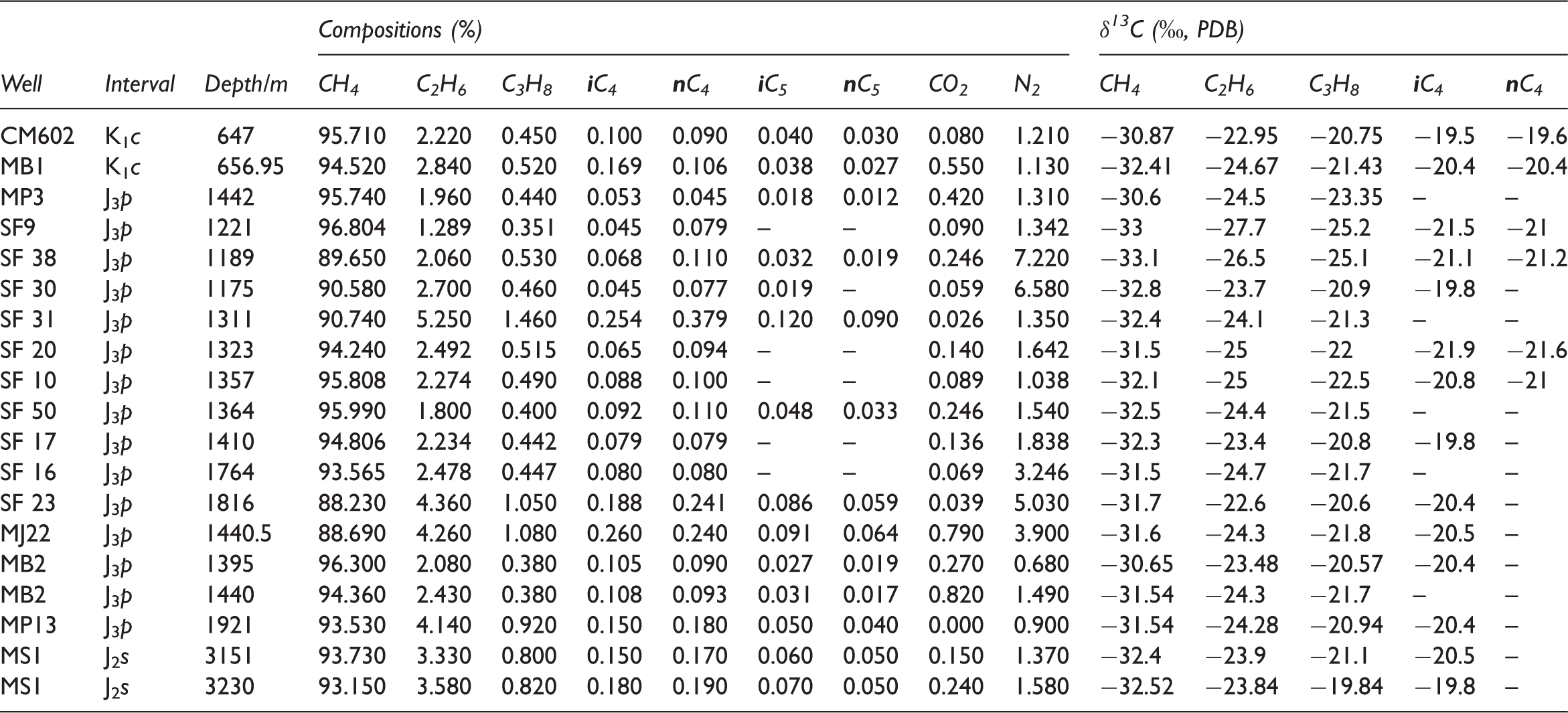
Molecular and stable carbon isotopic compositions of the natural gases in the Jurassic tight-sandstone reservoirs in the Majing-Shifang areas of the Chengdu sag.
Stable carbon isotopic compositions
δ13C1 values of the Jurassic tight gas in study area show positive correlation between carbon numbers and carbon isotopes with δ13C1<δ13C2<δ13C3<δ13C4, indicating their primary organic origin (Table 1).
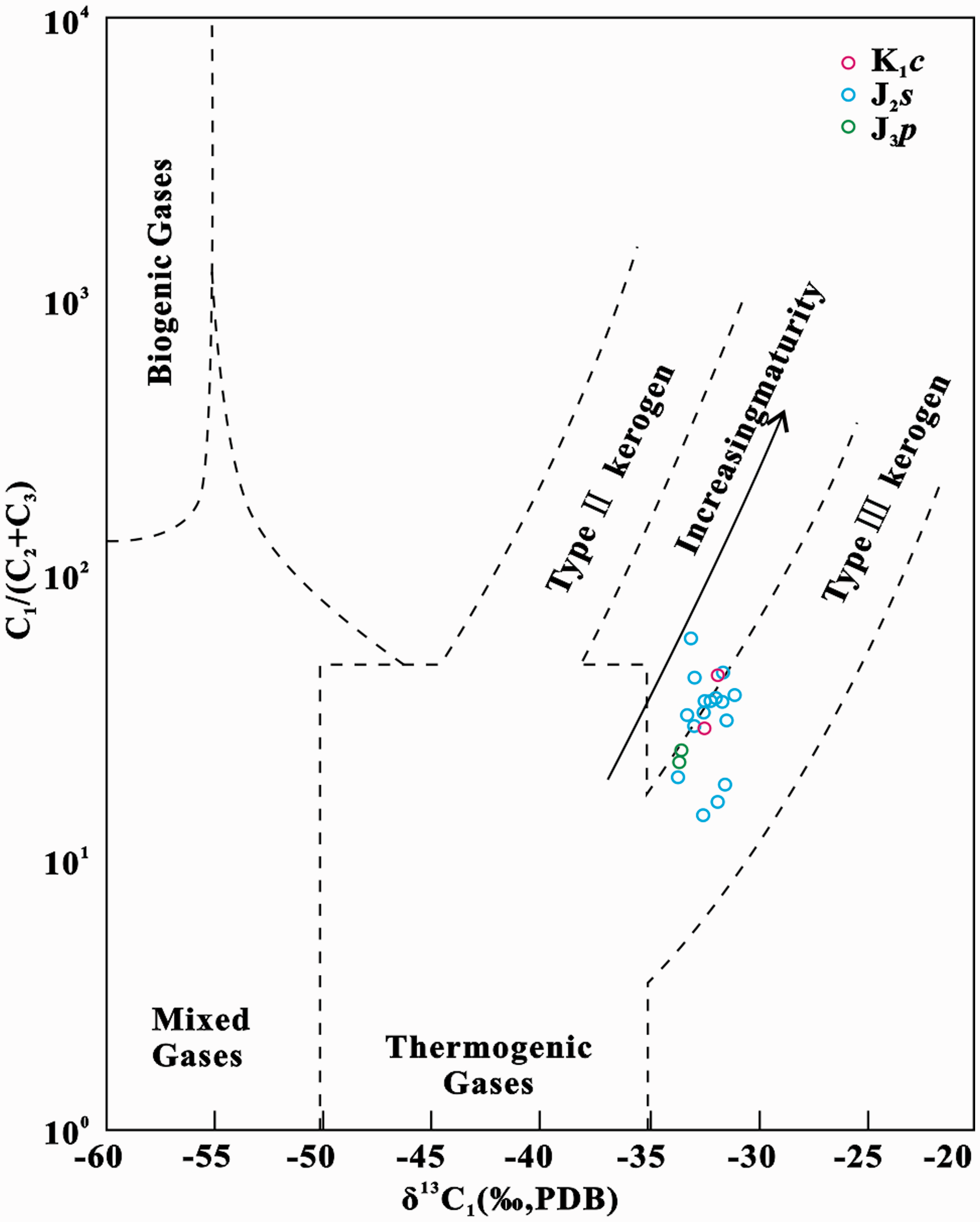
Although the carbon isotope of ethane varies with maturity, it is sensitive to its origin, which allows it to be used for gas type identification. Numerous empirical studies on the gas geochemistry in China's sedimentary basins have suggested a cut-off point in the δ13C of ethane for differentiating the origin of thermogenic gases in China (e.g. Dai, 2011; Dai et al., 2005; Gang et al., 1997; Wang, 1994; Xiao et al., 2008; Zhang et al., 1988). Dai et al. (2014) compiled and compared many primary coal-derived gases and primary oil-derived gases from 19 gas fields in the Sichuan Basin (10 out of the 19 are located in the WSD). It was concluded that gases with δ13C2 > –28.5‰ are coal-derived and those with δ13C2 < –28.5‰ are oil-derived in most cases. C2 isotopes of Jurassic gases in Majing-Shifang areas are in a range of –22.60‰ to –27.70‰, indicating the coal-derived gas. The diagram employing δ13C1, δ13C2 and δ13C3 (Dai et al., 2014) indicates that all Jurassic tight gases are coal-derived (Figure 3). Figure 4 suggests that all Jurassic gas samples are of thermogenic origin and no biogenic or mixed gases are present. Actually, since the δ13C1 of all those gas samples is between –33.52‰ and –29.6‰, and corresponding C1/(C2+C3) is between 10 and 60, the majority are the type III kerogens with only a few being type III and type II.
Diagram classifying gas origins (modified from Dai et al. (2014)). Plot of δ13C1 vs. C1/(C2+C3) for the Jurassic gases (modified from Whiticar (1999)).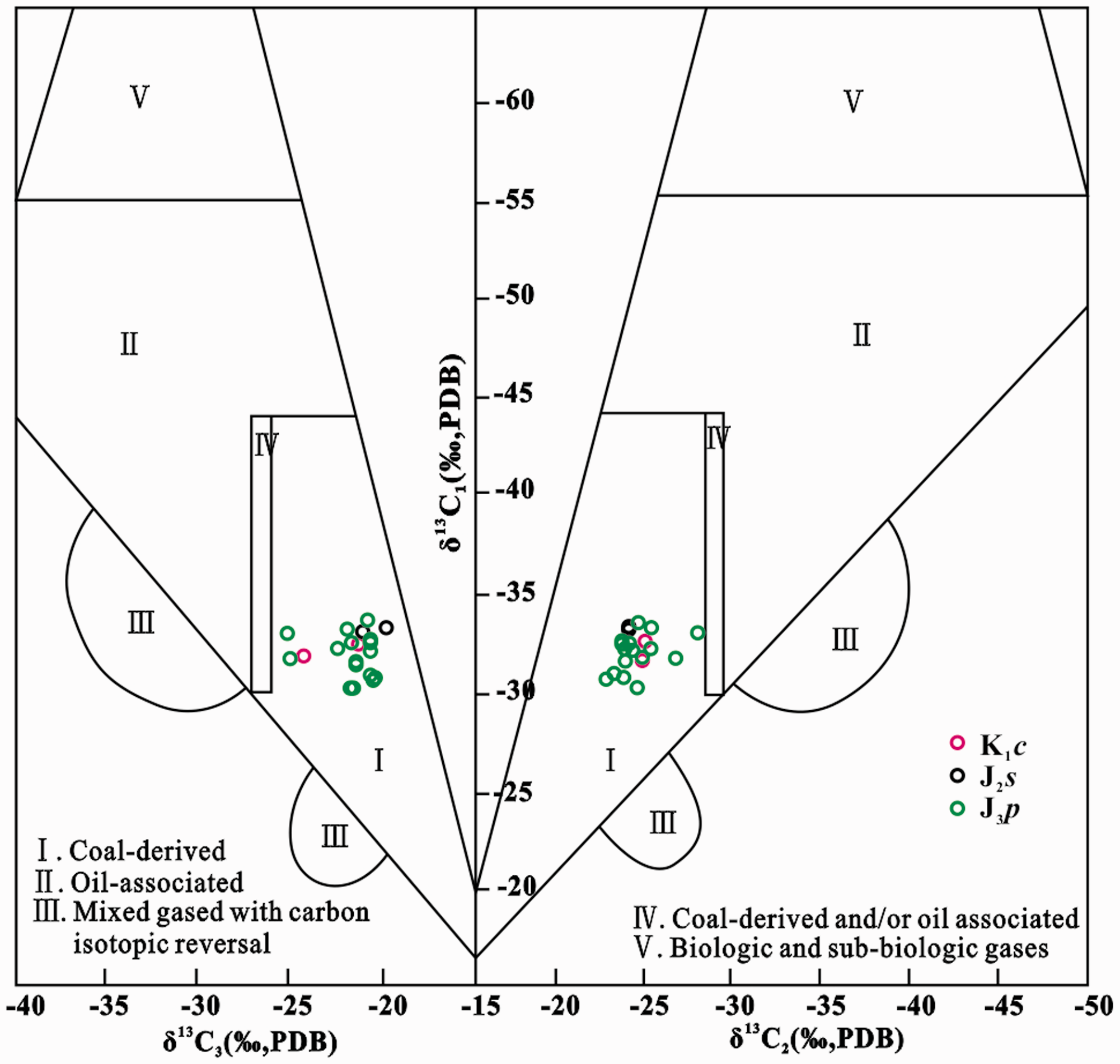
Light hydrocarbon compositions
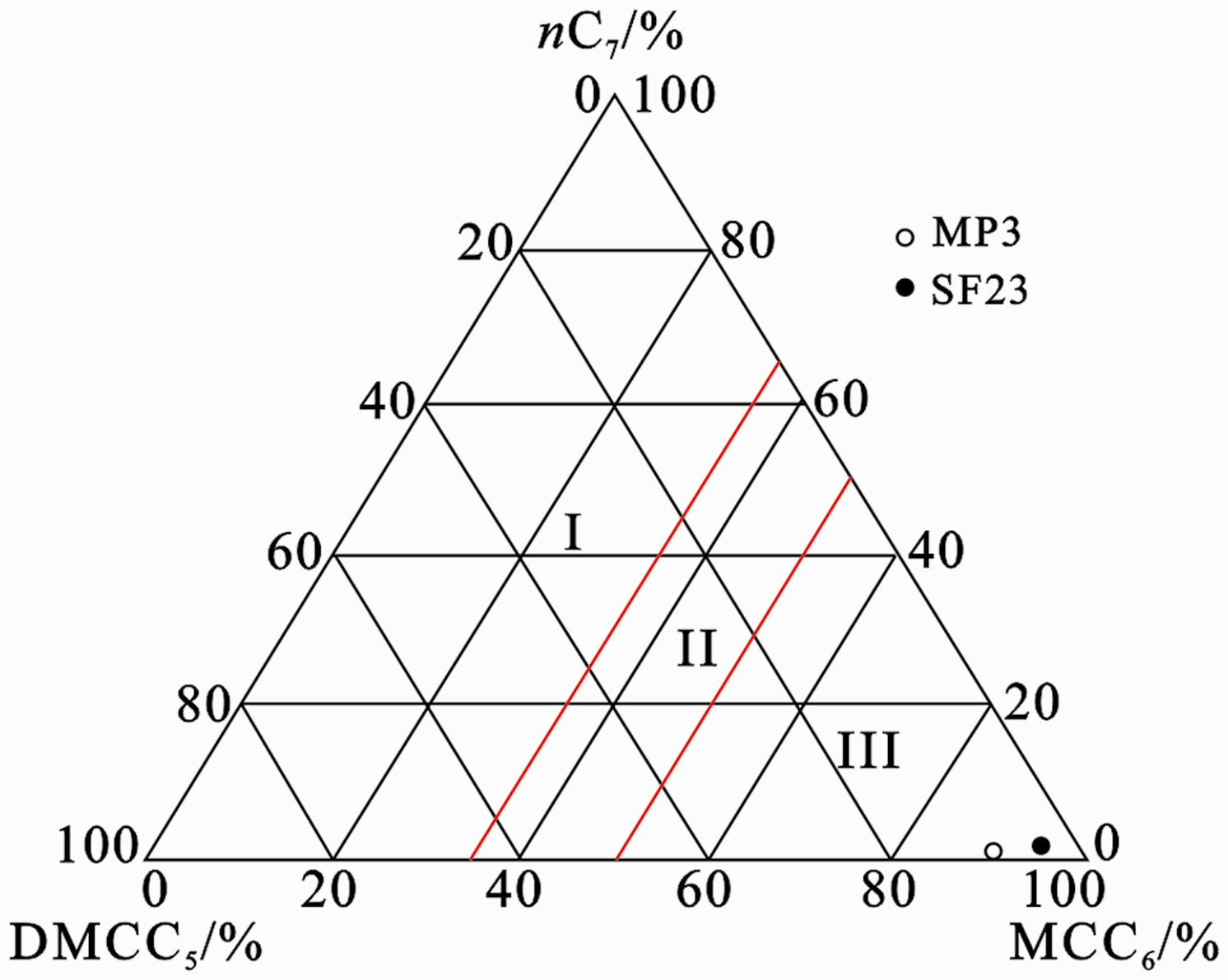
As important components of natural gases, light hydrocarbons, like N-heptane, 2-methyl cyclopentane and methyl cyclohexane, are generally used to identify gas genesis mechanism (Dai, 1993; Hu et al., 1990). The light hydrocarbon composition of Jurassic gas samples in Majing-Shifang areas are characterized by relatively higher methyl cyclohexane (Figure 5). C7 hydrocarbon compositions of natural gas in the Majing-Shifang areas (Figure 6) show that gas is primary coal-derived.
Gas chromatograms from the Jurassic tight-sandstone reservoirs in the Majing-Shifang areas (1: n-hexane; 2: methyl cyclopentane; 3: benzene; 4: cyclohexane; 5: dimethyl cyclopentane; 6: n-heptane; 7: methyl cyclohexane; 8: methyl benzene; 9: n-octane). C7 light hydrocarbon composition triangle of natural gas in the Majing-Shifang areas (modified from Hu et al. (1990)).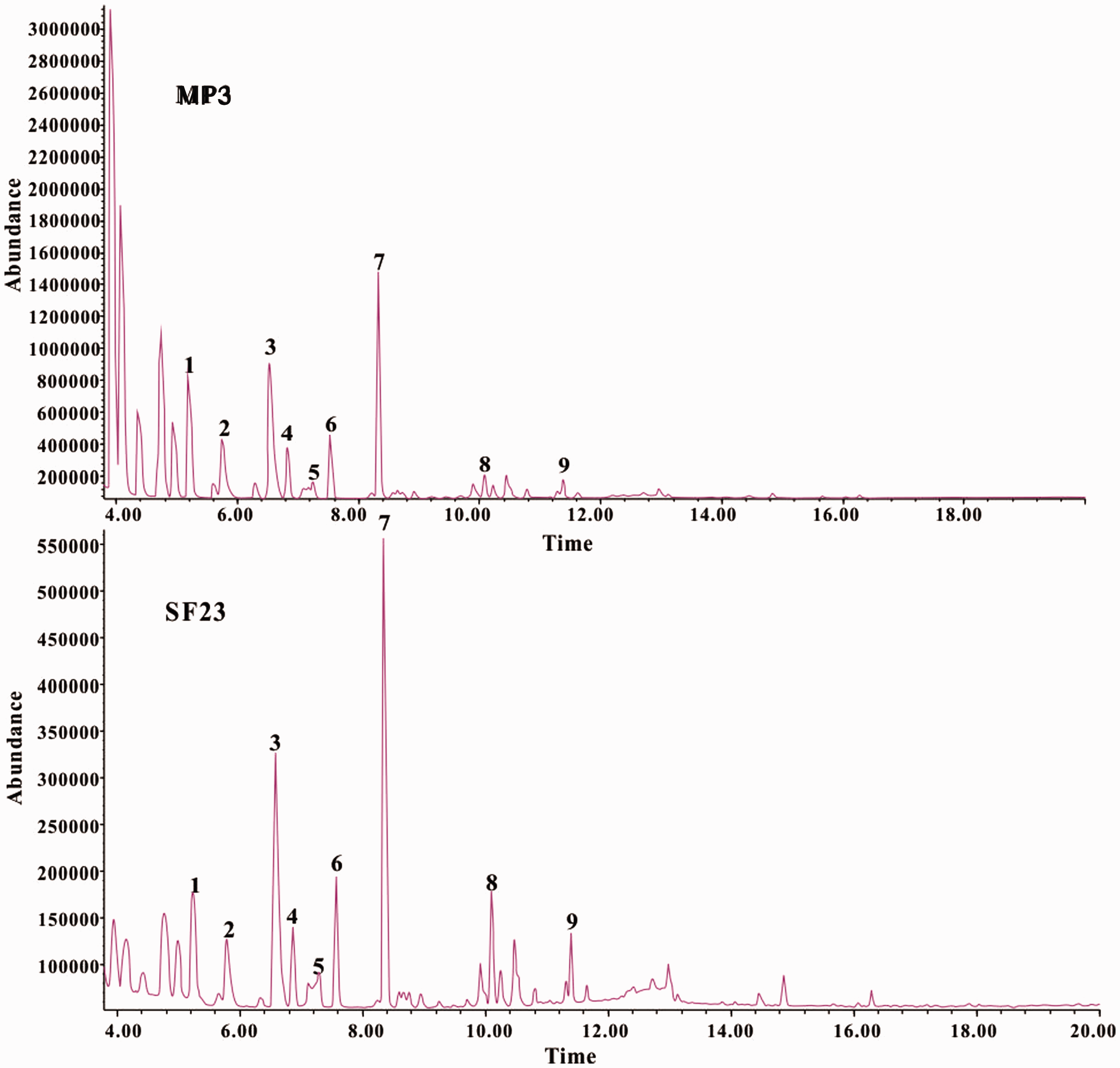
Gas/source rock correlation
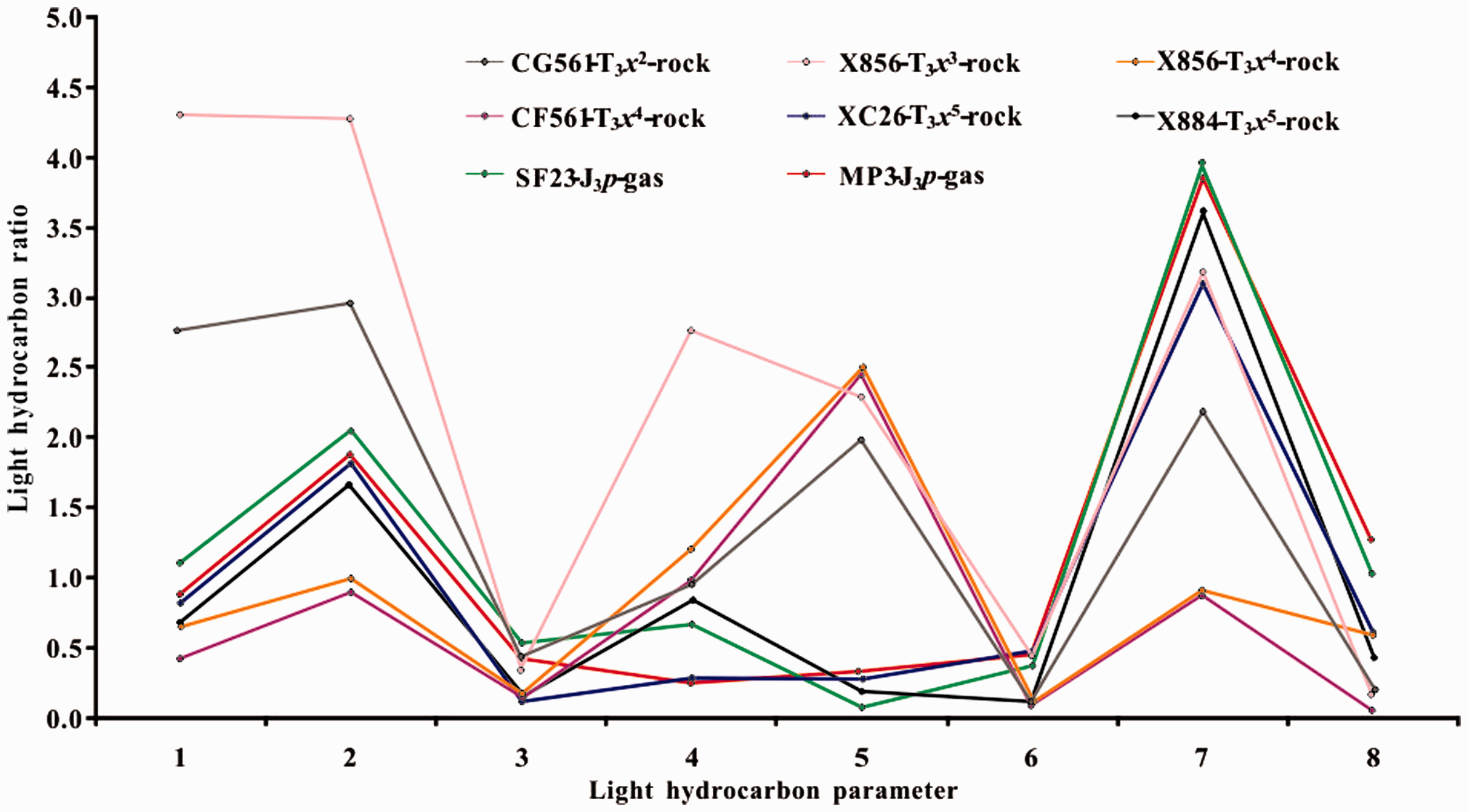
Chung plots (Chung et al., 1988) are used to examine the isotopic composition of hydrocarbon gas species. Gases generated from a single set of source rocks at the uniform maturity should follow a linear trend, with the slope becoming flatter with increasing thermal maturity (Tang et al., 2000). δ13C values of most of the Jurassic gas samples increase linearly with decreasing carbon number (Figure 7). The data suggests the gas was generated from humic organic matters, probably from the Triassic coal measures. Light hydrocarbons are commonly used in gas/source correlation (Hu et al., 1990; Shen et al., 2011). Light hydrocarbon data of rock samples in Figure 7 were provided by the Southwest Branch Company, Sinopec. The comparison of several light hydrocarbon fingerprints between gas samples and possible source rocks indicated that Jurassic gases were sourced from T3x5 rocks in Majing-Shifang areas (Figure 8). The reason for the unclear similarity between gas samples and possible source rocks is that all the rock samples were from the Xiaoquan–Xinchang–Hexingchang–Fenggu structural belt rather than the Majing-Shifang areas shown in Figure 1(A). Despite all this, the similarity between gas samples and T3x5 rocks is better than other rocks.
Chung plot showing carbon isotopic composition of gases from the Jurassic tight-sandstone reservoirs in the Majing-Shifang areas of the Chengdu Sag. Comparison diagram for the light hydrocarbon parameters of Jurassic natural gases and Upper Triassic source rocks in the WSB. (1: n-hexane/cyclohexane; 2: n-hexane/(2,2-dimethylpentane); 3: n-heptane/methyl cyclohexane; 4: benzene/cyclohexane; 5: toluene/methyl cyclohexane; 6: benzene/toluene; 7: n-heptane/dimethyl cyclopentane; 8: n-heptane/toluene).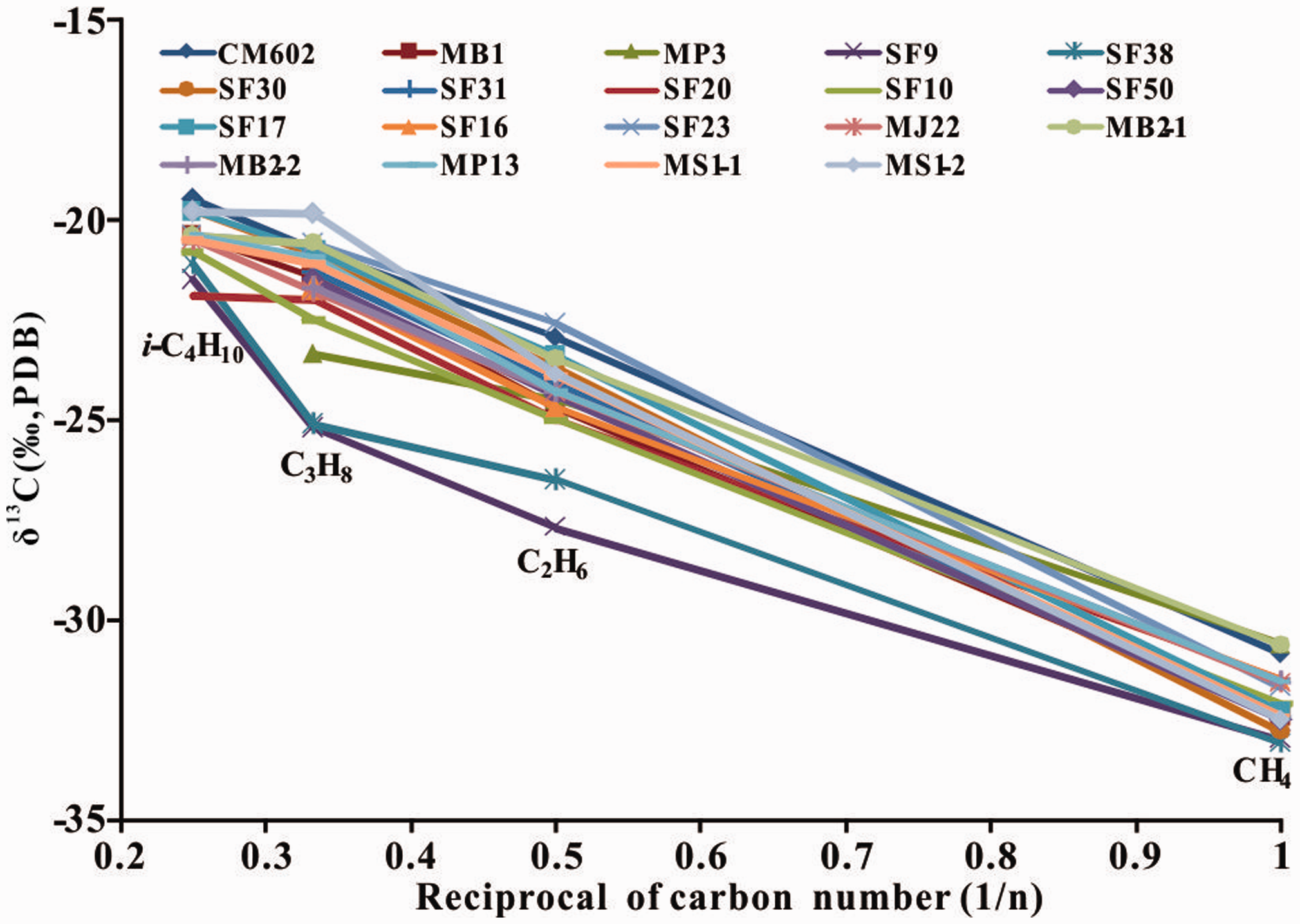
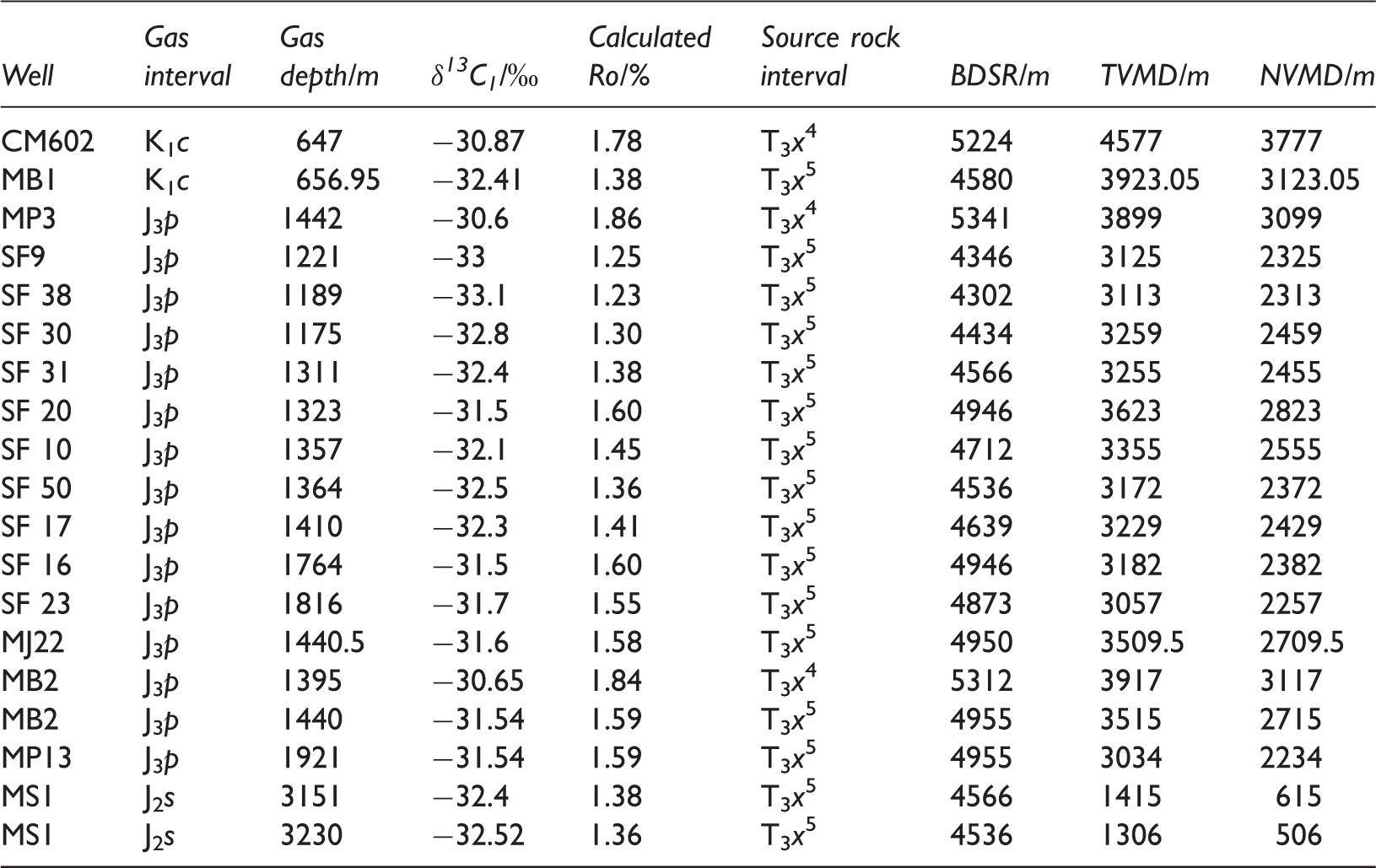
The δ13C value of methane is thought to reflect the thermal evolution of the source rocks. Multiple relationships of δ13C1 and Ro have been proposed (Dai and Qi, 1989; Liu and Xu, 1999; Liu et al., 1993; Schoell, 1983; Stahl, 1977). Galimov (2006) and Wu et al. (2014) conducted some comparative studies demonstrating their suitability. Here, based on the δ13C1–Ro correlation (δ13C1 = 14.12* log Ro–34.39) proposed by Dai and Qi (1989), the calculated Ro ranges from 1.23% to 1.86%, majority of which match well with those from the Upper Triassic T3x5 source rocks in the study area (Table 2 and Figure 9). Only three gas samples from Wells CM602, MP3 and MB2 are correlated with T3x4 source rocks. Several faults near these wells (Figure 1D) contributed to the gas miguration from underlying T3x5 terrigenous coal measures to the Jurassic intervals in Majing-Shifang fields. Further, corresponding burial depth of the gas window of source rocks can be calculated using the modeled burial history and maturity evolution method (Figure 9), and results are listed in Table 2. Finally, the depth difference between gas intervals and corresponding source rocks is thus the total vertical migration distance including the subsequent uplift (800 m for this area, see Figure 9). Apparently, the net vertical migration distance should exclude the subsequent uplifting amount. Thus, gas accumulations in J3p are formed with a vertical migration of about 2–3 km long distance (Table 2).
Modeled burial history and maturity evolution (vitrinite reflectance % Ro) of Well MSH1 (left) and the modeled Ro match well the measured ones (right). The calculated Ro based on δ13C1 vs. Ro relationship, and the determined corresponding source rock and vertical gas migration distance. BDSR: burial depth of the source rock; TVMD: total vertical migration distance; NVMD: net vertical migration distance. Note: The burial depth of the source rock (BDSR) was determined based on the strata’s maximum burial depth shown in Figure 9.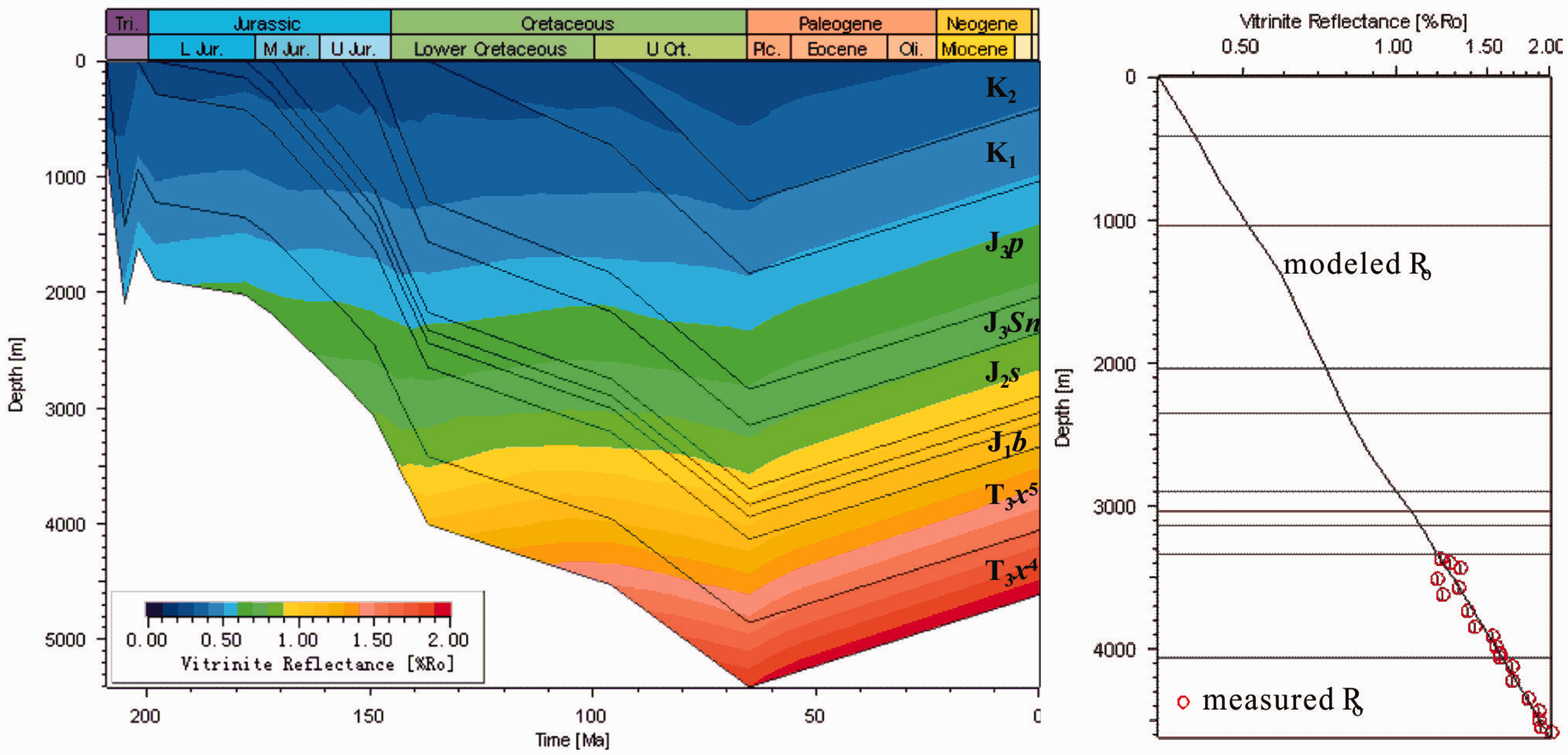
Gas migration paths and the accumulation model
Faults can act as conduits and efficient pathways for hydrocarbon migration (Aydin, 2000; Boles et al., 2004; Zhang et al., 2011). Many faults have been found in tight-gas reservoirs, and their distribution, forming mechanism, as well as their control on gas migration and accumulation have been characterized and discussed (Baytok and Pranter, 2013; Fall et al., 2012; Olson et al., 2009; Robert and Suzanne, 2004; Shanley et al., 2004). Faults, identified by seismic interpretation, are mainly developed in the eastern and northeastern Majing area, while few are present in the Shifang area. The fault typically disappears within the Penglaizhen Formation (J3p), with dip being gentle upwards. Generally, due to fractionation effects during migration, C1/C1∼5 and iC4/nC4 are supposed to increase with migration distance, whereas CO2 contents and δ13C1 follow a decreasing trend (Chen and Li, 1994; Zhang et al., 1999). In the Cretaceous (depth range C in Figure 10), generally accepted variations of the molecular and isotopic compositions are observed. However, no systematic changes of molecular and stable carbon isotopic compositions occur from the deep to the shallow in depth range A in Figure 10. Specifically, no increase can be observed for the C1/C1∼5 and iC4/nC4 ratios, and no decrease for δ13C1. Faults could serve as a dominant migrating pathway and gas migrated along faults rapidly without distinct fractionation. Otherwise, a systematic change should be observed in both the molecular and isotopic compositions.
Molecular and stable carbon isotopic compositions of the Jurassic natural gas in the Majing-Shifang areas. The black solid circles are from Tang et al. (2013).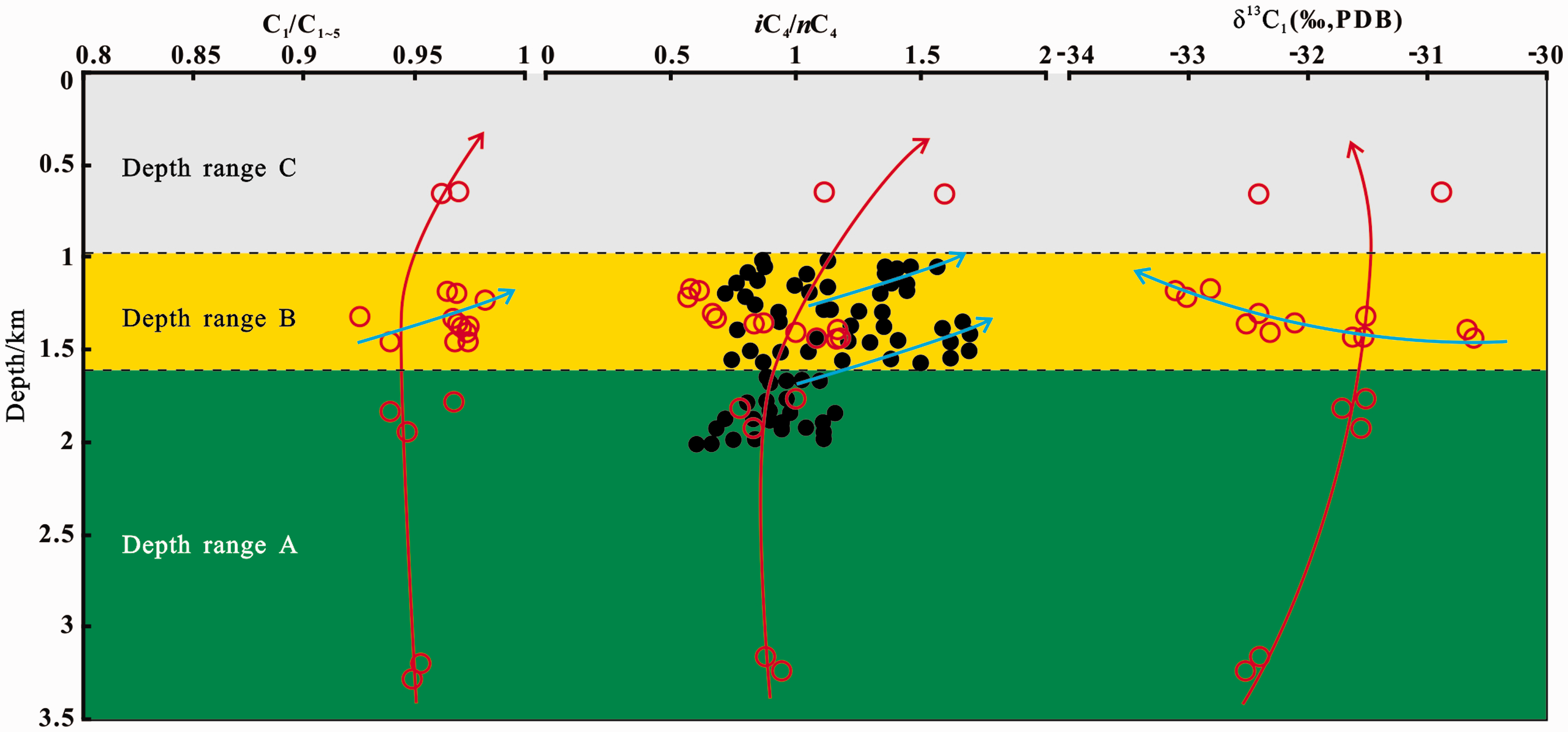
Systematic variations in the molecular and isotopic compositions occurred in depth range B (mainly the J3p) in Figure 10. The molecular and isotopic compositions vary significantly in a narrow section. A general decrease of the δ13C1 and a general increase of the iC4/nC4 can be observed from the deep to the shallow. Because a set of high-mud/sand-ratio overburden rocks can be observed that separate the underlying source rocks from the overlying reservoirs (Figure 2), while the maturity variation of the underlying Triassic interval across the study area is negligible (Guo et al., 2013a). Thus, the assumption that gas charged the reservoir vertically with no lateral migration or the change in gas isotopes was caused by maturity variation is not convincing. The buried depth of the J3p decreases from Majing area to Shifang area, and subaqueous distributary channel sandbody are distributed along the same direction (Figure 1D). Such variation suggests that J3p sandstones have served as the pathway for lateral migration. It can be concluded that the gas migrated for a long distance laterally within tight sandbody after vertical migration along faults (Figure 11).
Cross section illustrating a gas-migration model for the Jurassic tight gas in the Majing-Shifang areas. Ovoid and lenticular shapes represent fluvial sandstone bodies that are pervasively charged (red color) or partially charged (orange color) or no charged (white color). Migration of highly pressured gas from the underlying T3x5 source rocks occurs along major faults. Sandstones adjacent to these fault zones by downdip (towards Shifang area) are predicted to be highly gas charged accompanied by lateral migration.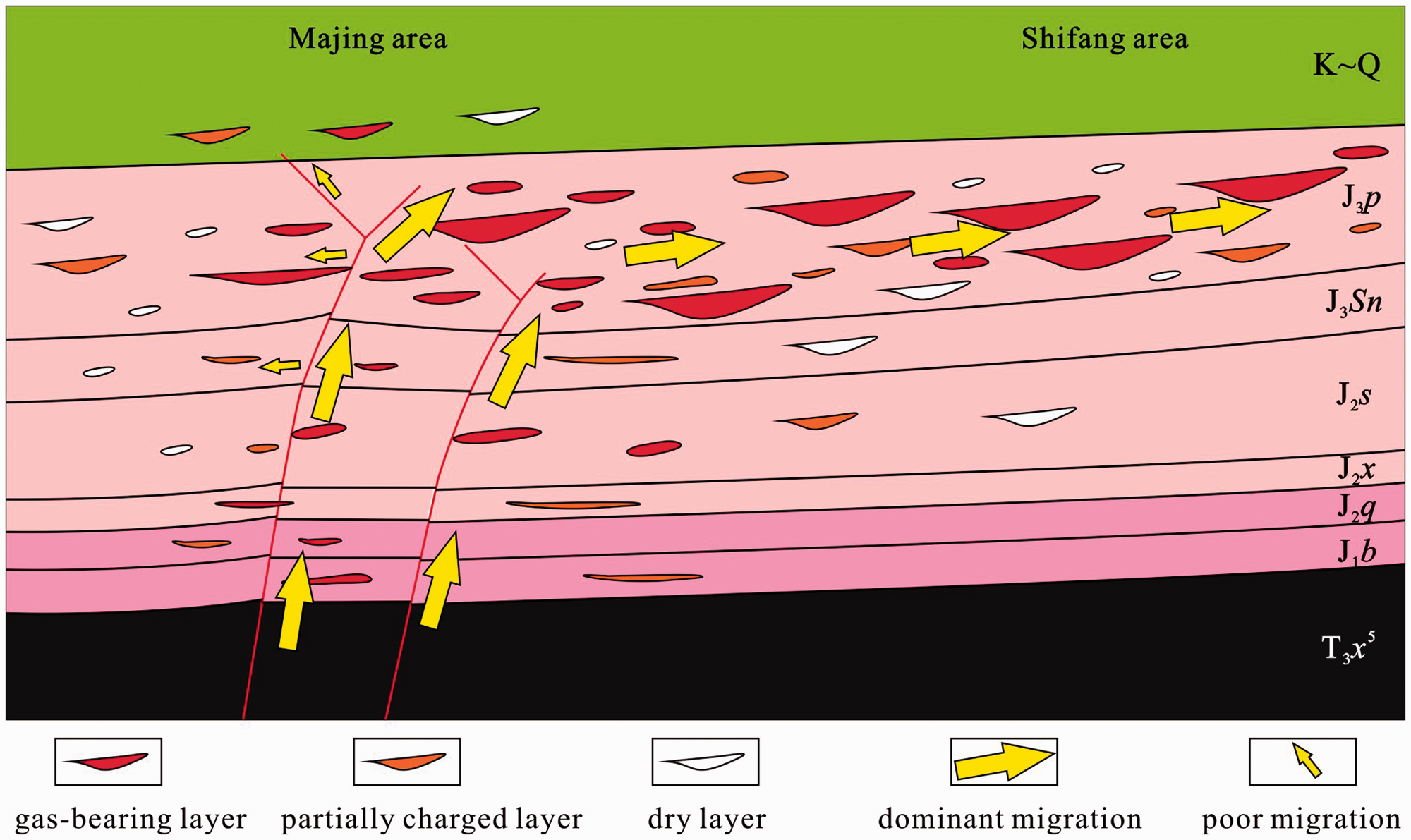
Discussion
Gas migration distance calculations based on relationships among δ13C1, Ro and H
In this section, the δ13C1 vs. Ro vs. H relationships were employed to conduct the gas/source rock correlation and study the gas migration distance. The calculation from Dai and Qi (1989) (Table 2) is suitable for the gases from the Majing-Shifang areas. Actually, the δ13C1 used to calculate the Ro has been altered evidently (decreased) during long lateral migration in J3p reservoirs (Figure 10). Hence, a larger δ13C1 should be used to reasonably estimate the Ro. Fortunately, the difference has minor effect on the determination of source rocks. Furthermore, an important geologic event of various petroliferous basins is the uplift in late stage, which makes the modeled burial depth vs. calculated Ro and present-day burial depth vs. measured Ro relationships not uniform. Therefore, we should take burial history and maturity history into account to calculate the burial depth of gas generation, which was, however, not mentioned in works of Dai and Qi (1989). Simply projecting the calculated Ro to the correlation between the present burial depth and measured Ro will bring an illogical understanding for a complex basin setting.
Continuous vs. conventionally trapped accumulation
The current criteria of tight-sandstone gas is initially from reservoir grading as well as engineering technology rather than considering accumulation conditions (Guo et al., 2013b). The tight-sandstone gas held in reservoirs with porosity < 10% and in-situ permeability < 0.1 mD is not necessarily continuous. In other words, not all tight-sandstone gas is basin-centered gas or continuous-type gas. Some tight-gas sandbodies are, in fact, low-amplitude anticlines or strongly diagenetic faulted stratigraphic traps where the gas is concentrated above the gas–water contact (Camp, 2008; Cant, 2011). Distinct from typical continuous-type gas, the Jurassic tight-sandstone reservoirs in Majing-Shifang areas are far away from the gas source rocks with faults serving as the dominant conducting pathway. Thus, these tight-sandstone gas accumulations occur in low-porosity and low-permeability reservoir rocks in conventional lithological traps, instead of continuous-type gas accumulations or a basin-centered gas system. Gas accumulation of gas within the Jurassic reservoirs was controlled by two factors: (1) presence of fault conduits linking the Triassic source and Jurassic migration pathways and (2) presence of permeable carriers within Jurassic.
Within the tight-sand zones, porosity and permeability are enhanced by the development of microfracture networks, caused by tectonic, overpressure, and diagenetic origins (Lyu et al., 2017; Zeng, 2010). In the Shifang area, where faults rarely developed, microfractures mainly formed due to diagenesis and extra-high pore pressure caused by gas charging into the Jurassic intervals (Guo et al., 2012). The microfracture networks primarily serve as an important storage space and fluid-flow channels in the tight sandstones (Lyu et al., 2017). Once the microfracture networks formed, the fractures act as the favorable conduits for gas migration and they increase the connectivity of the tight gas sandstones by linking tiny pores. Consequently, the gas charging pattern as a piston-forwarding style under gas pressure as Berkenpas (1991) stated could not happen. Therefore, gas typically accumulated in areas with high porosity or large accommodation space, e.g. gas saturation in resultant microfractures and fractured reservoirs is pretty high.
Conclusions
The molecular and carbon isotopic compositions analysis indicates that Jurassic tight gases in Majing-Shifang areas are coal-derived dry gases generated by the primary cracking of kerogen. Gas/source correlation and gas migration distance calculation reveal that gases are mainly sourced from the Upper Triassic humic source rocks (T3x5, the fifth member of the Xujiahe Formation).
Gas accumulations in the Jurassic Penglaizhen Formation were formed with an original vertical migration of about 2–3 km and then a long-distance lateral migration within tight sand layers, which is verified by the decreasing δ13C1 and the general increasing iC4/nC4 in the Penglaizhen Formation. Jurassic tight-sandstone reservoirs in Majing-Shifang areas occur in low-porosity and low-permeability reservoir rocks in conventional lithological traps, rather than continuous-type gas accumulations or basin-centered gas systems, which is controlled by two factors: (1) presence of fault conduits linking the Triassic source and Jurassic migration pathways and (2) presence of permeable carriers within Jurassic.
Footnotes
Acknowledgements
Southwest Branch Company, Sinopec, is thanked for providing background geological data and light hydrocarbon data as well as the permission to publish the results. The anonymous reviewers are gratefully acknowledged for constructive comments that substantially improved the quality of this manuscript. Also, we appreciate the associate editor, Yuzhuang Sun, for suggestions to revise this manuscript.
Declaration of conflicting interests
The author(s) declared no potential conflicts of interest with respect to the research, authorship, and/or publication of this article.
Funding
The author(s) disclosed receipt of the following financial support for the research, authorship, and/or publication of this article: This study was supported by the National Natural Science Foundation of China (41602152).