




Abstract
The condensate gas reservoirs of the Jurassic Ahe Formation in the Dibei area of the Tarim Basin, northwest China are typical tight sandstone gas reservoirs and contain abundant resources. However, the hydrocarbon sources and reservoir accumulation mechanism remain debated. Here the distribution and geochemistry of fluids in the Ahe gas reservoirs are used to investigate the formation of the hydrocarbon reservoirs, including the history of hydrocarbon generation, trap development, and reservoir evolution. Carbon isotopic analyses show that the oil and natural gas of the Ahe Formation originated from different sources. The natural gas was derived from Jurassic coal measure source rocks, whereas the oil has mixed sources of Lower Triassic lacustrine source rocks and minor amounts of coal-derived oil from Jurassic coal measure source rocks. The geochemistry of light hydrocarbon components and n-alkanes shows that the early accumulated oil was later altered by infilling gas due to gas washing. Consequently, n-alkanes in the oil are scarce, whereas naphthenic and aromatic hydrocarbons with the same carbon numbers are relatively abundant. The fluids in the Ahe Formation gas reservoirs have an unusual distribution, where oil is distributed above gas and water is locally produced from the middle of some gas reservoirs. The geochemical characteristics of the fluids show that this anomalous distribution was closely related to the dynamic accumulation of oil and gas. The period of reservoir densification occurred between the two stages of oil and gas accumulation, which led to the early accumulated oil and part of the residual formation water being trapped in the tight reservoir. After later gas filling into the reservoir, the fluids could not undergo gravity differentiation, which accounts for the anomalous distribution of fluids in the Ahe Formation.
Introduction
The Kuqa Depression is a key area of oil and gas exploration in the Tarim Basin of northwest China, which contains abundant natural gas reserves. After the Kela-2 gas field was discovered in 1998, major oil and gas discoveries have been made in the Kelasu thrust belt in the middle and western parts of the Kuqa Depression. However, only a few hydrocarbon traps have been discovered in the northern structural belt of the Kuqa Depression. This reflects the different types of gas reservoirs throughout the Depression. The Kelasu thrust belt is dominated by conventional reservoir and the hydrocarbon distribution is controlled mainly by anticlinal traps, whereas the northern structural belt is dominated by tight sandstone reservoir. The distribution of fluids (i.e. oil, gas, and water) is not controlled solely by structural traps. In addition, the northern part of the Depression is characterized by multistage oil and gas accumulation, with a complicated geological history and very tight reservoir (Yu et al., 2014), which makes exploration difficult. Given the progressive depletion of conventional oil and gas resources, research into and exploitation of unconventional oil and gas resources, such as tight sandstone gas reservoirs, are becoming increasingly important (Baihly et al., 2009; Khlaifat et al., 2011; U.S. Energy Information Administration, 2012).
Jurassic condensate gas reservoirs in the Dibei area in the northern structural belt of the Kuqa Depression are typical examples of tight sandstone gas reservoirs. Previous studies have investigated the hydrocarbon types, accumulation stages, and evolutionary history of tight reservoirs (e.g. Lu et al., 2015; Xing et al., 2011). However, the origin and accumulation mechanism of condensate gas in the Dibei area still remain controversial. The prevailing view is that the Jurassic petroleum was derived from coal measure source rocks (Lu et al., 2016), although there is some evidence for contributions from lacustrine source rocks (Zhuo et al., 2012). Coal has been reported as a source rock for oil and gas (Powell and Boreham, 1994; Singh et al., 2013) and there are several studies which show the relation of coal with oil and gas (Singh, 2012; Singh and Singh, 1994a, 1994b; Singh et al., 2016b, 2016a, 2017). Most previous studies in this area are focused on the fluid distribution along an N–S cross-section to assess whether the Dibei gas reservoir is a deep basin gas reservoir (Lu et al., 2015; Xing et al., 2011). However, few studies have focused on the fluid distribution along an E–W cross-section. In an E–W cross-section through the Dibei gas reservoir, oil, gas, and water show an anomalous distribution, whereby oil is distributed above gas, and water is locally produced from the middle of gas reservoirs. The relationship between this anomalous distribution of fluids and their accumulation mechanism is the focus of the present study.
The geochemistry of formation fluids, such as oil, gas, and water, provides clues to the oil and gas source and migration characteristics (Li et al., 2014; Selby and Creaser, 2005; Selby et al., 2007; Song et al., 2013; Sun et al., 2009; Wang et al., 2008; Zhao et al., 2015), as well as the accumulation and preservation conditions (Formolo et al., 2008; Peters et al., 2005; Song et al., 2012; Strąpoć et al., 2011). In this study, the gas condensate, natural gas, and formation water in the Dibei area have been systematically investigated. The composition and genetic types of fluids and their implications for hydrocarbon accumulation processes are explored. Integrating the hydrocarbon generation and evolutionary history of the source rocks with a regional tectonic model enables us to shed light on the hydrocarbon accumulation processes in the tight sandstone gas reservoirs of the Jurassic Ahe Formation. In turn, this advances our understanding of the anomalous distribution of formation fluids. The present study is also significant in understanding the oil and gas accumulation processes in the northern structural belt of the Kuqa Depression and provides guidance for future exploration in this region.
Geological setting
The Dibei gas field is located in the Dibei region, in the eastern part of the northern structural belt of the Kuqa Depression. The gas field is bordered by the Tugeerming region to the east, the Bashi region to the west, and is connected to the Qiulitage thrust belt and the Yangxia sag to the south (Figure 1). The Dibei structure is an E–W-striking slope zone that dips to the south. The Dibei structure was formed at the end of sedimentation of the Cretaceous Shushanhe Formation. During sedimentation of the Neogene Kuche Formation, which was influenced by the uplift of the northern Tianshan Mountains, the formation in the north of the structure was uplifted to form the slope zone.
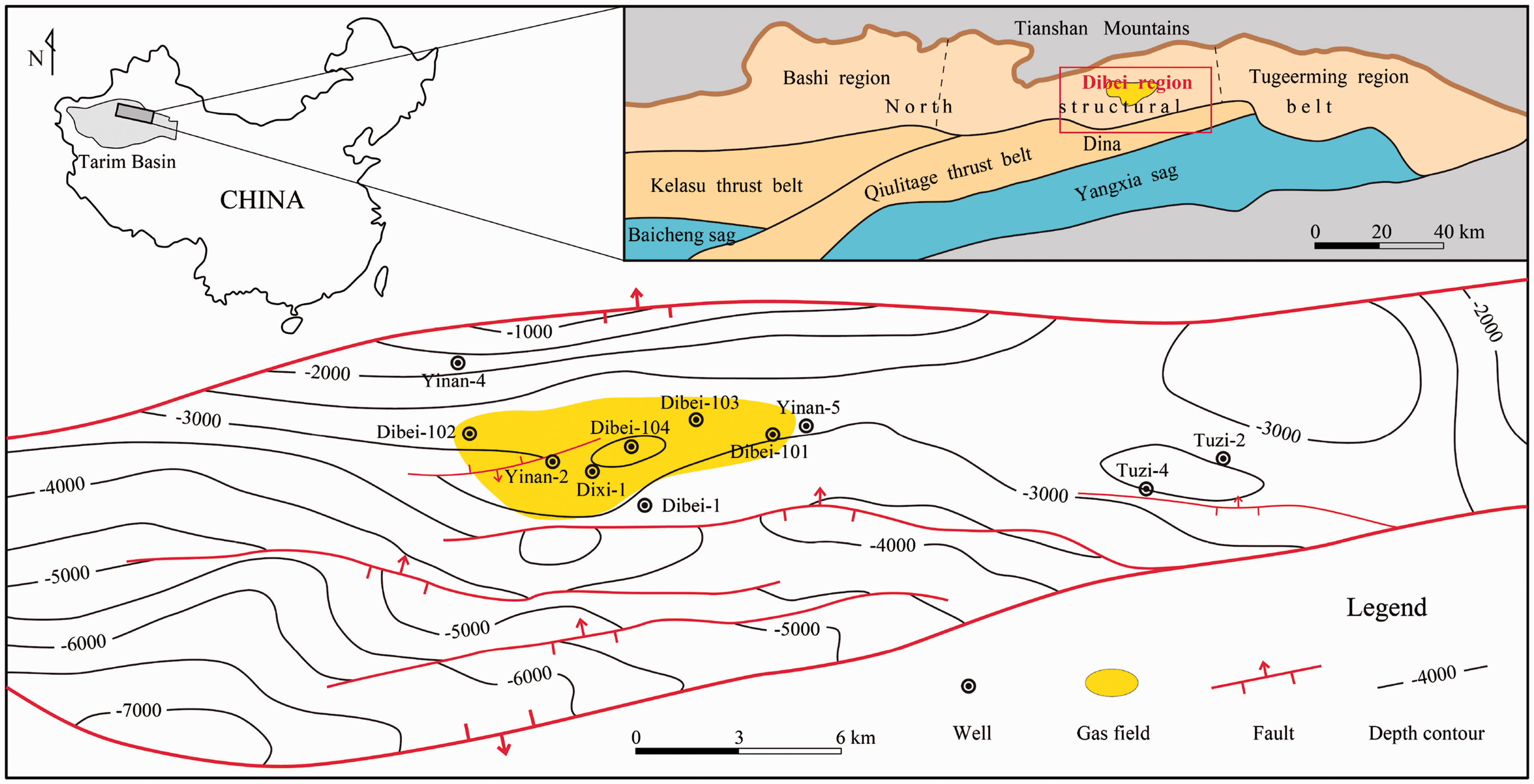
Structural location of Dibei gas field.
Permian, Triassic, Jurassic, Cretaceous, Palaeogene, Neogene, and Quaternary strata have been deposited successively in the Dibei area. In the study area, two sets of source rocks are present: Middle–Lower Triassic lacustrine source rocks and Upper Triassic to Jurassic Taliqike Formation coal measure source rocks (Guang et al., 2014; Ni et al., 2012; Zhuo et al., 2014). The main reservoir in this area is the Lower Jurassic Ahe Formation (J1a). The cap rock on the Ahe Formation is Lower Jurassic mudstone, and the regional cap rocks are gypsum and mudstone of the Neogene Jidike Formation. Therefore, the preservation condition of Ahe Formation is very good. The physical properties of the Ahe Formation reservoir are poor, with an average core porosity of 5.59% and permeability of 0.746 × 10⁻³ µm2, indicating it is a typical tight sandstone reservoir (i.e. porosity < 10% and permeability < 1 × 10⁻³ µm2; Holditch, 2006; Law and Curtis, 2002). The reservoir in the Ahe Formation is a condensate gas reservoir, which produces both gas condensate and natural gas. The reservoir is not completely controlled by a structural trap and the gas column height is larger than the trap height.
Samples and experiments
In this study, about 300 fluids data (from 15 wells distributed over Dibei area) were provided by the Tarim Oilfield Company, including gas components data, gas carbon isotope data, physical property data of gas condensate, and analysing data of formation water samples. These fluids were mainly from the Jurassic Ahe Formation, but some were from the Jurassic Yangxia, Palaeogene Kumugeliemu, and Neogene Jidike Formations for comparison. In addition, nine crude oil samples (mainly from the Ahe Formation) were taken from six wells in the study area in order to identify their geochemical properties. These oil samples were deasphalted using n-hexane first and then fractionated using column chromatography (silica gel versus alumina 3:1) into saturated hydrocarbon, aromatic hydrocarbon, and non-hydrocarbon components by sequential elution with n-hexane, toluene, and chloroform, then the saturated hydrocarbons were further subjected to gas chromatography–mass spectrometry (GC–MS); the oils and their fractions were further subjected to stable carbon isotope compositions analysis, respectively.
The GC–MS is a Thermo-Finnigan Trace-DSQ instrument equipped with a 60 m HP-5 elastic capillary column (0.25 mm inner diameter; 0.25 µm film thickness). Ultrahigh-purity helium (99.999%) was used as a carrier gas with a flow rate of 1 ml/min. The initial temperature of the oven was set at 50°C, then increased to 120°C at a rate of 20°C/min, and then increased to 310°C at a rate of 4°C/min, with a final hold of 30 min. A full-scan mode was taken, utilizing electron impact ionization (70 eV) and emission current of 100 mA. D4C27–cholestane and nC24D50 were added in the samples as internal standard compounds during GC–MS analysis. The concentration of each saturated hydrocarbon compound was quantified through calculating its peak area in the mass chromatogram.
The stable carbon isotope compositions (δ13C) analysis was carried out with a Flash HT EA-MAT 253 isotope ratio mass spectrometer, using ultrahigh-purity helium (99.999%) as a carrier gas with a flow rate of 100 ml/min and blowback flow velocity of 250 ml/min. The combustion gas was pure oxygen (99.995%), with a flow rate of 250 ml/min and reactor temperature of 980°C. The oils and their fractions were burned to produce individual CO2 peaks in the reaction furnace and their δ13C values were measured by integration of the CO2 peaks. A CO2 with known δ13CPDB value was pulsed into the mass spectrometer as reference gas; the δ13C values of the samples were reported in the δ notation relative to the reference gas. The average values of at least two runs for each sample were reported; only results with a standard deviation of less than 0.5‰ were used.
Natural gas components and geochemical characteristics
The Jurassic natural gas reservoirs in the Dibei area are distributed mainly in the Ahe Formation. Many wells (e.g. Yinan-2 and Dibei-104) have high oil and gas production flow in the Ahe Formation, and oil and gas resources are abundant. The Jurassic Yangxia Formation (J1y) also contains a small amount of oil and gas. Gas in the Ahe Formation is composed of both hydrocarbons and non-hydrocarbons, and the methane content in the hydrocarbon gases is high with a dry coefficient > 0.9, which reflects a relatively high thermal evolution. The ethane content is 4–8%, whereas the propane and heavy hydrocarbon contents are low. The non-hydrocarbon gas content in the Ahe Formation is relatively low (2–6%) and comprises mainly N2 and CO2. Other non-hydrocarbon gases, such as H2, H2S, and He, occur at very low concentrations (<0.1%) (Table 1).
Natural gas component characteristics of Ahe Formation in Dibei Area.
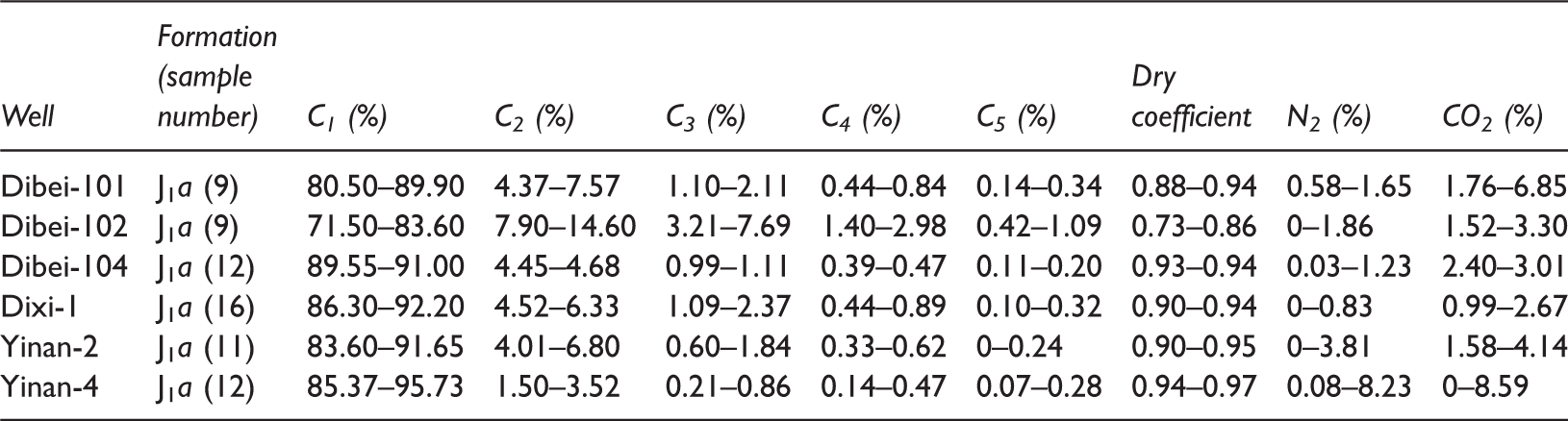
Dry coefficient is the ratio of C1 and C1–5.
The carbon isotope values of methane gas (δ13C1) vary from −35.99 to −31.10‰. δ13C2 vary from −27.56 to −24.55‰, δ13C3 from −24.35 to −22.90‰, and δ13C4 from −24.73 to −22.78‰. Carbon isotope values of methane, ethane, propane, and butane conform to the characteristic carbon isotope series of δ13C1 < δ13C2 < δ13C3 < δ13C4 (with a small inversion between C3 and iC4), which is in accordance with the carbon isotope values of organic-derived gas (Dai et al., 2004) (Figure 2).
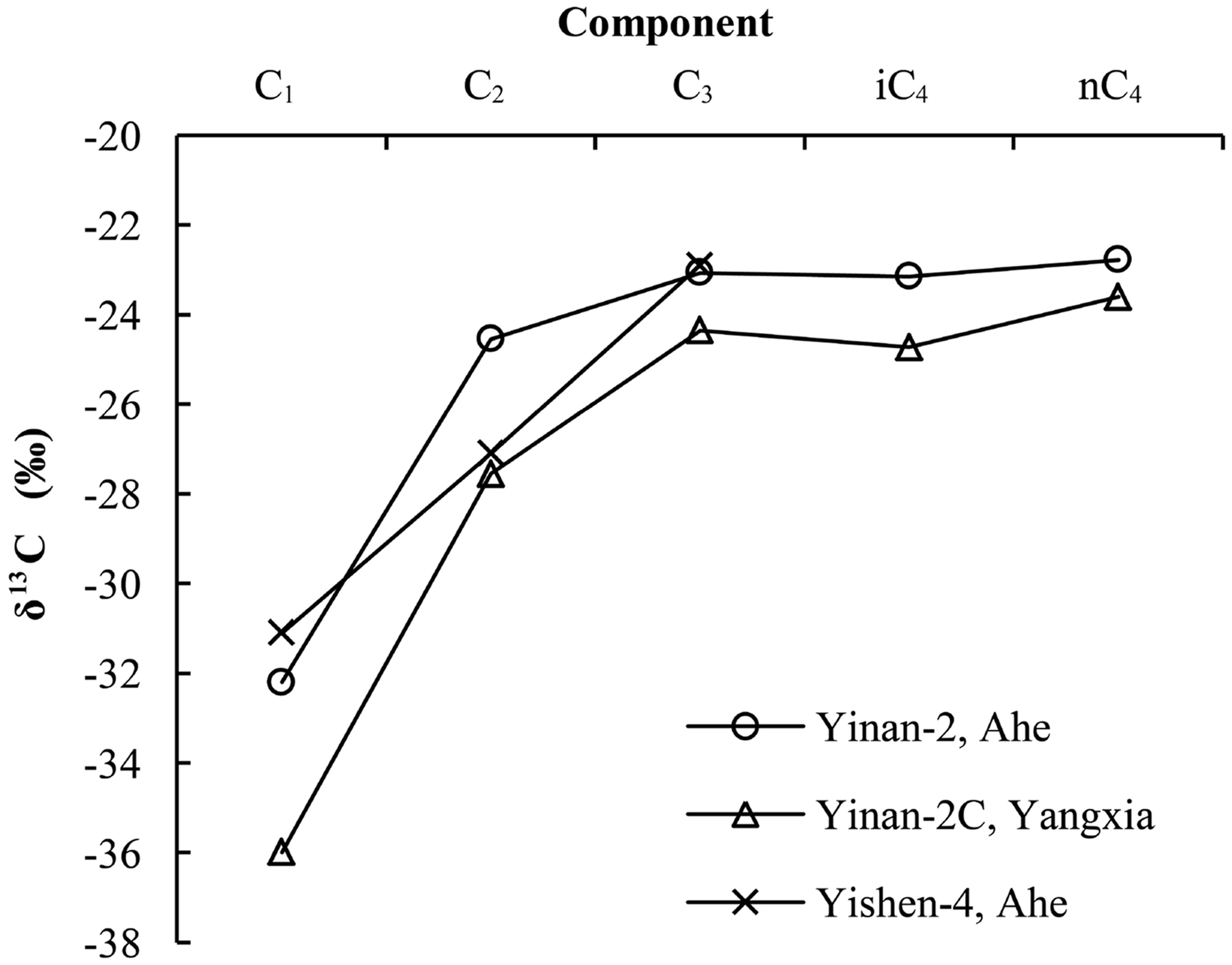
Characteristics of alkane carbon isotope of the Jurassic reservoirs in Dibei area.
The methane carbon isotope value is readily influenced by thermal maturation and migration–fractionation processes (Rooney et al., 1995). Therefore, methane carbon isotopes are only used to determine gas genetic types in the low maturity stages of organic matter evolution. Ethane carbon isotopes typically retain their kerogen signature and are therefore effective in distinguishing the sources of natural gas. Dai (1993) analysed the genetic types of natural gas in the foreland basins of China and showed that the δ13C2 values of coal-derived gas are more than −25.1‰, δ13C2 values of oil-derived gas are less than −28.8‰, and δ13C2 values are between −28.8 and −25.1‰, indicating the mixing of coal- and oil-derived gas. Based on this classification, the Dibei natural gas is classed as coal-derived gas, which indicates that the natural gas was derived from coal measure source rocks in the study area.
Bao et al. (2007) reported the following relationship between methane carbon isotope values and the maturity (Ro) of coal-derived gas in the Kuqa Depression

Plug methane carbon isotope values into the above equation, yields Ro values about 1.2–1.7%, which demonstrates the relatively high maturity of the Ahe Formation natural gas.
Distribution and geochemical characteristics of gas condensate
The gas reservoirs of the Ahe Formation produce mainly natural gas, generally accompanied by gas condensate. The condensate is of good quality, transparent, and light or bright yellow in colour. The gas condensate is characterized by a low density (0.74–0.84 g/cm3 at 20°C), low dynamic viscosity (0.35–2.25 mPa s at 50°C), low freezing point (−30 to 6°C), medium wax content (1.39–12.60%), and low sulphur content (0.01–0.35%) (Table 2). The combined gum and asphalt content is 0–3.38%, and the relatively high wax contents are related to gas washing fractionation.
Physical properties of the Jurassic gas condensate in Dibei area.
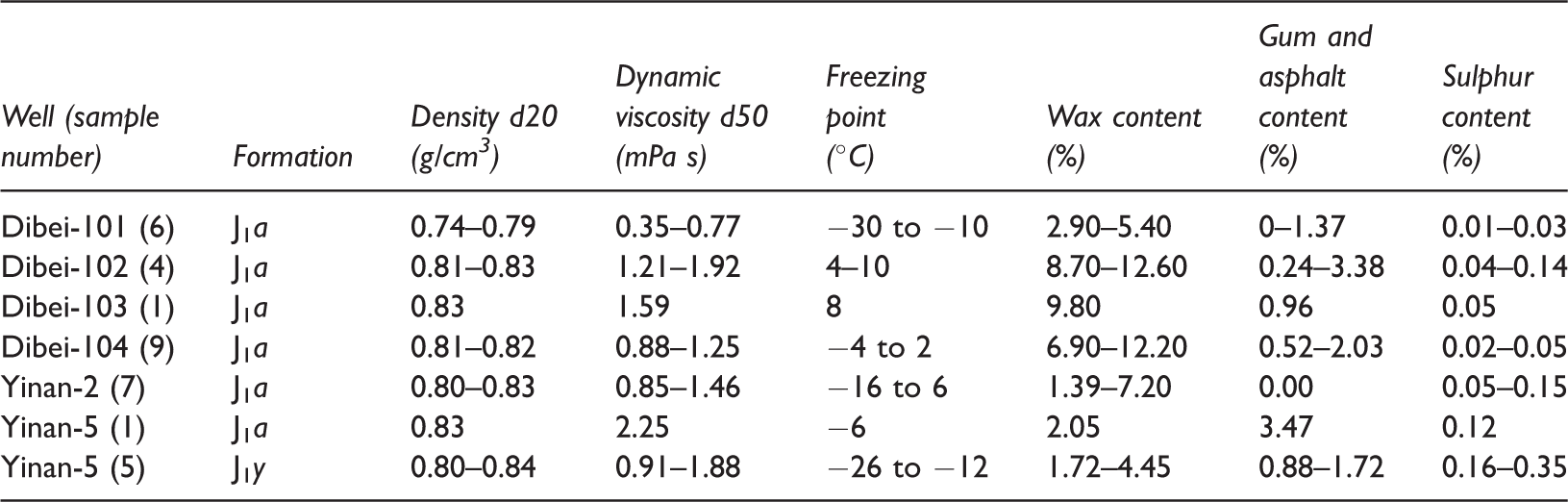
d20: 20°C; d50: 50°C.
The δ13C values of gas condensates, saturated hydrocarbons, and aromatic hydrocarbons in the Ahe Formation vary from −27.5 to −25.7‰, −28.4 to −25.7‰, and −27.0 to −24.8‰, respectively, which are significantly lighter than the values for gas condensates and their fractions in the shallow Palaeogene and Neogene reservoirs (Table 3). In general, the carbon isotope values of coal-derived gas condensates are heavier than those of oil-derived gas condensates. According to criteria for the identification of genetic types of gas condensate (Table 4), the carbon isotope values of the Jurassic gas condensates show a mixed source of coal- and oil-derived gas condensates, whereas the shallow gas condensates show typical characteristics of coal-derived gas condensate. The study area contains two sets of hydrocarbon source rocks: Middle–Lower Triassic lacustrine source rocks, and coal measure source rocks of the Upper Triassic to Jurassic Taliqike Formation. The organic macerals in both of these source rocks are similar, with the Triassic lacustrine source rocks being dominated by type III organic matter with subordinate type II organic matter, whereas the coal measure source rocks are dominated by type III organic matter (Singh, 2012; Singh and Singh, 1994a, 1994b; Singh et al., 2013, 2017; Wang et al., 2009). According to the carbon isotope data, the shallow Palaeogene and Neogene gas condensates in the Dibei area are derived mainly from Jurassic coal measure source rocks, and the gas condensates in the Ahe Formation are derived mainly from Triassic lacustrine source rocks along with minor amounts of oil derived from Jurassic coal measure source rocks. Fluorescence spectra of inclusions also indicate that the Jurassic gas condensates have mixed sources (Fan et al., 2014).
The carbon isotope δ13C characteristics of gas condensate in the east of Kuqa Depression.
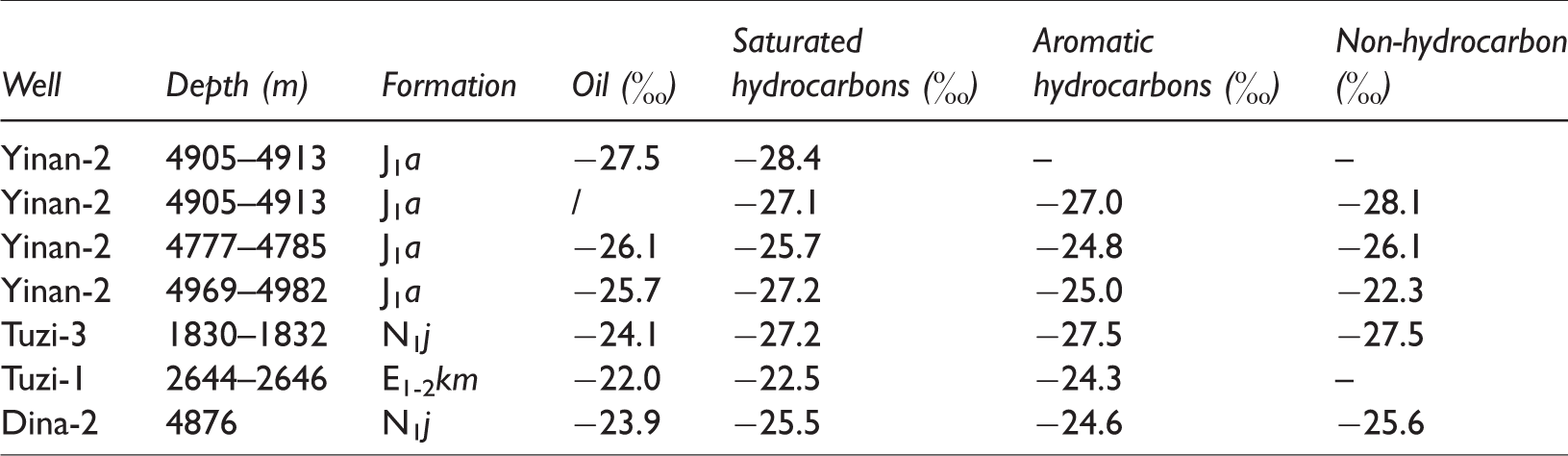
The identification criterion of gas condensate genetic types.

Source: Data derived from Dai et al. (1987).
GC–MS analyses show that the n-alkanes of the Jurassic gas condensate exhibit a unimodal distribution without an obvious odd–even predominance. The maximum carbon number is C17–C20, Pr/Ph = 1.05–2.93, and there is some degree of pristane domination (Table 5). The C27(20R)/C29(20R) ratios of the steranes vary from 0.46 to 0.78, with a degree of C29-sterane domination. Amongst the hopane compounds, the trisnorneohopane (Ts) is slightly lower than the trisnorhopane (Tm), and the C30-hopane abundance is significantly high, whereas C34- and C35-hopanes are relatively low. All these characteristics are indicative of parental organic matter that formed in a partially oxidized, lacustrine depositional environment, but which also contain an input of terrigenous higher plant material. This result is consistent with the Triassic lacustrine source rocks (Figure 3).
Selected geochemical parameters for gas condensate in Dibei area.
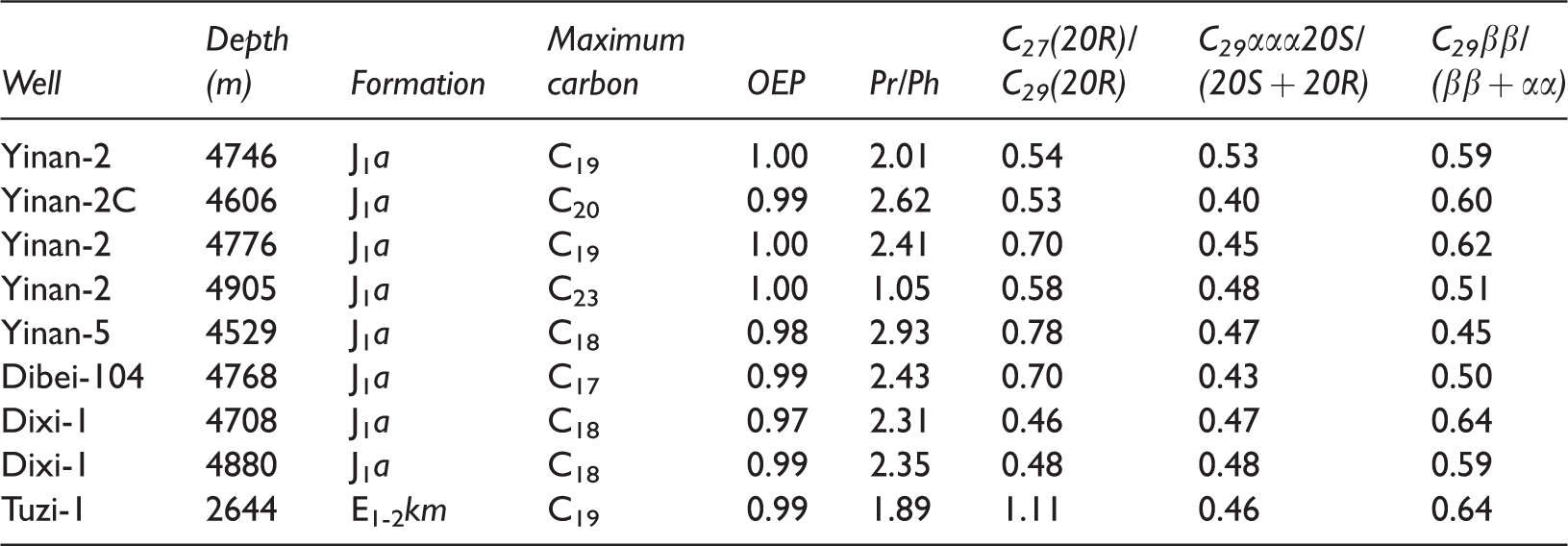
OEP: odd–even predominance.
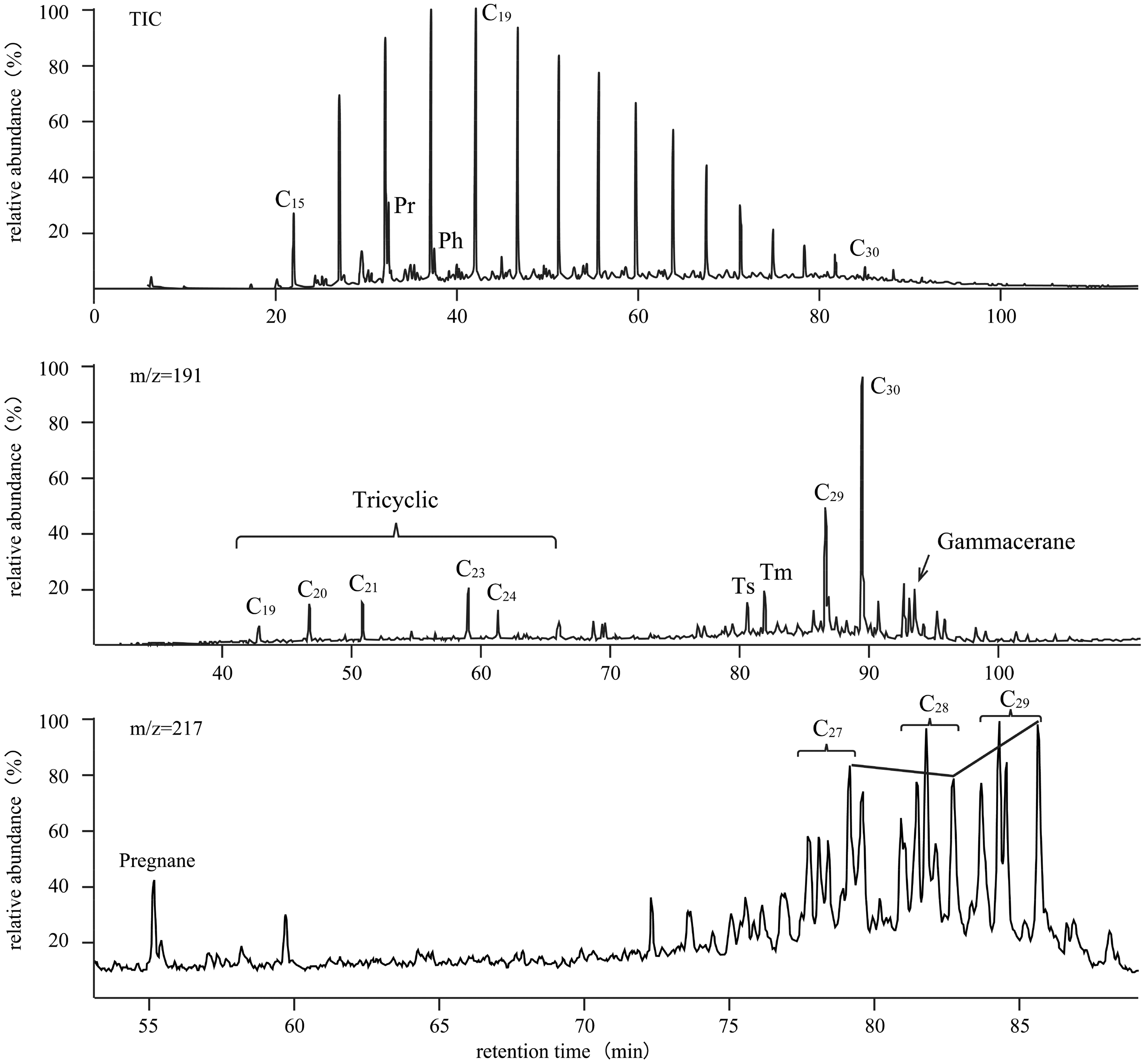
GC–MS of oil in Ahe Formation of well Yinan-5 (4529.5–4538.5 m).
The ααα20S/(20S + 20R) and ββ/(ββ + αα) ratios of C29-steranes are commonly used as maturity indicators, with distinct characteristics from the immature to mature stages. The equilibrium point of ααα20S/(20S + 20R) is 0.55 (Seifert and Moldowan, 1986) and that for ββ/(ββ + αα) is 0.70 (Peters and Moldowan, 1993). The ααα20S/(20S + 20R) ratios of C29-sterane in oil samples from the Ahe Formation vary between 0.40 and 0.53, and the ββ/(ββ + αα) ratio ranges from 0.45 to 0.64. The corresponding Ro value is 0.7–1.0%, indicating that the oil is at the mature stage. Typically, in the mature to highly mature stage, the ββ/(ββ + αα) ratio is a more effective indicator of maturity (Figure 4). The maturity difference between the gas condensate and natural gas is significant, indicating different accumulation times.
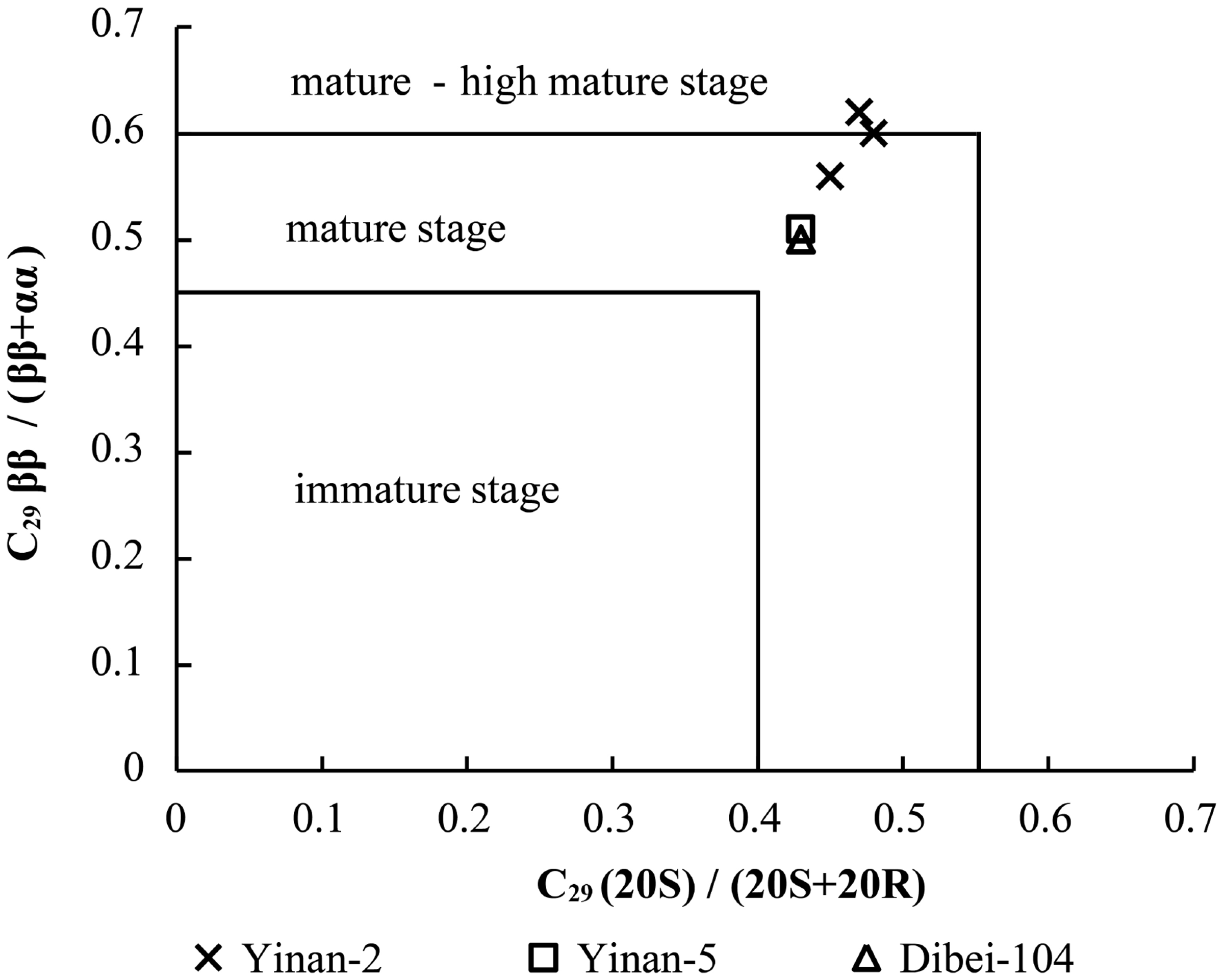
The relationship between C2920S/(20S + 20R) and C29ββ/(ββ + αα) ratios of oil in Ahe Formation.
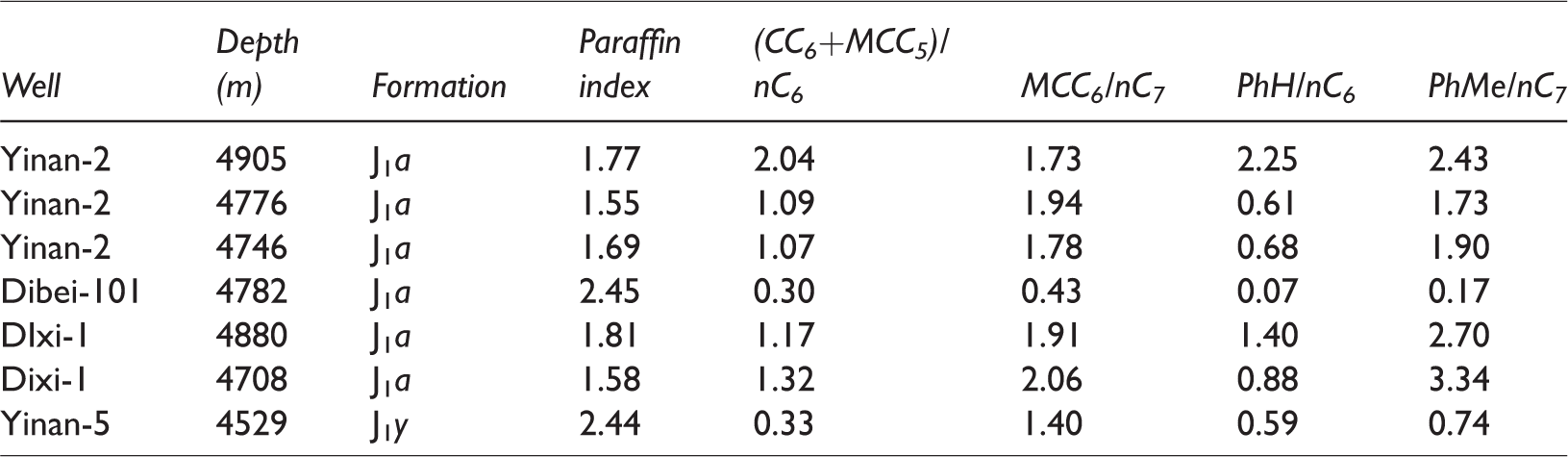
We envisage a process where early accumulated oil was later mixed with large amounts of gas under conditions of high temperature and pressure. During this process some of the light oil component got dissolved in the gas phase and formed a secondary condensate gas reservoir via a process called gas washing. The reservoir in the Kuqa area is characterized by multistage hydrocarbon accumulation, involving an early accumulation of oil and later infilling of natural gas, which led to a resource comprising limited oil and abundant gas. The late-stage gas filling had a strong alteration effect on the oil reservoirs. The Kela, Dibei, and Dina areas in the Kuqa Depression experienced gas washing (Zhang et al., 2010). Gas washing not only impacts physical properties (e.g. density, viscosity, wax content, and freezing point), but also changes the chemical composition of crude oil. Some light hydrocarbon indicators (e.g. paraffin index and aromaticity) can be used to indicate the intensity of gas washing. For hydrocarbons with the same carbon number, gas washing fractionation causes the relative depletion of n-alkanes in the gas condensate and the relative enrichment of naphthene and aromatic hydrocarbons (Meulbroek et al., 1998). A comparison of light hydrocarbon parameters of the gas condensate in the Jurassic gas reservoir shows that naphthene- and benzene-series aromatic hydrocarbons are dominant compared with n-alkanes (Table 6), indicating that gas washing fractionation has occurred. Samples from the Dibei-101 and Yinan-5 wells on the edge of the gas reservoir show relatively weak gas-washing fractionation, because these wells are on the margin of the structure, where the gas supply was low.
The comparison of light hydrocarbon parameters of the Jurassic gas condensate in Dibei area.
Kissin (1987) reported the following linear relationship between carbon number and the logarithm of molar concentration of n-alkanes in regular oil

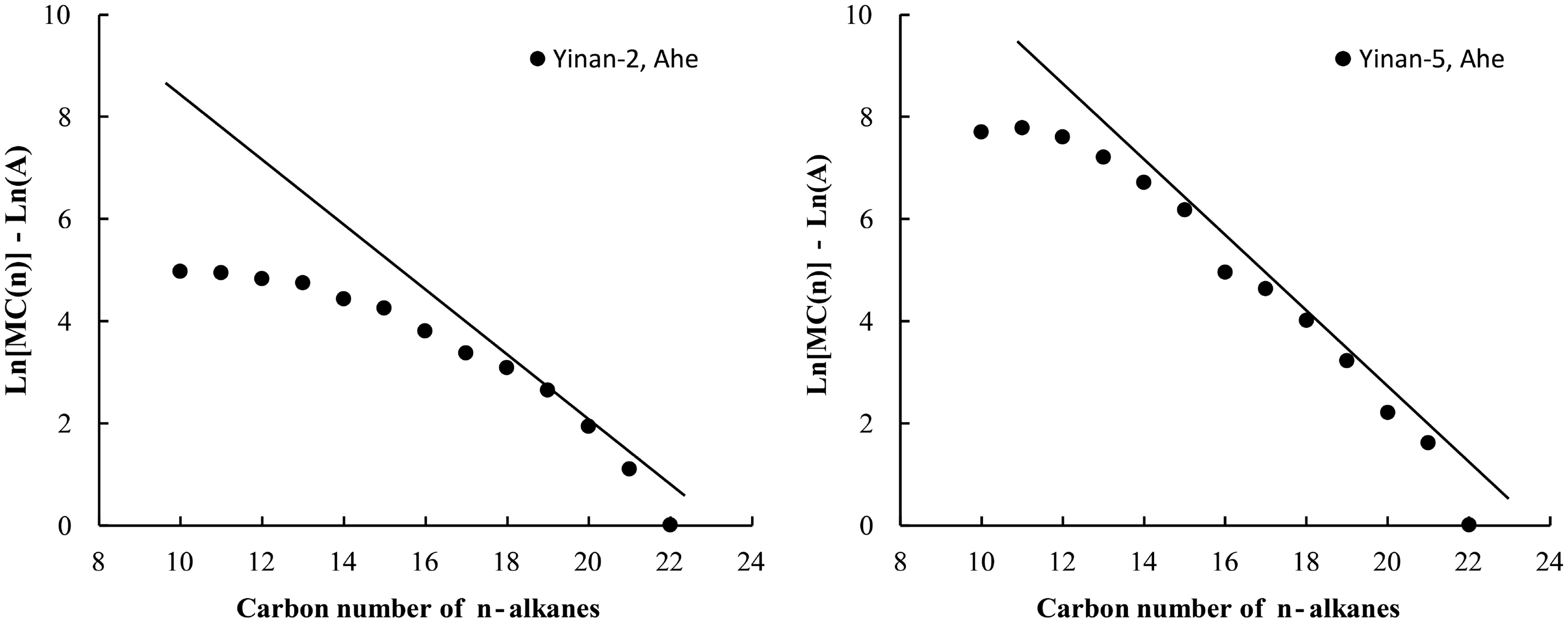
Graph of relationship between the carbon number and the logarithm of molar concentration of n-alkanes of the gas condensate in Ahe Formation, Dibei area.
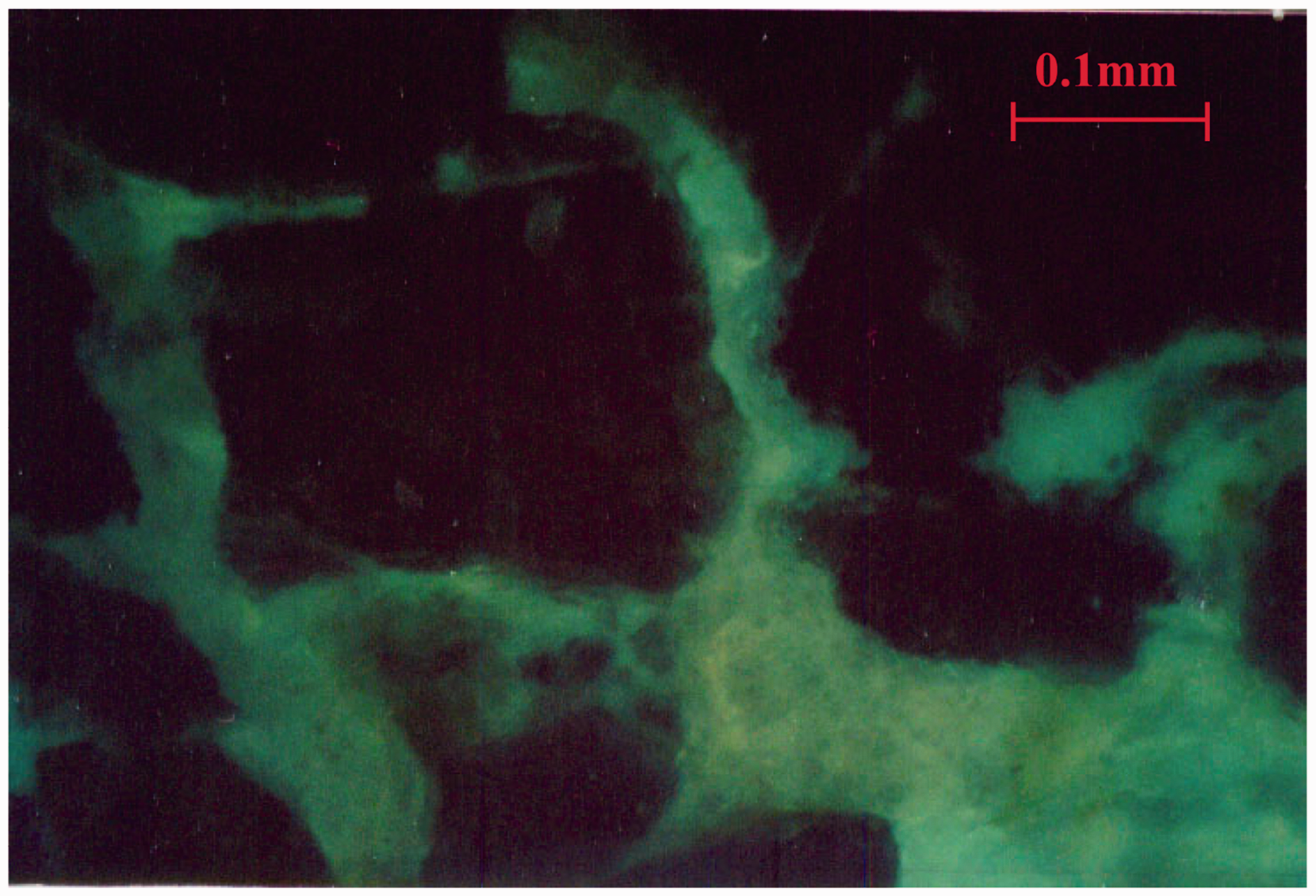
Thin section of Well Yinan-2C in 4746 m, grain margin fracture with yellowish white oily asphalt.
Distribution and geochemical characteristics of formation water
Wells in the Dibei area have different levels of water output. The cations in the formation water are mainly K+ and Na+ with concentrations of 300–32,790 mg/l. Chloride is the dominant anion with concentrations of 310–36,000 mg/l. Based on the Sulin classification, the formation water type in the Ahe Formation is mainly calcium chloride (CaCl2), with subordinate sodium bicarbonate (NaHCO3), and salinity of the formation water is 1000–70,000 mg/l. The Yinan-4 and Dibei-101 wells have shown high water output during well testing and are characterized by high salinity (16,802–71,217 mg/l) and high concentrations of chloride ions (9005–36,000 mg/l), which are typical characteristics of free water. Other wells with low water output have formation waters with low salinity and low chloride ion concentrations, which are characteristics of condensate water (Table 7).
The chemical characteristics of formation water in Ahe Formation, Dibei area.
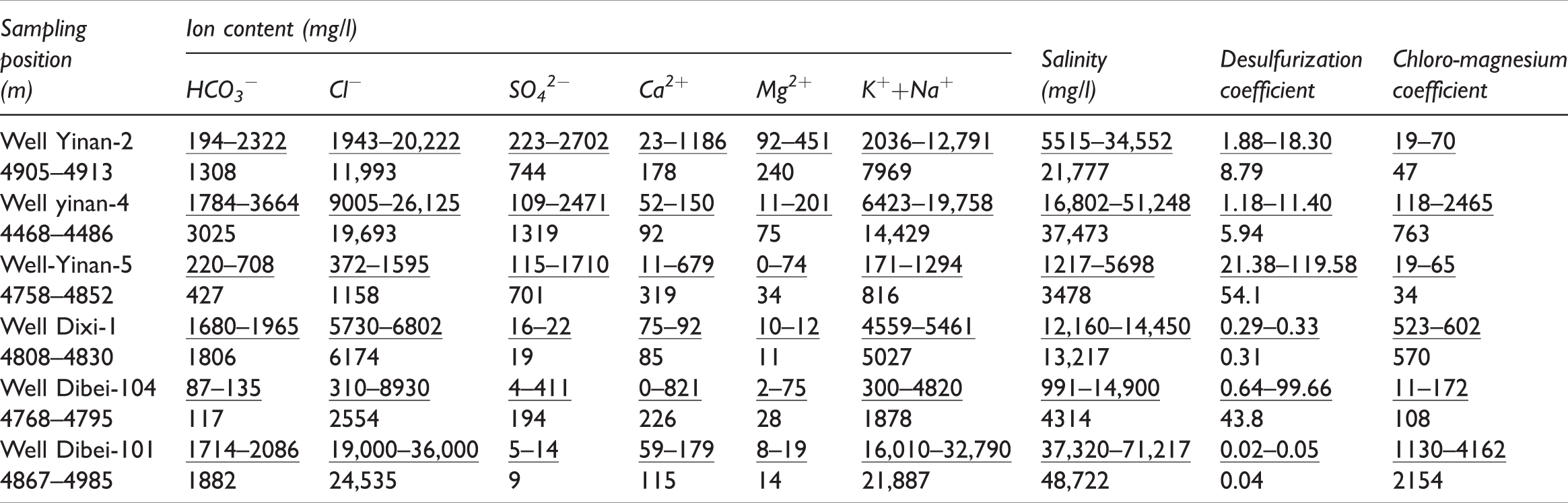
Although the formation waters of the Yinan-4 and Dibei-101 wells have free water characteristics, they have unusual coefficients of desulfurization (r
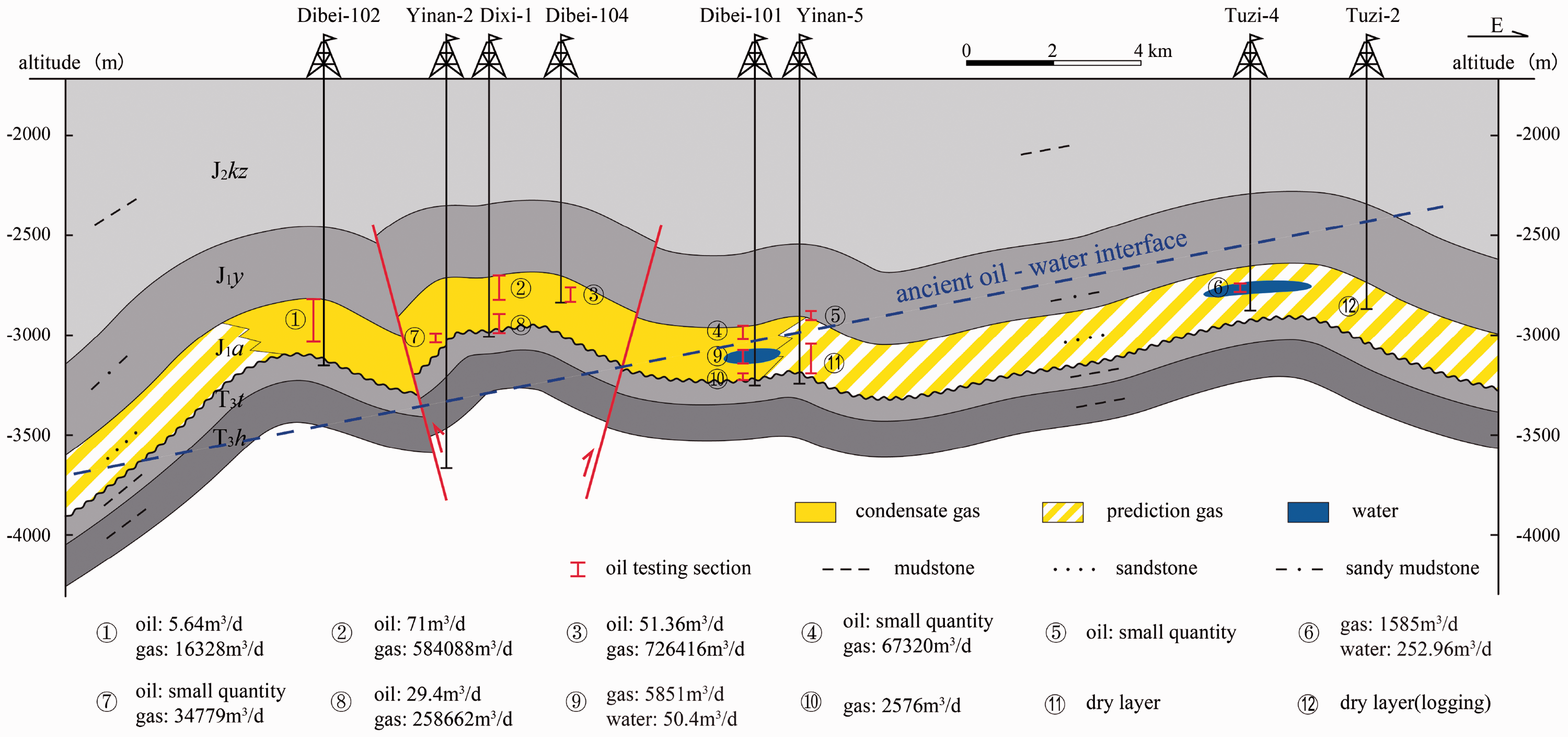
East–West gas reservoir cross-section of Jurassic in Dibei area.
The oil testing results of wells show an obvious oil–water interface within the Ahe Formation in the study area (Figure 7). Above the interface, all wells are tested and produce gas condensate, while most wells produce formation water (or showed ancient aquifer) under the interface. This indicates that before the natural gas filled in, there is the oil layer of ancient reservoir above the interface and there lies the ancient aquifer below the interface. The ancient oil–water interface dips to the southwest, as during sedimentation of Neogene Kuche Formation (the reservoir of Ahe Formation had highly compacted and tight), the strata in the Dibei area were tilted to the southwest by uplift of the Tianshan Mountains, rapid subsidence of strata in the Kuqa Depression, and gradual uplift of the Tugeerming structure (eastern Dibei) (Neng et al., 2012).
Hydrocarbon accumulation stage and accumulation process
Well testing results show that the gas/oil ratio is low, while the gas condensate content is high, in the Dibei-102, Dixi-1, and Dibei-104 wells (Figure 7), which are all located in a structural high of the condensate gas reservoir of the Ahe Formation. The gas/oil ratio is higher and the gas condensate content is lower in the Yinan-2 and Dibei-101 wells, which are in a structurally lower location. The lower part of the Dibei-101 well even produces pure natural gas, without any gas condensate. The results of single well testing have shown the same pattern. These results reflect the anomalous distribution of fluids in the Ahe Formation, where oil is distributed above gas, in contrast to conventional oil and gas reservoirs. Gravity differentiation of conventional oil and gas reservoirs result in less dense fluid, such as gas, being distributed in the upper part of the trap, while denser fluid, such as oil, being distributed in the lower part.
The anomalous distribution of fluids in the Ahe Formation is closely related to the oil and gas accumulation process. Jiang et al. (2015) classified tight sandstone gas reservoirs into three types based on the timing of gas charging and reservoir tightening, namely the accumulation–densification, densification–accumulation, and composite types. The three types of reservoir differ in terms of the reservoir-forming dynamics and fluid distribution. In the accumulation–densification type, the reservoir is not tight during gas accumulation and natural gas accumulated due to buoyancy, meaning that the fluids in the reservoir can be differentiated by gravity as in a conventional gas reservoir. In the densification–accumulation type, the reservoir is already tight prior to gas accumulation, and the natural gas gradually displaces formation water from the bottom to the top due to hydrocarbon generation pressurization and capillary force, meaning that the gas reservoir is not differentiated by gravity(Coskey, 2004). The composite type includes features of both the accumulation–densification and densification–accumulation types.
Hydrocarbon fluid inclusions and homogenization temperatures are widely used to investigate the hydrocarbon accumulation stage (e.g. Haszeldine et al., 1984; Karlsen et al., 1993). Fluid inclusion data reveal two stages of hydrocarbon accumulation in the Dibei area, with the first being oil filling and the second being natural gas filling. Integrated with the thermal evolution of the hydrocarbon source rocks, it can be shown that oil accumulation took place during the sedimentation of the Neogene Jidike to Kangcun Formations (20–10 Ma) and that gas accumulation took place during and after sedimentation of the Neogene Kuqa Formation (5–0 Ma) (Li et al., 2016). The pore evolution of the reservoir shows that reservoir densification took place between the two accumulation stages, which was during the sedimentation of the Neogene Kangcun to Kuqa Formations (10–8 Ma) (Li et al., 2013; Liu et al., 2013) (Figure 8). Thus, the condensate gas reservoir of the Ahe Formation is of the densification–accumulation type.
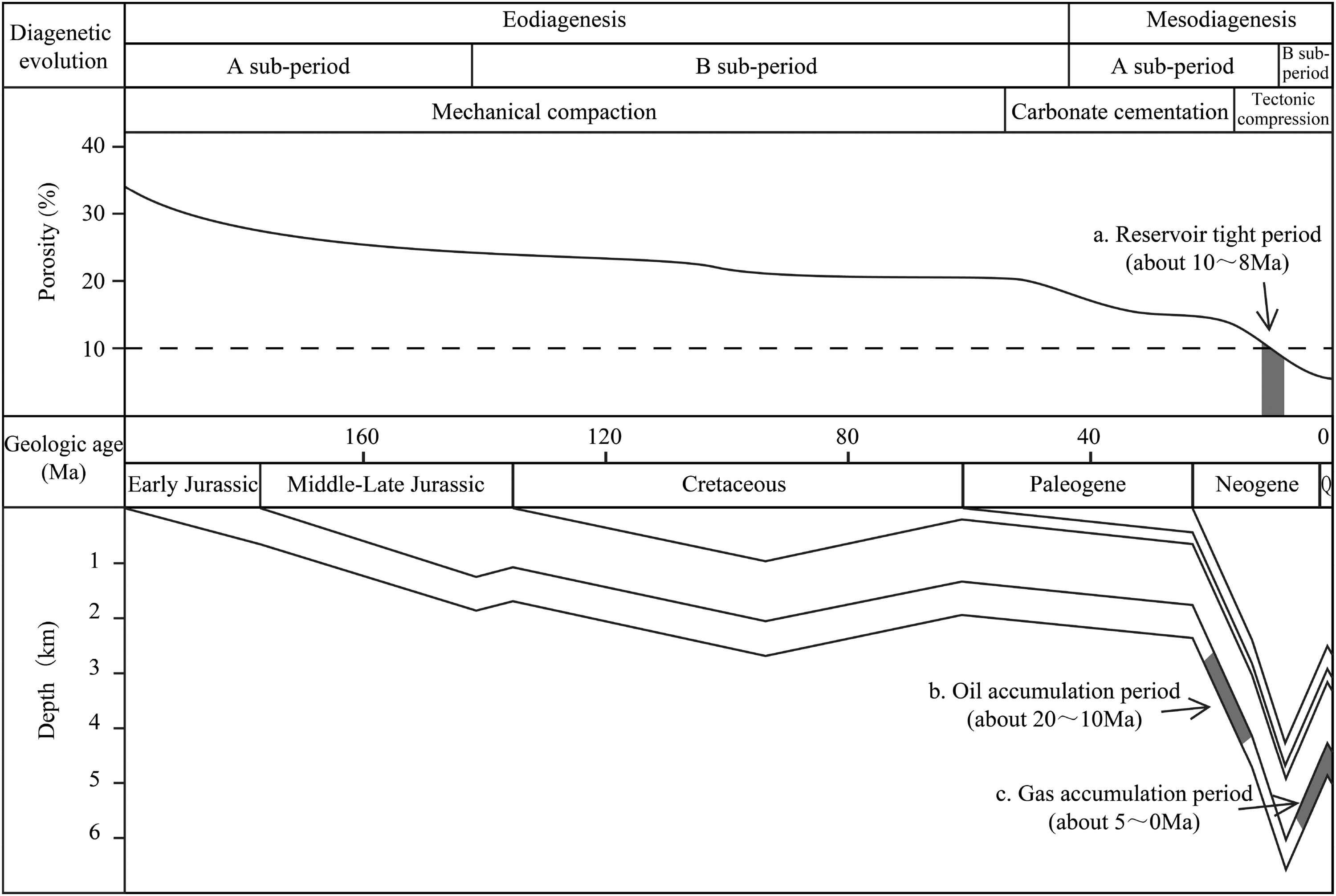
The pore evolution history and structural burial history of reservoir of Ahe Formation, Dibei area. Source:a from Li et al. (2013); b and c from Li et al. (2016).
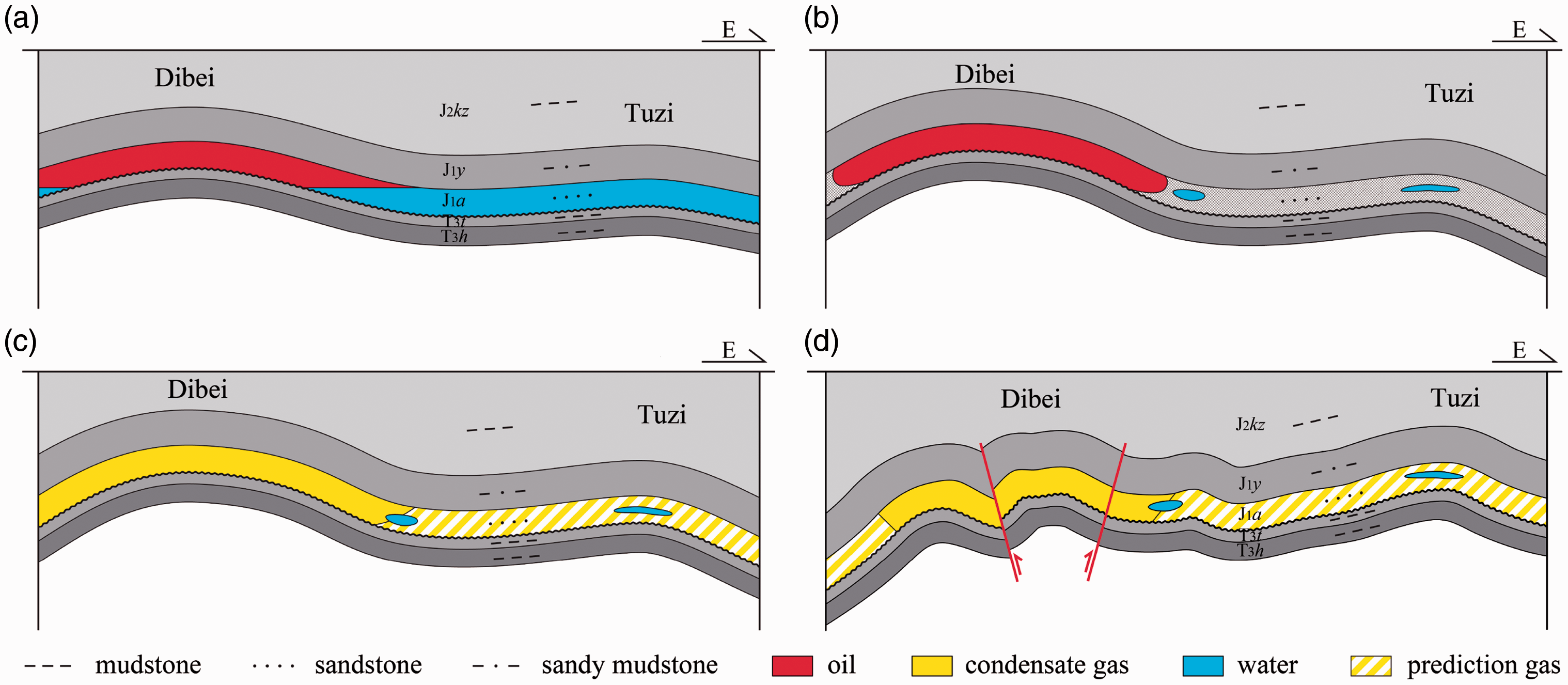
The sketch map of the dynamic reservoir forming process of condensate gas reservoir in Ahe Formation. (a) Neogene Jidike Formation sedimentary period, (b) Neogene Kangcun Formation sedimentary period, (c) Neogene Kuqa Formation sedimentary period, and (d) present.
Integrating the above analysis with the regional tectonic history, the following evolutionary stages for the Dibei hydrocarbon resource are proposed.
Triassic lacustrine source rocks in the Dibei area entered the peak period of oil generation and discharge during sedimentation of the Neogene Jidike Formation. Oil migrated upwards into the Ahe Formation trap, which formed the ancient oil reservoir. The coal measure source rocks in the study area then entered their peak period of oil generation during sedimentation of the Neogene Kangcun Formation, which led the oil in the ancient oil reservoir of the Ahe Formation to be partly mixed with coal-derived oil (Figure 9(a)). During sedimentation of the Neogene Kuqa to Kangcun Formations, the Tianshan Mountains were gradually uplifted and the Kuqa Depression rapidly subsided. The Ahe Formation reservoir was gradually densified due to tectonic compression and burial compaction. The oil and part of the residual formation water (e.g. the formation water of the Dibei-101 well) in the ancient oil reservoir were trapped in the densified reservoir (Figure 9(b)). With this rapid subsidence, the Jurassic coal measure source rocks quickly entered the peak period of gas generation. From the end of sedimentation of the Neogene Kuqa Formation until the present day, large amounts of gas were generated and migrated into the tight reservoir of the Ahe Formation. Consequently, this transformed the oil in the upper part of the trap by gas washing, and formed the anomalous fluids distribution, with condensate and pure gas reservoirs in the upper and lower parts of the trap, respectively (Figure 9(c)). At the end of the Himalayan tectonic event, tectonism in the northern Kuqa area became more intense. Continued subsidence of the Kuqa Depression and uplift of the Tugeerming area further affected the structural characteristics of the Dibei area, which tilted the strata to the southwest and resulted in the present-day geological features (Figure 9(d)).
Conclusions
Isotopic characteristics and biomarker compound analyses of oil and gas indicate that the gas condensate and natural gas of the Jurassic Ahe Formation in the Dibei area were derived from different sources. The natural gas was derived from Jurassic coal measure source rocks, whereas the gas condensate was derived mainly from Lower Triassic lacustrine source rocks, although it may also contain some oil derived from the Jurassic coal measure source rocks. Analysis of light hydrocarbon components and n-alkanes in the gas condensates from the Ahe Formation indicates that the early trapped oil was later altered by infilling gas through gas washing. This led to the low n-alkane contents in the oil and the relative high abundance of compounds such as naphthenic and aromatic hydrocarbons. The fluid distribution in the Ahe Formation is closely related to the hydrocarbon accumulation process. The period of reservoir densification occurred between the two stages of oil and gas accumulation, which led the early oil and part of the residual formation water to be trapped in the tight reservoir. After later gas filling into the reservoir, the fluids could not undergo gravity differentiation, which accounts for the anomalous distribution of fluids in the Ahe Formation.
Footnotes
Acknowledgements
The authors are grateful to the anonymous reviewers for their careful reviews and detailed comments.
Declaration of conflicting interests
The author(s) declared no potential conflicts of interest with respect to the research, authorship, and/or publication of this article.
Funding
The author(s) disclosed receipt of the following financial support for the research, authorship, and/or publication of this article: This work was supported by the National Natural Science Foundation of China (No. 41473053) and Chinese Academy of Geological Sciences Research Fund (No. YYWF201707).