




Abstract
The Late Triassic Xujiahe Formation is a key target for tight gas in the northern Sichuan Basin. Thin section, scanning electron microscopy, X-ray diffraction, porosity and permeability analyses have been performed to delineate the diagenesis and reservoir characteristics of Xujiahe sandstone. The results show that the Xujiahe Formation contains feldspathic litharenite, litharenite, sublitharenite and quartzarenite sandstone. Sandstones of the Xujiahe Formation are characterized by low feldspar content and both secondary and micro-fracture porosity. Porosity and permeability analyses of 185 core samples show a broad but low porosity range from 0.79 to 10.43% (average 4.55%) and wide but low permeability range (0.0021–26.001 mD, average 0.449 mD). The higher permeabilities result from micro-fracturing. Strong mechanical compaction plays a more important role in reducing primary porosity of sandstone than cementation during eodiagenesis. Carbonate cement is detrimental to reservoir porosity. Early carbonate cement precipitated from depositional water during eodiagenesis can block primary pores while late carbonate cement formed during mesodiagenesis can fill secondary pores. Quartz cement shows a slight relationship with porosity and permeability. There is a positive relationship between grain-coating chlorite and porosity and permeability. The effect of diagenesis on the reservoir quality of Xujiahe tight gas sandstone is greater that depositional environment during deep burial.
Keywords
Introduction
The influence of depositional environment and diagenesis on reservoir quality is important in hydrocarbon exploration (Dutton, 2008; El-Ghali et al., 2006; Kim et al., 2007; Morad et al., 2000, 2010). Reservoir sandstone geometry, mineral composition, textural and compositional maturity, primary porosity and permeability are determined by depositional environment (Bjørlykke, 2014; Morad et al., 2010), while diagenesis may increase, destroy or preserve post-depositional sandstone porosity. The reservoir quality of the tight gas sandstone is typically poor (Higgs et al., 2007) due to strong compaction and cementation. In general, the burial depths of these tight sandstones are deeper than conventional gas reservoir sandstones, thereby increasing the difficulty for exploration and exploitation. Study of these reservoir characteristics is crucial to lower exploration risk.
Unconventional tight and shale gas are becoming more significant in the natural gas industry (Guo et al., 2016; Higgs et al., 2007; Morad et al., 2010; Sahoo et al., 2016). Unconventional gas has been discovered in several Chinese basins, including the Tarim, Ordos and Sichuan Basins (Dou et al., 2017; Guo et al., 2016; Li et al., 2016; Zhou et al., 2016; Zou et al., 2012). The Sichuan Basin, which covers an area over 180,000 km2, is one of the main gas-producing basins in western China. With the development of exploration, the Late Triassic Xujiahe Formation has become a primary tight gas target in the Sichuan Basin (Dai et al., 2014; Ma et al., 2010; Zhang et al., 2009, 2016). Exploration in the western Sichuan Basin since 1990 has resulted in gas discoveries within the Xujiahe Formation at the Zhongba, Fenggu and Xingchang Gas Fields. Significant gas exploration breakthroughs (Bian et al., 2015; Lai et al., 2015), together with major contributions on the structural geology, sequence stratigraphy, sedimentary environment, reservoir quality and diagenesis of the Xujiahe Formation in the western Sichuan Basin (Li et al., 2014; Lin et al., 2006; Liu et al., 2014; Sun et al., 2014; Tan et al., 2013; Wang et al., 2015), have resulted in the recent focus on Xujiahe targets in other areas of the Basin (Lin et al., 2015; Wang et al., 2013; Zhang et al., 2016).
This study focuses on the Xujiahe tight gas sandstone reservoirs in the northern Sichuan Basin, using well core samples from the Xujiahe Second Member (Xu2) and Xujiahe Fourth Member (Xu4) sandstones (the main reservoir intervals) in the northern Sichuan Basin. Thin section, scanning electron microscopy (SEM), XRD analysis, porosity and permeability measurements and mercury injection have been used to determine the diagenesis and reservoir characteristics of the Xujiahe sandstones that will, in turn, provide insights into the favourable prediction of tight gas sandstone.
Geological setting
The Sichuan Basin is located in southwest China (Figure 1(a)) and contains multiphase sedimentary packages, ranging from Proterozoic to Quaternary (Figure 2(a)). The Basin is surrounded by thrust belts and is bounded to the north by the Daba and Micang Mountains, Daliang Mountain to the southwest, Qiyue Mountain to the southeast and Longmen Mountain to the west (Figure 1(a)). The Sichuan Basin can be divided into six tectonic units (Guo et al., 1996; Figure 1(a)): western Sichuan low and steep structural area (I), central Sichuan low and flat structural area (II), northern Sichuan low and flat structural area (III), southwestern low and slow structural area (IV), southeastern Sichuan low and steep structural area (V) and eastern Sichuan high and steep structural area (VI). Tectonically, the Sichuan Basin belongs to the Upper Yangtze region. The Late Proterozoic to Middle Triassic sequence is dominated by marine carbonate sediments (Figure 2(a)). Uplift of the Longmen Mountain thrust belt on the western margin of Basin during the Late Triassic resulted in a shift from a marine depositional environment to transitional and terrestrial environments (Lin et al., 2007). The depositional systems of the Late Triassic Xujiahe Formation comprise alluvial fans, marine (lacustrine) delta and lacustrine environments.
(a) Location and geological setting of the Sichuan Basin (the northern Sichuan Basin covers area III with the study area in red outline; background satellite image from US Geological Survey (2008)) and (b) location map of wells in the northern of Sichuan Basin. (a) Generalized stratigraphy and tectonic history of the Sichuan Basin (modified from Hao et al. (2008)) and (b) typical stratigraphic column (YB2 well) of Xujiahe Formation in the northern Sichuan Basin.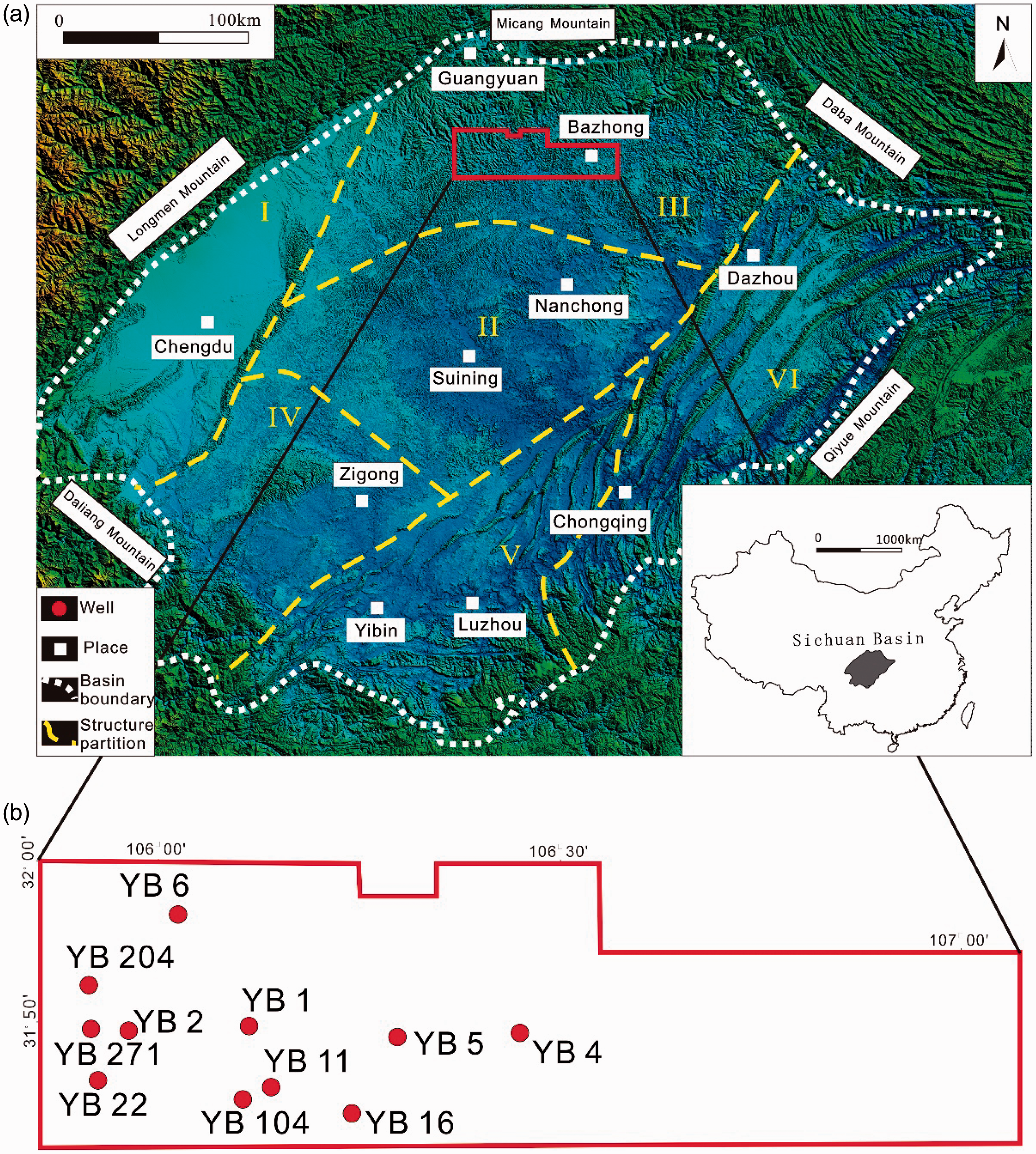
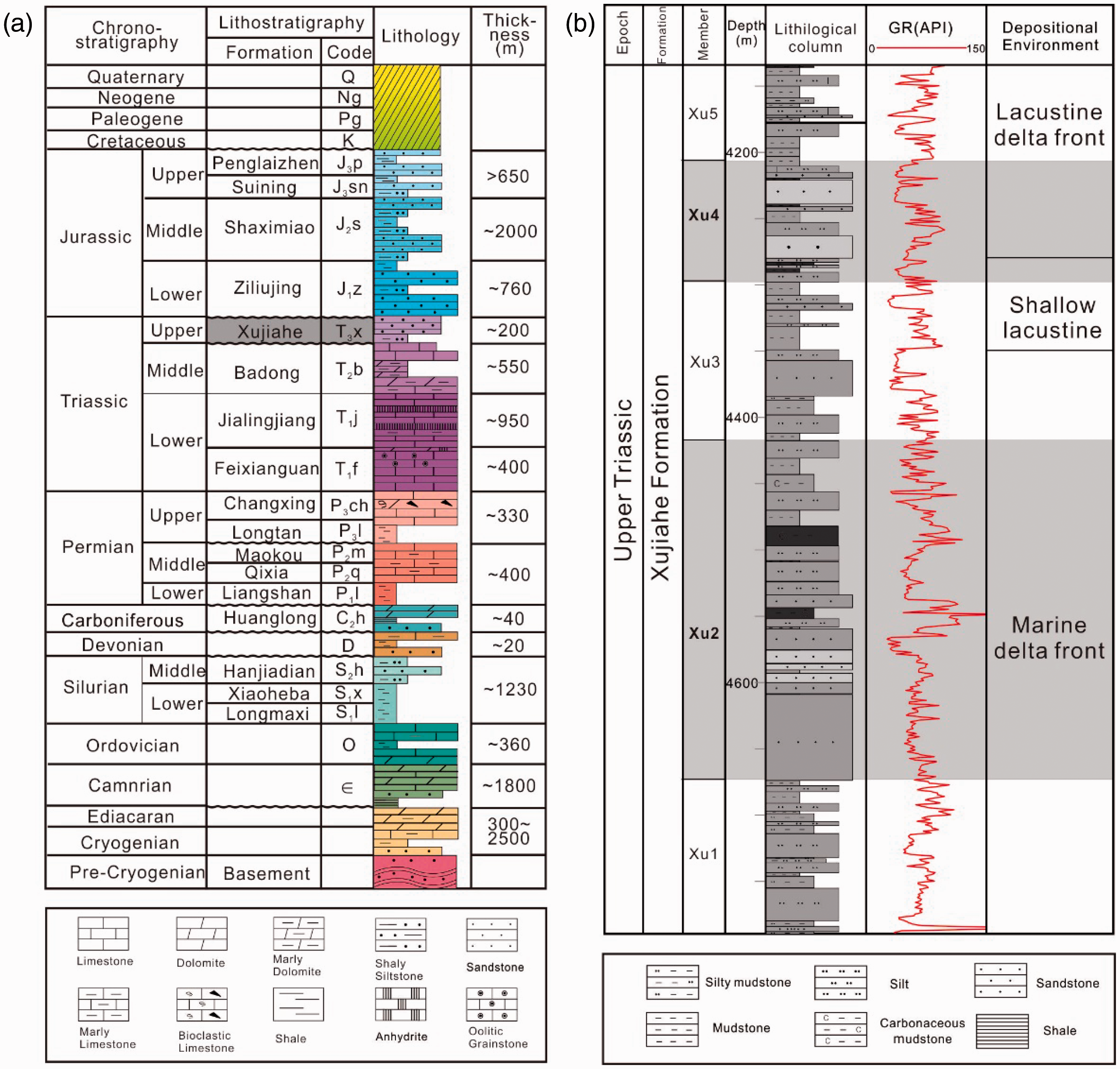
The Late Triassic Xujiahe Formation can be subdivided into six members (T3x1–T3x6). The Xu2 Member (T3x2) and Xu4 Member (T3x4) contain the main reservoir units within the study area. These reservoirs comprise primarily fine- to medium-grained sandstones (Figure 2(b)). The lithologies of the Xu1 Member (T3x1), Xu3 Member (T3x3) and Xu5 Member (T3x5) are mainly black shale, and mudstone with coal seams. These members are the regional petroleum source rocks and seal units of the Xujiahe Formation (Huang et al., 2014; Zhang et al., 2016).
The study area (Figure 1(b)) is located in the central portion of the northern Sichuan Basin (area III in Figure 1(a)). The thickness of the Xujiahe Formation in the study area varies from several hundred meters to over a kilometre due to later erosion of the Xu6 sandstone (Late Indosinian). The depositional environment of the Xujiahe Formation in the northern Sichuan Basin is interpreted as braided channel delta to lacustrine (Jiang et al., 2007; Zhang et al., 2016; Figure 2(b)). The burial and thermal history for the YB2 well shows that the maximum burial depth of T3x reached 5500 m with the current vitrinite reflectivity (Ro) ranging from 1.7 to 2.1% (Figure 3).
Burial and thermal history (YB2 well; modified from Li et al. (2013)) of Xujiahe Formation in the northern Sichuan Basin.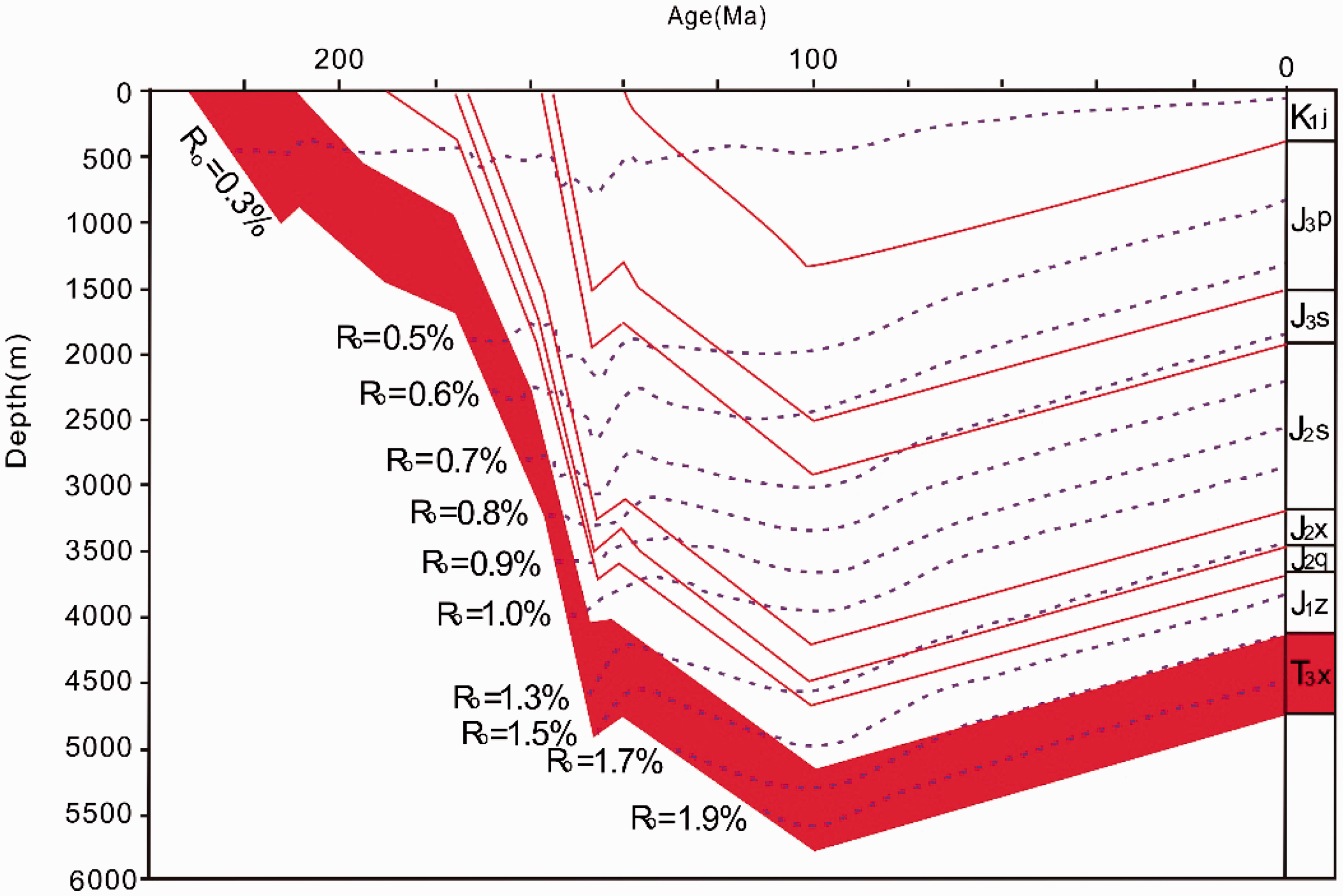
Samples and methods
Core samples of Xu2 and Xu4 Members from 11 wells (YB1, YB2, YB4, YB5, YB6, YB11, YB16, YB22, YB104, YB204 and YB271) were studied; the location of wells is shown in Figure 1(b). A total of 185 samples were selected for porosity and permeability measurement. From these, four samples were selected for mercury injection analysis to study the pore structure characteristics and throat size of the Xujiahe sandstones.
The composition and petrological characteristics of the sandstones were identified from 98 thin sections and were determined by point counts of 150 grains per thin section using a Leica polarizing microscope. Samples for thin section study were impregnated with red epoxy to facilitate understanding of the pore system. The carbonate minerals were identified by using Alizarin Red S dye.
SEM was performed using the Quanta250 FEG located at the State Key Laboratory of Oil and Gas Reservoir Geology and Exploitation, Chengdu University of Technology, to identify the different clay minerals and morphology of the cement, pore and minerals. All samples were cut into chips and polished using dry emery paper and then further prepared by milling with an argon ion beam and application of a conductive coating before observation.
The bulk and clay fraction mineralogy for 10 sandstone samples (five wells) were analysed by XRD diffraction using X’ Pert Powder to determine clay minerals species, mixed-layer I/S ratio and precise mineral content. All samples were crushed into a fine powder and analysed at 45 kV and 35 mA with scan rates of 2°/min over a range of 2°–60°.
Six samples were selected for vitrinite reflectance analysis by using a microscope photometer to obtain the evolution of kerogen. The homogenization temperature of inclusions in quartz cements was determined using a Linkam THMSG 600 heating and freezing stage.
Results
Sandstone composition
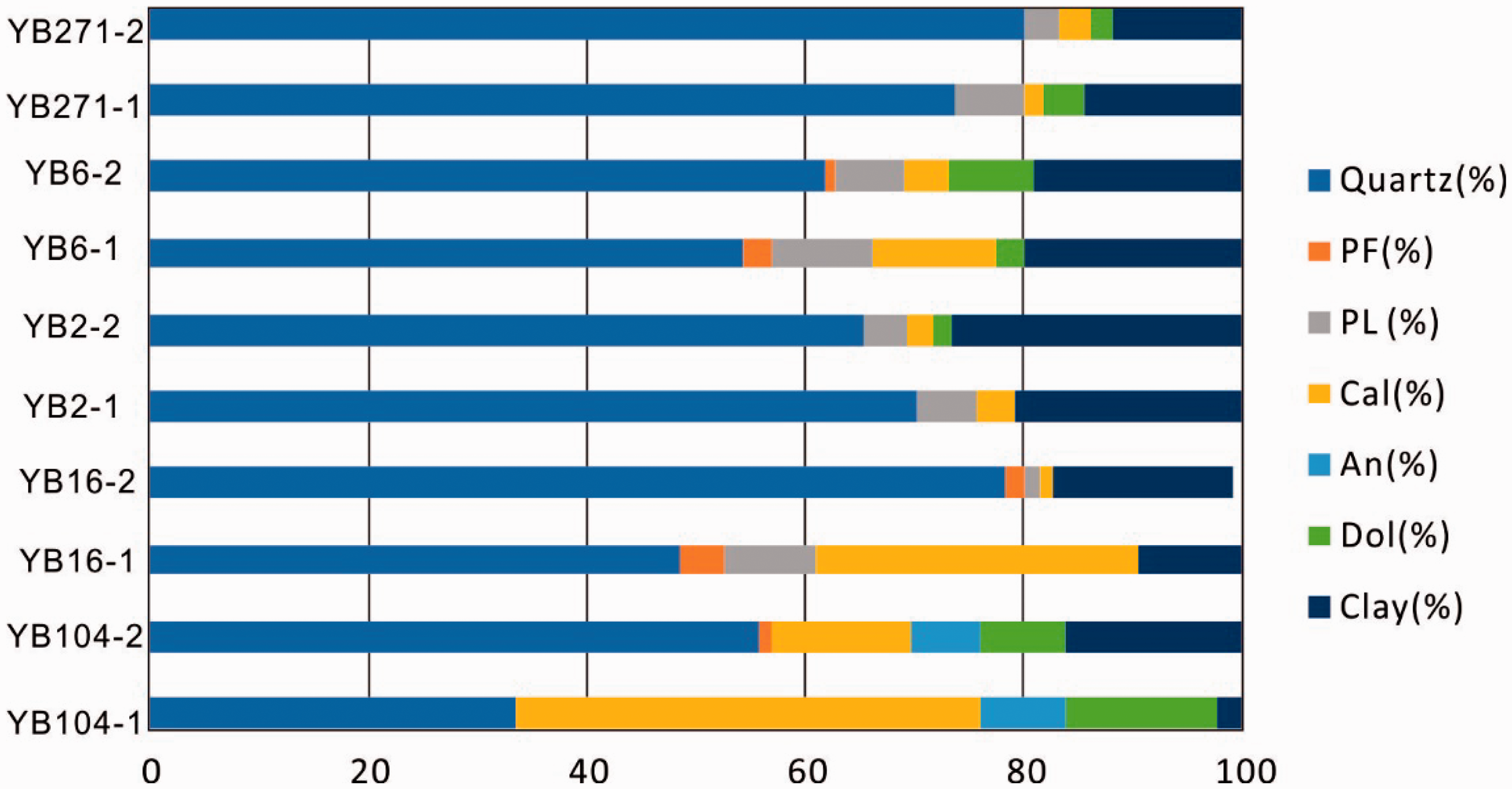
The Xujiahe sandstone has variable composition, with the quartz content varying from 10 to 94% (average 47.9%), feldspar content ranging from 0 to 19% (average 6.7%) and the rock fragment content varying from 3 to 68% (average 30.4%). These sandstones range in composition from feldspathic litharenite to litharenite and sublitharenite to quartzarenite, according to the scheme of Folk (1968; Figure 4(a)). XRD analysis shows the sandstones are composed of quartz, feldspar (plagioclase > K-feldspar), carbonate (calcite, dolomite and ankerite) and clays of variable mineralogy (Figure 5).
Ternary diagram based on Folk (1968) illustrating (a) the composition of the Xujiahe sandstone and (b) the rock fragments composition of the Xujiahe sandstone. RF: rock fragments. Bulk mineralogy XRD analysis of Xujiahe sandstone. PF: K-feldspar; PL: Plagioclase.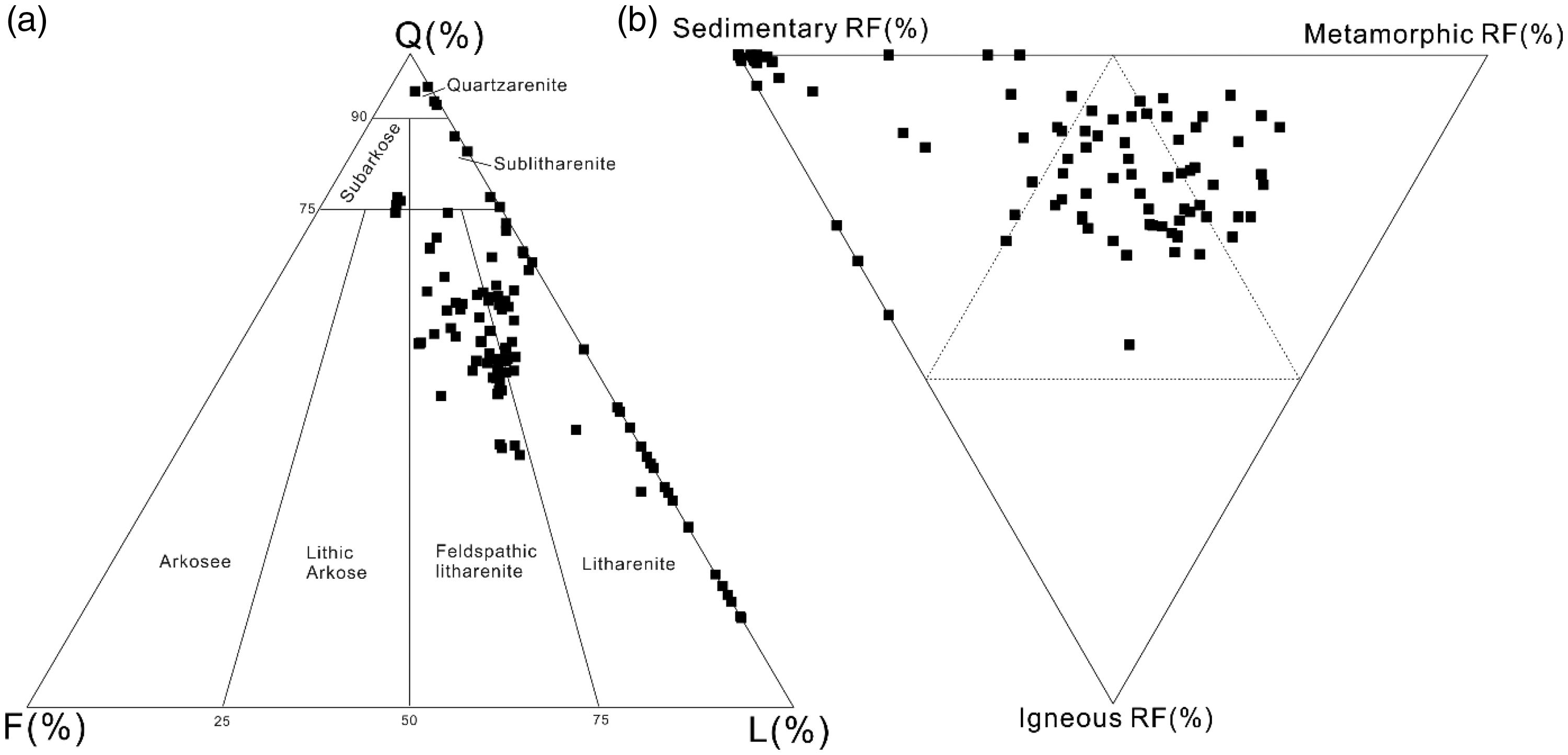
The feldspathic litharenite (Figure 6(a)) and the litharenite (Figure 6(b)) are medium grained to fine grained, poorly to moderately sorted and subangular with moderate textural and low compositional maturity. They contain predominantly carbonate rock fragments. The quartzarenite (Figure 6(c)) and sublitharenite are fine grained to medium grained with high compositional and textural maturity, moderately to well sorted and mainly subrounded.
Thin section and SEM images showing lithology characteristics and pore system of the Xujiahe sandstone: (a) feldspathic litharenite, medium grained to fine grained, moderately sorted, YB5 well, depth 4485.3 m, PPL; (b) litharenite, rock fragments are dominated by carbonate rock fragment, YB 6 well, depth 4293.6 m, XPL; (c) quartzarenite, medium grained, with well sorted and roundness is mainly subrounded, YB 204 well, depth 4550.2 m, XPL; (d) secondary pore (inter-DP and intra-DP) and micro-fractures (MFs) distributed along the grain, YB 5 well, 4741 m, PPL; (e) intergranular dissolved pore (inter-DP) and MFs, YB 5 well, 4712 m, SEM; and (f) intragranular dissolved pore (intra-DP), partially filled with authigenic quartz and clay minerals, YB 16 well, 4627.79 m, SEM.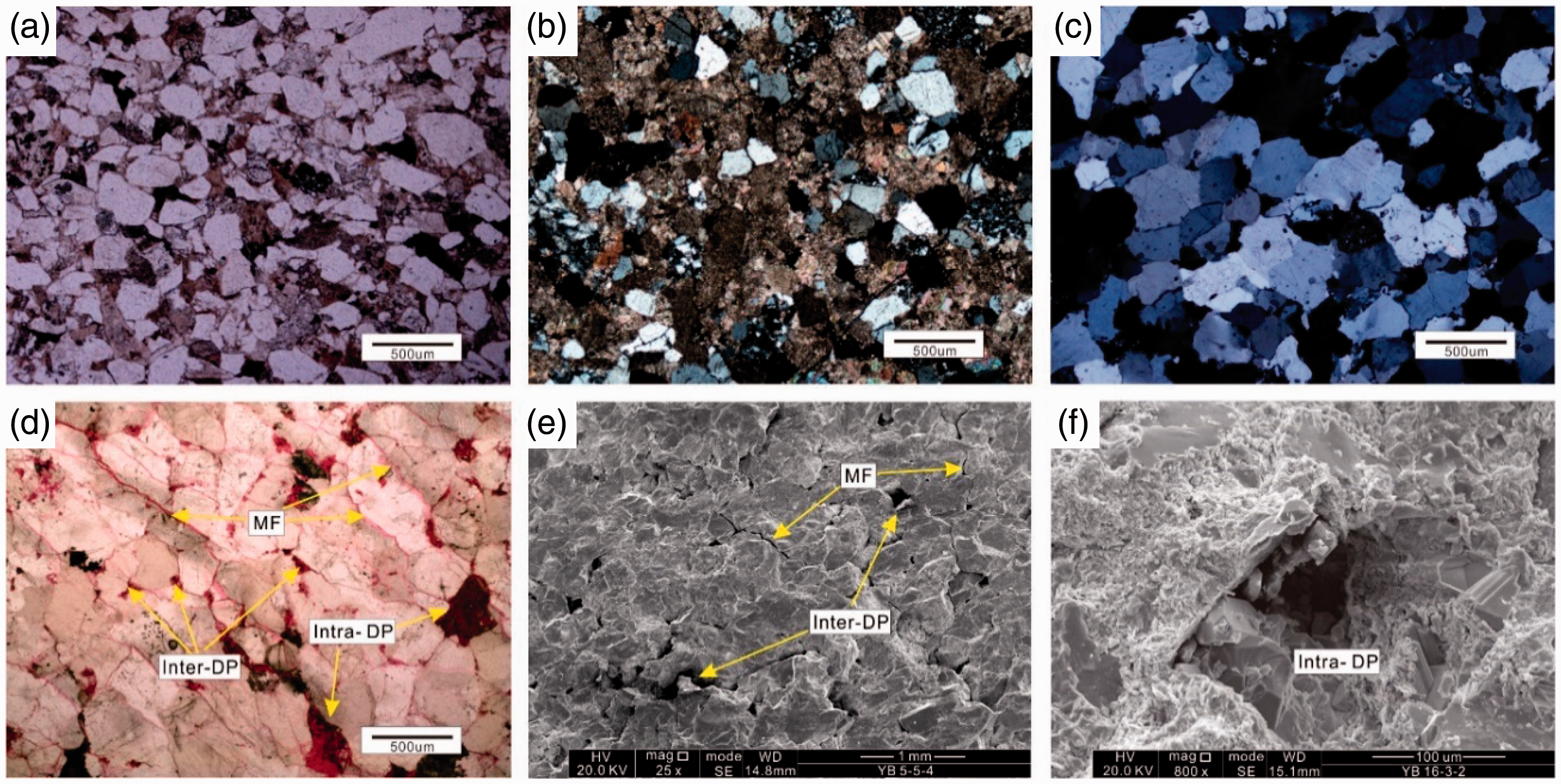
Pore systems and reservoir quality
Pore system
The porosity in the Xujiahe sandstone is low due to strong compaction and cementation. Thin section and SEM show primary pores are rarely observed, with secondary pores and MFs predominant. The secondary pores constitute over 90% of the total thin section porosity and occur mainly within the feldspar and rock fragments as intra-granular dissolved and moldic pores (Figure 6(d) and (e)). Intergranular dissolved pores also occur along the quartz grain edges. MF pores observed in some samples significantly enhance the permeability (Figure 6(d) and (f)).
Mercury injection analysis of four typical Xujiahe sandstones (Figure 7) shows that the entry pressure varies from 1.62 to 6.28 MPa, and the median pore radius R50 (pore throat radius at 50.0% mercury saturation) ranges from 0.0146 to 0.19 um. Typical mercury curves of the Xujiahe sandstones (Figure 7) indicate that pore structure is characterized by tiny pore throat radius and poor connectivity.
Typical mercury curve characteristics of Xujiahe sandstones. (I) Porosity = 4.9%, permeability = 0.0435 mD, YB 271 well, 4270.73 m; (II) porosity = 5.45%, permeability = 0.1511 mD, YB 204 well, 4550.87 m; (III) porosity = 3.55%, permeability = 0.0340 mD, YB 5 well, 4772.38 m; (IV) porosity = 3.19%, permeability = 0.3847 mD, YB 123 well, 4549.27 m.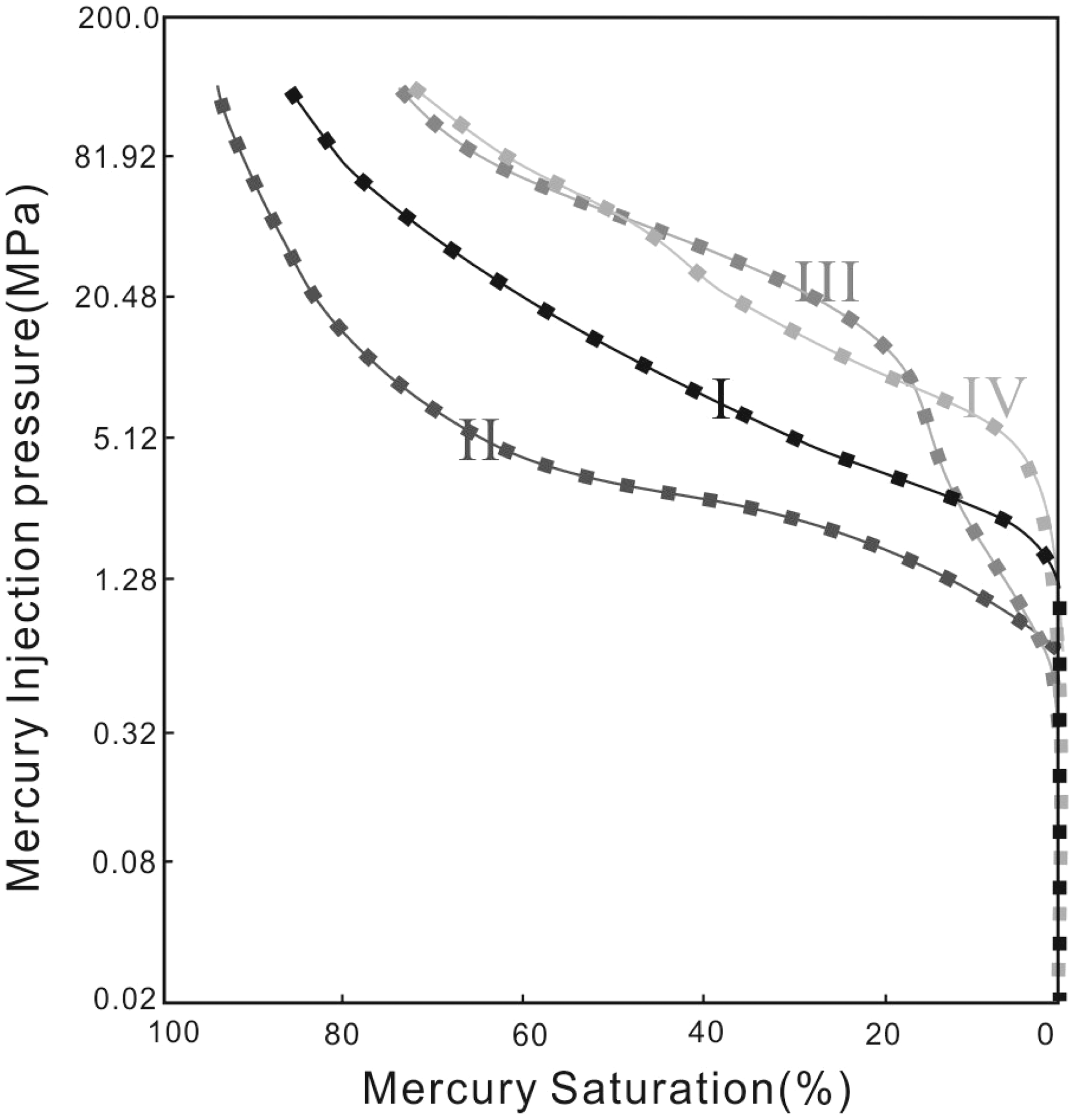
Porosity and permeability
Based on porosity and permeability measurements in 185 core samples, the reservoir quality of Xujiahe sandstone shows that the porosity ranges from 0.79 to 10.43% (average 4.55%) and the permeability ranges from 0.0021 to 26.001 mD (average 0.449 mD). Although some samples have high permeability, the median is 0.042 mD. The porosity and permeability cross-plot shows that there is a positive relationship between porosity and permeability, although some low porosity sandstones have high permeability (>10 mD) due to the presence of MFs (Figure 8).
Cross-plot of Xujiahe sandstone porosity and permeability.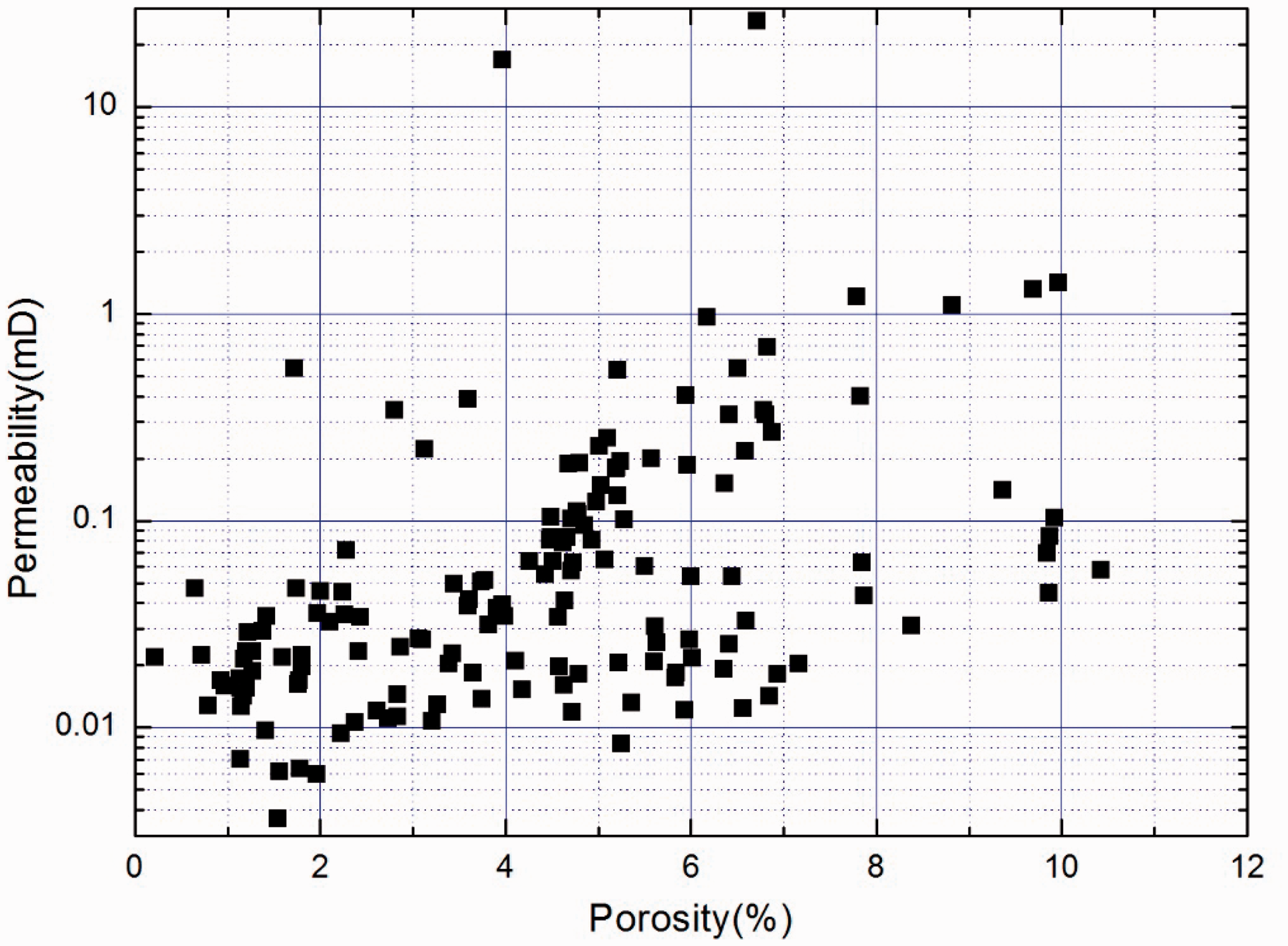
Diagenesis
The Xujiahe sandstone has undergone complex diagenesis, which has seriously affected quality and characteristics including compaction, pressure solution, cementation and dissolution.
Compaction
Mechanical compaction commenced after deposition. During the eodiagenetic and early mesodiagenetic stages, the primary pores were reduced with increasing burial depth resulting in grain contacts dominated by long, concavo-convex surfaces. Some contacts are even sutured. Compaction caused the deformation of more ductile minerals (mica) and rock fragments resulting in the blockage of the primary pores (Figure 9(a)). Strong compaction of the Xujiahe sandstone resulted in micro-cracks forming on the surface of quartz grains in some Xu2 sandstone samples. Pressure dissolution (chemical compaction) was recognized by the presence of a concave–convex contact between framework grains and also quartz cement precipitation caused by the dissolution grains at the contacts.
Thin section and SEM images showing diagenesis of the Xujiahe sandstone: (a) Mica deformation due to mechanical compaction, YB22 well, depth 4440 m, SEM; (b) feldspar dissolved and clay minerals filling the secondary pore, YB4 well, depth 4831.4 m, SE; (c) high content of crystalline poikilotopic calcite, substantially reducing primary pore, YB4 well, depth 4688.3 m, XPL; (d) authigenic dolomite with high degree of self- shape, YB5 well, depth 4726.7 m, SEM; (e) quartz overgrowth, YB5 well, depth 4845.9 m, XPL; (f) quartz cement and fibrous crystal illite, YB11 well, depth 4920 m, SEM; (g) authigenic kaolinite with vermicular or book-page pattern, YB11 well, depth 4762 m, SEM; (h) authigenic chlorite wrapped the grains and form grain-coating chlorite, quartz cement filled intergranular pore, YB204 well, depth 4634.72 m, PPL; and (i) pyrite between the grains, YB5 well, depth 4721.5 m, PPL.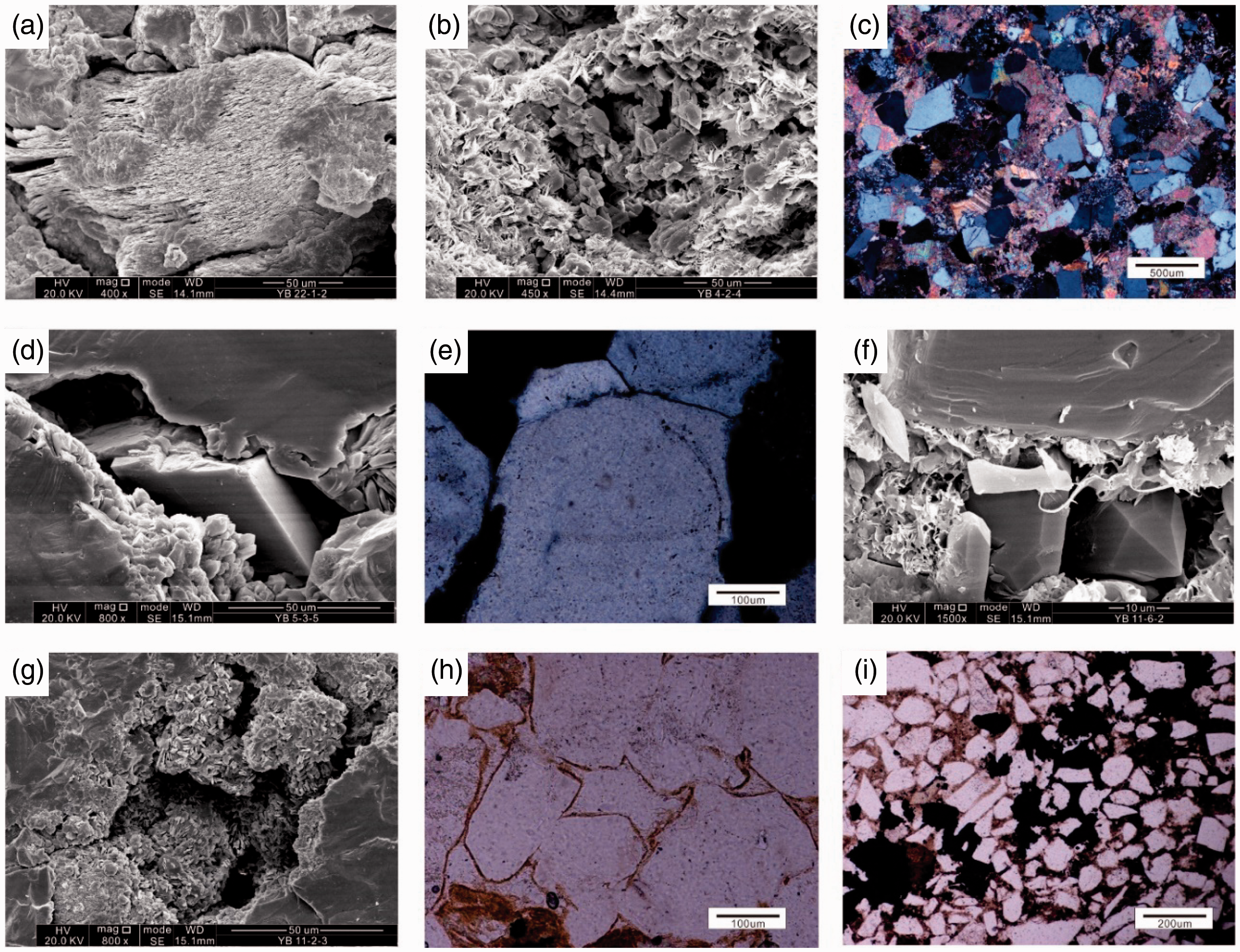
Dissolution of framework grains
The diagenetic dissolution process can create secondary pores and enhance the porosity of sandstone (Al-Areeq et al., 2016; Ehrenberg, 1990; Selley, 1998). The secondary pores in the Xujiahe sandstone are widely distributed due to the dissolution of minerals and mainly in framework grains. Feldspar dissolution, either partially or completely (Figure 9(b)), occurred easily when organic acids were generated by the thermal maturation of organic matters (generated from source rocks in the Xu1, Xu3 and Xu5 mudstones). The organic acids also provided the hydrogen ions, for reaction with K-feldspar

This may have resulted in clay minerals replacing the feldspars (Figure 9(b)). In low feldspar sandstone, like sublitharenite and quartzarenite, quartz grain dissolution was commonly observed (Figure 6(d)), resulting in enlarged primary intergranular pores.
Cementation
Several authigenic phases in the Xujiahe sandstone were identified through thin section, SEM and XRD analysis. These authigenic phases included carbonate, quartz and clay minerals. Minor amounts of pyrite were also recognized. Carbonate cements are very common in the Xujiahe sandstone and are dominated by calcite and less by dolomite. According to its morphology, calcite cement can be divided into two types: crystalline poikilotopic calcite (Figure 9(c)) and pore-filling calcite. Crystalline poikilotopic calcite is considered to be precipitated directly from alkaline water during eodiagenesis (Lai et al., 2015; Liu et al., 2014). This results in extensive blocked pore throats and reduced porosity and has a significant impact on reservoir quality and heterogeneity (Mansurbeg et al., 2008). Pore-filling calcites are formed during mesodiagenesis after dissolution. Pore-filling dolomite can also be observed (Figure 9(d)).
Quartz cement is a major diagenetic phase in siliciclastic sequences (Rezaee and Tingate, 1997). In the Xujiahe sandstone, quartz cement is very common and occurs as quartz overgrowths (Figure 9(e)) or pore-filling quartz (Figure 9(f)), thereby reducing the intergranular pore size. A clay rim was observed between quartz overgrowth and quartz grain in some samples (Figure 9(e)). The homogenization temperatures of the inclusions in quartz cements range from 75to 175℃, most dominantly from 90 to 130℃ (Figure 10).
Histograms of homogenization temperature of inclusions found within quartz cements of the Xujiahe sandstone.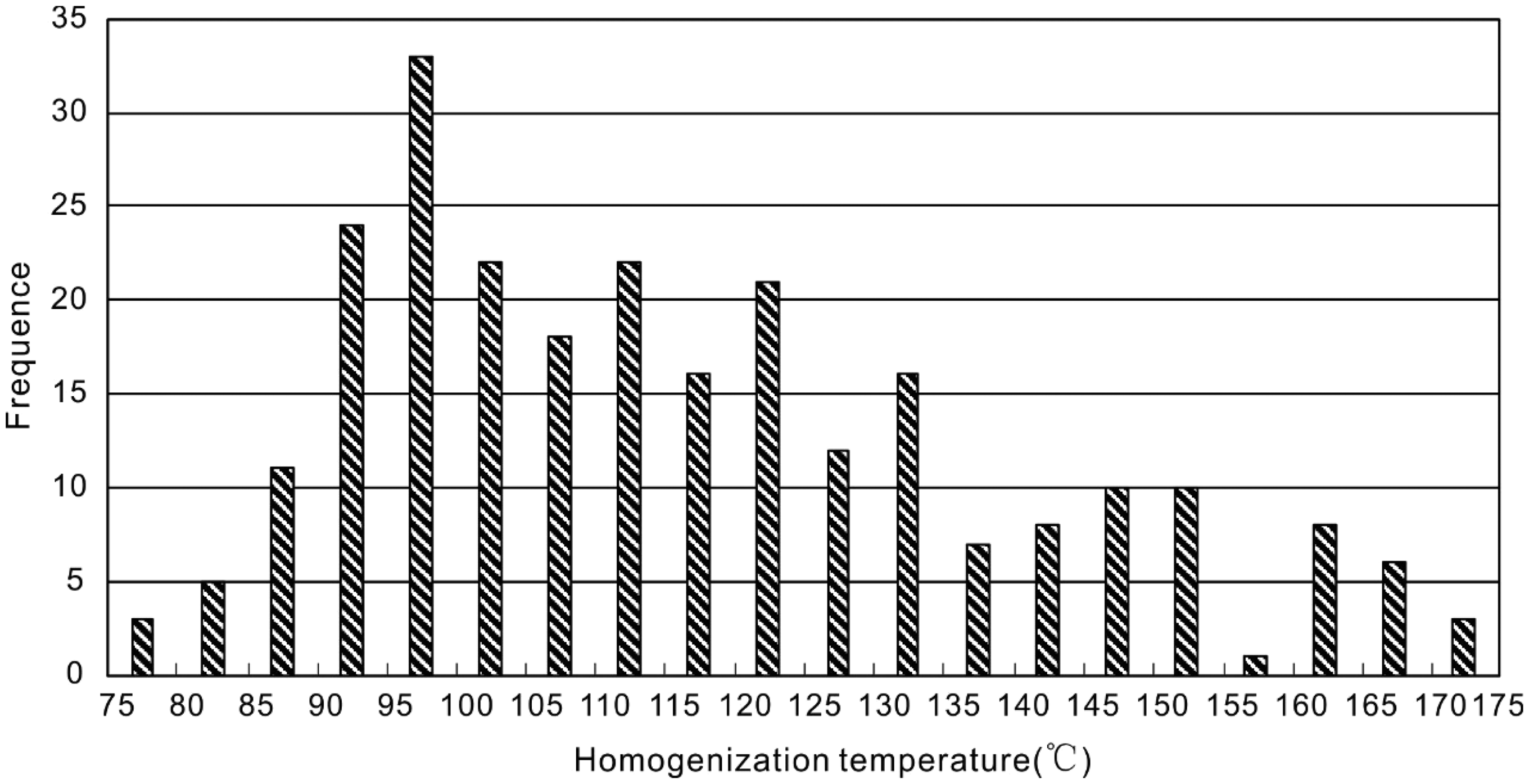
XRD results showing percentages of clay minerals in the core samples.
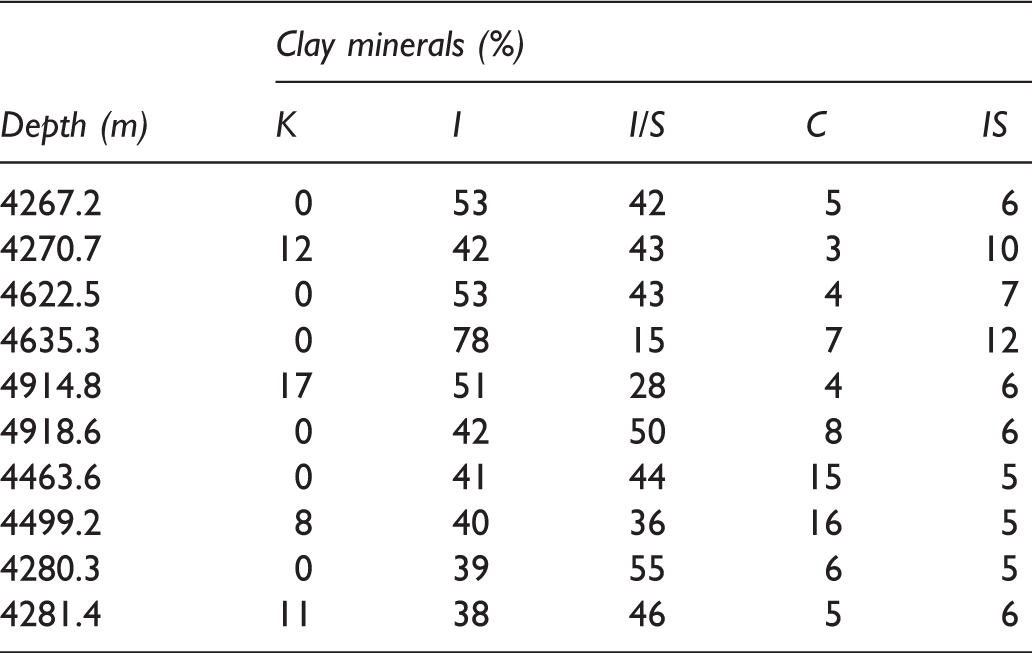
C: chlorite; I: Illite; IS: illite-to-smectite ratio; I/S: mixed-layer illite–smectite; K: kaolinite.
Minor cements
Other authigenic cements in Xujiahe sandstone include pyrite and barite. Pyrite cement is mostly granular with a rhombic cross-section (Figure 9(i)), and in some samples, is very extensive. Barite as a pore-filling cement is rarely observed.
Discussion
Diagenetic processes
Diagenetic processes of Xujiahe sandstone can be reconstructed by observing thin section and SEM images to determine the textural relationships of authigenic minerals and relative time. The burial history and the homogenization temperature also can provide a basis to reconstruct the diagenetic processes (Al-Areeq et al., 2016; Mansurbeg et al., 2008). According to Morad et al. (2000), the diagenetic regimes include eodiagenesis and mesodiagenesis: eodiagenesis is the stage when the chemistry of pore water is controlled by depositional water, the burial depth <2.0 km and temperature <70℃: mesodiagenesis is mediated by evolved formation waters, where the burial depth > 2.0 km and temperature > 70℃. Vitrinite reflectance (Ro) values of the Xujiahe sandstones range from 1.58 to 2.03 with an average of 1.74, thus indicating the Xujiahe sandstones are now in the late stage of mesodiagenesis. The major diagenetic processes of Xujiahe sandstone are interpreted in Figure 11.
Diagenetic processes of the Xujiahe sandstone. I/S: mixed-layer illite–smectite.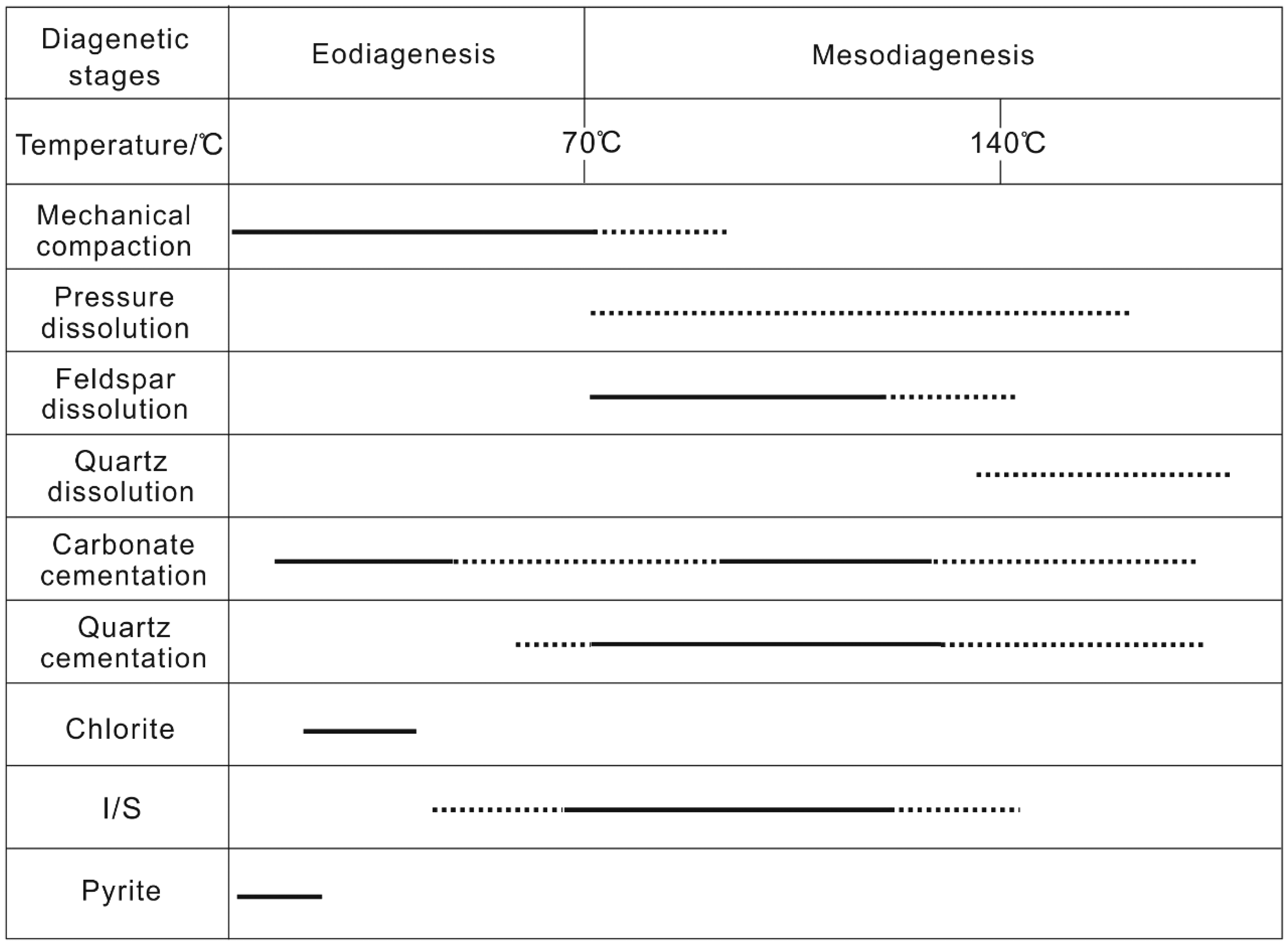
Eodiagenesis
During eodiagenesis, sediments undergo strong compaction resulting in a significant primary porosity reduction. The eodiagenetic cements observed in Xujiahe sandstones are mainly crystalline poikilotopic calcite and grain-coating chlorite. The crystalline poikilotopic calcite was precipitated as an early diagenetic (eodiagenetic) cement. Therefore, the grain framework did not experience effective compaction, which can be inferred from the high cementation content (Figure 9(c)). The timing of authigenic grain-coating chlorite in sandstone is believed to be related to multiple sources (Bahlis and Luiz, 2013; Billault et al., 2003; Grigsby, 2001; Sun et al., 2014; Yu et al., 2016). Thin section and SEM analysis suggest grain-coating chlorite formed before feldspar dissolution and grains came into contact, because chlorite occurs between grain contacts (Figure 9(h)). However, the timing of crystalline poikilotopic calcite and grain-coating chlorite cannot be determined due to the lack of both cements in the same sample, which may imply they precipitated under different conditions.
Mesodiagenesis
Mesodiagenetic alteration is strongly influenced by the extent and distribution of eodiagenetic alterations, temperature and pressure conditions, and alteration of mudrocks (thermal maturation of organic matter leading to the formation of organic acids) (Morad et al., 2000). Diagenesis is more complex during mesodiagenesis. Mechanical compaction can be transformed to pressure dissolution during mesodiagenetic resulting in long, concavo-convex and even sutured contacts (Figure 6(c)). Organic matter becomes mature and organic acid formation commences when temperatures are between 80 and 120℃ (Morad et al., 2000; Surdam et al., 1989). The porosity may be enhanced when organic acids react with feldspar or rock fragments creating secondary pores (Figure 9(b); equation (1)). Meanwhile, this reaction also can form silica (SiO2), which is precipitated as quartz cement. In addition, the homogenization temperature values of inclusions in quartz cements show most quartz cements were precipitated in the temperature range of 80–130℃ (Figure 10). Quartz cements may also be precipitated from the transformation of clay minerals such as smectite to illite and mixed-layer illite–smectite (I/S) due to an increase of burial depth and temperature (Worden and Morad, 2003; equation (2))
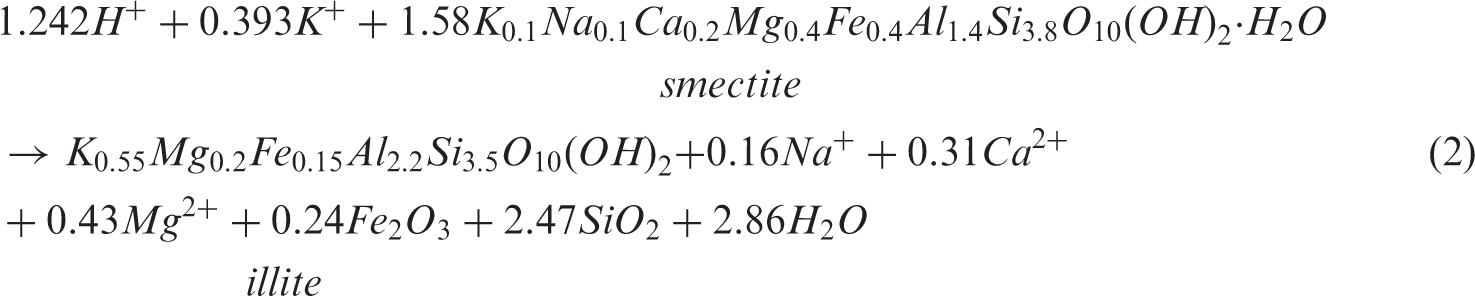
This reaction produces Mg2+ and Ca2+ which may form pore-filling calcite and dolomite cements. These carbonate cements formed during mesodiagenesis may fill primary porosity, as well as reduce the secondary porosity. Free Ca2+ may also form by dissolution of anorthite. Intergranular dissolved pores, resulting from dissolution of quartz grains, are observed in the Xujiahe sandstone (Figure 9(e) and (f)). Knauss and Wolery (1988) show that this process is related to formation of pH and temperature and is greatest with alkaline conditions when the pH > 8. Quartz dissolution occurs during late mesodiagenesis because, with the deepening of diagenesis, the organic acid was destroyed, the decarboxylation effect was weakened and the H+ in the diagenetic fluid was consumed (Liu et al., 2015; Zhang et al., 2011), all of which made the diagenetic environment change from acid to alkaline. The creation of porosity in sandstone by dissolution of quartz is limited. However, it can significantly improve the permeability of sandstone.
Diagenetic controls on quality of reservoir
Compaction controls on quality of reservoir
The porosity compaction controls on the Xujiahe sandstone were quantitatively evaluated using the visual compaction rate (VCR) method devised by Houseknecht (1987). The VCR can be calculated as

There is a slightly inverse relationship between thin section porosity and plastic rock fragments (Figure 12). The square of the correlation coefficient is 0.109, suggesting sandstones with more plastic rock fragments tend to have low porosity. The plastic rock fragments, such as mica and mudstone rock fragment, are easily deformed under strong compaction and therefore block the pores. The square of the correlation coefficient between VCR and thin section porosity is 0.012 (Figure 12). Changes in VCR value have little effect on thin section porosity, suggesting compaction is not the only factor contributing to porosity reduction.
Plot of correlation between thin section porosity and plastic rock fragments and VCR. RF: rock fragments; VCR: visual compaction rate.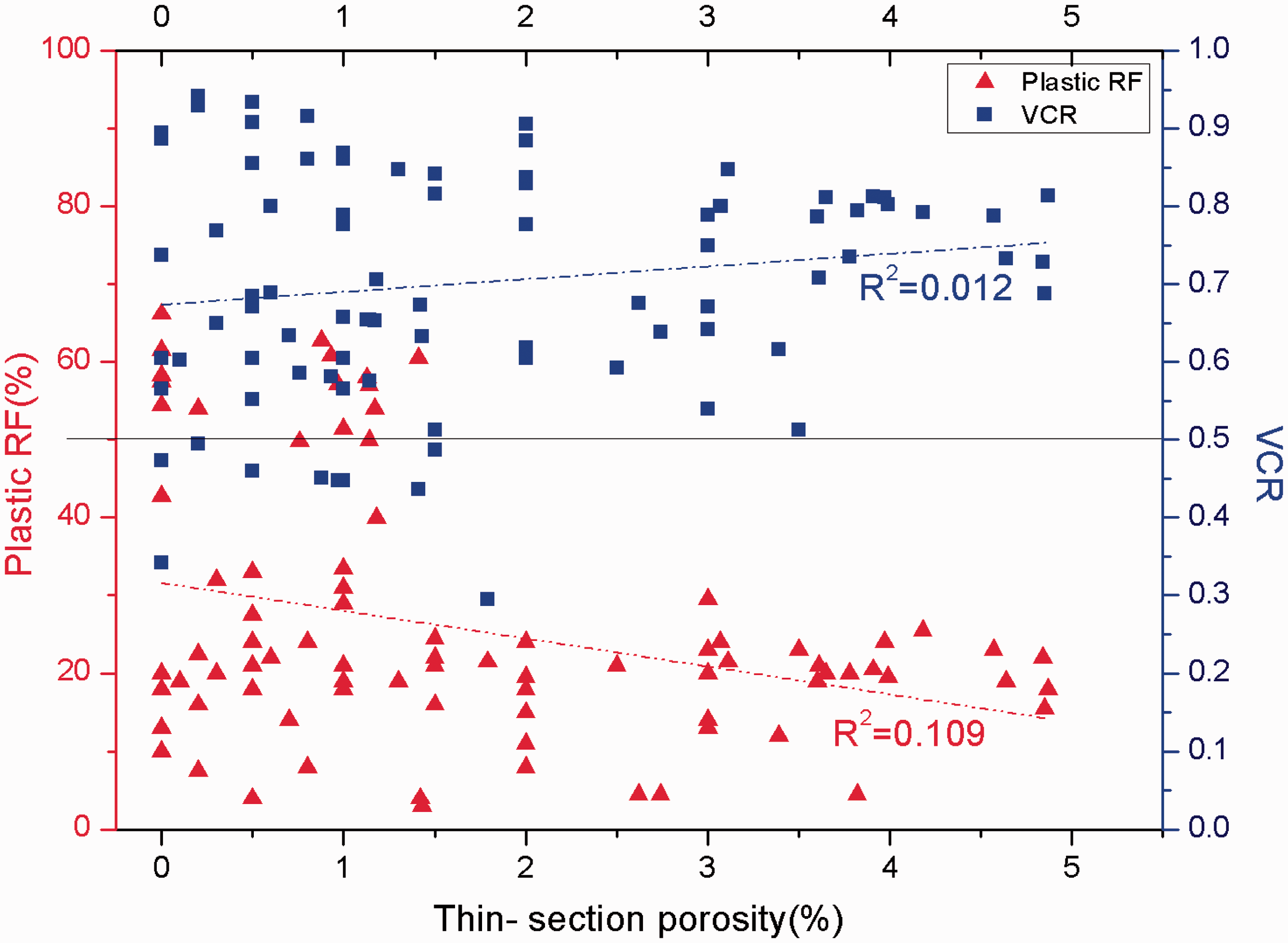
Houseknecht (1987) outlines a method to determine whether compaction or cementation is the dominant factor in the reduction of sandstone porosity from an intergranular volume–cementation plot. The plot for the Xujiahe sandstones shows that in most samples, compaction plays a more important role than cementation in reducing sandstone porosity (Figure 13). The few samples that deviate from the compaction trend generally represent carbonate-cemented sandstones where the cement precipitated during early eodiagenesis before compaction substantially reduced porosity.
Plot of intergranular volume (%) versus cements (%).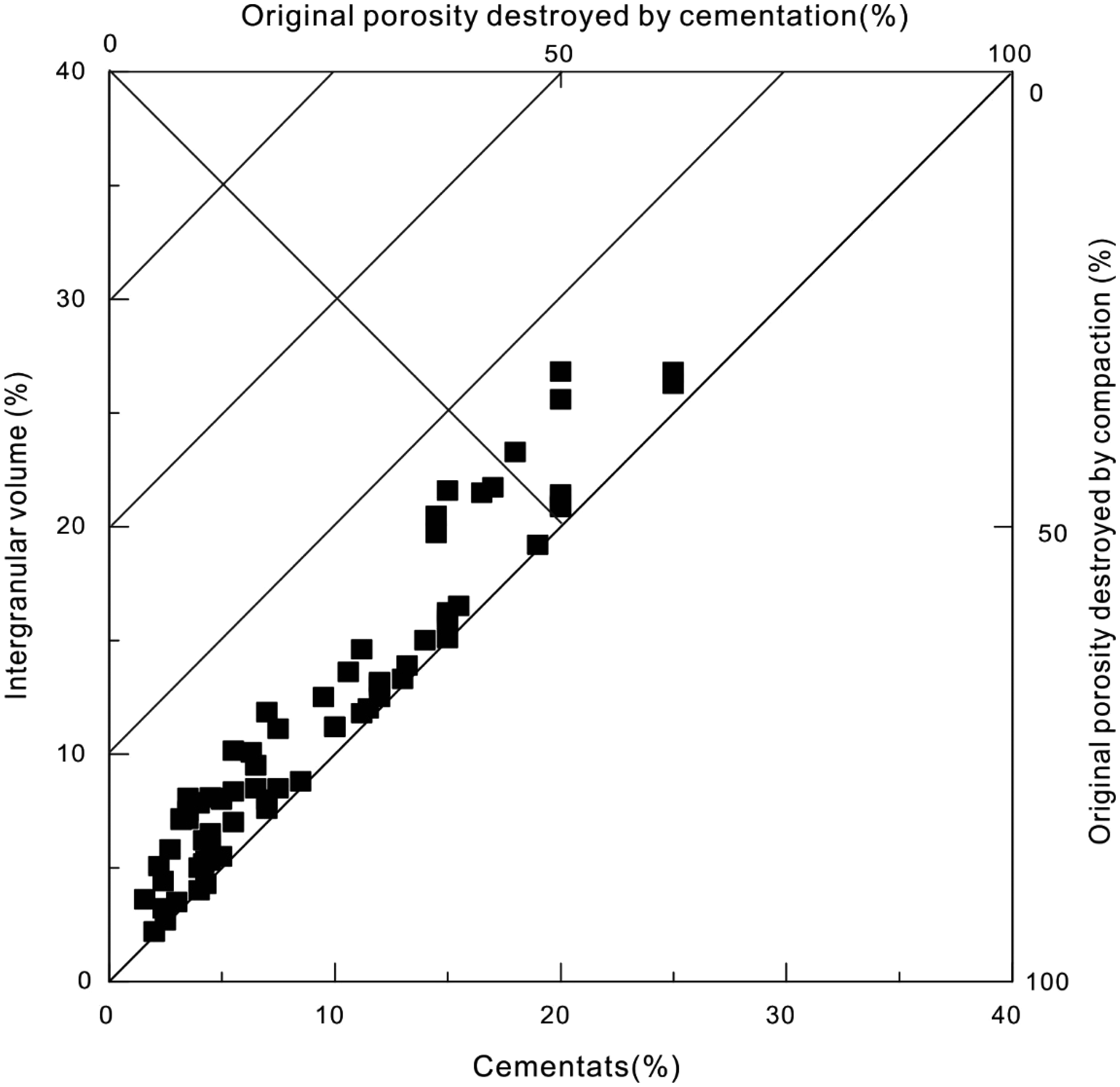
Influences of cements on porosity of reservoir
In the Xujiahe sandstone, carbonate cement ranges from trace amounts to over 20%. The reduction in porosity and permeability due to carbonate cementation is clearly shown in Figure 14(a) and (b), suggesting carbonate cements have a strong control on the quality of reservoir. Highly carbonate cemented sandstone is dense with low porosities (0–2%) and permeabilities < 0.05 mD (Figure 14(a) and (b)). Quartz cement can take up to 12% of sandstone; however, there is a slightly positive relationship between quartz cement and porosity and permeability (Figure 14(c) and (d)). The slight increase in porosity and slight improvement in permeability are thought to be due to the dissolution of feldspars by acidic waters forming pores at the same time quartz cement precipitated (see equation (1)). In this situation, quartz cement is a sign of feldspar dissolution and product of increasing porosity. However, not all quartz cement is the product of feldspar dissolution. Transformation of clay minerals and pressure dissolution also can provide silica, where precipitation of multi-source silica resulted in a high quartz cement content and a reduction in sandstone porosity and permeability.
Plot of reservoir quality controls: (a) Carbonate cement and porosity, (b) carbonate cement and permeability, (c) quartz cement and porosity, (d) quartz cement and permeability, (e) chlorite cement and porosity and (f) chlorite cement and permeability.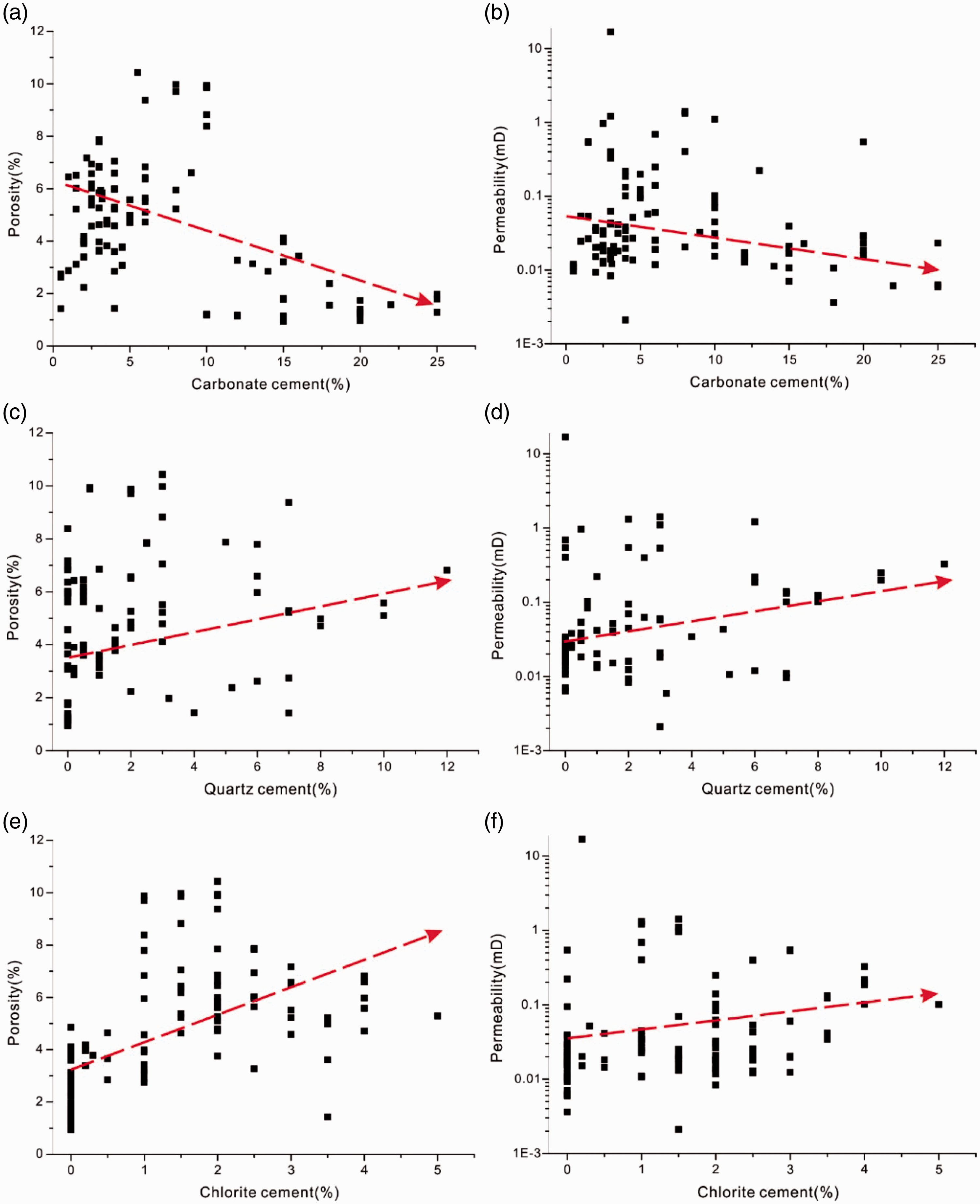
Small amounts of grain-coating chlorite have been found in the Xujiahe sandstone, showing a positive relationship with porosity and a slight relationship with permeability (Figure 14(e) and (f)). Previous studies have focused on the relationship of authigenic grain-coating chlorite with reservoir porosity preservation (Bloch et al., 2002; Ehrenberg, 1993; Huang et al., 2004; Xiang et al., 2016; Yu et al., 2016). They reported that grain-coating chlorite is beneficial to reservoir porosity preservation by enhancing resistance of compaction and inhibit growth of quartz cement, especially in deeply buried sandstone reservoirs (Bloch et al., 2002; Ehrenberg, 1993; Huang et al., 2004). There is a positive relationship between grain-coating chlorite and porosity and permeability (Figure 14(e) and (f)), suggesting that grain-coating chlorite for porosity preservation is beneficial. The quartz cement in the Xujiahe sandstone appears in the intergranular pore behind grain-coating chlorite (Figure 9(h)) with authigenic chlorite forming before precipitation of quartz cement. It therefore played no role in inhibiting quartz cementation. Xiang et al. (2016) believed that grain-coating chlorite has no obvious effect on porosity preservation. Further studies are required to understand the effect of grain-coating chlorite on reservoir quality.
Influence of depositional environment on reservoir
The depositional environment is one of the key factors controlling the quality of sandstone reservoir; texture (grain size and sorting), composition (framework grain, matrix) and architecture of sandstones are seriously related to the depositional environment (Bjørlykke, 2014; Morad et al., 2010). The majority of Xujiahe sandstones in the northern Sichuan Basin were deposited in distributary channel and lacustrine environments. These sandstones are fine grained to medium grained and have low matrix contents. There is little correlation between matrix content and porosity (Figure 15), indicating that even sandstone deposited in a relatively high energy environment may have poor porosity. In general, clean sandstones that have low matrix contents have high reservoir quality. However, the cleaner quartzarenite in the Xujiahe sandstones has poor reservoir quality, due to strong pressure solution and quartz cementation (Figures 6(c) and 9(e)). In deep buried tight gas sandstone reservoirs, like the Xujiahe sandstone, diagenetic effects have a greater influence than the sandstone depositional environment.
Plot of the relationship between matrix and porosity.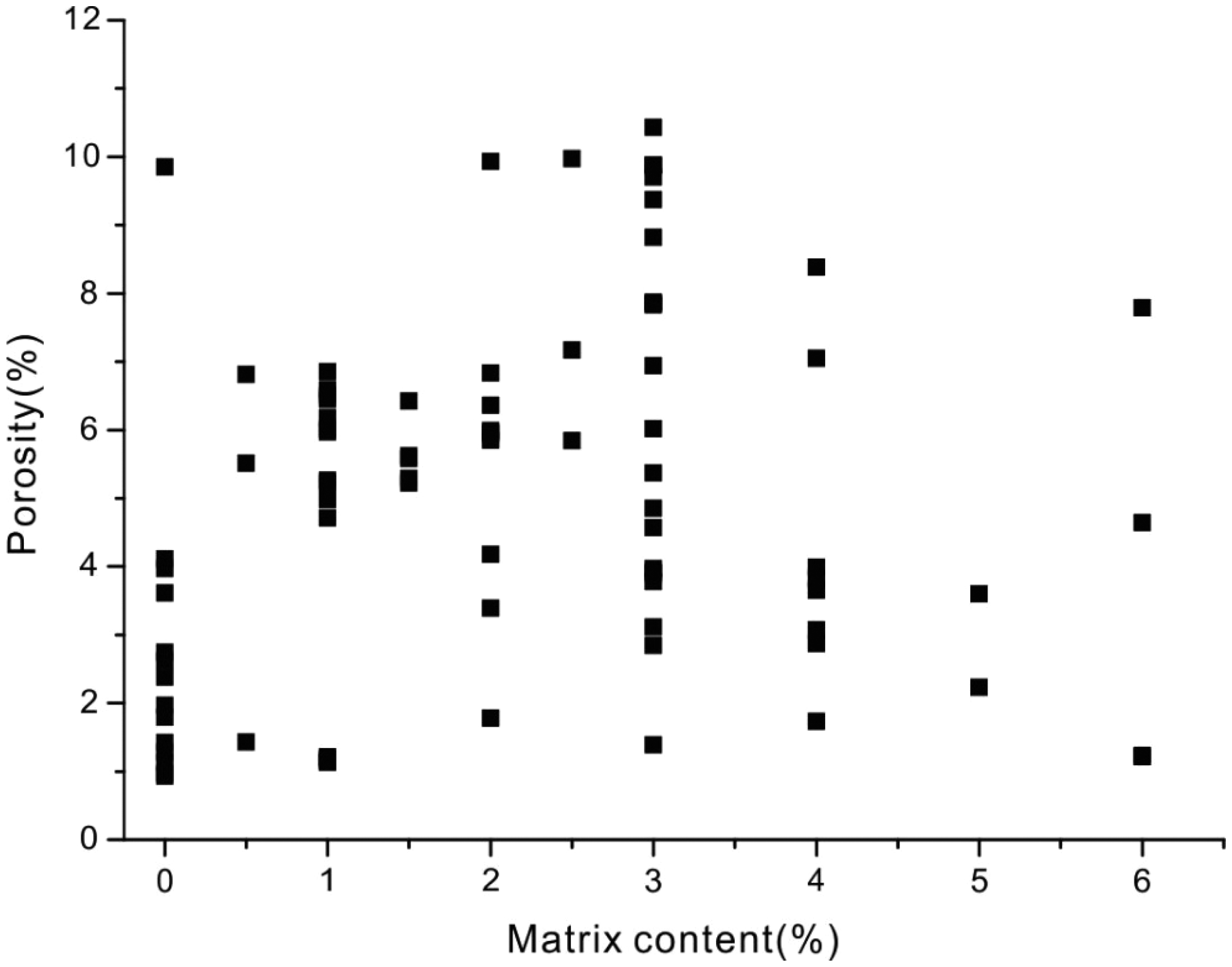
Conclusions
Based on detailed studies of the Xujiahe Formation tight gas sandstone in the northern Sichuan Basin, the following conclusions can be obtained:
Feldspathic litharenite, litharenite, sublitharenite and quartzarenite sandstones of the Xujiahe Formation are characterized by variable composition and maturity and low feldspar contents and are dominated by quartz, feldspar, carbonate and clay minerals. Thin section and SEM analysis show that the pore system is mainly composed of secondary pore and MF, and the primary pore is rare. The sandstones have poor porosity (0.79–10.43%; average 4.55%) and permeability (0.0021–26.001 mD; median 0.042 mD). Higher permeabilities (>1.0 mD) are due to the presence of MFs. Both eodiagenesis (mechanical compaction, early carbonate cementation, grain-coating chlorite and pyrite) and mesodiagenesis (pressure dissolution, feldspar dissolution, cementation by late carbonate, quartz and transformation of smectite to illite) diagenetic processes are present. The Xujiahe sandstone has experienced strong compaction. Mechanical compaction is the most important factor in reducing the porosity of the Xujiahe sandstone. Carbonate cementation is detrimental to the reservoir. A high content of carbonate cement can completely destroy reservoir porosity. Quartz cement shows a slight relationship with porosity and permeability, because quartz cement can be precipitated with dissolution of feldspar. The effect of grain-coating chlorite on reservoir quality remains unknown, but the reservoir quality of sandstone with grain-coating chlorite can be relatively good. Diagenesis is a more important factor on reservoir quality than depositional environment for the deeply buried Xujiahe tight gas sandstones.
Footnotes
Acknowledgements
We thank Feng Mingshi from State Key Laboratory of Oil and Gas Reservoir Geology and Exploitation from Chengdu University of Technology for SEM analysis.
Declaration of conflicting interests
The author(s) declared no potential conflicts of interest with respect to the research, authorship, and/or publication of this article.
Funding
The author(s) disclosed receipt of the following financial support for the research, authorship and/or publication of this article: This study was jointly supported by the National Science and Technology Major Project of the Ministry of Science and Technology of China (Nos. 2011ZX05002-004-006HZ, 2016ZX05002-004-010) and China Scholarship Council.