




Abstract
The stress sensitivity of a coal reservoir is an important factor affecting the productivity of the coalbed methane well. Determining methods to reduce the stress sensitivity of coal reservoirs in the process of coalbed methane well drainage and recovery is of significance for the efficient development of coalbed methane. Based on a multiindex comprehensive evaluation of the stress sensitivity of a lignite reservoir under different pH and salinity, a permeability prediction model and productivity model of the coalbed methane well are established in consideration of the stress sensitivity under the influence of pH and salinity. Analysis is conducted on changes in permeability with effective stress and the mechanism involved in the stress-sensitive effect in a lignite reservoir under these two influencing factors. Results show that the relation between dimensionless permeability and effective stress is in good agreement with a negative exponential relationship. In addition, the relation between the stress-sensitive coefficient and effective stress can be divided into a fluctuation stage and a stabilization stage using 15–17 MPa as the boundary. It is also apparent that an increase in salinity is beneficial for decreasing the stress sensitivity of a reservoir under alkaline conditions, but this effect gradually decreases with an increase in the pH. Salinity has less influence on stress sensitivity under acidic conditions. In terms of pH, which is bounded by critical salinity, a lower pH is beneficial for reservoir protection in low to intermediate salinity conditions. In contrast, when the pH is higher, the reservoir is better protected. Acidic conditions involve inorganic chemical reactions, whereas alkaline conditions involve organic–inorganic reactions, and the influence of salinity on permeability sensitivity is affected by the amount of H+.
Introduction
Stress sensitivity of a coal reservoir occurs when there is a gradual decrease in porosity or permeability with an increase in effective stress. There is obvious stress sensitivity during the development of coalbed methane (CBM) drainage owing to the low strength and large deformation intensity of a coal seam with strong heterogeneity of the coal structure and anisotropy of the reservoir property (Pan et al., 2010; Rachmat et al., 2012). CBM undergoes depressurization in the early stage of drainage and cannot be produced by desorption before the bottom hole pressure reaches the critical desorption pressure. This stage is known as the unidirectional seepage stage, and if the rate of drainage is not correct during this stage then fractures in the coal are easily closed under the stress-sensitive effect, which reduces the permeability of the coal reservoir and limits CBM drainage (Li et al., 2014; Tao et al., 2012).
In the late stage of CBM drainage, effective stress produces a negative effect and reduces the permeability of the coal reservoir. However, coal desorption gas has a positive effect that causes the coal matrix to shrink and increases reservoir permeability. A large number of stress sensitivity studies have been conducted based on this process, and a permeability model has been established based on the comprehensive influences of these two effects (Connell, 2009; Palmer, 2009; Pan and Connell, 2012; Shi and Durucan, 2004, 2010). However, if the initial drawdown pressure is very high then effective stress makes it difficult to resume the opening of a fracture when it is closed and the permeability of the coal reservoir decreases permanently. This directly influences the exploitation effect of the CBM, resulting in a pressure drop that cannot be further transmitted and the positive effect of gas desorption in the later stage is weakened. Therefore, the drainage stage is key for taking control of the entire CBM drainage process; however, few in-depth studies have been conducted in relation to this stage.
Permeability is an important parameter in the study of fluid flow in porous media and has important practical significance in CBM development. Permeability is controlled by the above-mentioned two effects and is affected by the precipitation of minerals and the migration of pulverized coal(Guo et al., 2015). Owing to the low permeability characteristics of coal reservoirs, hydraulic fracturing operations are required in the early stage to improve CBM yield (Huang et al., 2017). However, the injection of fracturing fluid can damage the coal reservoir because the clay component in the coal reacts with the fracturing fluid filtrate, which in turn causes a decrease in the permeability of the substrate and a reduction in permeability that is highly irreversible (Tan et al., 1997). The acidification method can improve the permeability of coal reservoirs that contain a large amount of carbonate minerals, but mineral dissolution can also induce strain in the reservoir (Shin and Santamarina, 2009). All types of chemically enhanced permeability methods lead to a residual of foreign fluid that mixes with the formation water. Therefore, changes in the mechanical properties of coal reservoirs and stress sensitivity occur under different formation water conditions. The stress sensitivity of a coal reservoir under original formation water conditions is inconsistent with the actual conditions.
The external fluid can damage a reservoir in many ways, but this study mainly discusses the effects of acid sensitivity, alkalinity, and salt sensitivity on reservoir stress sensitivity. Few scholars have studied this aspect and only a few have analyzed the influence of water saturation and temperature on reservoir stress sensitivity (Meng et al., 2015; Wu et al., 2017). Previous research on the stress sensitivity of coal reservoirs has mostly concentrated on middle and high coal ranks, and stress sensitivity analyses of low-rank coal, particularly lignite, are lacking (Yang et al., 2011). The influence of coal composition on the stress sensitivity of a coal reservoir is discussed using reconstituted granular coal, but it is unable to reflect the real condition of the coal reservoir with respect to the formation conditions (Geng et al., 2017). Based on the need for relevant studies, the primary structure of lignite is selected as the object of this study, and the differences in the stress sensitivity of coal under different chemical fluids are analyzed.
With a change in CBM development in China from high- to low-rank coal, the widespread distribution of lignite within the Erlian Basin will replace the current CBM development area in the future. However, relatively few studies have been conducted on the mining condition of low-rank CBM in the Erlian Basin. An early pilot experiment involving straight well fracturing in dynamic cave and double U horizontal wells has been conducted and shows characteristics of low yield water, low production gas, and rapid decline in gas production. Strong stress sensitivity is considered to be the major cause of low yield water and low production gas in addition to the fact that the coal seam is deeply buried and the fracture is difficult to rebuild. Therefore, the key problem requiring an urgent solution is to determine how to reduce stress sensitivity and improve effective permeability. Based on previous research results, the stress sensitivity of coal reservoirs under different pH and mineralization degrees can be evaluated using multiple indexes. In this study, the mechanism involved in the stress-sensitive effect within a lignite reservoir is explored under two influential factors (pH and mineralization degrees) by carefully describing the changes in permeability with effective stress. This study aims to strengthen the protection of low-rank coal reservoirs in China and provide a theoretical basis for the rational formulation of fracturing fluid and drainage systems.
Geology, samples, and experiments
Geology
The study area is located in the Erlian Basin in central-northern Inner Mongolia, China. The basin is bounded by the Daxinganling to the east, the Wulatehouqi to the west, the Yin Mountains to the south, and the China–Mongolia border to the north, and spans 1000 km from the east to west and 20–200 km from the north to south, covering a total area of 100,000 km2. The Erlian Basin contains nine large coalfields, and the total area of the coal depression is 33,884 km2, and coal reserves of nearly 700 billion tons are proven. The geological resources of CBM are 25,816.63 × 108 m3 at the depth of less than 2000 m, which accounts for 7% of the total amount of geological CBM resources in China. The Baiyinhua coalfield is located in the northeast of the Erlian Basin. The mining area is in the middle of the coalfield, and its main structural shape is an incomplete wide and gentle syncline. There are seven secondary folds in the field, but no faults are found (Figure 1). The main coal-bearing strata are the Shengli Formation and Xilin Formation of the Early Cretaceous Bayanhuaqun group. At present, only the upper coal-bearing section of the Bayanhuaqun group has been exploited; those are (from top to bottom) the No. 1 coal group, No. 2 coal group, and No. 3 coal group, which are divided into eight coal seams (Figure 1). Of those, the No. 3 coal group is the most stable recoverable coal seam in the entire area and has a thickness ranging from 0.85 to 39.84 m with an average of 18.31 m.
Sampling locations and coal stratigraphy.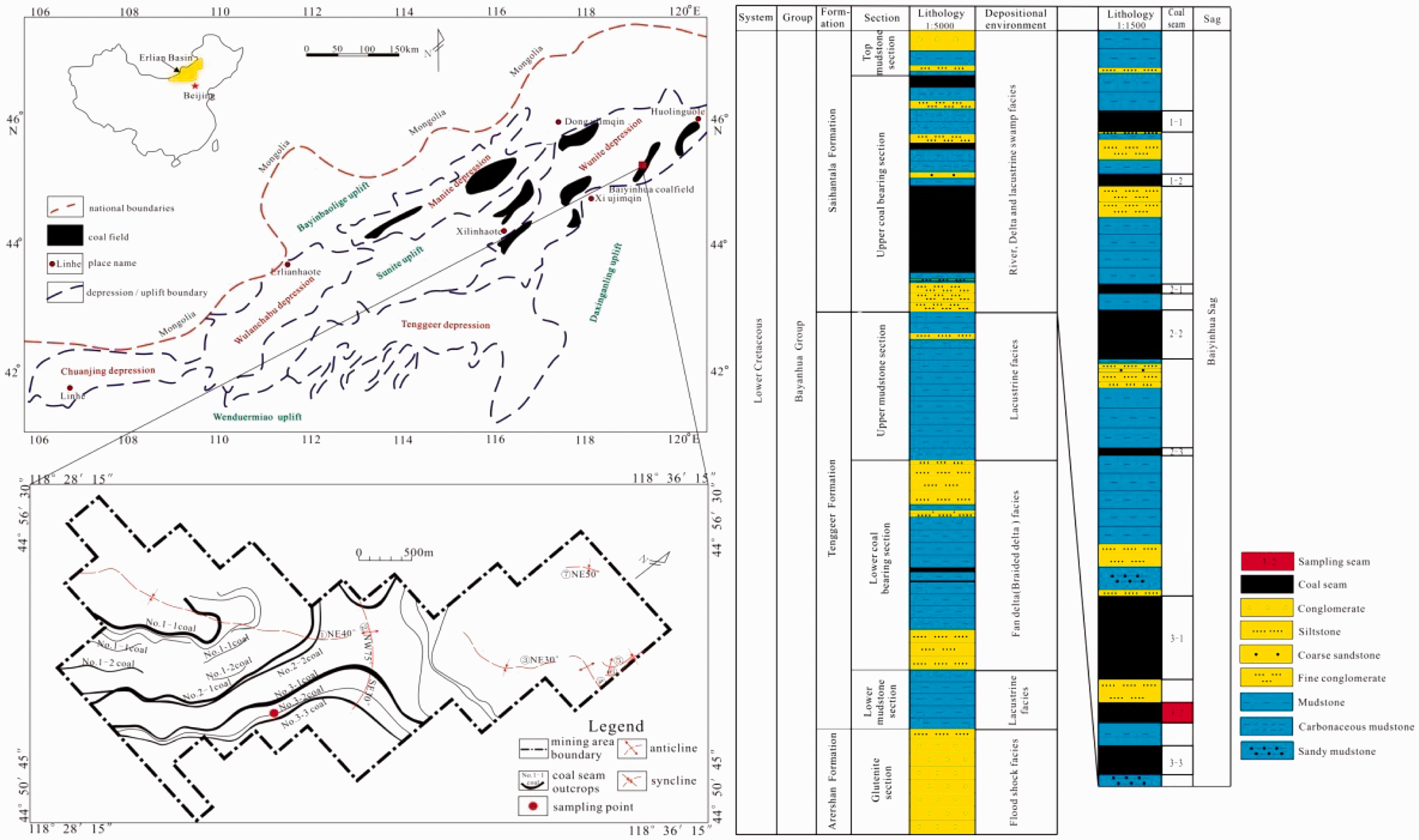
Sample collection and processing
The sampling point in this study is located in the middle of the Baiyinhua coalfield, and No. 3–2 coal under exploitation was selected as the research object, the thickness of which is between 0.15 and 17.75 m (average 1.13 m). The coalfield is dominated by clarain coal and dull coal, with a small number of vitrain bands and fusain that belong to detrital coal. The bedding is horizontal with gentle waves.
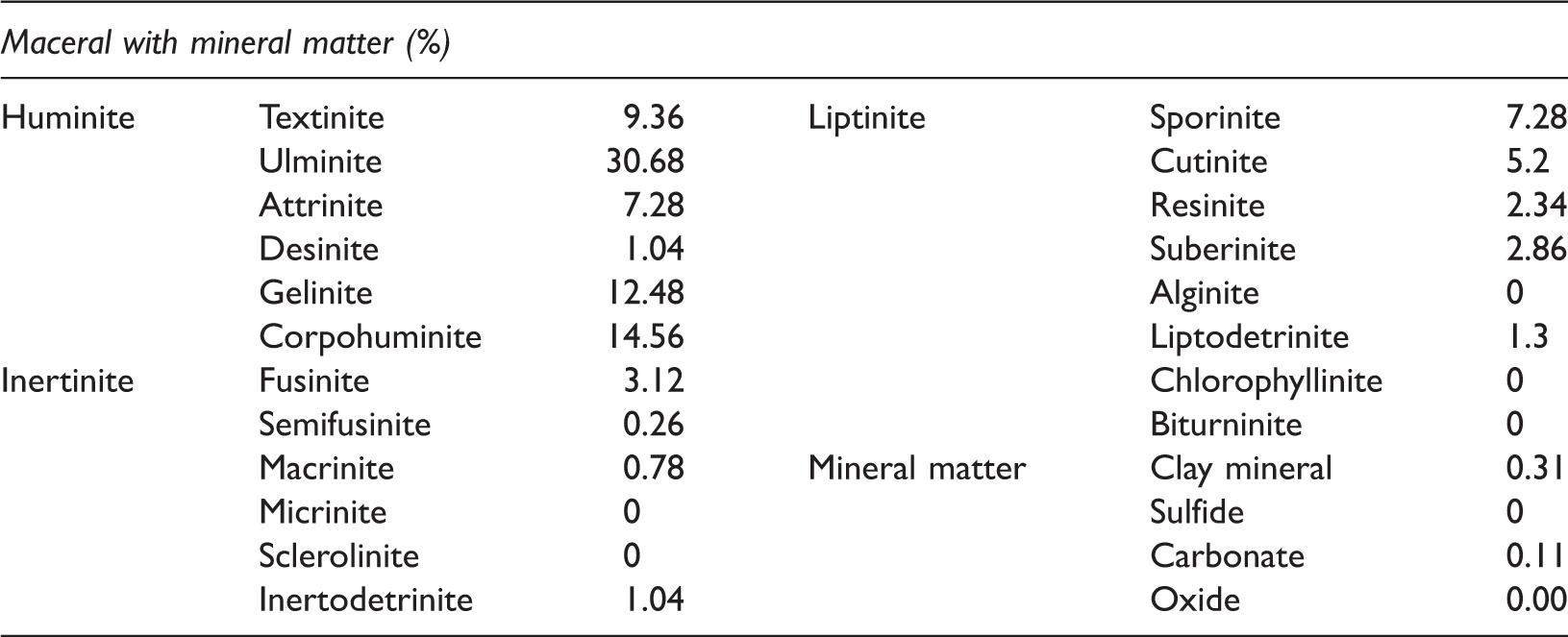
A cylindrical coal sample of 25 mm (diameter) × 50 mm (length) was drilled for a speed-sensitive evaluation test at a core direction parallel to the bedding direction; the coal samples drilled were all original structural coal. According to the national standard, the sample at the end of the coal pillar should be used to conduct an industrial analysis, elemental analysis, total sulfur and sulfur analysis, maceral quantification, and Ro test. Low-temperature ash (LTA) was obtained by ashing the coal samples using an EMITECH K1050X plasma asher at <200℃ until the mass difference was less than 1%. Ash samples were milled and passed through a 200-mesh sieve. X-ray diffraction analysis of LTA was performed using a Bruker D8-Discover X-ray diffractometer at 40 kV and 40 mA, with a scanning angle of 3°–45°. The relative clay content was determined using the suspension method. Clay minerals with a diameter of less than 2 µm were extracted, and a directional film was produced that included natural air dried pieces, ethylene glycol pieces, and pieces heated at 550℃. The diffraction peak intensity contrast method and adiabatic equations were subsequently used to calculate the clay mineral content (Jozanikohan et al., 2016). According to basic test results, samples with a similar material composition were selected to conduct sensitivity experiments.
The basic information of BYH-3-2 coal sample.

XRD: X-ray diffraction.
Coal quality analysis result of BYH-3-2 coal sample.
Experimental methods
Stress sensitivity tests were conducted with reference to the reservoir sensitivity flow test evaluation method (SY/T 5358-2010) using the experimental instrument shown in Figure 2. The injection fluid was of standard salinity (NaCl:CaCl2:MgCl2·6H2O = 7:0.6:0.4) with different mineralization degrees and pHs. According to 48 mineralization degree data collected and 18 pH data from four major low-rank coal basins (Tuha Basin, Junggar Basin, Hailar Basin, and Erlian Basin), three levels were set for the mineralization degree (450, 1250, and 14,400 mg/l) and pH (6, 8, and 10). To facilitate the description of formation water types, the pH is described as partial acidity (pH = 6), partial alkalinity (pH = 8), strong alkalinity (pH = 8), and the degree of mineralization is described as low salinity (450 mg/l), intermediate salinity (1250 mg/l), and high salinity (14,400 mg/l). Various concentrations of salt water were constructed more than one day prior to the experiment and then filtered with microporous membrane to remove particulate matter. A velocity sensitivity test was conducted prior to the coal reservoir stress sensitivity test experiment to determine a reasonable flow velocity condition. The stress sensitivity test was then conducted by maintaining pore fluid at a constant pressure. To determine the extent of permeability change with effective stress, the confining pressure was gradually changed and permeability was measured under different confining pressures. A coal seam depth between 600 and 2500 m was simulated, and therefore, the effective stress was designed to be between 6 and 25 MPa, with the regulator maintained at between 1.5 and 2.5 h. This experiment analyzes the effect of the process of increasing the effective stress in a drainage stage on permeability, and therefore, the gradual state of permeability recovery in relation to reducing the effective stress is not considered. To ensure that experimental conditions were constant, samples with only small gas permeability differences were selected for flow sensitivity tests. All experiments were performed at room temperature.
Reservoir sensitivity analyzer.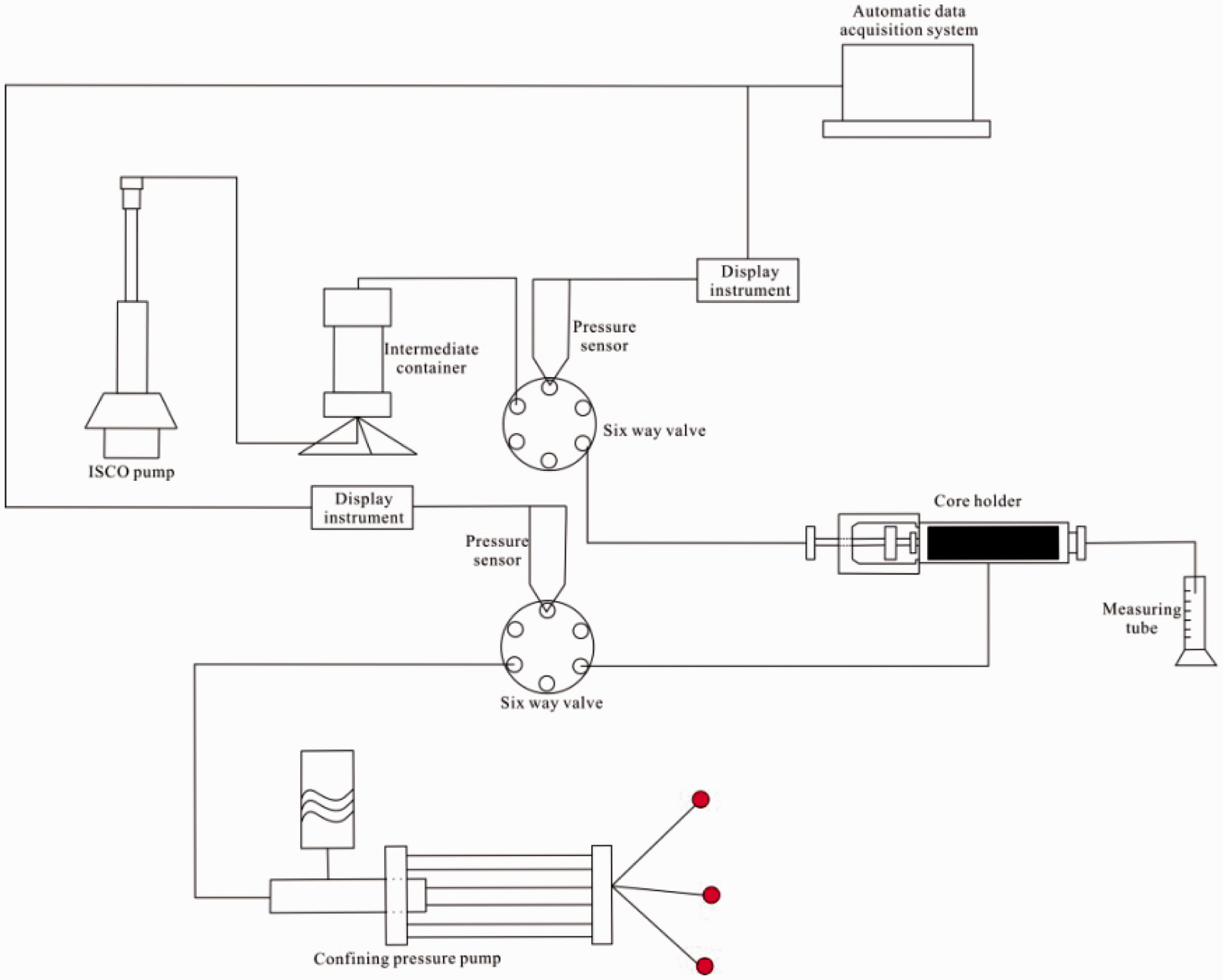
Fluid pressure (Pf) is calculated as follows (Li et al., 2013)

The effective stress is calculated as follows (Wu et al., 2017)

Note: Pe—the effective stress, σ—overlying confining pressure, MPa; Pf—pore fluid pressure, MPa; Pin—inlet pressure, MPa; Pout—outlet pressure, MPa.
As the experiment using the steady-state method for testing, so the fluid permeability can be obtained by Darcy’s law

Note: K—fluid permeability, µm2 (D); Q—flow, cm3/s; μ—fluid viscosity, MPa s; L—core length, cm; A—cross-sectional area of coal sample, cm2;
To describe the effect of stress sensitivity on the permeability of coal reservoirs, the dimensionless permeability (Ki/K0) is defined as the ratio of liquid permeability (Ki) to the initial permeability of coal (K0). Two parameters are usually employed in the evaluation of coal reservoir stress sensitivity: the permeability damage rate and the stress sensitivity coefficient.
The permeability damage rate is calculated as follows

The stress sensitivity coefficient is calculated as follows (Geng et al., 2017)

Note: Dk—the maximum permeability damage resulting from the continuous increase of stress to the highest point; K0—initial permeability, 10−3 µm2; Ki—permeability under different effective stresses,10−3 µm2; αk—stress-sensitive coefficient, MPa−1;ΔK—permeability change value, 10−3 µm2;
Results
Relation between permeability and effective stress
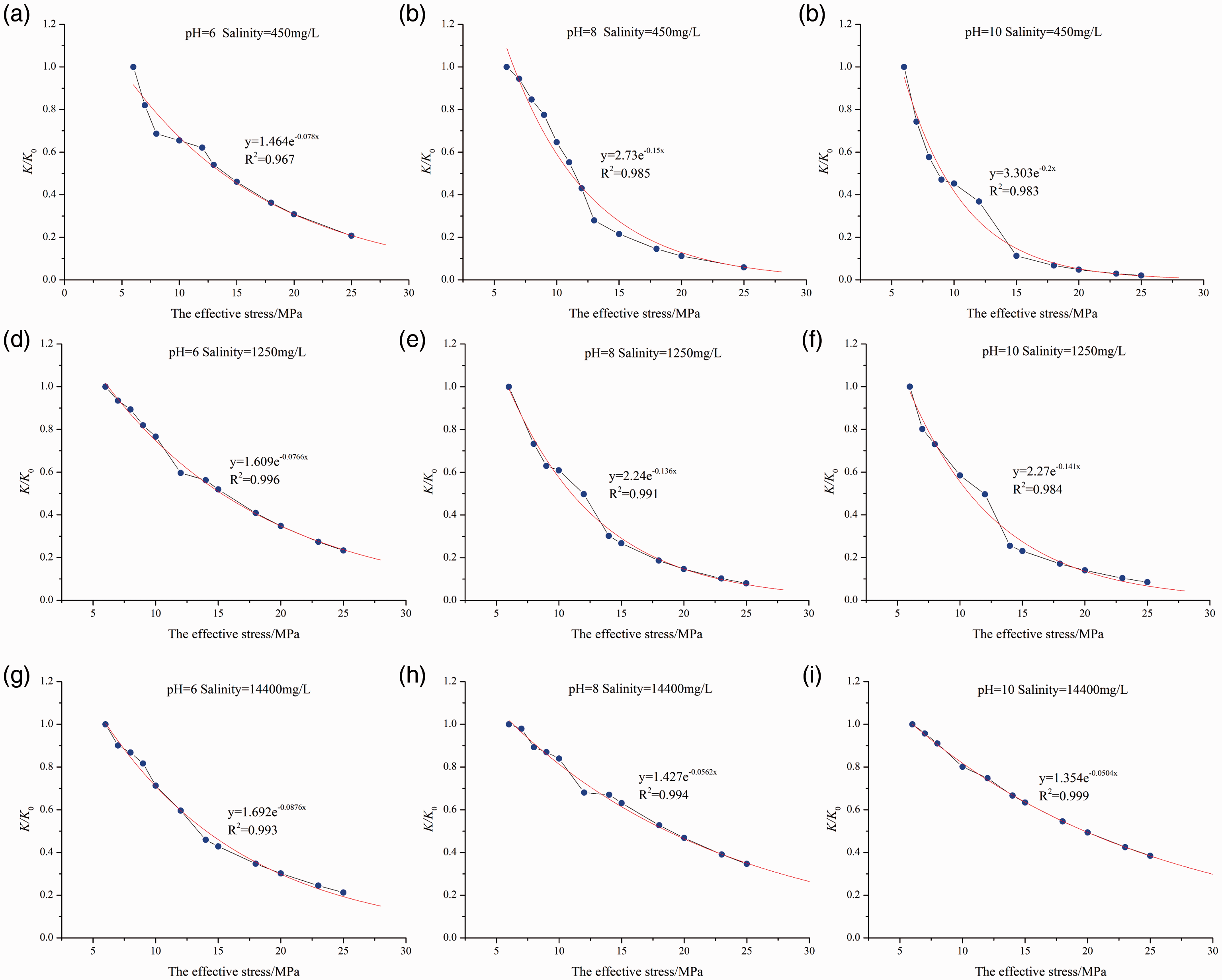
Results show that the relation between dimensionless permeability and effective stress is in good agreement with a negative exponential relationship (R2 is greater than 0.96) and conforms to the general stress-sensitive law of coal permeability (Figure 3; Dou et al., 2016; Yang et al., 2011)
Relationship between permeability and effective stress under different salinity and pH.
Note: Ki—permeability under given stress conditions, 10−3 µm2; Pe—the change of effective stress from the initial to an effective stress state, MPa; A—regression coefficient; α—permeability modulus, MPa−1.
The results of stress sensitivity tests of nine coal samples show a regression coefficient (A) is between 1.354 and 3.303, with an average of 2.009, and α is between 0.0504 and 0.2 MPa−1,with an average of 0.108 MPa−1. Figure 3 shows that when effective stress is increased to 18 MPa, the dimensionless permeability is between 0.0678 and 0.545 with an average of 0.306, indicating that the loss in average permeability reaches 70% when effective stress reaches 18 MPa. Alkaline and high-salinity conditions (Figure 3(h) and (i)) show the largest dimensionless permeability under the same effective stress conditions, indicating that when the degree of mineralization is higher in alkaline conditions, the stress sensitivity is weaker, and the stronger the alkalinity, the more obvious the effect. In contrast, the dimensionless permeability is smaller when salinity is lower, and it is the smallest under the same pH condition but different salinity, indicating that low salinity enhances stress sensitivity under alkaline condition (Figure 3(b), (c), (e), (f), (h), and (i)). Under acidic conditions, the influence of salinity on permeability is mainly manifested when the effective stress is less than 15 MPa. As salinity increases, dimensionless permeability is more consistent with a negative exponential relation (Figure 3(a), (d), and (g)).
Relation between permeability damage rate and effective stress
Formula (4) is used to calculate the permeability damage rate under different effective stresses. The results show that with a change of pH under the same salinity or a change in salinity under the same pH, the overall permeability damage rate is positively related to the effective stress, indicating that the permeability damage rate is the accumulative value of permeability damage with an increase in effective stress (Figure 4).
Relationship between permeability damage rate and effective stress.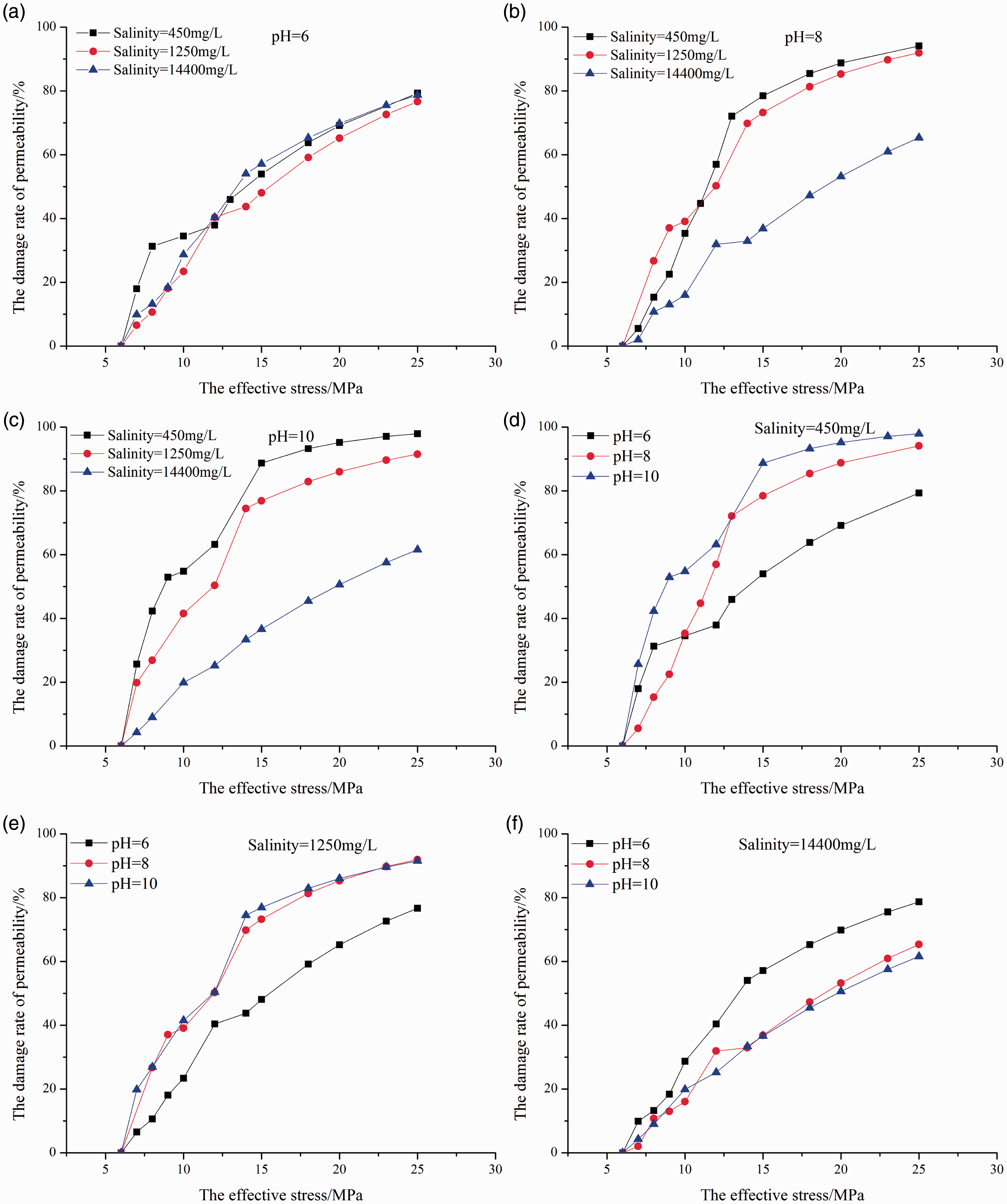
Under the same pH, the stress sensitivity curves of coal reservoirs with different salinities are realized as follows. Under weak acidic conditions (pH = 6), there is a similar maximum damage rate to coal reservoir permeability with different salinities, but the permeability damage rate is different in differing effective stress stages. The intersection point of the stress sensitivity curve with different salinities is 13 MPa. With an effective stress of less than 13 MPa and different salinities, the difference of the permeability damage rate shows an initial increase but it is then reduced with an increase in effective stress. When effective stress is more than 13 MPa, the law relating to changes in the difference of the permeability damage rate is the same as that of the previous stage. In the first stage, the low salinity shows strong stress sensitivity, but in the second stage, the high salinity also shows strong stress sensitivity, indicating that there exists a critical salinity so that the rate of permeability damage is lowest in these two stages (Figure 4(a)). Compared to weak acidic conditions, under weak alkaline conditions (pH = 8), there is an increase in the maximum damage occurring to coal reservoir permeability at low and intermediate salinities; both are much higher than that under high salinity (Figure 4(b)). The same rule is observed under strong alkaline conditions (pH = 10), indicating that when salinity is lower, the stress sensitivity is stronger under alkaline conditions, and the stress-sensitive effect of low salinity is more obvious with an increase in the alkaline condition, which manifests as a permeability damage rate slope and the difference of the maximum permeability damage rate increased (Figure 4(b) and (c)).
Under the same salinity, the stress sensitivity curves of coal reservoirs at different pHs are realized as follows. In low and intermediate salinity conditions, the stress sensitivity under alkaline conditions is higher than that under acidic conditions, and when the pH is higher and salinity is lower, the stress sensitivity is greater (Figure 4(d) and (e)). The influence of salinity on the permeability damage rate is different under different pHs. Compared with alkaline conditions, the influence of salinity on the permeability damage rate is not obvious under acidic conditions (Figure 4(d) to (f)). In the high-salinity stage, stress sensitivity under acidic conditions is higher than that under alkaline conditions, and alkalinity has little influence on the permeability damage rate (Figure 4(f)).
In conclusion, a lower pH is beneficial for reservoir protection at low and intermediate salinity conditions. However, under alkaline conditions, the reservoir is more prone to stress sensitivity when salinity is lower.
The stress sensitivity index in standard SY/T 5358-2010.
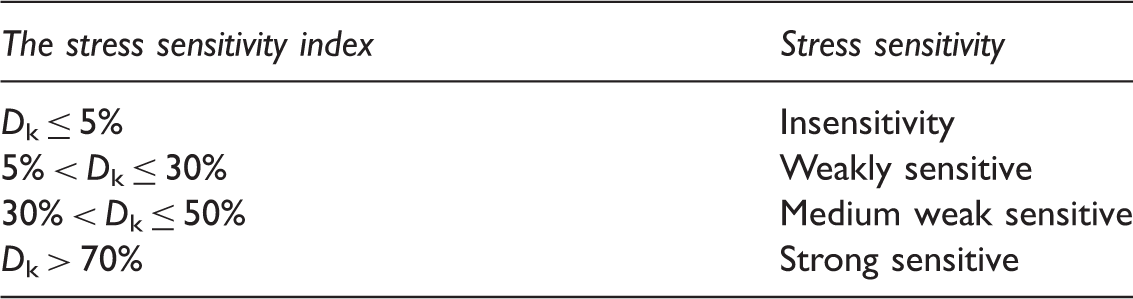
Note: The effective stress is between 2.5 and 20 MPa.
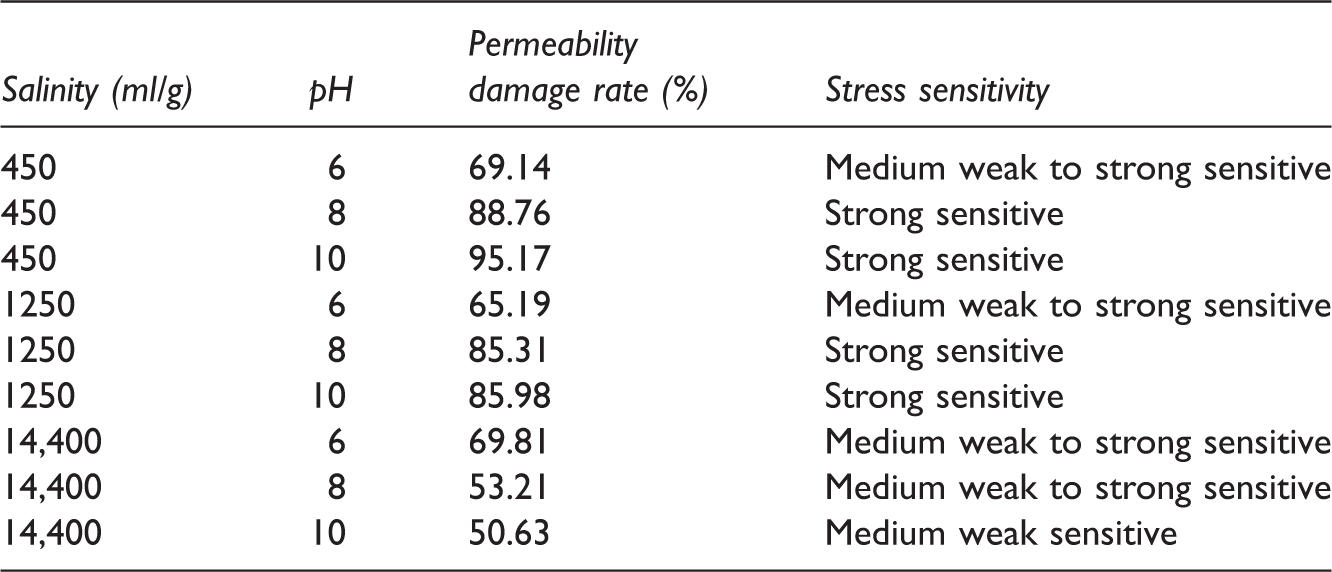
The stress sensitivity evaluation results under different salinity and pH.
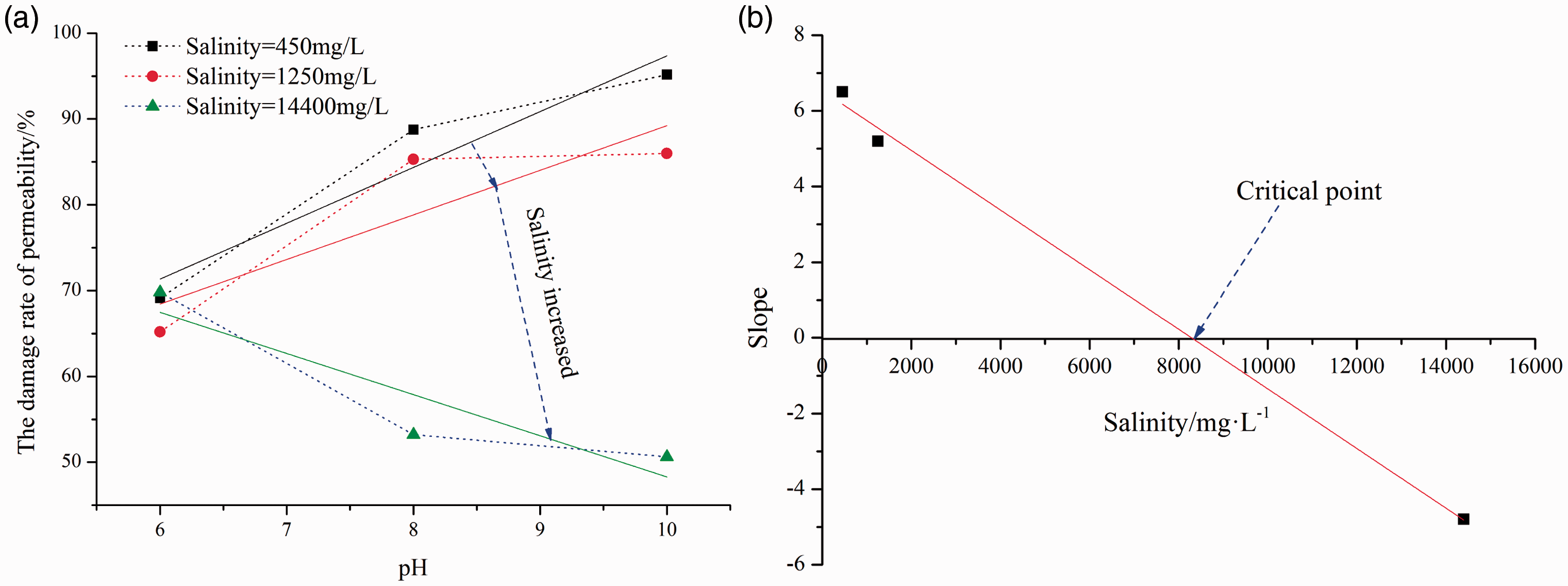
Relation between permeability damage rate and pH in the same salinity.
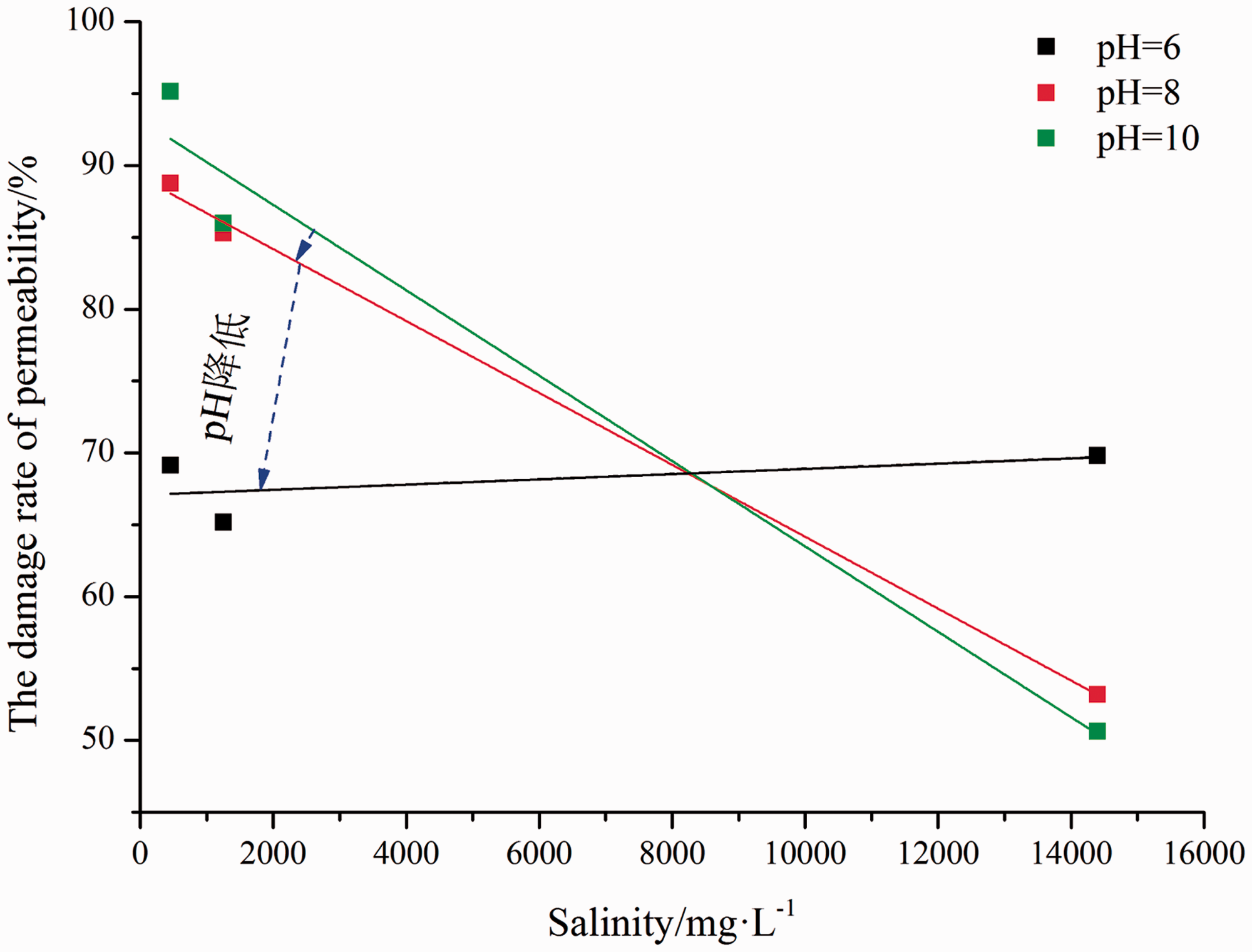
Relation between permeability damage rate and salinity at the same pH.
Relation between stress sensitivity coefficient and effective stress
The stress sensitivity coefficient was calculated using formula (5); when the stress sensitivity coefficient is greater, the stress sensitivity is stronger. The stress sensitivity coefficient is divided into two stages, a fluctuation stage and a stable stage, with an increase in effective stress from 15 to 17 MPa for the boundary. The relation between them is overall negatively correlated, indicating that the stress sensitivity of coal reservoirs fluctuates greatly in minor effective stress variation ranges (Figure 7). The stress sensitivity of coal reservoirs in a fluctuation stage is evaluated using the mean value and variance, where the mean reflects the rate of permeability decay (the greater the average, the faster is the decay), and the variance reflects fluctuation of the permeability decay rate.
Relationship between sensitivity coefficient and effective stress.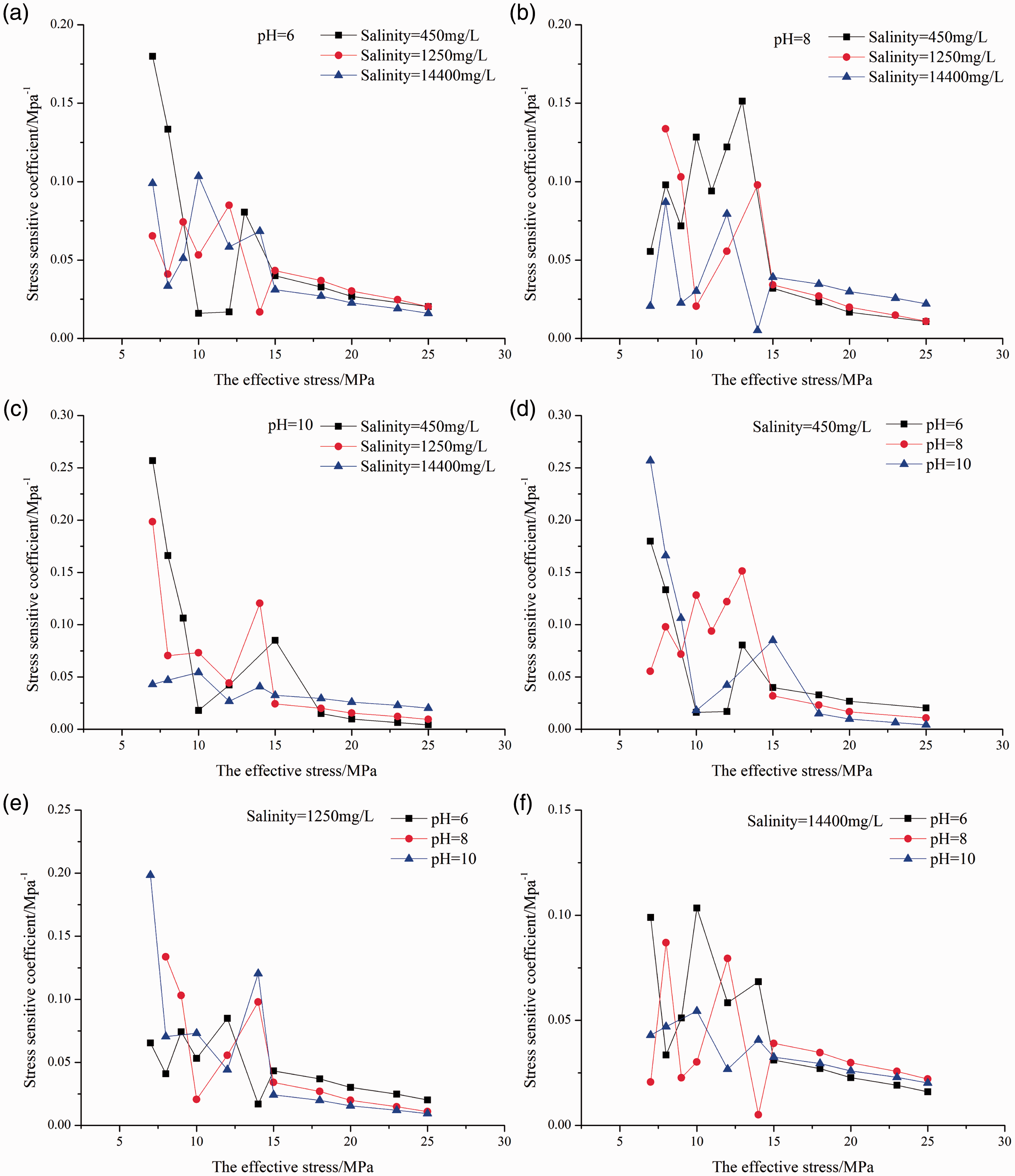
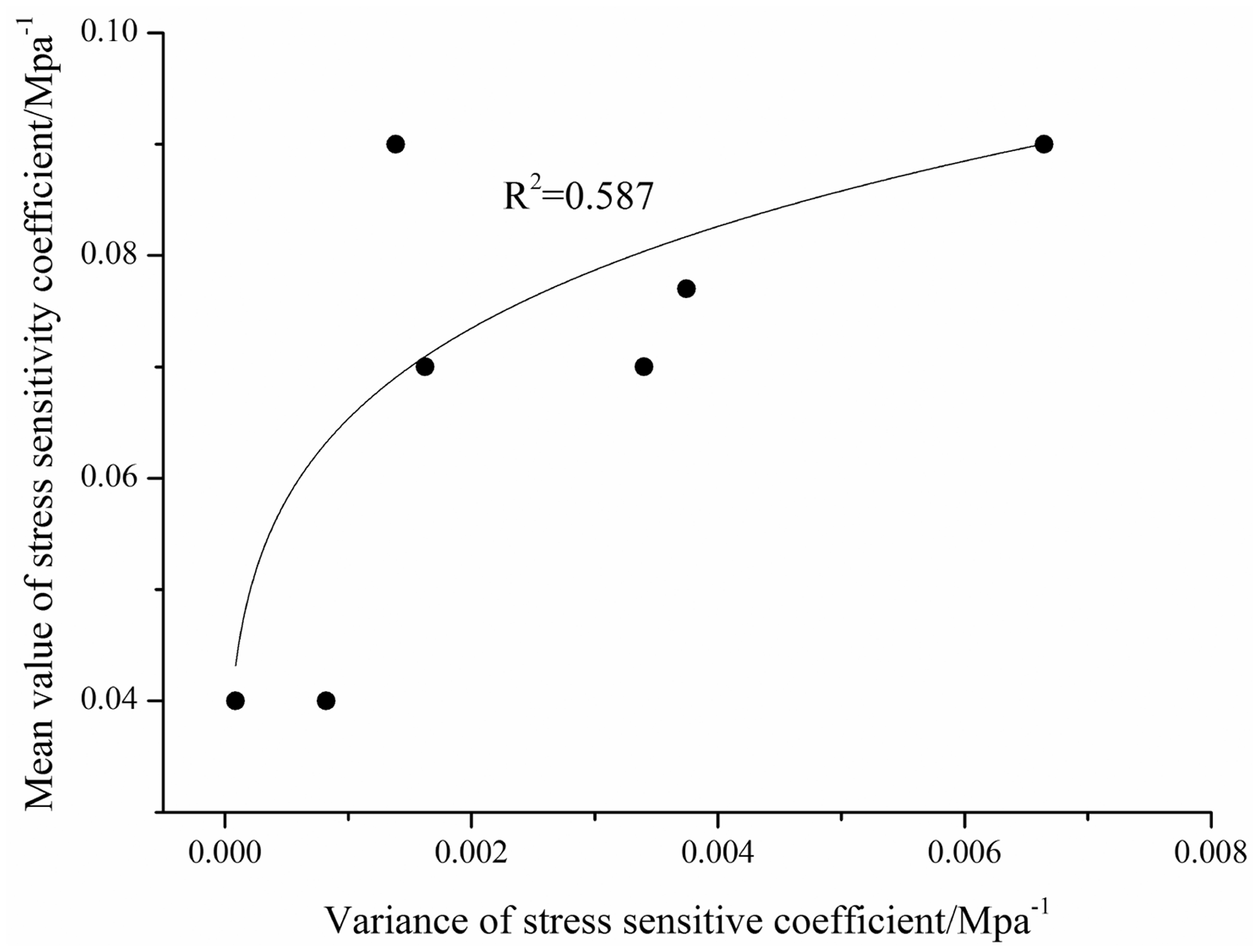
Figure 8 shows that under acidic conditions, the average value of the stress sensitivity coefficient first increases and then stabilizes with an increase in salinity. This shows that when salinity is higher under a condition of partial acidity, attenuation of coal reservoir permeability is greater, and when salinity is increased to a certain extent, there is no effect on the stress sensitivity of the reservoir by the degree of mineralization. Under alkaline conditions, there is a decrease in the average value of the stress sensitivity coefficient with an increase in salinity, but the influence of alkalinity is less. This indicates that with a lower mineralization degree under alkaline conditions, the permeability attenuation of the coal reservoir is faster and the stress sensitivity of the reservoir is stronger. This effect is not related to the alkaline strength but is due to the influence of the mineralization degree. According to the analysis of variance, there is a positive correlation between the variance and the average value that is not dependent on the type of injection liquid used (Figure 9), indicating that when the variance is greater, the stress sensitivity of coal reservoir is stronger. Therefore, the variance can be used to judge the stress sensitivity when there are small differences in the average values. Using a combination of the above two indicators, it is evident that the influence of pH on stress sensitivity is the strongest at 6, followed by 10, and the weakest is at 8. Under a partially acidic condition, the strongest stress sensitivity occurs at a higher salinity degree (salinity = 14,400 mg/l), whereas the strongest stress sensitivity occurs at a lower salinity (salinity = 450 mg/l) under alkaline conditions. At a low–intermediate salinity, the increase in pH has little effect on the stress-sensitive coefficient, but when the degree of salinity reaches a higher degree of salinity (salinity = 14,400 mg/l), pH is more conducive to mitigating reservoir damage (Figure 8).
The average, variance of the stress sensitivity coefficient under different salinity of the same pH. Relationship between mean value of stress sensitivity coefficient and variance of stress-sensitive coefficients.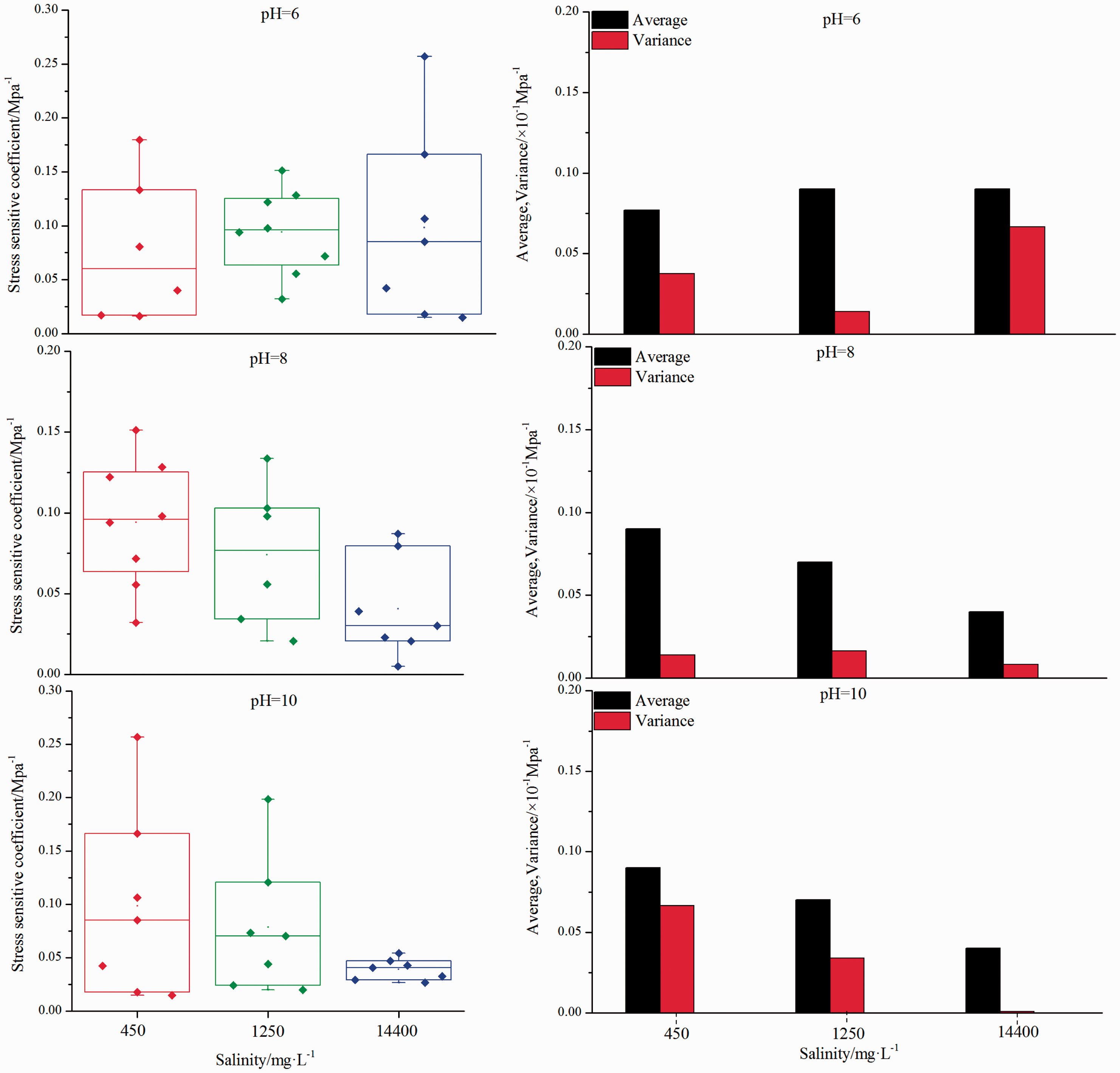
Relation between compressibility of the coal reservoir and effective stress
The above experiments show that a change in the dimensionless permeability of coal with effective stress agrees with the exponential function. The stress sensitivity of permeability can be quantitatively represented by the compressibility of the coal reservoir, which is the change rate of permeability under a change in unit effective stress relative to initial permeability and can be calculated by formula (7) proposed by Seidle et al. (1992) and Wu et al. (2017)

From the above analysis, it is evident that the influence of different salinities and pHs on the stress sensitivity of a coal reservoir occurs as a coupling action with an obvious stage effect. The compressibility coefficient can reflect overall changes in permeability under the influence of comprehensive factors at different stages. These results show that compressibility increases slightly with an increase in salinity under partially acidic conditions (Figure 10(a), (d), and (g)) but decreases with an increase in salinity under alkaline conditions. In the low–intermediate salinity stage, the compressible coefficient increases with increasing pH, but the compressibility coefficient decreases with an increase in pH when a certain value is reached, indicating that a critical degree of mineralization is required to control the effect of pH on stress sensitivity.
The compressible coefficient under different pH and salinity.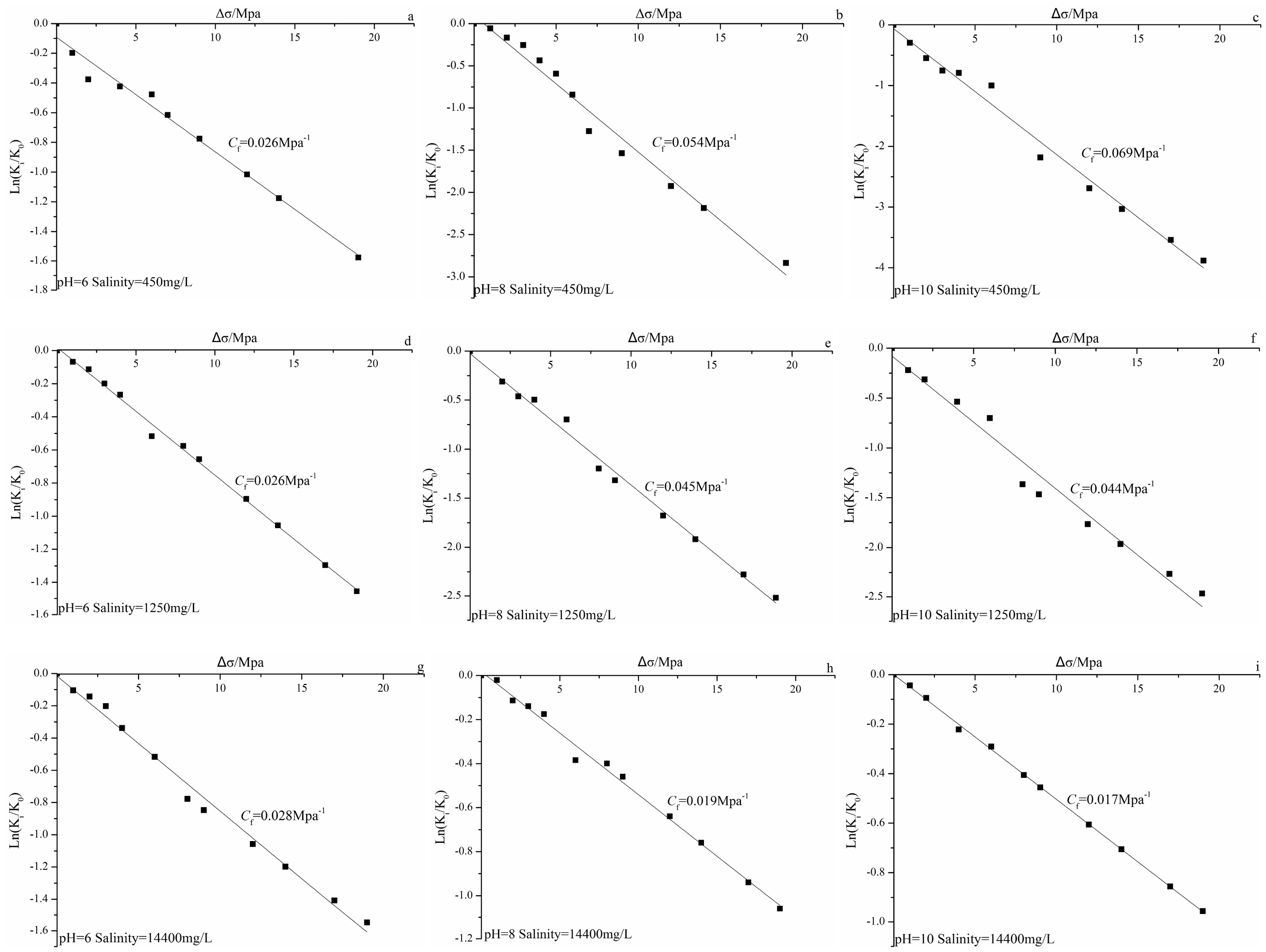
Discussion
Responses in reservoir stress sensitivity under different pH
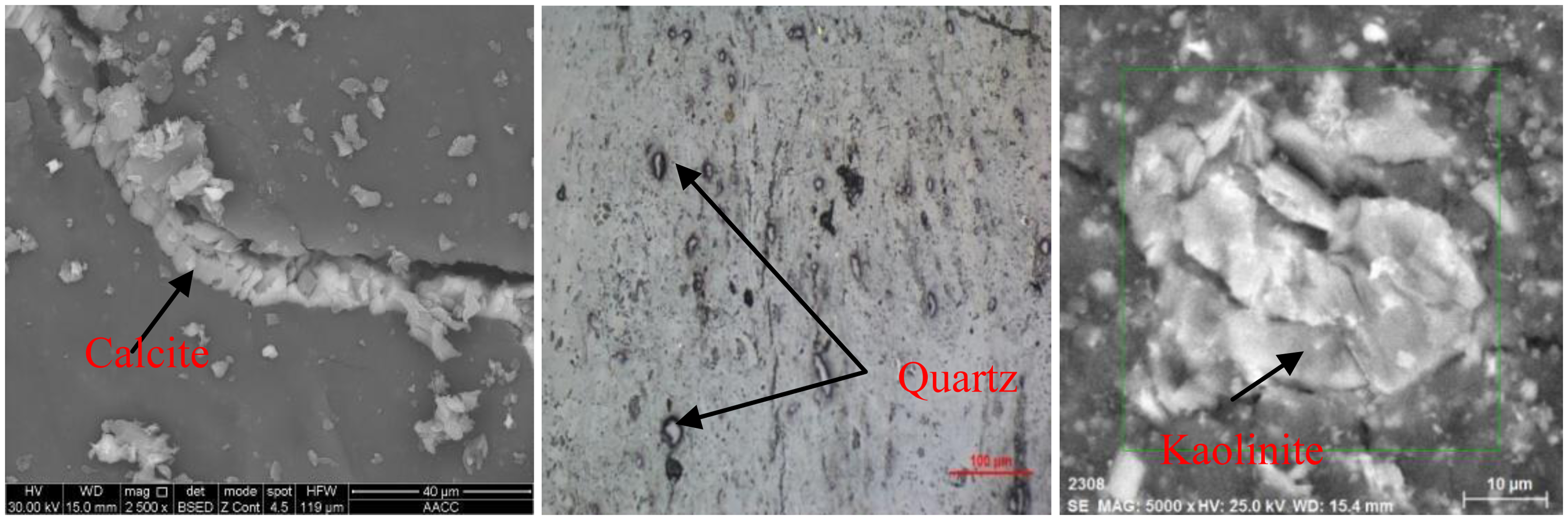
A coal sample was saturated using a vacuum saturable device prior to testing. The action of different fluids leads to different initial fluid permeabilities under the same conditions. Figure 11 shows that the initial permeability under acidic conditions is higher than that under alkaline conditions. This occurs because hydrochloric acid reacts with the carbonate minerals in coal, and soluble chlorides are formed and dissolved away from the coal, resulting in an increase in the coal pore size, which effectively improves the permeability. This is an inorganic chemical reaction, and it has little effect on small organic molecular compounds. With a lower concentration of NaOH, there are considerable changes in the acid oxygen-containing functional groups of lignite but little change in the organic matter content. However, a larger number of minerals and organic matter are removed with an increase in the NaOH concentration, causing an increase in pore volume. Previous studies have shown that the carboxyl and phenolic hydroxyl group content of coal is greatly reduced when coal samples are treated with an NaOH solution (Jing et al., 2016). However, the treatment with alkaline solutions can lead to reactions in the organic and inorganic minerals in coal and the dissolution of small organic molecules. Moreover, the minerals in the sample coal are mainly quartz and kaolinite, with few carbonate minerals; therefore, the initial permeability of coal under alkaline conditions should be higher than that under acidic conditions. However, the opposite is true, and this depends on the occurrence of minerals. Calcite in the coal is mostly filled with microfractures or macropores (Figure 12(a)), whereas quartz and kaolinite are mostly closely associated with organic matter (Figure 12(b) and (c)). Although the calcite content is small, it can effectively improve permeability, and under alkaline conditions, the organic matter is dissolved, thereby generating an increasing number of micropores and creating a complex coal reservoir pore structure that is not conducive to coal reservoir seepage. A large amount of hydroxide is also combined with certain divalent cations (such as Ca2+ and Mg2+) to form insoluble precipitates; this is also one of the reasons why the initial permeability of coal under acidic conditions is higher than that under alkaline conditions. Permeability can be effectively improved only when the concentration of alkali causes the pores to collapse (Song et al., 2012).
Relationship between initial permeability and pH. Minerals under scanning electron microscopy and electron microscopy.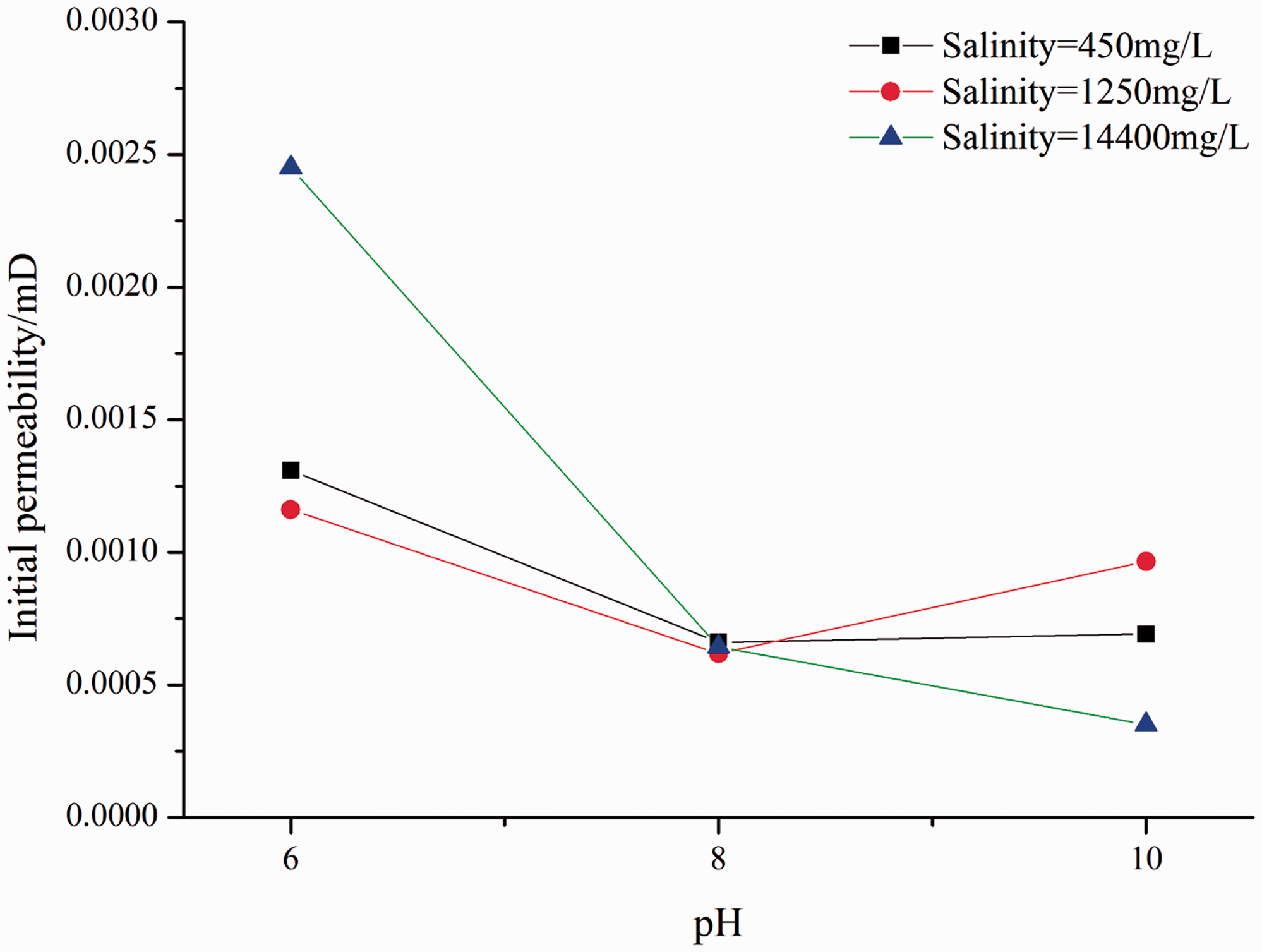
The coefficient of stress sensitivity, compressibility of the coal reservoir, and maximum damage rate of permeability are the largest under acidic conditions with a greater initial permeability, indicating that when initial permeability is greater, there is a faster decrease in the permeability and damage rate with an increase in effective stress. Compared with alkaline conditions, the compressibility coefficient of the coal reservoir is smaller under the same salinity (Figure 10(a) to (f)), which shows that although alkali treatment cannot effectively improve permeability, it can effectively reduce the overall mechanical strength of the rock and increase its stress sensitivity. However, this law is reversed under conditions of high salinity, mainly because the injection solution contains a large amount of Ca2+ and Mg2+. The formation of insoluble precipitate in alkaline conditions blocks the pores and fractures in coal and indirectly weakens the stress of the skeleton, which then reduces the stress sensitivity.
Responses in reservoir stress sensitivity under different salinities
The effect of salinity on the permeability of the coal reservoir is mainly related to the swelling of clay minerals, such as illite and the illite mixed layer, resulting in a decrease in permeability. Figure 11 shows that with a pH of 8, the initial permeability varies slightly under different salinities. With alkaline enhancement, initial permeability is the highest under a saline condition of 1250 mg/l, followed by that of 450 mg/l, and is the lowest under a condition of 14,400 mg/l. This is because with an increase in alkalinity, the degree of mineralization is lower and the hydration swelling effect is more obvious, while the mineralization degree is too high to produce the role of insoluble precipitate also increased. Therefore, the existence of critical salinity lowers these two effects.
The expansion, dispersion, and migration of clay minerals weaken the stress on coal particles and reduce mechanical properties such as compressive strength and the elastic modulus of the coal reservoir. Therefore, stress sensitivity is enhanced; this effect is more obvious with an increase in alkalinity (Pu et al., 2006). As shown in Figure 10, with a decrease of salinity, there is an increase in the stress sensitivity of the coal reservoir, and this is related to two factors: first, the swelling effect of clay minerals, which leads to a decrease in the mechanical properties of coal and rock, and an increase in stress sensitivity; and second, there is less Ca2+ and Mg2+ in the low salinity injection fluid, which reduces the probability of the fracture being blocked by precipitation. Therefore, the stress of the skeleton is enhanced and the stress sensitivity is increased. The positive effect of hydration swelling and the negative effect of precipitation support become increasingly obvious with an increase in alkalinity. However, the influence of salinity on reservoir stress sensitivity is reduced under conditions of partial acidity, because H+ has an inhibitory effect on the swelling of clay and does not react with Ca2+ and Mg2+ to form precipitation; therefore, both of these two effects are inhibited.
To conclude, the influences of salinity and pH on stress sensitivity are not independent, and the effects are not the same with changes in the degrees of influence of these two factors. Therefore, introduction of an interactive phase is of physical significance.
Dynamic model of permeability under compound condition
The compressibility coefficient of a coal reservoir was used to evaluate the stress sensitivity of permeability. The results are the same as those obtained using the permeability damage rate and stress sensitivity coefficient, which are known as the permeability cumulative damage degree and permeability stage loss rate, respectively. Only the coal reservoir compressibility coefficient can reflect the overall average level of stress sensitivity, and thus, it can be used as a comprehensive evaluation index to reflect stress sensitivity.
Owing to the interaction of the effect of salinity and pH on the compressible coefficient, this study adopts the multivariate regression analysis method, which contains an interactive item for establishing the model.

Overview of the model.

Variance analysis.

Regression coefficient and significance test.
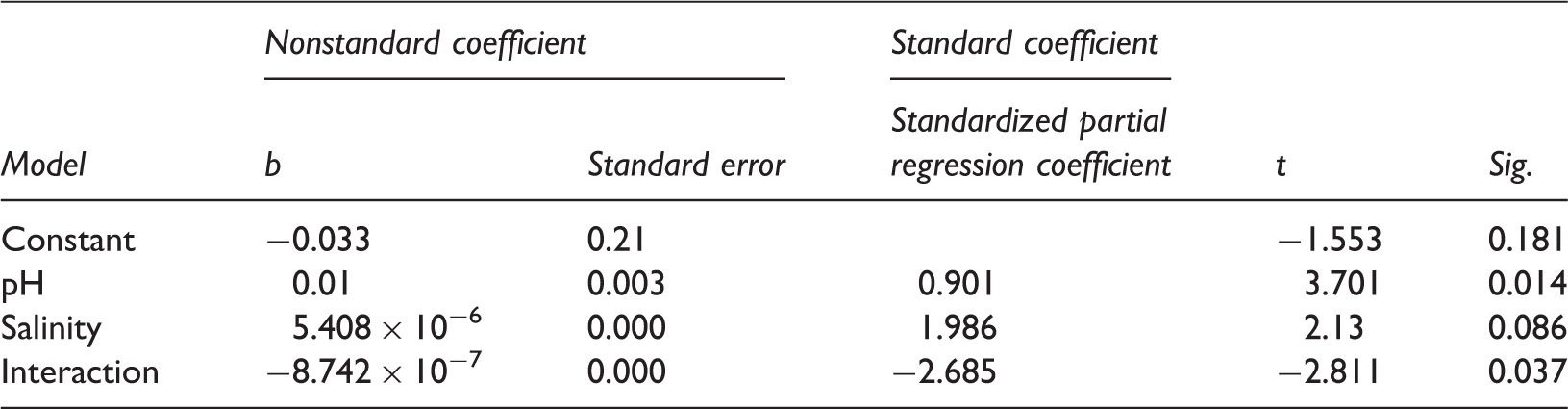
Note: Cf—compressibility coefficient, MPa−1, X1—pH, X2—salinity, mg/l; X3—interaction, mg/l.
Equation (8) shows that although pH and salinity have a positive correlation with the compressibility coefficient of the coal reservoir, their interaction is negatively correlated. According to the standardized partial regression coefficient, the degree of influence of the compressibility coefficient of the coal reservoir from strong to weak is as follows: interaction, salinity, and pH. This indicates that the stress sensitivity of the reservoir mainly depends on the coupling effect of salinity and pH, and this coupling effect is not synergistic, which is also consistent with the above analysis.
Taking formula (8) into formula (7), the permeability prediction model under different salinities and pH stress sensitivities is obtained as follows

Note: K0—initial permeability, 10−3 µm2; Ki—permeability under different effective stresses, 10−3 µm2; σi—effective stress corresponding to different stress points, MPa; σ0—initial effective stress, MPa.
Engineering advice
The permeability of the coal seam changes dynamically during the development process. Although many scholars have proposed a variety of permeability models for determining coal reservoir permeability, all of them have been based on a saturated CBM reservoir extraction process and its mechanism (Connell, 2010; Liu et al., 2012). However, most CBM reservoirs are unsaturated, and therefore, the existing permeability model cannot meet the description of dynamic change characteristics of actual CBM reservoir permeability.
The above analysis shows that dimensionless permeability has an exponential relation with effective stress (formula (9)). CBM is produced through drainage using the depressurization method, and overlying formation pressure is constant during this process. Actual change occurs in relation to the pore fluid pressure of the coal reservoir, and the effective stress variation value can thus be expressed as formula (10)

Note: σi is the effective stress corresponding to different reservoir pressures (Pi), MPa and σ0 is the effective stress corresponding to the original reservoir pressure (P0), MPa.
By bringing formula (10) into formula (9), the relation between the permeability of the coal reservoir and differences in the production pressure during development of the CBM well can be obtained. The fluid in coal seam seepage from cleats to fracturing fractures and producing wellbores under the pressure difference, which follows the Darcy law. If we assume horizontal, uniform, and homogeneous coal seams, the fluid obeys the plane radial flow of Darcy’s Law. Considering the influence of coal reservoir stress sensitivity, the output water (Qr), at radius (r) can be expressed as follows

The above equation is used to separate variables and integrate

The production formula of the plane radial flow in consideration of stress sensitivity under a salinity and pH composite system can be expressed as follows

Note: Qr—flow, cm3/s; P0—original reservoir pressure, MPa; K0—initial permeability, 10−3 µm2; R0, Rw —the supply radius and the CBM well radius, cm; μ—fluid viscosity, MPa s; X1 —pH, X2 —salinity, mg/l; X3—interaction, mg/l; Pe—critical desorption pressure, MPa; h—thickness of coal seam, m.
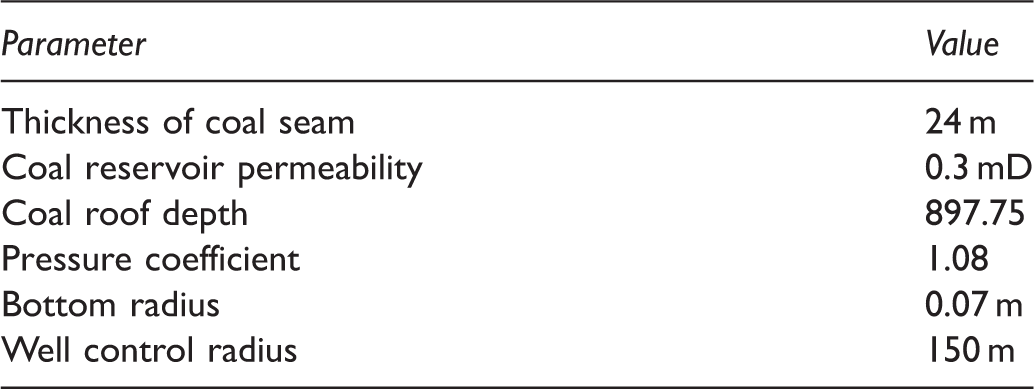
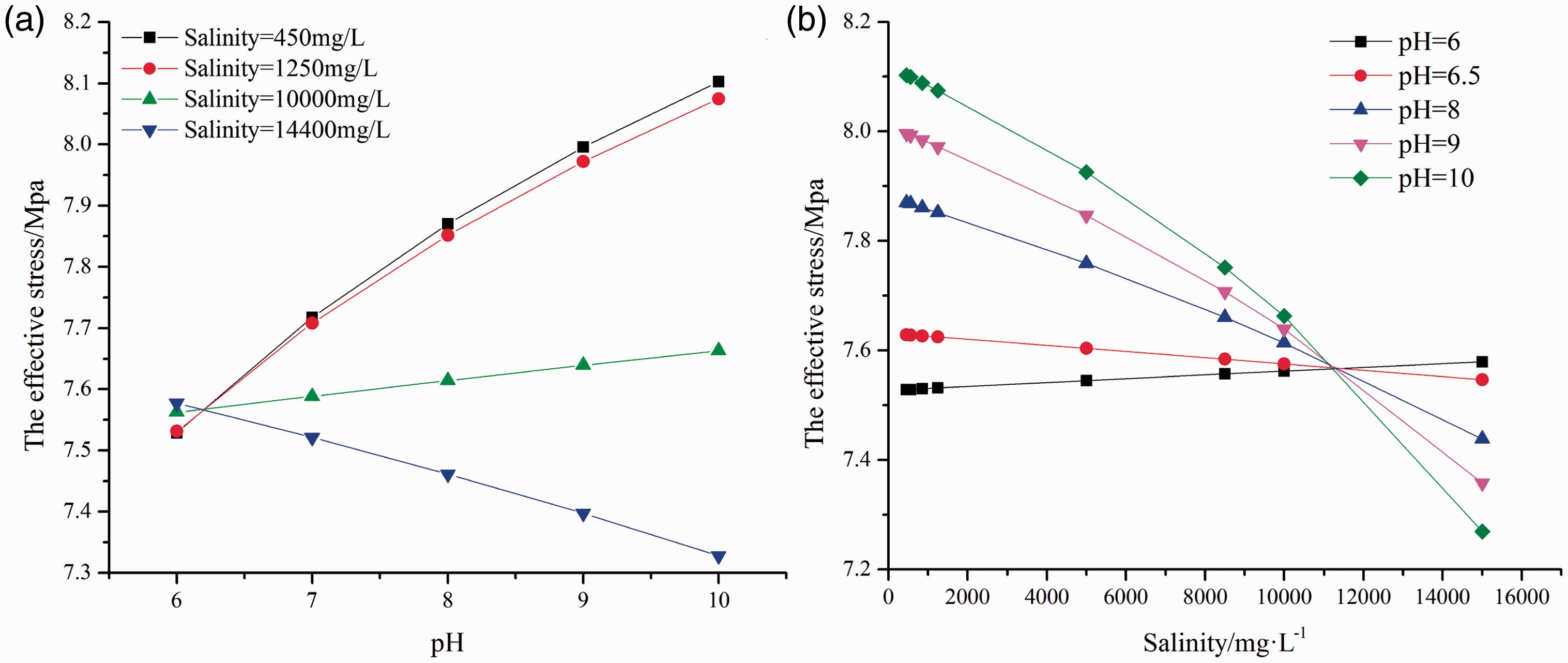
From formula (13), we can see that for the same reservoir in the same drainage system, the bottom flow pressure at the same radius is different under differing fluid types (Figure 13). If we consider the CBM well in the Erlian Basin as an example (Table 8), a simulation of effective stress under different fluid conditions can be conducted using formulas (10) and (13), and the results show that if the combination of pH and salinity is the same, the response of effective stress and reservoir stress sensitivity are also the same. This shows that when reservoir stress sensitivity is stronger, the bottom flow pressure under the unit flow rate is lower, which results in a greater reduction in coal reservoir permeability. It is thus more difficult to pass the pressure drop. In addition, when salinity is lower than 10,000 mg/l, if the pH is higher, the rate of drainage production to ensure continuous transmission of pressure drop is lower (Figure 14(a)). When groundwater is under alkaline conditions, it is necessary to consider increasing the salinity of formation water during the drilling and fracturing processes to reduce the stress sensitivity of the coal reservoir (Figure 14(b)).
Plane runoff model. Basic parameters of CBM wells. CBM: coalbed methane. Note: Data are collected from Bao et al. (2017) and Meng et al. (2014). Variation of effective stress under different conditions.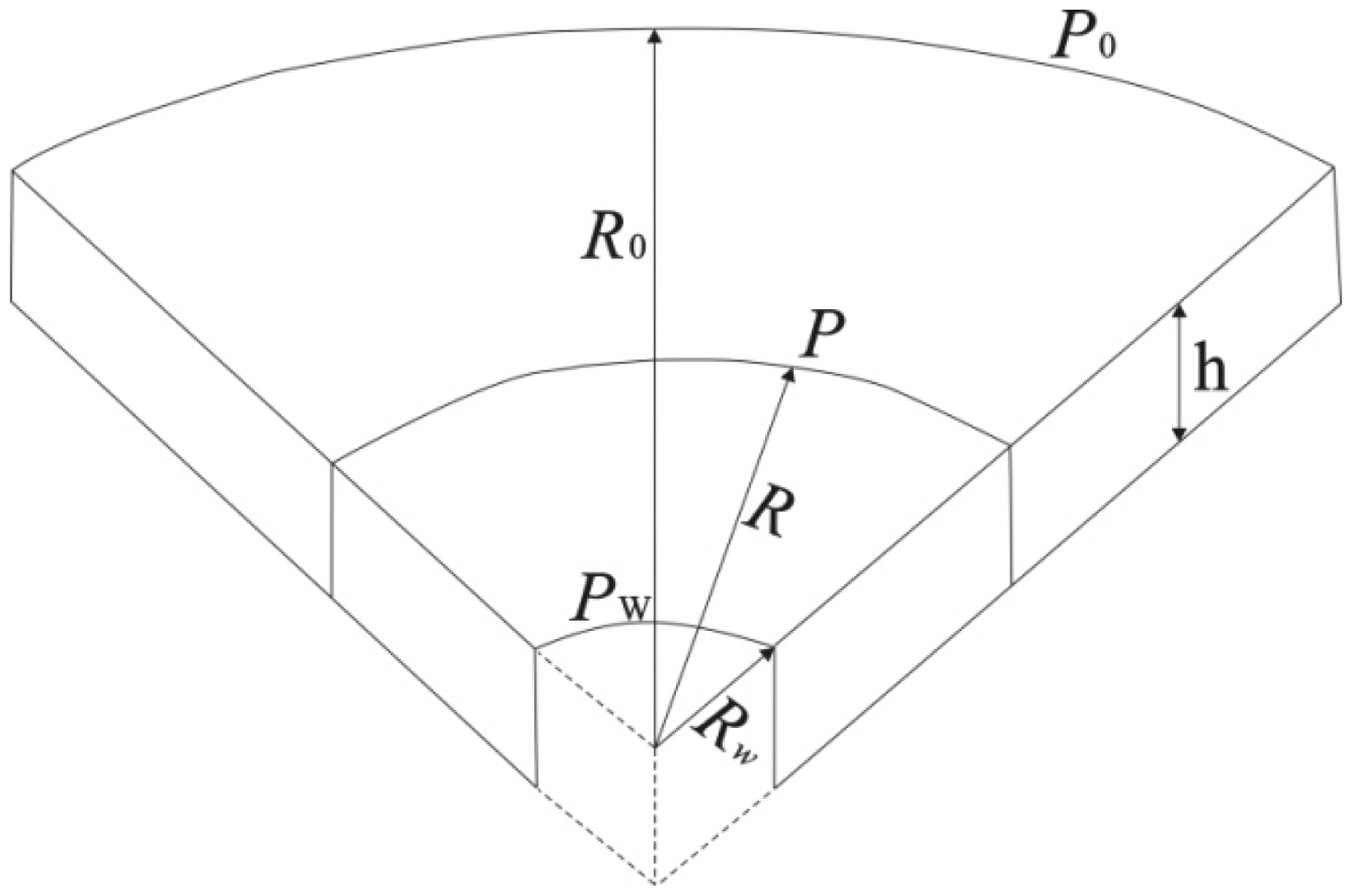
Conclusions
The dimensionless permeability has a negative exponential correlation with the effective stress under different salinities and pH injection conditions. The stress sensitivity is in a medium–strong sensitive stage under different conditions. Furthermore, the stress sensitivity coefficient can be divided into two stages (the fluctuation stage and the stabilization stage) with an increase in effective stress using an effective stress between 15 and 17 MPa as the boundary.
In terms of salinity, under alkaline conditions, an increase in salinity is conducive for decreasing the stress sensitivity of reservoir, but this effect gradually decreases with an increase in pH. However, salinity has a reduced influence on stress sensitivity under acidic conditions. PH is bounded by critical salinity; a lower pH is favorable for reservoir protection in the low and intermediate salinity conditions, while reservoir protection is improved with a higher pH value.
A permeability prediction model considering stress sensitivity is established under the influence of these two factors (pH and salinity). Acidic conditions are inorganic chemical reactions and alkaline conditions are organic–inorganic chemical reactions. To ensure continuous transmission of the pressure drop, the production rate can be reduced when the pH is higher at low and intermediate salinities. In addition, an increase in the degree of salinity of the formation water will reduce the stress sensitivity of coal reservoirs under alkaline conditions.
Footnotes
Declaration of conflicting interests
The author(s) declared no potential conflicts of interest with respect to the research, authorship, and/or publication of this article.
Funding
The author(s) disclosed receipt of the following financial support for the research, authorship, and/or publication of this article: The project was financially supported by the Key Project of Natural Science Foundation of China (41530314) and National Science and Technology Major Project (2016ZX05041-001).