




Abstract
The aim of this paper is to illustrate the impact of stress-sensitive permeability on productivity in naturally fracture carbonate reservoirs. First, stress sensitivity evaluation experiments were conducted on artificial cores with matrix, uncemented fracture, partially- cemented fracture and fully-cemented fracture by measuring their permeability in the process of increasing confining pressure. Then, a new mathematical model for productivity prediction in naturally fractured carbonate reservoir with consideration of stress-sensitive permeability is developed. Comparisons have been made between the new model prediction results and field measured data to verify the accuracy of the new model. Finally, based on the validated model, the detailed impact of permeability modulus on productivity is analysed. The experiment results show that the strength of stress sensitivity, evaluated by permeability modulus, of cores with uncemented fracture and partially-cemented fracture is generally an order of magnitude larger than that of cores with matrix and fully-cemented fracture. The results show the new model can be simplified to the classic model (Vogel equation) under the condition of the stress sensitivity being not taken into account, which means the class model is corresponding to a special case of this new model. Field application shows that the new model is reliable and correct. Moreover, with the help of the new model, it is found that the impact of stress-sensitive permeability on productivity increases with increasing permeability modulus and decreasing flow bottom hole pressure.
Keywords
Introduction
As Fluid was extracted from the formation, the reservoir pressure will decrease and the effective overburden load on reservoir rock will increase (Amar et al., 1995). This could lead to stress variations, which further alter the apertures of pores, throats, fractures and even vugs, finally changing reservoir permeability (Ruistuen et al., 1996; Ye, 2014; Wang et al., 2015). This phenomenon is typically defined as stress sensitivity of permeability and is usually found in naturally fractured reservoirs (Xiao et al., 2009; Samat et al., 2019).
The stress sensitivity of permeability is usually evaluated by experimental method to determine the relationship between permeability and effective stress (Longde et al., 2004; Lei et al., 2007; Chunyan et al., 2011; Zhu, 2013). Yu et al., (2018 and 2020) also show that the transport characteristic of gas is dependent on pressure. However, these researches rarely considered the cement type of natural fractures. According to the observation of microscopic core thin slice of naturally fractured reservoirs, natural fractures are made up of uncemented fractures, partially-cemented fractures and fully-cemented fractures. Different fracture cement types will have different response to stress. Generally, uncemented fractures would be more sensitive to the stress than fully-cemented fractures. Therefore, it is essential to understand the stress sensitivity characteristics of different fracture cement types.
Forecasting the performance of naturally fractured reservoirs is a major challenge for reservoir engineers, since the permeability decrease caused by variations of reservoir pressure during production may greatly reduce the expected productivity (Raghavan and Chin, 2004; Sun et al., 2007; Burgoyne and Shrivastava, 2015; Ali and Sheng, 2015; Qu et al., 2019). Several theoretical studies have been conducted for productivity prediction with consideration of permeability variation with stress. Liu and Yang, (2002), Yang et al. (2002); Song (2002), Chen et al. (2004) and Chen et al. (2006) developed models to evaluate the well inflow performance in stress-sensitive reservoir. However, those models only considered single-phase flow in the reservoir (i.e. the flowing bottom hole pressure is greater than bubble point pressure). There may be significant error when using these models for production prediction when the flowing bottom hole pressure is smaller than the bubble point pressure.
In order to analyse the impact of stress-sensitive permeability on productivity in naturally fractured carbonate reservoir, stress sensitivity evaluation experiments were conducted firstly on artificial cores with matrix, uncemented fracture, partially-cemented fracture and fully-cemented fracture. Then, a new mathematical model for productivity prediction in fractured carbonate reservoir with consideration of stress-sensitive permeability was established and verified by comparison of predicted results with measured data. According to the validated model, detailed analyses of the impact of permeability modulus on productivity are conducted. There are three main features between our approach and previous researches: (1) stress sensitivity of different fracture cement types has been evaluated by experiment; (2) production prediction model with consideration of stress-sensitive permeability and two phases flow is established, which is more coincident with the actual conditions; (3) a new method to determine the permeability modulus is put forward, which is more convenient.
Stress Sensitivity evaluation experiment
Experimental Method
Artificial core samples are utilized in the stress sensitivity evaluation experiment, as shown in Figure 1. Artificial core is obtained by mixing quartz sand of different mesh and calcium carbonate in a certain proportion. Under the action of binder, they are compacted under a pressure of 10–25 MPa, dried at a temperature of 90°C, and then cooled to form artificial core with certain pore structure. According to the statistical results of fracture occurrence, cracks are created in the artificial core and then cemented in different ways to simulate uncemented fracture, partially-cemented fracture and fully-cemented fracture in the reservoir. It should be pointed out that this process might not be accurate enough to represent the fracture in the reservoir. However, it might be the most practical method because cores tend to break into pieces with fractures during sampling which results in the difficulty of maintaining integrated cores in the naturally fractured reservoirs. The porosity and permeability of artificial cores are shown in Table 1.
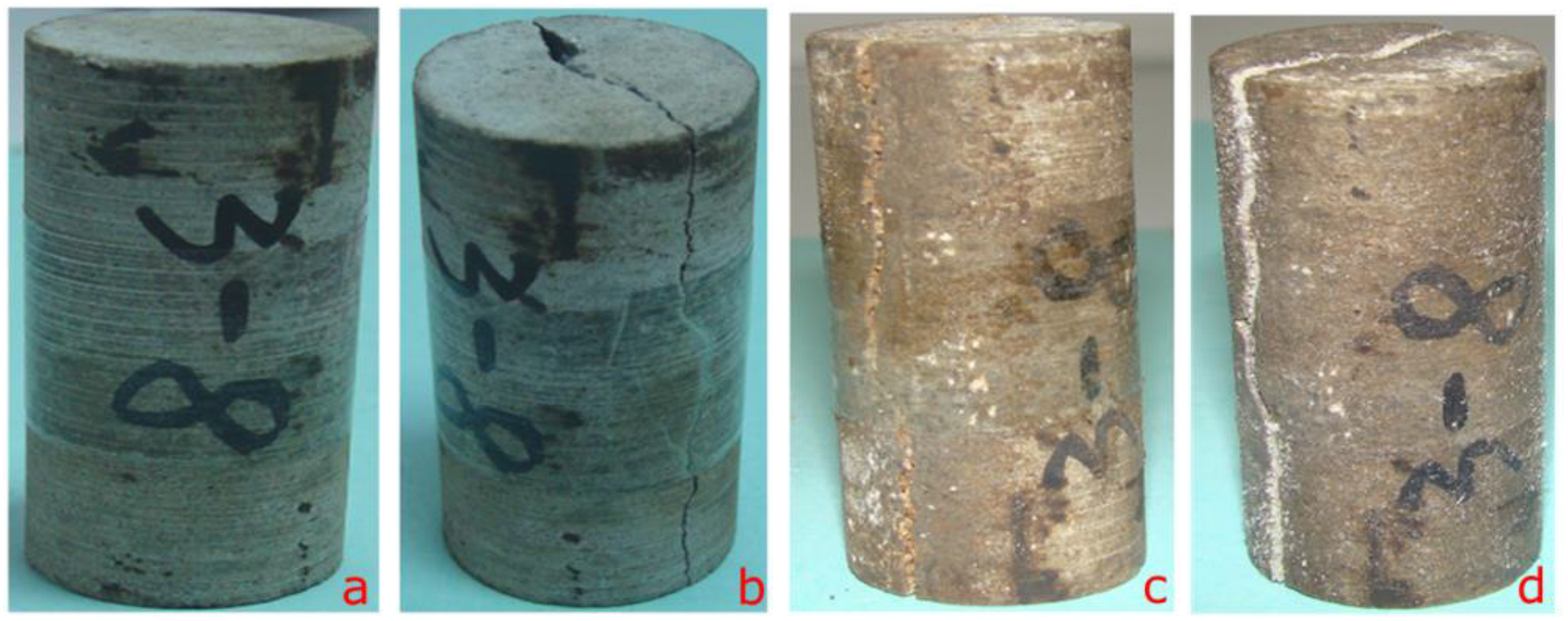
Artificial cores (a: matrix; b: uncemented fracture; c: partially-cemented fracture; d: fully-cemented fracture).
The porosity (φ) and permeability (K) of artificial core.
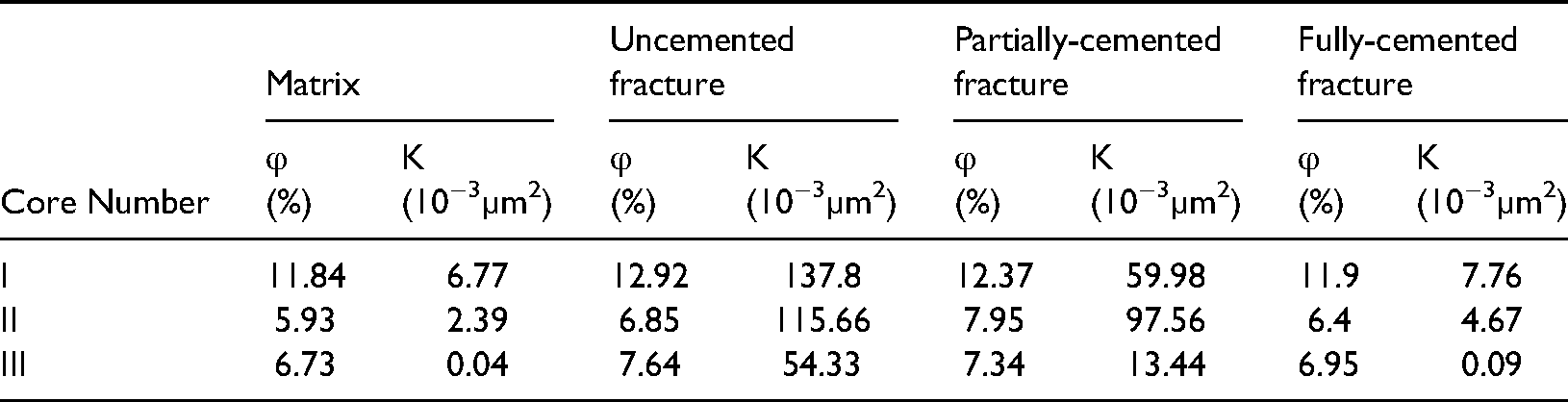
Figure 2 and Figure 3 show the experiment apparatus and the schematic diagram of the experiment apparatus used in this work. This experimental measurement system included a gas container, an automatic pump, a core holder, a confining pressure pump, an inner pressure value, a flow metre and some pressure gages. Firstly, the permeability stress sensitivity of matrix core was measured. Then, external forces were applied to the side of the core to make it crack along the longitudinal direction and create a fracture. The permeability stress sensitivity of core with uncemented fracture was then measured. A lot of coarse sand is then cemented into the crack to simulate partially-cemented fracture in the reservoir and the permeability stress sensitivity of core with partially-cemented fracture was then measured. Finally, the crack is cemented with fine calcium carbonate powder to reduce the permeability of the crack to simulate fully-cemented fracture in the reservoir and the permeability stress sensitivity of core with fully-cemented fracture was then measured. The experiment adopted the gas measurement method and used nitrogen as the test fluid. The detailed experimental steps are as follows:
The core is dried at a constant temperature for 48 h, and the length, diameter and gas permeability of the core are measured. The core is put into the core holder, the initial value of the instrument is set to zero, confining pressure and back-pressure are added to 3MP, and the backpressure keeps unchanged. The single-phase seepage experiment is carried out and recorded at different pressures. The permeability under the confining pressure is calculated by the slope of the regression line. The confining pressure is gradually increased and previous steps are repeated until the confining pressure rises to 50 MPa, discharging pressure and stopping the pump, and the experiment ends.
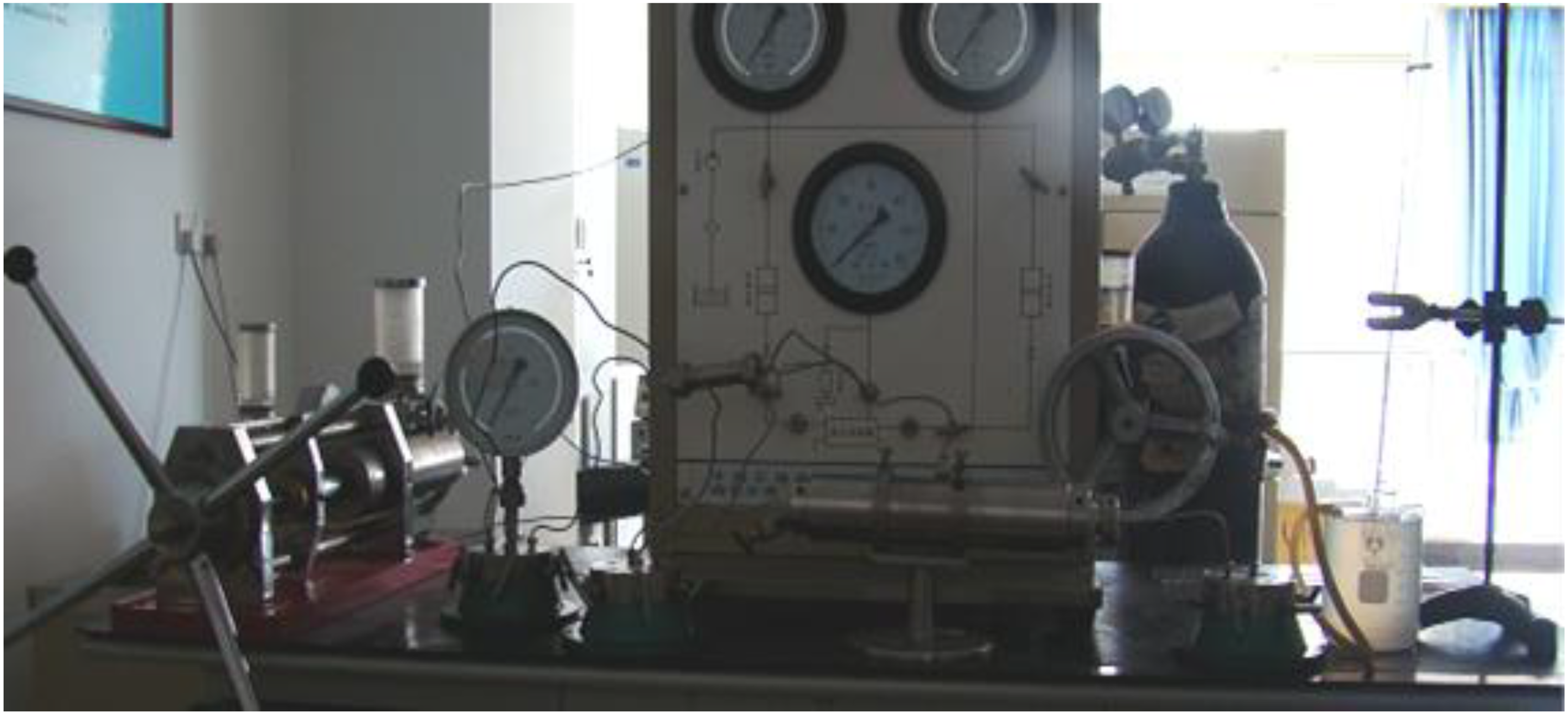
Experimental apparatus.
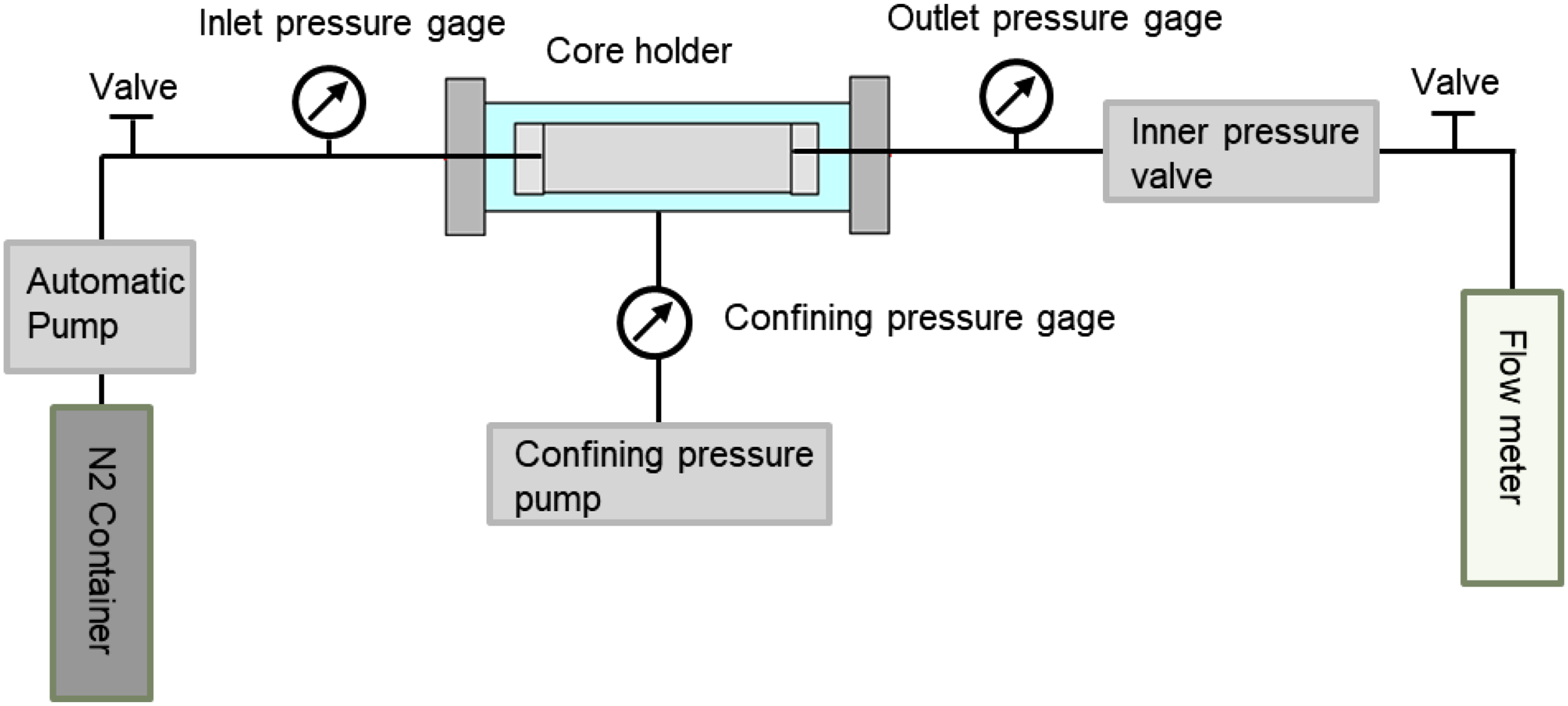
Experimental apparatus schematic diagram.
The experimental results are shown in Figure 4 and it can be obviously found that the stress sensitivity level of cores with uncemented fracture and partially-cemented fracture is much stronger than that of cores with matrix and fully-cemented fracture. Meanwhile, the reduction of permeability as effective stress can be divided into two stages. Taking the core I with uncemented fracture as an example, in the first stage, the permeability reduced abruptly with increasing effective stress when the effective stress is less than 27 MPa. During the second stage, the reduction of permeability becomes very slow as effective stress increases when the effective stress is larger than 27 MPa. A 70% loss of permeability is observed when increasing the effective stress from 0 to 27 MPa, while the loss of permeability only increased from 70% to 77.3% when the confining pressure increased from 27 MPa to 47 MPa. This can be explained that in the first stage the fracture plays a very important role in the flow and the fracture is sensitive to the stress. During the second stage, the fracture is closed as the stress increases and the main flowing channel is the pore, which results in the reduction of permeability being very slow.
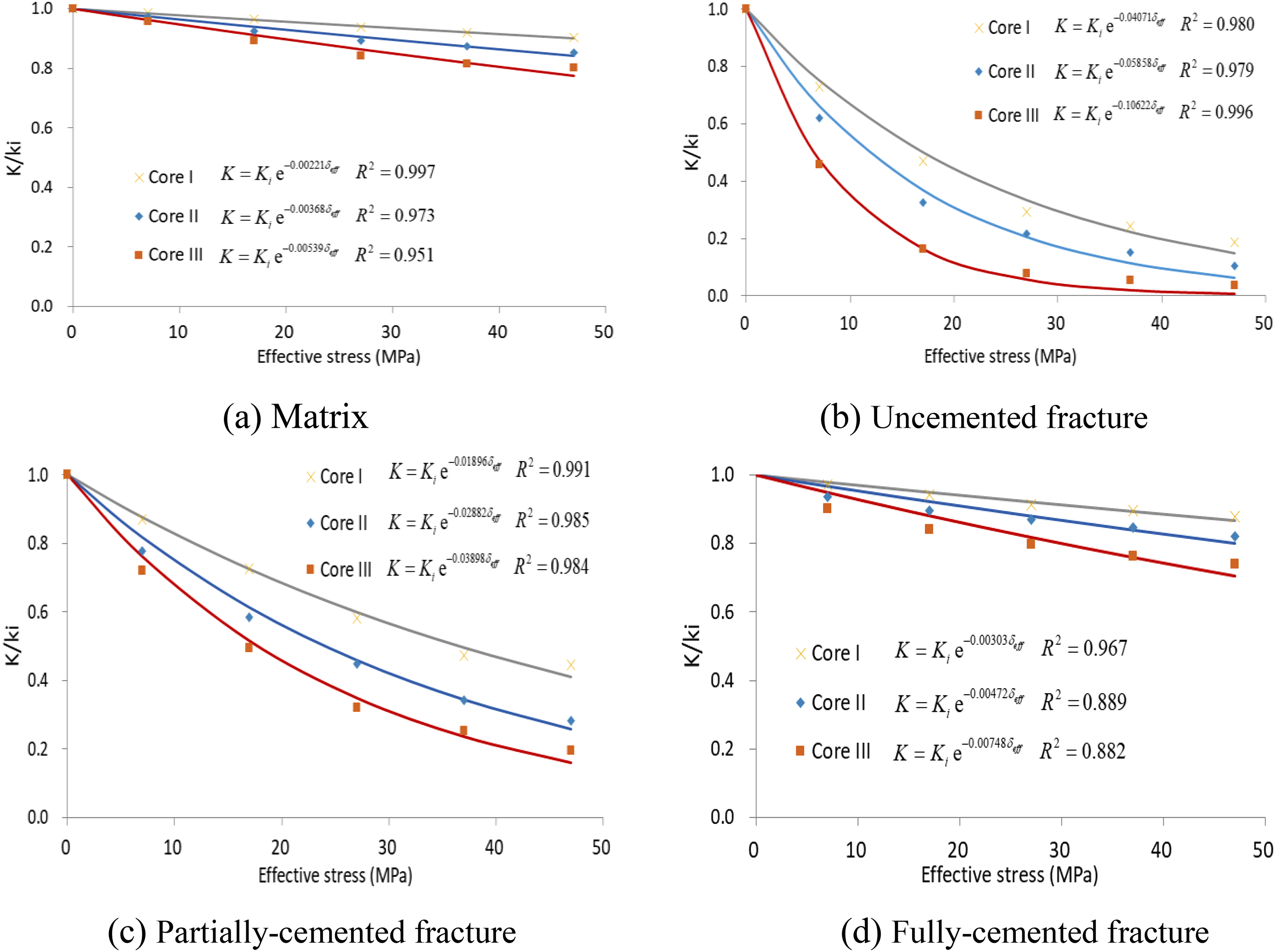
Experimental results.
The effective stress law is expressed by (Pedrosa, 1986)
According to our experimental results, permeability and effective stress are correlated with an exponent relation, which can be defined as
The permeability moduli of different cores are obtained by regression of experiment results, which are shown in Table 2. It can be found that the permeability modulus of cores with uncemented fracture and partially-cemented fracture are generally an order of magnitude larger than that of cores with matrix and fully-cemented fracture. For example, the permeability modulus of cores with uncemented fracture and partially-cemented fracture are 0.0407∼0.1062 MPa−1 and 0.01896∼0.03898 MPa−1, respectively, while as the permeability modulus of cores with matrix and fully-cemented fracture are 0.00221∼0.00539 MPa−1 and 0.00303∼0.00748 MPa−1, respectively.
The fitting results of different cores.

The Establishment of mathematical model
When Pw>pb
When the flowing bottom hole pressure (pw) is greater than bubble point pressure (pb), it is single phase flow in the reservoir. Thus, the oil rate for a production well can be calculated by
Fluid withdrawal from reservoirs lowers pore pressure and consequently causes an increase in effective stress. Assuming γ to be unity and substituting equation (2) into equation (3), and integration of equation (3), yield
When the stress sensitivity is not considered, that is αK = 0, the above equation can be simplified to Dupuit formula, which can be expressed as


When the flowing bottom hole pressure (pw) is smaller than the bubble point pressure (pb), it appears oil and gas two phases flow in the reservoir. According to Vogel equation, the inflow performance relationship (IPR) when pw<pb can be expressed as (Economides et al., 1994; Zhang, 2006)
Taking the derivative of equation (6) and (8) respectively, yields





The productivity index, Jo, can be calculated by equation (7) when the reservoir and fluid parameters are known. Usually, the single well controlled distance, re, is not easy to determine in the production process of oil fields. The permeability modulus, αK, can be determined by experimental method as shown in section 2. When the oilfield did not carry out the stress sensitivity evaluation experiment but only with the well test data of production and pressure, Jo and αK can be determined by the following method.
The term in the right-hand side of Equation (6) can be expanded as a power series as follows





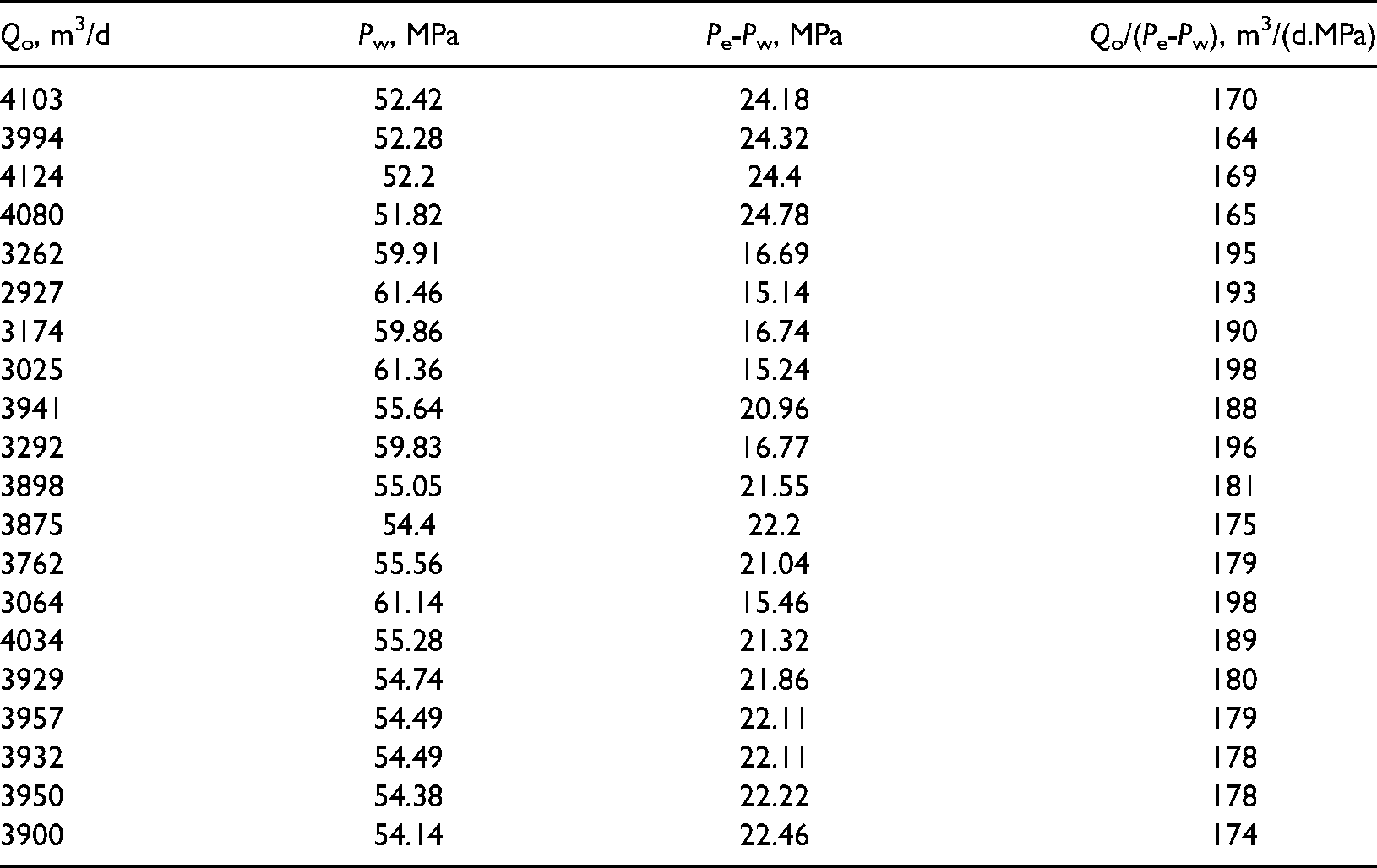
KSG oil field is a giant fractured carbonate reservoir, geographically located in the northern area of Caspian Sea and tectonically located in the southern part of the Pre-Caspian Depression. KSG oil field is an isolated carbonate platforms of late Devonian through Middle Carboniferous age, which represents mainly by limestone. KSG oil field has an anomalously high reservoir pressure and high sour gas content in produced gas. Most of wells in KSG oilfield were installed permanent downhole gauge (PDHG), hence the bottom hole pressure can be real-time monitored in the producing process. Well W-1 was chosen to verify the accuracy of the new established model based on their actual production test data. The oil flow rate and bottom hole pressure data of well W-1 are shown in Table 3. The reservoir pressure is 76.6 MPa and the bubble point pressure is 28 MPa. The flowing bottom hole pressure of well W-1 is higher than the bubble point pressure. According to the pressure transient analysis (PTA) results, the initial permeability of well W-1 is about 130 × 10−3μm2. The image logging and core of well W-1 shows that natural fractures are widely developed in this well (shown as Figure 5). According to the observation of microscopic core thin slice as shown in Figure 6, these natural fractures are made up of uncemented fractures and fully-cemented fracture. Partially-cemented fractures are not seen in this well. Based on the statistical of the core thin slices, most of natural fractures in well W-1 are uncemented fractures, which accounts for 90% of total, while only a little of that are fully-cemented fractures, accounting for 10%. Based on the cement type of natural fractures and the stress sensitivity evaluation results shown in Table 2, the value of permeability modulus of well W-1 can be taken as 0.033 MPa−1. Through linear regression of the relationship between
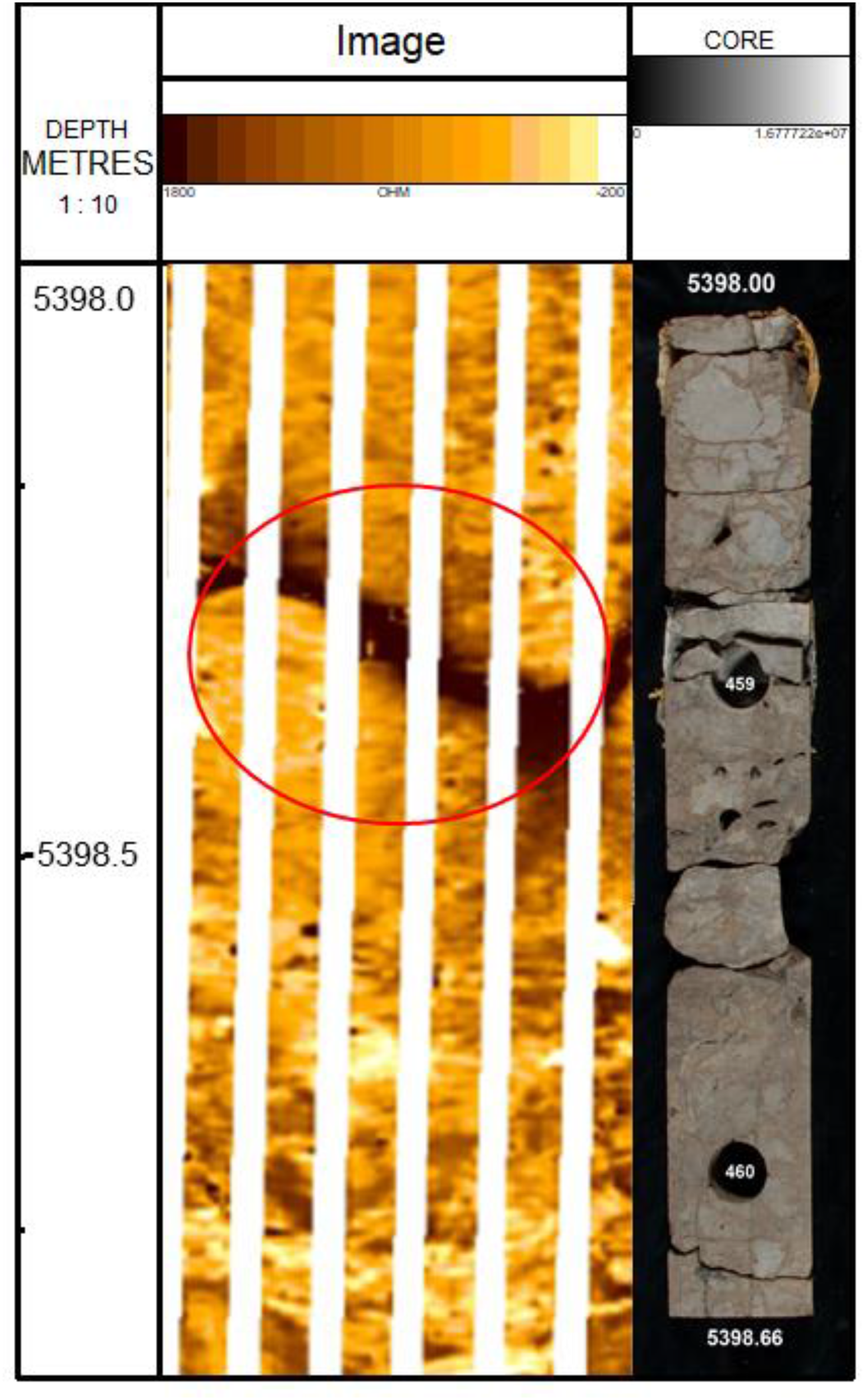
The image logging and core of well W-1.
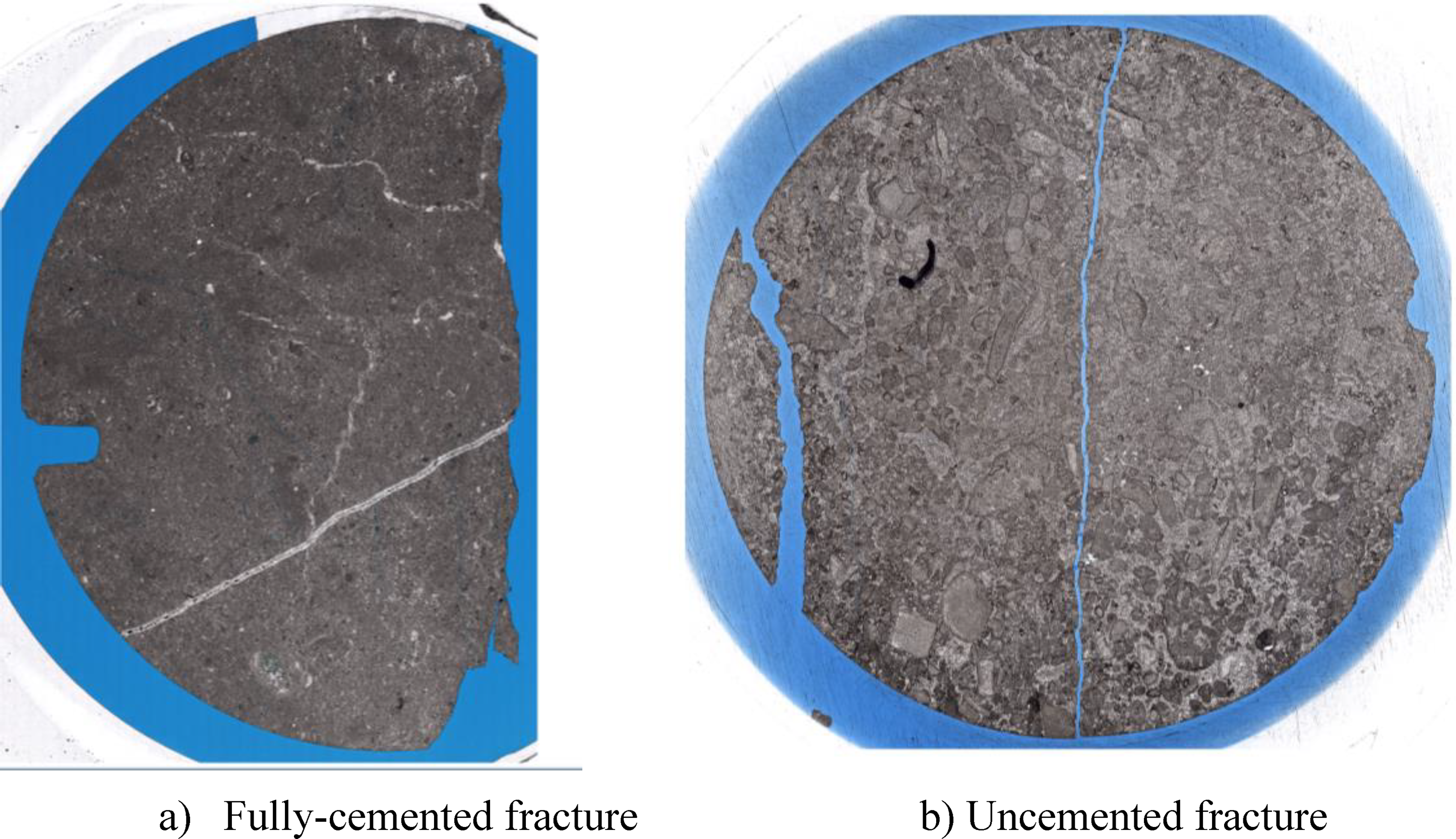
Core thin slices of well W-1.
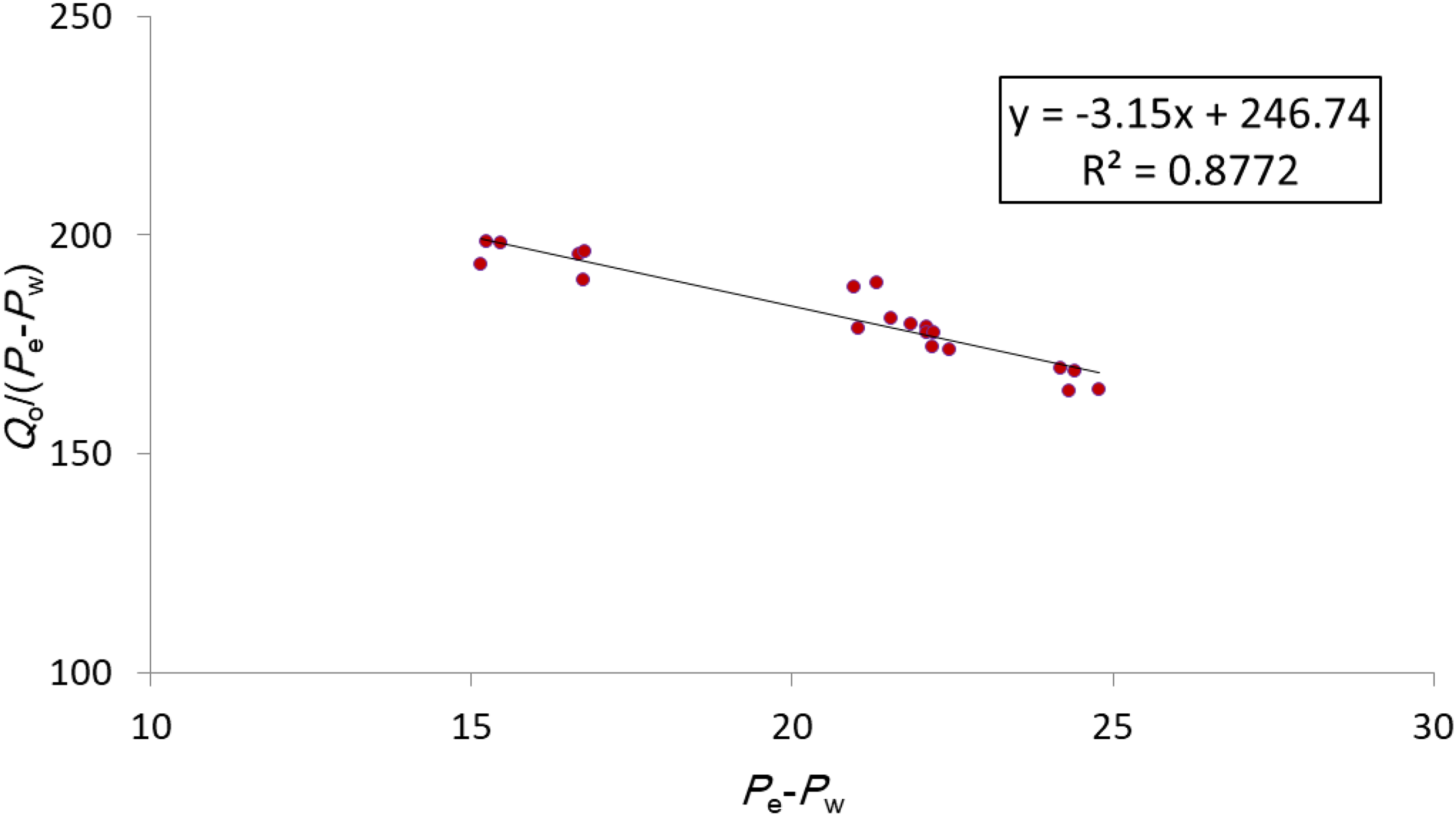
The relationship curve between
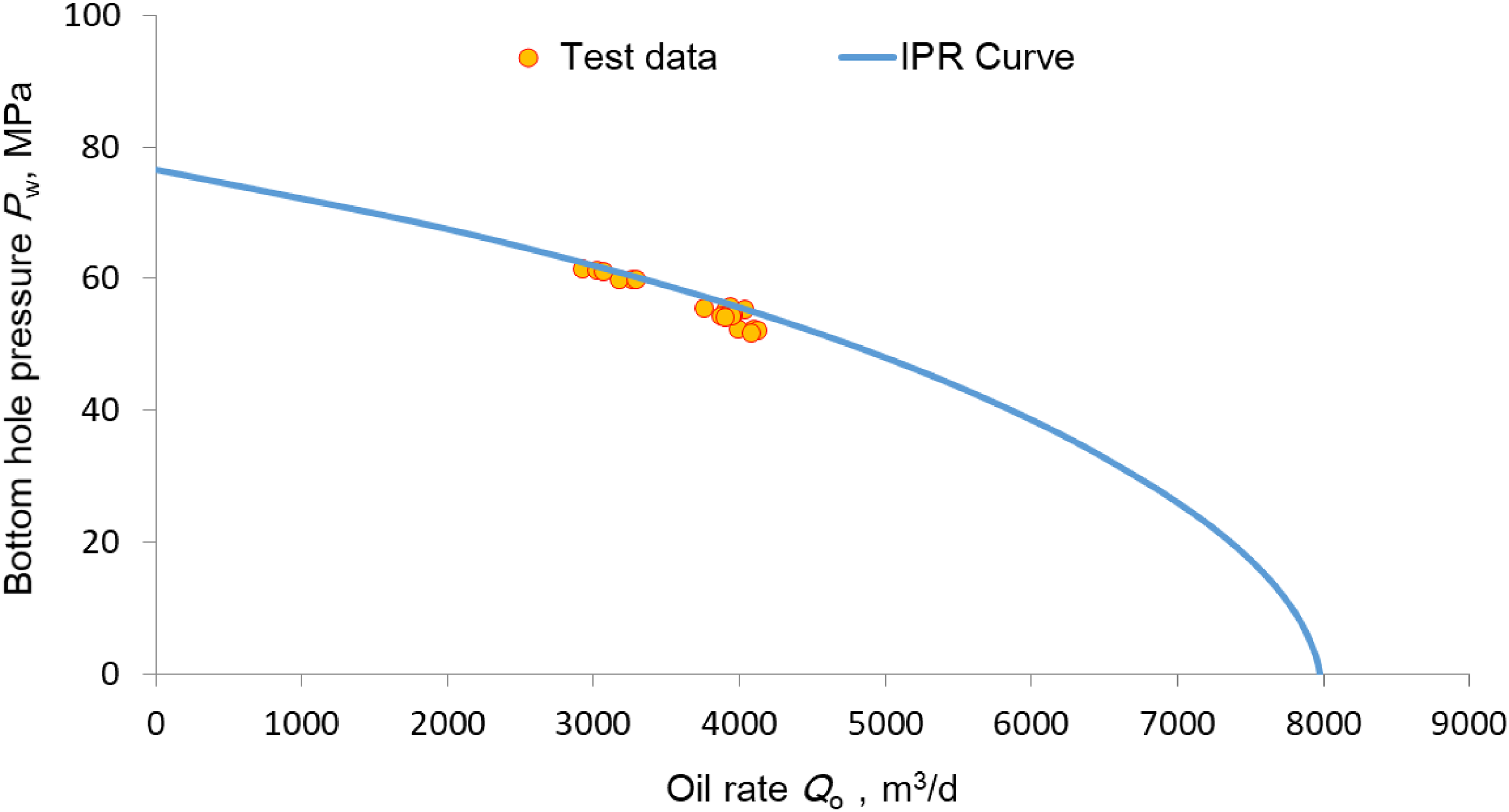
The inflow performance relationship (IPR) curve of well W-1.
Production test data of well W-1.
Effect Of permeability modulus
The permeability modulus has a great effect on the productivity as shown in Figure 9. It is observed that the larger the permeability modulus is, the smaller the oil rate becomes at the same bottom hole pressure. For instance, when the permeability modulus equals zero, the oil rate is 9031 m3/d at the bottom hole pressure of 40 MPa, while it decreases to 5481 m3/d when the permeability modulus increases to 0.03 MPa−1. The oil production decreased by 39.3% due to the permeability modulus increased from 0 to 0.03 MPa−1. The oil rate reduction coefficient, η, is defined as the ratio of the reduced oil rate caused by effect of permeability modulus to the oil rate with permeability modulus equals zero. As Figure 10 shows, the oil rate reduction coefficient increases with the increasing of the permeability modulus. The reason is that, according to equation (2), the reservoir permeability decreases as the permeability modulus increases, which leads to the reduction of oil rate. From Figure 9 and Figure 10, it also can be found that the permeability modulus has small impact on productivity when the bottom hole pressure is high while the impact becomes bigger and bigger as the bottom hole pressure decreases. For instance, in case of the permeability modulus equalling to 0.03 MPa−1, the oil rate reduction coefficient increases from 21.2% to 39.3% as the bottom hole pressure decreases from 60 MPa to 40 MPa. This can be explained as the lower the bottom hole pressure, the lower the reservoir permeability, especially the reservoir permeability around the wellbore, due to the effect of permeability stress sensitivity. Consequently, to ensure a successful development of naturally fractured carbonate reservoir with strong permeability stress sensitivity, the bottom hole pressure of producers should not be too small, in other word, the oil production rate should not be too high.
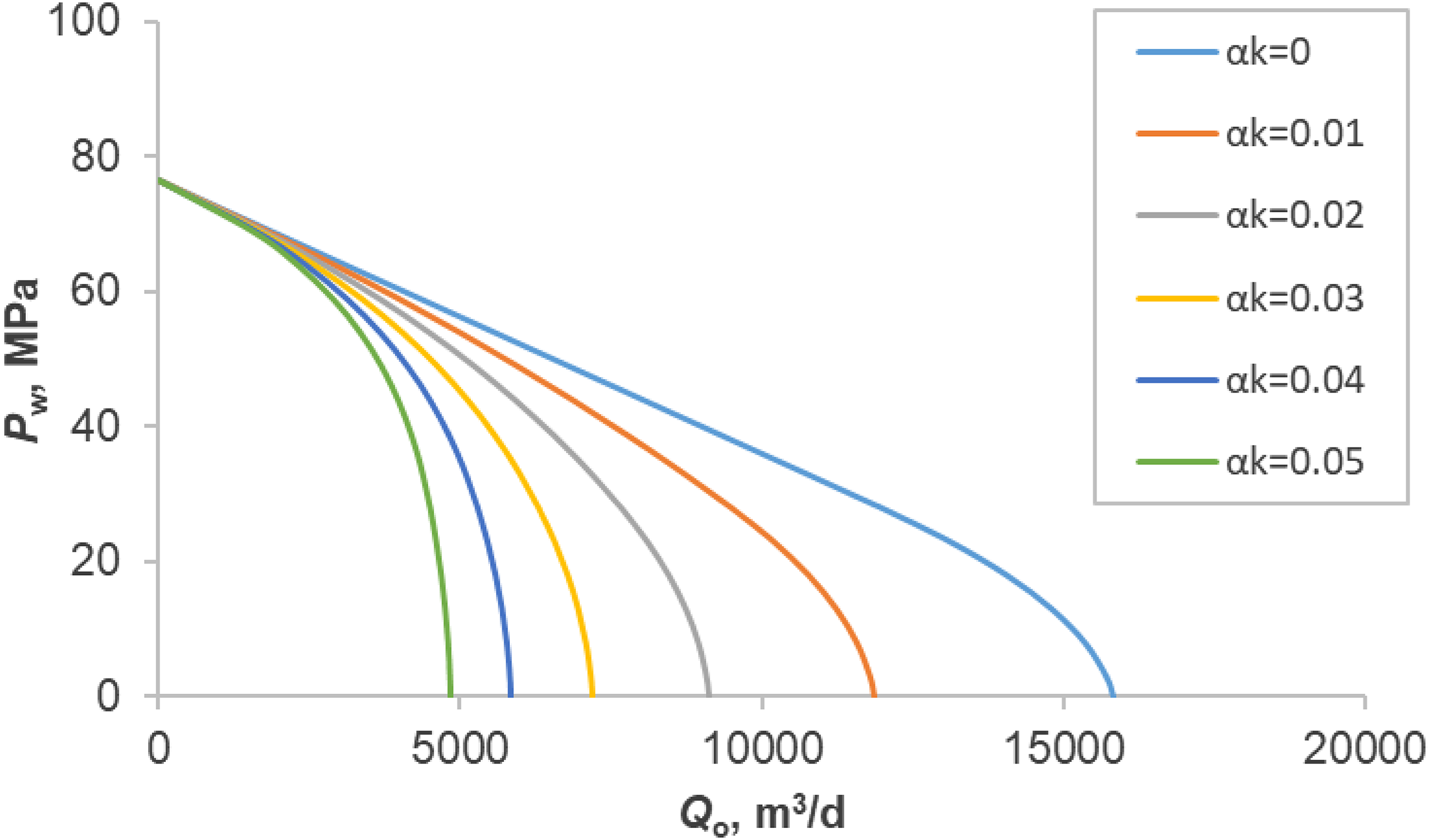
The effect of permeability modulus on productivity.
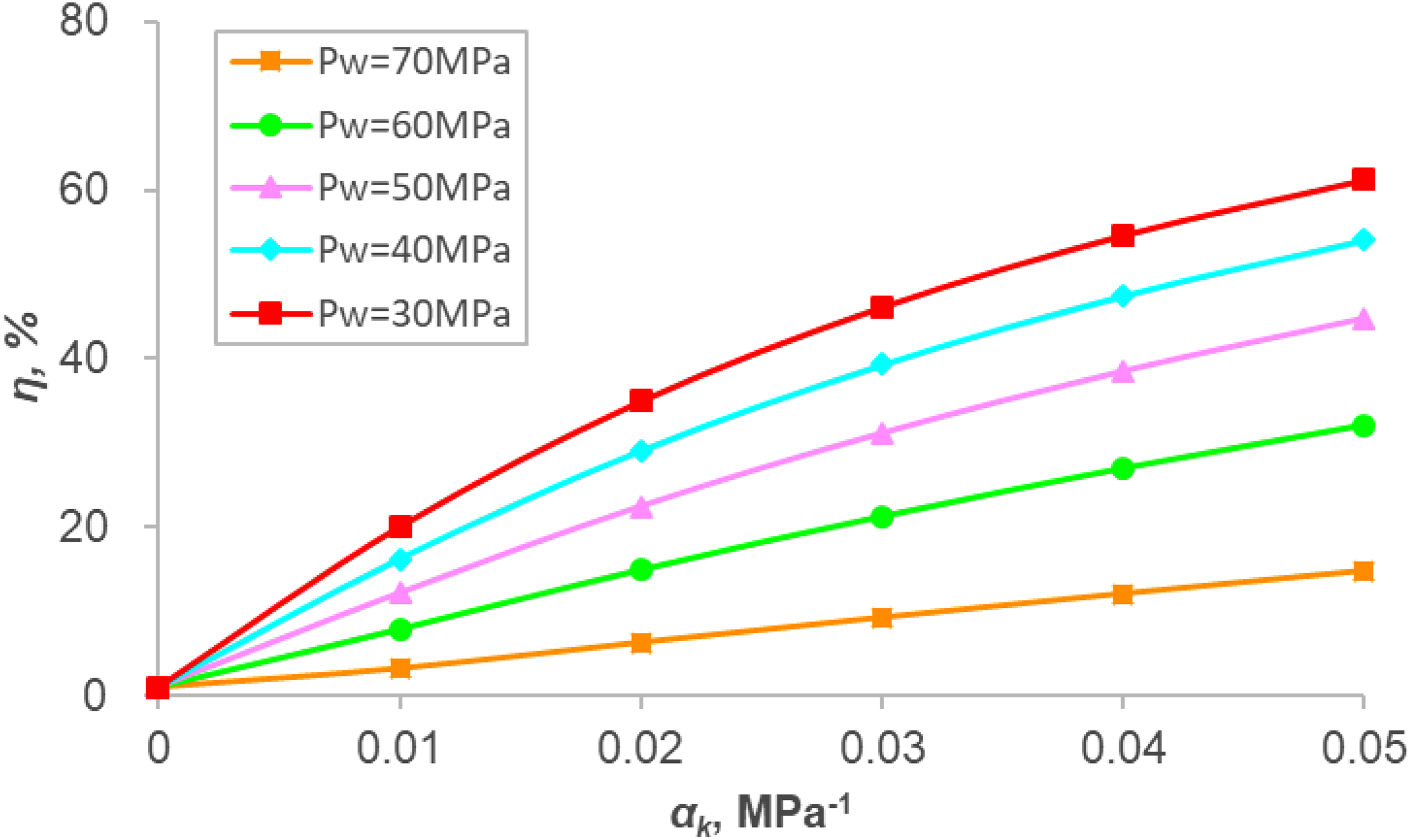
Oil rate reduction coefficient vs. permeability modulus with different bottom hole pressure.
Figure 11 and Figure 12 show the effect of reservoir pressure on productivity. As shown in Figure 11 and Figure 12, it is clearly observed that the higher the reservoir pressure, the greater the influence of permeability stress sensitivity on production. For instance, the maximum oil rate reduction coefficient can reach 49% when the reservoir pressure is 76.6 MPa, while it is only 4.6% when the reservoir pressure is 30 MPa. Consequently, compared to the reservoir with low pressure, more attention should be paid to the influence of permeability stress sensitivity on the production in the development of the naturally fractured carbonate reservoir with abnormal high pressure reservoir.
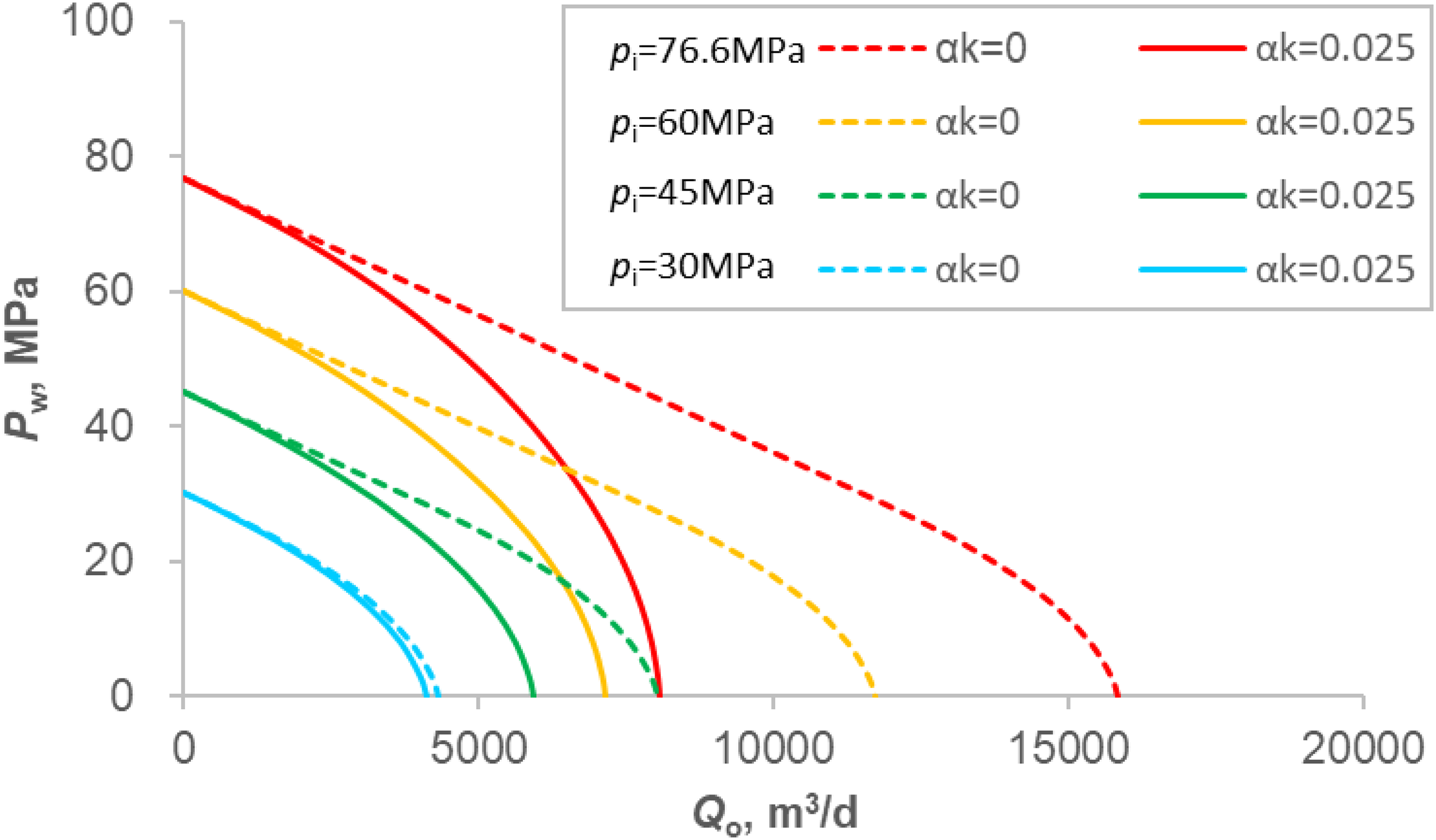
The effect of reservoir pressure on productivity.
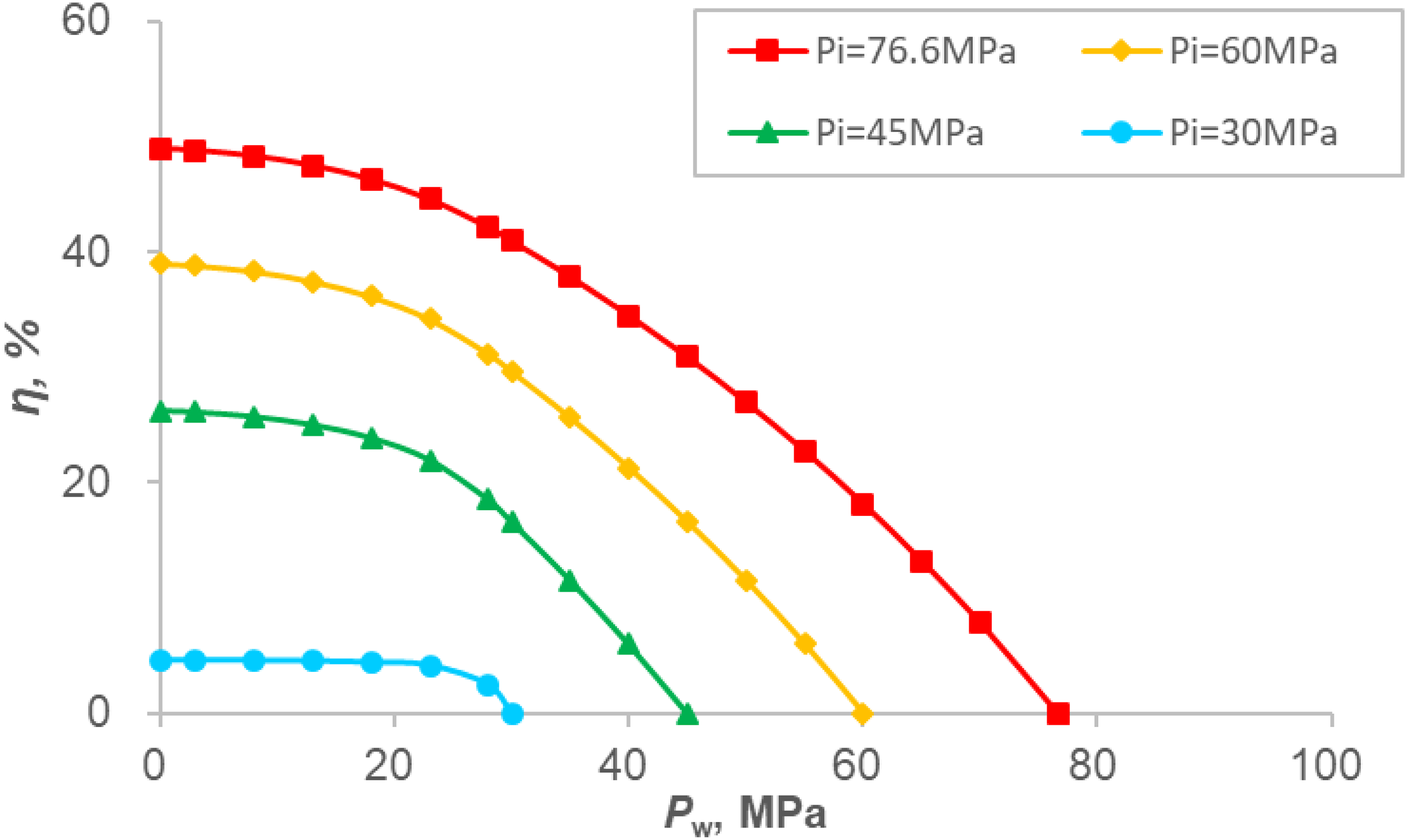
Oil rate reduction coefficient vs. bottom hole pressure with different reservoir pressure (αK = 0.025 MPa−1).
In This study, the impact of stress-sensitive permeability on productivity in naturally fractured carbonate reservoir is analysed. The following conclusions can be summarized as follows:
The stress sensitivity evaluation experiments were conducted on artificial cores with matrix, uncemented fracture, partially-cemented fracture and fully-cemented fracture. The results show that the stress sensitivity level of cores with uncemented fracture and partially-cemented fracture is generally an order of magnitude larger than that of cores with matrix and fully-cemented fracture. A new mathematical model for productivity prediction in fractured carbonate reservoir with consideration of stress-sensitive permeability was developed. Field application shows that the new model presented in this paper are reliable and correct. Besides, the new model can be simplified to the classic model under the condition of the stress sensitivity being not taken into account, which means the classic model is corresponding to a special case of this new model. The permeability modulus can be determined by experimental method, and it also can be approximately determined by the well test data of production and pressure. The impact of stress-sensitive permeability on productivity increases with the increasing of the permeability modulus while increases with the decrease of the flow bottom hole pressure. To ensure a successful development of naturally fractured carbonate reservoir with strong permeability stress sensitivity, the bottom hole pressure of producers should not be too small, in other word, the oil production rate should not be too high. The higher the reservoir pressure, the greater the influence of stress-sensitive permeability on production. Compared to the reservoir with low pressure, more attention should be paid to the influence of stress-sensitivity permeability on the production in the development of the naturally fractured carbonate reservoir with abnormal high pressure reservoir.
Footnotes
Acknowledgements
This work was supported by the Major Projects of China (2017ZX05030-002).
Declaration of conflicting interests
The author(s) declared no potential conflicts of interest with respect to the research, authorship, and/or publication of this article.
Funding
The author(s) disclosed receipt of the following financial support for the research, authorship, and/or publication of this article: This work was supported by the the Major Projects of China (grant number 2017ZX05030-002).
